menu

Insider: High Stakes MTGO – Sep 18th to Sep 24th

Are you a Quiet Speculation member?

If not, now is a perfect time to join up! Our powerful tools, breaking-news analysis, and exclusive Discord channel will make sure you stay up to date and ahead of the curve.

Hello and welcome back for another High Stakes MTGO article!

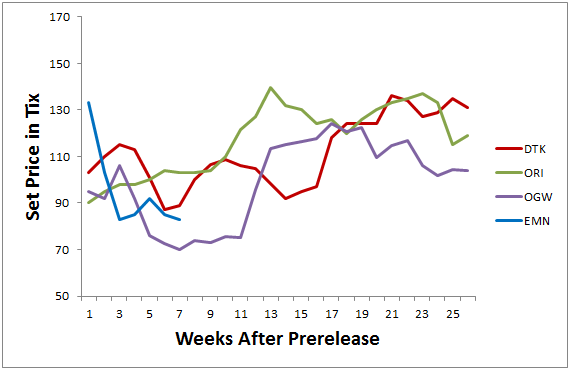
These last two weeks have been a little more busy than usual for me. I have to admit that I was not able to keep up with my shopping lists, in Standard especially. As you know, I would love to put my hands on as many potential targets as possible before Standard rotation. In practice, though, it requires some time to buy dozens and dozens of playsets of every position you want.

Writers here at QS did a great job highlighting what cards have the best chances to rise in price between the next few weeks and this Winter. It's also great to have insights from both paper and online MTG finance experts. Paper MTG and MTGO don't have a lot in common speculation-wise but when it comes to identifying what card(s) from the previous Standard sets could rise in price, advice in any one of the two realms can often transfer to the other one.

One of the key difference to keep in mind is that finding undervalued paper cards from the set to be released (Kaladesh at the moment) is no use to MTGO. Online prices are bound to lose value from the moment cards are released, and it doesn't help much to know which ones are underestimated in the paper world.

I made only a few moves this past week but let's review them nonetheless. The live portfolio is always active and still found here.

Buys This Week

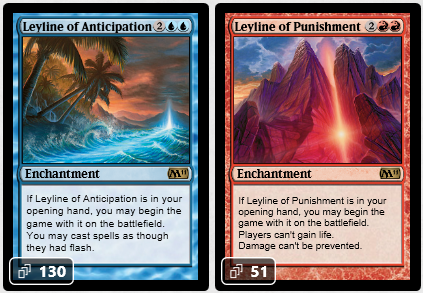
lyelines

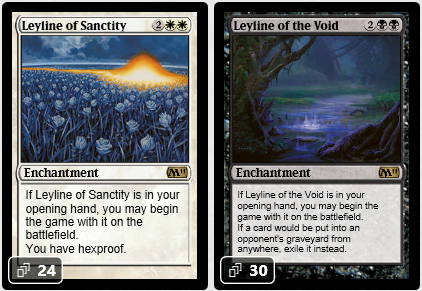
Two more Leylines in my portfolio following Magic 2011 flashback drafts. These are clearly not the super stars that Leyline of the Void and Leyline of Sanctity are, but Leyline of Anticipation and Leyline of Punishment have made a few appearances in more-than-casual Modern decks in the past two years or so. The devotion mechanism is no stranger to this, allowing the red Leyline for instance to spike from bulk to a sustainable 2 to 4 tix price range since January this year.

In either case, with their price back to a much lower point, I'm simply accumulating some copies just in case the Travis Woo or SaffronOlive brew with these again. The risk is low and the potential is big with these two specs.

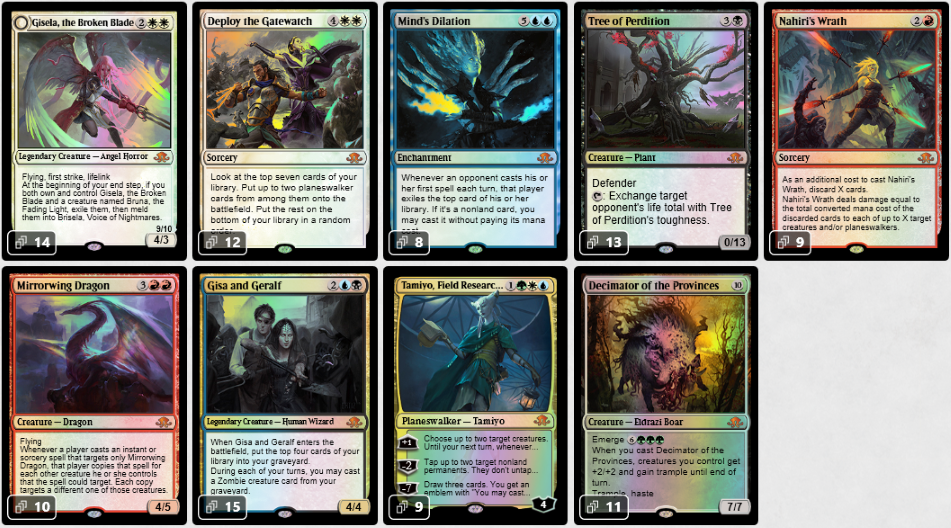
emn-foils

In the middle of the semi-fiasco of my Battle for Zendikar targets---including full sets and boosters---my basket of foil mythics is about the only thing doing what I expected---in this case something around 20-30% profit overall. Although the new Standard block and rotation structure is merely a year old and there's not much data available, foil mythics, and to a lesser extent foil full sets, appear to be decent speculative targets. Surely I'm only taking about 20-40% at best, but where my BFZ full set spec is down by 20-25% my BFZ foil mythic basket is up by the same amount.

Since both OGW full sets and OGW foil mythics did great I'm naturally considering EMN and its foil mythics. As a second set I think EMN has better speculative odds then SOI. Foil mythics did okay for me with BFZ and a lot of OGW foil mythics also did well.

Now, EMN is different from OGW. A lot of EMN foil mythics started really low. While I bought a few copies back in August, I have probably missed the absolute bottom of most of the foil mythics I bought this past week. But no problem; I think most of the foil mythics I just picked can go from their current price to ~10 tix by the release of Aether Revolt.

One last point here with foil mythics being priced so low: if a card like Gisela, the Broken Blade (a great card on its own) would become a key card in a popular deck in the next Standard, then the price of its regular version could climb to 12 or 15 tix. The price of the foil version will inevitably converge. In that case this is a pure bonus that would occur independently of the natural and slow rising of prices.

Sales This Week

Just when I thought I was done with my painlands they rebounded one last time. Battlefield Forge jumped from 0.1 tix to 0.5 tix, all I needed to liquidate another 85 copies of this land without losing 80%.

I bought this mythic dragon from Magic 2013 a while ago hoping it would return to the 10-15 price range. Although the Hellkite has several incursions around 8 tix it never got higher and kept oscillating between 4 and 8 tix.

With a recent bump to 6 tix a few weeks ago, a new Standard to explore and M13 flashback drafts scheduled in two months, I'm not sure I'll eve be able to sell Thundermaw Hellkite for more than that. I'm breaking even here, which is the best I can do for now. My tix will be more useful somewhere else.

On My Radar

This is the final stretch for buying Standard targets before rotation and before we see the first tournament results with Kaladesh in the mix. These early tournaments won't be as impactful as Pro Tour KLD, but they will start shaping the new price landscape and give ideas to a lot of players and speculators.

Unfortunately I'll be busy at work so I already know my time on MTGO will be limited again this week. I'll try to focus on the most promising positions and EMN is probably where to look at in this regard. A lot of rares and mythics are worth a shot in the second set of the Shadows over Innistrad block.


Thank you for reading,

Sylvain

Clarifying Convention: Deck Names and Archetype Levels

Are you a Quiet Speculation member?

If not, now is a perfect time to join up! Our powerful tools, breaking-news analysis, and exclusive Discord channel will make sure you stay up to date and ahead of the curve.

Modern is a format with plenty of decks, and many of those decks have multiple names. This problem becomes apparent as we move down the tier list, and rampant at the very bottom. There are many ways to name a deck, and this article explores some of the possibilities. It also introduces a three-level archetype system that can be used to easily classify decks.

true-name-nemesis-art-crop

I know Jason has a piece planned on naming conventions, since it's something he deals with quite often at Modern Nexus during metagame updates. His views on the subject may differ from mine, of course. So don't take this article as the site's official position on deck names. My goal is to open up the conversation with some ideas and suggestions for classification moving forward.

Types of Deck Names

In the comments on my tournament report from last week, some readers noted concerns about "cute and unnecessary" deck names. I agree that deck names should be informative, but I don't think they necessarily must be informative in their own right. Unique names can be fine as long as a Google search of the name reveals more information about the deck, or that some subset of a format's playerbase is familiar with the name.

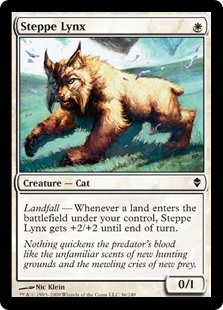
steppe lynxJund, Affinity, and Ponza are examples of branded deck names. When players hear these names, they immediately associate them with the correct deck. Modern is a format in flux, with new strategies entering the format constantly (the latest spice: Hoogland's Naya Landfall deck from SCG Richmond). As such, it's impossible to have branded names for every deck. The player recognition for newer archetypes just isn't there. That said, Modern's top-tier archetypes all enjoy branded deck names. Most of the contention around names arises when we move to the format's lower tiers.

Formulaic deck names plug certain variables into a predictable formula, such as [color combination + key card] or [color combination + deck type]. Examples include Grixis Death's Shadow and Jeskai Control. These kinds of names immediately provide some details about a deck, but they can be vague enough to force curious players to click through to find out what the deck is actually doing.

In my perfect world, Modern deck names utilize both branded and formulaic names to make scrolling through datasets as intuitive and informative as possible. The rest of this section examines the pros and cons of each type of name.

[wp_ad_camp_1]

The Allure of Brands

Legacy and Vintage, formats that take their naming cues from the old Extended format, boast plenty of storied deck names: Gro-A-Tog, MUD, Oops All Spells, Tin Fins, Canadian Threshold, and Maverick, to name a few. Like formulaic deck names, these branded names have their pros and cons. One obvious pro is that brewers get to imbue on their creations a unique stamp of ownership that follows the deck as other players pick it up, tune it for shifting metagames, and evolve it over time.

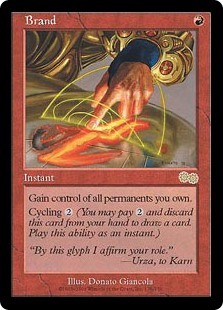
brandA more practical plus is that the development of specific decks can be tracked very efficiently online. A few minutes of googling a branded deck name reveals that deck's history, including outdated tech choices for the archetype that might prove useful in the future, or valuable strategic resources regarding its playstyle. Searching for a vague, formulaic name like "Sultai Midrange" is bound to cause more problems, since that name could apply to a huge range of decks spanning multiple formats.

The biggest drawback to branded names is that, taken alone or even with a decklist, they may reveal little to nothing about the deck in question. Personally, I don't think this is much of a problem. The issue is greatly assuaged by the fact that branded names synergize with search engines to help players locate more information about a deck as needed.

A second potential complication is that multiple players may disagree on a deck's name. This isn't a point of contention for other eternal formats, so I don't see why it would be one in Modern. A large-scale transition to using branded names might aggravate some players, but all large-scale transitions temporarily alienate a segment of any population. I believe that the risk of irking a minority of the Modern playerbase outweighs the potential benefits of having standard, recognizable names for the format's decks.

Formulaic Fumbling

Over the past few years, coverage has attempted to standardize Modern deck names with formulaic deck names. While this approach is nice in theory, it fails on a few counts. For one, neither Wizards nor Star City Games has been very consistent. Sometimes, they'll name decks for key cards (Naya Company) or tribal synergies (UB Faeries) instead of for deck type. Other times, the formula provides a name too bland to be useful, forcing the use of a branded name (i.e. Soul Sisters instead of Mono-White Aggro).

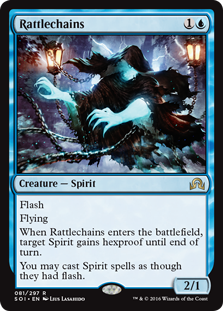
RattlechainsAn issue with the shard/deck type strategy is it doesn't account for variations on a theme. UW Spirits and UW Merfolk, the deck names, are both archetypically UW Fish decks, but since the card core is so different, they require different names.

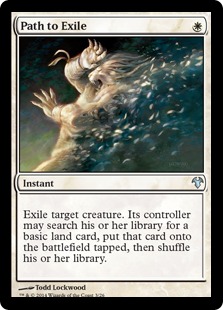
On the other side of the coin, sometimes conventional naming techniques leave us with too many names. GW Hatebears and Mono-White Death & Taxes are the same deck with minor differences in the creature suite; since these two decks operate in similar ways and share goals and card cores (Leonin Arbiter, Path to Exile, Aether Vial, Ghost Quarter), I think having two names is superfluous. I'd rather call them both Hatebears or Death & Taxes and assign color combinations at the beginning of their respective names to indicate whether they splash for Hierarch, Voice, and Scavenging Ooze.

The Level-Based Archetype Guide

Branded names won't fly for new or little-known Modern decks. For these, formulaic names work the best. To assign effective formulaic deck names, we need to clearly understand Modern archetypes.

This guide splits those archetypes into three levels, each signifying a deeper understanding of a deck's function---for example, aggro-control (a Level 1 signifier) is less specific than midrange (a Level 2), which is less specific still than rock (a Level 3). It follows that "Abzan Rock" is a more informative deck name than "Abzan Midrange" or even "Abzan," since it describes the deck's gameplan while allowing other decks in the same colors to be easily differentiated.

Level 1: Deck Type
Aggro, combo, control, aggro-combo, aggro-control, control-combo, aggro-combo-control

These seven deck types, made up of combinations of aggro, combo, and control, comprise Level 1, the most basic signifier.

Level 2: Playstyle
i.e. midrange

Level 2 signifiers describe how a deck plays. For example, midrange (a subtype of aggro-control) disrupts opponents somehow, then commits threats to the board to finish them off before they can recover.

Level 3: Gameplan
i.e. rock, stompy

Level 3 signifiers describe a deck's strategy in detail. To continue our midrange example from Level 2, the way midrange decks disrupt opponents and the kinds of threats they use depend on the deck's gameplan. Rock decks use spells and planeswalkers to disrupt opponents, especially favoring targeted discard and removal. Its threats are cheap and versatile. Stompy employs noncreature permanents for disruption, and expensive haymakers for threats.

This section looks at Modern's most well-known decks through the three-level lens. Large-text headers denote Level 1 signifiers, and bullet points denote Level 2 signifiers unless specifically marked by "L3" (in which case they denote Level 3 signifiers). In many cases, it's impractical to reduce the Level 2 signifiers further. Only aggro-control goes as deep as Level 3.

Aggro

Pure aggro decks win by turning creatures sideways. They rarely interact with opponents beyond just clearing the path for beaters.

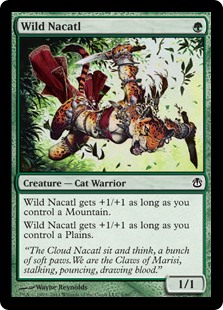
  • Wild NacatlZoo: Named for the real-life home of its creatures. Zoo is a Naya aggro deck, combining efficient threats with removal that often doubles as reach.
    Modern examples: Naya Company, Gruul Zoo
  • Aura stompy: The word stompy has been used historically to describe two radically different deck types. The first use of the term dates to very early in the game, to describe an aggressive green deck featuring Rogue Elephant and pump spells: 9-Land Stompy. Later, the Extended deck, Señor Stompy, would rechristen the term to mean something completely different. This deck disrupted opponents with Winter Orb and Tangle Wire while beating them down with Trolls and Apes. Nowadays, both of these deck types are referred to as "stompy," to the understandable confusion of many. I will use the term stompy to refer to the permanent-based disruption deck, and aura stompy to describe the aggressive type. Aura stompy uses large quantities of efficient creatures like Zoo, but trades Zoo’s removal spells and reach for creature-enhancing enchantments or pump spells. In Modern, giving up creature interaction will get you killed, making these decks generally worse than Zoo.
    Modern examples: Mono-Green Stompy

Combo

Combo decks try to assemble a combination of cards with powerful interactions as quickly as possible, and use that interaction to either win the game outright or leverage a major long-term advantage.

  • Spell/permanent-based: Bread-and-butter combo decks that combine two spells or permanents, or a spell or permanent with a certain game state, to win.
    Modern examples: Ad Nauseam, Grishoalbrand, Eggs
  • Land-based: Combo decks that win with their lands, these decks are harder to interact with, helping them dodge most conventional disruption (Path to Exile, Thoughtseize, Mana Leak). But they take longer to win than spell-based combo decks. Once the land-based decks assemble their combo, they use it to leverage a huge mana, card, or damage advantage.

    Modern examples: Tron, Titan Breach

Control

Control is the slowest Level 1 archetype in Magic. It interacts with opponents as efficiently as possible to reach a gamestate from which opponents have almost no way to secure a victory, and then focuses on closing out the game.

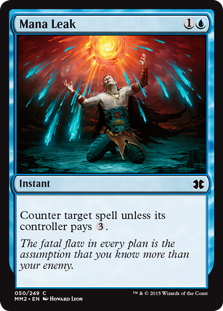
  • Mana LeakWeissman: Named after the creator of the original Weissman deck, The Deck. Weissman deploys large amounts of disruptive spells and eventually ends the game with a hard-to-interact-with threat. For The Deck, this win condition was the Bolt-proof Serra Angel and later the pseudo-hexproof Morphling. For Modern’s flexible Jeskai Nahiri, it can be Nahiri’s ultimate, the sorcery-resistant Celestial Colonnade, or a series of unblockable burn spells.
    Modern examples: Jeskai Nahiri, UW Control, Esper Control
  • Prison: Named for its strategy of stopping opponents from doing anything. Prison decks lock opponents out of the game with noncreature permanents and win many turns later, generally with a card or combination of cards that is also useful in non-closing stages of the game (i.e. creature lands, planeswalkers, Codex Shredder). In Modern, the only lock pieces efficient enough to see mainboard play are Chalice of the Void, Blood Moon, and Ensnaring Bridge; as a result, there aren't that many Prison decks.
    Modern examples: Lantern Control

Aggro-combo

Aggressive decks with game-winning interactions and important synergies fall under the aggro-combo umbrella. The combo element makes them faster or more resilient against a certain kind of strategy, but at the cost of weakening themselves to "hate," or specific targeted disruption.

  • Pump: Pump decks throw a bunch of creature enhancement on a cheap threat with crucial text (hexproof, unblockable, "becomes a 9/9") and kills opponents with undercosted combat damage.
    Modern examples: Death's Shadow Zoo, Infect, Bogles
  • Synergy: Synergy-based aggro-combo decks need one or two key cards to get going. Elves looks for mana dork into Elvish Archdruid or Heritage Druid to enable speedy Collected Companys; Affinity mulligans into hands toting "payoff cards" like Cranial Plating; Dredge needs openers with a way to start dumping cards into the graveyard. With those conditions met and uninterrupted, these decks are free to "go off" on their opponents, although they often win fairly (through combat damage).
    Modern examples: Elves, Affinity, Dredge
  • Critical mass: Critical mass decks aim to draw the requisite number of a certain kind of spell. Burn wants six Lightning Bolts; Mill wants five Glimpse the Unthinkables. Of course, you can only run four of each, leaving critical mass decks to jam as many close analogs as possible and top things off with a minimal amount of interaction.
    Modern examples: Burn, Mill

Aggro-control

Decks with a healthy mix of proactive and reactive elements that utilize tempo to win games before opponents can realize their own gameplans. Tempo and midrange, the two varieties of aggro-control decks, differ in the general sequence in which they apply disruption or pressure.

  • Tempo: Tempo decks commit threats to the board, then disrupt opponents while attacking.
    • (L3) Fish: Named for the tribe of the first fish tempo deck, Merfolk. Plays many interchangeable/synergistic threats that work together to further the clock or disrupt opponents, and a small number of noncreature spells.
      Modern examples: Merfolk, Hatebears, Death & Taxes, Spirits
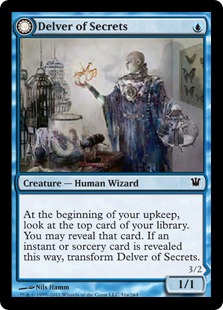
    • Delver(L3) Grow: Named for the scaling nature of the archetype’s staple creatures. Plays a few highly efficient, individually powerful threats and disrupts opponents with noncreature spells. Often trades card advantage for speed. It should be noted that there are very few grow decks in Modern. Grixis Control, the most high-profile grow deck in the format, is actually more of a midrange deck with its focus on accruing value via Snapcaster Mage and Kolaghan's Command. Grow is probably under-explored in Modern because of its historical weakness to BGx midrange, which has dominated Modern for years. For the sake of example, the most celebrated grow deck in Magic is Legacy's Canadian Threshold.
      Modern examples: Monkey Grow, Counter-Cat
  • Midrange: Midrange decks disrupt opponents first, then cast creatures to pressure their life total.
    • (L3) Rock: Named for the first Rock deck (developed by Sol Malka), whose primary threat—Phyrexian Plaguelord—bore an apparent resemblance to the WWE wrestler of the same name. Disrupts opponents with noncreature spells and planeswalkers and accrues card advantage with favorable trades, before taking games with efficient threats.
      Modern examples: Jund, Abzan, Mardu Control
    • (L3) Stompy: As discussed above, named by the inventors of Señor Stompy (developed by Team AustiKnight). Disrupts opponents with noncreature permanents, then finishes the game with high-curve threats. Stompy decks sometimes play similarly to fish decks, except the disruptive effects are more powerful and not on bodies (i.e. Thorn of Amethyst over Thalia, Guardian of Thraben). Since that means fewer attackers, stompy’s threats have to pull double-duty when it comes to closing out games and they're frequently more expensive.
      Modern examples: Skred Red, Colorless Eldrazi Stompy

Combo-control

Combo-control interacts with opponents while setting up a combo finish. While combo-control decks banking on permanent-based disruption are theoretically possible (think Chalice, Moon, and Through the Breach), they don't exist in Modern.

  • Spell-based: Interacts like a Weissman deck, but rarely plans to grind opponents out. Spell-based combo-control resolves its oops-I-win after having delayed its opponent's own win condition as much as it can, meaning it plays more to tempo than to attrition.
    Modern examples: Scapeshift

Aggro-combo-control

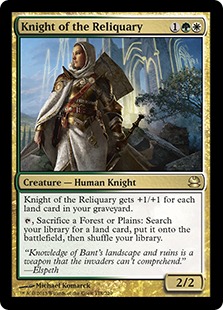
These decks take on a tempo or midrange role in many games, but also house a game-winning combo. The combo often addresses weaknesses the deck has in Knight of the Reliquaryrelation to the metagame (for example, Splinter Twin gave UR midrange an easy way to beat Tron).

  • Goodstuff: Decks full of quality Magic cards, often of the midrange variety. The combo card in these decks is generally weak on its own (i.e. Splinter Twin, Retreat to Coralhelm).
    Modern examples: Knightfall
  • Synergy: Synergy-based aggro-combo-control decks play a host of creatures with strong abilities and include a few powerful interactions. Previously helmed by Birthing Pod, these decks now revolve around Chord of Calling and Collected Company.
    Modern examples: Abzan Company, Kiki-Chord

Informing the Formula

With updated, clearly defined archetypes, the formula-based approach to deck naming becomes much more attractive. "Sultai Rock" is a fitting and descriptive name for Gerard Fabiano's "Sultai" from last year. "WR Prison" communicates a great deal more about the Chalice/Moon/Nahiri deck that made waves at an Open in May than "WR Control."

Of Modern's current branded names, only "Death's Shadow Zoo" bothers me. The deck just isn't a zoo deck. Its only reach spells are two Lightning Bolts, and it plays the full four Mutagenic Growth as well as 12 cantrips. It's clearly a pump-based aggro-combo deck. Death's Shadow is also a card I expect to creep into other decks as time goes by, all of them aggro decks of some variety, making "Death's Shadow Aggro" an equally unfitting name. Something like "Battle Rage Shadow," directly referencing the combo that makes the deck possible, or the more formulaic "Shadow Pump," would sit better with me.

Monkey's Last Word

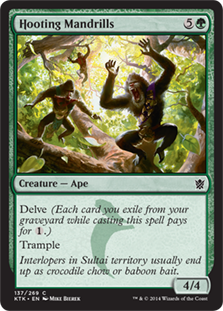
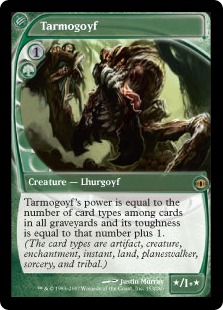
Hooting MandrillsBefore I end this article, I want to address the comments about Monkey Grow's name directly. Some users suggested "Temur Delver" or "Temur Midrange" as possible alternatives, but I think they're both too vague. Monkey Grow differs drastically from Todd Anderson's value-focused Temur Delver deck, or my own iGrow decks from the Grixis era. If we can agree that Monkey Grow is the only true grow deck of the three, though, I'm fine calling the deck "Temur Grow." Since grow decks are goodstuff decks, and we're unlikely to ever get strict upgrates to Delver, Tarmogoyf, and Lightning Bolt, we probably won't see many variations in the future.

I'm excited to hear what the Nexus readership thinks about naming conventions in Modern. Let me know in the comments!

Jordan Boisvert

Jordan is Assistant Director of Content at Quiet Speculation and a longtime contributor to Modern Nexus. Best known for his innovations in Temur Delver and Colorless Eldrazi, Jordan favors highly reversible aggro-control decks and is always striving to embrace his biases when playing or brewing.

View More By Jordan Boisvert

Posted in Modern, Opinion, TheoryTagged , , , 14 Comments on Clarifying Convention: Deck Names and Archetype Levels

Have you joined the Quiet Speculation Discord?

If you haven't, you're leaving value on the table! Join our community of experts, enthusiasts, entertainers, and educators and enjoy exclusive podcasts, questions asked and answered, trades, sales, and everything else Discord has to offer.

Want to create content with Quiet Speculation?

All you need to succeed is a passion for Magic: The Gathering, and the ability to write coherently. Share your knowledge of MTG and how you leverage it to win games, get value from your cards – or even turn a profit.

Insider: Cards Positively Impacted by Kaladesh

Are you a Quiet Speculation member?

If not, now is a perfect time to join up! Our powerful tools, breaking-news analysis, and exclusive Discord channel will make sure you stay up to date and ahead of the curve.

Kaladesh changes the relative competitive value of cards, and accordingly impacts demand and price. There have already been some observable movements that indicate things to come. There are also some apparent metagame shifts that will impact the demand of cards, and preparing for these shifts now could reap rewards in the near future. Today I’ll share the cards that I am bullish about with the impending release of Kaladesh.

There was an error retrieving a chart for Incendiary Flow

Red is great in Kaladesh, from its aggressive artifact theme with Inventor's Apprentice up to Chandra, Torch of Defiance, and it’s going to become a player in Standard. Incendiary Flow will be a key role player in nearly every red deck, and its price is going to rise accordingly because it’s currently seeing very minimal play and demand. The price has now moved beyond $0.75 from a low of $0.50. It will unquestionably move towards and past $1, and I expect it to sell for at least a couple dollars at Standard Grand Prix next year.

There was an error retrieving a chart for Tamiyo, Field Researcher

Bant Company decks of all forms currently comprise 45% of the MTGO Standard metagame, and when rotation happens all of those players will have to replace their Collected Company. Tamiyo, Field Researcher is already played in the deck in small numbers, and it’s an obvious card for people to slot into their decks. It also saw success in a Bant Angels deck at the SCG last weekend as a four-of, so all signs point to this being poised for massive growth.

There was an error retrieving a chart for Gisela, the Broken Blade

Gisela, the Broken Blade is another great four-mana option, and its recent success in Bant Angels and previous success in B/W Angels make me believe it’s a winner.

There was an error retrieving a chart for Heron's Grace Champion

Bant Humans may opt to replace Collected Company with Heron's Grace Champion, another instant-speed threat that adds to human synergy.

There was an error retrieving a chart for Declaration in Stone

On the same logic as everyone needing to replace cards, Dromoka's Command leaving and making way for Declaration in Stone to fill in as Standard’s best removal spell means its demand and price must rise.

There was an error retrieving a chart for Collective Effort

In some ways Collective Effort could be the spiritual successor to Dromoka’s Command, a removal spell that includes incidental enchantment and the ability to put +1/+1 counters on creatures. The card works well with servo tokens from Fabricate creatures, and it’s removal against Gearhulks, so it looks to be well positioned and a big player in the future in Standard.

There was an error retrieving a chart for Cryptolith Rite

With Dromoka’s Command leaving Standard, Cryptolith Rite feels a lot less pressure and will now be comfortable to ramp into game-enders like the Eldrazi Displacer - Brood Monitor combo, Emrakul, the Promised End, or new threats like Verdurous Gearhulk, which also would be quite effective with Eldrazi Displacer.

There was an error retrieving a chart for Fevered Visions

Fevered Visions and the U/R Thermo Alchemist deck in general were held down by Dromoka’s Command, so it’s a great pickup right now alongside other staples of the deck like Thing in the Ice, which has nowhere to go but up.

There was an error retrieving a chart for Thing in the Ice
There was an error retrieving a chart for Eldrazi Displacer

With Collected Company gone, Eldrazi Displacer is the best way to get extra mileage from Reflector Mage, and it’s great for getting extra value from Gearhulks, especially Cataclysmic Gearhulk, which it combines with to create a battlefield-wiping engine. I can also imagine a resurgence of Eldrazi decks with the decline in Reflector Mage. The loss of pain lands mean multi-color Eldrazi decks will be difficult, but last season the most successful Eldrazi deck was mono-white, and Eldrazi Displacer would be a great tool there.

There was an error retrieving a chart for Reality Smasher

The price of Reality Smasher has bottomed out. I don’t believe the price is driven much by Standard as it sees almost no play, and given the fact that it’s part of the fastest growing Modern deck, Bant Eldrazi, is an Eternal staple, and has plenty of casual appeal, I absolutely love this spec.

There was an error retrieving a chart for Tireless Tracker

Tireless Tracker remains one of the best creatures in Standard, and its price has been stable for a long time. Now that players will stop drafting it and adding to supply, the price will begin to grow, exacerbated by the ever-growing Standard player base.

There was an error retrieving a chart for Nahiri, the Harbinger

“Tapped artifact” means vehicles that have attacked, which makes Nahiri, the Harbinger particularly excellent for removing vehicles, and could give it added value in the new metagame.

There was an error retrieving a chart for Stone Haven Outfitter

Stone Haven Outfitter works particularly well with the new equipment Inventor's Goggles - which can attach for free - and players like Craig Wescoe are already brewing with the card and sharing decklists, so the price is set to rise.

There was an error retrieving a chart for Eldritch Evolution

Eldritch Evolution is only as good as the creatures it can find, and the cast it can find just got a lot better with the printing of the Gearhulk cycle. These creatures are fantastic to find because they generate value when they enter play, and they can even be sacrificed to find a bigger threat up the curve.

There was an error retrieving a chart for Mindwrack Demon

Mindwrack Demon now feels much less pressure from Reflector Mage since there's no more Collected Company to find it, and the Demon gains a great new toy to dig for in Scrapheap Scrounger.

There was an error retrieving a chart for Westvale Abbey

I’m a fan of Westvale Abbey, which is at a very low price. It works very well with anything that makes Servo tokens, including Servo Exhibition and Fabricate creatures like Weaponcraft Enthusiast.

There was an error retrieving a chart for Lupine Prototype

Lupine Prototype has been the #1 seller on Tcgplayer for a couple weeks in a row, and it’s starting to see price growth. There’s a lot of hype around the card because of Kaladesh, partially because it’s an artifact but more specifically because it’s great to crew vehicles with its high power. It could also be strong in a hyper-aggressive artifact deck, and could be very powerful when combined with Bomat Courier as a way to empty the hand. It’s still cheap, and it might not go much higher, but if it’s played in a tier-one deck it certainly will.

The online price of Genesis Chamber doubled overnight earlierthis week, and my research shows that it’s due to its interaction with the new Panharmonicon, which doubles the amount of tokens you receive. This is so powerful because this doubles up each trigger of cards like Impact Tremors and Purphoros, God of the Forge, which combined with Panharmonicon means that the damage is effectively being quadrupled. Combined with something like Norin the Wary, another card on the rise, it will quickly kill the opponent. It adds some more weight to the fringe Modern deck attempting to use these cards, and it certainly has a ton of EDH and casual appeal.

There was an error retrieving a chart for Norin the Wary

-Adam

High Stakes MTGO – Sep 11th to Sep 17th

Are you a Quiet Speculation member?

If not, now is a perfect time to join up! Our powerful tools, breaking-news analysis, and exclusive Discord channel will make sure you stay up to date and ahead of the curve.

Hi everyone and welcome back to High Stakes MTGO!

With the Masterpiece Series introduced last week, Kaladesh appears more and more as a top notch set for both design and power level. Whether this will translate into an exiting new Standard metagame I have no idea. I'm unfortunately not enough up to date and ahead of the deck-building curve to attempt to predict what could breakthrough during Pro Tour KLD. From my speculator perspective and with limited time to review and access all the information, the only thing that matters now is putting my hands on as many potential hot potatoes as possible before the next Pro Tour.

Last week I discussed what I consider a decent speculative strategy to use approaching a Standard rotation. On MTGO, and for speculative purposes, we can only focus on previous sets to pick whatever we think will go up. It is virtually impossible to reasonably speculate on cards from a set being released, with the exception of maybe a few quickfips for moderate profits.

As in the previous weeks, and for the rest of this month, I'm trying to grab Standard targets I think have a decent shot at increasing in price this Fall. Along with two recently flashback-drafted Magic 2011 cards, let's see what I did this past week. In the sales section, I'll also comment on what I consider the end of my gigantic Magic Origins painland spec.

The snapshot of the portfolio is available here.

Buys This Week

bulk

I had these posted in my portfolio but completely forgot to comment on last week. No secret tech here, these picks are pure bulk specs with nothing else in mind than waiting (for a very long time if needed) for something to happen.

These are some of the few Modern bulk targets I keep a eye on. I'm looking for cards with a very singular effect that could, one day, break through in Modern. Countless times in the past we've seen cards move from zero to several tix thanks to a sudden, often illusory, increase in Modern playability. A perfect example and the latest to date is Allosaurus Rider, which went from a six-year-long bulk price to 3 tix overnight.

I'm looking to acquire these cards as close as possible to 0.05 tix and I'm waiting for a spike over 1 tix at least. As you can see it's not always easy to buy these guys at 0.05 tix or less. I'm not willing to pay more than 0.05-0.1 tix and I'm totally fine waiting for the prices to fluctuate down to 0.05 tix again before buying more playsets. My goal is to accumulate between 100 and 200 copies to make any sort of spike worth it if it happens.

You can also see in my portfolio than I didn't even bother putting how much I paid in total for the copies I currently owned. I simply buy these cards at or under 0.05 tix when I have the opportunity and consider this money kind of burnt, given that the investment is really meaningless in terms of tix at this level.

leylines

These were the two main cards I was lurking over during the Magic 2011 flashback drafts two weeks ago. They are the two most played Leylines in multiple formats and have somewhat limited print runs. As for all Modern staples during the flashback draft series, these cards rapidly lost value and rebounded as soon as Friday (September 9th in this case). With prices not far enough from their max, especially for Leyline of Sanctity, I was resolute to pass on these targets.

However, as the M11 flashback drafts were coming to an end the price of these two Leylines dipped a little bit more. The white Leyline actually got even cheaper than during the first weekend after the M11 drafts opened. I then decided to grab a few playsets of these two enchantments.

I wanted to buy more but I was not really willing to pay more than 5 tix for Leyline of Sanctity and 4 tix for Leyline of the Void so this what I ended up with. The additional dip didn't last long and both cards are already up.

cf

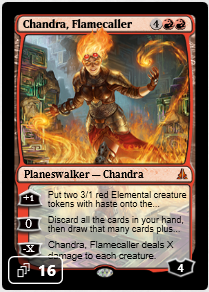
The presence of two new versions of Chandra in Kaladesh, including the promising Chandra, Torch of Defiance, shook the price of Chandra, Flamecaller a little. From a stabilized 10-11 tix price the red planeswlker from Oath of the Gatewatch fell back to 6.5, its historical lowest point.

I do think though that the two Chandras can coexist in the next Standard environment and therefore doubled down on my investment with four more playsets of Chandra, Flamecaller. We'll see in about a month if this "rebuy" pays off.

gaoz

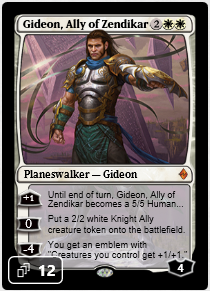
All abilities of the version of Gideon should still be very relevant in the new Standard metagame. At 15-16 tix, Gideon is currently at what appeared to be a solid floor. With a proven ceiling of at least 30 tix I think this is a great bet going forward in the post-Kaladesh Standard.

emn

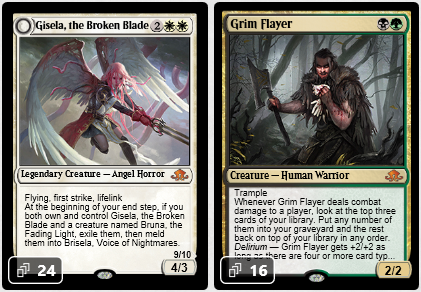
Grim Flayer is depicted as the new Dark Confidant in a few Modern decks, including the trendy versions of Abzan and Jund decks. As it seems, the Flayer might be a highly played card in both Modern and Standard, turning it into a decent speculative opportunity as well.

Similar to others, even after acknowledging this I felt like it was either too early or too late from a price standpoint to jump on the Grim Flayer bandwagon. When the price dropped about 4 tix last week it was just the opportunity I was hoping for and I grabbed four playsets of this guy.

Ideally I want to get my hand on more copies, and I only bought 16 copies not exactly knowing where the price would go from 7 tix. It's obviously higher today but I think there's a chance to catch another opportunity around the release of KLD on MTGO. We shall see.

Although she has a much less impressive list of accomplishments to date, I think Gisela has the characteristics of a powerhouse creature in Standard. The melded card is also something not to totally ignore. Gisela reminds me of another angel: Sublime Archangel. Besides color, power/toughness, and type I could also see the price trajectory of these two angels becoming more similar in a month from now.

I also didn't want to commit too much to Gisela now, as with Grim Flayer. I'm leaving some room to buy more copies of Gisela, the Broken Blade if the price drops by the end of the month.

Sales This Week

Scars of Mirrodin flashback drafts just hit us this past week. I had bought [/card]Mindslaver[/card] back when the original Mirrodin was flashback-drafted. I sold part of my stock at a small profit and there was no reason to keep the few copies I had left with fresh supplies coming in. With a total loss of 5 tix this spec never went anywhere and [card]Mindslaver[card] is not what you want to play in Modern these days anyway.

Probably the last round of above-bulk sales for my stock of painlands. I close my biggest position ever with 910 copies of Yavimaya Coast. For the record it was a profitable ride with a total gain of 255 tix, but it was all but simple.

I still have a combined 725 copies of Battlefield Forge, Caves of Koilos and Llanowar Wastes, which is close to nothing valuewise. With prices barely above bulk price at this time I am going to call it the end of my painland giga-spec and store these guys for hopefully better days and better prices long after they rotate out of Standard.

Even with the value of the remaining lands considered zero this was still a fairly successful ride. Just by the numbers, I invested 2782 tix for a net profit of 1233 tix (44.3%). The Forges never did anything and clearly put me down here. Without them, the four other painlands have an average profit percentage of 76%.

The initial strategy was great but the final results a little bit underwhelming considered that I was counting on doubling up when I started this, based on previous years' trends of other core set lands. Nevertheless, with a set of only five specs of such a large scale, ending up with a cumulative profit of 44% after about a year is clearly a success. The largest position I'm currently holding are the Battle for Zendikar full sets which are very far from such a performance.

On My Radar

My goals for this month remain unchanged. I'll keep looking closely and trying to grab anything I find worthwhile before Pro Tour Kaladesh and before Standard rotates. In between this, I'm also keeping a close eye on Modern positions and flashback drafts. I'm not expecting big price drops because it's a third set, but New Phyrexia certainly has a lot of great Modern staples and at all levels of rarity.


Thank you for reading,

Sylvain

Insider: MTGO Cards to Buy, Sell or Hold – Episode 11

Are you a Quiet Speculation member?

If not, now is a perfect time to join up! Our powerful tools, breaking-news analysis, and exclusive Discord channel will make sure you stay up to date and ahead of the curve.

Welcome back investors! As I'm writing this, I'm struggling with the last Magic Online update and already missed a few investments I would have liked to make. Fortunately, it's a coincidence that prices haven't changed much in the last two days - it's been a bearish week - but this trend will change soon with the release of Kaladesh. This is the best moment to stock up on Standard cards before they start to rise because of the new metagame and the new demand it will create. With that in mind, this week I will cover exclusive Standard cards.

Let's check the five cards I have for this episode:

Nahiri, the Harbinger

nahiri-the-harbinger
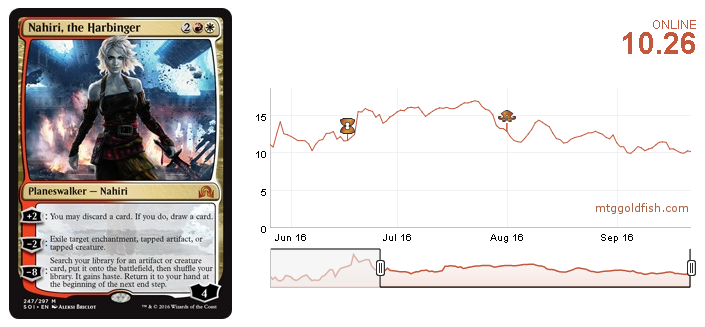
Nahiri hasn't really been played in the current Standard metagame but has somehow managed to keep a high pricetag, thanks mainly to being a 4-of in Modern Jeskai. Nahiri could spike really high if she starts to see some play in Standard, but I dont think she would be able to maintain that high price. So I'm looking to close this position as soon as possible; first I will see how she performs in the first week. If nothing happens I will still hold her until the Pro Tour, if she is still unplayed I will try to close the position at any profitable price as soon as possible, or consider closing it for a loss to minimize the impact. But the potential is here for a big jump.
Verdict: BUY

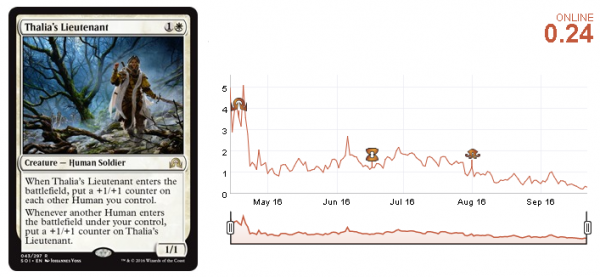
 Thalia's Lieutenant

thalias-lieutenant

The best card in the Humans deck is at it all time low, both because of increased Limited offerings and because investors don't think the deck it fits in is very good right now. We can't know for sure what new decks will be played, and if at any point of the new Standard the deck is played or Thalia's Lieutenant finds a new home in another deck the price will rebound. Shadows Over Innistrad will be legal in Standard with Kaladesh and the next three sets to be released, so there's a long time to wait for a spike.

Verdict: BUY

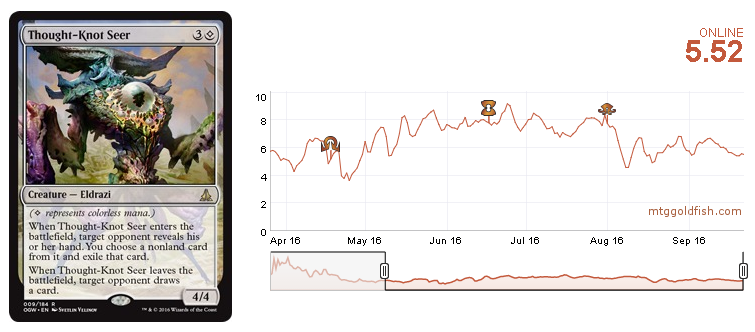
 Thought-Knot Seer

thought-knot-seer
Another powerful card that isn't played much in Standard but is a staple in Modern. Thought-Knot Seer is a card I want to have in my portfolio before the new metagame adjusts, and I'll be looking to close the position as soon as it sees a spike. But unlike Nahiri I like holding the eldrazi for a little longer if it is still unplayed after the Pro Tour.
Verdict: BUY

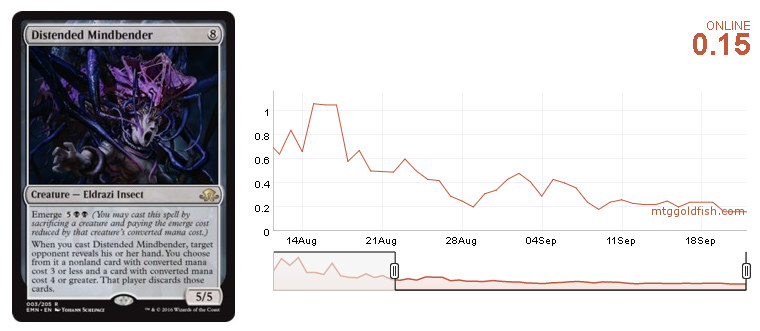
Distended Mindbender

distended-mindbender
Distended Mindbender was one of the most promising cards when Eldritch Moon was spoiled, and it is played in a few versions of the delirium decks but not much more. So many Limited events online crashed its price. I don't think we will be able to get it any cheaper and it's a good card to have in our portfolio. A new meta is a new chance for it to see more play and given that it's from EMN I wouldn't mind holding it for a longer time. You might not be interested in cards priced this cheap since you will have to buy multiples copies to make it worth the time, but they are very profitable investments from a percentage standpoint.
Verdict: BUY

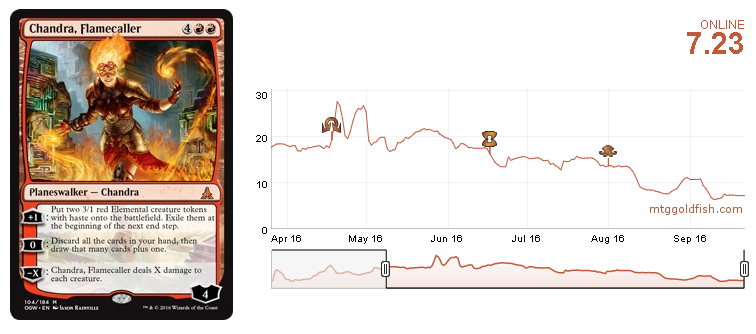
Chandra, Flamecaller

chandra-flamecaller

Though she was cost 25 tix, Chandra, Flamecaller is not doing very well these days. Sitting at a dirt cheap 7.25, I still think she is one of the best sweepers in the new meta and is still an overall powerful card. I think she will bounce back to 10+ tix sooner rather than later. A great pre-Pro Tour speculation in my opinion.

Verdict: BUY


See you in the next episode! If you want me to write about a particular card just mention it in the comments below. Wish you a great week!

Insider: Kaladesh Top 10

Are you a Quiet Speculation member?

If not, now is a perfect time to join up! Our powerful tools, breaking-news analysis, and exclusive Discord channel will make sure you stay up to date and ahead of the curve.

Welcome back, worthy inventors, to another edition of the Top 10! This time around we will be inspecting the gears that make Kaladesh tick and putting them all in their respective places. While the set seems like an absolute blast for Limited, it does initially seem lacking in terms of the power level we expect for our Standard cards.

There are some definite question marks on cards that give or require energy as well as the vehicles, and the two new mechanics are somewhat up in the air in terms of how powerful they are. If any prove to be functional for Standard they will be good quick flips, but I think most of them will stick to just being fun Limited cards.

As always, we will begin with the cards that almost made the Top 10 cut and discuss them in the Honorable Mention section.

Honorable Mention

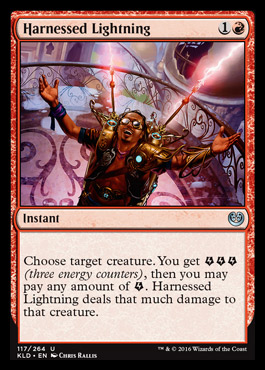
Harnessed Lightning
harnessedlightning

The one energy-based card that we know will be good enough for Standard is Harnessed Lightning. This Searing Spear provides versatility to your removal spell arsenal. It may only be able to hit creatures, but we know this effect is good enough for Standard play.

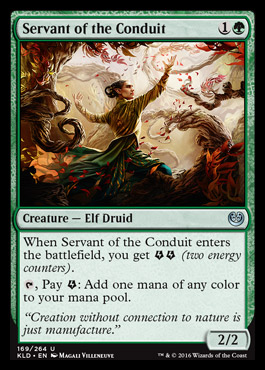
Servant of the Conduit
servantoftheconduit

Another energy-based card I like is Servant of the Conduit. Servant is fine just as a 2 mana 2/2, but if you need to ramp it can be used as an accelerant as well. There are some other great 2-drops in the set too like Voltaic Brawler and Veteran Motorist though so I’m not sure which of these creatures will see competitive play.

Gearhulks

Over the past two weeks I spoke about how much I liked all the Gearhulks. Some of them made it onto the Top 10 but even though I love and will probably play both Noxious Gearhulk and Combustible Gearhulk, I don’t think they will have enough impact on any format to justify their inclusion in the Top 10. They both provide a great power level for their cost and they are both good enough to include in your Standard deck, but they don’t scream a need to be played.

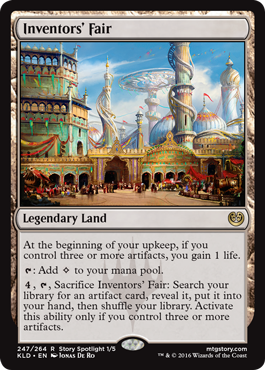
Inventors' Fair
Inventor's Fair

There has already been talk about Inventor's Fair in Affinity as well as Lantern Control in Modern. I’m not sure how much impact, if any, this land will have on Standard, but Eternal implications are always important to pay attention to with any new card.

Aether Hub
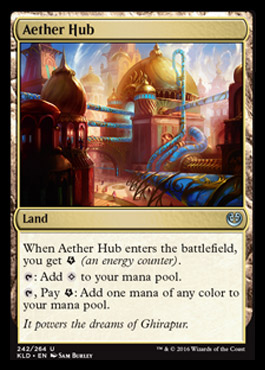
aetherhub

Aether Hub on the other hand, seems great for Standard and Modern as well as maybe even Legacy. Tendo Ice Bridge has been a playable card in specific archetypes for a long time now and we are basically getting the same card as an uncommon. I really like this land for Eldrazi decks in general and I think it will see tons of play in years to come in a variety of places. There may be a bigger foil multiplier here too so keep your eyes open for those as well.

Depala, Pilot Exemplar
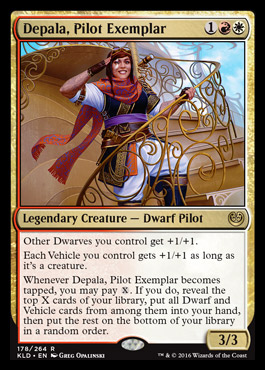
depalapilotexemplar

Is there a Dwarven tribal deck lurking out there!? Depala, Pilot Exemplar is the most interesting tribal inclusion we’ve seen in a long time. My guess is that we will need the next set in order to try to build our new tribe into a playable constructed deck, but only time will tell.

Ok, enough with the "almost got there" category. Let’s jump into the Kaladesh Top 10!

10. Saheeli Rai
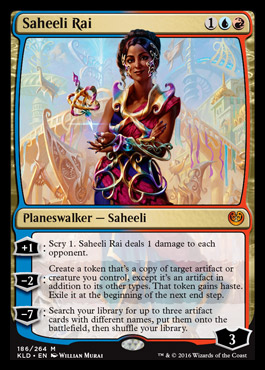
saheelirai2

Coming in at the 10th spot is the unusual Saheeli Rai. Previously we have seen many different planeswalker abilities, mostly Tezzeret related, paired with artifacts. This time around we have the slimmed-down version with Saheeli. Her three mana cost is intriguing but her abilities are hard to evaluate without considering all of the artifacts in the format.

Her +1 is decent but nothing special. Your opponent takes one damage and you get to scry 1. Both are good things but they don’t protect her. It’s the Izzet planeswalker’s -2 that pushes us to brew with her. Being able to create a copy of any creature or artifact not only means we need to dissect all the artifacts, but the creatures as well. Think about copying one of the Gearhulks or some other giant monster. There are a lot of possibilities and they are all relevant because you can utilize the -2 the first turn you play her.

There are a lot of unknowns with Saheeli Rai, but no matter what you copy or how many times you scry 1, she will always be a decent inclusion in your deck. Now the main question will be, is there a home for her?

9. Toolcraft Exemplar
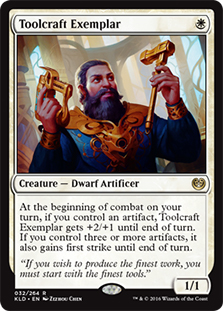
toolcraftexemplar

When I saw Toolcraft Exemplar, my first thought was that this creature could fill the aggro hole in the theoretical post-rotation Standard environment. We are losing some key components from Mono White Humans, so much so that I don’t think the deck can survive rotation. Toolcraft Exemplar though provides us some great rewards for not only playing aggressively but also utilizing some artifact synergies.

There are plenty of cards that pair well with our new dwarven one-drop but Servo Exhibition jumps out right away. Red would pair well with white for this strategy thanks to cards like Inventor's Apprentice and Pia Nalaar. If the deck ends up with too many artifacts in play, we may even want to run some number of Welding Sparks too. Black is another option for cards like the seemingly great Scrapheap Scrounger, who I probably should have had as an honorable mention.

My main concern though is with how the +2/+1 is applied though. This isn’t a static effect like you might initially think. The pump is a trigger that goes on the stack at the beginning of combat and only lasts during your turn. Presumably Liliana, the Last Hope will be a big part of the new meta and if that’s the case the Toolcrafter won’t be as good as he would otherwise be. I think this strategy is definitely worth considering though because attacking for three on Turn 2 is no joke. That’s some real pressure your opponent has to deal with right away.

8. Unlicensed Disintigration
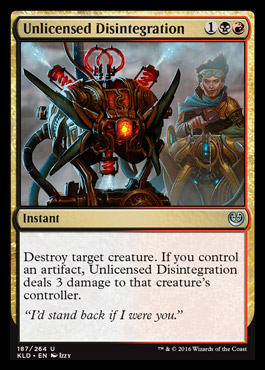
unlicenseddisintegration

With all the narrow removal spells that have been printed in the past couple years, it’s nice to see a removal spell that kills any creature. Not only that, but as long as you have an artifact, it also deals three damage to the controller too. I think Unlicensed Disintigration is great and it should see tons of play. I don’t think it’s good enough for older formats but as far as Standard goes, I think it’s going to be good.

7. Filigree Familiar
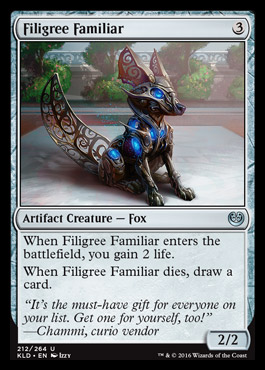
filigreefamiliar

Many of you may not know of my deep, undying love for Solemn Simulacrum or Bottle Gnomes. Due to my immediate comparison of Filigree Familiar to a hybrid of those two cards, I may be overvaluing the importance and power of this new artifact.

What’s not to love though? Sure it’s only a 2/2 for three mana, but it also gains you 2 life and replaces itself when it dies! Not to mention, it’s adorable right?

Seriously though, I think this should see a lot of Standard play. It can go in any deck and with the way the card pool is shaping up, Familiar should be trading with many of the creatures in the format as well.

6. Cataclysmic Gearhulk
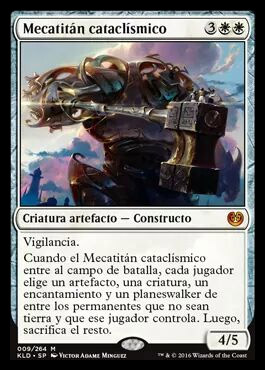
cataclysmicgearhulk

I’ve spoken about Cataclysmic Gearhulk at lot recently. The card is well suited to build a deck around so that you keep all your permanents and your opponent loses most of theirs. I think it would pair well with Filigree Familiar too. I like this Gearhulk a lot more than a more traditional card like Fumigate because I think there is a lot more room to gain advantage than just taking out a couple of your opponent’s creatures.

5. Dovin Baan
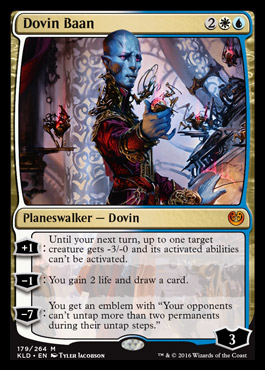
dovinbaan

Blue-White Planeswalkers are always interesting. We’ve had Venser, the Sojourner and Narset Transcendent, who both have unique abilities. This time around, the Azorius Guild is adding a more typical planeswalker to their ranks. The way I see Dovin Baan is similar to Jace, Vryn's Prodigy. He has one ability that lowers the power of your opponent’s creature and one that gives you some card advantage. His ultimate is a bit more ultimate, which is great. Your opponent will have a hard time winning with only two permanents they can untap. For four mana you are getting a solid return on your investment. This isn’t going to break the format or anything but he’s a good dude that will be decent in Standard. With blue and white having a lot of solid cards already, I expect this walker to see some play on that fact alone.

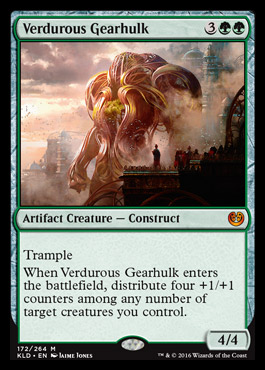
4. Verdurous Gearhulk
verdurousgearhulk

There is a lot of strategy to Verdurous Gearhulk and I expect him to push green into prominence yet again. Although we may compare the green Gearhulk to Wolfir Silverheart, the two cards aren’t really that similar. Silverheart may provide bigger bonuses overall, but the Gearhulk is just as good on an empty board as one that’s flooded with permanents.

I’ve been thinking about all the great green creatures that we’ve seen in play frequently from Bant Company like the werewolves and Sylvan Advocate — what’s going to happen to them post rotation? I think that’s a huge question mark on the new format. Verdurous Gearhulk pairs seamlessly with them. Play a bunch of cheap aggressive creatures and then force them through your opponent’s defenses by adding some +1/+1 counters.

You know what else pumping guys pairs well with? Nissa, Voice of Zendikar makes an 0/1 army. That sounds great to include in a Verdurous Gearhulk deck. This creature is good with other creatures and I think we don’t know quite how good it really is yet.

3. Torrential Gearhulk
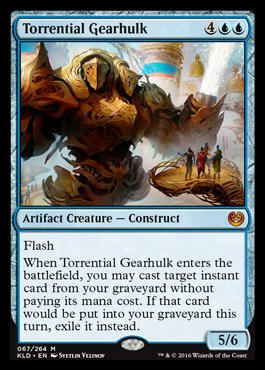
torrentialgearhulk

Last week I spoke about how impactful I thought Torrential Gearhulk would be. After thinking on the set a lot, it made it all the way up the list to No. 3. Standard players are going to grow to fear this card and Commander players are going to grow to love it. You can flashback any instant in your graveyard, so there is a lot of potential versatility. Playing this titan in a control deck with counters and removal spells seems obviously powerful. While we may never see this guy as a four-of in decks, I think he will still be an important part of the meta.

2. Spirebluff Canal
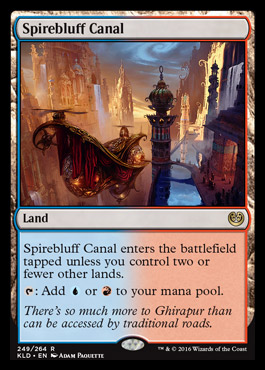
spirebluffcanal

Spirebluff Canal may be the best of the enemy colored Fast Lands, but they are all going to be great. Many of them will see play in Modern and all of them should be great in Standard as well. Before the Inventions were announced, I was preselling these above TCG Mid, which I never do. Now that we know we will have new “Expeditions” for everyone to crack packs for, the potential price ceiling of this cycle is much lower than it would have previously been.

Even though the prices may be lower, the playability is high. It’s strange that in terms of Eldrazi, the Pain Lands are better than the Fast Lands, but for the rest of the decks these new additions are clear upgrades. My philosophy is always to get a play set of all the rare lands so I have access to any mana base I need in Standard. It’s been my thought process for over a decade and I recommend it to everyone. Switching decks is easier this way as well as splashing colors in your deck.

1. Chandra, Torch of Defiance
chandratorchofdefiance

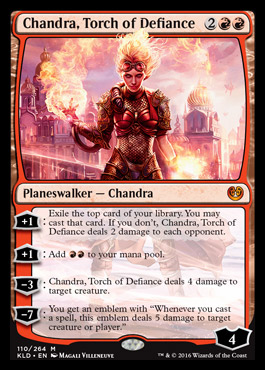
Chandra, Torch of Defiance is not as good as you think she is. Don’t miss what I’m saying here. New Chandra defies the current mold for planeswalkers, just like Jace, the Mind Sculptor did. But even with her four ability set, that doesn’t mean she is free from weaknesses.

For instance, what will you do with Chandra if your opponent casts Verdurous Gearhulk and makes two 5/5’s? They can choose to put one counter on the Gearhulk itself and then the three other counters on a random 2/2. Then your -1 ability won’t kill either of their guys. This is yet another reason the green Gearhulk will be powerful, not to mention how well it pairs with Lambholt Pacifist.

Getting back to the Torch of Defiance, her +1 card advantage ability isn’t quite as good as we’ve seen previously either. With Chandra, Pyromaster, you could use any card you revealed with her ability. Unfortunately, with our newest iteration, you cannot, I repeat can not play lands. Her wording specifically says cast so that won’t include any lands.

Even though there will be times that the four damage won’t kill creatures, you will have other removal spells. Also, four damage does deal with the majority of creatures you’ll be facing in Standard.

One ability Chandra has that may be underrated at first is the two additional mana +1 mode. This is a lot of acceleration. It may be temporary, but if you untap with her in play your options will be plentiful. You should be able to cast one big spell or double up on spells for the turn. Either way, that’s a powerful line of play.

So, even though Chandra, Torch of Defiance may have some identifiable weaknesses, she is still the best card in the set by a long shot. She pushes the power level of planeswalkers as a whole more than we’ve seen in over five years.

Between the demand she will create as well as the demand from the Masterpiece Series, I don’t know how any other cards in the set will be worth much money at all. If you don’t need cards from this set immediately I would suggest holding off on acquiring them unless you get a great deal. Because of this likely outcome, I’d advise shipping your high end cards quickly before they start their downward spiral. The only exception to that is with Chandra. She will be difficult to get your hands on so if you open her, I would probably just hold onto her. You may be able to buy her for less later, but holding seems the safer play.

That's all the time I have today. As always, I look forward to your changes to this list. Would your Top 10 be different? Did I miss an important card from the spoiler? Let me know in the comments below and we'll get the conversation started.

Until next time,
Unleash the Force of Kaladesh!

Mike Lanigan
MtgJedi on Twitter

Midrange Languishes: Analyzing SCG Orlando

Are you a Quiet Speculation member?

If not, now is a perfect time to join up! Our powerful tools, breaking-news analysis, and exclusive Discord channel will make sure you stay up to date and ahead of the curve.

This week, I want to focus on SCG Orlando. While it’s true that Kaladesh will be out shortly, bringing with it a possible shift in Modern, discounting a whole high-level event’s worth of data due to the fact that the format might change soon sounds a little foolhardy to me. I plan on discussing Kaladesh spoilers and theorycrafting soon, but for now, I’m sticking within the realms of quantifiable data. As we are on the brink of a possible shakeup, this week’s analysis will be framed more along the lines of expressing “broad format conditions” rather than “specific time-sensitive advantages.” Let’s begin!

blighted-agent

To begin, let's look at a breakdown of the Top 8 finishers at SCG Orlando:

  • 2 Infect
  • 1 Goryo’s Vengeance
  • 1 Affinity
  • 1 Knightfall
  • 1 Bant Eldrazi
  • 1 8-Rack
  • 1 RG Valakut

In contrast to recent event results, Orlando’s Top 8 looks…fun. By this I mean that it doesn’t really look like results I’ve personally come to expect from a high-level Magic event. No Jund in the Top 8, no Jeskai Control, no Abzan. Recent top performers like Burn, Dredge, and Death's Shadow Zoo are also absent. In their place? FNM decks! When I see 8-Rack, I immediately think about that one guy at FNM, or the goofball on MTGO that has Liliana of the Veil but not Tarmogoyfs and ruins somebody’s day. Knightfall is another deck we see in Open Top 8's only rarely. Of note too are the contents of the second page---a smattering of Eldrazi and Infect and still no BGx to be found. What's going on here?

[wp_ad_camp_1]

Midrange in a Bind

Clearly, the format conditions have shifted to a point where midrange is bad for results like this to be happening. A large portion of this blame can be placed on Bant Eldrazi, which is just powerful enough at every point of the game to give reactive decks like Jund and Jeskai Control fits.

While almost every deck in the format can claim a strong matchup against Burn given the right amount of sideboard hate, players are currently spread thin trying to fight Infect, Affinity, Eldrazi, Dredge and a multitude of other unfair strategies. As a result, the format has gotten more linear and non-interactive as a result. The midrange decks "fighting the good fight" have largely been pushed to the side, leaving everyone in the room to their own unfair devices. Modern has become an amalgamation of turn-four decks and linear strategies focused on executing their own gameplan as fast and consistently as possible.

Here's your champion:

Infect, by Brad Carpenter (1st, SCG Orlando)

Creatures

4 Blighted Agent
4 Glistener Elf
4 Noble Hierarch
1 Dryad Arbor

Instants

2 Apostle's Blessing
4 Become Immense
1 Dismember
1 Groundswell
4 Might of Old Krosa
4 Mutagenic Growth
1 Spell Pierce
2 Twisted Image
4 Vines of Vastwood

Sorceries

1 Distortion Strike
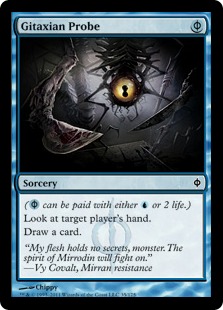
4 Gitaxian Probe

Lands

2 Forest
2 Breeding Pool
4 Inkmoth Nexus
3 Verdant Catacombs
3 Windswept Heath
3 Wooded Foothills
2 Pendelhaven

Sideboard

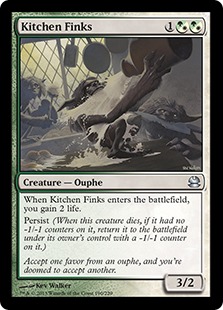
3 Kitchen Finks
1 Viridian Corrupter
2 Wild Defiance
2 Dismember
1 Dispel
2 Nature's Claim
2 Spell Pierce
1 Twisted Image
1 Distortion Strike

With Jeskai Control and Jund Midrange on the downswing, the time has never been better for Infect to put up strong results. When removal decks are no longer around and everyone's streamlining their builds in an attempt to race, Infect will continue to dominate. Affinity, Burn, and fast combo can try and race, but Infect can win on turn three frequently, and turn four consistently, even through some disruption. This was clearly Infect’s week. Kitchen FinksMost lists are usually tight, but there is still some information to be gained here.
3 Kitchen Finks in the board is a clear sign to me that Burn was forefront in Brad’s mind. This line of thinking is easy to get behind, seeing as Burn just won one of the latest major events, but Brad’s choice also highlights what we suspected before: midrange is just not good right now. With few removal decks around to grind us out, Brad was able to take advantage of great positioning, while tuning his sideboard to fight his toughest suspected enemy on the weekend.

Looking ahead, if players continue to pack hate for Burn we could see one of two scenarios. The first involves Burn being successfully hated out of the top tier by archetypes continuing to pack midrange lifegain cards like Kitchen Finks to fight it. This doesn’t automatically translate to decks getting "slower" by employing value cards, but conditions could possibly head in that direction.

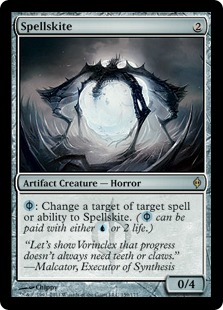
In a diverse field like the one we see now, choosing a flexible spell like Kitchen Finks that can gain life while also providing value in a variety of matchups is much more desired than a narrow answer like Leyline of Sanctity (or Worship). For Infect specifically, they often must choose between Kitchen Finks and Spellskite due to mana constraints. Inkmoth NexusAs an aside, Spellskite is (in my mind) the worse choice right now. The current lack of removal in the format reduces its necessity and it's weak to the Ancient Grudge/Destructive Revelry we can expect Burn to be siding for our Inkmoth Nexus.
The second scenario involves an opposite set of results. Players cut sideboard spells for other matchups that have been held down for a while (Dredge/Living End) to fight Burn, at which point those decks start to come back into the fold. Both scenarios lead to a continued linear metagame, but the specific makeup is important to consider. In a slower metagame we might start to see midrange take some market share again, and things could start to look similar to a few weeks ago, when Dreadbore was the hottest card on the block thanks to its ability to kill the "unkillable" Nahiri, the Harbinger. In a Dredge metagame, one linear combo-type deck is replaced with another, and Infect continues to put up strong results.

Griselbrand & Co.

Another linear deck that has been outperforming expectations of late is Goryo's Vengeance Reanimator. Here was the deck that took 2nd place:

Goryo's Vengeance, by David Sharfman (2nd, SCG Orlando)

Creatures

4 Griselbrand
4 Emrakul, the Aeons Torn
4 Simian Spirit Guide

Instants

4 Goryo's Vengeance
4 Izzet Charm
2 Lightning Bolt
4 Through the Breach

Sorceries

2 Collective Brutality
4 Faithless Looting
4 Serum Visions
4 Sleight of Hand

Lands

1 Island
1 Mountain
1 Swamp
1 Blackcleave Cliffs
1 Blood Crypt
1 Bloodstained Mire
2 Creeping Tar Pit
1 Darkslick Shores
4 Polluted Delta
4 Scalding Tarn
2 Steam Vents
1 Watery Grave

Sideboard

2 Quicksilver Amulet
4 Leyline of Sanctity
1 Murderous Cut
3 Anger of the Gods
4 Thoughtseize
1 Vandalblast

Who needs Borborygmos and Nourishing Shoal when you can just Emrakul, the Aeons Torn all day?! Collective Brutality is the real key to this deck, giving the archetype a maindeck piece of hand disruption while simultaneously throwing a Griselbrand in the yard (or Emrakul when we have four mana to Vengeance it back immediately). Boseiju, Who Shelters AllTen cards that set up our combo while looting or disrupting our opponent (and killing things, and gaining life) is a bunch of good things, and Sharfman’s deck looks terrifyingly consistent.
Really though, this deck is doing well thanks to its speed and the lack of Thoughtseize and counterspells in the format. Sharfman could totally play a Boseiju, Who Shelters All and doesn’t, which should ring some alarm bells that the format is currently pretty polarized. With four Leyline of Sanctity in the board to fight Burn, and a bunch of removal for the other aggro decks in the format, Goryo’s Vengeance can beat up on the top decks, while taking advantage of those decks' role in pushing out other strategies that could give a list like this trouble (Living End/Dredge).

Stemming the Tide

It seems to me that if we’re looking to stop this arms race of linear decks, the answer lies in the viability of midrange. Without a true stopgap at the top end of the format (a title once held by Splinter Twin) I imagine we’ll continue to see conditions like these, where midrange is successfully hated out for a while, and everyone carries on playing whatever crazy decks they can, Thought-Knot Seerrioting for a while until the format police can suit up and get things under control.
The real villain here isn’t Infect or Burn, as they’ve been around for years and the tools to beat them have been fired up multiple times in the past. No, the blame for the conditions of this past weekend rest squarely on the shoulders of Bant Eldrazi.

While it only put one copy in the Top 8 of this event, the triple GP weekend and the events leading up to it are not that far in the past. I still believe Bant Eldrazi is incredibly powerful, and primarily to blame for the poor performances of BGx and Jeskai Control. Thought-Knot Seer, Reality Smasher, Matter Reshaper, and company are powerful, but Ancient Stirrings is the real glue that holds that deck together and pushes it over the top. Currently Eldrazi has had trouble fighting a diverse field of fast, unfair strategies, but I expect it's only a matter of time until they either develop an answer or the format comes back around to ideal conditions for them to dominate again.

The Best of the Rest

Beyond the finalists, Tom Ross doing well with 8-Rack and Michael Majors doing well with RG Valakut don't really surprise me, and I wouldn’t put too much stock in the results. While I think if Tom stuck with Infect he might have won the whole thing, he clearly made a solid choice and did well with it. I think a lot of credit for his finish has to be given towards the skill of Tom as a player and the relative inexperience of his opponents during his matches, as not many people can claim any sort of proficiency against 8-Rack. Retreat to CoralhelmIt’s just not a widely played deck, and stereotypically doesn’t attract the strongest players to its banner. Still, it was a great choice for the weekend, as card draw is at its absolute worst right now. When nobody is drawing cards, 8-Rack is actually not a bad option.

Outside the Top 8, a lot of Bant Eldrazi gives a possible ominous warning of things to come, and a few finishes from Burn and Jeskai suggest that the decks both have legs (which we know, obviously) but are facing a hostile field. The second Top 8 for Knightfall shouldn’t be ignored, and it’s high time I dust off my copy of the deck and take it for a spin. Heading into Kaladesh, I’m looking at new cards, but more importantly I’m focusing on what conditions would have to change to see a return of midrange to the metagame.

What do you think about this week’s results? Any cards from Kaladesh that you think will make an impact? Let me know in the comments below!

Thanks for reading,

Trevor Holmes
The_Architect on MTGO
Twitch.tv/Architect_Gaming
Twitter.com/7he4rchitect

Insider: “Expedition Effect” on a Smaller Scale: Commons and Uncommons

Are you a Quiet Speculation member?

If not, now is a perfect time to join up! Our powerful tools, breaking-news analysis, and exclusive Discord channel will make sure you stay up to date and ahead of the curve.

It's no secret that Kaladesh is one of the more powerful sets we've seen in the past couple of years, at least in the context of my articles. We only had about half of the cards spoiled when I wrote last week's article, and I wasn't even close to lacking commons and uncommons to write about that at first glance looked strong enough to see Standard play. While I'm not expecting there to be a whole lot of casual picks from this set, I want to talk about what's going to be henceforth addressed as the "Expedition Effect." The brief version is that the existence of the Masterpiece Series — or Expeditions — will suppress the prices of non-Masterpiece cards in the set, because the value of an in-print booster box is a fixed constant. While Corbin Hosler addressed this in a TCGplayer article and SaffronOlive wrote about it on MTGgoldfish, neither really got into the nitty-gritty of how these changes will affect the prices of commons and uncommons.

There was an error retrieving a chart for Transgress the Mind

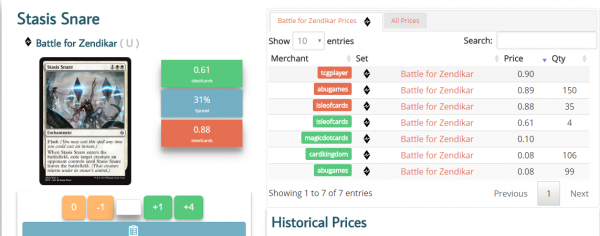
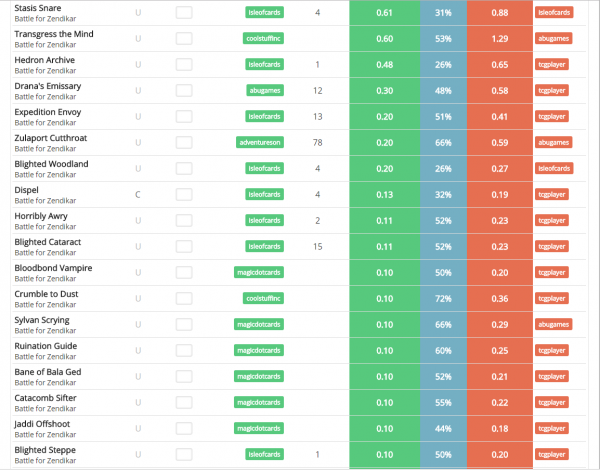
It's pretty well-known that Battle for Zendikar is a dry well of picks, for the most part. We have Transgress the Mind and Drana's Emissary as the leading picks for consistent buylistable value, while Expedition Envoy and Zulaport Cutthroat have strong casual ties that will keep them in demand for years to come. After that though, it gets pretty weak. Hedron Archive and Stasis Snare are clear outliers — while still pickable, they don't normally have the high buy prices that appear in the Trader Tools spreadsheet pictured below. Notice that only one store is paying that amount for a playset of Stasis Snare; the others don't want to pay more than a dime a piece. All in all, BFZ only has 18 commons and uncommons that are worth shipping at $.10+ each. That's just as bad as Eldritch Moon, but at least most of the dimes from EMN were common. With Battle for Zendikar, you have literally zero commons worth shipping at $.10 a piece or higher, showing the incredible amount of product that was opened.

snare


bfz

If you decide to Blueprint your Battle for Zendikar bulk by alphabetizing and shipping as a lot to Card Advantage, it doesn't get much better. While Thomas and co. will gladly accept your BFZ commons en masse, it's still not looking great for what was expected to be one of the greatest editions of all-time. The plus-side of buylisting to Card Advantage is that with the most recent September Blueprint update, Card Advantage will take your BFZ tokens and emblems, something that I haven't seen any other stores on Trader Tools take advantage of. If you happen to have fifty 5/5 Elementals from Omnath, Locus of Rage then you can get $1.50 for your effort, covering part of the shipping costs with what others consider to be trash.

bfz-blueprint

Hidden in these rows and rows of spreadsheet data, there's another factor that some argue kept BFZ from floating just a little higher than it otherwise would have been. While the value of both foil and non-foil full art lands was absolutely crushed by the megaprinting of this Fall 2015 set, you can still find vendors like Card Advantage reliably paying a nickel per full art land. With 36 packs per box and a guaranteed full art land in every pack, that's almost $2.00 of reliable and constant value that people can still expect to find in a BFZ booster box. While that's something we didn't and won't see at regular intervals in other blocks, I don't think that $2 is enough to suppress the value of BFZ commons and uncommons further than what they would have been without full-art lands taking up a niche in the expected value of a box.

With all of that being said, I do still think there's value in purchasing BFZ bulk at $3 per 1000, or $3.5 if you really have to haggle and compete among locals. The fact that the set is bone dry can work in your favor, with spikier players ignoring Drana's Emissary and only pulling out Transgress the Mind. I would expect most BFZ bulk to be unpicked because of this, leaving you dime collectors out there to have full reign over the leftovers that spikes didn't want to touch. While Battle for Zendikar bulk is weaker than most other Standard sets, it's still bulk. Bulk is bulk is bulk, and a savvy Craigslister can still get $7 per thousand depending on how cutthroat your local area is.

There was an error retrieving a chart for Drana's Emissary


So what's the final verdict on cards that I want to pick out from Kaladesh at the prerelease? I'm not expecting many of these to be worth anything, similar to BFZ. However, it's still nice to get your playsets early before you start having to pay retail on the day of the event. Here's a comprehensive list of cards that I predict to see on the Blueprint by November.

  • Diabolic Tutor
  • Glimmer of Genius
  • Inventor's Apprentice
  • Blossoming Defense
  • Refurbish
  • Harnessed Lightning
  • Armorcraft Judge
  • Glint-Nest Crane
  • Essence Extraction
  • Start Your Engines
  • Aerial Responder
  • Ceremonius Rejection
  • Cathartic Reunion
  • Servant of the Conduit
  • Veteran Motorist
  • Voltaic Brawler
  • Foundry Inspector
  • Filigree Familiar
  • Aether Hub

You'll notice that other than Cathartic Reunion and Servant of the Conduit (a potential Modern Dredge staple and a shot in the dark at Standard playability), there are zero commons on this list. I don't really expect to see any commons being buylistable other than to the Blueprint, but I'd rather wait until the Kaladesh blueprint comes out before picking any junk commons and stashing them away to take up space. The above list of mostly uncommons covers most of the cards I would expect to see in a Standard Open the week after release, but only the invisible casual market can truly tell us where the demand is pointing a couple of months from now when buylists free up to accept Kaladesh bulk.

End Step

While my Cartel Aristocrats co-host Travis Allen already talked about this on our podcast Monday, I want to mention again that Restore Balance was played by Ari Lax in a SCG video last week. He only dropped a single game against Tier 1 decks and mentioned that if he were going to play in a competitive event, that would be his list. Travis and I are both very deep on the card; it's a Time Spiral rare with incredibly low supply, low reprint risk, and could pop into the double digits with just a little more publicity. The closest corollary is Living End, which also hit $10 and made a lot of people money. This isn't a "buy them out now" announcement, but it's certainly a "you should probably pick up your playset if you looked at his decklist and thought 'huh, I kinda might eventually want to build that.'"

Burn Out: Dissecting SCG Orlando

Are you a Quiet Speculation member?

If not, now is a perfect time to join up! Our powerful tools, breaking-news analysis, and exclusive Discord channel will make sure you stay up to date and ahead of the curve.

A sequence of unfortunate events and matchups quickly killed my ability to put together a good showing at SCG Orlando. I wouldn't say it was all for naught, however. I got some valuable testing with unorthodox cards and had some of my inclinations validated by other top deck lists. Orlando was also another reminder that large tournaments are marathons and not sprints. You need to have good preparation and a little luck to go far.

searing-blaze

I'll start this out with the short version. How did I get to a pretty pathetic 4-4 record? I'll give you some spoilers. If you read my last article about Burn you will know I was expecting to play Affinity and Jund the most. I had some flexible sideboard cards for other matchups and the mirror to round out my 75. Much to my disappointment, I played zero Jund decks and zero Affinity decks. I was quickly reminded how wide open a format Modern is. This is what I played:

[wp_ad_camp_1]

Bedlam Reveler Burn, by Jim Casale

Creatures

4 Goblin Guide
4 Monastery Swiftspear
4 Eidolon of the Great Revel
3 Bedlam Reveler

Instants

4 Lightning Bolt
4 Boros Charm
4 Searing Blaze
1 Skullcrack

Sorceries

4 Lava Spike
4 Rift Bolt
4 Gitaxian Probe

Lands

3 Wooded Foothills
4 Arid Mesa
4 Bloodstained Mire
4 Mountain
4 Sacred Foundry
1 Stomping Ground

Sideboard

4 Path to Exile
3 Kor Firewalker
3 Kataki, War's Wage
2 Skullcrack
2 Destructive Revelry
1 Deflecting Palm

Round 1 - Charles Gindy, Jeskai Control

Nobody likes to get paired in the first round against a friend. Even less so against a multi-Grand Prix and Pro Tour Champion. Game 1 I end up conceding to an Emrakul, the Aeons Torn with him at 16 and me with multiple Searing Blazes in hand.

Sideboarding:
-4 Searing Blaze

+2 Skullcrack
+2 Path to Exile

On the draw:
-1 Wooded Foothills

+1 Path to Exile

Gitaxian ProbeGame 2 I won after we both kept a land-light hand and I started with a Monastery Swiftspear instead of a Goblin Guide. I ended up drawing my second land off a Gitaxian Probe, giving me the information that he kept Celestial Colonnade, Lightning Bolt, Lighting Helix, Path to Exile, Mana Leak, Engineered Explosives. He failed to draw lands for two more turns and we went to Game 3.
In Game 3 a combination of Gitaxian Probe and a lucky Goblin Guide allowed me to have perfect information of Gindy's hand and force him to hold onto his Timely Reinforcements. He was unable to deploy it in a timely manner and was forced to run it straight into my Skullcrack. With my resources depleted, I was able to gas back up with a Bedlam Reveler and take the game the next turn despite him using Snapcaster Mage to flashback Timely Reinforcements.

It's unlikely for Burn to beat one Timely Reinforcements and Bedlam Reveler really shined here, like it would against Jund. Gindy ended up rallying to finish 12-3, just outside of Top 8.

Record: 1-0

Round 2 - Minh Nguyen, Ad Nauseum

Minh is another good friend of mine from Jacksonville. He's a great player and definitely not someone I wanted to play after beating another friend in the first round. He was also playing Ad Nauseam and I knew this. My sideboard was definitely not set up for this match.

I lost the die roll and was able to kill him on turn three---or I would have if he didn't have Angel's Grace. He played Pact of Negation on my lethal burn spell and used Angel's Grace to avoid paying the upkeep. A Spoils of the Vault found him an Ad Nauseam and we were on to game two.

katakiSideboarding:
-4 Searing Blaze
-1 Bedlam Reveler

+2 Skullcrack
+2 Destructive Revelry
+1 Kataki, War's Wage

The sideboard I have right now is pretty bad against Ad Nauseam because I have 7 cards I really want to take out (Revelers and Blazes) but only 4 cards to bring in (the Skullcracks and Destructive Revelrys). I made the Searing Blaze swap but improvised a bit. I ended up bringing in Kataki, War's Wage to hopefully tax his Pentad Prisms and because it costs less mana than Bedlam Reveler.

Game 2 I was able to secure a win by blowing up his Phyrexian Unlife after he revealed double Leyline of Sanctity on turn zero. Game 3 was Kataki's time to shine! I had set myself up to win in two turns. I had a Boros Charm and some guys that could go over the top for lethal on my next turn. Minh had three lands and a Pentad Prism in play, four cards in hand, and a Lotus Bloom with two suspend counters on it. The only way I could lose on my next turn is if three of the four cards were Simian Spirit Guide, Angel's Grace, and Ad Nauseam. He hit and I lost the match.

Record: 1-1

Round 3 - Jordan Ruiz, Bant Spirits

This match was a bit challenging. I don't remember all of the details but I definitely lost Game 1 to multiple Spell Quellers putting my Searing Blazes on ice.

Spell QuellerSideboarding:

-2 Bedlam Reveler
-1 Skullcrack
-1 Gitaxian Probe

+4 Path to Exile

I always bring some number of Path to Exile in as insurance against white decks. They're particularly effective against Kor Firewalker and you never know how much burn is in a player's local metagame.

Games 2 and 3 I had some issues fighting through Rhox War Monk (it's like all of the good parts of Kalitas for one less mana!) but some fortuitous draws on my part were able to seal the deal. I think there's definitely some strength to the Spirits deck but Burn has too many three-damage spells for Spell Queller to stay alive. This is also a matchup where Wild Nacatl and Atarka's Command are better than Skullcrack and Gitaxian Probe. 3/3s attack better into 1/1, 2/1, and 2/3 creatures.

Record: 2-1

Round 4 - Christopher Mortenson, Infect

At this point I was wondering if I was ever going to play Affinity or Jund. I also got word that there was a lot of Bant Eldrazi which is not a particularly good matchup for Burn. Game 1 was a textbook Burn win. I won the die roll, played a Goblin Guide on turn one, Searing Blazed his Noble Hierarch on turn two, and put him in the Eidolon of the Great Revel chokehold on turn three.

SpellskiteSideboarding:
-3 Bedlam Reveler
-1 Boros Charm
-1 Skullcrack

+3 Path to Exile
+1 Destructive Revelry
+1 Deflecting Palm

Post-board I want answers for Spellskite. Revelry can also hit animated Inkmoth Nexus as well as the rare Wild Defiance.

Game two a combination of Gitaxian Probe and a sneaky Goblin Guide let me keep perfect information of his hand for most of the game. After killing two infect creatures he decided to go all-in on Inkmoth Nexus. I had my one copy of Deflecting Palm at the ready to redirect a 12-power Inkmoth Nexus and take the round.

Record: 3-1

Intermission

My last match was pretty quick and at that time it was about 1:00 pm so I decided to try to find some food. I had a very unsatisfying protein bar the round before and my stomach was rumbling. I wasn't able to find any reasonably-priced or -tasting food in the convention center so I had to settle for some bad pizza. I'd recommend not doing what I did and bring some better food with you. A sandwich or even a piece of fruit can help you stay focused in longer tournaments.

Round 5 - Timothy Broome, Temur Delirium Twin?

Honestly, I don't know what he was doing. Game 1 I got severely flooded, drawing nine lands before ending the game with him at 4. He had Deceiver Exarch and Kiki-Jiki, Mirror Breaker to combo kill. I also saw Traverse the Ulvenwald (it allowed him to set up the kill with Spellskite protection) but didn't quite put together that he was also a Tarmogoyf deck. TarmogoyfI sideboarded poorly and was overrun by Tarmogoyfs in Game 2. Not exactly where I wanted to be after Round 5 but I could rally back and win the next four to be in a good position tomorrow.
Record: 3-2

Round 6 - Ashley Rozi, Jeskai Control

Once again not exactly Jund but I can work with this. They're trading discard spells for Lightning Helix so Bedlam Reveler still stands to be good here. Game 1 she gave me the business with a naked Snapcaster Mage as my deck continued to deliver lands and Lava Spikes. I ended up taking 12 damage from the Snapcaster Mage before being put out of my misery with Lightning Bolt.

I sideboarded the same here as I did against Gindy. Game 2 she kept a pretty risky hand that didn't pay off and got exceptionally flooded in the third game. I will say it's a great feeling when you cast Gitaxian Probe against your opponent and they show you an Emrakul.

Record: 4-2

Round 7 - Brian Braun-Duin, Bant Eldrazi

Well this matchup isn't very good for me and my opponent has demonstrated he's very good. I drew all of my Searing Blazes and only two lands in the first game. His Thought-Knot Seers showed him my embarrassment of riches.

Destructive REvelrySideboarding:
-2 Bedlam Reveler
-3 Searing Blaze
-1 Skullcrack

+4 Path to Exile
+1 Destructive Revelry
+1 Deflecting Palm

I keep a Blaze in because it's obviously very good against Noble Hierarch, but they also assist in killing Spellskite, Eldrazi Displacer, and Matter Reshaper. The Destructive Revelry isn't dead against Spellskite and was an out if BBD was playing Worship.

Game 2 had him break up my hand with some quick Thought-Knot Seers. I was able to get him to 3 before missing two draw steps in a row. The Eldrazi are ruthless and quick and don't give you a long time to close the door. But I'm not terribly distraught picking up a loss to arguably the best player in the game right now.

Record: 4-3

Round 8 - Laurence Moo Young, Grixis Delver

I'm pretty confident that this matchup can be tilted heavily in the favor of the player with a better understanding of the matchup. I was not able to show my prowess as I drew nine lands Game 1 with him on 1.

Path to ExileSideboarding:
-1 Skullcrack
-1 Wooded Foothills
-1 Bedlam Reveler

+3 Path to Exile

Paths help to clear out Tasigur, the Golden Fang and any Gurmag Anglers that might be lurking. It's also good insurance if they are playing sideboard Kalitas, Traitor of Ghet. The Revelers get a little worse after sideboarding because Burn needs to close the door quicker as their cards just get a lot better later.

Game 2 seemed like a repeat of the first when my two-land hand turned into an eight-land monstrosity that couldn't cobble together a win against a Duel Deck. Unfortunately those are the beats sometimes. I dropped after this match to cheer on some friends.

Record: 4-4

Reflecting on the Finish

The process was good. I had a clear plan to beat the decks that are some of the larger portion of the global and local metagame. Unfortunately Modern is such a big format due to the card pool that you can't be prepared for everything. Magic is also a game of variance and I just didn't get the matches I wanted.

Bedlam RevelerI did get some valuable testing and I think Gitaxian Probe is a pretty underrated addition to Burn. I think with the Probes I can probably cut a fetchland from the deck and still have very good mana. I felt like I drew a few more lands than I should have and rarely felt pressured to get a second land to cast all of my spells. Bedlam Reveler was good when I cast it. It got exiled by Thought-Knot Seer once and sent to the bottom of my library by Vendilion Clique once so it was obviously threatening in some situations. Some games I lost holding two of them so maybe the numbers are wrong. I'm going to do some more testing and see if they should be in the sideboard instead.
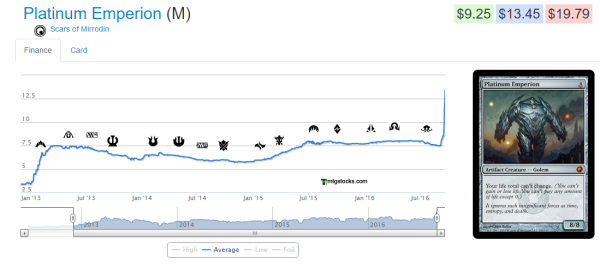
I think removing the green cards from Burn is the way to go for now. 14th place finisher, Christopher Juliano, played a green-less Burn deck to a lot of success in Orlando. I'm not sure I'd be brave enough to play Flames of the Blood Hand, but Juliano told a friend of mine who played him that he "wanted it more." I think I might play some Shard Volleys before I have any copies of Flames of the Blood Hand in my deck.

I don't have any Modern tournaments on the horizon so I'll be devoting 100% of my Magic time to testing Standard and Kaladesh Limited for the Pro Tour. And now, I'm going to end with an amusing price graph:

emperion

Thanks to Madcap Experiment, Platinum Emperion has seen a nice jump. If you have any copies of these sitting around for some reason, I wouldn't blame you for selling them.

Insider: QS Cast #37: Bulk, Sulk, Hulk

Are you a Quiet Speculation member?

If not, now is a perfect time to join up! Our powerful tools, breaking-news analysis, and exclusive Discord channel will make sure you stay up to date and ahead of the curve.

Play

After a long hiatus the QS Cast has returned with a new panel of hosts: Chaz Volpe, Corbin Hosler, and Tarkan Dospil continue on with where the cast left off and in this episode they discuss the following:

  • Joined by Douglas (DJ) Johnson to talk about how Masterpieces even effect the low end of a set. Comparing BFZ and Kaladesh common and uncommon. Find DJ on Twitter @Rose0fthorns or read his Insider articles on QS!
  • Interests of the Week
  • QS Insider Question from Dawson Belobrajdic
  • Kaladesh full spoiler – thoughts on specific cards. From Mythics/Rares to commons/uncommons.

Specific cards we mention-

Interests: Anvil of Bogardan, Wheel of Fortune, Platinum Emperion, Brushland, Verdurous Gearhulk

Uncommon/Common: Ceremonious Rejection, Start Your Engines, Glint-Nest Crane

Rares/Mythics:
Torrential Gearhulk (looking into the future here)
Smuggler's Copter/Depala, Pilot Exemplar (Seems like a great candidates to increase initially)
Nissa, Vital Force (Still feeling like this is the best walker in KLD)
Aetherstorm Roc (decent card and low investment)
Master Trinketeer (Casual appeal lord)
Deploy the Gatewatch (long term hold? Near-bulk mythic)

As always, please comment and leave questions for us to address on the next cast! We will be making QS Insider questions a priority, and we want to know what you want covered.

Enjoy! We’re glad to be back.

Find us on Twitter: @ChazVMTG @Chosler88 @the_tark

State of the Format: Addressing the Modern Critics

Are you a Quiet Speculation member?

If not, now is a perfect time to join up! Our powerful tools, breaking-news analysis, and exclusive Discord channel will make sure you stay up to date and ahead of the curve.

I really enjoy Modern as a format. This wasn't always true, though I think that the format is moving in an increasingly positive direction over time. What I don't care for is the fact that I can't express my interest in Modern without somebody feeling the need to remind me why they think it's a bad format. If they were speaking more literally they'd just say, "but I don't like Modern," which is completely valid, though I take issue with calling the format bad. Is it perfect? Oh my, no. But the format's success is undeniable, and the positives vastly outweigh the negatives from my perspective.

become-immense-cropped

Most of these critiques won't be anything new to the readership at Modern Nexus. We've heard complaints about Modern's non-interactivity, its supposed lack of skill, its poorly-managed banlist, its prohibitive cost. Certainly these point to some problems with the format that are worth addressing, but I think they've been blown out of proportion. Today I'd like to respond to Modern's detractors and show the flaws in each of these arguments.

[wp_ad_camp_1]

Modern Isn't Interactive

The major criticism of Modern is a "lack of interaction." There are many different angles for a Modern deck to attack you from, and a given hand won't be good against all of them. To me, there is a silver lining here, as this means that there won't be a dominant deck in the format that has universal interaction advantage, but I digress. The argument is that there are just a bunch of ships passing in the night.

Deaths ShadowThis argument ignores the delicate combat steps of Infect versus Affinity, or how a Burn deck manages its resources against either of those decks. To say nothing of the dance between Burn and Death's Shadow[mtg_card]! It's true that many games where Infect draws [mtg_card]Blighted Agent are easy mode, though surely your position isn't that haymakers and trumps for specific matchups and situations have no place in Magic. If it is, you're not going to like any other format either. There are matchups where there is little or nothing that a player can do---Jund versus Tron comes to mind---though by and large I don't buy the position that there is no interaction. Hell, even with that example you can gain significant points in the matchup with experimentation. Blood Moon Jund, anyone? There are skewed matchups and a lot of races, but ignoring blocking and removal spells as forms of interaction and citing specific cards that can make interactive pieces irrelevant isn't taking a position that uniquely detracts from Modern.
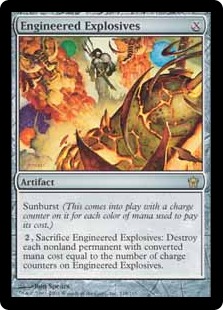
Beyond that, I am extremely tired of hearing that Modern doesn't have a great control deck. It does. It's called Grixis Delver, and just because the professional community outside of myself and Kevin Jones ignore it doesn't take away his Open trophy that he won with the deck or his undefeated run at the WMCQ this weekend. Congrats, Kevin! You might say that you don't want to play a control deck with a win condition that is a one-mana 1/1, but stating that the win condition of the control deck isn't shiny enough for you just means that you don't like the control deck of the format, not that there is a void in archetype definitions.

Engineered ExplosivesNot to mention that Jund by most counts is yet another great control deck. And Jeskai Nahiri. And if you really need mopey nonsense to feel like you're playing control, I see sluggish UW control decks putting up results with relatively high frequency. They don't have what it takes to to dominate every field or necessarily enough interaction for every matchup, but again, having a deck that just has interaction advantage against everything is a recipe for dominance rather than health. Modern does not need Miracles. Legacy doesn't even need Miracles.
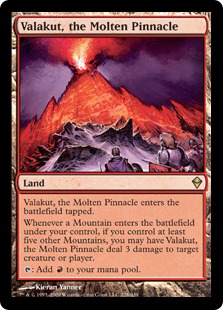
One last point on the matter of interaction: putting a bunch of Stony Silences in your sideboard and complaining that you can't interact with everybody is your own fault. There are great sideboard options with a ton of flexibility in Modern, and failing to appreciate these cards doesn't stop them from existing. Kitchen Finks is great against aggressive creatures and removal spells alike. Fulminator Mage messes up both creature lands and Tron/Eldrazi lands. Engineered Explosives is phenomenal against opponents going wide or playing artifacts/enchantments. When I tell people that I board in Spell Pierce against Tron and how impactful hitting an Expedition Map can be they are always surprised. Modern has depth, and refusing to get your feet wet doesn't erase that fact.

Modern is Uncompetitive

Ari Lax did a fantastic job highlighting what makes Modern so popular in his Premium article on the topic at Star City Games. The fact that there are a wealth of decks that could reasonably win a given tournament appeals to a wide audience, almost by definition. ValakutWhether I like Burn, Valakut, Affinity, Infect, or Snapcaster Mage I can play some variant of my deck on any given week and feel reasonably good about my odds of going deep into the tournament. For many players, there is a lot of value to playing the same deck for long periods of time. You develop an emotional connection that Standard simply doesn't offer. I get to cast Delver of Secrets any old week that I want to, and unless they ban Snapcaster Mage I'll probably feel pretty good about it.
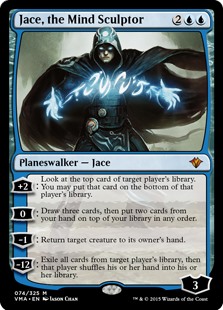
This undeniably contributes to the format's popularity, and while it's true that isn't necessarily the same thing as quality, it is more important from a business perspective. Do you know why they banned Jace, the Mind Sculptor and Stoneforge Mystic so late into their Standard life? Tournament attendance. It's okay for a format to have questionable quality as long as it is well-received, and for the GP and SCG Tour audience, Modern is clearly very popular.

Now, if you want to make the argument that Modern is a bad competitive format, then I'll offer that they have already removed the Modern Pro Tour, and I agree this was the correct move. Not only is the Pro Tour about promoting the new set, but from the participant perspective it's about "breaking it," which flies in the face of Modern's general purpose. Jace the Mind SculptorThat said, this does not carry down to Grand Prix and Opens. The goal of these tournaments is not the same as the Pro Tour.
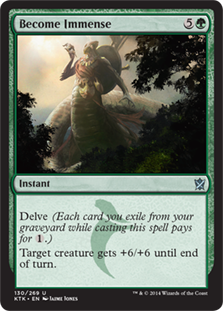
Sure, Grand Prix award pro points, but consider the following. The Grand Prix cap was introduced to make it so that pro players don't have to play literally every GP, and if you don't like Modern then I recommend crushing the Standard and Limited GPs that you can attend rather than trying to abolish Modern GPs. The cap and the shift to 6-3s making Day 2 should have made it clear by now that Grand Prix are run in an attempt to reach the wider playerbase, and whether you think the format is a good "competitive format" doesn't play on that level. Not to mention that there are competitive players who love Modern GPs who are able to leverage their experience with the format on the Grand Prix level. With regard to Opens, I don't even know why you think a business like Star City Games would hold tournaments of any variety other than the one that appeals to the widest audience.

On the Modern Banlist

Part of the common criticism of Modern is that the banlist could use a significant overhaul. While I agree it's not perfect, I think that rocking the boat in a big way all at one time would be an extremely foolish thing to do to a successful product. become immenseMajor changes are not unlike creating a whole new format, which is most certainly not the end goal for Wizards. What they have shown is a willingness to unban cards so long as they do not stifle competitive diversity by the rawest definition.
I've seen Become Immense on the list of cards people would like banned, though the fact that there are two unique Become Immense decks and the fact that other combo decks are still viable makes me think the card is safe. Further, there is a largely unspoken element of the Modern banlist philosophy that I think is very pronounced if you've been paying attention. That is, decks that have to win inside of combat without tons of resilience are given more of a pass on the turn four rule. Infect is fast and resilient enough that it has some staggeringly positive matchups, though it generates very interesting games for decks that have a high density of removal. A deck like Amulet Bloom technically had to attack, though because it was so easy to set up over and over again, when opponents could only interact with the Titan, it got the axe.

Seething SongThe most pronounced banning on this front was Seething Song. Storm was such a medium deck at the time of this banning that it took a lot of players by surprise. If your point is that you don't like two players playing solitaire, then Wizards agrees, though they specifically consider decks that win on the stack with busted spells outside of combat to be the definition of solitaire. Even under these parameters I agree that there are at least a few offenders in Modern very deserving of a ban. It wouldn't surprise me in the least to see Simian Spirit Guide or Goryo's Vengeance banned on the upcoming update, as these cards contribute almost exclusively to non-combat-based degeneracy.
You can like or dislike that the format's philosophy gives a heavy bias to combat---though I would argue this factor absolutely contributes to the format's popularity, as combat is among the more grokkable elements of Magic.

What Additions Could Improve Modern

Something I hear often is that Modern would benefit from Force of Will, and even more recently I've heard questions posted about Daze. Assuming my beliefs about the developers' format philosophy are correct, then these free counterspells don't make any sense.

dazeWhile Splinter Twin was legal it was clearly the deck that would most heavily benefit from Force of Will due to its ability to protect a spell and win on the same turn, thus not caring about the card advantage. Currently, Infect is the deck that would most heavily benefit from Daze, as it's just another way to win on turn two or three with counter backup, while other decks have to pay more mind to an opponent upping land counts or simply playing around Daze. If you do a good job of ensuring that the fastest decks have to win in combat, then free counters benefit the combo decks the most.
If making control decks in Modern better was your goal, then you should be thinking more along the lines of Swords to Plowshares than Force of Will. One of the biggest barriers to playing a highly interactive deck in Modern is that the cheapest interactive spells all have significant drawbacks. Dismember is great against Infect, though horrid against Burn. Path to Exile is inherent card disadvantage, and if you want to combine it with the premier counters of the format in Mana Leak or Remand that mana disadvantage will matter. Not to mention that being at a mana disadvantage will often be significant simply by Modern's efficient nature. Lightning Bolt is great on turn one and continues being great as long as reach is something you're in the market for, but for a control deck it is far from a catchall.

swords-to-plowsharesSwords to Plowshares specifically might be too pushed for Modern, and it definitely isn't the sort of card you want in Standard. But I do believe that a similar spell is what the "Modern isn't interactive enough" players are actually pining for. Would that require cards printed specifically for Modern to make this happen? Maybe, though what's more important here to me is that players understand the type of interaction that would actually benefit the interactive decks over the combo decks.
The other major element you could argue is missing in Modern is pushed, but reasonable, interaction with non-basic lands. Blood Moon only fits in your deck if you're trying to cheese your opponents, Ghost Quarter has similar drawbacks to Path to Exile in addition to costing you a land drop. While Fulminator Mage is great, sometimes it comes down after you get Karned which won't get the job done.

Finding a way to make a Standard-legal card that would be better than any of these options in Modern is dicey. Something like a creature or artifact with the text, urzas-mine"if a land would generate more than one mana of any type, it generates {1} instead" wouldn't rock the boat in Standard. Or, perhaps a two-mana spell that only hits non-basics could be fine in a Standard format where monocolored decks were the focus. I wouldn't shed a tear over an Eldrazi Temple or Urza's Tower banning, though I don't believe that to be the path we're on---and I'm fine occupying the universe as it exists instead of asking for it to be tailored to me.
Realistically it seems wise to keep Tron in the format to prevent the control decks from totally taking over, given that the fast creature decks can generally brown Tron. Matchups between control decks and Tron will continue to be horrendously unfun, but at least this will prevent a control deck from completely dominating the format, which is a worse threat to format health than a perceived lack of interactivity.

On the Financial Cost of Playing Modern

And lastly, we come to the criticism that Modern as a format is too expensive. If you play a lot of Limited and/or Standard and have crunched the numbers, then you already know that Modern is a more affordable format over time. I fear this point may not resonate with everybody, though it is undeniably true. Smart trades and investing in Modern staples when they're low will help make the format more affordable as well, though beyond that this luxury good will unfortunately not be made free to everybody.

Inquisition of KozilekConspiracy: Take the Crown demonstrated that Wizards is willing to reprint Modern staples in a heavily-printed set, which means that on a long enough timeline the staple you're looking for will get a reprint in some capacity. I don't think it's reasonable to ask for more, as over-printing and completely crashing the market would destroy the game completely. That's far more concerning than the game (or just one format) being expensive.

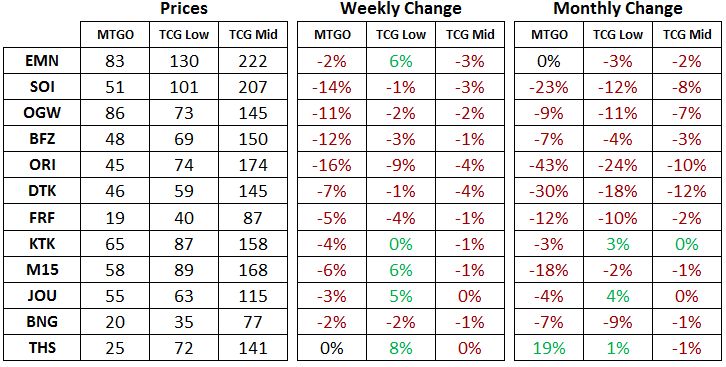
Modern is expensive, and please don't take this as my saying I don't care. I'm just saying that you don't have to buy your deck all at once. You might look at a deck that costs $1,500 and think you could never possibly own it, but there are ways around that. Investing and budgeting wisely, especially given that more reprints will be coming, makes the format far more affordable. Check out Jim Casale's articles on this very site---there are resources available to help you get into the format for less than sticker price, and once you own a deck the cost of upkeep is very low.

All Hail Modern

Modern isn't perfect, but it has a large following and the common arguments against the format are filthy with faulty logic. I personally love Modern, and while I can respect that not everybody does I should hope we are all mature enough to understand that no format caters to everybody. I believe the format is fine from a competitive perspective (though again, not perfect). But even if you disagree, the main avenues for the format (Grand Prix, SCG Tour) mean it doesn't have to cater to the specific desires of the most competitive crowd. You can embrace it or you can loathe it, but understand that Modern supports a large swath of happy Magic players---and it's not going anywhere.

Thanks for reading.

-Ryan Overturf
@RyanOverdrive on Twitter

Insider: The Casual Mindset – Card Analysis

Are you a Quiet Speculation member?

If not, now is a perfect time to join up! Our powerful tools, breaking-news analysis, and exclusive Discord channel will make sure you stay up to date and ahead of the curve.

In my previous article I suggested some characteristics to look for in a casual card. Today I would like to take a number of cards from David Schumann's excellent articles on Commander cards in Eternal Masters (part one and part two) and give my view on their casual appeal as I happen to disagree on some of them.

I will first describe them using the characteristics I suggested last week and try to show why someone might like them for casual (regardless of my own feelings on them). I will then share how I feel about them and why.

Blood Artist

There was an error retrieving a chart for Blood Artist
  • WOW! Factor: Many creatures die in multiplayer games, I could gain a near infinite amount of life off of it!
  • Playability: Easily castable!
  • Scalability: More opponents means more creatures dying.
  • Taste: The Artist helps defensively, is a good role player, and helps kill opponents. There are bound to be many casual players who see something they like here.

It should be obvious that Blood Artist is a card I like very much as a casual pick. When I see the card my thoughts immediately go towards decks with lots of recursion or decks that like to kill a ton of creatures. Often those even overlap as you want something to bring back with that recursion and how about some of your own creatures that you just killed?

I have in fact been playing the Artist in my Lyzolda and Glissa EDH decks and it's doing very good work there. I have seen many players play this sort of deck and have heard players ask around for this particular card.

I would definitely recommend having a few spare copies of these in your binder!

Xantid Swarm

There was an error retrieving a chart for Xantid Swarm
  • WOW! Factor: Turning off that pesky blue mage's Counterspells, hell yeah!
  • Playability: Cards don't come much cheaper than this.
  • Scalability: Doesn't scale particularly well, but with diplomacy or in the right format, you may just manage to only have one opponent to worry about.
  • Taste: Griefer players like to disable opponents' abilities to play cards. Flying is a rare ability in green; pile all sorts of nastiness on this and the defending player won't even be able to play spells to deal with it.

I can certainly understand how this card could be seen as a good casual card. In fact David gave a little more background on his choice for including it and in the format variant he usually plays it actually makes a lot of sense. The problem with the Swarm though is that a lot of conditions need to be met before it becomes good.

You may not have that blue mage at your table, or really anyone you want to limit (they could be your temporary allies after all). Griefer players are actually an uncommon sight. Casual players usually play to have a fun game, including fun for opponents, and griefer players actively try to ruin their opponent's fun by limiting them as much as possible. While green doesn't have much flying, other colors do and players who want to do something against the Swarm will just do it before it's been declared as an attacker.

In multiplayer there's also a good chance that players take the Swarm as a signal that an evil combo is coming and decide to take preventive measures, such as removing the player playing said combo. I can easily see half the table ganging up on a player who drops a Swarm. I've even had the same experience with Wild Growth where one of my opponents commented that I "would never play such a bad card if I didn't plan to combo with it" (he was right).

On the whole I think the card looks good on paper, but your average casual player just isn't likely to try to do this to opponents. Those who are will likely prefer Grand Abolisher if it fits in the same deck because it scales much better and is always on.

You're probably better off trading your Xantid Swarms to a Legacy player or just bulking them out. You may be lucky and run into a rather completist casual player like myself, but I wouldn't count on it.

Sinkhole

There was an error retrieving a chart for Sinkhole
  • WOW! Factor: Black never gets land destruction and it could take out anything!
  • Playability: Most annoying lands take some time to set up, so getting BB by the time they should be destroyed shouldn't be too difficult.
  • Scalability: This does not scale.
  • Taste: There's always one player abusing some land or another, usually to get a ton of mana. Everybody needs ways to take care of such lands.

I'm not a fan of Sinkhole in multiplayer. Not because the card is bad---it's actually pretty decent at what it does---but because there are better alternatives. Any deck can play a Strip Mine and wealthier players can add a Wasteland. More money-tied players can go for cheaper alternatives like Dust Bowl, Ghost Quarter or Tectonic Edge.

All these have one very important thing in common: they do something even when there isn't a land in play that you want to destroy. If you get them out early they may even keep several players from playing nasty lands. Sinkhole, on the other hand, is a blank in your hand until a land you want to destroy is played.

I do see a role for this card in casual one-on-one play where the traditional mono-black deck sporting Dark Ritual, Hymn to Tourach, Hypnotic Specter and indeed Sinkhole can be a pretty satisfying weapon to have in your arsenal. So if your area commonly sees casual one-on-one games go for it.

Eight-and-a-Half-Tails

There was an error retrieving a chart for Eight-and-a-Half-Tails
  • WOW! Factor: Protect anything for 2W; can even be played as your commander!
  • Playability: WW is quite doable, 2WWW to be able to also protect it may prove to be more of a challenge.
  • Scalability: This scales fairly well as nobody wants to be the player to lose a spell or ability to open you up.
  • Taste: Some just like to say "no" or keep what they're building up to safe from opponents' interference.

I like Eight-and-a-Half-Tails for multiplayer. You probably won't even have to use him too often, as the threat of activation will make them look for easier targets to avoid wasting something.

My one concern with him is that he may signal to opponents that you have some nasty plans to protect, particularly when you use him as your commander. If you have a regular group they should realize after a few games that this isn't the case, and you should be able to play as appropriate for the deck.

On the other hand, if you play with new opponents on a regular basis they may fear what could be in the deck and overreact. Fortunately there are many commanders that give off signals, so even in this case there may simply be someone at the table who draws more attention than you.

At near-bulk prices I can see these be a good investment for the future, though don't count on spikes---this is probably something you trade in at about $1-$1.5 and move out of around $2.5-$3 when the Eternal Masters supply starts running low.

Peregrine Drake

There was an error retrieving a chart for Peregrine Drake
  • WOW! Factor: It's free and highly abusable!
  • Playability: Five mana is quite a bit, but you probably don't mind as you get it back immediately.
  • Scalability: This does not scale.
  • Taste: You get to re-use your nasty lands! Combo time! Easy on the wallet!

The Drake puts a casual player in a difficult position: do you want to play combo? This is a more difficult choice than it may seem to a more competitively-minded player ("Whatever is needed to win!").

To the casual player it's not as clear cut. The problem with playing a combo is that in many cases you just end up ending a perfectly good game all of a sudden, and it generally leaves a bad taste with the opponents. You can still have plenty of fun playing combo, but it ruins fun for others.

Responses to combo vary. Some groups embrace them, getting into an arms race trying to build the nastiest deck to dominate the group. Other groups will actually shun combo players or proceed with the game as if nothing happened (ignoring the combo win).

Most groups fall somewhere in between and their response will vary based on how dedicated the deck is to comboing, how nasty the combo is (infinite turns > infinite life > infinite tokens) and how frequently the player plays other decks that aren't combo-oriented.

I would expect many players to err on the cautious side when considering combo and stay away, possibly only playing less obvious combos. The Drake pretty much screams combo. I do agree with picking up foils for those people who decide that they want to try for a combo deck, though I wouldn't expect them to move quickly.

Mana Crypt

There was an error retrieving a chart for Mana Crypt
  • WOW! Factor: It's free, and what's not to like about getting two turns ahead of your opponents?
  • Playability: Amazing playbility, as cheap as they come.
  • Scalability: This does not scale (but doesn't need to).
  • Taste: The Crypt speeds up your plans by two turns at a negligible cost.

Mana Crypt presents some difficulty for me. As a player I very much dislike it, and cards like it, for multiplayer. Crypt paints a huge bulls-eye on your head as you pull well ahead of the rest of the players. It's also a wasted draw later in the game when you want a card that actually does something and it's an unreliable source of mana as it may randomly be taken out by mass destruction.

These issues can be prevented by aiming to win quickly through a board lock or combo. But as nice as those are to build as a thought experiment, in reality playing such decks will draw repercussions as I mentioned above.

All of that doesn't really matter from the finance perspective though, as despite my thoughts on it as a player, it and cards like it are widely popular in Commander. Sol Ring is probably in the top five most-played cards in Commander and if Crypt was as widely available I have no doubt it would make top ten and possibly even top five too.

Part of this is the speed of the local metagame---if everybody is accelerating like crazy you need to follow or risk always getting crushed early on by whoever got the broken acceleration hand. Another part of this is that some people simply copy what others play and conventional wisdom suggests to play cards like this. Finally, there are those who feel like these cards may let them pull far enough ahead to gain and keep control of the game.

I must agree with David: given its small previous printings and mythic rarity in Eternal Masters, the Crypt is probably rare enough for demand to outpace supply. Thus it's a good idea to pick up copies while it sits relatively low.

Final Words

These are just a few examples from David's articles. I enjoyed his articles and believe they gave great food for thought. Far more often than not I agreed with his analysis, and knowing his preferred way of playing Commander his picks make even more sense.

If you have any cards you would like to get my view on (from Eternal Masters or otherwise) feel free to post them in the comments. I intend to use those in a future article.

Insider: MTGO Market Report for September 21st, 2016

Are you a Quiet Speculation member?

If not, now is a perfect time to join up! Our powerful tools, breaking-news analysis, and exclusive Discord channel will make sure you stay up to date and ahead of the curve.

Welcome to the MTGO Market Report as compiled by Matthew Lewis. The report will cover a range of topics, including a summary of set prices and price changes for redeemable sets, a look at the major trends in various constructed formats, and a "Trade of the Week" section that highlights a particular speculative strategy with an example and accompanying explanation.

As always, speculators should take into account their own budget, risk tolerance and current portfolio before buying or selling any digital objects. Questions will be answered and can be sent via private message or posted in the article comments.

Redemption

Below are the total set prices for all redeemable sets on MTGO. All prices are current as of September 19th, 2016. The TCG Low and TCG Mid prices are the sum of each set’s individual card prices on TCG Player, either the low price or the mid price respectively. Note that sets of Theros (THS) are out of stock in the store, so this set is no longer redeemable.

All MTGO set prices this week are taken from Goatbot’s website, and all weekly changes are now calculated relative to Goatbot’s ‘Full Set’ prices from the previous week. All monthly changes are also relative to the previous month prices, taken from Goatbot’s website at that time. Occasionally ‘Full Set’ prices are not available, and so estimated set prices are used instead.

sept19

Flashback Draft of the Week

This week a booster of Mirrodin Besieged (MBS) is added into Scars of Mirrodin block draft. This addition ups the expected value for drafters substantially, as Inkmoth Nexus shows up in the rare slot from MBS.

This land is a key component in both Infect and Affinity strategies in Modern and has proven to be an excellent card to speculate on over the years. Both players and speculators should be on the lookout for this card if it gets into the 20 tix range, which would be a low-risk level to be a buyer at.

Standard

Dragons of Tarkir (DTK) and Magic Origins (ORI) are both set to leave Standard shortly and their set prices are acting accordingly, with both dropping below 50 tix this week. Value in both sets has been consolidating in different areas.

For DTK, it's been focused on the Modern staple rares, Collected Company, Kolaghan's Command and Atarka's Command. In ORI, which has fewer standout Modern cards, value has been flowing to the junk mythic rares, with Starfield of Nyx and Alhammarret's Archive now two of the more expensive cards in the set at over 3 tix each.

Typically sets rotating out of Standard will bottom in the week or two in or around rotation, so there is further downside on the set prices overall. Below is a chart of how the price of all recent large sets have acted at rotation, including DTK, ORI, Khans of Tarkir (KTK), Magic 2015 (M15) and Theros (THS).

rotate

This chart suggests these sets are close to a bottom, so players should not be afraid to pick up Modern cards they have been eyeing from these sets. Speculators should be a little warier of these sets though, considering the somewhat weak returns visible in these charts post-rotation. As a speculator, the better option in my mind is to focus on Shadows over Innistrad (SOI) and Eldritch Moon (EMN).

The current draft format featuring these two sets is set to take a back seat to triple Kaladesh (KLD) booster draft this weekend with the paper prerelease of the new set. This means we are at peak supply from SOI and EMN right now. Comparing the price of SOI with THS, KTK, and Battle for Zendikar (BFZ), we can surmise that SOI must be near a bottom. Have a look at the chart below to see what I mean.

soi

Each of these sets is an imperfect comparison. THS held a very high price for a long time and is clearly an outlier. KTK was drafted first in triplicate, and then two boosters at a time, and also had the all-format staple fetchlands supporting its price.

BFZ is the closest in comparison since it was drafted in a similar fashion, first in triplicate and then as a singleton with the release of OGW. But BFZ had the Expedition inserts which would weigh down the price of a digital set since these special cards are not redeemable. I left DTK and ORI completely off the comparison chart due to those sets being opened for shorter lengths of time than any of the compared sets.

It appears that the price of SOI is currently depressed. Certainly the introduction of leagues (both sealed and draft) has had an impact on prices as an extra source of supply that the other sets did not receive (except for BFZ to a small degree). The fact that SOI was being opened over the summer is also a big difference between these sets. Winter is typically the period of time when interest in Standard and prices in general see their peaks.

With all of this in mind, SOI appears to be good value right now. Players and speculators alike should not be afraid to shell out tix for cards from this set.

For EMN, I've included the most recent summer sets in DTK and ORI, as well as the most recent small set in OGW for comparison. Have a look at the chart below.

emn

EMN is certainly on a similar track, but is relatively more expensive than its closest comparable in OGW. That set saw its absolute bottom at the seven-week mark after its prerelease, which is where we are right now in weeks out from the EMN prerelease. Like SOI, EMN appears to be near a bottom and its no surprise to see it coincident just prior to the release of KLD.

If I had to choose between SOI and EMN, I think EMN has the edge due to the robust price gains recent summer releases have seen, though I expect both sets to appreciate in price over the coming months.

Modern

This weekend, Star City Games held a Modern Open in Orlando. Tom Ross piloted an 8-Rack deck into the Top 8, an archetype that comes in and out of fashion somewhat but is firmly lower tier.

This deck seeks to empty the opponent's hand as quickly as possible with a mana curve that tops out at 3. Smallpox and Liliana of the Veil do double duty as part of the hand disruption package as well as controlling creatures that make it onto the board. The Rack and Shrieking Affliction are the namesake "8 racks" and are the primary victory conditions for the deck.

Ross also wrote about the impact of Kaladesh (KLD) on the Modern format over at Star City Games behind the paywall. The main observation I pulled from that article is that Dredge strategies are getting an upgrade in the new card, Cathartic Reunion. For the same mana cost as Tormenting Voice, you get to discard two cards instead of one and draw an extra card, meaning an additional dredge trigger. Alongside the recent upgrades this deck has seen from SOI block, this card looks set make Dredge even better.

The price of Golgari Grave-Troll certainly agrees as it hit an all-time high this week of 24 tix. It's difficult to recommend buying a card at an all-time high, so speculators should look elsewhere for potential targets. Bloodghast is another staple out of this deck and after the recent Zendikar flashback drafts, it's sitting at the bottom end of its price range at around 7 tix.

Sideboard answers against this deck are also reasonable targets. Look to Rest In Peace from Return to Ravnica and Grafdigger's Cage out of Dark Ascension, though do keep in mind the flashback draft queues will be visiting Innistrad at the end of October.

Standard Boosters

SOI and EMN boosters have taken a step back this week, after jumping up with the introduction of draft leagues. Look for these to fall further, especially on the prerelease weekend for KLD. Prerelease events are tix-only and many players will be looking to sell their extra boosters for tix that weekend. Players who want to revisit the EMN-SOI draft format should save a few tix to buy boosters on that weekend.

Elsewhere, OGW boosters have dipped back below 3 tix, while BFZ boosters are steadier in the 1.1 to 1.2 tix range. Both look like they are near a long-term price floor, but they are about to become the oldest Standard draft format. Like SOI and EMN, these will dip in early October. Longer-term, I'd expect the price to track their respective set prices, which will rise as we head into the winter and more players come back to Standard on MTGO.

Trade of the Week

As usual, the portfolio is available at this link. This week I have been stocking up on sets of EMN and SOI. As I detailed above, both sets are at or near their bottom due to being near the end of their draft cycle.

It's an excellent time to be buying anything from these sets---buying a basket of everything reduces the risk in trying to pick one or two winners. I will be looking to hold these cards into the winter, with some possibility of selling individual cards into price spikes due to coverage of the upcoming Pro Tour event or other Standard event.

Want Prices?

Browse thousands of prices with the first and most comprehensive MTG Finance tool around.


Trader Tools lists both buylist and retail prices for every MTG card, going back a decade.

Quiet Speculation