menu

Three Jeskai Variants in the New Modern

Are you a Quiet Speculation member?

If not, now is a perfect time to join up! Our powerful tools, breaking-news analysis, and exclusive Discord channel will make sure you stay up to date and ahead of the curve.

Linear decks may be the current rage in Modern, but control mages are gathering to make their stand. Wizards cited the lack of blue-based diversity as a contributor to their controversial January 18 ban update, and if the Twin refugees have anything to say, Snapcaster and friends will capitalize on the banning to make their Modern coup. The announcement's immediate aftermath offered more than a few testaments to this control revolution. Although Affinity, Burn, Tron, and Infect occupy a comfortable (or stifling) segment of Modern's current top-tier, it's not just turn three Karns and turn two Glisteners all the way down! A few enterprising souls have disregarded the skeptical masses to Bolt, Helix, and Command their way to big finishes on one of Modern's oldest reactive platforms: Jeskai Control.
Lightning Helix art

Whether you're jamming last-minute testing for StarCityGames' Regionals, refining a Pro Tour choice, or just curious about where Modern is heading, you'll need to respect Jeskai options in our Twinless world. To be clear, none of the current Snapcaster Mage offerings come close to metagame shares enjoyed by their Deceiver Exarch predecessors. Thankfully for those with their Modern stocks tied up in URx money, Jeskai builds have scraped their way through the linear sea to a series of respectable finishes. We'll be examining a few of those builds today. In doing so, we'll highlight three Jeskai strategies you'll want to consider for this weekend, and upend the narrative that Jeskai can't succeed in the new Modern.

[wp_ad_camp_1]

Jeskai's Metagame Context

At first glance, Jeskai Control's Modern prospects look about as optimistic as Hillary Clinton's New Hampshire odds. Looking at preliminary numbers (which will be finalized before tomorrow's article), we're seeing Jeskai Control at only 1.4% of the aggregated paper metagame and 2% of MTGO. Kiki-Jiki, Mirror Breaker variants lag behind at 1% for both metagame subsets, with Midrange occupying 1% of paper and a flat 0% on MTGO. Compare this with the Tier 1 frontrunners, about 35% of which are decidedly linear. This is not a flattering picture of reactive control, and although it's based on limited data collection, the pre-trend is likely to hold at least through this weekend.

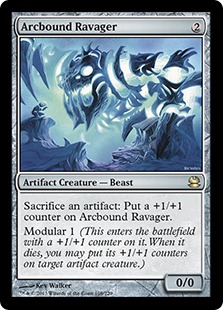
A closer look at available metagame statistics complicates this assessment. Taken as a whole, the various Jeskai contenders make up 3% and 3.2% of the MTGO and paper Arcbound Ravagermetagames respectively. Shares like this are a far cry from Affinity's 11.3% paper prevalence, or 10.4% for Burn, but they compare favorably with Naya Company (2.5% paper, 2.3% MTGO), Abzan (2.3% paper, 1% MTGO), and Abzan Company (3.6% paper, 2% MTGO). Even the mighty Bx Eldrazi can only boast a 3.6% paper slice, which is mere decimals away from the Jeskai upstarts (admittedly, Blight Herder and pals have ingested a more impressive 8% of the MTGO metagame). These numbers show Jeskai players, although far from Tier 1, are making a respectable bid for Tier 2. In an early, but by no means decisive, fulfillment of Wizards' banlist logic, they are even exceeding the 1%-2% shares they were collectively posting from October through December of 2015.
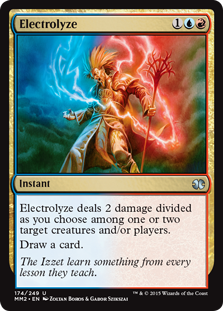
Extending our analysis outside of Top 8s and Top 16s, we see players aren't just winning with Jeskai decks, they are also bringing them to Electrolyzetournaments in the first place. Averaging Round 0 metagame shares from three different events (at 44, 51, and 80 players each), we find Jeskai Control representing 4.4% of all decks. Only Affinity, RG Tron, Burn, Infect, and Eldrazi occupied a higher share, with even Jund, Merfolk, and others trailing. This suggests a high degree of optimism among control mages. Astute statisticians will observe a performance gap between the Round 0 numbers and the eventual Top 8 finishes. Perhaps more pertinently, it's important to disclaim zero of those Jeskai decks reached their respective Top 8s. This points to the uphill battle Jeskai pilots still face, even if the overall metagame is more hospitable to their strategy than these three events suggest. Besides, it doesn't take a stretch to see how well-positioned Electrolyze and others are in such a field.
Overall, Jeskai's prognosis is neither as fatal as the detractors would have us believe, nor as promising as Wizards probably hoped. I'm still optimistic about the numbers, which point to greater viability than many assumed, as well as more post-Twin interest than I would have expected. List refinements will go a long way towards living the Jeskai dream, which is our next goal as we pick apart three frontrunning builds.

Jeskai Kiki Control

We're all on the prowl for an heir to Twin's throne, and all those combo roads look to lead straight to Kiki-Jiki, Mirror Breaker. Moderners from two years back will remember Shaun McLaren's 4th place run at Grand Prix Minneapolis, which he revisted in an article immediately following the banlist announcement. Wizards also gave an explicit shout-out to Kiki-Jiki in their update. Ex-Twinners are naturally going to gravitate to Mr. Mirror Breaker and his leading lady Restoration Angel, so the pair is a fitting starting point to our Jeskai tour.

Doing McLaren proud, Nikolin Lasku battled his way to the Top 8 of a January 24th Italian Magic League tournament hosted by Magic Planet. Although Laskin didn't break his way into the semi-finals, his performance at the 116-player event bodes well for the possible Twin successor.

Jeskai Kiki Control, by Nikolin Lasku (5th, Magic Planet IML 1/24/2016)

Creatures

3 Kiki-Jiki, Mirror Breaker
4 Snapcaster Mage
2 Vendilion Clique
3 Deceiver Exarch
3 Restoration Angel
1 Wall of Omens

Instants

4 Remand
1 Mana Leak
2 Spell Snare
1 Cryptic Command
4 Lightning Bolt
3 Path to Exile
1 Electrolyze

Sorceries

4 Serum Visions

Lands

4 Island
1 Polluted Delta
1 Arid Mesa
4 Scalding Tarn
4 Flooded Strand
1 Mountain
1 Plains
4 Sulfur Falls
1 Sacred Foundry
1 Hallowed Fountain
2 Steam Vents

Sideboard

3 Blood Moon
2 Dispel
2 Negate
2 Jace, Architect of Thought
2 Grim Lavamancer
1 Wear (Wear/Tear)
1 Engineered Explosives
1 Pia and Kiran Nalaar
1 Anger of the Gods

We saw other Jeskai Kiki Control strategies over the past ten days (e.g. Vivek Soi's 5th place bid at SCG Garden City), but Lasku's performed the best relative to tournament size. Despite this victory, I think the IML list has significant room to improve. On the plus side, Serum Visions is easily one of the best cards in Modern, even if it plays second fiddle to its banned little brother Preordain, and I'm please to see Visions' inclusion in a deck that typically forgoes cantrips. I'm also loving Spell Snare. McLaren's hypothetical Kiki Control list ditched the Snares in favor of a lone Spell Pierce and more Mana Leaks, an uncomfortable trade in Wall of Omensa field heavy with Burn, Affinity, Merfolk, and Jund. You'll need to adjust those ratios depending on how much Tron and Eldrazi you expect.
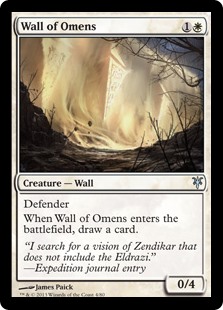
One of the bigger question marks in Lasku's list surrounds Deceiver Exarch. Specifically, do you want three Exarchs or the full Wall of Omens playset? I believe Lasku took his cue from Alex Bianchi, who ran only a singleton Wall in his Grand Prix Pittsburgh-winning Jeskai Twin, but we also need to question if those assumptions hold in an post-banning metagame. On the one hand, Wall is an awesome two-drop against Burn and Zoo, not to mention extending your grind-game with Angel and Kiki-Jiki synergies. If you're finding yourself buried in the Burn to Zoo spectrum, Wall of Omens is where you want to be.

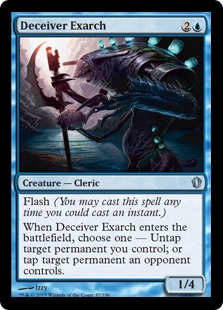
On the other hand, if you're finding yourself in a more open field (or, I would argue, a more average field), I'm actually liking old-timer Exarch. Although the Phyrexian Cleric has lost its closest ally, Deceiver offers more favorable interactions in more matchups. It taps down Affinity and Infect beatsticks and jams up Tron and Eldrazi lands. Wall sits there looking stupid in both those matchups. Like Wall, Exarch even clogs up Deceiver Exarchthe Burn and Zoo ground-game, but also threatens a real kill instead of just card-draw. Moreover, Deceiver is fittingly unexpected in a field that assumes its absence. Turn three Exarch into turn four Angel (blinking Exarch) into turn five Kiki-Jiki either wins the game outright or puts you far ahead on tempo if your Shaman eats a Bolt. This is the kind of flexibility and intimidation I want, and Exarch plays that role better than Wall.
If you're looking to sleeve up Lasku's 75, the biggest area for improvement is the manabase. I find his lack of manlands disturbing and you should too. Celestial Colonnade is easily the best non-aggro manland in the format with Wandering Fumarole a strong understudy. I'd even be willing to trim or cut the cantrips to accommodate the enters-the-battlefield restrictions. An argument can be made that manlands lose relevance in an overly aggressive field, but I think Lasku's list already tackles that with decent removal and a redundant combo package. Adding a method of prevailing in grindfests (Jund at 5%-6% is still waiting) will serve you well in events.

We'll need more data to confirm if Kiki-Jiki is where Jeskai wants to be, but I'm loving the Twin parallels and see a lot of potential for those who would see the Million Exarch March live again.

Traditional Jeskai Control

Shaun McLaren might receive plenty of credit for his Kiki Control list at Minnesota, but it was his victory at Pro Tour Born of the Gods that really put him on the Jeskai radar. His deck of choice back in February 2014? A no-frills Jeskai Control packing a tight five creatures alongside a reactive bonanza of removal, countermagic, and the deliciously grindy Sphinx's Revelation. In the years following 2014, this more historic take on reactive Magic took a backseat to fancier (and, for the most part, more powerful) Twin strategies. January 18th means it's time to unpack those Revelations, dust off the Tectonic Edges, and show those Grixis mages what they are missing by ditching Cryptic Command.

The low-creature count, highly conventional Jeskai Control lists have posted the most performances of any Jeskai competitor since the ban's effect. I'll show two exemplars today. It doesn't get much more traditional than Sean Gillis's Jeskai Control, which racked up a Top 8 showing at a Grand Prix Vancouver Modern side event. UW Control actually triumphed in the 80-contender field, further pointing to a metagame where can control can excel, but our focus is on the red-based list which has seen wider metagame success beyond Vancouver.

Jeskai Control, by Sean Gillis (4th, Grand Prix Vancouver 1/30/2016)

Creatures

1 Vendilion Clique
4 Snapcaster Mage

Instants

2 Sphinx's Revelation
3 Lightning Helix
3 Cryptic Command
3 Electrolyze
2 Spell Snare
3 Remand
4 Mana Leak
4 Lightning Bolt
4 Path to Exile

Sorceries

1 Supreme Verdict

Lands

1 Plains
1 Mountain
3 Island
3 Ghost Quarter
4 Celestial Colonnade
1 Sacred Foundry
2 Hallowed Fountain
2 Steam Vents
2 Sulfur Falls
3 Flooded Strand
4 Scalding Tarn

Sideboard

1 Supreme Verdict
1 Vendilion Clique
2 Spellskite
3 Crumble to Dust
2 Timely Reinforcements
2 Stony Silence
1 Anger of the Gods
1 Engineered Explosives
1 Elspeth, Sun's Champion
1 Keranos, God of Storms

Note: the Wizards website lists an Engineered Plague in Gillis' sideboard, and although I'd love me a Modern Plague reprint as much as the next fellow, I'm assuming this is an Engineered Explosives instead.

Don't think I've forgotten about MTGO offerings! Magic League competitor AKTilted piloted a conservative Jeskai Control build to top honors at a League match on January 22. The ban update, which didn't take hold on normal MTGO until the 27th, took immediate effect on the League field, which makes AKTilted's performance an early indicator of Jeskai's potential.

Jeskai Control, by AKTilted (1st, Magic League Trial 1/22/2016)

Creatures

4 Snapcaster Mage

Artifacts

1 Engineered Explosives

Instants

4 Cryptic Command
4 Electrolyze
4 Lightning Helix
4 Path to Exile
4 Remand
4 Think Twice
2 Mana Leak
2 Spell Snare
1 Logic Knot

Planeswalkers

1 Jace, Architect of Thought

Sorceries

1 Supreme Verdict

Lands

4 Celestial Colonnade
4 Flooded Strand
3 Island
3 Steam Vents
2 Arid Mesa
2 Ghost Quarter
2 Plains
2 Sulfur Falls
1 Hallowed Fountain
1 Sacred Foundry

Sideboard

3 Dispel
2 Aven Mindcensor
2 Crumble to Dust
2 Supreme Verdict
1 Crucible of Worlds
1 Elspeth, Sun's Champion
1 Engineered Explosives
1 Ghost Quarter
1 Negate
1 Wear // Tear

In an age where everyone quibbles over archetype definitions, even the most ardent Millstone-control fogies will struggle to deny how deeply controlling these lists are. Both players ran 12+ counterspells, a sorcery-speed sweeper, no more than five creatures, and more than enough burn to zap aggro pests early and go wide with Snapcaster late. It doesn't get much more reactive than this. If blue-based control is to return to its Serra Angel roots, there's a good chance it will be in overwhelmingly reactive shells like these.
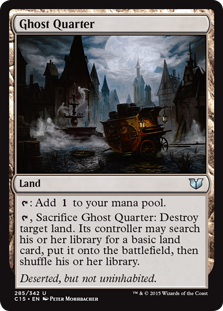
Ghost QuarterAs with Lasku's Kiki Control strategy from earlier, both builds have a number of core strengths but also areas we can enhance. Strengths first: I absolutely love the Ghost Quarters in a field with so much ramp, and want nothing more than to cast AKTilted's Crucible of Worlds in Games 2-3. Tectonic Edge is a passable supplement to Quarters in the right deck, but if I only have room for one and need to shore up an otherwise miserable matchup, maindecking Quarters is where I want to be. Similarly, both Electrolyze and Lightning Helix are very exciting right now in our current Modern metagame. The former is a beating against aggro frontrunner Affinity, while the latter puts in work against Burn, Zoo, and Merfolk. Path and countermagic ensure smooth sailing against the creature-heavy linear strategies, and with much of Tier 1 occupied by these bloodthirsty hordes, this is certainly an area where Jeskai has considerable appeal.

We also see a number of Jeskai's strengths in these sideboards, which tote a staggering toolbox of outs against most decks in Modern. This includes Stony Silence for Affinity, Timely Reinforcements for Burn and Zoo, and Elspeth, Sun's Champion to do a Keranos, God of Storms imitation against BGx decks ill-equipped to tussle with haymakers (Gillis even brings the God to the fray!). The Jeskai boards also heavily commit to fixing bad matchups, with Crumble to Dust allying with the Quarters to regain lost Games 2-3 ground against ramp.
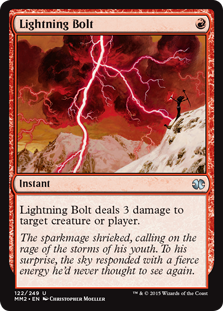
Lightning BoltDespite their shared strengths, both lists have separate areas of improvement. Let's get it out of the way first: AKTilted's decision to exclude Lightning Bolt is a bad one (Editor's Note: I had to check to make sure it wasn't an omission). It doesn't make sense in a metagame where Bolt excels, nor does it make sense when you've already committed to a Snapcaster Mage playset. I believe this points to metagame differences in Magic League games more than anything, which could be relevant if you see your own field shift away from low-toughness targets to decks that brush off the Bolt. Even so, there's still really no reason to leave the Bolts at home: -4 Think Twice, +4 Bolt, and move on.

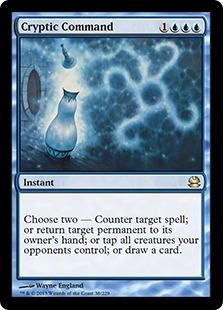
A less overtly questionable inclusion, but one we still want to challenge, is Cryptic Command. Don't get me wrong! Command remains an excellent card, and I wouldn't leave home as a Jeskai mage without 1-2. But 3-4? Not in this field. There are too many decks either Cryptic Commandtrying to get under the Command early or beating it in the mid-game. Cryptic flood is very real in these kinds of metagames, and I want to minimize those chances with a more compact ratio. By a similar token, I'm nervous about those four Remands. With the exception of Jund, every frontrunning Tier 1 deck is either an aggro deck where Remand does nothing more than cycle, or a ramp deck where I don't want to double Hordeling Outburst or quadruple Vindicate myself by countering on-cast Eldrazi. Remand is significantly better against Tron than Eldrazi, but overall the downsides still outweigh the benefits. Kiki decks can at least Remand their way into a turn five win. We're playing a longer game, and Remand doesn't fit our need for decisive, early answers that allow us to commence Colonnade beatdown.
Outside of these considerations, traditional Jeskai Control brings a lot to the table. Take a leaf from Gillis' and AKTilted's books by supplementing your inherently strong anti-aggro plan with a committed ramp-busting strategy. After that, make sure your maindeck inclusions fit the current metagame context, not the past many control players wish we could return to. Although that doesn't necessarily mean cramming in something as offensively proactive as Gurmag Angler (although the next section will do just that), it does mean making smart reactive choices in an undeniably linear field. Succeed at this and we might see Sphinx's Revelation return to the top tables soon.

The Jeskai Midrange Spectrum

While on the subject of the control and midrange, proactive and reactive spectrums, we'll end our Jeskai safari with two options straddling those fences. Many URx converts and veterans will struggle to place themselves in the traditional Jeskai Control and more Twin-like Kiki Control camps. Sphinx's Revelation and Cryptic Command can feel too durdly in a format where Affinity vomits out six cards on turn one, or where Goryo's Vengeance roars online before you get a second draw step. That said, Kiki-Jiki, Mirror Breaker's two toughness is a far cry from Exarch's four, and a slower, more fragile Twin imitation can feel like a pale mockery of the pre-ban favorite. For those facing these questions, the more proactive Jeskai Midrange strategies give you another niche to fill while still playing your Snapcaster playset.

First up is Stefan Krall's Jeskai Geist, snagging 10th at the January 24th MKM Trial in Bottrop, Germany. The 100-player field saw a ton of Abzan Company in the Top 16, along with a scattering of the usual linear suspects. I know Jordan, an avowed Geist hater, is going to have something to say about this list in the comments, but we can't talk Jeskai Midrange without bringing old Saint-Traft to the table.

Jeskai Midrange, by Stefan Krall (10th, MKM Trial Bottrop 1/24/2016)

Creatures

1 Pia and Kiran Nalaar
1 Vendilion Clique
2 Restoration Angel
3 Geist of Saint Traft
4 Snapcaster Mage

Instants

1 Sphinx's Revelation
2 Electrolyze
2 Mana Leak
2 Spell Snare
3 Cryptic Command
3 Lightning Helix
3 Remand
4 Lightning Bolt
4 Path to Exile

Sorceries

1 Timely Reinforcements

Lands

1 Mountain
1 Plains
1 Sacred Foundry
1 Sulfur Falls
2 Ghost Quarter
2 Hallowed Fountain
2 Steam Vents
3 Celestial Colonnade
3 Island
4 Flooded Strand
4 Scalding Tarn

Sideboard

2 Dispel
2 Engineered Explosives
2 Wear // Tear
1 Sudden Shock
1 Timely Reinforcements
1 Supreme Verdict
2 Relic of Progenitus
1 Keranos, God of Storms
1 Narset Transcendent
1 Negate
1 Spell Snare

Justin Rike gives us our next Jeskai Midrange entry, coming in at 14th on the recent SCG Classic in Columbus. Featuring nine rounds and 260 players, the January 31st tournament, the Classic showcased a Top 16 infested with linear options. This made Rike's Snapcasters a beacon of hope in an overwhelmingly aggressive field. Rike doesn't have Krall's Geists, upping his Angel and Pia and Kiran Nalaar counts to make up the deficit and filling in the rest with the Helix-man himself, Ajani Vengeant.

Jeskai Midrange, by Justin Rike (14th, SCG Classic Columbus 1/31/2016)

Creatures

3 Restoration Angel
4 Snapcaster Mage
2 Pia and Kiran Nalaar
1 Vendilion Clique

Instants

1 Electrolyze
4 Lightning Bolt
3 Lightning Helix
4 Mana Leak
4 Path to Exile
2 Remand
1 Spell Pierce
3 Spell Snare
1 Think Twice

Planeswalkers

2 Ajani Vengeant

Lands

3 Island
1 Mountain
1 Plains
3 Celestial Colonnade
4 Flooded Strand
1 Ghost Quarter
1 Hallowed Fountain
1 Polluted Delta
1 Sacred Foundry
4 Scalding Tarn
3 Steam Vents
1 Sulfur Falls
1 Wandering Fumarole

Sideboard

1 Izzet Staticaster
2 Stony Silence
2 Threads of Disloyalty
1 Celestial Purge
1 Disdainful Stroke
2 Dispel
1 Negate
1 Valorous Stance
1 Wear
3 Crumble to Dust

I know someone is already scrolling down the page to leave a comment field essay about midrange versus control classifications, but one of the reason I show these decks is specifically to show how complicated that relationship has become. Krall's list has three Cryptics and a Revelation, often hallmarks of something more on Jeskai's control side. Resisting easy categorizing, it then adds six solidly midrange beatdown creatures on top of a potent burn and Snapcaster suite. Seizing a Top 16 at the Classic a week later, Rike makes similar deckbuilding decisions, focusing on creatures that do bridge the gap between control and midrange (depending on their context) before cleaning up the spell selection to exclude the traditional staples we saw with Krall. All of this shows how fluid the distinction has become.

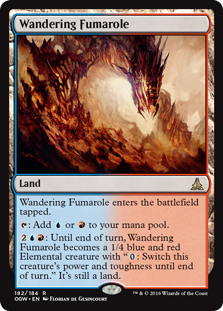
Let's table the archetype wars for another time and think about the cards themselves. Strengths-wise, I'm as giddy about pairing Restoration Angel with the Nalaars Wandering Fumaroletoday as I was in my Shape Anew technology spotlight yesterday. Thopters clog up the skies against Affinity and Infect while also chumping ground-pounders all day long. They can sail across to chip away at life totals or hit the graveyard as Shock fuel. This makes for a synergy as relevant in aggressive matchups as in grindier ones. Similarly, I'm happy we're still on manlands and Ghost Quarters, the former of which gives us late-game outs if our damage output gets stalled, and the latter of which provides an edge against an otherwise nasty ramp contest. Wandering Fumarole finally meanders into the manabase, and I really like the Elemental's contributions to our faster clock. Finally, in case Tiago needed more endorsements, here's yet another pair of decks rocking four of the Mages along with a bevvy of burn. No matter what Jeskai configuration you prefer, don't be stingy on those ratios.
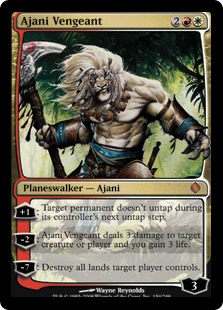
Ajani VengeantThat gets us to the big questions surrounding Geist of Saint Traft and Ajani Vengeant. To Wizards' credit, these were two cards that were largely unplayable with Twin in the format, and Twin's presence itself was a contributor to that irrelevance. More to the point, however, we must ask how much this has really changed with the deck's departure. For Ajani, I think circumstances really do favor the ThunderCats fanboy. Vengeant stabilizes boards against both landlocked Burn/Zoo and airborne Infect/Affinity. Repeated frost effects are relevant in most matchups, including against ramp, and even ticking Ajani down to 1 for a Helix often buys the three-for-one exchange you need to swing most aggro contests. This combination of metagame context and individual utility give Ajani Vengeant relatively high marks in my post-Twin rankings.

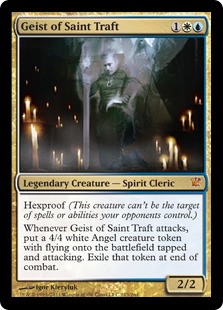
Then there's Geist of Saint Traft. On paper, Geist still presents the most consistently-fast, single-card clock of any Modern creature costing less than four. Only the most monstrous Tarmogoyfs can compare on a one-for-one basis, with everything else requiring at Geist of Saint Traftleast another card (or significant setup) to punch as hard as Geist and his guardian Angel. This kind of speedy clock screams "proactivity" to me, which is often where you want to be in Modern (particularly open Modern) metagames. On that topic of metagame context, we're seeing plenty of aggro decks vulnerable to redundant Jeskai burn effects. In theory, this lets Geist sail across for six damage a turn for a swift close. Unfortunately, this context is also where Geist gets into trouble. Defying naysayers, Jund has survived the Twin ban in the short-term, and nothing makes Geist sadder than staring down the lone, Bolt-proof Tarmogoyf. Nothing, that is, except for Eldrazi's tokens courtesy of Lingering Souls and Blight Herder, which demotes the proud Innistrad Cleric from all-star slugger to a blue Taoist Hermit. Abzan Company and Death and Taxes will also cause Geist to roll in his grave, and that's if he's lucky enough to avoid Kitchen Finks (which Jund and UW Control are both packing).
Once we figure in the inevitable increase in sweepers (Supreme Verdict from today, Pyroclasm in Tron, Flaying Tendrils in Eldrazi, Anger of the Gods in Jund, etc.), and you can call me a doubting Thomas for Saint Traft's chances in this current metagame. Strategically, Jeskai Midrange remains a viable option, especially if you leverage mama and papa Chandra alongside Restoration Angel. Just be careful in straying too far from metagame context clues and back to old Jeskai habits that might no longer be applicable.

Taking Jeskai to the Top

I won't be going to a Regionals event this weekend, but if I did, some Jeskai style would be in my final contention for deck-of-choice. No matter what build you look at, it's hard to beat the Snapcaster Mage playset, the burn arsenal, the flexible sideboards, and the powerful, stalemate-cracking manlands. I'd probably lean towards Kiki-Jiki because I'm a combo player at heart, but the savvier choice is probably more on the midrange to control spectrum, like a hybrid between Rike's and Gillis' lists from earlier. Hopefully we'll see more players packing their Steam Vents and Hallowed Fountains all weekend, whether at a Regionals near you or the big Pro Tour stage. Or just add Shape Anew to the Jeskai puzzle to really take it the next level!
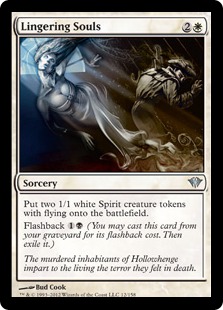
Lingering SoulsAlthough this article focused exclusively on Jeskai Control, this is by no means the only direction we could see Ux(x) or even URx strategies go in Modern. Like David, I can't deny some of Esper's obvious advantages, whether the catchall Inquisition of Kozilek or the grind-standard itself, Lingering Souls. Blood Moon also remains a pet favorite, so both Blue Moon and Temur Moon options pique my interest. I bet we see a number of these strategies over the weekend, and although decks like those we saw today are sure to be big players throughout these tournaments, control won't start and stop with Jeskai.

Drop by tomorrow as we unpack more metagame numbers and make some final format observations before the big weekend. Until then, let me know in the comments what you thought of our trek through Jeskai territory, the different decks and cards discussed today, and any other control innovations you have in your workshop. See you all soon!

Deck Overview- Bant Company

Are you a Quiet Speculation member?

If not, now is a perfect time to join up! Our powerful tools, breaking-news analysis, and exclusive Discord channel will make sure you stay up to date and ahead of the curve.

Oath of the Gatewatch is continuing to make its presence known in Standard, and no card is seeing more play than Reflector Mage. Perhaps the most interesting take on a Reflector Mage deck came in Andy Ferguson's second place Bant Company deck.

Bant Company

Creatures

4 Bounding Krasis
4 Deathmist Raptor
4 Den Protector
4 Reflector Mage
4 Sylvan Advocate
1 Warden of the First Tree
4 Jace, Vryn's Prodigy

Spells

4 Collected Company
4 Dromoka's Command
2 Ojutai's Command

Lands

2 Forest
1 Island
3 Plains
2 Canopy Vista
4 Flooded Strand
4 Lumbering Falls
2 Prairie Stream
4 Windswept Heath
1 Wooded Foothills
2 Yavimaya Coast

Sideboard

4 Arashin Cleric
2 Frost Walker
1 Harbinger of the Tides
1 Silkwrap
3 Disdainful Stroke
3 Dispel
1 Valorous Stance

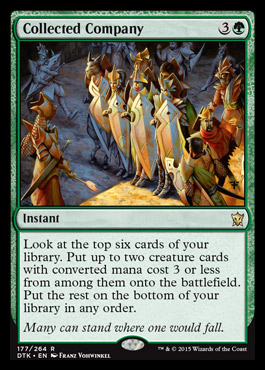
Ferguson's deck is intent on casting Collected Company and finding six mana worth of creatures, which isn't itself a novel idea. Choosing Bounding Krasis as a three drop to play a tempo game alongside Reflector Mage is. The Krasis didn't look extremely impressive from the booth this weekend, but I admire the idea, and the flash on the frog lizard plays well with the Ojutai's Commands.

Sylvan Advocate isn't a three drop, but it does offer most value than most three drops when you control six lands. 4/5s are huge in a world of 2/3s, and the ability to pump up the four Lumbering Falls isn't something to be discounted, especially with the tempo creature package.

There was an error retrieving a chart for Sylvan Advocate

Ferguson's build also have some value lying in the Deathmist Raptor/Den Protector Package. This didn't come up a ton on camera this weekend, though it is the sort of thing that helps you grind out removal heavy decks.

Ultimately, Ferguson lost to Rally the Ancestors in the finals. His deck relies on the ability to win on the board and Dispel any Rallies or Collected Company out of the Rally deck in this matchup, which is going to be a struggle when the Rally deck has draws that just commit to playing on the board.

Both finals lists were playing four Collected Company and four Reflector Mage this weekend, and I don't think that this is by accident. Now that Ferguson's deck is a known quantity, it will be interesting to see if it stays in the metagame and how it evolves.

Insider: High-Stakes MTGO – Jan 24th to Jan 30th

Are you a Quiet Speculation member?

If not, now is a perfect time to join up! Our powerful tools, breaking-news analysis, and exclusive Discord channel will make sure you stay up to date and ahead of the curve.

Welcome back for another week of High Stakes Bankroll Managment on MTGO. I thought I would start today by giving you a little heads up on my baseline strategy when it comes to investing with such a large bankroll.

When you decide to invest in any positons on MTGO there are a least two things you should consider:

  1. The size of your bankroll---e.g. make sure you are not buying into a position that would be too big a share of your bankroll.
  2. The number of copies for any given position---e.g. you can't buy 500 copies of your target positions as it might be a nightmare to sell so many at a profit.

In other words, always buy positions that make sense in the context of your bankroll, both in terms of price and number of copies. With such a big bankroll I could buy hundreds of copies of pretty much anything without endangering my bankroll. However it could be very tempting to buy thousands of copies of every spec I go for, and this is what I don't want to do.

My baseline for any potential specs with this bankroll is the following---200 tix max and/or 50-60 copies max. As you can see, I don't adhere to these slavishly. I also have a price limit in mind when buying cards, which often enough limits the number of cards I'll purchase in the end. There are also a fair amount of exceptions where I'm willing to exceed the max tix and copies figures.

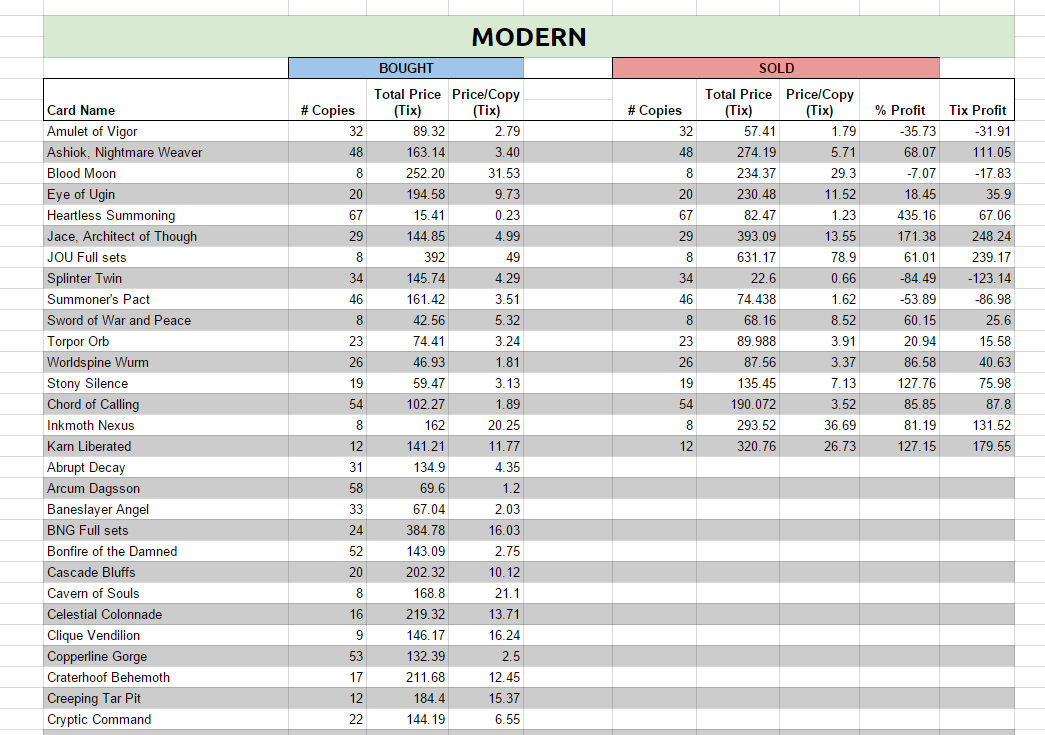
Boosters and full sets are two spec categories where these limits don't apply. For regular cards, if the price per copy is high I'll be willing to invest more tix, such as for Tarmogoyf, Snapcaster Mage and more recently MM2 Eye of Ugin.

Another exception were the Magic Origins painlands (which I discuss in more detail below). Things didn't fare as I expected with these lands, but when I pulled the trigger all indicators pointed to a spec that could not fail.

One pillar of that assumption was that the M13 checklands still saw a nice price increase during their Standard period despite being printed in the previous three core sets! Standard cards are also much more liquid and with very low spreads. For these reasons I raised my total limits on all of the five painlands.

Managing a small or a big bankroll is not very different in the end (although you will probably need more time with a big bankroll). The main difference is that you can go big and deep if you want to with a big bankroll.

Here is the link to the google spreadsheet.

Buys This Week

Addon1

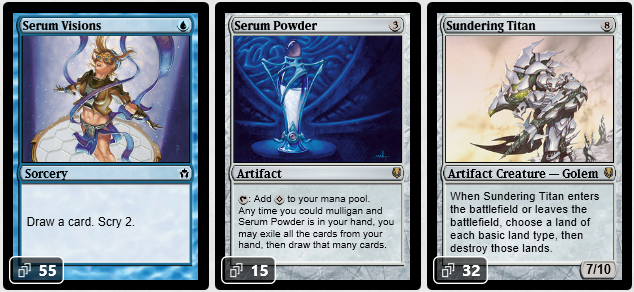
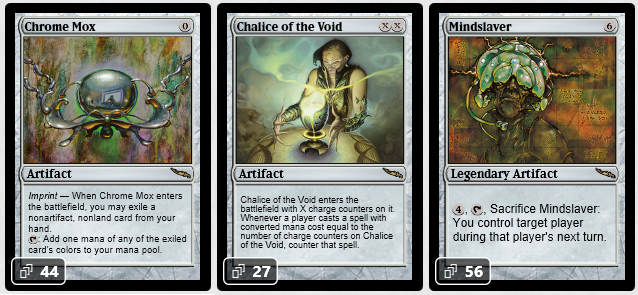
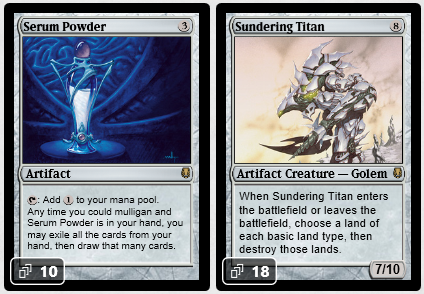
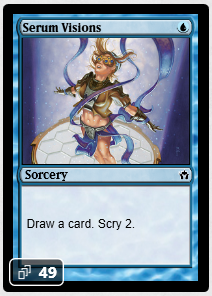
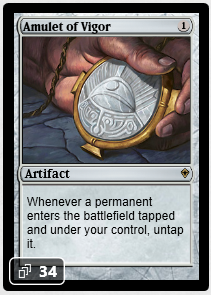
I'll start this week with couple of additional buys from Mirrodin block following the end of flashback drafts. Prices got down a bit and I upped my copies for Serum Visions, Serum Powder and Sundering Titan. All three cards, as well as other staples from this block, have already rebounded nicely as of today.

EoU

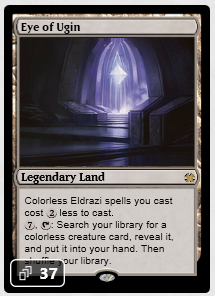
Buying 37 copies of Modern Masters 2015 Eye of Ugin was only based on the observed discrepancy between the Worldwake version, priced way above 20 tix, and the MM2 version, priced around 11 tix when I purchased my copies. As of writing, available supplies of Eye of Ugin are still fairly low.

The newly introduced Eldrazi decks seem poised to be a real contender in Modern and they're using a full playset of the legendary land. My bet here is that prices of both versions should adjust and hopefully converge around 15 tix. I'm seeking a small percentage profit here.

Ideally, I would prefer to flip these at my target price (~13.5 tix) before Pro Tour Oath of the Gatewatch. If I don't, then I'm hoping for Eldrazi decks to show some results at the upcoming PT.

BFZ

I have started accumulated full sets of Battle for Zendikar this past week. The release of OGW on MTGO caught players' attention and tix, resulting of a decrease of just about everything else.

Note that this might not be the absolute best buying price for BFZ full sets---they actually were around 60 tix earlier this December. They might also get cheaper between now and the release of Shadows over Innistrad, but not by much.

Nonetheless I want to start accumulating full sets now that I know the price is dipping. I'll probably buy a total of 30 BFZ full sets for now and be ready to buy 15-20 more if the price drops further in the coming months.

Sales This Week

Although this guy could go higher I was aiming for a 2 tix selling price. This past week buying prices crossed the 2 tix bar and I started unloading copies. Buying prices didn't keep up with this price and are now back in the 1.4 - 1.8 tix range. Not a problem; I'll wait for the next price hike to sell my 15 other copies of Master of the Pearl Trident.

On My Radar

Buying up to 30 full sets of Battle for Zendikar is on the top of my list of things to do this week. Whether prices decline further, stabilize, or rebound, I'll be buying these sets now. With the new set rotation structure and the new draft structure, e.g. 2 OGW and 1 BFZ, it's not clear to me whether BFZ sets will get cheaper in the following months. Without much confidence in what will happen next I prefer to buy now.

With Pro Tour Oath of the Gatewatch taking place this weekend, I'll certainly be looking to sell several of my Modern positions. Many of those I'm currently holding are already getting close to my target selling price---it would not take much from the PT to up prices just a little bit so I can sell them.

Alternatively I'll also be trying to take advantage of cards that don't meet everyone's expectations this weekend.

With the recent ban of the elephant in the room---Splinter Twin---the format has changed and will certainly change again in the following months after this PT. Cards that dip for lack of appearance during this PT might be those showing up next in a metagame trying to find its bearings. This is a great situation for speculators where buying and selling opportunities happen simultaneously.

Questions & Answers

Arcum Dagsson & Other Odd Cards

QA

Good question! It doesn't make a lot of sense, does it? Arcum Dagsson was among the cards, from bulk to just below bulk, that I wanted to invest in as long-term investments. The idea was that these cards, and Arcum in particular, have a singular effect that could someday be incorporated into a Modern deck and thus see a nice price raise. Nourishing Shoal is a great example of such cards.

Since the supply of Coldsnap cards is rather limited, even a slight increase in demand has the potential to dramatically increase the price. My bet with Arcum Dagsson was meant to be for the long run with almost no risk and for a potentially high reward.

The recently introduced Modern Flashback Draft Year kind of messed up the initial idea of buying bulk cards and waiting for a spike. That's why there aren't that many Arcum-like positions in my portfolio.

As for Arcum himself, I'm not sure yet if I'll be trying to sell it before Coldsnap flashback drafts (knowing that my selling price will be very low anyway) or if I'll just be waiting with my current copies since this position represents a tiny fraction of my bankroll. After all, a spike can still happen and from this optic Arcum's current price doesn't really matter.

Dealing With 900 Copies

Q

Buying more than 200 copies of any position (with the exception of boosters) will only happen on very rare instances with my investing strategy.

One situation I could see leading to buying hundreds of copies of a card would be betting on bulk Modern rares with the potential to spike sometime in the future. Such positions would only require a couple dozen tix for 300 copies or more. The idea of such a bet is “all or nothing.” Either the cards spike to 1 or 2 tix or they stay bulk forever, and I would consider such an investment dead unless a spike occurs.

Let’s come back to the painlands. To start with I had decided to go deep on these because they constituted, in my opinion, the surest bet you could find on MTGO at that time. It didn’t pan out as expected but they're still in the winning category and from here they can only improve. Standard cards are also more easily tradable and with lower spreads, which makes it easier to sell a larger number at a better profit.

Acquiring all of these copies was not done in two or three days but over several weeks. I had decided on a threshold price I was willing to pay back in September and I accumulated 40-60 copies every day, twice a day sometimes, when the selling prices reached that price. Bots are always pretty stocked with Standard cards and since the painlands were not really in demand prices didn’t move much. Prices actually went down when it became obvious they would not be big players in the current Standard metagame.

The buying strategy is fairly simple. Between MtgoLibrary Bots, Mtgotraders, Goatbots and others I bought one playset at a time, and more than one playset when authorized with bots such as Goatbots and Mtgotraders.

Later in November, as painland prices got to their lowest I decided to reinforce by ~150 copies the painlands that had lost the most---Shivan Reef, Battlefield Forge and Yavimaya Coast. I was and still am convinced that the rotation of Khans of Tarkir and its fetchlands will help the ORI painlands rise in demand. So with prices cut in half and with enough tix available to my bankroll, I bought more lands.

Selling will be a slow process as well. I won’t be waiting for any painland to hit 5 tix before selling though. Considering my large positions I’m likely to start selling as soon as buying prices hit 2 tix, or 1 - 1.5 tix for Yavimaya Coast. This may happen fairly soon actually. It will probably be a matter of selling 30-40 copies every other day or so.

At the end of the day if I double up on the 2700 tix I invested in the painlands I would consider it a success. If I can sell each of them for 4 tix a piece, I’ll be sitting on more than 13,000 tix and my bankroll will have progressed by more than 50% with only five positions, the sure bet I was talking about six months earlier.


Thank you for reading,

Sylvain Lehoux

Under- and Overrated BFZ Cards

Are you a Quiet Speculation member?

If not, now is a perfect time to join up! Our powerful tools, breaking-news analysis, and exclusive Discord channel will make sure you stay up to date and ahead of the curve.

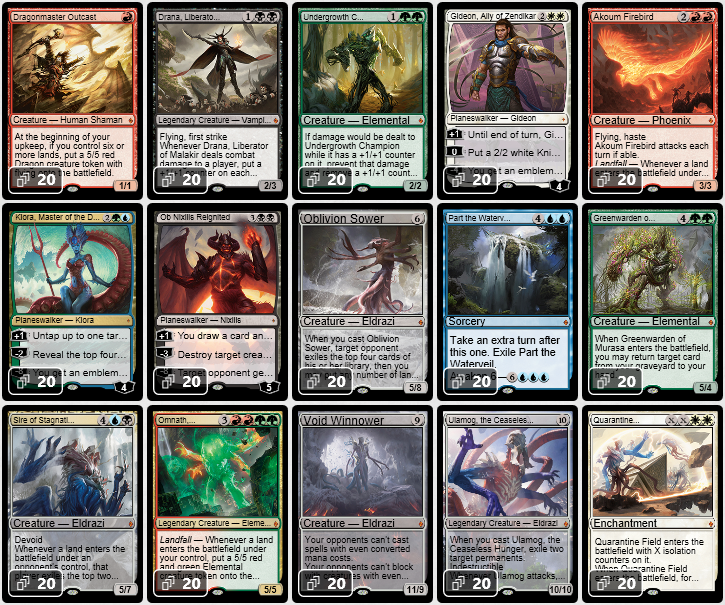
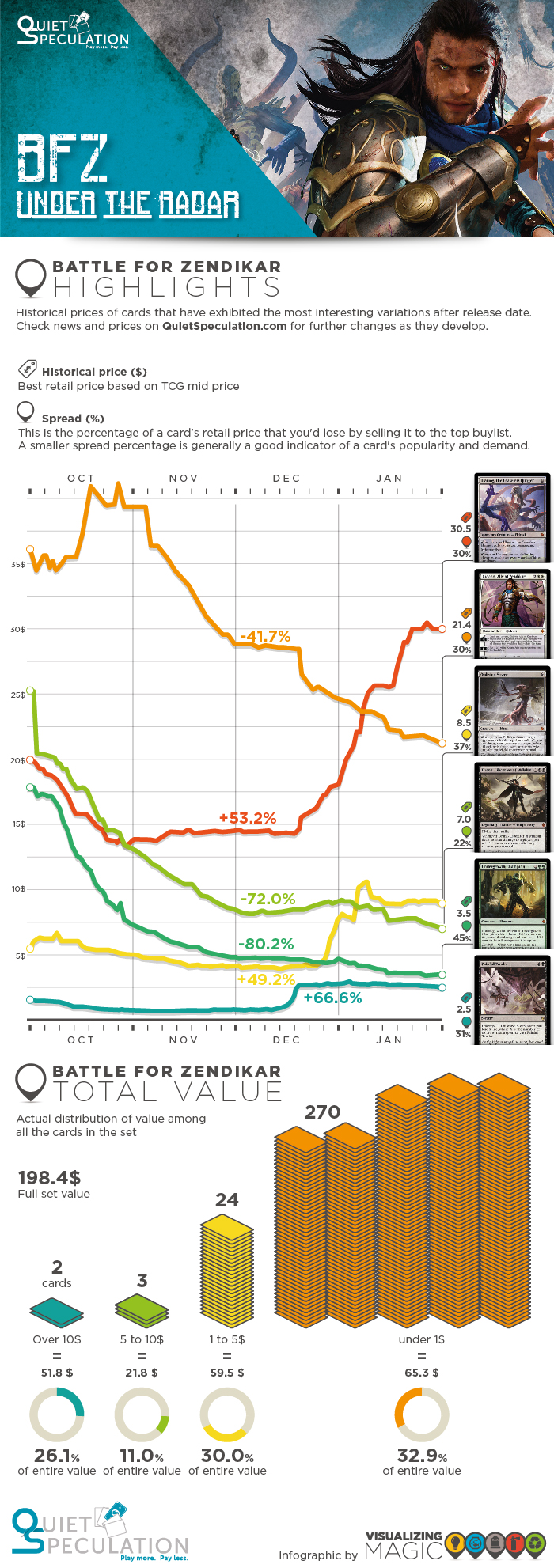
Battle for Zendikar was released almost four months ago, and it's time to check your prior investments and evaluate new ones. Analyze the historical prices of the most hyped cards in the set through our new infographic visualization!

QS_201601_C Under the radar BFZ-01-01

There was an error retrieving a chart for Ulamog, the Ceaseless Hunger
There was an error retrieving a chart for Gideon, Ally of Zendikar
There was an error retrieving a chart for Oblivion Sower
There was an error retrieving a chart for Drana, Liberator of Malakir
There was an error retrieving a chart for Undergrowth Champion
There was an error retrieving a chart for Painful Truths

Insider: MTG Stock Watch for January 2016

Are you a Quiet Speculation member?

If not, now is a perfect time to join up! Our powerful tools, breaking-news analysis, and exclusive Discord channel will make sure you stay up to date and ahead of the curve.

Welcome back, readers! Recently I put the Stock Watch article series on a hiatus as I have been trying to branch out a bit. However, I feel like the overall value of having this type of article on Quiet Speculation is significant, so I decided to revive it---though I am going to play with the formatting a bit.

Modern Changes

1. Treasure Hunt (Player Rewards) (+192.4%) - This is our biggest spike from last week. As of writing, there are currently only eight vendors with a total of 15 copies available on TCG Player. There are actually still three copies on Star City Games in Slightly Played (SP) condition.

This jump screams buyout as opposed to actual market demand. Casual players in my area have been asking for Treasure Hunts for the super cheap Zombie Infestation Modern deck. But they aren't the type who would likely try to pimp out a deck (although in theory it wouldn't take a lot to do so, even now).

Unfortunately, I am unaware of any methods to figure out how many copies were available prior to this price change. For now I'm chalking it up to market manipulation and I expect a subsequent drop.

2. Wild Nacatl (Ajani vs. Nicol Bolas) (+188.7%) - Similar to Treasure Hunt, when we look at TCG Player we see only 11 sellers with a total of 15 copies among them. This is one of the weirder buyouts, as the card Wild Nacatl has three printings (including an FNM foil) and the Ajani vs. Nicol Bolas printing shares the same artwork as the original Shards of Alara printing.

If you have any feel free to unload them, assuming you can find someone who wants them at this new price.

3. Past in Flames (Innistrad) (+126.9%) - With the banning of Splinter Twin, there are likely plenty of U/R Modern players who don't want to go out and buy a whole new mana base. Luckily, they can convert to U/R Storm without buying many (and depending on the build, any) new lands. The deck tends to ignore what its opponents are doing and combos out relatively consistently by turn 4 or 5, so it's not a huge jump in play style either.

There was an error retrieving a chart for Past in Flames

With a single mythic printing and relevance in both Legacy and Commander, it's not that surprising to see Past in Flames finally take off. For those who didn't play back when Innistrad first came out, Past in Flames was considered the second coming of Yawgmoth's Will, which is powerful enough to be banned in Legacy and restricted in Vintage.

4. Ghost Quarter (Commander 2015) (+107.3%) - With the release of Oath and a plethora of powerful new colorless spells, many players believe that Tron (in one of its incarnations) may now be the "deck to beat" in Modern. The deck has an incredibly powerful end game and plays huge trump cards incredibly fast (I'm looking at you, Ugin, the Spirit Dragon).

Tron's biggest weakness is that each Tron piece is, individually, pretty bad at actually casting spells. As Tron only requires three lands to function, Tectonic Edge isn't the best option for Modern players. Instead they have quickly adopted Ghost Quarter as the go-to answer, and despite a good number of printings all of them have risen to the $2 range now.

5. Urza's Power Plant (Antiquities) (+71.9%) - As I mentioned with Ghost Quarter above, with so many people believing in the power of Tron in Modern, it makes sense that the original black-bordered versions are seeing strong growth.

If you go back through my old MTG Stocks articles you'll see these lands repeatedly pop up as big gainers of the week. I honestly expect this trend to continue until Tron gets dethroned either by another archetype or the WotC banhammer.

6. Ghost Quarter (Modern Event Deck) (+61.3%) - See above.

7. Worship (Urza's Saga) (+46.9%) - This card popped up a while ago as a potential solution for white creature-based decks against some of the fast burn decks.

Worship forces Burn players to keep dealing with creatures and can make cards like Lingering Souls a huge pain, as they may be forced to expend four spells to eliminate all the souls. They also have an extremely hard time beating a Worship combined with a pro-red creature like Kor Firewalker or a hexproof one like Thrun, the Last Troll.

8. Ancestral Vision (Duel Decks: Anthology) (+40.0%) - This one isn't currently legal in Modern, but a lot of its current value, and its recent increase, is due to speculation around an unbanning. The interesting thing here is that the price has already moved repeatedly due to speculation with no increase in demand, so even if it were to become unbanned it's unclear how much more of a jump it would see.

There was an error retrieving a chart for Ancestral Vision

9. Ancestral Vision (Time Spiral) (+32.3%) - See above.

10. Brushland (Ice Age) (+29.4%) - This card is likely moving upward due to the very high cost of Horizon Canopy at this time. With Canopies hitting almost $80, it's not surprising that budget-minded Modern players would be willing to pay 96% less for something that's very similar (though granted the ability to draw a card with the Canopy is often more important than many realize).

Standard Changes

1. Kalitas, Traitor of Ghet (Oath of the Gatewatch) (+87.7%) - This card is showing up a lot in Abzan decks as a way to combat Rally and provide a lot of card advantage in a deck with tons of removal spells. He serves as a formidable blocker against the Atarka Red decks, and gaining three or more life (depending on how many times he gets to block) can easily negate an early swing or two from the aggro decks.

2. World Breaker (Oath of the Gatewatch) (+56.1%) - This guy showed up on camera in Zhengdong Shan's 10th place G/R Eldrazi Ramp deck from the SCG Open. It did a lot of work against Gerry Thomson (while on camera) though he obviously just missed Top 8 of the event.

There was an error retrieving a chart for World Breaker

3. Sylvan Advocate (Oath of the Gatewatch) (+41.4%) - This guy is starting to show up in some CoCo builds in Standard. His ability to pump Shambling Vent in the Abzan decks is not to be underestimated and the fact that multiples in play stack accordingly can allow for some truly monstrous manlands. Of course the Advocate himself also becomes a 4/5 in the late game, which is pretty beefy for a two-drop.

Commander Changes

1. Peregrine Drake (Urza's Saga) (+109.2%) - The Saga block spells that untap lands have proven to be broken since they made lands that could produce more than one mana---this is another in the long line of powerful spells with that effect. It has two printings (Planechase and Urza's Saga) and the Saga one has now caught up with the Planechase version.

However, it appears that both are currently priced due to a buyout. There are currently seven vendors with 15 copies of the Urza's Saga version and two vendors with a total of four copies of the Planechase version. I expect we'll see an influx of copies to the market as players try to capitalize on this price spike. Trade or sell them if you can.

2. Overburden (Prophecy) (+42.4%) - I added this card to my "mean" Commander deck back in the day, but realized just how brutal it can be and ended up tearing that deck apart as I like to keep Commander fun and lighthearted. However, that's just my opinion and plenty of spikes realized how insane this card could be, especially in a creature-light deck which can turn it into a much more one-sided card.

Interesting to note that while regular copies jumped up by 42% to a little under $3, the foils have spiked much higher to around $20. With only the one printing in a very weak set, there are likely a lot fewer copies floating around than you might think. The regular price still seems pretty reasonable for a powerful Commander card, but if it appeared in any sort of supplemental product the price would plummet.

3. Martyr's Bond (Commander) (+33.5%) - Thanks to the latest Commander sets having a black-white enchantment theme, it's not surprising that this card has seen an uptick in demand. If you look at the price graph you see some nice slow steady growth, up until Commander 2015 hit the shelves and players started looking around to see what other powerful enchantments could be added to spice up their Daxos the Returned decks.

4. Hell's Caretaker (9th Edition) (+29.8%) - As I haven't heard any rumors of this card in Modern, for now I can only assume this is due to Commander demand. This card's printings are limited to Legends, Chronicles, and 9th Edition (with the latter having arguably the best art).

This is definitely the type of card that can be abused in Commander. Repeatable reanimation isn't all that common anymore and certainly not options that cost as little as 4. I wouldn't be surprised if we see the Legends version go up next as the original, black-bordered copy probably still has appeal and now it's only $4 more than the 9th Edition version.

~

And those are the major movers from last week. If you have any comments on the new formatting of this article series I'd love to hear them in the comments below.

- David

Insider: Last-Chance Specs Before Pro Tour Oath

Are you a Quiet Speculation member?

If not, now is a perfect time to join up! Our powerful tools, breaking-news analysis, and exclusive Discord channel will make sure you stay up to date and ahead of the curve.

Pro Tour Oath of the Gatewatch is just days away and marks the last opportunity anybody will ever have to capitalize on Modern prices.

Okay maybe that is an exaggeration, but only a slight one.

Right now people are viewing Modern as though it is the dark side of the moon. Twin and Bloom are gone and nobody knows what's going to happen next. How will this incredible riddle unfold and what amazing revelations await us?

The fact of the matter is that there is a very large chance that Modern looks nearly exactly the same as it did before, except with no Twin or Amulet Bloom. I don't expect that those decks ceasing to exist suddenly enables a bunch of great new archetypes or makes a bunch of bad decks good. The remaining decks that were already Tier 1 are already so fast, so consistent and so powerful that there isn't exactly a lot of new space to occupy.

There are a couple of decks that I'd keep an eye on in these last few waning days. First we have the fast combo decks, that will probably see more play simply because two of the old "best" combo decks no longer exist. In particular, Goryo's Vengeance and Scapeshift are compelling as investments. However, it's questionable to think those decks would be better against the known decks than the ones that needed to get banned.

If anything I would assume that the non-combo decks got a leg up on the field because they were already among the best strategies in the field and now their combo competition has been slightly watered down. Every combo option is slightly slower and less consistent than Bloom or Twin, and whatever is the next heir to the combo throne will be worse than its predecessor.

Now, keep in mind that doesn't mean that whichever combo deck becomes the darling on the PT won't skyrocket in price... Because it most certainly will.

Scouring for Last-Minute Picks

These are the cards I'm betting on as we move into the final stretch. There is still opportunity to get in on these cards at attractive prices.

Inkmoth Nexus

There was an error retrieving a chart for Inkmoth Nexus

Inkmoth is in both Infect and Affinity which appear to be two of the best positioned decks going into the tournament (at least with regard to online performance). Both decks are lean, fast and linear---and I expect to see them in the Top 8 of the Pro Tour. Also, no Modern Masters 2015 reprint makes me inclined to believe the price on this card will jump if it gets any PT validation whatsoever.

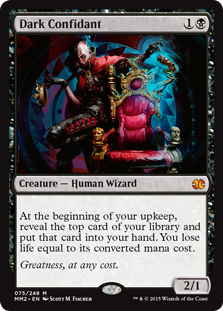
Dark Confidant

There was an error retrieving a chart for Dark Confidant

I also expect to see a lot of GBx decks floating around at the Pro Tour. Amulet Bloom was a tough match-up for Jund and I like the way the deck is positioned against Affinity and Infect. It has great removal and overall high-impact and versatile spells.

With Twin out of the equation, we may well see a resurgence of Dark Confidant decks. In the current price range it's a card I'd be interested in acquiring before the PT.

My bold (or not-so-bold) prediction is that after a high finish at the PT, several cards will make the leap from the $60-75 range up over $100 in advance of the Modern GP season. It just feels like the logical endgame of all of this hype, speculating and publicity.

Acquiring high-end cards is typically risky. But in this case I don't see many situations where these cards are likely to lose value any time soon, and the opportunity for growth is very high. It is one of the few instances where I think picking up cards on the high end like Grove of the Burnwillows, Arcbound Ravager or Horizon Canopy looks to be an appealing option.

Eldrazi Decks

There was an error retrieving a chart for Eldrazi Mimic

I also think some of the new Eldrazi cards have potential. I've tested various builds of the Eldrazi deck and they are all very solid. Mimic is one of the cards that's still languishing behind on the hype train.

I'll be surprised if a truly "broken" build of the Eldrazi deck shows up without featuring this psuedo one-drop. Being able to drop two of this card on the first turn off an Eye of Ugin and follow it up with a 4/4 Thought-Knot Seer or Endless One and an attack for 8 seems truly ridiculous.

Commons & Uncommons

Modern has already proven it can facilitate the existence of $15 commons and uncommons like Serum Visions, Inquisition of Kozilek and Remand. These particular cards have seen drops in value due to recent reprints, but what other cards are sufficiently rare and will see sufficient play to warrant big spikes in value after the Pro Tour?

There was an error retrieving a chart for Ghost Quarter

I've been telling people on QS to buy in on Ghost Quarter since they were $0.50 and they are up over $2 now. It is the second most played card after Lightning Bolt. I don't think $3 is the ceiling here, especially on the older version with clearly superior artwork.

There was an error retrieving a chart for Path to Exile

I love Path to Exile as a speculation target. Despite being one of the perpetual top 10 most played cards in the format (and an auto-include in any deck playing white) the card hasn't seen any growth amid the entire Modern boom!

How is that even possible?---it isn't like there's less demand for Path than before. This is my prime pick this week as a lock for growth.

Etcetera

I'd also be shocked if we didn't see gains on shocklands at some point in the near future. They are among the most played cards in the format, period. They are among the most important cards in the format, period. I think they are really primed for a gain and would be surprised if they didn't bump up a few dollars as the week goes on.

My advice for getting your last chips into the pot before the Pro Tour is simply to look at lists of the known best decks and pick cards that haven't spiked yet. Modern is largely a "solved" format in the sense that it has been played a zillion times and people have already built the "great decks." In order for a deck to emerge in a non-rotating format there needs to be some pretty significant innovation.

By the way...

There was an error retrieving a chart for Scavenging Ooze

Scooze is just outside of the Top 10 most played cards in Modern, an M-set rare, and still commands less than a $10 price tag. I don't even understand how nobody has bothered to buy out the internet on this card. Do I literally need to do it myself? The card is insane. I'm strongly considering playing Jund at the PT and this card is one of the reasons why!

What to Expect at the PT

I think we may see some new decks but I don't anticipate a Modern dominated by unforeseen aliens that nobody expected (well, maybe Eldrazi...) just because Twin and Bloom rotated. Those decks rotating make the other known decks even better because there is less competition at the top of the mountain.

  • Zoo
  • Burn
  • Affinity
  • Tron
  • Infect
  • Jund
  • Chord Combo
  • Death and Taxes
  • Eldrazi Black
  • Storm
  • Living End
  • Goryo's Vengeance

These decks are all proven winners and are not suddenly going to become bad or go away any time soon. My strategy (which has been very solid thus far) has simply been to look at the cards in these decks and pick them up before the Pro Tour.

Most importantly for those of you who manage modest collections and are just trying to get the cards to play at an affordable price, my sincere advice is to pick up whatever you want to play before the Pro Tour. I don't see much opportunity for cards to go down afterwards.

Also, I'd like to add that in preparation for the Pro Tour I played roughly 45 Modern events in the past 60 days and did numerous testing sessions with friends and I am not playing an off-the-radar insane brew. I could not find a single "brew" deck that was anywhere near as powerful or consistent as the Top 10 known decks in the format.

Is it possible that one of the super teams broke the format and is playing some wild Krark-Clan Ironworks combo deck? Absolutely, anything is possible. So, if you've got an insane broken strategy in your back pocket and you think it's great I'd bet on it right now and buy up some extra copies. However, aside from betting on broken cards or decks I really believe the smart money is on the known best decks and best cards.

What a novel idea. Bet on winners. It is going to be hard to lose betting on Modern once the PT results are in.

Four Cards to Play in Twinless Modern

Are you a Quiet Speculation member?

If not, now is a perfect time to join up! Our powerful tools, breaking-news analysis, and exclusive Discord channel will make sure you stay up to date and ahead of the curve.

Last week's metagame snapshot article was a big hit, making the January 28 Daily Magic Update and releasing one of the only evidence-based portraits of our new Modern. You can be sure we'll add to that dataset and revisit it in a few days. For today, instead of taking the Ornithopter's-eye view to analyze broader metagame forces, we'll zero in on four cards poised to benefit both from Twin's departure and from the changed Modern climate. Some of these technology pieces are already seeing play in a post-Splinter Twin environment. Others are currently homeless, waiting patiently for an enterprising brewer to reverse their fortunes. With a format pillar toppled from the Modern structure, there are big shoes to fill and bigger gaps to exploit: we'll need to think outside the box if we want to succeed at shaping this Wild Twinless West anew.

Shape Anew art

My initial list for today's article exceeded twenty cards, ranging from splashy sluggers (Phyrexian Obliterator, Zur the Enchanter) to demanding build-arounds (Restore Balance, Trash for Treasure). Also, Seance. Because Seance. Instead of spending the article cobbling together Goblin Charbelcher brews and Crucible of Worlds experiments, I want to look at the four cards with the highest chance of post-banning success. Well, maybe three cards plus the zany Johnny piece I'll start the article with. As we continue our quest for URx Twin's successor, we'll want to keep an eye out for these cards, and our minds open to the possible decks and strategies which could welcome these sleepers into their ranks.

[wp_ad_camp_1]

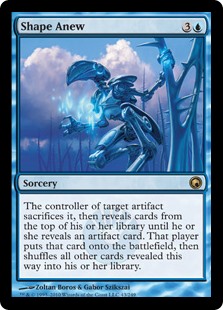
Shape Anew

Shape AnewI know there are readers out there with 100s of these squirreled away like American gold-purchasers after Obama's election. Whether you're a speculator trying to cash in on a never reprinted Scars of Mirrodin rare, a Tinker expatriate who wants to live the Blightsteel Colossus dream, or a starry-eyed brewer who forgot Darksteel Citadel is more bombo than bomb, everyone has a secret love affair with Shape Anew somewhere in their past. Twin's departure means it's time to bring that fling into the open.
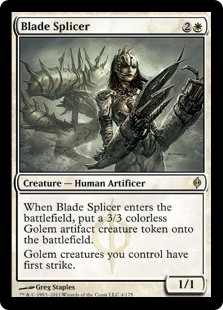
The Twin bans opens up both direct and indirect space for Shape Anew to shine. From a pure positioning standpoint, Shape Anew into some massive win condition like Colossus is no longer strictly worse than Deceiver Exarch into Splinter Twin. More importantly, the cards you need for Shape to work are significantly better in a no-Twin Modern. Take Blade Splicer. Here was a three-drop which profitably blocked Goblin Guide and Wild Nacatl all day long. You couldn't Lightning Bolt it at parity and a pair of the Splicers (or a blinked one) killed even big Tarmogoyfs.

Blade SplicerUnfortunately, Splicer cost three. Same as Exarch, one less than Twin, and one more than would ordinarily pass Modern's URx Twin barometer.
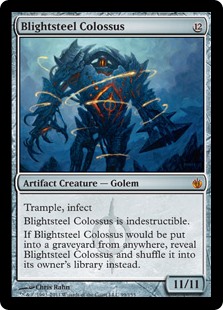
Today, Splicer, a fat Blightsteel Colossus, and the Ux(x) shells to support all these synergies are much better off than before the ban. You know who else can join the fun? Jund and Grixis breakout celebrity couple Pia and Kiran Nalaar, another strong card I'd want to play with or without Shape Anew. Indeed, this is the sticking point of the Shape combo and why I'm rooting for it in Modern: you can jam 2-3 copies in along with your win condition and then play whatever else around it. Unlike Polymorph, an almost identical card that also excites me in the new Modern, Shape's deckbuilding requirements aren't as stringent. This edge, coupled with the other advantages of the package, have me brewing up all kinds of blue-red strategies to adopt Tinker-lite. Jund, not Abzan, is even on the upswing, which means more Bolts and fewer Path to Exiles to ruin your Blighsteel fun.

Blightsteel ColossusControl mages are all scrambling to get the Jeskai configuration right, and I'm pumped to get these cards rolling alongside Restoration Angel. Bolt, Path, Lightning Helix, and Electrolyze offer early protection before the deck transitions into a Chapin-worthy grindfest of artifacts tokens, blink effects, and Snapcaster Mage value. Opponent miss a beat? Shape Anew out a Golen for the Pyrexian Iron Giant. Or bring in Platinum Angel or Platinum Emperion to seal the aggro deal. I'm sure there are other ways to build this, but Blightsteel Jeskai has a ring to it and I promised a more offbeat combo to start off the article. I'm sure a turn four Colossus delivered!
Kitchen Finks

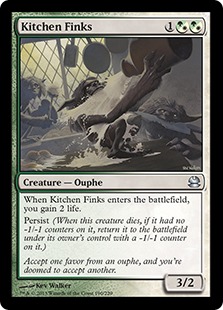
Twinless Modern is likely to be a more diverse format in the longrun, but short-term trends point squarely to a linear occupation. We're already Kitchen Finksseeing this in last week's metagame update, and (spoiler alert) data from this weekend is likely to confirm those initial observations. When it comes to jamming up aggro, especially Burn, Kitchen Finks wears the crown. None of the Burn or Zoo creatures can safely attack into the Finks squad (ignore Zoo's Tarmogoyf, who at least gets chumped), which can easily lead to effective three-for-ones if an opponent manages the Ouphes poorly. These conditions make Finks a critical sideboard card and even a candidate for maindeck inclusion depending on the metagame.

We're already seeing this play out in both UW Control and Jund lists over the past week, not to mention a slot alongside Death and Taxes' Dark Confidant MM2015Flickerwisp engine. The aggro roadblock really excels alongside Jund's Dark Confidant, offsetting the lifeloss and ensuring the BGx deck can stabilize into the midgame. Finks gets a bit weaker in the Affinity and Infect contests, where aggressors can ignore the hapless milk-chuggers with flying or poison, but there's enough Burn and Zoo tromping around to justify the Finks. You'll need to be wary of Tron's and Eldrazi's Relic of Progenitus playsets, but Finks will give damage-based decks (and those dependent on one-for-one spot removal) fits. Just run them in a shell which can handle those matchups and you'll be fine: Wx Death and Taxes, or Hatebears depending on your preference, are both worthy homes. Jund, Abzan, and UW Control also fit this profile.
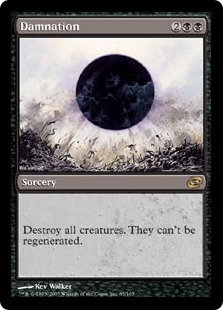
Damnation

DamnationThis was initially Supreme Verdict and Wrath of God before that. However, the article was reading too much like I was Iowa caucusing for blue-based control, so I'm moving back to the four-mana sweeper Wizards absolutely refuses to reprint. Magic's classic board wipes just couldn't find top-tier footing in URx Twin Modern. Not only was Twin taking up all the blue control space, but the sweepers themselves were pretty abysmal against the combo king. Nothing says desperation like Verdicting a solo Pestermite to slow the Twin clock. Twin also policed too many aggressive decks for Wrath effects to realize their two-for-one (or more) potential. Wizards knocked down those barriers on January 18, which signaled a triumphant return to the control board-clearers of old.
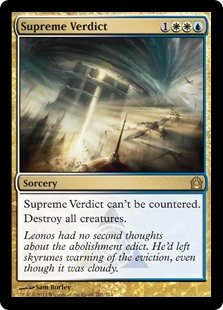
If you're playing Damnation, you're probably doing it in a Gerard Fabiano Sultai throwback or an attempt to resurrect the defunct Supreme VerdictEsper wedge. Lacking Bolt, both color combinations struggle with early aggression, relying on watered-down removal like Disfigure and proactive walls such as Tarmogoyf and Lingering Souls to relieve pressure. Modern's new focus on linear and creature-based strategies make Damnation a nasty turn four knockout against aggro decks already on the back foot. Supreme Verdict occupies a similar spot in blue-based control, picking up percentage points in Merfolk (Cursecatcher laughs at vanilla Wrath) and Delver-invested metagames. You're even getting mileage in the BGx matchup, where the average Damnation is sure to kill at least a Tarmogoyf and a Siege Rhino, if not more. In all these cases, don't look for three or four-for-one exchanges to justify the sweepers' inclusion. If you can force two kills for one card, that's good enough in most matchups. As another metagame consideration, the Wraths dodge Eldrazi's Inquisitions and then blow up their early groundforce.
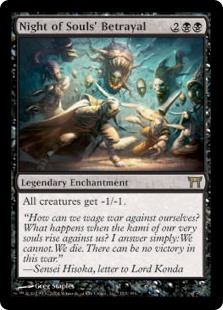
Night of Souls' Betrayal

Night of Souls' BetrayalOr Curse of Death's Hold, if you want to be a little worse but save a little money (Editor's Note: More than a little money, Sheridan). Curse's asymmetric upside isn't worth the mana-cost downside, so I'll be sticking with the Champions of Kamigawa version instead. Besides, one of those arts is a lot scarier, and it's not the Liliana wannabe painting the ground purple. Aesthetics aside, Night is a monstrous four-drop in a metagame overrun with linear decks. Unlike the fallback Wrath effects, Night interacts decisively with Affinity and Infect. Burn's Guides and Monastery Swiftspears scrape through the Betrayal, as do Merfolk and Jund, but the enchantment still causes serious headaches for aggro players. The global -1/-1 also harries BW Eldrazi (Lingering Souls and Blight Herder hate it), but some versions are actually running the card themselves, so don't overestimate its impact.
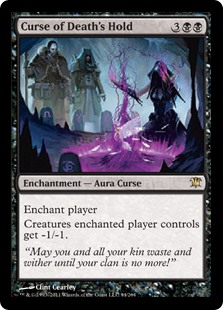
Curse of Death's HoldIn presenting Damnation and Night side-by-side, I'm definitely making a statement about different control options in a linear format. To be sure, Souls' Betrayal wasn't irrelevant against the 1/4 and 2/1 workhorses of Twin, but you weren't jazzed about the four-mana commitment with the Twin combo (and Remand) waiting in the wings. The overall metagame presence also wasn't as decidedly linear as we're seeing today. All of this has changed, which make both Night and the Wrath sweepers much more competitive than they were in December. If you're looking at a field thick with Affinity and Infect, Night of Souls' Betrayal is exactly where you want to be. Abzan Company, Elves, and BW Tokens will also push you to the enchantment. Burn and Zoo formats favor conventional Wraths, as well as those with Merfolk, Delver, Ux midrange, and the BGx overlords.
Hunting for Technology

Everyone from pros to weekend grinders is on the prowl for the next big Modern thing, and I'm sure we'll see breakout performers as Pro Tour coverage begins. Keep those TCGPlayer.com accounts handy and get ready to check out with a cartful of staples if you see something you like. Just be sure to stick with reputable vendors, lest the fruits of your speculation labor be reclaimed due to the dreaded "Out of Stock" excuse. Some Modern detractors are convinced the Pro Tour is going to be nothing but Affinity, Burn, and Tron, but if our early metagame numbers hold, I bet we see at least a few pioneers push the format to its next stages.

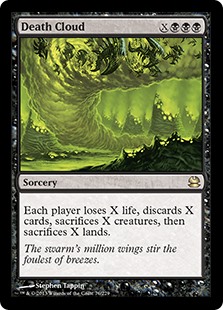
As much as I'd love this article to be "Twenty Cards to Play in Twinless Modern," my editor would lose his mind since there's no way I could discipline myself to write less than two paragraphs per highlight (Editor's Note: *Threatening eye twitch*). In case you're clamoring for more cool technology beyond these four cards and the morsels in the Death Cloudintroduction, here are a few more to get the brews flowing:


  • Thragtusk
  • Glittering Wish
  • Death Cloud
  • Ajani Vengeant
  • Garruk Relentless
  • Trickbind
  • Jeskai Ascendancy

What other cards do you have on your post-Twin radar? How are you updating and creating new decks with Twin out of the picture? Any reactions to the cards presented today or where they might find homes? Join me later this week as we unpack more Modern data in advance of the Pro Tour, and I look forward to chatting with all of you in the comments.

Insider: Now or Never – My Final Modern Specs Before the Pro Tour

Are you a Quiet Speculation member?

If not, now is a perfect time to join up! Our powerful tools, breaking-news analysis, and exclusive Discord channel will make sure you stay up to date and ahead of the curve.

With the Modern Pro Tour just a week away, the hype around Modern is reaching its zenith. The recent bannings of Splinter Twin and Summer Bloom have thrown the metagame into disarray, and the Modern community and market are counting on the pros to figure it out.

With the future uncertain, it’s open buying season because no one wants to miss the next big thing. There’s a lot of speculation going on, and some price spikes are buyouts to be sure---but plenty of price increases have been a natural reaction to increased demand, better classified as price corrections.

As someone who has grown up playing through the sets of Modern, I'm amazed to step back and realize the format spans back over twelve years. Magic was far less popular back then, and cards from the earlier part of the format are far less circulated than newer releases. Supply for Modern and casual players is lower, so it’s no surprise that cards like Boom // Bust and Flagstones of Trokair were underpriced and due for a price increase.

I have identified some cards that I believe are prime candidates for a price increase going forward into the Pro Tour and beyond. These cards were big winners from the banning of the two premier combo decks in Modern, which has opened up the format for new decks to fill the niche.

The picks are key components of decks I expect to be played at the Pro Tour, decks that could become Tier 1 competitive Modern decks going forward. These cards have not yet seen a paper price spike, so they are sitting below the radar of speculators and the playerbase at large.

Ghostway

There was an error retrieving a chart for Ghostway

I’ll start with Ghostway, which has tripled in price on MTGO over the past two weeks but still hasn’t budged in paper. The paper price has been trending downwards since a price spike that nearly doubled its price last winter.

$8 seems high for a fringe Modern card, but the high casual and EDH demand must constrain the supply. If Ghostway becomes a part of a Tier 1 Modern deck the price would certainly have to jump towards $20. Long-term potential as a casual card makes it seem like a safe bet, but this is a very easy card to reprint.

Here’s an example of the deck I have in mind.

Chord of Calling

There was an error retrieving a chart for Chord of Calling

Chord of Calling has a ton of potential in creature decks like the one above, in addition to the well-established Abzan Company deck and the burgeoning Kiki-Chord combo deck popularized by Jeff Hoogland. These decks are the living legacy of the banned Birthing Pod decks, and they threaten to rise to the top in the wake of the banning.

Chord of Calling has seen great recent MTGO growth (150% gains over the last three weeks), but the paper price has been slower to react. The Ravnica version gained a few cents since the banning, but the Magic 2015 reprint has crept up by around 25%.

Under $8 still seems cheap, and I expect this to hit double digits sometime this year.

Prismatic Omen

There was an error retrieving a chart for Prismatic Omen

Proven long ago as a competitor in Modern, Scapeshift has been identified as a huge winner in the wake of the bannings. The price of its namesake has long since spiked, but one card remains curiously unnoticed: Prismatic Omen.

Omen supercharges Scapeshift by making it lethal with just six lands, but the truly impressive part is how good the card is in draws without Scapeshift. It turns Valakut, the Molten Pinnacle into a serious damage engine, making every land into a Lightning Bolt---and every fetchland into two!

The card hasn’t seen a lot of play in the archetype in Modern, but it can be found in the occasional MTGO deck. In Modern’s precursor, Extended, Prismatic Omen was hugely successful alongside Scapeshift, and usually all four copies were played. If the card is adopted in those numbers by Scapeshift in the future, the sky's the limit for the price.

Visions of Beyond

There was an error retrieving a chart for Visions of Beyond

Visions of Beyond has gained a lot of ground competitively in the wake of the bannings. It’s used in the U/B Mill deck, which looks a lot better without Splinter Twin to contend with. More exciting is its use in a Jeskai Ascendancy combo deck that has been picking up steam on MTGO. I believe this card has room to grow.

Cavern of Souls

There was an error retrieving a chart for Cavern of Souls

An Eldrazi spec that no one seems to be talking about is Cavern of Souls. Cavern produces colorless mana for the new Eldrazi cards, or can name Eldrazi to make them uncounterable. That's quite valuable in a format where counterspells are poised to make a big comeback.

The price on this card is high, but I believe that in the long term it could easily break $100 if not reprinted.

Ad Nauseam: The Next Amulet Bloom?

One deck I'm sure will have a lot more success in Modern is the Ad Nauseam-Angel's Grace combo deck. This archetype has been around all the way back to Extended. It’s always been on the fringes, but it’s remarkable for how long it has remained a contender.

Splinter Twin was one of its worst matchups and Amulet Bloom was faster, so now the deck looks like a better option. Angel’s Grace and Phyrexian Unlife act as fogs against creature decks like Infect and Affinity, so these matchups are surprisingly strong. Urzatron and Jeskai Control are becoming popular, and both are filled with dead cards against the combo deck.

One of the biggest proponents and innovators of the Amulet Bloom deck on MTGO has responded to the banning by switching to this deck, and he has been doing remarkably well. You have been warned.

Spoils of the Vault

There was an error retrieving a chart for Spoils of the Vault

Every card in this deck is a potential spec. Chaz mentioned Spoils of the Vault before, and I am right with him as this being a great pick-up. It’s old, it’s cheap, and the price has nowhere to go but up.

Lotus Bloom

There was an error retrieving a chart for Lotus Bloom

Lotus Bloom is another card I have my eye on. It’s a staple for this deck, and it’s always going to be a great mana enabler for combo decks in a turn-four Modern format.

Seachrome Coast & Darkslick Shores

There was an error retrieving a chart for Seachrome Coast
There was an error retrieving a chart for Darkslick Shores

Seachrome Coast and Darkslick Shores are two more potential specs. Both are bargains compared to Blackcleave Cliffs, and clearly just as playable.

~

What do you think of these specs? Any other cards in particular you have you eye on? Let me know in the comments.

- Adam

Insider: Early Modern Metagame Indicators Before the Pro Tour

Are you a Quiet Speculation member?

If not, now is a perfect time to join up! Our powerful tools, breaking-news analysis, and exclusive Discord channel will make sure you stay up to date and ahead of the curve.

A week after you read this article, you'll be sitting down to read my followup on all the exciting format diversity in a post-Splinter Twin Modern. You'll have watched two days of Modern coverage showcasing Twinless URx strategies (Scapeshift, Jeskai Kiki) and old BGx regulars (Jund, Abzan). Combo (Ad Nauseam, Grishoalbrand) will appear right alongside aggro (Naya Company, Merfolk). And because this is Modern, we'll cheer as rising stars like Death and Taxes, Temur Delver, and Kiki Chord vie for a place at the top tables.

Or we'll have fumed in Twitch chat all weekend long at a tournament that was one part Affinity, Infect, and Burn, and another part Tron plus Eldrazi. Fingers crossed!

Modern Pro Tour Possibilities

By now, you've consumed more than enough panicmongering and speculation about a Modern metagame without Splinter Twin. Much of this theorycrafting is based on minimal (if any) testing, along with zero reference to actual events that have transpired since the Twin ban went into effect on January 22.

I'm going to try and reverse those trends today by linking some early metagame data to key financial takeaways you'll need to succeed once the Pro Tour dust settles.

Today's article builds off the data I released in my Modern Nexus article last week, "Early Metagame Snapshot in Twinless Modern." Drawing on about 400 decklists, up from last week's 130, I'm going to expand my analysis to make some early projections about where Modern is headed after the fateful announcement.

Naturally, because this evaluation only compiles less than two week's worth of data, we'll have to negotiate some sample size limitations. But as I said in my Nexus article, it's far better to craft predictions from over 30 events than to spin our theoretical wheels in an n = 0 vacuum.

Preliminary Tier 1 and Tier 2 Standings

Over at Modern Nexus, we use a tiering system based on averages, standard deviations, and confidence intervals to determine what decks are Tier 1, Tier 2, and so on. This is similar to other social science analysis methods used in non-Magic fields, and we've used it in metagame breakdowns throughout 2015. As an example of past successes, the system projected R/G Tron's eventual rise in the later part of 2015, as well as Amulet Bloom's top-tier status going into the ban update.

There was an error retrieving a chart for Urza's Tower

Although we don't have quite enough data to reliably apply it to our smaller, post-banning sample, we can still use these methods to list strategies which will probably fall in the Tier 1 and Tier 2 range after the Pro Tour. We'll process just over 30 events, all taking place after the ban, to estimate the Modern-wide metagame shares we might see during the Pro Tour.

Here are the decks preliminarily tracking a Tier 1 status in Modern. Percentage shares are weighted averages of MTGO and paper finishes.

Early Tier 1 Frontrunners

  • R/G Tron (9.1%)
  • Affinity (8.5%)
  • Burn (8.5%)
  • B/x Eldrazi (6.2%)
  • Jund (5.6%)
  • Merfolk (5.3%)
  • Infect (5.3%)

As in most metagame breakdowns I conduct, these preliminary Tier 1 players make up about 50% of the format.

Next we have the decks looking to carve out a Tier 2 niche when the metagame stabilizes. Tier 2 adds another 25% to Tier 1's 50%, for a total of 75% of Modern represented across the two listings:

Early Tier 2 Frontrunners

  • Abzan Company (3.5%)
  • Kiki Chord (2.6%)
  • Grishoalbrand (2.6%)
  • Ad Nauseam (2.4%)
  • Scapeshift (2.4%)
  • Elves (2.1%)
  • Naya Company (2.1%)
  • Living End (1.8%)
  • Gruul Zoo (1.8%)
  • Death and Taxes (1.8%)
  • Storm (1.5%)
  • Jeskai Control (1.5%)

These numbers map with those I presented in my "Metagame Snapshot" article last week, but with the benefit of more events in the updated sample. Again, we all fully acknowledge the limitations of extrapolating metagame-wide numbers from only 30 events or so, but this method is a far better predictor of later changes than just treading water in a sea of theory.

Our initial Modern metagame landscape mixes no-brainer trends (Affinity, Burn, and Tron? No way!) with surprising observations (Jund lives!). It also overlaps nicely with Pascal Maynard's recent analysis of Modern options after Twin's removal. Maynard used a more qualitative method to reach his metagame picture, and the above numbers reflect this in both shared decks and interesting differences.

Following from the analysis, I'm dividing the format into three categories to track what might succeed at the Pro Tour and where you should invest your dollars to profit from those developments.

Pre-Pro Tour Tier 1 Leaders

Almost everyone predicted an early uptick in linear decks, and the data confirms this observation going into the Pro Tour.

Looking only at Tier 1 decks, we see R/G Tron, Affinity and Burn at the top of the pack, with Merfolk and Infect picking up the rear. Maynard described those first three decks as "Level 0" of the new Modern, a characterization echoed in forum posts and other articles across the content-sphere.

Level 0 Linear Decks in Modern

Over the past weeks, Modern players and pundits have talked these decks to death, so I won't spend much time explaining why they are on the rise. In summary, although many dynamics factor into their rise, two stand apart as driving forces.

First, three of the five topmost linear decks had bad to terrible URx Twin matchups. It's a no-brainer that Twin's loss becomes their gain. Second, because the metagame is so open, and because there is no longer a clear interactive pillar to hold things down, most players are going to play it safe and audible to a linear deck. If you can't predict what to disrupt, just race!

B/x Eldrazi is a bit of an outlier here, towing the line between nonlinear midrange and highly-linear ramp (despite what many of the more sensationalist Modern commentators might say).

Are there versions that ditch interaction for speed? Certainly: Heartless Summoning's rise is a testament to this, as is the increase in Mono-Black Eldrazi on MTGO. Are the more successful versions decidedly midrange? Yes again, with Inquisition of Kozilek, Lingering Souls, and others forming the core of B/W Eldrazi, the top-performing variant to date.

There was an error retrieving a chart for Eye of Ugin

Moving down the Tier, Merfolk is neither surprising nor expected. On the one hand, Merfolk loses a lot from the decline of Twin, which was one of its better matchups. On the other hand, Merfolk loves the uptick in clunky Urza- and Eldrazitron manabases---Spreading Seas puts in serious work in this metagame. Merfolk also balances a linear approach with an interactive element, making it one of the safer (but still viable) options in a speedy format.

The bigger surprise here is Jund, which many predicted would die out in the linear- and ramp-ridden metagame.

Neal Oliver made this projection in the 24 hours following the ban, and it was quickly echoed by many in the Modern community. Early data shows this is not the case, with Jund enjoying shares right under Eldrazi and even in excess of Merfolk and Infect. Lightning Bolt is undoubtedly a major player here, along with the versatility of the discard suite and anti-aggro bruisers like Kitchen Finks and Huntmaster of the Fells.

There was an error retrieving a chart for Huntmaster of the Fells

It's unclear if Abzan will continue its pre-ban trend and supplant Jund by the time Pro Tour Oath rolls around. Jund has the early metagame advantage, Bolt for aggro weenies, a less painful manabase, and Dark Confidant. Abzan has Siege Rhino to regain life, Path to Exile for ramped threats, and bullets like Stony Silence in the board. Jund gets Kolaghan's Command. Abzan prefers Lingering Souls.

All of this is to say I'm not 100% sold on Jund being the BGx deck in post-Twin Modern, but I am convinced BGx will stick around in some form. Time will tell where the BGx mages flock, but don't count those Tarmogoyfs and Abrupt Decays out just yet!

Spending Money in the Preliminary Tier 1

When it comes to Affinity, Burn, Tron and Eldrazi, the SS Speculation has pretty much sailed. Interested investors are looking at far higher buy-ins than you would have enjoyed if you scoped these out earlier. Even Inkmoth Nexus, a card I've harassed readers about for weeks, is finally over the $35 mark and will probably rise again barring an Event Deck reprint.

There was an error retrieving a chart for Inkmoth Nexus

The same goes for most of the staples in Burn (Goblin Guide, Eidolon of the Great Revel), Tron (Oblivion Stone, Karn Liberated), Affinity (Glimmervoid, Arcbound Ravager), and anything associated with Eldrazi (especially Eye of Ugin).

That said, don't be categorically scared away by these high price tags.

All of these cards have nowhere to go but up as Modern season builds momentum into 2016. The initial investment is going to be steep, but you can still profit. Look for cards with multi-deck appearances, like Eye of Ugin, Inkmoth, Goblin Guide, Glimmervoid. This is also true of commons like Relic of Progenitus!

You'll also want to browse across the so-called tiers to see where these cards might crop up outside of Tier 1. Noble Hierarch, for example, sees play in Infect and Abzan Company. She was over $70 before Modern Masters, and could fall anywhere between there and her current value with a big performance. Glimmervoid is another example, with a home in both Affinity and Lantern Control.

Many Decks and Much Profit

Merfolk, Infect and Jund are trickier cases. In addition to their pricier staples, these decks also have more niche targets available to canny purchasers, many of which are metagame calls that might now be relevant.

For example, Wild Defiance is one Tom Ross Top 8 away from a price explosion, which would push its $3.00 tag into the stratosphere. Cursecatcher and Silvergill Adept have ceilings much higher than their $15 and $5 prices respectively---a major Merfolk presence at the Pro Tour would get them there in a hurry. As for Jund, the cross-BGx relevance of something like Fulminator Mage makes for attractive pickings.

There was an error retrieving a chart for Wild Defiance

In general, Tier 1 speculation is almost always going to pay off in the long-run, although you'll need deep pockets to start picking up steam. If you can snipe gems like Defiance and Adept, more power to you, but for the most part you need to put up money to make it down the road. The Pro Tour is likely to reinforce these trends, so if you want to profit from (or play) these decks, don't be squeamish now.

Pre-Pro Tour Tier 2 Contenders

Tier 1 options are always relatively safe bets in volatile metagames. Not so with Tier 2. Given both the limited dataset we're working with and the expected upheavals after the Pro Tour metagame shapes out, a lot can happen in Modern's lower tiers. As such, predicting and investing around Tier 2 decks becomes very risky in this environment.

The first thing I like to do in assessing new Tier 2 options is to look for pre-trends. Which decks were doing decently before the ban and have enjoyed temporary boosts after? Abzan Company doesn't stand out here; the strategy has been in the 3%-4% range for months. Kiki Chord and Grishoalbrand, however, are another story.

There was an error retrieving a chart for Goryo's Vengeance

In Kiki Chord and Grishoalbrand, we see a pair of decks that existed throughout 2015 but quickly jumped from the sub-1% metagame range into the 2%-3% range following Twin's imprisonment. This suggests the decks have newfound staying power in a Twinless world.

Two other decks may offer similar cases, although I'd be less confident in their longevity: Death and Taxes and U/R Storm. Death and Taxes (not to be confused with the Flickerwisp-less Hatebears) picks up major percentage points in a format fearful of Ghost Quarter. Thalia, Guardian of Thraben is similarly taxing on many strategies, and the deck is already experiencing a jolt in popularity as players look to Strip Mine (courtesy of Leonin Arbiter) in Modern.

There was an error retrieving a chart for Leonin Arbiter

On the less fair side of things, U/R Storm looks to capitalize on a non-interactive metagame that can't disrupt the regular turn 3-4 clock presented by Goblin Electromancer and Pyromancer Ascension. We saw similar trends two years back after Deathrite Shaman took the ban-axe, when Storm ran roughshod over an unprepared Grand Prix Richmond field.

Unfortunately for Finkel, Duke, and the other Storm aficionados, there is less reason to be confident this time around. B/x Eldrazi and R/G Tron are known for maindecking graveyard hate, and a Relic playset (or more, in the case of the processor-intensive Eldrazi) is hard for Storm mages to reliably handle at large events. Add Jund and Merfolk disruption to the mix and you might feel a bit silly buying into the recent Past in Flames spike.

There was an error retrieving a chart for Past in Flames

Thinking more generally about Tier 2, stay flexible in your definitions and expectations. Although I'd comfortably bet on many of today's Tier 1 features, the Tier 2 statistics are much less commanding. Unless you can find truly undervalued cards (Spoils of the Vault in Ad Nauseam, as I discussed last week) or truly undervalued decks (potentially Kiki Chord and Grishoalbrand), it's hard to make too much money here in the short and mid-term.

Similarly, don't think this Tier 2 list is exhaustive and be prepared for newcomers. Pro Tour Fate Reforged saw Abzan Liege rocket onto the stage, and Wilt-Leaf Liege never recovered. Stay frosty for this scenario in addition to the Tier 2 offerings listed earlier.

Spending Money in the Preliminary Tier 2

Assuming these early projections hold through the Pro Tour and into the weeks that follow, the sky is the limit on staples in the underrated Tier 2 decks.

Think Nourishing Shoal is bad at $10? Goryo's Vengeance's $35 price-tag is a good sign of what might happen to the Shoal (which saw a similar print run) if Grishoalbrand excels. Kiki Chord will see similar movement with Restoration Angel, which is already on the upswing following early speculation.

Kiki and Griselbrand Want Your Money

All the cards depicted above, and many more like it, are viable targets going into next weekend. Bonus points for all the non-Shoal cards which might also see play in other decks. Angel is a shoo-in for Jeskai Control, as well as Kiki in just about any Twin imitator. Breach is a little more specific, but we've seen Chalice of the Void/Summoning Trap decks leverage the instant before.

As with the Tier 1 investments, any time you can make a cross-archetype buy, you're greatly increasing your chances at turning a profit.

When navigating Tier 2 (or lower) decks, especially with limited data, it's just as important to know what to avoid as what to hoard. Twinless Modern is still Modern, and many of the pre-ban truths will still hold. It's no coincidence that only one of today's Tier 1 decks is new. The rest are all Tier 1 regulars from 2015, or at least intermittent visitors in that bracket.

This means you need to stay conservative on investments that didn't pan out in the past. For instance, Elves won Grand Prix Charlotte in 2015 and Heritage Druid never got over its $15 tag. He's even dropped since then!

There was an error retrieving a chart for Heritage Druid

Due to price memory and a fast-moving market, you can almost always turn a short-term profit in Modern. But if you're looking for targets that will really hold value, stay away from Tier 2 loiterers like Elves, Living End, and Gruul Zoo. Unless the card also sees play elsewhere (think Fulminator Mage from Living End, BGx and Grixis), exercise restraint and caution.

Final word on the Pro Tour: watch the coverage stream and be prepared to move like lightning if you see a breakout deck. No one wants to miss the next Lantern of Insight (from a Grand Prix but same principle) or the next Amulet Bloom.

Getting Ready for Pro Tour Oath of the Gatewatch

Some remain pessimistic about the state of Modern, and will probably double-down on their dim outlook after reading these metagame numbers. I'm not one of the naysayers.

Although early metagame data points to a linear Modern, there are plenty of promising signs that all isn't as bad as detractors would have us believe. Jund is still holding the line, Merfolk looks to help police unfair decks, and URx mages are hard at work to find the next best Snapcaster Mage deck.

There was an error retrieving a chart for Snapcaster Mage

(P.S. URx is not dead, so if you find cheap Snapcasters, pick those up now like you wished you bought in on B/x Eldrazi back in early December.)

These trends, and the overall numeric picture earlier in the article, keep me optimistic as we move into the weekend. Whether you share my high hopes or prefer the views of format critics, you should still have ample opportunity to make a profit in this new format, and I look forward to hearing how your investments pan out.

Join me next week as we review the Pro Tour and look for major takeaways from the data. Until then, let me know in the comments if there are any cards or decks you think I missed (or have metagame questions more generally), and I'll see you all after the Pro Tour!

High Stakes Bankroll Management on MTGO – Jan 17th to Jan 23rd

Are you a Quiet Speculation member?

If not, now is a perfect time to join up! Our powerful tools, breaking-news analysis, and exclusive Discord channel will make sure you stay up to date and ahead of the curve.

Introducing a New Article Series

If you've followed and loved the "100 Tix, 1 Year" project or you've been enjoying the MTGO Market Reports, then you'll probably love the new article series I'm starting today. "High Stakes Bankroll Management on MTGO" aims to be the perfect mix of the two series mentioned above--following realtime trades, bankroll management and perspectives on MTGO speculations.

If you followed the "100 Tix, 1 Year" project, you may have thought that 100 tix was a little too small of a bankroll for your consideration. You may have been right as a fair share of the speculations made within this project were tailored for small bankrolls. Here I'm raising the bar a little bit, about 200 times...

The bankroll I'll be dealing with for this new series is over 20,000 tix and counting. Similarly to the "100 Tix, 1 Year" series, all my trades, buys and sales will be recorded, posted and available in realtime, but this time only for QS Insiders. I set up a google spreadsheet that recapitulates the current state of my portfolio and all the most recent trades to make it easier for viewers to follow the action.

The Spreadsheet

I'll update this spreadsheet within minutes to a few hours after completing any trades. The spreadsheet is available to Insiders only. On Fridays we will be posting a snapshot of the bankroll and of the transactions as of the previous Monday. Here is the current state of the bankroll.

The way I organize my specs is pretty standard---name of cards, number of copies, total and per-unit prices, Modern, Standard and Other sections. I also include a percentage and tix gained/lost columns.

The recent trades are at the very top of the spreadsheet. Within each subsequent section the closed transactions are at the top followed by open transactions. From time to time I sort all of it in alphabetical order to review my specs more easily.

table

A Weekly Summary of My Transactions

In these weekly articles I will discuss my motivations to buy or sell any given positions during that week. I'll give a little bit of context and share my expectations on newly acquired positions.

Buys This Week

As it will be the case over the next few months, this week I was buying cards from Modern flashback drafted sets---Mirrodin, Darksteel and Fifth Dawn.

I didn't buy into the hype after the announcement of the new B&R list, partially because I was already holding several of the cards that spiked and partially because I was not really available on MTGO to grab the best cards at the best prices. Rather, I bought into cards that were directly affected by the ban of Summer Bloom but that, against all odds, present good speculative opportunities in my opinion.

CCM

As anticipated these three Mirrodin rares took a hit with the Mirrodin block flashback drafts. They are not heavily played in Modern, or in Legacy in the case of Chrome Mox, but I'm simply trying to ride the trend here.

Prices are unlikely to spike in the short term but they can't really go lower, and that's the point. These positions are better than free tix on my account and they always have the potential to spike sometime in the future.

SPST

These two are my current picks in Darksteel as of Saturday. I'm chasing more copies of both of them but I really want to keep my buying prices around 4.5 tix for Serum Powder and 4 tix for Sundering Titan. If prices keeping dropping I'll buy more for sure.

The Titan is almost unseen in Modern at the moment but has a record high above 15 tix. At an almost three-year low, it seems a good bet to me especially with a Modern format about to mutate.

With a current price half of its record high, Serum Powder only sees play in Vintage Dredge. Not great speculative stats here but I'm okay with that. After all Vintage got invigorated by the Power Nine Challenges and if Serum Powder integrated into a competitive Modern deck I would hit the jackpot.

SV

Serum Visions is still the best filtering engine available in Modern. The ban of Splinter Twin and the scheduled flashback drafts of Fifth Dawn are only delaying a large rebound this card should see very soon.

Among others, Storm decks might be returning consumers of the blue sorcery in place of Twin decks. This card is very unlikely to be reprinted in Standard and was not reprinted in Modern Masters 2015. My max buying price is currently 2 tix but I might accumulate more copies in the following days anyway at higher prices if needed.

AoV

I had bought some Amulet of Vigor prior to the announcement of the new B&R list. The bet didn't pay off but it doesn't mean I'm done with this spec.

Summer Bloom has been banned, not Amulet. There's always a chance a similar deck, slower and less explosive most likely, could be viable in Modern---if so, Amulet of Vigor would be a centerpiece. The price has almost doubled since its rebound and I'll buy more copies if the price goes down again.

PT

The idea is the same with Primeval Titan. The green titan got affected by the ban of Summer Bloom but can clearly find a home in other decks. Falling as low as 4.5 tix last week, the lowest it's been in Modern, I think the price drop is undeserved. I'm simply stocking up to be ready for Amulet 2.0 or any other decks using Primeval Titan.

MR

Not sure if the price drop of Misty Rainforest is due to the B&R list changes but it seemed like a good buying opportunity to me. I wanted to buy between 18 and 20 Tix which is why I only grabbed 8 copies. I would have been okay with 4 to 6 more copies at a cheaper price.

The goal with this spec is to see a comeback to the 30ish tix range. I was also lurking after Scalding Tarn but was too slow to pull the trigger and prices got too high for me.

Sn

Cloud of Faeries has been banned in Pauper. Not Snap. A plunge from 6 tix to 2 tix seems totally disproportionate to me. I bought some copies a little bit later than I wanted to but I'm fine at 2.5 tix. I won't be buying very often outside of Standard and Modern, but Snap deserved the extra efforts.

Sales This Week

This past week I continued to sell cards that benefited the most from the recent changes in Modern. These were unexpected profits and they have reached my goals---no reason to be more greedy here. I happily cashed out without having to wait on good or bad news from the Pro Tour.

I'll start with Blood Moon. In between 8th Edition and 9th Edition flashback drafts there will be a small window when the price could theoretically go up. With the banning of the deck that's most sensitive to this card (Amulet Bloom), as well as the deck most likely to play it (Twin), profit margins got too small for me. As the trend looked uncertain I sold now.

These were among the top gainers this past week, going beyond the expectations I had for these cards. A lot of cards spiked after January 17th and, as usual, not all of them will sustain such heights. I'm taking my profits now that I know what I get and will reinvest these tix somewhere else.

Of note, the unexpected extra tix made with these five cards totally made up for the losses I incurred with Splinter Twin, Summoner's Pact and my pre-ban gamble with Amulet of Vigor. As you can see I'm also holding a lot of other Modern staples that may shine sooner rather than later benefiting from these changes in the Modern metagame.

On My Radar

Besides buying Modern staples discounted by the flashback drafts, my next big investment will be Battle for Zendikar (BFZ) full sets. I intend to take advantage of a small dip that should occur during Oath of the Gatewatch (OGW) release events to accumulate several dozen BFZ sets.

BFZ sets got as low as 60 tix in December and may not reach that price in the following weeks. I'll be happy to start accumulating the sets around 63-65 tix. BFZ will still be drafted (as one booster per draft) and prices could dip further even after the release of OWG. If so, I might be buying more sets.

I expect BFZ full set value to start rising when Standard rotates in April with the release of Shadows Over Innistrad, when BFZ won't be among the newest sets to be drafted.

Questions & Anwsers

Here is a little section I'll be dedicating to answer questions or comments in more depth in future articles of this series. Feel free to leave a comment/question after this article, on Twitter (@lepongemagique) or on the forums.


Thank you for reading!

Sylvain Lehoux

Eat Lightning: Temur Delver in Post-Twin Modern

Are you a Quiet Speculation member?

If not, now is a perfect time to join up! Our powerful tools, breaking-news analysis, and exclusive Discord channel will make sure you stay up to date and ahead of the curve.

Actual comments from my previous article, “A Defense of the Splinter Twin Ban:"

"As someone who has played around extensively with a variety of URx decks, I can tell you that in the past four years or so, Twin is the only one I’ve found viable not because the Twin package is so enticing, but because it’s the only way to build URx that isn’t below the bar for viability in the format.”

"Why – they were best when Twin was in the format due to the great matchup they had – the idea that RUG Delver is now somehow good is fanciful."

"Temur Grow is now sh*t as twin is not in the format – same with most blue decks."

rocky viii .2

Two days after that article went public, StarCityGames released the Top 16 results from their Atlanta Classic Modern tournament. Temur Delver took 1st place. It also took 10th place. I love saying “I told you so” as much as the next guy, but the real joy in these results came from the affirmation that a deck I helped create has a shot at the title in my favorite format.

It’s like Rocky VIII. Starring Tarmogoyf. (Rated R.)

In this article, I’ll compare Todd Anderson’s and Brandon Gaudet’s winning decklists to my own, analyze their choices, and contemplate possible builds in a shifting metagame.

[wp_ad_camp_1]

Speaking of Classic...

Here's my current Temur Delver list:

Monkey Grow, by Jordan Boisvert

Creatures

4 Hooting Mandrills
4 Delver of Secrets
4 Tarmogoyf
2 Snapcaster Mage

Instants

4 Lightning Bolt
3 Thought Scour
4 Disrupting Shoal
3 Mana Leak
3 Stubborn Denial
2 Simic Charm
1 Tarfire
1 Spell Snare

Sorceries

4 Serum Visions
4 Gitaxian Probe

Lands

4 Misty Rainforest
4 Scalding Tarn
1 Wooded Foothills
2 Steam Vents
1 Stomping Ground
1 Breeding Pool
3 Island
1 Forest

Sideboard

3 Huntmaster of the Fells
3 Blood Moon
2 Pyroclasm
1 Dismember
2 Destructive Revelry
2 Ancient Grudge
2 Curiosity

Build Notes

This version looks a lot like my last Monkey Grow build, mostly because I've worked enough with the shell to optimize the deck. Tuning usually takes the form of minimal tweaks. Since the Twin ban, I've cut the third Simic Charm for a Spell Snare, and the mainboard CuriosityCuriosity for Snapcaster Mage.

Curiosity shines against linear combo and midrange strategies, but as BGx ebbs with the rise of linear aggro and Eldrazi, it becomes more of a liability in the main. Similarly, Simic Charm makes us feel invincible if we untap with a threat; unfortunately, it's too slow for a format this linear. I can see Charm creeping back up in number as interactive decks figure out how to police the format and people start playing Abrupt Decay again. For now, I'd rather have Spell Snare, which acts like Disrupting Shoal #5 against most Modern decks.

My comparisons of Anderson's and Gaudet's lists to this one won't do you any good without an understanding of Exhibit A. For anyone unfamiliar with Monkey Grow, or URx Delver decks in Modern since the Treasure Cruise ban, I recommend the following articles:

Scrutinizing Shoal

I've extolled Disrupting Shoal's strength in Modern grow decks since last year. But Todd Anderson and Brandon Gaudet omitted the card from their Atlanta-smashing lists. This section explores Shoal's function in grow and explains its sustained inclusion in my builds.

Disrupting Shoal and Curving

Delver decks don't play many lands. Most players new to the archetype, and I assume many ex-Twin players sniffing around for something to do with their Snapcaster Mages, probably don't think Delver decks play enough lands. In any case, 17 lands aren't enough to support a playset of the homeless Wizard.

Snapcaster MageThe most obvious way to enable Snapcaster Mage in multiples is to increase the deck's land count. Anderson ran a whopping 20 to ensure his four flash friends came online constantly. Equally obvious is the effect more lands have on the deck's namesake creature. Adding lands incentivizes deckbuilders to add Snapcaster Mages, as well. As lands and creatures cut into the deck's numbers, Delver himself eventually becomes unplayable. We saw this scenario play out to its logical extreme last summer, when Grixis Delver players dubbed the Insect-in-disguise "the worst card in the deck" and almost universally transitioned to Grixis Control.
Of course, Anderson and Gaudet never got that far, and they both reaped the benefits of maintaining a grow strategy in the current (admittedly, fickle) metagame. But there's a way to play more two-drops without watering down the deck's spell suite. Disrupting Shoal turns those "clunky" Snapcaster Mages into free Spell Snares. The same applies to Simic Charm and Mana Leak. Without Shoals, I could never dream of running so many expensive spells in my build.

Commit, then Disrupt - Why Not Both?

Just as midrange decks disrupt opponents, then commit threats, tempo decks commit first, then disrupt. Disrupting Shoal breaks the fundamental rule of Modern tempo that doesn’t allow us to interact as we commit our threats.

DelverConsider Todd Anderson’s Temur Delver deck, below. Anderson commits threats first, casting Delver of Secrets on turn one and maybe Tarmogoyf on turn two. If opponents haven't removed these threats, he holds up Remand and attacks with the pressure he’s established. Assuming he makes every land drop, on turn four, he enters the phase of the game where he can reliably commit threats and disrupt opponents at the same time. Anderson can play Goyf and hold up Remand. Or tap out for Snap-Remand.
Sometimes, Anderson’s deck performs better than in my above example. He could play Delver turn one, another Delver and a Spell Pierce turn two, and a third Delver plus a Remand turn three. In this scenario, Anderson has interacted and committed threats - the late-game standard for any Modern tempo deck - on turns two and three. But what if his opponent played a turn one Grim Lavamancer?

Force of WillDelver is so powerful in Legacy because in that format, the deck achieves this standard on the first turn. Pilots can lead with a Delver, then Daze or Force of Will their opponent’s first-turn spell. If that spell is a Lightning Bolt, the Delver pilot saves himself some grief. Modern Delver players have to tap out for Tarmogoyf to recover from such a situation, leaving them at the mercy of their opponent’s next play. Unlike Twin, Delver can’t afford to simply hold up Remand with an empty board, since almost every other deck in the format has more inevitability than a Delver deck without a threat.
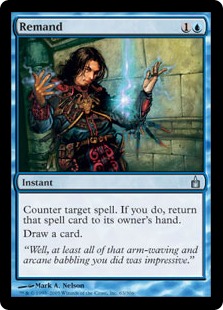
Disrupting Shoal allows Modern Delver decks to commit threats and counter spells at the same time, and as early as the first turn. I only play one- and two-cost blue spells to exile with Shoal because by the time opponents get to three mana, I want to be attacking with Mana Leak up. In a metagame full of linear decks such as Atlanta’s, and in this Bolt-heavy format in general, I would not want to register a Temur Delver list without Disrupting Shoal.

Shoal's Absence from Atlanta

So why didn't Anderson and Gaudet play Shoal themselves? I think they lack experience with the card. When I won a Worcester IQ with Temur Delver, a number of pros streamed my deck on their sites. Most of them had no idea what to do with Shoal, and boarded it out at the first opportunity (or wrongly kept it in). Sometimes, the correct choice isn't the intuitive one - take the success I've had with 3-4 sideboard Huntmaster of the Fells in a 17-land deck. But these important, less intuitive cards often get axed first by archetype newcomers.  It comes as little surprise to me that Joshua Yang Zhijian’s build, which Top 8’d GP Singapore last year, played just two copies of Disrupting Shoal. Or that the Atlanta lists follow in Patrick Dickmann’s footsteps and forego Shoal altogether.

A chat with Dickmann confirms my hunch. I'll quote him directly:

"I did not test Shoal because I thought that Stubborn Denial was just better [...] I countered countless Karns and Ugins which were out of Mana Leak reach and it was also impressive against most spell based decks. However, due to the deck only having 17 lands, I sometimes was not able to deploy threats and keep up enough counters at the same time. In those spots, Disrupting Shoal could be good, maybe even in the spot of Mana Leak (often felt clunky but felt like a necessary evil). Would be nice to have something that counters all those pesky maindeck and sideboard Relics. Unfortunately, I'm a guy who likes himself some value so I'm turned off by card disadvantage, although I can see the card being good in a heavy affinity/infect/combo meta."

The jury's still out on Gaudet, but Anderson's recent StarCityGames Premium article reveals that he built the deck out of fun-looking cards in his Modern box and didn't do any testing. Dickmann and Anderson both cite Temur Delver's inconsistency as its primary detractor, and Shoal helps immensely with that aspect. If the deck catches on, and players spend enough time with it, we should see Shoal again.

1st Place: Todd Anderson

Anderson's winning decklist reads like an Intervention episode on Splinter Twin withdrawals, boasting full sets of Snapcaster Mage and Remand, 20 lands, and Young Pyromancer, a standby from the Tier 1 Delver decks of old.

Temur Delver, by Todd Anderson

Creatures

1 Young Pyromancer
4 Delver of Secrets
4 Tarmogoyf
2 Hooting Mandrills
4 Snapcaster Mage

Instants

4 Lightning Bolt
1 Thought Scour
4 Remand
3 Spell Pierce
3 Vapor Snag
1 Mutagenic Growth
1 Dismember
1 Izzet Charm

Sorceries

4 Serum Visions
3 Gitaxian Probe

Lands

1 Forest
2 Island
1 Mountain
2 Breeding Pool
4 Misty Rainforest
4 Scalding Tarn
2 Steam Vents
1 Stomping Ground
3 Wooded Foothills

Sideboard

2 Grim Lavamancer
3 Spreading Seas
1 Dispel
2 Threads of Disloyalty
2 Gut Shot
3 Ancient Grudge
2 Surgical Extraction

Twin Envy

Nothing gives a mourning Twin enthusiast away like four Snap, four Remand. Some Googling vindicates my suspicion. Anderson played TarmoTwin to five impressive finishes last year, and has rocked out with Deceiver Exarch since its Standard debut.

The Snap-Remand suite won Anderson countless Modern tournaments in 2015, so I can understand his reluctance to part with it.Remand But without Twin in Modern, it loses points. Remand excels against big mana decks like Tron and versus grindy counterspell strategies. Temur Delver already sweeps Tron, and I don't know of a viable blue midrange deck right now. Remand is also only valuable here when the deck establishes board advantage, and a flawless opposing defense of Bolt-Terminate-Liliana will keep that from ever happening. Anderson's article acknowledges the weirdness of Remand in this deck, admitting, "I have never seen a card be so great and so terrible at the same time." Given his light Ape count and subsequent abandonment of Stubborn Denial, I think the card was more useful to Anderson against, say, Karn decks than it is to traditional builds of Monkey Grow.
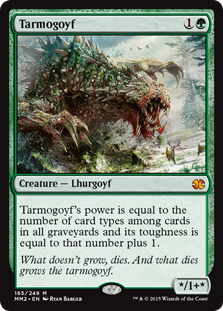
TarmogoyfSnap-Remand aside, this deck doesn't forsake its tempo roots. The inclusion of triple Vapor Snag, triple Spell Pierce harken back to Delver's own Standard beginnings, when Anderson swore by UW Delver. With the lack of Shoals and Snares, Vapor Snag clears the way of enemy Tarmogoyfs. Pierce has always been criminally underplayed in Modern, which adds to its potential. An unexpected Pierce frequently provides massive blowouts. Additionally, playing Pierce in a four-Snapcaster deck puts opponents on edge when a copy sits in the graveyard. It must have been refreshing for Anderson to at least partially replicate Twin's marquee fear with this combination, and I don't doubt he stole some tempo from opponents who neglected to tap out for an otherwise timely Kolaghan's Command.
Anderson's Hooting Mandrills aren't the same second-turn beaters from Monkey Grow. They only show up twice here, with a lonely Thought Scour to back them up. Anderson wants to cast them "incidentally," filling his graveyard by playing interactive Magic.

Mainboard Tech

Young PyromancerYoung Pyromancer: If opponents see this guy, they almost always board in their toughness-conditional sweepers. Electrickery, Pyroclasm, Kozilek's Return, and Flaying Tendrils don't put a huge dent in Anderson's plan. In fact, he probably benefits from opponents boarding them in. The singleton Pyromancer baits out these "bad" cards. It also allows Anderson to play a decent midrange game against aggro decks, providing incremental advantage (and endless chump blockers) just for casting cantrips.
Izzet Charm: Superior to Simic Charm in highly linear metagames, since it snipes Glistener Elf and friends or counters Goryo's Vengeance. Mode two seems over-redundant with all the Pierces. I like that Izzet Charm cycles spare lands in the mid-game, though.

Mutagenic GrowthMutagenic Growth: Saves Insectile Aberration from Lightning Bolt and wins Goyf wars. Growth will never protect Pyromancer or Snapcaster Mage from three damage, and I don't think it does enough in this build.
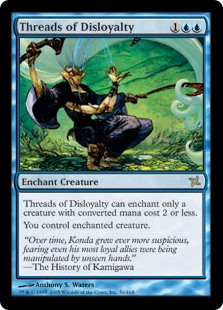
Dismember: Catch-all removal is never bad in a format as reliant on creatures as Modern. I believe most blue decks with decent Burn matchups should play some number of Gitaxian Probe, and nonblue decks that beat Burn should consider Dismember. But Anderson only plays three Probes. He should max out on those before splashing Dismember in the main, since the removal spell proves so taxing against linear aggro decks.

Sideboard Tech

Grim Lavamancer: With only two Mandrills in the main, Lavamancer has a lot of juice to gun down creatures with. Great choice in a Monkey-light build.

Spreading Seas: The big talking point from Anderson's sideboard is his choice to run Spreading Seas over Blood Moon. Moon interacts more efficiently, cutting big mana decks off their sources for a whole game and letting the Delver player do “real" things with his mana. That said, Anderson plays enough lands to comfortably cast multiple Spreading Seas during a game, and the Tron matchup is probably already tough to lose. Seas punishes opponents for fetching around Blood Moon, taking a key shock land and leaving them with silly basics. It also resists answers better. Even if it eats a Nature's Claim, Seas already replaced itself and charged its caster less mana than a Moon would have. No Shoal, Denial, or Mandrills 3-4 also makes Anderson's build softer to Burn than mine, and Seas heavily disrupts that deck. I think Moon is better in Temur Delver decks, but expect Spreading Seas to be a real player in the new metagame as interactive decks begin springing up and big mana takes a stranglehold on the format.

Threads of DisloyaltyThreads of Disloyalty: An elegant answer to Tarmogoyf with so few Abrupt Decays in the room. Threads also wrestles with Delver, Pyromancer, and even Snapcaster Mage for enemy Decays, “overloading” relevant removal and coming down after a lengthy card exchange to turn the tables on the Jund player who thought he had the last laugh.

Gut Shot: A fine choice against an expected field of linear aggro. Wrecks Affinity or Infect players going “all-in” on their tapped out opponents. I would prefer Forked Bolt here, but Gut Shot can make some unique plays (i.e. hit a Wandering Fumarole).

Surgical Extraction: Turns the already favorable Grishoalbrand matchup into a bye, and has random game against a few other strategies. But overall, I don’t think Surgical Extraction earns its place here. Mainboard Shoal and Denial address the rarely-seen Grishoalbrand more reliably, as well as the other obstacles Anderson encountered with the deck.

10th Place: Brandon Gaudet

Gaudet kept things low-to-the-ground with a pair of Monastery Swiftspear. He also inexplicably (and hilariously) "lost" his fourth Tarmogoyf.

Temur Delver, by Brandon Gaudet

Creatures

2 Monastery Swiftspear
4 Delver of Secrets
3 Tarmogoyf
4 Hooting Mandrills
2 Snapcaster Mage

Instants

4 Lightning Bolt
4 Thought Scour
3 Mana Leak
3 Stubborn Denial
1 Simic Charm
2 Spell Snare
1 Remand
1 Vapor Snag

Sorceries

4 Serum Visions
4 Gitaxian Probe
1 Forked Bolt

Lands

1 Forest
3 Island
1 Breeding Pool
4 Misty Rainforest
3 Scalding Tarn
2 Steam Vents
1 Stomping Ground
2 Wooded Foothills

Sideboard

1 Vendilion Clique
2 Blood Moon
2 Dispel
2 Engineered Explosives
2 Roast
2 Vapor Snag
1 Forked Bolt
2 Ancient Grudge
1 Feed the Clan

How Low Can You Go?


Simic CharmGaudet’s also a former TarmoTwin player. We still tread familiar waters with his deck, which looks like an updated Monkey Grow. Like Anderson, he 
skipped Disrupting Shoal, instead packing Spell Snare to interact early and Vapor Snag to eliminate threats that squeeze past permission. This extra removal makes Monastery Swiftspear less of a liability against creature decks, where it sometimes has trouble getting in damage.

Lightweight ground threats devastate linear metagames. Atlanta’s certainly qualifies, and the tournament’s top tables speak to this rule. Both Burn decks in the Top 16 maxed out on Wild Nacatl. UG Infect reminded us it exists, and Burning-Tree Zoo popped up twice. I don't have the numbers on hand, but Tron apparently had strong showings at this event. Gaudet’s Swiftspears probably had few problems connecting in this linear field, meaning he essentially got to play six Delvers.

Mainboard Tech

Forked Bolt: A hedge against Infect, Hierarch decks, and Delver mirrors. Also hits Lingering Souls tokens from BW Eldrazi. As far as "extra Bolts" go, Forked Bolt looks very attractive right now. Tarfire loses value with Tasigur and Siege Rhino out of the picture.

Vapor SnagVapor Snag: Passable over more Simic Charms with Swiftspear, who demands Gaudet keep the ground clear at all times.
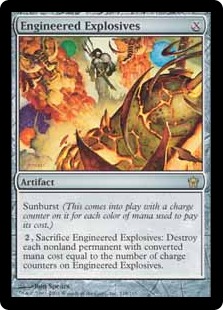
Spell Snare: Counters Tarmogoyf. At just one mana, Snare also helps Gaudet interact in the early game while deploying threats.

Remand: Gaudet probably wants to increase Snapcaster flexibility with this one-off, but it seems strange to me in a deck so concerned with playing spells in its main phase.

Wooded Foothills: Gaudet's manabase is identical to mine, except he registered a second Foothills over his fourth Scalding Tarn. Maybe he's “pulling a Tarmogoyf,” but the second Foothills does help Blood Moon from the board come down on turn three without cutting him off green. Playing two Foothills and three Tarns could be correct against an expected field of big mana.

Sideboard Tech

Vendilion Clique: It's no secret that Clique terrorizes combo players. It also surprise-trades with threats from an aggro deck in combat, or flies over board stalls for those same matchups. Clique has been tremendous for me against Eldrazi decks, and I like the card more as the metagame continues its shift away from Lightning Bolt.

Engineered ExplosivesEngineered Explosives: A catch-all answer to fatties like Tarmogoyf and Scavenging Ooze, random bullets like Ensnaring Bridge and Chalice of the Void, or just a swarm of tokens. With Twin gone, and 1-3 CMC permanent decks picking up steam in Modern, the card is poised for a comeback.
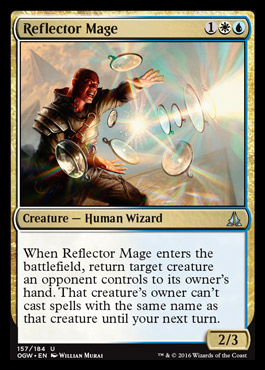

Roast: More answers for ground creatures, but I'm not sure what Gaudet expected to kill with these. Maybe other Goyfs. Maybe he just expected some Grixis players. I think Flame Slash is better right now.

Underdog Fighter: The Other Delvers

While Temur isn’t the only Delver deck in Modern, Tarmogoyf makes the wedge so adaptable that it’s hard to argue with its dominance in such an open field. UR Delver stands to benefit from the Twin ban, but it won’t hold a candle to Temur. Grixis never even had a chance.

I still haven’t stopped tuning my other Delver decks. Interactive decks will pop up once the metagame settles, and big mana should follow in its footsteps. When that happens, depending on how slow Modern becomes, iGrow may be extremely well-positioned.

Oath of the Gatewatch gave the deck an adrenaline injection in Stormchaser Mage, a two-drop that keeps us in two colors, flies over 5/8s, pitches to Disrupting Shoal, and all but guarantees lethal after Day's Undoing. This upgrade also makes the deck more affordable, and Brandon Gaudet can play it without digging up that fourth Tarmogoyf!

iGrow, by Jordan Boisvert

Creatures

4 Stormchaser Mage
4 Delver of Secrets
4 Monastery Swiftspear
4 Young Pyromancer

Instants

4 Lightning Bolt
4 Vapor Snag
4 Disrupting Shoal

Sorceries

4 Serum Visions
4 Gitaxian Probe
4 Day's Undoing
2 Sleight of Hand

Lands

4 Scalding Tarn
4 Misty Rainforest
1 Wooded Foothills
3 Steam Vents
1 Cinder Glade
1 Sulfur Falls
3 Island
1 Mountain

Sideboard

3 Snapcaster Mage
2 Blood Moon
2 Spell Pierce
2 Forked Bolt
2 Electrickery
1 Flame Slash
3 Ancient Grudge

iGrow can’t be played at higher levels in such a linear field, at least not with Undoing in the main. But I’ll keep my eyes open for a metagame window to reaffirm its potential.

We Come In Peace

Anderson and Gaudet brought "unfinished" decks to Atlanta, and it's possible they simply lucked out last weekend. Temur Delver may, as Anderson predicts in his SCG article, soon be phased out by Modern players. But I doubt it. In my eyes, the SCG Atlanta Classic foreshadows a format where the iconic 3/2 finally gets a promotion from cadet to officer.

Shifting metagames perfectly showcase the worth of brutal efficiency. Modern always corrects itself, making the re-establishment of sturdy policing decks a matter of "when" and not "if." Until that happens, Delver enthusiasts want Lightning Bolt and Tarmogoyf to reign in the linear onslaught.

That means nothing but green guys. Forget Rocky VIII - it’s Mars Attacks!

Observations on Standard from SCG Atlanta

Are you a Quiet Speculation member?

If not, now is a perfect time to join up! Our powerful tools, breaking-news analysis, and exclusive Discord channel will make sure you stay up to date and ahead of the curve.

Last week we got to see the new Oath of the Gatewatch cards in action for the first time at SCG Atlanta. It was pretty cool to see how people used them. Some found homes in old decks while some started new decks all together. I wanted to take the time to talk about some of the more impressive cards and decks that I saw this weekend.

First up is the card Kalitas, Traitor of Ghet. Every time I saw this card it looked great. As a 3/4 with lifelink, its body is pretty good. It also has the ability to pump as well if you have vampires or zombies just laying around. This is pretty easy, as Kalitas's gives you a zombie every time you kill one of you opponents creatures. Because of this, Kalitas puts on much more pressure than a card like Anafenza, the Foremost while also being a graveyard hate card. Usually with Anafenza people can just chump and then hope to draw an answer in a few turns. With Kalitas every chump block is another zombie ready to attack the next turn. This severely limits the number of draws to find an answer.

There was an error retrieving a chart for Kalitas, Traitor of Ghet

Next up is Stormchaser Mage. This card spawned a whole new deck- UR Prowess. Dalton Ozmun piloted this version of the deck to the top 8 of SCG Atlanta.

UR Prowess

Creatures

4 Abbot of Keral Keep
4 Monastery Swiftspear
4 Stormchaser Mage
4 Jace, Vryn's Prodigy

Spells

1 Dispel
2 Expedite
4 Fiery Impulse
2 Temur Battle Rage
4 Titan's Strength
2 Roast
4 Slip Through Space
4 Treasure Cruise

Lands

2 Island
3 Mountain
4 Bloodstained Mire
4 Polluted Delta
4 Shivan Reef
1 Smoldering Marsh
1 Sunken Hollow
2 Wandering Fumarole

Sideboard

2 Disdainful Stroke
2 Dispel
1 Murderous Cut
2 Wild Slash
2 Pia and Kiran Nalaar
2 Boiling Earth
2 Duress
1 Painful Truths
1 Roast

This deck looks like a ton of fun to play. It is like a mixture of both Delver and Heroic. I've spoken with a few people that were playing this deck and they all said that they felt the deck was built incorrectly, but something powerful is there. Nobody could put their finger on what it is exactly, but I am really looking forward to what this deck will look like in the coming weeks. Personally, I'm not a huge fan of Jace, Vryn's Prodigy in this deck as it isn't an aggressive creature, and I'd like to see Painful Truths in some number in the main deck. I will admit that I'm not the best at building these tempo style decks.

Now lets talk about the card I felt was one of the best cards of the tourney, Reflector Mage. This card feels so powerful to me after playing it for a full 15 rounds. While I was playing it in my Rally deck, I'm not sure that this is the best home for it. Don't get me wrong, if you are playing Rally you should be playing some number of this card and that number might just be 4. That said, the games where this card was the best for me all weekend was when I had Anafenza, the Foremost boarded in. Going turn 2 guy into Anafenza into Reflector Mage led to games where I felt like my opponents just couldn't win. So how can we do this more often? How about something like this?

Abzan Blue by Willie Porges

Creatures

2 Den Protector
4 Reflector Mage
4 Siege Rhino
4 Warden of the First Tree
1 Wingmate Roc
4 Anafenza, the Foremost
2 Tasigur, the Golden Fang

Planeswalkers

3 Gideon, Ally of Zendikar

Spells

2 Dromoka's Command
2 Murderous Cut
3 Stubborn Denial
4 Oath of Nissa

Lands

2 Forest
1 Plains
1 Swamp
2 Canopy Vista
4 Flooded Strand
4 Polluted Delta
1 Prairie Stream
1 Smoldering Marsh
1 Sunken Hollow
4 Windswept Heath
4 Wooded Foothills

Sideboard

2 Disdainful Stroke
1 Dispel
2 Hallowed Moonlight
1 Ojutai's Command
2 Jace, Vryn's Prodigy
1 Exert Influence
2 Painful Truths
4 Self-Inflicted Wound

This deck looks like your basic Abzan Aggro deck, but with some pretty sweet upgrades. Oath of Nissa works very well in this deck and with the addition of Reflector Mage it can also find you what is basically a removal spell. This version of Abzan Aggro looks like it could be the version we will be seeing from now on based solely on how powerful Reflector Mage is.

This next deck isn't from SCG Atlanta, but I think it deserves some attention, so check this one out.

Esper Aggro by Yukihiro Shimokobe

Creatures

4 Bloodsoaked Champion
4 Mardu Woe-Reaper
3 Ayli, Eternal Pilgrim
3 Bearer of Silence
2 Wasteland Strangler
4 Matter Reshaper
3 Thought-Knot Seer
2 Eldrazi Displacer
2 Reflector Mage

Spells

4 Silkwrap
3 Stasis Snare

Planeswalkers

2 Gideon, Ally of Zendikar

Lands

4 Flooded Strand
3 Polluted Delta
1 Prairie Stream
1 Sunken Hollow
4 Caves of Koilos
2 Shambling Vent
1 Swamp
2 Plains
2 Sea Gate Wreckage
1 Ruins of Oran-Rief
3 Crumbling Vestige

Sideboard

1 Wasteland Strangler
1 Gideon, Ally of Zendikar
1 Stasis Snare
2 Dispel
3 Disdainful Stroke
3 Transgress the Mind
1 Surge of Righteousness
1 Hallowed Moonlight
2 Self-Inflicted Wound

I could go on and on about how I love this deck. There are so many sweet synergies, but the card that seems to fuel the whole machine is Matter Reshaper.

There was an error retrieving a chart for Matter Reshaper

Every card in the deck beside Gideon, Ally of Zendikar and Thought-Knot Seer get put into play by Matter Reshaper's ability. With all the mana sinks in this deck, the lands are great to get too. If you couldn't tell, I really like this deck and wouldn't be too surprised if I play this or something very much like this in SCG Columbus this weekend.

Well that's all I have for this week. Next week I will most likely be talking about Modern, as it will be time for SCG Regionals and the Pro Tour, which will both be that format. Once again thanks for reading.

Follow me on Twitter @conanhawk

Insider: The Impact of OGW on Standard

Are you a Quiet Speculation member?

If not, now is a perfect time to join up! Our powerful tools, breaking-news analysis, and exclusive Discord channel will make sure you stay up to date and ahead of the curve.

With one week in the books of Oath of the Gatewatch Standard, the set is already making its presence known. With eight different decks in the Top 8 of the Atlanta Open this weekend, it's difficult to say exactly which direction Standard is going from here, but the week one results have illustrated some fundamental changes to the format. Today I'd like to outline the cards that made the most impact week one, and what they mean for the format at large.

There was an error retrieving a chart for Reckless Bushwhacker

Let's start with the winner. Reckless Bushwhacker was the only Oath card to show up in the winning deck from last weekend, and it's a significant upgrade. Korey McDuffie was able to remove Temur Battle Rage from his list entirely and trim Become Immense, all while maintaining a high level of explosiveness. There will minimally be a guessing game regarding whether your Atarka Red opponent has the combo going forward, and Bushwhacker might just make for a more consistent and robust deck.

Dragon Fodder will be staying in Standard even when Khans rotates, so I could see Bushwhacker being a lasting player in the metagame for a long time. They're dirt cheap right now and could be a solid $1-$2 card down the road. They're not exciting cards to buy, but pulling them from draft stacks and setting them aside is definitely wise.

There was an error retrieving a chart for Reflector Mage

Between being a great upgrade to Rally the Ancestors and Abzan Blue, this card is definitely the real deal, and these are only the week one innovations. I was at a Modern Super IQ last weekend, and the second place list was playing four copies of Reflector Mage alongside Geist of Saint Traft and Restoration Angel. This card is very good, and it's hard to imagine that it won't be a major Standard player for as long as it's legal, and it has the makings of a playable Modern card.

At just shy of a dollar, they're not appealing cards to buy, but you'll want at least a set to play, and this card will easily be $2 before long, if not more. If you see it in trade binders, grab it as a throw in.

There was an error retrieving a chart for Stormchaser Mage

Stormchaser Mage is the last uncommon to make a significant impact on the format, though it's the one that I have less faith in long term. I like the UR Prowess decks a lot, though they take a significant hit when Monastery Swiftspear and Treasure Cruise rotate out of Standard. Similarly, loosing Treasure Cruise in Modern made Young Pyromancer quite bad, and I don't see why Stormchaser Mage would be any different- the cantrips are just too weak to support a card like this when Tarmogoyf is so good just by playing Magic.

I'm more willing to entertain the idea of playing this card in Legacy, and a UR Delver Burn deck with Swiftspear and Stormchaser Mage certainly has potential, but this will impact the price of foils far more than regular copies. Notably, foils are already way too expensive to expect to make any money on this card under any realistic timeframe.

At $2 I'll be picking up a set to play this card in Standard, because I think the deck is sweet, but I don't intend to touch any copies beyond that.

There was an error retrieving a chart for World Breaker

World Breaker started pre-ordering at $3, and I said it was a great pickup then. In Atlanta, the card saw great exposure as it defeated Gerry Thompson to advance Zhengdong Shan to 9-0. Shan ultimately took 10th place, though I think his list is a lot better than most of the other Ramp lists, and it's certainly better than the second place list.

This card is amazing, and I'm expecting a Top 8 for it this weekend. The price is currently a little shy of $10 due to the exposure it saw in Atlanta, which is a pretty steep price to buy in. I do believe that there is room to grow from here, at least to $15, but at this point in time it's a much better trade target than a buy. It's worth noting that the spread is very low, so it is at least a solid buy.

There was an error retrieving a chart for Kozilek's Return

Kozilek's Return dropped a bit since release down to $14, though with Atarka Red winning week one I expect the card to be in a lot of sideboards next weekend in decks like Jeskai Black in addition to remaining in the maindeck of the best versions of Eldrazi Ramp. I knew the Ramp deck wanted this card in some capacity, but it was again the feature match for 9-0 in Atlanta that demonstrated the cards true power. Zhendong Shan used the front side of the card to kill a two drop, and then completely dismantled Gerry T's board when he cast World Breaker.

You wont always kill something with the front half- in particular against Abzan decks- but those are definitely one of the Ramp deck's better matchups anyway. I wasn't a huge believer at $20, but just north of $10 seems about right. I'd happily buy a set at the current price to play right now, and I don't expect much movement in either direction for the card. That said, the spread is super low right now, with Card Kingdom offering $13 buylist. They are certainly expressing a high degree of confidence.

There was an error retrieving a chart for Goblin Dark-Dwellers

This card didn't see huge success in Atlanta, but it was in a couple sideboard in Top 8, and in the maindeck of the 19th place Mardu Green deck. Goblin Dark Dwellers is a great card for midrange decks, and it kind of sets the line for the minimum amount of value that you can generate to win a midrange mirror. Dark Dwellers plus Kolaghan's Command is backbreaking in long games, and "flashing back" Crackling Doom is no laughing matter. I fully expect there to be matchups in Standard defined by the fact that one deck had Dark Dwellers and the other didn't.

The card is currently at $4, and I don't think you stand to make any money by buying in despite the card's power level. It's much more relevant from a play perspective than a financial one. That said, as a player there are a lot of worse ways to spend your $16.

There was an error retrieving a chart for Sylvan Advocate

There was an error retrieving a chart for Ayli, Eternal Pilgrim

These cards are less exciting than anything on the list, but they're worth discussing because they saw a good amount of play in Atlanta. Neither are gamechangers, but both survive the front end of Kozilek's Return and Flaying Tendrils. I don't think there's a lot to talk about here financially- these are both cheap rares and they're probably going to stay that way. They definitely have relevant metagame applications though.

There was an error retrieving a chart for Nissa, Voice of Zendikar

Lastly, I want to talk about a card that I've been hyping a lot, but failed to see significant success in Atlanta. I still have faith in Nissa's power level, and given the abundance of Reflector Mages I suspect that Nissa could be a good direction for Abzan decks. That said, the results aren't there yet, and the card has lost a couple bucks in value. I was bullish on pre-ordering this card, and obviously if you did you technically lost money by not waiting until at least now.

Nissa currently sits at about $13, and it's important to remember that this price is absolutely driven in part by casual demand. It's a planeswalker, it's good with tokens/Doubling Season, and it's a popular character. I don't think that the floor is realistically much lower than the current price, though I'll admit that I may have missed my mark in the short term here.

I'll be amazed if Nissa never makes it in Standard, though I do apologize for missing on the pre-order price as compared to today's price.

~

Oath of the Gatewatch is a great set, and I'm very excited to see what happens during week two. If you haven't heard, I'll actually be in the booth covering the SCG Open in Columbus along with Matthias, which I could not be more excited about! I don't know what I'd like to see more between a clear direction for Standard or another Top 8 with eight different decks, but one way or another I can't wait.

Thanks for reading.

-Ryan Overturf
@RyanOverdrive on Twitter

Want Prices?

Browse thousands of prices with the first and most comprehensive MTG Finance tool around.


Trader Tools lists both buylist and retail prices for every MTG card, going back a decade.

Quiet Speculation