menu

Insider – QS Cast 18: The Incredible Uncommons of OGW

Are you a Quiet Speculation member?

If not, now is a perfect time to join up! Our powerful tools, breaking-news analysis, and exclusive Discord channel will make sure you stay up to date and ahead of the curve.

Play

The spoilers keep getting better! Devoid decks could become a real force in Modern and Standard, while efficient spells like Oath of Nissa have people comparing the card to certain banned cantrips. Dig in this week with the cast as we reflect on the financial future of OGW.

All of our contact information for the cast is here.

Douglas Linn

Doug Linn has been playing Magic since 1996 and has had a keen interest in Legacy and Modern. By keeping up closely with emerging trends in the field, Doug is able to predict what cards to buy and when to sell them for a substantial profit. Since the Eternal market follows a routine boom-bust cycle, the time to buy and sell short-term speculative investments is often a narrow window. Because Eternal cards often spike in value once people know why they are good, it is essential for a trader to be connected to the format to get great buys before anyone else. Outside of Magic, Doug is an attorney in the state of Ohio.  Doug is a founding member of Quiet Speculation, and brings with him a tremendous amount of business savvy.

View More By Douglas Linn

Posted in Free Insider, QS CastLeave a Comment on Insider – QS Cast 18: The Incredible Uncommons of OGW

Have you joined the Quiet Speculation Discord?

If you haven't, you're leaving value on the table! Join our community of experts, enthusiasts, entertainers, and educators and enjoy exclusive podcasts, questions asked and answered, trades, sales, and everything else Discord has to offer.

Want to create content with Quiet Speculation?

All you need to succeed is a passion for Magic: The Gathering, and the ability to write coherently. Share your knowledge of MTG and how you leverage it to win games, get value from your cards – or even turn a profit.

Modern Metagame Breakdown: 12/1 – 12/31

Are you a Quiet Speculation member?

If not, now is a perfect time to join up! Our powerful tools, breaking-news analysis, and exclusive Discord channel will make sure you stay up to date and ahead of the curve.

This metagame update almost didn't happen. With a banlist announcement coming up in just two weeks and a new midrange deck redefining the online metagame, it felt silly to analyze a format that is sure to be radically different before January even ends. I changed my mind after sitting down and going through the numbers. Although Modern is undergoing dramatic shifts with more to come depending on the January 18 update, metagame changes are already underfoot and we'll want to identify them before that fateful Monday. Besides, there are still almost two full weeks of Modern until the DCI makes its statement, and December's trends will certainly be at play over that time period.

Stirring Wildwood Art

We already saw some subtle but important movement in November's metagame breakdown. RG Tron and Amulet Bloom solidified their status as Tier 1 contenders, replacing linear alternatives like Infect and Merfolk. Meanwhile, Grixis evolved from its control roots into a midrange future, some fairer Tier 2 decks fell off the radar, and Retreat to Coralhelm staked a claim. Also, Zoo. Lots. Of. Zoo. Today, we'll track these November trends into December, see how they fared throughout the last month of 2015, and theorize about where they might lead into 2016. To reflect the New Year transition and the upcoming January changes, I'll spend less time on December and more on projections about where Modern will go from here.

[wp_ad_camp_1]

Tier 1 Decks

siege rhinoDespite some high-profile StarCityGames showdowns, a handful of large Italian and Japanese tournaments, and a regular spattering of mid-size regional events, December was a relatively quiet month for Modern. We only tracked 55 total paper events in the month, down almost 50% from both our November and October datasets. Collection was much more robust on the MTGO side, where we saw 55 events, almost 500 decks, and the biggest MTGO sample since Wizards upended the online community with its summer Daily and Premier changes. The MTGO data even included both a MOCS and a Premier, better-attended venues that fittingly saw December's breakout Tier 1 performer in their Top 8s. But, spoiler alert, more on Mr. Siege Rhino later...

Because December featured no true "major paper events" (i.e. an Open, a Grand Prix, or a Pro Tour), we are recycling the GP Pittsburgh Day 2 stats for the current breakdown. We're also jumping ahead to January to add in the SCG Cincinnati numbers to this update. Although the Cincinnati Open wasn't in the 12/1-12/31 date range, it makes qualitative sense to include it. First, its inclusions shores up our sample, compensating for the lower paper N. Second, December's trends were hard at work during the Open, so we only gain information by adding them.

With all that in mind, here are Modern's Tier 1 decks for December. As always, Tier 1 decks are defined as those strategies which you are very likely to encounter in a tournament. You need to test against these decks to prepare for any event, and you are in big trouble if your deck of choice fares poorly against the Tier 1 testing gauntlet.

DeckOverall
Metagame %
MTGO %Paper %Major Event
Day 2 %
Affinity8.3%6.8%7.2%10.2%
RG Tron6.9%4.8%4.9%10.1%
Jund6.6%6%5.8%7.7%
UR Twin6.2%5%6.5%6.5%
Burn6%6.8%4.9%6.6%
Abzan5.2%5.8%4.9%5.1%
Amulet Bloom4.2%4.1%3%5.5%

Whoa, deja vu. Six of those seven decks are identical to those we saw in November's update, which suggests a stable metagame where format pillars continue to stand. This is in stark contrast to the October-November transition we observed a month ago, when the linear shuffle was in full force and ramp decks cemented their Tier 1 footing. The big exception to this is Abzan. As we'll see in the trend table below and talk more about after, Jund's jealous brother returned into Modern's highest echelon, a change that both signaled a big shift in December and forecasts further movement to come down the road.

Deck nameMeta% change
(Nov. to Dec.)
Meta%
(12/1-12/31)
Meta%
(11/1-11/30)
Meta%
(10/1-10/31)
Meta%
(9/1-9/30)
Affinity-.3%8.3%8.6%9.3%11%
RG Tron+.7%6.9%6.2%5.5%5.1%
Jund-1.1%6.6%7.7%8.7%7.9%
UR Twin+.7%6.2%5.5%4.5%3.4%
Burn-2%6%8%7.8%7.5%
Abzan+2.3%5.2%3.9%3.8%5%
Amulet Bloom-1%4.2%5.2%4.1%3.7%

Stupid Burn, torpedoing my projection from last month's article. You can be sure that's the last time I bet against Affinity. With the exception of Affinity, all of the Tier 1 decks bobbled around between -1% and +1%, which is to be expected in any metagame period especially an off-month. Don't read too much into any of these trends. That is, any of them except Abzan. Abzan's resurgence (Jordan, toss me a Voice of Resurgence pun!) is a major Modern coup that, if sustained, will have huge implications for 2016.

Building off those numbers and the themes we've already described, here are some of the narratives we need to keep in mind when considering December Modern.

  • URx Twin is still the king at 12.5%
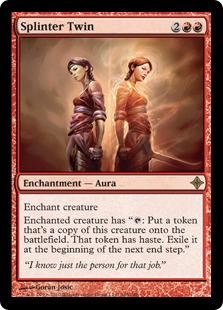
    Splinter TwinDon't know what else to play or prepare against? There's always Twin. December saw UR Twin return as the frontrunning weapon of choice for blue mages who want to compete against linear strategies. The URx Twin collective remains primarily split between UR Twin (6.2%) and Grixis Twin (dropping slightly from November to 3.8%). Jeskai (up to 1.5% after Bianchi's win at Pittsburgh) and Temur (just 1% and out of Tier 2) make up the remainder. Expect to see this share drop a bit as Tron adds more maindeck Spellskites, BW Eldrazi keeps making waves, and Abzan proves it's where BGx players want to be.
  • Tron is going nowhere
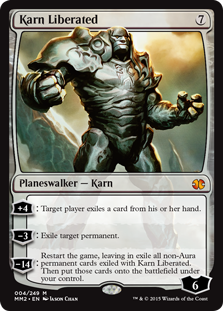
    Karn LiberatedIt's no coincidence Jim Davis chose RG Tron as his Modern champion for the SCG Players' Championship, and it's also no fluke that he took the event. This has just been a big month for Tron. SCG Cincinnati was the first Modern event ever where RG Tron had the highest Day 2 metagame share, just as December generally was the first month where the Urzatron rose to second most-played Tier 1 representative. Fulminator Mage and Crumble to Dust have put in major legwork to keep Tron at bay, but the deck has shown remarkable resilience to this hate while also not exceeding unhealthy shares. I expect the strategy's share to increase in 2016 as more players try Bx Eldrazi (a rough matchup for the midrange-ramp hybrid), but also to stay under control as sideboards get better at respecting the dangers of turn three Karn Liberated.
  • Abzan's rise, Jund's fall?
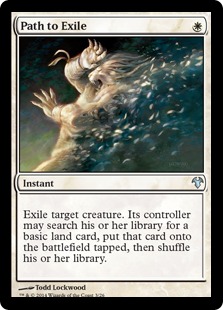
    December's big story was Jund dipping 1.1% and Abzan vaulting off that dropped share to rise 2.3% points to 5.2% of the format. The change was most apparent on MTGO, where Abzan currently sits within .2% of Path to ExileJund. To some extent, this reversal is an odd turn. Jund is much better against the rising Tron decks than its BGW alternative: Jund gets more from Dark Confidant plus Kolaghan's Command-recurred Fulminators than Abzan gets from Path to Exile trumping Lightning Bolt. This suggests there are more pressing metagame influences driving Abzan's surge than just Tron. The first of these appears to be Jund itself. Abzan is known for beating up its older sibling, and with players growing complacent around Jund's foothold, it was high time Abzan struck back. A second reason is Lingering Souls, which wrecks Jund, grind-oriented Grixis, and Twin players who are accustomed to the 50-50 slogfest against BGx. Add Eldrazi and Affinity to the picture, the former eating Bolts and Commands for breakfast and the latter succumbing to Stony Silence, and it's no wonder Abzan is edging in on Jund's Tier 1 territory.

In addition to these themes, remember that Affinity is now and will forever be the best aggro deck in Modern (and, unlike me, you shouldn't gamble against it in predictions). I'll touch on Burn a bit at the end of the article, but for now, it's enough to know Burn's fortunes are heavily dependent on sideboard choices and how the red mages shift along the Burn and Zoo spectrum. Red Deck still Wins in Modern and will always be present, but it lacks the raw power of Affinity which enables the artifacts to more consistently stay at the top. As a final note, Amulet Bloom sticks around Tier 1 for yet another month, again proving it's a force to be reckoned with in a metagame that should be policing it better.

Tier 2 Decks

We're tracking fewer Tier 2 entries in December than we saw back in November. Last month's insane 15 options has narrowed down to 12, with a number dropping down below Tier 2, some migrating up to Tier 1, and others rising up from the (de)void. Just as a reminder, Tier 2 decks represent those strategies which are viable and competitive in most tournaments, but not necessarily decks you will encounter. Skip your Tier 1 testing at your own peril. Missing out on those Tier 2 tests, however, is generally okay so long as you know how the decks work and don't make cataclysmic misplays like forgetting Infect plays Vines of Vastwood or Abzan Company can Chord of Calling into an active Spellskite.

DeckOverall
Metagame %
MTGO %Paper %Major Event
Day 2 %
Grixis Twin3.8%2.3%3.7%4.8%
Infect3.7%5.0%3.7%2.9%
Merfolk3.6%3.5%4.6%2.7%
Scapeshift3.1%2.1%3.2%3.7%
Abzan Company2.5%1.9%3.0%2.3%
Naya Company2.3%1.2%2.1%3.2%
Living End2.2%2.9%1.9%2.2%
Grixis Midrange2.0%2.1%1.6%2.5%
Bogles1.8%2.1%2.6%0.9%
Ad Nauseam1.8%1.7%2.3%1.4%
Eldrazi1.6%3.5%0.0%2.2%
Jeskai Twin1.5%0.6%2.6%1.0%

Gone are Grixis Control, Gruul Zoo, Knightfall, Temur Twin, and Elves. In their place, we see Jeskai Twin make its way to Tier 2 for the first time in Modern's history, Grixis Midrange officially evolve from its Cryptic Command origins, and holy frikkin Blight Herders. With the exception of Bx Eldrazi, all of these changes are par for the course in a month of Modern. We'll see at least some of them reverse in the coming months (I fully expect Temur Twin to return), and others might be more of a metagame call than anything else (Grixis Control/Midrange is more of a continuum of options than two distinct decks). Instead of discussing those changes, which will continue to fluctuate into 2016, I want to take a moment to talk Eldrazi.

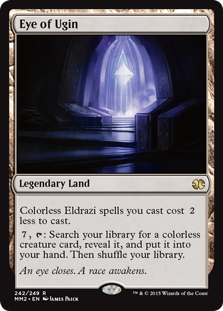
I made a New Year's resolution in yesterday's article to test first and board hype trains later. I've done the testing on both sides of the table and I'm here to report that Bx Eye of UginEldrazi is the real deal. Is it as broken as many online ban maniacs and Chicken Littles attest? Certainly not in its current form, which many of those detractors would know if they tested before they typed. Is it still a powerful deck with strong matchups and a natural format niche? Better bet your foil Eye of Ugins it. The midrange/ramp hybrid has all the markings of a Tier 2 regular and I fully expect to see it in multiple metagame updates throughout 2016. It might even ascend to Tier 1, but let's not get too far ahead of ourselves. As I wrote about on Monday, BW Eldrazi is probably the tastiest of Eldrazi's many flavors, but the verdict hasn't been finalized yet. Prepare for a few months of every Bx(x) Eldrazi permutation under the Magic suns. When the dust settles, at least one variant will emerge victorious and we'll have our newest Modern mainstay.

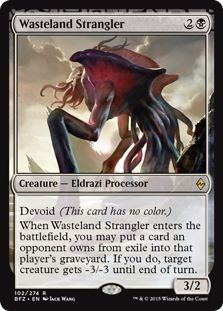
Be ready for the Eldrazi in 2016. From a game perspective, this means knowing how to beat the deck and knowing how it works. If you think your Remands are going Wasteland Stranglerto stop those Blight Herders, then hover over the Eldrazi again just to save yourself the tournament embarrassment. From a deck perspective, you need to know what Eldrazi beats and what Eldrazi fears. Jund, Abzan, and Grixis are food for the hungry-hungry processors. Same with anything that relies too heavily on graveyards, or decks that get choked out by the turn two Wasteland Strangler blowout. On the other hand tentacle, Burn, Merfolk, Affinity, and RG Tron are its natural enemies. Finally, from a format perspective, know how Eldrazi will affect the metagame. If BGx and Grixis decks take a dive, what gets better and what gets worse? If the metagame adapts with more blitz aggro decks, what gets better? You'll need to tackle all these questions as we move into 2016 and prepare for a new year of Modern.

Of course, there's that pesky X factor of bans and unbans. I'll save that for another article but some of the possible (dare I say, probable?) changes will have sweeping effects on Modern. But it's too early to think about that today.

Metagame Predictions for 2016

I'm still kicking myself for thinking Burn was going to surpass Affinity. The robots had been crushing it for months before the update, and I'm not sure what factors I imagined could alter that narrative. Thankfully, 2016 is here and the prediction slate is wiped clean. 2015 also wasn't as bad as that Burn forecast might make it out to be. Over the year, I made 22 total metagame predictions over ten articles spanning February through November. I got 15 of them right and seven wrong, for a respectable 68% accuracy rate. Thank Ulamog I'm doing much better than a coin-toss!

Before we get into the January and year-round prognoses, here's a final word on Burn and Affinity, and a great lesson for 2016.

  • Burn will surpass Affinity? Nope. 
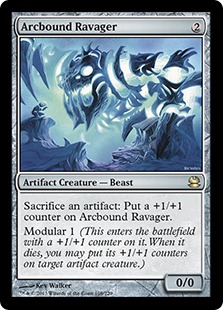
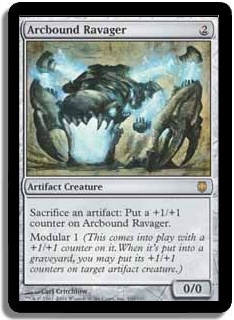
    Repeat after me: never bet against Affinity. I've used that phrase earlier in 2015 to describe other decks, but I think this is my most appropriate use to date. Affinity has been Arcbound RavagerTier 1 for every update of 2015, and has been the best aggro deck in every period since August. That's a five month reign, despite players knowing exactly what Affinity would do and packing the sideboard cards to handle it. Despite that, Affinity still managed to be on top. Not so with Burn. The red deck's fortunes have risen and fallen as players prepare for it with more impactful sideboard cards and shifting game plans. There are certainly metagames where Burn will be better than Affinity, but they are very rare and probably very isolated. As a whole, Affinity's power level will always keep it a head above the Lava Spikers. Also, somewhat miraculously, Affinity managed to keep this spot without ever reaching toxic metagame shares. It only exceeded 10% of the format once and hasn't been higher than that since August. This shows the deck is both powerful but also containable, a true format pillar we should always expect.

Time to turn to 2016 and lay out a possible roadmap for where the metagame might take us in the New Year. It was surprisingly difficult to make meaningful predictions for the whole year: there's just so much that can happen between now and February, let alone now and December. Without bringing banlist and reprint speculation too much into it, here are some short and long-term possibilities for the next 12 months.

  • Short-term: Bx Eldrazi hits Tier 1
    Between Monday's article and today's, I've already talked Bx Eldrazi to death (although I promise I did my homework and testing before boarding this hype train). I promise this is the last one for day. Based on the deck's current trajectory, I see this strategy temporarily pushing into Tier 1 as pilots climb aboard and opponents keep forgetting how to beat it. After a brief stint in the topmost tier, it should fall back to Tier 2 as the metagame reacts. Expect endless banlist mania and whining in the interim.
  • Short-term: Abzan surpasses Jund
    Abzan and Jund always swing back and forth, and I'm seeing enough pre-trends pointing towards an impending reversal. Two other shifts are going to seal this transition. siege rhinoFirst, the metagame is becoming decreasingly Bolt-friendly, which is always the first sign of an impending Jund downfall. Infect and Merfolk are out of Tier 1. Tron and Twin are at the top of the format. Eldrazi (they're back! sorry!) don't even care. With the quantitative datapoints aligning with this more qualitative analysis, I don't see Jund surviving for long. Second, I have a sneaking suspicion Amulet Bloom isn't long for this format in its current form. This dramatically diminishes the relevance of Blood Moon in the top-tier, which is one of Jund's biggest edges over Abzan. I'm still going to play the enchantment, but this banning will eliminate one of the more obvious reasons for others to play it, so this should seal the switch in the short-term.
  • Long-term: Modern gains another Tier 1 blue-based control deck
    Twin aside, Modern's Tier 1 continues to lack a real blue deck to control the format. Part of this is because Modern has odd dynamics where traditional midrange and control decks aren't always the best policemen. Aggro is sometimes the regulator. Or ramp. That said, control decks still take on an important metagame role, regulating certain types of aggressive and synergy decks better than anyone else. These decks have been absent in Modern for a while, even if Grixis players tried mightily before ditching countermagic and shifting back midrange, and I think 2016 will be the year this stops. Whether through unbannings (Sword of the Meek! Ancestral Vision!), reprintings (Fact or Fiction?), or new cards (a Force of Will variant Twin can't use. Design it, Wizards!), something will enter Modern to push control in the right direction.
  • Long-term: Innocent Blood
    It's going to happen. Right? Shadows over Innistrad literally has no other purpose than to put this sorcery into the Modern cardpool. Mark Rosewater even likes this thing! Please, Wizards? Seriously, what else is Bud Cook going to illustrate?
  • Long-term: Modern will retain its four format pillars through 2016
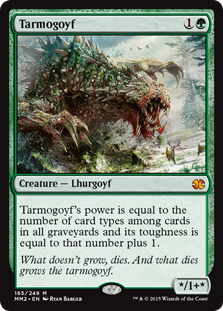
    URx Twin, BGx Midrange, Affinity, and Burn: these are the central cores that power our format and keep the Modern Force in balance. We might see different variants of these Tarmogoyfdecks (whether competing Twin types, Jund vs. Abzan, or the countless Burn hybrids), but these fundamental strategies are still the defining drivers in Modern. I don't see this changing in 2016, which sounds more conservative than it is. Wrapped up in this prediction is a guess at no major bans aimed at these decks, no major new cards to dethrone them, and no periods of time where all of them aren't viable at major events. Non-rotating formats depend on these reliable pillars, and 2016 should be a year where we can count on playing with them and against them. If Wizards undermines this with the January 18 announcement, their change in tone will have reverberations well beyond my prediction accuracy rate. I'm banking against it though.

I want to thank everyone for a great 2015 on the site and for all your support of both Modern Nexus and Modern more generally. We couldn't do it without you and we're all pumped for what 2016 has to offer. Especially if that offering is Innocent Blood!

Surprisingly creepy closings aside, that's all for our December metagame breakdown and our 2016 predictions. What trends did you observe in the 12/1-12/31 data? Any decks you have on your radar for January? What about broader themes you are looking forward to in 2016? I'll be checking the comments to respond to all of you and hope you enjoyed our metagame closeout piece for 2015!

Insider: MTGO Market Report for January 6th, 2016

Are you a Quiet Speculation member?

If not, now is a perfect time to join up! Our powerful tools, breaking-news analysis, and exclusive Discord channel will make sure you stay up to date and ahead of the curve.

Welcome to the MTGO Market Report as compiled by Sylvain Lehoux and Matthew Lewis. The report is loosely broken down into two perspectives.

A broader perspective will be written by Matthew and will focus on recent trends in set prices, taking into account how paper prices and MTGO prices interact. Sylvain will take a closer look at particular opportunities based on various factors such as (but not limited to) set releases, flashback drafts and banned/restricted announcements.

There will be some overlap between the two sections. As always, speculators should take into account their own budget, risk tolerance and current portfolio before taking on any recommended positions.

Redemption

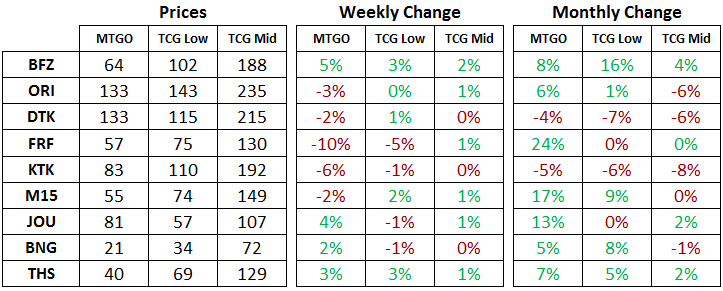
Below are the total set prices for all redeemable sets on MTGO. All prices are current as of December 29th, 2015. The TCG Low and TCG Mid prices are the sum of each set’s individual card prices on TCG Player, either the low price or the mid price respectively.

All MTGO set prices this week are taken from Goatbot’s website, and all weekly changes are now calculated relative to Goatbot’s ‘Full Set’ prices from the previous week. All monthly changes are also relative to the previous month prices, taken from Goatbot’s website at that time. Occasionally ‘Full Set’ prices are not available, and so estimated set prices are used instead.

Jan4

Targeted Recommendations Summary

In today’s report we take a look back at the 2015 year of the MTGO Market Report and perform an analysis of the buy and sell recommendations.

Each closed call (i.e. a card that was bought and sold) can be evaluated and judged a success or failure by looking at percentage gains or losses. We’ll also construct a mock portfolio to estimate what the net gains or losses could be for a speculator following the recommendations. Lastly, we’ll make comments on any outstanding buy calls and discuss their future.

Evaluation Method

There is no absolute and unique method to evaluate the performance of our recommendations, but we’ve come up with what we think is an objective approach to estimate gains and losses. Gains and losses presented here may also be different from a given person’s portfolio, even if they strictly followed our recommendations.

Buy Prices

For every recommendation, the buy price we used is the price as recorded by MTGGoldfish.com on the day of the recommendation. The bias here is that it’s possible to buy cards at a lower price than the listed price. MTGGoldfish uses MTGO Traders prices which are frequently not the cheapest (they focus on stocking every card, not the lowest price). Also, acting on the recommendation on a different day might yield different results as prices might have fluctuated in the interim period.

Sell Prices

The sell price we used is the price as recorded by MTGGoldfish.com on the day of recommendation, with the following adjustments. For every card price below 2 tix, 80% of the listed sell price was assumed to be retained. This accounts for the buy and sell spread of most bots on low-priced cards, which tend to have higher margins. For cards above 2 tix, 90% of the listed sell price was assumed to be retained.

Again, the exact price which a given speculator gets will probably not correspond perfectly to the sell price either. The purpose is to illustrate what is possible, given a reasonable set of assumptions and the actual buy and sell recommendations given in the report.

Prices used for recommendations still open are current as of Thursday, the 25th of June. The same 80% and 90% price adjustments have been taken into consideration for cards less than 2 tix and cards greater than 2 tix, respectively.

The Mock Portfolio

A mock portfolio based on these recommendations was built in order to put the recommendations into a different, more tangible context. The rules of this simulated portfolio are as follows. A maximum of 50 tix was dedicated to each recommendation, and an upper limit on the number of copies was set to 40. Based on our experience, buying or selling up to 40 copies of a given card, without significantly affecting prices, is possible if a number of different bot chains are used.

We also took into account the fact that tix generated by selling positions can be re-invested into new positions. Basically this adds the dimension of compound interest to our mock portfolio.

Evaluating the Recommendations

The table below presents the percentage change in each recommendation as per the above assumptions.

change table

* Indicates the maximum buying price we recommended for this card, although the price on MTGGoldfish was higher on the day we recommended the position.

Considering all recommendations, both closed and open, the average gain is +43.0%. If only closed positions are considered, the average gain is +76.5%. On the other hand, open positions don't look great at this point in time, partially due to underperforming Magic Origins picks, and accumulate a loss of -7.9% on average.

Now let’s take a look at our mock portfolio:

portfolio

The mock portfolio shows you how much of each position it would have. After 12 months now, this mock portfolio would have bought and sold 144 positions, while 96 still remain open.

With the profit of 144 closed positions that would have been re-invested (as any speculator would proceed with his/her own portfolio) it would not make sense to compare the total buying price of all the positions to the total selling price to estimate the overall profit generated.

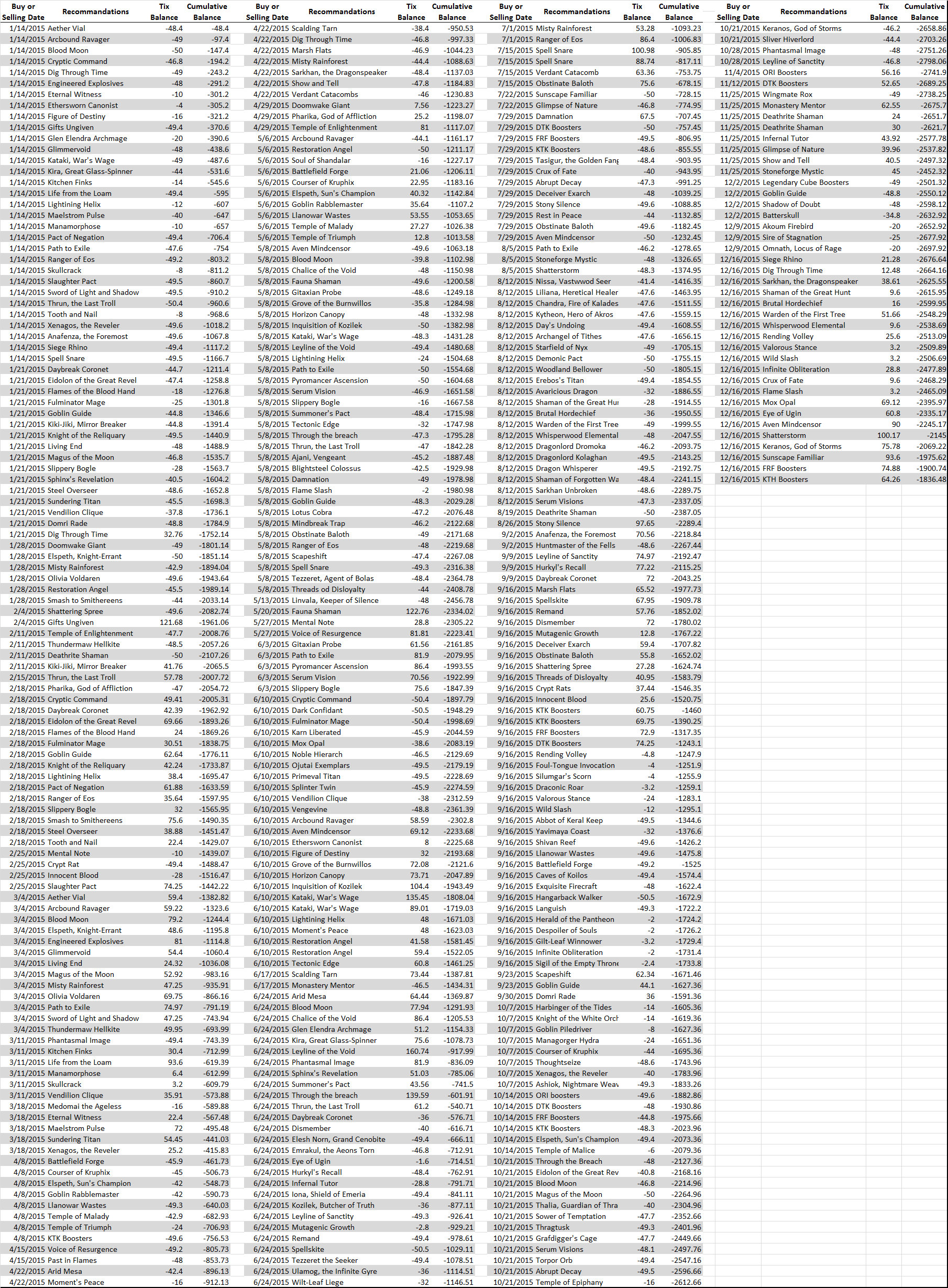
Instead, and in order to more accurately reflect the accumulated value of a real portfolio, we build a cumulative table to account for the tix balance of the mock portfolio at any time during these first twelve months. Every time a card is bought, an amount of tix (corresponding to the number of copies times buying price) is debited; every time a card is sold, an amount of tix (corresponding to the number of copies times selling price) is credited.

Here is the cumulative table (click to enlarge):

cumulative table

With this cumulative mock portfolio, no more than 2799 tix were ever required to cover all of the MTGO Market Report buying recommendations, according to the above buying assumptions. In order to keep proposing targeted buying recommendations we increase the 2500-tix size of the mock portfolio used previously. Percentages and numbers below reflect this change.

This means that with a starting bankroll of 2800 tix, the mock portfolio would currently be valued at 4594.2 tix. The current open positions accumulate a total value of 3630.66 tix and the mock portfolio would also have 963.52 free tix (2800 minus 1836.48). 4594.2 represents a 64.1% increase in bankroll value since last January, considering an initial bankroll value of 2800 tix.

Outlook for Currently Open Recommendations

Standard Positions

Cards from Magic Origins and Dragons of Tarkir have the benefit of the first spring Standard rotation. With Khans of Tarkir gone, there will be lots of room in Standard for new strategies to push card valuations around. Holding cards from these sets is correct at this time.

After Shadows over Innistrad is released, the utility of all cards should be reevaluated and updated as the Standard metagame develops in April. There will be a couple of months of exploration, and then the small summer set will shake things up again. However, speculators should not be afraid to dump their cards from these sets if they aren't showing increased uptake in Standard.

Prices head lower into the summer as the weather improves, and any card that isn't seeing play in Standard will plumb new lows as the calendar ticks over into June and July. Don't be afraid to jettison failed specs in May. Holding losing positions into the summer is a recipe for further pain as prices inevitably head lower. There's always a few cards that buck this trend, but speculators are rewarded for being mostly correct and sticking with the broad trends.

Elsewhere, Khans of Tarkir and Fate Reforged are set to exit Standard in about three months. With Oath of the Gatewatch release events to come by the end of January, there's very little time to sell specs from these sets.

Cards like Siege Rhino won't dip very much in the near term, but the potential of a home run spec on this card is next to nil at this point. Selling cards from these two sets before the new set hits would be a good idea, to generate liquidity and to reconfigure your portfolio.

Modern

Modern speculators should be busy during the following weeks. This is a turning point and a selling time for many Modern positions. Modern Masters 2015 positions are still showing strength and speculators may want to ride the trend as long as possible, probably until Pro Tour Oath of the Gatewatch.

While holding positions until this Pro Tour might also be a good strategy for other Modern positions, we advise once more to take good profits whenever the opportunity presents itself. For instance, Magus of the Moon has peaked above 30 tix recently, matching its previous top reached last July and from a 12-tix low earlier this past September.

On the buying side, the Modern flashback series should get speculators' attention in 2016. Every set has its lot of Modern staples and there will be buying opportunities in Modern almost every week this year, starting with Ensnaring Bridge from 8th Edition (8ED) this week.

Blood Moon from 8ED could also be considered a pick-up, but with a few caveats. In less than three months, 9th Edition drafts will become available and another round of Blood Moons will hit the market. In addition, any potential banning of components from Amulet Bloom (to be announced in about two weeks) could make Blood Moon less desirable. The timing for profit from this spec is thus shorter and riskier.

Special attention should be paid to cards from Theros block and Magic 2015, particularly junk mythic rares like Medomai the Ageless. This card is currently priced at about half of its price at the time it was recommended. There is no further downside at this price, so speculators are encouraged to continue to hold.

The sell window for mythic rares from these sets is July to September. Speculators should be sure to exit their positions in these cards at that time. Typically prices head down during October as the new fall set is released, and then November is the redemption cut off date. After November, junk mythic rares will have zero value on MTGO.

Modern staples from these sets, like Thoughtseize and Eidolon of the Great Revel, will fluctuate alongside interest in Modern Constructed. There's no need to keep a selling window in mind for these cards. However, September is usually a near-term peak for Modern prices, so keep that in mind if you're wondering whether or not to sell at that time.

Vintage and Legacy

The Power Nine Challenge delivered what a lot of people in the online Vintage community had been hoping for since the release of the P9 pieces on MTGO---a large Vintage tournament able to attract close to a hundred people every month. There's no reason to believe the average attendance of the first three P9 Challenges won't be repeated. Therefore P9 pieces and other Vintage prices should find a support here.

As we mentioned before, this doesn't make Vintage speculation more attractive but it gives more stability and a better outlook to Vintage prices, at least from a player perspective.

Our only Legacy bet at this point resides in Legendary Cube Prize Packs (PZ1). Since we recommended buying them they have already progressed by about 30%. Without further Cube drafts awarding these packs as prizes, the value of PZ1 is expected to keep creeping up slowly, as is the value of Commander 2015 cards included in the special set.

Pauper

Pauper leagues have tremendously boosted the popularity and prices of the format. Most Pauper staples broke their record high in the past few weeks and don't seem to have reached a limit yet. Mental Note, for instance, is now cruising way above 3 tix, while decks using it are not even among the most popular in the format.

Our recommendation for Pauper speculators is to ride trends as long as possible, without forgetting to cash out and secure profit along the road.

If the popularity of Pauper sustains, as it seems it will, WotC might decide to offer flashbacks drafts of older formats like Mercadian Masques and Odyssey. These blocks contain some of the most valuable Pauper staples. As commons, Pauper staples would likely see their price significantly tank in response.

Targeted Speculative Buying Opportunities

None

Targeted Speculative Selling Opportunities

Modern

Magus of the Moon
Serum Visions
Rest in Peace
Mindbreak Trap

Insider: Sorting Out Modern Spikes

Are you a Quiet Speculation member?

If not, now is a perfect time to join up! Our powerful tools, breaking-news analysis, and exclusive Discord channel will make sure you stay up to date and ahead of the curve.

I'd tell you to prepare yourself because it is coming, but the truth is that it is already happening: Modern mania.

The SCG Open in Cincinnati broke records for their circuit and pulled over 1000 players to play, you guessed it, Modern.

I had a lengthy conversation with some other players about whether or not Modern had actually eclipsed Standard as the most popular format in Magic. It's getting to the point where it's debatable... In Michigan the local weekly Modern events tend to get bigger attendance than their Standard counterparts, a scenario I would have thought impossible a year and a half ago.

I stand by basically all the predictions I've made over the past few months regarding Modern and where it's headed. In particular, I still think Wizards will seize on the moment everybody has been anticipating for two months, and use the banned list announcement to catapult the format forward with some big changes before the Pro Tour.

What could possibly get better ratings than drastically changing the format before a Pro Tour and letting the pros "have at it" with a wild new metagame? I could see some annoying and hated cards going away (in particular, Summer Bloom) and some beloved ones coming back (for instance, Bloodbraid Elf).

I already said my piece about speculating on the banned list last week and my opinion there hasn't really changed.

Today I want to look at spikes. Last week several Modern cards spiked very hard. Most notably these:

There was an error retrieving a chart for Eye of Ugin
There was an error retrieving a chart for Gaddock Teeg

Eldrazi Everywhere

Basically all the cards in the Black Eldrazi deck saw gains in some way, shape or form. The deck has been getting a lot of buzz on the back of nice results online and a near-miss for Top 8 (due to breakers) at the SCG Open.

B/W Eldrazi by Matthew Dilks (10th Place at SCG Cincinnati Open)

Creatures

1 Spellskite
4 Blight Herder
4 Oblivion Sower
4 Wasteland Strangler
1 Ulamog, the Ceaseless Hunger

Spells

1 Liliana of the Veil
2 Expedition Map
4 Relic of Progenitus
4 Path to Exile
1 Slaughter Pact
4 Inquisition of Kozilek
4 Lingering Souls
1 Thoughtseize

Lands

2 Plains
2 Swamp
1 Bojuka Bog
1 Cavern of Souls
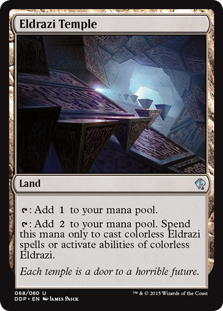
4 Eldrazi Temple
4 Ghost Quarter
2 Godless Shrine
4 Marsh Flats
1 Vault of the Archangel
2 Eye of Ugin
2 Urborg, Tomb of Yawgmoth

Sideboard

1 Crucible of Worlds
2 Engineered Explosives
2 Stony Silence
2 Celestial Purge
2 Disenchant
1 Slaughter Pact
1 Liliana of the Veil
1 Duress
3 Timely Reinforcements

As for cards from this deck that still have potential for growth, I like the Eldrazi cards themselves from Battle for Zendikar (BFZ), Blight Herder, Oblivion Sower and Wasteland Strangler.

There's something to be said about cards people think are junk that suddenly become good. Most people didn't collect a set while they were opening packs and have bulked these away or traded them to savvy investors.

The thing about these cards specifically is they're not just part of some flavor-of-the-week Modern brew---they're part of the new Eldrazi strategy.

There was an error retrieving a chart for Sliver Queen

Yeah, it's like that...

Eldrazi are the new slivers. The Eldrazi are now officially a tribe you can play without just trying to cheat an Emrakul, the Aeons Torn into play. They have a Modern-playable deck (just like slivers!), with its own unique flavor and feel due to the processor mechanic.

I also think that Eldrazi may continue to see printings outside of this current Zendikar block. It doesn't seem like we're getting a new Emrakul in Oath of the Gatewatch (OGW) which is strange considering it's the most Zendikar thing from the original Zendikar block.

I'm betting if Emrakul isn't in OGW that he, she, or it (what pronoun does one use to describe an Eldrazi god anyway?) will be the shadow over Innistrad from the upcoming block. If that's the case it seems likely that he, she, or it will bring some Eldrazi friends along and thus continue to expand the Eldrazi brand with some more playable friends.

All of the playable Eldrazi cards are worth picking up while they are still readily available at current prices.

I'm also betting the Standard Eldrazi deck will be real. I think Wizards made a big marketing mistake last time around when the trademark of the block, the Eldrazi, weren't actually very good in Standard. Its safe to say they won't make the same mistake again.

If you'd like an example, look at how Dragons of Tarkir put the Dragons at the forefront of the format. Dragons were everywhere in Standard and the set was very popular. I see a similar thing about to happen with the next set expect lots of Dragon vs. Eldrazi action in the coming months! Well, maybe Eldrazi vs. Rhinos...

There was an error retrieving a chart for Ulamog, the Ceaseless Hunger

Ulamog is one of the best Eldrazi ever printed. Actually, he's one of the best giant fatties period. He's going to be a staple of G/R Tron and any deck that has "Eldrazi" in its name in any format constructed or casual. I think he's already hit his lowest point and will continue to rise.

Get Ready: More Spikes Are Coming

Modern is not done growing yet. 1000+ players for an Open is crazy. 1000+ players paid $50 each to play in a tournament where if they make Top 64 they get $100... The reason is that people just love to play Modern.

If this is the case, there's a 100% chance the price of cards will go up as the format grows. Reprints like Modern Masters can help keep prices in check by inserting more cards into the player base, but it can only match demand so much. There is, plainly put, a ton of demand right now.

People want to play this format because it's fun and exciting. The other thing to consider is that when so many people are playing a format it tends to evolve and change much more rapidly. Modern has too many cards to ever "solve," and if it were to get solved (e.g. Amulet Bloom) the problem can simply be banned down the road.

The fact is that lots of new decks and a changing metagame means players will need to buy more cards. In Standard people switch decks often and I see this as something that will become more common in Modern as time goes on. Everybody will own one deck, but more and more people are venturing out into being able to build two or even more decks.

When play patterns become fluid and the metagame adaptive, it tends to drive card prices and create financial spikes.

You need only look to the Eldrazi lands to see this in action. A new, good deck sprouts up and the cog cards nobody owns suddenly shoot up. Gaddock Teeg is the same sort of thing: a Hatebears sideboard card against Tron and Twin that most people don't own. Demand = $$$.

5 Modern Picks to Gain

There was an error retrieving a chart for Splinter Twin

Twin is the best deck in Modern. It always makes Top 8 and is the best blue deck. Very popular with the pro players. I would be surprised if the card doesn't gain value soon. It's the signature card and namesake of the deck to beat in Modern!

There was an error retrieving a chart for Spellskite

I'm pretty sure that at least 75% of Modern decks play some number of Spellskites. It's one of the best cards in the format and has tons of applications. I'm not sure how it's only $20. It's also an easy include in many cube and casual formats.

There was an error retrieving a chart for Ghost Quarter

Another of the most format-defining cards in Modern. Multiple decks maindeck four copies. A majority of decks play some number in their 75. I'd focus on the Dissension version because it has much better artwork. I have a giant stack of these and I'm just waiting for my day to come.

There was an error retrieving a chart for Keranos, God of Storms

Every blue deck plays this card in the sideboard for the grindy match-ups and it's a mythic from a terrible set. It's also just a cool card---it is a God after all, and that will carry casual appeal indefinitely.

There was an error retrieving a chart for Leonin Arbiter

A mainstay of the Modern Hatebear decks (aka Death & Taxes). It hasn't had a reprinting in Modern Masters or a duel deck. At only a couple of bucks, and having been out of print since Scars, I think this card is due. The white decks are better than people give them credit for and I expect them to see more play as the format and meta mature (just like in Legacy).

There was an error retrieving a chart for Kolaghan's Command

I used to think about Modern in terms of black-green and blue-red decks---the printing of Kolaghan's Command has single-handedly made black-red a thing. The blue-red decks moved into another color just to have access to this card because it is that powerful.

This is one of the format-defining cards of Modern. It's Standard-legal and the price tag has absolutely nothing to do with Standard demand. A rare that goes into Jund and Twin alike is a card that a metric ton of people will need in 2016 and beyond.

Yeah, I know that's six and not five. I gave you a free one.

~

Modern is the new Legacy. The prices will continue to rise to reflect that aspect of the format. The staples are here to stay and they will maintain high demand and high price tags. Anytime you can get ahead of the curve and identify a good card before the masses there's opportunity to preempt a spike.

By the time 2017 rolls around I believe we will look back and say, "Wow, Modern cards were cheap in 2015!"

Three Modern New Year’s Resolutions for 2016

Are you a Quiet Speculation member?

If not, now is a perfect time to join up! Our powerful tools, breaking-news analysis, and exclusive Discord channel will make sure you stay up to date and ahead of the curve.

New Year's resolutions are the high point of every January 1st celebration. Or maybe that's just champagne. Or bowl game blowouts so outrageous they make Jeff Hoogland's weekend loss to Bobby Fortanely's Amulet Bloom look fair. Whether you prefer the booze or the club bashes to the boring promises, I'm sure you made at least a dozen resolutions for 2016. If you're like me, you've broken half of them less than a week later, but maybe we can get back on track by making some Modern pledges instead of taking the oath for 5:00 AM jogs or more calls to your parents.

Blood-Moon-2016-Art

Modern Nexus may have launched 2016 with a deck spotlight on the mighty BW Eldrazi strategy, but now we need to usher in the New Year with a proper round of resolutions. For today's article, I'm hammering out three personal commitments for 2016, ones I hope you'll share with me as we enter another 12 months of Modern. Unlike some of my other promises (I swear I'll do those three miles tomorrow morning!), I'm already putting work into making these three resolutions a reality, so join me as I walk you through my 2016 Modern vows and why you should adopt them too!

[wp_ad_camp_1]

1. Play More Blood Moon

Modern doesn't have the same high-caliber police cards as Legacy, but we still have our fair share of regulators. Thoughtseize and Inquisition of Kozilek break up synergies before they start. Lightning Bolt keeps fast creatures in order, Abrupt Decay prevents blue mages from comboing off behind countermagic, and Splinter Twin discourages you from abandoning interaction for pure race power. We also see cards like Path to Exile, Kolaghan's Command, Spell Snare, and dozens of sideboard bullets fulfilling these roles.

I'm a fan of each and every one of these policemen, but the top cop I want to roll with in 2016 is Blood Moon.

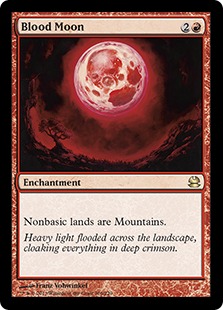
Blood Moon

You know the relationship is getting serious when I center an image.

Longtime readers shouldn't be surprised at my renewed love affair with the hosing enchantment. I lauded Moon's ability to regulate Modern during Grand Prix Charlotte, got a head start on this resolution in my December Boom // Bust brew, and have always been a big fan of Jordan's Moon-powered innovations. With 2016 starting and a solid year of metagame data in the spreadsheet, I'm doubling down on Moon and its unique dual role as regulator and win condition.

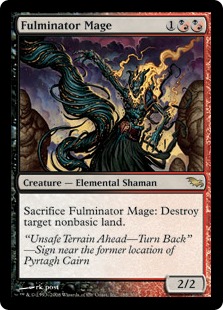
Instead of preaching an ode to Moon's merits in a vacuum, I'm going to make a case for why this will be the defining police effect of 2016 and why you Fulminator Mageshould play it with me. As we've seen over the past weeks, Modern is uniquely vulnerable to big-mana strategies that depend on zany nonbasics. Amulet Bloom continues to rampage its way onto the banlist (you can bet I'll be giving you a data-driven earful on that deck soon), Tron was the most-played deck at SCG Cincinnati, and Bx Eldrazi is making metagame and market waves. Meanwhile, the fair builds are in an arms-race to wield as much land hate as they can cram into a sideboard. Although there are noteworthy differences between the targeted land killers, such as Crumble to Dust and Fulminator Mage, and the blanket Moon effects, the overall picture shows how manabases influence the format.

We even see this in the decks packing land destruction themselves. Abzan, Grixis, Jund, and Naya depend on their nonbasic manabase to function at an optimal level. This makes them equally weak to effects that screw with lands, although you often need to apply those effects differently against these strategies. Don't be fooled by these decks' red cards, or even the Moons they slip into their sideboards! Intentionally dropping the enchantment is a very different experience than having it sprung on you when you've fetched poorly. Between these fair strategies and the less fair ramp and ramp hybrids they look to beat, a huge swath of the Modern metagame relies on fragile mana. Moon is well-positioned to exploit this context.

I know what you're thinking. No, Moon isn't the best way to beat Tron (Chromatic Sphere and the other green-generating, cantriping Tarmogoyfartifacts make finding/casting Nature's Claim a trivial affair). The same goes for Bx Eldrazi, which can naturally drop fatties around the enchantment or win off basics, as well as many fair Rx(x) decks which still function under Moon and eventually get out of it. That's why I will not rely on Moon alone in 2016. I will instead pair it with pressure. Under pressure, baby! I want to lead turn one Birds of Paradise into turn two Moon into turn three Tarmogoyf. I want to drop Goblin Guide and pals on turns 1-2 and then follow with a Moon while the opponent is busy clearing the clocks. I want to slam the enchantment on turn one like Peter Niemeier and get my slip signed. And, if all else fails, I'm maindecking this bad boy alongside Splinter Twin and calling it a day.

Whether using Moon as a self-contained win condition or dropping it as a roadblock while other finishers seal the game, I'm going to be having a lot of fun with Moon this year as I attack Modern's fragile manabases. I strongly encourage you to do the same, either committing 2-3 of them to your main 60, or fluidly squeezing copies in your sideboard. There are just too many decks that either fold outright to the effect or slow to a crawl trying to work around it, and 2016 is the year I'm going to be Blood Mooning as many opponents as I can. As an added bonus, Moon tends to be excellent against random newcomers that show up in regional (and even larger) tournaments, giving you a versatile out no matter what you are playing with or against.

2. Test First. Board the Hype Train Later

If you tell me you avoided all of Modern's 2015 hype trains, you're either a liar or more fiscally conservative than the current Illinois governor (yes, it's now 2016 and no, we still Footsteps of the Goryodon't have last year's budget). It's almost impossible to not get caught up in the 24-7 Modern news cycle that encourages rampant speculation, hyperbolic deck assessments, and getting ahead of the next big thing. I certainly bought a ticket to hypeland in 2015. Grishoalbrand, the return of Bubble Hulk, and the rise of Blood Moon all prodded me to whip out the credit card and pour dollars into Magic's secondary market. At least I stayed clear of the Sedge Sliver euphoria. There's nothing inherently wrong with the excitement around new decks and strategies, but when that excitement sputters and burns once it hits the competitive sphere, you waste a lot of time, money, and energy that could have been better spent elsewhere. With so many trains zooming out of the Modern station, it's hard to not get sucked into at least one.

How do you stay off the bandwagon and keep levelheaded? Test the decks and cards before you buy them or talk them up online. The vast majority of over-advertised Modern staples end up being more vulnerable, less consistent, and not nearly as powerful as they appear in the proverbial white room. Other "bad" cards end up being total monsters. And, in the vast majority of those cases, just a handful of real games against real top-tier Modern contenders will reveal those holes faster than the Seahawks defense tore through poor Bruce Arian's offensive line last Sunday.

Disclaimer before I get too deep into this testing paradigm! Many Magic players don't have bottomless bank accounts and limitless time to turn product around for profit. Venues like Pucatrader and eBay demand a surprising amount of hours before you see big returns. If you don't mind committing those resources, or you're okay with mediocre returns, then you can board hype trains as much as you want. Price memory is more of a Modern staple than Splinter Twin, so most spiked cards will hold their new price tag even after the buzz dies down. But if you don't want to invest those hours, if you're not good at playing the Magic market, or if you don't want to be the boy-who-called-broken in every Modern discussion, then testing is the panacea you've been waiting for.

Jace ProdigyAs a community, we need to make the pledge to test cards and decks before we cry fair or foul. Don't blast new Modern prospects until you've given them a whirl. Don't prophesize an impending emergency ban until you've actually tested the deck (and even then, as I'll talk about in Resolution #3, don't immediately turn to bans). This is why so many Magic Origins evaluators went ga-ga over Goblin Piledriver while technicians like Trevor Holmes are too busy tinkering with Jace, Vryn's Prodigy to involve themselves in flame wars. Obviously, in that case alone, the financial and metagame implications of those decisions and tests can be huge.

Regular testing isn't easy. From a time perspective, it's sometimes savvier to just hop into the buyout and post your stock to eBay than it is to grind a dozen matches against Twin. It's almost always easier to make a snap evaluation and run. In the spirit of full disclosure, I've slipped up at least once in the past few days, getting all googly-eyed over the spoiled Eldrazi Displacer before testing it in a single Eldrazi or Death and Taxes shell. I'm getting better at this, however, and I want you to get better with me. I've already resolved not to post a word of Oath of the Gatewatch card analysis on this site before testing anything first. Again, I'm not advocating for us to take the week off and run the full Top Decks gauntlet. 2-3 matches will often suffice, and those games alone can give more insight into a card's real value than 200 comments on r/spikes.

This small commitment to testing will help ground the entire community in evidence and results, not just in the rhetoric and speculation that so Oblivion Soweroften characterizes card and deck evaluation. In the worst case scenario, you waste a little time, play a few games of Magic, and take your findings back to your buddies for real or virtual upvotes. Best case scenario? You stumble on the breakout before anyone else, and you have the results to justify any dollars you dish out. You can also bask in the "I told you so points" that runs most of the internet, and get an edge on developing your new baby for the next event. Incidentally, this is exactly the dynamic we see in current Bx Eldrazi lists (which, I'm proud to say, I tested extensively before talking about yesterday). Play more, talk less, and then bring it back to the forums after you have real content. That's how we'll find the next Oblivion Sowers and Eldrazi Temples of Modern.

3. Don't Make Everything About Bans

I'm ending my resolutions with an oldy I've been promoting since 2011. This is also a promise I will continue to advance until I sell away all my fetches and shocks and abandon the format. Even if you are the Abzan player who can't stand the sight of Moon, or the fast-clicking prospector who can't help but pile onto hot new decks, you should still make the pledge to remove the "____ is broken, ban please" response from your repertoire. This default reaction stifles discussion, shortsells metagame adaptation, discourages innovation, and demoralizes players who are otherwise excited about or interested in Modern.

Lantern of InsightThe recent rise of Bx Eldrazi is a perfect example of this, although we could just as easily turn to any single Grand Prix winner in 2015. Whenever a deck does well in Modern, there's invariably a ban outcry against some element of that strategy. To a large extent, Wizards shares blame here. In advancing a relatively conservative but still regular ban policy, Wizards has made bans an inseparable part of Modern. But Wizards is much more critical in their application of that policy than the average Modern forum-goer or PPTQ competitor. Bans are their last resort when evidence demands action, and we need to treat them that way. Instead of complaining about a new deck, learn to beat it. Find its weaknesses, run some matches, and do some testing (again with that invaluable "testing" concept). This is how we realize Lantern Control, although awesome, was more lucky break than format breaker. It's also how we'll come to love, and ultimately beat up, our new Eldrazi contenders, instead of talking about preemptive Eldrazi Temple bans across the web.

That said, we don't want to be banlist ostriches with our heads buried in our own pet decks. Modern has seen a ban and/or an unban every year since the format started. We don't do anyone favors by ignoring the reality of these bannings and unbannings, or by banishing them from our thoughts as we analyze decks and metagame trends. As 2016 unfolds, we'll need to balance our reflexive ban mania with the realities of an evolving format and a somewhat opaque banlist policy that has still done significantly more good than harm to Modern. By a similar token, we need to sharpen our understanding of bans and continually update that knowledge as we get more information. My recent "Understanding the Turn Four Rule" piece was an honest and, hopefully, helpful attempt at this, and you can bet we'll be running more pieces like this in 2016. There's a big difference between that sort of evidence-based, precedent-grounded conversation and the "ban all the things" mentality which often appears in Modern.

If you aren't already minimizing the automated banlist replies, start doing it right after January ends and our upcoming announcement starts to take effect. If you've already pushed this out of your posting habits, speak out against the behavior when you see it. Don't put people down though! Give them information and evidence and help them see how their comments are both inaccurate and potentially harmful for the format. Together we can fight back against this nasty Modern tendency, elevate the conversation, and improve the Modern experience for everyone.

And Don't Forget to Have Fun!

Things got a little heavyhanded at the end there, so I'm going to step down from the podium and remind everyone (plus myself) to have fun in Modern. If you're not having fun in this format, you're not doing it right. Take this from someone who enters dozens of decks per week from obscure Japanese, Danish, and Italian websites just to get accurate metagame numbers. Once the fun is dead then it's time to move on, and if the fun isn't there online, in game stores, or at tournament tables, something needs to change. But hey, I'm the guy trying to live the turn two Blood Moon dream in 2016, so maybe I'm not the best authority on fun anyway...

I hope everyone enjoyed the piece and that these resolutions started your own Modern thought process for 2016. Let me know your feedback in the comments. Any promises you've made? Decks or cards you want to try? Articles you want to see on the site? Speak your mind and I'll see everyone again tomorrow. Of course, if anyone wants to share tears/confusion/expletives for my beloved Bears and their miserable defeat to Detroit in a Soldier Field home game, the comment section is also waiting.

Insider: Three Modern Predictions for 2016

Are you a Quiet Speculation member?

If not, now is a perfect time to join up! Our powerful tools, breaking-news analysis, and exclusive Discord channel will make sure you stay up to date and ahead of the curve.

Happy New Year to all you Quiet Speculation readers and Modern players!

Between Oath of the Gatewatch, the upcoming January 18 banlist update, and the Modern Pro Tour shortly thereafter, 2016 promises to start out in a big way for the Modern community. Star City Games kicked January off with the exciting Cincinnati Open, an event which promises to set the tone of the format for the rest of the year.

Speaking of setting the tone, it wouldn't be a new year of Modern without a new round of bizarre speculations. I get the B/x Eldrazi staple spike, but Gaddock Teeg? Really?

There was an error retrieving a chart for Gaddock Teeg

Rather than do a roundup of all the strange market fluctuations over the last few days (no, Glen Elendra Archmage is not worth her current price), I want to look ahead to the rest of 2016 and where Modern is heading over the next 12 months.

What menaces might get banned? Will we see cards freed from the current banlist? Are new strategies going to storm into Modern's top tiers? I'll make three predictions today (plus a bonus one at the end!) to stake a claim on some of the biggest events we might see this year, all of which could have major implications on both Modern as a format and Modern as a market.

1. Banned: Summer Bloom

As many of you know, either from reading my articles here or on Modern Nexus, I'm very conservative with the Modern banlist. I generally dislike ban talk, try to analyze potential bannings in the context of past updates, and always consider the overall metagame statistics when making projections.

Recently, I wrote an extensive analysis of Modern's (in)famous turn four rule, in which I discussed both the rule's history and its specific criteria. Based on that article and the 2015 metagame, I predict we see one and only one card banned on January 18: Summer Bloom.

There was an error retrieving a chart for Summer Bloom

As a deck, Amulet Bloom generated endless banlist discussion during 2015. We've debated the strategy on forums, in game stores, throughout articles, and, most embarrassingly, among the coverage teams at various Grand Prix and SCG Open tournaments. But unlike much of the Modern ban mania, there have been legitimate reasons to keep the deck on our radar, and January 18 will likely be the time we see action taken against it.

Turn Four Rule Violations

If Bloom eats a ban as I predict, it will be under the turn four rule. As I discuss in that Nexus article above, this is an oft-cited, oft-misunderstood banlist parameter, one that is more complicated than the name alone suggests. There are actually a few triggers that need to be met for the turn four rule to enter effect: the deck in question must be both consistently winning before turn four and top-tier.

To understand Bloom's probable fate, we need to look back to the Seething Song ban announcement as a point of comparison.

There was an error retrieving a chart for Seething Song

When Song departed Modern, Storm was the second most played MTGO deck at 11-12% of that metagame. Storm also made up about 5% of the paper metagame at the time of the banning, with a single Top 8 and four 18+ point performances also under its belt. These were the numbers Wizards cited in its ban justification.

How does Amulet Bloom's tiering stack up?

On MTGO, the deck doesn't see quite as much play as old Storm. Bloom was the most played MTGO deck in November at around 9%, but otherwise hovered in the 3-5% range for much of the year. Looking at paper, however, Bloom becomes significantly more dominant.

Like Storm, Bloom has been around 3-7% in various metagame periods, bouncing up and down depending on the month. Unlike Storm, Amulet Bloom has seen extensive Top 8 and Top 16 performances.

Seething Song Storm had only one Top 8 in the post-Return to Ravnica period. Amulet Bloom? Considering only Grand Prix and Pro Tour events, the new combo strategy had three Top 8's and three more Top 16's. This is on top of three more Top 8's at SCG Opens or Invitationals (including last weekend's win at Cincinnati, just when all the Eldrazi were distracting you from Bloom).

Although ban proponents rarely refer to these numbers, such statistics conclusively show Bloom meets (even exceeds in some realms!) the top-tier parameters that felled Storm back in 2013.

That moves us to the win turn rate criterion, which we also see is a major problem for Amulet Bloom. Analyzing a series of Storm matches in my Modern Nexus article, I estimated a turn three win rate for Storm in the 17-30% range. Using a similar method for Amulet Bloom, I approximate a 20-32% turn two/three win rate, right in the same range as Storm.

Admittedly, I think these are both overestimations of the respective decks' win rates in those critical turns. Both samples were drawn from higher level players in major tournaments, so the average game is probably more in the 10-15% range. Even so, combine these quantitative datapoints with the ample qualitative evidence (everyone has a story or an experience of this deck winning too fast), and we have a perfect storm of factors establishing Bloom's violation of the turn 2-3 consistency clause.

Now that we have identified the Amulet Bloom deck as a turn four rule violator, we need to figure out what card gets hit.

Possible Amulet Bloom Offenders

As I see it, neither Amulet of Vigor nor Primeval Titan are in danger---the artifact is an irreplaceable deck cornerstone and Wizards doesn't like gutting strategies outright if they can avoid it. As for the latter, other decks use Titan fairly, and Prime Time is one of the easiest interaction points if it doesn't land on turn two.

Hive Mind and Simian Spirit Guide are other possibilities, but also not very likely. Many recent lists don't even use Guide, and Hive Mind, although powerful, is mostly a problem in the early turns. The enchantment also doesn't fit the "ban the engine" philosophy Wizards follows with combo decks.

Given this analysis, and based on past bans such as Seething Song, Rite of Flame, and Second Sunrise (the latter an example of banning pieces of a deck, even though it wasn't banned for turn four rule violation), Summer Bloom becomes the likeliest target. It's effectively a ritual and is easily the most explosive and replaceable piece of the deck. This makes it a prime target for banning to rein in the rogue Bloom strategy.

Other Ban Candidates?

Although Summer Bloom is likely to fall, no other cards should be in any danger. They either don't qualify under the turn four rule or don't have the metagame shares to justify bannings.

No More January Bannings

Cards like Nourishing Shoal, Goryo's Vengeance, and Become Immense? In the two former cases, their home deck isn't remotely top tier (less than 1% of the format since August). In the latter, Infect has bigger consistency issues than Bloom, something we should expect given its natural Bolt and removal vulnerability. Indeed, Sam Stoddard discussed these differences in his "Development Risks in Modern" article, pointing to Infect's weakness to interaction.

What about Splinter Twin, Blood Moon, Urza's Tower, and other cards people call for banning for reasons of metagame diversity or "fairness?"

Fortunately, the decks that these cards call home don't occupy enough of the metagame to warrant ban consideration. When Birthing Pod and the delve spells got banned, not to mention Deathrite and Bloodbraid before that, the offending decks were in the 20%+ range. Not even Twin comes close to that, having not exceeded a collective URx share of 14% this year.

There was an error retrieving a chart for Splinter Twin

All in all, Modern is in a healthy place and there's no need for a ban outside of Summer Bloom. Wizards might go against historical precedent in banning other cards, but based on past examples, it seems like nothing else is in danger this time around.

Market Action Steps

If you're playing Bloom, I strongly encourage you to sell off the cards as soon as possible. Then stick all those same cards in your cart, ideally from a reputable dealer, and wait until the 18th. If Bloom gets banned, you'll have made a huge profit on selling the pre-ban deck versus the post-ban cards. If it stays legal, just rebuy the cards and you'll eat a small loss.

The chance that Bloom gets banned is much higher than the chance it doesn't, which makes the expected value of this approach much higher than just sitting on the cards.

As a deck, Amulet Bloom would likely survive a banning, albeit in a lower tier without the same competitive power. This in turn will make decks like BGx better, as the Jund and Abzan policemen currently struggle against the post-board ramp Plan B leveraged by the Bloom player. Investors will want to buy accordingly to account for these shifts (for instance, selling off Blood Moon copies knowing the card will lose short-term value without its main enemy).

2. Unbanned: Sword of the Meek

Just because January 18 is unlikely to see any other bans, that doesn't mean we won't see additional changes on the fateful Monday. Despite Modern's overall diversity, the format still lacks one of Magic's most time-honored archetypes: interactive, reactive, fair, blue-based control. Grixis Control and Grixis Midrange decks have pushed against this narrative, but the strategy still remains relatively absent from Modern.

By a similar token, Modern has quite a few linear, damage-based strategies occupying the format. Zoo variants, Affinity, Merfolk, and the million-and-one Burn hybrids are rampant, and although none of these decks are even close to banworthy, this kind of linear Magic isn't exactly what Wizards wants in its second most popular format.

Thankfully, there is one unban that addresses both of these issues. Say hello to Sword of the Meek, not to mention the faithful Thopter Foundry waiting for Sword's release.

There was an error retrieving a chart for Sword of the Meek

So far, every single one of Modern's unbans has been designed to power up lower-tier decks. In fact, the announcements always include language that speaks explicitly to this objective: Valakut's unbanning speaks most directly to this, with Wizards stating, "We wanted a card that would not easily slot into an existing top deck and also wanted to enable a deck with a different play pattern than the current top decks."

Sword and Foundry fit perfectly into this picture, enabling a series of Ux(x) Control decks using cards like Thirst for Knowledge and Tezzeret, Agent of Bolas.

As an added bonus, the Sword engine works against many of those linear decks which have characterized recent Modern events, while not outright killing them off (Punishing Fire, alternately, would likely have such an effect).

There was an error retrieving a chart for Thopter Foundry

Some Sword critics are worried about the combo dominating the format as it did in old Extended. This could happen either through the combo slotting into an existing top-tier deck (Splinter Sword? Grixis Foundry Control?), beating too many aggro players, or providing too much inevitability in the control/midrange grindfests. None of these scenarios seem likely and the criticisms remind me of the same fearmongering around the Valakut and Bitterblossom unbannings.

Splinter Sword is a mess that is even more vulnerable to BGx than the current build, just as the combo itself never before had to deal with Abrupt Decay and Kolaghan's Command. As for aggro, with new sideboard options (e.g. Destructive Revelry), Plan B's (Affinity's Inkmoth Nexus), and an overall faster speed (e.g. Atarka's Command), the decks should be more than capable of coexisting with Thopter Sword.

If Valakut, Wild Nacatl, and Bitterblossom could be safely absorbed into the powerful Modern format, Sword is likely just as safe. I expect Wizards will see it the same way and give us, and the pros at the Pro Tour, a new card to play with in 2016. Or maybe two cards, but that's a topic for next week and/or the end of this article...

Market Action Steps

Anything that goes into a possible Thopter Sword deck is fair game for investment. This includes direct synergies like Thopter and Sword themselves, along with Tezzeret and foil Thirsts. Even Gifts Ungiven is fair game here!

Speculation targets also include indirect synergies, such as Supreme Verdict (if Esper becomes the Thopter deck of choice), Spellskite (a great bullet in a deck that relies on artifacts), and Snapcaster Mage (can't play blue control without it).

3. B/x Eldrazi Hits Tier 2

I feel comfortable saying Modern has never had a hype train quite like B/x Eldrazi. We had an Eye of Ugin buyout, saw foil Eldrazi creatures spike to new levels, and read more than two top reddit threads per day since January started. Some major stores pulled their stock on these cards, even the Standard-legal rares, just to avoid leaking money on these volatile staples. Add an SCG Cincinnati spotlight to the mix, and it's no wonder the deck is the hottest thing in Magic today.

Of course, the big question isn't about the deck's short-term value. It's about B/x Eldrazi's long-term Modern potential. After playing with and against the deck, seeing it in action, and crunching the metagame stats, I'm here to tell you it's the real deal. B/x Eldrazi has everything it needs to be a regular Tier 2 player in 2016.

Eldrazi Come to Modern

Operating in the gray area of midrange and ramp (but closer to midrange), B/x Eldrazi backs up ahead-of-the-curve threats with removal, discard magic, and graveyard disruption. It has a similar interaction package to BGx Midrange decks, while also sharing inevitability and ramp elements with R/G Tron. This puts the deck in an excellent position against much of the format.

As many Eldrazi pilots and opponents can attest, the deck completely pantses fair Modern strategies like Abzan, Jund and Grixis. They simply can't compete with the graveyard exiling effects, powerful threats, and over-the-top finishers ramped out as early as turns four or five. Eldrazi also has great removal options against many aggro decks (particularly the B/r Eldrazi variants), not to mention random percentage points against graveyard strategies.

Although the eldritch monsters struggle against Affinity, Infect, and some of Burn's faster starts, its strong matchups in other sectors more than compensate.

Perhaps more importantly, we are only beginning to see the B/x Eldrazi renaissance in Modern, so many lists aren't yet optimized. With Eldrazi occupying around 5% of the MTGO metagame through December and looking to at least exceed that into January, there will be ample opportunity to sharpen the core 60 and push the deck into regular Tier 2 contention. We already saw a Top 16 performance at Cincinnati just a few weeks after the deck exploded onto the scene!

Market Action Steps

Remember those Eldrazi staple buyouts? Expect to see more of those as the year progresses, with price memory buoying the existing cards at around their current levels. Eye of Ugin has inched down from its $30 high last week, but the cards are still a paper Top 8 away from even more price hype.

There was an error retrieving a chart for Eye of Ugin

In contrast to some of the other hype trains, B/x Eldrazi feels like the real deal and the results continue to paint it as a major Modern player. If you see its staples for cheap, pick them up immediately. If you see a temporary dip in its main cards, grab those too---any Grand Prix or Pro Tour movement will jack these cards into the financial stratosphere.

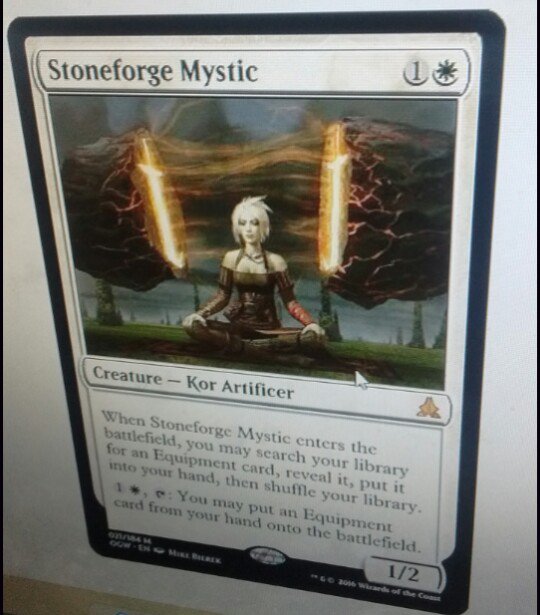
What About Stoneforge Mystic?

That's the million-dollar Modern question, and I don't have a definitive answer yet. If it weren't for that dang Grand Prix promo card, this unban wouldn't be in my top five list of probable changes. But the Grand Prix promo is very real, and I've already written extensively on what the reprint could mean.

On the one hand, the promo reprinting is very persuasive on its own, and I don't think the Mystic would be nearly as disastrous for Modern as many have foretold. On the other hand, she's Stoneforge Mystic and that's a very dangerous card. I've also tested the Twinblade deck (Splinter Twin plus Mystic) and it's pretty scary in a test environment.

There was an error retrieving a chart for Stoneforge Mystic

Given all the evidence and as a preview of next week's article, I think the promo reprinting plus the overall metagame context is just too persuasive, so I'm leaning towards a likely Mystic unbanning. It seems a little crazy, but Modern is a crazy format, and some of the signs are too strong to ignore.

That's all for the 2016 predictions, and I'll see everyone next week for even more banlist thoughts. I'm sure we'll get a lot of questions and commentary until then, so I'll try and address some of that (especially the banlist stuff) in next week's piece. Here's hoping for some cool Oath cards over the coming week!


Insider: Metrics – How to Measure Progress Toward Your Goals

Are you a Quiet Speculation member?

If not, now is a perfect time to join up! Our powerful tools, breaking-news analysis, and exclusive Discord channel will make sure you stay up to date and ahead of the curve.

Welcome back, readers! Today's article will focus on a somewhat confusing subject: metrics. No, not the system of measurement that everyone outside the US uses, but a system or standard of measurement.

The idea behind this article came about a few months ago when I was working on my LGS's business breakdown, which in turn became this article.

The store's owner, when discussing his perceived strengths and weaknesses, used somewhat vague arguments like, "we have the most competitive prices," or, "we have the most competitive player base." There's an obvious problem with such arguments. How do you define "most competitive?" When I asked him this exact question, I got a blank stare back.

To be fair, part of the reason many people use this type of amorphous statement is because what they're trying to measure is difficult to define. Thus a nice blanket statement is used to cover all the bases.

The problem with this approach is that by not defining a problem specifically, you have no way to track progression or digression from any goals related to said problem.

The idea of metrics is to come up with some concrete measurements that can actually be tracked. Then you can compare your performance over time to see how you're improving (or not improving).

Goal: To Make More Money Selling Magic Cards

Let's take an example and see if we can break it down to get an idea of how this works. Our aim is to end up with some metrics we can use to evaluate how successful we've been at achieving the goal.

Our "amorphous goal" will be simply to make more money selling Magic cards. This seems like a pretty obvious goal for any given store or financially-minded player.

There are a lot of different ways to accomplish this goal:

  • Sell a higher quantity of cards.
  • Sell at a higher profit margin.
  • Buy at a lower cost.
  • Sell more valuable cards (with the same profit margin).
  • Buy more liquid cards

Any one of the above avenues would lead to making more money selling Magic cards, but all take different approaches and some might use different metrics to evaluate how successful we are at accomplishing said goal.

Let's look at each one and discuss what metrics may be applied to gauge success.

Increase Quantity Sold

The obvious metric here is quantity of cards sold. This will be helpful if everything is the same price, but it won't be sufficient by itself.

If we sell 100 $1 cards in one month or five $25 cards in a month, our metric would imply the former was better, when in fact, from an overall monetary standpoint it wasn't. So you probably need to track the total value of cards sold, as opposed to a simple quantity.

Increase Profit Margin

The metric here would be to maximize the difference between your buy price and sell price, or spread. However, the problem with this is that while you have direct control over both prices for your specific store, the market itself really sets these prices.

What I mean by this is if you offer to buy a card at $1 but its market average is $100 you'll be unlikely to find any takers (and to be honest you'll run into quite a few people who will question your moral judgment).

Of course, real stores modify their prices to reflect the market value, so both you and your competitors will create a buy price that "evens out" over time. A store offering too high a price will quickly fill up their stock and drop the price, whereas stores offering too little won't get any in stock and will have to raise prices to fix that.

Sell Pricier Cards

This goal would also use a metric of quantity of cards sold, however, it would ignore cards below a certain value. The challenge here is defining "pricier" as it's almost as amorphous as "making more money." After all, money has different values in different places, and even within the US the cost of living can vary greatly---selling a hundred $5 cards in one place could be a great week, whereas somewhere else it won't even cover the rent.

Buy More Liquid Cards

This goes in the other direction by focusing on what you as a store acquire to resell to your player base. I've discussed before the importance of understanding your player base, both as a store or trader. We all have limited assets and every time you buy a card, you're forfeiting some of your current cash assets now to acquire additional cash assets in the future.

If that's confusing, think of it this way. You have $1200 cash and someone walks into your store and wants to sell their Unlimited Ancestral Recall, in beautiful shape. You verify it's real and check on Trader Tools to see the highest buy price is currently $1250. The owner is asking $1200.

There was an error retrieving a chart for Ancestral Recall

So you can buy it on the spot and make $50 at the least, but you'll have to ship the card off and you won't have any cash to pick up additional cards this week. You also know that none of your regular customers have any interest in buying an Ancestral Recall, by cash or trade-in. So while this transaction would net you at least $50, it comes at a steep opportunity cost because the card isn't liquid to you.

You're far better off holding your cash reserves to acquire cards your customers want, even if it means losing out on some profit. The risk of not having assets available when other options with a much higher profit potential come along is too great.

The other challenge with this metric is in defining a card's liquidity. Unfortunately, the metrics for card liquidity are incredibly hard to nail down. In fact, coming up with an equation or algorithm would likely make you a lot of money if it proved to be even remotely accurate. Sadly, I don't have a degree in economics, so I can't make any progress on that front.

However, a savvy store owner/trader does keep track of what has sold quickly and repeatedly in the past. An even better one tracks the trends of different formats' metagames to make educated predictions on future card prices (i.e. speculation).

So it's important to look for trends and patterns. I don't own a store, but I've had a lot of requests for various Modern staples over the past year. This leads me to believe Modern prices will likely experience a decent upsurge this year (and from what I've read from my fellow writers on here, I'm not the only one to think this way).

Because I've received these requests, I've made it a habit to target strong Modern staples in trade binders and keep track of my stock in a spreadsheet.

All too often I see people (including myself) fail to track data as well as they should. I'm pretty good about recording data when it comes to speculation targets, documenting everything in a spreadsheet. I'm less diligent when it comes to the number of requests for any given card, as I often fall back on the all-too-easily-forgotten "mental note."

I would suggest a separate spreadsheet to document the card name and date of each trade/sell request you receive. The larger your sample size, the more accurate your "demand estimates" will be, which ultimately will determine how likely you are to sell a given card.

Don't forget the price you're offering will play a major role. Ideally you'll want to keep the same price structure throughout the data gathering process. If you see your sales slump dramatically this obviously might have to take a back seat, but be careful not to make comparisons across the different pricing structures without adjustments.

Conclusion

It's absolutely critical to establish metrics when setting any sort of goal (whether Magic finance-related or personal). Hopefully this article has helped you review and consider not only how to word the goal, but how to track it to determine your progression.

Running Hot And Cold With Affinity In Cincinnati

Are you a Quiet Speculation member?

If not, now is a perfect time to join up! Our powerful tools, breaking-news analysis, and exclusive Discord channel will make sure you stay up to date and ahead of the curve.

For those who know me it will come as no surprise that I'm not that biggest fan of Modern.  Most of my success in competitive Magic comes from knowing the field and preparing for it.  In Modern, there are so many different decks that is impossible to prepare for them all.  With the SCG open in Cincinnati being Modern, I needed to suck it up and find something to play. I made the decision to either play a very fast aggressive deck or a combo a deck, as these decks require the least amount of metagaming to be good.

About two weeks before the tourney I had narrowed the field of decks down to Burn, Amulet Bloom, or Affinity.  From here I started looking at Modern as a whole. Recently there has been a rise in both Twin decks and Infect. This is bad news for Amulet Bloom.  Infect and Twin can both be too fast for Amulet, and Twin can sometimes just Blood Moon Amulet Bloom out of the match.

This narrowed my choices down to Burn or Affinity.  The choice between these two deck was going to be a tough one, as they both have their own merits.  So I did what I do when I am faced with a very hard choice, I asked my friend Forrest Ryan what I should do.  He told me winning in Modern was basically a coin flip and I should use a coin to figure out my deck choice.  Well, I didn't have a coin so I did the next best thing. I asked my girlfriend, Serena, to chose either A or B.  She chose A for Affinity, and there we had it. I would be lying if I said I wasn't really hoping she would choose A though.

From here it was a matter of finding the right list.  In recent history Grand Prix Pittsburgh had two almost identical Affinity decks in the top 8, so I decided to give the 2nd place list a try.  The maindeck was amazing, though I didn't really like the sideboard.  After a bit of testing and theory crafting, this is what I registered for the Cincinnati Open.

Affinity

Creatures

4 Ornithopter
2 Memnite
4 Vault Skirge
4 Steel Overseer
4 Signal Pest
4 Arcbound Ravager
2 Spellskite
3 Etched Champion

Spells

4 Galvanic Blast
4 Cranial Plating
4 Springleaf Drum
4 Mox Opal

Land

4 Darksteel Citadel
4 Glimmervoid
4 Blinkmoth Nexus
4 Inkmoth Nexus
1 Mountain

Sideboard

1 Dismember
1 Choke
1 Etched Champion
1 Relic of Progenitus
2 Stubborn Denial
3 Thoughtseize
1 Blood Moon
2 Ghirapur Aether Grid
2 Ancient Grudge
1 Whipflare

Day one was great! I finished the day at 8-1, with my one loss being to Gerry Thompson. I was going to go through each match, but that would mostly be a repetitive story of me drawing good hands in game one and in games two and/or three I played around their big hate spell and won. This is how most matches for Affinity go if you are winning.

Instead, I would like to go over why I wasn't winning on day two. At first I thought it was due to getting unlucky, as I was mulliganing far too often. It is easy to blame luck on losses, but I believe more often that when you get "unlucky" that there might be a reason for this. I started looking at what was going on, and realized I was boarding too many cards in for my more difficult matchups. The only two decks I beat in day two were Burn and Tron, where the boarding is very minimal. The other four matchups I feel like I over boarded. To explain what I mean, let's look at a few hands.

Hand 1

This hand is great! You get to play most of your hand on turn one and you have a big follow up on turn two. Even in a post board game this hand is most likely fast enough to get the job done even though it doesn't have any sideboard cards.

Hand 2

Another great hand and this time it has a Thoughtseize. This hand would require a very good hand from any opponent to beat.

Hand 3

This hand might be a bit less aggressive than the last hand, but it's also a bit more disruptive. I would be happier with the last two hands, but this hand is a keeper.

Hand 3

I think you can kind see where I am going with this now. This hand is a mulligan. While you have a ton of disruption, you are giving your opponent forever to beat you. The more sideboard cards that make it into your starting hand, the worse the hands get.

Luckily for us, Modern is a format where the sideboard cards can be very powerful and problematic for your opponents deck. If I start using more narrow and more powerful sideboard cards I will be able to board fewer cards in for each matchup. This will allow me to keep better hands, and the disruptive cards will be ones that my opponent has to deal with in order to win. The cards I'm looking at right now are Illness in the Ranks, Torpor Orb, Rule of Law, Pithing Needle and even something like Favor of the Mighty.

While Amulet Bloom won the Open I still feel like I made a good choice in Affinity, and if I make it to Charlotte this weekend I will be playing Affinity again. This time with a slightly better sideboard.

Once again thanks for reading!

Follow me on Twitter @conanhawk

Deck of the Week – BW Eldrazi

Are you a Quiet Speculation member?

If not, now is a perfect time to join up! Our powerful tools, breaking-news analysis, and exclusive Discord channel will make sure you stay up to date and ahead of the curve.

Welcome to 2016! Or, should I say, welcome to the Year of the Eldrazi! Cthulhu's brood has been assimilating the Modern masses for about a month now, starting with EternallyRamza's inconspicuous showing in an MTGO League on November 30 and culminating in Matthew Dilks' 10th place run at the recent StarCityGames Open in Cincinnati. Every online Modern community has gone totally insane over beating the deck, playing the deck, watching the deck, and (naturally) banning the deck, and Eldrazi staple prices have followed this hype train into the stratosphere. I decided to do an RG Titan Scapeshift "Deck of the Week" piece back inn a week where I almost did one on Bx Eldrazi, so I'm remedying that December oversight by kicking off 2016 with this much-deserved spotlight.

Blight Herder art

Thousands of words were written about Bx Eldrazi even before Dilks took the deck to a respectable tournament finish. This includes two SCG Select pieces, one by Grixis specialist Michael Majors and another by Bloom extraordinaire Chris VanMeter, video tech by Ari Lax, a foray into BR colors by Frank Lepore, and one of the fastest growing deck threads in MTGSalvation history. You'll want to check out all those sources if you're serious about this deck (and tap your savings account to afford all those overhyped and overpriced staples like Eye of Ugins!). Today, I have the advantage of writing about Bx Eldrazi after Dilks Top 16 performance, which gives us a proven starting point for a deck with a half dozen configurations.

[wp_ad_camp_1]

The List

Taken as a whole, the Bx Eldrazi strategy spans every possible two and three-colored combination. I mean that literally: I've seen someone on some forum or another propose all of those color pairings when brainstorming new Eldrazi setups. We also saw this in the closing month of 2015, where Eldrazi occupied around 3.5%-4% of the MTGO metagame but was split almost evenly between red, white, and mono-black variants (with some oddballs in between).

The jury is still out on which combination works best, but Matthew Dilks' 10th place list at the Cincinnati Open makes a convincing case for black-white.

BW Eldrazi, by Matthew Dilks (10th, SCG Cincinnati 1/3/2015)

Creatures

4 Blight Herder
4 Oblivion Sower
4 Wasteland Strangler
1 Ulamog, the Ceaseless Hunger
1 Spellskite

Artifacts

2 Expedition Map
4 Relic of Progenitus

Instants

4 Path to Exile
1 Slaughter Pact

Planeswalkers

1 Liliana of the Veil

Sorceries

4 Inquisition of Kozilek
4 Lingering Souls
1 Thoughtseize

Lands

2 Plains
2 Swamp
1 Bojuka Bog
1 Cavern of Souls
4 Eldrazi Temple
4 Ghost Quarter
2 Godless Shrine
4 Marsh Flats
1 Vault of the Archangel
2 Eye of Ugin
2 Urborg, Tomb of Yawgmoth

Sideboard

1 Crucible Of Worlds
2 Engineered Explosives
2 Stony Silence
2 Celestial Purge
2 Disenchant
1 Slaughter Pact
1 Liliana of the Veil
1 Duress
3 Timely Reinforcements

Cincinnati also showcased a Mono-Black Eldrazi list as piloted by friends Jacob Baugh and Jack Fogle. Baugh and Fogle shared Dilks' gameplan and core, but their X-3 performance doesn't compare favorably to Dilks' 10th place finish. Three datapoints are hardly enough to close the case on choosing a second Eldrazi color, but I'm a results-oriented guy and favor the BW approach based on Dilks' performance in a diverse metagame.

The Strategy

BW Eldrazi is fundamentally a midrange strategy, albeit with ramp enhancements. This puts it more in the BGx Midrange family than in the RG Tron and Amulet Bloom class, although it certainly borrows elements from the latter. Dilks' list runs only five maindeck discard spells, but online builds have run as many as 6-7. Add in the 5+ maindecked removal options, a playset of Tron-esque Relic of Progenitus, plus the Abzan staple of Lingering Souls and a sideboard that looks lifted from Willy Edel, and you share almost half of your spells with those traditional BGx relatives. Wasteland Strangler is a true midrange monster, deploying a hard-hitting body as early as turn two and nuking an enemy creature along the way. Like Jund and Abzan, BW Eldrazi disrupts early and clears a path for threats. But unlike the midrange mainstays, the Eldrazi threats get ramped out ahead of the curve off a hyperefficient manabase and some pushed, mid-mana creatures.

Eldrazi TempleBGx mages get Tarmogoyf, Tasigur, the Golden Fang, and Siege Rhino. The Eldrazi hordes get, believe it or not, upgraded versions of these vanilla threats in Blight Herder and Oblivion Sower. Using combinations of Eldrazi Temple, Urborg, Tomb of Yawgmoth, and Eye of Ugin, BW Eldrazi can easily cast these seemingly "expensive" critters as early as turn three. Relic, Path, and  opposing delve effects ensure you have fuel for your Eldrazi processors. In effect, this emulates Tron's Wurmcoil Engine or Karn Liberated ramp plan, but with a midrange angle instead of straight ramp.
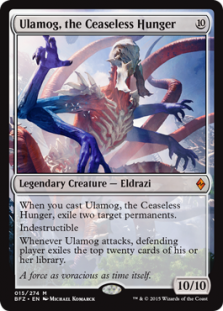
Further differentiating the newcomer from Tron, BW Eldrazi's lands are also much more resilient to targeted destruction. Take the omnipresent Fulminator Mage/Kolaghan's Command line. Urzatron depends on a specific configuration of lands, which Fulminator is happy to tear apart. By contrast, the Eldrazitron works in a half dozen permutations, and because your deck isn't too dependent on its assembly to begin with, sniping individual pieces rarely stops you for long. This gives you an extra edge in Games 2-3, where most players are prepared for Tron ramping but not for the hybrid midrange-ramp approach in Eldrazi.

Ulamog the ceaseless hungerThis manabase enables a mid to late-game transition that further distinguishes BW Eldrazi from other midrange decks. Eye's tutoring, coupled with Sower's obscene mana-ramp, gives you a degree of inevitability that Tarmogoyf and his crew can't match. Don't have an Eye? Don't worry! Maps will get you fixed up, as will cantripping your excess Relics. Once you get the Eye online, Ulamog, the Ceaseless Hunger sets a new inevitability standard, laughing at the the plodding manland Plan Bs in Jund and Abzan. I've seen Ulamog rumble into play as early as turn five off the turn three Sower and turn four Eye. Even a relatively late turn nine Ulamog is a degree of closure the fairer midrange decks just can't replicate.
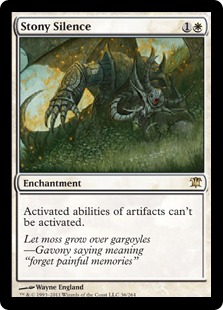
Going Orzhov

Speaking to the BW pairing itself, white pulls its weight in two areas. First, it fixes otherwise bad matchups. Affinity is a Game 1 mess and Stony SilenceStony Silence, coupled with pressure, is a time-honored solution to that problem. Timely Reinforcements also goes a long way to improving the Burn matchup. Other colors don't give options that improve both of these problematic contests, let alone the best card in Modern (Silence) for resolving a matchup you can't afford to punt in big tournaments. White's second function is to bolster the deck's midrange option with Souls and Path to Exile. Mono-black and black-red Eldrazi don't lack for removal alternatives to Path, but their removal doesn't fuel processors and doesn't hit big dudes that can compete on the ground with our army. Those other colors also can't match Souls for its sheer grindiness and as an added anti-aggro bullet.
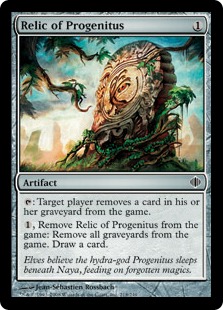
Remember, this is a midrange deck that wants to prey on other midrange decks. Just like you bring Abzan (with its white splash) and not Jund (with red) to trump opposing midrangers, so too do you make a similar call with Eldrazi.

The Matchups

If you aren't hammering Jund, Abzan, and Grixis decks into the floor with Eldrazi, you're doing something wrong. In my testing and in watching the deck in action, these matchups felt completely unfair, as if Eldrazi were on an entirely different play-axis than the archetypal fair decks of Modern. URx Twin is also surprisingly easily, especially if you are accustomed to the Twin vs. Tron/Amulet Bloom matchup which heavily favors Deceiver Exarch's. There are a few factors at play in these lopsided contests, and I want to highlight some important themes here so you can better understand where this deck is picking up its wins.

  • Oblivion SowerGoing bigger
    Tarmogoyf comes down on turn two as a 4/5. Blight Herder also comes down on turn three as a 4/5, but with a trio of 1/1 chumpblockers that double as one-shot mana dorks. Pia and Kiran Nalaar drop on turn four in Grixis, transitioning into the midgame with a small airforce and extra burn. Eldrazi slams Oblivion Sower instead, making the jump to lategame hyperspeed and setting Eldrazi up for a turn five Ulamog. These are just two examples where BW Eldrazi goes too big, too fast. Fairer Modern decks have historically struggled when decks try to go over the top, and BW Eldrazi is the next chapter in that story.
  • Blanking interaction
    Neither Decay nor Inquisition of Kozilek hit any of your big beatsticks. Liliana gets shut down by a lone Herder, and you aren't even running enough real artifacts for Kolaghan's Command to open a two-for-one. In the URx matchups, countermagic is useless at stopping the on-cast Eldrazi abilities, which lets you slug through even the thickest screen of Cryptic Commands and Snapcaster Mages. As for the omnipresent Lightning Bolt, unless the opponent wants to blow up Spirits or break even on your Strangler two-for-one, the Bolt becomes Lava Spike throughout the match.
  • relic of progenitusExiling graveyards
    Most of Modern's fair decks are heavily dependent on graveyards. Abzan uses it for Souls. Jund and Grixis uses it for Command. Both BGx decks use it for Tarmogoyf and Scavenging Ooze, and all of the above need full graveyards to maximize Tasigur's delve and his recursion. It's even worse for Grixis decks, which need the yard for Snapcaster shenanigans, Jace, Vryn's Prodigy, and their own Commands. Remove graveyards from the picture and you demote Oozes to Grizzly Bears and Snapcaster Mages to Coral Merfolk.
  • The late-game countdown
    We need to understand the Eldrazi countdown in two different ways. First, Eldrazi gets the clock ticking in a hurry with Oblivion Sower ramp and the manabase's natural output. While some decks think they are in the early to mid-game shift, Eldrazi is already starting its late-game buildup. Second, once that late-game arrives, it's only a matter of time before Eldrazi lands something unanswerable. Ulamog is an unfair fellow. Command into a recurred Snapcaster into another Command feels like Portal Magic by comparison.

Strong matchups aside, BW Eldrazi has a few weaknesses you'll need to be aware of if you take this deck into the field. Affinity is downright nasty in Game 1, only improving slightly in Game 2 by virtue of those invaluable Stony Silences. Burn, Merfolk, Infect, Tron, and Amulet Bloom pose similar issues by overwhelming or ignoring spot removal, laughing at one-for-one discard, and waving off your big turns 3-5 plays as they try to close out the game in a hurry. We're playing Abzan elements, so we shouldn't be surprised that Path isn't what you want to be doing against turn one Glistener Elf, Noble Hierarch, or Goblin Guide. We're also not even playing all the Abzan elements, so we don't have the anti-Burn stabilizing power we see in Rhino and Ooze.

Keep these strengths and weaknesses in mind when preparing for other matchups. For example, our midrange elements are just as bad against RG Tron as they are when wielded by Abzan and Jund mages. But our ramp plan gives us a racing option BGx can't leverage, so we can slot in more Ghost Quarters to round out that matchup and bring us closer to even. Testing will help you figure out where these trims and decisions need to happen.

A Bright Future for BW Eldrazi

I fully expect to see BW Eldrazi take the Tier 2 stage over the next few months. This deck has all the trappings of a Modern powerhouse and although I don't think it's as crazy as many online believe, I do believe its inherent strengths ensure it is well-positioned in this current metagame. What experiences do you have with the deck? Where do you place it in the metagame and where do you see it going from here? I'm pumped to chat more about our new Eldrazi overlords in the comments and eager to see where the Great Old Ones go next.

I'll be back a few more times this week as we iron out our content schedule and get some new features rolled out. We'll likely be running "Deck of the Week" on Tuesdays in the future, with a metagame-themed piece on Wednesday and Trevor and Jordan returning to their Thursday/Friday slots. Stay tuned for more as we dig into 2016 and another awesome year of Modern!


Correction (1/4): An earlier version of this article credited a December 10th League appearance as Bx Eldrazi's first showing. Its first appearance was actually on November 30. This has been updated in the opening paragraph.

Insider: Buyouts & The Arrival of Modern Season

Are you a Quiet Speculation member?

If not, now is a perfect time to join up! Our powerful tools, breaking-news analysis, and exclusive Discord channel will make sure you stay up to date and ahead of the curve.

Greetings, Insiders.

Modern Season is back in full swing. What we've been discussing for months has finally arrived with some wild market movement and dramatic price spikes. This is hardly surprising---in fact, I was beginning to wonder when it would happen. As it turns out some ambitious “financiers” out there have shot the starting gun.

Everywhere we turn, on social media, the Insider forums or Reddit, we read about another buyout in progress. Just like old times, right? Whether justified or not, certain cards are flying off the digital inventory shelves.

Let’s take a look at a few of the most recent ones. Maybe from these we can determine where the hype and buyout train is headed next.

Eldrazi Lands

There was an error retrieving a chart for Eldrazi Temple
There was an error retrieving a chart for Eye of Ugin

If I’m not mistaken, fellow QS writer Sheridan Lardner and others on the Insider forums have been discussing these for weeks. The B/x Eldrazi lists grew in popularity quite rapidly, and they're shaping up to be a viable (and fun) addition to the Modern metagame.

If you haven’t familiarized yourself with the archetype by now, here's a sample decklist:

Untitled Deck

Creatures

4 Blight Herder
4 Oblivion Sower
2 Spellskite
1 Ulamog, the Ceaseless Hunger
4 Wasteland Strangler

Spells

4 Inquisition of Kozilek
4 Lingering Souls
2 Thoughtseize
4 Path to Exile
2 Expedition Map
4 Relic of Progenitus

Lands

1 Bojuka Bog
1 Cavern of Souls
4 Eldrazi Temple
2 Eye of Ugin
4 Ghost Quarter
2 Godless Shrine
4 Marsh Flats
2 Plains
2 Swamp
2 Urborg, Tomb of Yawgmoth
1 Vault of the Archangel

Sideboard

2 Celestial Purge
2 Disenchant
2 Duress
2 Rest for the Weary
1 Secure the Wastes
3 Surgical Extraction
3 Timely Reinforcements

This is just one of several lists running around on MTGO. It seems the deck can thrive with a multitude of different shells and color combinations.

Comparatively speaking, these were some of the buyouts that actually made sense. They had a more legitimate justification. The Eldrazi decks have been putting up solid finishes for the past few weeks and warranted attention---these cards finally ended up seeing a predictable price increase.

They're not likely to maintain their current price tag, but in the meantime anyone who bought them in the weeks prior has certainly seen considerable gains. These cards will likely never go back down to their original prices and it will be good to make a mental note of where they end up in the coming weeks.

Gaddock Teeg

There was an error retrieving a chart for Gaddock Teeg

Here's an instance of a card that wasn't so predictable and quite frankly came out of left field. There doesn’t seem to be a clear cut justification as to why this card spiked so dramatically.

I consider myself someone who monitors the Modern metagame closely, and I haven't seen Gaddock Teeg putting up notable finishes. According to MTGTop8, there are a negligible 26 decklists in high-end finishes featuring this card, dating all the way back to 2011.

It reminds me Teferi, Mage of Zhalfir which similarly increased quite a bit for a short period of time. Gaddock Teeg might have some EDH applications or something along those lines---but based on the amount of play it sees in Modern I have to think it will come crashing back down in short order. I strongly suggest selling these if you still can.

Wasteland Strangler

There was an error retrieving a chart for Wasteland Strangler

Foils of this card disappeared quickly after the other Eldrazi counterparts were bought up. Many felt it was the next logical step in procuring cards from that deck in an attempt to drive up prices. Well, the verdict is still out on Strangler, and its new price may not last considering it’s still an in-print Battle for Zendikar rare.

While this was seemingly justified by the hype surrounding the new Eldrazi lists, I just don’t know how any respectable financier looks at those lists and glosses over older cards with far less supply than the Strangler. Seems a little odd to me.

In any event, Strangler is now sitting at a new price of $10-12 for pack foils, and will likely start taking a downward turn as more and more people decide to cash out into this frantic hype session. If you have them, I would be rid of them.

Phyrexian Crusader

There was an error retrieving a chart for Phyrexian Crusader

On the back of Tom Ross’s SCG Premium article and a recent MOCS finish, B/G Infect is now on the map. Subsequently we have our first buyout target from that deck in Phyrexian Crusader foils. It’s uncertain if this will continue, but with non-foils almost as good a target I suspect they will start heading north as well.

Other candidates like Abrupt Decay and Plague Stinger certainly seem like they could see residual effects from interest in this new version of Infect.

Abrupt Decay coming back onto everyone’s radar certainly isn’t surprising. I’d expect that card to increase normally since it’s a staple in Modern. It may have cooled off recently, but with another new deck promoting interest, things could be good for anyone still holding copies in inventory.

I’d even throw Might of Old Krosa back into the mix. Why not.

Glen Elendra Archmage

There was an error retrieving a chart for Glen Elendra Archmage

Glen Elendra Archmage has seen some recent movement on stocks sites, steadily increasing before finally doubling up in price. Now sitting anywhere from $16-20, the card at least gave some signs before its upward trend began.

The card is fairly fringe in Modern---but the caveat is there have been more sightings recently. I don’t know if this intense price spike is really justified considering its overall play percentage in the format. But it has been a fairly consistent card over the years, and maybe the time has come again when it will command a premium price.

I think Glen Elendra Archmage is still too fringe to warrant the price tag, and I’m fully expecting it to cool off some like Gaddock Teeg. It does see more play than Teeg, but not by a large margin, and a comparison to other staples raises some questions. Like, how is this now more than Abrupt Decay? Perhaps its Modern Masters printing didn’t add as much new supply as we thought?

~

That about covers this latest round of hysteria. As to where this train could be heading next, I already have some potential cards on the radar---but frankly it’s just about any card in Modern at this point. The buyouts so far have been fairly erratic. That leaves a whole lot of guessing, and forces us to make quick decisions in the heat of the moment.

As for what I've come up with, I've been looking through decklists and have a few suggestions to consider:

I’ll keep digging and share anything I find. At this point all of Modern is up for grabs, and it will be hard to pinpoint what will start trending or get bought out. Hopefully this helps keep everyone informed here at QS. I would urge you to continue to check the QS Insider forums---they're invaluable and can be used to exchange information much more quickly.

In the meantime, enjoy the Oath of the Gatewatch spoilers. A few other writers and I are putting up spoiler articles on the free side, and I'd love to discuss potential good pickups. Whether you listen to the QS Cast or chat with us on the Insider forums, I look forward to it.

- Chaz @ChazVMTG

Insider: Taking a Closer Look at Pauper

Are you a Quiet Speculation member?

If not, now is a perfect time to join up! Our powerful tools, breaking-news analysis, and exclusive Discord channel will make sure you stay up to date and ahead of the curve.

A little over a month ago, I wrote a piece highlighting some good Pauper pickups in light of the launch of leagues. The decks I highlighted were those seeing success in Daily Events and ones that I would expect to play against when I battled. With a healthy number of league decklists published now, we have even more to go off of.

For 2016, it has been announced that Magic Online will be offering a flashback draft or Cube at any given point of the year. Flashback drafts significantly impact the price of even rares on MTGO, so you can imagine this will change our Pauper investment strategy. Basically, it means long-term specs have to be at their floor or only available in sets that won't get flashed back. Think Masters Edition or anything pre-Eighth Edition.

Alternatively, investing in a position while its respective flashback draft is occurring will allow you to turn a profit when the flashback format changes and supply decreases.

Let's Talk Decks!

Mono-White Tokens

This deck has been around for a long time on and off. It's extremely linear, and has lopsided matchups in one way or the other. It tends to be very good against blue decks, especially with the common printing of Battle Screech in Vintage Masters, which is why a resurgence makes sense.

Mono-White Tokens

Creatures

4 Icatian Javelineers
4 Squadron Hawk
4 Suture Priest
1 Veteran Armorer

Spells

4 Battle Screech
3 Gather the Townsfolk
2 Triplicate Spirits
4 Guardians' Pledge
4 Raise the Alarm
4 Ramosian Rally
3 Journey to Nowhere
2 Lumithread Field

Lands

19 Plains
2 Quicksand

Sideboard

3 Dust to Dust
2 Holy Light
2 Obsidian Acolyte
2 Patrician's Scorn
3 Prismatic Strands
1 Relic of Progenitus
2 Standard Bearer

You'll see some variation from list to list, with some featuring Masques block rebels, and others focusing on tokens like this one.

The reason that I chose to highlight this particular list is the inclusion of Ramosian Rally. The card doesn't show up super often, but the very limited release of Mercadian Masques on MTGO makes it worth about 2 tix. It's not a terribly safe bet given low demand, but if you find yourself in a Masques draft or able to get some cheap copies it's worth paying attention to.

Squadron Hawk is a dirt-cheap card that will always be a four-of in this deck and also shows up in fringe Modern decks. It's unclear how far they'll get through the Modern sets this year, but if things progress similar to the first six months, we'll hit M11 around the end of the year.

The sideboard contains some cards worth paying attention to in Standard Bearer, Prismatic Strands and Obsidian Acolyte. All of these cards are worth a couple tix or more, and are well above average for Pauper sideboard options.

These cards are safe from flashback reprints this year, as they predate the Modern card pool. If I wanted to outright speculate on any of them, it would be Prismatic Strands, although all three are worth considering.

Dimir Decks

Dimir decks have been taking quite a lot of 5-0 slots in Pauper leagues. The deck divides into two major camps, with the first version relying largely on creatures:

Dimir Delver

Creatures

4 Delver of Secrets
4 Gurmag Angler
1 Stormbound Geist
2 Sultai Scavenger

Spells

2 Ponder
4 Accumulated Knowledge
2 Agony Warp
4 Brainstorm
4 Counterspell
1 Deprive
2 Disfigure
2 Dispel
2 Ghastly Demise
4 Mental Note
4 Thought Scour

Lands

4 Dimir Guildgate
4 Dismal Backwater
9 Island
1 Swamp

Sideboard

2 Stormbound Geist
1 Deprive
3 Chainer's Edict
3 Duress
1 Mana Leak
2 Negate
1 Relic of Progenitus
2 Shrivel

And then there's a deck that firmly commits to the control role in every matchup:

Dimir Control

Creatures

3 Sea Gate Oracle

Spells

2 Chainer's Edict
2 Evincar's Justice
1 Capsize
4 Counterspell
1 Crypt Incursion
3 Diabolic Edict
1 Echoing Decay
3 False Summoning
2 Mana Leak
4 Mystical Teachings
4 Think Twice
2 Victim of Night
3 Pristine Talisman
2 Curse of the Bloody Tome

Lands

2 Bojuka Bog
4 Dimir Aqueduct
4 Dismal Backwater
7 Island
4 Radiant Fountain
3 Swamp

Sideboard

1 Crypt Incursion
1 Evincar's Justice
1 Annul
1 Dispel
2 Duress
1 Echoing Truth
1 Nausea
4 Negate
3 Relic of Progenitus

To be frank, there's really not much in the way of exciting targets from these decks. The standout is going to be Accumulated Knowledge.

AK is a card with very low supply given it only appeared in Nemesis, and as such it's worth over 4 tix. Players only play zero or four copies, though I'm not in love with it as a spec. It just isn't featured with the consistency necessary to be worth the risk of investment.

Esper Combo

They may have banned Temporal Fissure, but a very boring combo deck managed to survive in its wake. For as much as I dislike this deck, I can't argue that it puts up a lot of 5-0 finishes.

Esper Combo

Creatures

4 Cloud of Faeries
2 Mnemonic Wall
4 Mulldrifter
3 Nightscape Familiar
1 Sage's Row Denizen
3 Sea Gate Oracle
4 Sunscape Familiar

Spells

4 Compulsive Research
1 Foresee
4 Preordain
3 Ghostly Flicker
1 Reaping the Graves
4 Snap

Lands

3 Azorius Chancery
3 Dimir Aqueduct
4 Evolving Wilds
6 Island
2 Plains
2 Swamp
2 Terramorphic Expanse

Sideboard

2 Circle of Protection Green
2 Circle of Protection Red
2 Disfigure
1 Divine Offering
4 Hydroblast
2 Lone Missionary
2 Repeal

Nightscape Familiar took a huge hit with the Vintage Masters printing, but Sunscape Familiar is sitting solidly at 4 tix. If you bought these in November, you'd have already doubled up.

The presence of Snap, Hydroblast, and Sunscape Familiar make this among the most expensive Pauper decks, though if you look over league results it's arguably the best deck in the format. All of these cards are great positions given that this is the deck most competitive players will be drawn to, and they fall outside of the scheduled flashback drafts for 2016.

More on Delver

I covered Delver last time, though now there are a bunch of league lists to look at. A significant number of Dazes have been showing up lately, which is interesting. The card is great in matchups where mana efficiency is important, but it falls short against grindy decks.

Daze is stupid expensive on Magic Online, and I can only hope that something is done soon to combat this. In the meantime, the card will absolutely only increase in value, though I don't recommend it as a pickup unless you're trying to play it.

For a more budget-friendly, mirror-breaking version that's also advantaged against the grindy decks that are supposed to beat Delver, here's the list I recently used to 5-0 a league:

Pauper Delver

Creatures

4 Delver of Secrets
4 Faerie Miscreant
4 Spellstutter Sprite
4 Spire Golem

Spells

4 Ponder
4 Preordain
4 Think Twice
2 Dispel
2 Gush
2 Echoing Truth
4 Counterspell
2 Exclude
1 Serrated Arrows

Lands

15 Island
4 Quicksand

Sideboard

2 Vapor Snag
1 Echoing Truth
4 Hydroblast
2 Relic of Progenitus
3 Stormbound Geist
2 Curse of Chains
1 Serrated Arrows

I've been against playing Cloud of Faeries for a very long time. It's by far the worst card in most lists, and serves only as an enabler in a deck that isn't trying to crutch on synergy.

Faerie Miscreant was something I tried initially out of curiosity, and I've been very impressed. With Ponder and Preordain it's really easy to chain Miscreants, and I've drawn way more Miscreant cards than I ever expected to. You can also use them to turn Echoing Truth into a draw spell in a pinch.

Serrated Arrows isn't nearly as popular in Pauper as it once was, but it's currently worth around five tickets. It's great against Delver decks and most of the odd creature decks in the format. It has been steadily increasing in price lately, so it's worth considering, but I wouldn't put it on my short list.

At the time of this writing there are over 800 people in the Pauper league. That's around 80% of the Standard and Modern leagues. If nothing else, it's a really fun format with a low barrier to entry that's more accessible than ever. Invest properly and you can definitely make some money from the format as well.

Thanks for reading.

-Ryan Overturf
@RyanOverdrive on Twitter

Insider: QS Cast 17 – OGW Keeps Getting Better

Are you a Quiet Speculation member?

If not, now is a perfect time to join up! Our powerful tools, breaking-news analysis, and exclusive Discord channel will make sure you stay up to date and ahead of the curve.

Play

This week, the ‘cast talks all about the new OGW spoilers. It seems like all of the good stuff that should have been in BFZ got pushed to OGW, as the set gets more interesting with every new colorless card.

Want to leave us a message or tweet to us? All of our contact info is here.

Douglas Linn

Doug Linn has been playing Magic since 1996 and has had a keen interest in Legacy and Modern. By keeping up closely with emerging trends in the field, Doug is able to predict what cards to buy and when to sell them for a substantial profit. Since the Eternal market follows a routine boom-bust cycle, the time to buy and sell short-term speculative investments is often a narrow window. Because Eternal cards often spike in value once people know why they are good, it is essential for a trader to be connected to the format to get great buys before anyone else. Outside of Magic, Doug is an attorney in the state of Ohio.  Doug is a founding member of Quiet Speculation, and brings with him a tremendous amount of business savvy.

View More By Douglas Linn

Posted in Free Insider, QS CastLeave a Comment on Insider: QS Cast 17 – OGW Keeps Getting Better

Have you joined the Quiet Speculation Discord?

If you haven't, you're leaving value on the table! Join our community of experts, enthusiasts, entertainers, and educators and enjoy exclusive podcasts, questions asked and answered, trades, sales, and everything else Discord has to offer.

Want to create content with Quiet Speculation?

All you need to succeed is a passion for Magic: The Gathering, and the ability to write coherently. Share your knowledge of MTG and how you leverage it to win games, get value from your cards – or even turn a profit.

Insider: Evaluating Oath Spoilers (Part 2)

Are you a Quiet Speculation member?

If not, now is a perfect time to join up! Our powerful tools, breaking-news analysis, and exclusive Discord channel will make sure you stay up to date and ahead of the curve.

Magic finance sometimes reminds me of the wild west. It’s not like it was before the internet or smart phones, but more like overlords moving into an area and taking it over.

That's how I feel every time a seemingly random buyout happens. This week’s overtaken territory is Gaddock Teeg. The internet is nearly sold out of the fringe Modern player. This is the kind of card you think you have a bunch of extras of in a box somewhere, but when you go looking for them they've elusively disappeared.

There was an error retrieving a chart for Gaddock Teeg

Some vendors managed to dig a couple out, but at the time of writing this, I can only see maybe a dozen copies for vastly inflated prices.

I bring this up for a couple reasons. First of all, knowledge is power. Second, Magic finance is in an era of opportunities for profit, so do some research and watch the trends. Finally, there has to be some reason behind this buyout, which leads me to my next topic.

stoneforge_oath

December Fools Day joke? End of the year prank? The Spaniards brought a gag gift to the Christmas spoiler exchange this year. If you’re interested, here’s the originating web site which you can Google-translate if you want to see where it started.

My first thought was that the Gaddock Teeg buyout was initiated due to the possibility of a Stoneforge reprint. There have already been rumors about an unbanning that surfaced mostly based on the announcement of the GP promo for next year. The price of our friendly neighborhood equipment dealer is heading upwards, and the spoiler trickery didn’t slow its ascent much, if at all.

There was an error retrieving a chart for Stoneforge Mystic

More (Real) Spoilers

So if Stoneforge was a hoax, what’s the final mythic in Oath of the Gatewatch?

linvalathepreserver

Linvala? Really? What about Emrakul or Jace? Both of those guys are supposed to be there. Jace is all over the art in this set as well as the story. Where is he? Did he run away from Zendikar instead of helping fight the Eldrazi? If so, he should have been left off of this sweet Game Day playmat.

oath game day playmat

Although Linvala is a really cool character, and her art is amazing, I’m still left questioning her inclusion along with some of the other mythic choices. We would have been better served by a Linvala, Keeper of Silence reprint to bring down the ludicrous $35 price tag. The card we got is definitely interesting though. That art is truly stunning and it’s paired with some interesting abilities.

Linvala reminds me of a creature version of Timely Reinforcements and you likely want to play her similarly. She seems like a decent control finisher. Set up in the early game by keeping the board clear, and then follow up with Linvala and the angel friend she brings to the party, all while gaining some of the lost life right back. That’s a solid combination of abilities.

Our Preserver here has some tough competition with the Dragonlords, but her unique combination of abilities might secure her spot in the metagame. Keep an eye on foil copies of this card because they should be quite valuable.

Call the Gatewatch

callthegatewatch

What a breathtaking new addition to the tutor team. This prestigious staff includes many banned faculty members from the Modern school such as Birthing Pod, Green Sun's Zenith, and the previously mentioned Stoneforge Mystic.

Similar to Dreadbore, Hero's Downfall and Ruinous Path, this is one of those "planeswalker-specific" cards that was probably bound to get printed eventually.

Like the banned cards above, Call the Gatewatch also has narrow search parameters. But planeswalkers rank among the most powerful, high-impact cards out there, and plenty are worth tutoring up. Let's look at the potential targets in Standard:

We also have the newly added Nissa, Voice of Zendikar and Chandra, Flamecaller that I talked about last week. There are some powerful targets for Call in Standard and we'll have even more options over the next year to consider.

My first thought is to build around this card. In the past, planeswalker control decks have been a competitive part of the metagame and this spell seems suited to reconstruct that same archetype once again. Another avenue would be to go all-in on Gideon, Ally of Zendikar, and just set our deck up to cast that card turn four every game. That doesn't sound half-bad either.

The stock options on this rare should be solid as well. Cube and Commander players will want their foil copies and some players will hold onto the card just for the sweet art. Assuming this tutor sees play in Standard, there may be opportunity to make money here, just like I suggested for Nissa last week.

Goblin Dark-Dwellers

goblindarkdwellerspromo

Dubbed Snapcaster Goblin by the internet hivemind, this Buy-a-Box Promo definitely has potential. I find it intriguing that we're seeing a shift of various abilities from blue to red, with Abbot of Keral Keep, Dualcaster Mage, and now Goblin Dark Dwellers. I couldn’t be more excited. These cave creatures are bringing us some valuable gems from the depths of the mountain that are filled with wonder and possibilities.

The dark goblins should find great success once they climb out of the spoiler shadows and into our collections. We have some pretty great cards to flash back right now like Exquisite Firecraft, Hordeling Outburst or Kolaghan's Command, to name just a few.

This card might even be powerful enough for Modern. Jund in particular has typically played a high-end value card like this and if the meta is right for that deck, I think the power level is there to back up the inclusion. Goblin Dark-Dwellers is definitely on my short list of cards I want to brew with from this set.

Reflector Mage

reflectormage

Some time has passed since the last time we had a Man-o'-War in Standard. Reflector Mage is definitely an upgrade from the M12 Aether Adept. As a bonus for paying white mana, we get an additional toughness and a temporary Meddling Mage ability.

I don’t think we can ask for much more on a creature like this, especially at uncommon. If there's a Standard deck that's interested in this kind of tempo play, Reflector Mage seems like it offers just enough value to be interesting.

Jori En, Ruin Diver

Jori En, Ruin Diver

Let those eyes peer into your soul for a mere moment and ponder what she sees. I bet she is showing you her future as a Commander all star. She may be whispering possibilities of red-blue tempo and luring you into her den filled with dreams of two spells every turn.

Is it too much to ask for her to cost two mana? Either way, I think she's on the edge of playability. She will probably jump on a casual team but maybe there’s room for her in Standard. I would definitely pick up cheap copies of her to stick in your spec box though.

Ayli, Eternal Pilgrim

aylieternalpilgrim

Stoneforge Mystic is in the set after all! We shouldn’t have faltered for a second about that banned card being in Standard again because we already have another version of her right in front of our eyes. Unlike Jori En, it seems the powers that be here have decreed all these abilities get to come packaged on a two-drop.

The problem with this future planeswalker is that her abilities are so unique that it’s hard to find a use for them. It’s doubtful there will be a life gain deck in Standard. Soul Sisters was a onetime thing and our tools right now are quite underwhelming to say the least.

We have the seldom-played-in-Limited crew of Defiant Bloodlord, Kalastria Nightwatch, Malakir Familiar and Nirkana Assassin. The only two that are semi-decent are Serene Steward and Bloodbond Vampire but signing a deck list with those creatures on it is like volunteering your defeat in advance.

Sadly, Karlov of the Ghost Council is only a Commander card. That’s a card that would have been interesting to see in Standard. Don’t worry though, if for some reason we do get the tools, all the black mages will have Tainted Remedy to sideboard against us for laughs.

We might see Ayli get some use as an additional sacrifice outlet for Rally the Ancestors decks or just as a solid value creature in any of the black-white decks like Warriors or Esper Tokens. She is definitely one we want to keep our eye on once we have the full spoiler, and over the next year.

Sea Gate Wreckage

seagatewreckage

Start stockpiling your Sea Gate Wreckage into one huge pile of rocks in the corner because this colorless land will be scattered throughout all sorts of decks. Many different types of player will want this card for multiple reasons. There will be a price ceiling due to the second wave of Expeditions, but a colorless land that can draw a card has only happened once before, and Scrying Sheets is still $5 and the foil is $20.

That land doesn’t always draw you a card either like the new one from Oath. Just like Reliquary Tower, this land will be shoved into lots of decks, so make sure your pile includes foils because those will be desirable as well.

Devoid Aggro

colorless_crew

Finally, we have what I’ve dubbed “the Colorless Crew,” fleshing out the devoid mechanic a little bit more. Flayer Drone in particular has the appearance of a build-around-me card, but Eldrazi Mimic and Ruins of Oran Rief to go with them are quite intriguing. It’s uncertain whether this archetype of Devoid Aggro will actually be playable, but at this point it seems more likely than Allies.

We know Catacomb Sifter is good but Eldrazi Skyspawner and Forerunner of Slaughter saw a brief moment in the sun as well. Devoid will likely turn into another generic aggro deck that wasn’t good enough, but we are getting some tools that hint at the deck being viable. If nothing else, these cards will make for some sweet Limited decks.

To finish up, the flavor and design of this set, like Battle for Zendikar before it, are a home run in my opinion. Eldrazi are the best villains, the Avengers of the Magic world are summoned to defeat them, and we get to go on way better expeditions than the last time around!

Think about it. Last time we got sweet ones like Ior Ruin Expedition and Khalni Heart Expedition---this time we get Wasteland and Ancient Tomb!

Until next time,
Unleash the Force of the Gatewatch!

Mike Lanigan
MtgJedi on Twitter
Jedicouncilman23@gmail.com

Want Prices?

Browse thousands of prices with the first and most comprehensive MTG Finance tool around.


Trader Tools lists both buylist and retail prices for every MTG card, going back a decade.

Quiet Speculation