Are you a Quiet Speculation member?
If not, now is a perfect time to join up! Our powerful tools, breaking-news analysis, and exclusive Discord channel will make sure you stay up to date and ahead of the curve.
Editor's note: Clinton Whitehurst is an experienced Bubble Hulk pilot with recent PPTQ and RPTQ Top 8s on the deck. Clinton has also worked with Justin Maguire on the strategy, who piloted Bubble Hulk to a Top 16 finish at the SCG Dallas Modern Open.
When most people hear the word "Goryo", they think of Goryo's Vengeance, which is probably the most powerful card still legal in Modern for its effect. Griselbrand and Emrakul make for very powerful Vengeance targets that can end the game as early as turn one. This article, however, is not about that "Goryo".
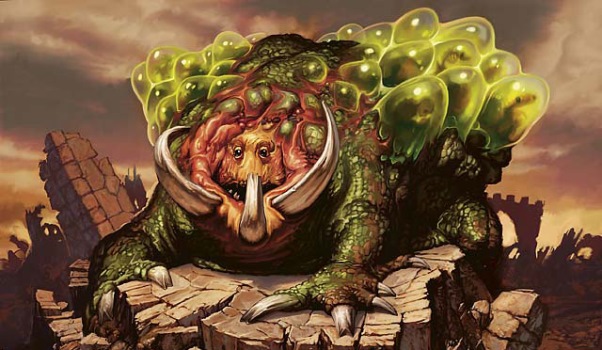
I'm talking about Footsteps of the Goryo, a long overlooked uncommon from probably the worst set of the Modern era. In a format without Force of Will, Daze, and Wasteland there isn't much from stopping you from casting this card on turn three and winning the game.
[wp_ad_camp_1]
"How Does it Work?"
I'll get this out of the way first since this seems to be the most frequently-asked question and it will be much easier to follow this article if you know how the combo works.
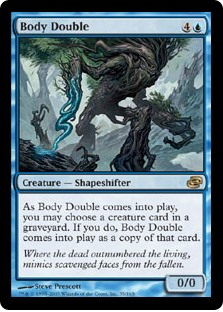
- When Protean Hulk dies to the Footsteps trigger, you get to fetch Body Double and Viscera Seer.
- Double copies your dead Hulk.
- Sacrifice your Doubled Hulk to go get Reveillark and Mogg Fanatic.
- Ping your opponent with Fanatic.
- Sacrifice your Reveillark to Seer. Target your Mogg Fanatic and Body Double with its leaves-the-battlefield ability.
- Both Fanatic and Double return to play. Have your Double copy the now dead Reveillark.
- Use Fanatic again to ping your opponent.
- Sacrifice your newly cloned Reveillark: this is were it gets a little tricky. You'll probably have to go a bit slow and explain it a few times for your opponent. When the trigger goes on the stack Body Double will already be in the graveyard where he reverts to his printed text with power 0. This lets you target the Double and the Fanatic again. From here on out its just rinse and repeat.
That's the basic loop from the Hulk first dying to your opponent dying and it's always the same. What comes before all that? I'll get to that in a bit, but first here's a history lesson.
Bubble Hulk's History
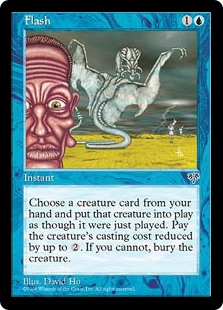 The year is 2007 and Wizards decides to remove all power level errata from all cards. This brings Flash from obscurity to Legacy powerhouse overnight, and just a few months before a Legacy Grand Prix. Much like during the old days of Affinity Block Constructed, you either came to GP Columbus to beat Flash decks or played it yourself. The deck went on to put three copies into the Top 8 with Steve Sadin coming out on top with his own Hulk Flash build. Unfortunately, the DCI didn't tolerate this for long and quickly banned Flash in Legacy and later restricted it in Vintage. Outside of the Hulk's death loop, the Legacy decks looked nothing like today's builds. The Modern version is more closely related to the old Extended Bubble Hulk deck, using discard engines and reanimation.
That brings us all the way to the very first Modern Pro Tour. There were two dedicated Hulk decks in the PT Philadelphia field, but unfortunately, that Modern format was just a bit faster than turn three decks. Neither of their pilots, Gaurav Gaitonde and Shaheen Soorani, did particularly well, but their lists started to look like the ones we see today. Here's Gaitonde's:
Bubble Hulk, by Gaurav Gaitonde (PT Philadelphia, 2011)
Sorceries
4 Ponder
2 Preordain
3 Footsteps of the Goryo
3 Ideas Unbound
2 Thoughtseize
Creatures
2 Body Double
1 Mogg Fanatic
4 Protean Hulk
2 Reveillark
2 Viscera Seer
Instants
4 Peer Through Depths
4 Seething Song
2 Summoner's Pact
4 Through the Breach
Lands
2 Blood Crypt
4 Gemstone Mine
1 Island
4 Marsh Flats
1 Mountain
4 Scalding Tarn
2 Steam Vents
1 Swamp
2 Watery Grave
Sideboard
3 Ancient Grudge
3 Firespout
2 Inquisition of Kozilek
4 Pact of Negation
3 Wipe Away
After the Pro Tour and the first wave of bannings, the deck fell into oblivion and would probably never have been seen again... at least, until Dark Ascension was printed. Dark Ascension gave the deck new life with Faithless Looting. This was the one card the deck needed to push it back into a competitive deck: all the other tools were already in place.
When Dark Ascension came out it was already a few PTQs into the season. I had been putting up okay results with my favorite deck back from 2004, Affinity, but I kept coming up short of Top 8 and was ready for something new.
It was a typical Friday night before a PTQ, and we were all hanging out at our LGS when Justin Maguire showed me this new Modern deck he had built. He told me to goldfish it a few times and see what I thought. I was blown out of the water at how consistently this deck killed on turn three. I had to play this thing the next day at the PTQ, so the mad rush to find all the cards for it began.
Here was the list that he gave me:
Bubble Hulk 2.0, by Justin Maguire
Instants
3 Seething Song
3 Through the Breach
2 Summoner's Pact
Creatures
2 Body Double
1 Mogg Fanatic
4 Protean Hulk
2 Reveillark
3 Viscera Seer
Sorceries
4 Serum Visions
1 Sleight of Hand
4 Gitaxian Probe
4 Faithless Looting
4 Ideas Unbound
4 Footsteps of the Goryo
Lands
1 Island
1 Mountain
1 Swamp
4 Scalding Tarn
4 Misty Rainforest
3 Gemstone Mine
2 Steam Vents
2 Watery Grave
1 Blood Crypt
Sideboard
1 Grave Titan
2 Pact of Negation
2 Echoing Truth
3 Steel Sabotage
2 Early Frost
1 Through the Breach
2 Emrakul, the Aeons Torn
2 Inquisition of Kozilek
Don't get too excited about this list. It was early 2012: Seething Song wasn't banned and Deathrite Shaman had yet to be printed. Me and my greedy nature wanted something faster than this list, and although Modern doesn't have many cheap or free accelerators, Time Spiral block gave us Simian Spirit Guide to help achieve the speed I wanted. Guide is both free and uncounterable, so I cut the Probes for the Simians. With Guides in the deck, it was now possible for insane turn one and two kills. They might have been a little magical Christmasland, but they were definitely possible. Justin ended up making Top 8 of the PTQ that day only to lose to a singleton Mana Tithe in both of his Top 8 games.
Let's fast forward three years to get to the present day. Here's the short-version-history of those intervening years:
- Deathrite Shaman and Rest in Peace get printed
- Izzet Charm and Lightning Axe get added to combat DRS
- Seething Song gets banned. Through the Breach and Emrakul get cut and replaced with Makeshift Mannequin
- Scavenging Ooze becomes Modern legal
- Deathrite Shaman gets banned
- We return to Through the Breach, add Pentad Prism, and cut SSG
- Onslaught fetches become Modern legal
That brings us to present-day 2015. As you can see, the last three years have not been nice to graveyard-based Modern decks, but I persisted through and adapted. I just love playing this deck too much now, and the thought of attacking someone to win just bores me.
Bubble Hulk Today
Here is my current version of the deck, featuring Makeshift Mannequin. Through the Breach is still a great option to use instead: you can check out Justin Maguire's 12th place list from the recent SCG in Dallas for a great example of Breach in action.
Bubble Hulk, by Clinton Whitehurst
Creatures
4 Protean Hulk
2 Reveillark
2 Body Double
3 Viscera Seer
1 Mogg Fanatic
4 Simian Spirit Guide
Instants
3 Makeshift Mannequin
3 Izzet Charm
1 Lightning Axe
3 Pact of Negation
Sorceries
4 Footsteps of the Goryo
4 Faithless Looting
4 Serum Visions
3 Taigam's Scheming
Lands
4 Polluted Delta
3 Scalding Tarn
1 Bloodstained Mire
2 Steam Vents
2 Watery Grave
1 Blood Crypt
1 Island
1 Mountain
1 Swamp
3 Gemstone Mine
Sideboard
3 Leyline of Sanctity
3 Swan Song
1 Pyroclasm
1 Grave Titan
1 Murderous Cut
1 Steel Sabotage
1 Echoing Truth
1 Lightning Axe
2 Pithing Needle
1 Slaughter Pact
We already know how the combo works, so now I'm going to break down all the remaining cards so you can see how the Bubble Hulk list comes together.
The Dudes
When it comes to the creature part of the combo, there really isn't much you can change outside of shaving a Viscera Seer or Reveillark. Without Legacy's Brainstorm, however, this is a risky move. I tried going down to two Seer, but I didn't like how it left you open to removal. Also, if you ever drew one, your combo could be stopped mid-searching for lack of targets in the deck. With three, you get one Seer you can cast without worry, knowing you still have two left in your deck.
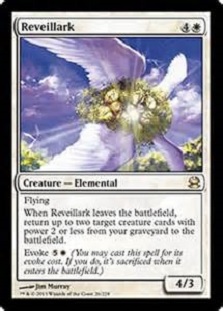 The ideal way to go off is to fetch up all your pieces minus one Reveillark: the second copy of the Elemental is completely useless once you start the combo. By grabbing all your Seers and Body Doubles before you get the Fanatic, you can play around all forms of removal and the only way to stop you will be graveyard disruption. Another tip: after you get your Reveillark and Fanatic out, don't bring back the Fanatic right away. Return both Body Doubles back as Reveillarks first, then start to combo. This way, if your opponent tries to stop you at any point, you can just respond and start over with your second Double. Or you can get a Seer back if they have something like four Bolts in-hand trying to stop you. I just want to reiterate that if sequenced properly no amount of removal will ever stop the combo. This seems to be a common misconception I hear when the deck is being discussed.
There are other options for the kill slot: Mogg Fanatic, Death Cultist, and Bile Urchin. A strictly worse Cultist, Urchin is the worst of the three, only hitting for lifeloss without any gain. Cultist at least drains life when you use him, although I admit infinite life is pretty useless when your opponent is at -32543634 life. If you aren't comboing, it's just "gain one life", which is not worth it. Mogg Fanatic is the best of the bunch because he kills a bunch of problematic creatures. For example, Thalia, Guardian of Thraben is a pain for this deck and slows us to a crawl. Killings Birds of Paradise or Noble Hierarch is nice too, along with pinging infect creatures, Mono U Tron's Platinum Angel, and the occasional Aven Mindcensor.
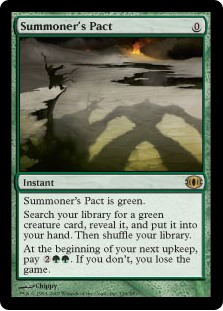 Summoner's Pact can be used as your virtual fifth Protean Hulk, although this is usually one of the first cards I cut when boarding. It is a very risky and hard-to-make-work card, but we maindeck it to add consistency. Be careful when using it though! This card will kill you 99% of the time if your combo fails. Another option in this slot would be a Gifts Ungiven, aka four-mana Entomb. Ultimately, I would only play Summoner's Pact if i was using the Through the Breach version. It becomes much harder to make Pact work when you need to cast it, discard Hulk, and win the game that turn. Paying for double green just isn't going to happen.
The Dig
Faithless Looting and Serum Visions are the core of your dig spells and should never be less than four-ofs. These two spells give you the consistency you need to win on turn three and four. Izzet Charm/Ideas Unbound/Taigam's Scheming make up your flex spots, and I go back and forth on which I want more of in the deck.
Izzet Charm is a Swiss Army Knife for this deck. Ideas just has raw power. Either way, there's room for 6-8 of these in the deck. Depending on what kind of metagame you expect you can plan accordingly.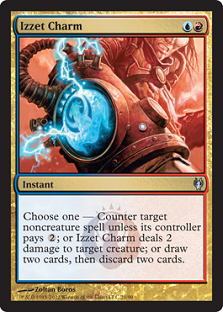 I like Ideas Unbound when I know I won't be getting attacked very much. It lets you sculpt your hand faster and dig deeper for the disruption you'll need. I prefer Charm in more aggressive metagames, where the ability to double your dig as Shocks makes it invaluable. Scavenging Ooze is always your biggest target. In aggressive formats, Charm lets you do nothing on the turn before you go off if you're using Footsteps, endstep discarding Hulk before untapping and killing them. Charm is always better post-board once graveyard hate is a bigger factor. Nothing feels worse than going turn two Ideas Unbound, discarding Hulk, only for your opponent to untap and drop an Ooze, Nihil Spellbomb, or Relic of Progenitus. I often board out 2-3 Ideas for this very reason every game. As a final thought on Charm, its counter mode isn't all that good (two-mana for Spell Pierce is mostly awful), but it's still sometimes relevant so don't write it off. Also, if you choose to play Makeshift Mannequin over Breach, you want at least 3-4 Charms as ways to target the Hulk to kill it.
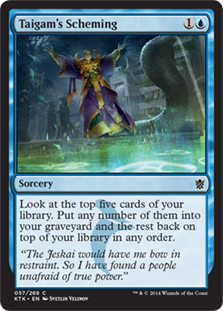 Taigam's Scheming is the newest addtion to the deck. At first I was hesitant to try Scheming, mainly because it meant cutting Ideas (which reads "draw three cards"). But after Zac Elsik (the Lantern Control Guy) did some testing with it, he convinced me to run Scheming. The sorcery digs five cards deep and you can leave the card you need for the win next turn on top of your deck, safe from discard spells. Scheming also pairs well with the Mannequin version as you always want Hulk in the yard, but it can also be used in the Breach version as Justin did with his own two copies.
Sleight of Hand and Gitaxian Probe are also available to add consistency. The deck's primary goal is always finding the Hulk itself, as it has the least number of copies of the combo pieces, and Sleight/Probe do this well. Justin's list is a good example of how you would fit them in the deck
Finally, although not technically "dig", Lightning Axe is a great discard outlet and removal rolled up in one. It can be found in the maindeck or sideboard depending on how creature-heavy the metagame is.
Pentad Prism and Simian Spirit Guide
Pentad Prism has been better than I thought it would be, especially after using Simian Spirit Guide for so long. You'll use Prism the same way whether you are playing the Breach or Footsteps version. Cast your dig spell turn one, and then play the artifact turn two for two different colors. On turn three, either cast Looting and Footsteps (no third land required) or drop the third land and cast Through the Breach. Neither of those lines are possible with Guide, as both would require an additional land.
 Prism can also be used to hard-cast Body Double or Reveillark: finding white mana in this deck is not easy. On rare occasion, Prism can also help cast Hulk or Grave Titan. Outside of casting Double, it was almost impossible to actually hard-cast the other creatures. I'm not saying you want to be casting them, but Prism still gives you more options as games go late or if your graveyard is cut off. That said, I would only ever run prism in the Breach version and not the Mannequin one. Also, if you're relying on Prism, watch out for those Abrupt Decays and Kolaghan's Commands.
On the other hand, I would only ever use Simian Spirit Guide if you are running the Mannequin version. Breach needs the two-mana burst to get to five on turn three, whereas Mannequin only needs a single burst mana to be played on turn three. SSG also opens the 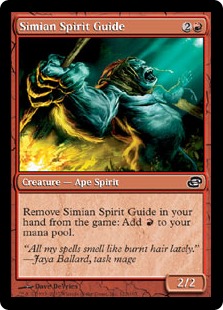 deck up to turn two wins with Footsteps, and not much is needed to describe how awesome that is in Modern. Even if not powering out a turn two win, Guide is at its best when used to cast surprise Mannequins or Charms. For example, assume it is turn three, you have a Hulk in the yard already, three land in play, and both Footsteps and Mannequin in hand with an SSG. 9 out of 10 times, I will just pass the turn (the 10th time would be my opponent is tapped out and then I use Footsteps). After passing the turn you basically get to let the opponent decide when they want to die. If they want to cast anything on your end step you can Mannequin then. Or you can wait until their end step to use it as counter bait before untapping and casting Foosteps.
Both Prism and Guide give you burst-mana utility needed to pay off spells or hard-cast creatures, which is something you should never forget. You can always assemble the combo by casting these creatures, whether or not you have Footsteps or Mannequin. Even if you don't have Fanatic right away, you can set up the infinite scry loop to find him with just Lark, Seer, and Double. No Hulk needed at all!
Business Spells
Despite its focus on the reanimation spell, the deck can't completely rely on Footsteps as it would never be consistent enough to be playable. We need combo pieces 5-8.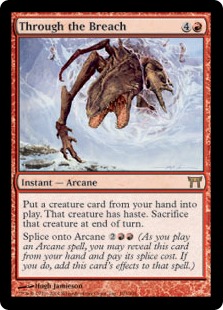 After Seething Song was banned, I went looking for a replacement for Through the Breach. The next closest thing is Makeshift Mannequin, although it requires a different build than the Song/Breach version. Mannequin has a few benefits Breach doesn't enjoy. Because Mannequin grants effective immunity to Path to Exile and bounce, you can easily go all-in on Mannequin with SSG on turn three. Mannequin also steamlines your lines of play, because you don't have to decide between keeping Hulk for Through the Breach or discarding it for Footsteps. With seven reanimation spells, the answer is always the same: discard the Hulk. In total, there will always be four Footsteps and 2-3 of either Breach or Mannequin.
I have toyed around with a Gifts Ungiven/Unburial Rites package before, but it's just too slow and clunky. I did, however, like using Gifts alone as a four-mana Entomb, and post-board you could add four pieces of disruption for your combo turn. I could see putting Gifts back in the deck in the future, but without adding Rites. Another similar experiment I tried was cutting all the SSG and added maindeck discard and Snapcasters. This slowed down and diluted the deck too much for my liking, and did not perform well.
Everything Else
I love Pact of Negation in both this deck and format.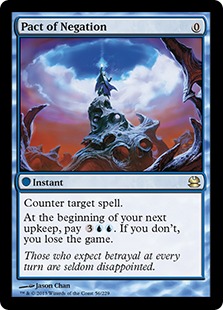 Without Daze and Force of Will, figuring out what you opponent might be holding or what you need to play around is elementary. Remand, Mana Leak, and Cryptic Command are Modern's most popular counterspells currently seeing play, and this is a very good thing for this deck. Remand doesn't actually counter the spell in the first place, so if they don't kill you on their next turn, they better have another answer for when you jam Footsteps on them after you untap. Cryptic is almost as weak against us. At four mana, it's very hard for an opponent to avoid telegraphing when they do and do not have the spell. Even if they do have it, Pact sets you up for a huge turn four blowout.
Let's say you have Pact in hand and try to go for a turn three combo when your opponent has three mana open. This gives them a chance at playing two spells, be they Mana Leak and Path, Remand and Spell Pierce, or some other combination of cards. But if we let the opponent make their fourth land drop to allow them to Cryptic Command our spells while we are tapped out, then we've got them cold with Pact. The best thing about Pact is that it is free, your opponents will almost never expect it, and it can lead to plenty of enemy misplays.
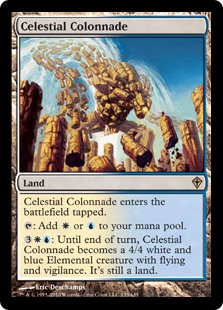 Here's another example of Pact in action. Say you have a turn three kill setup when you untap but haven't played a spell yet (or just cast Serum Visions). Your opponent has Mana Leakand Path in hand and plays Celestial Colonnade for their land when they have an untapped land they could have played instead. Why would they do this? In the early turns of the game, Bubble Hulk does not give much as to what is going on. All it looks like is some Grixis Control, Grixis Twin, or maybe Storm deck. With no creatures in sight, it just doesn't seem worth having both Path and Leak open when an opponent needs to have four mana up on turn four to cast their Cryptic. Not playing Colonnade on turn three could potentially screw the opponent out of Cryptic mana. Here, Pact gives you the win against an otherwise reasonable play line. Another example, this one from the Twin matchup, is where the opponent tries to tap a land during your upkeep or Clique you during the draw. Pact the creature and, with the Twin player tapped out, winning is just a short endstep away.
Also, don't forget you can Mannequin on your opponent's end step and then Pact a counterspell. Next turn, with your pact trigger on the stack, kill your Hulk and your opponent before you ever need to pay for the Pact!
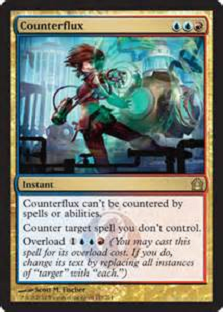 When Pacting, be careful for Counterflux, which you sometimes see out of the Twin, Scapeshift, and UWR Control sideboards. Pacting a Mana Leak doesn't do any good when they have Counterflux backup, and you can't even Pact the Counterflux itself.
The manabase is about a good as it will ever be now thanks to the addition of Onslaught fetchlands from Khans of Tarkir. The manabase once had Misty Rainforest in the Polluted Delta slot, and I wanted to scratch my eyes out every time I needed a Blood Crypt and only had Rainforest. Blood Moon had also been on an upswing this last year and not being able to fetch a basic Swamp was abysmal. You can run Bloodstained Mire in the Scalding Tarn slot if the dollar cost is too high to acquire them, but it will lead to more damage taken as the first color the deck usually needs is blue. 18 or 19 lands with three basics is the most you'll ever want to have. One-land hands in this deck are very keepable thanks to our card selection available.
Sideboarding
Untitled Deck
3 Leyline of Sanctity
3 Swan Song
1 Pyroclasm
1 Grave Titan
1 Murderous Cut
1 Steel Sabotage
1 Echoing Truth
1 Lightning Axe
2 Pithing Needle
1 Slaughter Pact
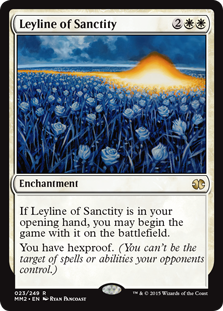 The three or four Leylines are a rather new addition to the sideboard and have proved themselves worthy to remain in the board. Modern has always been full of discard and stopping those effects is great for this deck. You also have 10 looting spells to discards useless ones later in the game. Moreover, Burn has seen a huge surge in popularity and status recently, and Leyline can buy you the extra turn you need against them you might not get otherwise. If you choose to forego the Leylines, their spots should be filled with discard spells: Inquisition of Kozilek and/or Thoughtseize.
Emrakul, Grave Titan, and the third or fourth Breach are also frequent board members of this deck. Emrakul doesn't really need much explaining, and the extra Breach comes in when the Eldrazi does, mainly for decks that play Path or decks you need to slow down like Tron, Scapeshift, or other control builds. My board above doesn't run Emrakul or Breach, but Justin's sideboard did at Dallas.
The Grave Titan is a happy little accident that happened when I could not find a third Emrakul for the first event I played with the deck. He is more than reasonably castable in this deck, thanks to Prism or SSG, but his hidden mode is making infinite 2/2 Zombies to beat opposing Leylines. It only works with 2 Body Doubles though, so if one gets exiled then I'm afraid you need to start attacking. Here's how the play works:
- Start with your Viscera Seer in play and start the combo sequence.
- Instead of recurring Mogg Fanatic, recur both Body Doubles, one as Reveillark and one as Hulk.
- Sacrifice the Hulk Double to find Titan.
- Sac the Titan, then sac Lark, recuring both Body Doubles (one as Lark and one as Titan).
- Repeat, leaving two Zombies behind with each loop.
For me, those eight cards are must-includes in the board, leaving us with seven flex spots. If you play with Mannequin, it opens up four more board slots, which you'll definitely need since you're 100% in on the graveyard plan.
Here is a laundry list of cards that can be used and have been in the board at one time or another. Refer to this list when I reference removal spells to board in. As far as which ones, I would recommend looking at the board I listed above as a starting place to build your own, or just copy what you see here.
- Countermagic: Swan Song, Steel Sabotage
- Bounce: Echoing Truth, Hurkyl's Recall (also Steel Sabotage)
- Discard: Duress, Thoughtseize, Inquisition of Kozilek
- Sweepers: Anger of the Gods, Pyroclasm
- Spot Removal: Slaughter Pact, Wear // Tear, Lightning Axe, Murderous Cut
- Anti-Control: Defense Grid, Boseiju, Who Shelters All
- Dudes: Grave Titan, Emrakul, the Aeons Torn
- Utility: Pithing Needle, Torpor Orb (hilarious when opponents board these in against us)
You'll notice a few common themes among all these board cards: they either support Emrakul, beat a Leyline, or deal with hate cards. I've always built sideboards with this in mind when it comes to combo decks. Hate cards for hate cards have proven to be the most effective tool to get you a W. Discard is for their counters, Rest in Peaces, Oozes, and Deathrites (in the good old days). Needle the Oozes or Relics. Swan Song a billion different things. Slaughter Pact their Linvalas, Aven Mindcensors, and, just for good measure, more Oozes.
Before we get to the matchups, let's go over what to board out. You never want to board out more than 7-8 cards. Any more and you start diluting the deck too much. Thankfully, you board out the same cards 90% of them time.
- First to go are Pact of Negations, mostly against all non-blue deck. Replace them with Swan Songs when you need early counterspells, especially against decks like Bogles that can play turn two Rest in Peace or Suppression Field.
- One Makeshift Mannequin or Through the Breach.
- 1-2 Taigam's Scheming. These dig deep, but mainly get cut due to their sorcery speed which can be a liability in games 2-3 when your opponent has access to grave hate.
- 0-4 SSG or Prism. Boarded games naturally go slower and you can afford to cut ramp as you have time to find land drops.
- Lightning Axe, Summoner's Pact, Gitaxian Probe, or Sleight of Hand. More free cuts if needed.
These are the only card you should be taking out when boarding.
The Matchups
There aren't really bad matchups for this deck, but there are powerful cards you have to watch out for. Recognizing what deck you are playing against is crucial to determining what cards you should expect and play around. You need to do this by turn two at the latest in order to play correctly. Try not to get distracted by everything your opponent is doing. All those Wild Nacatls, Tasigurs, Tarmogoyfs, etc. are nice and all, but they are irrelevant and don't interact with you outside of your life total.
These are some of the important cards to know and what decks play them.
- Thoughtseize (try to contain your excitement if they ever Thoughtseize a Hulk), Inquisition: Jund/Junk
- Path to Exile: Abzan, UWR Delver, UWR Control, Naya Company, Bogles
- Scavenging Ooze: Zoo, Jund/Junk, Abzan Company, Elves, RUG Twin
- Thalia, Guardian of Thraben: Hatebears, Zoo
- Aven Mindcensor: Junk, Hatebears, Abzan Company
- Shadow of Doubt: Twin, UWR, Grixis
- Vapor Snag: Merfolk, Delver
- Eidolon of the Great Revel: Burn
- Faerie Macabre: Living End
- Suppression Field: Bogles
- Relic of Progenitus: Tron, Merfolk (this is not the end all be all: treat it like Standstill. Get them to crack it then move on or get lucky and have them tap out)
That's about it. Keep in mind that this is only some of the maindeck hate you will see in Modern. Much more dangerous hate is waiting in the boards of some decks, but that comes with the territory of playing combo. Here are a few cards out of sideboards that just shut you down and why Breach/Emrakul can be better than Mannequinn.
- Rest in Peace: Bogles, UWR
- Grafdigger's Cage: Affinity, Scapeshift, Hatebears
- Surgical Extraction: Lantern Control (it can be countered but not really played around)
- Counterflux: Twin, UWR
- Leyline of the Void: Living end, Jund
- Night of Souls' Betrayal: Jund
- Slaughter Games: Jund, Tron
- Anafenza, the Foremost: Abzan Company (A new one to watch out for)
I'll go over a couple of common popular decks for what to bring in, but remember, it is up to you to study current lists to get a feel for what graveyard hate each deck is playing or what they could be playing. Boarding incorrectly can easily cost you a match. As some general notes, Echoing Truth and Grave Titan should be coming in for almost every post-board game (Truth moreso than Titan due to its catch-all nature). In the interest of space, I won't be listing these two additions below, so keep them in mind. Finally, the Emrakul and extra Breaches are best boarded in against decks like Jund, Abzan, Tron, and Scapeshift.
Twin Variants
1-2 Pithing Needle
2-3 removal spells
2-3 Swan Song
Jund/Abzan/Abzan Company
2-3 removal spells (for Ooze only
3-4 Leyline (not against Company)
1-2 Pithing Needle
Burn
2-3 Swan Song
1 Pyroclasm
2-3 removal spells
3-4 Leyline
Infect
3 removal spells
2-3 Swan Song
1-2 Pithing Needle
1 Pyroclasm
Affinity
1-2 removal spells
2-3 artifact hate
1-2 Pithing Needle
1 Pyroclasm
Living End
2-3 Swan Song
1-2 Pithing Needle
Elves
2-3 removal spells
1 Pyroclasm
1-2 Pithing Needle
Tron
2-3 artifact hate
1-2 Pithing Needle
Grixis Control/Grixis Midrange
2-3 Swan Song
Merfolk
2-3 artifact hate
1-2 Swan Song
Bogles
2-3 Swan Song
2-3 discard
1 Pyroclasm on the play
Closing Tips and Tricks
Before we close, I want to give you some advice on mulligans, as well as highlighting some strategic tips and corner-case situations.
- Mulligans: Bubble Hulk will mulligan a lot, and it does so quite well. Mulligans are your friend. Do not be afraid to mulligan with this deck, because it gives you a free shot at finding a Hulk.
- Keepable Hands: This deck has many, many lines of play, and it has taken me years to see and master them all. This means there are also lots of keepable hands. The best thing I can recommend to you is sleeve up or proxy the deck and go to town with goldfishing it. Remember though that real games of Magic will be your best practice, especially boarded games, so start grinding your local Modern events to learn the ins and outs of how the deck works
- Beating Auriok Champion: The Champ has protection from red and black and has the Soul Sister effect. Beating this card requires nothing extra or special. Remember that your combo is done at instant speed. Every time Champ triggers for Lark and Mogg Fanatic coming into play just respond by sacrificing your Goblin, let damage resolve, sac Lark again and repeat. Your opponent will be dead with 40+ "gain 1 life" triggers on the stack.
- Exiled Mogg Fanatic: Sometimes in games 2-3, the board states get awkward or your Fanatic gets exiled and you need a way to win. Assume you have boarded in Emrakul and have your combo going, but no Fanatic in sight. You can loot away Emrakul and, with its trigger on the stack, sac your Lark (Body Double) and return himself to the battlefield as a permanent Emrakul, not just one that dies at EoT. Sadly the only time I ever pulled this off I was defeated by a pair of Ornithopters and instant-speed-equipped Cranial Plating.

Thanks for reading! If you have any questions about the deck, take it to the comments, or find me on Facebook or Twitter (caw_86).


![[MTGO] 1 Year, 100 Tix – October Report](https://www.quietspeculation.com/wp-content/uploads/2014/08/100T1Y-calendar.jpg)








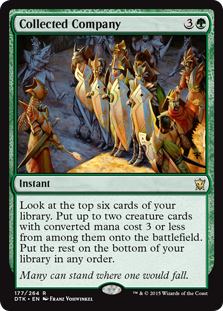 In addition, two Blood Moons and a Magus of the Moon help to shut down decks like Amulet Bloom and steal free wins in a deck that already applies a lot of pressure. This is the quintessential beatdown deck that can interact with other aggressive decks like Affinity while still being able to fight on a more midrange axis if needed. It also has some of the most explosive starts in the format outside of Affinity, while still having interaction and the ability to fight against GBx decks by applying massive pressure early with catch-up cards like Collected Company. I really like how Marcus's Zoo list looks on paper, but I am not sold it is the deck to bring to Pittsburgh. That said, if you are weak to Blood Moon effects, this deck should definitely inform your sideboard decisions.
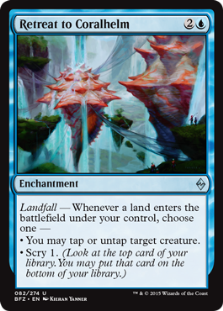 This deck combines the best of Naya Zoo while also adding blue for countermagic out of the sideboard and the Retreat to Coralhelm combo. I think this deck is very interesting and while numerous people have experimented with the Knight-Retreat combo, I think the numbers for this particular list are very impressive. Most of the combo versions of this deck try to force four of each piece into the main 60, losing the ability to play the pure aggressor role in matchups where the combo is too risky (such as GBx). I really like its early-game emphasis with mana acceleration into very powerful two and three-drops to quickly close out the game.
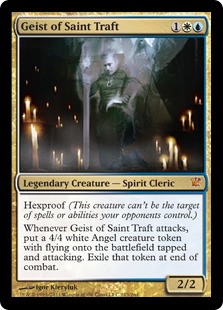 This deck also uses Geist of Saint Traft on turn two to put almost every deck on the back foot, leveraging cards like Lightning Bolt and Path to Exile to clear the way for the Geist’s glass-cannon offensive. The synergies within this deck are very impressive and while they are not quite as streamlined as the Naya Zoo list that took first, I feel this deck can transform into a midrange strategy more effectively than the other Zoo deck, which simply hopes blind aggression is good enough versus GBx and Grixis Control. This is one of the few decks I would heavily consider for Grand Prix Pittsburgh, but you should consider proxying out the deck and getting in reps before you start considering it seriously. This style of deck has some obvious lines, but Knight provides many intricate sequences and an inexperienced pilot will make mistakes.
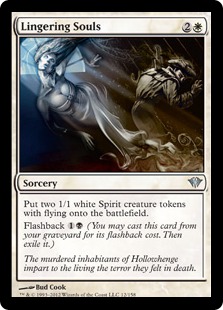 Having discussed the viability of both of these decks in Grand Prix Pittsburgh, I believe both will need a sideboard overhaul to crack the Top 8. The current Modern environment feels too hostile towards GBx and with the decline in Grixis decks, the GBx decks have lost a good matchup from the format's top-tier . Consider shelving those Liliana of the Veils and moving Tarmogoyf to different decks. I do not think either of these decks is in prime position to have a breakout performance without some serious sideboard and maindeck shakeups. Especially looking at the Top 8 from Porto Alegre, there are many hostile decks. If the meta looks similar to Porto Alegre, I expect GBx will not crack Top 8 as many of those decks are bad matchups and current builds have a very difficult time adjusting to the axis those decks want to fight on, especially Tron, Living End, and the Naya decks.
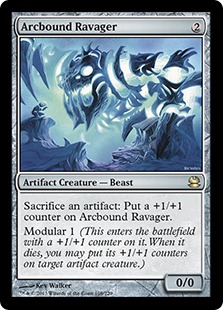 Affinity continues to be a mainstay within those of the Modern community that have put in the hours to reach high levels of skill with the deck. However, with the decline of Merfolk, Affinity lost one of its Tier 1 matchups in a similar way to the GBx decks. Unlike the GBx decks, Affinity continues to be a deck I would recommend if you have the reps in and have further tuned the sideboard with the inclusion of some number of Blood Moons and a way to fight through the Naya decks. My prediction is that the two types of Naya decks will be very popular at Grand Prix Pittsburgh and I do not think that is a good thing for Affinity pilots since Ancient Grudge will be everywhere. I still believe that a very experienced pilot with a solid maindeck and specialized sideboard could easily destroy countless players and reach the Top 8, but I still do not think Affinity is the deck to play if your goal is to win the tournament.
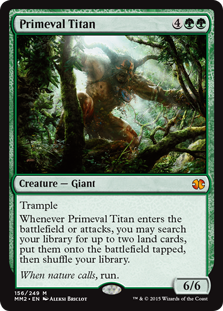 This deck has over-performed in most of the Modern tournaments where big name players have appeared with this deck in tow. One of the biggest reasons you see these fantastic players continually putting up results with this deck is that the skill ceiling for Bloom is insanely high. In addition, the deck’s combo aspect of closing out a game on turn two to three with moderate frequency is very tempting: free wins are very important in a 15 round event. I believe with some updated sideboard cards such as additional Seal of Primordiums, Bloom can fight through the higher than average Blood Moon count I expect in Pittsburgh. However, this increased number of Blood Moons is a real concern and even the most adept pilot is dead in the water to a Blood Moon without Seal in play, or a Forest on board to cast Seal. This is a deck that crumbles to Blood Moon and while I do not normally play decks with that kind of weakness, the ability to simply learn this deck and play a very unfair game in some amount of matches is very appealing to me for a long event.
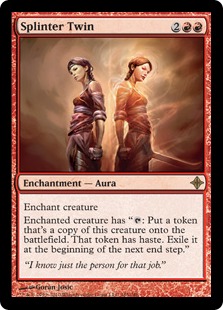 While one pilot tends to make Top 8 of most Modern Grand Prix, it still feels like a deck that is not favored versus skilled opponents with either Abrupt Decay or Path to Exile. Recent Twin lists tend to remove black and return to their UR roots, allowing for better mana and access to Blood Moon. I suspect if people continue playing GBx for the Grand Prix, despite the decks feeling much worse of late, I expect the Twin players in the room to struggle versus those decks as well as the Naya decks that can interact and apply massive pressure early. While Twin players can adapt their sideboard effectively to fight these decks, it still feels like an uphill battle that does not end in a solid payoff. For Grand Prix Pittsburgh I would not play UR Twin unless you have put in the hours to master the deck and even then, I do not think Twin is in a place to take down this tournament.
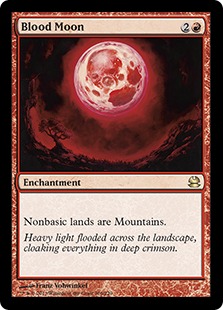 These decks are very strong proactive decks that have free win elements and can rumble versus most of the format. However, I believe there is a tier of decks just below these two decks that are worth considering if you know the deck well and have a sideboard to fight these Blood Moonand combo decks. These decks include Affinity, Living End, GR Tron, Naya Burn, Four-Color Knight and Scapeshift. Just below this tier of decks are decks I would not recommend bringing regardless of individual skill with the deck. Decks within this tier include Infect, GBx decks, UR Twin, and Merfolk. These decks are not up to the task of winning the Grand Prix in my eyes and while I still have plenty of testing to do for the Grand Prix, I do not think any deck from this tier will be a serious contender to take down the Grand Prix.