menu

Want to See a Master Draft a Broken Deck?

Are you a Quiet Speculation member?

If not, now is a perfect time to join up! Our powerful tools, breaking-news analysis, and exclusive Discord channel will make sure you stay up to date and ahead of the curve.

I'm ashamed to admit it, but I've drafted Storm in Cube only one time. The broken strategies I tend to go for are things like Upheaval, Opposition, or Splinter Twin combo. Like Brian Wong, I mostly err toward the "mono-fair" strategies, with maybe a slight leaning toward control decks.

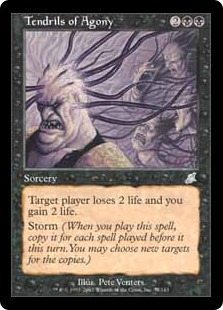
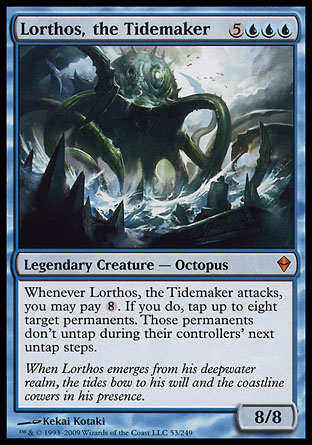
Still, even though I don't get personally excited to see Mind's Desire or Tendril's of Agony, I love watching skilled players draft the deck. One of the best is, of course, Luis Scott-Vargas, who presented another brilliant one on Channel Fireball yesterday. I don't know if this is quite at the level of the Lorthos draft or M13 #10, but it's definitely up there among my favorites.

lorthos

LSV was clearly in some sort of mood when he recorded this one, because he's much sillier than normal here. He makes some misplays, shows off quite a bit, and utters the wonderful phrase, "It's not Dimir Signet Fireball dot com, it's Channel Fireball dot com."

One last thing: I love that CFB has held back some Holiday Cube drafts to publish well after the fact. Yes, you could make the argument that these are most useful when the format is still current, but Cube drafts tend to be relatively timeless, and as far as entertainment value goes, these are way better than triple Khans drafts. I say bravo to Andy Cooperfauss for slowrolling these—I'll watch LSV draft the Holiday Cube any day of the year.

Watch the draft below:

Making You Care About Artwork

Are you a Quiet Speculation member?

If not, now is a perfect time to join up! Our powerful tools, breaking-news analysis, and exclusive Discord channel will make sure you stay up to date and ahead of the curve.

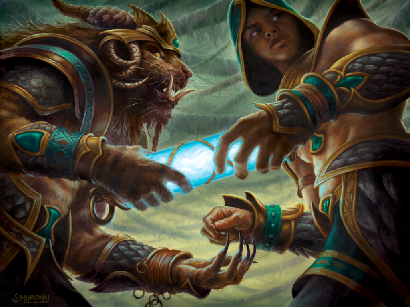
It's not something I ever really notice on a card. In fact, I hardly ever even look at it beyond learning the vague shape to identify cards. But it's always there, just waiting to be appreciated.

The artwork.

And no one does a better job of appreciating it — and teaching you to do the same — than Mike Linnemann. Besides being an all-around awesome guy, he also does a very interesting series on Gathering Magic, and his piece this week was no exception.

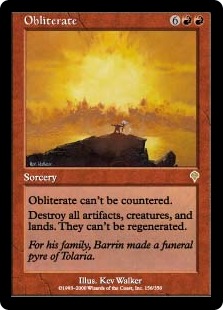
obliterate

I love walking into people’s homes and immediately looking at the art on their walls. It gives a glimpse into their personality, as buying and especially framing at is an intensely personal and long process. The reason we don’t wallpaper our walls is that we wish to put up art. If you have a painting on your wall, it may be partially because a group of painters, called the Hudson River Artists, had something to do with it. While they aren’t as famous as many twentieth-century artists such as Andy Warhol, but what made their contribution unique was that they instilled wonder and a love of art, and they made it more accessible.

You can read the full article here.

Avatar photo

Corbin Hosler

Corbin Hosler is a journalist living in Norman, Oklahoma (also known as the hotbed of Magic). He started playing in Shadowmoor and chased the Pro Tour dream for a few years, culminating in a Star City Games Legacy Open finals appearance in 2011 before deciding to turn to trading and speculation full-time. He writes weekly at QuietSpeculation.com and biweekly for LegitMTG. He also cohosts Brainstorm Brewery, the only financial podcast on the net. He can best be reached @Chosler88 on Twitter.

View More By Corbin Hosler

Posted in Feature, FreeLeave a Comment on Making You Care About Artwork

Have you joined the Quiet Speculation Discord?

If you haven't, you're leaving value on the table! Join our community of experts, enthusiasts, entertainers, and educators and enjoy exclusive podcasts, questions asked and answered, trades, sales, and everything else Discord has to offer.

Want to create content with Quiet Speculation?

All you need to succeed is a passion for Magic: The Gathering, and the ability to write coherently. Share your knowledge of MTG and how you leverage it to win games, get value from your cards – or even turn a profit.

How Art Gets Made

Are you a Quiet Speculation member?

If not, now is a perfect time to join up! Our powerful tools, breaking-news analysis, and exclusive Discord channel will make sure you stay up to date and ahead of the curve.

Artist Scott Murphy granted a peek behind the curtain. He documented his art process for the new card Dark Deal and it's fascinating. A combination of sculpture and painting all went into the mix.

Untitled


The finished product looks very slick. But the unfinished product looks cool, too.

157266_DarkDeal_PhotosSmall

So how did the final product develop from this?

You will have to read the full article to find out.  It's a fascinating read.

Avatar photo

Jason Alt

Jason Alt is a value trader and writer. He is Quiet Speculation's self-appointed web content archivist and co-captain of the interdepartmental dodgeball team. He enjoys craft microbrews and doing things ironically. You may have seen him at magic events; he wears black t-shirts and has a beard and a backpack so he's pretty easy to spot. You can hear him as co-host on the Brainstorm Brewery podcast or catch his articles on Gatheringmagic.com. He is also the Community Manager at BrainstormBrewery.com and writes the odd article there, too. Follow him on Twitter @JasonEAlt unless you don't like having your mind blown.

View More By Jason Alt

Posted in FreeTagged Leave a Comment on How Art Gets Made

Have you joined the Quiet Speculation Discord?

If you haven't, you're leaving value on the table! Join our community of experts, enthusiasts, entertainers, and educators and enjoy exclusive podcasts, questions asked and answered, trades, sales, and everything else Discord has to offer.

Want to create content with Quiet Speculation?

All you need to succeed is a passion for Magic: The Gathering, and the ability to write coherently. Share your knowledge of MTG and how you leverage it to win games, get value from your cards – or even turn a profit.

How Do You Approach Allocating Cards for Decks?

Are you a Quiet Speculation member?

If not, now is a perfect time to join up! Our powerful tools, breaking-news analysis, and exclusive Discord channel will make sure you stay up to date and ahead of the curve.

When I first started playing in tournaments I hardly knew anybody who played Magic. I owned every card in every deck that I played and that was the only way that I knew how to do it. Then something strange happened when I started college. I started showing up to FNM and immediately people were willing to loan me cards. I went from being able to play one barely serviceable Standard deck to being able to play whatever I wanted in multiple formats.

These days I know very few people who own their own decks. I know a number of people who frantically borrow from those with large collections, a few that pool collections together in order to have access to everything, and some who are more or less sponsored by vendors so that they have access to whatever they need.

For a long time my personal approach to getting the cards I needed to play was to own the most expensive cards in decks that I wanted to play and then to scrounge for the cheap ones. I bought my set of Tarmogoyfs, Zendikar fetches and Jace the Mind Sculptors when they were Standard legal and I borrowed Raging Ravine on more than one occasion.

There was an error retrieving a chart for Jace, the Mind Sculptor

This approach worked great for me. There was some scrambling for cards, but the phrase, "I have everything but the Jaces" didn't phase me at all when borrowing things. I wasn't sitting on many rares that cared about rotation either. The only downsides were that they buy-in was high and I relied heavily on a small number of people with large collections continuing to play the game and lend me cards. I've never had problems borrowing from the same person more than once, but I have had the issue of friends with large collections selling out of the game.

Owning more cards would be the obvious way to get out of the need to borrow, but this comes with its own downsides. Larger collections are harder to manage and having more cards to move when rotation rears its ugly head is problematic. They buy-in cost is also higher by a fair margin. These costs buy you convenience though, which is always nice.

My friends who are sponsored by vendors have a pretty sweet set up, as they don't have a buy-in and their source, to my knowledge, has everything that they need. The only real downside is that sometimes you can be at the mercy of a card selling out. This option obviously isn't available to everybody, though it does provide some added incentive to go into the vendor business.

Pooling collections is a fine way for several people to get together and own multiple decks, but pooled collections can be hell to manage. Such collectives will generally be able to provide everybody with a deck, but things get very awkward when somebody decides to cash out. Depending on where you live and who you know, this might be your only option. Just make sure you know what you're getting into before you set something like this up.

And then there are those who show up to a tournament and figure out how to get cards later. This behavior is mostly exhibited by high profile players who ultimately are able to find what they need. Even still, I can't imagine the stress of showing up and still needing to find a deck. Some people, however, strive under such stressful situations. Grinders gonna grind.

So what's your approach to putting decks together?

Insider: Everything Is Awesome! – Looking at One of Standard’s Most Diverse Metagames Ever

Are you a Quiet Speculation member?

If not, now is a perfect time to join up! Our powerful tools, breaking-news analysis, and exclusive Discord channel will make sure you stay up to date and ahead of the curve.

This past weekend, instead of heading out to battle my way through the new Standard format, instead, I was stuck sick in bed. Although I didn’t get to try out any of my sweet deck ideas from last week’s article, I did get a chance to see what everyone else was up to through the Star City DC coverage. There was a common theme throughout the coverage of the event that Standard is awesome right now.

The reason the commentators and I feel this way is because of the level of diversity in the format right now. As time progresses, we may see the format fall into only a couple best decks, but that does not seem to be the case. The powerful cards in the format are spread out into a large variety of archetypes which in turn makes many decks viable options.

A great thing about the new Star City tournament two-day system is that at the end of the event, you know that the decks that were successful had to wade through lots of rounds of competition. The reason players trust GP Top 8 deck results more is based on this same reasoning. So, now that we have mini GP’s for Star City events, we should be able to trust these results a bit more than we used to.

Day 2 Numbers

  • R/W Aggro 14
  • Abzan Aggro 13
  • Jeskai Tokens 13
  • Mardu Midrange 9
  • Sultai 8
  • Abzan Midrange 8
  • Jeskai Aggro 7
  • G/B Constellation 6
  • Heroic 6
  • U/B Control 4

Then there were a number of decks with only a couple copies that qualified for the second day of play. Here is that list. Abzan Reanimator, U/W Control, Mono-Green Devotion (similar to the G/B Constellation decks), G/R Devotion, Mono-Red Aggro, Temur Monsters, G/R Aggro, Bant Control, and Temur Ascendency.

As you can see, all of the decks I recommended last week were some of the most successful archetypes at this event. There were definitely some surprises from this event though. The first was that R/W Aggro made a huge showing at the event. These decks are sort of like the deck I was working on earlier in the season combined with a Jeskai Aggro deck. Take a look at the most successful version of the deck.

R/W Aggro by Danny Goldstein (2nd SCG DC)

Creatures

4 Goblin Rabblemaster
4 Monastery Mentor
3 Seeker of the Way
1 Soulfire Grand Master

Spells

2 Collateral Damage
4 Lightning Strike
3 Magma Jet
4 Raise the Alarm
4 Stoke the Flames
2 Valorous Stance
4 Hordeling Outburst
2 Outpost Siege

Lands

4 Battlefield Forge
2 Mana Confluence
4 Temple of Triumph
2 Wind-Scarred Crag
6 Mountain
5 Plains

Sideboard

2 Hushwing Gryff
1 Stormbreath Dragon
2 Erase
2 Magma Spray
2 Wild Slash
2 Elspeth, Sun's Champion
2 End Hostilities
2 Glare of Heresy

If you break down this deck, what you should notice is its extreme similarity to that of Jeskai Tokens. The decks overlap an enormous amount. Instead of Jeskai Ascendancy and Treasure Cruise though, you get a slightly better mana curve as well as a couple extra burn spells. I prefer the blue mana in the deck but there is certainly merit to just trying to burn out your opponent.

The one card that sticks out in this list is Outpost Siege. Previously this spot would have been taken by Chandra, Pyromaster, but instead this enchantment fills the spot. There are pros and cons to this switch. Siege is an enchantment so it is a bit harder to remove but Chandra does provide more options as well. If we start seeing maindeck enchantment removal becoming more prominent then I would definitely switch back to Chandra or split the spot between the two cards.

Next up we have one of the versions of Sultai utilizing some new Fate cards as well.

Sultai Reanimator by Troy Bishop (17th SCG DC)

Creatures

4 Courser of Kruphix
3 Hornet Queen
4 Satyr Wayfinder
4 Sylvan Caryatid
2 Torrent Elemental
4 Sidisi, Brood Tyrant
3 Tasigur, the Golden Fang

Spells

2 Commune with the Gods
2 Thoughtseize
1 Hero's Downfall
4 Murderous Cut
3 Whip of Erebos

Lands

3 Llanowar Wastes
4 Opulent Palace
3 Polluted Delta
2 Temple of Malady
2 Temple of Mystery
1 Windswept Heath
2 Yavimaya Coast
1 Urborg, Tomb of Yawgmoth
3 Forest
1 Island
2 Swamp

Sideboard

1 Reclamation Sage
1 Doomwake Giant
1 Bile Blight
1 Dark Betrayal
1 Disdainful Stroke
1 Feast of Dreams
1 Negate
1 Silence the Believers
1 Sultai Charm
1 Pharika, God of Affliction
1 Kiora, the Crashing Wave
1 Drown in Sorrow
1 Shamanic Revelation
1 Thoughtseize
1 Treasure Cruise

While I would be utilizing more copies of Torrent Elemental, than this version did, I do like the look of this list. It seems consistent and powerful. I would expect this deck to pick up some steam in the coming weeks as players tweak their versions. The diversity in the metagame often leads to a more midrange battle and in that metagame, this deck has so many plans for the late game that it can almost always go over top of whatever the other deck was trying to do.

There’s one card that I originally discredited that found success in multiple decks and that is Tasigur, the Golden Fang. I can admit when I’m wrong and it appears that I was pretty far off on my initial analysis of this legend. So often, I saw him being cast for a single black mana, clogging up the board until all the threats could be dealt with, and then attacking for lots of damage.

One aspect I did not consider was that with his delve ability, you can clear out your graveyard of cards you don’t want to get back with his activated ability. That way, when you pay your four mana, you are getting the exact card or one of a couple cards that will all be good for you. Now that I’ve seen him in play, that seems like an obvious line, but rather than thinking through how he would play out in a game, I dismissed him too quickly.

Finally, I know this is obvious since it’s printed on the card, but you can only get back nonland cards with his ability. I’ve talked to players who didn’t realize that was the case so I wanted to mention it here. That means that his ability is four mana, draw a spell. Now that we’ve established using our delve ability to rid our graveyard of underpowered cards, like Satyr Wayfinder for instance, we are left with impactful plays that our opponent will be forced to give us one of.

With that being said, I firmly believe this is a trade-away-immediately type of card. He may be double digits for now, but that won’t last long. With all the best cards being mythics, players will be opening tons of packs and that will hinder Tasigur’s price trajectory. Trade them away now for ten bucks and pick them back up for half that in a couple weeks to a month.

Standard right now is all about options, and this next deck is exactly that
more options for a deck you might already be playing.

W/R Heroic by Zach Jesse (16th SCG DC)

Creatures

4 Akroan Line Breaker
4 Akroan Skyguard
2 Fabled Hero
4 Favored Hoplite
1 Lagonna-Band Trailblazer
2 Seeker of the Way

Spells

1 Ajani's Presence
4 Defiant Strike
2 Feat of Resistance
4 Gods Willing
3 Temur Battle Rage
4 Titan's Strength
2 Dragon Mantle
3 Ordeal of Purphoros

Lands

4 Battlefield Forge
3 Mana Confluence
4 Temple of Triumph
1 Wind-Scarred Crag
4 Mountain
5 Plains

Sideboard

2 Ordeal of Heliod
1 Ajani's Presence
2 Deflecting Palm
2 Erase
1 Fall of the Hammer
2 Mortal's Ardor
2 Ride Down
2 Wild Slash
1 Glare of Heresy

Instead of U/W Heroic, some players opted to pair red with their white cards. While you are certainly more vulnerable to removal spells with the red version, it also kills roughly a turn quicker than the original. With spells like Titan's Strength combined with Temur Battle Rage, it’s easy to see where all the fast damage comes from.

Because this deck is more of a glass cannon than its predecessor, I would opt for the more resilient U/W version, but this is definitely an option that multiple players decided to go with this past weekend. Options are always good and this is another way to build the deck.

Since we have had both red and blue paired with white, I’m wondering what it would look like to add black or green instead. Has anyone seen a build with either of those colors? If so, post it in the comments for us to discuss.

We all know tokens is a powerful way to play the game in Standard, but I’m guessing you haven’t tried it this way.

Mardu Midrange by Derek Campbell (22nd SCG DC)

Creatures

4 Butcher of the Horde
4 Goblin Rabblemaster
2 Kolaghan, the Storm's Fury

Spells

4 Chained to the Rocks
4 Crackling Doom
2 Lightning Strike
4 Raise the Alarm
4 Stoke the Flames
4 Hordeling Outburst
3 Sorin, Solemn Visitor

Lands

1 Battlefield Forge
4 Bloodstained Mire
1 Caves of Koilos
4 Nomad Outpost
4 Temple of Silence
4 Temple of Triumph
6 Mountain
1 Swamp

Sideboard

2 Hushwing Gryff
3 Erase
1 Utter End
1 Valorous Stance
1 Chandra, Pyromaster
1 Liliana Vess
1 Sarkhan, the Dragonspeaker
2 Anger of the Gods
3 Thoughtseize

While there were multiple versions of Mardu that cracked the Day 2 barrier, this was the most interesting to me. Myself as well as many other players have thought the meta to be developed well past Mardu, but it has definitely resurged in the Fate meta.

This version is yet another tokens deck, but this one aims to include black cards as pump spells instead of blue ones. The main question I have about this deck is if Monastery Mentor would be better than Goblin Rabblemaster. My thinking is that it would be lots better, but it would need testing.

One of the major pros to this list are that Kolaghan, the Storm's Fury seems sweet and powerful. If you happened to play against him at the prerelease, most likely you lost to him because he is that good. I was fortunate to defeat him multiple times but every time I saw him it was an extremely close game.

Another positive aspect of this deck is its ability to cast Crackling Doom, which seems extremely potent in this metagame. Not only are you playing all powerful cards, but this particular combination seems very good. I prefer the card drawing power of blue but the removal of black is a perfect fit as well.

G/B Constellation by Brian Braun-Duin (9th SCG DC)

Creatures

4 Elvish Mystic
4 Hornet Queen
4 Sylvan Caryatid
4 Courser of Kruphix
3 Doomwake Giant
4 Eidolon of Blossoms

Spells

2 Commune with the Gods
3 Thoughtseize
2 Hero's Downfall
1 Murderous Cut
4 Frontier Siege
2 Ugin, the Spirit Dragon

Lands

2 Jungle Hollow
4 Llanowar Wastes
4 Temple of Malady
2 Windswept Heath
1 Nykthos, Shrine to Nyx
1 Urborg, Tomb of Yawgmoth
6 Forest
3 Swamp

Sideboard

3 Bile Blight
2 Hero's Downfall
2 Garruk, Apex Predator
3 Nissa, Worldwaker
1 Ugin, the Spirit Dragon
3 Read the Bones
1 Thoughtseize

There has been a lot of chatter about Frontier Siege lately and this deck is a great example of why. The wording on this card allows you to gain the bonus mana twice per turn essentially making your original investment two mana and then giving you four extra mana per turn as long as you can break it up into multiple spells. I think this is a genius way to hand out mana because if you don’t have two spells, or an ability, you will not be utilizing this effect to its full potential.

The reason this is so potent is because you can churn out a turn four Ugin, the Spirit Dragon and force your opponent to deal with a late game threat earlier than they are prepared for. Additionally, Siege is an enchantment and that synergizes well with this deck based around the card type. Essentially we have an already solid deck that was able to integrate a powerful line of play with new Fate Reforged cards. It’s the same deck, just better. I would be gunning for this one in the weeks to come, it’s a powerful new avenue to explore in the meta.

And now for the grand finale!

Temur Ascendancy by Joey Page (66th SCG DC)

Creatures

4 Genesis Hydra
3 Karametra's Acolyte
4 Sylvan Caryatid
4 Temur Sabertooth
4 Voyaging Satyr
4 Courser of Kruphix
4 Eidolon of Blossoms
2 Polukranos, World Eater
1 Nylea, God of the Hunt

Spells

3 Singing Bell Strike
4 Temur Ascendancy

Lands

4 Frontier Bivouac
1 Mana Confluence
1 Swiftwater Cliffs
4 Wooded Foothills
4 Yavimaya Coast
4 Nykthos, Shrine to Nyx
4 Forest
1 Mountain

Sideboard

3 Nylea's Disciple
2 Reclamation Sage
2 Setessan Tactics
3 Kiora, the Crashing Wave
3 Nissa, Worldwaker
2 Hunt the Hunter

This deck may look quite innocent and rather lackluster, but if you saw it being played this weekend or you can look past the seemingly poor card choices, what you have is a Standard combo deck that utilizes the mostly slow nature of the format in order to assemble the most unlikely of tools.

To start off with, we have some of the usual suspects for green decks. You can use your normal green cards like Polukranos and Courser of Kruphix to win some games. Most of these parts individually won’t help you win the game though, because they are part of an interesting sequence to your combo.

Here’s the goal. Start the game like every other green deck in Standard, then play Karametra's Acolyte. Your goal is to do this when the Acolyte taps for seven mana. Use two mana for the ability of Temur Sabertooth to return the Acolyte to your hand and four to replay it. As long as you do this with a Temur Ascendancy in play, you can generate an extra mana each time which will generate you infinite mana.

The great part about this is that then you can chain through your deck by making giant Genesis Hydras or drawing more cards to play with Eidolon of Blossoms. Because all of your creatures have haste, and hopefully trample thanks to Nylea, God of the Hunt, you can defeat your opponent in one giant strike.

There were a number of Temur decks that made it into the Top 64 of this event and although this was not one of them, you can easily add Karametra's Acolyte to the build so you have your infinite combo in the deck. You can accomplish this line of play with Singing Bell Strike also, but that seems less resilient than with Temur Sabertooth.

The planeswalkers in the sideboard are great against decks with a lot of removal that you are unlikely to combo against too. Overall this deck is a solid midrange deck that also happens to be able to combo off sometimes. It seems like a blast to play. Do you see a way to improve this deck? Have you tried it out yet? Let me know in the comments.

Whatever you like to play, there are lots of options in Standard right now. The format will keep evolving as the weeks pass. I’m excited to play the format again with these sweet new cards that Fate Reforged has given us. Modern is changing as well and hopefully I’ll be able to talk about those changes as well in the next couple of weeks.

Until Next Time,

Unleash the Force on Standard!

Mike Lanigan
MtgJedi on Twitter
Jedicouncilman23@gmail.com

Insider: The Post-Banning World – Looking at the First Iteration of Formats With Fate Reforged

Are you a Quiet Speculation member?

If not, now is a perfect time to join up! Our powerful tools, breaking-news analysis, and exclusive Discord channel will make sure you stay up to date and ahead of the curve.

The news came, hit us like a tidal wave fit for a Lord of Atlantis, and receded almost as quickly. With a new set of goodies to play with, people quickly moved on from complaining about the bannings and onto brewing for reopened formats, just as we expected they would.

And now we have our first glimpse into what that world looks like.

The news comes to us with a Pro Tour coming very soon, and one weekend of Star City Games Open results. We saw a large influx of Fate Reforged cards in all three major formats, maybe even more so than anyone expected. That includes some rather unexpected results (just kidding on the card link. But really, surprise cards were found).

Standard

Decklists here.

I’ll openly admit: I did not see Frontier Siege coming.

And I’m not sure if this will really stick or is just the flavor of the week. I mean, ramp certainly seems to be a viable strategy, and I predicted Ugin seeing plenty of play, I just expected more Nykthos and fewer Frontier Siege doing the work. That said, the Dragons ability on the siege is actually super cute with Hornet Queen.

That said, if you have any copies of the card, get rid of them now at $4. Decks like this can be preyed on, and that’s exactly what will happen. Combined with the fact that we’re in a brand new stage of the format, $5 retail has to be the high-water mark for Frontier Siege, and I would move them now.

The Temur Ascendancy deck we saw is actually really cool, but I’m not sure it can move Ascendancy away from bulk status. Even if this were to hit a dollar retail, buylists won’t move much, and almost certainly not enough to make transaction costs worth moving in. Still, I would take these out of your bulk and move them into the trade binder.

Monastery Mentor showed up in Standard as we expected, and the $20-25 pricetag seems like it will hold in the short-term. The same cannot be said of Soulfire Grand Master, which while admittedly cool didn’t have a huge impact or replace Seeker of the Way in many decks. I definitely don’t like it to hold a $20 pricetag moving forward.

Back to Mentor for a moment. The card is clearly extremely powerful, but we didn’t see it anywhere outside of Standard. That means the foil price being around $60 is hugely incorrect, and it also means the card will likely float down to $15 or so in the coming months.

Tasigur, the Golden Fang is another one that wasn’t easy to see coming, though it was certainly more expected in Standard than anywhere else. A lot of talk was made about Soulflayer, and while the upside on the Flayer may be better or more fun, Tasigur is often a 4/5 for just one mana. And while the ability may not be insane, it’s also a guaranteed way to generate card advantage. $10 is high for now, of course, but I can see this sticking around for a long time in Standard.

As for the decks in the format, we have the wide-open format continue. The Sultai deck that won the event may be the advent of the Dig Through Time/Treasure Cruise shake and bake duo taking over Standard like they did older formats.

We’ll see. It’s too early to draw any big conclusions from Standard, but it looks like delve cards may be, predictably, rising to the top of the format. Look for the supporting casts, mainly the on-color Temples and painlands to follow. That’s a good sign for things like Yavimaya Coast to jump a few dollars.

Modern

Our wide-open format is back, at least according to these results.

As I predicted last week, we saw a lot of Geist of Saint Traft, from Zoo to Jeskai builds. Also, Siege Rhino is far from dead, and the Abzan lists with it and Lingering Souls are just as prevalent. Liliana of the Veil continues to dominate, and that’s not going to change anytime soon.

As always, I love Abrupt Decay in the format, and the window to get them under $10 is closing fast. Restoration Angel also saw quite a bit of play, and at $7 now I like it pretty well as a target.

Also, personal aside here, MERFOLK LIVES! Two in the Top 32 of the event, including an interesting blue-white build. Doubt there’s a ton of financial upside here (maybe Tidebinder Mage or Wanderwine Hub?), but I like to see my Fish do well.

Legacy

Decklists can be found here.

Again, just like Standard and Modern, we see some Tasigur. That’s a good sign for it, even though this will fall under $10 in the next month or two. Other than that, it’s still a fairly open metagame that plays Dig Through Time but isn’t warped around it like it was Cruise.

It does seem like Sultai builds with Shardless Agent and Deathrite Shaman are back with Cruise gone. Of these decks, Shaman at $8 is what stands out to me. It’s a long-term call for sure, but also, I think, a fairly safe one.

I don’t know where we’ll go from here, but it will be the Pro Tour that makes the big waves next, and I’m excited to see what the pros brew up for Modern. Whatever it is, the “new” format will, for a time at least, be defined by that event.


Thanks for reading,

Corbin Hosler

@Chosler88 on Twitter

Some Goyfs Are Faker Than Others

Are you a Quiet Speculation member?

If not, now is a perfect time to join up! Our powerful tools, breaking-news analysis, and exclusive Discord channel will make sure you stay up to date and ahead of the curve.

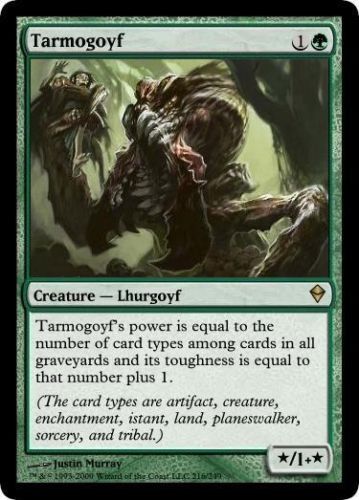
Some Goyfs are faker than others. 

Some Goyfs are faker than others. 

Some Goyfs' mothers are faker than other Goyfs' mothers.

- Morrissey, probably.

Fake Magic cards are getting better. A little. They're still pretty terrible, frankly. While some are starting to be developed that pass the light test, the bend test and the blue-line test but still don't pass the "A Magic player looks at it and doesn't say 'that looks fake as shit' test". A pretty convincing fake card was shipped from TCG Player, possibly without their knowledge it was fake (though probably not). The buyer, a redditor, showed pics of the results.

Look how glossy it is. It shows up even better in another picture.

A special thank you is owed to /u/bakegore for exposing the fake in this reddit post.

I won't say who the TCG Player seller was because if I do, people are going to run around saying "Better not buy cards from Mr. Magic on TCG Player, he shipped a fake Goyf" and I don't want to be responsible for that.

As bad as this glossy fake is, it's not the worst I've seen this week. Look what someone on eBay tried to pass off in an auction with a starting bid of $200

tarmogoyf-futur-sight-rare-Excellent-condition

Yeah? Are we sure the Zendikar Goyf used that art?

Watch out for fakes, go through the chargeback process on TCG Player if someone ships a fake to you and, in general, examine cards you buy in person. Fakes aren't good enough to pass the "experienced player" test right now, so that is still your best weapon against counterfeiters.

Avatar photo

Jason Alt

Jason Alt is a value trader and writer. He is Quiet Speculation's self-appointed web content archivist and co-captain of the interdepartmental dodgeball team. He enjoys craft microbrews and doing things ironically. You may have seen him at magic events; he wears black t-shirts and has a beard and a backpack so he's pretty easy to spot. You can hear him as co-host on the Brainstorm Brewery podcast or catch his articles on Gatheringmagic.com. He is also the Community Manager at BrainstormBrewery.com and writes the odd article there, too. Follow him on Twitter @JasonEAlt unless you don't like having your mind blown.

View More By Jason Alt

Posted in Free3 Comments on Some Goyfs Are Faker Than Others

Have you joined the Quiet Speculation Discord?

If you haven't, you're leaving value on the table! Join our community of experts, enthusiasts, entertainers, and educators and enjoy exclusive podcasts, questions asked and answered, trades, sales, and everything else Discord has to offer.

Want to create content with Quiet Speculation?

All you need to succeed is a passion for Magic: The Gathering, and the ability to write coherently. Share your knowledge of MTG and how you leverage it to win games, get value from your cards – or even turn a profit.

More on Downsizing: How Do You Approach a Format You Might Want to Play Someday?

Are you a Quiet Speculation member?

If not, now is a perfect time to join up! Our powerful tools, breaking-news analysis, and exclusive Discord channel will make sure you stay up to date and ahead of the curve.

Yesterday, I wrote about the mental and physical benefits to downsizing one's collection. One by one, I went through the different categories of my personal stockpile, but there's one category of cards I didn't discuss: Modern staples. I'm currently in the midst of a mental battle with myself involving this format, and trying to weigh all the factors is not as cut-and-dry as I'd like.

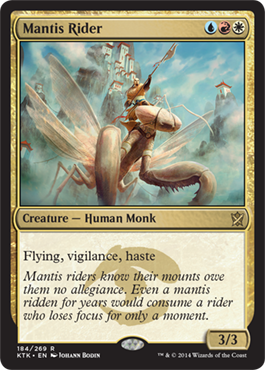
I have a reasonably sizable Modern collection: playsets of all the Zendikar fetchlands and all 10 shocklands, all the blue staples, most of the red staples, and the most important white staples. I don't have Goyfs or Bobs, but I have a lot of options open to me, including Splinter Twin, any variety of non-Temur Delver, Jeskai or Azorius Control, or brews including most any of the cards from this, the most patriotic of color combinations.

Mantis Rider

I also have all the pieces for Birthing Pod, and although I wouldn't say I'm panicking—the non-Pod pieces may very well go on to become a new and awesome Modern deck—the banning of the deck out of the format has got me thinking about how much I really care to hold cards I'm not currently playing.

You see, I have a seven-month-old baby at home, and he's only going to become more of a handful as time goes on. I haven't gotten out to a Modern event in more than a year, and I don't see that changing any time soon. Additionally, my local community isn't super invested in Modern—Standard and Commander are the big formats here. I don't live in a major metropolitan area, so attending the random Grand Prix or SCG Open is unlikely. And the new PPTQ system is decidedly not designed for non-grinders like me (I'd much rather try my luck under the old system and have the chance to spike one event rather than basically committing myself to two). On top of that, by eliminating Modern PTQ season, Wizards of the Coast removed what would have been a dependable time of year to play a bit more of the format.

When I look at all these points, I think, "Well, duh. Sell your Modern cards. You're not playing any time soon."

But the problem is that I like Modern. I like the idea that if I move, or if the trend in my community shifts, or if WOTC brings back Modern PTQ season, or my LGS institutes a highly successful and popular Modern night, I'll be able to play. I was enthusiastic about the format when it was new, so I acquired a lot of these cards at very low prices—prices I won't be able to find again. 

Still, the whole reason I started building a Modern collection was because it was appealing to get to build a deck or two to just have ready and available in between long periods of not playing. The banning of Birthing Pod, however, has highlighted the fact that Modern is not Legacy, and you can't just commit yourself to one deck without risking getting burned. This means having staples for multiple decks, which starts to get expensive. Even though I like the idea of playing Modern in the future, there's no guarantee that the decks I have available will still be in the format when I get around to it.

I'm torn, and I still haven't decided. For now, I'm getting rid of my fifth and sixth copies of cards that I want a playset of for Modern, but also have a copy of in my Cube and/or Commander deck. If I was alternating between cubing and playing Modern a couple times a week, the extra copies would be nice. But as it is, having five Splinter Twins, six Snapcaster Mages, or more than four copies of anything just doesn't make sense. It's more of my downsizing mentality making itself manifest.

Help me out here: what do you do when you have cards for a format you like but don't really play? I imagine that with Legacy it's easier to just sit on them, but what about more transient formats where card prices are more mercurial? Let me know if you have experience with this type of thing in the comments below.

How Much Format Diversity is too Much?

Are you a Quiet Speculation member?

If not, now is a perfect time to join up! Our powerful tools, breaking-news analysis, and exclusive Discord channel will make sure you stay up to date and ahead of the curve.

When it comes to evaluating Standard formats we often use diversity as a defining metric. Typically, formats with a dominant bogeyman and only a handful of other decks are considered bad, and formats with tons of viable decks are considered good. At times when you can't play FNM without losing to Delver, we hate Standard. At times when we can't place our opponent's deck off of the first 2-3 turns of a game we love it.

There was an error retrieving a chart for Mana Confluence

Using diversity as our only metric while analyzing the results of SCG DC tells us that this format is feaking great. Assuming that you're a reasonable human being, you can literally play whatever you want. It's hard to say that that's a bad thing.

There is some downside though. In particular, this range of decks is difficult to manage for an experienced player and can be outright overwhelming for a newer one. It can be difficult to grok that you need to go into a tournament ready to handle Battlewise Hoplite and Ugin, the Spirit Dragon.

There was an error retrieving a chart for Battlewise Hoplite
There was an error retrieving a chart for Ugin, the Spirit Dragon

In the English language there's a colloquialism that would call overwhelming diversity "too much of a good thing". Personally I'm enjoying this first look at post-Fate Reforged Standard, but I can see why some players would find preparing for a tournament looking at this extremely diverse data frustrating.

I'm interested to know what percentage of people prefer the format exactly as it is and which like a little more predictability. Which of the following best represents your ideal Standard?

Lorwyn-Shards of Alara- In which the mana was good to play a wide variety of decks but the format was largely dominated by Faeries and Five Color Control.

Scards of Mirrodin- Innistrad- In which UW Delver was the dominant deck that pushed most other decks out of the format.

Return to Ravnica-Theros- In which Black Devotion was widely considered the best deck, but basically everything was playable.

Current Standard- Thus far it looks like you can play anything, though some cards and strategies are clearly defined as pillars.

I look forward to seeing justification of votes in the comments as well as examples of other Standards that people favor and why they prefer those formats. Or if you really hate Standard, I'd be interested to hear what the format would need to do to appeal to you.

Insider: Turbo Temur Tempo and the Return of Stifle to Legacy

Are you a Quiet Speculation member?

If not, now is a perfect time to join up! Our powerful tools, breaking-news analysis, and exclusive Discord channel will make sure you stay up to date and ahead of the curve.

With Treasure Cruise banned in Legacy, this means I will have to go back to... playing Delver, but without Treasure Cruise.

Of course, Treasure Cruise wasn't the only Khans of Tarkir card that found its way into Legacy Delver.

There was an error retrieving a chart for Monastery Swiftspear

I've seen it said that without Cruise to fuel Swiftspear and Young Pyromancer, Izzet Delver is dead. While it's true that losing the deck's only source of card advantage makes it harder to trigger prowess, I believe that rumors of the demise of Swiftspear's playability have been greatly exaggerated. Of course, this is coming from the guy who was crazy enough to play Izzet before Treasure Cruise.

At any rate, I'm of the opinion that Monastery Swifstspear is good even without Treasure Cruise. Gitaxian Probe, Brainstorm and Ponder are all awesome forms of support, and it only takes one spell a turn to turn Monastery Swifstspear into a fantastic one drop.

I have thought it was a shame that Nimble Mongoose didn't play well with delve these past few months. With all the Forked Bolts running around, a threat with shroud would have been nice. I also liked the idea of having three absurdly powerful one drops in the same deck. Call me crazy, but I've never been more excited about a creature suite than this one:

Some people see Tarmogoyf as the big draw to Temur Delver. Against creature decks, Tarmogoyf is certainly an all-star, but I've always attributed more of the deck's power to the efficient and resilient Nimble Mongoose.

It sounds strange to look at a 3-color Delver deck that isn't interested in any sort of high-powered two drop, but I think there's a strategic advantage that can be gained from the insane efficiency of playing three high-powered one drops. This allows the deck to Daze with much less consideration to the drawback and to be able to Wasteland insanely aggressively.

There was an error retrieving a chart for Wasteland

Transitioning from Tarmogoyf to Monastery Swiftspear

If the plan is to build the most hyper-aggressive tempo deck available, then I think I have to take the other side of an argument that I've been making for a long time. If we're loading up on nothing but one mana spells, I think that we have to Gitaxian Probe.

There was an error retrieving a chart for Gitaxian Probe

There have been rumblings of the return of Stifle. Years ago, Stifle versus Spell Pierce was a serious debate in Temur Delver. For a while, Stifle was just better. Then you just wanted to play both. And, most recently, you only wanted Spell Pierce. If Monastery Swiftspear continues to be played, it will be hard to play both spells effectively due to their low ability to trigger prowess on your own turn.

Seeing as the deck I'm conceiving of is all one drops, Stifle is the clear choice. It will help us keep our opponents low to the ground and it compliments our Dazes and Wastelands as well as it ever did. While we're playing most of the best one drops in the format, letting our opponents cast two or more mana spells is dangerous.

There was an error retrieving a chart for Stifle

Putting it All Together

Even though the All One Drop approach has a significant impact on the deck, there are still slots you just shouldn't mess with in Delver decks.

With the slots already discussed, as well as the sacred cows, there are really only two slots left to play with in this deck. I always like playing one Dismember, and that only sounds better when we're not playing our own Tarmogoyfs, which leaves just one slot.

Any of the following are totally serviceable one-ofs:

For my money, Spell Pierce protects you the most from the powerful things your opponents can do. I would start there, but could also see any of these other options working.

Here's the maindeck that I'm looking at starting with:

Turbo Temur Tempo

spells

4 Delver of Secrets
4 Nimble Mongoose
4 Monastery Swiftspear
4 Gitaxian Probe
4 Stifle
4 Force of Will
1 Spell Pierce
4 Daze
4 Lightning Bolt
1 Dismember
4 Brainstorm
4 Ponder

lands

3 Tropical Island
3 Volcanic Island
4 Wooded Foothills
4 Scalding Tarn
4 Wasteland

Is This Better, Worse or Different?

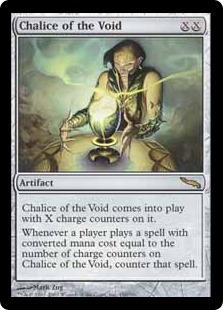
There are obvious downsides to not playing Tarmogoyf. There are even a few not so obvious downsides. For example, Tarmogoyf can steal games against Chalice of the Void that this deck couldn't possibly win if Chalice resolves.

That said, this deck does some stuff I really like. Most importantly, it pushes the primary advantage that Temur Delver always had--that is to say, this deck maximizes the power of Brainstorm with raw mana efficiency. There's also the fact that Monastery Swifstspear's haste allows this build to deal more damage in a shorter window of turns, which is obviously relevant in a format as fast as Legacy.

My tentative verdict is that this is a different deck, and that each will have its own advantages in different metagames. This deck is better at generating games where you're able to one for one your opponent at an insane rate and kill them before they ever make a play, while traditional Temur Tempo decks are better at going long with Tarmogoyf. Time will tell which is better positioned in the current Legacy metagame.

How About a Sideboard

I don't have anything fancy for the sideboard. The only important note to make is that I don't think this deck should try to support the three drops that you see in other Delver variants. If I were to play this list tomorrow, the sideboard I would register is:

Financial Implication

Whether a deck like this takes off, or traditional Temur makes its case, it seems like Stifle will be returning to the format in a big way.

The card took a big hit with the Conspiracy reprint and stayed low while Treasure Cruise was legal, but it's hard to imagine it won't see play again and see a bump back up in price. Stifle is a solid pickup at this point in time.

~

Unfortunately, I won't be able to make it to the first Legacy Open under the new structure in Indianapolis next week, which is a pretty big bummer for me. Were I attending, I would happily sleeve up this list. I'm very curious and excited to see if and how Swiftspear fits into the new metagame.

Think that I'm onto something here? Think that cutting Tarmogoyf is insanity? Chime in in the comments!

Thanks for reading.

-Ryan Overturf
@RyanOverdrive on Twitter

Insider: [MTGO] Market Report for January 28th, 2015

Are you a Quiet Speculation member?

If not, now is a perfect time to join up! Our powerful tools, breaking-news analysis, and exclusive Discord channel will make sure you stay up to date and ahead of the curve.

Market Report for Wednesday, January 28th 2015

Welcome to the MTGO Market Report as compiled by Sylvain Lehoux and Matthew Lewis. The report is loosely broken down into two perspectives. A broader perspective will be written by Matthew and will focus on recent trends in set prices, taking into account how paper prices and MTGO prices interact. Sylvain will take a closer look at particular opportunities based on various factors such as (but not limited to) set releases, flashback drafts and banned/restricted announcements.

There will be some overlap between the two sections. As always, speculators should take into account their own budget, risk tolerance and current portfolio before taking on any recommended positions.

Redemption

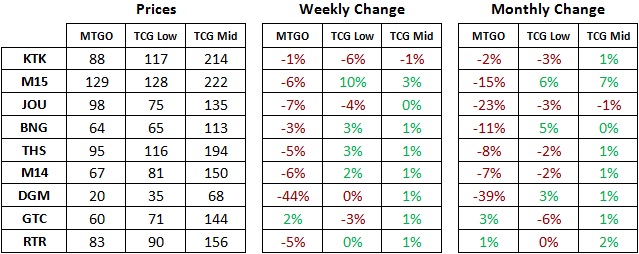
Below are the total set prices for all redeemable sets on MTGO. All prices are current as of January 26th, 2015. The MTGO prices reflect the set sell price scraped from the Supernova Bots website, while the TCG Low and TCG Mid prices are the sum of each set’s individual card prices on TCG Player, either the low price or the mid-price respectively.

Jan28

Return to Ravnica Block and M14

The outlook for both RTR and GTC remains unchanged, with future price gains anticipated as interest in Modern rises in advance of Modern Masters 2015. Both sets have shown both real and relative price stability as they are the only two redeemable sets not to be in the red over the past month. TCG prices are also flat to positive, appearing to have bottomed in the 3rd week of December.

DGM continued to hemorrhage value this week as the market digested the banning of Birthing Pod. Voice of Resurgence may have found a floor as it seems to fit in new Modern Junk lists. However, there is still an abundance of choice in the two-drop slot so at current prices, this is still just one to watch.

Both Mutavault and Scavenging Ooze have seen an uptick in price this past week, and M14 as a set is approaching good value when comparing MTGO prices to paper prices. In particular, Windreader Sphinx is currently below 0.4 tix. This junk mythic rare is a buy at anything less than 0.6 tix.

Theros Block and M15

This past weekend was the first chance to see what players could do in Standard with the additions of Fate Reforged (FRF). Gerard Fabiano won the SCG Open with a Sultai control deck featuring two key additions from FRF. Ugin, the Spirit Dragon and Crux of Fate pushed out Perilous Vault as the sweepers of choice in this control build.

The writing appears to be on the wall for the mythic artifact from M15; Perilous Vault has been one of the best performers from M15 but it looks like it has a price drop in its future. This one is a sell.

Another M15 card that appeared in Fabiano’s list as a singleton was Garruk, Apex Predator, which has nearly disappeared at under 5 tix. This is expected to be a short-term uptrend as the new Standard metagame establishes itself.

Fabiano’s list appears to have been well designed to handle the field, but it’s not clear that this particular version of Sultai Control will have staying power. Both control and aggressive strategies will develop and fine-tune their card choices over time and so Garruk is one to watch, but a price increase beyond 8 or 9 tix seems unlikely. This one would have been a buy on Sunday afternoon at around 4 tix.

JOU is still the most expensive set out of THS block, meaning that value will be hard to find here. The two cards that were highlighted here last week, Eidolon of the Great Revel and Keranos, God of Storms, have risen into the 8 to 9 tix range. These are still expected to rise in price over the coming months, but with FRF prereleases starting this week, there might be some short-term downward pressure on their prices as the demand for tix in the MTGO economy escalates.

Red-green strategies did not establish themselves as part of the new Standard metagame this weekend, so the powerful mythic rares from THS have not budged in price. Keep an eye on Stormbreath Dragon, Xenagos, the Reveler and Polukranos, World Eater, but these cards might be in for a slow decline as they get relegated to the fringes of Standard. It’s early yet, but the relative lack of these cards in the top 64 decks at the SCG Open is troublesome.

Lastly, a set that is teetering on the edge of value is BNG. There’s no magic number where this is the case, but being priced slightly below TCG Low is a good start. Kiora, the Crashing Wave has also seen a little bounce as a result of appearing in Fabiano’s first place deck (as a two-of). If this card was still priced at 5 tix, it would be good value. But the current price of 7 to 8 tix is too risky to consider speculating on.

Khans of Tarkir

Siege Rhino from KTK continues to fluctuate around the 2 tix mark. Anytime you get a chance to buy these at 2 tix or less, you should stock them away for the future due to expected playability in both Standard and Modern.

Otherwise, it’s time to start looking for value in KTK, particularly in the rares. Keep a short list of potentially playable rares and start accumulating them over the next two months. Start with Crater's Claws at 0.2 tix or less and Abzan Ascendancy at 0.05 tix or less.

Modern

The immediate effect of last week’s Banned and Restricted announcement was seen on card prices, with the vast majority of Modern non-Pod, non-U/R Delver staples rising from 30% to 150%. The second effect was to put the Modern format in an unprecedented position since its inception—a new and unsolved format.

This past weekend SCG held the first major Modern event since the changes. The SCG Modern Premier IQ delivered a preliminary verdict on the new Modern format—a very open environment with no less than 15 different archetypes in the top 32. The tournament was taken down by a Bogles/Hexproof list in a field where most of the potential Modern decks were represented.

Among the Top 32 deck lists, one Dredgevine deck featuring the newly unbanned Golgari Grave-Troll appeared. Meanwhile, Splinter Twin decks managed to place only two copies in the top 32. There were zero Amulet of Vigor decks, no Living End decks and Through the Breach decks were also absent.

Junk/Jund decks were the most represented with five players piloting a Liliana of the Veil-based deck with or without Dark Confidant. Tarmogoyf and Snapcaster Mage were the most played creatures by far, showing up in multiple different builds.

From a speculative standpoint, everything remains open and should grow a little bit more as we are heading to the Pro Tour next week. Several Modern staples including Tarmogoyf, Liliana of the Veil, Primeval Titan, Horizon Canopy and Splinter Twin are back to their previous price records. Selling these after the amazing run of last week would be a safe move. However, we think that on average, more potential awaits with the incoming Modern Pro Tour.

Are there any more good buying opportunities after last week's shockwave? Short answer is, ‘yes’. When there are panicky movements in the market, some cards will have lost more value than they should have. All of a sudden, the losers from the Banned/Restricted announcement might represent good value, and other cards might be on the verge of playability. See below for details with the Targeted Buying Opportunities.

Targeted Speculative Buying Opportunities

Modern

Misty Rainforest

Elspeth, Knight-Errant

Restoration Angel

Olivia Voldaren

Master of Etherium

Smash to Smithereens

Standard

Doomwake Giant

Targeted Speculative Selling Opportunities

Standard

Perilous Vault

My Secret to Strong 2014

Are you a Quiet Speculation member?

If not, now is a perfect time to join up! Our powerful tools, breaking-news analysis, and exclusive Discord channel will make sure you stay up to date and ahead of the curve.

I originally published this on www.Empeopled.com, and we're cross-posting here as part of a partnership with the site.

Image

Simply put, 2014 was a very good year for me, for different reasons. I reached a few professional goals of mine, and that's exciting. What is also exciting is that I had a good year in terms of "Magic Finance." As a finance writer, your column is only as good as your last call shot. No one cares that I was ahead of the curve on Stoneforge Mystic three years ago, or Boros Reckoner in 2013. What people care about is what you're doing for them now, and what you're going to do for them in the future.

So it was nice to have a few big wins in 2014. Specifically, Chalice of the Void and Forked Bolt. I was able to help people get into Chalice of the Void at $5 and Forked Bolt at 50 cents, as well as more Delver-tinged cards like Gitaxian Probe and foil Thought Scour. Most of these turned out to be huge winners and runaway successes as predictions. That's great, and I'm glad I could help people be ahead of the curve.

But this isn't about reflecting back on 2014. It's about looking ahead to 2015, and that's what I want to talk about today. It starts with this admission...

You can read the full article here.

Avatar photo

Corbin Hosler

Corbin Hosler is a journalist living in Norman, Oklahoma (also known as the hotbed of Magic). He started playing in Shadowmoor and chased the Pro Tour dream for a few years, culminating in a Star City Games Legacy Open finals appearance in 2011 before deciding to turn to trading and speculation full-time. He writes weekly at QuietSpeculation.com and biweekly for LegitMTG. He also cohosts Brainstorm Brewery, the only financial podcast on the net. He can best be reached @Chosler88 on Twitter.

View More By Corbin Hosler

Posted in Feature, Finance, FreeLeave a Comment on My Secret to Strong 2014

Have you joined the Quiet Speculation Discord?

If you haven't, you're leaving value on the table! Join our community of experts, enthusiasts, entertainers, and educators and enjoy exclusive podcasts, questions asked and answered, trades, sales, and everything else Discord has to offer.

Want to create content with Quiet Speculation?

All you need to succeed is a passion for Magic: The Gathering, and the ability to write coherently. Share your knowledge of MTG and how you leverage it to win games, get value from your cards – or even turn a profit.

Downsizing Your MTG Collection Can Make Your Life Easier

Are you a Quiet Speculation member?

If not, now is a perfect time to join up! Our powerful tools, breaking-news analysis, and exclusive Discord channel will make sure you stay up to date and ahead of the curve.

It all starts so simply: you buy a few packs to learn the game, maybe a Fat Pack or a Deckbuilder's Toolkit. Next, you attend your first prerelease and win a few more packs. This gets you into drafting, which you do on a regular basis. Now you've got all these cards, so you figure: why not play Standard? But that means acquiring Standard staples, so you start filling out playsets. Before long (maybe after a rotation or two), you realize that's not an efficient use of your money, so you start acquiring eternal staples instead. Maybe you play these in Legacy, or Modern, or Commander, or whatever.

Along the way, maybe you get into MTG finance. You start buying cards by the dozens or even hundreds. Sometimes these hit and you sell out, but sometimes they fail, so you throw them in a bulk box and forget about them. Repeat this process any number of times. On top of that, you buy a few collections from former or quitting players, and after picking all the good stuff, you've got thousands and thousands of bulk cards sitting around.

Sound familiar?

its-me-copy

I have collector tendencies, and I'm willing to bet a more-than-average number of Magic players do, too. It's probably a reason many of us got into the game in the first place.

In the last few years, though, I've decided a more minimalistic approach is better for my organization, finances, and general sanity. I've cut down on the number of books, DVDs, videogames, and yes, Magic cards that I own, and not being weighed down by these material possessions has been extremely freeing.

This isn't some pseudo-spiritual message about the evils of materialism, mind you. Half the reason I like to get value from my stuff is so that I can buy more stuff. 

So Why Cut Down My Magic Collection?

By cutting down on excess Magic cards, I save myself several minutes every time I need to dig out a card that I do still have. I save space, and I don't exactly live in the largest of residences, so that's an huge factor. I save stress, for if my Magic cards were to be ruined in a fire or a flood, or stolen by a thief, my loss would be minimal—at least compared to what it would be if I weren't taking this line of action.

And most importantly: minimizing my Magic card collection helps me focus on what I really want to get out of Magic. I used to keep four-ofs of every set that I drafted, and the longboxes were piling up. Then I realized: I'm never going to use these Abbey Griffins or Kingpin's Pets. So I got rid of the obvious bulk, keeping the "playables," although with a very generous definition of the word. That didn't prove good enough for long, so I got rid of everything that wasn't already undeniably a staple in some format.

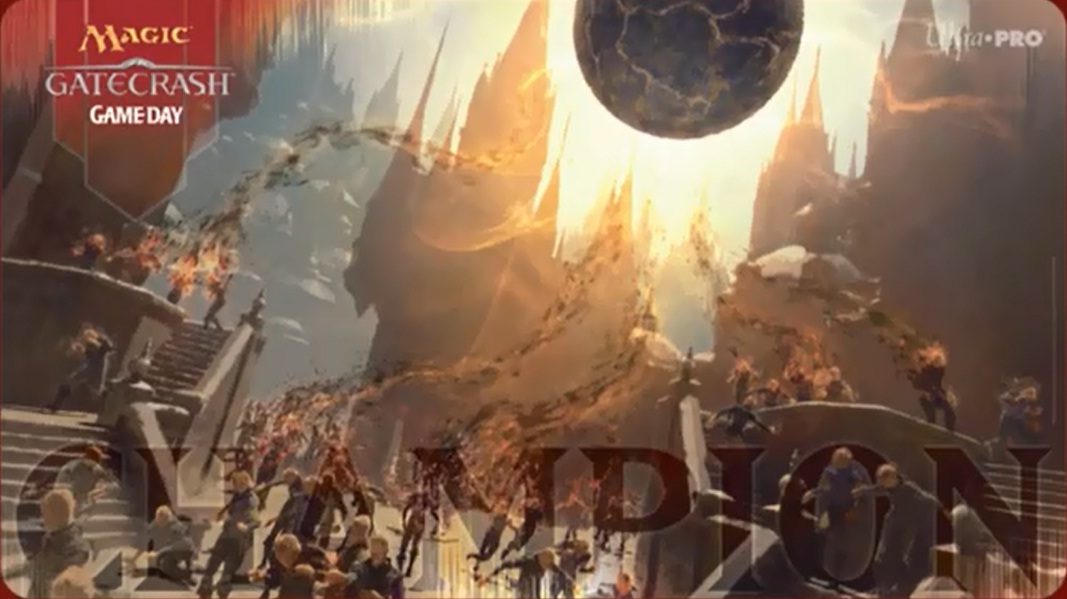
For a year or two after I stopped playing Standard on a regular basis, I kept at least one deck ready so I could play the random PTQ or other event, but I never actually did play any Standard events, even FNMs, and I realized that there was no point to having a deck ready for a format that I had no immediate plans to play. (My only regret is that I no longer get to play Game Day events, where I have had a disproportional amount of success.)

Gatecrash-Game-Day-Playmat

Commander is a popular format, and I think a big reason why is because deckbuilding is kind of a blast. When I was introduced to the format, I quickly built three decks, but after a while, I realized that I was not actually playing with them. Multiplayer Magic just really isn't my thing, and even though I like the idea of Commander, in practice, I wasn't using these cards. So I cut down my Commander collection to just one deck, which has been perfect—it's comforting to know that I could jump in a game if I really want to, but I don't have tons of excess decks that I feel guilty for never playing (and yes, when I had three decks, I would feel actively bad to choose my favorite over one of the other two, which barely ever got played. I'm glad that dilemma is over now).

I had a lot more specs this time a year ago, but I sold the ones that made me a profit (or were never going to) and now have a fraction of what I had previous. I've bulked out all my draft leftovers, and continue to do so every time I fill a longbox. I've buylisted cards at lower prices than I should have, just in the interest of freeing up the physical and mental space.

The only part of my collection I'm actively building at this point is my Cube. I enjoy watching other formats, but for actually playing Magic, Cube is where my interest lies. By downsizing the rest of my collection, I've brought focus to the aspect that's most important to me, which has improved my Magic experience immeasurably.

Sometimes we can get a little carried away with our favorite hobbies. It certainly happened to me, but I recognized it and took steps to combat it. If you're feeling a little overwhelmed by the vastness of Magic, try cutting back on formats, or decks, or staples that you might someday use (but realistically never will). You can only play with so many cards in one lifetime—you might as well ship out the ones you won't use so somebody else can enjoy them! And I think you'll be surprised how nice it is to have fewer cards for once, as opposed to more. Give it a try.

Want Prices?

Browse thousands of prices with the first and most comprehensive MTG Finance tool around.


Trader Tools lists both buylist and retail prices for every MTG card, going back a decade.

Quiet Speculation