If not, now is a perfect time to join up! Our powerful tools, breaking-news analysis, and exclusive Discord channel will make sure you stay up to date and ahead of the curve.
I saw this question posed the other day on some form of social media, and it got me thinking. I've done a lot of trading in my day, and while most of it has been for Magic cards or other Magic-related items, I know there are some stories out there that end differently.
You guys probably know the story of Jonathan Medina and how he traded cards for an Ipad a few years ago. While I can't match that, I was offered a trade of a Damnation for a Gamecube and a pair of controllers last week. As a huge fan of that system and some of the games, I was definitely intrigued by the deal and am still considering it.
Worth trading a Magic card for?
Anyway, I know I'm not the only one with this kind of story, so share with us here: What is the coolest thing you've ever traded a Magic card for?
If not, now is a perfect time to join up! Our powerful tools, breaking-news analysis, and exclusive Discord channel will make sure you stay up to date and ahead of the curve.
This week's Insider article was unlocked, and focused on drafting Vintage Masters. If you are looking for a quick guide to the format, check it out here. We also wanted to make sure our Insiders got some quality financial information on what has been a seismic shift in the MTGO economy so this is a bonus Insider supplement.
When they first hit the market, the Power 9 (P9) were under-priced and quickly gained in value. Things swung in the other direction as the market overheated. These price swings, driven not by real demand but by speculation and "fear of missing out," reinforce the importance of doing your homework and being prepared with target prices.
If you timed the market right you could have doubled your money and gotten out before Vintage Masters drafts exploded and dropped the floor out from under the market. On the other hand, if you sat this one out I don't blame you--there is a great deal of uncertainty in the market and I spoke to more than one savvy trader who lost tix because prices fell faster than expected.
It has been pretty remarkable to see--I don't think Wizards was looking to create this kind of volatility.
Based on my last article here, I argued we should be prepared for a steep drop, especially on rares. However the VMA drop has been faster and steeper than even Modern Masters.
Jace is 17 tix. Tundra is 12. Savannah, a dual land that sees play, is under 5.
Lion's Eye Diamond, which was recently the most expensive card in Magic Online, can be purchased for 14 tix. I could go on...
When things stabilize there will be some really good buying opportunities. But where is the floor? We are in uncharted territory because we don't know the viability of Vintage and Legacy as online formats and because there is no redemption to soak up excess supply.
In addition, the number of MTGO users this week skyrocketed and drafts were firing like crazy. Yesterday Matt Lewis noted in the forums a total of 7,500 users in tournaments--that's 50% more from what we saw during JOU release events.
As of Friday, 11pm PT, here were the Power 9 prices from Goatbots (note: not all are in stock)
Black Lotus: 150/190 (0 in stock)
Mox Sapphire: 80/105 (0 in stock)
Time Walk: 80/105 (2 in stock)
Ancestral Recall: 78/98 (1)
Mox Pearl: 78/98 (1)
Mox Jet: 77/97 (1)
Mox Ruby: 74/94 (2)
Mox Emerald: 71/91 (2)
Timetwister: 43/58 (3)
One hour after I posted those prices they were already out of date--in one hour they dropped by 10% again. But since then they appear to have stabilized at that price for now.
Where Do We Stand?
Total buy price for P9 is 630 tix. That's lower than the our estimated range based on the EV calculations. The "equilibrium" prices based on what it takes to open a full set of Power 9 and accompanying mythics and rares approached $2725. If Power accounts for between one third to one half of the total value of the set the P9 should go for between 900 to 1350 tix.
This suggests that the Power 9 are currently underpriced, though it is too early to make that judgment since there are a lot of variables at play. There is very low supply on these cards and the market could decide overnight that they are worth more than current prices.
Sustaining high prices requires demand from players and collectors. So far demand for these VMA cards has been weak (in part because prices keep falling; potential buyers say to themselves "why buy now when you can buy later?" Wizards has said they will continue running the set until September.)
The EV of VMA fell hard and is now pretty awful, but there's no sign players are slowing down their drafting. Eventually people will lose interest and move to other formats, since 25-tix drafts that offer little hope of paying for themselves get frustrating. In the meantime, each draft floods the market with new supply.
Based on how many events are firing it would be possible to calculate how many P9 have entered the market. I haven't tracked that data, but it would sure be interesting to know. But record numbers of users appear to be online.
As we saw last week, Modern Masters bottomed out after about 72 hours; many cards continued to slip, but most of the drop happened early on. I would expect a similar pattern here.
At some point, I am expecting a "bounce" in the P9, similar to what we saw with top-end mythics like Tarmogoyf and Vendilion Clique in MMA. These P9 cards are quite scarce. We may also see a bounce in key mythics from VMA.
In the long run, these cards will regain much of their value (someday each of us is going to look back and say "I remember when I could have bought a Black Lotus for 150!") I expect that today's prices will seem like a very good buy in the long term, but they could go lower still. I have picked up a few good pieces at what I felt were good prices but have yet to fully "buy in".
Affordable prices on reprinted Legacy staples is good for the growth of Legacy on MTGO, and could lead to continued growth of Legacy staples that were not reprinted (e.g. Wasteland, Onslaught fetches, etc).
What to Do?
Keep your powder dry: As we predicted last week, prices on rares seem too good to believe, but should continue to fall for the next few days. Next weekend would be a good time to buy in.
Limit your drafts: These things have become highly negative EV. You are bleeding tix if you enter them. If you really enjoy the format, go for it. But be careful not to overextend.
Watch the spreads at sites that show you buy and sell prices, like Goatbots. Wide spreads suggest uncertainty. Narrowing spreads suggest that the price of a card is being established.
Don't sell if you don't have to: The spreads are wide enough that it makes sense to hold unless you get a good offer (e.g. in the classifieds.)
Thoughts on the Market More Broadly
We are entering a liquidity crunch as people sell off boosters and singles to pay for VMA drafts. Each draft consumes a lot of resources, but they continue to fire.
Boosters have taken a hit as people are selling off for VMA. Theros is below 2.5 again. I sold some of my stash when it reached 2.85, but am still holding most of my supply. This is a tricky one, since if they revise the payouts to favor JOU (which is in even worse shape at 1.86) then THS will drop further. At the same time, the long term trajectory for this booster should be sound.
Last year, MMA marked the swan song for rotating cards. They never regained their value. Prices are low, but it's probably not getting any better.
Certain Modern and Legacy cards could be value picks, despite an overall downward trend during VMA release events. Life from the Loam is attractive at 1.7 (down from 4.5 in early May.) Past in Flames continues its flashback slide and is quite attractive at 13.8 (down from 20s). Gitaxian Probe has been on a yo-yo between 1 tix and 0.5 tix; currently it's looking back at 0.5 and a pretty good pickup.
Thalia, mentioned last week, has bounced back from 2 tix to 3 tix. If you picked up Tectonic Edge at 0.6 you have seen a double up there. Torpor Orb is up from 3 to 5. These may be good sells.
The v3 shutdown is still looming. Be careful to manage your portfolio and don't get holding a bunch of cards you aren't playing or actively targeting for speculation, since there is a good chance of a significant market pullback in July.
Now Time for a Contest
Who can guess the price of a Black Lotus on July 1?
The rules:
All entries must be posted in the comment section below. For example: "Thoughtlaced: 150". You can only use whole numbers and can't guess a number that someone else has guessed.
All entries must be received by midnight Pacific Time (US) on Monday, June 16. (Just to be clear, that's Tuesday morning at 3:00 for ET US and early morning Tuesday for Europe)
For the purpose of this contest, the official price is the price listed on MTGGoldfish for July 1. Whoever is closest to that price will win.
The winner will receive a pack of Vintage Masters from me and acclaim from your fellow speculators.
If not, now is a perfect time to join up! Our powerful tools, breaking-news analysis, and exclusive Discord channel will make sure you stay up to date and ahead of the curve.
As you know, this series is focused on playing smarter and investing smarter to build your portfolio and get more from your dollar on Magic Online. With Vintage Masters launching at 1pm ET today (not that I'm counting down the hours or anything...), I'm going to take a break from the "investing smarter" part of this series to focus on "playing smarter."
While I am no Limited master, I have played long enough to have battled with almost all these cards. What's more, I was able to get a hold of enlightened tutor Simon Goertzen to help us make sense of this mind-bending format. Simon (@simongoertzen) is a Limited specialist, Grand Prix champion, European commentator, and produces great analytic content at MTGO Academy and Star City Games. Stay tuned!
Grand Prix champion Simon Goertzen is a master at breaking down new formats.
Breaking Our Rule
Drafting is awesome, but I actively discourage it for folks who are trying to build their portfolio. Drafting is essentially "consumption"--it's a good way to spend those tickets you are making through other means. But as we have discussed in past articles, chaining drafts is a good way to break the bank. Especially drafts that cost 25 tix each.
The exception to the above rule is during the first two or three days of a new set release. Singles prices are high and there are often opportunities to exploit under-recognized strategies before the draft junkies break the format. If you can stay ahead of the curve you can net some tix at the set release, all while having a blast.
The next few days are going to be the only reasonable time to draft VMA without bleeding tickets. As I analyzed in last week's article, the price of almost all cards will drop off quickly. In a week or two VMA is going to be negative EV, though still with high enough variance that people will play the Power 9 lottery.
But for a limited window, you should be able to chain drafts by winning 50% of your matches and making the most of rare drafting. The first 72 hours is when I plan to do most of my VMA drafting, unless prices stay unexpectedly high or they offer a phantom option down the line.
Today we'll offer you some strategies for winning more VMA drafts. But first, before you go on, if you haven't read my last piece on VMA prices, check it out here. Be prepared to unload the cards I mentioned quickly. Got it? Ok, let's get on to the fun stuff.
The Structure of Vintage Masters
If you want to win drafts you better focus on commons and uncommons. This is always the case, but especially true with Vintage Masters because this is a massive set. There are 30 mythic rare and 105 rares in VMA, compared to 15 mythics and 53 rares in Theros (more typical of modern design.) That makes it much less likely that you will open a particular rare or mythic in VMA.
Sure I would love to draft the crazy Oath of Druids deck as much as the next guy, but it's probably not going to happen. Moreover, those board sweepers at rare are less likely to show up than Supreme Verdict was in DGM. For the purpose of Limited analysis, we might as well ignore them these rares and mythics altogether.
The 80 uncommons in VMA will show up less often than THS uncommons, of which there are only 60. That means that you are 25% less likely to see that "build around" uncommon in a VMA draft than you would in triple THS draft.
In contrast, you will see each common as often in Vintage Masters draft as you did in Theros Block. These commons are the building blocks of the format, and understanding their power level and the synergies between them is critical. That's where we'll focus our attention.
The Floor Is High
[pullquote]"The question of when to raredraft will be a lot more important than in regular draft formats...When in doubt, take the money."[/pullquote]The other key consideration is that the power level is "insanely high," to quote Simon. Almost none of these cards would make it past pick five in their native format, but something has to get picked 14th.
That means that you will have no shortage of playables, and can take some swings for the fences. If you don't lock up the strategy you were aiming for, there will be plenty of fallback options. This also makes rare drafting a much stronger consideration. The "value over replacement card" (VORC?) for each pick is low, so if I can nab something worth 2 tix or more I'm going to do it.
As Simon puts it, there is a "raredrafting subgame" in which "the question of when to raredraft will be a lot more important than in regular draft formats, and making the pick that maximizes your EV is not trivial. When in doubt, take the money."
Because you won't have any problems finding that 23rd card you should feel free to draft sideboard cards relatively early. Keep an eye out for cards that trump other decks and help shore up weaknesses in your deck.
Rareshifts
[pullquote]Rareshifted cards can give us a signal about what we should be doing in the format.[/pullquote]Vintage Masters was liberal in downshifting uncommons into commons and rares into uncommons. Marshall Sutcliffe had the opportunity to interview Max McCall and Ian Duke, the lead designer and lead developer of Vintage Masters, who told him that rareshifts are extremely important to understanding how to play the format. You can bet that if a card was rareshifted it plays a particular role in the format, and can give us a signal about what we should be doing.
The following cards are now common in Vintage Masters:
These cards became paupers overnight
Most of these cards were uncommon for a reason--they're frickin' powerful! Soltari Emissary and Exile were even rares. Many have powerful effects that you don't see at common, and speak to the overall power of the set.
Breaking Down the VMA Commons
[pullquote]Because the set was initially spoiled without rarities, just reviewing the following list and knowing cards are common can give you a leg up over the competition.[/pullquote]This is a format that will really reward those with what Simon referred to as "historical knowledge" based on Constructed or Limited experience. Since the power of some of these cards is not readily apparent, it's worth taking a look at some of the magnificent specimens that the R&D team pulled from their cryogenic vats.
Simon pointed out that because of the way that Vintage Masters was spoiled--via the Card Image Gallery without appropriate rarities--"lots of players will not have a good idea of card rarities." Just reviewing the following list and knowing cards are common can give you a leg up over the competition. Marshall Sutcliffe has an article this week on the power uncommons which you should check out as well.
White
White seems very strong at common. It has three common removal spells plus several aggressively-costed threats.
White Commons
Battle Screech is card advantage plus aggression in a tidy package, and may be one of the best commons in the set. It also combines very nicely with cards that boost all your creatures, like Rites of Initiation or Pianna, Nomad Captain at uncommon.
The common removal package of Afterlife, Exile, and Radiant's Judgment give white tremendous versatility.
A lot of white's creatures look innocuous but are anything but.
Deftblade Elite paired with an enchantment it will gobble up your opponents board. It also plays defense well in a pinch.
Benalish Trapper will nullify your opponents best creature and Benevolent Bodyguard will shut down his best removal spell.
Phantom Nomad is strong on both offense and defense and becomes indestructible if you can buff his toughness.
The shadowy duo of Soltari Emissary and Soltari Trooper are virtually unblockable and are scary if you can boost their power.
Don't overlook Gilded Light when it wheels in the pack--it's one of the best answers to Storm out of the sideboard. Mistmoon Griffin, Shelter and Brilliant Halo have built-in card advantage, and the Griffin may prove a high pick in the black-white reanimator deck.
Blue
Blue has both strong tempo and control plays, as well as key combo pieces for the Storm deck, making it the most versatile color in VMA.
Blue Commons
Counterspell is going to teach a new generation of Magic players about its value in Limited. Control and tempo decks will both take advantage of its raw power.
Aquamoeba is obviously best in the Madness deck, as are Circular Logic and Obsessive Search. None of them are high picks outside of its natural habitat.
Deep Analysis is one of the few sources of pure card draw in the format, and is very potent in the right deck. But its mana cost plus life loss means that it probably won't be a high pick since you rarely want multiples.
Frantic Search and Brainstorm are best in the Storm deck, helping to increase card selection and boost storm count. Krovikan Sorcerer may also play a key role in the deck. Temporal Fissure has only one home, and will probably come late since you don't want more than one or two. (Brainstorm isn't an all-star in Limited, but may be worth a ticket early in the format so snag it if it's there late.)
Ophidian and Man-o'-War are old friends, united at last. I don't think everyone's favorite mystic snake will perform up to expectations, but I could be wrong.
Bounce seems especially strong in this format since there are so many powerful auras floating around. Repel sets them back a draw step, and Rescind has extra versatility with cycling. These cards fit into aggro, combo, and control strategies.
Skywing Aven was better when damage used the stack, but is still resilient and versatile.
Scrivener could be a key card in control decks. There are so many powerful instants and sorceries that the mnemonic bear is going to do some serious work in the format.
Choking Tethers is an underrated trick; it's primary mode is as Ice, tapping down an opposing creature and drawing you a card--but it can also act as a falter late-game to set up a lethal attack.
Killer Whale was a premiere finisher in his day--at uncommon. It is not as aggressively costed in this format but remains a powerful card. Few decks want him, and he will often be a one-of, so he should come around late.
Black
At first glance, black seems extremely aggressive, but it has plenty of tools to play a grindy game as well. Black-red will be the fastest deck in the format, while black-green, black-white, and black-blue can excel at the long game.
Black Commons
Black aggressive strategies get a lot of redundany with Dauthi Mercenary, Carnophage, Fallen Askari and Fledgling Djinn. They are backed up with tempo plays like Spinal Graft, Choking Sands and Paralyze, and some reach in the Tyrant's Choice (a "choice-less choice" in draft.) You better be prepared for this deck or you will lose to it.
Mesmeric Fiend and Addle are not great cards but can be useful in clearing the way for all-in strategies like Storm and suicide black/rakdos.
Speaking of Storm, the deck gets Dark Ritual, Nightscape Familiar, and Skirge Familiar. It will be interesting to see how this deck comes together and which picks are important.
Control decks get some quality removal in Chainer's Edict and Expunge.
Predatory Nightstalker is a great two-for-one, though a bit pricey. Urborg Uprising is too expensive except in the grindiest decks, but man--what an effect!
Finally, Death's-Head Buzzard will fly under the radar but could be very important given all the one-toughness creatures around. Make sure to get some for your sideboard.
Red
Red has a strong Goblin subtheme to compensate for its overall weak creatures with tribal synergies. Still, it's not clear that Goblins will be the best red strategy. Four common removal spells allow it to deal with a variety of threats, but its overall power level seems somewhat lower than other colors.
Red Commons
Goblin Commando, Goblin General, Goblin Matron, Goblin Patrol and Hulking Goblin are really only good in the--you guessed it--Goblin deck. If you are playing Skirk Drill Sergeant and Skirk Prospector in a non-Goblin deck you are digging deep and may want to try your prospects elsewhere.
Kindle and Solar Blast were once first-pick removal spells but are a bit underpowered considering the average card strength in the set.
Orcish Lumberjack is the best common accelerant in the set, and can be used to power out green fatties on turn two. But with all the strong removal in the set, that may not be enough.
Reckless Charge packs a wallop and was a key card in its day. As a sorcery, it's best played on cards with evasion, and pairs nicely with blue or white.
This set pulled no punches for its "falter affect." Falter is a late-pick role player that can be a nice finisher in base red aggressive decks.
Spark Spray and Wall of Diffusion are late picks that will be key for the sideboard. Spark Spray may find its way into main decks since so many creatures in this format have one toughness and the opportunity cost is low. Wall of Diffusion will be key in the controlling red decks; even without its ability it ties the ground down nicely.
Green
Green, as usual, brings the beef, and has a "provoke" sub-theme that allows it to compensate for its lack of true removal.
Green Commons
VMA creatures are aggressively costed, but there aren't many big creatures at common. Green gets almost everything that is 3/3 or bigger.
Wild Mongrel, Arrogant Wurm and Basking Rootwalla are the premier green commons in the madness strategy, but will be in high demand.
Brindle Shoat could be a key piece in the B/G rock deck. He'll buy you a couple turns until you can get your machine running. Giant Mantis slots right into this deck.
Elephant Guide is one of the premier auras ever printed, and pairs nicely with provoke creatures in green and with evasive creatures in blue and white. Side it out against blue, which has three common bounce spells.
Fyndhorn Elves: you know what they do, and how good they are at doing it.
Simian Grunts will teach a new generation of players to respect three untapped mana on the green player's board. The average creature size is pretty small actually, so a 3/4 is a very relevant body.
Armor of Thorns is very flexible. Play this on a Deftblade Elite on turn two and see your opponent wince. Not clear whether it is better than Sudden Strength, though.
Jungle Wurm is the biggest common outside of the landcyclers. Worth noting here that the drawback doesn't trigger unless there are two or more blockers, which doesn't happen often in formats with this much removal.
Krosan Vorine is undersized, but provoke is a powerful ability against some decks.
Nature's Lore doesn't really fix you, though the acceleration is nice in two-color decks. I think this will be at home in the G/B rock decks and the R/G ramp decks.
Tangle is an interesting choice at common. In defensive decks this could really slow down an adversary. It will come late, so don't reach.
Claws of Wirewood is a great card out of the board, and can even be maindecked.
Artifacts and Lands
Artifacts and Lands round things out. It's worth noting that unlike in Modern Masters there is not a lot of fixing or ramping at common, so building a four- or five-color good stuff deck will really depend on getting some key uncommons and rares. (There is a common set of "basic-land cycling" creatures but these aren't true fixing because they only search up one land type.)
Artifact and Land Commons
Some summary thoughts on commons:
Virtually all these cards are powerful. The question is not "Is this card good?" but "In what deck is this card great?" That was the question that drove picks in Modern Masters, and finding those synergies will separate the winners from the losers.
The creatures in this set are powerful, but they tend to be small. There are few sweeper effects, but Famine at uncommon will wipe the board against everything but green's team.
There's a lot more premium removal than we are used to in modern limited design. Attrition and control strategies are likely to get a boost.
What Archetypes Should You Draft?
Wizards has provided us with ten core archetypes for Vintage Masters, but they have also said the set is not like Modern Masters and will offer multiple pathways outside of these main "designated" decks.
Green-Blue— Madness
White-Blue— Control
White-Black— Attrition
Red-White— Weenies
Green-White— "Little Kid"
Blue-Black— Storm
Blue-Red— Counter Burn
Black-Red— Rakdos Aggro
Black-Green— The Rock
Red-Green— Fatty Ramp
(For a more detailed breakdown of these archetypes, check here.)
Once a draft format is well established it is possible to read signals and figure out what is open. But what do you do before pick hierarchies are established?
When I asked Simon what archetypes he thought would be strongest he noted that "the power level of all cards is insanely high, as we saw with Modern Masters. Some of the cards need synergy (Arrogant Wurm), others are great on their own (Battle Screech). I expect the best archetypes to be synergy-driven, followed by good stuff decks. You don't want to end up in generic aggro or a theme deck that's missing the key cards."
One of the best ways to end up in a "generic aggro" deck is to try to draft a deck that's not open. In every forum in which Vintage Masters is discussed I see players jonesing to play U/G Madness. It's a powerful, linear strategy with enough tricks and tools that it will be a force to be reckoned with. But it is also going to be among the most overdrafted archetypes. Moreover, many of its key cards (e.g. Wild Mongrel, Basking Rootwalla) are good in other decks. So I would be very wary about moving in on Madness unless things are open.
[pullquote]"How easy it is to 'see' and pursue an archetype will dictate if people pick up on it."[/pullquote]Simon agreed. "With Arrogant Wurm at common, I agree that U/G Madness is going to be very popular in the beginning. How easy it is to 'see' and pursue an archetype will dictate if people pick up on it. Once you know the best two commons in each color, or the best common first pick for each archetype (I don't know what these will be), it will become clear what players will tend towards."
What decks are likely to be under-drafted? "Anything that is reactive, or a bit more obscure in their synergy," speculates Simon. "Can you build a G/B deck around cards like Brindle Shoat and Death's-Head Buzzard? Can you abuse Provoke on Deftblade Elite? Is there a die-hard W/U control deck?"
[pullquote]"Can you build a GB deck around cards like Brindle Shoat and Death's-Head Buzzard?"[/pullquote]
Best friends?
A lot of people have mentioned the power of Token Aggro. Battle Screech and Beetleback Chief can create an army that can be buffed up with Pianna, Nomad Captain and Rites of Initiation. Rites is an extremely explosive card and this deck will be hard to deal with, especially in a climate with little mass removal.
One deck on my radar is Blue-White Tempo. While this is not one of the "designated" decks, I suspect it will be very strong. Both colors get a lot of aggressively-costed beaters, removal, tempo spells, and counters. Between flying and shadow this deck has so much evasion and puts opponents on a short clock. If people try to get fancy you're going to eat their lunch.
Tempo FTW?
Speaking of getting fancy, Storm and Cycling (Rift/Slide) will be awesome decks when they come together, but are not for the faint of heart. You need to have just the right balance of enablers, defensive cards, and win conditions. Every draft deck will be capable of powerful things, so you are going to be run over unless you can get your shields up. This is the deck that Simon is most excited to draft, and I can't wait to see what a 3-0 storm or cycling deck looks like.
For the Cycling deck there is no shortage of cyclers, but you will need the uncommons--Lightning Rift and Astral Slide--to make the deck viable. The Astral Slide version of the deck will also need good comes-into-play abilities. In red and white the best commons and uncommons are Flametongue Kavu, Teroh's Faithful, Goblin Commando and Goblin Settler. Dipping into blue or black gives even more options.
Slide Into This
Ramp is a powerful Cube strategy, but in VMA I am just not seeing it. The only accelerant at common is Nature's Lore, and it doesn't fix your mana. The five-color green deck from Modern Masters isn't going to be an option, but we could see plenty of three-color "good stuff" decks. They will need to be built to withstand the early rush.
Will a dedicated control deck be possible? Simon is not sure. "Teroh's Faithful was really really good in Torment. I think that U/W control is viable, but I'm reluctant because of the high power level of opposing decks. In Modern Masters, proactive strategies were generally favored. Vintage Masters has more powerful countermagic, so it might be easier to control the board."
"Sol Ring will remain unbeatable though."
That's it for now. Stop reading and get drafting!
-Alexander Carl (@thoughtlaced)
EDITOR'S NOTE: A previous version of this article noted that there are only 100 commons in Vintage Masters, compared to 121 commons in Theros, but that is because THS contains 20 basic lands.
If not, now is a perfect time to join up! Our powerful tools, breaking-news analysis, and exclusive Discord channel will make sure you stay up to date and ahead of the curve.
My favorite Magic card is Birds of Paradise, a card invented when the art submitted by Mark Poole for the card Tropical Island was rejected by the art department because it put too much focus on the birds and distracted from the island in the background. Magic was in its infancy and they had to pay Mr. Poole for the art regardless of whether they used it, so they decided to invent the card Birds of Paradise to match the art. That's a cool story.
Why they would decide to change that iconic art several times on subsequent printings is beyond me.
The new Brainstorm in Conspiracy looks like a screenshot from the Old Microprose Shandalar game and Chris Pikula is NOT an old, black woman. Humbug. Give me the classic art any day.
With Vintage Masters looming this weekend, get the patch that will give you old, classic art for iconic Vintage cards. You can draft and play sealed in style without having to eyeball ugly new artwork.
If not, now is a perfect time to join up! Our powerful tools, breaking-news analysis, and exclusive Discord channel will make sure you stay up to date and ahead of the curve.
Last weekend's adventure turned out to be a wonderful exercise not only in competing in Magic, but also in seeing what the core Modern landscape is like right now.
This past Sunday's PTQ with Pat's Games in Austin, TX was a smashing success. My hat's off to them. Not only was the tournament on time, as well as major error-free, but the Top 8 was started before 7pm after eight rounds of Swiss. I was a little impressed on that fact alone.
What impressed me the most was 220 players though. Yes--220. For Modern.
That's typical Standard PTQ numbers. Maybe more so than usual, actually. Granted--I didn't attend very many PTQ's last Summer Standard season, there were just too many Grand Prix's on the schedule. This turnout signifies wonderful things for Modern. I've already started to officially take off the Red-Headed Step Child moniker and start hoping this becomes one of the Crown Jewels of competitive Magic. That's really what that kind of number means.
Maybe I'm just hoping too much, but it's about time stores and individuals have a reliable demand for older non-Standard singles. Legacy is great for big markets, but Modern can really help by adding a wider swath of cards back to a consistent in-demand inventory for smaller markets, too.
Having the random collection of someone that hasn't played in six years, for instance, actually have a larger number of diamonds in the rough does so many things for everyone involved. This will definitely add more lifeblood to the finance realm.
So what news do I have to report?
1) Again, the format is super diverse.
There really isn't a "wrong" deck in Modern. There are decks that place more consistenly, sure. The format hasn't been so solved that you can't play whatever you want, though. After all eight rounds, I never played against the same deck twice. Even if you count a mirror match as two copies of Jund--the entire room was a diverse crowd of many different styles, abilities and decks.
2) This means the best approach to Modern is: ________
Pick a deck, and stick to it until you know it inside and out. That's it. There will be more success this way than any other strategy.
What does this translate to as far as finance? Don't listen to the skeptics, there isn't a single "bad" card to invest in. Focus on the fundamental important cards that certain strategies hinge around. Scapeshift, Arcbound Ravager, Snapcaster Mage, Dark Confidant, etc, etc. These are all cards that are built as keystones in the format. End of story.
I continue to harp on these base fundamentals because of one key reason--not many people do them! Most of the speculators run into continue to believe that Modern is just like Standard. Key cards that make the format turn. Flip, buy, rinse and repeat. That's it, to them.
This format is a completely different animal, and while it does compare to Legacy in many ways, there's a larger percentage of copies available for Modern than for many Legacy staples. Combine those facts together and you get a weird Legacy/Standard timey wimey...stuff. You kind of get the best of both worlds. Elastic supply with high demand creating short- and long-term bubble and non-bubble marketplaces for singularly good cards that are kind of the "flavor of the month."
The format is cycling so quickly, because it almost literally comes down to pairings each tournament, that a new flavor could come up next week. It just all depends on the pilot.
The only way we will get more stability is if one person or many persons continually pilot the same decks to the top of the standings week in and week out. At that point, then the hive mind will more than likely take over. This will change the target progressions for cards as demand will begin to tunnel-vision onto those particular decks.
The Targets
With that out of the way, here's what I am focusing on this week:
5) Abrupt Decay
There was an error retrieving a chart for abrupt decay
Abrupt Decay is on a steady incline. Not only is it being played more in the many BGx builds that dot the Modern Landscape, we're also going to start seeing an increase in stores targeting this specific card as it starts to exit Standard.
We are definitely at that point where hoarding Return to Ravnica block is in full effect. Any of the particular targets you are expecting to hold for the long term, you should have already started to pick up. Abrupt Decay should absolutely be on the top of that short list.
4) Blinkmoth Nexus
There was an error retrieving a chart for inkmoth nexus
Poison is picking up steam. The deck's popularity and affordability makes it a great one-two punch for many players just getting into Modern. Not only that, but the deck can easily perform.
It cares not if the main removal in the format is Bolt. They'll typically just wait for you to use it on their attack step, which is where the mistakes happen. Most players wait and try to be greedy with a two-for-one and usually end up getting blown out instead.
Affinity is also a huge proponent of the poison backup plan. Able to switch gears at a moment's notice, many victories can be had by poisoning out your opponent. While Robots is also a thing in Legacy, I have still not seen the price correction that components of that deck should have. Arcbound Ravagers have climbed some, but we have yet to see the $30 mark I believe they will be at shortly.
Part of the problem might be the $60 price tag on Mox Opals. Or the fact that Mox Opals are just impossible to find on the trade floors. Keep an eye out on both of these.
3) Thoughtseize
There was an error retrieving a chart for thoughtseize
This is the one that I continually monitor. I know there aren't enough Lorwyn copies out there to satisfy demand at this moment. It's becoming more played in Modern each day, and Standard is still having a love affair with this card being back in print.
The long-term price point for Thoughtseize will easily be back in the $40-60 range. It's only a matter of time. The end-all for targeted discard is never going to fall out of popularity unless an even more efficient version is printed. I don't see that happening for at least the next year plus. And the price has stabilized consistently at $16 for the last six months.
Now that multiple formats have picked them up yet again, there could be another price point correction coming. It's tough to say though as there is absolutely a choke hold on availability. Any store that hasn't lost their mind is going to want as many copies of this as possible while we are at it's floor. A quick glance over at Star City's inventory shows almost 300 of Theros copies in stock.
Even with that, I still would have this card consistently in the back of your mind at all times. We are probably heading to it's price floor within the next few months, and with that there's nothing but up to go afterwards.
Snapcaster Mage continues to be a card that carries the banner staff for all of Modern. This card is the prime example I use of a marketplace that just does not know it's ass from it's elbow half the time. We've already experienced a price correction of -$7.00 after its spike over the last few months. I still believe it's just the calm before the storm.
Certain areas are getting their PTQ's all out of the way early on--Texas, for example, which had three in the first three weeks and two at the last fourth point of the season. And while these type of areas are going to set the bar, I'm seeing a ton of Snapcaster Mage play week in and week out.
We might be approaching another price floor to pick them back up, but honestly, I never stopped. Snapcaster is Dark Confidant just without 5+ years under it's belt. Definitely filling up as much space as possible in my long-term holds with this gem.
Hands down, this is the rotation point of Modern right now. Jund is not playing enough instant speed removal only because this card exists in the format. Jund can handle every other deck out there(Okay, mayyybbbee Jund has a hard time with Tron) but when Celestial Colonnades and Restoration Angels go to work, there are typically problems.
Most of the hybrid tempo decks are moving to more Restoration Angels in order to constantly be able to apply pressure backed by Snapcaster Mage, removal and countermagic. It's working, too. Though I don't believe $6.5 will be relevant any time in the future, until maybe the off season, $10 is a perfectly acceptable buy-in point at this moment.
$15-$20 could very easily be back in the future for Restoration Angel. The market has not yet begun the uptick, but as last weekend's and this weekend's results become more widely disseminated we will see more and more price corrections take place.
If not, now is a perfect time to join up! Our powerful tools, breaking-news analysis, and exclusive Discord channel will make sure you stay up to date and ahead of the curve.
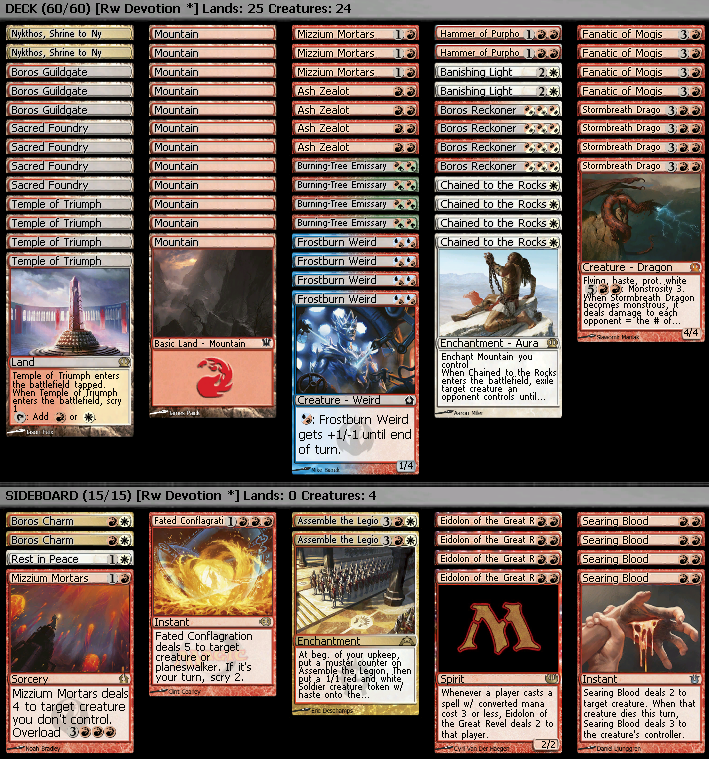
One topic I've yet to discuss in detail is the process of building and tuning an effective sideboard, and then using it practically. When examining top 8 decklists, maindeck configurations of the top decks often stay the same week to week, while the sideboards are in a constant state of flux, sometimes radically different between different players. As a metagame develops, so too does its sideboards.
I am preparing for the SCG Invitational this weekend, so this topic is fresh in my mind; it's a process I am actively engaged in. There is a thought process that winning players go through when approaching sideboarding, and today I'll share what is going through their head, including general theory and practical tips for constructing and tuning an effective tournament sideboard, and using this sideboard effectively.
Rules of the Effective Sideboard
A sideboard deck is used between games of a best-of-three or best-of-five match, where any number of those cards can be substituted for cards from the maindeck. Alternatively, a recent rule change allows sideboard cards to be added to the maindeck without substitution, but, from a practical competitive standpoint, this is a poor idea in all but the most extreme cases because it dilutes the quality of the deck, making said sideboard cards less likely to appear.
A 15 card sideboard constitutes 20% of the total 75 card pool in a deck, and can be used to change up to 25% of the 60 maindeck cards. Sideboards are used for the majority of games in an average match, so they exert considerable influence.
Theory of the Effective Sideboard
The role of a sideboard in tournament Magic is to better adapt the deck to compete against other decks in the metagame. An effective sideboard cannot be built without strong knowledge of an archetype and its niche within the broader metagame. This brings up the matter of determining the metagame for a specific tournament. Assuming perfect knowledge of a metagame, a perfect sideboard could be built for attacking it.
It's a common fallacy for players to fill sideboard cards with cards to combat every deck in the metagame. While this strategy may seem sound, it's often the case that a weak matchup is such a small portion of the metagame that it's wiser to simply ignore it, saving valuable space for more common enemies.
It's also very much possible to "win-more" by bringing in too many cards against an already favorable matchup. It's much more practical to identify a deck's most common, weakest matchups in the metagame and build a sideboard to combat those decks. By attacking the decks that pose the biggest problem, the sideboard can shore up weaknesses in an archetype and give it a strong ground for fighting against the field.
Designing a Sideboard
There are various ways to select sideboard cards. An important trade-off to consider is power versus scope. Often the most powerful sideboard cards will only be effective in one matchup. If the matchup is weak and common enough, then perhaps this sort of card is ideal. Other sideboard cards may be broadly applicable, but not necessarily high-impact. The best sideboard cards will be high in impact and broad in scope, and it's the truly rare sideboard card that scores high in both categories.
For example, I play Duress in my Standard Monoblack Devotion sideboard to combat UWx Control decks.
It removes nearly anything in their hand from turn one to turn twenty, making it quite powerful. And, at one mana, it's quite efficient.
It turns out that Duress is also incredibly effective against Boros Burn, because it gives the black deck a way to interact with the cards in the Burn deck, something it normally has trouble doing.Duress has also proven to be effective at combatting Jund Monsters, because they may play more noncreature spells than creatures post-sideboard , including highly-potent planeswalkers that give Monoblack Devotion fits. For these reasons and more, Duress is very powerful and broad in scope, making it an ideal sideboard card that typically takes up four slots.
Another, more extreme method of sideboarding is to completely change the gameplan of the maindeck. This is a topic I covered over the last two weeks, so check out that series for more information on what's known as the "transformational sideboard", part one, and part two.
One of the most important aspects of sideboarding is not what to bring in, but what to take out.
There are cases where maindeck cards in a matchup are quite weak, such as creature removal against a control deck. In these instances, it's important that the sideboard contains enough effective cards to replace all of the potentially weak maindeck cards.
In a wide open metagame, or in a deck that often has ineffectual maindeck cards to side out, it will be a good idea to fill a sideboard with cards broad in scope.
The Process
When it comes to figuring out what comes in and what goes out, top players already have a plan.
Well before a tournament, players will have already laid their deck out on the table and determined their plan for specific matchups. The sideboard is designed with this in mind and will interface flawlessly with the maindeck, where strong sideboard cards replace the weakest cards in the maindeck depending on the matchup, leaving no useful sideboard card behind and no weak maindeck card remaining.
It's a common flaw for players to fill their sideboards with theoretically strong sideboard cards, only providing marginal value, so it's very important they have a high-enough impact to warrant inclusion. There was a period of time when Monoblack Devotion would play a high number of Dark Betrayal in the sideboard. It was great for combating the mirror match, but players would usually cut Hero's Downfall in order to find room.
Sure, the sideboard card was a bit more efficient, but cutting creature removal for creature removal is not necessarily a sound sideboard strategy. When Pack Rat defined the mirror, Dark Betrayal could be considered a dedicated answer to that card, but the advent of Bile Blight changed the matchup and made the hate unnecessary. Thus, Dark Betrayal has been seen less and less as time has gone on.
~
In a world where maindecks are pined over, shared, tuned, refined, the process iterated constantly, the sideboard is often overlooked, considered a last-minute thing to worry about, even looked at by some as an inconvenience. Remember that the sideboard is an extremely powerful tool, and honing sideboard skills and spending the time practicing and thinking about your matchups will yield dividends to the tournament player.
When it comes to sideboarding, what aspects do you find to be the most troublesome and confusing? Anything you'd like to see me cover? Post in the comments!
If not, now is a perfect time to join up! Our powerful tools, breaking-news analysis, and exclusive Discord channel will make sure you stay up to date and ahead of the curve.
If you haven't heard, Wizards of the Coast/Hasbro has decided to make a feature film about Magic. And if you haven't heard, Game of Thrones is an awesome TV show.
Today, the two meet.
Bryan Cogman, a producer and writer on the acclaimed HBO series, has signed on to write the script for the upcoming Magic movie. I don't know what we can expect, but if it's anywhere even near GoT level, we're in for a treat.
Watch parties at my house every week for this.
There's still no official timetable set for the release of the Magic film, but the process seems to be moving along nicely. At this point, assuming no major holdups, extremely rough estimates say we could be looking at a film in 2016. I know that feels like a long time to wait, but I have faith the wait will be worth it.
And adding any Game of Thrones flavor can only help that.
If not, now is a perfect time to join up! Our powerful tools, breaking-news analysis, and exclusive Discord channel will make sure you stay up to date and ahead of the curve.
Vintage Masters Daily Events, Premier Events, and Championship Events are coming to Magic Online!
When Vintage Masters was announced on DailyMTG last October, Magic players were immediately chomping at the bit to play the set. The Power Nine had been on MTGO since the first iteration of the Holiday Cube, but that was the only place players could get a taste of Black Lotus, Ancestral Recall, and all of their old Alpha (and new Conspiracy) friends.
The wait is nearly over, and now we have a whole smattering of ways to get our fix of sweet sweet #MTGOVM goodness!
Vintage Masters Prerelease
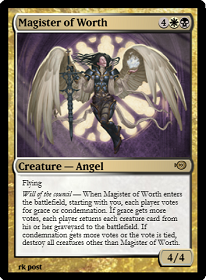
Vintage Masters prerelease events take place starting June 13 at 10am Pacific Daylight Time (or PDT), with the official full-on Magic Online release coming on June 16, 2014, at 10am PDT. Prerelease events like Sealed and Booster Draft will continue through the release week though, so you have a good long time to get the Vintage Masters Magister of Worth promo card and limited time only Black Lotus and Dack Fayden avatars.
Beginning after the downtime on June 11, a slew of new events come online. Vintage Constructed Daily Events (or DEs) will be added to the schedule. Additionally, on June 13 Vintage Premier Events (or PEs) and Legacy PEs will replace the Theros Block PEs currently on MTGO. And if that isn't enough old-school Magic to get you through the day, Vintage and Legacy 8-player and 2-player queues will also be added during the usual Wednesday downtime.
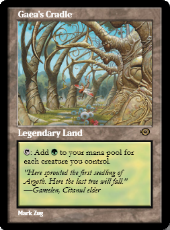
With the increased emphasis on Legacy, June's Magic Online Championship Series promotional card, Gaea's Cradle, should be a nice little pick-up as well. Seeing as Elves has been putting up some solid results on the Legacy scene recently, and given the popularity and rarity of the Urza's Saga legendary land in casual formats in addition to Eternal ones, I'd go ahead and try to get my hands on a Cradle or four before they're all snatched up.
You can also just keep on drafting Vintage Masters and playing Sealed as well. In fact, Sealed DEs featuring Vintage Masters will be coming right along after the release events end. Starting July 2, Vintage Masters Sealed DEs will be coming to a computer screen near you.
Vintage Masters Championships
And there's an even bigger stage for Vintage Masters, with one heck of a prize pool to go along with it: Vintage Masters Championships. Vintage Masters Limited Championship Qualifiers and Vintage Masters Constructed Championship Qualifiers are coming in mid-August. We don't have full details of the events themselves, but we do know first prize for both: a full foil playset of Vintage Masters, a full non-foil playset of Vintage Masters, 15 Vintage Masters booster packs, and 15 Qualifier Points (or QPs).
Vintage Masters Payout Packs
To round out the updates Vintage Masters brings to Magic Online, all Legacy and Vintage Constructed events will award Vintage Masters booster packs beginning on June 11!
In Conclusion
I'm not a MTGO scientist, so I have no idea whether or not the payouts in the Vintage Daily and Premier Events are going to appease the ravenous serial MTGOer. I do know that the huge top-end of the Championships events makes me think they want players to love the entire experience, and not just have to slog through less than stellar events just to get their hands on Time Walks.
Of course, Vintage Masters was always going to be a home run in my book. I mean, how could it not?
If not, now is a perfect time to join up! Our powerful tools, breaking-news analysis, and exclusive Discord channel will make sure you stay up to date and ahead of the curve.
If you're not excited about Vintage Masters, you're likely doing it wrong.
However, some people are more excited than others. I can scarcely blame you for not jamming a bunch of online events, hoping to get VMA (that's what the cool kids call "Vintage Masters") packs as prizes to bust them. I'm not that excited.
Still, the possibility of playing Vintage Masters online is too good to pass up. Here's the skinny.
Starting yesterday, all Legacy and Vintage constructed events offer VMA boosters as prizes. Go jam some and get your hands on some loot. Each pack is a mega millions lotto ticket. You started playing Magic in 2003 and never had a chance to pack a Black Lotus? Well now you can pack a foil. I know the card is not real, but try telling someone who opens a foil Lotus it isn't real. Try telling them.
Also, they will be introducing Vintage Masters Sealed Daily Events. The Dailies will run at 7:30 AM, 2:30 PM and 7:30 PM every day starting July 2nd. These are no replacement for dailies in other formats, but it's a chance to get in on some sweet VMA action, and who doesn't want that? Not you! You don't...not want it. I'm confusing myself, let's move on.
Boom. This graphic was so good I had to swipe it.
Starting in August, there will be a VMA championship which promises 2 full sets of VMA to the winner and 15 QP and also promises to crash. Like, no way it doesn't.
Get online, play some Vintage Masters and open some foily goodness.
Got plans to jam some events? Leave it in the comments. Good luck!
If not, now is a perfect time to join up! Our powerful tools, breaking-news analysis, and exclusive Discord channel will make sure you stay up to date and ahead of the curve.
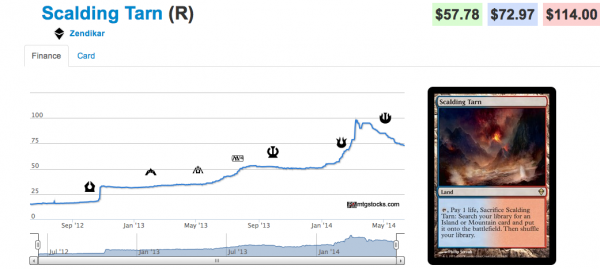
Modern season has finally arrived, and now all of our cool cards will spike and we’ll be able to make some big money. $100 fetchlands are back and everything else is coming along for the ride.
Yeah, this isn't rebounding soon.
Wait, what?
This graph is not alone. Across the board, Modern staples like Restoration Angel or Birthing Pod are actually still dropping in price. How can we explain this, since the notion of “card prices going up in season” has always held true before?
I have a theory. And while it starts with some bad news, it gets better before the end, I promise.
The Run-up
It began with Modern Masters. Demand for Modern cards began to spike. The MTGFinance subreddit also took off and pushed some truly random cards up in price, and like that we were off to the races with Modern prices.
Things finally came to a head in Richmond when fetchlands hit $100. I talked last week about how this was an important mental turning point for people, and it would seem that this sentiment extends beyond just the fetches.
I advised getting rid of fetchlands at the $100 Richmond peak, but I sure didn’t expect the rest of Modern to follow suit and trend downward. This is the first time in modern Magic history that we’ve seen card prices go down in-season. I’ll repeat that: This has never happened before. PTQ seasons used to be very predictable. Extended staples would blossom in the first few weeks of the PTQ season before falling off at the end and for the rest of the calendar year.
The takeaway from the trend this season is that demand for Modern is being driven not by the hardcore PTQ grinder crowd, but by the larger Magic community. That includes players who want to go to a Grand Prix because it’s the big Magic convention that comes around every few years but don’t want to drive across state lines to hit up multiple PTQs.
So I’ll make a bold claim that’s been gnawing at the back of my mind for a couple of months now, even though I’ve pushed it off because it goes against all precedent: Modern prices are not going up anytime soon.
If PTQ season isn’t enough to even stop downward trends, what is enough to make Modern prices rebound? We’ll get to that in a bit, but the important thing for now is the question of how to handle our Modern stock for the next few months.
Like many of you, I have piles of Restos and Pods and Scars fastlands and Kitchen Finks. Four months ago, even amidst the run-up of cards across the board, I thought Modern season would lift all of these. That was the clear time to sell as prices would skyrocket.
Except it hasn’t happened.
Now, maybe it will. Maybe I’m wrong and the market is simply lagging a bit. But I seriously doubt that at this point, and I’m more convinced every day that goes by and MTGStocks doesn’t change.
Sell now.*
Prices on these staples aren’t going up in the next few months. On the contrary, they’re headed lower as we get out of PTQ season and into the rotation waiting game. We’ll see plenty of movement on Standard cards in that time, and all anyone will be talking about is how their cool new deck is insane after rotation or how awesome the mechanics are.
The one thing they won’t be talking about is Modern. And prices are going to feel it.
Now for the *
There won’t be a freefall. The bottom isn’t sinking beneath us. But the tide has stopped rising, and that means we won’t be seeing the growth we want. Prices will continue to drift downward without tanking, and it’s probably not a great idea to sell off your entire Pod deck with the expectation of it being half the price six months from now because I told you it was time to sell.
No, what I’m talking about instead are those borderline Modern specs. The Serum Visions. The Inquisition of Kozilek. The Kitchen Finks and Tectonic Edges.
The reason comes down to opportunity cost. You will be able to reacquire these cards in six months at prices lower than current numbers(^), so there’s nothing wrong with taking your profits and having that money available for the typical rotation plays.
And if you haven’t, you should most definitely sell your fetchlands.
Now the ^ and the Future of Modern
I don’t want all that to come off as doom and gloom; it’s simply how I see the market right now. So let’s move onto some happier news.
First, Modern is not dying. The format is great, Wizards continues to support it, players continue to play it and that’s not changing. But it is in a lull for the next few months, until the next catalyst for growth comes along.
Which is where the ^ comes in. In terms of newfound growth, there are exactly two things that will make this happen. The first is the announcement/release of Modern Masters 2. I think we can be reasonably confident it’s going to happen, and I’ve always pinpointed summer 2015 as the time period where that is likely to happen.
The second is obvious, and possibly connected: the reprinting of fetchlands.
This could be in Modern Masters 2. It could be in a Standard-legal set. I don’t know where or when it’s going to happen, but if they do to fetches what they did to shocks (and I expect them to), Modern will explode again. That’s when you pick up all those specs again, because stuff like Restoration Angel or Path to Exile or Spell Snare or Razorverge Thicket will be along for the ride.
Going off of what Aaron Forsythe said of my podcast, Brainstorm Brewery (Sig covered it well here), I expect that to come sometime next year. If they surprise us and it’s in the fall set, then I’m sorry in advance for telling you these cards will be cheaper in six months. But hey, at least I included a ^ to hedge!
Anyway, we’re all speculating here of course; I’m simply confident in how I’m reading the market and know that I’m right there alongside you.
An Action Plan
Here’s how I plan on handling Modern cards at my store for the next year.
Try to actively sell the current crop of Modern staples that are at a medium-term peak over the next few months. Don’t buy more aggressively.
Come rotation when everyone else is worrying about Standard, I want in on Modern staples again, which I believe will be at a lower price point than currently.
When the next catalyst comes, aggressively buy staples across the board.
A year from now (or longer, if Wizards is that slow)? Profit.
That’s where my head is at right now. What about you?
If not, now is a perfect time to join up! Our powerful tools, breaking-news analysis, and exclusive Discord channel will make sure you stay up to date and ahead of the curve.
One of the biggest events you can qualify for is almost upon us once again. Both Star City and TCG Player hold invitation-only tournaments and they are well worth your efforts to qualify for. Think of them as Grand Prix level events with larger payouts. One of the major skill-testing aspects of these types of events is that they require multi-format skills. Star City uses Standard and Legacy while TCG Player uses Standard and Modern.
There are many ways to qualify for both events but one of the best ways is to attend local qualifiers. This past weekend, my store hosted a SCG IQ and I was one round away from a last minute trip to Columbus for the Invitational.
The deck I’ve been playing at competitive level events for a while now is Mono-Blue Devotion. It always has game against every deck and since it has fallen out of favor lately, many players are not prepared for it. After it won the last Star City event, more players will pay attention to it again but it’s always a solid choice.
Here’s my slightly different version. You cannot change the deck much but there are a couple slots that you can use for some wiggle room and change depending on which decks you think will be the most popular.
Mono-Blue Devotion
Creatures
4 Cloudfin Raptor
4 Hypnotic Siren
4 Tidebinder Mage
4 Frostburn Weird
4 Nightveil Specter
4 Thassa, God of the Sea
4 Master of Waves
Spells
1 Rapid Hybridization
1 Cyclonic Rift
1 Claustrophobia
1 Hour of Need
1 Bident of Thassa
2 Hall of Triumph
Lands
3 Mutavault
2 Nykthos, Shrine to Nyx
20 Island
Sideboard
1 Pithing Needle
2 Negate
3 Thassa's Emissary
1 Bident of Thassa
2 Domestication
1 Curse of the Swine
1 Triton Tactics
1 Cyclonic Rift
1 Claustrophobia
1 Jace, Architect of Thought
1 Mizzium Skin
These are the 75 cards that I like the most in Standard right now. I’ve changed the spell slots in the main deck many times but the 75 has not changed much as a whole.
There are some interesting choices in my version of the deck. They are chosen based on the way I find success playing the deck. Overall though, most games play out like every other blue devotion deck. If you have questions, feel free to bring them up in the comments.
One of the biggest reasons to play this deck is its positive win percentage against the format's most popular and successful deck, GRx Monsters. Any green midrange deck should be a good matchup for this deck because they cannot keep up with your consistent curve of creatures. The fact that many of your creatures fly gives this deck a giant advantage as well.
If I were going to the Invitational, I would be channeling my inner Ross Merriam. I’m sure you’ve heard by now, but he’s the guy who won the SCG Open with Mono-Blue Devotion and then lost in the finals of the Legacy Open with Elves. Coincidentally, those are the two decks that I would be playing in the Invitational if I had won my bid. Both decks are great choices for their respective formats and should not be underestimated.
Finance Updates
Enough about the same mono-blue deck that has been doing well for six months and onto some finance.
The recent release of Conspiracy has brought to light some important finance topics that need to be talked about. Let’s start with the set itself. There are a number of high-profile, Legacy-playable rares that were reprinted in this set. Even printing some of these as mythics in the set has not stopped their prices from dropping drastically. Here are some specific cards that I’m referring to.
Stifle $12
Exploration $10
Mirari's Wake $8
Pernicious Deed $8
Misdirection $7
Reflecting Pool $6
Most of these cards can now be bought for half or less of their previous printed versions. Conspiracy seems to be a hit among most of the Magic population which means a lot of packs will be opened. Most of the set will be opened to draft but without much demand for these specific cards, their prices will most likely stay low at least for a while. With M15 being released in about a month (7-18-14), players will have a number of weeks to draft this fun set.
Despite these cards dropping in value, their foil versions have not dipped as much as I predicted. We still have time to increase the supply, but initial price trends lead me to believe that the foils won't be as cheap as I believed. There are more than just a couple foils worth over $40 in the set so keep your eyes peeled for them in trade binders.
I am aggressively buying into Council's Judgment because it seems poised to drastically impact Legacy. As an non-targeting way to deal with problematic Legacy permanents, the current $10 price tag seems low to me. Get these now while you can.
Conspiracy and M15 being released this summer will impact Magic finance in another way as well. Both of these sets are disrupting the supply of Journey Into Nyx. Why draft boring old Theros block when you can draft a fun interesting new set like Conspiracy? I've heard this a number of times at my store and I'm sure players all around are leaning the same way.
Sure some stores will still draft Theros block, but not nearly as many players will be drafting this set as they typically would be. What will the implications of this underdrafting be? It seems likely that fewer drafts will increase the cost of in-demand cards in the set. This will create opportunities for prepared financiers like yourselves to profit.
Cards to Watch
[cardimage cardname='Temple of Malady'][cardimage cardname='Temple of Epiphany']
It may seem obvious but I think all of the temples are great investments right now. They are likely at their lowest point and worth stocking up on. Start now if you have not already and get as many temples as you can. Specifically these two temples seem like great investments because of their short supply.
Prophetic Flamespeaker seems like the perfect card to spike once Standard rotates. Not only is it a very powerful card, but it lacks the support cards necessary to make it in Standard. With Modern implications as well, this is a great card to start trading into.
[cardimage cardname='Kruphix, God of Horizons'][cardimage cardname='Pharika, God of Affliction']
The gods from this set have had little to no impact on Standard. Nobody knows which ones will impact the new Standard format in the fall, but it's likely at least one of them will. I'm stocking up on copies of each of these. Worst case, they will hold casual appeal, but best case, one of them spikes when a new deck emerges.
Are there any other Nyx cards that you predict will increase in value in the coming months? Post your thoughts in the comments.
If not, now is a perfect time to join up! Our powerful tools, breaking-news analysis, and exclusive Discord channel will make sure you stay up to date and ahead of the curve.
I know that normally I write finance articles, but as a Legacy aficionado who just played in a Legacy SCG-IQ, I felt this was the perfect opportunity to write up a tournament report. Let's start from the beginning.
Pre-Tournament
The first thing one must decide before a tournament is what deck to play. Certain factors help contribute to the decision. 1. What cards do you have available? 2. What decks do you expect to play against? 3. What decks do you feel comfortable piloting?
For #1, I've invested a lot into my Legacy collection, which greatly reduces the decks I can't play due to card availability. That being said, there are still some decks I can't play--High Tide and Imperial Painter come to mind.
For #2, It was an SCG-IQ but we expected attendants from all over the state and a lot of different tier 1 archetypes. This is important to note because at small local tournaments with a smaller player pool it is often wiser to pick a more explosive "glass-cannon" style deck (like Dredge, Ooops All Spells, Cheerios, etc.). This also means that whatever deck I pick needs to have a chance against a large variety of good decks.
For #3, I have extensive playtesting experience with Miracles, Maverick, Dredge, and Storm. However, recently I've been playing Miracles the most and it's the deck I am most comfortable piloting.
Once an archetype is chosen (in this case Miracles), my next step was choosing the exact build. The beauty of Legacy is that several different builds are available for many deck archetypes, which can be tweaked based on the pilot's skill and the expected field.
As a lot of Delver and X-Blade decks have been doing well on the SCG circuit recently, I expected a higher count of this archetype. Therefore, I wanted to play the U/W/r Miracles version that has the most play against them.
This is the decklist I chose:
UWr Miracles
Creatures
3 Vendilion Clique
2 Snapcaster Mage
1 Venser, Shaper Savant
Artifacts
4 Sensei's Divining Top
Enchantments
4 Counterbalance
Sorceries
4 Terminus
2 Entreat the Angels
Planeswalkers
3 Jace, the Mind Sculptor
Instants
4 Force of Will
4 Brainstorm
2 Swords to Plowshares
1 Pyroblast
1 Spell Pierce
2 Counterspell
Lands
3 Tundra
1 Volcanic Island
1 Mystic Gate
4 Flooded Strand
4 Scalding Tarn
1 Arid Mesa
4 Island
3 Plains
1 Mountain
1 Karakas
As you'd expect, the main deck needs to cover a lot of different bases (based on what you're playing against) and the sideboard cards need to shore up any known weaknesses.
For this tournament I chose to play the following sideboard:
Card
Reason
2 Rest in Peace
Best graveyard hate for white
2 Flusterstorm
Storm hate
1 Pyroblast
Best anti-blue card
1 Red Elemental Blast
See above
1 Supreme Verdict
Uncounterable Wrath for tempo/creature decks
2 Ensnaring Bridge
Sneak & Show and Reanimator hate (also splash against larger creatures)
1 Relic of Progenitus
More graveyard hate (good against RUG)
1 Pithing Needle
Planeswalker/universal hate
2 Wear // Tear
Equipment hate with splash hate for Enchantress/MUD
1 Izzet Staticaster
Hate for all small swarm style decks (Elves/Goblins/Death and Taxes)
1 Swords to Plowshares
Extra removal spell
Now that the deck and sideboard are set let's begin with the actual tournament results.
Tournament
Round 1 vs. RUG Delver
Game 1:
He won the die roll and proceeded to play a turn one Nimble Mongoose. I tried to chump block with a Snapcaster on turn two, but he had the Lightning Bolt for it and by the time I finally killed the Nimble Mongoose (with a Vendilion Clique), it had already knocked me below 10. A Tarmogoyf finished me off while I durdled about looking for a Terminus.
Sideboard:
-1x Venser, Shaper Savant
-1x Spell Pierce
-3x Vendilion Clique
-1x Jace the Mind Sculptor
+1 Pyroblast
+1x Red Elemental Blast
+2x Ensnaring Bridge
+1x Swords to Plowshares
+1x Relic of Progenitus
The reasoning for this board plan was that RUG Delver plays few threats, though very quickly. Therefore, my goal is to stall them, hopefully at enough life to stabilize and avoid being burned out.
Game 2:
I managed to slow his game plan down a bit and stick an Ensnaring Bridge, however he was able to get in enough pings with an un-thresholded Mongoose to get me down to 8. I got my JTMS up to 12 loyalty counters, but the turn before I could ultimate he was able to burn me out.
0-1
Round 2 vs. Imperial Painter
Game 1:
He won the die roll and played a Mountain turn one. This led me to believe he was playing either a Painter deck, Sneak and Show, or Mono-Red Sneak Attack.
I played a turn one Island and passed with Spell Pierce up. He then played Ancient Tomb and a Painter's Servant. I played a Scalding Tarn (as I had a Swords in my hand) and passed. He then played a Blood Moon and with that on the stack I had to fetch for a Tundra and send his Servant plowing.
From this point forward I ripped fetchland (read Mountain) for four turns in a row while he played a Simian Spirit Guide and proceeded to beat me down with the 2/2 monkey. I eventually drew into a JTMS, Terminus, and Venser...all while having only the basic island and a bunch of mountains in play. Thus, I died slowly and awkwardly to a Simian Spirit Guide.
I started with Island into Top. He played a turn one Mountain, I then fetched another basic Island and played Counterbalance. He forgot that Pyroblast can counter a blue spell, allowed the CB to resolve, and I proceeded to float an Entreat (for its three CMC) and a Brainstorm on top while filtering through cards. When I had a strong hand of counterspells, I entreated for five and finished him off the next turn.
Sideboard: No changes
Game 3:
He went Mountain, Spirit Guide, Spirit Guide, Blood Moon...right into my Force of Will. I played a Top and next turn he played a second Mountain and dropped Painter's Servant. In hand I had Scalding Tarn, FoW, Brainstorm, Pyroblast, and something else. As he had already used up two Spirit Guides I figured the likelihood that he'd have another was very slim (just as he assumed I wouldn't have another Force). I let it resolve; he named blue as expected. I played my Tarn, fetched out the Volcanic Island and Pyroblasted his Painter's Servant.
We played draw-go for awhile while I played lands. I got my JTMS in play and fatesealed him up to 11 loyalty. I then top-decked an Entreat for four angels (leaving up Red Elemental Blast). I let him keep the Pyroblast I'd fatesealed, he used it on JTMS and proceeded to die to the angels.
The reason I left the Pyroblast was that I knew he'd blow it on the JTMS immediately and more importantly I'd already decided I was going to win with the angels as he had no maindeck out to them (and letting him blast it meant he wouldn't draw the Grindstone that he could have potentially top-decked).
1-1
Round 3 vs. Esper Deathblade
Game 1:
I won the die roll and started with basic Island into Top. He played a fetch and passed. I went for a turn two Counterbalance with Force backup. He Forced it, I returned the favor and locked him out when he played nothing on turn two. I played a turn five Vendilion Clique (holding up two lands to Counterbalance/Top) and beat him down.
I knew he played True-Name Nemesis and while I could try to fight over them with Pyroblasts, targeted removal was really only good against the Stoneforge Mystics themselves (and Blade players will tend to go for the Sword of Fire and Ice first because it's doesn't get stranded in their hand if the SFM gets killed). Ensnaring Bridge and Verdict gave me solid answers to resolved threats.
Game 2:
He resolved two Meddling Mages, naming Terminus and Entreat, and a Vendilion Clique which tucked my Wear // Tear. Unfortunately for him I happened to draw the Supreme Verdict, wiping away his board.
I Cliqued him on my turn to see a hand of Swords to Plowshares, Batterskull, and Helm of Obedience (which he'd sided in thinking I was still playing my RIP Helm Miracles build). I tucked the Swords and counterbalanced his Helm with a JTMS, and then counterbalanced his Batterskull with a Force I'd been floating (ideally to counterbalance his Force if he forced my Jace). He conceded when I untapped and started fatesealing him with Jace.
2-1
Round 4 vs. MUD 12-Post
Game 1:
I won the die roll, played my fetchland into Top. He attempted to cast a turn two Chalice of the Void for 2 (which I Forced). I stuck a Counterbalance. He played a Wurmcoil Engine. I played a Jace and unsummoned it. He played it again. I bounced it again. I countered it with a Terminus off of Counterbalance, which was pretty awesome.
He then cast a Karn Liberated which exiled my JTMS. Then he exiled a card in my hand, then my Counterbalance. Cast another Wurmcoil (which I Terminus'd) and then he cast a third one. I died to that one.
As I didn't expect to Counterbalance lock him out of this game, I was going for the hide behind Ensnaring Bridge, Jace him to death plan (with Pithing Needle for Karn).
Game 2:
I got my turn one Top and he played his first locus land. We played draw-land-go for a while and then he stuck a Trinisphere (which by this point I didn't care about) and a Chalice for 1 (which was a pain, but not a stop to my end game).
He then proceeded to drop Metalworker, Staff of Nin, and a Blightsteel Colossus. I sent the creatures packing with a well timed Terminus and I Weared his Staff of Nin (which I have to admit is the first time I've ever had to do that). He proceeded to draw another one and a Staff of Domination.
I was again able to Wear the Staff of Nin and Snapcaster, Wear the Staff of Domination, but not before he dumped a bunch of mana and draw five cards. After this it was him simply playing Wurmcoils and Kuldotha Forgemasters until I ran out of answers.
2-2
Round 5 vs. Storm
Game 1:
He won the die roll, but mulliganed to four. I managed to get my turn one Top (with a Force of Will and Snapcaster just in case). He proceeded to not draw lands and I stuck a Counterbalance. He conceded when I untapped with the lock.
Sideboard:
-4x Terminus
-2x Swords to Plowshares
-1 Venser, Shaper Sevant
-1x Jace, the Mindsculptor
+2 Flusterstorm
+2 Rest in Peace
+1 Relic of Progenitus
1x Pyroblast
+1 Red Elemental Blast
The cards I swapped out were almost 100% dead or too slow against Storm, whereas what I brought in all had some value (especially when they go for the Past in Flames kill).
Game 2:
He mulliganed to six, but my hand was 2x fetchlands, 1x plains, 1x Spell Pierce, 1x Flusterstorm, 1x Relic of Progenitus, and 1x Jace. He didn't go off on turn one, I draw a counterspell. He tried to Ad Nauseam on turn two with no mana floating so I Spell Pierced it.
I drew a Vendilion Clique and played my remaining fetchland. He drew and passed, I played my third land and the Relic. He attempted to go off on his next turn and when he cracked his LED with the Infernal Tutor on the stack, I just flat out countered the Infernal Tutor and he conceded.
Final: 3-2
Post-Tournament
Unfortunately my tie breakers weren't all that great and I landed in 12th place. However, I do feel that my deck choice for the tournament was a good one (there were a lot of creature-based decks that would have a hard time beating 4x Terminus) and the deck is extremely powerful and resilient.
Going forward I would likely cut the red from the deck. There are very few instances in which I can fuse Wear // Tear (and since Wear was the mode I used the most, I paid two mana for a more restricted Disenchant). The lack of a lot of blue decks also made the Pyroblasts and Red Elemental Blasts somewhat underwhelming, though I imagine in other larger venues they would pull their weight more.
I realize that with Legacy many players think that you can splash a color with virtually no cost, but weakening your mana base is a cost and it's one that should definitely be considered and weighed against the possibilities.
If not, now is a perfect time to join up! Our powerful tools, breaking-news analysis, and exclusive Discord channel will make sure you stay up to date and ahead of the curve.
The most major change that I could see making to the maindeck is turning a couple Mountains into Mana Confluences. They hurt the Burn matchup, but I think that you might have to get lucky to beat them anyway.
Speaking of the Burn matchup, I have been extremely unhappy with Nyx-Fleece Ram as an answer to that deck. I've certainly been hosed to Ram out of other decks while playing Burn, but the card just hasn't had the same impact in the Devotion shell.
There was an error retrieving a chart for Nyx-Fleece Ram
At face value, the card seems totally fine. It gains life and it blocks Mutavault and Eidolon of the Great Revel. However, as a deck's only lifegain spell, it doesn't really do a lot. Even when you have it on turn two, it doesn't do much more than a Healing Salve would over the course of the game, excluding blocking. More importantly, it doesn't do anything on-plan with the rest of the deck--namely, it neither adds devotion or attacks for any damage.
This deck is intent on controlling rather than attacking, and Nyx-Fleece Rams play a similar role to Courser of Kruphix against Burn, adding some redundancy to the slow life gain package. The potential constellation triggers also make Ram worthwhile off the top of the deck.
After playing a game where I gained six life with a Ram on board, still losing relatively convincingly to Burn, I began pondering whether the card was to blame or if the game was just a fluke. This got me thinking about a very different sideboard card from many years ago.
There was an error retrieving a chart for Raking Canopy
If you're not familiar with Raking Canopy, it was a card that, on the surface, seemed to be an option to combat the menace that was Blue/Black Faeries. It killed any of their non-Mutavualt creatures all the way up to Mistbind Clique while ignoring the protection granted by Scion of Oona.
The major problem with Raking Canopy, however, was that it was purely reactive and didn't put any pressure on the Faerie player. Just waiting around and eventually using a Cryptic Command to bounce the enchantment could easily defeat this type of hate. And that's just ignoring the fact that they could simply counter it on the way down in the first place.
Later, these guys showed up and demonstrated what truly hateful sideboard cards looked like:
Now that's some real hate. These cards could outright embarrass Faeries, making every life lost from Bitterblossom all the more relevant. Fallout in particular played to all of the deck's weaknesses and could create games that were just unwinnable for the Faeries player.
Nyx-Fleece Ram, as a singular card, doesn't have the ability to completely change the pace of many games on its own. Additionally, it doesn't address the biggest problem that Red Devotion actually has against Burn--Searing Blood is a huge beating. There's really nothing that a Devotion shell can reasonably do that beats Searing Blood while staying competitive against the rest of the deck.
The second biggest problem is that an unanswered Eidolon of the Great Revel puts the Burn player unequivocally in the driver's seat.
You know what they say though. If you can't beat 'em, join 'em.
RW Devotion
creatures
4 Ash Zealot
4 Frostburn Weird
4 Burning-Tree Emissary
4 Boros Reckoner
4 Fanatic of Mogis
4 Stormbreath Dragon
spells
2 Hammer of Purphoros
2 Banishing Light
3 Mizzium Mortars
4 Chained to the Rocks
lands
2 Nykthos, Shrine to Nyx
4 Sacred Foundry
3 Boros Guildgate
4 Temple of Triumph
12 Mountain
sideboard
2 Boros Charm
1 Mizzium Mortars
2 Assemble the Legion
1 Rest in Peace
4 Searing Blood
1 Fated Conflagration
4 Eidolon of the Great Revel
Obviously Searing Blood is more on-point out of the Burn deck, but it can generate the same kind of tempo swing from this side of the matchup. It can take care of Mutavault, "reset" a Chandra's Phoenix, and, most importantly, answer Eidolon of the Great Revel.
It's also obviously very good against anything resembling a mirror and it adds a lot of power against aggressive decks. Previously, Red Devotion had to play a controlling game against anything aggressive until it could go over the top and find a path to victory. While it still plays a similar roll with Searing Blood in tow, a removal spell with a Lava Spike tacked on makes turning the corner much easier.
There was an error retrieving a chart for Searing Blood
I can see the argument for maindecking some number of Searing Blood. When it's good, it's really good, and you already have so many dead cards against control decks anyway. It's not nearly as good in Devotion as it is in Burn, in part because the Lava Spike is less on-plan, but primarily because it doesn't combine with other cards in the deck as well. I've won a number of games by throwing a Mizzium Mortars and a Searing Blood at a Desecration Demon, but that's not a line that you can really depend on.
Some potential small changes aside, I've been very happy with this strategy and these spells. Banishing Light has been an awesome boon for this deck and Eidolon of the Great Revel comes in and does work against control, Black Devotion and, surprisingly, Hexproof.
With some good draws, I could see putting up some great results. As for Legacy, I'll be sticking with old reliable, aka RUG Delver.
Have any last-minute changes that you'd recommend for my list? Have a more convincing sideboard plan against Burn? Let me know in the comments section.
Thanks for reading.
-Ryan Overturf
@RyanOverdrive on Twitter
Want Prices?
Browse thousands of prices with the first and most comprehensive MTG Finance tool around.
Trader Tools lists both buylist and retail prices for every MTG card, going back a decade.