Are you a Quiet Speculation member?
If not, now is a perfect time to join up! Our powerful tools, breaking-news analysis, and exclusive Discord channel will make sure you stay up to date and ahead of the curve.
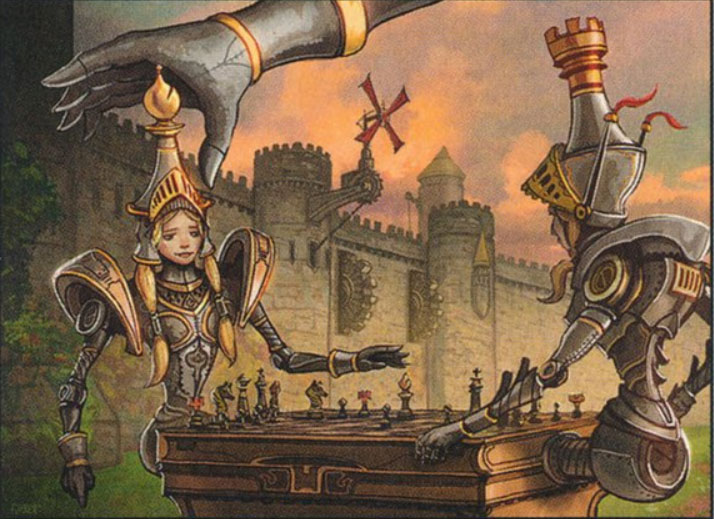
If you follow me on Twitter, you may have noticed that I haven’t tweeted much recently. I mainly use the account for engagement with the Magic community, and I haven’t really played Magic for a few months. At one point I was jamming as many games on Arena as I could, striving to hit Mythic every month. Now my free time has centered around a different game: chess.
Personally, there are some components to chess that Magic lacks, which I really appreciate. First and foremost, there’s no “luck” in chess. Outside the random chance of blundering a piece or having your opponent blunder a piece, the game starts the same way every time. Whether you win or lose depends solely on skill. I also appreciate chess’s ELO rating system (which incidentally, used to be reapplied for Magic ratings). When every game impacts your rating and global rank, it feels like every win counts. There are meaningful games that impact ranking on Arena too, but gold/diamond/etc. doesn’t carry the same weight as a precise number, in my opinion.
Obviously I can’t write about chess finance or ladder my interest in the hobby back to Magic finance. But I did come up with a clever idea for this week.
I’ve been watching this one Grand Master’s YouTube series, where he plays through games of chess and explains to the viewers his moves along the way. His name is Daniel Naroditsky, and if you’re interested in learning more about chess I highly recommend his YouTube channel. It’s been extremely helpful to watch. Now that I’ve watched over 70 of his videos, I’ve learned a few rules of thumb that he likes to repeat while he plays. I’m going to take some of those phrases and re-tool them to describe Magic finance strategies. The parallels won’t be perfect, so I ask readers for a little creative license here. With some luck, there will still be some useful tidbits.
Prepare Slow, Attack Fast
This phrase could describe some Magic decks. Combo decks come to mind—when I used to play Ad Nauseam in Legacy, I would spend the first couple turns to cast a few cantrips and disrupting my opponent’s hand. My opponent would always know when I was launching “the attack” because I’d get out a die to keep track of the storm count!
As it turns out, this is a reasonable strategy in chess as well. I have found that if I attempt to launch an attack prematurely, before developing my pieces optimally, a capable opponent is able to thwart my efforts. This leaves me licking my wounds (likely leading to a loss).
But how does this concept apply to Magic finance? When speculating on a card, especially a card with a long-term time horizon, sometimes it is wise to accumulate the card slowly and be prepared to sell quickly. If a new card is printed and is clearly a powerful Commander staple, it may be wise to acquire a bunch of copies. But new cards that only see play in Commander take a while to appreciate in price. If you rush out and buy a ton of copies day one, you may be overpaying. In these situations, I’d recommend gradually purchasing copies, allowing the price to come down a bit post-release and helping you cost average your investment.
Then when the time comes and the card spikes or reaches that inflection point, it’s wise to cash out fast. Reprints are everywhere these days, and you never know when your spec will get hit with fresh, new supply. That’s why I advocate cashing out quickly when the time is right!
A good example of this is Sliver Hivelord.
If you had bought the Magic 2015 mythic rare upon release, you would have bought in too early. The card’s price hit a bottom a few months after the set’s release. Then the card’s price languished for a few years; this would have been the best time to gradually pick up copies. Then, once new slivers were revealed in a recent set, the card spiked to $40. But it didn’t hold that price point for long—this would have been the prime opportunity to cash out fast. Funny enough, the card recently spiked again to $40, but is already on a downward trajectory. So in this case, you had a couple chances to sell out before a major reprint. Sometimes, we don’t get a second chance!
Knights on the Rim are Grim
This is one of my favorite chess sayings. In the game, it refers to the fact that placing your knights on spaces near the edges of the board limits the number of spaces the piece has access to. Thus, they are “grim” in their prospects.
With a little creative license, I can relate this to Magic finance pretty easily. The rule of thumb would be that cards that are only played sparsely, especially in sideboards (i.e. the “rim”), have grim prospects for financial gains.
It is trivial to suggest that cards that see more play have more upside, all other things equal. While sideboard cards have their place in decks, the reality is such cards don’t offer the same upside potential as cards that see any significant play, especially as a 4-of, in the main deck. That’s not to say that sideboard cards can never be valuable—there have been numerous costly sideboard cards across the history of the game. Leyline of the Void and Leyline of Sanctity come to mind readily. And there was a moment when Rest in Peace was a $10 card.
But in general, sideboard cards don’t have as much upside potential as cards that are played in the main deck. A recent example is Modern sideboard card Plague Engineer.
Modern Horizons cards that dodge reprint are likely going to be hot as in-person Magic events resume. We’ve already seen some cards in the set climb. While Plague Engineer has its place in Modern sideboards, it really can’t be justified in the main deck as it would be a poor draw too much of the time. Stuck in the sideboard, the card’s price growth is relatively limited; I would much rather buy the cycle of dual lands in the set, or perhaps Altar of Dementia, a Commander staple, despite the multiple reprints.
Not Every Piece Has to be an All-star
I’m paraphrasing this last chess concept because Daniel Naroditsky varies this one a bit. One of my favorite versions is, “Not every piece has to be out there finding a cure for COVID.” What he means is, while it’s nice to develop each piece on an optimal square, the reality is that you can’t do that perfectly in every game. Sometimes, you just need to accept the fact that a piece needs to be a bit more passive, at least temporarily.
I can translate this to Magic finance when I think about the diversification of my collection. While I would love all cards I purchase to be homerun specs that spike quickly and leave me with hefty profits, I have to recognize that this isn’t really feasible. There are times when we need to be okay with throwing some cards in a box for a couple years in the hopes that the spec pays off.
In both Magic and stocks, I am an advocate of diversification. It is wise not to over-expose yourself to a single card or format because you leave yourself vulnerable to reprints and shifts in the metagame. While it’s fun to buy dozens of copies of a new, flashy card, it’s also wise to find those slow-and-steady growers and sit on them for a couple years.
Of course, the exception here is the Reserved List. Cards on the Reserved List cannot be reprinted, and are from the game’s earliest days; both factors make for a wise investment, which is why Reserved List cards have overheated recently. But even still, I recommend diversifying—all the Reserved List cards feel overpriced currently, so if you want to put money to work, it probably needs to be something else. I cannot support buying some of these cards… I mean, $30 for Spiritual Sanctuary? Come on, now!
It’s probably worth diversifying and picking up a smattering of newer cards. The triomes from Ikoria seem like good medium-term investments as long as they dodge reprint. The same can be said for the pathways from Zendikar Rising and Kaldheim, which will likely be mainstays in Standard and Pioneer. Or if you want a penny stock, I still have a stack of Genesis from Modern Horizons and Ruin Crabs from Zendikar Rising—I’m hoping to cash out of these at a buck apiece at some point in the future…distant future, perhaps. But my entry price was low enough that I don’t mind the wait.
Wrapping It Up
Daniel Naroditsky has taught me a great deal about chess strategy and in an entertaining way. He has a bunch of other phrases that I could have worked with.
“You can’t make an omelet without breaking some eggs” is one I particularly like. Then there’s his description of “potential energy” versus “kinetic energy” when it comes to positioning pieces. I never thought learning about chess could be so fun—I know that sounds cheesy, but it’s really helped keep my interest.
Despite my virtual abandonment of Magic play for chess in recent days, I still practice Magic finance as fervently as ever. The market is very exciting right now as prices fluctuate, inflation rises, and Reserved List cards hit retreat from all-time highs. I think that even if I lose interest in the game of Magic, I’ll never lose interest in the collectability and investability of the cards.
For this reason, I decided to have some fun this week and convert some recent chess tidbits into Magic finance tips. I hope readers enjoyed the exercise as much as I did. In fact, if you did or did not appreciate this foray into a different game, please mention something in the comments below or on Twitter (@sigfig8). If I get positive feedback, I may do this again. Either way, I have a feeling I’ll be eschewing Arena for chess for the foreseeable future.

 Parsing the Modes
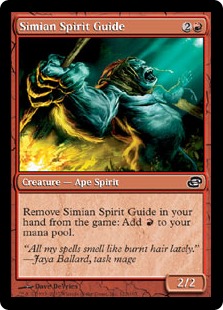 Plus, making a Treasure is actually better than just "sometimes costing one less." It's ramp. Simian Spirit Guide was just
 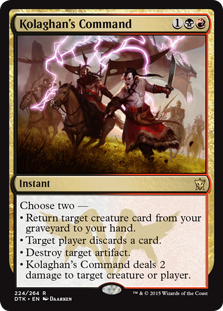 Kolaghan's Card Advantage
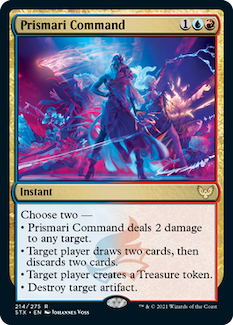
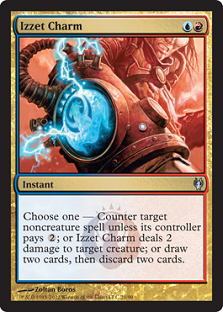
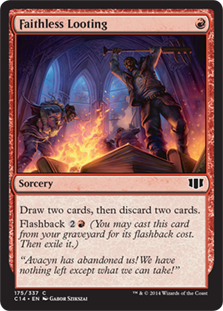 Not true of Prismari Command; only the mode pairing it shares with Kolaghan's Command will actually plus one indiscriminately, and that's also the most conditional of Kolaghan's card advantage parings, as it requires the opponent to have very specific permanents in play. Prismari's other commands of create a Treasure and draw two, discard two are a wash in terms of card economy, although the former generates an interesting ramp dimension and the latter provides card selection. Prismari Command is simply not a card advantage spell, and comparing it to Kolaghan's Command—one of the format's premier card advantage spells—therefore runs the risk of selling the newer Command short. To Prismari's credit,
  Summing Up
 caveat that it's only legal in one constructed format. Talk about a risky marketing move. As an early preview that can be played, what happens if it proves too good before it's even released? Or worse, not good enough? The former would make players dread the set; the latter would turn them off. It's a very fine line, and I'm not sure how it is playing out.
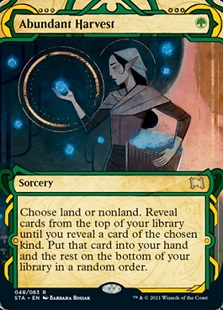
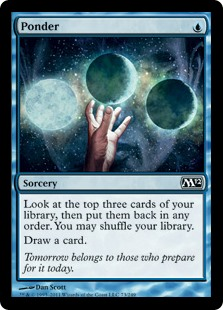 I've heard this called a card selection spell rather than a cantrip; it is both neither and both. It's only selection in that the caster chooses whether they want a land or a nonland. After that, they take the first instance revealed. The picked card being random doesn't really mean card selection to me. There's no choosing among options or setting up draws like Ponder or Oath of Nissa. It doesn't have a desirable effect and then replace itself, like Veil of Summer or Remand. It's not a tutor because the card is random. Thus it's not some freeroll card; players need to want to dig for a land or nonland to run Harvest.
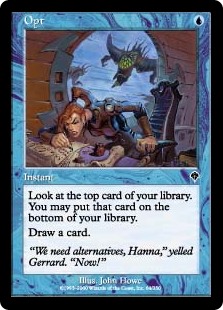 The single most powerful usage, and where I think a lot of players are leaning towards, is using Harvest to guarantee land drops. A one-land hand with a cantrip is better than one with no cantrip, but it's still a risky keep. Replace that Opt or Serum Visions with Harvest, and this risky keep becomes a snap-keep. Theoretically. So long as Harvest resolves and you name land, you will make your next land drop. Will it be an optimal land? Who knows. But it will be a land, and that's most important. For most decks, this is no problem; one land is as good as another. In decks that require specific lands, lack of choice may be a problem. As such, I suspect that many players will try to
 deck. Which means that
  Jund is decidedly midrange while Gruul is on the slower side of aggro, more like
 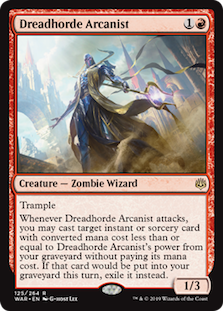 Brainstormed cards. I'm certain that players will try anyway, but if Historic Dreadhorde Arcanist lists
 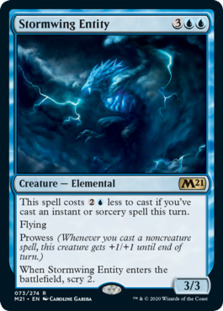 that doesn't happen at Prowess speeds. I can hear stalwarts arguing that Arcanist generates more prowess triggers, but A) it's not like Prowess decks need more of those and B) they could already do that, but don't. Which speaks volumes.




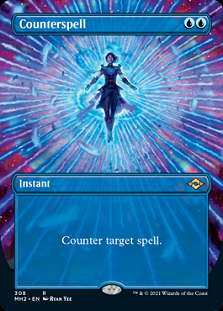 I'm certain that (if the old paper crowd returns in June, anyway) I'll be facing numerous decks rocking full sets of the definitive way to say NO! I know a lot of dedicated control players, and they'll be overjoyed to use Counterspell in Modern. However, it's not entirely news.
 It's a
 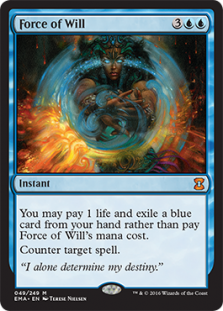 While it is important to remember that Modern is not Legacy, we can at least use Counterspell's place in that format to make educated guesses about Modern. And the news is not good. Counterspell is a
 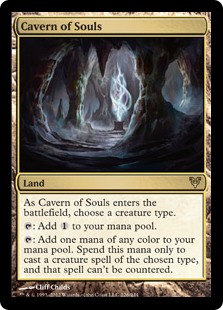 there's already typically a slot for four two-mana counters. They're just split between multiple counters. It's outside of Esper and UW Control that I'm skeptical. Do tempo decks or aggro-control want to hold up double blue? Plus, even in the control decks, there are the utility spells to consider, and a lot of them overlap with Counterspell.
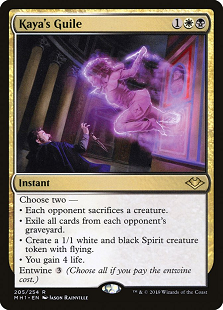 First things first: the addition of Counterspell does not uniquely make control viable. It already is, as constantly evidenced by the
 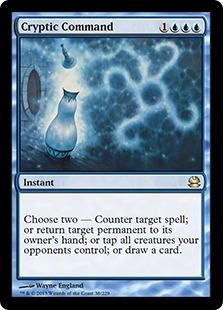 expensive ones (Cryptic Command and Archmage's Charm) have too much flexibility to drop. Force of Negation is free, and that will keep it in rotation. Remand will also stay, as it's too potent a tempo tool and doesn't see play in hard control much anyway.
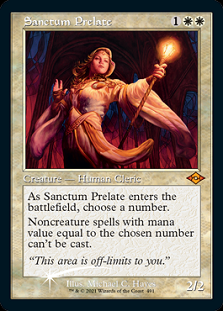 Next is a card that is very near and dear to my Legacy deck, Sanctum Prelate. This is a card that players have speculated about ever since Containment Priest was
  The title of this section really gives it away, doesn't it? Yes, the
  control decks and two against Storm will be Very Big Game, as well as four against Scapeshift decks. One deck I've heard discussed as targeted is Tron, but I expect that will just lead to grief. There was a time when naming seven would have been lights out for Tron, but that was five years ago. These days Tron has too many haymakers at different costs, and too many of them are creatures for that to be effective.
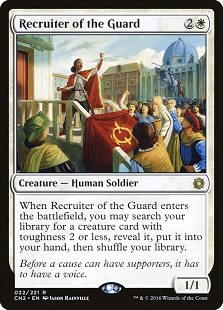 All that being said and from personal experience, the only way that Sanctum Prelate sees play in Legacy is a maindeck one-of as part of Recruiter of the Guard packages. Death and Taxes is most common, but
  The issue with Prelate in Legacy is that it costs three. That is far too much against most combo decks. Most Storm variants aim for a turn 2-3 combo and are capable of turn 1 kills, while Reanimator usually goes for it turn 1-2. That means that Prelate just closes the door on an already locked out opponent. I usually name four with Prelate against combo as a result. Against
 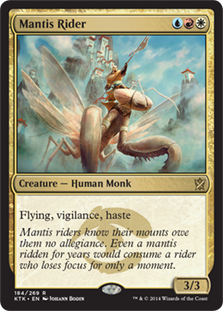 Prelate will definitely see at least some sideboard play. The effect is too strong against certain types of decks. However, I'm very skeptical of Prelate making any maindecks without a major and likely unhealthy metagame shift. Three mana is a lot, and more importantly, that is a very crowded mana cost in white creature decks. I don't think Prelate is sufficiently better than the existing options against sufficiently many decks for it to beat Mantis Rider, Archon of Emeria, or Spike Feeder any time soon. However, as a two-of in the sideboard for combo and control matchups, I think Prelate will be an excellent addition to Modern.



 The data’s down from
  This is a pretty standard average
 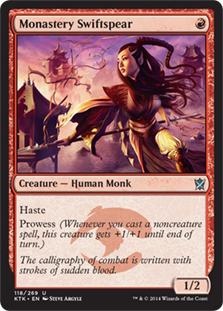 So, what's happening with the decks that aren't Heliod Company? Prowess, primarily. Izzet Prowess was the second best deck, followed closely by Jund Shadow, a deck with many Prowess elements. In Tier 3 there's Mono-Red Prowess and the
 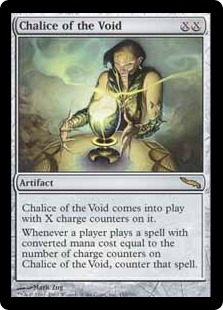 Prowess, but E-Tron is the only deck maindecking Chalice of the Void, which is very good against Prowess. This is a typical fluctuation; E-Tron always does well when Prowess is up and falls as soon as Chalice stops being good.
 relative strengths of each deck within the metagame. The population method gives a decks that consistently just squeaks into Top 32 the same weight as one that Top 8’s. Using a power ranking rewards good results and moves the winningest decks to the top of the pile and better reflects its metagame potential. Of course, the more popular decks will necessarily earn more points, but the difference in scale between the
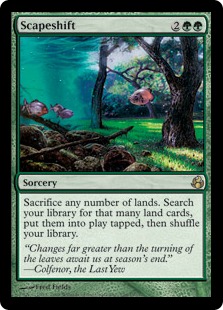 The baseline is up from March, which is consistent with the higher population and point totals. As usual, the top slots are occupied mainly by Tier 3 decks. However, Niv 2 Light was very close to Tier 2, which further muddies the waters of it apparently being replaced, especially when 5-Color Scapeshift is just above baseline. Burn being the second-best deck was also surprising, but makes sense in retrospect since Eidolon of the Great Revel is quite strong against Prowess. I'd also like to call attention to Boros Prowess's utterly abysmal showing. The deck is
 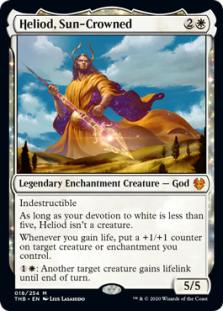 Heliod Company put three pilots into the Top 8 of that tournament, one more into Top 16, and two in Top 32. That's 25 points from one event, and is by far the best single day performance for a deck since I started this new system. And it was also the absolute high point of the month for Heliod Company. After that it lost a lot of steam and average points began falling. Rather than lots of 3-point performances, it was gathering single points. I don't know why that happened, but it absolutely happened. This made me suspect that Heliod isn't really an outlier so much as that event was.
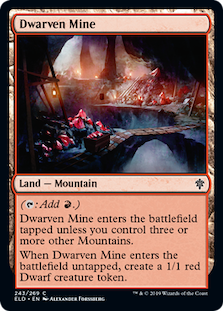
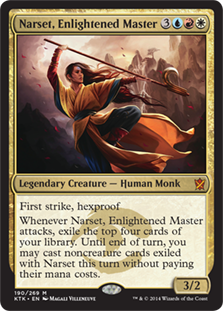 This combo is similar to one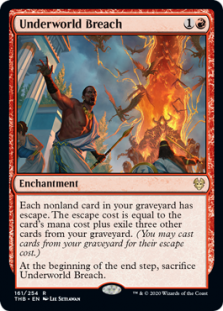
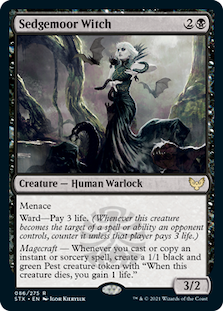 Cue this new build of
 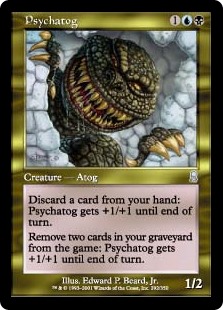 Preamble terminated! What we have here is
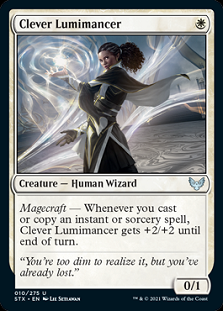
 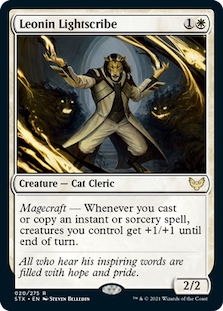 Like Lumimancer, both Leonin Lightscribe and Nivmagus Elemental generate big swings with cheap storm spells, in this case Ground Rift and Flusterstorm. The pricier Lightscribe buffs all the creatures, while Nivmagus stays big in future turns, giving each its niche in the deck and bringing the functional number of Lumimancers to 12.