menu

Paying Tuition: Strixhaven Spoilers Part 2

Are you a Quiet Speculation member?

If not, now is a perfect time to join up! Our powerful tools, breaking-news analysis, and exclusive Discord channel will make sure you stay up to date and ahead of the curve.

And now, back to the spoilers. The full spoiler is now out and Strixhaven launches online this Thursday. In turn, this means that brewing and experimentation is already underway. Which means that the fruits of discovery will begin to make themselves known for next month's metagame update. Having just typed that sentence, I'm worried that my writing is becoming recursive.

In any case, today I'll be wrapping up my quarterly speculative look at which, if any, of the new cards might make it in Modern. And Strixhaven is intriguing. There are a lot of cards with potential that are just slightly off for being Modern staples. With a few metagame shifts and/or the right support, they could be major players. Additionally, as has become (annoyingly) traditional, there are a few cards that are potentially very dangerous. Fortunately, they're manageable. Though it also wouldn't surprise me if MTGO lost its mind over these cards. It just does that sometimes.

End of Lessons

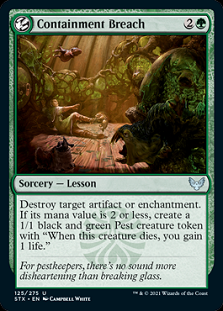
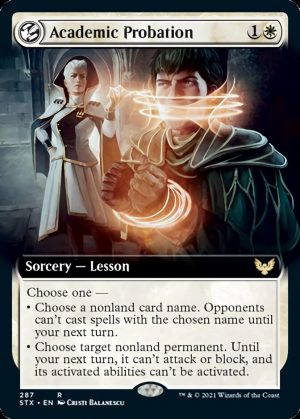
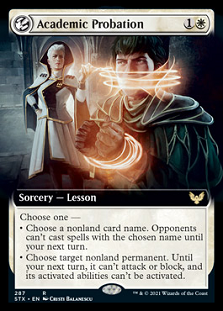
The first thing to discuss is that, unfortunately, learn and lessons didn't pan out for Modern. I'm not sure they're really for anything but draft, honestly. Unless I missed one, all the lessons are sorceries, which hurts their playability as I discussed with Academic Probation. The effects are also muted relative to non-lessons, particularly at their mana cost. Thus, there are only two lessons that even approach being worth a sideboard slot, Probation and Containment Breach. And there are far better maindeckable answers to artifacts and enchantments, so I don't think Breach is needed. I don't think lesson-boards are going to be a thing.
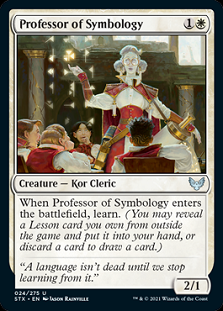
However, good enablers can make up for mediocre payoffs, and a good enough learn card could make lessons work. The benefit of an otherwise playable card finding a the right spell for the job remains very attractive. Unfortunately, therein lies the problem. Professor of Symbology remains the most playable teacher, and that's only because it's in white. It could happen, but given the quality of white's sideboard cards, I don't really want to sacrifice them for a mediocre effect just because I can tutor for them.
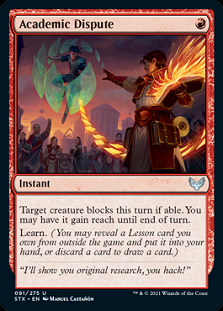
That said, Academic Dispute might make it because it's a one-mana Dredge enabler at instant speed. It's theoretically very strong to play Dispute endstep, discard Stinkweed Imp, and immediately dredge it. Of course, Dredge can already do that with Insolent Neonate, which sees no play. Neonate also doesn't require help from the opponent to be active on turn 1. So I'm pretty skeptical. It seems extremely unlikely that learn has Modern implications.

Proof of My Prowess

Strixhaven's theme is instants and sorceries. This makes it rather ironic that nearly all the Modern contenders are creatures. True, the majority of those creatures key off of instants and sorceries, and it's not entirely unexpected given Wizards' design trajectory. However, I would have thought that Prowess would get a few new trigger cards. Or at least cards in its typical colors.

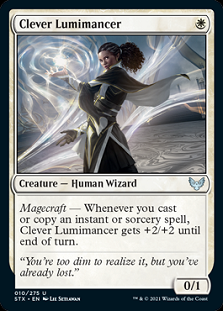
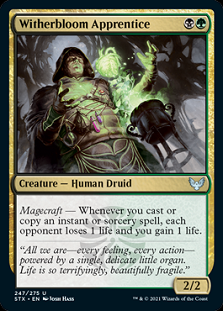
Instead, it got a creature that (if you believe reddit) is utterly busted. Clever Lumimancer is a card with a huge ceiling, and thus is the focus of most Modern speculation. This is because it takes five triggers and an Assault Strobe to kill on turn 2, which is possible thanks to a number of cheats available in Modern. The shortest distance between Lumimancer and victory is two Mutagenic Growth and Strobe. That's far from the only permutation, however. Magecraft counts copies, so Ground Rift, a free spell and Strobe also works. Even just chaining a bunch of spells together lets Lumimancer swing for enormous damage. Naturally, players are already claiming that this potential is utterly broken and there will be a ban.

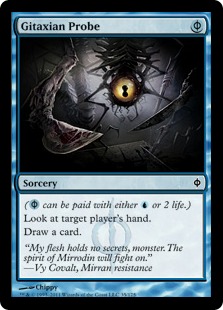
Which when I point out that we've been down this road before. The proposed play pattern (dumping your hand into a single massive swing) is less like current Prowess decks and more like the Suicide Zoo and Kiln Fiend decks from 2015-2016. Those decks were also looking to generate a massive creature by throwing their hand at it and subsequently seal the deal with Temur Battle Rage, just like the proposed Lumimancer deck.  And the old decks were...mediocre. At best. And haven't had any Modern impact since Gitaxian Probe was banned.
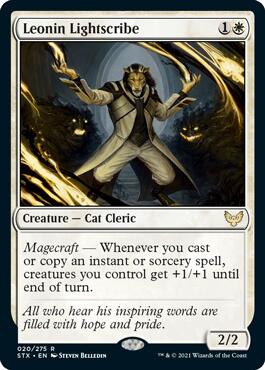
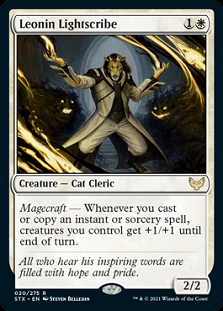
Prowess focuses on chaining cantrips so it's less all-in. It also relies on creatures with haste, value, and/or grow huge and stay that way. This pushes them toward Izzet or Rakdos. Boros Prowess has only really been a thing when the other combinations were high because it could sideboard effective white hate spells (Kor Firewalker mostly). There's another white magecraft card in Leonin Lightscribe, and while the effect is pretty powerful it doesn't solve any problems in Prowess. I think if Lumimancer sees play, it will take a new deck rather than Boros Prowess.

Going All-In

And that seems sketchy. The loss of Probe is huge. Generating the needed triggers will be slightly harder than in 2016, but more importantly it's more risky. Without Probe, Lumimancer decks can't check whether the coast is clear for free. This makes choosing when to just go for it much harder, and using Thoughtseize for that purpose pushes this deck towards just being Scourge Shadow. Also, there's more cheap removal, specifically Fatal Push, than before. Additionally, Lava Dart and Wrenn and Six pose unique problems for a 0/1. There is a reason that Kiln Fiend hasn't done much in the intervening years, and another fragile creature isn't fixing that.

This is balanced by Lumimancer being cheaper than Fiend and triggering off copies as well. It should be easier to kill early with Lumimancer than Fiend. As a result, I can guarantee that the next week of MTGO results will be packed with Lumimancer/Fiend decks. It's a new card, there's hype around it, and there's the huge blowout win potential that never fails to draw stream views. The question is what happens the following week? I suspect that Lumimancer is too fragile and the deck too all-in to survive much scrutiny. It isn't impossible that something entirely new will evolve from there, such as using Lightscribe to power up Young Pyromancer tokens. However, I wouldn't worry too much.

Maybe an Upgrade?

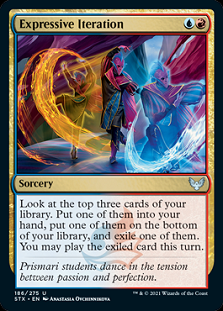
While I don't really agree, I've also heard that Expressive Iteration will see play in Izzet Prowess. The argument is that sorcery speed doesn't hurt since Prowess only plays spells on its own turn anyway, and unlike Telling Time, Iteration is (potentially) card advantage. And I see the point. Prowess already plays Light Up the Stage, and it's easier to cast Iteration when spectacle hasn't been triggered. However, when Prowess is chaining spells, Iteration is a huge choke point since it always costs UR. Every other non-creature is one mana or Manamorphose. If Prowess needed some late game grind I could see it, but as-is, it seems like too big an ask.
Storm seems a more likely home, though even there it's questionable. Again, it always costs UR and that's a bit of a choke point. However, all the rituals make it easier to include a more expensive card and Storm's need to find certain specific cards makes digging three deep a more attractive option. However, again I think that the mana cost is too much in a faster Modern. Should the format move more midrange, I could absolutely see Storm adopting Iteration.

The Hatebears Cometh

In another odd twist, the decks that gain most from Strixhaven are Humans and Death and Taxes. You know, the decks that hate on spells the most. While there's nothing on Thalia, Guardian of Thraben's level, they're solid enough to make it and might give both decks a shot in the arm. Or at minimum require some sideboard retooling.

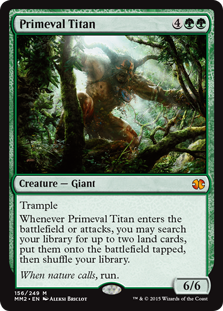
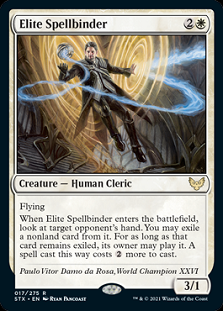
The headliner is Elite Spellbinder. I'll admit, when I first saw Paulo's Championship card, I was confused. The ability is like nothing we've had before. And the lack of flash seemed to really hurt playability. However, as I've thought about it, I think that Spellbinder will be a very solid card. Humans could always use another way to look at opposing hands for Meddling Mage, and another 3-power flier can't hurt. The disruption is harder to assess. The card that Spellbinder takes (and it's any nonland, for once) is still technically in the opponent's hand (assuming they don't forget about it) unless they cast it and pay the tax. This is pretty mediocre against cheap spells and pretty devastating against expensive ones. This screams sideboard card for DnT against control, combo, and Primeval Titan.
Of particular note is that the card isn't returned when Spellbinder dies, unlike Kitesail Freebooter. This is particularly relevant since Paulo only has 1 toughness and Lava Dart exists. The only way to get the card back is to cast it for extra from exile. This does open up combo potential with Drannith Magistrate, but more importantly it means that if Paulo dies, the spell is still exiled. And without Spellbinder around to remind them, it's entirely possible the opponent forgets about the exiled card. Even online, it's easy to lump all the exiled card together and forget about them. Which means that Paulo may be far more powerful than anyone expects.

Quiet, You!

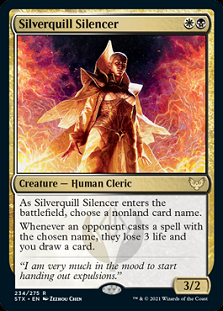
Speaking of Meddling Mage, Strixhaven brings a new one. Kinda. Silverquill Silencer doesn't actually stop opponents from casting the named card. It just punishes them severely. And for a fast aggro deck like Humans, that might be enough. Three life and a card to cast a spell is no small price in a vacuum, and worse when on a short clock. This is balanced by the named card still being castable, so unlike Mage, Silencer doesn't actually stop sweepers nor prevent a combo turn. It just ups the price. As a result, Silencer will never replace Mage, which is probably why it gets an extra point of power. I also have doubts that it would see play in decks that wouldn't play Mage in the first place. However, it makes sense as extra Mages. Which makes me wonder how to fit the new cards into Humans, which in turn suggest that the deck needs a rebuild.
Questionably Hateful

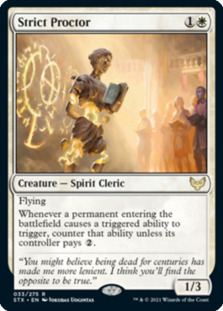
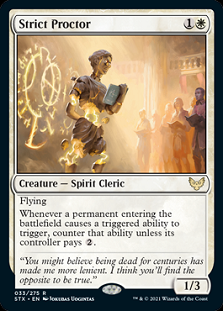
Finally, there's Stern Proctor. I don't think there's ever been an effect like Proctor's before. Plenty of cards stop creature ETB triggers, but Proctor hits every permanent. It therefore has very wide ranging potential, including as an enabler. Proctor is symmetrical, which is normally a drawback and makes playing it in DnT or Humans awkward. In the right shell, however, you can choose to just not pay Proctor's tax on your own negative triggers. However, the only card that I can think of which wants this is Lotus Field, and a deck with Field wouldn't play Proctor.

On that note, the main decks that I can see Proctor being good against are land decks. I'm specifically excited at the thought of Vialing in Proctor in response to Scapeshift and taxing all the triggers. Killing Proctor with the first trigger accomplishes nothing, too, since its taxes all go onto the stack first. However, I'm conflicted about using it against Amulet Titan. On the one hand, it hits Primeval Titan and Amulet of Vigor, seriously hampering the deck's ramping and gameplan. On the other, it also hits the Karoo bounce trigger, which can be a positive or negative depending on the intended sequencing. I want it to be good there, but I'm not sure it will happen.



I'm not as high on Proctor as some. There aren't a ton of other triggers that Proctor uniquely hits compared to Torpor Orb. Still, taxing noncreature triggers is unique, and potentially quite powerful and disruptive.  Proctor is kind of a mixed bag. I would expect it to be played against DnT and Humans more than by them, and it's not bad in that role. The benefit of doing so is using it as splash damage in a few other matchups.

Next Semester

In addition to the cards I'm specifically calling out, there are a number of interesting role-player cards that might see play if existing decks need a specific niche filled. but these are primarily sideboard cards and so there are more question marks than normal. All in all, Strixhaven is an interesting but not overly powerful Modern set. So long as Lumimancer doesn't turn out like Valki, God of Lies, anyway.

Alliances: A Haven for Amateur Investing?

Are you a Quiet Speculation member?

If not, now is a perfect time to join up! Our powerful tools, breaking-news analysis, and exclusive Discord channel will make sure you stay up to date and ahead of the curve.

For the longest time, Alliances had a very unbalanced distribution of cards with financial value. The most value was usually seen in Force of Will, with the card fluctuating around $70-$110 for most of its time on the market. There were a few other cards that held value similar or nearing that value, but up until the last five years the movement on those lesser cards were minuscule. I remember hearing someone say that opening a box of Alliances was basically Force of Will or bust.

That statement being a vast oversimplification of the facts, with several cards holding ten bucks or more for a vast majority of the lifespan of the product, but it does hold a small aspect of truth. The value of Alliances as a set has evolved a lot in the last five or so years, and even more so with the massive rush on Reserved List cards in the past 6 months. This exponential growth in value, coming from a place of low value in most of the cards in the set, has allowed it to be a very interesting entry point for some investors.

Probability

The expected value of the singles of one sealed box of a set is based on probability, and how much people want the cards that are available. Simple supply and demand right? Not really. With the pull rates in two given boxes varying slightly, you can't ever fully predict the value of a single booster box. Alliances further complicates things with multiple rarity classifications. Force of Will appears twice on the uncommon sheet, with a 110 card uncommon sheet. This leaves the odds of a Force of Will being in any specific uncommon slot in a single pack being around 1/55. The packs themselves held 12 cards with 3 uncommon cards among them. One booster box of Alliances contains 45 packs.

This leaves a 3/55 chance of pulling a Force of Will in a specific booster pack of Alliances, which means that in a whole box it is likely for you to pull around 2-3 Force of Will's in any given booster box. This meant that the margin's for making back your money, with the minimal to non-existent value in other cards in the set, and the astonishingly low price of an original Alliances Force of Will, are very low, making this set primarily a sealed investment for most, as box supply diminished, sealed prices rose, and a false sense of abundance for singles was established.

There was an error retrieving a chart for Force Of Will

What stays down...

This set was released almost 30 years ago. There 31 reserved list cards in Alliances. A set with 150-ish cards in it, having 31 cards on the reserved list isn't necessarily crazy on its own, but in combination with other factors, including the undervaluing of the majority of these cards, has made buying a decent amount of reserved list cards for dirt cheap is very possible. Even now, the 3 lowest value reserved list cards in this set are all under $4.

However, with the reserved list itself seeing a steady increase over the past year, with massive spikes in the past couple of months, it had to happen sometime. With RL cards this cheap, it's a no-brainer that they would eventually rise. The market incorrectly priced most of these cards. A set this old, only one card over 60 bucks? This isn't Fallen Empires!  Even with the non-reserved list cards, you have some value with Elvish Spirit Guide. Something had to change, and with a set that old, with the existing level of value, it didn't make sense for it to go down any further. People saw the discrepancy, and it was soon corrected.

As an entry point into MTG Finance

As a lot of newcomers are entering the MTG Finance space, new investors are always on the lookout for the next quick buck. The quick gains make sense to most new investors, and can often teach important lessons about investing long term, the risks of participating in the market, and the risks of not doing so. The easily quantifiable gains allow new investors to see the value of these investments if not portraying them a tad unrealistically.

With a large number of cards experiencing gains, and those gains being consistently high across the board, it's an easy starting point for those new investors to acquire a decent amount of inventory without much need for searching around, or much cost. With the potential to grow possible, it also stands well as a long-term investment. This low-cost ceiling and high invest-ability make Alliances a great set for newcomers to focus on, and seasoned investors to take advantage of as well.

There was an error retrieving a chart for Lodestone Bauble
There was an error retrieving a chart for Gustha's Scepter
There was an error retrieving a chart for Ashnod's Cylix

What about other sets?

The main advantage of Alliances over other sets is primarily the massive mispricing of the set as a whole. This set has been undervalued for far too long. With Mirage, for example, there are significantly more Reserved List cards, and heavy hitters like Lion's Eye Diamond bring the rest of the set up with it. Alliances stood as the set that people viewed as Force of Will or bust. People underestimated the set based on what they remembered it as always being. That is the main advantage. Everybody likes an underdog, but few like to root for one in the moment.

The Takeaway

There is still lots of room to grow with Alliances in my personal opinion. The fact that cards like Lake of the Dead and Force of Will are as cheap as they are is astounding to me. With the other cards in the set of particular value, a lot of them hold value for mostly speculative reasons, but lots see at least fringe play, if not more mainstream use. The best time to get in on something is always yesterday, but today is always second best. With Bitcoin people always say that the best time to hop on is right now, and that very well holds true for Magic, for now at least. The statement that amateur investors can get a good start with Alliances seems to hold true as well. Remember to be smart, be fiscally responsible, be thrifty, and invest in cardboard. Have a great day.

A Resurgence in the Alpha Market

Are you a Quiet Speculation member?

If not, now is a perfect time to join up! Our powerful tools, breaking-news analysis, and exclusive Discord channel will make sure you stay up to date and ahead of the curve.

Back on May 22, 2012 I wrote a provocative piece about a tiny sliver of the Magic market—one that was rarely in the spotlight up until then. The title of the article is “The Rise of the Alpha Rare”, and it discussed the relative scarcity of rare cards from Magic’s earliest set, Limited Edition Alpha. At the time of its publishing, I’ll admit I was actually nervous about the article and how it would be received.

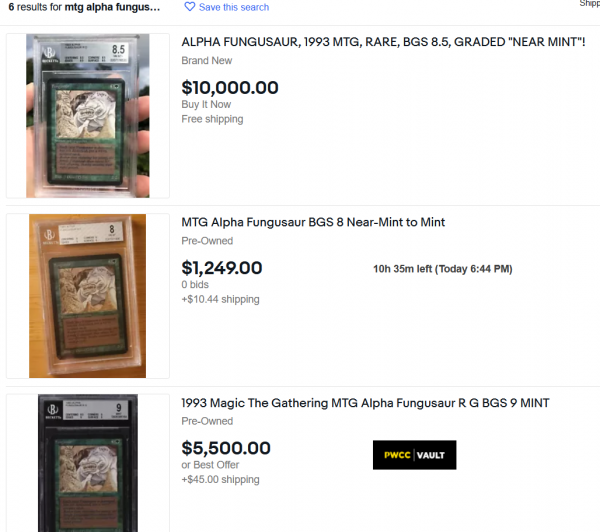
Think about it. I went out on a limb and advised people to purchase cards like Fungusaur, Two-Headed Giant of Foriys, and even Lifelace. This was during a time when Legacy was exploding, Innistrad block was the most recently released in Standard (a very popular block for both Standard and draft), and Commander was taking off. So for me to go off script and write about bulk rares from 1993’s debut set felt misplaced.

There was an error retrieving a chart for Lifelace

I even remember reaching out to the CEO of Quiet Speculation himself, seeking validation that this would be a wise topic to write about. He gave me the thumbs up, and I went with it.

Alpha’s Explosion

Since then, card prices from the old set have skyrocketed as interest in owning a piece of Magic’s history reached new heights. What seemed like a risky idea back in 2012 has turned out to be one of my greatest calls in the history of my MTG finance career.

For example, I mentioned four specific Alpha rares in that 2012 article. Here’s the list, along with their retail price at the time of publishing followed by their retail price today:

Fungusaur: $199.99 -> $1300
Two-Headed Giant of Foriys: $99.99 -> $1799.99
Lifelace: $99.99 -> $499.99
Earthquake: $99.99 -> $2999.99 (!!!)

By the way, I also discussed how a PSA 10 Alpha Black Lotus had recently sold for $20,000. Nowadays that card would probably sell around $500,000 at auction.

In the article, I didn’t even recommend the “best” rares to acquire. I wasn’t confident enough in my prediction to recommend Commander staples and Reserved List cards over unplayable chaff. Earthquake was just as viable as Lifelace, and the article reflected this indecision. It’s incredible how narrow-sighted, yet truly foretelling my predictions were.

I have bought and sold many cards throughout my Magic “career”, especially starting in around 2010 when I really began focusing mor eon the financial aspect of the game. But the cards I regret selling the most were the near mint Alpha rares I purchased around the time of that article’s publishing. Tempted by short-term gains and arbitrage, I flipped some of my favorite Alpha cards in gorgeous condition.

There was an error retrieving a chart for Lich

Now I’m left studying this Alpha market and doing a double take with every price increase. Most recently, Card Kingdom and ABUGames have jacked up their buy prices on Alpha cards across the board. There are virtually no reasonably priced Alpha rares left in stock on TCGplayer, and many eBay listings are for exorbitantly priced, graded cards in an effort to capitalize on an illiquid market.

Tips When Shopping for Alpha

Are you actively in the market for Alpha cards? If so, I feel your pain. I once had an amazing collection of Alpha cards, and when their prices spiked last time (a couple years ago) I cashed out. The move felt brilliant at the time, because prices settled down in the ensuing months. But as of today, with how hot the Alpha market has become, I regret the move.

Luckily, I have been able to locate a few sparse deals on Alpha cards, helping me return my modest collection to a fraction of its former glory (a small fraction, but anything is better than nothing!). Now that Alpha cards are so sparse, hunting for them can be tricky. In my experience, I’ve come up with a couple strategies that could help.

First, you need to know where to shop. Up until this month, ABUGames’ Alpha prices were actually lower than the market. Of course, they were also sold out of nearly every Alpha card outside Scavenging Ghoul for some bizarre reason.

There was an error retrieving a chart for Scavenging Ghoul

Now they’ve increased their buy prices on the set, so they will start to bring in more Alpha cards. Of course, their sell prices won’t be discounted to the market anymore, but there’s still a path to follow. They increased their Beta prices in step (and possibly Unlimited…I haven’t researched those lately). So while straight-up purchasing Alpha cards from ABUGames may not be as attractive, you may be able to work trades to acquire the Alpha cards you’re after.

Not all their Alpha rare prices are insultingly high, either…especially if you’re not picky on which rares and the condition of the copies. They recently restocked an HP Alpha Kudzu and HP Alpha Aspect of Wolf that I jumped on with some cash. They weren’t the deals of the century, but they were certainly cheaper than any other copy for sale on the internet.

You could also browse Card Kingdom’s inventory, but be prepared for a) very little stock and b) frighteningly high prices. The exception may be their “Good” condition (i.e. heavily played) prices. Those remain significantly cheaper than their nicer copies, and could offer a reasonable purchase. I had been in the market for an Alpha Farmstead, but they pretty much disappeared from the internet. The cheapest copies I could find were nearing $600 and either from cardmarket.eu (I would need intermediary help) or a Canadian eBay seller with two feedback ratings.

There was an error retrieving a chart for Farmstead

Then I noticed Card Kingdom stocked a “Good” copy with a $400 price tag. Maybe I should have thought longer, but I decided to pull the trigger then and there. This feels like a rash purchase, with a bit of FOMO to boot, but I can’t help but wonder…in another nine years, are all these Alpha purchases of mine going to look brilliant again?

If you’re shopping for Alpha and want a better selection, you could look to Channel Fireball, which has a decent inventory of the set considering its rarity. But their prices are so high now that it’s hard to advocate shopping there. I know Alpha cards are hot, but I can’t bring myself to pay $27 for a lightly played Wall of Wood or $642.60 for a lightly played Deathlace. The market has run up very fast, but we’re not there just yet.

Lastly, you could browse eBay and TCGplayer for Alpha commons and some uncommons. That may be your best bet in finding the cheapest, heavily played Alpha cards. Or else you could shop around on Facebook and Discord groups—every once in a while, someone lets go of their Alpha cards and anything listed at a fair price is immediately scooped up.

Long Term Prognosis for Alpha

I have never been more confident in holding Alpha cards as I am today. When I wrote my first Alpha article back in Spring 2012, I did so with trepidation and hesitancy. Would people be open-minded about paying nearly $100 for a garbage rare like Two-Headed Giant of Foriys? How could I advocate such a purchase? I even cited buylists as my safety net—paying $55 for a near mint Alpha Two-Headed Giant of Foriys can’t be bad if Star City Games pays $60 on their buylist! Just flip for arbitrage if needed.

There was an error retrieving a chart for Two-Headed Giant Of Foriys

How naĂŻve I truly was.

Now, shopping for 2021 feels very late to the party. But this is a party that will last a long time. In fact, I expect many of my Alpha purchases in 2021 to appreciate nicely over the next nine years. In 2030, we very well could be looking at the cheapest Alpha rares starting near $1000 and commons approaching $100. Relatively speaking, that’s not even that high of a price to own a piece of Magic’s history: its very first set release ever.

The older Alpha cards become, the more copies will disappear into collectors’ hands. Many Alpha collectors view their cards not as investments, but as cherished possessions worth holding for life. The same is true for other Old School sets, but it feels like Alpha collectors are especially dedicated to their collections. And while people will always be selling in order to fund a sizable real-life purchase, the number of people willing to do that will dwindle over time as Alpha cards consolidate into fewer collections.

Therefore, I don’t plan on selling many more Alpha cards unless they’re funding purchase of other Alpha cards. And I plan on shopping around continuously for the occasional deal on any Alpha card I can. I suspect there are a number of collectors in the same boat as me. As the set becomes older and older, the quest to find the occasional Alpha deal becomes tougher and tougher. Barring complete collapse of Magic, I just can’t see any event that would cause the trend to reverse.

Wrapping It Up

If you think about it, nine years isn’t that long in the grand scheme of things. That’s not even one-third of Magic’s lifetime. Yet in that time, we saw multiple rounds of explosion in Alpha prices. What seemed like a speculative idea at the time has since become one of the best-aged articles I’ve ever written.

Now, in 2021, I’m not changing my tune. In fact, I am singing it louder and more clearly. Alpha cards (especially uncommons and rares) are truly scarce and will only become more so in the years to come. If Magic is still alive and well in 2030, and I see no reason it wouldn’t be, I believe Alpha prices will make yet another leap in value.

That doesn’t mean I advocate rushing to Channel Fireball and Card Kingdom and purchasing every over-priced Alpha card they have in stock. We still need to be smart when shopping around. That’s why I provided a few ideas on where to shop and how to go about acquiring these rarities. With enough money, I suppose any Alpha card could be purchased. But for those of us (including myself) without excessive financial resources, we need to shop wisely and carefully, hunting for the best deals.

I tried to share my approach to Alpha shopping for others to reapply. It’s becoming more and more difficult finding deals as the market dries up. But there is hope: perhaps when large Magic events resume, a smattering of Alpha cards will return to the market. This could help bring prices back down, momentarily. I’ll certainly be tracking the market closely when that happens, and I’ll report back in articles what I find. Until then, I wish Alpha collectors the best of luck and happy hunting!

March ’21 Brew Report, Pt. 1: The Usual Suspects

Are you a Quiet Speculation member?

If not, now is a perfect time to join up! Our powerful tools, breaking-news analysis, and exclusive Discord channel will make sure you stay up to date and ahead of the curve.

Despite a glitch in the Matrix which led to less data than usual last month, the March dumps nonetheless did betray a grip of Modern movement both among established archetypes and lesser-played brews. Today, we'll look at a few of the ways two of the format's premier strategies—Omnath and Jund Shadow—have adjusted to the recent bannings. Both were tiered last month, but not by virtue of staying still; there's been plenty of redesigning in both camps to account for Modern's new dimensions!

Out from the Shadows

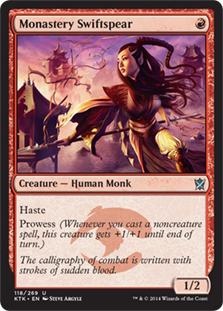
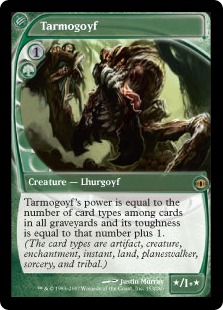
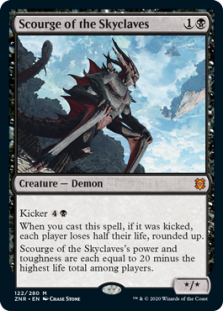
Jund Shadow is proving itself to be one of the primary benefactors of the recent bannings. Rakdos Prowess and its ilk proved as successful, if not more so, than the Omnath piles which fuelled Wizards's massive ban wave; Shadow and Scourge are just insane together, especially alongside efficient Stage 1 combat creatures like the best-of-breed Monastery Swiftspear. Jund Shadow is cut out to do many of the same things, and with the same threats, but also mixes Tarmogoyf into things, giving it a huge edge in the pseudo-mirror against Prowess.

As we know of Jund Shadow, the deck is also highly reversible, boasting the tools to maneuver effectively in many different matchups. In other words, it's very well-suited to an unsure metagame, and especially to this one: Goyf helps vs. the aggro-leaning strategies generally favored after shake-ups, and both Aether Gust and grave hate are seeing a sharp decline with Uro, Titan of Nature's Wrath finally removed from the format.

Jund Shadow, CHARLY (21st, Challenge #12269131)

Creatures

4 Death's Shadow
4 Monastery Swiftspear
4 Scourge of the Skyclaves
4 Tarmogoyf

Artifacts

4 Mishra's Bauble

Enchantments

1 Seal of Fire

Sorceries

3 Inquisition of Kozilek
4 Thoughtseize

Instants

2 Dismember
4 Fatal Push
1 Kolaghan's Command
4 Lightning Bolt
2 Temur Battle Rage

Lands

3 Blood Crypt
4 Bloodstained Mire
1 Forest
1 Nurturing Peatland
2 Overgrown Tomb
1 Swamp
4 Verdant Catacombs
3 Wooded Foothills

Sideboard

1 Kolaghan's Command
2 Alpine Moon
2 Collective Brutality
2 Deglamer
2 Kozilek's Return
2 Kroxa, Titan of Death's Hunger
1 Lurrus of the Dream-Den
1 Terminate
2 Veil of Summer

Virtually all of the new Jund Shadow decks are running a playset of Monastery Swiftspear in addition to the usual roster of heavy hitters Goyf, Scourge, and Shadow. (Some even dip into Bomat Courier to up the aggression further with an additional Stage 1 creature.) The above list reads to me like a Rakdos Prowess deck explicitly tuned to destroy the mirror. Many elements remain the same, but Goyf is a force to be reckoned with in this kind of mirror, and the maximized number of Bolts and Pushes all but ensures the aggro deck won't bite off an early lead while the slightly slower Jund Shadow comes together.

As far as one-drops go, Swiftspear and Bomat aren't the only ones Jund Shadow is reaching out to. I've seen builds ditching Swiftspear entirely for Hexdrinker, a way of one-upping this new mirror: Jund Shadow vs. Jund Shadow is certain to come down to a grind, making Hex the preferred creature to have. Others still are trying Grim Lavamancer, and one build even employed a 2/2/2 Hexdrinker/Lavamancer/Swiftspear split! All this to say that there are many possible options for this slot in Jund Shadow right now, and while each has its pros and cons, I'm not sure that any is much more virtuous than the others. That means players are free to run the cards they personally prefer, or else choose the best option and seize points against whichever decks they encounter the most.

Jund Shadow, JESSY_SAMEK (22nd, Challenge #12269131)

Creatures

2 Kroxa, Titan of Death's Hunger
4 Death's Shadow
4 Tarmogoyf

Planeswalkers

2 Wrenn and Six

Artifacts

4 Mishra's Bauble
2 Nihil Spellbomb

Sorceries

4 Inquisition of Kozilek
4 Thoughtseize
1 Traverse the Ulvenwald

Instants

1 Abrupt Decay
4 Fatal Push
3 Kolaghan's Command
4 Lightning Bolt
1 Terminate

Lands

2 Blood Crypt
4 Bloodstained Mire
1 Forest
1 Mountain
3 Nurturing Peatland
1 Overgrown Tomb
1 Stomping Ground
1 Swamp
4 Verdant Catacombs
2 Wooded Foothills

Sideboard

2 Nihil Spellbomb
2 Ancient Grudge
2 Engineered Explosives
4 Fulminator Mage
1 Lurrus of the Dream-Den
1 Maelstrom Pulse
2 Temur Battle Rage
1 Unravel the Aether

Of course, not all Jund Shadow decks run Scourge of the Skyclaves. Wait... they don't? I don't know about you, but that's not a development I'd personally have predicted! Scourge's failings as the metagame develops are twofold, however:
  • It's situational in a midrange shell. Scourge is a bit demanding about when players cast it if they are to get a good window—that is, one in which the creature dodges common removal spells like Lightning Bolt. The more interactive the Shadow deck leans, the less able it is to put out damage early, and therefore control its opponent's life points enough to resolve Scourge safely. And against linear combo decks like Tron, there's no guarantee that Scourge can come down to apply pressure at all.
  • It's weak to Fatal Push. So everyone and their son is packing 4 Fatal Push so they can kill each other's Scourges. What do you do? Cut the Scourges, of course! Tarmogoyf gets the nod in this instance since it's far less fussy about when it can be cast for high impact. But running too many ways for opponents to nab your tempo with Push is a liability.

Here, Scourge is replaced by the Pushable, but not really, Kroxa, Titan of Death's Hunger—the latest warhead in the arms race towards midrange-dom. That's a nice Hexdrinker you've got there! Would be a shame if I made you... discard... your land card... so you can't grow it right away....

Om Nath Finished Yet!

Don't count out this big fat... thing! Omnath is still a tremendously pushed card, and while its supporting cast suffered significant blows at the hands of the latest bans, there's no way the Elemental is done showing its ugly... face... in Modern. While the card remains a staple in Niv-Mizzet piles, it's also still helming its own builds. Look no further than the following brews for confirmation!

Omnath Control, ALBERT62 (5-0)

Creatures

3 Snapcaster Mage
2 Omnath, Locus of Creation

Planeswalkers

2 Jace, the Mind Sculptor
2 Teferi, Hero of Dominaria
3 Teferi, Time Raveler
3 Wrenn and Six

Sorceries

1 Supreme Verdict

Instants

1 Aether Gust
3 Cryptic Command
3 Force of Negation
2 Lightning Bolt
2 Lightning Helix
3 Mana Leak
4 Path to Exile
1 Spell Snare

Lands

1 Arid Mesa
1 Breeding Pool
1 Celestial Colonnade
2 Field of Ruin
4 Flooded Strand
1 Forest
1 Hallowed Fountain
1 Island
1 Ketria Triome
1 Lonely Sandbar
1 Misty Rainforest
1 Mountain
1 Plains
1 Raugrin Triome
1 Sacred Foundry
4 Scalding Tarn
1 Snow-Covered Island
1 Steam Vents

Sideboard

2 Aether Gust
2 Anger of the Gods
1 Ashiok, Dream Render
1 Celestial Purge
2 Cleansing Wildfire
2 Dovin's Veto
1 Engineered Explosives
1 Mystical Dispute
1 Timely Reinforcements
2 Veil of Summer

Omnath Control strikes me as the Level 0 going forward. Uro is replaced by an array of planeswalkers, and the core gameplan of grinding out opponents with the help of a certain 4/4 remains intact. This deck is less reliant on the graveyard than Omnath piles were previously, but that's not necessarily a good trade to make, as it's also significantly less powerful and more dependent on the top of its deck to deliver.

Previous iterations were so successful precisely because of the consistency and resilience Uro granted any pilot fortunate enough to dodge graveyard hate. I wouldn't be surprised if this version started to fall off as other value-focused control decks prove themselves better suited for the metagame and Omnath starts to fall more decisively into another shell.

Yorion Omnath, CANADIANNINJA (1st, Challenge #12269131)

Creatures

3 Niv-Mizzet Reborn
4 Omnath, Locus of Creation
1 Valki, God of Lies
2 Birds of Paradise

Planeswalkers

2 Nahiri, the Harbinger
4 Teferi, Time Raveler
4 Wrenn and Six

Sorceries

4 Bring to Light
1 Dreadbore
1 Supreme Verdict
1 Unmoored Ego

Instants

3 Abrupt Decay
1 Assassin's Trophy
4 Kaya's Guile
1 Kolaghan's Command
4 Lightning Helix

Enchantments

4 Abundant Growth
4 Utopia Sprawl

Lands

1 Breeding Pool
1 Forest
1 Godless Shrine
1 Indatha Triome
1 Ketria Triome
3 Misty Rainforest
1 Overgrown Tomb
3 Pillar of the Paruns
4 Prismatic Vista
1 Snow-Covered Forest
1 Snow-Covered Island
1 Snow-Covered Mountain
1 Snow-Covered Plains
1 Snow-Covered Swamp
1 Steam Vents
1 Stomping Ground
1 Temple Garden
2 Verdant Catacombs
3 Windswept Heath
3 Wooded Foothills

Sideboard

1 Crumble to Dust
1 Deafening Clarion
1 Deicide
3 Fatal Push
1 Oath of Kaya
4 Thoughtseize
3 Veil of Summer
1 Yorion, Sky Nomad

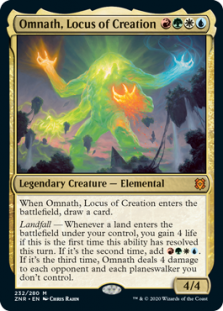
One such promising shell is Yorion Omnath, which leans on its namesake companion to fold in that missing consistency. Yorion decks are already big on redundancy, excusing their high card count with plenty of similar four-ofs. So they're also great homes for Niv-Mizzet Reborn, which here compensates for the value void left by Uro. My issue with this build is how reliant it is on resolving certain high-costed spells; a timely Mana Leak could put Yorion Omnath in the unfortunate position of drawing mana every turn and hoping to rip another bomb. Note the Valki: while the cascade interaction was fixed, using Bring to Light to "cheat out" the planeswalker for five mana does work!

Omnath Stoneblade, TCKEGTAPPER (5-0)

Creatures

4 Stoneforge Mystic
4 Spell Queller
1 Birds of Paradise
4 Noble Hierarch
3 Omnath, Locus of Creation
2 Tireless Tracker

Planeswalkers

1 Teferi, Hero of Dominaria
3 Teferi, Time Raveler
3 Wrenn and Six

Instants

4 Mana Leak
4 Path to Exile

Artifacts

1 Batterskull
1 Sword of Feast and Famine
1 Sword of Fire and Ice

Enchantments

2 On Thin Ice

Lands

1 Breeding Pool
1 Hallowed Fountain
1 Horizon Canopy
4 Misty Rainforest
1 Raugrin Triome
3 Snow-Covered Forest
2 Snow-Covered Island
1 Snow-Covered Plains
1 Stomping Ground
1 Temple Garden
4 Windswept Heath
2 Wooded Foothills

Sideboard

2 On Thin Ice
2 Aether Gust
2 Ashiok, Dream Render
1 Celestial Purge
2 Force of Negation
2 Rest in Peace
2 Timely Reinforcements
2 Veil of Summer

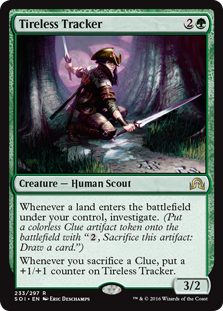
Last up is Omnath Stoneblade, or Bant Stoneblade splashing Wrenn and Six and Omnath. Stoneforge Mystic and Spell Queller aren't the worst partners for Omnath, as they plug the two- and three-mana curve holes left by the Elemental. Batterskull happens to be great against aggressive decks, which are sure to show up in droves after a metagame shift. And as for value, Tireless Tracker rounds things out as a mini-Omnath. Don't sleep on the 4 Leaks! This deck is not losing to Yorion anytime soon.

Shake Junt

Jund Shadow? Myriad Omnath piles? Modern may have changed, but it still looks an awful lot like Modern. Join me next week for a look at some of the trend benders emerging from the new format.

Meet the New Boss: March ’21 Metagame Update

Are you a Quiet Speculation member?

If not, now is a perfect time to join up! Our powerful tools, breaking-news analysis, and exclusive Discord channel will make sure you stay up to date and ahead of the curve.

First Tuesday of a new month? Must be time for the metagame update. Yes, I realize that there wasn't one last time, but those were special circumstances. A major ban invalidated more than half of February's data. There's really nothing statistically valid from ten days of results. Of course, March wasn't much better. Thanks to a glitch, Wizards failed to post results for thirteen days. This did affect the data, but I found some work arounds.

I also have a public service announcement: Mythic Event tokens are back on MTGO. For those unaware, these $25 tokens unlock every card on MTGO for a limited time (except a few promos). This will last until April 14 and is an excellent chance to really explore Modern. Play Money Tribal or that weird deck you'd never pay money for just to see how it works. Or jump on the bandwagon and play the best deck. In any case, this is the best chance to brew and mess around with everything Modern can offer. Or be me and fail to learn Vintage. I understand less about it after a week of playing than I did when I started.

The Big Hole

So first of all, I need to address the aforementioned hole. For reasons Wizards never explained, no decks from MTGO were posted from March 11 until March 23. Thirteen days is a huge chunk of data to lose. I was genuinely worried that all of March's data would be lost and I'd have to skip the update just like in February. Even when the glitch was fixed, the gap was large enough to bring validity into question. Fortunately, it didn't come to that, as others were as frustrated as I. u/bamzing on reddit apparently went onto Twitter to track down players from the Challenges to find out their decklists, which I would have never even considered. Their work means that at least some of the lost data has been recovered.
I also went on a stroll through Google results, looking for private MTGO Modern tournaments which were posting results. I found a few that seemed both competitive and open enough to use, and they fleshed out the missing weeks at least somewhat. The overall results are still well down from January, but at least I have enough to feel confident presenting the data. Just keep in mind that this isn't as robust and descriptive data as I'm used to.

Something's Missing

A hole in the data is a big problem in terms of statistical concerns, but it's manageable. What isn't replaceable is the story that the missing Preliminaries would have told. Prior to March 10, Jund Shadow was by far and away the most popular deck in Modern, with Burn and Amulet Titan hot on its heels. Heliod Company had been putting up results in the Challenges, but it was absent from the Preliminaries. It did very well in those Challenges, but there was nothing to indicate that Company was good elsewhere, suggesting it was a metagame deck against the Premier players but not the overall metagame.

All that changed with the gap. With only Challenge results to go on, Heliod Company shot up the rankings (particularly the power rankings). Once the data returned, the Preliminary results began to increasingly mirror the Challenges and with that Company stayed in the upper tier. Thus, I'm left wondering if this shift is the direct result of the gap or a natural metagame evolution. If it's the latter, then I should have seen a gradual increase of Heliod decks in Prelim results. The result is that the current results reflect the "true" metagame as it evolved. If it's the former, then what happened is that players saw Heliod do well in the only available results, assumed that it was the best deck and reacted accordingly. So the results I'm recording for April reflect an "artificial" metagame. In other words, the metagame's gone recursive.
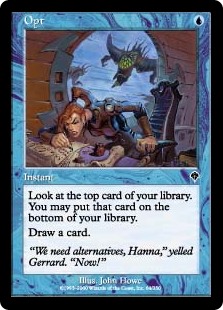
Unless Wizards releases the missing data or I conduct an MTGO-wide survey of Modern players, I'll never know which is correct. I'm bringing this up for players to be aware of as I actually discuss the results so that they can take an appropriate grain of salt before digesting them.

March Metagame

As mentioned, the data's down from January. There were 552 decks in January, but thanks to the gap I only have 420 in March (nice!). This is the smallest data set for a full month I've worked with, which again isn't the end of the world. It just means that there will be more questions this time than in previous updates.

To make the tier list, a given deck has to beat the overall average population for the month. The average is my estimate for how many results a given deck “should” produce on MTGO. To be a tiered deck requires being better than “good enough;” in January the average population was 6.89, meaning a deck needed 7 results to beat the average and make Tier 3. It's odd that this is the same threshold as January's, and is low by the standards of previous months. Then we go one standard deviation above average to set the limit of Tier 3 and cutoff to Tier 2. The STdev was 10.05, so that means Tier 3 runs to 17, and Tier 2 starts with 18 results and runs to 28. Subsequently, to make Tier 1, 29 decks are required.

The Tier Data

Along with the total population being down 132 decks, the individual archetypes are down, though not as much as I'd expected. 61 distinct decks were recorded and 17 crossed the threshold to make the lists. I'm certain that more decks would have qualified without the data hole, but I also doubt that the archetype gap would have closed. Given the typical Preliminary, I'd have needed to see at least one distinct deck in every Prelim to meet January's total, which is a testament to how diverse that meta actually was.

Deck NameTotal #Total %
Tier 1
Jund Death's Shadow5011.90
Heliod Company4911.67
Tier 2
Mono-Green Tron286.67
Amulet Titan266.19
Death and Taxes194.52
Izzet Prowess184.29
Tier 3
Burn174.05
Eldrazi Tron163.81
Jund143.33
Hammer Time133.10
UW Control133.10
Niv 2 Light122.86
Mono-Red Prowess92.14
4-C Omnath92.14
Spirits81.90
Rock81.90
Dredge71.67

Tier 1 is only two decks, and they're leading everyone else by a lot. This does suggest there's a winner's metagame on MTGO, because the rest of the data is fairly normal. Mono-Green Tron just missed the cutoff for Tier 1, and I'm inclined to think that, with more data, both it and Amulet Titan would have made it. I think Burn and Eldrazi Tron are actually Tier 2 instead of Tier 3 for the same reason. Both Infect and Crab Mill just missed making Tier 3, but I'm less certain that either would have made it with more data. Crab Mill had a few results early on then disappeared while Infect just appeared every so often. Mill missing Tier 3 is therefore likely correct (remember, more data changes the thresholds) while Infect is a random bullet so who knows?
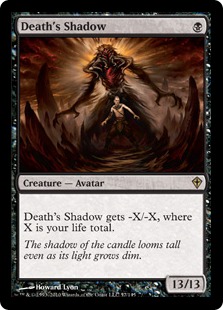
It's interesting to note that 4-Color Omnath is still hanging around despite being nuked. Apparently, Money Tribal really is that powerful. What's interesting is that it's standing separate from Niv 2 Light despite a tremendous amount of overlap. I would guess that the reasoning is that Omnath has a (slightly) more stable manabase in exchange for Niv's higher power, but considering that both decks are leaning on Wrenn and Six to make it work, that seems less likely. Maybe inertia is to blame because Niv is so much more powerful than Omnath while sharing the manabase concerns. And Yorion, Sky Nomad forgives many slow-deck sins.

A Winner's Tier 1?

Jund Shadow and Heliod Company are effectively tied for most popular deck. The next-most popular deck posted just over half as many results and missed the cut for Tier 1. There's clear polarization here, especially since lower Tier 2 and Tier 3 are a nice gradual decline. The trend line looks kinda like a reversed asymptote. Which naturally made me ask why, and while I can't say with certainty (as previously noted), I do have a theory: I think this is a Pro's vs Joes scenario and not the "real" metagame. See, I think that there's an element of recursive metagaming and small population dynamics which is warping MTGO. In essence, there's a limited number of consistent Premier level players who are certain that Jund Shadow and Heliod are the best decks, and they're driving the data. If there were paper events or more non-MTGO data, this apparent warp might disappear.

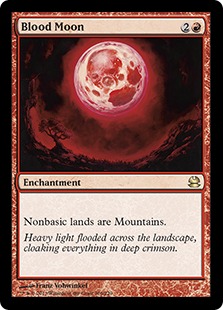
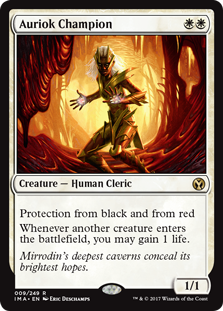
To understand where I'm coming from, first read this article by Frank Karsten. The key thing is that in a Rock, Paper, Scissors metagame where Rock is paramount, the correct deck to pick to make Top 8 is Paper, but the best to win is Scissors. Thus, my decision is not based on which deck is actually the best deck, but on what deck I think I need to win the event. Take that logic and apply it to a metagame with a relatively low population. Right after the bans, red decks were everywhere. This meant that Auriok Champion spiked in popularity and the deck which ran it maindeck surged. In response to this, Jund Shadow changed itself to mitigate Champion while not giving up anything against the Prowess decks. As a result, the top players began to first gravitate then fixate on those two decks, and then anticipated this move and any countermove because that smallerish group of players can (theoretically) keep tabs on what they're doing. Without outsiders to challenge their narrative or provide a contrary point, that narrative reigns and becomes the metagame even if in a more open metagame with a more diverse population it would not be the case.
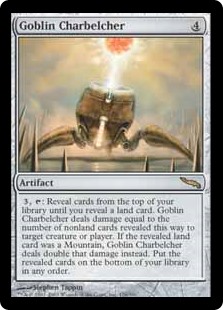
I believe that the internal metagame of the premier players is driving the data because my observations in League play don't back up the Jund Shadow vs. Heliod vs. Everything Else narrative that the data suggests. I've been playing Heliod Company (thanks to the Mythic token) and playing against it. Heliod's felt good, but not phenomenal. The deck is hard to play online and a lot of lines aren't particularly overpowering. It's the whole being greater combined with some Oops, I Win! combos that make it good. However, I can also see how a more experienced player could improve the deck's win percentage, and why better players would pick up the deck. Thus a self-fulfilling prophecy is born. I can't prove it, of course, but this is the theory I'm working under.

Power Rankings

Tracking the metagame in terms of population is standard practice. However, how do results actually factor in? Better decks should also have better results. In an effort to measure this, I use a power ranking system in addition to the prevalence list. By doing so I measure the relative strengths of each deck within the metagame. The population method gives a decks that consistently just squeaks into Top 32 the same weight as one that Top 8’s. Using a power ranking rewards good results and moves the winningest decks to the top of the pile.
Points are awarded based on the population of the event. Preliminaries award points for record (1 for 3 wins, 2 for 4 wins) and Challenges are scored 3 points for Top 8, 2 for Top 16, 1 for Top 32. For March, the non-Wizards events I found were most similar to Challenges and awarded points accordingly. Super Qualifiers and similar events get an extra point if they’re over 200 players, and another one for over 400. There was only one event that awarded 5 points in March.

The Power Tiers

The total points in March were also down thanks more to the loss of events, from 1017 to 760. The average points were 12.46, so 13 makes Tier 3. The STDev was 19.65, down noticeably from January, so Tier 3 runs to 32 points. Tier 2 starts with 33 points and runs to 46. Tier 1 requires at least 47 points. As is a bit of a tradition, the total number of decks stayed the same but one deck fell off Tier 3 and was replaced.

Deck NameTotal PointsTotal %
Tier 1
Heliod Company10313.55
Jund Death's Shadow9312.10
Amulet Titan506.58
Tier 2
Mono-Green Tron466.05
Death and Taxes445.79
Izzet Prowess374.87
Tier 3
Eldrazi Tron273.55
Niv 2 Light263.42
Burn253.29
Hammer Time233.03
Jund212.76
UW Control212.76
Rock172.24
Spirits162.11
Mono-Red Prowess141.84
4-C Omnath141.84
4-Color Living End131.71

Thanks to some very good Challenge results, 4-Color Living End just made Tier 3 despite being well under the population cutoff. Keep an eye on this deck; it's angling to play spoiler for Heliod Company. Dredge fell off, which is surprising given that graveyard hate is down. Interestingly, Tron is still just below the Tier 1 cutoff while Amulet actually cleared the hurdle. I think this speaks to the dedication of Amulet's player base more than any positioning advantages.
Heliod manages to beat out Jund Shadow for top place, thanks again to above-average Challenge results. I don't think this actuallymeans that Heliod is better performing given the population results and the context of Heliod's points (specifically, Jund Shadow puts up more results on average, but Heliod places higher on average), but I could be wrong. It also tends to reinforce my winner's metagame theory.

Average Power Rankings

Finally, we come to the average power rankings. These are found by taking total points earned and dividing it by total decks, which measures points per deck. I use this to measure strength vs. popularity. Measuring deck strength is hard. Using the power rankings certainly helps, and serves to show how justified a deck’s popularity is.

However, more popular decks will still necessarily earn a lot of points. This is where the averaging comes in. Decks that earn a lot of points because they get a lot of results will do worse than decks that win more events, indicating which deck actually performs better. A higher average indicates lots of high finishes, where low averages result from mediocre performances and high population. Lower-tier decks typically do very well here, likely due to their pilots being enthusiasts. So be careful about reading too much into the results.

The Real Story

When considering the average points, the key is looking at how far-off a deck is from the Baseline stat (the overall average of points/population). The closer a deck’s performance to the Baseline, the more likely it is to be performing close to its “true” potential. A deck that is exactly average would therefore perform exactly as well as expected. The further away the greater the deviation from average, the more a deck under- or over-performs. On the low end, the deck’s placing was mainly due to population rather than power, which suggests it’s overrated. A high-scoring deck is the opposite.

Deck NameAverage PointsTier
4-Color Living End2.63
Death and Taxes2.322
Niv 2 Light2.173
Rock2.133
Heliod Company2.101
Izzet Prowess2.062
Spirits2.003
Amulet Titan1.921
Jund Death's Shadow1.841
Hammer Time1.773
Eldrazi Tron1.693
Mono-Green Tron1.642
Baseline1.61
UW Control1.613
Mono-Red Prowess1.563
4-C Omnath1.563
Jund1.53
Burn1.473

Again, the baseline is quite low, both in absolute and relative terms. The latter is going to happen when I'm awarding more points for high results. The latter is less explainable, especially given that singleton point decks were down quite a bit in March.

As previously mentioned, 4-Color Living End did disproportionately well in a few events which pumped up its average points a lot. Of the more popular decks, Death and Taxes did extremely well and that makes me all warm and fuzzy. Niv 2 Light's significantly outshone 4-C Omnath's here as well, which strongly suggests that those on the "Ignore Blood Moon" plan are likely to move towards just getting all the value soon. Also, congratulations are in order to UW Control players! You performed exactly average in March. That takes talent /s.

And Now, We Watch

With the metagame starting to take shape and a glimmer of hope that in-person events can return soon, we just have to wait and see what happens. Can Heliod prove that it really is the new format boogeyman, or will the metagame unite to drive it off? I'll have the answer with the next update.

The Re-opening Trade…of Magic

Are you a Quiet Speculation member?

If not, now is a perfect time to join up! Our powerful tools, breaking-news analysis, and exclusive Discord channel will make sure you stay up to date and ahead of the curve.

Over the past year, I’ve written up numerous articles pertaining to COVID’s impact on the MTG finance market. Below are links to most of these articles, for reference:

Follow-up: COVID-19’s Further Impact on Magic (3/16/20)
Three Indicators of Paper Magic’s Health (4/6/20)
Continue to Buy and Sell Despite a Soft Market (4/13/20)
The Impact of No MagicFests in 2020 (6/1/20)
Looking Ahead to When the Pandemic Ends (11/30/20)

Throughout each of these write-ups, I do my best to remain optimistic, focusing on the resiliency of the game, the ability for Arena to keep Magic relevant, and the long-term prospects of holding physical cards.

At one point, I hypothesized that a pandemic would mute demand for cards, while a lack of large-scale events would really clamp down on supply. While the latter has definitely played out in this way, the former prediction was inaccurate, partly because the government stepped in with stimulus packages and partly because enough investors/speculators did not see income disruption. Those not worried about putting food on the table suddenly had excess cash with fewer ways of spending it.

Thus, we saw the rise in Reserved List, Old School, and largely “investible” cards.

There was an error retrieving a chart for Lake of the Dead

What’s Next?

Over a year after the initial shut-downs, COVID-19 vaccines are finally, slowly being rolled out across the country. With aggressive expectations, the government is prioritizing vaccination en masse. As far as the pandemic is concerned, this isn’t quite the end; it’s more likely this is the beginning of the end.

It’s only a matter of time before large Magic events resume. What happens then is up for debate, but I have some opinions on what to expect.

Let’s picture the first MagicFest in over a year. Numerous vendors purchase booths in high hopes of a desperate restock of cards—so many cards have been difficult to keep in stock and posting buylists online-only attracts a limited audience; only a fraction of Magic player utilize/trust online buylists. To accomplish the restock, vendors are going to bring stacks of cash. Older, rarer cards will be especially hot the first few events: Dual Lands, Mox Diamond, Power 9, Gaea's Cradle, Sliver Queen, Wheel of Fortune, and the like will all be topping vendor hotlists.

There was an error retrieving a chart for Wheel Of Fortune

Because supply is so constrained and demand remains robust, this will be a seller’s market. That is to say, vendors will have to compete with each other and offer the most attractive buy prices in order to restock first. As they restock, vendors will of course post the cards for sale at the new, higher price point. As they restock (and use up their cash), vendor buy prices will then proceed to retrace. Sell prices, however, won’t pull back so quickly.

As these large card shops finally restock cards we Old School players/collectors have been hunting for months, I’m going to remain very careful with my purchases. Prices will be bloated, and there’s a good chance buying right away will lead to overpaying for these cards.

If you want a taste of what’s to come, just check out Card Kingdom’s pricing. They’ve been restocking older cards already thanks to an aggressive buylist algorithm, so there’s plenty to shop for on their site. But their pricing is so inflated, I wouldn’t consider spending cash on most their new inventory. For example, here are some prices that feel quite lofty to me:

Lake of the Dead: $219.99
Sliver Queen: $449.99
Moat: $2199.99
Candelabra of Tawnos: $1599.99

There was an error retrieving a chart for Candelabra of Tawnos

With prices like these, it’s no wonder Card Kingdom has at least a few copies of each in stock! These may be “reasonable” prices in the current environment, but I strongly expect these all to come back down once at least a little more supply returns to the market. As other vendors restock these cards at MagicFests, they’ll probably price their inventory similarly—the balance will shift, and prices will have to retrace some as vendors will be forced to compete with each other to make the sale.

Will Any Cards Increase in Price?

Because I anticipate downward pressure on Old School and Reserved List cards, I’ve scaled back my buying significantly. The only cards I’ve been hunting for lately are Alpha cards—as I’ve written in the past, these are exceptionally rare and have plenty of upside potential as the game continues to remain popular. Alpha rares top my want list…if only I could find a few more for sale at competitive prices (no easy feat)!

Even though I don’t really speculate much on modern bordered cards anymore, I do wonder if that category of cards offers the best upside over the next 6-12 months. The re-opening play could apply demand pressure on tournament staples; tournaments being primarily Standard, Pioneer, or Modern formats. Given that Modern cards are the oldest of the three formats, it stands to reason that Modern staples not recently reprinted could offer the most upside as Magic events resume.

We’ve already begun seeing this trend unfold in Khans of Tarkir and Onslaught Fetch Lands. Check out the price chart on Bloodstained Mire, the fifth most played card in Modern. The card’s price bottomed in April of last year, rebounded some throughout the summer and fall, and recently spiked to new highs. The other fetches have followed a similar trend.

There was an error retrieving a chart for Bloodstained Mire

Another popular Modern card, Veil of Summer, barely saw any price softening throughout this pandemic, and continues to march to new highs. Another compelling one is Aether Vial—this tournament staple cooled off dramatically throughout 2020, probably because there were no paper tournaments in which to play this card. But over the past few months, this card’s price has accelerated to the upside and is once again $60.

There was an error retrieving a chart for AEther Vial

Modern Horizons cards may finally have their day in the sun—Force of Negation is one of the most played card from the under-opened set, and is approaching $100! I saw that Mox Tantalite spiked recently, although I’m not exactly sure why. Either way, Modern Horizons cards are especially poised to pop (but be careful of reprints in Modern Horizons 2, coming out in just two months). Any card you want from Modern Horizons should be prioritized immediately once it’s confirmed that card is not being reprinted in Modern Horizons 2.

There was an error retrieving a chart for Mox Tantalite

Now it’s true that all of these cards will also see an influx of supply once events resume and vendors are able to purchase cards at MagicFests. Vendors will be able to restock all these cards, too, and will post higher prices to reflect recent market trends. But the difference here is that the return of large-scale paper Magic tournaments should reinvigorate demand, keeping pace with newly listed supply.

It’s basically the inverse of what happened over the past year. Over the last twelve months, there was a softness in supply and demand. But now there will be a resurgence in both supply and demand; this should accelerate liquidity and help cash flow smoothly throughout the Magic economy. Such action will be very healthy for the market—any pricing corrections necessary will happen quickly, and we should see a return to normalcy within a couple months.

This keeps me optimistic, overall, about the Magic economy and motivates me to remain invested in a stable collection.

Wrapping It Up

I’ve written numerous pieces attempting to first predict, then explain the market trends driven by the COVID-19 pandemic. The name of the game thus far has been lower supply due to a stoppage of events, combined with stimulus money and excess cash to spend on hobbies, leading to new highs in prices (particularly on Reserved List cards, which are most investible).

Now that people across the country are getting vaccinated, we have to imagine that Wizards is closely monitoring the situation, strategizing when it’s appropriate to resume large-scale paper Magic events. At this point, we are closer to the end of the pandemic than we are to the beginning, so this has to be on WOTC’s radar. More importantly, this is also likely on vendors’ radar as they anticipate the ability to host a booth and finally restock some cards.

I predict that this trend will lead to a massive restocking of cards throughout the market (perhaps besides the truly rare, such as Alpha). Such a resurgence of supply will put pressure on pricing, probably driving a retracement in card values in the coming months. This kind of pullback will be perfectly healthy, and over time normal market conditions will prevail.

But the one wild card here is what will happen to tournament staples, particularly cards in Modern that haven’t been reprinted recently. These should be restocked alongside everything else, but with the return of paper Magic events, we may see a newfound surge in demand for cards. This could be why we’re already seeing some Modern staples, such as Fetch Lands, climb to new all-time highs. Force of Negation and other Modern Horizons playable seem particularly attractive given their limited print run…just be careful to avoid reprints in Modern Horizons 2.

There was an error retrieving a chart for Force of Negation

Will new tournament demand outpace re-supply? Or will Modern Horizons 2 create a surge in Modern interest, driving non-reprinted cards even higher? It’s impossible to predict definitively, but if forced to make a prediction, I would say Modern staples will be worth more six months from now than they are today.

This doesn’t mean I’m going to rush out and buy—not because I think it’s an unattractive opportunity, though. I’m just offering full transparency that I still prefer to sink my resources into the cards I love most: those printed before 1995. That’s just personal preference, though. From my point of view, the collector in me is looking forward to a price cool-off in the Old School market so I can upgrade my decks a little more. But if too many players are of the same mindset…well perhaps we won’t see quite the pullback in prices I’m hoping for. If everyone is eagerly waiting to buy Old School cards the moment prices drop, perhaps we won’t see much cool off after all. Only time will tell.

Strixhaven: Spoilers and More!

Are you a Quiet Speculation member?

If not, now is a perfect time to join up! Our powerful tools, breaking-news analysis, and exclusive Discord channel will make sure you stay up to date and ahead of the curve.

Strixhaven: School of Mages, Magic's 87th expansion, is scheduled to be released on April 23, 2021. Set in a school on the new plane of Arcavios, Strixhaven contains 275 cards and will continue to include randomly inserted premium versions of all the cards. Players will be able to purchase regular Draft Boosters, Theme Boosters, Set Boosters, Collector Boosters, a Strixhaven Bundle, and five Commander decks.

This set is Magic's take on the magical school genre, and each of the schools featured in this set represents one of the game's enemy color combinations. Check back with us frequently for the latest spoilers and my MTG Finance flavored commentary! I’ll be covering our favorite highlights from spoiler season – if you want to see the entirety of everything that has been spoiled you can check out Wizards’ updated card gallery here.

April 3rd - The Set Has Been Fully Spoiled!

Somehow, once again, we've reached the point of a whole new set being revealed! Today's newest cards are referenced below, and if you want to see the whole Strixhaven gallery, you can check that out over on the official Wizards Card Gallery!

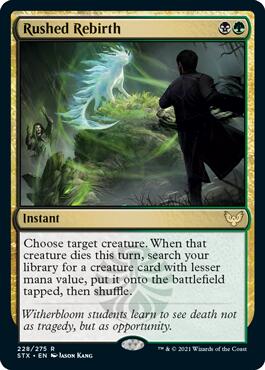
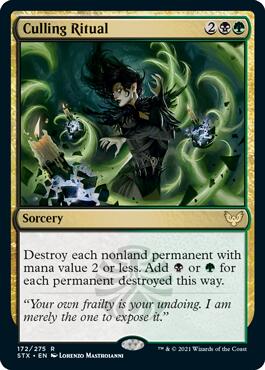
Culling Ritual and [card]Rushed Rebirth[/card

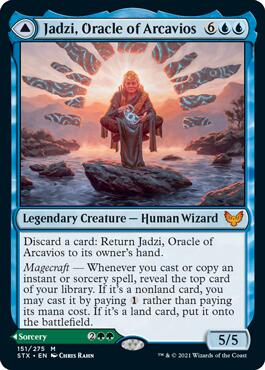
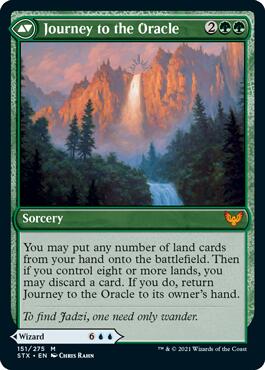
Jadzi, Oracle of Arcavios and Journey to the Oracle

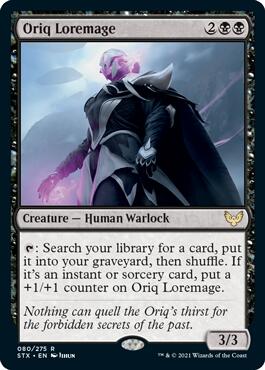
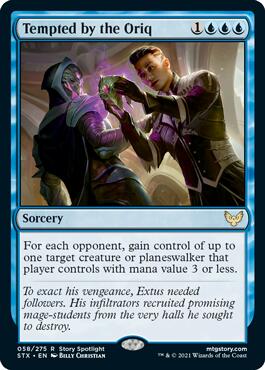
Oriq Loremage and Tempted by the Oriq

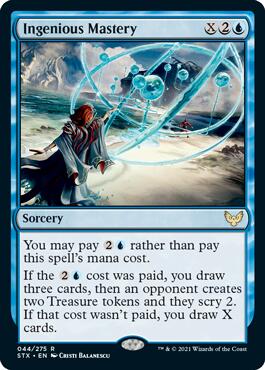
Ingenious Mastery

April 2nd

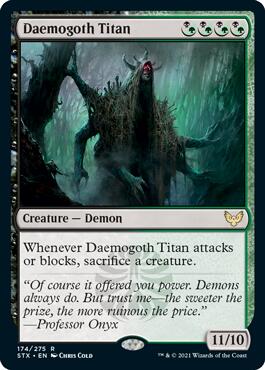
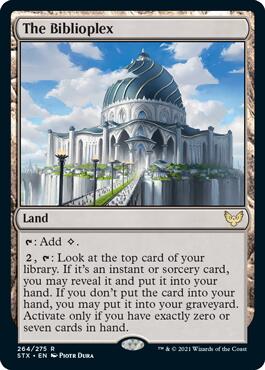
Daemogoth Titan and The Biblioplex

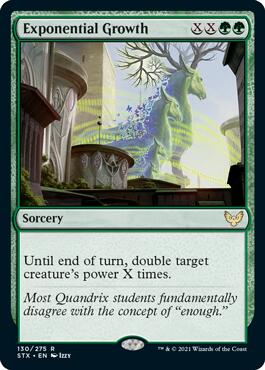
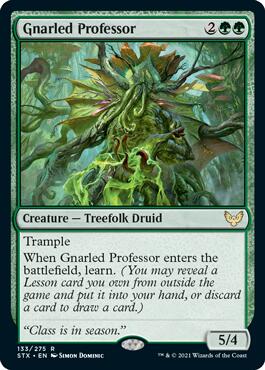
Exponential Growth and Gnarled Professor

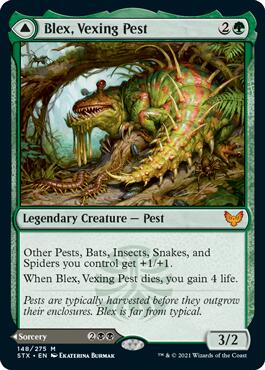
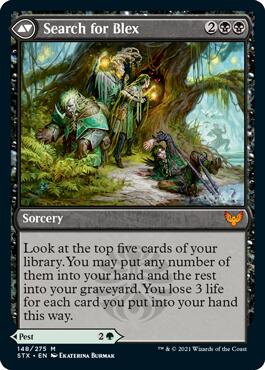
Blex, Vexing Pest and Search for Blex

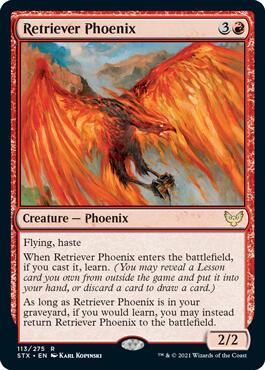
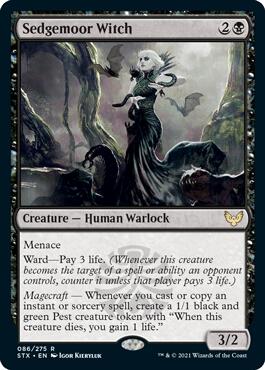
Retriever Phoenix and Sedgemoor Witch

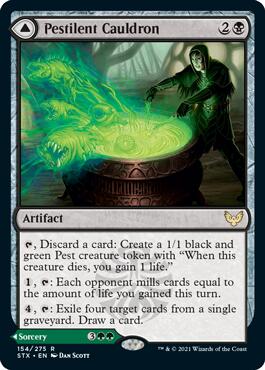
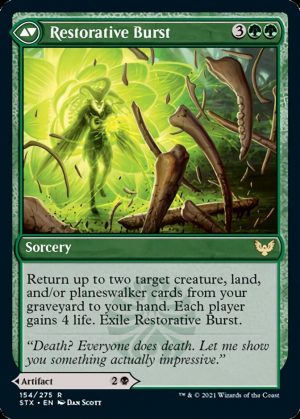
Pestilent Cauldron and Restorative Burst

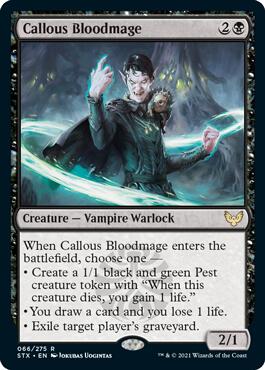
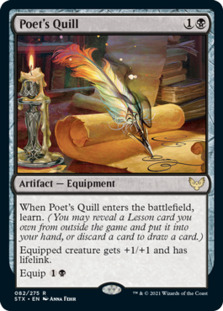
Callous Bloodmage and Poet's Quill

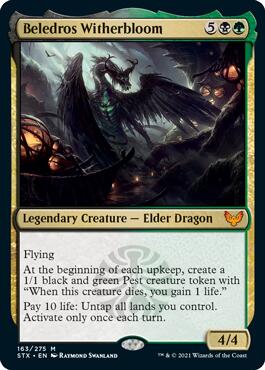
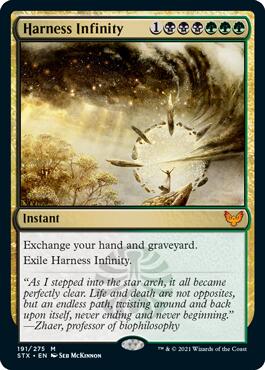
Beledros Witherbloom and Harness Infinity

April 1st

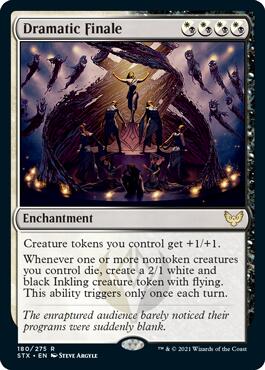
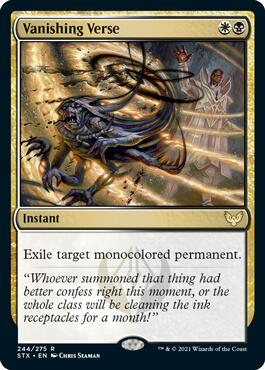
Dramatic Finale and Vanishing Verse

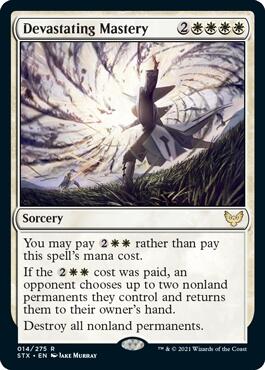
Devastating Mastery and Leonin Lightscribe

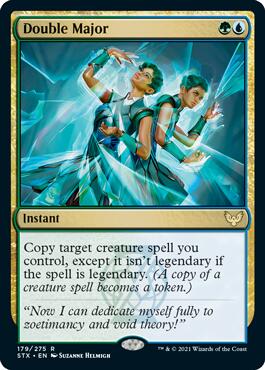
Basic Conjuration and Double Major

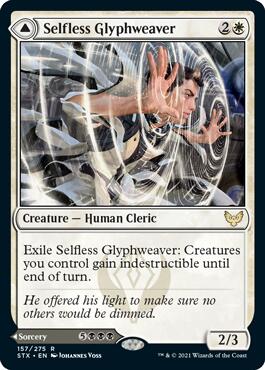
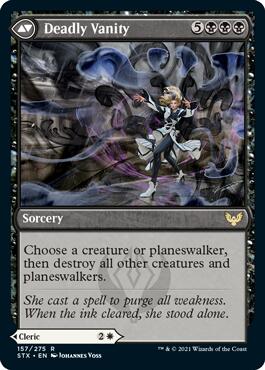
Selfless Glyphweaver and Deadly Vanity

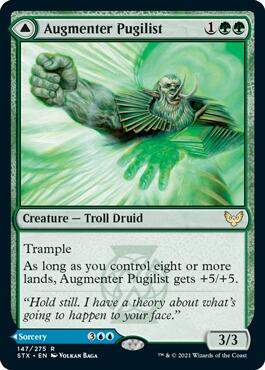
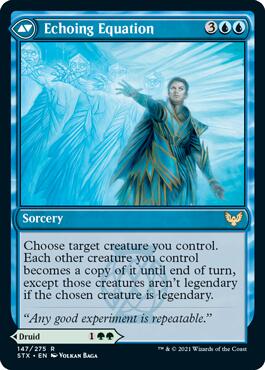
Augmenter Pugilist and Echoing Equation

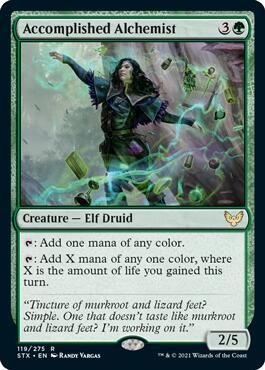
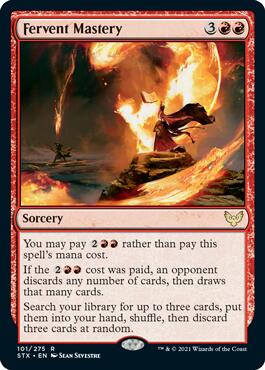
Accomplished Alchemist and Fervent Mastery

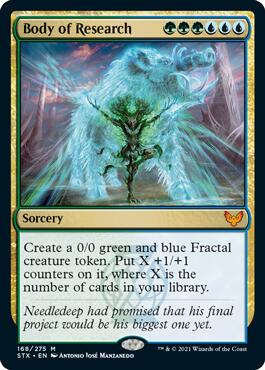
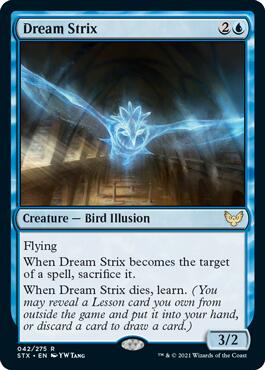
Body of Research and Dream Strix

Blot Out the Sky and Mascot Exhibition

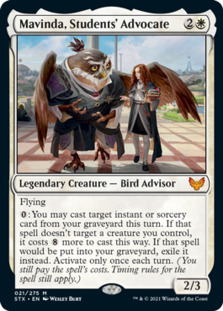
Crackle with Power and Mavinda, Students' Advocate

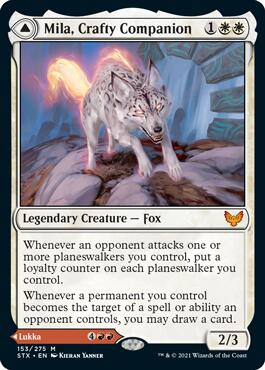
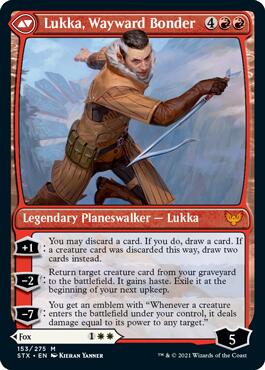
Mila, Crafty Companion and Lukka, Wayward Bonder


March 30th

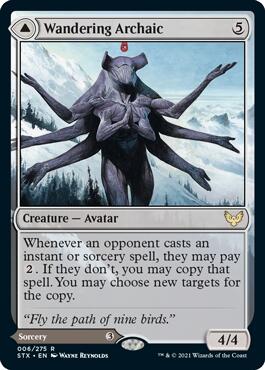
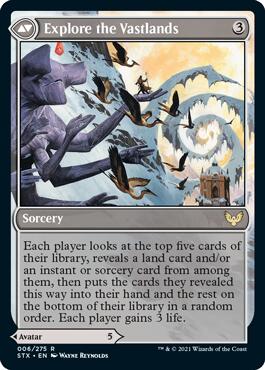
Wandering Archaic with backside Explore the Vastlands

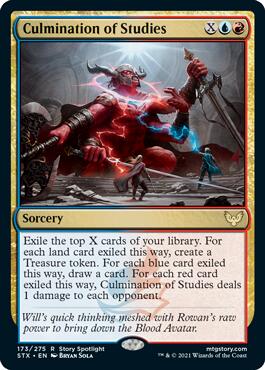
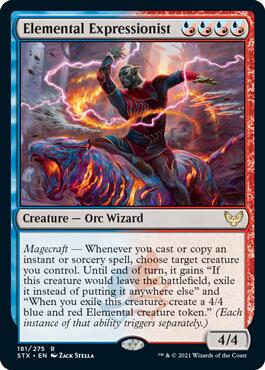
Culmination of Studies and Elemental Expressionist

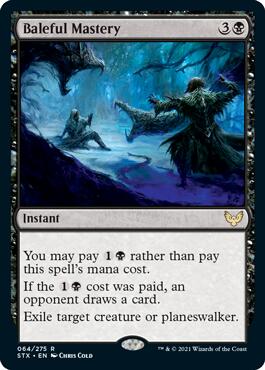
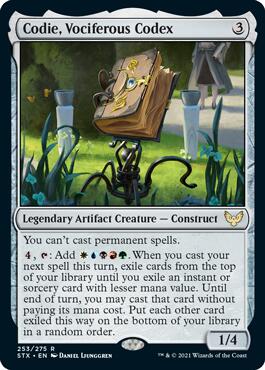
Baleful Mastery and Codie, Vociferous Codex

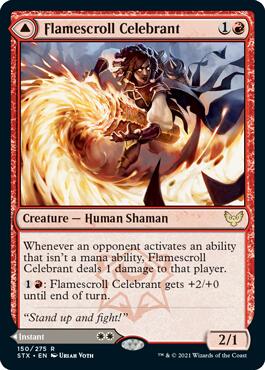
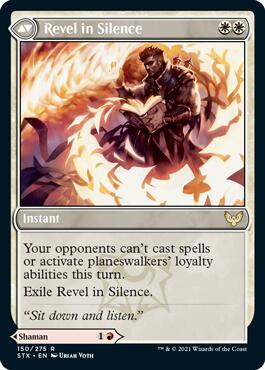
Flamescroll Celebrant and Revel in Silence

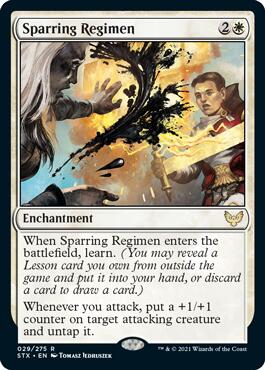
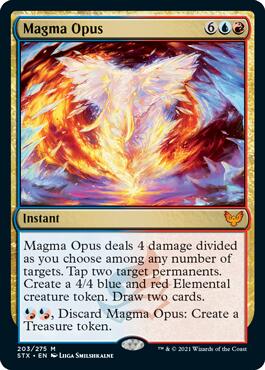
Sparring Regimen and Magma Opus

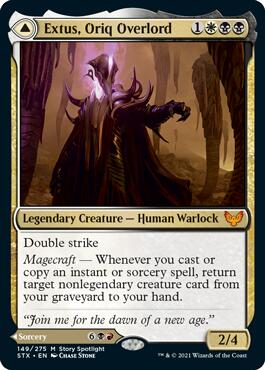
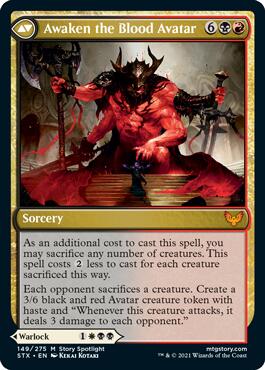
Extus, Oriq Overlord and Awaken the Blood Avatar

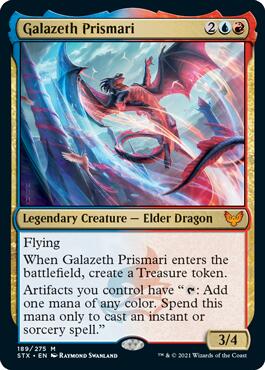
Galazeth Prismari and Tanazir Quandrix

March 29th

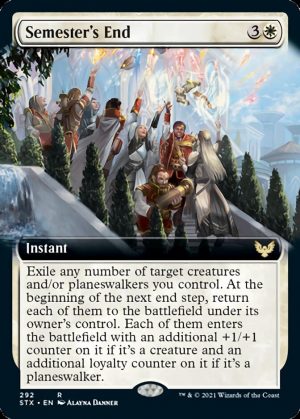
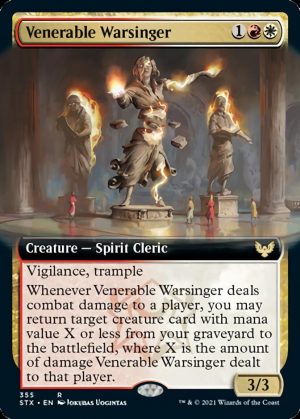
Semester's End and Venerable Warsinger

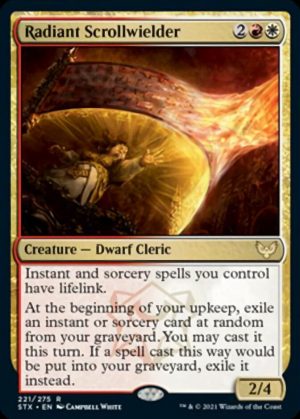
Academic Probation and Radiant Scrollwielder

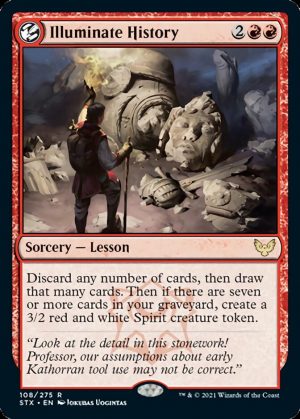
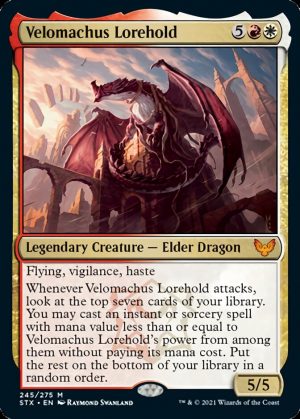
Illuminate History and Velomachus Lorehold

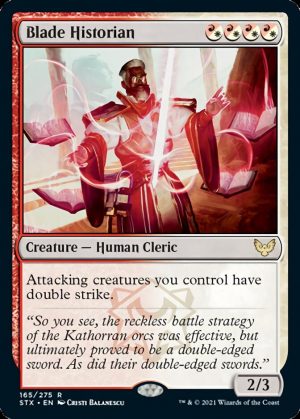
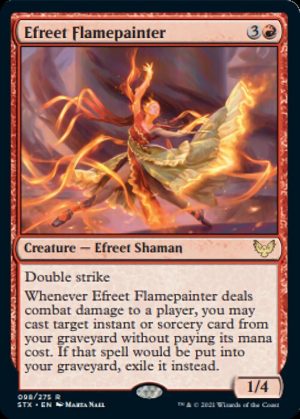
Blade Historian and Efreet Flamepainter

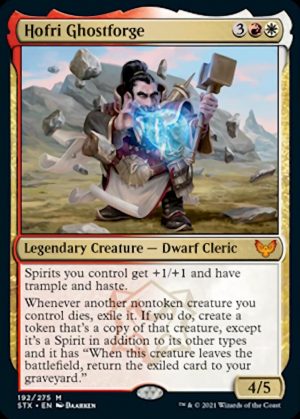
Hofri Ghostforge and Strict Proctor

March 25th

We've officially entered spoiler season! Today kicks off with the traditional stream on Magic's Twitch channel.

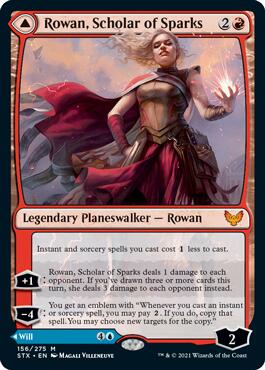
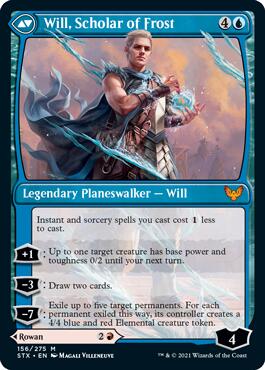
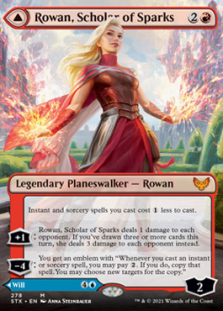
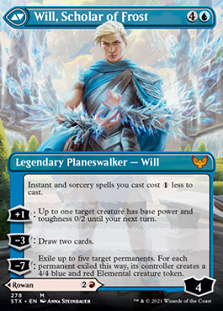
We're getting a MDFC Planeswalker card with this set! I think this is a really cool take on Rowan and Will, and I'm excited to play both sides of Rowan, Scholar of Sparks and Will, Scholar of Frost. I think their static ability will be great for Izzet mages, and their abilities should pair nicely with the traditional kind of UR strategies we've been seeing in Standard recently.

March 22nd

Monday kicked off with some exciting new previews from Danny Trejo and Sean Plott on Twitter!

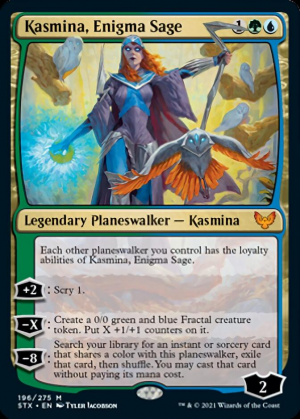
Kasmina, Enigma Sage is our newest UG planeswalker and seems like a super interesting addition to superfriends-style lists due to the static effect of "Each other Planeswalker you control has the loyalty abilities of Kasmina, Enigma Sage." Scrying is always useful, the token ability seems fine, and I imagine the -8 ability could be pretty decent in the right matchup.

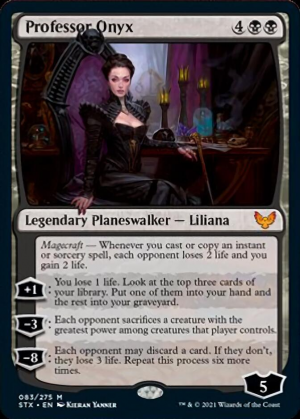
It took me a few minutes to realize that Professor Onyx had the card type of Liliana, and I'm super jazzed to see how that's represented in the story! Why is Liliana moonlighting as a professor? Or is Professor Onyx a distinct character that has the Liliana card type for other mechanical reasons? Either way, I dig it. The abilities are all very Liliana-esque, and I look forward to trying to play this card at some point in the upcoming Standard.

February 18th

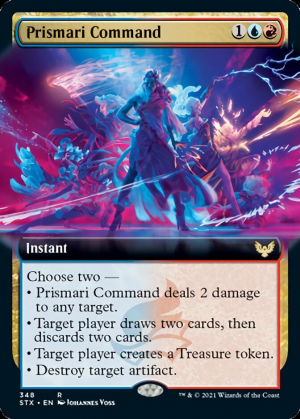
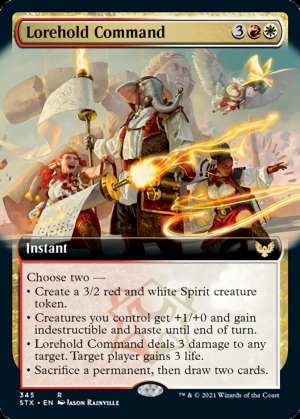
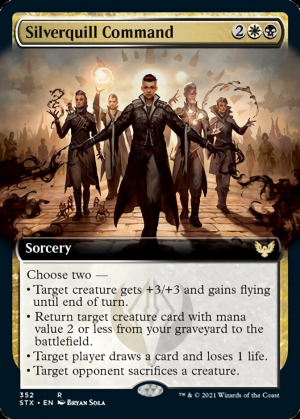
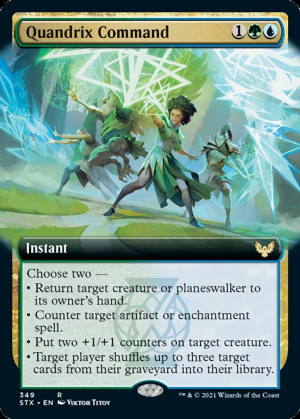
We got our first look at Strixhaven in a Weekly MTG Stream on Magic's Twitch channel. We got a look at the cycle of Commands, some of the Mystical Archive cards, and on the same day, we got a peek at some Japanese pack-exclusive Mystical Archive cards with what I consider to be fantastic art. This is already shaping up to be one heck of a rad-looking set, at least art-wise!

The Commands

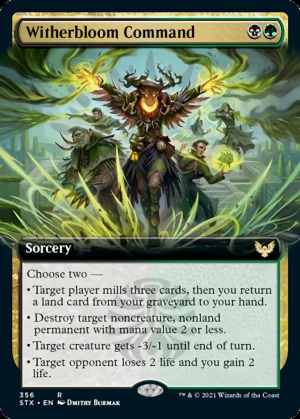
All of these commands seem super fun and flavorful! I'm a big fan of being able to pick two out of the four options for these, making them versatile for many gameplay situations.

Mystical Archive Cards

I keep telling myself I'm going to stop being wooed by gorgeous alternate art Magic card reprintings, but Wizards continues to blow me away with delicious, delicious eye candy.

Japanese Exclusive Mystical Archive Cards

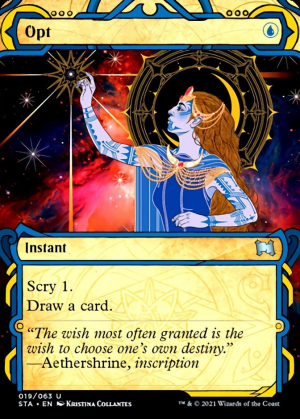
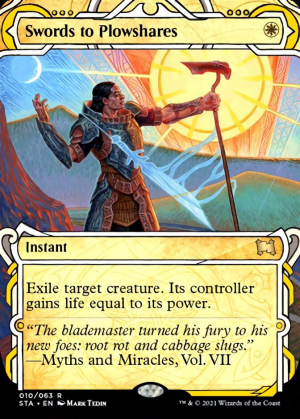
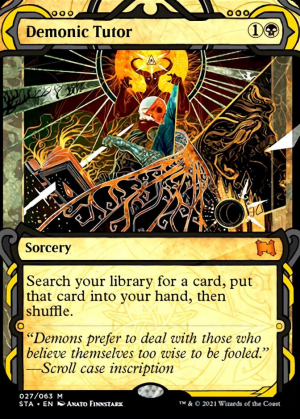
These Japanese exclusive arts are fantastic and I'm really hoping I get a chance to snag some Japanese packs from my LGS! We're looking at Opt, Swords to Plowshares, and Demonic Tutor.

Introductory Modern Mechanics: Strixhaven Spoilers Week 1

Are you a Quiet Speculation member?

If not, now is a perfect time to join up! Our powerful tools, breaking-news analysis, and exclusive Discord channel will make sure you stay up to date and ahead of the curve.

Greetings students, and welcome to the first week of Strixhaven spoilers. As this is the first week, I'll be keeping things simple by going through the set's mechanics. I've made this a tradition for all new set spoilers, and it's particularly appropriate this time as the new mechanics are a both surprisingly straightforward and annoyingly indirect. So open your books, and let's begin.

The first thing to note is that the set's full name is Strixhaven: School of Mages. Yes, that last clause is the conceit of my stylistic flourish this article. It is also critical to understand the ecosystem of these mechanics: it's all about non-creature spells. Of course, there will be quite a lot of creatures, and many of these mechanics will be stapled to creatures; Wizards's whole design philosophy is that creatures are central to the game. However, the driver will be the non-creature spells, instants and sorceries primarily. Artifacts and enchantments are getting some love too thanks to the red-white school Lorehold's themes. You should also know that it's an enemy-colored set. So Jund, Burn, and Prowess players will be paying especially close attention to Strixhaven.

Learning Lessons

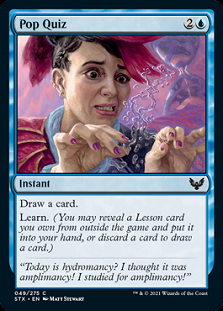
The signature mechanic is technically a split mechanic. Strixhaven introduces Lessons, which are instants and sorceries with the lesson subtype. This subtype doesn't mean anything on its own, impacting functionality only flavorfully. Rather, the marker is for usage with the learn keyword found on some spells. Learn seems to be used in place of "draw a card" in Strixhaven, as it's just on cards as an additional effect. Said cards are all flavored around the many parts of academic life (I'm feeling very seen by Pop Quiz), but that's the only connection. That said, learn has a lot of potential because it either lets you wish for a Lesson or just cycle (discard a card to draw a card).

Teaching Is Hard

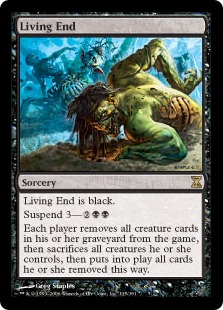
I should specify that learn has potential, but that doesn't make it good. Cycling is a good mechanic, but mainly in the context of Living End. The only other cycling spells that see play are Unearth and Shark Typhoon. While there are interesting implications of Living End getting to cycle creatures without the mechanic, that seems a tad inefficient. Those decks are so streamlined as-is, so why complicate matters?

Outside of Living End, there is certainly utility in discarding dead cards without cycling to draw into new, relevant ones. However, the cards currently spoiled strongly suggest that utility won't be sufficient for learn cards to see play. Frankly, they haven't spoiled a card with learn that's playable on its own. That may change, but it also may not. The closest is Professor of Symbology, and that's mainly because she's white. White doesn't get velocity cards very much, and thus any white velocity card automatically becomes a good white velocity card. This is enhanced by the mana cost and stats. However, there's no deck she fits into, and nothing that you'd ever play her over, which means she'd never actually see play just as a 2/1 velocity generator.

Rather, the potential for Modern comes from the wish. Karn, the Great Creator has shown how valuable wishes, and especially repeated wishes, are in Modern. This isn't a companions situation; it's just more wishes. The catch is that the only targets are Lessons, which means that the value of learn is directly tied to the value of the lessons. Which honestly feels like something a lot of professors need to hear, but I digress. If there are Modern-playable lessons that are also good enough to sacrifice a sideboard slot for, then the Professor will be especially playable. Death and Taxes could potentially gain a ton of value by repeatedly flickering her and wishing for whatever is needed. And at least if you don't have the right Lesson, she can cycle a superfluous Plains.

Lessons Worth Learning?

Of course, the problem is that (again, as of writing) there's only one potentially playable Lesson. The rest are overpriced versions of existing cards and wouldn't see maindeck play, much less taking up a precious sideboard slot. There's no justification for playing an inefficient Attune with Aether or Preordain maindeck, much less in place of a Modern-level sideboard card. Unless that changes, I'll be tuning out of another disappointing class.

The one possible exception is Academic Probation. This card is incredibly niche, but in certain matchups it might be backbreaking. Preventing a single card from being cast for a turn is way too narrow to see real play, and Azorious Arrester already exists and never sees play. However, as a wish target, Probation might be a decent bullet. I can see it being strong against combo decks by naming the right card. I'm seeing Past in Flames or Grapeshot against Storm, Thassa's Oracle against Ad Nauseam, or Living End just to buy the turn needed to finish the game. There's some (questionable) utility in naming Supreme Verdict to again buy time for an aggro deck to close the game too. Were it an instant, it'd be potentially devastating against many combos, which is probably why it's a sorcery in the first place. But when opponents are on the verge of combo-ing off, it reads a lot like Time Walk.

There's at least some potential in fogging a creature, though it's much less practical. Trying to prevent a combo attempt by Heliod Company is only a brief reprieve and a waste of a card. The best I've come up with is blanking Primeval Titan for a turn cycle, which isn't terrible if all you need is that turn cycle to win. However, that's still a pretty weak application, and if Probation is as good as it gets then learn is on the ropes. If there are more niche-but-effective cards, there may be something here.

Magecraft

Next up, and sticking with the instant and sorcery theme, is magecraft. Magecraft is an ability label for any ability which triggers off an instant or sorcery being cast or copied. Which presumably means there will be a fair amount of copying in Strixhaven, though only one way has been spoiled. In any case, this is just for permanents which have a minor effect when you play into the set theme. The value of magecraft will therefore largely be determined by the playability of the underlying card and not the ability. It's not that the abilities are poor, but that they're not good enough to make up for an otherwise unplayable card. At least, there aren't any yet. Archmage Emeritus is close, but not close enough.

Combo Creatures

The one magecraft card that might make it (again, as of writing) is Witherbloom Apprentice. Draining for one point per spell isn't anything special, but this is Modern, and we have Storm.  Two-mana wizards are a staple of the deck, and while Apprentice doesn't fit the color (or creature type) scheme, it halves the storm count necessary for a lethal Grapeshot, which opens up some possibilities. Suddenly, Jund Storm seems possible, as it doesn't need blue's cantrips, cost reducers, or Gifts Ungiven to generate 20 total storm. Instead, there's a chance that red's mana production alongside green land search and black card draw can do the job with only ten spells. I'm not sure that's actually better than traditional Izzet Storm, but it's something to explore.

However, the greatest potential is for some entirely new combo to emerge. Apprentice triggers on any instant or sorcery, or their copies. In Legacy, Apprentice and Chain of Smog targeting yourself is a kill, because Chaining yourself can be done infinitely. There is nothing comparable in Modern, or at least I couldn't find it after hours of looking and asking reddit. The existing options for making lots of copies are both storm cards, specifically Gravestorm and Weather the Storm, and there's no way to generate the necessary storm in a single turn without the red rituals. However, maybe there will be a new card which will enable Apprentice. At minimum, it's one to watch.

Ward

Next is ward. Ward is a new name for a mechanic that I first remember seeing on Frost Titan. Wizards has formally keyworded it so that they don't feel compelled to put hexproof on so many creatures because they want them to matter and have learned that weakening removal too much causes problems. White, blue, and green will be getting variations on the Titan version while black and red get the Terror of the Peaks life payments. There's nothing notable for Modern here, except that hopefully this also means that Wizards won't feel like they have to make everything gain ridiculous amounts of value just by casting it to matter so we never get Uro, Titan of Nature's Wrath again. Hopefully.

The Twins

Finally, MDFC's are back again. That's it. Wizards is trying to mechanically tie their sets together more, and so they've included the same mechanic in three sets. Nothing we haven't seen, and nothing I haven't discussed already.

That could have been the end, mainly because the MDFC's spoiled so far are the college's deans, and none of them are Modern playable. However, also spoiled is the first MDFC planeswalker ever: the twin walkers Will and Rowan Kenrith. Both sides have Goblin Electromancer's cost-reduction ability, and Rowan is cheap enough that I could see her seeing play. Will might too, but he'd be an afterthought at five mana. However, Rowan does have two problems. At three mana, she's more expensive then Electromancer or Baral, Chief of Compliance, which would price her out of Storm. Plus, Storm doesn't always play a full set of either creature, so why play a three-mana version? Secondly, she's fragile, with only two starting loyalty and a +1 ability. Wizards actually learned from War of the Spark, apparently.

However, don't count Rowan out. Her +1 can be a potent finisher when fully powered, and Prowess tends to play a lot of cantrips. I can see certain versions using her as a finisher and enabler with Will as a long game option. In such a deck, Rowan's fragility would be less of an issue, since opposing removal will be strained by the creatures and it's unlikely that creatures would be able to attack her before she can build some loyalty. Even if she does just die, that's removal that didn't hit a creature, which may be good enough for Prowess. Stranger cards have seen play for stranger reasons.

More to Come

So marks the end of this introductory article. I hope everyone now understands how Strixhaven means to continue. Next week is the metagame update, but after that, class will resume with the rest of the spoilers. Plan your studies accordingly. And most importantly, before asking any questions, check the syllabus first. Class dismissed.

The Long Term Impact of Magic Crossovers

Are you a Quiet Speculation member?

If not, now is a perfect time to join up! Our powerful tools, breaking-news analysis, and exclusive Discord channel will make sure you stay up to date and ahead of the curve.

It’s amazing how ahead of its time InQuest Magazine truly was. The monthly magazine, which was published from 1995 to 2007, has now predicted at least a couple of major trends in Magic.

It started with the creation of a “sixth color”. Technically, InQuest writers predicted the color would be purple, and the lands that created purple mana would be called portals. It didn’t exactly come to fruition in this way, but Wizards did create a sixth basic land type: Wastes. I suspect we haven’t seen the last of those lands and the colorless mana mechanic, either, as Wizards seems to like returning to a world with Eldrazi in them.

But in the meantime, it looks like Magic will be traveling to a different world—one which was also predicted by InQuest Magazine. Back in Issue #69, the magazine published “what if” Magic cards themed around Middle Earth.

Now, about 20 years after these Middle Earth cards were published, Wizards of the Coast president Chris Cocks announced a series of cards that will feature crossovers with two franchises: Warhammer 40,000 and Lord of the Rings.

While little is still known about these releases, I’m going to speculate a bit this week and explore possible MTG finance implications of such sets.

These Ain’t Your Parents’ Magic Cards

In an old person’s voice: “When I was your age, we walked to our local hobby shops, uphill in the snow, and were thrilled to have enough change to purchase a cheap pack of Fallen Empires or Homelands. I never did open that Hand of Justice, but at least I knew what my Magic: the Gathering cards would look like!”

Let’s face it: Magic has come a long way since its inception in 1993.

                        1994:                                                                          2020:


Players who have been around for a while (including myself) may be swift to criticize the direction that Magic has taken over the years. What used to evoke imagination, pretending to be a Planeswalker casting spells and summoning creatures to destroy your opponent, has now boiled down to the concrete. I find it difficult pretending to be that same Planeswalker when summoning Rick, Steadfast Leader to the battlefield. But maybe that’s just me.

Then there are all the novel frames, foilings, and artworks. Rick, Steadfast Leader is an extreme case, but there are many variants of Magic cards being printed nowadays that, quite frankly, don’t look like Magic cards!

Don’t get me wrong—the artwork on this series of cards is incredible. It’s obvious these artists are talented, and the cards do give off a 1990’s heavy metal vibe. But these look nothing like a Magic card. At this point, you could sit down across from an opponent and their opening hand can contain seven cards that don’t look remotely like a traditional Magic card.

I predict Wizards will be doing more of this over the next few years, not less. They tend to follow a strategy where they discover a successful, new idea, and then proceed to reapply that same idea over and over again until it loses its luster. We’re still in the hype phase with these alternate-style Magic cards. A time will come when doing live coverage of a Magic event will become extremely difficult simply because commentators will struggle to identify every variant of every card that exists...there are already a bunch that don't even look like Magic cards to begin with!

It’s ironic that the newest set released by Wizards, Time Spiral Remastered, boasts reprints of cards in the classic Magic frame. Perhaps this was done to placate the enfranchised players.

MTG Finance Implications

It’s no simple task to predict the impact a Lord of the Rings-themed Magic set will have on the game. A balance needs to be struck between the players who appreciate the classic aesthetic/storyline of the game, and the players who embrace the ability to play their favorite game with some of their favorite characters and themes from other franchises.

When all the dust settles, however, I predict these crossovers will be a net positive for Magic on the whole. Creating a Lord of the Rings, Dungeons and Dragons, and Warhammer 40,000 themed set will bring newcomers to Magic by tapping into other fantasy-related games/storylines. This growth in the player base will, in turn, grow the popularity of the collectible card game.

These newcomers won’t exclusively purchase and play cards from their associated franchise. Once they get a taste of how great a game Magic is, I’m confident many will stick around, at least for a while. This means an increase in demand for Magic’s other, more traditional sets.

The impact on newer sets will be miniscule, probably even negligible. New sets are “print to demand” for the most part, so (COVID-19 aside) there should be no problem creating enough new product to satiate the appetite of classic and new Magic players alike.

But what about the impact on older cards, such as Commander staples that haven’t been reprinted in a while or Reserved List cards? One may postulate that a Lord of the Rings fan wouldn’t have interest in spending hundreds of dollars on a Dual Land or Wheel of Fortune. But the reality is, Commander is Magic’s most popular format nowadays. It would be shortsighted to assume newcomers to Magic wouldn’t naturally drift towards a format where they’re encouraged to play all their favorite crossover cards in a friendly environment.

At least some number of these newer players will want the appropriate Reserved List cards for their deck. It seems inevitable.

There was an error retrieving a chart for Wheel Of Fortune

I also put forth the assumption that fans of these other franchises may have extra cash on hand to spend on hobbies just like Magic players do. Perhaps there will be a little sticker shock at first, but I see no reason why a $500 card would cause a Warhammer 40,000 player to balk any more or less than a Magic player.

Thus, it’s no large leap to hypothesize that a growing player base will lead to more demand pressure on all things Magic, which will send prices of the most desirable Reserved List cards higher. A Lord of the Rings fan probably won’t rush out and purchase a Bazaar of Baghdad or Juzam Djinn—they probably won’t be the first ones to pick up Vintage or to pine for Magic’s nostalgia. But could a Lord of the Rings fan prioritize buying a Gaea's Cradle for their Legolas Commander deck? I definitely think so!

There was an error retrieving a chart for Gaea's Cradle

I don’t think you even have to try and guess which cards will align themselves best with Lord of the Rings or Warhammer 40,000. Since these are all going to be Magic cards in their own right, it’s safe to assume that good Commander cards will remain good. In other words, there’s no reinvention of the wheel here. A card that was a good investment before becomes an even better investment in a world where the Magic player base grows.

Wrapping It Up

There’s time yet before these franchise crossover Magic sets are released. We know very little about them at the moment. But that really doesn’t matter—when it comes to MTG finance, anything that brings new players to the game will be a net positive for card prices.

The more mainstream Magic becomes, the greater its longevity. If Magic sticks around for another couple decades, some of the game’s earliest cards—especially those Commander staples on the Reserved List—stand to appreciate significantly in value. For this reason (and many others), I remain steadfastly bullish on Magic prices over the long term.

Now that the franchise crossover barrier has been broken, there’s really no limit to what Wizards of the Coast can do to draw newcomers to the game. Hasbro is well-versed in this space. Just look at what they did with Monopoly. What began as a popular board game in the 1930’s has evolved to become one of the most proliferated games in the world with numerous cross-overs and spinoffs. Reinventing a classic to drive sales is not a foreign concept to Hasbro.

As for predicting which crossovers may come next? I’d look no further than old InQuest magazines! They apparently have a knack for making such predictions about the future of Magic. They already predicted Advanced Dungeons and Dragons and Middle Earth cards. They also have Manga Magic, Planet of the Apes, Cthulhu, Stephen King, and Dragonlance crossover card creations…perhaps we’ll see some of these come to fruition in the years to come?

Regardless of what the franchises are, any chance to bring new eyes to the beloved game of Magic should bode well in keeping the game alive, thriving, and therefore quite lucrative for years to come!

Chain of Smog: From Bulk to Broken

Are you a Quiet Speculation member?

If not, now is a perfect time to join up! Our powerful tools, breaking-news analysis, and exclusive Discord channel will make sure you stay up to date and ahead of the curve.

The new standard set Strixhaven is just around the corner; with spoiler season upon us, the time has come to examine these new cards. With the new spoilers coming out as the days go on, people are starting to figure out some of the cool card interactions. One of these card interactions is a two-card infinite combo in mono-black. The first part of this combo is the new Professor Onyx which features a new mechanic by the name of Magecraft. The second part of this combo is an uncommon card from Onslaught, Chain of Smog.  This combo has turned this seemingly useless piece of bulk, into a card worth almost $15 apiece.

The way this combo works is very interesting. Liliana's ability, and any other card with Magecraft, causes an ability to trigger whenever you cast or copy a spell. In the case of Professor Onyx A.K.A Liliana, whenever you cast or copy a spell you drain your opponent for 2 life, and you gain 2 life. With Chain of Smog, any target player discards two, and then that player may choose to copy that card. Essentially, you choose yourself as the target, copy the spell, choose yourself again, rinse and repeat. This triggers any Magecraft ability infinitely. This is even better considering that with Professor Onyx it makes a two-card infinite combo in mono-black, which for many cEDH players is a very desirable thing.

The Price

Before this spike, Chain of Smog had been sitting at around 30 cents for most of its life span, and up until recently, had no reason to change that. On the 23rd, Chain of Smog jumped to about $15 a piece. There still is a decent supply on TCGplayer, with even damaged copies selling for nothing under $10, but on Card Kingdom, all copies are sold out in every condition, with Star City Games and Channel Fireball in similar positions. Over the past couple of days, it has held its position with a slight downturn recently.  If we look at a similar card Demonic Consultation, we will see that it experienced a similar jump in price when Thassa's Oracle was spoiled in early 2020. That is a slightly different circumstance, however, as Demonic Consultation still had a use before then, and had value before then, with the start of the value increase for Demonic Consultation starting in 2019.

Chain of Smog jumping to over $15 last week.

Demonic Consultation showing multiple jumps in price over the past two years.

Playability

With the release of Thassa's Oracle  in Theros Beyond Death, the playability of Demonic Consultation rose drastically, especially in competitive Commander circles. The reason for this being, while some cards offered combo's with Demonic Consultation before (Jace, Wielder of Mysteries and Laboratory Maniac to name two), none offered a two-card combo this cheap. With the introduction of Thassa's Oracle, you only needed two cards and three mana. The only restriction was that your deck had to be Blue-Black (in Commander at-least), and you had to have two blue mana, and one black mana, to play this combo. This was by far better than the three blue mana and one black mana requirement of Jace, Wielder of Mysteries and Demonic Consultation combo, but more could still be improved.

This improvement is arguably made by this new combo. since the color requirement is only black, you could run this in any Commander deck that runs black. No Commander requirements, no extra colors, just any deck with black. This would allow this new combo to be slotted into a lot larger portion of decks, allowing for more widespread use and more demand. The only downside seems to be the large cost requirement of colorless mana, being eight mana instead of three. This may be a big dealbreaker or could be worked around with other methods. Either by cheating out Professor Onyx or by using some heavy non-color-specific ramp. One suggested workaround is by using Planebound Accomplice to cheat her onto the battlefield. Either way this plays out, I am excited to see how this goes, both financially and in gameplay.

Predictions

Since Chain of Smog is also almost 20 years old, it is fair to say that the supply isn't absolutely ridiculous. Normal players don't have 10 copies sitting in their attic, but it isn't super rare either. This possibility for widespread use, with an additional aspect of relatively lower supply, could allow for this card to fetch a pretty decent price tag. I think it is fair to say that this could stay at these seemingly ridiculous prices, maybe even higher depending on the actual use of the combo after Strixhaven is released. The possibility of something so ridiculous is becoming less ridiculous as the weeks pass. Remember the Shivan Dragon buyouts that left Fifth Edition versions of the card with prices through the roof? While the prices did eventually fall, it wasn't by much. The cheapest NM Shivan Dragon you can find on TCGplayer is almost $20

Stranger things have happened, and it seems in this strange time that some of the craziest most outlandish things will happen. I could see this combo being more widespread than Demonic Consultation and Thassa's Oracle, or I could see it falling by the wayside, and being discarded as inefficient. Whichever way it goes, this is going to be an interesting example of the economics of high power play.

The Takeaway

This could possibly be one of the most powerful combos cEDH and perhaps other formats have ever known. Some master deck builder could come up with an insane turn one win, bypassing all of the downsides of this new interaction, and make this a new staple in competitive decks running black, or we could have all but forgotten about this in two months time. We really don't know, and we can debate all day long, but until it comes, we truly don't know. If you were lucky enough to pick up a couple of copies before the price jumped drastically, I applaud you. If not, you never know, maybe pick up a few and see how it goes.

The future belongs to those who reach out and take it, not those who sit and wait. Curiosity may have killed the cat, but satisfaction brought it back. Until next time everyone, have a great day, be smart, and invest in cardboard.

The Latest Contender? Analyzing Heliod Company

Are you a Quiet Speculation member?

If not, now is a perfect time to join up! Our powerful tools, breaking-news analysis, and exclusive Discord channel will make sure you stay up to date and ahead of the curve.

And now, back to our regularly scheduled metagame analysis. Let me just take a look at what's been winning... oh. MTGO's reporting system is bugged; there's been no new data since March 10. Huh. Ok, well, let me just see what's happening in the community... wait, really? Heliod Company is considered the best deck now? When did that happen?! The data that Wizards did manage to post clearly shows that Jund Shadow is Modern's best deck. Something's up here.

So, yeah, there's a new data crunch. As of writing, MTGO has not posted any decklists for almost two weeks. We're not totally deprived of data thanks to the work of redditor bamzing working twitter to get the results from Challenge-level events. However, there are no Preliminaries, so we're getting an incomplete metagame picture. Even by the past year's standards. And the narrative that I'm seeing everywhere is that Heliod Company is the best deck, which is a surprising turnaround. That deck has been hanging around Modern since Heliod, Sun-Crowned was printed, frequently though inconsistently in the top tiers. However, its average points were always abysmal, and below the baseline. Something has dramatically changed for it to be considered a bogeyman.

A Reality Check

I have to lead with the disclaimer that all the hype may be nothing. MTGO is a fairly small metagame because most players don't want to buy another collection for the limited payoff of playing online. Thus, the total population is smaller, which makes groupthink and/or circular metagaming easier. It is much easier to level yourself with smaller samples; if you know the likely competitors, know what they play, and plan to beat that, so long as they don't do the same to you. Since the data from the limited source is further choked off, its much easier for weak observations to guide thinking and/or lead players astray. It may be that Heliod Company is the best deck right now. However, it may also be a self-fulfilling prophecy caused by MTGO players believing the hype or overthinking the metagame.

In other words, don't discount the possibility that right now Modern is chasing its own tail. Happened all the time on the Star City Games circuit. And MTGO is even more insular. I see the same names week after week in the Challenge results, and I don't think that's an accident. As such, whatever that group of very dedicated grinders thinks is happening is what will actually manifest in the results. I can't tell if the "real" metagame is actually defined by Heliod Company.  Perusing League uploads suggests that red decks define the metagame. Thus, I'll be approaching this dive on Heliod Company with a critical skepticism.
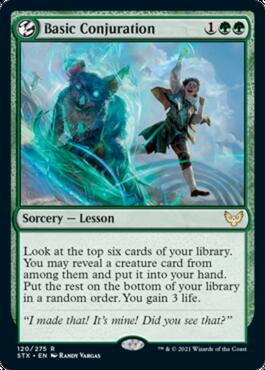
The Latest Variation

Anyway, on to the deck in question. As mentioned, Heliod Company has been around a few months, and is just the latest variation on the theme of Collected Company Creature Compendium Combo decks which have been around for years. The deck has taken many forms in its history, sometimes as a major contender and sometimes as a forgotten deck. It's always been a deck of acceleration and medium (at best) creatures which intends to win via one of several combos and is held together by Company. And in a great many ways, that's still the case.

Heliod Company, PTarts2win (March NRG Modern Open, 2nd Place)

Creatures

2 Walking Ballista
4 Arbor Elf
1 Noble Hierarch
4 Auriok Champion
4 Conclave Mentor
4 Heliod, Sun-Crowned
4 Ranger Captain of Eos
4 Spike Feeder
3 Skyclave Apparition

Enchantments

4 Utopia Sprawl

Instants

4 Collected Company

Lands

4 Windswept Heath
4 Temple Garden
3 Horizon Canopy
3 Misty Rainforest
3 Forest
2 Plains
2 Prismatic Vista
1 Pendlehaven

Sideboard

3 Damping Sphere
3 Path to Exile
2 Veil of Summer
2 Wheel of Sun and Moon
2 Deicide
1 Skyclave Apparition
1 Burrenton Forge-Tender
1Giant Killer // Chop Down

I'm actually almost glad that paper Magic isn't a thing because of this deck. Whenever Company is good, my LGS is overrun by it, and I don't usually play decks with good Company matchups. Last time it happened, I played Jeskai Control for months instead. It worked, but it's not how I like to play.

About the Deck

Few decks have ever epitomized "the whole is greater than the sum of its parts" more than Company combo decks. While most of these creatures are at least reasonable Modern cards on their own (which is a first for the archetype), there's little to explain how it can hang with the likes of Izzet Prowess or Tron. What a lot of players forget is that Company is primarily a multi-combo deck. These decks contain multiple combo options for infinite life and infinite damage (and once upon a time, infinite mana via Devoted Druid and Vizier of Remedies). The trick is that this time, the combos require fewer parts.
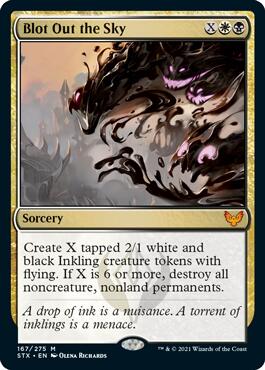
Company started out having to assemble either Melira, Sylvok Outcast, Kitchen Finks/Murderous Redcap and Viscera Seer or sometimes Spike Feeder and Archangel of Thune. Vizier replaced Melira and created the mana combo so that a drawn Walking Ballista or a Duskwatch Recruiter to find the Ballista killed. Chord of Calling and Company were essential to actually make it all happen. The combos in Heliod Company all require just two cards, which is far easier to pull off. With Heliod out, Feeder goes infinite immediately. A Ballista with two counters given lifelink also kills with Heliod.

The biggest advantage is that Heliod is a +1/+1 counter engine by himself. Even if the combos don't happen, there are plenty of options to just use Heliod to build an army and win fairly. Conclave Mentor makes it easier and Company is always around to rebuild a board. Which would suggest that without Heliod, the deck just falls apart.

The Three Keys

However, that's easier said than done. The greatest strength of this iteration of Company is its creatures' survivability. All the critical creatures in previous versions died to Lightning Bolt. And while the non-Heliod combo pieces do still die to Bolt, the critical creatures don't. Even after sideboard, they're hard to answer. These are the true keys to Heliod Company's recent success.
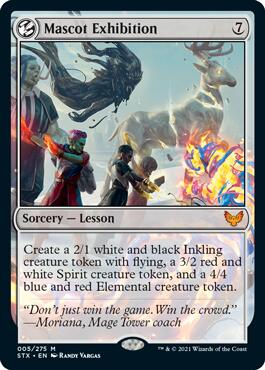
1) Heliod isn't usually a creature

In the library, graveyard, hand, or on the stack, Heliod is a creature. However, on the battlefield, he's only a creature with five devotion to white. Even when he is a creature, he's indestructible. Consequently, there are very few answers to Heliod. The creature removal that works is Path to Exile, and I've noticed Company players being very careful with their devotion in matchups were Path is a consideration. And should that devotion count disappear (say, via Ranger-Captain of Eos being sacrificed), suddenly Path becomes irrelevant, and will fizzle if it was on the stack targeting Heliod. The God is therefore the rare engine card that isn't vulnerable to any commonly played removal. And thanks to indestructible, he's also not vulnerable to the typical sideboard enchantment removal. Heliod then gets to just hang around and threaten to combo off if the conditions are right. The only commonly played answer that unequivocally works is Skyclave Apparition.
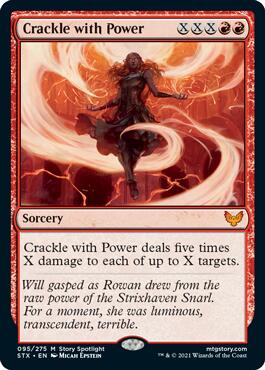
2) Maindeck Auriok Champion

You know everything I said about Company being the glue holding the deck together? You can forget that; it applied to the older versions. The second-most important card in Heliod Company is Auriok Champion. The best Soul Sister may not be part of any infinite combo, but she's the best combo piece in the deck. She and Heliod combine to turn any creature (yours or the opponent's) into +1/+1 counters with no further input, growing the battlefield out of control with a speed often attributed to Humans. Plus, Champion has protection from the two main removal colors, which translates into an extremely sticky combo that simultaneously keeps you in the game (by gaining life) and making it harder for the opponent to win (Champion keeps getting counters). It's no quick combo, but its the best long-term plan for when it just isn't coming together.

Champion also makes those combos easier. The Ballista kill requires a total of six mana so that Ballista has two counters when it enters and Heliod can grant lifelink. Champion reduces that to four mana by providing the extra counter. Champion also provides an extra counter for Spike Feeder if Lava Dart is a concern. I'm actually retroactively surprised that Champion was not more integrated into previous versions, since it obviates the need for Kitchen Finks as lifegain.

3) No Easy Sideboard Solutions

Finally, and again unlike previous versions, there's no silver bullet against Heliod Company. All the earlier versions relied on Company, Chord, and persist creatures, which meant that Grafdigger's Cage was backbreaking if left unanswered. Anger of the Gods wrecked the whole board and beat all the recursion Company used to run. With Heliod Company, independent of Apparition answering everything, there's no common sideboard card that's effective. Cage only hits Company; Anger of the Gods (which I loved against older versions) does nothing against Champion and Heliod; Aven Mindcensor only hits Ranger-Captain, which just searches for Ballista. No single card is half as effective against Heliod Company as Cage or Anger were, and that's helping to push up Company's numbers. Deicide, Wild Slash and Blightbeetle are seeing play just to have something against Company; that's how resistant the deck is to hate.

The Right Metagame

The final reason that Heliod has just exploded is that the metagame is ripe for it. Since the bannings, the format has been in flux. However, the red decks were largely unaffected, and having previously been top tier decks which now lacked a predator (Uro, specifically) Burn and Prowess made a play for dominance. And it worked, for a while. The problem is that there was a deck perfectly ready for them with 3-4 maindeck Auriok Champions and an infinite life combo. Toward the end of February (the 25th if Apparition's price history is an indication), Heliod took off, feeding on all the red decks and began to move up the rankings.

And the format continues to be favorable. The data I've collected puts Jund Shadow as the most played deck online (as of right now at least) with Burn at least Tier 2 and Prowess variants looking like strong choices. In fact, prior to the data problem, Company was a middling deck because it didn't show up in Preliminaries; just Challenges. With the only data being said Challenges, Heliod has closed the gap with Jund Shadow, as it puts large numbers in the Top 32. However, that's limited to the Challenges and the few outside events I've scrounged up (NRG series is a big one, but not the only one); the Heliod advantage isn't so clear. It still does well, but the total impact of all the red decks is far higher. In other words, there's ample prey for Company and it's taking advantage, whatever its inherent strengths.

Is There a Threat?

Of course, this being Modern, the question immediately becomes if there's a problem or not. And my answer, as always, is that it's far too soon to say. There's not even clear evidence whether this is a real phenomena or just a quirk of the MTGO competitive crowd. However, if I were to pretend that Company's ascension is no accident or metagame fluctuation, my answer would still be no. Company is the kind of best deck that I like because it isn't just more value than everything else. It needs a lot to go right for it, and can be disrupted. Plus, its combo isn't necessarily game-ending: Tron and Infect don't care about infinite life, and the latter can win before Heliod more reliably. Death's Shadow went from Rakdos to Jund because Tarmogoyf is effective against Champion. Let's wait and see if Heliod survives the likely decline of red decks before breaking out the pitchforks.

The Probable Solution

More importantly, even if Heliod Company is good, it has a natural predator that will hold it back. Remember how I said all the creatures are pretty medium? Company is still very vulnerable to dedicated anti-creature control. Moreso than before in many ways. Without Chord, there's no tutoring for Spellskite or Selfless Spirit, which makes spot removal and sweepers (besides Anger) far more effective than older version. Ranger-Captain may be a tutor, but its choices are mana dorks or Ballista. Not great for grinding. That isn't happening because the control decks seem to be more focused on each other than on killing creatures. If they go back to anti-creature configurations instead, Heliod will have a bad time.

In the meantime, it's important to remember that Heliod is being carried by its namesake and Champion. Planning around those cards will pay more dividends than worrying about the various combos that are much harder to assemble now. Plus, the deck is generally underpowered, and a little slow. The right removal at the right time and a reliable gameplan will work better than trying to outsmart Heliod. I think we've forgotten how to deal with medium decks after the past few years, and that's helping Heliod.

There's Always Another Fish

There's nothing wrong with having a best deck in Modern. There's also nothing hard to indicate that Heliod Company actually is that best deck. For now, it appears that the Premier event metagame is wrapped around Heliod, so plan accordingly. For everyone not playing Premier events, I wouldn't worry. The Leagues still appear to be wide open and undefined.

Speculating on Strixhaven

Are you a Quiet Speculation member?

If not, now is a perfect time to join up! Our powerful tools, breaking-news analysis, and exclusive Discord channel will make sure you stay up to date and ahead of the curve.

Strixhaven, the plane that many have dubbed the "Harry Potter" plane, we see WotC focusing on schools of wizardry. The biggest takeaway I have gotten from all the announcements is that if the set is focused heavily on a wizard school, then it should obviously feature a lot of creatures with the wizard subtype. Throughout much of Magic's history, the wizard subtype was typically relegated to blue creatures, but more recently we have seen a lot of red creatures with this subtype. Our first few specs for Strixhaven are all focused on cards that play really well with wizards.

There was an error retrieving a chart for Voidmage Prodigy

My first speculation opportunity is Mr. Kai Budde himself. Unfortunately, Voidmage Prodigy was outshone by the rise and dominance of the Psychatog decks back when the card was first introduced to Standard. However, the ability to sacrifice any wizard and counter any spell is definitely powerful and an ability that gets better as more wizards enter the card pool. It is important to note that Voidmage Prodigy was reprinted in Time Spiral and was a player rewards card. While you can obviously speculate on any of the copies, I would expect the Onslaught ones to have the most potential upside.

I myself picked up a few foil copies several years ago as a failed spec with Inalla, Archmage Ritualist. However, now maybe my redemption on this one. While some of the specs on this list have a higher risk of being reprinted simply due to their "genericness", Voidmage Prodigy happens to also have the keyword Morph on it, so it's far less likely to be reprinted into any standard legal set unless that set includes the Morph mechanic.

There was an error retrieving a chart for Riptide Director

Another of my mostly failed Inalla specs. Repeatable card draw is always something desirable in Commander and the more wizards one has in play the more powerful this effect. While you do have to sink 4 mana into the ability, blue decks tend to save their mana to react to opponents a lot so holding up mana to potentially counter a spell and if no worthwhile spell is cast using that mana to draw multiple cards is right up blue's alley. One of the biggest upsides with this card is it has had only a single printing way back in 2003, 18 years ago. I do see more risk with this speculation target than with the previously mentioned Voidmage Prodigy simply because it is generic enough to slot into a set and likely have minimal impact on Standard.

However, there is a lot of potential upside because the buy-in currently is very low and given WotC has been printing a lot of commander-friendly standard cards lately; any new legendary wizard commanders will likely cause a run on cards that play well with them. While I have no crystal ball, I think it's almost 100% assured that WotC will print at least 1 if not multiple legendary wizards in this set. As I put my money where my mouth is, I did buy a couple foil copies as I feel those to be the safest bet with significant upside potential. I do accept that now that WotC has started printing a couple Commander decks with each set, this is a card that could easily be included in them, however, the buy-in is low enough that I feel it warrants the risk.

There was an error retrieving a chart for Patron Wizard

Back in 2017, Patron Wizard had spiked to $20+ and then slowly began its descent back downward. Its addition to "The List" in 2020 helped continue that downward trend. The ability to Force Spike repeatedly any spell your opponent casts is extremely powerful, however, the cost of keeping creatures untapped is also pretty high. Back in the days of Odyssey Standard, there was a deck dubbed "Harry Potter" that used Patron Wizard and cheap wizards to lock your opponent out of the game.

While I can see a decent upside to this card, the biggest issue to me is that the buy-in is already relatively high $10+ and if it were printed in one of the Strixhaven Commander decks its price would surely plummet.

There was an error retrieving a chart for Riptide Laboratory

Riptide Laboratory used to be a singleton in some Snapcaster Mage-based Legacy decks thanks to its ability to re-use the ETB effect of that particular wizard. It provides a decently powerful effect on its own that becomes far more powerful when wizards that have good ETB's exist beside it. While there have been three printings of this card in Magic's history 2 of them are relatively smaller print runs than a normal set run.

Both Jumpstart and The List provided additional supply to the market place but the price effect has been pretty dramatic given that both of these options likely provided a lot fewer copies than one would expect. As mentioned repeatedly, this card's generic enough that it could be reprinted in either Strixhaven or one of its Commander decks relatively easily, however, should it dodge a reprint this seems like a card that would easily jump in price by 50% or more.

There was an error retrieving a chart for Naban, Dean of Iteration

Normally, I tend to avoid any cards that are very recently printed as the supply of them is considerably higher than many older rares or even uncommons. Naban, Dean of Iteration is an almost bulk rare, so the buy-in is basically at its floor. Your risk of loss is pretty minimal going in on a card like this. While nowhere near as powerful as Panharmonicon, it acts very similarly in a wizard tribal deck, but is 3% of the price. Being mono-blue means it can slot into a lot of potential decks, though it also means you would have to sacrifice a lot of options to play him as your Commander.

There was an error retrieving a chart for Vedalken Aethermage

The key part of this card is the "Wizardcycling" ability which is entirely unique to this card only. Commander really loves tutor effects and a virtually uncounterable one is definitely a nice bonus. I originally had intended to suggest picking up foils of this card, but the buy-in is more than $10 per copy and one of Maro's statements about this set was that a card that was originally printed in Future Sight would be included in the set, so while it's a slim possibility, it is still a possibility. While foils would likely see the biggest jump they also represent a bit more risk than I prefer to take myself. Even the regular copies of this common are selling for $0.5+ and should it dodge a reprint this could easily be a $3+ common.

Conclusion

We should start seeing more Strixhaven spoilers on March 25th. Movement on some of these cards could happen relatively soon should something get spoiled that plays very well with them, so bear these wizards in mind in the coming weeks.

Comparing Alpha Rares with Other Collectibles

Are you a Quiet Speculation member?

If not, now is a perfect time to join up! Our powerful tools, breaking-news analysis, and exclusive Discord channel will make sure you stay up to date and ahead of the curve.

A couple weeks ago, an interest Facebook post spread throughout the Magic community, particularly within the Old School crowd. Amidst a sea of finance chatter and Time Spiral Remastered spoilers, it could have easily been overlooked.

The post came from WOTC founder Peter Adkinson, and it quantified more precisely the initial print run of Alpha.

The TL;DR: Alpha rares are a little scarcer than initially thought.

In a relative sense, the previous guesstimate of 1,100 was good enough to depict the true rarity of these cards. The absolute difference of roughly 10% is irrelevant when you’re talking about 1,008 vs. 1,1100. But I want to pause on these numbers this week and consider how truly special an Alpha rare truly is. To emphasize their scarcity, I’m going to compare to some other collectibles and their estimated print runs to hammer home why Alpha rares are the cream of the crop and why I think most are still criminally underpriced.

Print Run Comparison #1 – Action Comics 1

When it comes to comparing collectibles markets, the reality is there are endless options to choose from. People can collect all sorts of things: trading cards, sports cards, video games, coins, stamps, toys, etc. In order to provide sufficient context in my comparisons, I’m going to focus on a few easily researched, well-known collectibles.

To start, I want to talk about Actions Comics 1, the 1938 comic book that first featured Superman. This is one of the most desirable comic books among the collector community. The comic book outdoes Magic when it comes to value—a CGC graded 9 issue sold for $3,207,852 USD back in 2014. That’s around six times the most recent graded 10 Alpha Black Lotus’s sale price.

One may ask what the print run was on this three-million-dollar comic book. According to Wikipedia, the print run for Action Comics 1 was 200,000, nearly twenty times that of an Alpha rare! So if these are so relatively plentiful, why are they so expensive? I can’t find any recent eBay sales of an Action Comics 1, but it looks like a few single pages from Action Comics 1 sold for a few thousand dollars each on eBay.

There are two factors at play, I believe. First, these comic books are far older than Alpha Magic cards. To be precise, they’re 55 years older. Thus, far fewer are likely to have survived over the years. Second, far more people have heard of Superman and comic books than have heard of Magic. Thus, the potential buyer population may be much larger.

Still, if Magic sticks around for another 55 years, could more desirable Alpha rares sell for north of $3,000,000? You better believe it. At that point, a heavily played Alpha Purelace could be selling for a few thousand bucks, kind of like the individual pages from Action Comics 1.

Print Run Comparison #2 – Rare Lincoln Cents

I’ve been a fan of Lincoln Cents ever since my dad introduced me to the world of numismatics back when I was seven years old. He passed down his old penny collection, which he began when he was a kid. His father, my paternal grandfather, was a New York City taxi driver and used to bring home his change at the end of each day. My dad would dig through it and look for pennies to add to his collection.

I never made the commitment to complete the Lincoln Cent collection, but I have made slow, steady progress over the years. As of today, there are some key dates I still lack because I don’t want to spend the money necessary to complete the collection. Here’s a picture of some of the oldest dates in the collection.

One thing I always found fascinating about this folder was that it included the mintage numbers for each date and mint mark. So for example, 101.2 million 1911 pennies were stamped (in Philadelphia), but only 4 million 1911-S pennies were stamped (in San Francisco). The most difficult penny to track down for this collection is the elusive 1909-S VDB penny, which had a 484,000 “print run”.

The last one to sell on eBay went for $565.55 plus shipping, and was in pretty rough shape. High quality, graded versions of this penny can sell for north of $8,000.

Now, it’s true that this penny’s value pales in comparison to the graded Alpha Black Lotus that recently sold. But you need to keep in mind that a print run of 484,000 is about 460 times larger than a given Alpha rare. Yes, these pennies are over 100 years old, but that’s a lot of pennies minted.

I wonder what a penny would be worth if it had a print run closer to that of an Alpha rare. Well, I don’t know if one such penny exists, but I know of one Lincoln cent that is even rarer: the 1943 copper penny.

I won’t bore readers with details here. Suffice to say, due to a copper shortage during World War I, pennies were made of steel instead of copper. All 1943 pennies, that is, except for a scant few. Experts estimate about 40 pennies were minted in copper in 1943. With such a small number, it’s difficult to estimate value. The last one to sell reportedly sold for $204,000 at auction. Previous estimates reached north of $1,000,000 (perhaps for a nicer condition coin?).

While 40 is far less than 1,008, it’s an interesting reference point. Imagine if the 1943 copper cent was a powerful piece of a popular game. I wonder what it would sell for, then!

Print Run Comparison #3 – Rare Baseball Cards

I’m less familiar with the world of sports cards—I was into the hobby as a small child, but quickly lost interest. But I ran a quick Google search for the most expensive baseball cards of all time and came up with two interesting case studies.

First, the holy grail of baseball cards: the 1909-1911 T206 White Border Honus Wagner card. Over the past few years, this card has exchanged hands a couple times for north of $1,000,000 and current estimates put the value closer to $4,000,000. Granted this card is far older than an Alpha Magic card and the print run was likely smaller: estimates put the print run range of 50 to 250 copies.

This is perhaps slightly to ambitious to compare to Alpha cards. It’s far older and a good bit rarer. Not to mention baseball card collectors probably outnumber Magic collectors by a fair margin.

Let’s instead compare Alpha to another highly desirable, chase baseball card: the 1952 Topps #311 Mickey Mantle card.

In nice condition, this card still fetches seven figures. I did some research, and unfortunately, there’s no information on print run. One forum I found online discussed this prospect, and the estimate was on the order of magnitude of 100,000's of copies. Even if this is overcalculated by double, it’s probable this card is more plentiful than an Alpha rare.

What does this Mickey Mantle card cost on the open market? In nicely graded condition, you’re looking at a $2,500,000 card. In subpar condition, the value ranges drastically depending on grade. Looking at recent eBay auctions, the card appears to sell for anywhere between $5,000 and $950,000. Thus, the grade and pedigree of the card plays a profound role in the card’s value.

This may be a good comparison to Alpha cards. These Mickey Mantle cards are also far older than Alpha cards. But if Magic remains relevant for another 40 years, it is not at all far-fetched to see a nicely graded Alpha Black Lotus sell for $3,000,000 at auction and a heavily played Alpha Web sell for $5,000.

Wrapping It Up

I know comparing Magic cards to baseball cards, comic books, and coins is akin to comparing apples and oranges. But it’s a fun exercise in research to see how print runs and values on chase collectibles vary from one hobby to the next. Despite being highly variable, I’ve still taken away a couple interesting observations.

First and foremost, Magic is relatively young. Other hobbies have been around for decades longer, so the rarest and most desirable instances of a collectible from an older hobby tends to be harder to find in nice condition. Thus, even in cases of higher print runs, the chase instance—whether it be a comic book, penny, or baseball card—can be easily more expensive than a rare Alpha Magic card.

Second, the print run on Alpha relatively speaking truly is miniscule. While there’s no direct comparison, a desirable baseball card, coin, or comic book with the print run of an Alpha rare would cost a small fortune, often reaching seven figures if the condition is decent. This really underscores the fact that, while the recent graded 10 Alpha Black Lotus recently sold for north of $500,000, there’s still plenty of upside on such an investment.

Even heavily played, less-than-playable Alpha rares will seem criminally cheap if Magic sticks around for another ten to twenty years. Any collectible with a print run of less than 1,100 is going to carry a hefty price tag.

That leads me to my third and final conclusion: Alpha rares are relatively cheap. This is especially true considering the recent surge in prices of other old cards from Magic’s earliest sets. While we’re at it, we can include Beta rares and the Reserved List Arabian Nights and Legends cards, which also have relatively small print runs and can never be reprinted.

While everything feels overpriced now thanks to recent buyouts and the like, I have to imagine that, should Magic be around twenty years from now, these prices will all seem like steals. Only time will tell, but I remain bullish and optimistic these collectibles will make for wise investments for years to come.

Want Prices?

Browse thousands of prices with the first and most comprehensive MTG Finance tool around.


Trader Tools lists both buylist and retail prices for every MTG card, going back a decade.

Quiet Speculation