menu

Insider: Making the Most out of “The Dead Zone”

Are you a Quiet Speculation member?

If not, now is a perfect time to join up! Our powerful tools, breaking-news analysis, and exclusive Discord channel will make sure you stay up to date and ahead of the curve.

This is one of the worst times to be in Magic finance.

What do I mean by that? No, I don’t mean you should quit what you’re doing now, nor am I going to lecture you about how much it was “back in the day.” Instead, I simply mean this. We are in the “dead zone” of Magic finance right now.

When I played tennis in high school, I was late to the game. I started playing my Junior year, having never thought about the game before. I turned out to be decent at it and made it a game short of the state tournament with my partner, but in those first few weeks the biggest lesson I had to learn was about the “dead zone.”

In tennis, it refers to an area in between the front line and the back line where most of your opponents’ shots will land. Standing in this area is the worst. You can’t properly play the ball back because you’re neither close enough to the net to spike it, nor are you far enough back to wind up a shot. This was a hard lesson for me, and I screwed up tons of shots before I finally figured out how to best handle it.

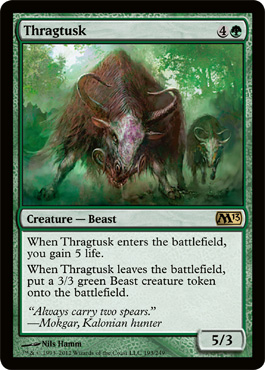
In Magic, the dead zone refers to the time we’re in right now. M13 hype is out of the way and the set has already more or less made its impact on the format. Thragtusk spiked as expected, and will now come back down due to its inclusion in an Event deck. The impending rotation means that players are in a severe holding pattern with their cards. People don’t want Scars block cards, but they’re being extra careful with their Innistrad cards since they’ll be around. To top it off, with no idea what’s coming in Ravnica, people are scared to trade away what they might need.

In a change of pace for me, I’ve been able to attend several FNMs in a row (once football season starts I’ll be back to covering games every Friday), and I’ve had a surprising lack of trading partners at those FNMs. No one wants to part with their Innistrad dual lands, and, worst of all for me, they don’t know what they’re looking for. When people don’t know what they want, it’s hard to make much of a case for them opening your binder.

It will be like this until Ravnica spoilers start to roll in. I’ve cleared out nearly all of my Scars block stock as I’ve been suggesting, so I’m not losing much value in my binder, but it’s hard to turn stuff over at all.

Hence, the Dead Zone.

Making the most out of the Dead Zone

I have a few strategies I like to use during this time to ensure we can still turn some profit.

The first is stocking up on the easy-to-spot cards from the current sets, even if there’s not a ton of upward potential for them to move. For instance, look at Champion of the Parish, Restoration Angel and Silverblade Paladin. These seem like slam dunk creatures post rotation, especially since Champion can outgrow Bonfire range quickly. By the way, Bonfire is going to be the single most important card post-rotation. I know this, you know it, and everyone knows it. People love to play these Human decks, because they build themselves and are very solid on top of that.

The problem with everyone knowing it is that it means it’s already somewhat factored into the price. There’s some room to grow for both these cards, sure, but not as much as we’d typically like.

But here’s why I stock up on these anyway: liquidity. These are easy to move now, and I expect them to be even easier to move after Rotation. That means, even if we’re not making much money on what we get them in at (since we don’t expect a huge spike after Rotation), we can still make profit when we out these cards, merely because they will be so easy to move.

It’s the same principle that allows people to ask for premiums on Legacy cards (obviously to a lesser scale). If everyone wants a card, we don’t have to move it at the first opportunity. We’ll have plenty of chances, so we can wait for the most profitable deal to come along.

Like I said, it’s harder to get in as many trades right now as we could have a few months ago, but that means you have to make the most of what you can do. You take almost no risk by loading up on these cards, even if the trade you make at the time doesn’t look so great on paper. In fact, if somehow you’re able to move Scars block cards for soon-to-be staples like these, I don’t even mind taking a loss on a trade to set myself up for when the trading heats back up.

Other ideas

That’s not all we can do to use this time effectively.

Get out there and buy some collections. Scour Craigslist, ask around the store, even take to social media outlets if you must. You’re not going to have a better time to devote some hours to a project like this than right now. There’s a lot of money to be made in collection flipping if you do it right, and those hours you’re spending trying to grind trades in uncertain waters could be better spent elsewhere.

If that’s not your style or maybe you don’t have the capital to get going, I suggest turning to your own closet. We all have hundreds if not thousands of Magic cards sitting in boxes somewhere in our house, and, unless you’re a master, there’s money to be found here. Pull those Commons and Uncommons that are worth a quarter out of an old box. You may even find some hidden gems that got tossed aside like Mind Funeral. There’s a reason buying masses of cards sight unseen works well, and it’s because people just lose track of what’s around.

Figure out what the next big event you’re attending is, get in touch with a dealer, and move out some of these cards. Sort through your “bulk” rares and find the quarter and 50-cent ones hiding in the stack. You’ll expand your knowledge of sorting, and should be able to turn some money from doing so. As for actually selling out once you’ve done this, here’s a primer I wrote a few weeks ago that will help you along.

Back to the trade tables. Find that group of EDH players you don’t usually trade with. They’re less concerned about rotation, and there’s probably some good trading there. Go check out another store you haven’t been to before to find some fresh blood. It may require going up to the card shop or someone’s home on a different night than you’re used to, but it’s a valid way to spend your time during the Dead Zone. It may be less profitable than an “average” night at your usual store, but it’s a heck of a lot better than staring at the same binders over and over and banging your head against the wall.

Of course, there’s one other option worth mentioning: Just take a break. Grinding out value week after week is great and all (and you should), but everyone needs a break sometime, and this is a pretty good time to do so. Just hang out at FNM, spend time playtesting or playing casual games if you need to. Trust me, once Ravnica starts rolling in, the trade tables will kick back up again, big time. You don’t want to be burned out when that happens.

Conclusion

Like I said at the outset, we’re in a lame-duck period of Magic finance right now, but that doesn’t mean you can’t profit from it, even if it takes a different path than what you’re used to.

Thanks for reading,

Corbin Hosler

@Chosler88 on Twitter
Legacy Griffins: Food Chain, Manipulate Fate and Fun

Are you a Quiet Speculation member?

If not, now is a perfect time to join up! Our powerful tools, breaking-news analysis, and exclusive Discord channel will make sure you stay up to date and ahead of the curve.

So, I have to be honest: Tier 1 decks bore the hell out of me in Legacy.

I have sleeved up Sneak & Show, Reanimator, RUG Delver and even Stoneblade-whatever and brought them to tournaments. In addition to typically being very linear (here's looking at you, Sneak & Show), there's something unsettling about your opponent being able to map out your decision tree based off of your first fetch.

While all of those are solid decks that can easily win their share of matches, for me they are void of that little serotonin burst accompanied by doing something that I think is awesome.

What do I think is awesome? Well, here's one of my favorite plays. Ever.

I played that in BUG Control until the wheels fell off. Even if I had the Jace in hand, I didn't feel satisfied until I did close to nothing turn after turn except strip my opponent's hand and make stupid Worms.

After Team America turned bad and my manabase evolved into said BUG Control, which I rode for a couple months until Stoneforge started making 4/4 Invincible Germs, I sort of let go of the Intuition dream. Then the metagame shifted, as it always does, and I started playing whatever deck sounded remotely fun from Forrest Ryan's Legacy gauntlet.

But then something happened. A new card being printed actually caught my attention:

Meow.

So I ordered me some Food Chains at $1.50 apiece and picked up a playset of these birdies for $2 a pop at a local gaming store (Monster's Den in Minneapolis, Minnesota), since it seemed no one wanted to touch this poor blue card.

Just to be clear, the following two cards produce infinite mana that can be used to cast creatures:

The Food Chain nets X+1. Since the Griffin can be cast from exile, you can just keep recasting it. If you need another color, just make two or three billion blue mana, then spend some of it to keep recasting the Griffin producing the new color of mana.

While at Monster's Den, I also picked up a playset of Manipulate Fates.

What's that? You have to read the card? Well, let me summarize it for you: A blue and a colorless, draw four.

(Obviously that's not true. I just like to pretend.)

Thus began the evolution of my current pet deck:

Food Chain/Food Fate/Griffin Chain by Tyler Tyssedal

Creatures

3 Misthollow Griffin
3 Fierce Empath
4 Noble Hierarch
3 Wall of Roots
3 Mulldrifter
1 Emrakul, the Aeons Torn
1 Aethersnipe
1 Griselbrand

Spells

4 Food Chain
2 Jace, the Mind Sculptor
3 Manipulate Fate
4 Force of Will
3 Daze
4 Brainstorm
3 Ponder

Lands

4 Tropical Island
2 Island
2 Forest
4 Misty Rainforest
4 Verdant Catacombs
2 Ancient Tomb

Sideboard

3 Spell Pierce
1 Flusterstorm
3 Tarmogoyf
2 Vendilion Clique
2 Surgical Extraction
3 Submerge
1 Krosan Grip

I brewed this in my living room while watching Psych on Netflix, which is a decent show to have running in the background. Only weeks later did I hop online to see what others were doing with it, discovering that people were trying to make Coiling Oracle and more creatures work, which I tested and fully disagree with.

For the record: Coiling Oracle rarely does what you want it to. It's either a bad Elvish Visionary or a weak Wall of Blossoms. I, instead, opted for Wall of Roots, which, as I'll get to later, can Chain into a Griffin immediately.

So I've been playing it for around two months now, tweaking it from week to week. It started out with Show and Tells, which I eventually cut because they weren't terribly fun to cast. Even though they stole some games, they also weren't very good against certain matchups and required more Emrakuls than I really wanted.

So what does this deck do well?

  • Well, it wins games. I have played in 7 Legacy tournaments in the past two months, most averaging between 16 and 30 players, Top 4ing six of the seven. A lot of this may have to do with other factors outside of the deck's control, such as my opponent's decks, the parity of my and my opponent's play skill and my love of winning on the backs of stupid bird things.
  • It has a solid matchup against Maverick and, it seems, RUG Delver. If there were a kryptonite for this deck, I would say it's Bant/New Horizons, but that's just from my play experience.
  • It's also elusively impressive, as no one counters the Manipulate Fates unless they have seen you play before, which is sort of what happens after a while. Or read an article about it, I guess. But still. Manipulate Fate? Really?
  • It can blow up out of nowhere. Evoking with Food Chain on board nets 3 mana with Mulldrifter and 4 mana with Aethersnipe, which can let you just blow up with a mere Noble Hierarch on field.
  • It beats Karakas and Moat.
  • It also has some nut draws, which I can get to later.
  • It meets my criteria for being both fun to play and actually competitive. I started off believing it was around Tier 5, but each win and refinement has slowly crept my opinion of the deck up to being in that ambiguous zone of "good enough". Whatever that means.

So what does this deck do badly?

  • Win against a resolved Humility, since your Aethersnipe no longer does anything.
  • Mulligan, I guess.
  • Convince your friends it isn't terrible.

Cool things.

Turn two kill

When your opponent has no T1 disruption or permission and you're on the play.

Turn three kill

You may be wondering, "What's up with that Griselbrand? That costs four black! And you're not cheating nerds in with Show and Tell, Sneak Attack or Reanimate! You're stupid!"

And you'd be right on all accounts. But the thing is this series of plays:

Turn 1: Play Tropical Island; Noble Hierarch. Say go.

Turn 2: Play Ancient Tomb; Food Chain. Say go.

Turn 3: Play Fierce Empath. Fetch Aethersnipe

Chain away the Noble Hierarch, evoking the Aethersnipe. Sacrifice trigger on the stack, target the Fierce Empath, remove the Aethersnipe to the Food Chain for 7 green mana.

Recast the Fierce Empath, get a Griselbrand, remove the Fierce Empath for black, cast the Griselbrand. Then you can either draw a bunch of cards, getting a Misthollow Griffin and another Empath or an Emrakul. Win. Or say go.

Ramp with evoke

It's not a secret, and I mentioned it earlier, but with a Food Chain on board, you can evoke a Mulldrifter and respond to the sacrifice trigger by removing it from the game with Food Chain. This little interaction nets you three more mana than you had before. You can evoke an Aethersnipe and do the same thing, netting four mana.

This can actually be really helpful when you need just that little boost. It's also really fun to drift into another Mulldrifter, which you can then hard cast and go to town with 2/2 flyer beats.

Set the clock with expensive birdies:

There's more I'd like to say

But this just about does it for me. I really enjoy playing this deck. It's competitive enough that the funness of doing cool things isn't crushed by 0-X records. While I don't expect it to dethrone Delver, as that deck is bonkers, I wouldn't be so quick as to write it off as all out trash.

I know that SCG has done a few deck techs with builds trying to do similar things, but I feel that this list is superior to other builds in many ways. Maybe that's just, like, my opinion, man, but there's a reason I play it week in and week out.

I also wouldn't sleeve up my list, as it's my baby and I don't want you taking my baby.

GP Columbus: Of Islands, Faeries and Misplays

Are you a Quiet Speculation member?

If not, now is a perfect time to join up! Our powerful tools, breaking-news analysis, and exclusive Discord channel will make sure you stay up to date and ahead of the curve.

I have a Vedalken Shackles. What could possibly go wrong?

These were the words that went through my mind as I threw away my perfect performance at GP Columbus.

It was round five and I was playing Faeries against Josh Rayden’s UWR Delver. I tapped low for what I had hoped would be a back-breaking Shackles, but he casually drew and played Geist of Saint Traft. It turned out he could break those cuffs.

I couldn’t believe how loose my play was. I’d like to blame it on sleep deprivation, but the real problem was that I hadn’t played a deck like Faeries in over a year. My list was sub-optimal and my play was of the same nature. Honestly, I don’t even think that Shackles belongs in the deck in the first place - a conclusion that I would have reached with some minor testing.

After punting round five, I went on to punt round six and ultimately lose round 9 to finish 6-3 and not make day two. All things considered, I believe that Faeries is among the best decks in Modern and if I had another Modern tournament to play in I would only make minor changes to my list.

For reference, here is what I played:

Faeries

spells

4 Spellstutter Sprite
4 Scion of Oona
3 Mistbind Clique
3 Vendilion Clique
2 Snapcaster Mage
4 Mana Leak
4 Remand
4 Cryptic Command
1 Dispell
1 Dismember
3 Spell Snare
2 Vedalken Shackles

lands

4 Mutavault
1 Faerie Conclave
2 Tectonic Edge
18 Island

I was very happy with my choice of deck, but there are some clear problems with the list. Here’s an overview of what worked and what didn’t.

What Worked

Spellstutter Sprite, Remand and Mana Leak

I completely stand by playing all four copies of these two-mana counters. Spellstutter Sprite belongs for obvious reasons, but it is my understanding that many Faeries lists are not playing the full eight Mana Leak and Remand. By filling up this slot the deck has the best ability to fight both opposing three drops and counter-wars. The clearer you can keep the board in the early turns, the more powerful your Cryptic Commands become - as if they needed any help.

Cryptic Command

My friend Jens and I used to joke that Cryptic Command’s text should just be “Pick two.” Let’s be real, this card does everything. It counters, it cantrips, it fogs, it Stone Rains. Play four. No exceptions.

Vendilion Clique

Vendilion Clique was largely underappreciated when it was first printed, but the community has caught up at this point. The only thing that I’m not 100% on is whether or not to add a fourth. While it is true that the fragile body allows most decks to kill Cliques very easily, I still found it surviving in a surprising percentage of games. The ability to target yourself and wheel extras might be enough to sell me on the full four-pack considering that I just intend to counter all of their spells anyway.

Spell Snare

This card is extremely efficient and has so much value in games when you’re on the draw. There were four in the list that I was given and I definitely think that I was wrong to cut one.

What Needed Improvement

Vedalken Shackles

For the most part, this card was stinky. Faeries is so good at countering opposing threats that generally only one-drops are able to sneak by. The major problem with Shackles is that in most situations you can’t cast it without leaving counter mana up. Generally you’ll want to leave this mana up until the end of your opponent’s turn, which more or less means that your Shackles double time-walked you. All of this tempo loss when the problem is most commonly a one drop is painfully bad. I would easily cut these in favor of a second Dismember and a Repeal.

Scion of Oona

I showed up in Columbus with no intention of playing Scion, but Josh Rayden ended up talking me into it. I was of the impression that it was terrible and he was of the belief that it was one of the best cards in the deck. We were both wrong about it. The card is the very definition of okay.

It serves as a counterspell and/or a flash threat, but it does both of these jobs rather poorly: the counter being very narrow and the threat often being underwhelming. It certainly sped up my Mutavault clock by a turn or so a few times, but it never at all mattered in a close game. I could easily see cutting these guys from the deck entirely.

Faerie Conclave

I never activated this card in a game that I won and I lost at least one game to it coming into play tapped. Personally, I would cut it for an Island, but I wouldn’t fault anyone for replacing it with another Tectonic Edge.

Moving Forward

As I said above, the biggest problem with the deck was the inability to effectively deal with one-drops. The strong counter-suite is very good at locking opponents out of the game starting on turn two. Bounce spells are possibly the best option to answer one-drops, as they can be Spellstuttered on their way back down.

Vapor Snag is worth considering as it efficiently deals with more expensive creatures as well, but I’d lean toward Repeal as there isn’t much in the way of card draw in the deck. It’s also just insane against Insectile Aberration.

Faeries is so insane against any sort of combo or midrange deck while still being competitive against aggressive decks that I’m surprised it didn’t post better numbers in Columbus. I suppose that this is in part my bad.

Hey, what happened to that sweet Grixis deck?

A couple weeks back I wrote about the Grixis deck that I played during the last Modern PTQ season. I was really happy with the deck last year, but I think that Restoration Angel has completely invalidated the deck. I don’t feel that fair decks can reliably beat the Angel decks without being able to consistently counter Restoration Angel. Not only does it generate insane value in tandem with cards like Kitchen Finks, but its four-toughness backside is just tough to deal with in the first place.

~

I understand that Modern isn’t super relevant as of now, but I also don’t think that the format is going to change very much between now and the next PTQ season. If M13 is any evidence of where power levels are trending, then there shouldn’t be too many cards that will shake up Modern in the coming months. If nothing else, it’s probably a very good deck to run through dailies in the meantime if Modern is your format of choice.

Good luck, high five.

-Ryan Overturf

Insider: Following Up

Are you a Quiet Speculation member?

If not, now is a perfect time to join up! Our powerful tools, breaking-news analysis, and exclusive Discord channel will make sure you stay up to date and ahead of the curve.

Today I wanted to follow up on a few items I've discussed over the last couple months, and see if we need to update our opinions. Following up, in general, is one of the most important things in business. It's the #1 thing sales people need to learn to close deals. It's how managers check in on project progress. It's also how you make sure the decisions you made in the past are still sound.

Just like when we play Magic, each turn you need to "follow up" on what your plan was prior. No matter what. Sure, I should have played this 3 drop last turn, but I didn't. Do I just not cast it the next turn either to validate the misplay? No, you update your beliefs, and make the best play now, regardless of what happened previously. The same can be said for speculation and trading.

Snapcaster Mage

This one is really a follow-up to a follow-up. I had initially felt Snapcaster would bounce back after the banning scare, and then followed it up by looking at it a bit more in depth. Nothing has really changed since then, so you either liked my reasoning or not, but it hasn't rebounded, and it hasn't fallen much further yet. I'm still in the camp that sees this card hitting $12-15 retail in the next 6 months.

Thragtusk

Last week, I noted that Thragtusk was sold out nearly everywhere, and I'd want to be getting rid of these while they are hot. Well, new developments since then, since there will be an Event Deck containing the 5-drop Beast. StarCity's buy price sits at $6, even though they are sold out at $15 retail. This tells me that they are also anticipating the card to drop fairly quickly.

If they are sold out, that means they can move that card pretty quickly if it were in stock. So for them to be buying at only $6 tells me that even in a quick turn around time, they don't want to be stuck with these at the expense of their margins (and who can blame them). I initially thought it would be around $6, but would have to wait for rotation to see its time in the spotlight. Looks like I missed out on this early hype, but the long term price I'm still feeling good about.

Onslaught Boosters on MTGO

I presented the thought of buying into Onslaught Boosters during Cube season, and it faced some amount of skepticism. According to MTGGoldfish.com, prices have fallen on those boosters by about 10% since that article, and the Cube season has ended. Only time will tell if the prices will come back up. It looks like WotC has, at least, attempted to correct the issue that came up with Time Spiral packs in the last cycle, by offering Onslaught drafts for a full week during this "lame duck" no-M13 season, giving people an opportunity to use up these packs.

It certainly appears to have prevented a huge drop in price, and may be just the right move. If this turns out to be how they will repeat this process going forward, then we'll have a better idea of how to predict the price movements. The good news? It's not too late to make a move on these if you think they'll come back up, which I do. The bad news? They didn't fall nearly enough to make a huge windfall when prices do recover.

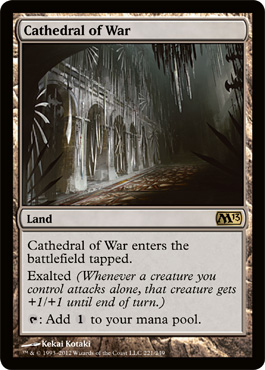
Cathedral of War


In my Coreset review, I thought this card was a steal at $4, and it's climbed up to $5 since then. I expect it to hit around $6, and will be hanging on to mine until then. While it may or may not see competitive play, casual appeal will keep this card afloat. (Have you seen that art?)

AVR Set Redemptions

I feel like we nailed this one pretty good. As expected sale price of the completed listings on Ebay has fallen by about $10-15 over the last month, (about 10%) and Bot Prices to buy the cards on MTGO have fallen by about $.20 on average (just over 10%). This could mean that there is still some room to make money here, even though I initially felt it was time sensitive. I will note, however, that there are a handful of listings that went unsold on EBay, so be prepared to sit on the sets if need be.

Trading for (not) Value

Last week I told a story about a recent trading experience, and got some great feedback on alternate ways to deal with such situations. Check out the comments since then, if you haven't already. Also, for completeness, I want to add that I've since talked with the friend mentioned, and it turned out that I was able to sell the cards he traded me for more than what I would have gotten for the Foil Command Tower.

I told him, by the agreement we came to, I'd work something out with him on the next trade. The important part of laying your priorities out on the table when you trade, is following up with your trade partner if things didn't turn out as expected. Especially if you plan to trade with them again in the future, keeping their respect is paramount.

I hope you guys enjoyed the peek back over the last couple months. I'm about to dive into another M13 draft, you should do the same! I love that I'm able to still flip Rancors back to the store towards more drafts before that card falls to the "dime a dozen" category.

Avatar photo

Chad Havas

Chad has been with Quiet Speculation since January of 2011. He uses price speculation to cover all his costs to keep playing. Follow his journey from format to format and be prepared to make moves at the right times.

View More By Chad Havas

Posted in Finance, Free Insider, PredictionsTagged , , , 4 Comments on Insider: Following Up

Have you joined the Quiet Speculation Discord?

If you haven't, you're leaving value on the table! Join our community of experts, enthusiasts, entertainers, and educators and enjoy exclusive podcasts, questions asked and answered, trades, sales, and everything else Discord has to offer.

Want to create content with Quiet Speculation?

All you need to succeed is a passion for Magic: The Gathering, and the ability to write coherently. Share your knowledge of MTG and how you leverage it to win games, get value from your cards – or even turn a profit.

Jason’s Archives: The Boon of Twitter, Food for Thought, and All GP’s All the Time

Are you a Quiet Speculation member?

If not, now is a perfect time to join up! Our powerful tools, breaking-news analysis, and exclusive Discord channel will make sure you stay up to date and ahead of the curve.

Greetings, Speculators!

What a difference a Twitter account makes!

I went to the Grand Prix in Columbus this last weekend. With few exceptions, I've made it to every Grand Prix this year within a six-hour drive from Michigan, including an excruciating marathon to Orlando. There is no better place to sell off collection chaff or grind a binder. Artists I like are frequent guests at Grands Prix and a lot of my friends from the area make the trip down as well. But having been very late to the party in getting on Twitter, I was blown away by the difference tweeting had on my GP experience.

If you're not on Twitter, I certainly can't say anything to admonish you because I resisted it as well. It seemed at first to be a medium for the narcissistic to broadcast the minutiae of their lives to an audience of people who themselves are more interested in their own minutiae than other people's opinions. There certainly is an element of that on Twitter. But like most slow adopters of technological trends, once I see the value in something I become a big advocate of the new technology.

Twitter Will Make You Better at Magic

Magic is more than just a game at this point. Magic is a community, and the difference between a community and a disparate group of autonomous players is connectivity. So how do you stay connected after the tournament hall is empty save for the janitorial staff left to sweep piles of Essence Drains off the floor and launder the smell of nerd funk out of a thousand tablecloths? Typically everyone piles into their cars to trek back to their separate LGS to brew in isolation until the next time comes to converge. But does it have to be that way?

Twitter helps your playgroup expand into hundreds of other playgroups. It lets you bounce ideas off of more people than just your team members. It helps you see which cards people are picking up, what's getting played, which cards other players are looking to sell and why. It helps you keep on top of aspects of the game that don't involve playing and speculating. It helps you get info on Friday night that others will have to wait for Monday morning to read about.

Like anything else, Twitter is a tool, and you can either use it to your advantage or ignore it to your detriment. But only by seeing what an advantage it afforded was I able to fully appreciate just what a detriment ignoring it truly was.

Who You Meet at a Grand Prix

For me, the real advantage of post-Twitter Jason over pre-Twitter Jason is the number of personal connections he's made with successful Magic financiers who don't necessarily publish articles or own stores. At this Grand Prix, more than at any in recent memory, I met in person dozens of people whom I knew from conversations on Twitter. It was a gratifying experience.

If you don't have Twitter, I would recommend signing up. The amount of solid Magic information out in the open is astounding, the connections you make will help you improve as a player or trader or financier, and your appreciation for all aspects of the game will deepen. Trust me, it's not all a bunch of nobodies telling everyone what they had for lunch.

That's Instagram.

Speaking of Lunch

Anyone else hungry? I found some culinary Magic delights for you this week.

Enjoy having a purple tongue for a week after eating those black ones.

Redditor Darthcampfyre brings us this recent pic of some Magical cupcakes concocted by a friend of his. Luckily for me I only have four friends so there are enough for everyone.


Always with the black frosting!

RogueDiamond used this cake as an opportunity to let Reddit know he had a girlfriend. A pretty talented one, at that. I for one am jealous that he has a girlfriend.

Girlfriends are so much better than wives.


Don't like cakes? A cookie can just as easily be decorated as a cake, and the detail achievable with icing on a flatter surface can be impressive.

These could be used as counters to track your life from 20 to diabetes.

The blog "Not your Mama's Cookie" was the source for these delectable-looking morsels. The full blog article can be found at this weblink.

Unless you're Martha Stewart, I'm guessing your first attempt at Magic cookies wouldn't go so well. A little digging turned up another useful site.

Geek Crafts provides a guide with a few tips on how to stencil the designs and apply the base color icing. (Don't be a hipster; frosting a cookie before it's cool rarely goes well.)

For reference, Geek Craft's cookies looked like this:

Proper color wheel arrangement makes all the difference


The cookies used to represent poison counters contain laxatives. Block accordingly.

Finally, the mttgfan tumblr account provides this (super timely) pic of some themed cookies from a few sets back. Check out the blogpost here.

An Embarrassment of Grands Prix

With a whopping three Grands Prix this weekend (SĂŁo Paulo, Columbus and Ghent) there was a lot of Magic going on. Rehashing SĂŁo Paulo doesn't do us much good since it was Limited, so let's plow right ahead and eat our dessert first by talking about the Legacy Grand Prix in Ghent.

Top 32 Legacy Deck Lists

Perhaps nothing was all that remarkable about the decks that did well. The standard variety of eight different decks gracing the top eight, nothing really all that new.

One deck with real potential that didn't fare as well as its designers may have hoped was piloted by a few players. These brave souls were using Show and Tell to cheat in a copy of M13 newcomer Omniscience.

Everyone knows how fun it is to Show and Tell an [card Emrakul, the Aeons Torn]Emrakul[/card] into play. It's even better to cast that [card Emrakul, the Aeons Torn]Emrakul[/card] with Omniscience, netting the extra turn and drawing tons of gas off your also-free Griselbrand. Omniscience is a pretty bad card when you're paying its mana cost, but with Ancient Tomb and Lotus Petal to increase the chance of a turn one Show and Tell, Omniscience starts to look pretty good. It goes without saying this deck is built to take advantage of [card Show and Tell]Show and Tell's[/card] symmetrical effect, while your opponent is merely getting discounted Goblin Lackeys and Mother of Runes.

One innovation we saw from event winner Timo SchĂĽnemann was his use of Gitaxian Probe. In my article last week I mentioned that Past in Flames and Burning Wish aren't entirely dead but rather are beginning to make a comeback in Ad Nauseum Tendrils lists. Gitaxian Probe, while a liability in Ad Nauseum decks, is a powerful tool that allows you to plan your turn, [card Cabal Therapy]therapy[/card] with precision and draw out countermagic. It's also a free cantrip in a deck that loves cantrips when it's time to cast Past in Flames. Congratulations to Timo SchĂĽnemann and the rest of the top eight field in Ghent!

I'm sure what we all really want to hear about is Modern, so let's dive right in.

Modern Decklists

First time Day 2 competitor Jacob Maynard piloted Robots to great effect, winning the event with an odd mixture of mulliganing to five and then topdecking like a champ.

Is this deck a fluke or is the incredible power of an unblockable Etched Champion coupled with the explosiveness of Cranial Plating too much to deal with? Only time will tell.

While Kiki-Jiki, Mirror Breaker was the hot money card of the weekend, it only saw play in one top eight deck. Copying utility creatures and offering up token sacrifices for Birthing Pod, this card gives the deck a lot of options. Only time will tell if the price spike was due to insane demand or a cornered market.

Another card I couldn't keep in my binder was the innocuous-seeming Eiganjo Castle. At first glance this is an EDH-only card that screams "bulk rare," but closer inspection reveals it to be the perfect enabler to help Geist of Saint Traft attack with confidence. Obviously a poor choice in Legacy, teeming as that format is with Wasteland, it has a home in Modern which makes it excellent trade bait. With three decks running Geist of Saint Traft in the top eight, Castle could be here to stay.

One more oddity was Orrin Beasley's Jund list which contained a baffling choice: Rakdos Augermage. I think this latest inclusion means every Magic Invitational card has been used in a deck that made top-eight at a GP or better. (If I am wrong correct me in the comments.)

Tron continues to be a factor with turn three Karn, Liberated ruining a lot of lives this weekend. Local hero Caleb Estrada opted to run RG Tron, a relative newcomer to a format ruled for a long time by UW variants.

But the main story is that [card Delver of Secrets]Delver[/card] continues to impact all formats. Easily the most influential card printed in recent memory, Delver launched three players into the top eight with quick beats, permission and more removal than you can shake a stick at. Steppe Lynx was a force to be reckoned with all weekend long, dealing loads of damage and capitalizing on the explosive power of fetchlands. The WUR delver list is tier one with a bullet and should make everyone's testing gauntlet.

Now to Make like Doran and Leave

With under a month until Gencon I'm busy putting together my trade binders and making last minute arrangements for the trip. If you're there, follow me on Twitter to find out where I am and when. That's what it's there for.

Jason Alt
@JasonEAlt on Twitter

Insider: GP Columbus and the state of Modern

Are you a Quiet Speculation member?

If not, now is a perfect time to join up! Our powerful tools, breaking-news analysis, and exclusive Discord channel will make sure you stay up to date and ahead of the curve.

Grand Prix Columbus was a great time - I was there - and it pulled in almost 1,050 players, which is impressive for a format that people seem to hate on the internet. Most of my opponents had not played the format before, but just about everyone expressed that they thought it was a fun format that they'd like to keep playing. That makes me happy because Modern is a personal favorite format. I'm sick to death of Jace and Stoneforge Mystic. Modern has a nice pace and a deep cardpool that lend themselves to good and inventive deckbuilding.

The one thing that Modern lacks right now is a robust non-WOTC tournament scene. Time after time, I've been reading from people online that their store had Modern for awhile, but nobody came. I don't believe that this is an issue due to lack of interest in the format, though. Columbus had over a thousand people there, many international players who weren't just trying to get pro points. Locally in Columbus, we had two tournaments with over 50 players - put on by interested traders and store owners, not WOTC. The key to getting well-attended events is advertising them effectively and getting the word out. I wish that there was a formula for this; I've even attempted to get events going in Cincinnati, but I haven't found a store owner yet who is willing to work to get something going. Financially, getting a Modern scene going in your shop is great; it blows wide open the demand for older cards. Both store owners and traders benefit from more people playing Modern in a shop. My hope is that with Return to Ravnica, people will want to get a lot more use out of the shocklands that they open and maybe give Modern a try - the barrier to entry based on lands is an oft-cited criticism of the format.


The individual tech cards at GP: Columbus

First, here are all of the T8 decks.

One of the most popular decks was UW/x tempo-control with Vendilion Cliques and Geist of St. Traft. Both cards are Legends and die painfully to Pyroclasm and Volcanic Fallout, so the hot card the morning of the event was Eiganjo Castle. Castles were selling for $7 and up before the tournament. I love the card in theory, but it has a few flaws that make it not a sure bet. First, it's not fetchable, which would not matter as much except for the fact that card draw and filtering in Modern is pretty bad. Next, it's a bad color; you want White as a support color, but it's not great to have in the opening hand. Finally, the Castle is really mana-intensive. If you play Geist of St. Traft on the third turn, you're still exposing him to Pyroclasms on the next turn. You've got to hold off on a lot of plays to make sure you keep Castle mana up. Noble Hierarch definitely lessens this problem, but it's still an issue. I played UR Tron and never feared the Castle; my Pyroclasms hit home on every old ghost that popped up.

Another tech card is Linvala, Keeper of Silence. You know that this lady is good against the Pod mirrors; the Yokohama Pod players would just scoop up in the face of her, it's that good. She is why Combust is still a reasonable sideboard card for Pod decks and also why another piece of tech has been showing up. Zealous Conscripts is also not much of a secret at this point, but it does steal Linvala and let you combo off (or sacrifice her to your Birthing Pod). Conscripts, incidentally, will make infinite tokens with Kiki-Jiki because you can target your own Goblin and untap him over and over.

Next, Restoration Angel demonstrated that she is here to stay. Not only has the Angel made appearances in the Naya Pod decks, but she's also the bedrock of all the Snapcaster control lists we've seen bouncing around. My friend and teammate, Brian Demars, made 9th place in Columbus and ran several of the saucy angel in his deck. The scary thing about UWG 'good stuff' decks is that they have flash monsters on 2, 3 and 4. They don't ever have to tap out to make a threat against you, thanks to that critical mass. That is dangerous in a slower format like this.

Finally, keep an eye on both Fulminator Mage and Molten Rain. The latter is particularly harsh because it hits everything, not just nonbasics. This is a level of land hate that we're not going to see again and if your deck plans on winning through dealing damage, then this is a sharp card to get a set of. I predict that Molten Rain will continue to be a hot uncommon.

Affinity Prevails, Citizen

Affinity is not respected enough, apparently. The T8 decks run a pitiful count of artifact hate cards, apparently forgetting that an Ornithopter with Cranial Plating will still turn you into paste. It is therefore not surprising that the banner aggro deck of the format won the whole thing. I heard people remarking that "a tuned aggro list could smash this event" and that mystery deck just turned out to be Affinity. While none of its monsters really scare me on the individual level, Affinity can outlast a lot of decks with its little guys. The Plating off the top is scary, but the Steel Overseer on the first turn that gets everyone out of Pyroclasm range immediately is also scary. The Nexuses pumping each other gives the deck a good long game. I don't believe that Blood Moons are the right call on the sideboard any more because they don't actively do much to win you the game and all of the Tron decks just seamlessly work around The Bloodening. Maybe the aforementioned Molten Rain is the better call.

Financially, Arcbound Ravager and Etched Champion continue to be solid bets. I think Steel Overseer is better in Affinity than Arcbound Ravager is because its effect works better with manlands and Ornithopters. All three of these cards are good Modern acquisitions, but I wouldn't trade highly for them unless you foresee Modern coming to your area. At QS, we've been on top of Etched Champion for the better part of a year and I'm glad that the WOTC commentators named it as the card of the event. It's one great piece of reach for Affinity and singularly causes a lot of problems for other decks.

So many singles!

The other interesting thing about so many of these lists are the strange singleton cards. Orrin Beasley had the really bizarre Rakdos Augurmage in his Jund maindeck. I can understand running powerful singletons like Vedalken Shackles, but nobody played Drillbit Taylor when it was legal in Standard! I suppose it functions as a pseudo-Liliana, either holding an x/3 at bay or forcing some mutual discard. Max Tietze had a Twisted Image on hand, which has a lot of good corner applications. For sure, I want it against Pod - it kills Hierarchs, Birds and walls. It blows up Spellskites and Ornithopters. I cannot, however, see it being strong enough to bring in if I'm only going to value-kill 4 or 8 cards in an opponent's deck. There's a lot of fun in running singletons, though - it's fulfilling to cast one at the right time and take control of a game. My friend Brian had an Oust in his sideboard, which is one of his pet cards, along with a single Harm's Way.

Contemplating all that, please note that Gavony Township is the real deal in Pod decks. If your opponent has to kill you in a fair manner, then getting Township going and just making aggro happen is really hard to deal with. One game I witnessed had an opponent die to a pair of 4/5 Birds of Paradise, for example - while the Snapcaster Mages in his hand sat useless.

Making Modern happen for you

One reason that I'd like to get Modern going locally is that I want to get an article series out of it - starting a tournament scene is challenging and everyone would like a blueprint for success. I'd wager that the best way to make money on Modern as a casual trader at your local store is to get people interested in having an event with real prizes. From there, you can build a base of people who want cards for their Pod list, their Affinity deck or their Control variant. Those Cryptic Commands in your binder start getting more attention. If I have anything good to report, I'll definitely fill you in on how this goes. If you have had success or failure in getting Modern started in your area, what factors influenced the final outcome?

Until next week,

Doug Linn

Rebels — The Never-ending Stream of Conscripts

Are you a Quiet Speculation member?

If not, now is a perfect time to join up! Our powerful tools, breaking-news analysis, and exclusive Discord channel will make sure you stay up to date and ahead of the curve.

When I first learned about Commander, I was fascinated by the unfair combo decks. Azami, Lady of Scrolls with Mind over Matter; Seton, Krosan Protector with Masticore and Kamahl, Fist of Krosa.

When you first start playing a casual format, it can be hard to differentiate it from whatever competitive formats you may already play. In those formats, the goal is to win as quickly and efficiently as possible. Players may pursue their own sub-goals like assembling a crazy ten-card combo or hardcasting Griselbrand, but fundamentally the point of those formats is to win the game.

The most important thing to realize about a multiplayer format is that it's not primarily about winning. Sure, everyone's still trying to win, but unlike in other formats, not at all costs. Fundamentally, the goal is to have a good time with your friends, regardless of what's happening on the card table. There are always exceptions; some people love their degenerate games and that's fine too. But in my experience, most people prefer interactive games.

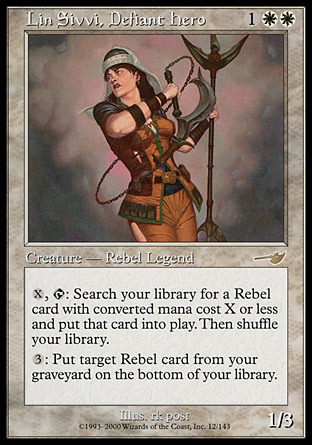
The experience that hammered this home for me happened at a time when my group was all playing degenerate combo decks. One of our regulars brought a Lin Sivvi, Defiant Hero deck to the table and we were ready to ignore him. He wasn't playing blue, black, or green, so what was the worst that could happen?

Well, he cast some mana rocks and rebels, and then played Armageddon. He tutored up more guys, beat down a little, and cast Ravages of War. Then Catastrophe. Every game the plan was to play some guys and destroy everyone's lands.

While it was definitely awesome to witness his fair deck full of dorky white creatures repeatedly smashing our fast combo decks, we realized it wasn't the kind of Magic we wanted to play. Since then, I've always wanted to build a Lin Sivvi deck, but one that was interactive and grindy rather than prison-based.

The Rebel Alliance

The exciting thing about Lin Sivvi is that she's an engine unto herself. Once you decide which rebels are good enough, you get to cast them as many times as you want each game.

This means you can build a ton of synergies into the deck and that it will be very difficult to break up your combos. One of my favorites, for example, is Zealot il-Vec and Basilisk Collar. Here are the rebels I decided to run with:

  • Lin Sivvi, Defiant Hero -- Commander
  • Defiant Vanguard
  • Mirror Entity
  • Zealot il-Vec
  • Changeling Hero
  • Outrider en-Kor
  • Task Force
  • Whipcorder
  • Cho-Arrim Bruiser
  • Aven Riftwatcher
  • Lawbringer
  • Lightbringer
  • Children of Korlis
  • Bound in Silence
  • Condemn
  • Skullclamp
  • Helm of Possession
  • Gorgon Flail
  • Mortarpod
  • Basilisk Collar
  • Sword of Feast and Famine
  • Steelshaper's Gift
  • Stoneforge Mystic

There are a number of sweet engines here, most of which involve recycling rebels and sacrificing them for value. It's a lot like any other token deck, except that your creatures have increased utility against the rest of the table.

We have Mortarpod to turn the rest of your rebels into pseudo Zealot il-Vecs, and both Lightbringer and Lawbringer to crush decks in opposing colors.

Whipcorder does a great job of containing creatures that trigger when they attack, like Eldrazi and titans. Changeling Hero protects your guys from removal or sweepers. Aven Riftwatcher is a great recursive beater and lifegain engine. Children of Korlis is similarly easy to recycle and does a great job of keeping your life out of the red zone.

Of course your best lifegain engine is a tutorable infinite life combo. Task Force and Outrider en-Kor are both tutorable with Lin-Sivvi, and when you draw a Condemn or Miren, the Moaning Well you can just gain a billion life. I don't feel bad about running an infinite life combo because it doesn't end the game, it just changes the win conditions. You have to be decked or killed with commander damage or poison, but you're far from unkillable.

It's possible that this deck wants a few more actual rebel searchers, for games where Lin Sivvi gets tucked. Where I play, tuck effects really aren't common so I didn't go out of my way to prepare for them. But it's certainly not unreasonable to run a few extra searchers like Amrou Scout or Ramosian Sergeant.

Utility Effects

The unfortunate part of a rebel theme is its narrowness. Since only two blocks had any rebels at all, only so many have been printed. What's worse, most of them are inefficient vanilla creatures that tutor for more rebels, an effect we don't need access to if we always have Lin Sivvi. One or two more searchers will help you swarm the board more efficiently, but they aren't necessary when your plan is to tutor up Mirror Entity and overrun them.

The only things the deck is lacking are a stable mana base and efficient ways to interact with the decks you expect to face. The mana is especially important because every turn you want to both cast spells and activate Lin Sivvi, which can get pricey.

Let's start with the utility effects, the foundation of the deck:

  • Martial Coup
  • Terminus
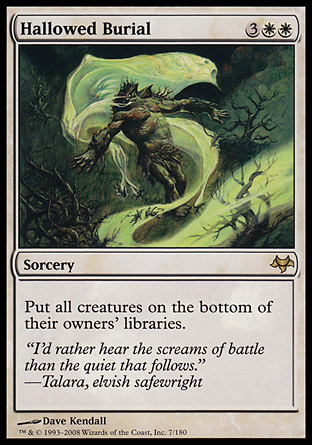
  • Hallowed Burial
  • Austere Command
  • Swords to Plowshares
  • Path to Exile
  • Return to Dust
  • Aura of Silence
  • Seal of Cleansing
  • Diversionary Tactics
  • Saltblast
  • Tormod's Crypt
  • Faith's Fetters
  • Sun Titan
  • Weathered Wayfarer
  • Steel Hellkite
  • Thousand-Year Elixir
  • Swiftfoot Boots
  • Shelter

The most interesting thing here is the deviation from the sweepers I usually like. Generally I prefer ones like Austere Command that are flexible and hit multiple types of permanents, or things like Oblivion Stone that can be recurred with Sun Titan.

But when you're tutoring things out of your library, there's a ton of value in putting your rebels back on the bottom of your library. Hence Terminus and Hallowed Burial. You want to be careful to champion Lin Sivvi with Changeling Hero or get her in the command zone somehow before you pull the trigger, but setting up your rebels again immediately is incredible.

The rest of your removal is pretty standard. It's possible that you want more graveyard hate, but you don't want something like Relic of Progenitus since it can exile some of your important rebels and neuter your own late-game plan.

All we have left to do is make sure you can go bigger than the other creature decks and have enough mana to support the rest of your deck.

Over the Top

The biggest weakness of this deck is the finite number of rebels in the deck. Unlike with a commander like [card Kemba, Kha Regent]Kemba[/card] or [card Darien, King of Kjeldor]Darien[/card], you can't make an infinite number of tokens and alpha strike through any number of blockers. You have to actually win through everyone's creatures. Fortunately, there are a few tools available in white that serve this purpose:

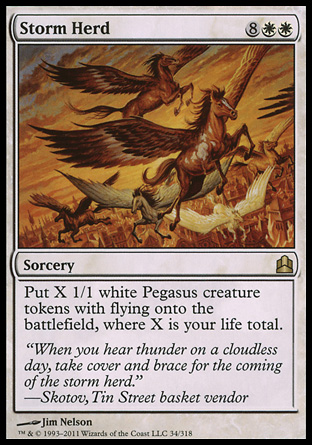
  • Storm Herd
  • Ajani Goldmane
  • True Conviction
  • Eldrazi Monument
  • Caged Sun
  • Gauntlet of Power
  • Ranger of Eos
  • Soul Warden
  • Soul's Attendant
  • Serra Ascendant
  • Reveillark

There are two things going on here.

The first is making all of your guys gigantic and getting in for a billion, especially in conjunction with Mirror Entity. The most interesting thing here is Lin Sivvi powering your Eldrazi Monument, which is more cute than sweet. It is kind of fun that you have both Storm Herd and Ajani Goldmane to take advantage of your infinite life combo though!

The other thing is a ton of lifegain. Ranger of Eos finds both of the [card Soul Warden]Soul[/card] [card Souls Attendant]Sisters[/card] and the life will add up very quickly once you start recycling rebels. There aren't a ton of great ways to leverage that life into something proactive, but it is intended as a late-game plan. If people simply can't kill you, you'll win the long game since you can never run out of threats.

Winning the Long Game

Even if you never run out of threats, other players get to keep drawing bombs and answers of their own, so you need ways to keep up. Thankfully, Lin Sivvi has a very powerful effect attached to her: a way to shuffle your deck. Not only that, but a means to thin your library of low-impact cards. This means that you can set yourself up to draw more meaningful business spells than everyone else at the table.

  • Scroll Rack
  • Sensei's Divining Top
  • Mind's Eye
  • Treasure Hunter

Every deck includes some kind of card advantage and selection engines, but the strength of those effects is limited by your ability to shuffle away the cards you don't like. Scroll Rack isn't nearly as good if you just have to redraw all the bad cards that you put back! Thankfully, Lin Sivvi will always be there, so you can keep rebels out of your hand, shuffle away bad cards, and get a look at a fresh set every turn.

We also have Mind's Eye to actually pull ahead on cards and Treasure Hunter to keep our artifacts on the board as the game goes longer. As long as the game goes long and you have your engine running, you should be able to come out on top.

After adding some mana rocks and lands to the deck, here's where I ended up:

Commander: Lin Sivvi, Defiant Hero

Untitled Deck

Creatures

Sorceries

Instants

Artifacts

Enchantments

Planeswalkers

Lands

26 Plains

On the whole, I don't think this deck is as powerful as some other mono-white strategies, mainly because you have to keep reinvesting mana every turn to keep the engine running. That said, tutoring every turn is one of the most powerful things you can do in Magic, regardless of what the restrictions are. This is only compounded when you consider that you can also recycle the same targets. How exactly does a black deck beat recurring Lightbringer?

I think the deck turned out pretty well and the flexibility should be an exciting change of pace from my usual mono-white decks.

One thing my friends and I have discussed is house-ruling some creatures to be rebels to make things more interesting and give Lin-Sivvi more cool tricks. Nothing too flashy, like Reveillark, but role players like Stonecloaker and Fiend Hunter. What are some creatures you'd be interested in trying out as rebels?

I'm excited to return to my favorite topic next week: lands! I've received quite a few requests to see my most recent build of Child of Alara, and we've seen three sets since I formally updated the deck. If you want to be That Guy at your table, be sure to check it out!

Carlos Gutierrez

cag5383@gmail.com
@cag5383 on Twitter

[Editor's note: An earlier version of this article had an incomplete final decklist, which has been updated. Sorry for the error.]

Insider: Game Theory and Behavioral Economics, Pt. 2

Are you a Quiet Speculation member?

If not, now is a perfect time to join up! Our powerful tools, breaking-news analysis, and exclusive Discord channel will make sure you stay up to date and ahead of the curve.

The votes are in and I am pleased to inform you that the readership has asked for Part II of this article! Whether out of kindness or genuine interest I cannot verify. Nonetheless, I will remain optimistic and strive to reveal some of the deeper connections between psychology, economics and Magic: The Gathering through this second installment.

Before I return on topic, let me first make two helpful statements. First, I do intend to summarize my Grand Prix Columbus experience from this past weekend in a future article. There may be an appearance of urgency behind publishing key value information. The inherent consequence of playing Modern, a format which is now going into hibernation for a few months, implies a lackluster set of recommendations coming out of the event. In short: Kiki-Jiki, Mirror Breaker sold for a million dollars ($30) before the event started and once the tournament was underway no one would pay more than $8 for a SP copy of the card.

Second, I want to emphasize that this series of articles is purposefully different from mainstream finance articles. It is possible that some of the technical concepts shared within are not directly applicable to making profit, per se. Rather, consider this series of articles as an opportunity to learn more about how the study of behavioral economics can help us learn more about Magic trading behavior. Even though I may not say “buy this, sell that”, I want to emphasize how understanding the reasoning behind certain decisions and thought processes has a possibility of helping you with Magic trading for years to come.

The Implications of “Free”

Before I relocated to Boston and unloaded all my bulk, I possessed boxes of commons and uncommons across a couple dozen sets. This didn’t prevent me from accepting free commons from random players at the end of a draft even though they were virtually worthless and took up more space.


(picture from http://deaconjohn1987.wordpress.com/2011/03/12/have-a-garbage-free-day/)

Why did I accept these freebies? Because the concept of free is so alluring that I was willing to ignore the fact that I already had excess copies of these cards and no space for them. If someone approached me and offered to sell me those same commons plus a bulk rare for $0.15, I would likely turn the deal down even though the bulk rare can be buy listed for two-thirds the paid amount.

Many studies have been done which reveal the power of “free”, and, once again, they are well-captured in Dan Ariely’s book Predictably Irrational.

But how does the power of “free” manifest itself in Magic: The Gathering? Since Magic Cards have a well-defined economic structure, surely this concept can be learned from.

Has your trade partner ever offered a “throw-in” card to help sweeten a deal? While you may have been looking for that last fifty cents to even out the values of the trade, it’s likely that added bonus card sweetened the deal for you considerably. The “free-ness” of the card makes the deal seem that much more attractive.

Consider as a mental exercise a possible experiment. What if your trade partner started a transaction by asking you to remove a fifty cent card from his binder? Then your trade partner indicates that the card you removed would be a “throw-in” and that he would deduct fifty cents in value from the cards he or she wants of yours.

How are you feeling about this “throw-in” now? My hypothesis is that you will be less satisfied with this trade even if the rest of the cards exchanging hands were identical to the previous scenario. My rationale is that if you perceive that card as being a free toss-in at the end of the trade, you will be much more delighted to complete the deal. While if you started with that toss-in on the table before taking any other cards out, the card no longer appears “free”.

Practically speaking, my hypothesis implies a prediction of irrationality. But this is exactly what Ariely’s book is about. How one could predict a human’s behavior even though it is irrational? After all, in both scenarios you would be receiving the same net value, but your perception of the trade would be significantly different.

The key takeaway here: card throw-ins are worth more than their cash values a lot of the time. Next time you or your trade partner offers one, take a step back and consider if the “free-ness” of the card is making both parties happier about the deal even though it has virtually no impact on the overall value exchanging hands.

Social Norms vs. Market Norms

Have you ever had a lovely dinner at a friend’s house, with discussions ranging from the old times at college, to relationships, to politics? Now, imagine yourself thanking the host at the end of the evening and then asking “Okay, now how much do I owe you for the food I’ve eaten?”

Awkward, right? With friends, you don’t necessarily discuss money at events like a dinner party. It would be much more appropriate if you had given a nice $20 bottle of wine to the host to thank them for their hospitality rather than a $20 bill. Even if the host is a beer drinker, it is still far more appropriate within the situation to offer the wine, even though a $20 bill could have bought the host some of his or her favorite beer instead.

The reason for this social trend lies within the distinction between social norms and market norms. In a perfectly transactional scenario (e.g. restaurant), it’s not only appropriate but also within the law to pay cash for food and festivities. Within this realm, market norms dictate behaviors.

In social situations like interactions with friends, however, it can be a completely different ballgame. Here, even if an outcome is not economically the most efficient, social norms dictate behaviors and have a significant impact on an outcome. Even though your friend would prefer even $15 in good beer over $20 in wine (saving you $5 in the process), you simply should not offer that $20 bill at the end of the evening. It just wouldn’t be right.

This distinction between market norms and social norms again manifests within the realm of trading Magic cards. And in this case, value may even be obtainable if done correctly. The key is keeping trades within social norms rather than market norms as best as possible.

Have you ever handed a trade partner your binder, watch them open, and immediately point to your Standard staple and asked “What do you value this at?” The moment you exchange numbers, the trade immediately becomes transactional. Forget about what format he or she likes, what colors he or she likes to play, etc. All they care about (and as a result all you’ll focus on) will be value.

On the other hand, consider a different scenario where you and your trade partner browse each other’s binders discussing the latest metagame and format preferences. Perhaps your trade partner glances down at your Bonfire of the Damned and comments about how he really needs one of them for his Standard deck. You could then ask them what they are running in Standard and if they need any other cards for the deck. Perhaps you could even make suggestions on other cards that may be worth testing.


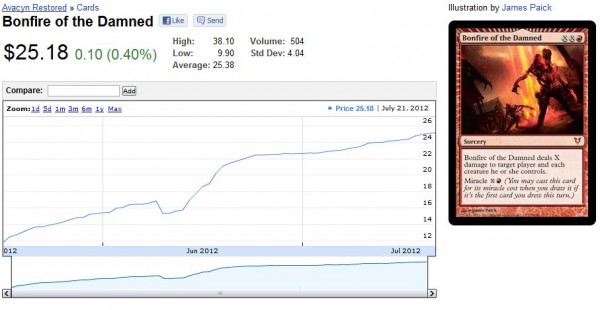
(chart courtesy of blacklotusproject.com)

Notice the difference here? In the second scenario, you have established casual conversation and thus a mutual appreciation for the game of Magic. This may help tip the transaction into the realm of social norms.

Remember, social norms create market inefficiency to the benefit of friendship/camaraderie. With that in mind, in which scenario do you see yourself getting a better trade? Since the second trade partner has built a connection with you through conversations on a common interest, they will likely be more willing to adhere to social norms over market norms. Thus they may be willing to sacrifice some value to your benefit, whether financial or interest driven. If nothing else, you’ve developed a connection with someone, and this may pay dividends in the future.

With Great Power Comes Great Responsibility

For me, the study of the irrationality in human behavior is a fascinating topic. Being able to apply the concepts of behavioral economics to my hobby makes the field even more interesting. And rewarding.

But the object here is not to rip off all your trade partners by being phony. No one likes a fake, and I’m definitely not advocating this. My goal is to drive awareness of why we respond in certain ways and provide some coaching on how to make Magic trading a more fulfilling experience.

Next time you sit down across from someone you don’t know and exchange binders, be observant. Are they only interested in market norms, or is there a possibility to influence the outcome by introducing social norms? Can you make your trade partner happier with a deal by throwing in a freebie?

At the end of the day, you may feel like you’ve made a good trade whenever you’ve increased the value of your stock. But I would argue a successful trade is distinctively different and hinges upon both participants walking away from the exchange feeling good about it.

-Sigmund Ausfresser
@sigfig8

Avatar photo

Sigmund Ausfresser

Sigmund first started playing Magic when Visions was the newest set, back in 1997. Things were simpler back then. After playing casual Magic for about ten years, he tried his hand at competitive play. It took about two years before Sigmund starting taking down drafts. Since then, he moved his focus towards Legacy and MTG finance. Now that he's married and works full-time, Sigmund enjoys the game by reading up on trends and using this knowledge in buying/selling cards.

View More By Sigmund Ausfresser

Posted in Finance, Free InsiderTagged , 5 Comments on Insider: Game Theory and Behavioral Economics, Pt. 2

Have you joined the Quiet Speculation Discord?

If you haven't, you're leaving value on the table! Join our community of experts, enthusiasts, entertainers, and educators and enjoy exclusive podcasts, questions asked and answered, trades, sales, and everything else Discord has to offer.

Want to create content with Quiet Speculation?

All you need to succeed is a passion for Magic: The Gathering, and the ability to write coherently. Share your knowledge of MTG and how you leverage it to win games, get value from your cards – or even turn a profit.

Insider: Ask Kelly – Thundermaw Hellkite, Goryo’s Vengeance and Bonfire of the Damned

Are you a Quiet Speculation member?

If not, now is a perfect time to join up! Our powerful tools, breaking-news analysis, and exclusive Discord channel will make sure you stay up to date and ahead of the curve.

Have a question? Ask Kelly here!

~

Q: Where do you see Bonfire in 3 months? 6 months? 2 years/long-term?

- Daniel from Halifax, Nova Scotia

Kelly: Bonfire of the Damned is a card like none I have ever seen, and I don't think it has a cent of downside. After it leaves Standard, it will still see play in other formats. There's no telling what will happen after it leaves Standard, since the metagames change frequently, but my inclination is that this is a "forever card".

Q: What do you think about Drogskol Reaver as a possible alternative to titans after rotation? Do you see Tidehollow Sculler making a significant jump in the near future?

- Deven from Michigan

Kelly: Drogskol Reaver is a very large creature that has a massive impact on the board, but the 7 mana cost is very prohibitive.  It doesn't effect the board beyond being a large blocker when it comes down, so it's certainly not on par with the titans.  If you can get an attack through, you're in good shape, but there's no guarantee you'll even be able to resolve a 7-drop, let alone cast one.  It's a fine pickup if you can get them cheap, but I have no specific goals to acquire many.  I see no specific reason for Tidehollow Sculler to jump in price, and it's only an uncommon.  The Zombie tribe is relevant, but not enough to make him Modern-relevant.  He might be a dollar uncommon at some point but it's not something I'm excited about right now.

Q: Wolfir jumped from $1 to $10 overnight and, while good, is only a rare and is in a precon. Thundermaw Hellkite was selling for $18 but is now on buylists for $17 and hasn't even made a decklist. Would he be a 4x, 2x, or a bench player?

PS: How much weight have you lost Kelly? Good job man.

- Shazam

Kelly: Thundermaw Hellkite is a card with 5+ CMC that can, and likely will, have a huge impact on the game.  The cost-to-power ratio is insane, and the combination of haste and the 'tap' ability ensures you're going to get in for 5 unblocked.  I have to wonder if the 1 damage part has to do with Lingering Souls, and I'm going to guess that it does.  While the Lingering Souls decks have plenty of ways to pump the tokens, at least this gives red decks another weapon against the card advantage engine.  Unless Thundermaw Hellkite sees ZERO play, which seems very unlikely to me, I think he'll be around $20 for a while.

He's in good company with other red cards right now - like Bonfire - and since you asked this question he's gone up in price.  It seems like you can't find them for under $20 right now.  Upside?  Not on a $20 mythic, and even if there was upside I wouldn't try to get it.  If you need a set to play, just get it.  This is not a card to play upside gamble with.

As far as my weight loss, the short answer is "somewhere between 60 and 70 lbs".  Check out my new venture, www.sleekgeekblog.com, to learn more.

Q: On the topic of titans needing a replacement after M13 rotates, how do you feel about Wolfir Silverheart?

- Jake Traut

Kelly: Wolfir Silverheart had its time. The removal in Standard is way better than the removal in Block, where it was non-existent. It shot up to around 10, and then stabilized around 4, which is usually how these crazy jumps happen. I don't think there's upside past $4, and it's in a premade deck which just adds to the supply. Standard decks aren't really using him because of the abundance of reasonable removal.

This Week’s Winner:

Q:  What do you think about Goryo's Vengeance in Modern? The reanimator deck has been hyped quite a bit, and you can pull back an Emrakul with it. Along with that, is there room to grow with Through the Breach as well?

- Paulo

Kelly: Goryo's Vengeance has been price-adjusted for a while.  It used to be a < $1 rare, but the popularity of Modern and some usage here and there has pushed the price up to the $3 range.  I don't like to play upside on cards that have already seen a bump, but I'd keep an eye on the results of GP Columbus this weekend since Modern is the format.  The card has always had potential but has not really had a chance to live up to said potential.

Through the Breach is in the same boat. It used to be dirt-cheap but has been price-adjusted as well, still selling for $5 or so.  In short, I wouldn't play upside on these unless there's an immediate gain to be made in the wake of a particular event.

Q: What's the window look like for the reprinting of the Shock Lands now that the guilds have been released? Is there value to be had with holding the second set since they'll see some Modern play?

- Alan W.

Kelly: If they get reprinted, they'll be relevant in Standard and that will, of course, raise demand alongside with the supply.  Although it seems likely, it's impossible to speculate if they'll reprint or not at this point.  It's entirely possible that they print one set of Shocks in the first set, one in the second, but that doesn't seem like something they'd do.  I see no upside in the Shock Lands either way  and wouldn't want to guess whether they'll get reprinted or not.

~

Have a question? Ask Kelly here!

So, You Wanna Be a Retailer?

Are you a Quiet Speculation member?

If not, now is a perfect time to join up! Our powerful tools, breaking-news analysis, and exclusive Discord channel will make sure you stay up to date and ahead of the curve.

I get a lot of questions from readers who want to go into business for themselves. It's not surprising: in my time I've opened, managed and closed a brick-and-mortar retail store, and I currently help manage an online store and other ventures. I also write about entrepreneurship for Forbes.com, so I'm a pretty reasonable authority on entrepreneurship. The trouble is, I run into the same questions all the time, and I want to begin answering them in a place where people can gather, discuss and share knowledge.

First, a little bit about what I'm doing right now:

Forbes.com - I cover Chicago entrepreneurship and the 'startup scene'.

MTGCardMarket.com - I am the President of Technology, helping to build and maintain our infrastructure. I also help manage our marketing endeavors, which is just as crucial.

QuietSpeculation.com - The site you're reading right now! I was the original founder, but brought on Douglas Linn and Tyler Tyssedal to round out the executive team as we grow. I'm currently acting as our CEO, managing our overall strategic direction and developing new projects.  I also make it a point to answer the support emails myself, since I believe it's the CEO/Founder's job to be the point of engagement for his customers. This is despite the fact that I could easily farm the work out to a virtual assistant in the Philippines or anyone else on my team.

The Sleek Geek - Those who have met me recently may not know this, but I used to weigh around 260 lbs (standing at exactly 6 feel tall). Those who know me now are seeing me at a standing weight just under 190 lbs. I'm no mathematician but that means I lost 70 lbs. It took 3 years and it was pure hell, but I learned a lot along the way. I'm now teaching out my method via this site, and will begin working on a full-length book in the fall. We focus on quantifying actions and goals, and we like using data analytics to supplement the traditional "diet and exercise" model. We are currently soliciting contributors and/or people who want to lose weight to follow the system.

That's what I'm working on right now, and as you can see my plate is quite full. Welcome to the life of an entrepreneur, baby! I wouldn't have it any other way.

So, on to starting a store. I'm going to address the most crucial question this week, and follow up with more in each subsequent column. The CEO of MTG Card Market, Noah Whinston, will also be writing a few times a month, discussing more of the "front office" challenges like pricing against the market and predicting trends. I will be discussing more of the "back office" topics like how to build an infrastructure, maintain and launch a website, and all that kind of thing.

Brick and Mortar vs. Bits and Bytes

This is the first decision, and a big one. There are definite pros and cons of both models, but at the end of the day it comes down to two things: market opportunity and capitalization.

Market Opportunity: When I started my retail store, I opened it in a college town populated by three other stores. They were all full-line gaming stores with an established customer base, but I was focusing solely on Magic: The Gathering. You've got to ask yourself which you want to be. If you're aiming to be a full line gaming store, you'll want to dramatically increase your capitalization because board games don't turn over nearly as fast as MTG singles do. You'll have a ton of carrying costs for slow-moving inventory, but this inventory might be a draw to potential customers.

If there are no game stores in your local area, don't mistake that for an opportunity. Instead, ask yourself why. The rents might be too high, or there might not be enough interest. Perhaps the local university hosts a gaming club, and that negates the need for a real store. Make sure you validate your business model before signing a commercial lease. There's no going back once the pen hits the paper. Ask everyone you know what they would expect from a game store, from events to hours to stock levels. Don't promise anything, and don't assume anyone knows what they're talking about. The best and most relevant ideas will percolate to the top and you'll start to see a theme.

Captalization: As a mentor of mine likes to remind me, "No one has any money and the people that do don't want to spend it." This is true, from venture capitalists to hedge fund managers to the average gamer on the street. The world is a screwed-up scary place. It seems like there's a new financial scandal every day, and the financial well-being of entire continents is in serious jeopardy. If you have money right now, you're surely not interested in risking it, not when everyone else is losing it. In a bear market, he who loses least wins.

When I opened my retail store, I asked some authorities in the industry how much capital I would reasonably need. The number I heard from multiple sources was $20k. That seemed like a ton of money to me when I was 25, but three years into my life as an entrepreneur I can see that number is missing a zero. The first lesson you must learn: everything costs more than you think it will, and there are so many expenses you'll never be able to predict. Most small businesses fail for one simple reason: they run out of money. I recall a month where sales were slow and I had to fire-sale inventory to cover a few bills. That put a real hurt on my business, and you never want to get into the position where you're sacrificing margin for cash liquidity. Liquidity risk is a huge factor in financial markets, and since you can't pay your rent with Magic cards, it's a risk for you too. Raise as much money as you reasonably can, and then raise about 50% more.

Brick and Mortar: There are a few advantages to opening a real live shop. You can buy booster boxes and other MTG products at wholesale, which amounts to a 25% discount on the retail price of a booster box (around $75) and a 50% discount on things like Duel Decks. In many cases, this is just a license to print money, as long as you have enough capital to cover your costs and carry product for some time. You also have a good amount of innate advertising: your retail frontage. Walk-in traffic is easy to convert if the potential customer is at all interested in your industry. As long as you're personable and a good salesman, you can easily convert someone to a loyal customer with just a little bit of charm.

You also get to host events like FNM, prereleases and booster drafts, which are also great for your bottom line. The effort that goes into managing an event is colossal, and you will almost always want a dedicated and trained staff member to do this for you. Trying to run an FNM and a retail store at the same time is absolutely maddening, especially when everyone needs singles for their decks. Getting this workflow right will save you many headaches but ultimately you should just have a dedicated event-running employee.

The overhead of a retail store, however, is astronomical. You have many additional costs compared to an online store: Rent, HVAC, Electric, CAM (common area maintenance -- a fee paid to a shopping center or mall for maintaining the common space) and paying off the local mafia*. That list is not exhaustive either.

The financial overhead isn't the only kind of recurring cost. The minutiae of a retail operation will grind your free time to the bone. Mercilessly. Sweeping the floor, changing light bulbs, cleaning the bathroom and anything else required just to keep a physical space looking presentable takes ages. And gamers are not clean people. I once had to pay someone to clean a clogged and defiled toilet because I was too disgusted to do it myself. Yes, you will spend some of your time literally cleaning up shit. Have fun with that.

*I'm mostly kidding here. Mostly....

Online: There's a huge trade-off here, but in my mind it's a no-brainer. The overhead for an online store is so low compared to a brick and mortar operation that I cannot see doing it any other way. An online store works best if you're a trader about town -- someone that everyone knows and already deals with. If you don't have a pre-made customer base, you've also got your work cut out for you. Convincing people to shop at your site rather than an established site (oh I don't know...maybe MTG Card Market!) is tough.

We're backed with some top-tier talent and have an aggressive marketing campaign, and drawing eyes to our site is still a struggle sometimes. Don't underestimate the power of the incumbents, and don't think that just playing a "race to the bottom" will work -- competing on price alone is almost never the way to win in business. My favorite question to ask a new business is "what's your unfair competitive advantage?" My answer for MTG Card Market -- "our user interface is cleaner, simpler and more intuitive than those of our competitors. Our prices are always in line with, or lower than the market and we stock some rare and hard-to-find items other stores just cannot find." We aren't claiming to be the lowest price, but we do stay competitive.

Though the overhead of an online store is far lower, the barrier to entry is much higher because you just have to convince people to buy from you. With a B&M store, people can walk in and locals have an incentive to buy -- immediate gratification. Online, you have to compete with hundreds of other people selling Magic cards.

Finally: At the end of the day, both models have very large barriers to entry, require large amounts of capitalization and will almost assuredly be too much work for one person to handle alone. Overhead will eat through your starting capital quickly if you don't have sales within the first few months and you'll get caught in a cash crunch. Once that happens, you'll be out of business before you know it. Do not romanticize the model or the lifestyle; most people who want to start a game store really just want to get paid to hang out in one. You will not be profitable any time soon, nor will your work hours resemble anything reasonable or sane, but if you still want to do this, do it. The worst case: you lose all your money, all your financier's money and learn a lesson. It's still cheaper than an MBA.

Keep checking back on Quiet Speculation for more articles about the retail side of MTG, especially if you're interested in starting a proper business of your own! I'll be covering infrastructure and operations and Noah will be covering front-office things like market trends.

Insider: Digging Up The Plants (2012 edition)

Are you a Quiet Speculation member?

If not, now is a perfect time to join up! Our powerful tools, breaking-news analysis, and exclusive Discord channel will make sure you stay up to date and ahead of the curve.

The Return To Ravnica is growing closer by the day! That means a lot of exciting things for us, not the least of which is the change brought on by rotation, and what new cards that may make playable.

Last year, I suggested targeting Phantasmal Image and Surgical Extraction in trades for this series. These ended up being significant opportunities and this season is no different.

If you don’t know what I’m talking about offhand, or didn’t understand the title, here’s the idea. With “cross-seeding” of sets much more prevalent both in the current sets and the Core Set, we’re able to make some educated guesses about good targets based on what we know is coming in the next block.

Here’s what we know so far about Ravnica:

-       Guilds are back, as is multicolored.

-       No keywords from the first block are returning.

-       The Simic Guild (UG) is supposed to be full of Merfolk.

-       From the previous point, we can extrapolate that there will be some amount of tribal component present in the set, even if it’s secondary, as in Innistrad. This also makes sense with Cavern of Souls.

That’s pretty much it, as far as cards go. It’s a little less to go on than last year with the “Graveyard set” of Innistrad coming out, but it still gives us some room to work. Now let’s look at the cards printed in the last year that will interact favorably with Ravnica, and we can find the ones that present a good buy-in opportunity.

For the purposes of this article, “buy” means trade for aggressively, as I’ll be doing, and “watch” will apply to cards we should have on our minds if we see the pieces come together during spoiler season.

Human Cards

We don’t know for sure that there are Humans in Ravnica nowadays, of course, but there were the first time around. That, combined with the rotation of Vapor Snag, makes Champion of the Parish very appealing. Likewise, I’m stocking up on Silverblade Paladin. People want to play these cards, and even something like Champion of Lambholt and Mayor of Avabruck have some nice upside if the tribe gets any more support. Elite Inquisitor is also positioned nicely, being pretty much free right now, as does Thalia, Guardian of Thraben. There’s a ton to like here.

Verdict: Buy

Bloodline Keeper/Falkenrath Aristocrat

This guy has fallen quite a ways from his height earlier this year, and he represents a good buy for a few reasons. For starters, there’s been quite the Vampire push in M13. On top of that, Vampires were around in the first Ravnica, though in small numbers, so there’s a precedent for bringing back more.

The Vampire deck is very close to being playable. It has great three and four-drops, and one good one-drop (Noble) and one two-drop (Blood Artist).  Stromkirk Captain is actually probably the most innately powerful of the Captain cycle, so if this deck gets a few more pieces, it’s going to be quite the player, especially with Cavern to both fix the mana and provide uncounterability.

Aristocrat sits in the same spot as Keeper and Nocturnus. I’m not sure how many four-drops the deck could support, and I’m not sure which one gets the boot. Still, Aristocrat tops out the Zombie curve as well, so it’s a good pickup.

Verdict: Buy

Stromkirk Noble

Apply everything above to this guy as well, only there’s even more upside to Noble since he can go into a typical aggressive Red deck. Timely Reinforcements is gone after rotation, as is Celestial Purge, so this little Vamp can get out of hand very quickly. Remember, this was an $8 card at one point, so seeing it go back upwards of $5 is very plausible.

Verdict: Buy

Dual Lands

As we’ve been talking about forever, the Innistrad duals are worth getting into now. I expect shocklands to be reprinted, and here’s what I see happening.

Innistrad lands, which (while not as cheap as Scars lands were) are very affordable, and all but Isolated Chapel can be traded for under $5. You may see even more of this when Shocks are spoiled, since people will assume they’re just superior to the checklands. But the reality is you’ll want some number of Shocks, but still a ton of Checklands because the damage from Shocks truly does add up quickly. I see all the Innistrad checklands going to at least $6-8, with spikes past $10 for the flavor of the week.

Verdict: Buy

Lingering Souls

While this doesn’t connect to Ravnica in any meaningful way, it does seem to indicate we’ll have another set of B/W Lands come in if/when we get Godless Shrine. Lingering Souls is already insane and primed for a price jump after rotation, and this just seems to help it along even more.

I also like nabbing Vault of the Archangels cheap for this reason. Activating it becomes a lot easier with eight duals instead of four.

Verdict: Buy

Riders of Gavony

I know, thanks to Naya and Delver decks, that Tribal isn’t a huge component of the format right now outside of a few Zombie decks. But with the expected increase of Vampire players thanks to M13, and the possibility of even more support in Ravnica, this could become a nice little sideboard answer, even though it’s super outclassed by Restoration Angel at the four-drop spot.

Verdict: Watch

Craterhoof Behemoth

This guy has quietly become the go-to target for reanimating in Frites, thanks to his ability to win on the spot and therefore avoid Zealous Conscripts. With Mana Leak rotating, Unburial Rites gets a big boost, and with Sun Titan/Image also gone, this could really become a solid pickup.

Verdict: Watch

Master of the Pearl Trident/Augur of Bolas

People initially laughed at Master when it was spoiled, since it was a Lord of Atlantis remake that seemingly had no place in Standard, since there were very few other Merfolk. However, now that we’ve learned that the Simic Guild will be made of Merfolk, I really like picking up both the Master and foils of the Augur (which has play across multiple decks).

Master is fiveish right now, but in about a month that will probably be more like $3, and it’s going to be a really nice cheap speculation target. In addition to Standard, the fact that more Merfolk are coming could potentially give the deck another upgrade in Legacy and/or Modern (another one-drop, anyone?)

Verdict: Buy

That about wraps it up. There’s some more obvious plants, such as Arbor Elf and Farseek, but those aren’t really actionable due to being Commons. Still, the list above is a pretty good starting point for when spoilers start rolling in. Stocking up on some of these now, especially as easy trade targets, will set us up nicely once those spoilers start hitting your local FNM.

Thanks for reading,

Corbin Hosler

@Chosler88 on Twitter
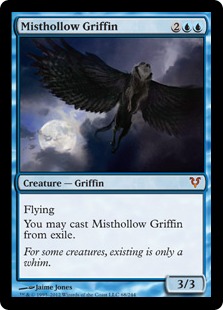
Insider: Whose Value Are We Talking About, Again?

Are you a Quiet Speculation member?

If not, now is a perfect time to join up! Our powerful tools, breaking-news analysis, and exclusive Discord channel will make sure you stay up to date and ahead of the curve.

This past weekend I had the distinct privilege of working on the Judge staff at San Diego Comic Con for the Magic Events, while also attending a sweet Judge Conference (and obtaining some super-sweet judge foils).

It was a very interesting experience, for two main reasons. First, there was a significantly larger portion of first-time or new-ish players there than any other event I've worked at. Second, the prizes were extremely juiced compared to the sizes of the event.

Combined, this created an interesting environment. The minimal numbers of spike-grinder-types were trying to roll through as many events as possible, while new players were learning the game. As new players played with each other, it was interesting to see them realize right in front of my face how important trading is.

They would pay $15 for an intro pack from M13 and enter a "league" that lasted the weekend. Every opponent they faced, they'd receive cards to add to their deck. As the weekend was winding down, people were trying to leave the venue with a solid idea of what this game was about, and what they wanted it to mean to them.

They were so narrowly engrossed in the intro-deck they had, that the concept that these cards had a secondary market value was totally lost on them. "I'll trade you this Green Rare for your Blue Rare." Said the guy with the Blue Intro Deck to the guy with the Green Intro deck.

The fact that he was trading a Thragtusk away for a Talrand, Sky Summoner was not something they even considered to be a financial transaction.

Normally, when this sort of thing happens, one person is taking advantage of another. But these were two friends, first time players, and I didn't feel the need to intervene. For purposes of why there were there, Talrand was actually worth more to the Blue player than the Green player. Also, them being friends, I figured they could hash this sort of thing out on their own once they found out such things later, leaving them with a good learning experience.

Judge Promo Commander Exclusive for Standard Cash

Later in the day, I was trading with one of my good friends. I had just received my Foil Command Tower, and since I don't play Commander, I had promised to trade it to a friend. Initially, I told him I was likely to sell it, so if we could find something in his binder I could sell at a similar price, we'd be all set.

This is when his friend (who I didn't know) chimed in: "Command Tower is only a $30 buy on Star City Games, so that for Ajani is probably in your favor as-is."

First, I have no idea why SCG only buys that card at $30, which I'd guess is likely because they don't want it, because that's only 37% of their listed sell price.

I told the third party, "I'm not really interested in SCG buyprices, thanks anyway."

I tried to redirect back to my friend, so we could carry on our trade (which was going fine). This guy didn't like my response, and pulled out his smartphone, "Which buy list do you want to check then? I can check them all!"

I had to insist, "I appreciate the offer of help, I have a smartphone too, but I just don't feel it necessary to have a third party interjecting here."

At the end of the day, my friend and I made an agreement and moved on.

Simple as Price vs Price?

I just want to point out the huge flaw I see in the "Let's just look this price up." Even if you're looking at the same source, for two different cards, it doesn't mean you're comparing apples to apples. Think about a pile of Standard Staples as compared to a Judge Promo (especially one that is only legal in EDH). Standard Staples are going to move very fast. In fact, faster than almost any other type of stock, while a high-ticket Commander card has to find the right buyer who's willing to pay the price to pimp out his deck.

As a dealer, which one would you rather invest a fixed amount of money in? Obviously, the faster moving item. To offset the time it will take to turn the product around, you have to have a bigger gap between buy and sell, especially since your sell price runs the risk of decreasing if it doesn't sell soon enough and more Judge Foils are distributed. Comparing just a buy list price isn't enough if you're legitimately trying to strike a fair deal.

What are these cards worth to me? Well, I planned to sell them. But sell them how? If Command Tower Foil was really $30 on the StarCity Buylist, I'm just not going to sell it to them. I can get nearly twice as much after fees on eBay. Where as with Standard Staples, I can dump those to a dealer at only a small loss compared to an eBay sale.

My trade partner, however, plays exclusively Commander. Cards in his binder have the express purpose of finding foils for his EDH decks, so I am his outlet. I saved him from having to trade his cards into a dealer at buy prices, and then buy a Command Tower at sell prices. We both have different priorities here, and because we're friends we can be vocal about those priorities and reach an agreement.

I told him, even with SCG Buyprice at $30, I'm more apt to use their buylist to consider your Standard Staples, but give you the Command Tower at a price that's more comparable to what I can actually get for it, which would be bottom of the eBay range, less fees.

I don't generally agree with alienating your trade partner by telling their friends to "Butt Out!", especially, if they have asked that friend to help them make a decision. But don't let a loud trade partner (or their friend) tell you what a card is worth.

The Heart of Value

This is the concept behind the question, "What do you value this at?" If you don't know what peoples values are, then it's hard to reach an agreement. I think there are better ways to gain this information without being a scary value-trader. Rather than asking them for a number, ask them why they're trading it or trading for it.

More importantly, be forthright about your intentions. You can derive values from there. In my case, I wanted to turn my judge foil into cash. So if he's offering me something other than cash, it needs to be at least as much as I could get by selling it directly.

He wanted it for his deck, and wanted to dump cards he has no use for in exchange. Focusing on their goals, rather than finite dollar values allows you to present options to your trade partner that are beneficial to both of you, like the Thragtusk for Talrand situation, which is an obvious extreme.

Final Note

A final note that I don't want to ignore until next week: Thragtusk is absurdly hot right now. Seven out of Eight Star City Games top8 decks included this monster. He's sold out at $15 on both StarCityGames and Channel Fireball. CardKingdom still had a few as of today. I don't know how much higher a non-Mythic can get, but this guy is worth watching. I'm not going to buy in on this card, but if I owned any I'd try to sell into this hype while more are being opened by the day.

A Colorful Standard: Monoblack is Dead or Long Live Monoblack?

Are you a Quiet Speculation member?

If not, now is a perfect time to join up! Our powerful tools, breaking-news analysis, and exclusive Discord channel will make sure you stay up to date and ahead of the curve.

If you were to mention the color black to Forrest Ryan his first and only response would be to state that “Monoblack is back.”

Make no mistake, though. He doesn’t say this because it’s true. He says this as a slight to the monoblack players who have been saying nothing but the above for the past seventeen years. It seems that every time somebody sees a good black card they want to play nothing but monoblack. It’s an unhealthy trend that borders on insanity.

It seems to me that every time a black card is spoiled, potential monoblack players immediately evaluate the card in a vacuum and decide that it’s good. As it usually turns out, they end up a bit off their mark.

Game. Blouses.

Some players would argue that monoblack has seen some success on the SCG circuit lately. The simple truth of the matter is that sometimes decks do well. The best counterpoint to any results oriented argument is to cite the SCG Sacremento Legacy Open.

I know what you’re thinking. “Why all the hate, Ryan? Let the monoblack players have their dreams!” and “Hey, I liked that Blouses deck!” And yeah, I don’t really have a problem with players wanting to play a certain style of deck. As a matter of fact, I played a deck that was considerably under-tested last weekend because I thought it was really cool. What I do have a problem with is people saying that their pet decks are better than they are.

Before I get into why I’m underwhelmed by the best black has to offer, I’d like to go over what I feel is important in Standard currently and what the other colors bring to the table.

The State of Standard

To put things simply, Standard is all about creatures right now. There are approximately four billion creatures with strong comes into play abilities, a fair amount of haste and some relevant mans with hexproof. All of these things push creature-based decks to the forefront of playability. Even the control decks tend to be based on making bigger creatures than the aggro decks.

Things are currently relatively open while we wait for the dust to settle from the launch of M13, but for the most part creatures are king, and value is the currency of choice. Black seems to have pulled the short straw in both of these categories.

Blue

It’s possible that blue is being dethroned as the best color in standard, but there are still two very good reasons to play it:


It has been said a thousand times before, but Snapcaster Mage most certainly borders on the “too good” side of the power spectrum. The vast majority of the time he replaces himself all the while adding a high level of redundancy to any deck featuring him. Presuming that the things your deck does are worth doing, then redundancy is obviously strong.

Mana Leak has lost a bit of stock with the printing of Cavern of Souls, but it still carries quite a bit of weight strictly because of how many good 187s there currently are.

From the aforementioned Snapcaster Mage to Titans to Thragtusk to Restoration Angel, there are just too many creatures that are dangerous simply by merit of resolving.

Even when Cavern of Souls shows up, Mana Leak is still good at dealing with Swords or creatures of varying types. Additionally, decks like Dungrove Green can’t really afford to play Caverns, so Mana Leak gains a lot of value there. It’s true that Cavern will embarrass blue players with some consistency, but not as much as the sheer power of current creatures will embarrass a player trying to deal with them after they’ve resolved.

White

Sometimes referred to as the best synergy in Standard, white offers a marvelous creature suite in the form of Restoration Angel and Blade Splicer.


Trying to beat down into this pair is frustrating at best. Both block incredibly well and aren’t too shabby at getting into the red zone either. It is becoming more common to see a Sun Titan or two at the top of the curve of white decks, and that layer can be absolutely backbreaking.

When it comes to straight creature battles, white is leading the race by a mile.

Red

Red has been a bit underwhelming as a color since the removal of Lightning Bolt and the printing of Timely Reinforcements, but it does currently offer two very powerful cards:


The power of Bonfire of the Damned is no secret anymore. Frequently it is cast as a discounted Plague Wind and can often just kill your opponent along with their creatures. It is largely accepted that playing red sources without four of these is just a mistake.

Thundermaw Hellkite hasn’t really taken off just yet, and it might take the printing of Return to Ravnica for it to start seeing major play, but make no mistake - this card is real. It alone hits your opponent for at least a quarter of their life total most of the time, given its hasty nature, and has a solid body for blocking in desperate situations. Not to mention that it murders all of the spirit tokens.

Green

While I feel that white currently has the best creatures, green is certainly no slouch. It currently has three creatures that can dramatically warp games.


If I was forced to play only one spell in Standard, that spell would be Strangleroot Geist. Multiple Geists in the early turns can easily win games on their own. The number of cards that tango with it one-for-one is few and far between and haste is nothing to scoff at.

Thragtusk is another joke of a card. The only ways to realistically beat it consistently are countering it or playing larger creatures. Once Titans and Mana Leak rotate, you can expect to lose to this guy a lot. Thragtusk may just be the new mayor of Value Town.

I’m not a big Dungrove Elder fan, but with Rancor back in standard it is a major player again. Most removal is useless against it and chump-blocking may just be a losing proposition. It often finds itself out of Bonfire range as well. It even has the ability to outgrow Titans. I won’t be sad to see this card rotate.

So what does black give us?

With blue having the best disruption, white and green having insane creatures and red having Plague Wind, black had best have some insane cards if it intends to be a standalone color. Let’s take a look at the best that monoblack has to offer:

Mutilate

There is a reason that I didn’t list Day of Judgment as one of white’s best cards. Wraths just aren’t great right now. Undying creatures and the number of one-man armies that exist right now make cards like this too easy to play around. It’s true that Mutilate kills Wolfir Avenger dead, but there’s no guaranteeing that it can kill Titans or Dungrove Elders.

Additionally, Mutilate makes the inclusion of Cavern of Souls in black decks much weaker. I think that having uncounterable Grave Titans and other such creatures is far more important than having a conditional sweeper.

Liliana of the Veil

I was really excited about Liliana at first, and she’s been in a number of winning decks, but she has lost a bit of stock lately. With everybody attacking and Blade Splicer, mana-dorks and Strangleroot Geist running around, she really doesn’t do a lot. There also isn’t much that monoblack can do to break parity on her discard ability.

Lashwrithe

This might be the best monoblack card printed recently, at least the best with a reasonable casting cost. While it’s nice that you can move it around after the germ dies, this card just isn’t Dungrove Elder. There are so many good artifacts running around currently that most players have at least some hate on their sideboards. Many even maindeck some. I could see this card getting a lot more attention in a world without Swords. As things stand, it’s rather loose.

Phyrexian Obliterator

Man, we’ve come a long way since Phyrexian Negator. Obliterator just isn’t good. There are too many Vapor Snags and Dismembers for this card to really do anything. It might appear good against the creature decks, but a few factors hold it back against them. For starters, it doesn’t do anything against fliers. Additionally, decks like Naya are more than capable of easily producing lethal swingbacks, making Phyrexian Obliterator into a wall a good portion of the time.

BBBB just isn’t worth it for a wall.

Geralf's Messenger

Okay, this card is really good. If it had a more manageable casting cost it would probably be seeing a ton more play. It plays very well with Pod and is an insane aggressor. The only problem with him is that he has to be paired with garbage like Diregraf Ghoul. We’ve come a long way since Carnophage.

Griselbrand

If we can ignore casting costs, this is very easily the best black card in Standard. Some would argue of all time.

He’s larger than the other creatures in Standard and he produces more value. His weakness is that you have to live to cast him. I can see a deck with Pristine Talisman and Guilded Lotus accomplishing this task well, but at that point I’m not sold on that deck needing to be monoblack. There is a huge difference from having four black symbols in your four drop and your eight drop. Griselbrand is fairly obviously the best endgame available, but there is no way that monoblack is his best home.

~

Far be it from me to tell somebody not to play the type of decks that they enjoy. At the end of the day Magic is a game, and if you’re not having fun, you shouldn’t be playing. That said, it’s a huge pet peeve of mine for somebody to insist that things are good just because they like them.

I’ll keep casting my Think Twices and you keep casting your Mutilates, but let’s at least agree that we’re both idiots.

-Ryan Overturf

Want Prices?

Browse thousands of prices with the first and most comprehensive MTG Finance tool around.


Trader Tools lists both buylist and retail prices for every MTG card, going back a decade.

Quiet Speculation