menu

Evaluating Potential Spec Opportunities (Part 1 of 2)

Are you a Quiet Speculation member?

If not, now is a perfect time to join up! Our powerful tools, breaking-news analysis, and exclusive Discord channel will make sure you stay up to date and ahead of the curve.

Every day we are bombarded with numerous choices.

  • What time do I need to wake up?
  • What should I have for breakfast?
  • Should I take back roads to work today?
  • Etc. Etc. Etc.

Magic finance is yet another realm where we have to be cognizant of the plethora of choices available. We all have monetary limitations, even if they may vary dramatically person to person. Every spec carries with it an opportunity cost—so how do we choose which potential specs to pursue?

First off we need to know our limitations. In this instance it is likely best to write down your financial restrictions, though admittedly I've been willing to bend said limitations in the past if a really good opportunity arose. The reason you write it down is because when you write something down your brain "encodes" it and has a better likelihood of remembering it. This same thing occurs for goals, which is why experts tell you to write down your goals, as those who do tend to reach them considerably more often.

Now that we have our financial restriction written, we will want to move on to writing down our MTG financial goals. Doing so in this order is important because it provides us with a parameter of which to help us define our goals. When I'm faced with a large project at work, the first thing I look for is a list of requirements for the project to be considered a success. In the Magic finance realm this would be your goals and restrictions.

For example; let's say we would like the costs of playing Magic to be net-zero over the year, which means that we make back all that we spend. However, we are also limited in what we can spend each month, thanks to typically being paid on a weekly, bi-weekly, or twice-a-month payscale at most places of employment and having additional living expenses to be concerned about.

So let's restrict our Magic expenses to $200 a month. This means that throughout the year we can only spend $2400 on Magic, but we also need to make $2400 through sales opportunities and tournament winnings.

I can't help much when it comes to money made through tournament winnings, as my success at tournaments is rather limited. I tend to look at most as having a bad Return on Investment (ROI), because the likelihood that you make a profit is typically lower than that you will lose money. For example, SCG Cleveland costs $60 to enter—if you don't make top 64 you lose $60. If you make it to anywhere between 64th and 33rd place you make $40. From 32nd to 17th place you make $140. All that for two days of grueling grinding.

Flat Fees

Selling cards is where I shine. The most important thing to remember is that the definition of profit is the difference between what you paid for something and what you net after you sell it, which includes all marketplace fees, shipping fees, etc. I bring this up because it's easy to get greedy and always try to sell at the peak. Unfortunately, nobody knows where the peak is until it's already passed, and the number of buyers at the peak price is typically minimal—hence why the price drops to entice more buyers.

It's also easy to forget that the cheaper a card retails for, the more the marketplace and shipping fees cut into any potential profits. If we assume TCGplayer is your marketplace of choice, then here is a handy table showing the flat fees per transaction. Those fees include: the flat $0.3 fee for every payment; a shipping fee associated with a plain white envelope; and the supplies to properly ship a card, including top loader, envelope, and stamp (which amount to $0.6).

Sell Value Flat Fee as a Percentage of the Sale
$1.00 90.00%
$2.00 45.00%
$3.00 30.00%
$4.00 22.50%
$5.00 18.00%
$6.00 15.00%
$7.00 12.86%
$8.00 11.25%
$9.00 10.00%
$10.00 9.00%
$11.00 8.18%
$12.00 7.50%
$13.00 6.92%
$14.00 6.43%
$15.00 6.00%

As you can see, the smaller the sale the bigger the flat fee eats into any potential profits. You can't buy less than $2 worth of cards from a vendor on TCGplayer, but I included the $1 item to show you how much they can eat into profits.

When you are evaluating an opportunity, understanding these costs can be critical. For example, say we see some hot new Standard rare show up as a two-of in the sideboard of the winning deck at the Mythic Championship. If that card's current value is $1, then even if it triples in price to $3, your profit could be as low as $0.75 after factoring in all the selling fees. In this case, that probably wouldn't be worth the effort.

Now the good news is that because shipping is by far the biggest flat fee cost with each transaction, if cards are purchased in multiples then your profit loss is spread out over that number of cards. This means that it might be worth it to jump onto that spec train if you think you'll sell them in groups of more than one, which is especially relevant for maindeck four-ofs. Whereas there's a bit more risk in sideboard cards typically played as one- or two-ofs.

Risk Burn Down

One thing we do at the company I work for is called a Risk Burn Down. The basic premise is to think of all the things that can go wrong with a build, and then work your way back to eliminating the risk associated with those concerns. With Magic cards there are fewer types of risk than with building large machinery, but there are still plenty.

  1. The metagame shifts and the card falls out of favor.
  2. The card is reprinted.
  3. A better option is printed or unbanned.
  4. The card is banned.

Metagame Shifts

We have very little control over metagame shifts. Mitigating this type of risk requires constant vigilance of deck performance, and sifting through a lot of data. This is one area that benefits from the group hivemind of the QS Discord channel, as members will often bring this information to light as soon as it's available.

While gathering this data is still cumbersome, you can find much of it in just a few locations. Other places I like to check are MTGGoldfish and MTGTop8.

Reprints

Luckily, WotC usually does a good job of letting its customers know what products are on the horizon (except for UMA—that one surprised most of us). Knowing the products in the pipeline, we can make educated guesses regarding any particular card's likelihood of reprint, though again it's important to stress that none of us has perfect information and even the hivemind can be wrong.

For example, War of the Spark releases May 3rd, and Modern Horizons releases June 14th. Modern Horizons will have no existing Modern-legal cards, and War of the Spark is a Standard-legal set. Knowing this, we are unlikely to see a card like Jace, the Mind Sculptor reprinted anytime soon, as he is currently Modern-legal and too powerful for Standard. Unsurprisingly, many people have picked up on this and his price has risen steadily since the Modern Horizons announcement.

There was an error retrieving a chart for Jace, the Mind Sculptor

Better Option

This one can be tricky if only because we've seen a lot of power creep from WotC card design over the years. It is likely that a fair number of currently powerful cards will be eclipsed, eventually. However, that creep isn't exponential year-to-year—risk is minimized as long as your planned selling time frame isn't extremely far out into the future.

However, with a set like Modern Horizons on the...horizon (the pun was too easy and I couldn't resist), this risk may actually take a front seat for the near future. We should start expecting more spoilers after War of the Spark releases.

Bannings

After the latest Banned and Restricted update, which announced no changes, Faithless Looting has gone on to dominate most large events. Many people think the card's time in Modern is coming to an end. Because of this fear, we are seeing the cards most often paired with it start to slip in value, despite putting up such solid performances.

There was an error retrieving a chart for Faithless Looting

I expect this trend to continue at least until the next B&R announcement, which will likely decide Looting's ultimate fate. Either it dodges the next B&R and WotC decides they are okay with it, or it gets the banhammer and the metagame shifts.

The point here is that when cards are banned, the cards they are most often played with also tend to take a financial hit. Thus your speculation target may not get banned, but if its partner in crime is, it still loses value.

~

Join me for my next article where I'll discuss some more factors to consider when evaluating speculation opportunities.
Brew Report: March Metagaming Madness

Are you a Quiet Speculation member?

If not, now is a perfect time to join up! Our powerful tools, breaking-news analysis, and exclusive Discord channel will make sure you stay up to date and ahead of the curve.

Is Modern solved? Is Modern stale? Any amount of time spent on a Magic forum or subreddit these days seems to offer countless arguments from both sides of the debate. Indeed, this Phoenix/Dredge/Stirrings (in that order) metagame has proven the most divisive I can remember since Siege Rhino briefly served as hyper-acting format manager in a void left by the Treasure Cruise and Birthing Pod ban. But no matter your position, I'd imagine it difficult to deny the sheer scope of innovation on display among Modern players eager to attack the top decks. David just brought us a breakdown of how high-level paper finishes adjust for this metagame; today, we'll look at some of the standout tech from this month's Magic Online dumps.

They're Trying to Build a Prison

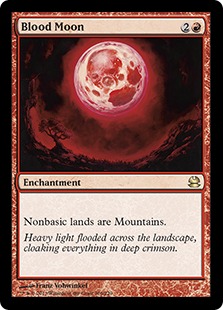
Between Phoenix spearheading Blood Moon's comeback and Phoenix struggling against Chalice of the Void, I've heard many cries for prison strategies to ascend in Modern's ranks. It seems that prophecy is being fulfilled.

Boros Prison, by BKLunch (5-0)

Creatures

2 Hazoret the Fervent
1 Emrakul, the Aeons Torn
4 Simian Spirit Guide

Planeswalkers

2 Gideon of the Trials
3 Nahiri, the Harbinger
2 Chandra, Torch of Defiance
1 Elspeth, Sun's Champion
1 Gideon Jura

Artifacts

4 Chalice of the Void

Enchantments

4 Rest in Peace
3 Blood Moon
2 Cast Out

Instants

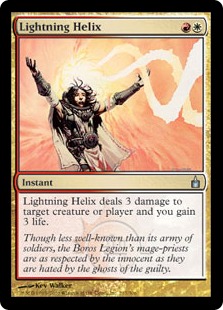
3 Lightning Helix

Sorceries

2 Anger of the Gods
2 Day of Judgment
1 Wrath of God

Lands

4 Arid Mesa
2 Sacred Foundry
4 Temple of Triumph
1 Rugged Prairie
1 Needle Spires
3 Field of Ruin
1 Gemstone Caverns
5 Plains
2 Mountain

Sideboard

2 Anger of the Gods
1 Lightning Helix
2 Aven Mindcensor
2 Damping Sphere
3 Dragon's Claw
2 Goblin Rabblemaster
3 Stony Silence

Boros Prison is by no means a new deck, but I've never seen a build so heavy on heavy-duty hate in the mainboard. Not that I'm criticizing—the list reads like a Greatest Hits of beating Phoenix, Dredge, and Tron. I wondered about this kind of deck, which is known to run Lightning Helix thanks to Chalice eliminating Lightning Bolt as an option, after reading David's piece that covered a Jeskai list heavier on Helix than Bolt, and was happy to discover it out in full force.

Also of note here are the many copies of Anger of the Gods, a potent hoser versus Dredge, and whopping 4 copies of Rest in Peace in the main. This deck is not losing to Stinkweed Imp, ever! Goblin Rabblemaster rounds out the sideboard as a way to quickly pressure decks that can go over the top, such as Gruul ramp strategies (which are also excelling in this metagame, some even with Tooth & Nail).

Rakdos Stompy, by FLUFFYWOLF2 (5-0)

Creatures

4 Simian Spirit Guide
1 Magus of the Moon
1 Master of Cruelties
1 Hazoret the Fervent

Planeswalkers

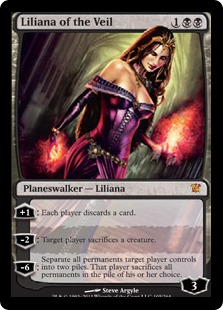
3 Liliana of the Veil
1 Liliana, the Last Hope
3 Chandra, Torch of Defiance

Artifacts

4 Chalice of the Void
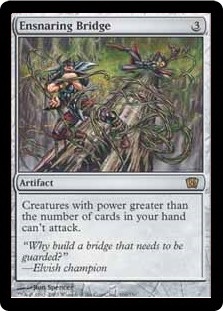
4 Ensnaring Bridge

Enchantments

4 Blood Moon

Instants

1 Abrade
3 Bedevil
2 Kolaghan's Command

Sorceries

4 Collective Brutality
2 Anger of the Gods

Lands

4 Bloodstained Mire
3 Blood Crypt
2 Graven Cairns
1 Temple of Malice
9 Swamp
3 Mountain
60 Cards

Sideboard

4 Goblin Rabblemaster
4 Leyline of the Void
2 Crumble to Dust
2 Slaughter Games
2 Stormbreath Dragon
1 Kolaghan's Command

Rakdos Stompy follows stompy's credo to a T: slam lock piece; slam threats; close out the game. The lock pieces are less impactful here than in Boros Prison, but more widely applicable: Liliana of the Veil affects more decks than Rest in Peace, for instance. Ensnaring Bridge represents a more fundamental difference between this deck and Boros: the latter is happy answering creatures as the show up, but Rakdos wants to eliminate that angle of attack altogether. In doing so, it becomes softer to artifact hate, but demands more specific answers from the opponent. FLUFFYWOLF2 may well be onto something there, as he's now 5-0'd with the deck multiple times.

Rabblemaster returns in the sideboard to fulfill its fast-clock role in prison decks, and Leyline of the Void makes an appearance to neuter Dredge. Slaughter Games and Crumble to Dust also show up as hedges against combo strategies. Stormbreath and Kolaghan's grant an edge in the fair matchups.

Can't get enough of this deck? Check out Caleb Durward's Orzhov Death Cloud, which also aims to turbo-out Liliana (his trophy-netting Rhythm of the Wild deck ain't too shabby either!).

Ghostly Martyr, by TERRADESTROY (5-0)

Creatures

4 Martyr of Sands
4 Serra Ascendant
4 Squadron Hawk
4 Ranger of Eos
2 Thraben Inspector
2 Cataclysmic Gearhulk

Enchantments

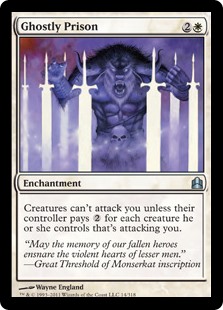
4 Ghostly Prison
2 Runed Halo
2 Cast Out

Instants

4 Path to Exile

Sorceries

3 Wrath of God
1 Proclamation of Rebirth

Lands

4 Flagstones of Trokair
4 Field of Ruin
4 Ghost Quarter
2 Emeria, the Sky Ruin
2 Mistveil Plains
8 Plains

Sideboard

4 Leyline of Sanctity
1 Damping Sphere
3 Stony Silence
3 Devout Lightcaster
2 Celestial Purge
2 Consulate Crackdown

Ghostly Martyr updates an ages-old deck with, well, Ghostly Prison. A card that's never been quite good enough for Modern, Ghostly indeed shuts down many of the format's premier aggro decks, especially Dredge. It also prevents Phoenix from chaining cantrips and attacking within the same turn, effectively removing haste from the bird and slowing the deck to a crawl. Lifelink, too, proves potent against both of these decks, especially on a large body. And Martyr naturally checks both Burn and Tron: the former by gaining life as a primary gameplan, and the latter by seamlessly integrating eight land destruction effects.

The cards featured in smaller numbers are my favorites. Cataclysmic Gearhulk randomly hoses artifact-heavy decks like Whir Prison, and Devout Lightcaster seems great against all those Lilianas. Consulate Crackdown is a read-and-weep sweeper that one-ups Shatterstorm via exile clause against the artifact decks. The deck now has multiple 5-0s to its name, one of which even makes room for Emrakul, the Promised End!

#NotAllBlueDecks

Some players have been hard at work this month un-tarnishing their choice color's name. Not every blue mage needs Arclight Phoenix to win, and the 3/2's high standing has opened the door for some exquisitely fair strategies to break through.

Azorius Blink, by HARLANMTG (5-0)

Creatures

3 Wall of Omens
2 Snapcaster Mage
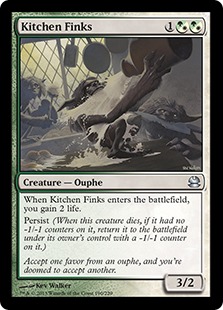
3 Kitchen Finks
2 Vendilion Clique
4 Restoration Angel

Planeswalkers

1 Jace, the Mind Sculptor

Enchantments

1 Detention Sphere

Instants

4 Path to Exile
1 Condemn
2 Spell Snare
1 Negate
2 Absorb
3 Cryptic Command
3 Hieroglyphic Illumination
3 Settle the Wreckage

Lands

4 Flooded Strand
2 Hallowed Fountain
3 Celestial Colonnade
2 Glacial Fortress
1 Mystic Gate
4 Field of Ruin
1 Ghost Quarter
6 Island
2 Plains

Sideboard

1 Negate
1 Cataclysmic Gearhulk
1 Celestial Purge
1 Circle of Protection: Red
1 Crucible of Worlds
2 Disdainful Stroke
1 Dispel
2 Lyra Dawnbringer
3 Rest in Peace
2 Surgical Extraction

UW Blink compensates for UW Control's lack of game against über-fast aggro by running plenty of blockers. In a metagame full of recurring 3/3s and hasty 2/2s, Wall of Omens looks especially appealing. Kitchen Finks, too, punishes players for playing red spells, while Restoration Angel creates further value in attrition-focused games. And counterspells interact with combo decks.

All these factors allow such a sluggish, clunky deck to 5-0 in today's Modern, even though it looks like something straight out of 2012. The constant threat of a blowout from Settle the Wreckage, a card that didn't exist all those years ago, ties everything together. Looking for something similar, but with fewer unexciting spells? Try UNWESTROUND's Jeskai Flash, which operates at instant speed and splashes Lightning Helix while maintaining a three-drop-heavy gameplan.

UR Delver, by MILLB4KILL (5-0)

Creatures

4 Delver of Secrets
4 Pteramander
4 Young Pyromancer
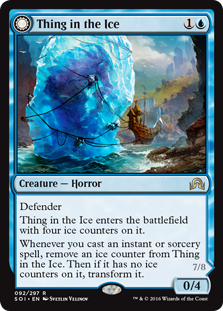
2 Thing in the Ice

Instants

4 Thought Scour
4 Opt
4 Lightning Bolt
1 Abrade
3 Spell Snare
2 Spell Pierce
4 Remand
1 Mana Leak

Sorceries

3 Serum Visions
1 Chart a Course
2 Forked Bolt

Lands

4 Polluted Delta
2 Steam Vents
4 Spirebluff Canal
7 Island

Sideboard

2 Thing in the Ice
1 Alpine Moon
1 Blood Moon
2 Disdainful Stroke
2 Dispel
2 Izzet Staticaster
2 Smash to Smithereens
3 Tormod's Crypt

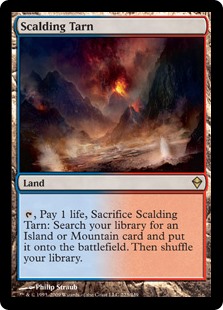
I became less interested in my own UR Delver deck lately, as I've come to realize that not having the free wins against creature decks provided by Thing in the Ice made my strategy look quite tame next to Izzet Phoenix. MILLB4KILL may have come to a similar conclusion, and has opted to just run Thing himself—he packs all four in the 75. Opt helps enable the 0/4, and Young Pyromancer also benefits from the increased cantrip count. Even without Mountain, though, I don't much understand Polluted Delta over Scalding Tarn—why not at least pretend we're Phoenix for a couple turns? Izzet opponents might top-scry their mainboard Surgical Extraction!

For a more midrange-style UR Delver build swapping Ptermander for Nimble Obstructionist, Vendilion Clique, and Wizard's Lightning, check out MIS4TUNE's 29th-place finish in the March 10th Challenge.

Blue Moon, by THEPENSWORD (5-0)

Creatures

4 Snapcaster Mage
4 Thing in the Ice
2 Vendilion Clique

Sorceries

4 Serum Visions
3 Lava Coil

Instants

4 Lightning Bolt
4 Opt
3 Spell Snare
4 Remand
4 Cryptic Command

Enchantments

2 Blood Moon

Lands

4 Scalding Tarn
3 Flooded Strand
3 Steam Vents
2 Sulfur Falls
1 Spirebluff Canal
1 Desolate Lighthouse
7 Island
1 Mountain

Sideboard

4 Relic of Progenitus
2 Ral, Izzet Viceroy
2 Dispel
2 Negate
2 Anger of the Gods
2 Abrade
1 Flame Slash

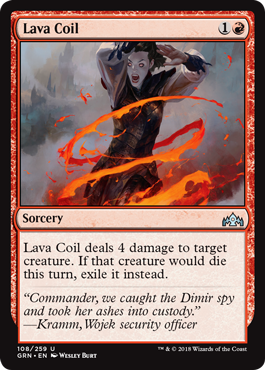
This Blue Moon deck's claim to greatness is adopting Lava Coil, taking the trend of integrating Magma Spray from some days earlier to a new level. While Spray permanently deals with Phoenix and Modern's many small creatures, Coil charges an extra mana to add Thing in the Ice and Crackling Drake to the roster, effectively answering every important threat in the top decks—especially now that Izzet seems to be moving away from Pteramander (see below).

Hollow One, Kalitas, and other x/4s have long posted problems for Izzet-colored decks, as have recursive threats, and Coil deals with all that and more in one neat package.

Wild Tech Grab Bag

In truth, the March dumps held too much tech to squeeze into a single article. So enjoy this scattered section of other observations and hot takes.

Eldrazi Stompy Developments

Of three recent trends among Colorless Eldrazi Stompy decklists, I feel only one is worth the time.

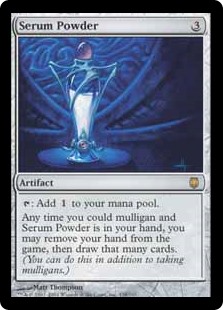
For starters, there's Billy Savarin's recent IQ win with just 3 Serum Powder. His list looks as if a friend dared him to jam some random Eldrazi Tron cards into his deck—he allegedly even registered a 64-card mainboard! Billy's not the first to run 3 Powder; a 5-0 list without a full playset was published some days before the IQ, and I tried building with 3 Powder a couple years ago (it didn't work). I hold that this deck wants the full set to maximize its odds of finding busted hands (and, specifically, Eldrazi Temple).
I've also seen a Stompy list splashing red for Eldrazi Obligator, as well as Alpine Moon in the sideboard. I think red can be a useful splash in theory thanks to sweeper effects, which would allow us to cut down on one-shot removal in the sideboard. But in my experiments, it's never been worth it compared with the sturdiness and utility of a colorless manabase; besides, the only red sweeper worth running these days is Anger of the Gods, which a mostly colorless deck would never be able to support.

Finally, the trend I condone. It seems White Eldrazi Stompy is rivaling posted Colorless finishes for the first time in months. If it is indeed time to metagame against Phoenix and Dredge, this development makes perfect sense. Temple into big threats is good against every deck, while the white cards are only useful in certain matchups, so the added consistency makes CES a better call in an open field. WES wins out over Colorless when cards like Thalia, Guardian of Thraben, Rest in Peace, Leonin Arbiter, and Eldrazi Displacer are in high demand, as they are now.

Return of Linear Aggro-Combo

Due to favorable matchup profiles, some of Modern's storied aggro-combo decks are viable again after long slumbers.

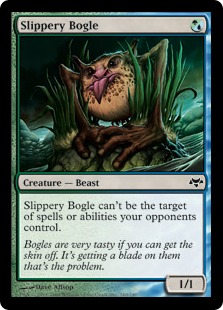
Bogles: Never loses to Phoenix with Path saved for Thing. Dredge and Burn also lose to the lifelink. Happy to mulligan low and packs hosers.

Mill: Has a win condition difficult for Phoenix to interact with, and that Dredge supports. Largely ignores hate aimed at the top decks.

Cheeri0s, Infect: These decks punish opponents for tapping out (i.e. for Thing in the Ice, Cathartic Reunion, cantrips) and find it very difficult to lose to interaction-light decks such as Tron and Hardened Scales.

New Homes for Snapcaster, Kalitas, and Frenzy

It looks like Snapcaster Mage is here to stay in Izzet Phoenix decks, generally cutting into shares previously occupied by Pteramander, Crackling Drake, and Pyromancer's Ascension (in fringe cases, Young Pyromancer). Mage diversify's the deck angles of attack, a must now that players are finally catching on to Izzet's gameplans and tuning accordingly. It also shines in midrange matchups, which are increasing in popularity thanks to...

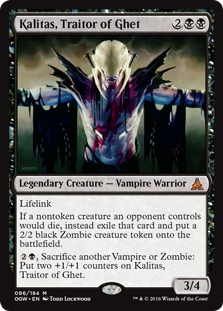
Kalitas, Traitor of Ghet, the latest cornerstone of BGx Rock. Kalitas turns Fatal Push into a real removal spell against Phoenix and Dredge alike and has enabled something of a midrange renaissance online this month; the Vampire has even shown up in UB Faeries and Grixis Control. Kalitas is so potent right now that Anafenza the Foremost's similar effect has been earning her space in Humans.

I covered Frenzy Affinity back in February, but the deck positively blew up this month, bringing traditional Affinity to new heights despite Hardened Scales's sustained metagame presence. Experimental Frenzy gives the strategy the unfair edge it needed to keep up with Modern's steadily rising power level. Strategically, it allows Affinity to slog through removal, something all of the format's best decks already do. Instead of grinding via synergy like Scales, it does so using the enchantment's raw power.

Change at Last

One week ago, I asked whether Wizards should address Arclight Phoenix. My argument was that if the deck kept its metagame shares and Modern failed to adapt quickly enough, they might have to. But this month's Magic Online results tell the story of players digging deep and finding ways to address Phoenix on their own terms. Here's hoping players succeed in policing Modern themselves.

The Modern Horizons Effect

Are you a Quiet Speculation member?

If not, now is a perfect time to join up! Our powerful tools, breaking-news analysis, and exclusive Discord channel will make sure you stay up to date and ahead of the curve.

I remember vividly when Modern Masters was released in June of 2013. At that time I was very active in the new local game store that had opened a few months prior just minutes from my house, so I was able to see first-hand the impact it had on players. It seemed to me like the Midas of Modern, turning everyone who touched it into a Modern player. When someone cracked a pack of Modern Masters they suddenly had Modern cards and were a part of that world, and I saw many dive right in.

At that time Modern was already very popular,  and demand was so high that it easily soaked up the new cards. In fact, many reprinted cards actually soon ended up at a higher price, doing nothing to satiate demand. I attribute this to the new players it brought to the format bringing new demand, and to those already playing Modern who rode the wave and invested deeper into the format. The fervor it caused at my local store was surely felt in many other stores across the globe.

What I am getting at is that I expect Modern Horizons to have a similar impact as Modern Masters, bringing players to Modern who might otherwise not have played. It should also have the effect of recapturing the attention of lapsed players, and increasing interest in the format from current players.

There are no Modern reprints in Modern Horizons, so there’s no real risk of it decreasing the price of staples. Instead its effect will be purely to increase demand for other Modern cards, which can already be seen in the market. Just like with Modern Masters release, we’re in the midst of a thriving Modern season, which explains why there’s a lot of movement and growth. I expect things will come to a head with Modern Horizons.

Once we know exactly what’s in the set, we’ll start seeing spikes based on new cards slotting into existing decks or creating new ones. That will be exciting for sure, but right now we’re mostly in the dark.

I think the best plan for now is to target general big staples—one great opportunity lies in cards that were reprinted in Ultimate Masters. Many of these cards have already seen significant rebounds, but the price of many staples is still significantly depressed from their highs.

There was an error retrieving a chart for Engineered Explosives

For example, Engineered Explosives flirted with $100 before an UMA reprinting crashed its price. The original version is now $40, and the UMA version feels like an absolute steal at $24, at least in the long-term. It’s such a strong staple that I really can’t see this falling lower, with plenty of gains ahead in the coming years.

There was an error retrieving a chart for Karn Liberated

Karn Liberated also looks like a great spec. Once over $90, its price has fallen steadily since reprint, and now seems to have stabilized in the $65 range. Recently Ulamog, the Ceaseless Hunger spiked, and Ugin, the Spirit Dragon is currently on the rise, too—it’s only a matter of time before this clear Tron demand affects Karn.

I noticed that the Iconic Masters printing of Oblivion Stone is also showing signs of growth, so that’s another sign and possible spec. It also brings attention to the fact that not just UMA, but previous somewhat recent reprint sets like Iconic Masters and Masters 25, are good targets in preparation for Modern Horizons.

There was an error retrieving a chart for Cryptic Command

A great example is Cryptic Command, which has its various printings all trending upwards over the past few months. It’s widely speculated that we’ll see a reprint of a classic blue card like Counterspell. I’ve discussed this before, but I think Cryptic Command is a great way to capitalize on that.

In the past week Jace, the Mind Sculptor saw significant growth, some of which I attribute to this same Counterspell speculation, and it’s a card that goes hand-in-hand with Cryptic Command.

There was an error retrieving a chart for Counterspell

I think there’s some appeal to investing in higher-end versions of Counterspell, some of which are already appreciating. If the card does become Modern-legal, expect promos, foils, and ABU versions to all see significant gains.

The Whir Prison deck has been creating a lot of movement lately, including in Modern’s most important prison cards, Ensnaring Bridge and Chalice of the Void. These feel like solid blue-chip cards, but there isn't a ton of percentage to be gained here.

There may be more opportunity in cheaper cards with the potential to spike. In just the last couple days we’ve seen a spike in Bottled Cloister from the $1-2 range to $5. Even if it’s just a one-of in the deck, the price of this quite unique and old card was just too low.

There was an error retrieving a chart for Tezzeret, Agent of Bolas

My favorite target in the deck is Tezzeret, Agent of Bolas, another card that just seems way too cheap to me. It’s now a three-of sideboard staple in the Whir Prison deck. It's quite a unique and powerful card that gets better with every new artifact printed, and $17 just seems too low given its price history. In spring of 2016 it spiked from $15 to over $30, but by the end of that year was down to $20. With the card now more present in the competitive metagame than ever before, growth seems inevitable.

There was an error retrieving a chart for Kaya, Orzhov Usurper

While mostly a Standard spec, I want to point out that this week Kaya, Orzhov Usurper leapfrogged Hydroid Krasis as the most expensive Ravnica Allegiance card on Magic Online, currently almost 22 tix compared to 17. To me that’s a strong statement about the future prospects of the card, since MTGO tends to be ahead of what happens in paper.

The paper price of Kaya is still around $9, but rising, so it feels like a great pick-up now with a horizon through the next Standard rotation. At that point, the powerful explore creatures and green staples that power Hydroid Krasis will be gone, and its price should plummet. The fact that Kaya has also been seeing Modern play, like in the Lantern Control deck high-profile pro Sam Black played to the Top 8 of MagicFest Tampa, makes its long-term prospects even better.

-Adam

Insider: QS Cast #116 – Cards on the Horizon [Unlocked]

Are you a Quiet Speculation member?

If not, now is a perfect time to join up! Our powerful tools, breaking-news analysis, and exclusive Discord channel will make sure you stay up to date and ahead of the curve.

(This Podcast had to be split into two parts during editing.)

Welcome to the QS Cast 2019! Our co-hosts Chaz and Tarkan explore the financial aspect of Magic the Gathering – and in this episode they discuss the following:

  • Further Discussion of everything #ModernHorizons Announcement.
  • A look at lucrative Modern cards entering a buyer's market.
  • Weekly QS Cast "Cards to Consider" Segment.

Cards to Consider

*This Podcast was Recorded on 03/07/2019 for QS Insiders. If you want live recording sessions and up to date postings before anywhere check out the QS Insider Discord!

Avatar photo

Chaz V

Started playing during Invasion block at the age of 13. Always a competitive person by nature, he continues playing to this day. Got into the financial aspect of the game as a method to pay for the hobby and now writes, Podcasts, and covers all aspects of the game, always trying to contribute to the community and create great content for readers and listeners.

View More By Chaz V

Posted in Free, QS CastTagged , , , Leave a Comment on Insider: QS Cast #116 – Cards on the Horizon [Unlocked]

Have you joined the Quiet Speculation Discord?

If you haven't, you're leaving value on the table! Join our community of experts, enthusiasts, entertainers, and educators and enjoy exclusive podcasts, questions asked and answered, trades, sales, and everything else Discord has to offer.

Want to create content with Quiet Speculation?

All you need to succeed is a passion for Magic: The Gathering, and the ability to write coherently. Share your knowledge of MTG and how you leverage it to win games, get value from your cards – or even turn a profit.

Insuring Your Magic Collection: Part 2

Are you a Quiet Speculation member?

If not, now is a perfect time to join up! Our powerful tools, breaking-news analysis, and exclusive Discord channel will make sure you stay up to date and ahead of the curve.

In Part 1 of this two-part series on insuring trading cards, I wrote about some basic insurance principles and connected the insurance industry with our beloved game and hobby Magic: the Gathering. If you haven't read Part 1, please do so as Part 2 builds off of Part 1 quite a bit.

The research I did for these articles taught me that trading cards are typically not insured by standard U.S. homeowners, renters, or condo policies. My intent was to make readers aware that when they experience a loss affecting their trading cards, residential insurance coverage would either provide a severely depreciated compensation (through the Personal Property Coverage Section of the policy) or exclude the trading cards entirely.

The latter is more likely, as they will be viewed as collectibles—which are explicitly excluded by most Personal Property coverage sections. As mentioned last week, most collectibles require a scheduled personal property policy to protect them. Because of this, I advised readers to talk to an insurance agent about filling the gap in coverage if their collections of trading cards were valued at $5,000 or more. I brought up standalone scheduled personal property insurance as a means of filling that insurance gap.

Today I'll discuss more about what that entails. I'll cover how to buy a policy; what my buying experience was like from a reputable insurance agency called Collect Insure; and what the policy actually covers. Snippets of my interview with Robert (Bob) Brodwater, Director of Personal Lines at Collect Insure, are also interwoven throughout the article. Let's dig in!

Filling the Coverage Gap

There was an error retrieving a chart for Acquire

Last week I covered Loss Prevention, but it should be clear that no matter how perfect we are at protecting our cards on a day-to-day basis, there is still always some risk exposure present. As a result, the only surefire way to protect ourselves is by acquiring an appropriate amount of insurance for our trading card collections.

I began thinking about what I would do if my roughly $35,000 collection were stolen or destroyed by a fire. As I contemplated these scenarios during my research for these articles, I decided to get a quote for my personal collection.

It turns out that finding companies who will give a quote for trading card (collectibles) insurance is much harder than you might expect. In the U.S. there are only a few companies that specialize in providing collectibles insurance policies. I ultimately went through two quoting experiences. One of those really stood out to me: Collect Insure.

Quick background about Collect Insure:

Source: https://collectinsure.com/why-insure/about-us (and confirmed by Bob Brodwater in my interview)

  • The company was founded in 1966 by an avid stamp collector, Horace Harrison.
  • The company is currently owned by Global Indemnity Insurance.
  • The company boasts an "A" (Excellent) rating by A.M. Best. This is very important when considering the financial solvency of an insurance company backing your policy, as it translates to the company being able to pay out on claims without going out of business.

The Quoting and Buying Experience

Collect Insure blends an easy-to-use quoting application (which only took about 5-10 minutes to complete!) with quick turnaround from their customer service team.

After reviewing the coverages and discussing my questions with the customer service representative, I realized the Collect Insure policy provided exactly what I was looking for to protect my collection. Perhaps most important of all, I felt the policy was reasonably priced for the amount of coverage I needed, so I went ahead and purchased it.

If you visit Collect Insure's website to get a quote, be prepared to answer a few basic questions about your collection's value, the way you protect/store it, and a little about your insurance history. If you do complete a quote on their website, a representative will reach out to you to answer any additional questions or concerns.

The individual I spoke to was not pushy towards a sale at all and was very genuine and conversational. I already had my mind made up that I was going to purchase, but this experience solidified my decision even further.

FAQs

Before I dive into the details of my past experience and why acquiring a policy was so important to me, I want to start with some questions I felt might be commonly asked by a trading card collector looking for insurance coverage. I am only scratching the surface with these questions, so be sure to ask a licensed representative all of your additional questions as they will be able to give you the best guidance.

Q1: Does the policy have coverage for cards which are in-transit, such as those being used for play or display; or cards in-transit between the scheduled premises (the place your cards reside / are stored) and another property (such as a local-game store or a tournament)?

Yes, Collect Insure's policy provides coverage for cards while they are away from your scheduled premises. This includes shipping coverage if done by an approved vendor (see the policy guidelines for details) and while in-transit (exclusions do apply). In fact, the policy even provides a specific coverage limit for Collectible Exhibitions in the event you are putting your cards on display.

According to Bob Brodwater from Collect Insure, their policy form is intentionally written as an inland marine policy as opposed to a scheduled personal property policy because of the flexibility in coverages it can provide. The coverage for "in-transit" trading cards mentioned above is just one example of this—traditional SPP policies do not always cover articles as thoroughly when they are away from the scheduled premises.

Q2: Do I have to pay a deductible for losses I experience?

No, in the case of Collect Insure, their policy form does not include a deductible. However, there is a minimum loss requirement of $50 to file a claim through the Collect Insure policy. In other words, you cannot make a claim for a loss under $50.

Q3: Will I be required to document every card I own to apply for insurance?

While there isn't a specific requirement to have every single card itemized, you do have an inherent responsibility as the insured to be able to provide factual evidence of your collection's value. Insurance companies must protect themselves from fraud. It is reasonable for them to expect some form of documentation, whether via photos, sale receipts, an itemized inventory, an appraisal form, or something else.

I encourage you to document the most expensive pieces of your collection with photos (aim for around 80% of the total value). This will ensure an easy claims process should you experience a loss. It also helps to guarantee you don't miss anything major and leave yourself underinsured.

I would also encourage you to consider keeping a manifesto of the most valuable cards in your collection; some examples of how to do this include retaining receipts of purchase, or keeping a record in a spreadsheet. (For starters, be sure to include the price, date, condition, and quantity purchased.)

Q4: I'm a collector and I'm always growing my collection's value: is there a way to increase my coverage regularly as my collection's value increases?

Yes, the policy includes an option for an Automatic Monthly Increase to the total coverage amount. Mine updates the base coverage amount by 1% per month. You can also call Collect Insure to endorse (change) the policy should you make a purchase that substantially increases your collection's value all at once. Be aware that you'll likely have to pay an additional premium for this type of change.

Q5: What types of perils (losses) are covered by a Collect Insure policy?

According to Bob Brodwater, Collect Insure will cover all perils unless explicitly excluded in the Exclusions page of the policy. This includes things like water and fire damage, burglary and theft, transit and shipping damages, flood (unless in flood zone A or V), and accidental breakage. The inland marine form provides these coverages regardless of the type of collectible being insured. This is important if you are considering this policy as a means of expanding coverage beyond your trading card collection.

Reminder: for all of your questions pertaining to how best to protect your collection, I want to reiterate that you should talk to a licensed representative.

Applying Prior History to Current Decisions

I alluded to this already, but the buying experience with Collect Insure was excellent. Their process is not tailored specifically to trading cards; rather, they are experienced at insuring collectibles generically, and thus their quoting application allows you to tailor it to your needs. I only focused on my trading card collection—a mix of mostly Magic: the Gathering cards with a smattering of valuable sports cards from my childhood—but I easily could have added pieces of a different collection to the quote.

The reality is after contemplating my past it was an easy decision to acquire coverage for my Magic collection. I went into the quoting process with Collect Insure knowing I wanted to buy.

I didn't share this personal story in Part 1 because it did not feel like the right place, but I feel it is important now to drive home awareness of the coverage gap we face by not insuring our trading cards and collectibles thoroughly. I will admit I contemplated not sharing it at all because it isn't easy to recount without getting a little emotional.

Tragedy struck me once when I was 16—my family endured a near-total-loss fire that started in our upstairs bathroom. Jumping right to the most important fact from this story: no life was lost. My Mom and I were the only ones home that morning and we got out safely before things got really bad; our cats smartly hid in the basement and we got the dog outside, so all was good there, too.

Our possessions were less fortunate. At that point, I wasn't collecting Magic cards in a serious manner but I did have some (which actually survived because they were not upstairs). I also had a decent number of 1st edition Pokemon cards.

The most devastating part of the fire affected my sports cards collection, sports memorabilia, and many of my toys from childhood. Many of my most valuable cards and memorabilia, including Ken Griffey Jr. and Michael Jordan rookie cards, a Kobe Bryant-signed jersey card, and a Michael Jordan signed picture, were all destroyed in my bedroom and the attic.

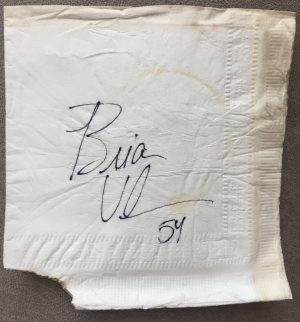
Here's a napkin signed by Chicago Bears great, Brian Urlacher, for my Mom at a bar in 2001 after a Packers/Bears game. You can see the singed edges, especially the lower left corner, yet somehow it miraculously survived intact. This was in a fireproof safe along with many other paper documents (including the aforementioned rookie cards) which were not as lucky.

My family's insurance policy paid out a huge dollar amount when it was all said and done. They had to redo nearly the entire home because of the fire, smoke, and water damage. It wasn't a "total loss" but it was very close.

As for my cards and memorabilia, they paid me $1,000 (and that was after extensive negotiation by my Mom). The same items which were destroyed were probably valued at $10,000 back then and would likely be closer to $50,000+ these days.

I never did get a replacement for those items. Partly because the $1,000 wasn't enough to come close to replacing those seemingly one-of-a-kind items, but also because I couldn't rationalize a "replacement" in lieu of my originals.

Coming to Terms

Loss is a devastating experience. The KĂĽbler-Ross model tells us that human nature is to deal with loss through stages of grief. While this model is normally applied to loss of human life, I can tell you from experience that there is something to be said about the grief of losing seemingly irreplaceable material items as well. The memories that go with material items can be very powerful, and I was young enough when the fire happened that I didn't really know what I was dealing with. It took me years to get over the items I lost and past the grief and depression that ensued.

Among the most important things I lost was my collection of early-1990s Legos which I would estimate a current market value of $10,000 or more. I would actually say the memories of losing my Legos hit me way harder than any amount of money.

I am able to joke now that they melted into one colorful block, but for a long time that comment would have brought me to tears. To drive this emotion home, my wife and I are expecting our first child in April and it will always haunt me that he won't get to inherit my Legos collection (and the majority of my other toys from my childhood) because they were destroyed.

It is true that insurance for all of these items would not have changed the fact that the originals were destroyed and the memories were relegated to my mind, but at least I would have been reasonably compensated to try and replace most of it. If nothing else, instead of $1,000 for all of my items I might have gotten something closer to the $10,000+ value for my memorabilia and sports cards, for example, and I could have tried to reacquire certain pieces of the collection.

In retrospect, when I talk about this with my Mom (who is an insurance agent in the Chicagoland area), we regret not treating my toys and memorabilia more seriously. I have tried to rationalize by saying, "they were just toys," or, "it was just a jersey." But as time passes and I look back, I see the amount of collectible value that was lost on that fateful day of the fire. There were individual items that I took very good care of which would auction for hundreds or more today (ex: I had this Playmobil train).

It's hard to recount and write about what happened, but I want to drive home my experience for you. Insurance would not have prevented what happened with our house fire but it would have led to a better outcome afterwards. I may not have been able to get another picture signed by Michael Jordan, but I might have gotten some compensation for the market value and potentially even been able to replace it with something similar.

My personal experience ultimately led me to buy the insurance for my Magic collection with Collect Insure. For about $250 a year, my policy gives me the piece of mind that my collection is covered should another tragedy strike. This means my little guy will have a better chance of inheriting his Dad's collection, or at least a similar-looking one should something happen. That alone is worth it to me.

Wrapping Up

I hope sharing my personal experience helps paint a picture of what loss to a set of valuables can look like, and makes you at least pause and think about your own.

It goes without saying that nothing is more important than protecting human life, but I must admit that I underestimated the grief I would feel from losing tangible items that held forever memories. Prepping for this article made me reevaluate the monetary and intangible value of certain material items I own, particularly in my Magic collection. While I wouldn't say that all of the $35,000 collection is important to me, there are certain pieces that I fully intend to pass on to my children someday (i.e. cards that I would never sell, trade, etc.).

While buying an insurance policy won't prevent loss from occurring, or the devastation and grief that accompanies a loss, it does help mitigate the long-term impacts, particularly at a financial level. I mentioned the current market value of some of the items I lost in the fire—it still hurts thinking about what could have been.

Those items could have been sold to help pay for college, or my first car, or a down payment on a home. Hell, many of those items could have led to new memories seeing my children play with them someday. Insurance would not have brought back the originals, but it sure as heck would have helped replace them like-for-like, enough so that neither my child nor I would have to think about the fire again.

As it is, I cannot dwell on or regret what happened almost 20 years ago. Rather, I acted on that history by purchasing a collectibles insurance policy for my Magic collection and I made sure my family won’t have to deal with that situation again.

As always, you can reach me with your questions and comments here, on Twitter @ChiStyleGaming, or on the QS Discord.

Tales from the Buylist #7 – The Challenger Decks and Rotation

Are you a Quiet Speculation member?

If not, now is a perfect time to join up! Our powerful tools, breaking-news analysis, and exclusive Discord channel will make sure you stay up to date and ahead of the curve.

A part of me wanted to immediately jump on this article as soon as they announced the Challenger decklists last Monday, but I restrained myself as best as I could. I decided I would take a week to think on my picks and drink in the data on all the cards that might take a hit from the huge supply injection we're about to see. My list of reprints that I thought would be likely was mostly on-target. I compiled this list on February 14th in our Discord, as I was confident in sharing what I thought would be easy reprints.

While I'm incredibly surprised that we didn't receive Vraska's Contempt or Search for Azcanta, I completely understand Wizards skipping the Teferi, Hero of Dominaria reprint. Lyra Dawnbringer is also a worthy mention as a miss here, being one of the better and more costly mythics from Dominaria.

It's entirely possible that the density of rares required to make a worthwhile Esper or Jeskai Control list may have been too high for one $29.99 product when a single Teferi, Hero of Dominaria costs more than the deck itself. However, I'm overall happy with what we're receiving for the cost of each challenger deck. These will be easy to upgrade and turn into competitive decks until Fall rolls around.

Hits

Of the cards I mentioned above, I expected these cards the most. The Challenger Decks are an excellent product to position to new players at an event such as Friday Night Magic, and creature strategies are great for teaching the basics of more competitive play. These cards were quite expensive pieces that, except for Carnage Tyrant, were usually registered as a playset for Standard events.  If you haven't attempted to do so already, dumping these to buylists will be the fastest and most reliable way to get out of whatever undesirable copies you have. As someone who works in a buylist department, I'm steeling myself for the inevitable onslaught of these cards.

There was an error retrieving a chart for History of Benalia

There will be two copies of History of Benalia in the white weenie deck, United Assault, which will likely result in a huge price drop. Getting the full four will likely cost under $10 once they drop, and is arguably the most significant upgrade to the deck. Legion's Landing is in a similar spot, and will likely be even less.

There was an error retrieving a chart for Carnage Tyrant

Carnage Tyrant was one of the most terrifying threats to face down for many decks and was climbing toward a $50 price tag before the announcement of the Challenger Deck's return. This in tandem with the metagame shift brought about by Ravnica Allegiance caused the price to go on a downswing. Once supply is increased by the inevitable crack and resale of these decks, I estimate this will be an easy get for $5 or lower by the end of April. TCG Player sellers are already beginning to race to the bottom in order to offload this once expensive mythic.

While not seeing widespread play, the six mana dinosaur has been featured in Modern sideboards of decks like RG Valakut and Ponza as a potent threat against UW Control. I think there's an opportunity here for long term growth because of this, but I'd be waiting for Modern Horizons to drop before I made the decision to start snatching these up.

There was an error retrieving a chart for Rekindling Phoenix

Rekindling Phoenix was by far the most expensive piece in Mono Red decks over the past year, and showed little sign of slowing down. As with all the cards I'm going to list here, it's on the downswing already. I think this Lightning Aggro list will be the most potent of the four for current Standard play, featuring a lot of powerful playsets including Goblin Chainwhirler. I don't think there will be much of a home for this card outside of Standard as it is a bit slow for eternal formats. If you're interested in this card at all as an investment spec, I would consider waiting until the Fall when rotation occurs.

There was an error retrieving a chart for Jadelight Ranger

Jadelight Ranger is one of the most solid creatures to be playing in Standard right now, recently showing up to great success in GP Kyoto's finals. Expect these to be around the $2 range once we get a lot more of them available in the next two weeks. I don't have much hope for this card seeing much eternal play outside of something like a fringe Simic Merfolk list, but I'm very open to someone changing my mind on this.

Now let's get to the cards I was completely wrong about.

Misses

There was an error retrieving a chart for Teferi, Hero of Dominaria

Now to address the elephant in the room. Choosing not to include Teferi, Hero of Dominaria in one of these decks is an interesting move. Teferi is an all-star planeswalker seeing play in multiple formats in UW based control strategies, and for good reason. It draws cards, removes troublesome permanents, and can be a win condition all on its own. Well, with multiple copies anyway. This card will go down as one of the most powerful walkers of all time, and its price tag will likely reflect that for the foreseeable future. I was super confident that this was an auto-include for the Challenger Series, though there is a slim chance this is a signal that there will be another product featuring Teferi in the near future.

As with all standard powerhouses, we'll see a pretty significant dip around the time of rotation when players start moving these to make next season's buy-in a bit cheaper. Teferi was on a decline in the past month, but I expect a moderate rebound going into Spring. I don't expect this card to ever fall below $20, even if it saw a significant reprint. However, I may be underestimating just how many copies of this card actually exist.

There was an error retrieving a chart for Search for Azcanta

Search for Azcanta was probably my top pick for inclusion, and I was very quick to move my existing copies into trade credit via my employer once the Challenger Decks were a known entity. I don't know just how hard I may be punished for that decision just yet, but I chose to turn all of my UW Control cards from Standard into credit towards foil Khans Fetchlands instead. I think I made out okay so far, but we'll see what the next few months bring. Reasonable pricing is in the high teens, and will likely rebound around $25.

There was an error retrieving a chart for Lyra Dawnbringer

Lyra Dawnbringer felt like another auto-include for these decks, but no dice on this one either. Many like to make the comparison to Baneslayer Angel on this card, for obvious reasons. Lyra is another good example of a card that has fallen a bit out of favor in Standard that is at a relative low. You can expect to pay around $10 for a copy, which will likely be its price for the remainder of its Standard legality. As an investment target, I think the casual appeal of Angels as a tribe and its viability in Modern UW Control sideboards will make this a solid pickup either way.

There was an error retrieving a chart for Vraska's Contempt

Last up is Vraska's Contempt. It seems strange not to have at least one copy of these in the BG deck, Deadly Discovery. Most of the Golgari and Sultai lists that see play at least run one copy, and I would consider this such a vital tool for the deck to have when facing down opposing Teferis or Vivien Reid. At any rate, these are floating around the $10 range and will almost surely see play for the rest of this Standard.

Unexpected Visitors

These are all excellent inclusions, but I'm genuinely surprised that they were included in these lists at all. I expected very few if any Guilds of Ravnica cards to be featured in these lists, but it's a sign of good faith that there will be some future value in these lists post rotation. I'm a bit tired of talking about Arclight Phoenix at this point, but I'm certainly glad that they printed it here to make it more available to those that want to play with them. I think this choice along with the two Niv-Mizzet, Parun included in the Izzet Arcane Tempo list make this my clear choice for future value among the four decks.

There was an error retrieving a chart for Overgrown Tomb

I'd like to note that Overgrown Tomb is the lone Shockland between these decklists, and this printing will almost surely make it the least expensive of the 10 overall across the three sets it's featured in. $5 seems to be the going rate for one of these, but this could easily fall down to $2 once peak supply is reached.  Given the strength of BG Rock lists in Modern and the consistency of Sultai decks in Standard, these will be an excellent pickup.

Bring it on Home

Wizards has managed to put out another solid product here, and I expect moderate demand for these decks. I don't think we'll see a situation where any one of these decks is price higher than the others like the last iteration, but Arcane Tempo could make a strong case with the excellent value it provides in Arclight Phoenix, three copies of Sulfur Falls, and three copies of Entrancing Melody.

I'm already seeing a lot of the reprints hitting buylists already, and I only expect to see these numbers decrease. Do your worst, #mtgfinance.

Pickups (post release)

  • Overgrown Tomb
  • Arclight Phoenix
  • Sulfur Falls
  • Entrancing Melody
  • Carnage Tyrant

Holds

  • Teferi, Hero of Dominaria
  • Search for Azcanta
  • Lyra Dawnbringer

Folds

  • Literally everything else in these decks.

That does it for this week! You can follow me on Twitter @chroberry or Instagram @chroberrymtg if you want to see extra goodies and spoilers for next week’s article. Feel free to let me know how you feel about my targets here in the comments, or if there’s anything you think I missed!

Peace!


Getting Started in MTG Finance

Are you a Quiet Speculation member?

If not, now is a perfect time to join up! Our powerful tools, breaking-news analysis, and exclusive Discord channel will make sure you stay up to date and ahead of the curve.

Picture this. You're playing a crazy, three-hour game of Commander and the person across from you slams down a Paradox Engine. That person proceeds to combo off–and suddenly you're interested in getting a copy for yourself.

You ask, "Hey, how much was that?" and they respond, "I got it for $12 when it rotated out of Standard." You have $15 in your pocket and decide to go get one of your own, but the tag on the card says $26. What caused this card to spike? Was there an article about it on a website or did someone on YouTube talk about it?

Maybe this is the instigating event that opens the door of MTG finance for you. Whatever your instigating event was, I'm confident that you asked yourself or someone else, "Where do I start?" One way or another, you came to the right place in Quiet Speculation.

MTG finance can be daunting, intimidating, and often times very risky, but it can also be incredibly rewarding. Everyone has their failed specs (I went deep on Summoning Trap when it first came out and I still cry on the inside about it once in a while), and everyone has their success stories (those folks who bought into Arclight Phoenix at less than $3). But where do you start? How do people figure out these cards to speculate on?

Long-Term Speculation

That depends on what you want to speculate on, really. Do you want to spend some money as a longer-term investment for slow, low-risk gains? These are situations when you can literally set it and forget it... cards that you know will increase. A good example of this is the original ABUR dual lands.

There was an error retrieving a chart for Underground Sea
There was an error retrieving a chart for Plateau

Don't just take someone's word for it, though–do some research. In the stock world, they call it due diligence.

Why are these good longer-term investments? Several factors help provide reassurance of stability and growth. Underground Sea is on the Reserved List, so you know it won't be printed again; it's used in almost every blue deck in Legacy/Vintage/Old School; it's a collector's item for some players (who never had the chance to own them in their youth but now have a bit more liquidity in their lives); and finally its financial history shows consistent upward movement.

Plateau hits a lot of those same points, but it's not as popular of a card. In older formats, red-white doesn't fit in as many decks as blue-black, thus Plateau's growth has been slower. However, that doesn't mean it's a bad choice either. Unlimited and Revised versions of less popular dual lands are still a great thing to pick up and let sit in top-loaders or your binder.  You can take what these cards have to offer, and compare that to cards that might be great targets for long-term investments and haven't moved on the graphs yet.

Take As Foretold for example.

There was an error retrieving a chart for As Foretold

Foil cards often have a greater ROI (Return on Investment) because they have a large appeal to casual groups, Commander, and Legacy/Vintage.  Modern is also a format where players love to foil out their decks, but those cards often see a faster spike once the decks start doing well.

As Foretold has an appeal to every format that can play blue, but the biggest attraction comes from Commander and casual decks.  Being able to play cards for free is a huge deal, especially when the only drawback is... well... just waiting to put counters on the card.  It's a cheap mana cost, it's splash-able, Amonkhet didn't rotate out of Standard too long ago so the reprint chance is fairly low, and it has long-term effects for the board state.  As of the writing of this article, you can find foils roughly $20.  This card has great appeal and thus a potential to climb upwards of $40 or 50.

Short-Term Speculation

The other major type of speculation is short-term.

Short-term as a category is a bit broad, as it can mean cards that can be flipped within a day (whether due to random hype from Reddit, winning on camera, or SaffronOlive posting some crazy deck that goes 5-0) or cards you are waiting on for a new set (such as Mox Amber with the War of the Spark hype). If you are looking to turn them around in less than a year, it's probably short-term speculation.

This type of spec often requires a lot more research, confidence (this is important), and watching the market. Following trends is important–good places to do this are on MTGGoldfish, MTGStocks, and TCGplayer. These cards can also spike out of nowhere sometimes, especially if there is hype from Twitter and Reddit.

There was an error retrieving a chart for Surgical Extraction
There was an error retrieving a chart for Paradox Engine

Both of these cards were set for a gain, due to the fact that they have started to become more popular in their respective formats and they lack reprints.

Surgical Extraction is seeing a ton of play related to the recent Arclight Phoenix decks that have exploded in Modern. It's main-decked by many of them to act as a free card for the Phoenix's ability as well as a way to combat the mirror match. Because of the Phoenix decks, it has also gained popularity in many other decks, as the mana restriction is almost non-existent. Any deck can afford to sideboard Surgical.

Paradox Engine is, as of writing, in 13,707 decks on EDHRec. It's an absolute bomb in Commander and fits a ton of strategies. Being an artifact also gives it the benefit of having no mana restrictions. Who wouldn't want to untap their cards whenever they cast something?  If you missed the hype train for Engine, have no fear, because we can use it to look for other great targets that have seen little to no gain yet.  What else has similar features to Paradox Engine?  I'll give you a few hints... it's an artifact, it was printed in a set recently and is still obtainable, it has an alternate printing that is desirable for Commander and casual collections, and it has an effect that could alter entire games regardless of when it is played and activated.

There was an error retrieving a chart for Planar Bridge

If you guessed Planar Bridge, you're correct!  This card has already started to see gains within the last week or two and will continue to see gains in the coming weeks.  Again, foils are a better target for ROI than non-foils, but non-foils will also see a bit of trending as well.  The greatest appeal towards this card though is the Masterpiece printing.  It's become quite clear that players and collectors alike have a love for the Kaladesh Inventions.  It is only in 5,300 decks on EDHRec, but that number has slowly been going up.  One of the resources we can use to follow trends and buy-outs is the number of suppliers on TCGplayer. Foils and MSP copies are being scooped up fairly fast on all major vendors and TCGPlayer, so this is primed to pop fairly soon.

Conclusion

Looking to the future, we have to assess the resources we have and how we can connect those to what we want to spec on.  The resources to look for these cards are all over the internet, you just have to keep an eye on them. Look for trends, common conversations, similar YouTube videos, constantly being called out in Podcasts, etc., and have faith in your specs. You have to have confidence and believe in your specs for justifiable reasons.  Recently I saw a conversation on Facebook about Mistcaller as tech against graveyard decks like UR Phoenix, Dredge, and various builds of Company. No one knows if it will work until it's tried and tested, but at almost-bulk prices (and under a dollar for foils) while being a few months from rotation... it's something to think about.

In my next few articles, I'll take a closer look at the many variables that can affect our specs, as well as how to prepare for them.  I'll also go a bit more in depth about what it means to invest in safety versus playing with different Risk Factors.  Once we have some specs lined up, we can look at how to obtain them, and the best way to make profits on them.


Thanks, everyone. I'll leave you with a few thoughts of my own for specs and finance.

Pat's Predictions

Cards on my watch list:

  • I already mentioned this one, but Mistcaller is worth watching. It fits in Modern Merfolk and CoCo builds, so foils look pretty nice. You can currently pick foils up at Card Kingdom for $2.49 and there are a handful of cheaper ones on TCG. I expect it to slightly dip at rotation before making its way up again. It wouldn't be surprising if these end up at $5+.
  • I'm not big on Modern Horizons predictions this early in the game, but keep your eyes on Containment Priest, especially the UMA copies. I'm certain it has room to grow, even if it's not printed in Horizons.
  • Arclight Phoenix has made its way into Legacy recently and is shining in the Grixis builds. Those decks are running Dark Ritual into Buried Alive to put three Phoenixes in the yard on turn one and two. Add in a third spell and suddenly you're being hit for 12. Buried Alive was reprinted in UMA and foils can be found for $2.49 and under. Even if the deck doesn't spike them, the gap between the UMA foils and the Odyssey foils is quite large and over time could begin to close.

Slow and Steady: Metagaming against Phoenix

Are you a Quiet Speculation member?

If not, now is a perfect time to join up! Our powerful tools, breaking-news analysis, and exclusive Discord channel will make sure you stay up to date and ahead of the curve.

Modern is vast and diverse enough to make metagaming a frequently terrible idea. However, sometimes it is warranted. With Izzet Phoenix, followed by Dredge, consistently dominating the big tournaments in a way that Modern hasn't seen in years, it makes sense for the first time in a long time to actively target the top decks. How to do that is the question.

Much of the reaction so far has been maindecking Surgical Extraction, which given the tournament results, doesn't appear to be working. I've suggested attacking Phoenix's velocity engine, but that hasn't been widely adopted and doesn't work against Dredge. The search is still on, and today I'll discuss how successful decks are adapting to a Phoenix-filled metagame.

While looking over the GP weekend's decklists, I was both disappointed and hopeful. The disappointment came from a lack of dramatic change from Regionals. Given the available data, I expected players to have caught onto the threat of Phoenix, even if the result was an outlier at the time, and planned ahead. However, there hadn't been any grand changes yet. Instead, I saw incremental adjustments and tweaks. That was less than I hoped for, but still signaled that players were adjusting, and could soon reign in the firebird.

Between a Rock...

First up is the runner-up from Philadelphia. BGx has been struggling for the past year. It's never been bad, but between Dredge returning, hexproof Spirits rising, and then Arclight Phoenix's ascension, Fatal Push has been having a very hard time. BGx and particularly Jund are the best decks around at 1-for-1 trading, but decks have gotten too good at breaking those trades via recursive threats. This is unfortunate because Phoenix decks are vulnerable to being grinded out of threats if they can't swamp opponents. However, Jonathan Orr may have cracked the code.

The Rock, Jonathan Orr (2nd, SCG Philadelphia Open)

Creatures

4 Dark Confidant
4 Tarmogoyf
3 Scavenging Ooze
3 Tireless Tracker
2 Kalitas, Traitor of Ghet

Planeswalkers

3 Liliana of the Veil
1 Liliana, the Last Hope

Instants

4 Fatal Push
4 Assassin's Trophy

Sorceries

3 Thoughtseize
3 Inquisition of Kozilek
1 Collective Brutality
1 Maelstrom Pulse

Lands

4 Blooming Marsh
4 Swamp
4 Verdant Catacombs
4 Field of Ruin
2 Hissing Quagmire
2 Forest
2 Treetop Village
2 Overgrown Tomb

Sideboard

3 Fulminator Mage
2 Collective Brutality
2 Surgical Extraction
2 Nihil Spellbomb
1 Damping Sphere
1 Engineered Explosives
1 Grafdigger's Cage
1 Kitchen Finks
1 Nissa, Vital Force
1 Damnation

In a world full of graveyard decks, this is the sideboard I want to see. Orr has multiple one-shot effects to pair with his maindeck hate and Grafdigger's Cage. One-shot effects are great at slowing down graveyard decks, but they're easy to play around. This is especially true if they hit the board and then sit there, like Nihil Spellbomb. It's also critical to pack extra against Dredge, which can quickly recover from a single graveyard purge; it's the second one that actually hurts. And again, that frequent refrain, Surgical Extraction is not Dredge hate. It's fine against Phoenix, but only mediocre against Dredge's multiple targets and threats.

However, the real advantage of Orr's list is more subtle. For some time, Rock lists have been running Kalitas as both incidental hate and a value engine. In a metgame full of recursive threats, the Vampire is also key to making removal matter. Without Kalitas, Push is a card-disadvantageous speed bump. This means that the re-adoption of Maelstrom Pulse is a brilliant decision. Assassin's Trophy largely pushed out Pulse and Abrupt Decay, but having a way to remove multiple Phoenixes or Prized Amalgams with one card, especially around Scavenging Ooze or Kalitas, is invaluable and critical for Rock to catch back up. I imagine that more Rock players will catch on and play more Pulses in the foreseeable future.

...and a Hard Place

A rising option is to simply shut down Phoenix. The deck is very one-dimensional, and is really just a cantrip deck. I've advocated attacking the velocity engine with Eidolon of Rhetoric, but some are taking the more direct approach. Rather than adjust their decks for a Phoenix world, they're grabbing one that negates each of Phoenix's plans cold.

Whir Prison, Louis-Samuel Deltour (2nd, GP Bilbao)

Instants

4 Whir of Invention

Sorceries

4 Ancient Stirrings

Artifacts

4 Mishra's Bauble
4 Mox Opal
4 Chalice of the Void
4 Welding Jar
2 Engineered Explosives
2 Tormod's Crypt
1 Pyrite Spellbomb
2 Sorcerous Spyglass
1 Damping Sphere
4 Ensnaring Bridge
1 Crucible of Worlds
1 Witchbane Orb
1 Bottled Cloister

Lands

4 Spire of Industry
4 Botanical Sanctum
4 Tolaria West
3 Glimmervoid
2 Island
1 Ipnu Rivulet
1 Tectonic Edge
1 Academy Ruins
1 Inventor's Fair

Sideboard

4 Spellskite
3 Tezzeret, Agent of Bolas
2 Sai, Master Thopterist
2 Sorcerous Spyglass
1 Unmoored Ego
1 Slaughter Pact
1 Grafdigger's Cage
1 Torpor Orb

It doesn't matter how many spells are cast if they don't resolve. Chalice of the Void is back and in force.

I've slagged off plenty of decks for being primarily air or dependent on single cards to work, but is all the above and more. Whir Prison is a deck built entirely around Ensnaring Bridge. Chalice of the Void is important too, but it's not the critical piece. The deck will not beat any creature deck without Bridge. Everything either finds, protects Bridge, or is easy to dump from hand to enable Bridge and do nothing otherwise. This prison is far faster to build than any other we've seen, but it's also far more fragile. It's very much a deck built on the assumption that it only has to face certain decks, because it's not going to beat anything outside its narrow attack spectrum.
Some Whir of Invention decks also run the Thopter Foundry/Sword of the Meek combo, but the Top 8 lists consistently stick to looping either Ipnu Rivulet or Pyrite Spellbomb. This initially struck me as odd considering all the graveyard hate running around. But they do play Tezzeret, Agent of Bolas and Sai, Master Thopterist out of the sideboard to compensate. With a game locked up, it's only a matter of time before those alternate win conditions are found.

Alternatively, Amulet...

Whir is the new kid on the block, as far as fighting Phoenix goes. The real success stories have been from big mana decks. Other decks have had decent results, but Amulet Titan, Mono-Green Tron, and to a lesser extent Valakut, the Molten Pinnacle decks have consistently inhabited the Phoenix-heavy Top 8's of the past few months. It makes sense since they're not affected by the types of hate targeted at Phoenix or Dredge and can either ignore their gameplan or organically clean it up. In fact, current Tron lists don't look dramatically different from what was winning last year. On the other hand, the Amulet lists have made subtle but important changes.

Amulet Titan, Matthew Dilks (4th, SCG Philadelphia Open)

Creatures

4 Sakura-Tribe Scout
4 Azuza, Lost but Seeking
4 Primeval Titan
1 Walking Ballista

Artifacts

4 Amulet of Vigor
2 Engineered Explosives
3 Coalition Relic

Instants

4 Summoner's Pact
1 Pact of Negation
1 Primal Command

Sorceries

4 Ancient Stirrings

Lands

4 Forest
4 Selesnya Sanctuary
4 Simic Growth Chamber
4 Gemstone Mine
3 Tolaria West
1 Vesuva
1 Sunhome, Fortress of the Legion
1 Slayers' Stronghold
1 Khalni Garden
1 Kabira Crossroads
1 Ghost Quarter
1 Cavern of Souls
1 Boros Garrison
1 Bojuka Bog

Sideboard

4 Path to Exile
3 Negate
1 Cavern of Souls
1 Engineered Explosives
1 Chameleon Colossus
1 Hornet Queen
1 Ramunap Excavator
1 Reclamation Sage
1 Tireless Tracker
1 Consulate Crackdown

The first thing to note is the increased Forest count. Justin Cohen only ran one when he brought the deck to the world, and last year, most ran only two. Amulet decks have always been vulnerable to Blood Moon, to the point that Cohen didn't think he could ever beat it even with significant sideboard space. However, the increasing popularity of Field of Ruin has led to Amulet hedging against getting Strip Mined. This has the added benefit of reducing the vulnerability to getting Mooned, though it doesn't eliminate it.

However, in a world where the most popular deck by far can and frequently does run Blood Moon, a few more Forests isn't enough. Instead, Titan has started running former Standard staple Coalition Relic. Back in Time Spiral Block Constructed, Relic was a critical piece of Mystical Teachings Control decks, serving as a combination of fixing and acceleration. In Standard it competed with Coldsteel Heart, which was cheaper but also couldn't provide the extra burst of mana Relic did.
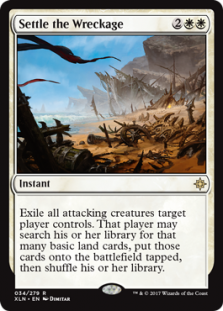
In Modern Titan decks, Relic functions like an additional Azuza, Lost but Seeking. However, against Phoenix, it allows for Primeval Titan to be cast the following turn even under Blood Moon. Even when there is no Moon, extra mana is critical for Amulet to actually keep up with Phoenix. Relic also facilitates the sideboard plan of slamming green creatures and Path to Exile. Considering that artifact removal is usually ineffective against Amulet decks due to their speed, Relic is an incredibly intelligent addition.

...Or, Kill 'Em All

Finally, I return to another old refrain: control should be doing better than it is. There's a clear metagame trend for graveyard decks, and answer decks should be adjusting their disruption accordingly. However, after some positive signs from Regionals control players, I was very disappointed by their showing at the GP's. It was just too hard for some to catch up in time. It turns out I may have been looking in the wrong place, and that work was being done in the smaller tournaments.

Jeskai Control, Jonathan Sukenik (5th, SCG Philadelphia Classic)

Creatures

4 Snapcaster Mage

Planeswalkers

2 Teferi, Hero of Dominaria

Enchantments

3 Search for Azcanta

Sorceries

2 Supreme Verdict

Instants

4 Path to Exile
2 Opt
1 Lightning Bolt
4 Lightning Helix
3 Logic Knot
1 Think Twice
2 Electrolyze
4 Cryptic Command
3 Hieroglyphic Illumination
2 Settle the Wreckage

Lands

4 Flooded Strand
3 Scalding Tarn
3 Island
3 Field of Ruin
2 Steam Vents
2 Hallowed Fountain
2 Celestial Colonnade
2 Plains
1 Arid Mesa
1 Mountain
1 Glacial Fortress

Sideboard

4 Surgical Extraction
2 Vendilion Clique
2 Negate
2 Dispel
2 Celestial Purge
1 Lyra Dawnbringer
1 Baneslayer Angel
1 Isochron Scepter

The first item of note is only one Lightning Bolt. How the mighty have fallen. In a world of Dredge and Phoenixes, Bolt just isn't good enough anymore, a huge turnaround from last year. Instead, Johnathan Sukenik has fully embraced recovering from swaths of recursive creatures. He is running full sets of both Lightning Helix and Cryptic Command, perfect for regaining lost ground in the early turns. He's also maindecking Settle the Wreckage, though I don't see the value in splitting numbers with Supreme Verdict. Destroying creatures is at an all-time low in value, and while Supreme is more versatile, this isn't the time for extra versatility.
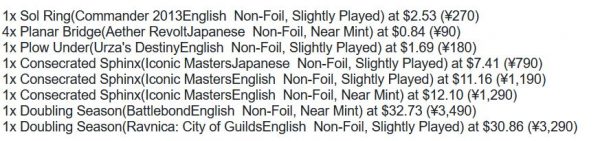
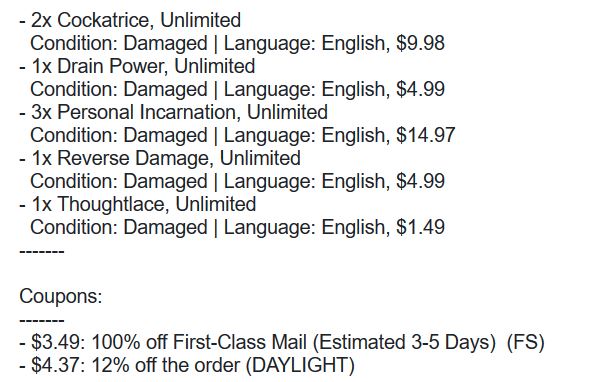
Initially, I was skeptical of the full set of sideboard Surgicals. Doesn't control have better options? Then, I saw the Isochron Scepter, and it made sense. Sukenik intends to effectively mill out Dredge and Phoenix in post-board games. It's very unlikely that either would know to pack artifact removal, so this plan makes some sense. I would expect Dredge to have Assassin's Trophy at least, since Rest in Peace is a card, but it seems to have worked out. I'm mostly impressed that someone found a good use for Scepter again; it's another card that's fallen a long way since its heyday.

Bottom Line

Change is coming in Modern, if coming slowly. The incremental changes that we've observed so far has certainly helped their pilots. However, these minor changes prove that Phoenix is beatable and that Modern can deal with this problem. I look forward to seeing what new developments arrive in the next few weeks.

Why I’m Always Selling

Are you a Quiet Speculation member?

If not, now is a perfect time to join up! Our powerful tools, breaking-news analysis, and exclusive Discord channel will make sure you stay up to date and ahead of the curve.

Pop quiz time! When does one make money from MTG finance?

  1. When buying collections
  2. When finding cards on TCGplayer for sale below buylist
  3. When trading for value and grinding at GP’s
  4. When buying Reserved List staples and sitting on them

Today, the answer is none of the above. The only time you are literally making money from MTG is when you sell cards—preferably for profit. Options 1 through 4 above may set you up nicely to make money from Magic, but no profits are actually realized until you sell something for more than what you paid, after all expenses and fees are factored in.

It’s why I like the phrase, “Nobody ever went bankrupt selling for a profit,” so much. It’s a reminder that you have to sell in order to make money. Otherwise, you may have the most beautiful, valuable, complete Magic collection in your sphere of influence. But you could also be cash poor and making no money. And, as morbid as it sounds, you can’t take any of these pieces are cardboard with you in the end. Your cards will be sold…eventually.

Why Bring This Up?

I am constantly selling. My preferred method of outing cards is often to ship to ABUGames or Card Kingdom buylists, though occasionally you’ll see me throw up some deals on Twitter.

Not long ago I posted a card for sale on Twitter and within a couple hours it was snatched up. The buyer proceeded to tell me how the card would likely continue its climb, eventually reaching a value more than 50% above where I had priced it. While this is nice information to have (I always like when others share their financial projections on cards), it is counter to my intent: to sell cards for profit.

Do you think Star City Games or Card Kingdom cares that some Reserved List card is likely to rise in value over the next five years? Or that Mox Diamond has been on a steady climb recently?

There was an error retrieving a chart for Mox Diamond

I’m sure they are aware, but I don’t think it figures directly into their business model. They aren’t in the business of buying up Mox Diamonds and Dual Lands to sit on for months or years. They are in the business of buying cards to have copies in stock so they can sell them for a profit to others. This is a proven, time-tested strategy that has worked for these vendors for many years.

Their success inspires me to operate in much the same way. While I don’t have the time or resources to manage a full-blown buylist, lately I’ve been biased towards shopping around for deals that could then be converted into profits. Rather than speculate and hope that a card increases in price over some time horizon without guarantee, I’m enjoying this buy-and-sell approach. It’s my bias to take profits now and plow them into additional purchases rather than hold out for more.

How Do I Find These Deals?

I don’t hold any secrets when it comes to MTG finance. My first priority is to provide guidance on how others could make their Magic hobby a little cheaper, or even profitable. Therefore I don’t hold back ideas that I stumble upon myself. Here are a few I’ve been working lately to acquire cards at competitive pricing so that I can quickly sell them for profit:

Social Media Buying. Some people in the Magic community have local sources for their deals. They shop at their LGS’s, buy collections, or browse secretive websites I don’t know about for the best prices. Then they flip the cards quickly on social media—most commonly Twitter or Discord—to make a quick buck. They price these cards competitively, passing on some of the savings.

When feasible, I’ll jump on these cards to try and squeeze out a tiny bit of margin. I may grab a Beta rare and ship it to ABUGames for store credit, which I can then use to acquire played Modern staples at okay pricing. Then I sell the Modern cards (which are quite hot right now) and grind out a modest margin.

International Arbitrage. Yes, arbitrage is still a thing. Even though everyone already knows about it, it’s not always easy or straightforward to execute. This form of arbitrage entails buying cards from one country and selling them in another.

Just this morning I made the purchase below from TokyoMTG over in Japan. I hope to flip some of these for modest profit; with recent price movement higher, these could prove to be even more profitable once the cards arrive.

There was an error retrieving a chart for Doubling Season

Domestic Arbitrage. This purchasing method is my favorite. There are major online vendors that sell cards for below buylist of other vendors. It happens all the time, but the opportunities are often short-lived. Here’s a recent purchase I made from Channel Fireball:

It’s not the most exciting of orders, but I flipped these low-end Unlimited rares to ABUGames for more than double what I paid in store credit. Granted an ABUGames buck is worth around $0.65-$0.70 in real money. But if I can acquire ABU bucksTM for $0.50 on the dollar and use credit to cash out at $0.70 on the dollar, the delta is a reasonable margin—especially when combining orders to save on shipping.

But Sig, Why Not Hold the Reserved List Cards?

It’s certainly reasonable to hold onto cards that are most likely to increase in value over time. This would include Reserved List playables such as Dual Lands or Grim Monolith, both of which see steady play in Legacy and Commander.

There was an error retrieving a chart for Grim Monolith

You may also ask me why I would want to sell the Fetch Lands I’m acquiring from ABUGames with store credit. Surely, their prices will continue to climb as Modern Horizons approaches, right?

There was an error retrieving a chart for Scalding Tarn

There are three reasons I am selling these staples despite their proclivity to climb in price over the next few months.

First, I like to maintain liquidity. This is the only way I can keep cash on hand to take advantage of the arbitrage deals I come across. Despite what some may assume, I normally operate with only a tiny pool of cash for my MTG finance transactions.

The reason for this is simple, and driven by my long-term goal. Every time my cash level exceeds a certain, modest threshold, I take money out of my “Magic account” and transfer it into the college account. There it is used to purchase stocks to hold for 10-15 years, slowly accumulating dividends and profits to grow into a college nest egg. Remember, I have two tuitions to save for now!

Second, I try to keep the vendor model in mind. I know that a vendor may not list all copies of a given card at once in case there’s a buyout, but for the most part stores want to sell their cards. That’s how they make money. Like I mentioned when I opened this article, I sell because I want to make money.

Last but not least, I already do sit on a bunch of Reserved List cards. They’re in my decks! I also have a binder of cards I hold because I appreciate their artwork, flavor, and collectability. Other cards I acquire I either don’t really care much about or I already have copies of, so I see little reason to hold more.

Some big-shot, vocal Magic finance people boast large collections of Dual Lands, Masterpieces, Arabian Nights cards, etc. That’s not my style—I have cards because I want to play them or collect them. Anything additional I pick up I intend to sell so they can re-enter circulation for someone else to enjoy.

Wrapping It Up

I’ve sold many cards lately that are on an upward trajectory. This includes Mana Crypt, Jace, the Mind Sculptor, Scalding Tarn, Mox Diamond, and Serra's Sanctum. I even shipped Card Kingdom a played Revised Tundra when their buylist spiked to $245 for a day.

There was an error retrieving a chart for Tundra

I could have sat on these cards longer to grind out more profits. But that’s not my business model and it’s not my style. I thrive on liquidity, arbitrage, and selling for profits to put into college savings. Others have their own motivations and I applaud them to sticking to their strategies. But when you see me selling a hot card, don’t assume I’m being reckless and selling prematurely. In reality, I just operate on a different wavelength because my motivation may be different.

Hopefully the explanation of my strategy in this article helps explain my behaviors. I don’t like to speculate, I don’t like to sit on excess copies of a card, and I don’t like to hold a card for months at a time unless it’s something I enjoy owning and want to keep. This is a strategy that has worked well for me as I continue to move money into the college savings account, and I will continue to apply it for years to come.

…

Sigbits

  • Since I’ve been grinding ABUGames store credit so much lately, I thought I’d share some favorable buy prices there this week. Let’s start with Unlimited Two-Headed Giant of Foriys. I purchased six MP copies from TCGplayer a little while back for around $35 each. In played condition, ABU games pays $80 in store credit per copy, more than twice the cash price!
  • For some reason Beta Kudzu is rather expensive! I don’t even know if the card sees any play in Old School. Yet ABUGames pays $166.25 in store credit for played copies. They pay $209 for slightly played copies! As of Sunday morning there was an LP copy listed on TCGplayer for $119.49 plus shipping. Once again, this is nearly the equivalent to paying $0.50 for an ABU buck in store credit, convertible to cash at roughly 65%. See how this adds up?
  • I also flipped a couple copies of Beta Juggernaut for store credit. Though not recently, I had been able to acquire a couple played copies in the $50 range. ABUGames offers $128.65 in store credit for played copies and $96 for HP copies. Yet another example of doubling into store credit through domestic arbitrage.

Ashes to Ashes: Should Wizards Address Phoenix?

Are you a Quiet Speculation member?

If not, now is a perfect time to join up! Our powerful tools, breaking-news analysis, and exclusive Discord channel will make sure you stay up to date and ahead of the curve.

Each tournament, Izzet Phoenix's impressive, sustained numbers start to look less like an outlier and more like a pattern. Patterns like these have a history of being addressed by Wizards via the banlist. So how does Izzet Phoenix stack up against past offenders? Do the deck's decriers have a case for caging the bird? Let's find out!

Izzet Phoenix, by Guillaume Matignon (1st, GP Bilbao)

Creatures

4 Arclight Phoenix
4 Thing in the Ice
2 Crackling Drake

Enchantments

2 Pyromancer Ascension

Instants

4 Lightning Bolt
1 Lightning Axe
1 Izzet Charm
4 Thought Scour
4 Opt
2 Surgical Extraction
1 Gut Shot
4 Manamorphose
1 Echoing Truth

Sorceries

4 Faithless Looting
4 Serum Visions

Lands

4 Scalding Tarn
2 Polluted Delta
2 Steam Vents
4 Spirebluff Canal
1 Sulfur Falls
3 Island
2 Mountain

Sideboard

1 Abrade
1 Anger of the Gods
2 Blood Moon
1 Ceremonious Rejection
2 Dispel
2 Dragon's Claw
1 Flame Slash
1 Hurkyl's Recall
1 Jace, the Mind Sculptor
1 Ravenous Trap
1 Shatterstorm
1 Spell Pierce

Explaining Phoenix's Numbers

I won't delve too deep here, as David's already covered the possible non-busted reasons Phoenix is so popular. But I will include a brief analysis for posterity.

Financial Accessibility

Something Modern routinely comes under fire for is the high cost of its decks. Compared with many strategies the format offers, Izzet Phoenix ranks among the cheapest. Sure, the deck is $1000 now, but it wasn't a month or even a couple weeks ago; the announcements surrounding Modern Horizons, coupled with Phoenix's growing popularity, have significantly increased the price of certain Modern staples—most notably Scalding Tarn, the single most expensive card in Izzet by a mile. Add to that the fact that many players bought into Phoenix earlier than just yesterday, and lots of Modern players already own Scalding Tarns, and Phoenix becomes a very affordable option.
Loosely related is Phoenix's status in Standard, where pundits also claim it may be the best deck. Players who own the deck in Standard don't need much to make it work in Modern, too, meaning the deck's presence here may have attracted players who might not even register for tournaments otherwise. It's not only cheaper to have two decks that mostly share a core of cards; doing so also takes pressure off players to dedicate time to learning a new archetype.

Strategic Accessibility

Another key factor is Phoenix's strategic profile. Its mass of cantrips give the deck a low skill floor, meaning newer pilots can expect to do okay with the deck—its gameplan of bin-a-Phoenix or land-a-Thing and then chain together cantrips is both powerful and intuitive. Simply being in a resource-strapped mid-game state will advantage the Phoenix deck over more interactive strategies, as topdecking but one cantrip can lead to a chain that revives the 3/2s. In this way, Izzet is a critical mass deck (like Burn or Infect) that doesn't necessarily rely on having those pieces in the hand to begin with: they all find each other.
Phoenix also has a high skill ceiling, meaning there's plenty to learn and master within the deck. Additional time sunk into the strategy rewards its pilots handsomely. Take Michael Bernat's expert cantrip sequencing while blazing through the GP Los Angeles Top 8. This aspect of the deck draws pros and higher-level players to the deck; players that might win on any passable option.

Proven Pedigree

Phoenix's profile attracts players of all skill levels. But perhaps Phoenix's most alluring feature for many , especially those with much on the line at Magic tournaments like pros, is its pedigree. Phoenix's numbers continue to not drop despite the target on its head, further adding credence to the idea that it is indeed the best thing to be doing in Modern. In any case, prospective players could certainly do worse; they'll never be called scrubs for sleeving up this veritable boogeyman.

Meet the Bandidates

Our next question: what would Wizards even ban? There are a few candidates in the running, so it depends on the goals they have for post-Phoenix Modern.

Faithless Looting

A simple Google search pegs Faithless Looting as the most popular ban target according to most Modern players, with pros and content creators stoking the fire of memes at lower levels. Looting enables the deck's fast Phoenix starts and gives the deck longevity; it's perhaps the best card in the deck.
Wizards could hit Looting for a couple of reasons. It's a nice target if they also want to nerf Dredge, another of the format's top-performing strategies. And it's of course a goner if Wizards decides they don't want such an efficient card selection spell legal at all. I do think this hit will neuter Phoenix into the deep future. The deck will probably still exist, but it should be knocked down a tier or two, as turn-two Phoenixes will be much tougher to achieve.

I'm against a Looting ban on the grounds that the card is splashed into so many decks. (It's also just really fun to cast, which has made it one of my favorite cards in Modern since the format's inception.) Like Ancient Stirrings, Looting enables multiple decks, including a swath of Tier 3-and-below archetypes (Mardu Pyromancer, Grishoalbrand, Hollow One, Storm, etc.). In terms of metagame implications, banning it would be akin to banning Lightning Bolt, as the format would shift radically in its absence, food-chain-style; while Bolt is more played overall, it's less crucial to any strategy, as similar options exist.
R&D has also recently expressed reluctance to remove Faithless Looting, citing the format's shifting nature. Indeed, Ancient Stirrings went through a period last year of extreme prejudice in the community, with many calling for its ban; with Krark-Clan Ironworks gone, though, these same voices have declared the cantrip safe for Modern. I can see that happening with Looting once Izzet Phoenix ceases to perform, one way or the other.

Manamorphose

Others have called Manamorphose the problem with the deck. Cutting this piece won't hurt Phoenix as much as the Looting ban would, but I think the effects are close. Early Phoenixes still exist between Gut Shot and Surgical Extraction. Thing in the Ice becomes about a turn slower on average.
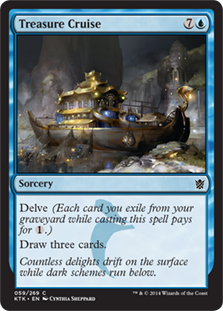
One thing I like about a Manamorphose hit is the lack of splash damage. Almost nobody plays this card! It's splashable, sure, but there are just too few ways to profit from its enabling. I think this is the most conservative and surgical ban: it mostly just hits Phoenix, but it still lets the deck go on in some capacity. Manamorphoseis an ideal ban if Wizards merely wants to take Phoenix down a notch in their update.

Arclight Phoenix

One suggestion I haven't heard is to ban Phoenix itself. My reasoning here is that URx decks were fine and diverse before Phoenix arrived on the scene, and the other pieces of the deck all contribute to Modern's diversity. There's a real possibility that Wizards won't want Phoenix in the format anymore come May 20. This is the route the company went with other diversity offenders (more on this below) like Treasure Cruise and Birthing Pod: it's extreme, but very safe.

Other Options

Thing in the Ice has been called the best creature in the deck, with Ross Merriam going so far as to say Izzet Phoenix's name is misleading. So why isn't Thing a consideration? While I believe a Thing ban would significantly hurt Izzet Phoenix, I think Thing is the kind of build-around, spells-matter card Wizards wants to be okay for Modern, which is why they keep printing cards in a similar vein (most recently, Pteramander). The creature saw fringe play before Phoenix, and was obviously fine in the format at that point, so I think Phoenix is a likelier hit if it comes to sniping the creature base.

Competitive Diversity

This element strikes me as Phoenix's biggest offense. It's true that Modern is mostly diverse outside of Phoenix, and that Phoenix is mostly just popular at large events. But I don't think Wizards cares so much. They banned Twin mostly* on the grounds of GP Top 8 performance, for instance, which barely affects the majority of players. It seems the company operates via a trickle-down metric, adjusting the format based on large-event performance because they have unprecedented access to those numbers, and hoping the metagames created at the top tables are reflected at the lower ones.

While other decks exist, the fact still remains that all signs point to Phoenix taking up a huge slice of the competitive Modern metagame; something like 20%. That's more than Twin ever claimed, but I don't think Twin should necessarily be our point of reference, as many factors contributed to its banning. There are other, more pertinent comparisons to draw, such as to Birthing Pod, Deathrite Shaman, Bloodbraid Elf, and Treasure Cruise. All these cards were banned for spearheading decks exceeding 20% Day 2 metagame shares and GP/PT Top 8 shares. Based on the numbers we have right now, Phoenix also passes that breaking point.
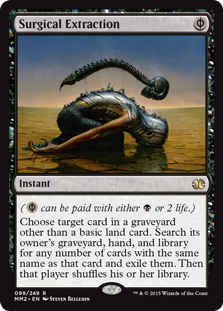
Cruise specifically is very close to Phoenix in format effects. It single-handedly created a cantrip-loaded UR deck that pushed 20% of the metagame share.

*Many also hold that Twin was banned to shake up the PT. While this argument is somewhat rooted in fact, we still have more evidence that Wizards' stated reasons for the ban were actual ones, and not just distractions, so I won't here entertain this (relatively plausible) conspiracy theory.

When the Clock Strikes...

If Arclight Phoenix is as egregious as Treasure Cruise, why isn't it banned? I think at this point, we're looking at less of a "why" question and more of a "when." While the Los Angeles and Bilbao trends are troubling from a save-the-Phoenix perspective, the fact is they haven't so far been enough to warrant direct action from Wizards. The company is likely waiting until the next scheduled update on May 20 to do something about Phoenix. As David mentioned this week, there are plenty more high-profile events on the horizon this month. There's a nonzero chance the format corrects itself by then, perhaps adopting some of the many strategies listed on this very site to combat the recurring flier.
Likelihood of Internal Regulation

Personally, I doubt that happens. The best players already know how to best Phoenix, or at least understand their gameplans, and the deck is still crushing. I don't buy that there's a bunch of secret tech Modern grinders have yet to discover or wield appropriately.

The metagame may well shift a little bit, and I wouldn't be surprised if Phoenix's share dipped slightly. But I don't think the slight dip I predict will prove enough to protect the deck from the May 20 update.

Modern Horizons on the Way

Another argument I've heard for leaving the format as-is: Modern Horizons releases on June 14, and is likely to deeply alter the format in one way or another. But June 14 is three months away, and the set's impact is not guaranteed. Wizards has never waited for seismic shifts before acting in the past—the most obvious example is their Splinter Twin ban just before Oath of the Gatewatch was released and Eldrazi took over the format. I seriously doubt Horizons prevents any otherwise warranted move in May.

Fire on the Leaves

This Modern is proving one of the most divisive in recent times, with many voicing concern over Phoenix and Dredge while others claim Modern is in a Golden Age. How do you feel about the current format? Which direction do you hope Wizards takes in regards to Phoenix? Let me know your thoughts in the comments!

This Week in Magic – Looting, Esports, Mulligans, & Treasure Chests

Are you a Quiet Speculation member?

If not, now is a perfect time to join up! Our powerful tools, breaking-news analysis, and exclusive Discord channel will make sure you stay up to date and ahead of the curve.

Faithless Looting Escapes Ban, Crushes The Competition

The banned and restricted announcement last week brought no changes, which meant Arclight Phoenix lived to see another day. A card in discussion for a ban was Faithless Looting, which immediately took advantage of its freedom by dominating the fields of both Modern Magic Fests last weekend.

As this tweet observed, Faithless Looting was more dominant last weekend than Eye of Ugin in its time, which could indicate that not banning it or something else was a mistake. A ban may be inevitable, but for the time being Faithless Looting is in control of the format.

One way to cash in for the short-term is on some anti-Faithless Looting cards rising to prominence. A great example is Kalitas, Traitor of Ghet, which has shown a clear upturn in price since the weekend.

There was an error retrieving a chart for Kalitas, Traitor of Ghet

Kalitas, Traitor of Ghet has grown tremendously online in the past weeks, at a price just over a ticket at the beginning of February, and now nearly 9 tix. The paper price bottomed out at at an all-time-low around $7 at the end of the year, but is now nearly up to $10. With its relatively low price and prospects beyond Modern, this one looks like a good long-term buy, even if graveyard decks do see a ban.

There was an error retrieving a chart for Anafenza, The Foremost

A target in a similar metagame niche as Kalitas is Anafenza, the Foremost. Anafenza is actually a much more powerful hoser against Arclight Phoenix and Dredge, but less accessible to a variety of decks as a three-color card. Its online price has grown in the past month from 0.6 tickets to 2, exceeding the paper price around $1.5.

A relatively niche legend, this one doesn’t seem due to spike anytime soon, and its low price is likely owing to Khans of Tarkir being opened to oblivion to satisfy demand for fetchlands. Still, there seems to be little downside and definite long-term appeal.

Magic Esports Receives Major Corporate Sponsorship

The $1,000,000 Mythic Invitational will begin next week. Wizards is officially ushering in the esports era with this Arena event, hoping it’s the biggest and most-watched Magic event ever. I don’t think it will have a major impact from a financial standpoint—the cards are all known quantities, and being an Arena event with a special format it doesn’t have a direct crossover to paper formats.

To me the bigger picture for the market is the increased attention this event and the push towards esports could potentially bring to Magic. A major step forward was made last week when Wizards revealed the “Omen by HP” gaming PC brand would be sponsoring the event.

Magic reaching the next level and ascending into the esports world to the attention of a higher order of magnitude of audience will require these sort of major partnerships, so I take this as a great sign of things to come. An immediately apparent benefit is increased exposure. Omen by HP is promoting the event—and therefore Magic—on social media, which is showing the game to a whole new audience.

London Mulligan Rule Comes to MTGO

Slipped within a regular MTGO announcement, we learned for the first time that the new London Mulligan rule will be tested on Magic Online from April 10th to May 1st. It will be done for the purpose of helping to provide a “critical mass of data.” It will also have the effect of helping players test for Mythic Championship London with the new rule, which was previously unavailable online.

I think it’s finally starting to sink into the paper market that this rule is likely to be reality within a few months. We’re seeing according rises in cards like Serum Powder, Gemstone Caverns, Leyline of the Void, and Leyline of Sanctity. I expect these cards to continue to grow leading into the Mythic Championship when the London mulligan appears in the spotlight.

There was an error retrieving a chart for Gemstone Caverns

I have my eye closest on Gemstone Caverns, which has now surpassed the price it spiked to last year before sinking. $50 for this card seems perfectly reasonable by the Pro Tour, and in my eyes there could easily be a future London Mulligan Modern dystopia where this is a $100 four-of staple in multiple decks.

MTGO Treasure Chest EV Higher than Market Value

This week it circulated on Twitter that the expected value of Magic Online Treasure Chests is currently around 15% higher than the market value, if Play Points are valued at the same rate at tix.

For the purposes of entering events, Play Points are the same as tickets (at the rate of 10 to 1). So for anyone looking to play events in the future there is real value to be made. Any online grinder is always hungry for Play Points, especially if they spend their ticket winnings on cards to increase their collection or cash out by selling tickets. Now is a good opportunity to stock some Play Points away.

There is technically the risk that the value of Magic Online tickets falls by more than 15%, but that seems extremely unlikely in 2019. One way to mitigate that risk is to cash in the Play Points ASAP—a good opportunity will be the upcoming Modern Horizons and War of the Spark releases.

The prices of cards online are inflated at release, when constructed players need them for Standard but they're still in very short supply. This is the ideal window to play Limited on MTGO. If you have any interest in playing any of these upcoming releases, opening Treasure Chests now could help make it cheaper.

Note that the contents of chests are random, so it’s possible to make less (or of course more) than the expected value. But the large 15% buffer makes it much harder to lose. Each chest also contains a guaranteed 5 play points, which reduces the variance significantly.

-Adam

Insuring Your Magic Collection: Part 1

Are you a Quiet Speculation member?

If not, now is a perfect time to join up! Our powerful tools, breaking-news analysis, and exclusive Discord channel will make sure you stay up to date and ahead of the curve.

I spend so much time talking about cards to speculate on, and the latest EDH trends, that I sometimes neglect to mention the importance of applying personal and professional experiences to the game. To try to connect my career and my passion for Magic, I decided to write a two-part series highlighting the importance of insurance and how we can best position ourselves to protect our Magic: the Gathering collections.

I did some research on the topic and quickly realized the MTG community is underutilizing insurance as a means of protecting ourselves. In fact, after reviewing my condo-owners policy, I realized how little my personal collection was covered for. It would likely get excluded from reimbursement in the event of a loss, or at best receive about 10% of the total value after depreciation is factored in.

Upon further examination of a variety of major insurance company policy declaration pages, I realized trading cards in general (Magic, Pokémon, sports cards, etc.) are typically excluded or reimbursed at a significantly deprecated value.

To put my money where my mouth is, I ended up going out and buying a collectibles insurance policy from Collect Insure in response to my findings for these articles. In fact, Collect Insure was kind enough to take an interview with me where we discussed the policy I purchased, the collectibles insurance industry, and the general lack of awareness the average collector has towards protecting their collection.

Before diving into the buying experience and my interview with Collect Insure, I want to focus on the importance of insurance and share a personal experience from my life which shaped my perception towards insurance at an early age.

Disclosure before going any further: I am licensed to sell insurance but I do not sell for any company currently (I work on the corporate side), so please make sure to review your own situation with a licensed insurance agent. We will cover this in more detail, but I highly recommend reviewing insurance options and your current protection for your trading cards if you are in possession of a collection valued at $5,000 or more.

There was an error retrieving a chart for Learn from the Past

Realizing the Importance of Insurance

My career began in 2006 when I got a job over the summer working for my Mom's insurance agency in the southwest Chicago suburbs. I had my driver's license by this point and I was fortunate enough to have a hand-me-down van from my parents.

About three weeks into my career two life-changing events happened:

  1. I got my first paycheck
  2. I got into a car accident

The paycheck meant the world to me. It was the first time I felt independent and it was validation that I could handle the world on my own someday. It also taught me the value of money at a young age and how important a good work ethic is in life. From that moment on, my parents viewed me as part of the working class. They certainly continued to help me out financially through college (thank you, Mom and Dad!) but it was monumental for them as well because it meant I was ready to face the full responsibilities of adulthood in a few short years.

The car accident was a more significant and impactful moment for me. I always found it ironic that I got in a car accident right after starting my career in the auto and home insurance industry (also referred to as Property & Casualty, or P&C). I didn't know much about insurance yet and I hadn't been driving for very long when it happened. To this day, the memory of the accident still plays vividly in my mind.

Safety Belts, Air Bags, and Impact

I can visualize the moment my car connected with the other car like it was yesterday, and I can remember the face of the truck driver who waved me out as clearly as a picture on a high-def TV.

I was pulling out of the office parking lot during my lunch break, trying to turn left at a busy intersection. Weather was clear—sunny in fact—and there weren't any abnormal or dangerous conditions to blame. Traffic in the near lane to me was backed up as far as I could see, and there was a semi truck blocking my vision into the second lane which I needed to cross to complete my turn.

The truck driver signaled for me to pull up so I could see around him, but it was too difficult to do so without the nose of my van pushing into the second lane. I motioned to him that I couldn't see, so he checked his side mirror once... twice... then waved an "okay" as if he were motioning me to come over and greet him. The next thing I remember was tapping my accelerator as I used one hand to signal "thank you" back to the truck driv... BAM...

Impact.

There was an error retrieving a chart for Crash

I had just been hit on my front left driver's side bumper by a car I would later learn was going an estimated 60 miles an hour in a 30 zone.

Am I okay? Are THEY okay?

Survival instincts kicked in immediately. I was a little dazed and confused; maybe even in shock. But the adrenaline rush had me focused pretty quickly and I began assessing the car that hit me. I could see their airbags had gone off and there was no damage to their windshield which told me the passenger(s) hadn't been ejected.

I need to help them.

As I got out of my car, the truck driver and others were already out of their vehicles checking on the other car's passengers... there were two people in the car. I was fine. They were... fine. Unscathed despite their four-door Toyota Camry being totaled.

How?

Safety belts and airbags. They had been wearing their seat belts and their airbags worked perfectly to cushion the impact. Their injuries would end up being relatively minor compared to what could have happened, and it reinforced for me the importance of wearing seat belts while driving.

What am I going to do about my car? Their car? My parents are going to be furious.

"Sir, can I have your license and insurance please?" the first police officer on the scene questioned me.

That incident would be my first experience with car insurance claims, and still represents one of the main catalysts for my passion towards maintaining a career in insurance. I realized after that experience how important protecting and insuring peoples' livelihood truly is. I've stayed with my career in insurance for the better part of 12 years as a result (including time before graduating college, of course).

There was an error retrieving a chart for Underworld Connections

Connecting Magic and Insurance

When I think back on that accident and what could have happened, one thing is very clear: the financial (and human) impact could have been devastating. By definition, P&C insurance is designed to bring you back to the state you were in financially before a loss occurs. It is not setup such that people can profit from it, although many do try (Google "insurance fraud stories" and you can read about some very interesting criminal cases about how not to treat insurance).

In theory, the purpose of insurance sounds great; the unfortunate challenge faced by society is that not everyone carries enough insurance to cover the maximum probable loss (MPL)—the most money that can be lost in any one given insured loss event. In some cases, people will even drive (illegally) without insurance.

Some of the saddest stories in the insurance industry are those where families either cannot afford insurance and sustain a major loss, or are victims of an irresponsible party operating without insurance. In my story, I was deemed at-fault for the accident (though the car that hit me got a speeding ticket). Had I not been insured, that accident would have cost my family and I roughly $50,000 in out-of-pocket losses. Instead, we paid a $1,000 deductible and the insurance company covered the rest.

Think about all the times we as a community have seen or heard about MTG collections being stolen while at Friday Night Magic, tournaments, or even just a casual date with the playgroup. These are devastating experiences for everyone, and it pains the community because we are generally such a welcoming and trustworthy group of individuals. With insurance, these experiences (despite still terrible) can have a mildly happier outcome where the victim gets to recoup an amount from their insurance company to put towards rebuilding what they have lost.

Deductibles Defined

Deductibles are the amount on an insurance policy that insurance companies will require the insured to pay when a loss occurs. The deductible is one of the most influential parts of an insurance policy (and important as I connect insurance to Magic) because the deductible is the value that insurance companies use to deter the frequency of insurance claims. In other words, deductibles are a driving factor for keeping insurance prices lower than they would be otherwise.

Imagine a scenario where you didn't have any financial responsibility when you experience a covered loss: for example, let's say you left your $500 lawnmower outside and someone stole it. If you didn't have any deductible you could file a claim for this loss with your insurer and they would reimburse you in full for the stolen lawnmower.

In this case, what incentive would there be for you to lock up that lawnmower in the future? Deductibles encourage people to better care for their belongings. In turn, this helps suppress the number of small insurance claims, which can help keep insurance prices lower.

Protecting Valuables from Common Forms of Loss

There was an error retrieving a chart for Stolen Strategy

I mention deductibles because they should be a major factor in insuring your Magic collection. Theft and fire are the most likely causes of loss tied to a Magic: the Gathering collection. On most homeowners policies, both theft and fire are named perils, meaning they are types of losses which would be covered.

On a homeowners policy you can add scheduled personal property (SPP) to give yourself additional declared coverage for valuables or unique personal property which would otherwise be excluded or insured for a depreciated value. For example, if your wedding ring is stolen, you may be compensated for only a fraction of the replacement value, or not at all. Declaring it directly in an SPP ensures you're covered for the full value.

Most SPP policies will require proof of appraisal as part of the scheduling process; this allows the insurance company to confirm the item(s) they are covering actually exist and are of the value the insured is requesting. The most common valuables requiring an SPP policy are wedding and engagement rings, musical instruments, furs, and collectibles (art, watches, guns, coins, etc.).

SPP policies can typically be purchased as an endorsement (think add-on) to your homeowners (or renters or condo) policy; you will usually have to pay an increase in your premium to get this type of coverage. However, in some cases you may have to buy the SPP as a stand-alone policy. A standalone SPP policy is necessary if your primary insurance company will not cover the item(s) you are trying to insure.

We'll discuss this more in the context of insuring Magic collections. As previously mentioned, based on my research the majority of SPP endorsements offered by major insurance companies (Allstate, GEICO, State Farm, etc.) do not insure trading cards of any kind.

Loss Prevention

There was an error retrieving a chart for Circle Of Protection: Red

In Part 2 of this series, I am going to discuss more about how to acquire collectibles insurance for trading card collections. Without a policy in place, the best thing we can do is try to prevent things like fire and theft from happening. While our community talks about this on occasion, some really simple things often get overlooked.

For example, if you use a fire-proof safe for your most expensive Magic cards, I hope you are keeping the cards themselves out of plastic cases (default to glass or metal if you must use something). Crazy as it might sound, the plastic top-loaders and penny sleeves we are used to using for protecting cards in-transit or at-rest can melt at high heats and ruin the cards without them ever being touched by flame. Be careful about leaving your Magic cards in hot cars while in top-loaders for the same reason.

Another simple loss prevention tool to consider is writing your name on everything except the cards themselves. Certainly the sleeves and cards have to stay unmarked for playing purposes, but you can write your name on everything else. This is helpful for immediate identification of collections should the thief try to resell the cards quickly. Of course, if they dispose of everything but the cards and sleeves, you will be in a tough spot tracking them down, but this can be a good deterrent nonetheless.

Finally, I encourage everyone to put a lock on your backpack when you are transporting pieces of your collection to tournaments or your LGS. It is inevitable that we will all bring our valuable pieces of our collection out once in a while (heck, many EDH, Modern, Legacy, and Vintage decks are a down-payment on a car or house these days). If you are going to transport one or more of these types of valuables without insurance, locking them up and keeping them in your bag at all times other than when they're on your playmat can help you reduce risk.

Unfortunately, like everything in the world, loss prevention guarantees nothing more than your best effort at minimizing your loss exposure. It does not eliminate your risk entirely—thus another reason why I advocate for collectibles insurance, especially for larger collections over $5,000 in value.

Wrapping Up

For Part 1 of this two-part series, I focused on why insurance is such an important facet of our lives and highlighted some of the connections to Magic: the Gathering. I wanted to draw awareness to the fact that most standard homeowners policies do not provide sufficient coverage (if any) for trading card collections.

If you take nothing else away from this article, please just do me the favor of consulting with your insurance agent about your own trading card collection and what coverage you have in place. I suggest anyone with a collection of trading cards valued at $5,000 or more evaluate their insurance options and consider purchasing a collectibles insurance policy.

I'll be back next week to discuss in greater detail the options available to protect our trading card collections. I'll cover my own experience identifying a gap in my collection's coverage and the process I took to close that gap with a new insurance policy.

If you have any questions or would like more information, feel free to reach out to me. As mentioned in my opening disclosure, I am licensed in insurance but I do not sell on behalf of any companies because of my corporate career. I maintain my license as a means of staying current with the agency side of the industry—not to sell insurance.

I will always suggest reaching out to your own insurance agent with questions about your situation, but I am more than happy to provide advice in the meantime.

Update: Insuring Your Magic Collection: Part 2 is live! Check it out!

You can always reach me on Twitter @ChiStyleGaming or on the QS Discord with questions!

Tales from the Buylist #6 – Ascending to Victory

Are you a Quiet Speculation member?

If not, now is a perfect time to join up! Our powerful tools, breaking-news analysis, and exclusive Discord channel will make sure you stay up to date and ahead of the curve.

Another week goes by, and Izzet Phoenix continues to tear through the field. MagicFest Bilbao's main event was taken down by Guillaume Matignon, while MF Tampa featured four Izzet Phoenix decks hitting the top eight. The conversation around Faithless Looting is starting to get very real, and I'm thinking we'll see a reaction from Wizards sooner rather than later. The shell of the deck is already incredibly powerful, but this weekend featured some innovations and branching decklist decisions that I'd like to highlight. As well, I'll be reviewing cards that saw play this weekend that may be primed for movement in the coming weeks.

I'll note here that a few of my picks will be very closely tied to the legality of Faithless Looting, and an emergency ban could very well be imminent. As always, speculate at your own risk.

Izzet Phoenix

There was an error retrieving a chart for Pyromancer Ascension

This 1R enchantment saw play as a two-of in Guillaume Matignon's winning list from GP Bilbao. Movement on this card has begun and could settle out to be a $10 card by the end of the month. This card was previously a big part of UR Storm lists in Modern but has since fallen out of favor given the speed of the format. This weekend proved that there might be room for reconsideration for this card. There are few better feelings in Modern gameplay than casting Manamorphose and getting a copy of it put on the stack.

Modern Masters 2017's printing of this card tanked its price to the floor, with many available under a buck. Near Mint copies can be had for around that price on TCGplayer if you don't mind paying a little bit of shipping. I believe anything under $3 will make it a solid pickup.

There was an error retrieving a chart for Snapcaster Mage

One of the standout cards of the weekend, and one my favorite cards of all time, Snapcaster Mage! This innovation was shown in the four different decklists from GP Tampa, appearing as a two-of in all of them. The Phoenix decks are said to be so good, as they have the ability to change roles in each matchup as need, and often mid-match. Snapcaster Mage allows the deck to rebuy key spells in longer games, and is at worst an Ambush Viper to pressure your opponent's life total. Snappy is just coming off a recent reprint in Ultimate Masters, albeit at mythic.

Non-foil copies are available around the $55 to $60 price point and will definitely not stay there for very long. It wasn't that long ago that we saw $80 copies of the Innistrad printing, and while I don't think it will ever eclipse that, the card might rest somewhere around there should it continue seeing play in Arclight Phoenix and Death's Shadow strategies.

There was an error retrieving a chart for Jace, the Mind Sculptor

Speaking of expensive blue cards, Jace, the Mind Sculptor has definitely earned a spot in the Izzet Phoenix Sideboard. Not exactly a natural fit in the normally aggressive strategy that Izzet Phoenix is going for, but perfect for playing longer, drawn-out games against grindier matchups. Like so many UR spell decks before it, hitting the pocket of lands after cantripping several times is usually a death sentence. JTMS can play a big part in fixing that when you've got fetchlands available.

Jace is already under a lot of pressure in a time where all planeswalkers are being scrutinized as more information about War of the Spark becomes available, and could easily pass that $100 mark it is currently sitting at. Many feared that this was the inevitable future for the most powerful planeswalker ever printed, and their fears were not unfounded.

There was an error retrieving a chart for Jace, Vryn's Prodigy

The two mana flip-walker showed up in the sideboard of Roshen Eapen's GP Tampa winning Death's Shadow list, and I think this may spark some price movement. This card recently showed up in the mainboard of the Legacy version of Death's Shadow to a high degree of success, but it is every bit as powerful in Modern. The lower land count of this deck doesn't usually support playing grindy advantage planeswalkers like Jace, the Mind Sculptor or Chandra, Torch of Defiance, making JVP post-board a solid choice for games that go longer. This card pairs well with Snapcaster Mage, and can be incredibly helpful against go-wide strategies that Death's Shadow classically has struggled with. JVP sits at $15 at time of writing for the Magic Origins and From the Vault: Transform printings.

While it may feel like it, Izzet Phoenix isn't the only deck to play. One strategy that has an easier time than most against Izzet Phoenix is starting to post up better results.

Whir Prison

There was an error retrieving a chart for Spellskite

Whir of Invention prison decks are beginning to emerge as the most powerful Ancient Stirrings decks in the format. While the namesake card doesn't have much going for it as a rare in Aether Revolt, a very high-supply, highly opened set, the cards it fetches up are more significant players to watch in the market. Mox Opal, Ensnaring Bridge, and Chalice of the Void comprise the core of expensive cards the deck has playsets of. We're getting to be pretty far out of their most recent printings, and I expect to see the steady upward movement on all three to continue.

The most interesting pieces of the deck are found in Spellskite and Academy Ruins. Spellskite is the best answer to post-board artifact hate outside of Stony Silence, and can absolutely win the game for you by protecting all of your precious lockpieces. Academy Ruins is sort of a sleeper pick for me, but I think it has a lot of room to grow. Copies of both of these cards are starting to dry up on TCG Player, and both may be on the precipice of a price spike.

Mishra's Bauble

There was an error retrieving a chart for Mishra's Bauble

This card has found a home again in Whir Prison and Death's Shadow, and is probably underplayed for how powerful it is. Zero mana cantrips that provide extra information are solid inclusions to any deck that wins with a very small number of cards. I think Death's Shadow abuses this effect best, as it can inform your decision making for future turns, and is also in the same deck as Street Wraith. It slow-trips, giving you the card on the next upkeep like many of the Ice Age spells, but is at its best when paired with fetchlands for the pseudo-scry effect. Its Iconic Masters reprint pushed it farther down from its previous absurd $40 price tag, but we may see a slight rebound into the $10 range should it continue to contribute to the success of Shadow and Whir Prison decks.

Bring It on Home

Modern is in a weird place right now, and it's likely things are going to change in a big way. I feel like all I've been talking or thinking about is Modern for the past few weeks, and deservedly so. Previously I was pretty confident Wizards was going to take a hands-off approach until Modern Horizons dropped. Now I'm not so sure. I'm just holding on and going along for the ride.

Pickups

  • Mishra's Bauble
  • Spellskite
  • Academy Ruins
  • Pyromancer Ascension
  • Jace, Vryn's Prodigy

Holds

  • Snapcaster Mage
  • Jace, the Mind Sculptor
  • Mox Opal
  • Ensnaring Bridge
  • Chalice of the Void

That does it for this week! You can follow me on Twitter @chroberry or Instagram @chroberrymtg if you want to see extra goodies and spoilers for next week’s article. Feel free to let me know how you feel about my targets here in the comments, or if there’s anything you think I missed!

Peace!

Want Prices?

Browse thousands of prices with the first and most comprehensive MTG Finance tool around.


Trader Tools lists both buylist and retail prices for every MTG card, going back a decade.

Quiet Speculation