menu

Firebird’s Shadow: GP Weekend Analysis

Are you a Quiet Speculation member?

If not, now is a perfect time to join up! Our powerful tools, breaking-news analysis, and exclusive Discord channel will make sure you stay up to date and ahead of the curve.

One weekend. Three events. So much data. With an SCG Open and two GPs this weekend, I can better evaluate whether the extreme trends seen in the Regionals data actually have weight, or were the outliers I speculated. Is Phoenix really as good as it looks?
The Day 2 Picture

For unknown reasons, Channelfireball decided to report their Day 2 as percentages rather than the actual numbers. This wasn't a problem for Bilbao since the total population was included and I can do math. The same cannot be said for Tampa Bay. One way to meaningfully combine the data from the GPs with that from SCG Philadelphia is to convert the later into a percentage, then take the average.

Deck NameAverage Day 2 %
Izzet Phoenix21.33
Other11.77
Humans7.97
Dredge7.30
Mono-Green Tron6.73
Burn5.97
Grixis Death's Shadow4.63
Rock4.37
UW Control4.27
Affinity3.63
RG Valakut3.10
Whir Prison3.03
Spirits2.7
Ad Nauseam1.97
Mono-Red Phoenix1.63
Hardened Scales1.53
Eldrazi Stompy1.53
Sultai Reclamation1.00
Blue Moon0.93
Hollow One0.87
Lantern Control0.57
Amulet Titan0.57
Jeskai Control0.43
Jund0.43

While that is an impressive spread of decks making Modern, once again, there's a huge jump between Izzet Phoenix to the next individual result. 9.56 percentage points separate Phoenix from the aggregate Other category and it's 13.36 points ahead of Humans. That's not normal. It's also incredibly strange when taken as a whole.

Again, this is not a Tier 0 situation. Compared with Eye of Ugin's reign over Modern, there is less suppression of diversity; Izzet Phoenix is winning a lot, but it isn't winning everything. This metagame looks more like the Grixis Death's Shadow summer, where there was a very successful and powerful top deck, but diversity wasn't substantially affected.

Population Question

This Day 2 data may simply be a reflection of the Day 1 population. I've been told several times that every Day 1 for the past few months of premier level play has been heavily tilted towards Izzet Phoenix. Since Day 1 data almost never gets published, there's no way to verify that anecdotal claim, so take it as you will. But if it's true, and Izzet Phoenix starts out as the most-played deck by a significant margin, Phoenix has to end up as a major player on Day 2 and subsequently the Top 8. Only a complete collapse, likely due to the rest of the field playing predator decks, could prevent such a scenario.

The Top 8 Picture

Shrinking the data set, the Top 8 continues the trends from the Day 2 data. Again, this isn't surprising since to make Top 8, you have to Day 2 first. However, it is undeniable that Phoenix had a very good weekend. The narrative of it being the dominate deck should continue into the foreseeable future.

Deck NameTotal #Total %
Izzet Phoenix833.3%
Dredge416.7%
Amulet Titan28.3%
Mono-Green Tron28.3%
The Rock14.2%
Hollow One14.2%
Whir Prison14.2%
RG Valakut14.2%
Shadow Zoo14.2%
Grixis Death's Shadow14.2%
Bogles14.2%
Lantern Control14.2%

Izzet Phoenix was again the most populous deck by far, and won every event. That is a very impressive weekend. I posited that Phoenix's absurd metagame population at Regionals had to be an outlier, but with another week of proportionately similar results, my opinion has shifted: the numbers now present what looks more like a recurring pattern. It's not a true statistical trend yet, but if the pattern repeats in Calgary, it will be hard to deny.

Dredge taking second place is interesting, but explainable. Most of the graveyard hate I'm seeing in the decklists are one-shot effects meant to catch binned Phoenixes rather than shut down Dredge. Dredge can survive one hate card, and Surgical Extraction is hardly heavy-duty to the extent Dredge demands. What I do like is that more and more decks are bringing in Anger of the Gods alongside the one-shot hate. Dredge wins by flooding the board quickly and then recurring its threats. Eliminating the graveyard once hurts, but only matters if it catches threats before they resurrect. Anger is the perfect answer to Dredge's actual gameplan.

The Catch

I don't know exactly how the finals of the GPs played out since it was all text coverage, but I did watch SCG Philadelphia. The way the final match unfolded renewed my skepticism of Phoenix's position. I mean no offense to Austin Collins on his win, but he got very lucky in games 2 and 3 to win the Open. Game 2 saw Jonathan Orr fail to draw removal spells in an otherwise strong position and die to double Thing in the Ice. Game 3, Orr was mana screwed against what was close to a nut draw from Collins. Game 1, where both decks were playing closer to their average draws, Orr won handily.
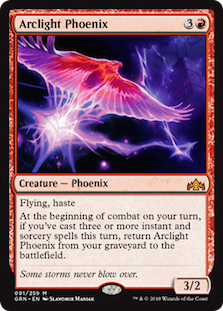
This is the big catch with Phoenix's numbers: it needs to get lucky. I've discussed the deck at length before, but the deck is disguising some significant weaknesses by playing lots of cantrips. If it weren't for all the velocity, particularly Manamorphose, Izzet Phoenix wouldn't be a deck. Phoenix decks can keep more mediocre hands because they can just cantrip into a busted hand; Izzet Phoenix's average draw is nothing special, but it doesn't have to actually play that hand.

Healthily Warped?
The other problem I have with declaring Phoenix the Best Deck is the wider context. There's been a clear trend in the data towards Arclight Phoenix. This week also had a huge surge of Dredge decks. However, looking past those two, the format remains diverse. Plenty of non-Phoenix decks are doing well, and there's already evidence that players are adjusting and pushing back. It just isn't happening quickly enough to have an impact yet.

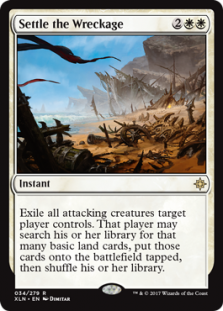
The 9th place UW Control deck from Philadelphia had a Circle of Protection: Red in its sideboard, but was running Supreme Verdict maindeck. Verdict was good in a Humans-heavy world, but these days, with Dredge and Phoenix everywhere, UW should consider Settle the Wreckage. The metagame is out-pacing the players. Once they catch up, I can't imagine that Phoenix's share can be maintained.

Putting it Together

On the surface, the data looks like a disaster, but digging deeper indicates that the format itself is perfectly healthy. Izzet Phoenix may have an inordinate share of big event data, but underneath that everything looks normal. I argue that Modern itself is fine even if the tournament scene is not. The lingering question is whether that is good enough.

Implications

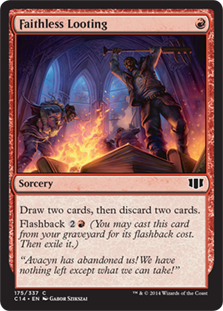
Players have been calling for a Faithless Looting ban for a long time now. While Wizards wants to wait and see if Modern self-corrects, especially since Modern Horizons is coming, if this data keeps piling up, they're going to be pushed into taking action. I don't think Looting is the problem (it's Manamorphose), but I also don't think that Wizards is willing to risk Dredge resurging if Phoenix goes away. I hold that a ban is not necessary; Phoenix is not just beatable, but containable. But the metagame may not adjust fast enough to prevent a banning.
However, even if that does come to pass, it won't be for some time. It is critical for players to recognize the reality that Izzet Phoenix is everywhere at the big events and prepare accordingly. This may require players to switch decks to utilize maindeck hate cards, but I don't think that's necessary. Small changes, both in playstyle and sideboarding, can prove very effective.

If you're a deck that's vulnerable to Thing in the Ice's tempo tsunami, deploy threats accordingly, pacing removal judiciously. If you have the option, adjust your removal package to favor exile over destroy. I would never recommend maindeck Surgical Extraction outside of Phoenix decks because even when it's hypothetically good, it's prohibitively narrow, but Remorseful Cleric or similar maindeckable cards are excellent at stopping the dangerous Arclight Blitz.

A Classic Counterpoint

While Phoenix dominates high-level events, we don't know if it does the entire metagame. Numbers from smaller/less-publicized events show the Phoenix domination getting less obvious, to say the least; take the results from online events like Modern Challenges or Leagues. Its appearance and win rate are roughly the same as that of any other deck.
The same holds for smaller paper events. The Modern Classic Top 16 at SCG Philidelphia only had two Izzet and one Mono-Red Phoenix. The closest any Phoenix deck came to the title was sixth place. The Syracuse Classic didn't feature a single Arclight Phoenix over fourteen unique decks. When considering this year's events, Phoenix is on top of MTGGoldfish's metagame thanks its numerous big results from premier tournaments; Dredge would be level otherwise.

If the apparent warp weakens and/or disappears outside of larger SCG and Wizards events, then it appears to only exist at these large events. If this really were an Eldrazi Winter or even Grixis Death's Shadow's reign, I'd expect to see far more Izzet Phoenix at the smaller events. The metagame suggested by the overall statistics and SCG Classics speaks to a very diverse metagame, especially in comparison to the premier events. To the best of my knowledge, this dichotomy has never happened in a constructed Magic format, let alone in Modern.

Is It Real?

I'd need more data to verify this split. If the Challenges and smaller Modern events continue to be as diverse as they've been so far, that lends credence to my observation. If it is an actual effect and not just a quirk, I can think of two reasons for it existing. The first possibility is that the paper metagame is ahead of the online one, and Izzet Phoenix really is that good. This seems unlikely since MTGO has so many more events every day that it should work out the metagame and find the solutions to any metagame warp.
The second, and I think more likely, probability is that perception and the nature of the events is at work. Arclight Phoenix gets a lot of attention. If the narrative is that one deck is so much better than any other, and you're not that invested in the format, why not pick up the "best deck," especially if you already have the critical pieces? Again, Phoenix is in Standard, and in a pretty similar deck at that. Why even switch to something else?

The other problem is, frankly, laziness. For someone not particularly invested in a format as many semi-to-actual-pros are, it's much easier to join 'em than to try and beat 'em. Given that the premier events are open tournaments, it makes sense for an inordinate number of less-invested players to just jam Phoenix. They don't have the time or willingness to figure out the right cards and strategy to beat the top deck, and if it's as accessible as Phoenix, why not save yourself some time and effort? The more invested players are likely to stick to their guns, and I suspect are the ones playing in smaller events at all. In this scenario, it's less a metagame break than different player composition.
Looking Ahead

I hope that the current pattern of Izzet Phoenix domination doesn't hold. We've seen the deck constantly over the past few months, and I for one am bored of watching Phoenix decks spin their wheels into a win. If the risk of the London Mulligan supercharging Dredge, Phoenix, and other combo decks pans out, it could be the worst Pro Tour since Oath of the Gatewatch. However, I am also optimistic that this won't happen. Izzet Phoenix is very beatable if players actually put their minds to the job. There are more GPs and an SCG Open before London. Hopefully players will find the answer and implement it before then.


Unlocked: Maximizing the Insider Discord

Are you a Quiet Speculation member?

If not, now is a perfect time to join up! Our powerful tools, breaking-news analysis, and exclusive Discord channel will make sure you stay up to date and ahead of the curve.

This week I am unlocking an article previously published on 9/11/17 for only Insiders. This column highlights the immense value of the Quiet Speculation Insider Discord chat. What is this chat? It's an exclusive Discord page where QS Insiders—people who are passionate about MTG finance and speculation—can share ideas and help each other make money.

Despite the competitive edge of the MTG finance community (especially as portrayed in social media), the QS Insiders are a collaborative bunch who share ideas selflessly to achieve common goal. This is one of my favorite aspects of the QS Discord community, but there's so much more to tap into. Check out what I had to say on this subject...I've added new commentary in Italics).

The New Most Valuable Resource?

One of the most useful MTG finance sites (besides Quiet Speculation of course) that I visit on a regular basis is MTG Stocks. Their Interests page proves to be the defining website for tracking price movement for individual cards. If something is getting bought out or if a new trend is emerging, this site will be like a beacon flashing its light on resulting price changes. For this reason, I visit the site on a daily basis.

There’s a new site that I’ve begun visiting on a daily basis now, and it is controlled by our very own Quiet Speculation. It’s behind the paywall, and this helps screen out dysfunctional content from overzealous (and impolite) Reddit-type posters. This site is professionally maintained and houses up-to-the-minute actionable information across all formats and geographies.

I'm talking, of course, about the Quiet Speculation Discord.

This may seem like an advertisement, but I’d prefer to color it as a testimonial. Not because I want to generate more subscribers for the site (though that would be nice), but because the site has truly been value-additive to my MTG finance hobby.

There have been numerous occasions where information gleaned from the QS Discord in a timely manner has led to profitable opportunity. In addition, the community being formed within the Discord fosters cooperation and support—quite the refreshing take on the hobby after dealing with all the negativity coming from Twitter these days.

Let me share a couple specific examples to illustrate my points.

Pointing Out Underpriced Cards

Within the QS Discord chat, we’re all working together to help each other make and save money from MTG finance. Of course we’re all looking out for number one, but there’s also a sense of community that leads to selfless acts of generosity. One way this manifests itself is in how people report on where to find good prices on certain cards.

For example, one Insider posted on Friday that they found a listing for an MP Sandals of Abdallah for around $4.50. They were unable to buy it profitably due to their geography, so they shared the information for someone else to capitalize upon. Given that Sandals buylists to Card Kingdom for $13, an MP copy would likely fetch $6.50.

While $2 profit isn’t going to change anyone’s lives, I instantly bought the card because I was already planning to ship Card Kingdom a buylist order in the coming days. Within two minutes the card was purchased, and now I’ll enjoy another couple bucks’ profit come time to submit my buylist.

These unplayable Reserved List cards have really pulled back hard. Now Card Kingdom offers only $7 on their buylist for NM Sandals of Abdallah.

There was an error retrieving a chart for Sandals of Abdallah

I have a more recent example of this, however. Only this past week an Insider shared on Discord that Channel Fireball had relisted two SP copies of Surgical Extraction for $49.99 each (about $47.49 after using the 5% coupon). Conversations like these happen frequently and it's a testament to the cooperation you'll experience within this community.

There was an error retrieving a chart for Surgical Extraction

Something a little more lucrative happened a few weeks ago. People were watching all of the Reserved List foils skyrocket and they were scouring the internet for any remaining opportunities. A fellow Insider made a comment that they were targeting judge foil Morphlings in the $10 range. I looked across the internet, but I couldn’t find any copies for less than $15.

I said as much, and the Insider sent me a link to where they found copies listed at $10. Respectfully, I purchased only three copies out of the dozen or so they had listed, careful to leave a few behind for others. This price increase stood the test of time. Card Kingdom now pays $26 on their buylist for foil Morphlings.

Sales Reporting

The information people share about where to find good prices on cards can directly lead to profits. That’s always nice, but such opportunities don’t arise every day. Despite this, there are still many ways of garnering useful information about the MTG market to gain a competitive edge. One thread of the Discord I pay close attention to is the one on Sales Reporting.

This isn’t a “humble brag” thread meant to show off wealth or make people regret not participating in a given spec. That kind of negativity plagues Twitter, and there’s no place for it among the QS Insiders. This is a place where people share data on sales they’ve made using neutral, informative language. When you strip out the bragging component, such data is extremely valuable when understanding what cards are selling for and at what rate.

Some recent examples:

  • “Sold a foil Stonybrook Banneret for $6.”
  • “Sold a played Exorcist for $4.75.”
  • “Just sold 2 NM Legends Concordant Crossroads on TCG for $68.”
  • “My LP Singing Trees finally sold for $90 ea, also sold a playset of Rapid Fires at $10s…also some LP Citanul Druids for $7…same buyer for all 3.”
There was an error retrieving a chart for Citanul Druid

Here are some updated examples:

  • 18 Oath of Teferi $2.25/ea four buyers
  • A few notable sale from the past couple days: 4x Eldrazi Mimic $.63 ea; 3 UMA Ancient Tomb LP $20.54 ea
  • 3 NM Arena Rector $16.98 ea — diff buyers; NM foil Vizier of the Menagerie $14.99; 2 LP foil Kozilek, the Great Distortion $27 ea via FB
There was an error retrieving a chart for Arena Rector

Do you see how this information could be useful? The information is helpful when trying to decide whether or not you want to move into a spec. Or if you have copies you’re looking to sell, you have a frame of reference for what others are selling their copies for.

I also like this information because it’s cross-platform; some people sell on eBay, some sell on TCGplayer, and some run shops and sell locally. Since I only sell on eBay, it’s helpful to see what kind of prices people are getting on TCGplayer because sometimes (especially on older cards) there is a large price discrepancy between the two.

Insider Coverage

The last benefit of the QS Insider Discord I want to explain in depth is the Insider Coverage. We all get the email alerts from Chaz during a Pro Tour or some other major MTG event. These are helpful and well-written; however, they aren’t real-time. Note: these ARE more real-time now as Chaz really upped his game recently on Mythic Championship coverage. Multiple emails are sent throughout the weekend highlighting trends and actionable news.

Enter: the QSCoverage thread in the Discord.

We have QS Insiders doing thorough coverage of major events and reporting their observations live-time in the QS Discord. The most recent example of this was at Hascon, where we had a QS Insider snap pictures of many of the Iconic Masters cards as they were being spoiled/opened. Twitter caught many of these too, but it was very helpful to have all the information consolidated in a single thread. Additionally, others add commentary around the spoiled cards that contain useful finance tidbits.

Here are a few unprompted remarks about the coverage from Hascon last weekend:

  • “The coverage has been phenomenal. I have to confess that I stopped my monthly subscription a few weeks ago. But, between the Trader Tools enhancements and the coverage, I am thoroughly impressed. I can't afford not to be a member. Kudos all around.”
  • “It was quite delightful.”
  • “Yeah, because of [Insider Coverage], I was able to move out of my foil Supreme Verdicts and my non-foil Bloodghasts very quickly, in time to actually come out slightly ahead (with store credit). Phew!”
There was an error retrieving a chart for Bloodghast

The benefits are loud and clear. The coverage is actionable and specific. Best believe this sort of coverage will be repeated many times at major events going forward.

Since Hascon, we've had QS Insiders providing live coverage of every Mythic Championship. When Insiders visit GP's, they may also share hotlists from each of the on-site vendors. All of this information is valuable to track.

Wrapping It Up

There are many other benefits to the QS Insider Discord. There’s an active buy/sell/trade thread. There’s a thread that focuses on price increases, which can be a helpful way to get real-time pricing information in advance of the morning refresh of MTG Stocks. There’s also a place to share feedback and technical issues. There's also a newer thread where people post coupons and deals—very helpful for tracking TCGplayer kickbacks, eBay coupons, and vendor coupons (Channel Fireball offers these often). It’s a well-rounded community that focuses on MTG finance in real-time.

The best way to benefit from this resource is to stay actively engaged and check back in a few times a day. This may seem like a tall task, but the benefits are clearly there. It’s one of those “you get out what you put in” type of services—if you’re truly serious about using MTG to make money or to make the hobby cheaper, then the time investment is well worth it.

Thanks to the chat there, I’ve increased my engagement with the community while simultaneously boosting profits. It may sound too good to be true, but I’ve tried to provide distinct examples of where the tool helped me make more money. I’ve also returned the favor by reporting on good deals I find and trends I uncover. (Recently I saw an underpriced LP Foil Surgical Extraction and I alerted the community so someone in the Discord could grab it.) It’s a thriving community with many contributors aligned to a singular purpose.

If two minds are better than one, then a couple dozen minds are certainly far superior. In today’s world of connectivity, there’s no reason to go solo when delving into MTG finance. Leveraging the hive mind is the next logical step up, and I strongly encourage those of you not involved to stop by, speak up, and take advantage of this service that you’re already paying for by being a QS Insider!

…

Sigbits

  • Of course I still have a couple Reserved List cards on my radar that I want to share! Let’s begin with Ramses Overdark, a rare out of Legends. Star City Games is sold out at $14.99 and I have seen copies gradually bleed out of the market. SCG now has a bunch in stock at $34.99. There are 19 sellers with English copies, and the cheapest LP will run you about $10. It won’t be long before someone takes notice of this low stock, makes a move, and it posts on MTG Stocks as $50. This peaked at $28 on MTG Stocks—not quite $50, but more than double its price when this article was first published.
  • The other Legends card I have my eye on (thanks to the Discord chat) is Boris Devilboon. The artwork on this card is so cool, so I was happy to grab a copy for myself. But looking at TCGplayer now, I see 11 copies for sale across nine vendors. You can still get an LP copy for under $10, but once the cheapest few are bought, that NM copy listed for $28 will cause a major spike in the market and catalyze panic-buying that will send prices higher. Boris spiked to $25 and is now around $18 on MTG Stocks.
  • The Saffron Olive effect strikes again! This time, Psionic Blast is getting hyped because he used the card in a deck on stream not long ago. It’s easy to forget this classic card is Modern-legal thanks to its Timeshifted version. It’s also useful in Old School MTG—a rare combination! Star City Games is sold out of Alpha, Beta, Unlimited, and Timeshifted copies. They have one SP foil in stock (which likely won’t last) and then a bunch of the underappreciated textless version. I’d keep an eye on this one! I don't think the Saffron effect lasted, but the Old School demand is real. SCG has NM Alpha, Beta, and Unlimited cards priced at $599.99, $274.99, and $59.99, respectively. At least they have a few in stock now!

Outlook Grim: Testing Mainboard Leyline in BGx

Are you a Quiet Speculation member?

If not, now is a perfect time to join up! Our powerful tools, breaking-news analysis, and exclusive Discord channel will make sure you stay up to date and ahead of the curve.

While chatting with a friend who hasn't played Modern in a while about mostly unrelated topics, I was asked whether Leyline of the Void could be a reasonable consideration for contemporary mainboards . He'd become interested in the topic after reading this article. "In what deck?" I asked, believing myself aware of the card's niche deckbuilding requirements. "BGx," he answered. And with that, I set about trying to squeeze Leyline into a Jund 60.

What follows is an outline of my thought process, a decklist, and the conclusions I made while building and testing Leyline Jund. It examines what Leyline requires of a deck that runs it and considers the subtle effects Arclight Phoenix has had on Modern's brewing parameters.

Leyline's World

This brew-to-be needed to account for having 4 Leyline of the Void in the mainboard. Card selection would be appealing to prevent from drawing the enchantment; a method to cash in on copies stranded in hand was also necessary. Finally, beyond disrupting enough to compete in the aggression-slanted Modern, the deck also needed enough speed to safeguard against having such a long game that drawing Leyline became inevitable.
In summary, the deck would need:

  • A way to not draw Leyline
  • A way to trade in drawn Leylines
  • A solid proactive plan

Looting and Delirium

I started with the obvious. Last time, too, that I decided to "fix" midrange decks by giving them additional proaction and card selection, Faithless Looting was a lock pretty quickly. I also wanted a way to benefit from binned Leylines, and turned to the graveyard myself.

Green was already interesting for a couple of reasons. It's long been a go-to color for midrange decks, in no small part thanks to Tarmogoyf. Goyf excels alongside a highly disruptive gameplan when pilots want to close things out relatively quickly (as in, not grind-you-to-death slowly like UW Control does). Tarmogoyf is harder to just throw our support behind than it used to be, but this shell incidentally does a lot of things that help the green beater out. And discarded Leylines grow Goyf even larger.
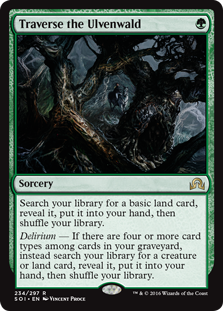
Another draw to green was delirium, or Goyf's themed mechanic from the future. Ryan Overturf's nigh-undefeated Temur Phoenix deck from February integrated Traverse the Ulvenwald to frightening effect alongside Arclight Phoenix. We were already on Faithless Looting, so why not toss that plan in ourselves? Integrating Phoenix would give us the proactivity boost also needed—we'd just need Manamorphose. As for delirium, I figured a set of Mishra's Bauble would do the trick.

Black Over Blue

Black, too, is a classical midrange color. Although we don't necessarily need black-producing lands to run Leyline of the Void, the enchantment is often seen alongside Swamps for the simple reason that it's nice to have the option of hard-casting it. But factors other than pedigree sealed the deal for me on black over blue.

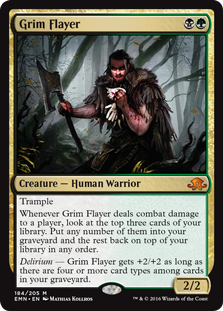
Being that I'd already committed to Faithless Looting and a beefy graveyard, Grim Flayer seemed like a good fit, and would end up being the best threat in the deck. Flayer's obvious application: he's an undercosted, trampling body. Less so: dumping Arclight Phoenix and flash-backing Lootings for random plusses; growing Tarmogoyf. Perks that only hit home after a few days of experimentation: preventing us from ever again drawing Leyline of the Void; setting up killer Arclight Phoenix turns by stacking Manamorphose into one-drop. Flayer just does everything we want our creatures to do. It even operates passably under heavy-duty grave-hate, sifting past the dead stuff (Traverse, Tarmogoyf) and finding the heavy-hitters.
Nothing says black midrange deck like targeted discard. But I actually wanted to try those spells in a Phoenix shell before being met with the Leyline Challenge. I'd observed a trend in the metagame wherein, outside of Leyline-boasting aggro-combo decks, players swapped out their heavy-duty graveyard hate (Rest in Peace, even Nihil Spellbomb) for the much-lauded (not least by me) Surgical Extraction. Opponents like to save Surgical for the Phoenix trigger, and why shouldn't they? But such a line is deathly soft to Inquisition of Kozilek, which even adds towards the Phoenix trigger count. Manamorphoseinto Inquisition into Looting sets up turn two Phoenix without ever opening us to a blowout.
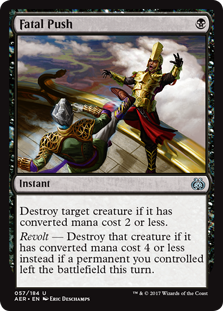
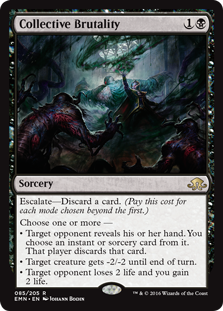
Targeted discard also curves into and therefore naturally supports the two-drop plan, itself weak to Fatal Push (which, as David noted yesterday, is deceptively strong against Phoenix). On-theme is Collective Brutality, another Push-sniper, which has added utility here as another means to discard Phoenix or Leylines. Brutality just plays a lot of roles in general thanks to its diverse text box, something always welcomed by midrange decks, which are notorious for sometimes having the wrong answer at the wrong time.

The Big Bang

I'd managed to fill all my requirements at this point.

  • A way to not draw Leyline: Grim Flayer (filter), Mishra's Bauble (scry)
  • A way to trade in drawn Leylines: Faithless Looting, Collective Brutality (both discard)
  • A solid proactive plan: fast Phoenixes, big Goyfs and Flayers

Here's what the list looked like after a few days of tweaking.

Leyline Jund, by Jordan Boisvert

Creatures

4 Tarmogoyf
4 Grim Flayer
4 Arclight Phoenix

Artifacts

4 Mishra's Bauble

Enchantments

4 Leyline of the Void

Instants

4 Lightning Bolt
4 Manamorphose

Sorceries

4 Faithless Looting
4 Traverse the Ulvenwald
4 Inquisition of Kozilek
2 Collective Brutality

Lands

4 Bloodstained Mire
4 Verdant Catacombs
3 Wooded Foothills
2 Blood Crypt
2 Overgrown Tomb
1 Stomping Ground
1 Swamp
1 Forest

Sideboard

4 Fatal Push
2 Collective Brutality
1 Thoughtseize
3 Alpine Moon
2 Ancient Grudge
1 Liliana of the Veil
1 Liliana, the Last Hope
1 Hazoret the Fervent

Other Options

Some cards I wanted but ended up omitting were Tarfire and Fatal Push. The former could further grow Goyf out of the library with Grim Flayer, or from the hand with Looting. But I figured it was win-more and not worth trading in the walker-and-creature-killing Lightning Bolt; 3 damage is plenty more than 2 in today's Modern.

Push answers the most played creatures in Modern, a roster now boasting Thing in the Ice, Crackling Drake, and Pteramander. But its value drops sharply in the face of creatureless strategies such as the making-a-comeback Ad Nauseam. I wanted all our mainboard spells to be ones we could fire off at will to animate Arclight Phoenix, so Push was relegated to the sideboard. Because of its relevance in some matchups, though, it locks up four slots there.

Sideboard

We've mentioned the Pushes already, but another card in large numbers here is Alpine Moon. Tron continues to pose a problem for this sort of deck despite our supposed speed, and the Moons round out that matchup.
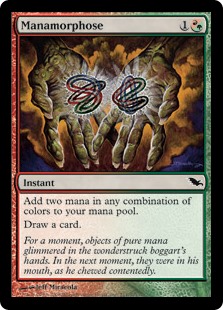
The rest of the board contains additional interaction and a set of cards included to sidestep graveyard hate: some planeswalkers and Hazoret the Fervent. I've found Hazoret devastating against the control decks that tend to employ Rest in Peace, and think it's a natural fit here.

Earlier incarnations of the sideboard packed Assassin's Trophy to deal with enemy Leylines. But I think if you expect Leyline and Rest, it's best to play something else. This deck was built with beating Surgical in mind.

Strategic Ceiling

One thing that makes Phoenix decks so good is their ability to proact while interacting, or to create board presence by virtue of disrupting opponents. Thing in the Ice best represents this versatility: the Horror bounces an opponent's board and hits like a truck at the same time. Similarly, hitting opposing creatures with Lightning Bolt or using Faithless Looting to dig into other forms of interaction trigger the Arclight Phoenixes in the graveyard, rewarding pilots for their trouble.

Leyline Jund has some of that going on, but less. It's still capable of the double-Phoenix nut on turn two with Manamorphose. Traverse the Ulvenwald makes such a blitz more reliable around turn three or four, by when we're likely to have delirium.
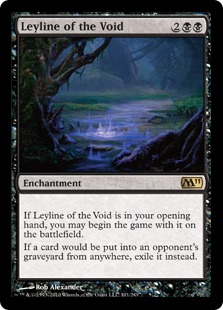
The deck's primary threats, Tarmogoyf and Grim Flayer, don't offer much in the way of interaction. They do preserve Thing's "drawback" of taking up our turn two. These two-drops make up for this failing by basically being awesome.

Tarmogoyf is regularly 5/6 and sometimes 6/7 in this deck, but Grim Flayer is the real show-stopper. I've extolled its virtues above, but want to go into more detail about stacking Manamorphose turns. Putting the instant on top makes for easy bird triggers given flashback on Faithless; all we need is a fourth land and a one-drop, meaning we can trigger Phoenix when light on cards (Izzet Phoenix has the same possibility thanks to all their blue cantrips). If that one-drop's Traverse, we can even set up another Phoenix reanimation!

Deck Issues

As with some other midrange hybrids I've proposed, Leyline Jund ended up being too unfocused to work consistently. It proved tough to get the pieces to gel in-game; sometimes we'd start strong with Leyline into discard spell but then be drawing Phoenixes instead of two-drops, for instance. The smoothest remedy might be to axe the Phoenix package, but there are no other great options for a proactive plan in a midrange deck—we're basically just doomed to grind. Our best bet would be Scavenging Ooze, which is highly conditional and bad with Leyline.

Unsurprisingly, then, my best games involved quickly sticking a two-drop and clocking while disrupting. Arclight felt like icing on the cake when it worked, and even a bit win-more, other than in the rare occasions where I'd get the nut with Looting and Manamorphose on turn two.

Brewing Takeaways

Usually, tweaking builds leaves me optimistic about Modern's many possibilities. But my main insights this time around don't bode well for the format's famous diversity.

Stricter Parameters

My own focus problems and self-imposed limitations aside, I found it difficult to strategize with Phoenix decks in the format. Most of what I wanted to do immediately struck me as worse or soft to the same kind of hate, leading me to adopt an "If you can't beat 'em, join 'em" mentality and pack the bird myself. I think that with such an effective xerox deck in Modern, the parameter bar is raised significantly on brews, making it harder to innovate something worthwhile. If I'm right, and not just bad, that take clouds Phoenix's potential future in terms of artificial format adjustment (read: bannings). But perhaps its share will dwindle and I'll come to see it as less of a threat myself, as David recently posited in light of the deck's (apparently outlier) Regionals successes last weekend.

Thesis Settled

I did come to one conclusion I think might have been obvious to some readers before I even started, and one I feel confident about asserting after this experiment: Leyline of the Void does not work in the mainboard of midrange decks. I think there might be a case for maining it in some decks, but those decks are almost always aggro-combo. The faster the game is over, the less we feel the pain of having functional dead draws. Keeping a great hand without Leyline that happens to get disrupted guarantees trouble if pilots aim to go long. I think this aspect of the card explains why we rarely see Leyline in midrange decks at all, even in the sideboard, while it's a common player for more aggressive decks like Hollow One.

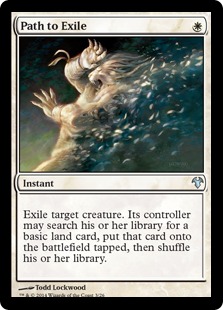
Live to Rise Another Day

As with all my experiments, goofing around with Leyline in a Goyf deck was, at least, a hoot. If you have any crazy ideas yourself, drop me a line in the comments—any challenge that piques my interest is at least worth a decklist!

Speculating on War of the Spark and Modern Horizons

Are you a Quiet Speculation member?

If not, now is a perfect time to join up! Our powerful tools, breaking-news analysis, and exclusive Discord channel will make sure you stay up to date and ahead of the curve.

War of the Spark is still over a month away. Spoiler season hasn’t started, but what little information we do have has been enough to have a major impact on the market.

It was revealed that planeswalkers define the set, with 36 new planeswalker cards, and one appearing in each booster pack. This fact has sent the market into a frenzy, from Commander and casual players who have new toys to play with, to Standard players that could see a metagame defined by powerful planeswalkers.

There was an error retrieving a chart for The Chain Veil

The Chain Veil has doubled in price since February, now over $30. Its ability to use planeswalkers multiple times a turn makes it a must in the planeswalker-centric Commander decks sure to pick up in popularity.

There was an error retrieving a chart for Mox Amber

A Commander card with Standard crossover is Mox Amber, which could be elevated to serious competitive playability with the release of cheap new planeswalkers to enable it. It grew to nearly $20 this week, but has fallen back to the mid teens.

I believe this growth is based on hype that’s unlikely to translate to Mox Amber becoming a top-tier Standard staple. I can’t recommend buying in at this price, which is double the $8 it sat just a few weeks ago.

There was an error retrieving a chart for Oath of Teferi

Another card that goes hand-in-hand with planeswalkers is Oath of Teferi. It hasn’t been a serious card in Standard yet, but it could be in a deck with multiple cheap planeswalkers. A new planeswalker appealing to blink with Oath of Teferi’s secondary ability could be enough to push it over the top. It has more than doubled to over $1.50, but there’s a little room to grow and a low long-term downside given its casual appeal.

There was an error retrieving a chart for Kamahl's Druidic Vow

Legendary sorceries from Dominaria benefit from new planeswalkers to help enable them. Two in particular play well with planeswalkersL Kamahl's Druidic Vow, which can dig into them, and Yawgmoth's Vile Offering, which can both reanimate and destroy them. Both have shown signs of growth, growing about $0.10 each, but are still well-under $0.50—a potential bargain given their uniqueness and long-term potential.

There was an error retrieving a chart for The Immortal Sun

Much of the Standard growth related to War of the Spark has been planeswalker hosers, which will become more important when planeswalkers take over the metagame. The prime example is The Immortal Sun, which shuts all planeswalkers off completely as the ultimate hoser. That has driven the price up over $25.

There was an error retrieving a chart for Sorcerous Spyglass

A more accessible card, in terms of both mana and current price, is Sorcerous Spyglass. It’s a great sideboard answer to planeswalkers for nearly any deck. It’s also growing as a staple in Modern in the Whir Prison deck. Massive online growth from around 0.1 tix to 0.7 could indicate some imminent growth in paper, where its price has sagged to $2, the lowest it has been since spiking from $1 to $5 last May.

There was an error retrieving a chart for Bedevil

Another good answer to planeswalkers is Bedevil, which has shown lackluster performance so far relative to expectation. It’s not for lack of being a quality card, and if a ton of new targets enter the metagame then Bedevil’s stock will surely rise.

It has grown from around 0.1 tix to over 0.3 this month. A rise from $3 to $4 could head higher, but its gold nature will keep it from hitting a price over $10 like the more accessible Vraska's Contempt.

There was an error retrieving a chart for Vraska, Golgari Queen

A very creative way to kill planeswalkers is Vraska, Golgari Queen. It can only kill a couple of current planeswalkers, but if War of the Spark contains many low-cost planeswalkers as expected, then Vraska will become a very useful tool for taking them down.

Vraska, Golgari Queen also comes with the benefit of being a planeswalker, which War of the Spark might make more important with various support cards. This planeswalker focus brings to attention the ones we currently have in Standard.

There was an error retrieving a chart for Jace, Cunning Castaway

Jace, Cunning Castaway is notable for being cheap to cast, and it’s a bargain at just a couple dollars. As a blue Jace planeswalker, it also has decent long-term prospects, or at least a high floor that should keep it from ever becoming bulk status.

There was an error retrieving a chart for Court Cleric

One of the most interesting specs on War of the Spark is Court Cleric, from the M19 Planeswalker decks. Each of these decks has a creature that benefits from having a planeswalker of a given name, and War of the Spark means new planeswalkers.

Court Cleric is the most promising of these creatures, not a terrible card by itself but actively great with an Ajani. It already has one Ajani to use—a new one that costs three or less mana might push Court Cleric over the top into a real playable. Who knows what that would do to the price, because so far no Planeswalker deck card has ever broken through as a real staple. Its online price has grown from 1.2 tix to 1.6 in the past few weeks, so there’s definitely interest.

Modern Horizons

Modern Horizons is still a few months away, but it’s also having an impact. The biggest has been on the price of big staples that we know won’t be reprinted, specifically the enemy fetchlands. There also seems to be movement on allied fetches, which as cheaper alternatives might be better spec targets.

There was an error retrieving a chart for Sphinx's Revelation

This week there was a spike in the price of Sphinx's Revelation online, more than doubling from around 0.4 tix to 1. My theory is it’s based on speculation over the reprinting of Counterspell, which many have theorized will be included.

This reprint would certainly elevate blue strategies like Azorius Control, and could bring about a surge in decks playing cards like Sphinx's Revelation. The current price around $3 is an all-time low for the card, so there is room to grow.

There was an error retrieving a chart for Jace, the Mind Sculptor

I’ve noticed Jace, the Mind Sculptor has been steadily on the rise online, starting in January independently of any Modern Horizons announcement, but something like a Counterspell reprint would only accelerate this growth. Its paper price has been growing just as steadily. After bottoming out at around $80 in August, six months after the Masters 25 reprint, now it's up to $110 and shows no signs of slowing down.

Metagame Snapshot: SCG Regionals Analysis

Are you a Quiet Speculation member?

If not, now is a perfect time to join up! Our powerful tools, breaking-news analysis, and exclusive Discord channel will make sure you stay up to date and ahead of the curve.

With data reduced to a relative trickle and the overall metagame picture clouded, there hasn't been much information to work with. However, the data from SCG Regionals is always a strong indicator of the US metagame, so today I'll be looking at the data. While there is very significant result to dig into, the overall picture is very positive for Modern's health. Hopefully, the outlier begins to correct itself, or it will make for a poor Pro Tour Mythic Championship in London.

Regionals Data

As I'm writing this, ten of eleven Regionals have posted their Top 8 (why is New Jersey always last to report?), but it will take a truly insane result from there to change what I'm seeing in the available data. In the past, Regionals have been fairly staid affairs that don't show much deviation from the established metagame. This one is a different story.

Deck NameTotal
Izzet Phoenix18
Mono-Green Tron5
UW Control5
Amulet Titan4
Dredge4
Ad Nauseam4
Affinity4
Whir Prison2
Humans2
As Foretold2
Hardened Scales2
Burn2
Mono-White Martyr2
Colorless Eldrazi2
Merfolk2
Titan Shift2
The Rock2
Grixis Death's Shadow2
Grixis Delver1
UW Spirits1
Counters Company1
Eldrazi Taxes1
Storm1
GB Tron1
Shadow Zoo1
Jund1
Infect1
Bogles1
Abzan1
Bant Spirits1
Jeskai Tempo1
Grixis Control1

That is... an anomalous amount of Izzet Phoenix. It's a domination the standing that I've not seen since Eldrazi Winter. On the one hand, I'm not surprised. Phoenix is a popular deck and has been doing well. However, this quantity of placements is in such excess over the other data that I can only regard it as an outlier result. I refuse to believe the deck is that much better than anything else.

Other than the Izzet explosion, the results are very much what I'd expect. The overall picture looks very similar to what I'd expect for Modern, and shows considerable strategic diversity. This gives further credence to Phoenix being an outlier rather than a Tier 0 situation, and warrants further investigation.

Firebird Over the Format

First of all, let me be clear: This is not an Eldrazi Winter scenario. I know that there's plenty of grumbling about Faithless Looting going around, but Phoenix is far from unbeatable. It is a powerful deck, but it has a number of vulnerabilities that can be, and in some cases already are being, exploited.

Natural Result

Given the amount of visibility and coverage that Arclight Phoenix has received in Modern, it is natural for it to have this level of presence. The decks of a given tier are fairly even power-wise. What separates them is popularity and relative positioning. And Phoenix is very popular and very well-positioned.

Being the type of deck that players have longed for in Modern is another draw. It's fun to emulate Legacy with lots of cantrips before ending the game with big threats, and Izzet Phoenix does that arguably better than any other deck in Modern's history. The other factor is that there's a pretty similar deck in Standard. While not all the Standard version run Phoenix itself, the core gameplay of lots of cantrips is still there. It just makes financial sense for some players to have one deck in both formats.

These factors are bolstered by Phoenix being very well-positioned, thanks in large part to Thing in the Ice. Without Thing, Izzet would have to dedicate more space for creature interaction, since it's quite vulnerable when it doesn't immediately spit out 3/2 fliers. Thing solves all the creature problems and exploits the tempo advantage perfectly. It is also the perfect time for Thing. The end of 2018 was defined by creature decks, specifically Bant Spirits with Humans holdover. Control, Tron, and midrange were already down, leaving the door open for a superior tempo deck to arise and feast on the aggro decks. Between the understandable popularity of a new deck relevant in several formats and laudable perfect positioning, I'm not surprised that Phoenix is everywhere. But I'd argue that doesn't mean it's necessarily too powerful for Modern.

Power Source

Why is Phoenix able to win so much? Phoenix naturally integrates two very different, but synergistic, gameplans. On the one hand, it has the plan most players fixate on, the Arclight Blitz. This is the broken start when Faithless Looting discards two Phoenixes, which leap into battle the following turn after a flurry of Manamorphose-fueled cantriping. Six damage per turn is threatening, though not the fastest clock, and that's also the limit of the attack. If the Phoenixes are dealt with, Izzet only has four Lightning Bolts to finish the job. I'd argue that this is a bonus angle of attack, while the primary one is a more traditional, reactive tempo plan.

Against creature decks, flipping Thing annihilates their board and leaves a 7/8 to crash in with. That is an enormous defensive-reversal of a tempo swing. Even if there aren't creatures to bounce, attacking with a 7/8 on turn three is very powerful. Supported by Phoenixes and the other creatures, Thing threatens an overwhelming board position. However, it is very fragile. Without that enormous tempo swing, all Izzet has are big ground pounders and some fliers, and not too many of them. This should be easy for control decks to clean up and simply dominate. The fact that it isn't happening is puzzling.

Threat-Light and Fancy Free

Furthermore, I don't believe the tempo Thing plan nor the Arclight Blitz strategies are the core strategy of Izzet Phoenix. They're actually payoffs; and the real gameplan is to be Stormless Storm. What Izzet Phoenix is really good at is playing lots of cantrips in a turn. This does nothing by itself, but in the presence of a Thing or dead firebirds, it causes the deck to explode to life. Cantriping  constantly means that eventually, Izzet will find one or more of its payoff cards. The question is whether that will be good enough to win. If it happens early, then it stands a good chance of working. However, the longer Izzet goes without anything on the board, the lower its chances are, regardless of what's in hand.

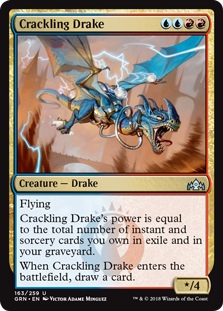
Simply put, Izzet Phoenix is meant to burn through cards and hopes to turn that into a win. There's no guarantee. While directly attacking that engine is a fine strategy, I'd actually recommend playing without fear. While Izzet is very capable of out-tempoing opponents in a variety of ways, that's the only way it can win. I'd go deeper and say that Izzet Phoenix is the most threat-light "good deck" I've seen in quite some time. At most there are 4 Arclight Phoenix, 4 Thing in the Ice, and 2-6 other threats in some combination of Pteramander and Crackling Drake. Everything is vulnerable to Fatal Push, and Phoenix leans heavily on recurring its namesake threat and drawing lots of cards to mask this vulnerability.
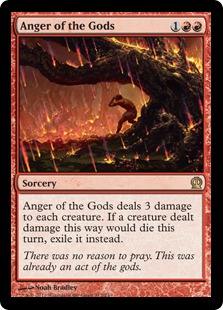
I'd expect Jund to pick up, as it has the removal and maindeck Scavenging Oozees to reliably out-grind Phoenix decks. Phoenix is very good at the moment because the format is removal-light. Given that Anger of the Gods is another maindeckable answer to Phoenixes (and to Dredge), the stage is set for midrange and control decks to start performing.

Change Your Sideboard

So why no midrange? I suspect perception is at fault again. Players are fixated on the Arclight Blitz, and are over-preparing for that attack rather than considering the deck as a whole. Some think that Surgical Extraction is necessary or even maindeckable, but I disagree. A few tweaks is all it takes to deal with Phoenix because, again, the deck relies on small numbers of threats and/or attacking with a swarm of firebirds, and depends on maintaining high velocity. As a Spirits player, Eidolon of Rhetoric is an extremely potent card against Phoenix. Most Phoenix lists run at most two Lightning Axes, so a single Rattlechains can seal the game with Rhetoric in play. Outside of Spirits, Damping Sphere is also quite potent, though easier to push past.

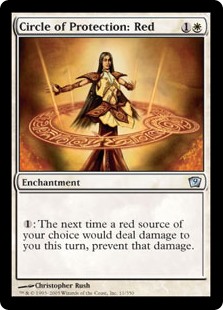
Still, other players are opting for more direct approaches. Most of the UW players in the sample picked up on Phoenix's vulnerabilities and have Settle the Wreckage and Celestial Purge to complement Path to Exile. Exile solves recursion, and Settle's better than Supreme Verdict in a recursive world. There's also the option to think laterally: a number of UW players took a page from 90's Magic and ran Circle of Protection: Red. A mooted Phoenix or Drake may as well be eliminated, and the Phoenix decks don't really run answers to enchantments.
For non-white decks, graveyard hate is always an option, but the Regionals results indicate the best option was just to ignore Phoenix. Besides UW Control, all the top-performing decks were proactive, and as fast as Phoenix. Since Phoenix has very specific ways to interact, more specialized decks just bulldozed through, or dodged Thing and won anyway. This speaks to the vulnerability of Phoenix and suggests a new cycling in the metagame, though more data is necessary to say for sure.

The Rest of Modern

Again, Phoenix outlier aside, Modern looks quite healthy. There are a small number of decks with four or more results, but most are twofers and singletons. A few results are worth highlighting, as they showcase the impact of Phoenix's popularity.

UW Control as Phoenix-Killer

The first thing to discuss is UW being tied for second-most successful deck at Regionals. I've always thought the deck was underrated and unfairly dismissed. However, there have only been a few instances when UW has seen the play I think it should. Players always bemoan how hard it is to play control in an open metagame, but those that do have considerable success when they're prepared. As Regionals demonstrates, UW Control has a fantastic matchup against the most popular decks if built correctly. The only Regionals where UW Control and Izzet Phoenix coexisted was Durham's.

The Return of Ad Nauseam

Given that it all but disappeared from the metagame last year, Ad Nauseam's four Top 8's are very surprising. Between the return of Storm in 2017 and Humans dominating 2018, there hasn't been space for Ad Nauseam in Modern. It was too vulnerable to Humans, particularly Meddling Mage, and much slower than Storm, so it just couldn't compete. Additionally, Ironworks sat in a similar niche, but thanks to Engineered Explosives, Myr Retriever, and Scrap Trawler, it was never as vulnerable to disruption as Ad Nauseam.

The past few months have changed everything. Obviously, losing the competition from Ironworks is a boon, but that wouldn't be enough on its own; Ad Nauseam was already in decline before Ironworks became a thing. The real secret is Phoenix's rise. The obvious benefit of Phoenix being the most popular deck in Modern is that it doesn't interact with Ad Nauseam's combo. At most, Izzet Phoenix has a couple Izzet Charms maindeck and a couple Spell Pierce and/or Dispel in the sideboard. That just isn't enough against a spell-based combo with Pact of Negation backup. As Ad Nauseam can buy extra time with Phyrexian Unlife and Angel's Grace, it has a very good matchup.

The secondary benefit is the impact Phoenix is having on the metagame. Thing being everywhere puts Humans is in a bad spot, and the loss of a major predator lets the prey thrive. Furthermore, it is changing player's focus away from relevant interaction. Phoenix makes players care about the battlefield and graveyard, and focus their interaction there. Ad Nauseum doesn't care about either, and thus is gaining equity. UW Control should be a bad matchup for Ad Nauseam because of all the counters, but those are being replaced by removal. I expect this trend of decks riding Phoenix's coattails to continue for some time.

London Ahead

The are a few more GP's ahead of Mythic Championship London. It will be exciting to see whether players further adapt to the Phoenix metagame, and how those adaptations hold up with the London Mulligan in practice.

Tales from the Buylist #5 – Modern in Flux!

Are you a Quiet Speculation member?

If not, now is a perfect time to join up! Our powerful tools, breaking-news analysis, and exclusive Discord channel will make sure you stay up to date and ahead of the curve.

Monday's Banned and Restricted announcement has got a lot of people talking about the future of Modern. No changes to any format can have just as much impact on the price of cards as a banning or unbanning would.

A lot of cards are flying out the door and have me wondering if any of these speculations hold any water. Faithless Looting and Ancient Stirrings had the biggest targets on their head due to a lot of chatter post-MagicFest Los Angeles, and a high-profile examination from format expert Matt Nass and Pro Tour Hall-of-Famer LSV.

Wizards appears to be taking a hands-off approach for now, possibly until the release of Modern Horizons in June. Many Modern players are left wondering about the future of their format, and are starting to move in on staple cards that will dodge the Horizons reprint.

The Fetchlands

There was an error retrieving a chart for Scalding Tarn

Scalding Tarn is almost a $100 card, and that is absolutely insane. We saw it approach these heights in 2016 before the eventual reprint in Modern Masters 2017 as a rare. This did a lot to curb its price, but it has recovered in a big way, now at an all-time high for non-foil copies. Being a four-of in Izzet Phoenix lists, which seems to be the prevailing strategy for the moment, has made it impossible to keep these in stock for many retail sources.

I see a lot of discussion about the Zendikar fetches in our Insider Discord, and the significance of the possible substitutes in the Khans of Tarkir allied fetchlands. New Izzet Phoenix players on a budget will naturally look to Flooded Strand, Polluted Delta, and Bloodstained Mire as substitutions, which will put pressure on their prices as well.

There was an error retrieving a chart for Bloodstained Mire

Just like the years prior to Khans of Tarkir's release, fetches desperately need a reprint. If you can get them at below-market prices, I suggest picking them up now for play purposes.

While not in the very near future, the risk of reprint is always there. Wizards showed their willingness to introduce fetches into Standard with Khans to inject more supply, and I'd be willing to bet they would do it again once the Ravnica shocklands are gone from Standard. Now more than ever, these will be the most important cards in any Modern player's collection.

Faithless Looting vs Ancient Stirrings Decks

Izzet Phoenix is the face of the format for the moment, replacing Humans and Death's Shadow before it in recent years. That being said, there are still powerful decks like Dredge, Amulet Titan, Hardened Scales Affinity, and Tron running around the format. These decks being the dominant strategies put the format at risk of actually devolving into something like this tweet would suggest.

https://twitter.com/josephahorton_/status/1103084167850545153

I make it no secret that I dislike the texture of Modern lately, as a casual player of the format. I've felt that Modern was in a place where decision-making mattered far less than in Standard or Legacy for more than a year now. Choosing to play a deck that interacts with the opponent in a meaningful way is how I and many others enjoy Magic. Modern punishes you most harshly for doing that.

Regardless of what I think, many Modern diehards, especially tournament grinders, could care less and will continue to play regardless of the format health. This will fuel price movement on key cards from decks that can play either Ancient Stirrings or Faithless Looting.

There was an error retrieving a chart for Mox Opal

Mox Opal is many years out from its last printing in Modern Masters 2015, and I don't foresee it coming back in any supplemental set any time soon. As long as Affinity and Lantern Control decks are viable, people will continue seeking out playsets of this card. It's not unreasonable to say that this could be the next $100 staple in Modern, especially if it does well in a premier-level event. Supply of these is still relatively low compared to most playable mythics in Modern, and it won't take much to see upward movement.

There was an error retrieving a chart for Karn Liberated

Everybody's favorite turn-three play has recently seen a reprint in Ultimate Masters, and is at a decent discount of around $60. Jamming high-CMC permanents that can completely steal games is a solid game plan for the current metagame.

It's not always the best deck in the room, but Tron strategies are historically very well positioned decks, and often rely on the power of Ancient Stirrings to find the pieces they need. Like many are advocating, picking up Ultimate Masters copies of prominent Modern and Legacy cards is a solid place to park your money.

There was an error retrieving a chart for Ugin, the Spirit Dragon

Ugin, the Spirit Dragon is by far more powerful than Karn for changing a game state on the fly, and is currently at an all-time high. This card proves difficult to reprint as an eight-cost planeswalker, and is from a small, less opened set. Ugin's price has grown at a steady rate since its printing and is fast approaching the $70 mark. Most Tron decks only run one or two of these, but that cost is necessary when so many go-wide strategies like Dredge demand a board wipe that exiles.

There was an error retrieving a chart for Life from the Loam

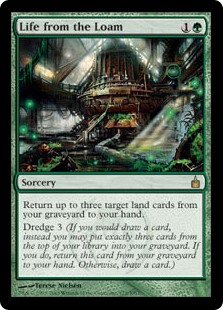
Dredge cards have been so frequently reprinted these days that many of them are at their historical low since Modern's inception. I'm highlighting Life from the Loam specifically here, as it is the most expensive card with the keyword "dredge" in the deck.

The Dredge shell is actually quite inexpensive, and you'll find yourself spending far more on the lands and the required Leyline of the Void in the sideboard. Copperline Gorge and Blackcleave Cliffs are often featured in these lists, and continue to rise in price as they dodge reprint.

There was an error retrieving a chart for Arclight Phoenix

The current boogeyman of the format is pushing up higher numbers every week, and shows no sign of slowing. Confidence in this card should rise after no bans this Monday, and players who were on the fence will likely start seeking playsets of this card for play.

Manamorphose and Thing in the Ice are cards to watch here alongside Arclight, as they are likely going to be in the sale cart. Expect Surgical Extraction to continue its absurd growth over the coming months.

The Rest of the Format

Funny tweets aside, there are still deck choices that will create investment opportunities in the short term here. Here are cards that I think many people are sleeping on, and will probably be seeing a lot more of in the near future.

There was an error retrieving a chart for Primeval Titan

Primeval Titan is one of the central pieces in Scapeshift and Amulet of Vigor strategies. Players looking to take advantage of the lack of sideboard slots dedicated to graveyard and artifact hate will be seriously considering these decks.

An interesting card that is shared by these two deck is Summoner's Pact. Both of these decks need to summon the Titan as soon as possible to compete with a developing board state, and are easily able to pay the upkeep cost after finding a few lands from the ETB and combat triggers from Primeval Titan.

There was an error retrieving a chart for Cryptic Command

I generally have a pretty miserable time playing Cryptic Command decks in Modern, and that has largely led me to take a break from the format over the past year. That hasn't stopped more proficient players from abusing the powerful suite of control cards, nor the advent of Teferi, Hero of Dominaria in Modern.

I feel that the gamble of blind Terminus flips has largely contributed to the success of UW strategies, and this may be where players like myself gravitate to should Modern Horizons bring in tools like Counterspell, or—dare I say it—Force of Will and Daze.

The spoiling of Cabal Therapist seems like a signal that we won't be getting true-blue reprints of powerful effects like FoW, but I think it's time to allow actual factual Counterspell into the format. This is anecdotal at best, but I've seen quite a few orders for Counterspells of every kind going out the door. I expect movement on cards like Snapcaster Mage and Celestial Colonnade should this be the case.

There was an error retrieving a chart for Goblin Guide

The fact that Burn continues to thrive having to face such degenerate strategies is comforting, although it's one of the decks I hate losing to the most. Outside of the required red fetchlands, Goblin Guide is the single most expensive piece of this strategy.

This card could definitely see growth should red players choose to throw bolts instead of pitching phoenix to the yard. Eidolon of the Great Revel is fantastic at punishing UR spell strategies, and will probably see more success based off that alone. New cards like Light up the Stage and Skewer the Critics make it an exciting time to be a Burn player.

There was an error retrieving a chart for Noble Hierarch

The last card I'd like to highlight is Noble Hierarch. The recent UMA reprint has slashed the price of this one-drop mana dork. Copies can be found in the mid-thirties to low forties, and make this the absolute best time to be picking them up.

So many strategies—Humans, Bant Spirits, Vannifar Pod, and even Abzan Collected Company decks—utilize playsets of this card. This is probably the biggest no-brainer for cards to pick up for the future, especially if you want to play green creature strategies.

Bring it on Home

As I said before, I've had a pretty poor outlook on Modern over the last year. The style of play that is successful here is not exactly my cup of tea. However, Modern Horizons and the possible introduction of more tools to fight redundant, linear strategies has gotten me to reconsider the format. This is an incredibly exciting time for Modern, and now is the time to start identifying cards that could be popping very soon.

What I plan on picking up

  • Khans of Tarkir Fetchlands - (In order of importance) Bloodstained Mire, Polluted Delta, Flooded Strand, Wooded Foothills, Windswept Heath
  • Ultimate Masters reprints in depression - Life from the Loam, Noble Hierarch, Karn Liberated, Celestial Colonnade
  • Primeval Titan!
  • Any and all Burn pieces - Goblin Guide, Eidolon of the Great Revel, Lava Spike, Lightning Bolt

Cards I'm not so sure about

  • Zendikar Fetches - Scalding Tarn, Misty Rainforest, Verdant Catacombs, Arid Mesa, Marsh Flats
  • Arclight Phoenix
  • Teferi, Hero of Dominaria

That does it for this week! You can follow me on Twitter @chroberry or Instagram @chroberrymtg if you want to see extra goodies and spoilers for next week’s article. Feel free to let me know how you feel about my targets here in the comments, or if there’s anything you think I missed!

Peace!

Three Rules to Spend Less Time on MTG Finance

Are you a Quiet Speculation member?

If not, now is a perfect time to join up! Our powerful tools, breaking-news analysis, and exclusive Discord channel will make sure you stay up to date and ahead of the curve.

I haven’t been hitting many homeruns lately when it comes to speculation. I didn’t get in on Surgical Extraction before the card suddenly doubled, even though there was opportunity to do so. I didn’t speculate on Mox Amber like most QS Insiders. And I’m not sitting on a pile of Fetch Lands as they tick higher on Modern Horizons speculation.

There was an error retrieving a chart for Mox Amber

You know what, though? That’s perfectly fine. In fact, I’m having an incredible start to 2019 when it comes to MTG finance. Not only am I perfectly content in the value I’m grinding with my current strategy, I’m also extremely happy with the risk/reward profile associated with this approach. The time commitment and effort requirement are to my liking as well, and this is most crucial to me.

My strategy isn’t all that unique—but I do remain disciplined and stick to it. I’m doing my very best to focus on the parts of MTG finance I enjoy most while preserving capital and avoiding headaches. Do you also wish you didn’t have to sink so much time into MTG finance? This week I’ll delve into three rules I adhere to and how they help me save precious time while maximizing value.

Rule 1: Stick to What You Know

Famous author Malcolm Gladwell wrote extensively about the 10,000 rule in his book Outliers. The premise is simple: dedicate 10,000 hours of your life to practicing something and you can become an expert at it (I’m simplifying a bit here to remain concise).

While I don’t expect anyone to dedicate this much time of their life to Magic finance, I believe there’s a continuum at play here—it’s not all or nothing. That is, if you spend more and more time on an aspect of Magic, you’ll get better at it.

We all engage in Magic a bit differently. Some people enjoy countless games of Commander with a group of friends; some prefer the tournament grind, battling Standard week in and week out; some prefer to collect every card from desirable sets. However you engage, most of us participate in the hobby beyond simply buying and selling cards. We view Magic as both a good-to-profit-from and a beloved, collectible hobby.

Therefore, if you want to spend less time on MTG finance but still maximize profits your best bet is to stick to what you know. You’re likely already spending hours and hours appreciating a certain aspect of the game, so why try to educate yourself on other aspects?

If Commander is your favorite format, you’re far better off using that experience to grind value from Commander speculation—pursuing something completely different, such as Standard or Old School, would require more time and education. Sure, you could do it. But why bother? There’s so much money to be made in Commander, so it’s not like you’re going to find a shortage of spec opportunities.

There was an error retrieving a chart for The Chain Veil

By adhering to this strategy, you’re leveraging the hundreds or thousands of hours you’re already putting into the hobby. Building off that foundation will increase your success rate because you’ll already be familiar with what works and what doesn’t work within your sphere of expertise. Only minimal incremental research will be required, and your experience will give you the leg up in that you’ll know what cards work and don’t work within your niche.

Rule 2: Ignore the Noise

This is a corollary to rule number 1, but merits its own focus. You can choose to prioritize the area of Magic that you already spend most of your time with, but this alone may not be sufficient if you wish to spend less time on the hobby. Not only do you need to stick to what you know—you also need to deliberately ignore the noise.

For me, this can be quite difficult. As a personal example, consider a purchase I made recently: a playset of Scrying Sheets.

There was an error retrieving a chart for Scrying Sheets

As folks began discussing the possibility of snow basics in Modern Horizons, I suddenly became interested. In fact, on two separate occasions someone in the Magic community expressed to me the possibility of snow basics in the set. This is probably just coincidence, but it was enough to distract me—I snapped up four copies of the most logical target for snow basics.

Sitting here with these cards in hand, I don’t necessarily have any regrets. The threat of reprint is very small and these should gradually climb higher. The right breakout in Modern (with or without reprints) could trigger these to spike very high given their singular printing in Coldsnap.

But that’s not the point. The point is, this is going to be a distraction. After doing some research to ensure I was getting the best-priced copies I could, I now have to follow Modern Horizons spoilers closely to see if there is any allusion to snow. Then I’ll have to figure out the best way to sell these speculative cards.

My purchase deviates from my traditional Old School and buylist arbitrage focus. Granted, one purchase is minimal and should not cause too much disruption. That may be perfectly fine. But if I let myself be distracted over and over again on numerous speculative opportunities outside my area of expertise, I may become overwhelmed. If I want to spend less time on Magic finance, chasing after every rumor and spoiler would be a hindrance.

This is why I try my best to ignore the noise. Between planeswalker mania, Modern Horizons rumors, upcoming Legacy and Modern events, Standard metagame evolution, and Banned & Restricted anticipation, the noise can be overwhelming. These are all time sinks and most lie outside my area of expertise, meaning I may be incurring more risk when speculating. My best bet is to stick to what I know, with perhaps only a rare, strategic move on the news of the day.

Rule 3: Leverage the Buylist

Mathematically speaking, one easy way to spend less time on MTG finance is to perform fewer transactions. Does this mean you have to buy fewer cards and speculate less frequently? Not necessarily. By leveraging buylists, you can sell a larger group of cards at once in whatever quantities the vendor is willing to take.

The strategy may seem suboptimal, and depending on the cards you’re trying to sell it could be. It may rely on the types of cards you’re looking to sell; some cards buylist more easily and profitably than others. It may also rely on vendor, as certain vendors pay more aggressively on a particular category of cards.

This ties right back to leveraging your expertise—I know that Card Kingdom pays very well on played Arabian Nights, Antiquities, and Legends cards. They also pay aggressively on Legacy staples at the moment. So I know to leverage their buylist for these categories of cards.

There was an error retrieving a chart for Mox Diamond

If I have Alpha/Beta/Unlimited cards I need to flip, ABU Games is the preferred vendor. Their store credit numbers are unbeatable. Lately, I’ve been buying cards from Magic’s first three sets on TCGplayer or from private sellers, shipping them to ABU Games for credit, using that credit to acquire decently priced Legacy and Modern staples, and selling these staples either to Card Kingdom or on Twitter. In fact, this practice has been absorbing nearly 100% of my Magic time.

There was an error retrieving a chart for Two-Headed Giant Of Foriys

Buylisting may not be your preferred method of transacting, but you can’t argue with its simplicity. You don’t have to list cards for sale, you don’t have to negotiate, you don’t have to argue over condition, and you don’t have to send a bunch of packages to different buyers. Each of these steps can be a time sink. When working with store credit, the loss of value from buylisting is mitigated.

Because I’ve developed some expertise with these older sets and their corresponding buylists, I’ve been able to grind value by repeating this strategy time and again. It takes a little time to research deals and buylists, but I’m already doing this because I enjoy it. I might as well leverage the knowledge!

Wrapping It Up

It’s easy to be swept away by all the buzz of Magic finance these days. With social media constantly bombarding us with news and content, it can become a major time sink to try and keep up with everything. If you find you’re spending way too much time on Magic finance, I have three rules to adhere to that can help.

First, stick to what you know: the more you engage with a particular skill the better you become at it. If you want to spend less time learning and researching, then focus on the areas that already interest you. You can leverage your current knowledge base and you’ll possibly have more fun researching additional, finance-related data.

Second, as a corollary to the first, ignore the noise. Sometimes I find myself experiencing fear of missing out (FOMO) when I see a certain Standard card or Commander foil spike. I remind myself then that I don’t have to swing at every pitch. If there’s a bucket of cards that are spiking but they hold no interest for me, or if I don’t understand the catalyst for their movement, I do my best to ignore them. You may not be able to do this 100% of the time, but accepting the fact that you won’t catch every spike can be a great first step in focusing your time.

There was an error retrieving a chart for Baleful Strix

Lastly, leverage vendor buylists. As you get comfortable selling to the major vendors, you’ll start to learn which shops pay best on which categories of cards. Find your niche and you’ll be saving loads of time before you know it. Selling a stack of 13 Commander cards one at a time can be tedious and time-consuming. Shipping that stack all at once to a vendor for store credit saves on time while also giving you decent return. Consider this trade-off next time you choose to cash in on a spec.

At the end of the day, we’re all busy with life. I have two kids at home, so my time is particularly limited. I have found that engaging with Magic finance using Old School cards (less volatility, cards that interest me most) and buylists (fewer transactions) has been both enjoyable and a time-saver. If you find yourself strapped for time, hopefully these tips will help you reduce distractions and stay focused on the part of Magic you enjoy the most.

…

Sigbits

  • A recent set of transactions I made illustrates my current approach to MTG finance. I purchased six MP Unlimited copies of Two-Headed Giant of Foriys for around $35 each. Then I shipped them to ABU Games for about $80 each in store credit. I then used the store credit (plus a little extra) to acquire a playset of played Scalding Tarn and a played Lion's Eye Diamond. This transaction required minimal time, used cards I love, and carried with it minimal risk—the best-case scenario!
  • Card Kingdom is still paying aggressively well on Plateau, with a buy price of $105. At one point I acquired a rough copy from ABU Games for around $110 in store credit, shipped it to Card Kingdom, and got over $90 in credit there. My credit balance dropped, but a dollar at Card Kingdom goes a lot farther than a dollar at ABU Games, and I was able to leverage the move to my advantage.
  • I noticed Invoke Prejudice is back on Card Kingdom’s hotlist, now with a $220 buy price. I don’t know why this card is suddenly disappearing from Card Kingdom’s stock again, but it’s worth noting at least.

Brew Report: February Decks, Pt. 2

Are you a Quiet Speculation member?

If not, now is a perfect time to join up! Our powerful tools, breaking-news analysis, and exclusive Discord channel will make sure you stay up to date and ahead of the curve.

Halfway through last month, I published "Brew Report: Perfect Pairs," picking out happy couples from among Wizards' decklist dumps. As is common in Modern, more innovative decks were published in February's latter half, including ones built around Standard-legal enchantments, age-old Modern artifacts, and even a few known staples. Today we'll unearth and assess that tech.

Reclaiming the Wilds

Contrary to what Modern Horizons hype-builders might have you believe, many Standard cards do indeed trickle down into Modern. One such recent card has spawned an archetype by itself.

Wilderness Reclamation, by FTZZ (30th, Modern Challenge #11800714)

Creatures

3 Snapcaster Mage

Enchantments

3 Wilderness Reclamation

Instants

4 Growth Spiral
4 Opt
4 Remand
1 Spell Snare
2 Fatal Push
1 Abrupt Decay
1 Assassin's Trophy
1 Devour Flesh
1 Logic Knot
1 Pulse of Murasa
1 Blue Sun's Zenith
4 Cryptic Command
3 Mystical Teachings
1 Nexus of Fate

Lands

4 Polluted Delta
2 Misty Rainforest
1 Verdant Catacombs
1 Flooded Grove
3 Breeding Pool
2 Watery Grave
2 Creeping Tar Pit
2 Hinterland Harbor
1 Drowned Catacomb
1 Field of Ruin
4 Island
1 Forest
1 Swamp

Sideboard

2 Fatal Push
1 Ceremonious Rejection
1 Consume the Meek
1 Crypt Incursion
2 Dispel
1 Echoing Decay
1 Fracturing Gust
1 Hero's Downfall

Wilderness Reclamation put two copies in the Top 32 of this Modern Challenge and has since amassed multiple 5-0s. Whether the strategy hangs around remains to be seen, but one thing's for sure: Growth Spiral officially has a home in Modern. Similarly to its Standard incarnations, Reclamation aims to slam the enchantment and then untap all its lands, in this format representing the likes of Cryptic Command and Mystical Teachings to out-pace opponents using Snapcaster Mage and other instant-speed cards. Eventually, Nexus of Fate puts the game away.

The deck reminds me most of the Heartbeat of Spring combo decks from Kamigawa-era Standard. These too relied on a green enchantment to generate a massive mana advantage, and even featured triple-devotion X-costed spells, if from a different cycle than Blue Sun's Zenith.

Modern-wise, I dislike how slow Reclamation is as a deck, although the enchantment can come online relatively early; Mystical Teachings is an awfully bricky card when people are attacking for six flying on turn two. I'm also not a fan of relying on the graveyard to generate so much advantage, especially in this polarized metagame. These traits suggest that the popular Teachings version of the deck is mostly riding the hype wave right now, and not necessarily here to stay.

Utopia Reclamation, by PIGNORTON (5-0)

Planeswalkers

3 Jace Beleren
2 Jace, the Mind Sculptor

Enchantments

4 Fertile Ground
4 Utopia Sprawl
4 Search for Azcanta
4 Wilderness Reclamation

Instants

4 Thought Scour
4 Haze of Pollen
3 Hieroglyphic Illumination
4 Cryptic Command
4 Nexus of Fate

Lands

4 Misty Rainforest
4 Wooded Foothills
4 Breeding Pool
4 Forest
4 Island
60 Cards

Sideboard

3 Dispel
3 Nature's Claim
3 Negate
4 Obstinate Baloth
2 Relic of Progenitus

Utopia Reclamation only has one 5-0 to its name, but it signals other possibilities for building around Wilderness Reclamation. The deck borrows heavily from the Turbo Fog archetype, most commonly represented in Modern by Taking Turns, by making use of flexible Amonkhet sleeper Haze of Pollen.
This build removes many of the complaints I had about the Teachings version, now ignoring the graveyard completely and ramping into its plays with greater consistency thanks to land-enchanting auras. On the flip side, it's suddenly soft to nonbasic hate like Ghost Quarter, and also seems much less consistent despite its many 4-ofs. In fact, given the spell spread, I wouldn't be surprised if Utopia Reclamation is a very early build of a variant to be fleshed out in the coming weeks, and we'll see less-rigid decklists down the road.

No Ironworks, Node Ice

With Krark-Clan Ironworks banned from Modern, players are tinkering with new artifact concoctions to fill the void.

Semblance Anvil, by CNEWMAN (5-0)

Creatures

4 Scrap Trawler
3 Myr Retriever
2 Sai, Master Thopterist

Artifacts

4 Mox Opal
2 Welding Jar
4 Chromatic Star
4 Terrarion
1 Pyrite Spellbomb
2 Engineered Explosives
4 Ichor Wellspring
4 Semblance Anvil
4 Grinding Station

Sorceries

4 Ancient Stirrings

Lands

4 Darksteel Citadel
4 Grove of the Burnwillows
3 Yavimaya Coast
2 Inventors' Fair
2 Buried Ruin
2 Forest
1 Island

Sideboard

1 Sai, Master Thopterist
3 Galvanic Blast
2 Ghirapur Aether Grid
3 Karn, Scion of Urza
3 Nature's Claim
2 Negate
1 Swan Song

Semblance Anvil, affectionately referred to as Slot Machine by hype-mongers, made quite a splash when it emerged online last month as the spiritual successor to KCI—it plays all the same cards, after all! With an artifact imprinted on the Anvil, subsequent artifacts cost 2 less to cast. That makes Anvil similar to Ironworks in terms of mana generation: Ichor Wellspring costs 0 either way. Cheaper artifacts net less mana, though, which makes churning through the deck significantly more difficult than it was with Ironworks, a deck that had a very low fail rate once it got going. All the digging in Anvil leads to setting up a combo with Grinding Station and decking opponents out, or re-casting Pyrite Spellbomb with Myr Retriever.
Despite the hype, the deck has yet to prove its worth numbers-wise. Only one copy of the deck 5-0d in February, a success I have yet to see repeated; naturally, the deck strayed far from the Top 32s of published Challenges, as well. Anvil suffers from many of the problems KCI had, such as slowing to a halt in the face of Stony Silence or other heavy-duty hate. But compared with KCI, Anvil boasts fewer angles of attack and is far less resilient to disruption; there are fewer Engineered Explosives here with which to blast through the floodgates.

Surge Node, by RAGINGTILTMONSTER (5-0)

Creatures

4 Coretapper
4 Lodestone Golem
4 Kuldotha Forgemaster
2 Wurmcoil Engine
1 Platinum Angel
1 Blightsteel Colossus

Artifacts

4 Surge Node
4 Mox Opal
4 Astral Cornucopia
4 Everflowing Chalice
4 Chalice of the Void
2 Lightning Greaves

Sorceries

4 Ancient Stirrings

Lands

4 Darksteel Citadel
2 Buried Ruin
2 Ghost Quarter
2 Inventors' Fair
8 Forest

Sideboard

4 Damping Sphere
2 Dismember
1 Ensnaring Bridge
1 Grafdigger's Cage
3 Nature's Claim
1 Spellskite
1 Walking Ballista
2 Welding Jar

Surge Node revolves around sticking its namesake artifact, which has slumbered quietly in Modern for years, and spreading the charge counters onto artifacts that can make better use of them, primarily mana rocks. Everflowing Chalice and especially Astral Cornucopia then serve as the primary dumps for counters, with Chalice of the Void—which can come down for 0 and then "tick up"—acting as disruption. Coretapper rounds out the enabler suite for when Surge Node proves elusive.

With all that mana, Node starts dumping large artifacts into play, including Wurmcoil Engine and Platinum Angel. The maxed-out Kuldotha Forgemaster searches out the best one in a given matchup, should it resolve and activate—Lightning Greaves, a card I've long felt had yet to realize its Modern potential, lets Forgemaster and other creatures prove their worth immediately. Greaves on Platinum Angel indeed forms a hard-lock against many decks.
Of course, I still doubt Node makes much of a name for Greaves in Modern. The deck folds to Stony Silence, as many artifact strategies do, and lacks the proactivity and resilience of Hardened Scales. Expect this deck to fall way off the map in a month or two when players have forgotten about it.

Modern Misfits

The last two decks we'll look at today make up for not matching with a hearty dose of novelty, each expanding upon an existing deck theme in a totally new way.

Jeskai Chalice, by JOAO_DANNEMANN (17th, Modern Challenge #11800714)

Creatures

1 Simian Spirit Guide

Planeswalkers

1 Gideon of the Trials
2 Jace, the Mind Sculptor
2 Teferi, Hero of Dominaria

Artifacts

4 Chalice of the Void
2 Engineered Explosives

Enchantments

1 Detention Sphere
1 Journey to Nowhere

Instants

4 Hieroglyphic Illumination
1 Logic Knot
2 Mana Leak
2 Negate
2 Thirst for Knowledge
3 Cryptic Command

Sorceries

4 Terminus
2 Ancestral Vision
1 Timely Reinforcements

Lands

4 Flooded Strand
2 Hallowed Fountain
4 Celestial Colonnade
3 Field of Ruin
2 Glacial Fortress
1 Gemstone Caverns
1 Academy Ruins
6 Island
2 Plains

Sideboard

1 Timely Reinforcements
1 Baneslayer Angel
2 Celestial Purge
1 Ceremonious Rejection
1 Crucible of Worlds
1 Disdainful Stroke
1 Lyra Dawnbringer
3 Rest in Peace
2 Spell Queller
2 Stony Silence

Jeskai Chalice cuts Modern's premier one-mana interaction for Chalice of the Void, which is well-positioned against two of the top decks right now: Izzet Phoenix and Burn. With so many strategies riding on Faithless Looting or Ancient Stirrings, having a card to stop powerful enablers and cantrips presents an interesting alternative to packing removal spells Lightning Bolt and Path to Exile.

I'm not totally convinced; after all, this deck only has a single result to its name. But I like the inclusion of Hieroglyphic Illumination, a functional one-drop for the deck early on, and, of Terminus, which gives Jeskai Chalice an "unfair" dimension I think is necessary for interactive decks in the current Modern. Successful Jeskai lists sidestep this requirement with the ever-flexible Bolt-Snap-Bolt, while UW also runs Terminus; the most popular interactive deck in Modern, Grixis Shadow, is built around the ability to give a one-mana 8/8 double strike and trample. Non-Terminus options on this front aren't really available for Jeskai Chalice, and Illumination gives players the option to miracle during an opponent's turn in lieu of Opt.
Hollow Living End, by GLAUBERT (15th, Modern Challenge #11800714)

Creatures

4 Hollow One
4 Flameblade Adept
2 Insolent Neonate
4 Street Wraith
4 Desert Cerodon
4 Monstrous Carabid
3 Deadshot Minotaur
3 Urabrask the Hidden
2 Simian Spirit Guide

Sorceries

4 Faithless Looting
2 Cathartic Reunion
4 Living End

Instants

4 Electrodominance

Lands

16 Mountain

Sideboard

2 Guttural Response
4 Lightning Bolt
3 Faerie Macabre
3 Ingot Chewer
2 Anger of the Gods
1 Blood Moon

Hollow Living End is, in my opinion, the coolest deck of the day. Electrodominance gives players more ways to cast Living End, meaning they don't necessarily have to run no one- or two-mana cards in their decks to enable cascade and can instead tech End as an engine. In goes Faithless Looting, the card some top players are now calling the best in the format. But Bolt is relegated to the sideboard, as Hollow Living End already packs functional sweepers for enemy creature decks. Late-game Electrodominances also serve as reach.

The Hollow One engine is self-supporting here. Each cycling creature reduces its cost by one (or by two in the case of Street Wraith), so the 4/4 will always be cast for 0-3 mana, with cycles thrown in for good measure. Flameblade Adept is thrown in as a way to pressure opponents early, often swinging for 2-3 damage; should they remove Adept or Hollow, Living End brings them back. The same goes for Insolent Neonate, which plays multiple roles by binning additional creatures, "storing" mana for Hollow One next turn, and chewing through the deck and into the combo, as well as having a body itself.


GLAUBERT also took his list to 5-0, as did another player some days later, so the strategy may well have legs. No matter these Hollow innovations, Violent Outburst fans needn't fear too much, as traditional Living End seems alive and well.

Don't Stop Till You Get Enough

As pundits ponder whether Modern has fundamental issues with Dredge, Phoenix, and Burn on top of the metagame, others are hard at work behind the scenes, brewing the decks of tomorrow. Which innovations here do you like best? What did this report miss? Share your thoughts below.

A Look at Retail Prices by Format

Are you a Quiet Speculation member?

If not, now is a perfect time to join up! Our powerful tools, breaking-news analysis, and exclusive Discord channel will make sure you stay up to date and ahead of the curve.

Here on QS we often discuss which stores are aggressively buying what cards, and any changes to trade-in bonuses or special sales on offer. This is great, but I don't recall ever seeing a comparison of various store prices to each other. Why is this important? Well, if Store A offers a good 30% trade-in bonus for its buylist, but its cards are considerably higher than the market price, then that trade-in doesn't look so hot.

Let's do a quick example. Say I have an extra playset of Arclight Phoenixs I don't need. I want to trade them in to one of the bigger stores, but I don't know exactly what I want just yet. Here are the current (as of March 4th) buylist prices from several stores:

  • Star City Games - $15 cash/$19.5 credit
  • Channel Fireball - $15 cash/ $19.5 credit
  • Card Kingdom - $21.50 cash/$27.95 credit
  • ABU Games - $11.86 cash/$27.50 credit
  • Cool Stuff, Inc. - $18 cash/$22.50 credit

As you can see there is some strong variation between them, but this only tells half the story. What kind of price average can I expect each specific store to charge?

To establish this percent average, I went to MTGGoldfish and took the top 10 rare/mythic staples from the Standard and Modern formats. I also went to EDHREC to get the top 10 most played Commander staples.

Standard

Hydroid Krasis
Hostage Taker
Thief of Sanity
History of Benalia
Legion's Landing
Tocatli Honor Guard
Search for Azcanta
Tithe Taker
Jadelight Ranger
Venerated Loxodon

Modern

Surgical Extraction
Thoughtseize
Noble Hierarch
Rest in Peace
Chalice of the Void
Snapcaster Mage
Leyline of the Void
Mox Opal
Blood Moon
Arclight Phoenix

Commander

Cyclonic Rift
Anguished Unmaking
Merciless Eviction
Demonic Tutor
Supreme Verdict
Utter End
Mirari's Wake
Phyrexian Arena
Sun Titan
Enlightened Tutor

After gathering my list I found the TCG Market price for every card and then compared with each store's prices. For cards with multiple printings I used the earliest printing that is still somewhat available. So no Alpha/Beta/Unlimited printings for the Demonic Tutor, but I did use the The Dark printing for Blood Moon.

This let me normalize each store's selling price to what is commonly available on TCGplayer. I then took this normalized percentage and averaged it out over each given format, excluding all instances where the store was sold out because the previous price might artificially deflate the normalized percentage. What I found was a bit surprising.

For Standard the stores stacked up like so:

  1. Channel Fireball - 118.31%
  2. Card Kingdom - 119.22%
  3. Cool Stuff, Inc. - 134.28%
  4. ABU Games - 142.8%
  5. Star City Games - 145%

For Modern:

  1. Card Kingdom - 111.55%
  2. Cool Stuff, Inc. - 115.5%
  3. Channel Fireball - 118.2%
  4. Star City Games - 132.9%
  5. ABU Games - 140.3%

And for Commander:

  1. Star City Games - 103.8% *
  2. Channel Fireball - 111.15%
  3. Cool Stuff, Inc. - 117%
  4. Card Kingdom - 140.7%
  5. ABU Games - 148.85%

The asterisk next to Star City Games's Commander prices is because of the ten staples, they only had four in stock. This price may be artificially deflated, and will need to be re-run at a future date.

Analyzing the Results

These results were a bit surprising and definitely something people looking to trade cards into should account for. After all, if you are wooed by a good trade-in bonus or high credit offering, but the retail prices of the store are way above market, you really need to sit down and crunch the numbers. If we go back to our original option of trading in the playset of Arclight Phoenix, we would likely want to consider which format we wanted to trade them into before choosing a store.

There was an error retrieving a chart for Arclight Phoenix

For Standard cards Card Kingdom is the clear winner. Their Standard prices tend to be about 20% higher than market, however, their trade-in credit is higher than all the other stores.

For Modern cards Card Kingdom is again the clear winner as their Modern prices tended to be about 11% above market prices.

For Commander cards Card Kingdom again wins out, but just barely. Cool Stuff, Inc. is also very close in terms of value thanks to their above-credit option per card and their much lower average Commander card prices.

Conclusion

While big trade-in bonuses can look very enticing to players, it is extremely important to also look at the sales prices of the cards you will be trading into. This is a concern several writers have brought up about ABU Games. Their credit is incredibly overinflated thanks to a massive trade-in bonus, but their retail prices are also way above the market. Getting a 50% bonus doesn't look so good when the cards you're trading for are 50% above the going rate as well.

There was an error retrieving a chart for Cyclonic Rift

Thanks to tools like Trader Tools we can compare buylist prices for numerous stores quickly and easily, but that only tells half the story. I plan on continuing this exercise with additional stores suggested by my readers to hopefully develop a bigger catalog. At some point I'll also try increasing the number of staples for a given format to get more refined results.

I think this would be a great resource for people looking to optimize their trade-ins based on their needs. It was also interesting to see how many staples of various formats major stores were sold out of.

Almost every store I looked at was sold out of at least some staples listed, which could mean a few things: 1) they pulled inventory for a major event and have yet to re-add it back; 2) they are selling a lot of these staples; or 3) they are not buying many of the staples.

Given how even some of the "sold out" prices were way above market, I have a hard time believing number 2, so that leaves us with options 1 and 3. If it's 3, we may see stores being forced to be more competitive with their buylist prices soon as they miss out on sales due to lack of supply. If it's option 1, then we'll see a lot of "out of stock" alerts go out as cards are re-stocked.

Chris’s Commander Corner: Diamonds in the Rough

Are you a Quiet Speculation member?

If not, now is a perfect time to join up! Our powerful tools, breaking-news analysis, and exclusive Discord channel will make sure you stay up to date and ahead of the curve.

It occurred to me that I've never written much about myself in my articles, so you may not know a whole lot about me or my connection to the game. While probably not super important, some context about who I am and what my strategy is regarding MTG finance might help you decide how to approach my recommendations moving forward.

I got my start writing for Quiet Speculation in August 2018 thanks to Sigmund and a couple of quick conversations at GenCon. Sig and I had known each other by name for the better part of two years at that point, thanks to his awesome articles and me commenting on a few of them back when I first signed up as a QS Insider. Sig and I connected through our commonalities in both our personal lives and our views on finance (both MTG and Wall Street). We developed a good relationship passing each other information about cards (and stocks).

My finance strategy when I was passing information back and forth with Sig was focused heavily on the Reserved List, with a particular focus on lesser-known cards. I kicked my strategy off in 2016 and carried it through 2017. The strategy consisted of acquiring tons of Reserved List cards which, at the time, were priced $2 or less. These are some of the gems I found in that timeframe: Harbinger of Night, Lake of the Dead, Undiscovered Paradise, Second Chance, Corpse Dance, and Retribution of the Meek.

The timing of my acquisitions could not have been better as the player base was in full growth mode, EDH was booming, and a broad run on Reserved List cards was about to happen.

Expanding My Horizons

I ended up using the profits from this time period in my MTG finance career to expand my MTG bankroll in a significant manner. I was fortunate enough to rotate tons of Reserved List bulk into massive profits (some as high as 10,000%) and turned those profits into inventory for the long-run (mostly acquiring dual lands, Old School pieces, and some higher end RL cards such as Chains of Mephistopheles.

There was an error retrieving a chart for Chains of Mephistopheles

My strategy of finding unknown cards on the Reserved List fell to the wayside as the rest of the market caught up to the idea and unknown cards suddenly took less time to be discovered. As a result, I adjusted my focus to the broader EDH market. In a lot of ways this was just a natural transition since my Reserved List bulk often spiked because of newfound demand from EDH usage.

Besides the fact that I love playing EDH, the format has a real appeal to me from a finance perspective: it is a non-rotating, ever-growing format like Legacy and Vintage but with fewer barriers to entry. You can play EDH on a serious budget and come up with some really fun strategies in the process.

This means I don't have to constantly worry about a shifting meta or stay on top of things like rotation and Standard spoilers. Instead, I can simply focus on the new legends printed in each set and apply an "EDH lens" to existing cards.

This strategy also fits nicely into my personal life as I don't have as much time to play Magic as I used to (changing even more in April as my wife and I are expecting our first baby!), and my passion for playing has been tied to EDH since 2013. I haven't played Constructed since Invasion and although I do still have a Legacy Eldrazi deck, I hardly ever get out and play with it.

Look no further than Teysa Karlov, Niv-Mizzet, Parun, or Arcades, the Strategist. Each of these Commanders demanded the attention of EDH circles as soon as they were spoiled and they infused newfound demand on cards that synergized well with them. I reacted to these new Commanders being spoiled by immediately acquiring cards they would eventually make relevant.

There was an error retrieving a chart for Wall of Kelp

Chris's Commander Corner

While today I focus the majority of my MTG financing on reacting to new legends being printed (or relevant non-legends such as Smothering Tithe), I do occasionally still brew EDH decks for personal use. When I do this, I tend to focus first on budget options, then work my way up via upgrades. Sometimes this means I have to accept being a little less competitive with my new decks until I upgrade them. But in certain cases I find unknown gems that are extremely potent to the point where they lock themselves into the 99.

I want to share three cards that this happened with recently; I believe all three of these cards are unappreciated and underplayed in EDH circles. I had the pleasure of seeing them at their fullest potential in recent games with my playgroup.

Reminder about my ratings scale (you can read more about this scale here):

  • 5 - Must-buys
  • 4 - Budding EDH all-stars
  • 3 - Cards with newfound momentum
  • 2 - Early movers
  • 1 - Cards just making it onto my radar
There was an error retrieving a chart for Preferred Selection

Conviction: 3/5

There is a piece of me that wants to call Preferred Selection a must-buy (5/5) because of its Reserved List designation, but I have to temper my expectations here a bit as it only sees play in 45 decks according to EDHREC. I'm not sure why the number is that low but that's as good a time as any to A) locate a hidden gem and B) speculate on it for the long-haul.

The main knock on Preferred Selection is the mana cost—2GG is expensive when you can play Sylvan Library for half that. The flip side of this argument is that consistency is king in EDH, so why not run both?

Preferred Selection is a phenomenal card filtering tool for green and an incredible budget option to its more expensive counterpart. Being able to take a bulk Reserved List card and draw legitimate comparisons to Sylvan Library meant there were clear grounds for further investigation and testing, so I did just that.

Personal Experience

I first ran Preferred Selection in my Seton, Krosan Protector Druids deck and it was a driving force that helped me close out a game in casual 1v1 EDH with my brother. The card filtering was premier and the higher casting cost didn't hurt me because of the ramp Seton and team were able to produce. The fact Preferred Selection allows you to see two cards at a time in green and have the added late-game benefit of paying four mana to draw an extra card makes all the difference in a close game.

I have since added Preferred Selection to my Gishath, Sun's Avatar EDH deck as a way to filter into more Dinos. I've considered it in my current brew around Muldrotha, the Gravetide as well, although I'm not sure if it will make that cut or not.

Investment Plan

I've been acquiring NM and LP copies of Preferred Selection as throw-ins (on average of $1.09 per copy) to get to free shipping on various sites since December 2018 when I first discovered the card. I didn't call it out sooner simply because I wanted to test it a bit more before backing it, but I'm confident now it is the real deal. The fact Preferred Selection is a bulk Reserved List card makes it a low-risk investment that I think has upside once players test it, especially in mono-green builds.

I recommend picking up at least a single copy to test for yourself. The NM copies have slowly risen over the past year like most Reserved List cards, but the played copies are plentiful and very cheap. I truly believe this one has the financial upside of a $5+ Reserved List playable as EDH players discover the potency of card-selection in mono-green ramp decks.

There was an error retrieving a chart for Favor of the Mighty

Conviction: 2/5

Cards that give creatures protection from one or more colors have a tendency to be underrated in EDH. I looked up Seht's Tiger (1,145 EDHREC) to compare to and while it is played more than Favor of the Mighty it is still pretty underplayed overall.

The fact that Favor of the Mighty is seeing play in only 123 EDHREC decks is shocking to me; it makes your biggest creatures extremely tough to deal with and gives them evasion to boot. I noticed the "Recent Decks" list on EDHREC shows General Tazri which I find strange because allies don't typically have high CMCs. I do see Zacama, Primal Calamity on the list which makes me feel a little better, but overall I just see opportunity for Favor of the Mighty to grow in usage.

Personal Experience

Any of you that follow me on Twitter or Instagram know that I was calling out Favor of the Mighty for its performance in my Gishath, Sun's Avatar Dinos EDH deck a couple of weeks ago. Not long before I began writing this article, I put Favor of the Mighty into my Gishath deck to test it out. I drew into it on my third turn in one game, cast it, and the rest was history; Gishath won a very grindy game and the resilience was because of Favor.

The ability to give your hasty-Gishath protection from all colors all but guarantees you can get an uncontested attack in and build an immediate board-state. Favor of the Mighty is ultimately what made the deck resilient; I was eating board-wipe after board-wipe because of my commanding ground game, but the "protection from all colors" clause made targeting Gishath with instants virtually impossible, so each of my turns I just recast it and drew into more Dinos.

After seeing how this card performed in my Gishath deck I immediately slotted a copy into my Scion of the Ur-Dragon deck to test it there as well. I'll be providing updates on how Favor of the Mighty does on my Twitter account next time I play Scion (likely sometime in mid-March when I can get out to play again).

Investment Plan

I acquired a couple playsets of NM foils of Favor of the Mighty a while ago when I first discovered it. My records show this was in August 2018 at an average of $1.49. I also acquired a playset of non-foils recently in bulk (these are now my playable copies).

Similar to Preferred Selection, I wanted to test this card before calling it as a legitimate diamond in the rough. Now that I have seen it in action I am confident in its potency and believe it is a good fit in any stompy strategy, whether that be Dragons, Dinos, Eldrazi, or something else. It is also a "tribal-Giant" card, so if the Giant creature type ever gets some attention, Favor of the Mighty would be a good reactionary buy (especially if a good tutor was printed).

I recommend grabbing a copy to test it out yourself. Foils have already moved a bit, especially NM, but there are still deals to be found on it under $3 if you look hard enough. Being a single-print from Lorwyn bodes well for its upside (especially foils) should newfound demand come online.

There was an error retrieving a chart for Signal the Clans

Conviction: 1/5 (add to watch list)

I won't spend too much time talking about Signal the Clans as all I need to do is compare it to Eladamri's Call to show its potential.

  • Similarities: 2 CMC; Instant speed; tutor for a creature and put it into your hand.
  • Differences: color-shifted from white to red; Signal the Clans forces you to find three creatures, and randomizes the card you end up with.

Eladamri's Call is in 9,233 EDHREC decks while Signal the Clans is only in 2,061 EDHREC decks. Sure, the drawback is you end up with one of your best three creatures instead of the specific creature you want, but you're telling me 7,000 decks don't think the tutor-ability for one of their three best creatures is worthwhile? That's crazy to me and I am going to be testing Signal the Clans in every deck I can.

Personal Experience

I got to see Signal the Clans for the first time playing against an Animar, Soul of Elements. They were able to search up two Dragons and an Eldrazi and ended up with Utvara Hellkite which promptly closed out the game for them. While Signal the Clans wasn't the reason that player won the game, the fact is they were able to pick from their three best creatures and land one of them for two mana at instant speed (i.e. at the end of my turn).

I still need to test it in my own decks, but the thought of being able to get one of my three best creatures is enough for me to give this one a look.

Investment Plan

I played against Signal the Clans in December 2018 and have since been acquiring NM foils for bulk prices (< $1). In that time, I have acquired four foil playsets: one for personal use and three for speculation. I also bought two playsets of non-foils at bulk pricing which I will be using as my personal copies.

Similar to my first two recommendations, I would recommend picking up a single copy of Signal the Clans to test it for yourself. I do not recommend going deep unless you are comfortable sitting on them for a while (I was). The NM foil copies have been slowly drying up under $1, but it is going to be a longer mover I suspect unless players start to realize the potential sooner (because it gets reprinted in a Commander set, for example) or a major content creator writes about it.

Until then, I love knowing about it as a diamond in the rough and am happy to pick up foils at bulk prices to get me to free shipping or as trade throw-ins. Of note: it does have the print-run size argument going against it. It came from Gatecrash which was heavily opened due to shock lands—this could lead to downward pressure and minimize upside long-term.

Wrapping Up

My MTG finance strategy has come a long way since 2016, but I still like to lean on my roots and dig into the lesser known realms of Magic from time to time. Information travels faster than it did even just three short years ago when I first began digging bulk. The MTG finance community has equally grown in size and sophistication from those days—but that doesn't mean you can't still find diamonds in the rough on occasion.

Fortunately, EDH keeps just about every Magic card relevant in some capacity because of the amazing interactions new cards can sometimes create. As a result, there are always hidden gems just waiting for their time to shine. Until then, I will keep searching!

For reactions and commentary, find me on Twitter (@ChiStyleGaming) or in the QS Discord (@Chris Martin#5133). As always, see you on the battlefield!

Modern Horizons: Preliminary Metagame Impacts

Are you a Quiet Speculation member?

If not, now is a perfect time to join up! Our powerful tools, breaking-news analysis, and exclusive Discord channel will make sure you stay up to date and ahead of the curve.

It's been an interesting week for Modern players. Not only has an entire supplemental product targeted at us been revealed, but there was also a Modern Grand Prix, with SCG Regionals and a three-GP  month coming up. It's a good time to be invested in and covering Magic's best format. Today, we'll see how the spoiled cards fit into existing Modern decks and ponder about Horizons after some quick thoughts on GP Los Angeles.

GP Analysis

In terms of results, GP LA proved mostly uneventful. The fact that Dredge was the most successful deck on Day 1 isn't particularly surprising. Like clockwork, every time players stop remembering to pack their hate, Dredge resurges. Considering that it hasn't been very visible for several weeks, it makes perfect sense for Dredge to do well again.

That Day 2 data also means the Top 8 isn't particularly surprising. Given their starting populations, it makes sense for Dredge and Izzet Phoenix to take multiple slots: the more to start, the more chances to hit. Hardened Scales also taking two slots is interesting, since there were only five decks Day 2. The deck is definitely powerful and explosive, but it's also pretty inconsistent; still, Scales does line up well against the fair decks that adequately disrupt Phoenix, such as Grixis Shadow. Other than that, the decks that made it are the decks I'd expect given the field, so instead of rehashing old ground, let's jump straight into Modern Horizons.

Serra the Benevolent

First up is the Lady Serra. It's interesting that Horizons is bringing back characters from Magic's deep past. Pure speculation suggests that there will be plenty of other throwbacks for the lore-junkies and dinosaurs. While I certainly appreciate references and throwback designs, I hope this isn't another Time Spiral in that only lore-junkies and dinosaurs appreciate the effort.
As for the card, Serra looks promising. Four-mana planeswalkers are frequently good enough for Modern, though the competition from Jace the Mind Sculptor and Gideon, Ally of Zendikar is fierce. I can't imagine that the deck that makes use of Jace will want Serra, but she and Gideon probably fight over the same deck slot in most strategies. And I think Gideon wins. While Serra never needs to expose herself to Path to Exile to build loyalty, she can also only make a token every few turns and can't just win the game by herself.

Gideon also pumps all creatures, though only through an emblem, whereas Serra can only pump fliers. This effect technically synergizes with the angel token, but in truth looks so narrow as to nearly be worthless. Since just fliers are affected, Serra only works in a deck that's primarily fliers. Which is just an elaborate way of saying Spirits. In the context of Spirits, Serra is incredibly powerful. I've never even considered Gideon in Spirits, but I am seriously considering Serra. Integrated properly, she might be a game-changer.

Into the Spirits of Things

I don't think Bant Spirits needs Serra. The four-mana slot there is already filled by Collected Company, and Serra can't compete with the primary reason to splash green in the first place. However, I've done some testing with her in UW Spirits, and have noted her potential. Lacking Company or any other curve-topper can hurt when games go long against attrition decks. An on-theme planeswalker with several potent upsides could alleviate this issue.

UW Serra Spirits, Test Deck

Creatures

4 Mausoleum Wanderer
4 Supreme Phantom
4 Selfless Spirit
4 Rattlechains
2 Phantasmal Image
4 Spell Queller
4 Drogskol Captain
3 Deputy of Detention

Planeswalkers

2 Serra the Benevolent

Artifacts

4 Aether Vial

Instants

4 Path to Exile

Lands

4 Hallowed Fountain
4 Flooded Strand
3 Cavern of Souls
3 Ghost Quarter
4 Plains
3 Island

One of Serra's jobs in this deck is to be a lord during the attack. This is no small feature, and often acts as a white Overrun for lethal damage. Being able to make an angel to either break through a stalemate or rebuild following a bloody combat step or critical sweeper is fine, though frankly it's more like icing on the cake of Serra's other abilities.

Reason to Worship

The real story is Serra's ultimate. Requiring only a single turn to prepare is solid for any walker, but in context, Serra's is especially powerful alongside Spirits. Worship is a card that I've played before and ultimately discarded because it just wasn't good enough. In theory, Worship alongside hexproof creatures is a hard lock against any creature deck. In practice, it's a great piece of surprise sideboard tech, but becomes a liability once the word is out. For example, when Burn remembers to pack the Destructive Revelry or Wear // Tear, they can just ignore the lock and win once an opening is found.
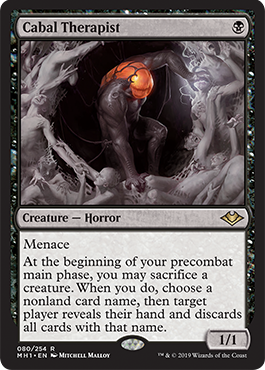
However, emblems can't be removed, and thus the fabled hard lock is actually possible. Sweepers are still a problem, but they're not prevalent in creature matchups. Sweeperless opponents must then either prevent the hexproof lock or remove Serra before she emblems. Coupled with the +2, I see Serra as a Spirits mirror-breaker. Currently, the matchup is fairly miserable, since whoever has the most lords and/or the lock wins the game. It frequently becomes a stalemate until one player amasses enough of a size advantage and more Selfless Spirits than the other can brute-force their way though. Serra provides an additional lord to break stalls, and/or forces the opponent to go active before they want to, seizing back the initiative and possibly the game.

Burn in Trouble

However, I expect that Burn will have the most trouble against Serra. It's fully capable of answering a normal Worship, and has proven a tough matchup for Spirits, being faster, more efficient, and hard to effectively Spell Queller. Two Drogskol Captains or a Geist of Saint Traft and a Serra emblem spells actual game over. This threat forces Burn to devote more time and cards killing creatures and/or Serra, and not their opponent, to protect against the lock. The extra 6+ life points that buys should be enough for Spirits to recover.

Cabal Therapist

Next is Cabal Therapist. Between this and Prime Speaker Vannifar, Wizards appears to really be on a busted-card-with-legs kick. However, after some testing I can confirm what everyone else has already said: Therapist is simply too slow to do anything in Modern.
Cynicism vs. Doomsaying

I feel like I should be at least cautiously optimistic about the precedent to be set by Modern Horizons. Legacy and Vintage have received cards from supplemental sets for years; it makes sense to also give Modern toys that would never fly in Standard. But while the spoiled cards are interesting, they're not exactly hype material. I'm so far unimpressed, but there's an undercurrent of fear because when Wizards has dumped non-Standard legal cards into non-rotating formats before, it has overturned everything.

Playing It Safe

I think Wizards made Horizons safe enough that Modern isn't going to change significantly. I can't point to anything specific that suggests this, but my overall impression says to lower my expectations. The reveal stream was a little short on details, but I think Horizons will be a pretty average set. One tease was that an "awesome" blue card would be reprinted, but everyone just assumes it's Counterspell.

Then there's what Mark Rosewater has said so far, indicating that while this set may be designed for a more powerful format, it's keeping to Standard norms. He flatly stated that Horizons was designed under the modern color pie, so there won't be any wild and/or particularly interesting reprints like Sylvan Library. And he's gone on to clarify that the set is primarily about making interesting cards that don't fit into Standard designs. It was also heavily tested so that it both looked like a coherent set and didn't suddenly invalidate existing decks.
All that information suggests that Horizons is a set that could have worked in Standard, but wouldn't due to non-power level problems. Therefore, I expect a lot of niche cards, role-players, and almost-there's rather than another Treasure Cruise. I'm sure there will be interesting cards and the draft format will be a blast, but I'm skeptical of Horizons being watershed for Modern.

Potential for Impact

We've only seen two cards and some basic product info. The real set could be drastically different. So far the set looks weak, but that might just be because Wizards' perception is different than players'. It's not uncommon for Wizards to misread cards which cards impact formats and how. Knowing this truth coupled with something else Rosewater said has activated my Irrational Concern subroutines and I can't shut them off.

Rosewater said that the Storm Scale (the measure he uses for how likely a mechanic is to return to Standard) didn't apply to Horizons. This means storm and dredge, two of the most broken mechanics ever, are on the table. I don't think it's very likely that they actually are because, again, Horizons was heavily tested by the Play Design team, but the fact that they could be is both exciting and terrifying. I call it the True-Name Conundrum.

When True-Name Nemesis was printed in the Commander set, there was speculation that it would completely destabilize Legacy. Being immune to almost everything opponents could do was rightfully seen as extremely powerful, especially alongside equipment. Arguably, this synergy was the only reason that Stoneblade was able to hang on during the Miracles years. The format has changed a lot since True-Name was printed, and yet it remains a defining creature in Legacy.

This is the crux of the Conundrum: What happens if there actually is something that redefines Modern? Is that something we actually want? True-Name is strong, but in a format like Legacy, it could never do too much damage. Even then, it took time for players to adopt the concurrently-printed Toxic Deluge as an answer. Wizards also had to print Council's Judgement at least partially because of True-Name. Supplemental products are an opportunity for Wizards to cut loose, and there's always the risk that something misunderstood slips through the cracks. I keep telling myself that it won't happen, they know the risks. But the problem with irrationality is that facts don't make it go away.

On the Horizon

Ultimately, I'm conflicted about the prospect of Horizons. There is little reason so far to think that this set will be overly impactful, and not just an interesting diversion that gives lower-tier decks some new tools. However, I can't ignore Wizards' history of redefining Legacy with cards from Commander sets. In the event that something equivalent to True-Name does get printed, Modern's answers are worse, and the format is relatively combo-light compared to Legacy. Will Modern then continue to simply chug along? I'll have to wait until May to be vindicated or relieved.

Insider: Tales from the Buylist #4 – Legacy Foreshadowing, Modern Horizons

Are you a Quiet Speculation member?

If not, now is a perfect time to join up! Our powerful tools, breaking-news analysis, and exclusive Discord channel will make sure you stay up to date and ahead of the curve.

After the insane price spikes of last year we're at a relative low point for many Reserved List cards, and nothing puts pressure on these items quite like the Legacy format. Classically, a high-profile Legacy tournament will cause movement across the board for cards like the Revised dual lands, Force of Will, and Wasteland.

Looking ahead to the near future, there are two important tournaments that will more than likely have an impact on the price Legacy. The first event, SCG Syracuse (March 1-3) will serve as a precursor event to GP Niagara Falls (April 19-21). With the combination of high-quality SCG coverage along with the revitalization of video coverage from Channel Fireball at Grand Prix Niagara Falls, we'll be seeing the first significant spotlight on the format since the 25th Anniversary Pro Tour.

We've had some fantastic articles recently that point at these possible upcoming price spikes, but I'd like to review and highlight a few more picks for the format in the wake of SCG Syracuse.

Pillars of the Format

There was an error retrieving a chart for Force of Will

It's difficult to talk about Legacy without first using this card as a baseline. Yes, it is legal in Vintage and Commander but the price of this card is largely determined by its omnipresence in Legacy. Funny enough, you can glean a lot of information about how healthy Legacy currently is from the market price of Force of Will. It will tell you the strength and popularity of the format as a whole, as well as the prominence of blue decks in the format.

Force has never truly received a large supply-boosting reprint unless you count the Eternal Masters version at mythic. Supply can very quickly dry up come tournament time, and many players will be looking to complete their playsets right up to the week before the event.

If you're in the market for these, I'd be looking to eBay or TCGplayer for deals, as the average retail price is sitting around the $90 mark. Many are speculating that this could be a marquee card in the newly announced Modern Horizons which would severely hurt the value of this card. The future is a bit uncertain with current information. However, I'm confident this card will continue to rise in price until we know more details about the set list.

There was an error retrieving a chart for Wasteland

The second pillar of the format is Wasteland. Legacy is one of the most powerful formats not only for the spells you can cast, but also for the lands you're allowed to play. As with Force of Will, I believe this card is a signpost for format demand.

The original dual lands from the ABUR sets are the premier targets for this card, though many strong utility lands such as Karakas and Cavern of Souls aren't bad either. Many strategies such as Death and Taxes and RUG Delver rely heavily on playing efficient threats accompanied by mana denial, in the form of Rishadan Port or Stifle respectively, in tandem with Wasteland. The card currently holds a large share of the metagame, and is trending upward despite its Eternal Masters reprint at rare.

ABUR Duals

There was an error retrieving a chart for Underground Sea
There was an error retrieving a chart for Volcanic Island

All of the duals are high-priority pickups for most Legacy players, with Underground Sea and Volcanic Island being the most important duals in the format. It's no secret that Legacy is a blue-centric format. Being able to cast Brainstorm and Ponder with the same land that you use for Thoughtseize or Pyroblast is crucial for many strategies.

The metagame at large has plenty of room for non-blue decks, but you can expect most players to be looking to blue decks as their first choice for premier level events. Underground Sea is the most expensive dual (expect to pay nearly $600 for a Near Mint copy) and will be the one to target first if you're looking to get into the format.

There was an error retrieving a chart for Tundra

Tundra is currently the least expensive blue dual and is moving closer to the forefront of the metagame with UW DelverBlade, Stoneblade, and Miracles variants top-eighting more events. Even with the banning of Deathrite Shaman last year, Delver of Secrets strategies are still the most popular in the format. UW decks are becoming exceedingly proficient at dealing with their usual suite of threats with tools like Swords to Plowshares, Terminus, and Council's Judgment in the main deck.

It is worth noting that Tundra is played in lower amounts compared to other two and three-color decks, as many of these strategies rely on Back to Basics to punish the rest of the format.

Namesake Strategies

There was an error retrieving a chart for Dark Depths

I've been yammering on about the prominence of blue here, but perhaps the most prevalent combo strategy at the moment is Dark Depths. Cheating an indestructible, flying 20/20 into play and swinging for the kill on turn two turns out to be a potent strategy. Prices for this card are steadily rising, and I recommend getting in early.

We're not very far out from its recent reprint in Ultimate Masters at mythic, but these are at a low enough price point and supply to easily be bought out. Complements such as Crop Rotation, Sylvan Library, and Thespian's Stage could see slight upward movement.

There was an error retrieving a chart for Death's Shadow

One of the more prominently featured decks on SCG coverage this weekend was UB Death's Shadow. This deck was previously seen as a "budget" strategy, as the required Watery Grave playset will run a hell of a lot cheaper than even a single Underground Sea.

Josh Utter-Leyton's incredible performance at Pro Tour 25th Anniversary really showed off how powerful the deck can be against the metagame. The price of the original printing, as well as the Modern Masters 2017 version, have been creeping upward since then. Goes well with Street Wraith and Stubborn Denial, I hear.

There was an error retrieving a chart for Arclight Phoenix

Arclight Phoenix decks are a very non-budget strategy. These will run anywhere from five to eight duals including Underground Sea and Volcanic Island, making the base price of the deck pretty steep. Many entrenched players will be looking to acquire cards for Arclight Phoenix to try something new in Grixis colors.

Arclight strategies are currently looking like the best way to win in Modern, and I don't think it's too far off from doing the same in Legacy. Related items to watch alongside the success of this deck are foil copies of Cabal Therapy and Buried Alive.

Odds and Ends

There was an error retrieving a chart for Karakas
There was an error retrieving a chart for Ancient Tomb

Many people in the #mtgfinance sphere get asked the question, "what is a good place to park my money right now?" One of the most common answers I see recently to this question is dumping it all into as many copies of UMA format staples as possible.

Karakas and Ancient Tomb are by far my favorite reprints for this strategy. The price of these two lands in particular fell a lot further down than many had anticipated and they're likely to hit their price floor very soon if they haven't already. Normal copies of these cards are easily found around the $20 mark on TCGplayer, and are a fantastic pickup for future growth.

There was an error retrieving a chart for Dark Confidant

Bob has been seeing a huge resurgence in play in both Modern and Legacy. Playsets of this card are back in the Jund and BG decks of Modern. In Legacy, it finds in a home in Dark Depths, 4-Color Loam, and even Arclight Phoenix decks. Copies can be found around $50 between TCGplayer and eBay, but I expect that price to fully correct toward the $70 mark in the next few weeks.

There was an error retrieving a chart for Surgical Extraction

Surgical just keeps climbing to new heights every week! With its supposed exclusion from Modern Horizons, this along with cards like Leyline of the Void, Extirpate, Grafdigger's Cage, and even Relic of Progenitus will be seeing a lot of pressure. Degenerate graveyard strategies in Modern have become so unbeatable in Game 1, it has driven many players to start mainboarding cards like Rest in Peace in UW control decks.

Save for Relic, all of these are frequent sideboard options in Legacy for graveyard hate post-board. Surgical Extraction is in a unique situation because of its Phyrexian casting cost, which has proven difficult to reprint in supplementary sets, but I would expect a new printing to come very soon. This could even happen as early as War of the Spark, though I won't be holding my breath.

There was an error retrieving a chart for Chalice of the Void

In my opinion, Chalice is by far the most powerful card in Legacy right now. Artifacts that stop your opponents from playing spells, like Trinisphere, Sphere of Resistance, and Thorn of Amethyst are becoming more common winning strategies against a metagame dominated by fair blue decks.

Mono Red Prison is the most notable of these decks. A first-turn Blood Moon or Chalice of the Void can shut the door on most decks in the format if not immediately answered. This card was recently reprinted in Masters 25 last year which really tanked the price, but it's starting to recover and will easily reach the $60 mark in the coming months.

There was an error retrieving a chart for Preordain

The last card I'd like to highlight is Preordain. It's not as ubiquitous as Ponder or Brainstorm in Legacy, but is often used to supplement playsets of those cards in the combo decks of the format. This card is widely played not only in Legacy, but also Commander and most notably Pauper.

With paper Pauper events such as the recent MCQ at MagicFest LA getting off the ground, I expect this card to start mimicking the price trend that Serum Visions had before its first reprint in Conspiracy. Supply is dreadfully low in comparison the other cantrips I've listed here and is already at a shocking $5 from most retailers.

Its currently sitting on the Banned List in Modern, and I don't expect it to come off any time soon, considering how successful Storm and Arclight decks are right now. This will probably exclude it from reprint in Modern Horizons. What's more, I'm fairly certain this card will be dodging a reprint in the next few supplementary sets slated for release for the early part of the year until Commander 2019 rolls around in August.

Wrapping Up

Over the next few weeks I expect to see a lot of attention around Legacy from newer and returning players.

Modern Horizons is one of the most unprecedented products Wizards has cooked up, and predicting the long-term effects it will have on Legacy is difficult with the information we have. The newly spoiled Cabal Therapist we saw last week shows a willingness to experiment and pay homage to cards from Magic's past, and it's hard to say whether or not we'll get true reprints of cards like Force of Will into Modern.

If you're looking for good investments, I'd stray away from anything that could possibly be in that set. Cards that are currently doing well like Dark Confidant, Chalice of the Void, and Death's Shadow would be my primary targets. If you're looking for lower buy-ins, I think any of the rares I mentioned from Ultimate Masters will be safe bets. Keep your eyes on Preordain.

That does it for this week! You can follow me on Twitter @chroberry or Instagram @chroberrymtg if you want to see extra goodies and spoilers for next week’s article. Feel free to let me know how you feel about my targets here in the comments, or if there’s anything you think I missed!

Peace!

Leveraging Cardsphere.com for Value

Are you a Quiet Speculation member?

If not, now is a perfect time to join up! Our powerful tools, breaking-news analysis, and exclusive Discord channel will make sure you stay up to date and ahead of the curve.

In the last few months, I have seen a lot of Insiders asking about Cardsphere.com and the advantages the site provides over other platforms. I feel uniquely qualified to answer these questions because I have traded on Cardsphere for most of the last two years. I have used Cardsphere to both pick up investments for myself and help my local customers find cards they want.

Advantages of Cardsphere

The first thing Insiders need to understand about Cardsphere is its fee structure and business model. Cardsphere is a seller-driven platform, which means that buyers put offers on cards and people who have that card can decide whether and when to sell to that buyer. The sender will then receive 99% of the offer from the buyer, with 1% returned to Cardsphere as a fee. Once the buyer confirms that they have received the cards in the proper condition, the seller will receive the credit in their account. The sender can now either add offers for cards they want to get or they can cash out that credit to their PayPal account. The fee for withdrawing to a PayPal account is $10 or 10%, whichever is higher. This business model sets Cardsphere apart from other similar services like PucaTrade.

For sellers, one of the biggest advantages of Cardsphere compared to sites like TCGPlayer.com is that low fee of only 1%. This site is perfect for Insiders looking to get out of speculations that have come to fruition and get into new investments. Another big advantage of Cardsphere is that the site’s currency is directly tied to the US dollar, which gives the currency more stability than a fiat currency like the PucaPoint. Another feature of this tie to the US dollar is that instead of just sending cards to increase their balance, users can deposit funds directly from a credit card.

There was an error retrieving a chart for Puca's Mischief

For buyers, there are also advantages. To make an offer on a card, they choose a percentage of a card's index price. The index is a combination of a few different MTG pricing tools like TCGplayer and Channel Fireball. The exact way the index is calculated in not publicly available. This index percentage allows you to prioritize different cards and make offers on a broader array of cards. When you create an offer on a card you can choose what conditions you are willing to accept. The total index is then discounted 10% for slightly played cards, 25% for moderately played cards, and 40% for heavily played cards. These discounts for played cards are much better than most buylists from other sites.

Currently, Cardsphere is a buyer’s market, so most good offers on staples don’t last very long. This means that by creating a broad somewhat competitive want list, you can get cards similar to a personal buylist. Most cards trade between 66% and 87% of the index price. This presents excellent cost savings compared to buying on TCGplayer or other vendors. Senders will also sometimes bundle cards that have lower percentage offers with cards that have higher percentage offers on, so you can get some even better deals.

Cardsphere also presents an excellent opportunity to sell cheaper cards because of the low fee model. Unlike TCGplayer, there is no flat fee, which makes getting good prices for your low-end cards much more achievable. Also, you can choose a minimum amount to send out a package so that you can manage your postage costs. In addition, you can send packages outside the US and, if you do, people may have excellent offers on many cheap cards, sometimes above TCGplayer low. Lastly, the site also has a “Send” page, which shows you the best offers for the cards you have. You can optimize your send page for offer percentage, total value, or card quantity. This can also let you group cheaper cards to get even more value from your postage.

There was an error retrieving a chart for Underground Sea

While Cardsphere is excellent for moving low-end cards, it can also be a good place to move more expensive items like duals or masterpieces. The supply of these cards is quite low compared to the number of people who want them, so many people are willing to offer pretty close to TCGplayer low in order to pick up these high end items. For example, I was able to get almost $500 for a NM Underground Sea, which is only 40$ less than TCGLow. These high offers on duals and masterpieces don’t last long, so when you see them you should snap them up.

Downsides to Cardsphere

Cardsphere does have a few downsides compared to marketplaces like TCGPlayer.

The most glaring issue is how long it can take to get people to send you stuff. Even if you have a solid offer for a card, it could take a few days or weeks in order to get just one copy. Hopefully, this will change as the site expands and adds more users.

Another problem users may run into is card condition. Even though the site has a condition guide, there ends up being many disputes over condition from users who might be a bit more strict on what they consider near mint. If cards arrived not as promised and the admins agree, the buyer can choose to adjust the price paid or return the cards at the sender's expense.

There was an error retrieving a chart for Daxos the Returned

That said, the site has great admins who respond quickly to deal with any disputes that may arise. These admins act as impartial parties that grade solely based on the condition guide, they also help weed out any users that may be abusing card condition in order to make more per card.

Overall, Cardsphere presents an excellent platform for Insiders. The most important thing to remember about Cardsphere is that the site requires patience. If you want to execute on a card quickly, you are probably better off buying directly from a vendor. But if you want to get the most mileage from your dollar and you don’t mind waiting a bit, Cardsphere could be the perfect platform for you.

Want Prices?

Browse thousands of prices with the first and most comprehensive MTG Finance tool around.


Trader Tools lists both buylist and retail prices for every MTG card, going back a decade.

Quiet Speculation