Are you a Quiet Speculation member?
If not, now is a perfect time to join up! Our powerful tools, breaking-news analysis, and exclusive Discord channel will make sure you stay up to date and ahead of the curve.
Wizards of the Coast made a point in 2018 to emphasize that they were taking a break from Masters sets in 2019. Honestly this is a good thing–after the barrage of Eternal Masters, Masters 25, Modern Masters 2017, Iconic Masters, and Ultimate Masters, I think the community was burnt out on these high-variance reprint sets.
However, Wizards can’t simply kill off Masters sets without finding a replacement. You know how corporate America works—you have to demonstrate year-over-year growth in sales and profits to please the shareholders. If WotC had just cut a largely successful supplemental set without a replacement, it would not have gone over well.
Enter their latest announcement on a new type of set—one that brings with it reprints and new cards, designed for play in Modern:

What does this set’s release mean for MTG finance? This week Sig does some digging to provide possible strategies to consider as the release of Modern Horizons approaches.
The Facts
Here’s what we know so far. The set releases June 14 and contains 254 total cards. At first I thought there were only 249 cards in the set. The announcement page highlights, “Modern Horizons contains 249 new-to-Modern cards (254 total), with a mix of reprints not yet legal in Modern, and new cards that celebrate both Modern and Magic’s rich history.” Wait a second. Let’s run that back for a second.
A lot of people have been incorrectly stating that this set contains no reprints of cards already legal in Modern. According to this statement, that may not be the case. Blake Rasmussen did a great job (intentionally or not) of masking the fact that there are five cards that aren’t new to Modern in this set by using a brief, parenthetical statement. This set has exactly five cards that aren’t new to Modern—therefore, they must already exist. More on this later.
In all, the set has five Modern reprints and 249 cards that will be either a non-Modern reprint or else a brand-new card. Well, actually that’s the case for 247 cards because we already know two of them.
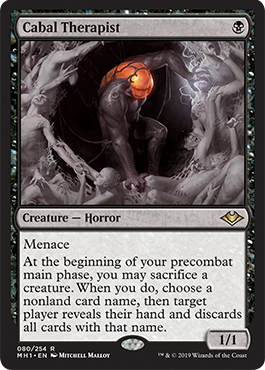
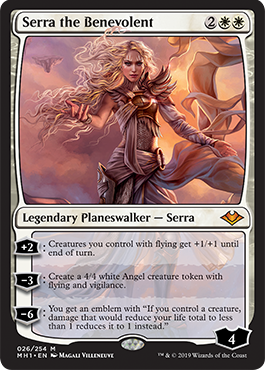
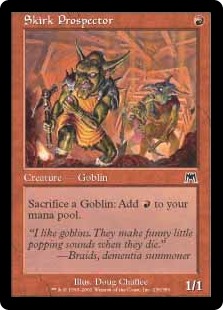
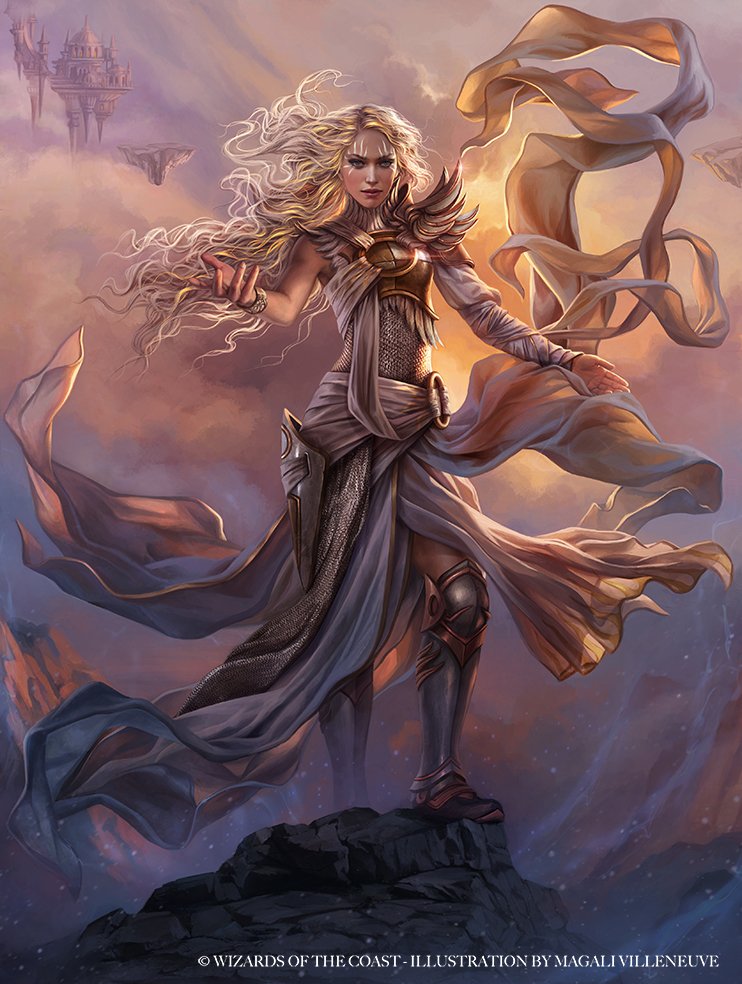
Cabal Therapist is a shout-out to the much beloved Cabal Therapy, and at long last we are getting a Serra planeswalker! I love the artwork on both of these cards and the abilities are interesting enough to keep my interest.
I can’t wait to see what else is uncovered. But in the meantime, this is all the information we’ve got on this set.
Let’s Talk Reprints
To begin with, I want to discuss those five Modern-legal reprints. Unless he’s referring to basic lands, Blake Rasmussen has created some confusion among the MTG community by using a parenthetical statement in his announcement article. Many have internalized that there are no Modern-legal reprints but this is not true. There are, in fact, a total of five.
I don’t want to turn this article into one on baseless speculation, but I believe this is of particular financial relevance. Five cards make up a cycle—what if it’s this one?
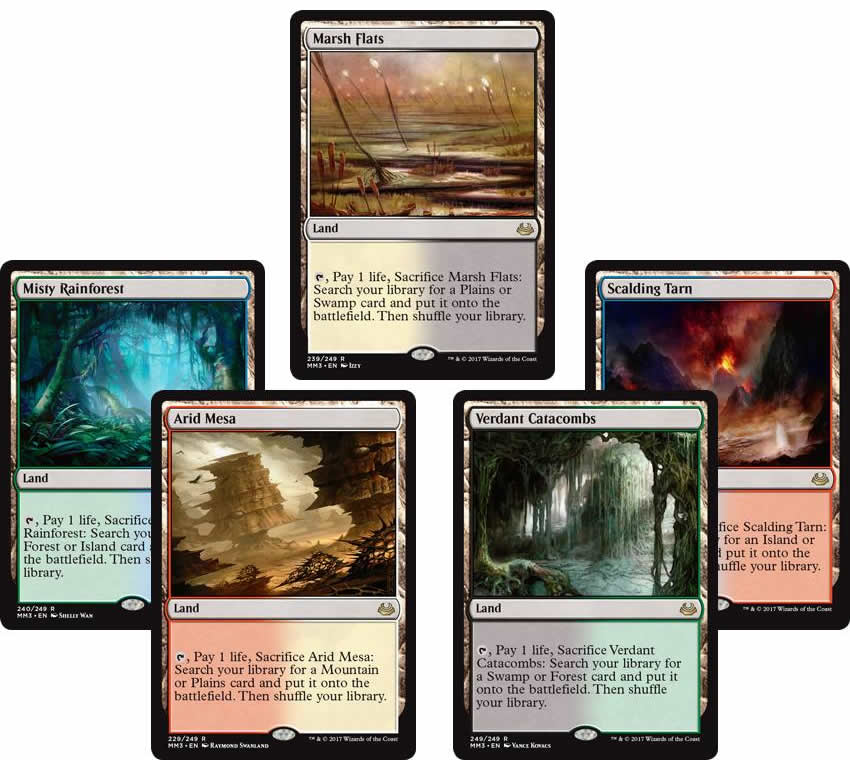
I’m not saying this is a guarantee. I’m just saying it’s possible. When this announcement first came out, I immediately leaped to fetches as great pick-ups. I am clearly not the only one, as these have been on the rise recently and the Modern Horizons announcement likely accelerated their move.
But now that I see there’s a chance for these to be reprinted in Modern Horizons (a much needed reprint, by the way), I’m very hesitant to hold onto them. I won’t go as far as to suggest readers sell their extra Fetch Lands. But I want to emphasize caution—I myself will not hold any extra fetches into spoiler season because of this possibility.
Going beyond these five Modern-legal reprints, the possibilities of non-Modern-legal reprints are endless. I’m not going to sit here and speculate baselessly. It would provide no financial benefit to readers. All I’ll say is that older, non-Reserved List cards are all fair game unless they’re overpowered for Modern. But the list of possibilities is so long, it’s not worth exploring them all.
Instead, I’ll leave you with this: you may want to avoid Modern cycles with five cards, and stick to speculation on two groups of cards. Legacy and Commander staples that won’t be reprinted, and Modern staples that will be powerful no matter how the metagame shifts.
Non-Reprinted Cards
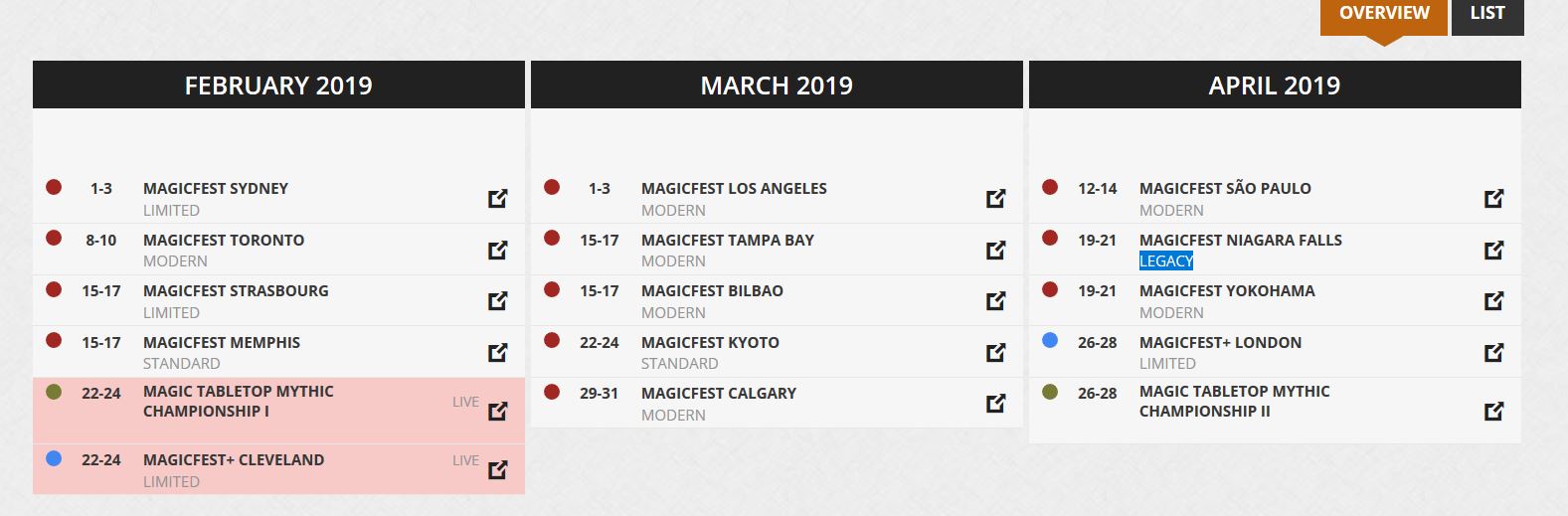
Anything that’s too powerful for Modern will not be reprinted in this set. That means we won’t see a reprint of Brainstorm or Force of Will. I’d say Ancient Tomb and Wasteland are also unlikely. As such, these may be fine targets for acquisition. Remember, there’s a Legacy Grand Prix (Magic Fest?) coming up in a month and this will keep Legacy demand strong for a bit. Since bottoming in 2017, Force of Will has gradually risen from $70 to over $80. This is Legacy (and Cube) demand at work.
Therefore, I find these Legacy cards to be solid pick-ups for the next few weeks. But let’s bring the elephant into the room: you might as well stick to Reserved List Legacy cards. I’ve seen buylist on cards like Mox Diamond, Lion's Eye Diamond, and Dual Lands climbing over the past few weeks. I recently sold a playset of near mint Mox Diamonds to Card Kingdom for $660, which felt like a very aggressive buy price. Shops are having a tough time keeping these Legacy staples in stock.
City of Traitors is another solid Legacy pick-up. If you insist on eschewing the Reserved List, look to Mana Drain and Mana Crypt for solid targets that offer sustainable growth. Neither will be printed into Modern—you can bank on that!
Modern Targets
The Reserved List offers the safest way to speculate. But there are plenty of Modern staples that will likely dodge reprint; these may be worth your attention. The key is to find cards that slot into multiple decks, so that a major metagame shift doesn’t suddenly obsolete your spec target.
I don’t think we’ll see a Surgical Extraction reprint in Modern Horizons, and I suspect graveyard strategies are here to stay. Therefore this may be a worthwhile target, although they’re already quite pricey. Maybe the cheap alternative, Extirpate, is better to hold onto.
Snapcaster Mage is quite versatile and should remain relevant in Modern. Its price has been kept in check thanks to the Ultimate Masters reprinting—this could be a good opportunity to buy in.
Noble Hierarch also gets my stamp of approval. It’s not likely to be reprinted so soon after Ultimate Masters and its price may be stabilizing. Most importantly, this card is likely to remain relevant in a new Modern.
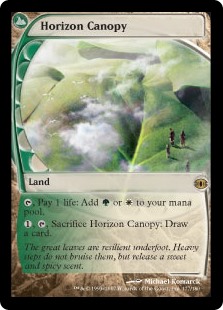
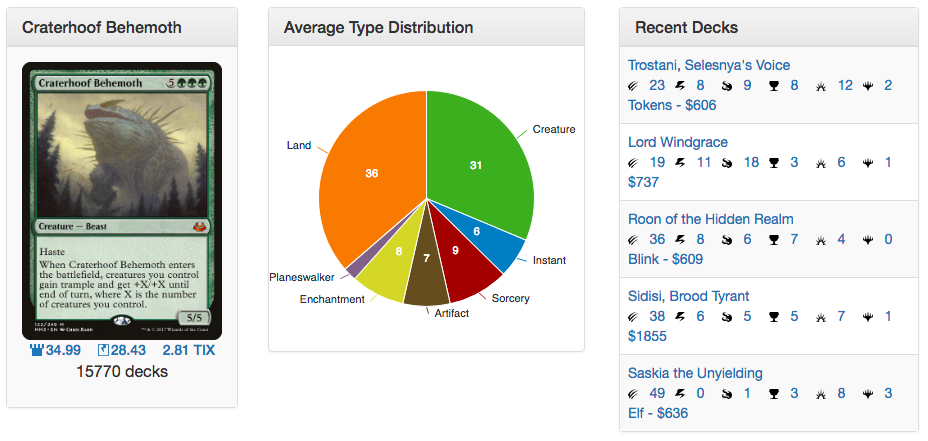
Other options include Collective Brutality, Horizon Canopy, and Engineered Explosives. Each of these are unlikely to be one of the five reprinted Modern cards in Modern Horizons and should be powerful no matter what happens to Modern’s metagame. All of these cards I mentioned are in the top 50 most played Modern cards list according to MTG Stocks.
If you don’t want to bother digging through long lists of cards to find the best targets, I offer you a general rule of thumb: stick to lands (avoiding five-card cycles) and artifacts. These are the most versatile and fit into the most decks. It’s very unlikely Horizon Canopy and Engineered Explosives will be reprinted or become outclassed, for example.
Wrapping It Up
Modern Horizons is sure to create a lot of buzz about the Modern format. While I can’t necessarily flag all the best cards to speculate on, I can guarantee that people will be making money because of this set. I did my best to provide my guesses as to what will help you turn a profit.
But if you really want to go next level and avoid the guessing game, you could always stick to those Reserved List staples. If people make money on Modern speculation, some may decide to convert those profits into something stable and low-risk, such as Dual Lands. If you want, you can try to get ahead of the curve by moving straight into these staples. Or perhaps it’s best you diversify and try a little of both—some Modern speculation along with a couple Legacy Reserved List purchases.
To be fully transparent, my strategy is more revolved around Legacy. This likely comes as no surprise to my loyal readers. I’ve been trading stuff into ABU Games for credit, and using that credit to acquire played Revised duals and a Mox Diamond. These I will hold until I see prices (inevitably) accelerate to the upside. Then I’ll sell into the hype.
Whichever strategy you choose, make sure you follow spoiler season for Modern Horizons very closely, because I suspect each new card spoiled could potentially cause other cards to spike. Reprints may also hurt values of older cards. Then again, being introduced into Modern could generate a load of new demand for these older cards. Which factor will outweigh the other? That’s a difficult question that likely requires case-by-case analysis. Perhaps that’s a subject for another week!
…
Sigbits
- Masterpieces are still well represented on Card Kingdom’s hotlist. For example, they’re offering $245 on Mana Crypt, $140 for Polluted Delta, and $130 for Chalice of the Void. If a card with a Masterpiece printing is introduced into Modern with Modern Horizons, that could create a sudden spike in demand for the premium version.
- I was surprised to see Unlimited Savannah Lions return to Card Kingdom’s hotlist. I thought the run on lesser Unlimited rares had faded, but apparently demand for the Lions is robust enough. They currently offer $72 for near mint copies on their hotlist.
- Card Kingdom offers $70 for near mint copies of Eternal Masters Force of Will. Demand for this card is very strong right now and its price movement reflects this. Again, I believe this is due to interest in Legacy. Then again, the card also appears in 14,000+ lists on EDH REC so this is also a major source of demand, likely even outweighing Legacy. Though, EDH players only need one copy per deck while Legacy players require a full set.

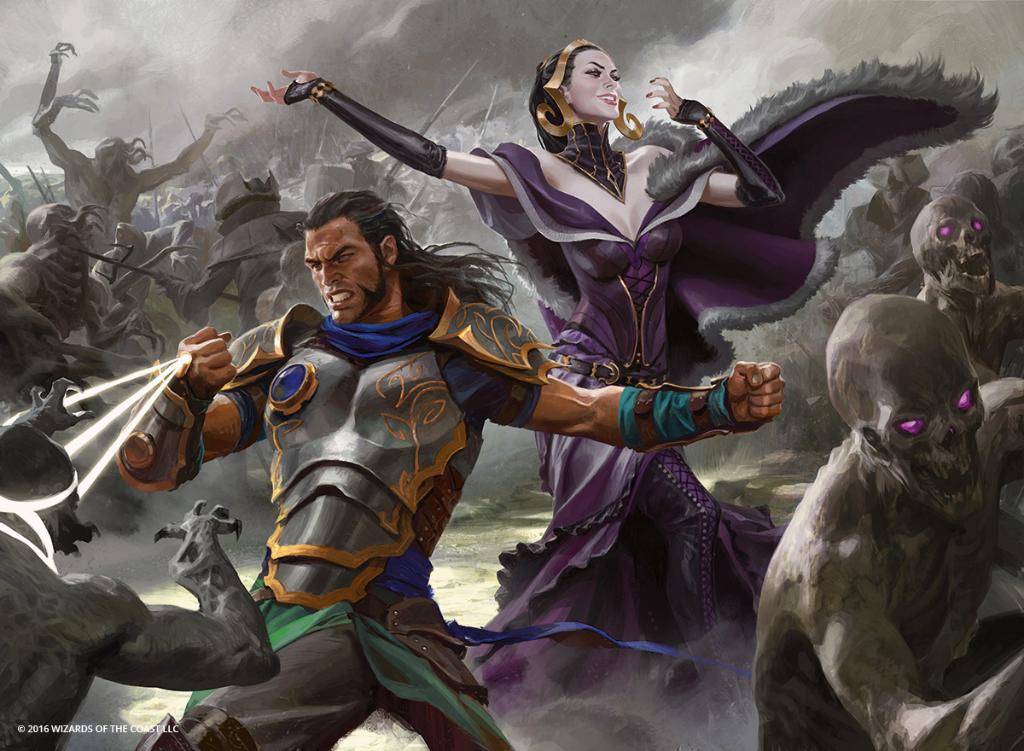
 Actual comments by Matt Nass and Cassius Marsh as they pored over Cabal Therapist: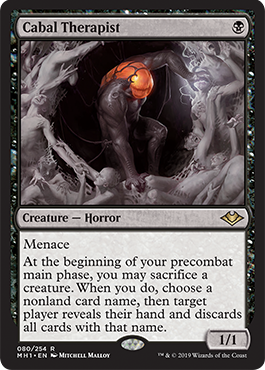
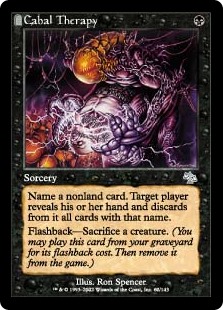 Cabal Therapist is too slow to disrupt opponents before their gameplan comes online and shockingly easy to interact with: one benefit of sorcery-typed discard spells is that they can't be countered by Fatal Push; another is that they don't have suspend 1. To benefit from the original Cabal Therapy's multiple casts, players must wait multiple turns and spend their precious early-game mana deploying creatures they will sacrifice the next turn. In a format
  The commentators seemed more ambivalent about Serra the Benevolent, saying they were "not sure" if it would even see play in Modern. Cassius was excited, although he did misread the card as granting its owners' creatures flying (a gaffe Wizards' panel of Poindexters
 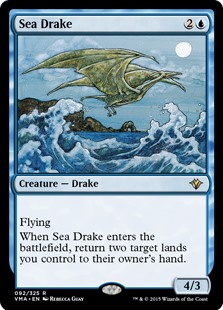 As far as reprints go, Wizards probably had a few goals in mind. For one, they wanted to create a memorable draft experience with Modern Horizons. Some cards may appear as a result of their popularity or associated nostalgia—think Man-o-War or Sea Drake. Others may be included to enhance the Modern experience by adding new dimensions to its gameplay. This is the area that has most Modern players excited for reprints, as many have pined after Eternal-legal staples for years. It's also the area we'll focus on in this section, as I think a couple of paths could alter the format in a way players end up disappointed with.
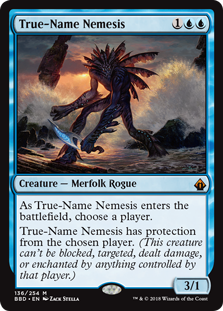 Since Ponder, Preordain, and Brainstorm are not legal in Modern, players will have a doozy of a time finding their narrow outs to something like True-Name within a reasonable timeframe. Introducing such cards en masse could make the format more like the Best of One format in MTG Arena. That format is so polarizing
 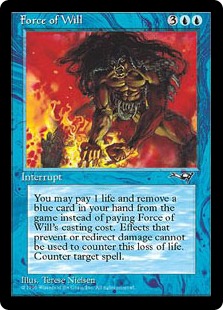 While Force of Will is
 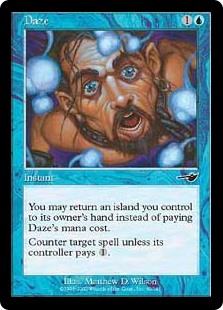 Less-warping answers would make ideal reprint targets, especially if those answers only fit into specific decks or ones with stringent requirements, such as Daze, Flusterstorm, and Innocent Blood. Utility creatures and floodgates make for interesting possibilities; take Containment Priest, Sanctum Prelate, or Back to Basics. In other words, more great stuff like Damping Sphere.
 Changing the Game
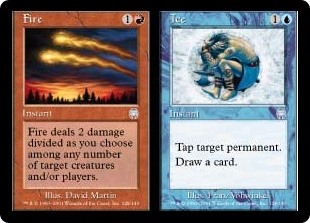 My biggest hope for Horizons is that it gives Modern players the tools they need to bring their brews to the next level when it comes to fighting off

![QS Cast – Mythic Championship Cleveland [Unlocked]](https://www.quietspeculation.com/wp-content/uploads/2019/02/Stadium-Vendors-Battlebond-Art.jpg)
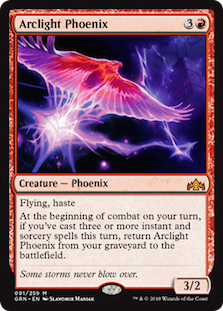 To expand on this idea, I don't know how good Izzet Phoenix actually is. I do know that it is
  To become and remain Tier 1 takes four things. The first is independent power: a deck needs to be powerful enough that it can contend with any other deck, regardless of the metagame. Once the cat is out of the bag and players know how to beat the deck, can it survive the scrutiny? If a deck is only good in specific contexts or when other decks aren't present, it doesn't have the power to remain tier 1. Similarly, it needs to be resistant to hate. Having hate against a deck doesn't disqualify it, see also Burn, but if it simply folds to commonly-played hate, then the deck will fall off.
 Third is consistency. A deck needs to deliberately do its thing in most games. Every deck has a god-hand; every deck has auto-mulligans. But the average hand will still do the thing that the deck is supposed to do, even if not very well. If a deck doesn't do anything unless specific circumstances are met, it won't remain Tier 1.
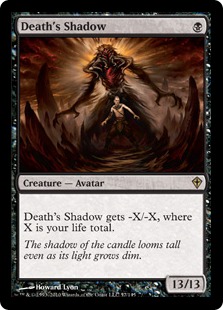 Grixis Death's Shadow isn't what it used to be. In 2017, it was
 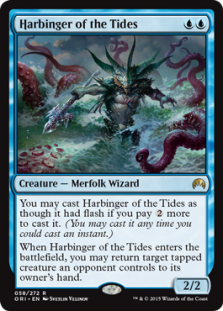 The problem keeping Merfolk in Tier 2 is twofold. First, the metagame is wrong. Merfolk was an underplayed good deck in 2015. URx Twin was
 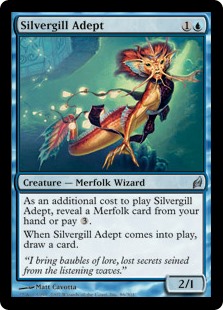 The second, and linked, problem is that it's not doing its own thing well enough. With grinding through removal being less relevant with GBx
 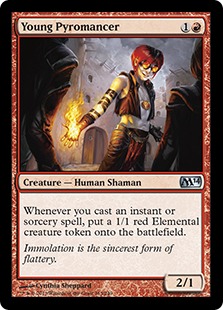 Pyromancer has several problems that contributed to its downfall. The first and most important was the deck was just clunky and slow. It was very good at disrupting the opponent, especially creature decks. Mardu is the wedge with the most creature removal and hand disruption. The problem was actually turning it into a win. Other than the eponymous Young Pyromancer, it doesn't have threats that really stand on their own and can take advantage of all the disruption. There were a lot of games where my opponent won the attrition war, and then did nothing for the rest of the game, allowing me to come back and win.
 This doesn't mean that it cannot win, just that I wouldn't expect it to happen. Anything can win, and never count out the ability of an
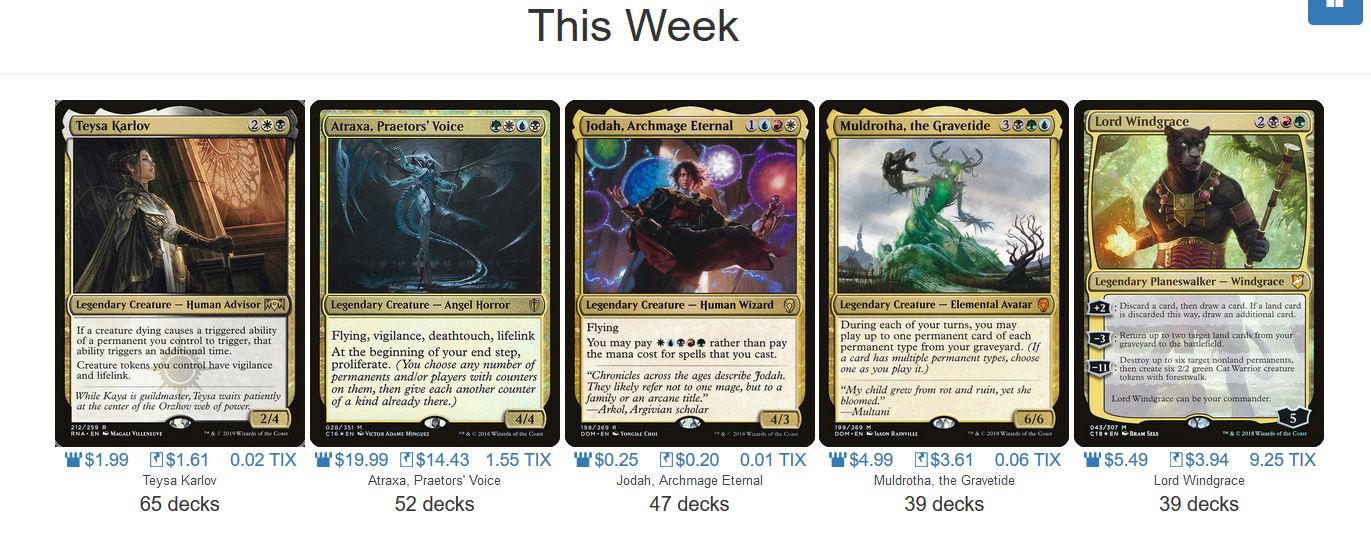

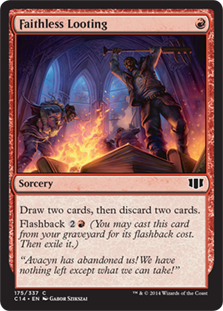 Enablers: 4 Opt replaced by 2 Chart a Course and 2 Faithless Looting. The new cards are simply better at enabling Pteramander. Chart "tucks" a second spell for a next-turn adapt or simply allows us to profit from 1/1 Salamanders. Having additional CMC 2 cards for Shoal is also nice.
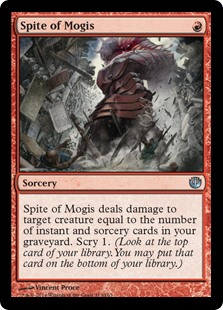 Sideboard: 2 Anger of the Gods and 1 Crackling Drake replaced by Spite of Mogis, Spell Pierce, and a third Abrade. Ah, here's that third Abrade! I hold that the Crackling plan is awesome in this deck, but 4 in the 75 were just too many. I'd sometimes clog on them while setting up a gameplan and have been happy on 3. At first I tried another Vendilion Clique in the extra spot, but ended up settling on Spell Pierce, a card I want as many of as possible in many matchups. This Spite was also Slash at first.
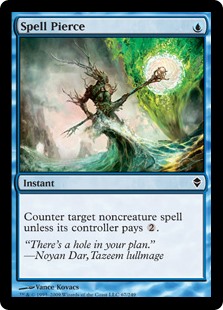 Where UR Delver falters on paper, then, is against the less interactive decks. Some of those matchups actually improve—basically, the ones that lose to Spell Pierce: Ad Nauseam, Storm, and
  On its face, this rule is designed to smooth out openers even more than "scry 1," letting more players play more satisfying games of Magic. In Modern, it also plays to the idea of diversity. We've seen decks enter the format after receiving a critical redundant piece from a newly-released set:
 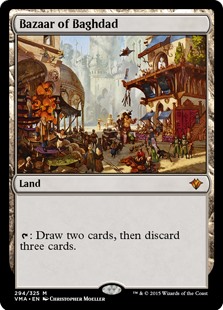 Decks become more consistent. What does that mean in practice? Combo-centric decks, or decks focused around a single card,
 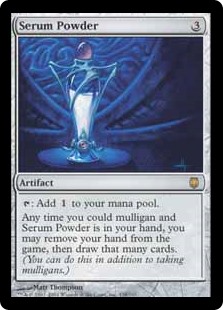 My misunderstanding was that under the London, every Serum Powder exiled and drew seven cards. This change would significantly increase both the odds of drawing into more Eternal Scourges and Powders for
 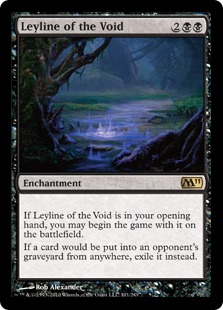 The sideboard also gets a makeover. Gone are the grindy Relic of Progenituses, which prevented opponents from ever out-carding our Eternal Scourges. We're just faster than that now. And Relic, while annoying, doesn't cripple graveyard strategies like Leyline of the Void, which becomes supremely findable between Powder and the London. Recently successful Colorless lists, like