menu

The Ramp Decks: A Beginner’s Guide

Are you a Quiet Speculation member?

If not, now is a perfect time to join up! Our powerful tools, breaking-news analysis, and exclusive Discord channel will make sure you stay up to date and ahead of the curve.

Nearly there! Welcome to the penultimate entry in the deck guides. Next week I'll finish up with the remaining deck types and we'll finally be done with all the archetypes of Modern! Then I'll finally be free to write about other, more topical things again.

Ramp decks occupy a weird place in Magic. Arguably the oldest archetype, they're also one of the most divisive. On the one hand Ramp has been incredibly powerful throughout Magic's history. On the other it is the most likely to be dismissed as the "little kid" deck. I don't fully understand this attitude. Yes, it is likely to appeal to younger players, but it has such a long history that the assumption becomes ludicrous. These are powerful, dangerous decks and to dismiss them is deadly.

Oddly, Standard players may not be familiar with Ramp. Despite its very long history and arguably being a core strategy of the game, you just don't see ramp spells in Standard very much anymore. It used to be the key feature of green, but Wizards has decided to severely cut back on ramp in recent years. There were a few Ramp decks during Dragons of Tarkir-Battle for Zendikar Standard, but that was an anomaly compared to Standards before and since. I don't really get the reasoning, but at this point it's far more noticeable when Ramp is viable than when it isn't. As a result players generally think that Ramp is just about dropping bombs until the opponent dies. It does do that, but that isn't actually the defining feature of the strategy.

[wp_ad_camp_1]

What Are Ramp Decks?

At their core, Ramp decks generate a tremendous, mostly permanent, mana advantage which they leverage to kill the opponent. Yes, that mostly takes the form of just dropping huge bombs, but it doesn't have to. The defining feature is mana, not spells. You use accelerants to generate a crushing board position before your opponent is able to react.
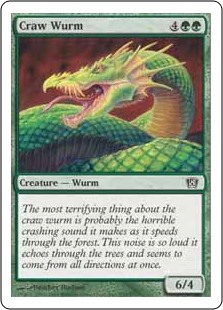
Ramp has existed from the beginning of the game, when Timmy first realized that Wild Growth let him play Craw Wurm a turn earlier. He then took it to the logical extreme when he made a deck entirely of Black Lotuses and Wurms so he could do it all on turn one. And lose all his friends. Which is why we have the DCI today. Anyway, back on topic, all Ramp decks since the beginning have looked to build their mana to ridiculous levels as quickly as possible and then use that advantage to drop more powerful win conditions earlier than their opponent and ride that to victory. Simple and straightforward.

Despite what it sounds like, you don't actually have to play land ramp spells to count as a Ramp deck. In fact, most of the really famous ones don't. You see, the mana advantage you are generating doesn't have to come from your lands. The most powerful Ramp spell ever printed is Tinker because it allows you to cheat on mana to accelerate out a gigantic threat. I realize that this sounds a lot like unfair combo decks but the difference is that the mana an unfair combo generates is temporary to produce an instant win where Ramp's advantage is turned into permanents. The mana advantage doesn't have to be permanent as well.

The presence of mana accelerants does not qualify a deck as Ramp. Mana is the fundamental resource of Magic and if you can accelerate, it is normally correct to do so. Ramp decks are defined by being built around acceleration rather than taking advantage of it. If the deck is decent when it has to play fair with its mana it doesn't qualify as Ramp. Ramp decks have to accelerate to be good. Most decks in these archetypes have worked fairly similarly so I could write about them as a group, but Modern's Ramp decks are not exactly traditional and are wildly different from each other. Ergo, I'll be dealing with them separately.

Tron
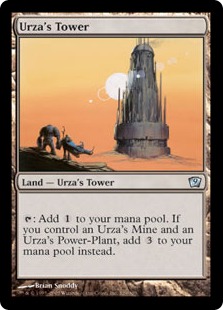
Tron is the most common Ramp deck in Modern, largely due to its simplicity and power. There are a number of variants, but they share the same gameplan. It doesn't play any kind of mana accelerants, it doesn't require complex thought or strategy. You simply assemble the Urzatron and you win. The Urzatron, for this series' intended audience, is the name given to the three Urza lands (Urza's Tower, Powerplant, and Mine) that when you have in play generate seven mana. You then use this to play very large colorless spells and you usually win when your opponent concedes in frustration.

Tron is unique because its acceleration comes from its lands. Most Ramp decks have to play spells that let them play extra lands to build their advantage. As a result Tron decks play lots of cantrips and land search rather than acceleration. The goal is to play the right lands, not the most.

Valakut
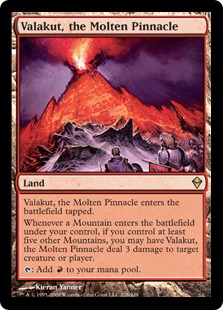
There are a number of different Ramp decks based around Valakut, the Molten Pinnacle, the differences between decks largely determined by their speed and whether they have interaction. While many do run Scapeshift, they are not Scapeshift combo decks. The combo version relies on Scapeshift to actually activate and win with Valakut, while the Ramp decks do not. These decks are fully capable of activating Valakut the way it was intended. They do run Scapeshift as an easy route to victory, but it just complements the gameplan. These are traditional Ramp decks, containing lots of land acceleration such as Explore and Sakura-Tribe Elder. Where Tron is looking to play the right three lands, Valakut decks seek to play five Mountains and a Valakut to turn every subsequent land drop into a Lightning Bolt. Combine with the signature Ramp card Primeval Titan to quickly crush the opponent.

I do realize that there are additional Ramp decks out there, like Tooth and Nail and Nykthos Green. However, I have yet to see any evidence that such decks are viable enough to consider playing them over these two categories. They aren't viable enough to include. As for Amulet Titan, I don't consider it to be a Ramp deck—it attempts to break a number of fundamental rules, and is better classified under unfair combo.

Strengths and Weaknesses

There is less overlap between the two types than you may think. However, there are a few traits that all Ramp decks have in common.

First and foremost, all Ramp decks are masters of defeating Fair decks. If you're trying to grind incremental advantage, you dread the Ramp matchup. First, Ramp decks don't play many cards that can be easily interacted with. The Fair decks simply aren't equipped to deal with the kinds of threats that Ramp deploys. Ramp threats are capable of ending the game on their own in very few turns. There isn't time to grind advantage against them while their mana advantage is producing overwhelming threats. This places Fair decks in a situation where they are constantly behind Ramp's threats and if they don't have exactly the right answers at the right time they will lose. Unlike aggressive decks, Fair decks cannot consistently establish early clocks well enough to shift the clock in their favor. Every turn, Ramp's mana advantage grows until it wrecks you, and Fair decks struggle to prevent this from happening.
Secondly, Ramp decks get free wins. They play some of the most powerful bombs in the room and they're not easy to stop. As a result they crush the unprepared. Further, a well-constructed Ramp deck is fully capable of "getting there" even in the face of disruption. These decks have a lot of redundancy and if you give them an opening they can win seemingly out of nowhere. There's a lot to be said for just dropping bombs until something hits.

The most important weakness of all Ramp decks is their lack of business spells. These decks have a relatively high likelihood of doing nothing in a game. They're not quite the kings of durdle, but they're close. Ramp, by necessity, is primarily made of lands and cards that help you find and/or play lands. This is less burdensome for Valakut, but the problem remains: you may get your mana perfectly but fail to actually do anything. It's the risk you take to play the big spells.

Another thing to note is that none of these decks are very good against unfair combos or Gotcha! decks. They cannot spare the space for much interaction and thus are at risk of decks just going over them. If you can race or ignore them, ramp decks are nearly powerless against you.

Now, as for the unique aspects:

Tron

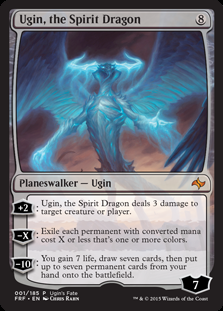
Tron has spent most of Modern's history as the sole Ramp deck, and it maintains the crown for good reason. This traditional RG version is a nightmare for BGx. Recent GB and GW variants, while a little less potent against BGx, are better against a number of normally poor matchups. The deck is capable of assembling Tron on turn three consistently and simply crushing opponents. Rather than play actual mana acceleration, the deck uses consistency tools, cantrip artifacts and Ancient Stirrings to find its lands. This has the bonus effect of reducing the risk of never drawing threats. You simply cantrip more than other decks. This consistency and redundancy are its greatest strengths. Furthermore, it plays far more powerful threats than any other deck. This power can be enough to simply overwhelm opponents. Ugin, the Spirit Dragon simply beats aggressive decks.
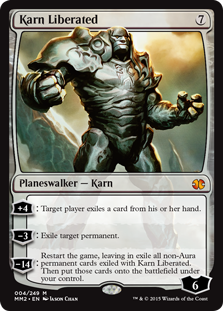
The main weakness of Tron is that it has been around for so long that everyone knows it and has a plan to beat it. This is the price you pay for success. However, this isn't the only problem. Tron is slow. Tron may accelerate out its threats quickly, but unless that threat is Wurmcoil Engine, you don't actually win the game very quickly. A turn-three Karn may be devastating, but he won't actually end the game for quite a while. If the early threat is not impactful enough, Tron might fail to win. It's weird to say, but sometimes Tron's threats are its Achilles Heel. They generate overwhelming advantage quickly, but if the opponent keeps fighting they can be overcome. Tron wins far more games off of frustrated concessions than it does actually killing the opponent, which is fortunate because sometimes it can't.

Valakut

All Ramp decks are hard to interact with for most decks, but Valakut is an extreme case. The deck wins with lands and can ignore most forms of disruption. As a result it can simply power through many decks. Tron has some vulnerability to discard and counterspells, but Valakut cannot be Thoughtseized or countered. Its matchup against slow decks is much better as a result.
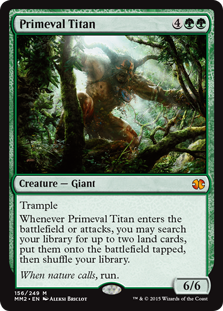
The other great strength of these decks are speed. Valakut decks are fully capable of winning on turn four, either through Scapeshift or Primeval Titan. This means that they're far less vulnerable to being raced by unfair combo than Tron.

However, Valakut decks are also at higher risk of doing nothing than Tron. They're great at finding Mountains, less good at finding actual cards that matter. Without Tron's sea of cantrips there's no guarantee you'll see business spells or Valakut. This gives the deck a higher fail rate than Tron. It is also far more all-in on Valakut than Tron is on its threats. As a result, if it is answered there may be no recovery.

Dropping the Bombs

The key to these decks is finding their mana. You do nothing unless you are accelerating something out, so don't keep a hand unless it promises to do that. Hands that are just enablers need to have a payoff card to be keepable. You'll keep any hand that actually generates your mana advantage quickly enough, but you may need to sequence your enablers to maximize your chance of actually doing something. Keeping a disruption-heavy hand can be acceptable, such as in Tron with multiple Oblivion Stones, but it is risky. If your hand needs more than two key cards to do something, you need to ship the hand.

The other overlooked skill is recognizing which powerful thing you need to do when. You may have multiple payoff cards in hand and you need to know, based on the situation, which bomb is most powerful. You have to maximize the impact of each spell because you don't play many. If you mis-sequence you'll give the opponent a chance to recover and answer you—if that happens enough, you'll have nothing left. You're hard to answer, not impossible. Recognize this and prepare accordingly.

Beating Ramp

It appears obvious that land destruction and mana denial are effective against Ramp, but it isn't quite that simple. These decks play a lot of lands. You can buy yourself time by stalling their development, but they will get there eventually. You need more of a plan.
Mana disruption cannot win the game, just buy you a few extra turns. As a result, racing is very effective. These decks aren't always able to stop you from just killing them (which is why Tron decks are going for black and white interaction these days). Aggro decks that pack Ghost Quarter are a nightmare for Tron. Similarly, if you can just ignore their powerful threats you can just win anyway.

Another, riskier, method is to just answer all the bombs. As I've said, Ramp doesn't play a lot of actual spells. If you are able to counter or remove their initial few threats, you may win by default. Hard counters are very powerful against Ramp for this reason. The problem is that they can more easily play multiple bombs in a turn than can be answered thanks to their mana advantage. If anything gets through, it's probably game over.

Tron

It was traditionally thought that Blood Moon was game over against Tron, but it isn't. Tron is fully capable of just playing enough lands to cast all its colorless threats. If you don't present a clock, Tron will always win. However, Tron is in many ways a combo deck and if you can take out part of that combo then the deck starts to flounder. Sowing Salt is incredibly powerful against Tron. The deck may never miss a land drop, but when it doesn't get to drop a bomb early it just isn't very impressive. There's a reason that Karn Liberated only sees play when he can be cast on turn three. Tron can also be ignored more easily than Valakut, which is why Burn has always been a problem for the deck.

Tron also has an unusual weakness to Stony Silence and Pithing Needle. The deck relies on artifacts with activated abilities and planeswalkers. If you can stop those then the deck grinds to a halt. The best strategy I've found against Tron is to just play an aggressive deck and have some Ghost Quarters. You only have to slow them down a little for your clock to beat theirs, and Tron doesn't like to react. It wants to sail past like a majestic battlecruiser, not fend off swarms of flies.

Valakut
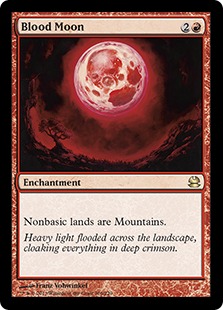
You'd think that Blood Moon would be worse here, but it isn't. If Valakut doesn't have a text box, these decks really struggle to win. In fact, many only have Valakut and Primeval Titan as win conditions. If you can prevent either from connecting, you will win. Counters and discard, the traditional forms of interaction, are much more potent here as a result. Creature swarms still work, but these decks tend to run Anger of the Gods. As a result, it is harder to ignore Valakut decks and just race. You need to pack some disruption.

Valakut is also weak to a number of common anti-combo cards. Leyline of Sanctity prevents Valakut from killing you, as does Runed Halo. Valakut is at far greater risk of being shut out of its win conditions than Tron, so that is a very viable strategy.

Ramp it Up

Ramp is very powerful, but that power comes at the risk of doing nothing. It can crush you before you can react, but it is also at risk of being locked out of winning. If you're going to pick this strategy up, understand the risks. But don't forget to reap the reward. Playing really big threats early really is as fun as Timmy says.

SCG Regionals 2017 Results Analysis

Are you a Quiet Speculation member?

If not, now is a perfect time to join up! Our powerful tools, breaking-news analysis, and exclusive Discord channel will make sure you stay up to date and ahead of the curve.

Buckle up. The Star City Games Regional event decklists are here, and all of a sudden we have a ton of Modern results to sift through. Today's goal is to speculate as little as possible—instead, I plan on taking an analytical, systematic look at the data we have available, to provide a framework upon which we can base future speculations. Without further ado, let’s get into it!

The Events

Twelve Regionals events, 8 decklists per event. For those counting at home, that’s 96 decklists to sift through. Today I’ll be focusing primarily on metagame breakdown, market share and archetype diversity, and doing my best to leave specific deck composition discussion to future articles. Believe me when I say we can quickly get lost in the details if we dig too deep into specific lists. There will be plenty of time for that later.

Acton, Duluth, Gurnee, Raleigh, Catskill, Baltimore, Minneapolis, Plano, Lenexa, Columbus, Orlando, San Diego. For the purposes of this article, I’m weighting all the Regionals Events equally. I guess you could make a case that the level of competition in San Diego was higher than that in Catskill, but I’m sure the Catskill players would disagree. Also note that suburbs of major metropolitan areas often get billing over the actual city center, even if the same flock of players from the area will be in attendance. So equal they shall be. Archetype representation, aggregated across all events, is as follows:

[wp_ad_camp_1]

Top 8 Archetypes

ArchetypeRepresentationPercentage
Jund1111.46%
Affinity99.38%
Bant Eldrazi88.33%
Burn88.33%
Abzan Company77.29%
Grixis Delver66.25%
Elves5,5.21%
Titan Breach55.21%
Ad Nauseam33.13%
GB Tron33.13%
Scapeshift33.13%
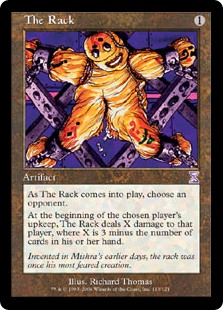
8Rack22.08%
Abzan22.08%
Bant Company22.08%
Goryo's Vengeance22.08%
Jeskai Control22.08%
RW Prison22.08%
Abzan Evolution11.04%
Amulet Titan11.04%
BR Pack Rat11.04%
Colorless Eldrazi11.04%
Eldrazi Tron11.04%
Infect11.04%
Lantern Control11.04%
Living End11.04%
Merfolk11.04%
Naya Landfall11.04%
Skred Red11.04%
Soul Sisters11.04%
Sultai Delver11.04%
Gifts Storm11.04%
GR Tron11.04%
GW Tron11.04%

For purposes of metagame representation, most of the Tron variants can be lumped together under the “Tron” umbrella, as they play relatively similar strategies and a lot of the same cards can be used to fight them. Yes, I know GB Tron and GR Tron play differently—thank the lord that Mono-Blue Tron didn’t podium or we’d have that argument as well—but for the most part, they are the same on a macro level in terms of what they are trying to do in the format.

At first glance, the Regionals results appear to show a relatively normal distribution for Modern; 4-6 decks taking a majority of the slots, a clear wide middle ground, and then a distinct group of rogue archetypes at the bottom of the pile. Were I to draw the line around “Tiers” today, I would call Tier 1 the top four (Jund, Affinity, Bant Eldrazi, and Burn) as they hold a full 37.5% of the metagame between them. Tier 2 would be any archetype that placed more than two copies in the collective Top 8: Abzan Company, Grixis Delver, Elves, RG Breach, Ad Nauseam, GB Tron, and Scapeshift. Everything else is Tier 2.5 to Fringe.
The same can be said for the Eldrazi lists, including Eldrazi Tron, which plays a lot of the same cards and just reaches higher to Ulamog and Karn Liberated. Similarly, Sultai Delver is still a Delver deck and can be grouped with the Grixis variant. Abzan Evolution, on the other hand, is built and plays fundamentally different from the Abzan Company deck, so it remains its own entity. No Viscera Seer to be found here.

Grouping variations, and combining all archetypes that only boasted a single top finish into “Fringe,” here is another look at the Regionals results:

Top 8 Archetypes (Consolidated)

ArchetypeRepresentationPercentage
Jund1111.46%
Eldrazi*1010.42%
Affinity99.38%
Burn88.33%
Abzan Company77.29%
Delver*77.29%
Elves55.21%
Titan Breach55.21%
Gx Tron*55.21%
Ad Nauseam33.13%
Scapeshift33.13%
8Rack22.08%
Abzan22.08%
Bant Company22.08%
Goryo's Vengeance22.08%
Jeskai Control22.08%
RW Prison22.08%
Fringe*1111.46%

Conversion Rates in Top 8

The big takeaways from filtering the data this way is, in my mind, a clearer perception of Eldrazi and Delver’s places in the metagame. Yes, Eldrazi only gained two points, and Delver only gained one, but in doing so they place a noticeable gap between themselves and the rest of the format. Jund, Eldrazi, Affinity and Burn occupy a defined top tier, while Abzan Company and Delver remain slightly out of the spotlight at “Tier 1.5.” Elves and below occupy a definite Tier 2, but all are capable of strong results, as seen by RG Breach’s dual first-place finishes.

Speaking of finishes, what archetypes were able to convert a respectable Top 8 finish into a finals appearance? First, let’s take a look at each archetype’s total finishes distributed by position.

Finish Distribution by Archetype

1st2nd3rd4th5th6th7th8th
Jund-1211213
Eldrazi*1-13-2-3
Affinity22121-1-
Burn3-1-22--
Abzan Company---11122
Delver*111-1-3-
Elves-11-111-
Titan Breach211--1--
Gx Tron*-12-2---
Ad Nauseam---1-11-
Scapeshift----1-11
8Rack--11----
Abzan---1---1
Bant Company-2------
Goryo's Vengeance-2------
Jeskai Control-----1-1
RW Prison1---1---
Fringe*21121121

This table might look weird, but it’s really just a visual representation of a similar statistic we’ve been looking at for a long time in the form of the “Day Two Conversion Percentage” that Wizards’ likes to put out in their GP coverage. Before looking at percentages, I want to discuss a few things we can gain from looking at the information this way.

First, if we order our archetypes by representation (most played at the top, least played at the bottom) it’s relatively easy to determine a pattern, and any possible outliers from that pattern. For example, if Jund is the most played deck, it makes sense to see it take numbers in all categories (1st through 8th place). This type of result fits the narrative of “played by many, won by few”. The fact that the first column is blank should be of interest to you, as Jund was the most played archetype yet failed to place first in any of the events.
As we move down the chart, it makes sense that the results should get more sparse, as there are fewer entries to fill the row with each successive archetype. According to the “fringe decks are clearly worse” narrative, we should expect to see a general curve down and to the right, as the lesser-played decks are “expected” to finish worse.

In some cases this is true; looking at the table its easy to notice Ad Nauseam putting up middle-of-the-pack results, along with Abzan and Jeskai Control. The outliers, of course, are Bant Company, Goryo’s Vengeance, and RW Prison. The first two put up two 2nd-place finishes each, while the latter placed pilots in 1st and 5th place. For "fringe" decks, these results are pretty impressive, especially when paired against Jund and Abzan Company’s more numerous, yet comparatively worse finishes.

A Note on Statistical Significance

Note that the n we're working with here is super low, which means we have to be very careful not to extrapolate too much. While the decks that made Top 8 presumably came from reasonable numbers in the tournaments at large, once we get into the Top 8 itself most archetypes have single-digit representation.

Take 8Rack as an example. With two pilots in the Top 8, both managed to win their first round, and then lose their semi-finals round. That's a 1-1 record in Top 8, which really tells us very little. Similarly, both Jeskai Control pilots lost their first Top 8 match. If we assume an exactly even 50% matchup in both cases, the odds of this happening are 25%—far too high to assume that it's out of the norm.
The higher finishes, however, do tell us more. Looking to Bant Company and Goryo's Vengeance, all four pilots between these two archetypes made it to the finals. Again, if we were looking at exact 50% matchups, the odds of this happening would be 6.25%. That said, we also know these decks lost in the Finals. So they collectively two-thirds of their matches in Top 8—nothing out of the ordinary, to be sure, but for the purposes of evaluating this tournament, more significant than the 8Rack and Jeskai numbers.

The Finals Table

With those caveats, here are the Finals table conversion rates.

ArchetypeFinal Table Conversion Rate
Jund9.1%
Eldrazi*10.0%
Affinity44.4%
Burn37.5%
Abzan Company0.0%
Delver*28.6%
Elves20.0%
Titan Breach60.0%
Gx Tron*20.0%
Ad Nauseam0.0%
Scapeshift0.0%
8Rack0.0%
Abzan0.0%
Bant Company100.0%
Goryo's Vengeance100.0%
Jeskai Control0.0%
RW Prison50.0%
Fringe*27.3%

Rather than sort by conversion rate, in my opinion it’s much more helpful to keep things in order of archetype representation. If our goal here is to challenge our assumptions, and the most popular assumption of all is that popularity denotes strength, then continuity across our analysis can provide clarity towards proving or disproving our hypothesis.

We’ve already discussed the strong performances of Bant Company and Goryo’s Vengeance, so we don’t need to re-tread that area, other than to say that all of the Bant Company and Goryo’s Vengeance decks that made the Top 8 made the final table. Sometimes it sounds better when you say it. Without forgetting the caveats mentioned above, we can see that 100% conversion rate really sticks out. Only two other decks (RG Breach and RW Prison) managed a conversion rate above 50%.
At this point, I’m interested in the top of the chart, and what takeaways we can find there. Yes, RW Prison did well in one event, but it did poorly in 11 others. On the other hand, Affinity was one of the most represented archetypes and converted 44.4% of its Top 8s to Finals appearances. There is another thing to take into account here: when looking at the most represented decks some amount of “infighting” occurs, as some of the Affinity players may knock each other out. We don’t know for sure if that happened here, as we’re looking across 12 events and we don’t have matchup information to go off of. But keep in mind that the rates near the top are likely to be slightly underestimated compared to those at the bottom.

The Winners

Finally, your champions:

ArchetypeNumber
Bant Eldrazi1
Affinity2
Burn3
Grixis Delver1
Titan Breach2
RW Prison1
Abzan Evolution1
Living End1

Still listed by overall representation, Burn and RG Breach are the standouts here, not only because they took home more than one victory, but also because they were not the most represented archetypes on the day. Burn was the fourth most represented, true, but RG Breach was only the eighth most represented archetype in the Top 8. Of the five Breach decks to Top 8, seeing two win is impressive, almost as impressive as the 8-to-3 ratio for Burn. Yes, Breach’s Finals conversion was “technically” 40% to Burn’s 37.5%, but with numbers that close I’m more interested in that third win. With numbers these small we can't draw extreme conclusions about the best deck or anything, but Burn looks to have been one of the big winners on the weekend.

Conclusion

It might not be fair to lump all the fringe decks together—I'm sure the guy that did well with Abzan Evolution doesn't appreciate being grouped alongside Skred Red guy, or that one dude that played Infect as a statement. The one Abzan Evolution list that top-eighted spiking the win is definitely interesting as well, and the same goes for Living End. Still, more weight would be given to such a result if more players played the deck, but therein lies the issue: if more players played the deck, it's doubtful they all would have won, so wouldn't we then be treating this hypothetical result the same way we treated Grixis Delver? That archetype also took home a trophy, and had many more players play the deck. Which is the more impressive performance?


Personally, I place more weight in representation than I do for finish, within certain bounds. If the most played deck doesn't take home two trophies, I call it a disappointment, as I did with Jund. If a lesser-played deck takes home multiple victories, I sit up and take notice. If you feel the same, I'd be interested to hear why, and obviously let me know if you feel differently. I will say I'm more interested in the Abzan Evolution finish than the Living End result; one is a known entity, while the other can be considered "rogue." I know what I'm testing this week...

Thanks for reading,

Trevor Holmes

Insider: Savvy Shopping for Old School Cards

Are you a Quiet Speculation member?

If not, now is a perfect time to join up! Our powerful tools, breaking-news analysis, and exclusive Discord channel will make sure you stay up to date and ahead of the curve.

I’ve spent many words recently discussing all the best targets to pick up for play in Old School. Whether you’re interested in investing in the format’s premier cards or you’re primarily looking for budget options just to test out the format with some friends, there’s one thing we all have in common here at Quiet Speculation: we all like deals.

The reason we work together is to make Magic: the Gathering a little bit more affordable. This is true for Standard FNM grinders as well as kitchen table casuals. Old School players are no exception. Sure, we may end up paying exorbitant amounts for silly cards like Erhnam Djinn when there are far-cheaper copies available in older printings…

There was an error retrieving a chart for Erhnam Djinn

…But that doesn’t mean we want to overpay for said cards. No, we want to pay competitive prices and save a little bit of money just like the next person.

Now that I’ve been shopping around for Old School MTG cards for almost two years, I feel prepared to share some of the secrets I uncovered when seeking out those good deals.

The High End

Some Old School players really prefer the cream of the crop for their decks. They aren’t interested in some beat-up Revised Savannah Lions for their White Weenie deck—instead, they want that Near Mint Beta copy to show off. I’ve discovered a couple possible venues to investigate for just this sort of buyer.

First, anyone who wants to purchase high-end cards such as these should be a member of the High End Facebook Group. It seems like there’s a perpetual selection of Power, duals, and graded collectible cards in these forums. I have made multiple purchases and sales with this group and I highly recommend perusing the postings from time to time. Even if you never make a purchase, lurking in this group can still educate you on prices and what is selling well versus what isn’t.

If you prefer to avoid risky dealings with individuals, may I recommend a website that may seem a bit surprising: Cool Stuff Inc. That’s right, I’ve found that Cool Stuff Inc has some of the most competitive prices on the most useful Old School staples. For example, there is a very attractive Beta Armageddon for sale on their site right now for $199.99. Factor in the loyalty member discount many frequent shoppers get, and you could be paying around $190 for this card.

There was an error retrieving a chart for Armageddon

It’s difficult to price-compare here, as most other stores don’t have a Beta Armageddon in stock. Star City Games is completely sold out. ABU Games has a far worse copy for sale for $299.99 and a Slightly Played copy for $349.99. The cheapest copy on TCG Player is Moderately Played and $213 plus shipping (from a seller with 96.6% positive feedback). Chances are that copy will look significantly worse than Cool Stuff’s.

In general I’ve found Cool Stuff to have very competitive prices on Alpha, Beta, and Unlimited cards. They don’t always have a ton in stock, but there is usually a decent selection of high-end Old School cards at fair prices. They also offer a 30% trade-in bonus, so leveraging store credit with the Florida-based store offers an even more attractive proposition.

One last idea I have for high-end cards is eBay. But you can’t just browse buy-it-now listings—anything actively listed on eBay is probably too expensive, or the Old School/collector crowd would have snapped up the cards already. Instead, I have found that a very specific type of eBay listing can lead to bargain prices: auctions on not-quite-Near-Mint cards.

The sweet spot seems to be BGS 7.5 to BGS 8.5 graded cards listed at auction with a low starting bid. Collectors have no interest in paying premium on these cards because their condition isn’t special. Players don’t want to have to deal with the slabbed cards. Thus the population of bidders for such auctions is surprisingly small. Listings like these don’t go live all that often, so you’ll have to search frequently for them. But when you land that deal, it can be pretty rewarding.

Middle Tiers

Let’s say you are interested in some Beta cards for Old School but you don’t necessarily need one in gorgeous condition. Perhaps you appreciate black-bordered cards but don’t care how played they are because you plan on shuffling them up anyways.

First off, Cool Stuff Inc has the occasional played card for very cheap as well. I have picked up a few MP Beta rares from this site for sub $10, which is virtually unheard of anywhere else on the internet, regardless of rarity. And one of them (Timber Wolves) was even playable!

That said, I have a few new ideas if you’re less picky about condition.

I find that Star City Games often has reasonable SP and MP pricing on some of the classics. I just recently bought a Slightly Played Beta Icy Manipulator from their online store for $49.99—this same card probably sells for $10-$15 more on eBay.

There was an error retrieving a chart for Icy Manipulator

Another example would be Ball Lightning from The Dark. Quiet Speculation writer Niels Rietkerk recently pointed out to me that Star City Games had very competitive prices on this card, especially during their Valentine’s Week sale. Paying $6 for Near Mint copies seems very reasonable when there are so few for sale online (ranging from $6 to $7). Once again, store credit makes this proposition even more attractive.

Star City Games isn’t the best for all your Old School favorites, however. Sometimes their pricing is a bit high relative to the rest of the market. This is where you have to be very astute in your shopping.

You could check TCG Player for Moderately Played and Heavily Played copies—once in a while you can find something underpriced. Recently I found an MP Alpha Fireball on TCG Player for $5 shipped, which is a steal since they buylist for $6 to Star City Games. Occasionally, you may even find good prices on played cards at ABU Games. Much of what they have feels inflated, likely a result of their 50% trade-in bonus. But sometimes they have a “PLD” copy in stock that looks closer to SP than MP and that 50% trade-in credit makes the deal attractive enough.

Old School on a Budget

It’s nice that I can find $50 Icy Manipulators and $5 Fireballs, but how about the players who have no interest in paying such crazy prices to play Old School? Rest assured, I have some advice for you as well.

Last week I touched upon a recent trend in budget Old School: Collectors’ Edition and International Edition cards. These remain one of the best budget options for entering Old School or building additional budget decks to share with friends. And even though this trend is slowly catching on, there are still a few good deals out there.

It seems TCG Player and eBay are nearly cleared out of the square-cornered cards, making prices artificially high. I definitely caution you to look at eBay completed listings and TCG Market Pricing when purchasing from these sites. You may be better off going a different route…

Enter the most ironic point of this article: the oft-most-overpriced vendors seem to have some of the best prices on CE and IE cards, at least for now. For example, Card Kingdom’s current pricing on CE Disrupting Scepter—an Old School staple—is $1.29. This is far below market pricing on all fronts!

Sadly, they’re sold out and I expect they will bump their prices in the near future. But there are a handful of situations like these worth checking frequently. A couple of strategic alerts on Card Kingdom could lead you to a budget pickup. After all, $1.29 is far cheaper than the Beta copy, at $254.99 on the same site!

If you don’t want to deal with browsing out-of-stock CE and IE cards, then I have one last budget idea for you. One of my favorite things to do when I’m bored and in the mood to fill out my Old School collection further is to browse all of TCG Player’s stock for Beta and Unlimited commons and uncommons. I look to see if there are any incongruous prices, such as an LP copy priced below all MP copies or the like. Sometimes I pull up Star City Games’ buylist and compare TCG cards with the buylist, looking for listings with very close spreads.

While this won’t make me money immediately, it does give me additional budget options with which to build in Old School while also getting cards that will likely turn a profit over the coming months. It’s a great way to pick up a few pieces to fill in gaps for a deck while you’re waiting for funds to get more optimal components.

Wrapping It Up

When it comes to shopping for Old School cards, you need to peruse many different sites to make sure you’re getting the absolute best deal. When supply is so limited, it’s easy to overpay. I’ve found the best way to avoid this pitfall is to browse the sites I mentioned throughout this article. And depending on what I’m after, there are certain sites I default to first before others.

If I’m after something more high-end such as Beta staples or even Power, then the High End Facebook group or Cool Stuff Inc are the places I look to. If my goal is to trade cards in for played stuff, then ABU Games and Star City Games may be the best route. If I want to spend cash on some budget options, TCG Player can be a useful tool.

Before concluding, I want to mention two sites that I didn’t touch upon in my article: Card Shark and Channel Fireball.

I don’t recommend shopping for Old School stuff at Card Shark because supply is extremely limited. I find there are one or two sellers who have a bunch of older cards and that’s about it. Once in a while you can get lucky, and Card Shark is still one of the best sites to look to while a buyout is happening. But if you’re just browsing for discounted cards for Old School, I don’t think Card Shark should be your first stop.

For Channel Fireball, I have found they are far better to sell to than to buy from for Old School stuff. They have very competitive buy prices, especially on Near Mint copies of the Old School staples. They do have the occasional underpriced Alpha Uncommon or Common, but this is infrequent.

My advice to you here is to browse TCG Player first—Channel Fireball lists much of their Old School stock on TCG Player anyway. If you see an instance where Channel Fireball is competitively priced on an Old School card, you can then navigate to their website and purchase the card directly at a lower price. Don’t forget that 5% off coupon code!

Hopefully these ideas will help you build out your Old School decks and old set collections in an affordable way—well, as affordable as it can be at least. When supply is so low, shopping around the internet is a must, and some sites are better than others depending on what you’re after. I hope you leverage this information to find what you’re looking for. Happy hunting!

…

Sigbits

  • Wheel of Fortune stock is very limited. Star City Games has a couple sets of played Revised copies ($44.99) and one MP Unlimited copy ($59.99) in stock and that’s it. Being a highly useful card on the Reserved List, I don’t see this one pulling back in price any time soon. I’d suggest getting any copies you need right away—don’t forget to look at CE and IE as budget alternatives!
  • I follow a bunch of Old School players on Twitter, and recently I’ve noticed a couple using Storm Seekers in their build. I remember playing this card as a kid, but I never considered it as Old School playable. Supply is starting to dwindle on this Legends uncommon, and Star City Games is completely sold out at $2.99. I’d keep an eye on this one.
  • Another Old School card worth picking up is Juggernaut. I initially wrote this one off because it dies to Lightning Bolt, preferring Su-Chi as an alternative. But if your opponent doesn’t have that Bolt, then a 5/3 attacking in the early game can be a real threat. Perhaps that is why Star City Games is completely sold out of Alpha ($59.99), Beta ($39.99), Collectors’ Edition ($1.49), and International Edition ($1.99) copies. Right now they have just a few Unlimited copies in stock, but $4.99 for Near Mint is surprisingly high. This card is definitely on the up-trend though, so I’m sure prices will climb again in the future.

Brewing with Heart: Aether Revolt in Modern

Are you a Quiet Speculation member?

If not, now is a perfect time to join up! Our powerful tools, breaking-news analysis, and exclusive Discord channel will make sure you stay up to date and ahead of the curve.

Modern has kept me busy lately. Fatal Push generated a metric ton of buzz, Dredge and Infect terrorized Modern and were subsequently nerfed, and most recently, I've had my heart set on building entire decks around the improvise mechanic or Smuggler's Copter. All these developments have prevented me from writing about how Aether Revolt's less obvious cards have worked their way into my brews.

Today, we right that wrong by looking at three brews I've been sleeving up that use some newer cards to great effect.

[wp_ad_camp_1]

Esper Vehicles with Heart of Kiran

Perhaps the splashiest mythic in the set, Heart of Kiran caught the eye of many looking for the most pushed vehicle during Aether spoilers. It was overshadowed in Standard by Smuggler's Copter until Copter's recent removal from the format, but Heart has one major upside in Modern: its whopping four points of toughness. I still believe Copter to by and large be a better two-cost vehicle, so my solution for building a deck with Heart was to simply play both.

Esper Vehicles, by Jordan Boisvert

Creatures

4 Jace, Vryn's Prodigy
4 Snapcaster Mage

Artifacts

4 Smuggler's Copter
2 Heart of Kiran

Instants

4 Path to Exile
4 Fatal Push

Planeswalkers

4 Liliana of the Veil

Sorceries

4 Serum Visions
3 Inquisition of Kozilek
4 Lingering Souls

Lands

4 Flooded Strand
4 Polluted Delta
2 Marsh Flats
2 Creeping Tar Pit
2 Darkslick Shores
2 Hallowed Fountain
1 Watery Grave
1 Godless Shrine
2 Swamp
2 Island
1 Plains

Sideboard

2 Nihil Spellbomb
3 Spreading Seas
2 Disdainful Stroke
2 Negate
1 Dispel
1 Invasive Surgery
2 Rest for the Weary
2 Fragmentize

Crewing the Heart

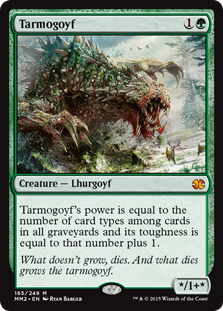
I think Heart of Kiran's regular crew condition is too pricey. Modern is a fast format, meaning we'd usually rather just attack with our three-power guy if we can. There are also more reliable beefy creatures at two mana if we're in a deck that has aggressively costed three-power guys at all, namely Tarmogoyf, Grim Flayer, and Tasigur.

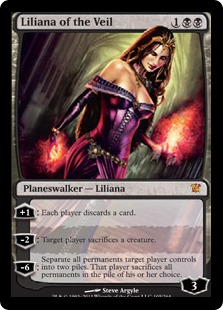
Heart's vigilance dimension grooms it for a shell wanting to clock while playing defense, which made me consider aggro-control decks on the midrange end of the spectrum. Planeswalkers slot nicely into this kind of deck. The most efficient/playable ones available are Liliana of the Veil, a contender for the most impactful fair card in Modern, and Jace, Vryn's Prodigy, who synergizes nicely with other elements we want to play. Lingering Souls loves being looted, and Copter plus Jace gives us plenty of ways to throw it away. Jace's legend status also makes him a prime target for dumping. The flip-walker can re-cast spells we've discarded to Copter or to his own effect, and it enters the battlefield with a ton of loyalty, making it simple to support Heart of Kiran.

Bolt Fights

Esper Vehicles exerts a weird tension on opponents when it comes to spot removal. On the one hand, Jace and Copter are prime targets for Lightning Bolt and Fatal Push. On the other, hitting one and seeing it chased with another can prove extremely frustrating. We never really want Jace or Copter in multiples, and if they stay on the table, we get to generate a snowball of advantage while looting away our extra copies. If they die, we can simply play out one of those extra copies. Creeping Tar Pit also punishes opponents for throwing away too much spot removal early.
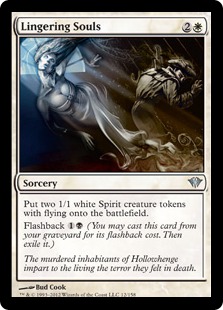
Lingering Souls gives the deck an angle of attack that practically invalidates spot removal. Running the full set alongside card selection tools like Jace, Copter, and Visions allows us to amass a fleet of Spirits at a moment's notice in the mid-game, a plan that buys us time and diverts enemy removal spells from our superior targets while applying pressure that will have to be dealt with eventually.

Superb Removal

The combination of Snapcaster Mage, Path to Exile, and Fatal Push gives this and other Esper decks a great chance of staying alive into the mid-game, when its cards shine brightest.

Combined with Liliana of the Veil, this removal suite makes it difficult to lose against BGx, Grixis, and other fair decks that go lower to the ground to stand a chance against big mana strategies. (To compensate for our own natural weakness to big mana, I've dedicated plenty of sideboard space to beating it.)

Sultai Rogues with Fourth Bridge Prowler

Given my love for tribal spells and cantrips, Rogues has been a pet deck of mine for some time. After all, they get what can sometimes be the best cantrip in Modern—and it grows Goyf, to boot! I've built many decks featuring Tarmogoyf and Thieves' Fortune, and all across the color spectrum (although especially in Temur). But Sultai only became genuinely intriguing recently, with the release of Fatal Push. Rogues' most limiting factor has always been its slim roster of potential threats. Push aside, it's Aether Revolt's Fourth Bridge Prowler that pushed me to pay the wedge another visit.

Sultai Rogues, by Jordan Boisvert

Creatures

4 Fourth Bridge Prowler
4 Faerie Miscreant
4 Tarmogoyf
2 Snapcaster Mage
2 Spellstutter Sprite
2 Faerie Impostor

Artifacts

2 Cloak and Dagger

Instants

4 Fatal Push
4 Thieves' Fortune
1 Abrupt Decay
1 Murderous Cut

Sorceries

4 Traverse the Ulvenwald
4 Serum Visions
2 Collective Brutality

Lands

4 Polluted Delta
4 Misty Rainforest
2 Mutavault
2 Darkslick Shores
2 Watery Grave
1 Breeding Pool
1 Overgrown Tomb
2 Island
1 Swamp
1 Forest

Sideboard

1 Yixlid Jailer
1 Tooth Collector
1 Reclamation Sage
1 Thrun, the Last Troll
1 Thragtusk
1 Fulminator Mage
1 Seal of Primordium
2 Abrupt Decay
2 Disdainful Stroke
1 Ceremonious Rejection
1 Natural State
1 Dismember
1 Bojuka Bog

What's Not New

Goyf and Serum Visions are constants in all my Rogue decks; Goyf is the reason I build them, and Serum helps me achieve what I want to achieve each game. I've also preserved the Traverse the Ulvenwald package from my last foray into brewing with Rogues. The whole point of the deck is to enable a card that simplifies hitting delirium, so I don't see turning back anytime soon in regards to this decision.

Faerie Miscreant also sticks around. Miscreant enables Spellstutter Sprite, which incidentally is pretty good with the already on-theme Mutavault and gets even better with Faerie Imposter.

Building Bridges

Traditionally, my brand of Rogues was basically shoehorned into Temur colors for Lightning Bolt. This kind of micro-synergy-based tempo deck needs a way to cheaply remove creatures in the early game. Fatal Push gives us another option, and its release coincides nicely with that of Fourth Bridge Prowler.
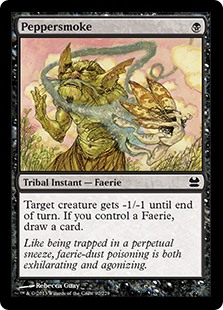
Prowler has been awesome for me. It has all the potential upside of a well-timed Peppersmoke as well as offering plenty of adorable synergies. Instead of drawing a mystery card and growing Goyf, Prowler loosens the conditional requirements (it doesn't require a Faerie in play) and gives us an on-tribe body. Best-case scenario, Prowler comes down early to kill off Dark Confidant or Noble Hierarch before getting in some hits to turn on Thieves' Fortune. The creature has plenty of juicy late-game targets in Modern, too, ranging from Snapcaster Mage to Vendilion Clique to a lowly Spirit token. Don't judge; value is value!

The wealth of cheap 187 abilities we accrue between Prowler, Miscreant, Snapcaster, and Spellstutter incentivize us to run some amount of Faerie Imposter. Imposter's drawback of forcing us to re-cast a creature is greatly mitigated when that drawback nets us a card or a removal spell in the process. I started with just one Imposter as a Traverse target and ended up adding a second to increase the odds of drawing her naturally.

Running so many one-drop Rogues lets us max out on Thieves' Fortune, which becomes significantly more reliable. As a result, we can safely include one-of bullets like Abrupt Decay and Murderous Cut for tricky situations, as well as expect to see matchup-specific threats every game after siding.

Suiting Up

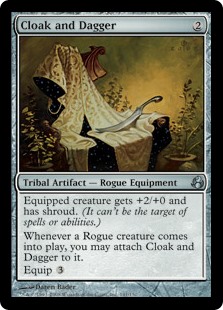
For the first time, I've included Cloak and Dagger in my Rogues list. I've messed around with this card in the past, but it always did too little to make it to the main. With ten powerful one-drop rogues (over half of which fly), and added incentive to run the creature-bouncing Faerie Imposter, Cloak becomes much more appealing.
A 3/1 with hexproof is surprisingly tough for many interactive decks to deal with. If that 3/1 also has flying, it becomes a nightmare. Cloak also functions fine in the graveyard; losing the equipment to a discard spell or Abrupt Decay usually turns on delirium right away, a feature we can leverage favorably with Collective Brutality.

Counter-Cat with Renegade Rallier

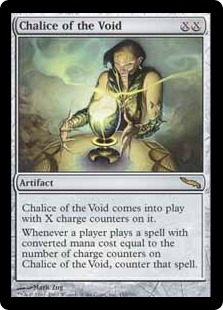
Despite my blowout RPTQ performance last December, I maintain a lot of love for Counter-Cat. The deck is a blast to play and surprisingly resilient in metagames not brimming with Chalice of the Void and Conflagrate.

It's rare that my goodstuff decks benefit significantly from new expansions, since I tend to favor tempo strategies full of too-good commons over midrange ones packing obviously pushed mythics. The revolt mechanic excited me on this front when it was revealed. Aether Revolt didn't disappoint, bringing Counter-Cat an exciting tool to combat the midrange strategies it struggled to beat before: Renegade Rallier.

Counter-Cat, by Jordan Boisvert

Creatures

4 Wild Nacatl
4 Delver of Secrets
4 Tarmogoyf
3 Hooting Mandrills
2 Snapcaster Mage

Instants

3 Mutagenic Growth
4 Path to Exile
4 Lightning Bolt
2 Lightning Helix
2 Spell Pierce
2 Spell Snare
2 Mana Leak

Sorceries

2 Sleight of Hand
4 Serum Visions

Lands

4 Misty Rainforest
3 Arid Mesa
2 Flooded Strand
2 Scalding Tarn
1 Wooded Foothills
1 Steam Vents
1 Temple Garden
1 Stomping Ground
1 Hallowed Fountain
1 Island
1 Forest

Sideboard

1 Isochron Scepter
2 Huntmaster of the Fells
2 Renegade Rallier
2 Pyroclasm
2 Lightning Helix
1 Surgical Extraction
2 Negate
2 Destructive Revelry
1 Ancient Grudge

Tempo and Attrition

Generally, Modern cards that provide card advantage cost a lot of mana. Esper Charm, the format's most recent card advantage staple, costs three mana. So does Painful Truths, a card Jund and Grixis Delver have been known to sideboard for grindy mirrors. Mana can be loosely translated to tempo, since players get to play a single land each turn and must spend their limited resources wisely in a format as fast as Modern. Ancestral Vision, the apparent exception to the cards-cost-mana rule, still costs pilots plenty of tempo, as it refuses to resolves until the fourth turn after it's been suspended.

Similarly, tempo-positive spells in Modern usually come with card disadvantage. Simian Spirit Guide and Desperate Ritual are classic examples of spells that temporarily put players up a turn in mana development, but cost them a card, essentially putting them down a turn in card economy. Collective Brutality embodies this principle very clearly, doing way more than a spell should for just two mana, but requiring discards to escalate.

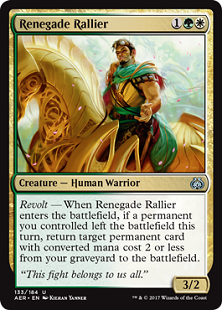
Enter Renegade Rallier, a creature that promises both card advantage and tempo. Three mana can seem like a lot in a deck that slings 3/3s for only one, but it's nothing compared with Snapcaster Mage, the most obvious analog to Rallier in Modern. Snapcaster is one of the few cards in Modern that provides card advantage and tempo, advancing the board with a 2/1 for a tack-on price of 1U while netting players a used spell for its mana cost. 1U, too, is too much to pay for a vanilla 2/1 in Modern. But with the added benefit of card advantage, it becomes acceptable.
Rallier ups the ante. 1GW for a 3/2 is arguably a worse rate than 1U for a 2/1, although marginally so. Kird Ape's laughable status as a clock compared with Nacatl and Delver attest to the difference between two and three power. Rallier's two toughness also happens to be in the sweet spot for Mutagenic Growth to save him from Lightning Bolt. Regardless, whatever mana is lost paying for his body, Rallier makes up for with his ability, which doesn't require us to pay mana for the dead creature we target.

Rallier in Practice

Consider giving a one-mana spell flashback with Snapcaster Mage. 1UR for a 2/1 and a Lightning Bolt is a great rate, in part because Bolt itself has such an aggressive rate. Incidentally, Counter-Cat's creatures also possess such rates. In many matchups, I think 1GW for a 3/2 and a 3/3 is significantly better than the same amount of mana for just one body. If we're recurring Tarmogoyf and not Wild Nacatl, the tempo we gain becomes even more significant—in that scenario, we're basically casting Goyf (1G) and Nacatl (W) and going up a card for free. In late-game situations where mana abounds, Rallier can even recur Snapcaster Mage and put us up more cards—one spell for two bodies and a Path to Exile might as well be Painful Truths without the life loss.

In terms of reliability, I have found Rallier to function well at two copies. Counter-Cat runs 12 fetchlands, which account for two-thirds of the skimpy manabase. Rallier performs best in the late-game, by which time some of those fetches can become dead as we fetch out our lands. The creature does a fine job turning them back on to some degree.

Ideal Uses

As mentioned, Rallier's primary function in the Counter-Cat sideboard is to shore up attrition matchups. The deck can struggle against Grixis openers featuring Bolt, Push, and Terminate; sometimes, those draws just kill all our threats and make it hard to bounce back before opponents manage to stabilize. No more! Opponents answering us one-for-one are bound to start doubting their ways when Rallier comes down and invalidates their most recent play, all while adding to the board himself.
The creature also has a "hidden mode" (man, do I love scare-quoting that phrase) of ramping us by one, which can prove relevant against linear decks or in mana-light situations. Sometimes, putting some pressure on the board without going down a card is exactly what the doctor ordered. Cracking a fetch on turn three, resolving Rallier, and recurring that fetch is the Selesyna warrior's version of Probe-Snap-Probe, and it's great with Huntmaster of the Fells, Isochron Scepter, Snapcaster Mage, or a bunch of two-mana spells in hand.

Diversifying Angles of Attack

Another aspect I like about Rallier is how it gives Counter-Cat even more options. Gaining access to another midrange hoser under four mana lets us cut Isochron Scepter down to one copy, which makes the artifact more of a gotcha! card and less of a fragile package. Opponents must also sequence their removal differently to play around Rallier, so as not to trigger revolt on our turn. Forcing opponents to sequence disruption in awkward ways is exactly what Counter-Cat wants to do, since it allows us to dictate the pace of the game and maximize blowouts with our conditional coutermagic.

A Note on Sleight

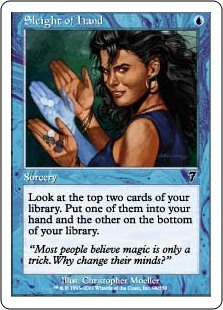
Rather than rebuild Counter-Cat from the ground up like I did with Temur Delver after the Probe ban, I stuck with the heavy core and looked for replacements. Unfortunately, Counter-Cat really wants six one-(or less)-mana sorceries to help remove Tarmogoyf from Bolt range. I tried a few cards in the deck over Gitaxian Probe, including the revolt-enabling Mishra's Bauble. Traverse was too unreliable with the focus on Hooting Mandrills; Thought Scour didn't bin the right card types often enough; Bauble was too awkward with Delver in a deck already dangerously low on instants and sorceries.

I settled on Sleight of Hand, the strongest generic blue cantrip in Modern after Serum Visions. So far, I haven't been too unimpressed. Sleight is better than Probe in situations where we have mana to spare, but worse when we're light on lands. The cantrip is especially bad when we draw multiple nonblue lands naturally (i.e. Temple Garden and Forest) and have to ration out the mana from a lone Steam Vents on Bolts, Visions, Sleights, and permission spells.
One benefit of Sleight is it allows us to keep a wider range of hands, since its selection effect gets us two cards deeper to a second land drop. One-landers with Probe and no Visions were almost always mulligans. The jury's still out, but I'm sticking with the Sleights for now.

New Modern, New Decks

One of Wizards' primary goals for Modern is that Standard cards and decks can transition into the format after set rotations. So far, they've done an admirable job—despite cards like Urza's Tower, Tarmogoyf, and Blood Moon running around, it seems Modern gets some new toys with every expansion.

The format's deep card pool rewards players for pairing new arrivals with old sleepers. For some, that means dusting off old launch promos of Breaking // Entering; for me, it means tracking down a set of Cloak and Dagger. If Aether Revolt has inspired any brews of your own, share them in the comments. And if not, I'd wager it's only a matter of time until Wizards prints something that stirs your inner Johnny.

Insider: Modern Cards to Watch

Are you a Quiet Speculation member?

If not, now is a perfect time to join up! Our powerful tools, breaking-news analysis, and exclusive Discord channel will make sure you stay up to date and ahead of the curve.

The release of Aether Revolt and the bannings of Golgari Grave-Troll and Gitaxian Probe have significantly altered the texture of Modern, but there haven’t yet been any major Modern events to shed light on the metagame. The coming weekends feature two consecutive Modern SCG events: a Team Open containing Modern as one of the formats first, then a Modern Open the following weekend. These events will serve to explain some of what’s going on in the format, with market implications inevitable. Today, I’ll highlight some of the cards that have improved strategically due to the new cards and bannings, which might be good investments for the near future when Modern re-enters the spotlight.

There was an error retrieving a chart for Basilisk Collar

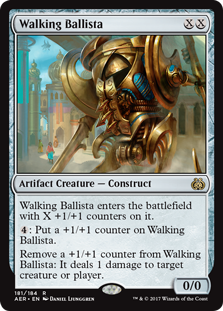
Basilisk Collar has entered the realm of top-tier Modern playable with its incredible interaction with Walking Ballista, which it turns into a walking machine gun. Basilisk Collar has been increasing steadily in price since Aether Revolt was released, growing from 2 tix to 3.5, but up to just $9.80 from $9.40 in paper, so there should be more room to grow. The price has been steadily increasing ever since the card was printed, so it looks good in the long term,

Online, Walking Ballista has proven fantastic in Eldrazi Tron, where it fills in as disruption and a threat, and its large Eldrazi are also perfect for wearing Basilisk Collar to push through blockers and gain massive amounts of life. Both halves of this combination can be found by Trinket Mage, which makes it an interesting possibility for Mono-Blue Tron decks as well, or even a deck like Blue Moon. Eldrazi Tron has been growing in popularity since the banning of Golgari Grave-Troll and Gitaxian Probe, but there hasn’t yet been a major paper event to test the metagame, so if a deck sporting this combination does have major success, then it’s liable to spike.

There was an error retrieving a chart for Urza's Tower

Urzatron was a big winner from the Modern bannings, because Infect is its worst matchup, and it’s subsequently picked up in popularity online. Rather than just the typical Red-Green version with Grove of the Burnwillows, there are all varieties of Tron decks, including the colorless Eldrazi Tron, Mono-Blue Tron with counterspells, White-Green Tron with Path to Exile, and even Black-Green Tron with Fatal Push.

If Modern goes through an Urzatron renaissance, then demand on Urzatron lands is sure to rise. I’m also confident in Urzatron lands as being reprint-safe because of their potential to be banned. Wizards isn’t keen on the fast mana they provide, and they are surely on the short list of possible ban candidates given the precedent of Cloudpost being banned after the first Modern Pro Tour, but I don’t think they're likely to actually see a banning. I just don’t see them as cards they want to popularize more or flood players with, especially given that they are from Ninth Edition, which many argue should be wiped from Modern entirely. Foil copies are quite expensive, but they might be great long-term holds given the low risk of reprint.

There was an error retrieving a chart for Kolaghan's Command

Kolaghan's Command is up to $10, and while some of that spike is from interest in a Frontier, which doesn’t seem to be keeping up steam in the United States, the price has held steady at the new price for a month, and is now trending upwards after a slight dip. The card is a true Modern staple, and as a black card has become better than ever with Fatal Push in the format. It also has plenty of casual appeal, and is likely in many Commander decks of these colors. This card isn’t going to see a reprint in an expansion, and won’t be in a Modern Masters set for years, so it looks like a great hold.

There was an error retrieving a chart for Collected Company

The Modern bannings have reduced the amount of graveyard hate in the format, especially Grafdigger's Cage, which makes things a lot easier for Abzan Company decks that use the graveyard to combo. The deck has also received a new tool in Renegade Rallier, which opens up a combo with Saffi Erriksdotter. Abzan Company is never popular online because its infinite combo is very slow and impractical to operate, but the deck is historically the darling of many grinders on the SCG circuit, and they could bring the deck to the forefront. Collected Company is central to the strategy and will only get better as more powerful creatures are printed, so it’s only going to appreciate over time.

There was an error retrieving a chart for Gifts Ungiven

Baral, Chief of Compliance has spawned a new version of the Storm archetype using Gifts Ungiven as a combo engine with Past in Flames. Its price online has grown rapidly since the release of Aether Revolt, doubling from 3.2 tix to 6.4 tix for the Champions of Kamigawa version and 3.5 tix to 7 tix for Modern Masters version. With the paper price at the lowest point in a year after a big rise and fall in 2016, the card is ripe to start heading back up, especially since it’s not likely to be in Modern Masters 2017.

There was an error retrieving a chart for Primeval Titan

One of the big players online these days is Titan Shift, which combines Primeval Titan and Scapeshift in a Valakut, Molten Pinnacle-centered deck. It’s a big winner from the banning of Gitaxian Probe because Infect was a poor matchup, and from the release of Aether Revolt because it’s immune to Fatal Push. Primeval Titan is critical to the deck, but I don’t see it being reprinted in Modern Masters 2017 after making it in last time.

Scapeshift would be an absolutely incredible buy if it’s not in Modern Masters 2017, but I imagine it’s the perfect card to reprint: a card that hasn’t been reprinted yet that’s in powerful and flashy strategies but at a very fair pace. I imagine this is the type of strategy Wizards would like to promote in the format.

Summoner's Pact is used as a two-of in the deck, and it could be a good spec because it has already seen a reprint in the first Modern Masters.

Obstinate Baloth is a staple of the sideboard that occasionally creeps into the maindeck, and it has been steadily growing in price online since the release of Aether Revolt, doubling from 1.7 tix to 3.4 tix. The paper price has stagnated to under $5, and it will be a great buy if not reprinted.

--Adam

Insider:QS Cast #53: MM2017, Cards, and more!

Are you a Quiet Speculation member?

If not, now is a perfect time to join up! Our powerful tools, breaking-news analysis, and exclusive Discord channel will make sure you stay up to date and ahead of the curve.

Play

The QS Cast has returned: Chaz Volpe, and Tarkan Dospil continue on with where the cast left off and in this episode they discuss the following:

  • Interests
  • Card Discussion
  • Modern Masters 2017 addendum; more supply then we originally thought!
  • What we're acquiring

Cards we discussed:


As always, please comment and leave questions for us to address on the next cast! We will be making QS Insider questions a priority, and we want to know what you want covered.

Enjoy! We’re glad to be back.

Find us on Twitter: @ChazVMTG  @the_tark

Insider: My Genius Knows No Bounds

Are you a Quiet Speculation member?

If not, now is a perfect time to join up! Our powerful tools, breaking-news analysis, and exclusive Discord channel will make sure you stay up to date and ahead of the curve.

 But DJ! That's a super arrogant title; you're not a genius at MTG finance, or anything really. Why would you start off your article on such an aggressive note?

Because I'm your archenemy today, that's why. Mwahahahaha!

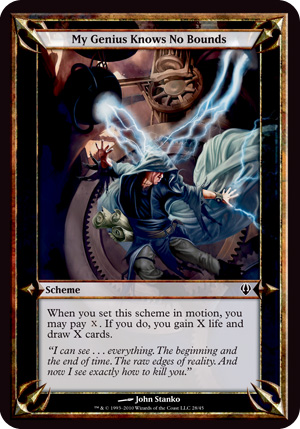
462_schemeback

...

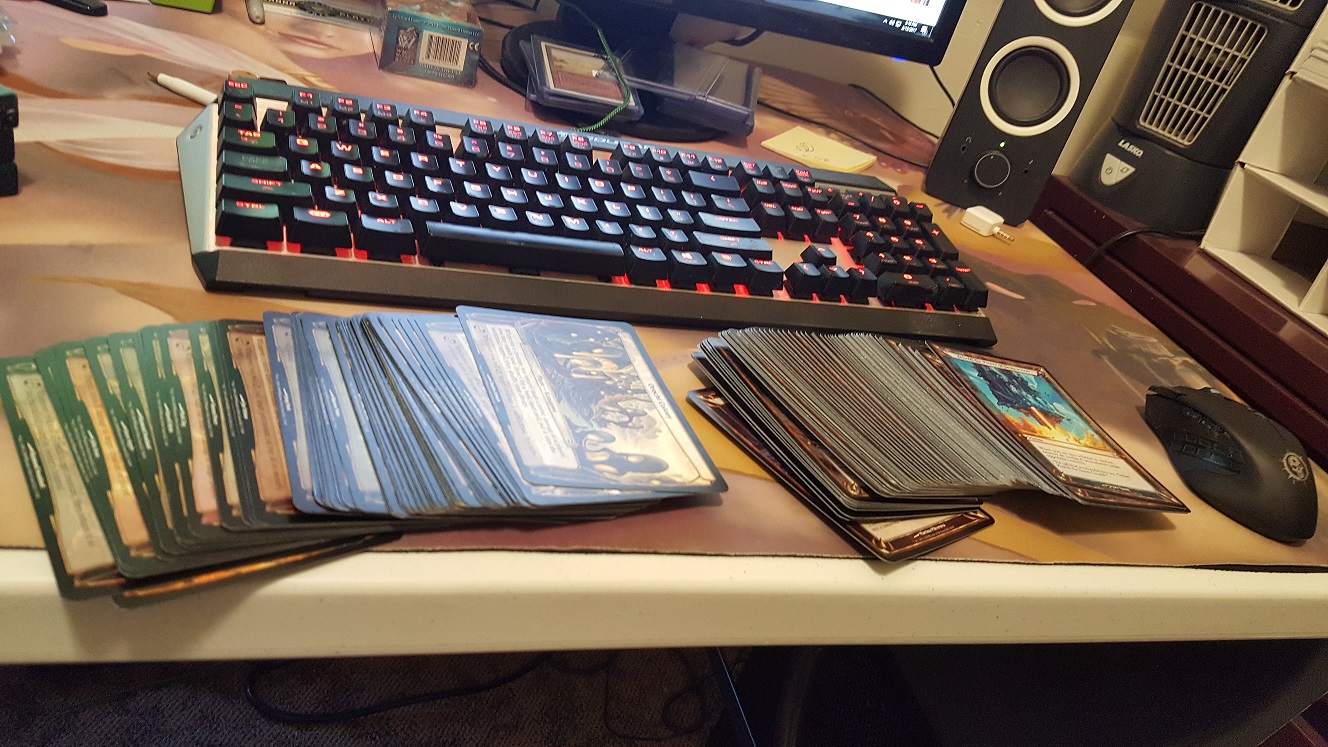
So remember that collection I bought a little over a week ago? The one with all the tokens that I may or may not list on TCGplayer based on my recent frustrations with the platform as described recently on my Twitter? Well, it also has a pile of Archenemy schemes and Planechase planes.

But DJ! How many schemes and planes did you get in that collection? Surely not enough that it's worth spending an entire articl-

schemes

BAM! 

Yeah. That's a lot of machinations going on over there. A lot of worlds to visit, several evil plots spanning across centuries, you know the drill. Very Bolas-y stuff goin' on.

I don't have a whole lot of experience in buying these, because they're so freaking rare to find in collections nowadays. Even then, you might just get 10 or 20 from someone who only bought a single preconstructed deck. I didn't really know what to offer the guy offhand, and I knew even less about which ones were worth money or where to sell them. He let me know that I could basically have them as throw-ins toward the end, as a thanks for going through the rest of his collection so thoroughly. Once I had a little bit of time to look up some prices when I got home, I started to be blown away by how much these relics from six or seven years ago are worth.

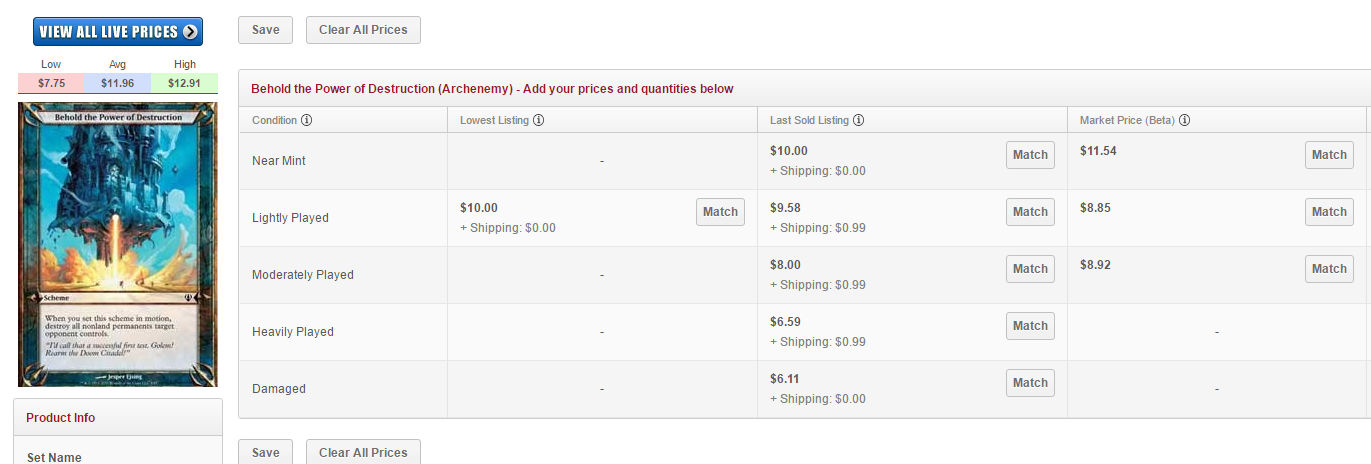
Behold the Price Tag of This Stupid Thing

behold

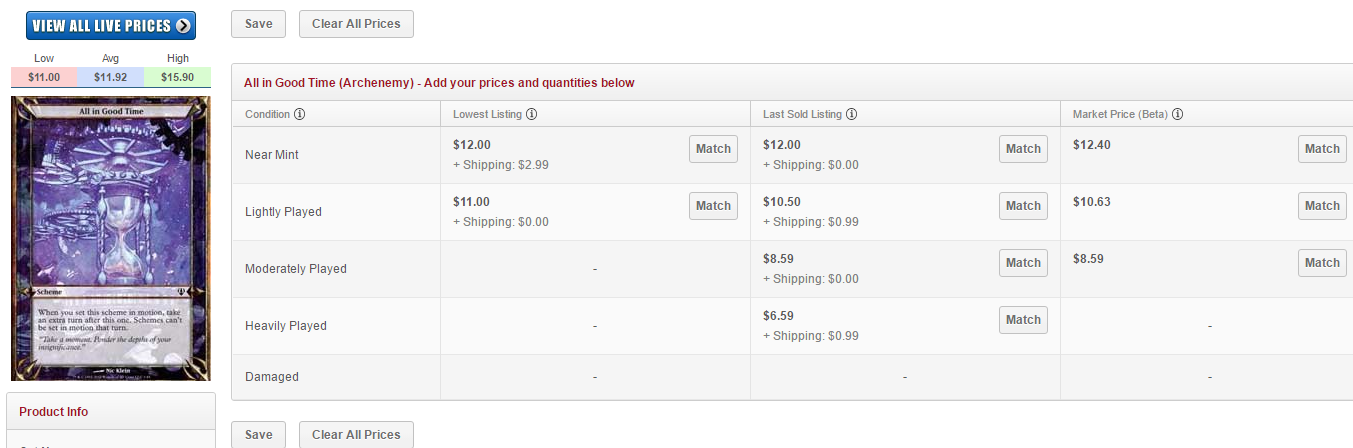
all in good time

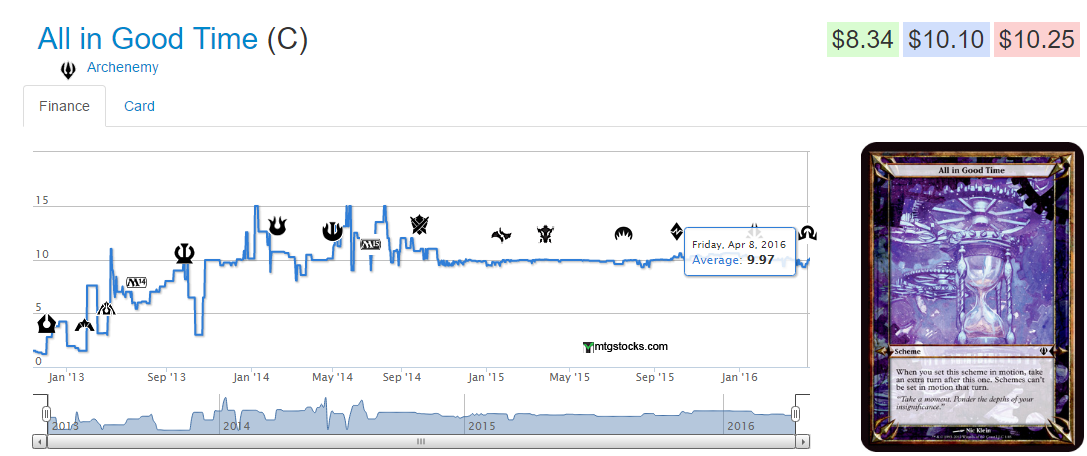
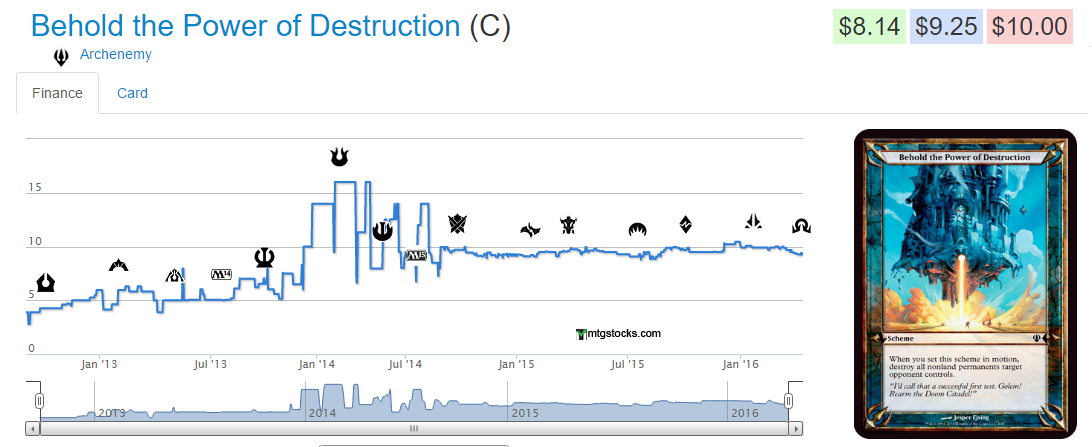
Holy crap; that's more surprising than that undead Goblin token that we talked about last week. Are all of these stupid casual coffee table coasters this expensive? Did I basically win the lottery by getting this jank as a throw-in? Well, unfortunately the cream of the crop had already risen to the top of the pile when I started to price check these things. The rest of them range from $1 to $7, with most leaning towards the lower end of that spectrum. Who knew that the Time Walk and one-sided Planar Cleansing would be the most universally in-demand schemes?

Certainly not me. I bought one of these decks back when I was a casual player in 2010, but my friends and I quickly grew bored of the format. We all wanted to be the one holding the free Time Walk or Overrun, and it was less fun to randomly get Bonfired or Mindslavered just because the Archenemy had the heart of the cards on that turn. I expect that lack of replayability is part of the reason Wizards decided to avoid revisiting the Archenemy product until this year, when it happened to fit the theme of the Amonkhet plane: a bunch of Super Friends trying to one-versus-five the almighty Nicol Bolas (sounds a lot like my average League of Legends solo queue experience, to be honest).

Feed the Machine

So what's the best way to go about selling these stupid things? Should we be listing them on TCGplayer, regardless of my previously mentioned frustrations? Well, let's take a look at the graph for the aforementioned supersized Time Walk impostor.

all in good t2


behold2

Once the market finally figured out what it wanted to pay on these schemes (things appeared to sort themselves out in the winter of 2015 two years ago), the price has practically traced that $10 price line on the MTGstocks graph, never really moving a dollar above or below that. That leaves us with a couple of possible results: either schemes constantly sell out at the exact price range of $10... or they sell extremely rarely and we don't really have many data points to go off of. We talk about this a little bit on this week's Brainstorm Brewery, but I'm leaning towards the latter. While there's obviously some level of casual demand similar to Planechase for those who want to mix up their Commander rhythm, I can't imagine that these sell constantly. I'd be interested to hear some numbers from a store who stocks these regularly, though.

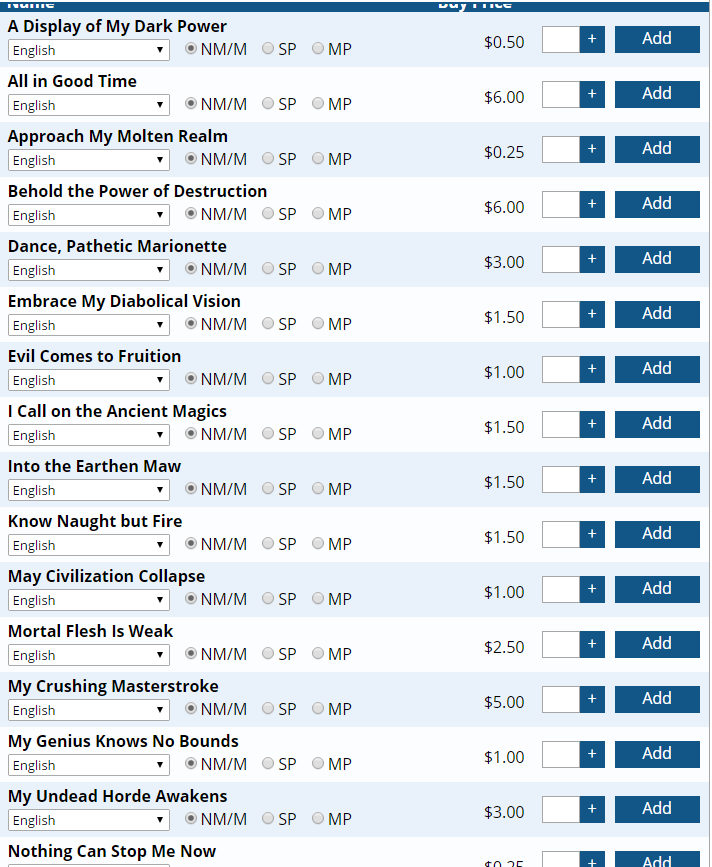
So what do the buylist numbers look like? Well, the golden standard of SCG is willing to buy a relatively long list of various different schemes as always, giving you a fast and easy option to flip if you ever run across a pile of schemes in a Craigslist collection. The ChannelFireball buylist is similar, although I'd prefer to take SCG trade credit and then save that up for one of their weekly sales. Turning random schemes into LP/MP staples? Sounds good to me.

scgschem

Plots that Span Millennia

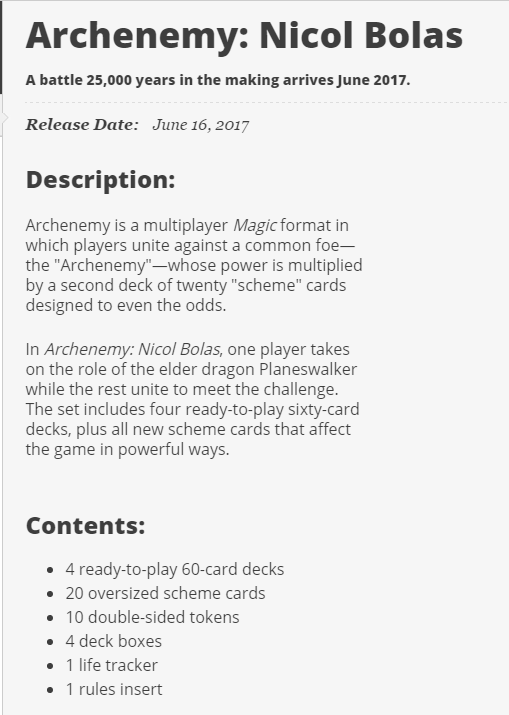
Remember earlier in the article how I talked about the upcoming release of Archenemy: Nicol Bolas? Well, I think that has some relevance with the schemes we've seen here.

We all know that the printing of new products encourages us to look at that past and find new synergies instead of chasing the new product. When The Gitrog Monster was printed, the correct play was to buy a pile of Squandered Resources instead of targeting the popular frog commander that sits today at the bulk rare bin. Want to spec on the Sram, Senior Edificer deck? You should've probably been buying Paradise Mantle and Sigil of Distinction instead of Puresteel 2.0. In this case, I think I might hold onto some of these schemes and see if they jump in price if there shows to be real demand for the Bolas Archenemy product. Maybe it'll cause an increase in people building scheme decks, and those people will need to scour the internet to find the right Time Walk scheme. I don't really know, so your guess is almost as good as mine.

bolas

This product is really interesting to me: instead of selling four separate decks that each come with their own "scheme deck," this product comes with 20 schemes and four 60-card decks all-in-one, at the MSRP of $59.99.

Now, I'm not a distributor for WotC or an actual store owner, but I've seen several LGS owners complain that products like the various Anthologies collections that come with multiple decks have just sat on the shelf, gathering dust or eventually being used as prize support just to find a way to get rid of them. Maybe that's because those are just a pile of reprinted products from several years ago, but I'm curious if this product will suffer the same fate.

I'm sure there's a small number of playgroups who will split the cost four ways and each take home a deck while sharing the scheme deck, but how far does that market audience reach? Maybe this product gets lost in the wave of 40 other releases this year, and we don't see a lot of people opening it. At that point, I think we'll see a great opportunity to pick up several of the reprinted cards in the package, and maybe get some bulk schemes to hold onto for the long term.

Either way, these oversized casual gems are definitely something you should keep an eye out for, and maybe ask around in your local groups to see if you can pick them up for cheap. Thanks for reading!

Grand Prix Pittsburgh Tournament Finance Report

Are you a Quiet Speculation member?

If not, now is a perfect time to join up! Our powerful tools, breaking-news analysis, and exclusive Discord channel will make sure you stay up to date and ahead of the curve.

Grand Prix Pittsburgh was this past weekend, and Standard players were out in force. The format is fresh off the Pro Tour, and players from all over were ready to battle. Mostly they were ready to battle with GB, Saheeli Combo of some varity or Mardu Vehicles. I talked with some players who played against GB seven or eight times during the course of day one.

Tournament Preparations and Sales

I’m not the type of player to jump on the best-deck bandwagon. Usually I like to innovate and come at the format with a unique twist. That’s exactly what I did for this weekend. I’ve been working on this deck and tweaking it over a couple different seasons, but this is the latest iteration. The Wizards coverage team thought it was interesting enough to do a new kind of deck tech with me, so check that out and then we’ll jump right into the strategy and finance of the weekend.

I had a blast making the video with Corbin. Here’s the list I ran for the tournament.

Mardu Super Friends by Mike Lanigan

Creatures

4 Walking Ballista
2 Heart of Kiran
2 Archangel Avacyn

Spells

2 Fatal Push
1 Stasis Snare
2 Unlicensed Disintegration
2 Radiant Flames
3 Oath of Chandra
3 Oath of Gideon
3 Oath of Liliana
1 Liliana, the Last Hope
3 Nahiri, the Harbinger
3 Chandra, Torch of Defiance
3 Gideon, Ally of Zendikar
1 Ob Nixilis

Lands

4 Evolving Wilds
4 Shambling Vent
2 Needle Spires
3 Inspiring Vantage
3 Smoldering Marsh
3 Plains
3 Mountain
3 Swamp

Sideboard

1 Fatal Push
3 Authority of the Consuls
3 Transgress the Mind
1 Liliana, the Last Hope
1 Stasis Snare
2 Fumigate
2 Aethersphere Harvester
1 Archangel Avacyn
1 Ulamog, the Ceaseless Hunger

The main game plan with the deck it to use the early removal and Oaths to make your planeswalkers even more effective. If you get two extra damage, an extra loyalty counter, or a 2/2 zombie in addition to your already efficient planewalker, you are going to overwhelm your opponent with a defensive stance that flips to offensive power really quickly. I was excited to get to play this fun list.

Before the event started, I was talking with some of the dealers I know and looking over the hot lists they had posted. The great thing about GPs is that dealers compete for your cards. Some of the bigger names don’t need to compete because players will go to them based on their name alone, but there’s extra money to be made if you work a little for it. Here’s a great example.

I brought a ton of cards to unload at this event. Most of them were left in my car because I needed to focus on playing first, but I brought a higher-cost assortment of cards with me to move in between rounds. With one bye at the event, I had some time before I started playing as well. This is the small box I started the day with.

Untitled Deck

1 Gaea's Cradle
1 Liliana of the Veil
1 Misty Rainforest
1 Polluted Delta
1 Ulamog, the Infinite Gyre
1 Ulamog, the Ceaseless Hunger
5 Surgical Extraction
1 Relic of Progenitus
1 Emrakul, the Aeons Torn
1 Wooded Foothills
2 All is Dust
1 Eye of Ugin
3 Hangarback Walker
1 Dark Petition
7 Remand

There are some things you need to know about this list. All of these cards are in good condition. The Gaea's Cradle is lightly played, the Polluted Delta is an Expedition, and the Dark Petition is foil.

One of the easiest ways to make money on cards you’re selling is to inquire about the buy prices from a number of vendors. With a small number of cards like this, I was able to get the total buy price for the stack and compare from vendor to vendor. The big names were offering around $400 and if I had stopped there, I would have missed out on a lot of profits. As I traveled around the room, I found the number increasing because dealers wanted to beat the last buy price I received. Some passed on the stack because it was too high a cost, but others kept raising the price.

What amount would you have been expecting from this stack? I was able to get the highest price in the room, which was well above my expectation. My hope was to leave the stack and walk away with $450. That was a reasonable amount of profit from my investment and that would have been great. Instead though, with a little extra work, I was able to get a whopping $530! So, be patient with what you’re selling and get the most from your cards. If you have a ton of cards or a binder for dealers to look through, this process won’t work, but if you have a couple high-end cards, make sure to search for the best buy price.

After I unloaded my stack of cards I was ready to play.

The Tournament Report

Round 1: Bye and awesome buy prices.

Round 2: GB Ramp, 2-0, Win
This was an interesting version of Green-Black hoping to go bigger than the other similar lists by utilizing Rishkar's Expertise. Even against my slower midrange control deck, this didn’t work very well.

Round 3: GB Energy, 2-1, Win
Round three I got to play against the same strategy, but this time with a little more energy. One of the big draws to this version is Gilt-Sleeve Syphoner, and we’ve already seen some movement on its price. It could still go up more, so if you can find cheap copies, pick them up.

When you have early removal spells backed by planeswalkers in the midgame, it’s hard for Green-Black to make a comeback. Lifecaster's Beastiary can be difficult to keep up with, but this deck does a great job usually.

Your main concern against green-black decks right now is having at least one cheap removal spell for Winding Constrictor. If that guy gets going, or even gets one interaction with their other synergy cards, you might have a hard time.

There was an error retrieving a chart for Winding Constrictor

Round 4: Grixis Emerge, 2-1, Win
Madness, dredge, and Fevered Visions were all featured aspects of this deck, as well as the Elder-Deep Fiends they were emerging. The basic strategy was to draw a lot of cards with red spells like Cathartic Reunion. Then bring a Stitchwing Skaab back from your graveyard and trigger all of the Prized Amalgams and bring the beat downs. I feel like Prized Amalgam is a card that will be influential for a long time to come. It's a great investment. This was a tough match, but the Transgress the Minds from the sideboard went a long way towards getting the win.

Round 5: GB Tokens, 0-2, Loss (Sam Pardee)
I have a lot of respect for Sam and how he approaches the game, and I was really excited to battle him. Unfortunately, in game one, I didn’t have a way to pressure his Nissa, Voice of Zendikar, and once he got the emblem, I couldn’t get back in the game. If I would have hit five mana on turn five, I could have cast Archangel Avacyn and taken control of the game, but I missed my land drop for multiple turns. Once I did hit my fifth land, he had already drawn six cards from Nissa and had one too many removal spells for me to claw my way back into the game. His draw game two lined up directly opposite mine, and everything I tried to do to stabilize was met with a direct counter of some sort.

Round 6: GW Tokens, 2-1, Win
When you sequence Oaths into planeswalkers, it's very difficult for your opponent to overcome the tempo and virtual card advantage that combination grants you. Even when you have to fight through Thraben Inspectors with your Oath of Lilianas, you can sometimes still be successful.

Round 7: Temur Eldrazi, 1-2, Loss
This Eldrazi variant also utilized Elder Deep-Fiend by primarily sacrificing Matter Reshaper. I was salty about this loss all weekend because it was all my fault. Late in game one, I had stabilized the board and he was in topdeck mode. He was trying to prevent me from winning by flashing in Elder-Deep Fiend to tap my creatures. My Gideon was doing a lot of work this game, as were my other tokens from Oath of Gideon and Liliana. The first turn he flashed in the Eldrazi, he tapped my Gideon and creatures so I couldn’t attack with them. The second turn, he flashed the Fiend in during my upkeep and I forgot to make a token from Gideon. He was at two life and that token creature would have been the winning two damage. It felt really bad to punt a match I should have won.

There was an error retrieving a chart for Elder Deep-Fiend

Round 8: Esper Control, 0-2, Loss
I’d love to say my opponent played extremely well and beat me, but the truth is that he just cast a bunch of Glimmer of Geniuses, countered and killed a couple things and then I conceded. Game one started out okay, but outside of my opening hand, I drew almost all lands. Game two, I couldn’t draw enough lands, and I was stuck on two and then three lands for a couple turns. I didn’t put up much of a fight in this match with my mana flood and mana screw game plans.

Round 9: 4-Color Saheeli, 2-0, Win
The last round of the day I had to play against the Saheeli Combo, and that’s a lot of pressure for round 9. In game one, he didn’t have a lot of pressure and spent most of his resources looking for the combo. I got an early Chandra, Torch of Defiance and her emblem was able to help me protect against him assembling the combo as well as helping me win the game.

Game two he had to mulligan to five. I had mulliganed to six multiple times throughout the course of the GP so far, but luckily never five. I had Transgress the Mind to disrupt him, and outside some energy creatures hitting the battlefield, I held control of the game the whole time.

I think this matchup is one of the harder ones because some hands you get don’t have instant-speed removal, so you have to just hope they don’t draw the combo. They aren’t going to win by combo every time anyway, but it’s still nerve wracking sometimes. Saheeli has come down quite a bit in price because the deck isn’t as consistent as we thought it would be.

I ended day one at 6-3, but should have been 7-2 if I had not punted.

Day Two

Round 10: BW Control, 2-0, Win
This black-white control deck was as close as I came to a mirror match on the weekend and there were a lot of differences between our lists. My deck is much more suited for this style of game than a traditional control deck. I have many incidental creatures hanging around and they put a lot of pressure on the opposing control player. I never dropped below 20 life in either game of this match because I kept pressure up the entire time.

Round 11: Mardu Vehicles, 2-1, Won
Your goal against Mardu Vehicles is to always kill Heart of Kiran and put them in an end-game state with only the top of their deck and maybe a Scrapheap Scrounger coming back. Once this happens, your incremental advantage grows and overwhelms them. Radiant Flames, Fatal Push or any cheap removal helps you stabilize against their aggressive draws. Scrapheap Scrounger is one busted Magic card. I was lucky to have two copies of Stasis Snare, and I wanted more or some way to exile Scrounger, because it's way too easy to bring him back to play. There are basically no drawbacks except not being able to block. He still has room to grow in price too.

There was an error retrieving a chart for Heart of Kiran

Round 12: GB, 1-2, Loss (Bernie Wen)
Although I didn’t play against GB nearly as much as other players, I think this deck has a favorable matchup. In order for that to happen, though, you need to not mulligan much and draw reasonable hands. Game one I mulled to six and drew most of my five-drops. Even with Bernie’s mediocre draw, he was able to lay the 2/3 beatdowns until I died. Game two I had a good draw and he played a lot of lands. Game three it was I who drew the pile of lands. I would have been fine and stabilized easily if he didn’t transgress my Fumigate.

Round 13: Mardu Vehicles, 0-2, Loss (Max McVety)
Rattling off two wins to start day two is exactly what you need to do. Starting the day at 6-3 makes it really hard to cash the event, though. So, at 8-4, I’m basically on the bubble every round. Maybe I should have been nervous to play Max McVety because he won the SCG Invitational, but that’s never my mindset. Anytime I get a chance to play good players, I’m excited about the challenge. I just wish sometimes I could have good draws against higher-caliber players.

Max impressed me with his in-depth thought process about various game states throughout the match. I was on the back foot from the get go, but he still was cautious and made sure he had the win before committing to his last attack. In game two, I couldn’t figure out the line of play during the game because some unique interactions came up. It wasn’t until after the match that I figured out the line that would have won the game. Here’s what happened:

We are in the mid game and I have a modest board, as does Max. He is going to kill me soon, but I was applying pressure with Heart of Kiran while it was in play. I played a Chandra and she was gaining me some great card advantage next to Gideon. On the following turn I was planning to play Avacyn in combat to blow him out with a block, but I flipped Walking Ballista from Chandra’s plus-one ability, so I tanked about the best line. I ended up casting the Ballista and playing Avacyn on my turn, then passed expecting her to flip. The catch is that one, he had Thalia, Heretic Cathar in play, and two, Avacyn doesn’t know a creature went to my graveyard because she wasn’t in play yet.

There was an error retrieving a chart for Thalia, Heretic Cathar

What I needed to do was cast Avacyn in response to the Ballista on the stack and then his board would have been wiped and we would have gone to game three, where I would have had a chance to win the match and keep my record live to cash. Instead, he untapped and killed both my planeswalkers, and there was basically nothing I could do to win from there.

Round 14: Drop

Although I was upset about being knocked out of the tournament, now I had more time to sell more cards. Every event can be both about success as a player as well as making you some money to support your hobby. Now that everyone has a smart phone, you can double check the prices dealers are giving you for your cards too. In fact, one of the best tools you can reference is Trader Tools here on Quiet Speculation. That way you can see what half a dozen dealers are paying for a card, so you can get an idea of how good the prices you’re being offered are.

I had a blast at my home town GP and I had a lot of great competitive and financial experiences along the way as well. Hope you enjoyed the recap. Let me know what you think about the deck in the comments.

Until next time,
Unleash the Force!

Mike Lanigan
MtgJedi on Twitter

Finance 101: Shipping Your Cards

Are you a Quiet Speculation member?

If not, now is a perfect time to join up! Our powerful tools, breaking-news analysis, and exclusive Discord channel will make sure you stay up to date and ahead of the curve.

Today I'm bringing back a series I started earlier on some general financial knowledge geared towards the Modern community. As the title implies, I'm going to discuss the best and most cost-effective methods I've found for shipping cards. Modern cards by and large change hands quickly, are in high demand, and have pretty good profit margins. Whether you're trying to switch decks, capitalize on staples that went up in price, or simply turn some of your Modern cards back into cash, knowing the ins and outs of shipping is important. Good shipping practices will save you money and prevent cards from getting lost or damaged in the mail. Let's take a look and see what we can do to get the most for our cards.

In earlier installments of Finance 101, I discussed some basics principles of selling and the phenomenon of spread. For the purposes of this article, I'll assume that you've decided what cards to sell and to whom. The question now becomes the physical act of shipping them out.

Before we get started, a few notes on the information I'll be providing. First, geography. I live in the United States, but I recognize many of our readers don't. That said, some of the nuances of the United States Postal Service are important to remark on—the information may not be as applicable to your local postal service.

I will also be using Amazon links to supplies that I recommend. I am not an Amazon affiliate and will not receive any money from the links. In my experience, Amazon has simply been far cheaper and offered more reasonable quantities. If you do use Amazon I encourage you to use Amazon Smile, which will send a portion of proceeds to a charity of your choice. If you don't have a particular charity in mind, I would suggest Gamers Helping Gamers, an organization run by multiple Magic Hall-of-Famers that funds college scholarships for Magic players.

[wp_ad_camp_1]

Getting Materials

Your first task is to get the materials you'll need for shipping. Buying these things ahead of time will cost way less than buying individual envelopes and such for each sale. Before deciding how many materials you'll need, I would try to figure out how many cards you'll be realistically selling. If you're looking to sell a collection or a ton of cards you don't play anymore, it would make more sense to over-buy on supplies, because it's a lot cheaper to buy in bulk.

Also take note of the approximate value of the most expensive cards you're selling. I recommend spending a little more and buying a bubble mailer for anything you think will end up needing tracking. The final thing I'll say is that unless you're sending all the cards to one buylist or one seller, it's unlikely that you'll sell as many at once as you might think. While it feels great to sell playsets at a time, if you're using TCGPlayer you will end up selling a lot of 1- to 2-ofs. Plan ahead and buy extra envelopes.

Envelopes

I've done a bit of selling on TCGPlayer and have (what I believe to be) a pretty good system, both for maximizing savings and for limiting my exposure to missing or lost packages.

To start out, I recommend if you have a printer to make sure it can print directly onto an envelope. If it can, make sure you buy envelopes that fit into the tray that supports them. Most printers (like mine) have a separate manual feed tray. I would recommend using this one to limit the waste of envelopes getting stuck or ripped inside of it.

White envelopes are my go-to for orders under $30. I recommend using the #6 3/4 size envelope, as they're big enough for the cards and a packing slip without too much room for it to wiggle around and rip the envelope. I also recommend getting self-sealing envelopes even though they cost more. If you get a lot of orders in a short period of time (like when TCGPlayer has a sale, for example) you're going to regret having to moisten your envelopes. On average, I probably send about two thirds of my orders with 1-2 cards and one third with 4 or more. I'd probably starting out by buying enough envelopes for two cards per envelope.
For orders over $30 I use tracking and a bubble mailer. Orders of this size tend to be rare unless you're selling the major Modern staples like Tarmogoyf or Liliana of the Veil. My preference is to use #000 4x8 bubble mailers. They are relatively inexpensive in smaller quantities (as of this writing, the listing is about $0.24 each) and don't waste a ton of space. Packages that are sent with tracking have postage costs based on weight. Additional envelope weight that isn't useful is an obvious disadvantage here. The size of the envelope is also just large enough to comfortably fit a tracking label. The most I've put into this size of bubble mailer is about 20 cards, and that was the only time I ever shipped that many.

Card protection

I'm sure if you've done any kind of trading on Pucatrade during its peak, you've received a card sandwiched between two pieces of a cereal box with tape dangerously close to touching your beloved new card. That kind of shipping is unacceptable for multiple reasons. My shipping method is relatively inexpensive and makes sure your card arrives to your buyer safe and sound. It really starts with the stuff you put inside of the envelope.

Don't use these.

The only piece of shipping materials I will say is non-negotiable are Ultra Pro 3x4 Top-Loaders. They're the perfect size to fit a pair of Magic cards and give you the durability (and flexibility) needed to endure a trip through the USPS. What is most important here is that these top-loaders are rigid enough to protect the card from creasing but won't crack or shatter if they are put through most of the sorting machines. Putting your Magic cards between two pieces of cardboard surely keeps it straight until it needs to bend slightly to fit between some rollers. If the cardboard gets creased, so will your card. A creased card means you'll have an unhappy customer and some bad feedback or lost business.

So please, if there is anything you take away from this article it's that top-loaders are non-negotiable. And don't buy any semi-rigid sleeves to ship your cards. I know there are sellers that use them (usually called "card savers") but the poor protection they offer isn't worth the savings an average person may get.

Going the distance for a professional look

I don't advise you to put a card "naked" into a top-loader and into the mail. It might make it there in one piece, but chances are pretty high that it slips out without any additional steps. At the very least, I would suggest putting it into a sleeve before putting it into the top-loader. If the card is foil I would recommend double-sleeving it (with a perfect fit) to avoid it getting dinged up by moving around. The type of sleeve you end up using doesn't matter much but I'm going to suggest you buy some new ones. I'd much rather receive a card in a clean penny sleeve than a sleeve cached with dirt that has presumably been shuffled for a few weeks or months between hands that I can't track. The deal on top-loaders I linked to above comes with enough sleeves to put one in each; this has been my go-to for shipping cards.

Finally, another option that can provide some big benefits is a product made by Ultra Pro called Team Bags. Team bags are named as such because they're typically used by sports card stores to put an entire sports team into a single sleeve and sell multiple cards at the same time. What I use them for it to save tape and top-loaders. A lot of people put a piece of tape over the opening of a top-loader to keep the card sleeve from falling out during transit. I don't like doing this because it makes the top-loader sticky and annoying after a while. Top-loaders are theoretically recyclable and putting tape on them shortens their life span. Also, sometimes people go overboard on tape and it's actually very difficult to remove it without damaging the card inside of the top-loader.

Another issue with top-loaders is that putting too many cards into one makes it very difficult to get them out without bending them. That's just a hassle that you really don't want to put your customer through.

A team bag solves both of these problems. A top-loader can easily fit inside of a team bag and then you can put the sleeved cards next to the top loader inside of the team bag and seal it on the top. The seal is strong enough that it won't open during transit, but also very easy to remove once the cards arrive. This method allows you to put 6-10 cards into a single team bag very easily. With more expensive cards you can also sandwich them between two top-loaders to maximize the rigidness of a package you're likely to send with tracking anyway. As is true for all of the supplies, buying in quantity affects the price. But even at their most expensive (about $0.05 each) they are still significantly cheaper than a top-loader and let you fit more cards into an envelope safely.

The Process

Now that you have all the specialty supplies, let's talk about how to put it all together. First of all, when you get an order the first thing is to make sure you have the actual cards. I keep a fat pack box of the cards, sorted alphabetically, that I have listed online at any given time. If you have multiple cards in different conditions, I would put them into a penny sleeve and mark the condition for easy access later. Lastly, make sure you confirm that the set and condition are correct before you get ready to send the cards. Issues like same art but wrong set can cause issues and cost you money. Make sure you check the set symbol even if you only have one set of the card. I have made a mistake where I listed a card incorrectly despite never owning the copies that I needed to send. A quick message to the buyer was able to remedy the mistake and save a lot of time.

Next is time to prepare the envelope. If you don't have a printer that can print directly onto envelopes, I'd use this time to get some address labels you can print onto. Handwriting envelopes is time-consuming, tiring, and can lead to mailing errors if your handwriting isn't great. I personally have the best success using the mailing template option in Microsoft Word to print my envelopes. A quick copy-and-paste from TCGPlayer or eBay and you're off to the races.

Tracking for higher-value orders

If your order is over your "getting lost" threshold, then I would add tracking and a bubble mailer. Personally, I set my cutoff at $30. Under $30 I send in a plain white envelope and over $30 I add tracking. The idea is that if you're paying more than 10% of the cost of the item in shipping, then you're likely better off just having sent the card to a buylist. With the price for shipping a bubble mailer and a few cards with tracking at about $3, I recommend sticking to this threshold or increasing it. The biggest mistake I see people make is not realizing how much money they are potentially losing in shipping costs in order to be safe.

The PayPal shipping label creator.

Speaking of shipping with tracking, did you know you can do it from the convenience of your own home as long as you have a printer and paper? This method saves tons of time at the post office and allows you to quickly send packages safely. The only caveat is that it requires you to have a PayPal account to use. Here is the PayPal shipping label creator. My recommended settings for this are:

  • Shipping Type: First Class Mail Parcel Service (2-5 days)
  • Package Type: Package/Thick Envelope
  • Package Weight: 3 oz

There are options to add additional insurance for especially large orders (I'd recommend it on packages over $100) and signature confirmation. Please don't pay for signature confirmation. It's a waste of money for you and it's very annoying for the person receiving the card. It requires an adult to physically sign for the package, which often means they need to make a trip to their local post office to pick up the package.

Packaging

Next is to actually package the cards. Like I recommended above, I would put 1-2 cards into a sleeve and then into a top-loader or a team bag. With larger orders, I just put them into a few penny sleeves next to a top-loader inside of a team bag. That is the easy part. If you don't use a team bag, put the cards into the sleeve upside down (so that the bottom of the sleeve is coming out of the top of the top-loader) and then put a piece of tape over the opening of the top-loader to keep the card inside.

The last step before putting the cards into the envelope of your choice is to include a piece of paper identifying the contents. If you're selling on TCGPlayer you can use their client to print a packing slip that includes the address and order number. If you're not using a reseller website, make sure to include a kind message and a description of the order so that the customer knows what they received. If you're using this guide to package a buylist order, make sure to include the buylist number.

Nonmachinable woes

The last thing I will mention is something that depends on where you live. Technically you are not supposed to put anything rigid into a regular envelope and into the mail in the US. There is an additional fee you're supposed to pay for non-machinable mail. To avoid this additional fee—don't write "non-machinable" on the envelope! Also make sure that the width of the envelope is as uniform as possible. As such, I try to make sure I wrap the order with the packing slip to keep it uniform. Unfortunately, if your local postal office has machines that don't like top-loaders there isn't really anything you can do except pay for non-machinable postage. Your local post office should have special stamps that cover the difference between a Forever Stamp and nonmachinable postage.

This Week in Modern

To close things out I want to talk about some emerging decks. Chalice of the Void has seen a huge spike in the last week due to an Eldrazi Tron deck performing exceptionally well on Magic Online. Walking Ballista seems to have breathed some new life into the colorless archetype as its mana-hungry ability allows it to leverage the excess of mana provided by Urza lands to control the board and give the deck reach. It's especially effective at threatening small-toughness creatures out of Affinity and Infect, which are typically very hard to deal with in a mono-colorless deck. I would pay attention to the other non-Oath of the Gatewatch cards as they could be increasingly targeted by Modern players.

The other deck to rise from the ashes of Aether Revolt and the banlist update is a Gifts Ungiven-based Storm deck. Baral, Chief of Compliance is really the difference-maker, helping the deck to win out of nowhere. I have played against it a number of times now—it feels pretty unfair, and definitely a lot more consistent than the Pyromancer Ascension-based Storm decks. Nothing from this deck has jumped yet, but Gifts Ungiven is a card I would probably pick up sooner rather than later since the deck by and large is pretty inexpensive.

I'm interested in your feedback on this article. Do you want to see more topics on basic finance principles, even if they don't have a specifically Modern slant? Interested in a financial deck tech on one of those rising archetypes? Let me know and I'll see you next week.

Insider: A Spec to Remember

Are you a Quiet Speculation member?

If not, now is a perfect time to join up! Our powerful tools, breaking-news analysis, and exclusive Discord channel will make sure you stay up to date and ahead of the curve.

I speculate very little. I also speculate a lot. It all depends on your viewpoint. As a collector, my long-term goal is completing a playset of Magic, and the trader in me supports this goal because I am speculating that Magic as a whole will remain a very good investment. As a trader, though, I speculate very little because I am quite risk-averse and do not usually have enough faith in a given card. The main form of speculation I regularly engage in is to pull cards from bulk and set them aside hoping they will increase, but this is essentially riskless speculation, as I can always still move those cards as bulk in the future if they do not pan out.

This article is about one of the few times I have actually speculated as a trader.

Remember Jars?

Back in 2013, the Mind Seize deck was released. This was a very popular Commander deck for several reasons. Initially, it was primarily because the deck contained True-Name Nemesis, the chase card of Commander 2013, but it was also found to have a very popular Commander: Nekusar, the Mindrazer. Nekusar inspired spikes in cards such as Wheel and Deal and Wheel of Fortune. The latter has since spiked again.

There was an error retrieving a chart for Wheel and Deal

Thinking about this, I realized that there were other cards with effects similar to the Wheels. As at the time I was working on my Glissa, the Traitor Commander deck, Memory Jar was already on my mind. I reckoned that it had the ideal characteristics to follow the Wheels: it is old and Reserved, it is colorless (so it fits into more EDH decks) and while it does draw the opponents a lot of cards, it does not let them keep them. The card is also banned in Legacy, but there might even be a tiny chance that it ever becomes unbanned there and sees a serious spike as a result.

I decided that Jar would be a good long-term spec, because even if Nekusar wouldn't be enough to push it, there may still be newer cards released that ultimately get it there. This led to:

33 Memory Jars
33 Memory Jars

I basically included as many Jars as I could find in the €3.5 to €5 range whenever I placed an order somewhere. I also placed a couple of orders with mostly Jars on TCGplayer. Finally, I got a whole bunch as part of a collection that had a major Urza's Legacy component (to give you an idea: there were at least 50 copies of every common except for Rancor, which he had already sold at some point). I made sure not to do an actual buyout: I believed the card would get there on its own, and it is much easier to move cards that actually reach a value normally.

There was an error retrieving a chart for Memory Jar

Trends and Movement

Initially, nothing much happened. We saw a very slow rise in 2014, but if you remember my Fun with Graphs article, the same thing happened to the whole of Magic, so that's not saying much. Contrary to the overall trend, Jar continued rising in 2015 and remained stable when Magic as a whole dropped at the end of the year. Early in 2016, buylists were up to about $4 and retail was about $6.50, so I was starting to approach profits. This is around the time that people were getting more and more worried about reprints, and as such, people started looking towards Reserved List cards more than they had been.

An estimated print run of 180 million cards with one rare per 15-card booster pack implies 12 million rares. With 44 rares in the set, this means that there should be roughly 273,0000 Memory Jars in existence, which is in the same ballpark as Revised rares and The Dark uncommon 2s. Obviously this is just guesswork, but it gives you a feel for how many might be around even if the numbers are off. Jar is a prominent card by virtue of being banned or restricted pretty much everywhere and also for being arguably the only emergency-banned card in history (Wizards says it was not, but it got added to the ban list announcement to be banned at the first possible opportunity after its release). Beyond that, it's known to be quite good and playable for pretty much the same reasons as I also came up with. It is not unthinkable that people looking to invest in Reserved List cards identify it as one of the better options available.

Later in 2016, the card really started moving, possibly because of Leovold, Emissary of Trest being printed in August and subsequently drawing more attention to card drawers. It is now showing one of the best price trends available and, very importantly, the buylists are following! My usual out would now give me considerably more for them than I paid. Time to celebrate!

The Plan Moving Forward

The thing is: do I get out here? I believe that doing so would be a mistake. Wheel of Fortune from Revised is similarly rare and arguably has worse characteristics except for its lower converted mana cost. I believe that Jar can easily pass $20 and may even touch $30 on a good day in a couple of years, if not sooner. I am in no rush to move them, and in fact, I will hold for now.

There was an error retrieving a chart for Wheel of Fortune

As I am not moving them now, I should think about the risks of holding. Here's the main ones I identified, plus my thoughts on them:

  • Keeping the money tied up means I won't have it available for other investments – As I don't commonly speculate, however, this is not a big concern.
  • The card might be banned in Commander – I don't think this is likely; it's good, but it doesn't meet the Commander banning criteria.
  • The card might be banned in Vintage – Just kidding; this is all but impossible.
  • Something better might be printed – In Commander, you don't mind playing multiple cards with similar effects; paradoxically, a new and better card may even increase interest in older cards for this reason; also it would mean that Wizards would be crazy enough to print a card better than an arguably emergency-banned card, and I am giving the development team more credit than that.
  • Interest in Magic and/or Commander wanes – It's possible, but I would have a much bigger problem than a handful of Memory Jars in that case, and I am working under the assumption that this will not happen.

Basically, I see risks, but I believe that they are small.

So how would you move a card like this when it's ultimately time? The best time to move it is at a time of peak interest. I am patient, so I can hold these for many more years. I believe that we can count on Wizards releasing more and more cards that interact favorably with drawing lots of cards. I think that, for me, it would be best to wait for a time when I can get my desired profit after such a card has just been released.

I'm setting my target at $25 credit or better at my favorite store, because that's likely how I will be moving them. I could get more profit by selling or trading, but that would take more effort. When I balance things out, I am likely to get a more interesting deal just buylisting them. Not everyone is like me, though. I would definitely recommend keeping a few in your binder, and when Commander players tell you about their decks, point out the card to them if it would make a good addition. I will also be trading some for bulk rares, as I get a good enough deal on those to already get close to my desired amount of credit.

It's a shame that Wizards printed the From the Vault: Relics version or this would have likely made an ever better spec. That said, I definitely believe that there are still good profits to be had even if you get in today – assuming you are patient.

There was an error retrieving a chart for Memory Jar

Insider: An Objective Look at Modern Masters

Are you a Quiet Speculation member?

If not, now is a perfect time to join up! Our powerful tools, breaking-news analysis, and exclusive Discord channel will make sure you stay up to date and ahead of the curve.

Welcome back, readers! Today's article idea stems from a discussion that began in our forums, speculating on what will be in Modern Masters 2017.

We all know that reprinted cards will likely drop in value, but the amount they do will depend on their rarity. Fortunately, we have two past sets (Modern Masters and Modern Masters 2015) that give us a lot of information.

Here's what we know so far. MM2017 includes cards all the way up to Magic 2014 (notice how WoTC's announcement emphasizes Return to Ravnica and Innistrad). The release date is March 17, so spoilers are likely to start up in the very near future. The other bit of information we get is that MM2017 has 249 cards in it, the same number as Modern Masters 2015.

Obviously, nobody outside of WoTC has perfect information on what is and isn't in the set. However, we can look for any existing patterns and try to make educated inferences from them.

Rarity Breakdown

Set Commons Uncommons Rare Mythic
Modern Masters 101 60 53 15
Modern Masters 2015 101 80 53 15

What we see here is that WoTC has kept the rarity breakdown the same over three of the four possible categories. Because the set has the same number of cards as Modern Masters 2015, it seems reasonable to infer that the rarity breakdown will be the same.

Mythic Comparison

Card Name Modern Masters Modern Masters 2015
Dark Confidant Y Y
Elspeth, Knight-Errant Y  
Jugan, the Rising Star Y  
Keiga, the Tide Star Y  
Kiki-Jiki, Mirror Breaker Y Y
Kokusho, the Evening Star Y  
Progenitus Y  
Ryusei, the Falling Star Y  
Sarkhan Vol Y  
Sword of Fire and Ice Y  
Sword of Light and Shadow Y  
Tarmogoyf Y Y
Vedalken Shackles Y  
Vendilion Clique Y Y
Yosei, the Morning Star Y  
Bitterblossom   Y
Comet Storm   Y
Elesh Norn, Grand Cenobite   Y
Emrakul, the Aeons Torn   Y
Iona, Shield of Emeria   Y
Karn Liberated   Y
Kozilek, Butcher of Truth   Y
Mox Opal   Y
Primeval Titan   Y
Tezzeret the Seeker   Y
Ulamog, the Infinite Gyre   Y

This table shows us that between the first two Modern Masters, only four mythics were printed in both sets. This means around 25% of the mythics in MM2015 (4/15) were duplicate reprints. It seems likely that WoTC will keep these duplicate reprints limited in the next installment.

The most likely candidate for a re-reprint is Tarmogoyf. Goyf was the flagship card for the first two iterations of the Modern Masters series, which clearly didn't satisfy market demand given its price is still sitting around $120. It seems perfectly reasonable that WoTC would continue this reprint into MM2017.

Dark Confidant has recovered decently as well (currently sitting around $37-$38). But with the addition of Innistrad to the line-up, I think Liliana of the Veil would be a better flagship card for black in the set.

Vendilion Clique and Kiki-Jiki, Mirror Breaker, on the other hand, have plummeted from their highs of years past. Clique is sitting at around $30 and Kiki-Jiki at $11-$12, and both have stayed steady at these new prices. Thus if secondary market value is one of WoTC's metrics, I wouldn't be surprised to see them retire these two to make room for other mythics.

Another important metric to look at with these lists is that not all the mythics are heavily played in Modern. WoTC typically includes some solid Commander cards in Masters products as well. Looking at the original Modern Masters set, I'd put these cards in that category:

  • Elspeth, Knight-Errant
  • Kokusho, the Evening Star
  • Progenitus
  • Sarkhan Vol
  • Sword of Light and Shadow

For Modern Masters 2015, the following cards similarly look geared towards the Commander crowd:

  • Elesh Norn, Grand Cenobite
  • Iona, Shield of Emeria
  • Kozilek, Butcher of Truth
  • Tezzeret the Seeker
  • Ulamog, the Infinite Gyre

These cards make up one third of the mythics in both sets, which is a significant amount. That isn't to say that none of these cards see play in Modern (or other eternal formats), but the demand driving their prices comes mostly from the casual/Commander crowd. So, again I would infer that WoTC will save at least five of the mythic slots for non-Modern players.

The last bit of information we want to notice is the color breakdown of the mythics in each set.

Color Modern Masters Modern Masters 2015
Green 2 2
White 2 2
Red 2 2
Black 2 2
Blue 2 2
Gold 2 0
Colorless 3 5

What we see is a very even distribution of two mythics per color, with the remaining five split between gold and colorless. It seems fair to infer that WoTC will continue this trend.

Note also that no color had two highly valuable cards. Instead we tend to get one more expensive and one less expensive. This is no doubt in part to save valuable reprints to sell other products.

All that being said, here are the most expensive cards in each color in Modern.

Color Most Valuable 2nd Most Valuable 3rd Most Valuable
Green Tarmogoyf Doubling Season Noble Heirarch
Blue Ancestral Vision Snapcaster Mage Pact of Negation
Black Liliana of the Veil Damnation Dark Confidant
White Linvala, Keeper of Silence Auriok Champion Avacyn, Archangel of Hope
Red Through the Breach Goblin Guide Blood Moon

Going through this list, six of the cards have been printed previously in Modern Masters sets. It's important to note that four of those were printed at rare.

Rare Comparison

Card Name Modern Masters Modern Masters 2015
Academy Ruins Y  
Adarkar Valkyrie Y  
Aether Vial Y  
Angel's Grace Y  
Arcbound Ravager Y  
Auriok Salvagers Y  
Blinkmoth Nexus Y Y
Blood Moon Y  
Bridge from Below Y  
Chalice of the Void Y  
City of Brass Y  
Cold-Eyed Selkie Y  
Countryside Crusher Y  
Cryptic Command Y Y
Death Cloud Y  
Demigod of Revenge Y  
Divinity of Pride Y  
Doubling Season Y  
Dragonstorm Y  
Earwig Squad Y  
Engineered Explosives Y  
Ethersword Canonist Y  
Extirpate Y  
Figure of Destiny Y  
Gifts Ungiven Y  
Glen Elendra Archmage Y  
Glimmervoid Y  
Grand Arbiter Augustin IV Y  
Greater Gargadon Y  
Jhoira of the Ghitu Y  
Kataki, War's Wage Y  
Kira, Great Glass-Spinner Y  
Knight of the Reliquary Y  
Life from the Loam Y  
Lotus Bloom Y  
Maelstrom Pulse Y  
Meloku the Clouded Mirror Y  
Molten Disaster Y  
Oona, Queen of the Fae Y  
Pact of Negation Y  
Pyromancer's Swath Y  
Reveillark Y  
Rude Awakening Y  
Scion of Oona Y  
Skeletal Vampire Y  
Slaughter Pact Y  
Squee, Goblin Nabob Y  
Stonehewer Giant Y  
Summoner's Pact Y  
Tombstalker Y  
Tooth and Nail Y  
Verdeloth the Ancient Y  
Woodfall Primus Y  
All Is Dust*   Y
All Sun's Dawn   Y
Ant Queen   Y
Apocalypse Hydra   Y
Argentn Sphinx   Y
Banefire   Y
Battlegrace Angel   Y
Chimeric Mass   Y
Creakwood Liege   Y
Daybreak Coronet   Y
Endrek Sahr, Master Breeder   Y
Etched Champion   Y
Etched Monstrosity   Y
Eye of Ugin   Y
Fulminator Mage   Y
Ghose Council of Orzhova   Y
Guile   Y
Hellkite Charger   Y
Horde of Notions   Y
Hurkyl's Recall   Y
Indomitable Archangel   Y
Inexorable Tide   Y
Leyline of Sanctity   Y
Lodestone Golem   Y
Lodestone Myr   Y
Long-Forgotten Gohei   Y
Midnight Banshee   Y
Mirran Crusader   Y
Mirror Entity   Y
Mystic Snake   Y
Necroskitter   Y
Niv-Mizzet, the Firemind   Y
Nobilis of War   Y
Noble Hierarch   Y
Overwhelming Stampede   Y
Precurser Golem   Y
Profane Command   Y
Puppeteer Clique   Y
Scute Mob   Y
Shadowmage Infiltrator   Y
Spellskite   Y
Spikeshot Elder   Y
Splinter Twin   Y
Sunforger   Y
Surgical Extraction   Y
Surrakar Spellblade   Y
Swans of Bryn Argoll   Y
Thunderblust   Y
Wildfire   Y
Wilt-Leaf Liege   Y
Wolfbriar Elemental   Y

There were only two rares printed in both sets, despite the fact that only six additional sets got added to the possible card pool (Zendikar and Scars of Mirrodin blocks).

The other big takeaway here is that a lot of the rares are not regularly seen in Modern. Between the two sets we have 34 cards that have seen some Modern play in at least semi-competitive decks, 21 in the original Modern Masters and 15 in Modern Masters 2015. So in both cases a majority of the rares in the set were actually not Modern-playable.

This actually makes sense. WoTC has to figure out an MSRP for this product, and putting in too many high-dollar cards would likely keep packs out of players hands (it would be more profitable for shops to crack the packs themselves and sell the singles). However, the danger of top-loading the value (i.e. having a few really valuable cards and a lot of really bad ones) could easily turn away players who spend $10-plus on a pack and pull a $0.25 rare.

The other thing we notice with the rares (just like the mythics) is that WoTC likes to sprinkle in some solid Commander cards in there as well. This is great for Commander players who don't have a lot of these cards already, but it tanks the price in most cases.

There was an error retrieving a chart for Niv-Mizzet, the Firemind
There was an error retrieving a chart for Grand Arbiter Augustin IV
There was an error retrieving a chart for Cold-Eyed Selkie

All three of these cards were reprinted in MMA. I'll admit that Grand Arbiter has recovered a good bit by now, but right after MMA he had dropped by over half.

Conclusion

I expect we'll see a few returning favorites in Modern Masters 2017, and that WoTC will once again split the mythics between competitive Modern and commander. The rares are more difficult to predict, if only because WoTC seems to put only a small percentage of truly competitive rares into the set and a lot of chaff.

While I didn't break down the uncommons in this review, it's important to note that MMA had a lot of good valuable uncommons in it (which helped take the sting out of opening a bulk rare in a $7 pack). Modern Masters 2015 had fewer money uncommons. Remember that all valuable staples will begin to decline in price as they're spoiled, but the steepness of the drop will depend on what rarity they're being printed at.

For now, I'm weary of trading for any Modern staples that haven't been reprinted yet (I'm looking at you, Goblin Guide). I'm honestly a bit cautious trading for higher-dollar Commander staples that have dodged a reprint thus far as well.

There was an error retrieving a chart for Goblin Guide

Insider: QS Cast #52.5: Impromptu Insider Only Chat

Are you a Quiet Speculation member?

If not, now is a perfect time to join up! Our powerful tools, breaking-news analysis, and exclusive Discord channel will make sure you stay up to date and ahead of the curve.

Play


[Note] We apologize for the delay and previous scheduling issues. We are providing this segment for Insiders only!

The QS Cast has returned: Chaz Volpe, and Tarkan Dospil continue on with where the cast left off and in this episode they discuss the following:

  • Random banter about Standard/Modern
  • "Obvious cards are obvious"
  • What we're acquiring

We talked about these cards:

As always, please comment and leave questions for us to address on the next cast! We will be making QS Insider questions a priority, and we want to know what you want covered.

Enjoy! We’re glad to be back.

Find us on Twitter: @ChazVMTG  @the_tark

Avatar photo

Chaz V

Started playing during Invasion block at the age of 13. Always a competitive person by nature, he continues playing to this day. Got into the financial aspect of the game as a method to pay for the hobby and now writes, Podcasts, and covers all aspects of the game, always trying to contribute to the community and create great content for readers and listeners.

View More By Chaz V

Posted in Free Insider, QS CastTagged , , , Leave a Comment on Insider: QS Cast #52.5: Impromptu Insider Only Chat

Have you joined the Quiet Speculation Discord?

If you haven't, you're leaving value on the table! Join our community of experts, enthusiasts, entertainers, and educators and enjoy exclusive podcasts, questions asked and answered, trades, sales, and everything else Discord has to offer.

Want to create content with Quiet Speculation?

All you need to succeed is a passion for Magic: The Gathering, and the ability to write coherently. Share your knowledge of MTG and how you leverage it to win games, get value from your cards – or even turn a profit.

The Cheeri0s Series: GP Vancouver Deck of Choice

Are you a Quiet Speculation member?

If not, now is a perfect time to join up! Our powerful tools, breaking-news analysis, and exclusive Discord channel will make sure you stay up to date and ahead of the curve.

Confession time: I'm a Cheeri0s guy. No, not the cereal, although I've been known to start off the day with a bowl of Honey Nut goodness. I'm talking about Modern Cheeri0s, the speediest combo deck in the format. The blistering fast engine combo has been my back-burner deck since 2013 when Paladin was running solo. Then Aether Revolt hit Cardhoarder's stock, Sram joined Team Equipment, and it's been my main Magic occupation ever since. That guy who bought Srams at $3.00 apiece as they stocked one at a time? Yep, that was me. That guy throwing around Cheeri0s in Competitive Leagues while you're trying to play fair Magic with Abzan? Me too.

Time for another confession: my Grand Prix Vancouver plans aren't going to work out, so I need another intrepid combo player to take my place at the year's first big Modern Grand Prix. I was going to write a series on Modern's wonderful new deck anyway, and with the double Grand Prix coming up this weekend, I'm dedicating Article #1 in the series to preparing you to drop equipment in my stead.

I have a longer Cheeri0s primer in the works but its word count exceeds most Dickens novels and I'm getting lots of requests for some Nexus articles on the deck. Rather than wait to finish my personal War and Peace and Cheeri0s, I'll be dealing out some of my tips, tricks, and experiences in smaller "Cheeri0s Series" articles. Have no fear! The Cheeri0s primer will be done soon™. In the meantime, you combo fanatics will need to settle for shorter installments on piloting Modern's fastest deck. I'm opening up the series with a case for why you should play Cheeri0s at the Grand Prix, including deckbuilding basics, statistics from my testing, and tips and tricks to being successful.

[wp_ad_camp_1]

Cheeri0s Overview

For those who still don't know what Cheeri0s is and feel like they've stumbled into some strange Magic-themed cereal in-joke, let's pause and give a quick rundown of the masterpiece in question. Cheeri0s, aka Puresteel Paladin combo or Equipment Storm, is a Modern deck built around Puresteel Paladin and Sram, Senior Edificer. With either engine in play, the deck casts its namesake zero-cost equipment like Accorder's Shield and Bone Saw to dig through your deck, draw into Retracts, and Retract your equipment with Mox Opals. 19-plus spells later, a lethal Grapeshot seals the deal. The deck is capable of turn-two kills, easily wins on turn three with or without enemy disruption, and is an absolute beauty for anyone who loves combo.
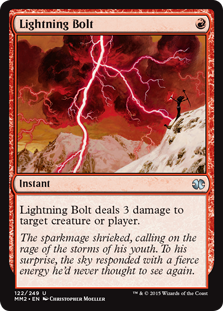
Equipment Storm once existed as the fringiest of Tier Kitchen Table decks since 2012, back when MTG Salvation user serenechaos posted his brainchild to the forum. It wasn't until four years later when Aether Revolt brought Sram, Senior Edificer that the deck grew competitive legs. Although Cheeri0s hasn't had the breakout success needed for proper Tier 1 or Tier 2 status, its paper and MTGO appearances in the hands of such pilots as Zac Elsik and Caleb Durward are heartening to combo mages everywhere. Check out the current MTG Salvation Cheeri0s primer for more details on how to build and pilot the deck, or just to join a lively community of Equipment Storm aficionados.

Like many engine combos, Cheeri0s has a relatively low skill floor but a surprisingly high ceiling. Almost anyone can pick up the deck and quickly Grapeshot off turn-two and turn-three kills. Unfortunately for many Cheeri0s aspirants, it won't be long before you start losing the Cheeri0s faith as those squishy Paladins eat Lightning Bolts after Thoughtseizes after Fatal Pushes in every single game. Don't lose hope! The deck rewards tight gameplay, smart mulligans, and effective sideboarding with wins against even the toughest opponents. My goal in "The Cheeri0s Series" is to sharpen your Equipment Storm skills so you can gain these small edges and take down events with this powerful, fast, and shockingly resilient strategy.
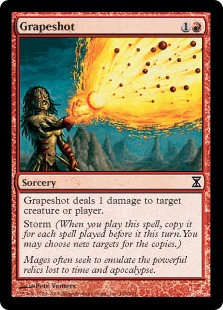
In today's article, we'll be referring to the list I've been using on MTGO in the last week. It's similar to the build used by MTGO user WinRyder to a 5-0 finish in late January, but with small adjustments to reflect my own experiences with the deck. I'm always open to discussing new ways to tune our 75, so feel free to drop me a post in the comments, on Reddit, or on MTGS to talk Cheeri0s shop.

Cheeri0s, by Sheridan Lardner

Creatures

4 Puresteel Paladin
4 Sram, Senior Edificer

Artifacts

4 Accorder's Shield
4 Bone Saw
4 Cathar's Shield
4 Paradise Mantle
4 Spidersilk Net
4 Mox Opal

Instants

1 Hurkyl's Recall
1 Noxious Revival
4 Retract
2 Swan Song

Sorceries

3 Serum Visions
2 Grapeshot

Lands

4 Marsh Flats
2 Windswept Heath
3 Seachrome Coast
4 Hallowed Fountain
1 Sacred Foundry
1 Plains

Sideboard

3 Path to Exile
4 Silence
3 Echoing Truth
2 Fragmentize
3 Paradoxical Outcome

Here are some deckbuilding notes before we jump into the case for why you will be playing Cheeri0s this weekend:

  • Revival vs. Grapeshot
    +1 Noxious Revival and -1 Grapeshot is a viable swap. I'm heavier on Grapeshot because MTGO is infested with Burn and Affinity, matchups where damage-based sweepers shine and costly Revival tricks don't. If you think the Grand Prix will have a similar metagame, use Grapeshot. If you think it will be grindier, use Revival.
  • Horizon Canopy?
    Feel free to drop a Hallowed Fountain for +1 Horizon Canopy in slower metagames. I'm off Canopy because of the aggressive MTGO climate. Canopy also creates awkward scenarios when you have turn one Swan Song or Serum Visions but no blue mana to use them.
  • Hurkyl's Recall
    Last week, Taufik Indrakesuma wrote an excellent article on Cheeri0s through MTG Mint Card where he broke down the main card counts. It's one of the best pieces I've read on the deck since Aether Revolt came out, and I highly recommend it. Most of it will be review for Equipment Storm diehards, but Indrakesuma's math around Retract and Hurkyl's Recall is very interesting. In summary, he advocates adding a Recall to greatly increase the deck's consistency. I tested it over the last week, loved the addition, and immediately dropped 1 Serum Visions (down to 3) to make room. Bonus: it's a maindeck solution to Chalice of the Void at zero in game one, a big threat with Eldrazi Tron on the rise.
  • Swan Song
    Maindeck Swan Song isn't mandatory but it feels very unfair in many matchups. Against Burn it hits all their removal and Eidolon of the Great Revel. It disrupts BGx removal and discard. It stalls Gx Tron acceleration (Songing a Sylvan Scrying can buy you three-plus turns). Whether stopping unfair decks flat in their tracks or giving you the maindeck out against fair interaction, Song has more than earned its slots in my 60.
  • Sideboard choices
    I change the sideboard multiple times a week on my journey to find the optimal configuration in different metagames. I'm heavy on anti-artifact and -enchantment removal because random Cheeri0s hate is rampant on MTGO: Eidolon of Rhetoric, Stony Silence, Leyline of Sanctity, Rule of Law, Engineered Explosives, and the dreaded Chalice of the Void. In particular, Chalice is everywhere these days. I'm splitting between 3 Truth, 2 Fragmentize to diversify my answers.
  • Leylines vs. Outcomes
    At one point I was running 4 Leyline of Sanctity to beat BGx strategies and Grixis decks with Liliana. I don't know if it's wrong to run those Leylines, but I do know I really want Paradoxical Outcome for the matchup. It's the only live topdeck against an active Liliana and doesn't get hit by Inquisitions. Leylines, although lights-out against BGx in most cases, messed with my mulligans and (more importantly) made sideboarding against BGx too difficult. If you are petrified by BGx decks, go -1 each on Outcome, Silence, Truth, and Path, and +4 Leyline.

We'll tackle more deckbuilding considerations in a later "Cheeri0s Series" article. For now, I'm sure most of you are itching to ready your Puresteel Paladins for weekend battle, so let's jump into the overall Modern picture and why Equipment Storm should be your deck of choice.

Cheeri0s Positioning

Based on Jason's recent January and early February metagame update, Cheeri0s has excellent positioning going into the weekend. This is not because Puresteel Paladin has particularly strong matchups against a large subset of top decks. It's also not because Cheeri0s has done particularly well going into the Grand Prix: its dismal Star City Games Regionals performance might actually scare people away from the strategy. Rather, it's because Cheeri0s is currently the best deck in Modern for getting you free wins in this metagame over the course of a long event.

To see why this is the case and why it matters for your deck selection, let's deconstruct this idea of how Cheeri0s generates free wins, how that plays out in the format, and why that matters at the Grand Prix level.

Storming for T2 and T3 wins

Cheeri0s wins way too many games on turn two or turn three. I'm not just talking about wins in goldfish scenarios, although it certainly closes solitaire games at lightspeed too. I'm talking about real games against real players. I've played hundreds of MTGO Cheeri0s matches since Aether Revolt hit the online tables and I've recorded my key stats for all of them. Looking at primarily Competitive League and Friendly League results, I'm batting a 70% game win percentage (GWP) across over 300 games. This is split 66% on the play and 73% on the draw (with no statistically significant difference between the two at p = .43). Here's my distribution of wins broken down by turn, both as a percentage of total wins (the first number) and as a percentage of total games (the second):

  • Turn 2: 14.9% of wins, 10% of games
  • Turn 3: 39.2% of wins, 26.6% of games
  • Turn 4: 25.7% of wins, 17.43% of games
  • Turn 5: 9.5% of wins, 6.4% of games
  • Turn 6: 4.1% of wins, 2.7% of games
  • Turn 7+: 9.5% of wins, 6.4% of games

Yes, I'm only one pilot who may not have a representative experience. Yes, n = 300 isn't strictly speaking a large enough sample to generate a statistically certain distribution. But in my own experience, these numbers signify a truly commanding performance. Cheeri0s wins me 36.7% of total games on turn two or three. 54.1% of my wins are on turn two or three—that's an absurd number of wins before an opponent can do much of anything.

Why does this turn-two or turn-three win rate matter? Because Modern doesn't have efficient and widely-used answers like Force of Will and Daze. It doesn't have good cantrips to fix bad openers. This means reactive decks are ill-prepared to find answers period, and are at their worst in the first few turns of the game. And those are the reactive decks that have answers at all! As we'll see in the next section, many of Modern's top-tier strategies aren't actually reactive and don't maindeck more than four removal spell. Some have zero.
All of this means Sram and Paladin are answer-or-die cards that can win as soon as they hit the battlefield, and achieve that immediate win in more than one third of your total games. That's an edge few other decks can claim.

The Splinter Twin factor

As many old URx Twin players will attest, Twin's biggest strength wasn't necessarily a consistent win on turn four or its flexibility in shifting between roles. In many cases, it was the perpetual threat of an end-of-turn Exarch or Pestermite into a followup Twin. Twin could end the game on the spot at any time, which put Twin opponents into a lose-lose tempo scenario. Either you tap out and risk dying to the combo, or you repeatedly hold back cards, sacrifice tempo, and let your opponent generate redundancy or abuse their Bolt reach. Make the wrong call and you just lose with no second chance at an untap step.

Post-Sram Cheeri0s is just as punishing as old URx Twin. Every time an opponent taps out against this deck, they risk losing on the spot, a pressure which generates mistakes and free wins from even experienced opponents. This will happen in game one when an opponent doesn't expect your backup Swan Song and just leaves up Path mana. This will happen in games two and three when an opponent fires a Thoughtseize on the draw and sees two engines and a grip full of equipment—should've held up for that Bolt! Or they see zero engines because you have one waiting on top courtesy of Serum Visions. It will also happen in post-board games where opponents mulligan to 6 or 5 to find removal and then get stumped by a turn three upkeep Silence. Finally, it will happen when exhausted opponents decide the coast is clear to make the big play and you punish them with a game loss.
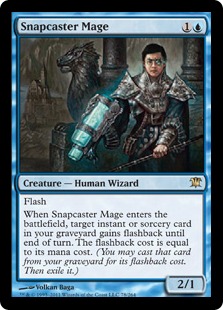
In these regards, Cheeri0s shares Twin's ability to punish opponents for making bad plays and not respecting your ability to untap and win on the spot from a board position of just two lands and no other permanents. The only other deck in Modern capable of this is Grishoalbrand and other Griselbrand variants, and even there, they might have a warning sign in the graveyard courtesy of Faithless Looting.

Twin similarities aside, we don't want to oversell the comparison too much. Remember, Twin could always just win with Exarch and Pestermite beatdown backed by Bolt-Snapcaster Mage-Bolt. Although Puresteel Paladin beatdown is absolutely a viable path to victory (I win approximately 8% of my games with pure Paladin and Sram aggro), it's nothing like Twin's legendary Plan B. This means savvy opponents and players loaded with removal (beware of Grixis Control) can still outlast you by holding back disruption and playing the super long game. But players who are tired, haven't faced Cheeri0s before, or who miss key removal draws can always fall prey to the combo. This is particularly powerful if you topdeck the engine after your opponent thought they were in the clear.
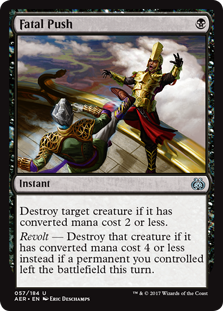
Coupled with the turn-two and -three win element, Cheeri0s's Twin factor ensures even more free wins against the field. Now let's see how those free wins play out in the metagame itself.

Free wins in the metagame context

Based on Jason's picture of the metagame, the Tier 1 decks going into Grand Prix weekend are looking like Affinity, Jund, Burn, Gx Tron, Abzan, Bant Eldrazi, Titan Valakut variants, Infect, and Dredge. Tier 2 has over a dozen other competitive option. Focusing on those Tier 1 strategies, here are the decks which tend to run 5+ disruption spells in the main 60:
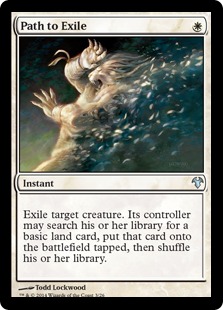
  • Jund (6.1%)
  • Abzan (5%)
  • Burn (5.4%)

Next we have the decks running 1-4 removal options in the average list:

  • Affinity (6.6%)
  • Gx Tron (5.4%)
  • Bant Eldrazi (4.8%)
  • Titan Valakut (5.6%)

Finally, we have top-tier decks running no meaningful removal whatsoever:

  • Infect (4.5%)
  • Dredge (4.1%)

If we extend this to the major Tier 2 players, we'd add Grixis Control/Midrange (2.7%), Grixis Delver (2.4%), and Eldrazi Tron (2.1%) to the first category, and Abzan Company (2.4%), Ad Nauseam (2.4%) and Death's Shadow (2.9%) to the second.

(Author's edit: Death's Shadow should really be in the first category, not the second. This doesn't affect the numbers dramatically or the conclusion, but I admit I've played Death's Shadow decks in only a handful of matches)

I'm sure you see where I'm going with this. All 15 of these decks, Tier 1 and Tier 2 included, make up about 62% of the format going into the Grand Prix weekend. About 24% of the format is running 5+ interactive spells; these are going to be rougher matchups. Grixis Control, Delver, and BGx Midrange are particularly loathsome. But almost twice as many decks, about 40%, are running 0-4 maindeck disruption spells. These strategies have a roughly 40% chance of drawing one of those answers in their opener, which means 60% of your game one contests against these decks will be virtual goldfishes where Cheeri0s will just get you a T2, T3, or Twin-factor freebie. Decks with zero removal spells should be effective byes.
Although an opponent's chances improve in games two and three with added interaction, so do your odds of beating that interaction with your own sideboard. My MTGO numbers reflect this reality. Looking at the stats, my GWP in game one is about 71%. My GWP in games two-three? 69%. Think about that for a moment: Cheeri0s's ability to generate free wins and sustain a high win percentage didn't decay at all after sideboarding. In that respect, Cheeri0s has similarities to Dredge. If you draw the answers, Cheeri0s might lose but can still fight those answers with its own sideboarded bullets. If you don't draw the answers, or don't draw enough, Cheeri0s just wins outright.

To be clear, Cheeri0s is not favored in interactive matchups. My GWP plummets to just 52.8% against those decks in the first category (Jund, Abzan, Burn, etc.), and only 25% of those games ended with me winning on turn two or turn three. That's not great, and it feels worse in real games than it looks in the numbers. Grixis decks are particularly awful, with early Delvers and Tasigurs closing out the game behind a screen of Snapcasters, Pushes, Bolts, and Kolaghan's Commands.
But then there are the less interactive matchups. Against decks in the second category (Tron, Affinity) or third category (Infect, Dredge), my GWP shot up to 78% with 43% of those games ending on turn two or turn three. That's just as unfair in practice as it sounds here on your screen. More to the point, those decks make up close to twice as much of the Modern metagame as the interactive ones. This means I'm comfortable (and you should be too) sacrificing your interactive GWP for free wins against that larger subset of strategies which won't be able to answer those turn-two or -three Paladins and Srams in the first place.

Free wins matter

Now that we see where Cheeri0s gets its free wins (T2 and T3 combos plus the Twin factor) and how those free wins play out in the metagame, we can talk about why those free wins matter at a tournament. To some extent, this is obvious: playing Cheeri0s is like going into the Grand Prix with a few extra byes. This boosts your record on Day 1 and will steal you wins even on Day 2, especially given the current metagame picture we saw above. Beyond that, there are other reasons free wins are so coveted at big events like the Grand Prix:

  • Free wins are easy to play out when you're tired
    You're going to be tired in Round 13 on Day 2. Heck, you're going to be tired in Round 7 on Day 1! When exhaustion sets in, gameplay deteriorates and even simple interactive lines become challenging. You know what's less challenging? Going through the routine motions of a combo chain. Those turn two wins are breaths of fresh air where an opponent will either fold on the spot and give your mind a rest, or you can zenfully execute the combo like a martial arts pattern. Many interactive decks don't have this luxury and every turn can be a real puzzle. Many of your free wins won't be puzzling and will be mid-tournament breaks.
  • Free wins won't make you tired
    Just as it's easy to play out a free win when you're tired, so too will playing out those free wins not tax your mental resources. As only true combo players know, it can be very soothing to just proceed step by step through your combo sequence with only a few decision trees along the way. Also, it's downright refreshing to draw card after card off each artifact (watch out for drawing too many cards and getting a judge called). While other decks are puzzling through each turn from Round 1 onward, you'll get free rounds where you can just breeze through a combo sequence and save your mental energy for later.
  • Free wins will tilt tired opponents
    Cheeri0s inspires a lot of anger on MTGO. Cheeri0s inspires a lot of anger period. Although I sincerely hope no one says to you in person the things they type to me on MTGO, the underlying emotions are still likely to be present in a face-to-face match. Every time you get the free win, know that many of your opponents are probably thinking about Tweeting Aaron Forsythe or Sam Stoddard to demand an emergency banning of Paladin, Sram, and Retract all at once. Bonus points if they make those comments out loud. This kind of tilt will cloud judgment, produce play errors, and lead to concessions when you might even have fizzled or loss. Capitalize on this.
  • Free wins can be even likelier on Day 2 than Day 1
    Grand Prix Day 1s tend to be incredibly open with a diversity of archetypes and decks. Day 2 gets narrower as a cadre of top-notch interactive decks rise to the top followed by a horde of unfair, linear, and non-interactive decks that raced their way to Sunday. In this field, Cheeri0s's superior speed and consistency will consistently generate free wins against decks that are slightly slower (i.e. almost everyone else) and aren't packing enough interaction.
  • Free wins are more common against the average Modern player
    It's easy to forget this, but we Nexus readers and online Modern community members are an extremely well-informed and knowledgeable group. We consume more Modern information on a far more regular schedule than the average player. This means many of your opponents, particularly on Day 1, won't even know what you're playing. This increases the odds of free wins and catastrophic opponent misplays. It even affects more knowledgeable players! For years, turn-one Seachrome Coast into Serum Visions meant Ad Nauseam. The standard BGx follow-up was Tarmogoyf or Dark Confidant, not holding up Terminate mana. That, of course, is a fatal misplay against the turn-two Paladin or Sram.

Between the advantages of free wins themselves, my own GWP and win-turn distribution experience, and the metagame picture going into the Grand Prix, Cheeri0s has excellent positioning for any intrepid combo mages ready to make a Top 8 Grand Prix mark.

Getting Ready for the Grand Prix

As much as I love Cheeri0s, I still acknowledge many of the strategy's fundamental weaknesses. Sometimes you beat yourself with bad mulligans. Sometimes you get smashed by endless interaction or outraced by a fast deck with a timely disruption spell. Sometimes Eldrazi Tron opens on Chalice at zero followed by turn-two Thought-Knot Seer and turn-three Reality Smasher and you wonder why you didn't sleeve up Eldrazi Temple instead. Sometimes Burn lands turn-two Eidolon of the Great Revel on the play when you're already at 13 life from a shockland, fetchland, and two Goblin Guide swings.

These losses, and many more, are going to happen. Your job is to not complain about them. Don't beat yourself up about losses and definitely don't whine about them out loud. They come with the Cheeri0s terrain and are the cost of playing a deck with such a threatening turn-two and turn-three win percentage. So if you sign on to join Paladin's and Sram's merry band, you relinquish your rights to complain about variance, bad luck, and bad matchups. You also acknowledge this isn't the best deck in the format or even necessarily Tier 1. It's just an extremely punishing and unfair strategy which is currently in a good position to exploit basic metagame and Modern holes.
I'll leave you with a handful of tips and tricks to maximize your Cheeri0s game. If you do end up taking Equipment Storm to the Grand Prix, you'll need to play at least a few dozen goldfish games with it beforehand to avoid some of the more embarrassing mistakes (e.g. you'll almost always aim to cast Retract with Mox Opal). Play some matchups too, just to feel it out. Once you have those under your belt, these pointers should be more than enough to get you to the top:

  • If you know an opponent is holding up removal, lead on Sram so you can get a guaranteed draw from the cast trigger.
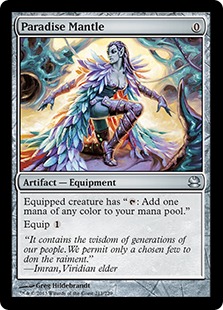
  • Never be afraid to combo on turn two even if you don't think you can draw into a Retract or Opal. If you fizzle after a few cards, you still drew through garbage and/or found another engine or dig spell. Or you got lucky and got a free win. Word to the wise: if you do think you will fizzle but have a second engine, save one equipment in hand to draw two cards on turn three.
  • Even if you think an opponent is holding up removal, it's often smart to go for the combo. If they don't, you get the freebie. If they do and were smart enough to keep the removal in the first place, they weren't going to tap out later anyway. Modify this as needed if you have Song in your hand, or Visions in hand to dig for Song.
  • Against Jund in particular, it is often beneficial to roll out a turn-one Paladin even if it means dumping equipment. The chances of Jund killing it with their Decays, Terminates, or Pushes is lower than the odds they kept an opener with Thoughtseize, Inquisition, or Bolt.
  • During a combo chain, particularly on turn three or later, it is almost always a good idea to cast a second engine to maximize your draw rate. The odds of running out of mana after doing this are much lower than the odds of fizzling off a single engine.
  • Don't forget to use Paradise Mantle to generate mana from engines that were already in play. The extra mana will matter, particularly if you invested in a second engine during a combo.
  • Use Noxious Revival offensively to stop Snapcaster targets, disrupt Goryo's Vengeance, slow down Dredge, and jam an Abzan Company combo. Be creative! That said, don't be too clever with Revival. Its main purposes are to recover engines, get you a second land from fetches, rebuy Retracts during a combo turn, and retrieve discarded Grapeshots.
  • When you are ready to combo out, drop extra Opals beforehand and use their mana to ready a Swan Song or two. Losing to random Mindbreak Traps or Nourishing Shoals feels very bad.
  • Paladin and Sram beatdown is the real deal. Go-go gadget Indomitable Ancient! Use it as a Plan B if Plan A fails.


  • In a pinch, Grapeshot is a removal spell and a sweeper. Cast it to kill Eidolons, Thalia, Guardian of Thraben, and big Tarmogoyfs that have you on a fast clock.
  • When sideboarding, never cut engines, Opals, or Retracts. Don't go below 18 equipment or you dilute your gas. Generally speaking, your flex slots are the Songs, 1-2 equipment, the 4th Visions or Recall, and 1 of your 3 Revival/Grapeshot slots. This doesn't mean you need to fill every flex slot; aim to sideboard no more than 5 slots per match.

As you can probably tell, I could go on and on with Cheeri0s tips for hours, so I'll just leave these here for now and save the rest for future articles and the comments.

Thanks for reading and here's to Pureseteel Paladin and Sram, Senior Edificer taking the Grand Prix weekend by storm. I'll try and answer any and all Cheeri0s questions you have in the comments, so feel free to respond with any thoughts, ideas, queries, or feedback about the deck and the article. See you all around the Modern community!

Want Prices?

Browse thousands of prices with the first and most comprehensive MTG Finance tool around.


Trader Tools lists both buylist and retail prices for every MTG card, going back a decade.

Quiet Speculation