
menu

The “Shadow” Over Innistrad – Lore Theories

Are you a Quiet Speculation member?

If not, now is a perfect time to join up! Our powerful tools, breaking-news analysis, and exclusive Discord channel will make sure you stay up to date and ahead of the curve.

Well, hello everyone. I wanted to try something different today, something way outside my comfort zone. I wanted to take a few minutes to discuss some interesting theories I've been developing surrounding the highly anticipated Shadows Over Innistrad.

It's no secret the Magic community at large revered Innistrad as one of the best blocks ever to hit print. There's also an ever-growing group of players who are invested in the lore of Magic. Wizards has taken strides to deepen and expand their lore more than ever before, integrating characters and overlapping story lines to create large cross-block archs.

If any of you know me, I'm by no means a lore expert and largely not a Vorthos. Although I have read through some of the Magic books of old, including all of Odyssey and Onslaught block, and it's something I do enjoy to some degree. Just predicate everything I'm going to talk about on the fact that I don't study it that intently. Most of what I'm drawing from is the story Wizards has set for us in Battle for Zendikar block, as well as the upcoming Shadows Over Innistrad block.

Many believe our missing Eldrazi titan Emrakul will be making a debut on Innistrad. My question is, how would that be possible? Could Innistrad and Zendikar, or any of the characters involved, be connected in some way? As I thought about it more and the theory unfolded in my mind, it started to make sense. And it sounded awesome (well, to me anyway).

Connecting Zendikar and Innistrad

We got this teaser video some time ago from the official Wizards of the Coast YouTube Channel. We know that something is very wrong with the plane right now---we see an angel's feather soaked in blood and the Church of Avacyn symbol clearly being distorted. I use the word distorted deliberately; we may be looking at the influence of the Eldrazi on the plane.

Recently Wizards began publishing art books for the various blocks, a trend we could see continue into the future. We have the Art of Zendikar, announced at PAX, but we also now have confirmation of another art book, for Innistrad. Not too long ago, a synopsis of the book was "leaked" via various media sources that are working alongside Wizards to promote the book. Here's that synopsis:

In THE ART OF MAGIC: THE GATHERING – INNISTRAD, terror falls from the skies on blood-spattered wings and nameless horrors lurk in the shadows. These pages, lavishly illustrated with the award-winning art of Magic: The Gathering, are your entry into a world beset by terrible evils on all sides and betrayed by the hope it held most dear. Tread lightly as you follow the heroic Planeswalkers of the Gatewatch as they investigate these dark mysteries.

Very interesting indeed. The Gatewatch will be a part of this story, that much we knew. If you read deeper you can find some clear indications of what might be waiting for our Gatewatch heroes back on Innistrad when they return. Betrayed by the hope it held most dear---that line kept me thinking over and over again, where have we seen that before? Why does that sound so familiar?

Thanks to a little digging with the help of Kelly Reid and archive.org, we were able to re-read some older articles before Wizards did its re-design. What we found was this snippet from "The Defiance of Angels" by Doug Beyer in 2010:

Imagine if you were a being created from the purity of white mana, summoned to serve an ideal that turned out to be based on a catastrophic historical error. All your work to uphold a set of presumed values, all your lifelong hope that you would one day make contact with your deity—in fact, your entire purpose for being—would be founded on a lie.

The Zendikari founded multiple belief systems on a lie, and have been lied to since the beginning. These belief systems were based on distorted legends and gave rise to Ula, Kosi, and Emeria. Even the angels associated with this deity "Emeria" have been associating themselves with a lie. Each race depicted these terrible Eldrazi titans as distorted deities in each of their belief systems. Here's a chart from the article "Gods and Monsters" by Doug Beyer:
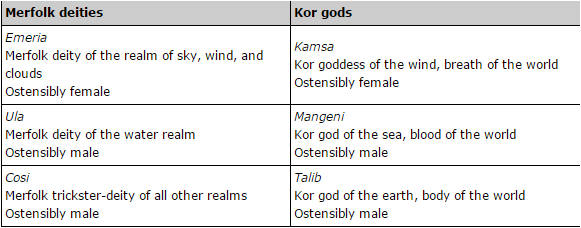
charteldrazi

Considering what the art book synopsis gave us, it appears that the denizens of Innistrad as well as the Zendikari now have something in common, lied to and betrayed by something they once held dear. We should also re-cap on everything else they have in common:

  • Angels
  • Similar humanoid races
  • Plane ravaged by "monsters" and protected by "gods"
  • Belief Systems - Church of Avacyn / Zendikari deities

Something else I found fascinating, was that we know that Avacyn was "created," and it's alluded to that the Zendikar angels were created as well, like on every other plane. Sorin has been a part of each story for quite some time. Could there be some overlap between the angels of Zendikar and his own creation?

This might be grasping, but I can't deny the obvious similarity:
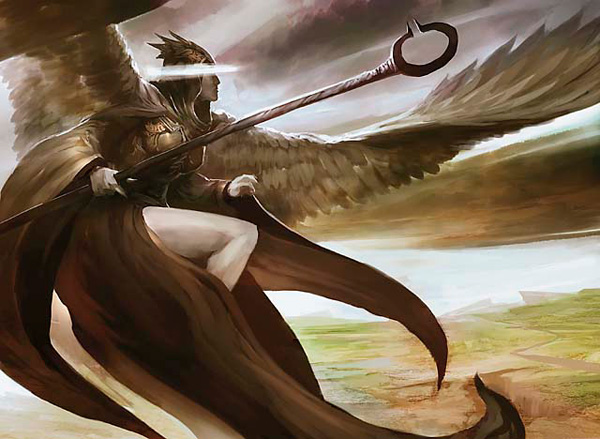
stf86_shepherd
Shepard of the Lost (Zendikar)

I found each of these angels from Zendikar use long staffs, adorned with symbol-like crooks at the end of them. We got to see this multiple times, not just on Shepard of the Lost. I swear, if we keep looking at them over and over, they sort of start to resemble something, don't they?
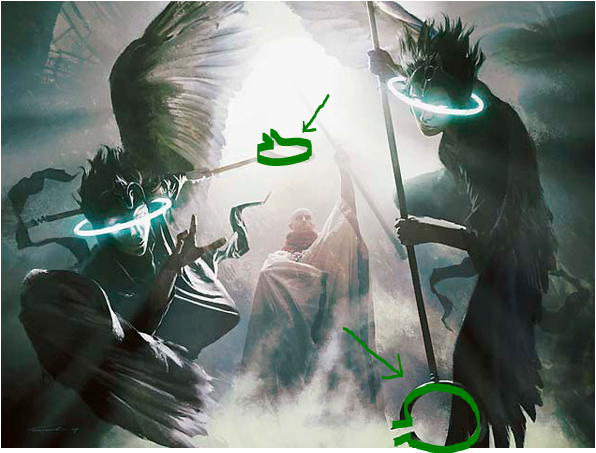
Looks like...The Avacyn Sigil?
Luminarch's Ascension (Zendikar) - Looks like...the Avacyn Sigil?

Like I stated, I'm digging deep into something that might not be relevant. Perhaps there's some missing information here that can conclude that angels use similar staffs all the time, but I just had to point out the glaring similarities.

When we look at the Innistrad trailer again we see that the sigil of the Church of Avacyn is not really breaking, but it looks to be distorting.
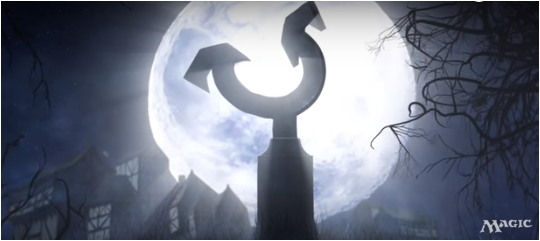
SimilartoZendikarStaff
Widening, distorting and looking similar to the Zendikari angel staff.

I could well be wrong. Innistrad and Zendikar might have their similarities, but that might not amount to anything. Wizards might not have wanted to connect the planes at all, and they could remain stand-alone planes with no connection whatsoever. It just seems like a coincidence that Innistrad and Zendikar are back-to-back blocks and that the Gatewatch is coming to Innistrad specifically.

It really sets up a Lovecraftian feel, which is supported further by the revealed keyword, "investigate." Seems like we should all be purchasing our Arkham Horror board games, from our friends over at Fantasy Flight. Although it's from the work of HP Lovecraft, that can set up a really great finale to this story between Innistrad, Zendikar, the Gatewatch and the Eldrazi.

What about the theories? Well, let's talk about them.

The "Planar Overlay" Theory

This one might be the more wild of the theories I present, but when we're dealing with all-powerful beings in these colossal Eldrazi, anything could happen.
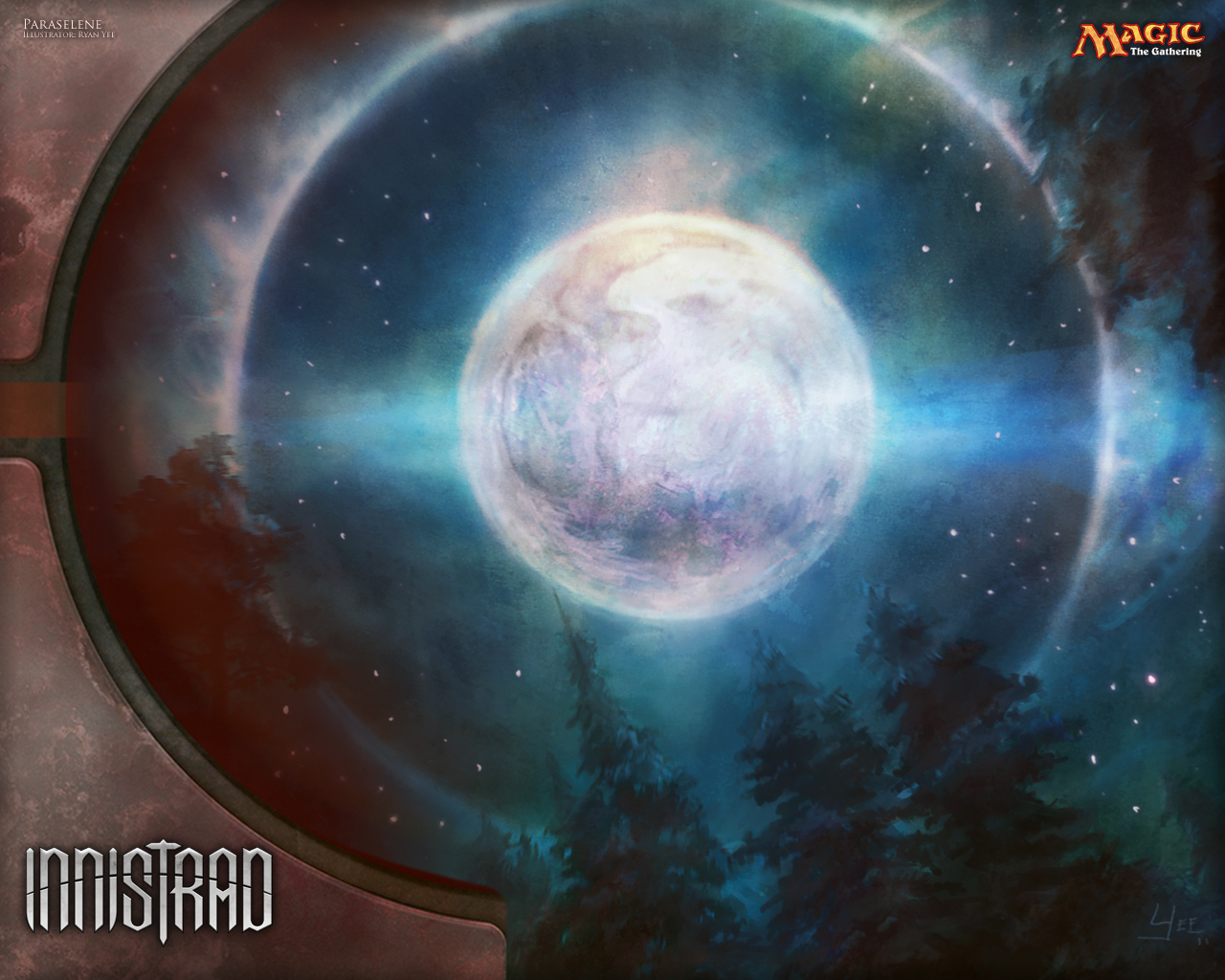
Innistrad/Zendikar a Planar Overlay?
Innistrad/Zendikar---a planar overlay?

What if Zendikar and Innistrad were planes that were overlaid somehow? The Eldrazi could have put forth this plan thousands of years ago, and it wouldn't be outside the realm of possibility that between Kozilek, Ulamog and Emrakul they somehow distorted reality enough to overlap both of the planes, making them "bizzaro" worlds. We already discussed how both worlds are similar; perhaps the Eldrazi used that to their advantage. We've seen something like this in Planar Overlay, so it does actually exist in the Multiverse, and capable of happening.

Initially this was really far fetched even for me, but a certain announcement may have made this more believable. Wizards announced the second set in the Shadows Over Innistrad block. That set is Eldritch Moon:
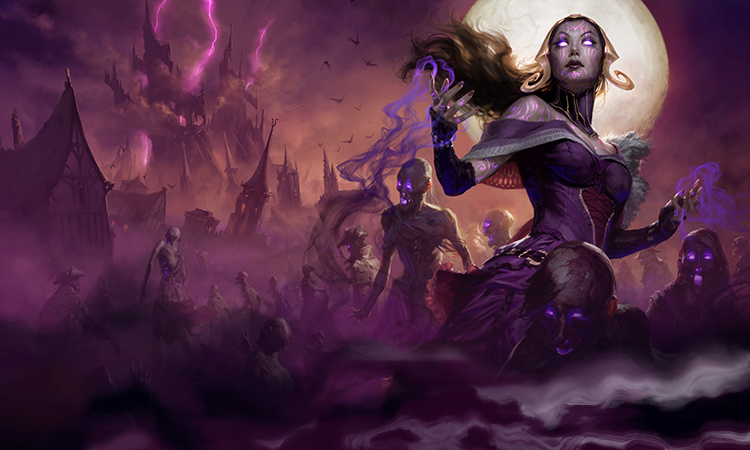
Majora's Mask? Escaflowne?

Like many stories before, perhaps the moon is connecting the two planes. Some inter-dimensional gateway that was created and now being used by Emrakul to warp Innistrad, distorting the planes and its inhabitants. We know Nahiri is on this plane. Maybe Nahiri has something to do with luring the Eldrazi titans to this world, similar to how she, Sorin and Ugin originally lured them to her plane of Zendikar.

Perhaps it's payback time for Nahiri, who has figured out that these planes are connected and is now exploiting that fact and exposing Emrakul's power:

Emrakul...twists all things living, be it plants, animals, or sentient beings.

http://mtgsalvation.gamepedia.com/Emrakul

It's been done before. The Legend of Zelda: Majora's Mask was based entirely around the moon and the distortion of time (traveling back and forth) learning that the "Moon" was home to some alternate dimension when fighting "Majora" itself.

If anyone watched the 90's anime series The Visions of Escaflowne, we learned that the heroine of the series, Hitomi Kanzaki, was transported to the World of Gaea which was a mysterious planet, but the Earth and its moon were visible in the sky. We later found out that the Earth was known as the "Mystic Moon."

Maybe that's what's happening here. Maybe Innistrad's moon will be known as the (Eldrazi)tch Moon. Right out of an HP Lovecraft novel. A whole lot of maybe's but there's something there; it could directly tie into why Innistrad was the way it was all this time. These are extremely powerful beings, who could have put this plan into motion thousands of years ago, and our heroes---Sorin included, a native of Innistrad---weren't the wiser.

Which leads us to our next theory:

Avacyn Is the "Shadow" Over Innistrad

tumblr_inline_nxbz4nizY51t7hiz8_500

That certainly doesn't look like the depiction of the character we've all come to know as Avacyn. There's this feeling that something is seriously wrong on Innistrad. Perhaps all the clues between what we know Emrakul is capable of, and the synopsis of the art book has lead us to this point. Avacyn is no longer the champion that Sorin created, the being created of pure white Magic and keeping the balance on the plane.

No, I get this sinking feeling that Avacyn is now being manipulated by some force, and everything points to our "missing" Emrakul. Doing what it she does best---twisting all living things. If we read back through those articles in 2010 by Doug Meyer, we realize that the Eldrazi titans have done this before. It's normal that they try to enslave races and help them take over entire planes.

We go back to this snippet of information:

But despite their unearthly power, the Eldrazi failed to wipe out the angels completely. They failed, too, to turn the angels into a kind of slave race, as they did with the vampires.

Maybe this time Emrakul succeeded, turning Avacyn into a slave to do her bidding. They've already encountered angels, and the Eldrazi already came into contact with vampires. Remember what happened on Zendikar?

Vampires enslaved by Eldrazi

What do you know, Innistrad is full of vampire bloodlines just waiting to be enslaved like their Zendikari counterparts. Controlling Avacyn along with an army of vampires---it would seem the rest of Innistrad doesn't have a chance.

It would set up the arrival of the Gatewatch perfectly to rally the remaining denizens to fight this new "shadow" along with any other living things Emrakul is controlling. Exactly as they did back on Zendikar. Nahiri could play a similar role as Ob Nixilis, and we have the final battle with Innistrad and Zendikar hanging in the balance.

~

Well, there you all have it. My first real plunge into talking about the lore and really going outside of my comfort zone when it comes to writing articles. I think others more well-versed than me can poke several holes in this. At the same time I would love to be educated, because it really seems like all of these subtle similarities in the past between the two blocks can somehow be re-told now that both of these blocks will be crossing-over.

Assuming any of this is true, I understand that many of you would be forced to accept some flawed logic and retcons for all this to work in the story. One thing to remember is that for a long period of time (shortly after those books I read a long time ago) the lore of the game wasn't really the driving factor. During this period most of use just had to accept lots of inconsistencies, as well as stories and characters that were presented and never fully fleshed out.

Perhaps we're at the point where some of these holes will have to be filled to make the future stories work. There's just such a long history to the game, and there was never any set unified story arch.

This would also be similar to what Wizards did back in the four-set block of Shadowmoor and Eventide. Two "worlds" using the same plane, which was quite an interesting story (for me anyway). This would be similar, but I also think could be successful in its own right.

I'm eager to hear everyone's interpretation on what I discussed or what might be more plausible directions for the story to take. I hope everyone enjoyed my first attempt at an article of this nature. Perhaps if there's interest we can try this again sometime.

- Chaz @ChazVMTG
Avatar photo

Chaz V

Started playing during Invasion block at the age of 13. Always a competitive person by nature, he continues playing to this day. Got into the financial aspect of the game as a method to pay for the hobby and now writes, Podcasts, and covers all aspects of the game, always trying to contribute to the community and create great content for readers and listeners.

View More By Chaz V

Posted in Free, Opinion, Shadows over InnistradTagged , 13 Comments on The “Shadow” Over Innistrad – Lore Theories

Have you joined the Quiet Speculation Discord?

If you haven't, you're leaving value on the table! Join our community of experts, enthusiasts, entertainers, and educators and enjoy exclusive podcasts, questions asked and answered, trades, sales, and everything else Discord has to offer.

Want to create content with Quiet Speculation?

All you need to succeed is a passion for Magic: The Gathering, and the ability to write coherently. Share your knowledge of MTG and how you leverage it to win games, get value from your cards – or even turn a profit.

Smells Like Burnt Tentacles: Eldrazi Stompy Deckbuilding Primer

Are you a Quiet Speculation member?

If not, now is a perfect time to join up! Our powerful tools, breaking-news analysis, and exclusive Discord channel will make sure you stay up to date and ahead of the curve.

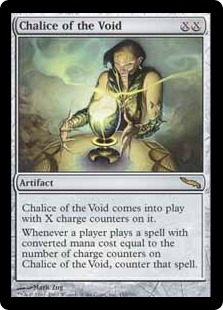
For all the moaning about the Pro Tour and its lack of diversity, did anyone not have fun watching it? I had a blast. The whole thing felt very surreal. We knew Chalice of the Void and colorless Eldrazi made a perfect match in Modern, but had no idea they would crush the format. I couldn't do anything this week without faintly hearing the announcers' incredulous exclamations bounce around my head: "Reality Smasher off the top!" "CRUNCH in for nine!" "This deck is absurd!" "Fifteen damage!" "CRUNCH!"

chalice art crop

Eldrazi decks are staking out their Modern territory as we speak, surpassing a horrifying 40% metagame share online since Saturday. "Crunch," indeed! I worked on the deck a little leading up to the Pro Tour, but didn't engineer the consistent monster the pros did. Those players opened my eyes to Simian Spirit Guide and Endless One, and man, are they worth the slots. This article explores the directions deckbuilders can take when piecing together Modern's brand new Chalice of the Void deck: Eldrazi Stompy.

[wp_ad_camp_1]

What Is Eldrazi Stompy?

Eldrazi Stompy is an aggressive Eldrazi deck that combines fast mana from Sol lands and Simian Spirit Guide with early lock pieces like Chalice of the Void. With a lock piece in place, the deck starts slamming threats, hoping to finish opponents off before they draw their answers. In lieu of a Chalice, the deck can simply play enormous creatures and race even linear opponents with minimal disruption.

What Isn't Eldrazi Stompy?

It seems like new Eldrazi decks rear their heads in Modern daily. GW builds with Path to Exile, BG lists with Chalice of the VoidTarmogoyf, and Tron-succeeding GR World Breaker strategies have all seen success on Magic Online. These Gx variants, and many Bx ones, do not play Chalice of the Void, or any lock piece, in the mainboard. They instead rely on staple one-drops like Ancient Stirrings and Lightning Bolt to win their games.

These decks aren't necessarily worse than Eldrazi Stompy. In many metagames, they may perform better. But this article deals specifically with Eldrazi Stompy decks as I see them in Modern, so we'll leave those to another article. Subsequently, we won't focus exclusively on lists from the Pro Tour. Some differences between my builds and the Pro Tour Oath ones include the perceived value of Eldrazi Mimic and the argument for playing four copies of Serum Powder.

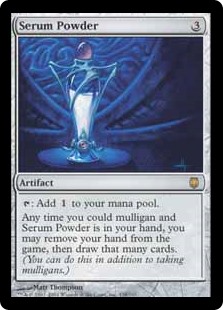
Serum Powder and Consistency

Laying a turn one Chalice (or in other formats, a turn one Blood Moon) is about as peachy as it sounds, but the play comes with a slew of consistency issues. Historically, stompy decks have struggled in this regard. They can blank early on lock pieces, threats, or mana, and need all three to execute a dream game plan. That's where Serum Powder comes in.

In my experience, the games we lose with this deck are the ones in which we don’t draw Sol lands.Serum Powder Powder remedies this issue. Between four Temples, four Eyes, and four Powders, it's tough not to see one of these twelve cards in an opener. Almost always, if I draw Serum Powder and no Sol lands, I'll exile the hand and take a new seven. If I draw a nice hand with Serum Powder (i.e. threats, Sol lands, disruption), I'll just keep it. This seven-card hand sans Powder would probably get there, since Sol lands bring Eldrazi Stompy so far ahead. Having Powder in an already keepable opener to pitch at enemy Reality Smashers, discard to Liliana, or protect against mainboard Blood Moon is just icing on the cake.
Owen Turtenwald's article, "Modern Shouldn't Be a Pro Tour Format," outlines the pro's gripes with the format - among them, its heavy reliance on mulligan decisions. He writes:

"The nature of the Modern format is such that in most or all of the matchups you play, the influence of a single card in your hand is enormous. I know that if I play Infect against an Affinity or a Collected Company deck that I will have a much easier time winning if I draw Blighted Agent versus when I do not. It’s just so good against those decks, and they play little-to-no removal. Or look at Eye of Ugin in the Eldrazi deck—every matchup is better for them when they have that card in their opening hand, and the rest of the draws simply aren’t anywhere near as good."

Owen posits the card disadvantage of mulliganning matters less for decks as fast as Eldrazi, especially when they get so far ahead by opening a specific card. Similarly, the card disadvantage of keeping a "virtual mulligan" with Serum Powder in it is offset immediately by the card advantage of the Sol lands present in that hand. Besides, Eldrazi Stompy is no stranger to trading card advantage for mana - check out Simian Spirit Guide! Like Guide, Powder makes a pretty miserable topdeck. But so does Eldrazi Mimic, and I know which of the two cards I'd rather draw as I count my way up to seven mana for Eye activations.

Eldrazi Stompy Core

Assuming 24 lands, the following proposed core only makes room for eight other cards. For reference, the Pro Tour’s Colorless Eldrazi decks skipped over Serum Powder and played 4 Eldrazi Mimic, 4 Matter Reshaper, 2 Ratchet Bomb, and 2 Spellskite in the flex slots. Without Powder, pilots get 12 slots to tinker with; with Powder, they just get eight. The flex cards chosen - and their colors - impact the lands this deck plays.

Eldrazi Stompy core

Threats

4 Thought-Knot Seer
4 Reality Smasher
4 Endless One

Disruption

4 Chalice of the Void
4 Dismember

Mana

4 Eldrazi Temple
4 Eye of Ugin
3 Urborg, Tomb of Yawgmoth
4 Ghost Quarter
4 Simian Spirit Guide
4 Serum Powder

Creatures

Thought-Knot Seer, Reality Smasher: There aren't many novel things left to say about these Pro Tour superstars.

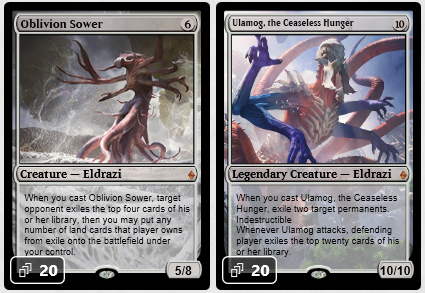
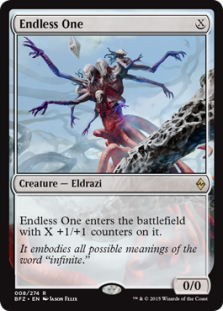
Endless oneEndless One: My first take on Eldrazi Stompy included Oblivion Sower as a wall for sated Goyfs and other huge creatures. Endless One simply fulfills this role better, despite its softness to Decay and Flickerwisp effects. It comes down for six mana as a 6/6, or at any earlier time for however much we can spare (notably, at 4 off Urborg and Eye of Ugin, two lands that can't cast any other creatures together since they don't produce colorless). This flexibility gives it a sizable edge over Sower in matchups for which we want early pressure (Tron, Ad Nauseam, Burn) and allows us to outgrow 5/8 in a longer game.
No Matter Reshaper: This creature shines against Bolt-Snap-Bolt strategies, but pales in comparison to bigger Eldrazi in the mirror. Despite his Pro Tour ubiquity, Matter Reshaper might not do enough moving forward. MTGTop8 reveals that players are already winning with Endbringer by trimming Matter Reshaper, and I'll bet my previously worthless Launch Day promo playset this trend continues into Eldrazi Winter.

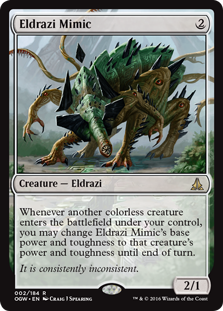
Eldrazi MimicNo Eldrazi Mimic: Let's start with the positive: Mimic allows Eldrazi Stompy some truly explosive starts. Coming down at zero mana with an Eye of Ugin and attacking for 4+ as early as the second turn, few cards allow us to initiate aggression as effectively as Mimic. That said, it's a horrible topdeck, and dead to Lightning Bolt and even Gut Shot in the mirror. I anticipate URx decks in the same vein as Jason Chung's Blue Moon from Pro Tour Oath cropping up, but better tuned to fight the Eldrazi menace. Mimic is a liability against these decks, which boast Electrolyze and Anger of the Gods in addition to their set of Bolts (not to mention Izzet Staticaster from the side!). With Eldrazi in mind, the modified URx midrange strategies I've tested against have little trouble dismantling Mimic-powered Eldrazi builds, leaning on Remand, Snapcaster Mage, Mana Leak, and Blood Moon to shut colorless pilots out of the game. Mimic is a strong include for linear metagames, but in my eyes, not versatile enough to warrant auto-inclusion.
Disruption

Chalice of the Void: Last weekend showed us how susceptible Modern is to a Chalice at one. In a shell that naturally avoids one-drops and can therefore run the artifact cost-free, Chalice seems poised to completely turn Modern on its head. This card is the reason to play a stompy shell at all. I would start with four, but I can see boarding some for mirror match interaction should the deck pick up a lot of steam in a given meta.

Dismember: Team East West Bowl's UR Eldrazi lists ran only three Dismembers. Stompy builds prefer to run the set. Dismember is a first-turn play that gets around Chalice, and it’s free while we’re tapped out with Simian Spirit Guide. We can cast it off a turn three Serum Powder, or tap three mana with Urborg to not take any damage. It kills almost everything in Modern, and shrinks larger creatures at instant speed so Reality Smasher can finish them off in combat.

Mana

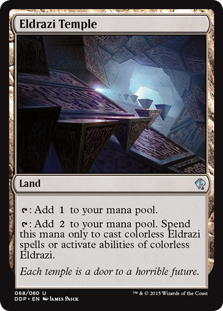
Eldrazi Temple, Eye of Ugin: Everybody and their parents know how powerful these lands are by Eldrazi Templenow. All weekend, I heard people debating whether Temple or Eye was the "problem land." In fact, they're just busted together. No reason not to play full sets of these, despite Eye's legendary supertype - Eldrazi Stompy wants to maximize the odds of opening one or both every game.
Urborg, Tomb of Yawgmoth: One of the primary incentives for moving into black, Urborg makes Dismembers painless and turns Eye of Ugin into Lotus Vale. Even colorless builds should include this land in some number (I suggest three).

Ghost Quarter: Taps for <> and disrupts almost every deck in the format. Allows us to race Tron and keep the mirror off his Eye. Modern has no shortage of utility lands, and the Eldrazi archetype lends itself to a variety of color combinations. But stompy decks should pack four Quarters before filling the manabase out with anything else.

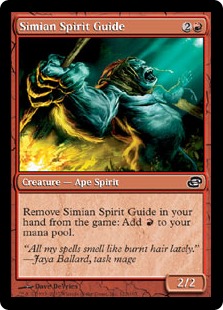
Simian Spirit GuideSimian Spirit Guide: A card I missed in my first draft of Eldrazi Stompy. Never again! Enables first turn Chalice of the Void, second turn Reality Smasher, and other highly fair plays.
[mtg_card]Serum Powder[/mtg_card]: We talked about maxing out on Sol lands to increase the probability of hitting them in our openers. Should we miss anyway, Powder gives us extra chances to draw seven cards with explosive potential. More on the card here.

Staying Colorless

Simplicity often predicates success for stompy decks, and nothing screams simplicity like an entirely colorless deck. The wave-making Pro Tour decklists ran with this principle to great effect, hogging the camera for the entire event. Staying colorless has a few benefits over splashing, primarily in the creature department.

More Eldrazi

Oath of the Gatewatch doesn't stop at Reshaper, Seer, and Smasher when it comes to incredible Eldrazi.

Eldrazi Mimic: I went over Mimic's downsides above, but the card still fronts more early aggression than any other option in Eldrazi decks. In highly linear metagames, Mimic races like nothing else.

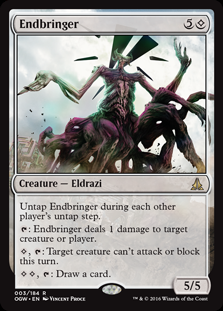
EndbringerEndbringer: While Mimic loves linear metas, Endbringer dominates interactive ones. We haven't seen much of Endbringer yet, but I think this card is the future of Colorless Eldrazi. It literally does everything. Think of it as an Eldrazi planeswalker. Endbringer crashes in for five with pseudo-vigilance, draws up to two cards per turn, and shoots enemy Mimics, Glistener Elves, Blinkmoth Nexi, Signal Pests... you name it. It even gives the deck reach since it can tap to ping the face, providing an out to Ensnaring Bridge and Ghostly Prison locks.
Eldrazi Temple conveniently activates Endbringer's draw ability for cheap. A bomb in the mirror and against the Crumble to Dust-backed midrange decks taking form to combat more aggressive Eldrazi variants.

Manlands

The creatures above can be argued for or against depending on the metagame. But Modern’s storied history makes it hard to disparage the inclusion of flying manlands in a colorless deck.

Blinkmoth Nexus: Our preferred colorless manland. Aggressive decks love reach, and in Modern, flying is pretty close. Blinkmoth frequently gets in under Ensnaring Bridge, flies over the mirror, and trades with Vendilion Clique and Insectile Aberration on defense.

Mutavault: The next best manland, Mutavault brings twice the pressure of a Blinkmoth on an empty board, and trades with attackers like Goblin Guide in a pinch. It's even a Blinkmoth itself, allowing other manlands to give it a pump on offense or defense.

Limited Sideboard Options

Playing colorless doesn't reward us in the sideboard, lacking the land destruction, life gain, recursion, and board wipes of black. Still, the Modern card pool contains plenty of colorless tools:

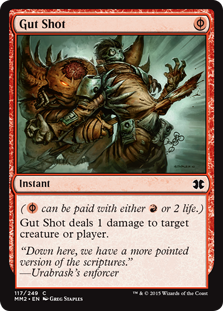
Gut Shot: This card does a lot even against opponents who aren't at one life. Shoots dorks, Confidants, Cliques, Delvers, and Intrepid Heroes.

Marrow Shards: A Phyrexian-mana sleeper that addresses some of Eldrazi's troublesome matchups: fast, linear aggro decks that go wide. Mono-red Goblins, Elves, and Young Pyromancer decks can all pose problems for Colorless Eldrazi, which can't Pyroclasm. Shards toasts a flock of Lingering Souls tokens, an aerial assault from Affinity, or just a lone, smug Vendilion Clique. It's also phenomenal against UR Eldrazi, killing Skyspawners, Scions, and untriggered Mimics.

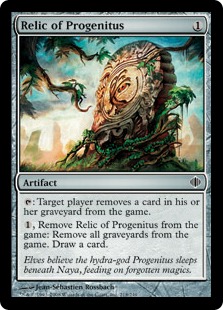
relic of progenitusRelic of Progenitus: Graveyard strategies, notably Grishoalbrand, can be tough for Eldrazi to interact with. Relic shuts them right down and cycles when we're through with it. A massive stick in the spokes of graveyard value decks like Temur Delver and Blue Moon.
Pithing Needle: Pre-emptively counters planeswalkers and breaks combos. Also turns off Ghost Quarter. While not an ideal answer, Needle also stops enemy Eyes.

Ratchet Bomb: Along with Spellskite, Bomb is one of the two interactive tech choices featured in the mainboard of PT OGW's Colorless Eldrazi decks. It destroys difficult to remove permanents like Blood Moon and Ensnaring Bridge and keeps aggro from overcommitting.

Spellskite: Modern's iconic sideboard hero. A godsend for players facing Bogles and Infect, Spellskite also has utility against Affinity and Burn.

Sun Droplet: When it comes down early, Droplet eventually negates each attack aggro opponents get in before we neutralize the board. In multiples, the card actually nets us life. Relatively worthless later on.

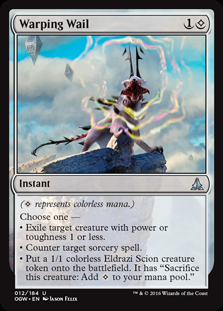
Warping WailWarping Wail: An innocuous sorcery with a lot of utility. Exiles a bevy of staple creatures, and counters Crumble to Dust/Scapeshift.
Damping Matrix: The poor man's Stony Silence. Unfortunately doesn't touch Affinity's mana, but still shuts off Cranial Plating, Arcbound Ravager, and Steel Overseer. Also deals with Aether Vial, Oblivion Stone, and Viscera Seer effects.

Crucible of Worlds: Recycles Ghost Quarter against Tron, or Eldrazi lands against Ghost Quarter decks.

Ensnaring Bridge: Nope, you read that right. Eldrazi shells incorporating Endbringer can easily fit this devastating lock piece themselves.

Oblivion Sower: A top-end fallback for grindy matchups that over-performs in the mirror.

Colorless Eldrazi Stompy, by Jordan Boisvert

Creatures

4 Endbringer
4 Matter Reshaper
4 Thought-Knot Seer
4 Reality Smasher
4 Endless One
4 Simian Spirit Guide

Artifacts

4 Chalice of the Void
4 Serum Powder

Instants

4 Dismember

Lands

4 Eye of Ugin
4 Eldrazi Temple
3 Urborg, Tomb of Yawgmoth
4 Ghost Quarter
4 Blinkmoth Nexus
1 Mutavault
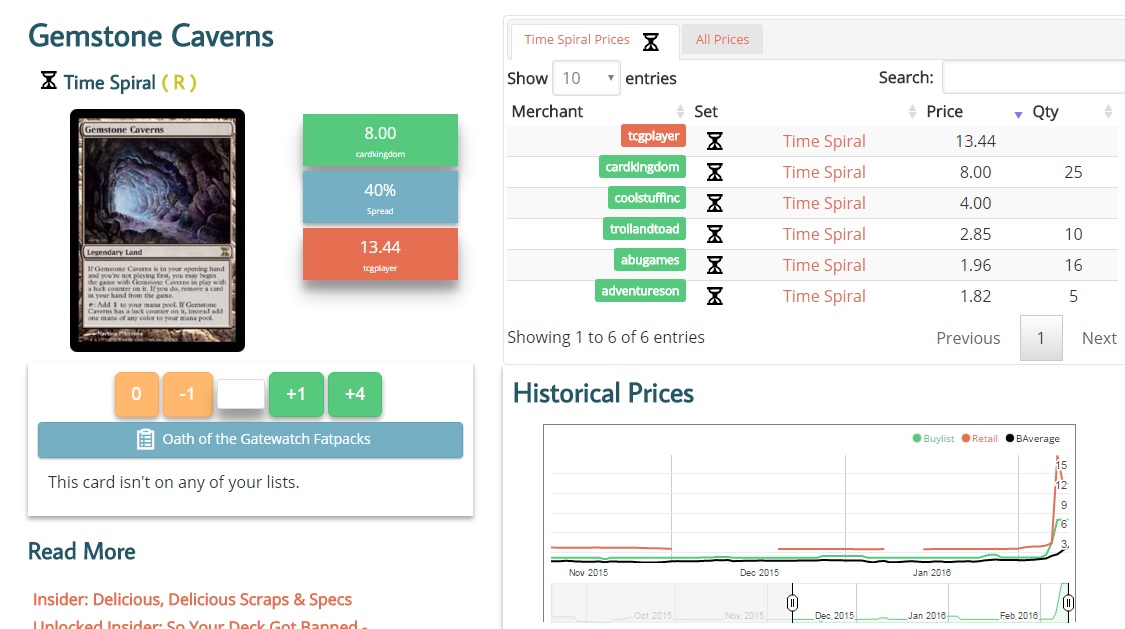
1 Gemstone Caverns
1 Sea Gate Wreckage
2 Wastes

Sideboard

3 Gut Shot
3 Relic of Progenitus
2 Ratchet Bomb
2 Spellskite
1 Crucible of Worlds
2 Ensnaring Bridge
2 Oblivion Sower

Splashing Black

Splashing black means cutting manlands for Swamps, and playing all the Urborgs. In return, we get a competent sideboard suite, advantages vs. other Eldrazi decks, and Modern's best planeswalker.

More Interaction

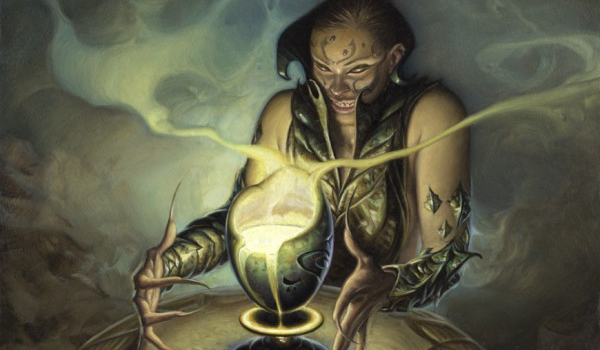
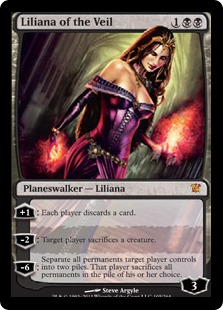
Black is traditionally synonymous with creature removal, but the color's options ironically pale in Modern to those in white or even red. We can't Liliana of the Veilreally run Thoughtseize alongside Chalice of the Void, either. That means the interaction we gain from splashing black mostly comes from the sideboard, but Liliana of the Veil may be powerful enough on her own to earn the splash. Liliana interacts very efficiently with goodstuff aggro-control decks, including Jund, Temur Delver, and even Colorless Eldrazi - especially Endbringer builds. She chews through the hands of control opponents and often removes two threats otherwise.
Thanks to Simian Spirit Guide, we can land Liliana on turn two with an Urborg. Also of note: Liliana's favorable interactions with spare legendary lands and Sea Gate Wreckage.

Dynamic Sideboard Options

Eldrazi pilots can access some fantastic sideboard cards by splashing black. Among them:

Fulminator Mage: The longstanding champion of Modern land destruction. Mage blows holes in the mirror, slows down combo, and holds his own against various midrange strategies. Perhaps worthy of the mainboard, depending how the meta takes form.

Flaying Tendrils: Wipes the board of smaller creatures and an Abzan Company opponent's face of a confident grin.

Night of Soul's Betrayal: Permanently handles mana dorks, Viscera Seer, Signal Pests, 1/1 Spirits, 3/1 fliers, Snapcaster Mage, etc. Dominates UR Eldrazi.

Slaughter Pact: Surprise, nearly-unconditional removal that dodges Chalice.

Whip of Erebos: A trump in grindy matchups or against damage-based aggro decks.

Monoblack Eldrazi Stompy, by Jordan Boisvert

Creatures

4 Matter Reshaper
4 Thought-Knot Seer
4 Reality Smasher
4 Endless One
4 Simian Spirit Guide

Artifacts

4 Chalice of the Void
4 Serum Powder

Instants

4 Dismember

Planeswalkers

4 Liliana of the Veil

Lands

4 Eye of Ugin
4 Eldrazi Temple
4 Urborg, Tomb of Yawgmoth
4 Ghost Quarter
1 Gemstone Caverns
1 Sea Gate Wreckage
5 Swamp
1 Wastes

Sideboard

3 Gut Shot
2 Oblivion Sower
3 Fulminator Mage
3 Flaying Tendrils
2 Night of Soul's Betrayal
1 Slaughter Pact
1 Whip of Erebos

Adaptability and the Future

The wealth of choices afforded to Eldrazi decks makes me feel like they can take on anything. If players turn to fast, wide strategies to combat the boogeyman, we can always count on Marrow Shards. If Delver surfaces to police us, Liliana of the Veil has them in for a rude awakening. And should Blue Moon start popping up in droves, Cavern of Souls and Oblivion Sower wait in the wings. Beefy curve toppers like Endbringer overpower the mirror, and faster critters like Eldrazi Mimic can get under inevitability decks like Tron.

Regardless of whether Eye of Ugin is broken beyond policing, Eldrazi decks have enough options at their tentacle-tips to passably adapt to anything, and definitely won't go away in the next couple of months. "CRUNCH!"

Legacy Leagues Coming to MTGO

Are you a Quiet Speculation member?

If not, now is a perfect time to join up! Our powerful tools, breaking-news analysis, and exclusive Discord channel will make sure you stay up to date and ahead of the curve.

It was only a matter of time, and now it's official. Starting with next week's downtime, Legacy Leagues will be coming to MTGO. Legacy Dailies have been struggling to fire on MTGO for some time, which is a similar problem that Pauper had as a format. Leagues revitalized Pauper, and I expect them to positively impact the amount of Legacy played on MTGO as well. It's difficult for everybody to set aside enough time to play a Daily- in particular when they fire at set times- and as such Leagues seem to be a huge success.

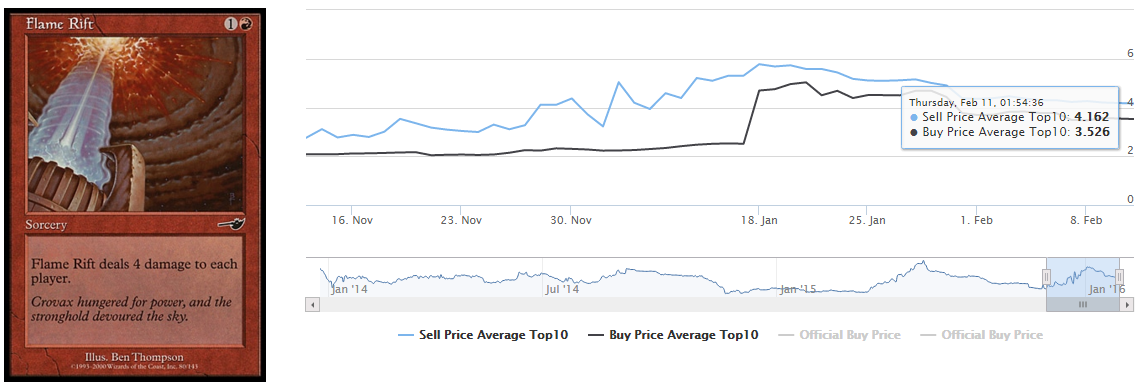
With the launch of Legacy Leagues you can expect to see an uptick in the value of Legacy staples on Magic Online. In my experience, Miracles has been the most popular Legacy deck online, and I'd definitely look there for some cards to invest in. Burn is the de facto budget option for Legacy, so I'd look there for pickups as well. I'm not sure how much play that Flame Rift sees in Legacy burn these days, but I do know that the card sells for about four tickets and sees a bump as is due to being from Nemesis- a set never actually released on Magic Online.

Flame Rift

Dual lands are another place to look at with regard to investing in Legacy. They've basically never been worth much on MTGO, and Vintage Masters definitely drove the price down, but an uptick in play could cause them to see some significant growth.

Most importantly though, is that if you intend to actually play in Legacy Leagues, now is the time to buy your deck. Well, before the announcement of Vintage Masters was the time to buy your deck, but it's a bit late for that. If you want a Legacy staple on MTGO, I recommend buying in sooner than later.

Avatar photo

Ryan Overturf

Ryan has been playing Magic since Legions and playing competitively since Lorwyn. While he fancies himself a Legacy specialist, you'll always find him with strong opinions on every constructed format.

View More By Ryan Overturf

Posted in Free, MTGOTagged 2 Comments on Legacy Leagues Coming to MTGO

Have you joined the Quiet Speculation Discord?

If you haven't, you're leaving value on the table! Join our community of experts, enthusiasts, entertainers, and educators and enjoy exclusive podcasts, questions asked and answered, trades, sales, and everything else Discord has to offer.

Want to create content with Quiet Speculation?

All you need to succeed is a passion for Magic: The Gathering, and the ability to write coherently. Share your knowledge of MTG and how you leverage it to win games, get value from your cards – or even turn a profit.

Insider: The Immediate Future of Modern

Are you a Quiet Speculation member?

If not, now is a perfect time to join up! Our powerful tools, breaking-news analysis, and exclusive Discord channel will make sure you stay up to date and ahead of the curve.

I try to have a level-headed approach to Magic. When people start calling for the ban-hammer, I aim to look for other solutions, as I know that WotC doesn't make banning decisions lightly.

In fact, when Treasure Cruise was warping Modern I was one to point out there were serviceable ways to beat up on the Treasure Cruise decks. Stock Birthing Pod was totally playable in this era, along with Affinity, while Tron and Merfolk decks packing Relic of Progenitus were able stop the delve decks from building up graveyards.

Chalice of the Void was also a card that could significantly hinder the Cruise decks, and there was the option to just splash Cruise in basically any deck, with the most notable adapter of Treasure Cruise in a normally non-blue deck being Burn.

There was an error retrieving a chart for Treasure Cruise

This was me defending a Modern that had been warped to the high-velocity format with good draw spells that embodied the type of Magic that I want to play. I will stress that it's too early to call at this point, but there is a lot to be said about the notion that the new Eldrazi decks warp Modern in similar ways. The statistics from the Pro Tour itself are pretty overwhelming, though as many point out, what really matters is where we go from there.

If you pore over the most recent Modern results on Magic Online, you'll see a lot of Eldrazi decks posting perfect records. Other decks are of course seeing success, but Eldrazi is disproportionately represented in these events.

Yes, you can play Living End. You can play Affinity. Merfolk has even had some strong showings in the new Eldrazi meta, but again, much like Treasure Cruise Modern, you just see more results coming from the Eye of Ugin decks. Further, the first reason you'll see many players cite for why they chose to play decks other than Eldrazi is a perceived positive Eldrazi matchup.

There was an error retrieving a chart for Eye of Ugin

The problem with seeing Eldrazi merely as the "deck to beat" is that it ignores the fundamentals of the situation---that the Eldrazi decks have access to mechanics that are actually degenerate.

I saw a Twitter poll recently asking whether lands that tap for two mana were more or less oppressive than land destruction. I don't believe this was intentional by the person who posted the poll, but this question made it abundantly clear to me that the Eldrazi decks are a real problem. Land destruction punishes stumbles and players hate it. Lands that tap for more than one mana punish playing lands that only tap for one mana.

At a glance, you could make the point that Eldrazi decks are severely limited in the types of spells they can play. This would be true, if not for a series of other pushed mechanics. Starting with Mirrodin we saw colorless spells taking more and more abilities that generally would only be found in colored decks. Chalice of the Void, for example, was recently restricted in Vintage. It's a small investment for a game-breaking ability that can just go into any deck capable of generating mana.

There was an error retrieving a chart for Chalice of the Void

Dismember, Gut Shot and Ratchet Bomb all also provide interaction that makes it so the Eldrazi deck doesn't have to merely line up well strategically with other decks. If your solution to Eldrazi's ability to generate fast mana is to generate your own with Birds of Paradise, they can kill the Birds pretty easily.

Meanwhile, the best draws from Eldrazi enable them to take advantage of their fast mana before you ever get a chance to shut their engine down. If interacting with lands is something that you're even capable of doing. Not to mention that they killed your Bird without tapping any mana with Gut Shot, while your interaction with their lands will cost at least two in the form of Spreading Seas or Boom // Bust.

Don't even get me started on how degenerate casting Thought-Knot Seer on turn two is.

On the Topic of Unbannings

I agree that certain cards being banned when Eldrazi decks get to run people over with fast mana appears silly. What kind of lunatic would be casting Jace, the Mind Sculptor right now? That said, WotC has made it clear that they are more pro-ban than pro-un-ban in Modern. They realize that the format will break sometimes, but they'd rather that be due to printing new hotness than subjecting us to something that historical evidence suggested was degenerate.

Make no mistake, this Pro Tour was a huge success for the brand---at least in the short term. I do think that the Eldrazi deck is busted, but it showcased new cards and put great players in the Top 8. It rewarded innovation, and viewership for the event was great. That said, this would not be the case if PT OGW was PT Stoneforge Mystic.

There was an error retrieving a chart for Stoneforge Mystic

I also want to address the point that banning Splinter Twin had anything to do with Eldrazi's success. I think it is, at best, silly to contend that a deck that is happy to play Spellskite, Dismember and Cavern of Souls would have a negative Splinter Twin matchup.

Minimally, the theory behind the matchup being good for Twin is off, so it would take some significant data to suggest otherwise. It's possible that newer versions pack less punch against Twin, but the pre-Oath processor versions mauled Twin decks in my experience. I don't think Thought-Knot Seer makes the matchup better for Twin.

Moving Forward

Talk of emergency bans is clearly outrageous. There's no emergency---the PT already happened. Now we'll all get the chance to smash with Eldrazi in a few GP's and Opens, and then in all likelihood something(s) will be banned from the Eldrazi deck.

I wouldn't rush to sell off the Eldrazi deck, but I would place some urgency on it. Eye of Ugin, Simian Spirit Guide and Chalice of the Void have gained significantly from the deck, and I like moving off of these positions.

The real trick is going to be pinpointing exactly how the bans go down. Will it be Eldrazi Temple? Eye? Heck, even Simian Spirit Guide is a card that nobody will ever use to play fair in Modern. The next announcement could involve huge shakeups. What I like is investing in decks that are performing well now and are likely to still be good after what I believe to be inevitable bans.

Burn is a deck that realistically can't be banned out of Modern or made bad in the format without a fundamental change to the turn four philosophy; Merfolk is a deck that always seems to find a way to be relevant without looking very good; and Living End is among the biggest talking points in the current Eldrazi metagame while also having chops historically.

In the short term, I think it's clear that Eldrazi is the deck to play, and also that it is not the deck to own. If the Open in Louisville and the coming GP's provide evidence that Eldrazi doesn't actually have long-term warping effects on the metagame then this is a position to reevaluate. That said, I think it's clear that until we see evidence to the contrary, we have a busted deck and we're asking what, not if, with regard to bans.

Thanks for reading.

- Ryan Overturf
@RyanOverdrive

High Stakes MTGO – Jan 31st to Feb 6th

Are you a Quiet Speculation member?

If not, now is a perfect time to join up! Our powerful tools, breaking-news analysis, and exclusive Discord channel will make sure you stay up to date and ahead of the curve.

Welcome back to High-Stakes MTGO. We decided to slightly change the name of the series but the content will remain strictly identical.

I had not anticipated much action this week. I knew a Modern Pro Tour was happening, but if speculators usually like Pro Tours I always feel like it's a lot of price volatility for little results in the end. I was prepared to let the speculative storm pass. I was also holding a lot cards that could potentially spike so there was not much on my buying radar for this past weekend.

And then came the Eldrazi. As I'm writing this I haven't sold anything, but I'm about to and will more than likely bank the most profit I've ever made in one day of MTGO speculation. By the time you read these lines you'll know what I have sold.

The snapshot of the account can be found here.

Buys This Week

This week starts with few extra copies of cards I already had.

GG

The bans of Splinter Twin and Summer Bloom haven't moved the price of these cards much. Thrun actually even dipped from 7 tix to 5.5 tix. With the price of these guys coming back to my original target buying price, I decided to buy extra copies and be "fully stocked" within the buying limits I self-imposed. Unfortunately Pro Tour Oath of the Gatewatch didn't really push these cards.

BFZ

The price of BFZ full sets keeps dipping. I bought another seven playsets. I might still be chasing a few more playsets in the coming days; it all depends on how prices evolve. I still have more room for BFZ full sets but I won't be buying these above 70 tix per set.

fON

I also went for three more copies of foil Ob Nixilis Reignited. Foil mythics were a new experiment for me this year. I was aiming at buying all Battle for Zendikar foil mythics in the 12-13 tix range (or under).

When I started buying these, Ob Nixilis and Gideon, Ally of Zendikar were way above 13 Tix. Now that Ob Nixilis has come down to 12 tix I'm trying to get him to the level of the other foil mythics I have. Almost there...

OS

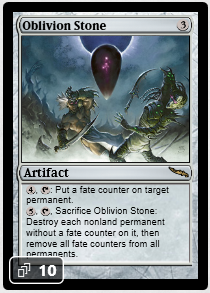
Oblivion Stone went back in the neighborhood of 20 tix this week, where it sat after the first week of Mirrodin flashback drafts. Since I had missed the first buying window I pilled up some Stones this time around.

OU

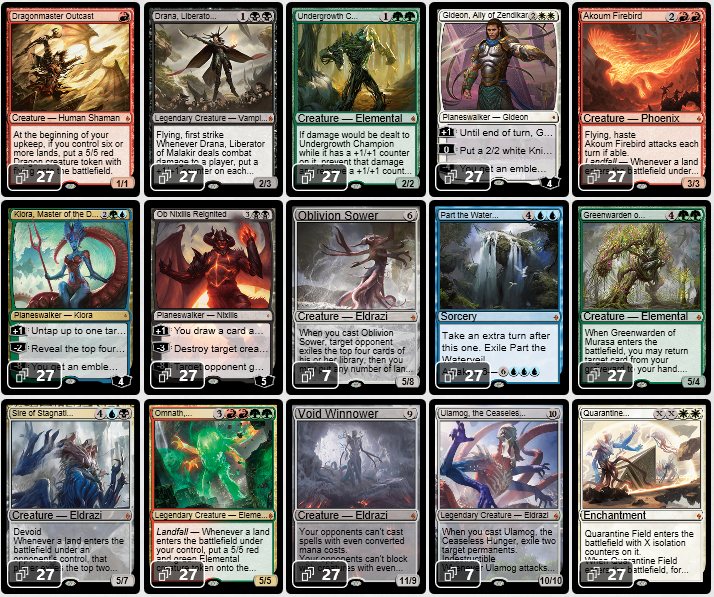
In the wake of buying Battle of Zendikar full sets I short-sold Ulamog and the Sower. These two cards were already on the loose and I thought that the trend could keep going for a little bit longer. I rebought them rather quickly fearing that they could see play during Pro Tour OGW, thus seeing their price rebound. Cumulatively I made a small 26 tix profit.

Sales This Week

Going into this past weekend, this card could have seen lots of play or flopped entirely. The price was plateauing and my potential profit percentage was already decent. It was a good time to cash out. With a no-show at the PT my timing happened to be just right for this one.

Prices of Magic Origins painlands are rising. The price of the Caves is now more that three times my buying price, and it was time to proceed to a first wave of sales---I sold 128 copies as of today. I rose my selling price bar a little bit but will surely keep selling as the price of Caves of Koilos seems to keep climbing.

Similarly to Sphinx's Revelation the Hivelord's price was good enough for me and I decided to pull the trigger. The price of that legendary sliver is much less dependent on its Modern playability than Sphinx's Revelation, but showed no sign of progression since early January---time to sell.

On My Radar

With PT OGW ending on a very Eldrazi note I sold into the hype to maximize my gains. In the coming days I'll be looking into the things that weren't played or posted disappointing results during this Pro Tour. It will be a perfect occasion to stock up on cheap Modern staples that are waiting for their turn, or alternately for a ban of Eldrazi deck components.

One thing to keep mind here is the Modern flashback drafts schedule---I'll make sure I'm not stocking up on Through the Breach or Gifts Ungiven, for instance.

Following up with the foil BFZ mythics I will also take a look at foil OGW mythics. A lot of them are under 12 tix, which is my reference point. I'll see if I can get more certainty about the potential price fluctuation before committing though.

Questions & Answers

Q

It's true that for the vast majority of my regular Modern/Legacy specs---outside of quick flips---I'm looking at a 50% minimum potential gain and I even try to look for a 100% potential gain in many positions. In these cases the potential gain is only determined by the historical price graph as shown on MtgGoldfish. For me, looking for such a potential profit is a sort of safety net and a better guaranty of generating profit for a spec.

Now, how do I find these potential specs? Most of the preparation work happens on MtgGoldfish.com. I'm constantly checking the Movers & Shakers sections in Standard, Modern and also Legacy, several times a day most days. This gives me a sense of what's moving at the moment and helps me memorize the price range of any card. One thing you don't see easily with only Movers & Shakers is cards that are slowly rising or slowly decreasing as they don't always make the cut among the top 50 movers.

Another great place to look from time to time, especially with Modern, is the Total Format Price. My favorite column to look at here is the "Weekly (%)". By clicking on it you can rank the Modern staples by biggest weekly percentage losers and gainers. Often enough the biggest losers have a chance to represent a buying opportunity.

By clicking on these cards and with the help of the price chart I can now fully evaluate if it really is a good buying opportunity or not. Don't forget to double check with sources of info if a price drop looks to good to be true---has a reprint been announced? A ban? A new card simply being better?

Finally, in general a good moment to buy Modern positions is during flashback drafts, such as those taking place all 2016 long, and after the release of a special reprint set, such as the Modern Masters sets. Great cards are still great cards and even after a massive decrease in price a rebound is very likely to follow.

Worldwake Eye of Ugin was around 6 tix when MM2 got released. The MM2 version of that land was under 0.2 tix for several months until undergoing one of the biggest and fastest increases we've ever seen on MTGO.

On the other hand, for Standard specs essentially, the "50% rule" is not something you can rely on. Standard relies more heavily on seasonal changes. When a set stops being among the newest sets, and therefore heavily opened, then it's probably a good time to buy in. And I would do so independently of the current price of my target. If the card has enough potential and it's the right time in the season then it's a good buying opportunity period.


Thanks for reading,

Sylvain Lehoux

Insider: QS Cast 22 – Our Trip To The Pro Tour

Are you a Quiet Speculation member?

If not, now is a perfect time to join up! Our powerful tools, breaking-news analysis, and exclusive Discord channel will make sure you stay up to date and ahead of the curve.

Play

This week, Kelly and Doug talk about their experiences at the Pro Tour. They talked about doing coverage, watching the Eldrazi decks rise, and how the rest of the decks got mostly ignored.

The cast also talks about:

  • the Death’s Shadow aggro deck being really good and still under-the-radar
  • The Shadows over Innistrad Spoilers were not intentional
  • With Madness returning, Jace, Vryn’s Prodigy gets better (sigh)
  • This is the time to get rid of Eye of Ugin if you have them.


Douglas Linn

Doug Linn has been playing Magic since 1996 and has had a keen interest in Legacy and Modern. By keeping up closely with emerging trends in the field, Doug is able to predict what cards to buy and when to sell them for a substantial profit. Since the Eternal market follows a routine boom-bust cycle, the time to buy and sell short-term speculative investments is often a narrow window. Because Eternal cards often spike in value once people know why they are good, it is essential for a trader to be connected to the format to get great buys before anyone else. Outside of Magic, Doug is an attorney in the state of Ohio.  Doug is a founding member of Quiet Speculation, and brings with him a tremendous amount of business savvy.

View More By Douglas Linn

Posted in Free Insider, QS Cast1 Comment on Insider: QS Cast 22 – Our Trip To The Pro Tour

Have you joined the Quiet Speculation Discord?

If you haven't, you're leaving value on the table! Join our community of experts, enthusiasts, entertainers, and educators and enjoy exclusive podcasts, questions asked and answered, trades, sales, and everything else Discord has to offer.

Want to create content with Quiet Speculation?

All you need to succeed is a passion for Magic: The Gathering, and the ability to write coherently. Share your knowledge of MTG and how you leverage it to win games, get value from your cards – or even turn a profit.

The (Gut)Shot Heard ‘Round The World: A Pro Tour Analysis

Are you a Quiet Speculation member?

If not, now is a perfect time to join up! Our powerful tools, breaking-news analysis, and exclusive Discord channel will make sure you stay up to date and ahead of the curve.

“Songs will be sung about this deck”
–Marshall Sutcliffe, PT Atlanta

It’s time to start singing. At Pro Tour Oath, the metagame was broken. U/R Eldrazi went 19-1 on Day One among the five players that ran it. The Top 8 saw six Eldrazi decks (three sub-archetypes) and two Affinity decks. But just because they “broke it” doesn’t mean Modern is broken. Today, I’m going back to my roots, analyzing the format, datamining lists for information, spotlighting gameplay, and throwing veiled insults at environmentalists. If any of that sounds interesting to you, buckle up.

Eye of Ugin Banner

Going into Pro Tour weekend, two questions were at the forefront of everyone’s minds. First, how will the format adjust to the removal of Splinter Twin and Summer Bloom? The timely banning of two format powerhouses ensured a shift in the Modern landscape from relatively stable, suburban living to gun toting, Wild West action. Pair this with a set full of new Oath of the Gatewatch cards making waves in Standard, and suddenly the stage is set for an exciting, uncertain event. Would an existing deck rise up to fill the shoes of Splinter Twin as the de facto “best deck”? Would Twin’s market share be split among the rest of the format equally? Would a new deck emerge from the shadows to exploit the hole left by Twin’s absence? How would Oath of the Gatewatch cards influence events? Say what you want about the positive/negative merits of bannings; Pro Tour Oath of the Gatewatch was one of the most exciting events I’ve seen in a while. Let’s break it down.

[wp_ad_camp_1]

Pre-PT Conditions

Two weeks before the Pro Tour, Todd Anderson won the SCG Atlanta Classic with Temur Delver. Here’s what I said about the format then:

"Sidestepping Infect hate with diverse threats like Hooting Mandrills and Tarmogoyf, Todd Anderson capitalized on a lack of Lightning Bolt in the format and punished an apparent field full of greedy players looking to execute their solitaire combos with impunity."

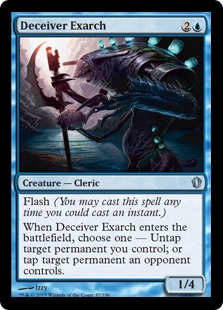
Deceiver ExarchWhen Splinter Twin was banned, Modern lost a powerful combo deck, a powerful control deck, and a powerful tempo deck at the same time. More importantly, it lost one of the best Lightning Bolt decks in the format. Splinter Twin was extremely adept at combating aggressive creature decks, as it has a plethora of tools available to both remove small creatures and buy time to execute its gameplan. Seven pseudo-fog effects in the form of Deceiver Exarch and Pestermite's tap abilities, along with eight Lightning Bolts (when paired with Snapcaster Mage) used to cause small creature decks fits, and now that pressure is gone.
In Atlanta, Todd sidestepped the Infect hate (the Level 0 deck) and attacked a weakness of the format in a slightly different way. Still an aggro deck that takes advantage of less Bolts, Todd’s deck did similar things differently, and it served him well in Atlanta. While Todd’s route to victory was just one option among a multitude of good choices for that event, it highlighted an apparent weakness of the format; linear aggressive decks resilient to conventional removal. Would we see something similar at the Pro Tour?

Our New Eldrazi Overlords?

The big question of Pro Tour Oath of the Gatewatch this weekend was clearly “did anyone find the right Eldrazi deck?”. Focusing primarily on shining the spotlight on new cards, one of the coverage team’s talking points throughout the event was “finding the Eldrazi deck”. Prior to Oath of the Gatewatch, some Eldrazi lists had been floating around Modern here and there, in different flavors and with different objectives, but at the center of almost all of them was a strong core of powerful cards. This was helped in large part by the new Eldrazi block. In Seth Mannfield’s interview for Team Blitz, he commented on the deck, saying “We’ve tested 10,000 different variations of that deck…I’m pretty sure none of us are going to play that deck”. Opinions were clearly pretty mixed regarding Eldrazi, but from the beginning of the tournament news started to spread that something had been “found."

Coverage was quick to put Colorless Eldrazi on camera, spotlighting it in Round 5 (the second round of Modern) when Shuhei Nakamura of Team Channel Fireball faced Makihito Mihara on Burn. Before we start taking apart the Eldrazi deck, let’s take a quick look at the forerunners of this archetype.

B/W Eldrazi, Matthew Dilks (10th - SCG Cincinnati)

Creatures

4 Oblivion Sower
1 Ulamog, the Ceaseless Hunger
4 Wasteland Strangler
4 Blight Herder
1 Spellskite

Sorceries

4 Lingering Souls
4 Inquisition of Kozilek
1 Thoughtseize

Planeswalkers

1 Liliana of the Veil

Instants

4 Path to Exile
1 Slaughter Pact

Artifacts

2 Expedition Map
4 Relic of Progenitus

Lands

1 Cavern of Souls
1 Vault of the Archangel
4 Eldrazi Temple
1 Bojuka Bog
2 Eye of Ugin
4 Marsh Flats
2 Urborg, Tomb of Yawgmoth
4 Ghost Quarter
2 Godless Shrine
2 Swamp
2 Plains

Sideboard

1 Liliana of the Veil
2 Stony Silence
3 Timely Reinforcements
2 Celestial Purge
1 Slaughter Pact
1 Crucible Of Worlds
2 Engineered Explosives
2 Disenchant
1 Duress

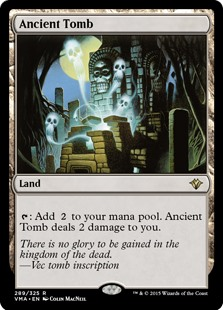
The earliest respectable Eldrazi finish I can find is Matthew’s list from SCG Cincinnati. By pairing powerful new Battle for Zendikar Eldrazi creatures with the framework of Eye of Ugin and Eldrazi Temple, Matthew was able to play a functional ramp/aggro strategy with combo elements as well, all while having access to eight copies of Ancient Tomb (Matt only Eldrazi Templeplayed six). Fair! While technically a “big mana” deck in a similar vein as R/G Tron and Amulet Bloom, Eldrazi had natural resiliency to the obvious big-mana foils like Fulminator Mage or Blood Moon. Most of its threats are colorless, so Blood Moon really only stops the special land bonuses, and Fulminator Mage is almost laughable in the face of Oblivion Sower.

One Oblivion Sower is almost guaranteed to ensure smooth mana for the Eldrazi archetype, as the combination of Relic of Progenitus vs. opposing graveyards filled with fetchlands all but ensures Sower grabs multiple lands from the opponent. This is all known information though. How has Eldrazi changed with the dual wild cards of Oath and bannings?

[youtube https://www.youtube.com/watch?v=-fKN4SyfafE?start=21965&w=560&h=315]

“Well, a Turn 1 Simian Spirt Guide allows for Chalice of the Void on 1, and one has to think that that is absolutely brutal against a Burn deck”.
–Tim Willoughby

Well said, Tim. Team CFB employed a variation on the “usual” updated list of Eldrazi, including the Simian Spirit Guide/Chalice of the Void package within an almost entirely colorless shell.

Colorless Eldrazi, Ivan Floch (2nd- Pro Tour Atlanta)

Creatures

4 Eldrazi Mimic
4 Eldrazi Temple
4 Endless One
4 Matter Reshaper
4 Reality Smasher
4 Simian Spirit Guide
2 Spellskite
4 Thought-Knot Seer

Artifacts

4 Chalice of the Void
2 Ratchet Bomb

Instants

4 Dismember

Lands

4 Eye of Ugin
4 Ghost Quarter
3 Mutavault
3 Urborg, Tomb of Yawgmoth
2 Wastes
4 Blinkmoth Nexus

Sideboard

3 Gut Shot
3 Oblivion Sower
2 Pithing Needle
1 Ratchet Bomb
4 Relic of Progenitus
1 Spellskite
1 Warping Wail

Hold on, this is nothing like the old Eldrazi deck! Oath of the Gatewatch brought some incredible new tools to the table in the form of Eldrazi Mimic, Matter Reshaper, Thought-Knot Seer, and Reality Smasher. When played alongside eight Ancient Tombs, this new Eldrazi deck full of undercosted threats has the potential to explode onto the board and overwhelm everything in its path. Rather than bothering with grindy cards like Oblivion Sower and Blight Herder, Eldrazi 2.0 takes advantage of a set of clearly pushed linear aggressive cards. Here are a few common turn sequences:

  • Turn 1: Land, Simian Spirit Guide, Chalice of the Void on one (killing Burn and Infect, and slowing down every other deck in the format)
  • Turn 1: Eldrazi Temple, Eldrazi Mimic
    Turn 2: Eye of Ugin, Guide, Reality Smasher, attack for TEN
  • Turn 1: Eye, Mimic, Mimic
    Turn 2: Urborg, Tomb of Yawgmoth, Endless One for X=4, attack for EIGHT.

Even a “fair” turn sequence can be nuts, but keep in mind that with a deck full of four-ofs, a playset of Simian Spirit Guide, eight Ancient Tomb effects, and 20 excellent creatures, the above draws are more indicative of the norm than actual goldfishes.

  • Turn 1: Blinkmoth Nexus (Dismember possibly)
    Turn 2: Eye of Ugin, Matter Reshaper (drawing a card or playing an extra land)
    Turn 3: Urborg, Tomb of Yawgmoth, Reality Smasher (or Endless One for five)

Ancient TombI’ve said it multiple times, and it’s worth restating, the ability of this deck to play eight Ancient Tombs pushes it farther up the power level scale than any other deck in the format. NO other deck is capable of draws like Eldrazi’s, except perhaps Grishoalbrand, and this deck suffers none of the consistency or fragility issues of Grishoalbrand.
With the majority of the room focusing on being aggressive, the Eldrazi deck is positioned favorably to both deploy to the board faster and hit harder, while also being more resilient to hate.

So, how do you fight this deck?

Infect is full of X/1s, and has to play awkward spells to fight cards like Spellskite. Affinity still dies to Stony Silence, and Burn is in big trouble if Eldrazi can find a Chalice of the Void. All the aggressive decks (and the midrange decks designed to prey on the aggressive decks) seemingly pushed the top end out of the format, making slow combo decks like Scapeshift a true liability. Control is almost a laughable choice, as they now have to contend with a deck that plays Thoughtseize on legs in the form of Thought-Knot Seer and built-in card advantage in the form of Matter Reshaper and Reality Smasher. It’s almost as if all these creatures just have incidental text to make them a nightmare for those evil control decks…

Colorless Eldrazi wasn’t the only flavor on the weekend. U/R Eldrazi, in the hands of Jiachen Tao and Andrew Brown went 19-1 on Day 1. That’s insane! So, spoilers!, here’s the winning list:

U/R Eldrazi, Jiachen Tao (1st - Pro Tour Atlanta)

Creatures

4 Drowner of Hope
4 Eldrazi Mimic
3 Eldrazi Obligator
4 Eldrazi Skyspawner
4 Eldrazi Temple
4 Thought-Knot Seer
4 Vile Aggregate
4 Reality Smasher
2 Ruination Guide
4 Endless One

Instants

3 Dismember

Lands

4 Eye of Ugin
3 Cavern of Souls
1 Gemstone Caverns
2 Island
4 Scalding Tarn
4 Shivan Reef
2 Steam Vents

Sideboard

2 Chalice of the Void
2 Gut Shot
3 Hurkyl's Recall
1 Ratchet Bomb
2 Relic of Progenitus
1 Spellskite
3 Stubborn Denial
1 Tomb of the Spirit Dragon

Numerous comparisons between the U/R Eldrazi Modern deck and Battle for Zendikar draft decks have been made already, so I’ll leave that alone. Regardless, this collection of seemingly underpowered cards have incredible synergy, and when everyone’s being linear, Vile Aggregate and Ruination Guide can get out of control quickly. Tao’s U/R Eldrazi deck went 9-1 in Swiss (and 3-0 in the Top 8 obviously) to finish with an incredible record.

Eldrazi MimicFor me, the strength in this deck lies in Eldrazi Mimic, and the fact Modern has just shifted to a point where the format is soft to these kinds of decks now. Everyone is focusing on doing their own powerful thing, and the wide variance of powerful things available makes it difficult for any general reactive deck to hold their own. This deck falls apart to an Anger of the Gods, but who can really play that right now? The diversity of Modern creates this environment where a foil exists to any problem, but often players can’t afford to dedicate sideboard slots to that effect without becoming too weak elsewhere. For players experienced with Modern this is nothing new, but the reality is these Eldrazi decks are here to stay and room must be made for them in other players’ sideboards.

The Moment(s) You’ve All Been Waiting For

[youtube https://www.youtube.com/watch?v=UoYoYpidzIU?start=24440&w=560&h=315]

This match is one of the most entertaining I’ve seen in a long time. We’ll take it step by step. Press play.

LUIS Turn 1: Eye of Ugin, Eldrazi Mimic, Eldrazi Mimic (off a mulligan to 6)

FRANK Turn 1: Land, Go

LUIS Turn 2: Land, attack for 4

FRANK Turn 2: Land, Eldrazi Mimic

LUIS Turn 3: Land, Thought-Knot Seer, take Frank’s last spell, attack for 8 (down to 8)

FRANK Turn 3: scoop

Game Time: 47 seconds

Game Two saw Frank go Eldrazi Mimic into Matter Reshaper into Thought-Knot Seer (on Turns 1-3) while Luis could only fight back with Relic of Progenitus, Spellskite, and a Matter Reshaper of his own for defense. A turn four second copy of Thought-Knot Seer put the nail in the coffin, pushing the match to game three. This game is very interesting to watch because under the surface (the surface being Luis getting his face beaten in) you can see how fast the Eldrazi deck is capable of playing to the board. Luis had stuff, but that stuff was irrelevant in the face of fast, powerful creatures. Rather than getting tricky, as some have suggested, perhaps the answer is just a bunch of Lightning Bolts and Terminate.

Gut ShotGame Three is excellent, and I won’t give a play by play to force you to watch the video (hopefully). One thing that is interesting is the effectiveness of Ghost Quarter from Luis to Strip Mine Frank, as he only plays two basics. Definitely something to keep in mind, I like Ghost Quarter as the opportunity cost to play it is often low, and in many situations it can be excellent. We already don’t mind Ghost Quarter against Affinity, Infect, and Tron, and it does work against Eldrazi in certain situations as well. Eye of Ugin can often ramp out threats and be “worth” four mana or more (as we saw in the above match) and is definitely a strong target going late Ghost Quarter would love to hit.
Finally, GUT SHOT.

"I think I've given Gut Shot a good name"
- Luis Scott-Vargas

If You Can’t Beat Em’…No, You’re Gonna Beat Em’

Silly gooses on the Internet are talking about banning Eldrazi Temple. Less than a month after complaining about Splinter Twin being banned?!? Some player somewhere is shaking his head slowly while cautiously sleeving up Colorless Eldrazi for a test drive. I’m going to level with you here: nothing needs to be banned. Change your shorts and let’s get down to business.

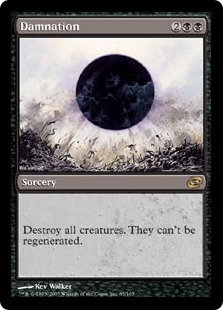
Sweepers are good against decks that play to the board. “Everybody get in here!” indeed. We all know this, but that only helps if we actually put those cards in our sideboard. It baffles me that, as humans, we make a big deal about recycling, like one individual can make some huge difference.Damnation The average American generates 4 pounds of trash a day (according to DoSomething), yet collectively the U.S. wastes 200 millions tons of garbage a year. In the big picture, changing my recycling habits only affects the yearly total by .0000364% (three-hundred thousandths of a percent for the math illiterate), yet my neighbor glares at me for not doing my part when he’s crazily digging through my trash. Wait, should I be worried? I can already imagine some of you wonderful readers rushing to the bottom of the page to rip me apart for not doing my part! Thus, I find it difficult to comprehend when players expect OTHER players to pick up the slack and put Stony Silence in their sideboard to fight the Affinity menace. Double standard man, I’m telling you. Play Damnation and get over yourself!

I’m not entirely sure land destruction is the way to go. It seems good in theory (Eldrazi decks are powering out threats at double speed, so I should slow them down) but in reality it’s probably too little too late. On the draw, your opponent goes Eldrazi Mimic into something 4-5 CMC on Turn 3, and you’re going to drop a Blood Moon or Magus of the Moon on that board? Good luck.

It might just come down to playing more Lightning Bolts. Ben Stark took a removal heavy Mardu Control list to 7-3 in Modern, alongside Paul Rietzl:

Mardu Control, Ben Stark (7-3 - Pro Tour Atlanta)

Creatures

2 Abbot of Keral Keep
4 Dark Confidant
1 Fulminator Mage
1 Grim Lavamancer

Planeswalkers

1 Ajani Vengeant
3 Liliana of the Veil

Sorceries

4 Lingering Souls
3 Thoughtseize
4 Inquisition of Kozilek

Instants

1 Terminate
2 Kolaghan's Command
4 Lightning Bolt
3 Lightning Helix
4 Path to Exile

Land

1 Lavaclaw Reaches
1 Ghost Quarter
1 Godless Shrine
3 Arid Mesa
2 Marsh Flats
1 Mountain
4 Blackcleave Cliffs
1 Blood Crypt
2 Bloodstained Mire
1 Plains
1 Sacred Foundry
4 Shambling Vent
1 Swamp

Sideboard

1 Ajani Vengeant
1 Crumble to Dust
1 Damnation
3 Fulminator Mage
1 Lightning Helix
1 Rakdos Charm
2 Rest in Peace
2 Stony Silence
1 Timely Reinforcements
1 Wear // Tear
1 Zealous Persecution

Eldrazi Mimic should have some trouble getting any traction against all that removal! Lingering Souls is a great way to buy time, and this deck has just enough powerful cards that it can cobble together a midrange game against any opponent. This type of deck is the exact thing Twin pushed out of the metagame, as it was often searching for crucial interaction and had to play right into Twin’s pacing. I’ll definitely be trying this one out in the future.

Conclusion

For me, Pro Tour Oath of the Gatewatch was excellent. I enjoyed seeing the new Eldrazi deck run the tables, and it’s clear to me Wizards is focused on pushing a linear Eldrazi deck into the Modern spotlight to generate interest in their new set. On that account they succeeded, which, as players of the game, we should be taking as a positive. I don’t believe Eldrazi is too strong, and I’m certain the format can adjust to beat it. Interestingly enough, it seems the best way to beat Eldrazi is to reduce the solitaire characteristics of many decks in the format, as Eldrazi is just doing better things faster. If decks are forced to get more interactive to fight the king of the hill, isn’t that a good thing? It will be interesting to see how things develop! What do you think? Are you terrified of the poor metagame numbers coming out of the Pro Tour? Do you have any secret tech to combat our new Eldrazi overlords? Let me know in the comments, and I’ll see you next week.

Trevor Holmes
The_Architect on MTGO
Twitch.tv/Architect_Gaming
Twitter.com/7he4rchitect

Insider: Pro Tour Oath Observations

Are you a Quiet Speculation member?

If not, now is a perfect time to join up! Our powerful tools, breaking-news analysis, and exclusive Discord channel will make sure you stay up to date and ahead of the curve.

The Pro Tour! Every set release, competitive Magic players eagerly await the Pro Tour coverage. Many of us aspire to play on the Pro Tour and others just enjoy watching the high level of competition.

Unlike with professional sports, these events only happen a few times a year. With football or basketball, we get to see our teams compete for a season and then we have to wait until the next year. With Magic though, we have a delay in between each of the events. This delay makes for an exciting event to watch.

For this particular event, I found myself driving to Chicago for a Super Bowl party. While it’s surprising that Wizards scheduled the Pro Tour on the same weekend as the Super Bowl, the two events didn’t overlap at all, so for those of us who also love football, we had an epic weekend of media!

Although it sounds like I would have missed out on all of Day 2 of coverage, there is always a way to make it work. So, on my eight hour drive, I streamed coverage of the event in my car. Sure I couldn’t watch every single play, but once you’re familiar with Modern it’s fairly easy to follow the games from the commentary as long as someone decent is in the booth. While it may not have been ideal, we had a blast listening to coverage in the car on the drive out.

By now, you have seen the results of the tournament and how much Eldrazi dominated the field. I think most of us knew this new deck was going to make a splash in Modern, but there were few among us who truly knew the power of the dark Eldrazi side. The great minds of a few different teams figured out three different ways to build this deck. Not everyone who piloted these decks found resounding success, but an extremely high percentage of them did.

I don’t have all the stats for these decks but one that stood out to me was the four players who ran the UR Eldrazi list only lost a combined one match on day one. That’s astounding. The other versions also had a very high win rate.

Assessing Eldrazi's Power Level

The big question is whether or not these decks are too good. I posted on Twitter that something needed to be banned so we can have a healthy format for GP Detroit (which I will be attending). In Modern we don’t see players switching decks en masse very often. This may be one of those times when they actually do. I’ve been working hard on new concepts in Modern, but with the current state of the format I feel like we’re in a beat ‘em or join ‘em mode right now.

All of the pros that were interviewed about their success with Eldrazi concluded that their deck was fundamentally broken in the event. They went on to say the deck had no bad matchups. If I hadn't watched every match of the coverage, I might not have believed a deck with no bad matchups existed, but that’s my opinion of where the format is right now.

There were three successful decks from this archetype and although the blue-red version won, all three are viable. The colorless version was created by Channel Fireball and Face to Face. This version gets to run manlands and Chalice of the Void. The blue-red version has more creatures that you should be able to find in your limited leftovers, which is why I nicknamed it Draftdrazi.

The third version from Frank Lepore is closer to the original version of the deck. He was trying to keep cards like Blight Herder in the deck and didn’t quite get to the level of the other two versions. While I feel that the processor version is weaker, it is by no means bad and further tweaking might increase its playability as well.

If you are still on the fence about the power level of these decks, consider a couple cards from Legacy and Vintage. In these formats cards like Mishra's Workshop, Ancient Tomb and City of Traitors are incredibly powerful. These lands are obviously crazy-good and of an unacceptable power level for Modern.

Similarly, the Tron lands, Urza's Mine, Urza's Power Plant, and Urza's Tower, tap for additional mana once you've found all three. These three lands have been the core of a Modern archetype since the banning of Cloudpost (another busted multi-mana land).

Eldrazi Temple and Eye of Ugin are in a similar vein. Unfortunately they're a lot closer to the Legacy/Vintage cards than they are to Tron---each one works on its own, no assembly required.

The New Affinity?

Recently I was reminiscing with some friends about when Mirrodin block was Standard-legal. During that time, Affinity was so prevalent that you had two options. Either you could play all your artifacts and do degenerate things in the first couple turns of the game, or you could play lots of artifact destruction to counter those players. There were some decent decks in the format, but the whole structure surrounded that two-sided fight of artifacts versus beating artifacts.

The Eldrazi decks are structured very similarly to Affinity when it first was released. Each of the Eldrazi decks is mostly creatures and few spells. There is no Cranial Plating, but you could run Ghostfire Blade if you wanted to. Even though you won’t have equipment, your creatures are already big, so it’s like they’re pre-equipped.

In the first builds of Affinity you could play all the artifact lands, which cast your Frogmite on turn one and Myr Enforcer on turn two. This is a common sequence for the Eldrazi deck. With either of the Eldrazi lands you can cast a two-power Eldrazi Mimic or Endless One on turn one and then follow up with a Thought-Knot Seer on turn two.

There is one main difference between Eldrazi and Affinity though. Eldrazi have fewer weaknesses. Affinity could be wrecked by lots of cards in the format, including destroying nearly all their permanents with Shatterstorm. There are no such cards that thwart the Eldrazi.

From a flavor perspective, that’s exactly what the situation is supposed to be like, but from a competitive standpoint it’s rather dreary. Never fear though, there are some strategies that can compete with Eldrazi. Let’s dive into those.

Successful Pro Tour Decks

Blue Moon

Blue Moon by Jason Chung

Creatures

4 Snapcaster Mage
3 Pia and Kiran Nalaar

Spells

4 Serum Visions
3 Spell Snare
4 Lightning Bolt
3 Burst Lightning
3 Mana Leak
3 Remand
4 Blood Moon
3 Electrolyze
2 Cryptic Command
2 Batterskull

Lands

4 Scalding Tarn
4 Misty Rainforest
2 Steam Vents
2 Sulfur Falls
8 Island
2 Mountain

Sideboard

2 Anger of the Gods
1 Batterskull
2 Dispel
1 Izzet Staticaster
2 Negate
2 Spellskite
2 Spreading Seas
2 Vandalblast
1 Vendilion Clique

First up on our list of possible reactions to the Eldrazi metagame is Blue Moon. This fringe deck has had some success over this past year. Its main strength is of course the maindeck Blood Moon package alongside the controlling shell. It’s doubtful that this deck was chosen based on Eye of Ugin and Eldrazi Temple aggro decks, but it does line up well against them.

The matchup is still not wonderful for Blue Moon though. Slowing Eldrazi down is great but you need to present a reasonable clock to defeat them, otherwise they will just cast their creatures a couple turns later and still beat you with them.

I’m most curious about the absence of Vedalken Shackles. That seems like one of the biggest payoffs this deck can muster, but the PT list contained zero copies of the Control Magic effect. I could see that card turning the matchup into a more favorable position as well.

Lantern Control

Lantern Control by Sam Black

Spells

2 Surgical Extraction
4 Inquisition of Kozilek
2 Thoughtseize
1 Duress
4 Ancient Stirrings
2 Pyroclasm
2 Abrupt Decay
1 Infernal Tutor

Artifacts

4 Mox Opal
4 Lantern of Insight
4 Ghoulcaller's Bell
4 Codex Shredder
1 Pyxis of Pandemonium
3 Pithing Needle
1 Pyrite Spellbomb
4 Ensnaring Bridge

Lands

4 Glimmervoid
1 Grove of the Burnwillows
4 Llanowar Wastes
2 Blackcleave Cliffs
1 Sea Gate Wreckage
2 Ghost Quarter
2 Academy Ruins
1 Mountain

Sideboard

1 Ancient Grudge
1 Grafdigger's Cage
1 Kozilek's Return
2 Leyline of Sanctity
1 Nature's Claim
1 Pithing Needle
2 Spellskite
2 Sun Droplet
2 Surgical Extraction
2 Welding Jar

Next up we have a deck directly opposed to my play style in Lantern Control. This bizarre deck is brought to you by Ensnaring Bridge, which has been frustrating aggro opponents for twenty years.

Without Bridge, the deck's defenses crumble pretty quickly. But locating and holding onto your artifact removal will prove difficult, as the deck systematically strips cards from your hand and controls your draw step.

Not many players will jump on board with this slow-paced pillow fort, but it does seem like a counter to the all-in aggressive nature of the Eldrazi decks.

Naya Zoo

Naya by Phillip Braverman

Creatures

4 Wild Nacatl
4 Noble Hierarch
1 Birds of Paradise
2 Grim Lavamancer
3 Scavenging Ooze
4 Tarmogoyf
2 Voice of Resurgence
1 Kitchen Finks
4 Knight of the Reliquary
2 Magus of the Moon
3 Huntmaster of the Fells

Spells

4 Path to Exile
4 Lightning Bolt

Lands

4 Windswept Heath
4 Wooded Foothills
2 Arid Mesa
1 Temple Garden
2 Stomping Ground
1 Sacred Foundry
1 Stirring Wildwood
1 Horizon Canopy
1 Gavony Township
1 Ghost Quarter
1 Plains
1 Mountain
2 Forest

Sideboard

1 Ancient Grudge
4 Blood Moon
1 Crumble to Dust
1 Dismember
1 Eternal Witness
3 Lightning Helix
4 Stony Silence

The name for this deck is tricky business. One thing is for certain though, this deck is definitely not Naya Company as it was labeled. There are no copies of Collected Company in the 75!

We could call this Naya Aggro, but that might get it mixed up with the Naya Burn deck. That is probably better than calling it Naya Midrange because although there are four-drops in the list, the deck is aggressive in nature.

Names aside, this deck is interesting in that it’s capable of running Magus of the Moon as well as Huntmaster of the Fells, both of which seem like decent tools to fight Eldrazi. You can also search out Ghost Quarter with Knight of the Reliquary to slow them down.

All told though, this version seems like it would fall short against the metagame. The concept is intriguing though and could be further explored and tailored to fit the meta.

Abzan Company

Now onto an actual Company deck:

Abzan Company by Ari Lax

Creatures

4 Birds of Paradise
3 Noble Hierarch
3 Viscera Seer
2 Wall of Roots
3 Spellskite
2 Melira, Sylvok Outcast
2 Anafenza, Kin-Tree Spirit
3 Eternal Witness
1 Fiend Hunter
4 Kitchen Finks
1 Murderous Redcap

Spells

1 Abrupt Decay
4 Chord of Calling
4 Collected Company

Lands

4 Windswept Heath
4 Verdant Catacombs
2 Temple Garden
2 Overgrown Tomb
1 Godless Shrine
3 Horizon Canopy
3 Gavony Township
2 Forest
1 Swamp
1 Plains

Sideboard

1 Abrupt Decay
1 Fulminator Mage
1 Kataki, War's Wage
1 Orzhov Pontiff
3 Path to Exile
1 Phyrexian Revoker
1 Pithing Needle
1 Qasali Pridemage
1 Scavenging Ooze
2 Sin Collector
2 Voice of Resurgence

Ari Lax as well as six other players had much success with the Birthing Pod leftovers deck, Abzan Company. The strength of this deck has always been that it can present a reasonable clock while threatening to gain infinite life or deal infinite damage. These new versions are much more focused on assembling the combo through Collected Company and Chord of Calling. In addition to the search tools, they have more of each combo piece, in addition to Spellskite to protect their interactions.

On one hand, Eldrazi have very few ways to interact with this combo. On the other hand, they present a much faster clock than what Melira and friends are used to handling. This is one of the best decks I can recommend right now because of how it is positioned against the field. You could even get crazy and sideboard the spiking Worship and make the Eldrazi bow to your greatness.

Chord Combo

Chord Combo by Matthew Rogers

Creatures

4 Birds of Paradise
4 Noble Hierarch
4 Wall of Roots
1 Scavenging Ooze
2 Spellskite
1 Qasali Pridemage
2 Courser of Kruphix
1 Orzhov Pontiff
3 Spike Feeder
4 Archangel of Thune

Spells

3 Path to Exile
4 Lingering Souls
4 Chord of Calling

Lands

4 Windswept Heath
4 Verdant Catacombs
1 Marsh Flats
1 Temple Garden
1 Overgrown Tomb
1 Godless Shrine
2 Razorverge Thicket
1 Horizon Canopy
4 Gavony Township
2 Forest
1 Plains
1 Swamp

Sideboard

1 Burrenton Forge-Tender
1 Ethersworn Canonist
1 Melira, Sylvok Outcast
3 Painful Truths
1 Sigarda, Host of Herons
3 Stony Silence
3 Thoughtseize
2 Worship

Chord Combo is a variation of Abzan Company that swaps Melira combo for Spike Feeder plus Archangel of Thune to gain infinite life and make infinitely large creatures. Just like Abzan Company, this deck does a good job of slowing down Eldrazi and then finishing with a combo they don’t have many ways to interact with.

It’s unclear which version is the best choice but both seem to be doing the right types of things to counter what the rest of the meta is presenting. As you can see, there are a pair of Worships in this sideboard, so maybe that is a legitimate way to buy yourself enough time to combo your opponent.

Last year I wrote an article advocating for a similar deck. The concept was to rebuild Aristocrats in Modern.

Most of the information there is old news but much of it relates to this same discussion about various Abzan decks. No matter your flavor of Abzan, they seem well positioned to hold their ground despite the overwhelming dominance of the Eldrazi menace.

Grixis Goryo

Grixis Goryo by Kentaro Yamamoto

Creatures

4 Jace, Vryn's Prodigy
4 Simian Spirit Guide
4 Griselbrand
4 Emrakul, the Aeons Torn

Spells

4 Faithless Looting
4 Serum Visions
2 Lightning Bolt
2 Thoughtseize
4 Izzet Charm
4 Goryo's Vengeance
4 Through the Breach

Lands

4 Polluted Delta
4 Scalding Tarn
1 Bloodstained Mire
1 Blood Crypt
1 Watery Grave
2 Steam Vents
2 Blackcleave Cliffs
2 Creeping Tar Pit
1 Island
1 Swamp
1 Mountain

Sideboard

1 Boseiju, Who Shelters All
2 Dispel
4 Leyline of Sanctity
2 Lightning Bolt
2 Painful Truths
2 Shatterstorm
2 Vandalblast

Wanna beat everyone? Just play a fast combo deck like Goryo's Vengeance. With no one to stop you, discard Emrakul to Faithless Looting and put him into play with Vengeance courtesy of Simian Spirit Guide. All of this can be done on turn two!

Then what? So you have your opponent at five life and they have no permanents but you are left with no way to finish them off. That’s my main problem with this deck. Sure it’s amazing to be able to do that so early in the game, but I would rather have the capabilities to draw my whole deck and end the game immediately with the Grishoalbrand version.

You don’t win immediately though because it’s going to take you five to ten minutes to show your opponent the combo, but these reanimation decks are very strong right now. I stand by my claim that Goryo's Vengeance needs to be banned, but as long as you are allow to play it, more people should.

The same thing goes for other fast combo decks like Storm and Ad Nauseam, but I think the Griselbrand decks are by far more powerful in addition to being more consistent. Fast combo is great against all-in aggressive decks so we could see the format adapt completely to fight against the best aggro deck Modern has ever seen.

Jund

Jund by Reid Duke

Creatures

4 Dark Confidant
2 Scavenging Ooze
4 Tarmogoyf
2 Kitchen Finks
2 Kalitas, Traitor of Ghet

Spells

1 Slaughter Pact
4 Lightning Bolt
1 Seal of Fire
4 Inquisition of Kozilek
2 Thoughtseize
2 Abrupt Decay
2 Terminate
1 Kolaghan's Command
1 Maelstrom Pulse
4 Liliana of the Veil

Lands

4 Verdant Catacombs
4 Bloodstained Mire
1 Wooded Foothills
1 Stomping Ground
1 Blood Crypt
2 Overgrown Tomb
4 Blackcleave Cliffs
1 Twilight Mire
3 Raging Ravine
2 Swamp
1 Forest

Sideboard

2 Ancient Grudge
1 Courser of Kruphix
1 Crumble to Dust
1 Disfigure
1 Duress
2 Fulminator Mage
2 Grim Lavamancer
2 Kitchen Finks
2 Shatterstorm
1 Thoughtseize

Traditionally, the best way to beat aggro is to control what they are doing. This proves difficult because Eldrazi can be so fast, but also because Thought-Knot Seer disrupts you while Reality Smasher strips an extra card from your hand to remove it. I’m not sure if this is the right version for the metagame now, but Jund can be tailored to fit whatever metagame we have. One big downfall of red in this deck though is that Lightning Bolt matches up so poorly against the threats being presented.

You can also try to control what your Eldrazi opponent is doing with decks like Merfolk and Living End. Merfolk can run Spreading Seas as well as Sea's Claim to shut down the double-land mana base. But in the end, I think the Eldrazi will still overpower the Merfolk army.

Living End is great except when your opponent casts Chalice of the Void for zero and then you can never cast the deck’s namesake. This is the main problem with Eldrazi---the cards they run naturally are good against the counters to the deck.

Although the Top 8 of the Pro Tour shows that Affinity doesn’t match up well against Eldrazi, I think racing is a fine way to go about winning this matchup. We will have more time to test against this deck than the pros did, so that might swing the matchup.

The pros did get the switch from Etched Champion to Master of Etherium correct though. With so many colorless creatures in the format, Etched Champion seems more like a three-mana 2/2 than the color-protected, potent threat it has been in the past.

~

All of these decks presented today were successful at the Pro Tour. They found success through a wave of the Eldrazi army. Now that we know the Eldrazi are coming for us, hopefully a weakness can be identified and a counter can be developed.

This may be one of those times when I actually join them instead of trying to beat them, but if that’s the case, you know I’ll have my own sweet version. I’ve been tinkering with other colors of Eldrazi but I think the best we can do might be colorless or blue-red.

Modern is definitely exciting and although I wish something were banned post-Pro Tour, I do admire Wizards for continually shaking up the format. It makes it hard to keep up financially sometimes, but new and exciting makes for a fun time.

What do you think about Eldrazi in the metagame? Should something be banned to balance the format again? Are these decks I recommended good enough to thwart the Eldrazi invasion? Let me know in the comments.

Until next time,
Unleash the Force!

Mike Lanigan
MtgJedi on Twitter
Jedicouncilman23@gmail.com

Insider: Bubbles & The Modern Market

Are you a Quiet Speculation member?

If not, now is a perfect time to join up! Our powerful tools, breaking-news analysis, and exclusive Discord channel will make sure you stay up to date and ahead of the curve.

bubble bobbleWho remembers this game when they were a kid (or maybe adult)? For those who didn't get to enjoy this wonderfully designed game, the premise was pretty simple. You are a monster who shoots bubbles that can trap your enemies and if you capture them in a bubble you need to pop the bubble before they escape.

What does that have to do with Magic: The Gathering?

We often compare Magic cards to stocks when we speculate. While it's an easy comparison it's not entirely accurate. Every stock is for a specific entity (typically a company) and there's a lot of public information available about that entity. A savvy investor can look up their previous earnings, equity, and other important characteristics to evaluate the health of the company before they invest.

We don't have that option with Magic cards. We can look up previous values; check out winning decks on MTGtop8.com to get a general feel for the demand for a specific card; and look at the spread on buylists with our own Trader Tools here on QS. But all this information amounts to much less than what's available for just about any stock on the market.

The concern is obviously that with little information it's harder to determine how "real" a price is. When large price spikes occur we view it as either a missed opportunity or a nice hit, but what does it mean about the overall market?

The Tech Bubble

Who remembers the stock market around the millennium?

500px-Nasdaq_Composite_dot-com_bubble.svg

A whole lot of people around January of 2000 thought they had made a lot of money real fast. Investment firms were throwing money at internet startups that showed even a sliver of promise and young "tech" entrepreneurs were the kings of Silicon Valley.

Sound familiar?

gemstone caverns

painters servant

worship

descendents path

All of these cards experienced massive spikes with very little results to back them up. We saw a lot of companies do the same thing in the late 90's and early 2000's.

learningtreestock

Learning Tree International did have some valuable intellectual property (Carmen Sandiego, Myst/Riven, and Reader Rabbit series). It's IP value was greatly inflated before its purchase by Mattel, and Mattel ended up taking a huge loss on the acquisition.

Why Does This Matter?

While the difference in scale between an individual Magic card and a business is very large, we can see the same patterns. Now it's easy to look at the cards listed above and see they had minimal or no impact in successful decklists at the Pro Tour. This implies spikes caused by artificial demand and/or buyouts.

Unlike the stock market, Magic finance doesn't have any policeman like the Securities Exchange Commission. There are no laws in Magic finance to discourage securities fraud or protect investors.

Some might argue that a rising tide lifts all ships, which is true when the tide rises slowly; but anyone who has been on a dock before a tsunami hits knows the rate of rise matters a lot. Too fast of a rise sinks all ships.

dock after tsunami

Expected Outcomes for Magic

A good number of people made a lot of money (and kept it) during the dot-com boom, most likely by getting bought out before the crash. But plenty of people lost a lot as well. These people were the ones who either stuck it out or weren't aware of everything they were invested in (people who owned large mutual funds or who had 401K/retirement funds).

Either way, someone got shafted and many people simply stopped investing after this.

If people keep creating artificial spikes in the Magic market via buyouts, then one of two things is likely to happen.

  1. WotC views the demand for the Modern format as much greater than it actually is, and reprints a massive amount of cards to bring prices back down. This will end up tanking prices across the board because the supply would now greatly outstrip demand.
  2. New players stop entering the format because the price of entry is too high.

In the latter case, stores will make windfall profits at first as they see their existing stock rise rapidly in price and new players rush to pick up everything they need or can think of. But once the cards are acquired by the existing players, demand dries up. Stores are left with their remaining stock rotting away while players focus on picking up only the newly released cards.

This lack of demand causes stores to lose interest in supporting the format, and then the Modern players are forced to search far and wide for events to play in and enjoy, as Legacy and Vintage players do now.

Doom and Gloom

I didn't write this article to cause people to start fearing for the future of Modern. WotC is a smart business and they will do what they have to to keep the format interesting (whether it be by printing more and more powerful cards or banning ones they already printed).

However, those of us who speculate and enjoy Magic finance as a hobby need to be exceedingly careful with our financial dealings and decisions. It's fine to buy copies of cards you feel are underpriced; it's not okay to buy them with the intention of causing a price increase (or "pumping and dumping").

It's also incredibly important for those of us who aren't "pumping and dumping" to keep an eye out for these types of buyouts. The more buyouts we see, the more "bubble-like" the financial future becomes and the more unstable speculating on the format becomes.

A Warning to the Pump-and-Dumpers

For those who are pump-and-dumping, note that while it may seem incredibly lucrative at first, it's increasingly difficult to unload large quantities of cards. Many stores have taken a "wait and see" approach with regards to price spikes (raising their sell prices to match the market price, but holding off on raising any buy prices).

So while it may look like you made a lot of money, you haven't until you've actually sold the cards.

~

The purpose of this article was to highlight the similarities between previous financial bubbles and a potential one in the Magic: The Gathering finance sector. As you can see it's a relevant comparison.

I hope my arguments will help dissuade the continuous manipulation of card prices via buyouts. At the end of the day, it's bad for everyone who loves Magic, and everyone who profits off it currently---let's not ruin a great thing with irresponsible speculation.

Avatar photo

David Schumann

David started playing Magic in the days of Fifth Edition, with a hiatus between Judgment to Shards. He's been playing Commander since 2009 and Legacy since 2010.

View More By David Schumann

Posted in Finance, Free Insider, Modern5 Comments on Insider: Bubbles & The Modern Market

Have you joined the Quiet Speculation Discord?

If you haven't, you're leaving value on the table! Join our community of experts, enthusiasts, entertainers, and educators and enjoy exclusive podcasts, questions asked and answered, trades, sales, and everything else Discord has to offer.

Want to create content with Quiet Speculation?

All you need to succeed is a passion for Magic: The Gathering, and the ability to write coherently. Share your knowledge of MTG and how you leverage it to win games, get value from your cards – or even turn a profit.

In Defense Of Fallen Empires, The Best Set You’ve Never Drafted

Are you a Quiet Speculation member?

If not, now is a perfect time to join up! Our powerful tools, breaking-news analysis, and exclusive Discord channel will make sure you stay up to date and ahead of the curve.

Editor's Note: This guest article was written by Zack O'Malley Greenburg, a senior editor at Forbes Magazine, published author, long-time Magic player and one of my closest friends.  When he's not busy hanging out with Diddy or Justin Bieber, he enjoys cube drafting and casual Magic formats (especially with older cards).   --Kelly

A few weeks ago, I won a game of Magic thanks mostly to an Icatian Moneychanger. I also leaned heavily on an Elven Fortress and Icatian Priest, one with a no-tap ability to pay 1WW to pump any creature +1/+1.

The entire experience led me to a startling conclusion: Fallen Empires isn't as bad as I thought it was. And I've always thought it was the most boring, useless, lifeless set ever produced.

Let me back up a bit. I've been playing Magic for 20 years, actively as a middle schooler in the mid/late 1990s and a couple times a year with old friends in the current millennium. I have an old mono black discard deck that I keep around, but mostly I draft Winston-style with piles of old cards or whatever new packs someone picks up for fun.

There was an error retrieving a chart for Hypnotic Specter
There was an error retrieving a chart for Thoughtseize

It's no secret that new cards have gotten insanely powerful, and that's clear to me every time I crack open a pack of cards printed in the 21st century. A 2/2 creature with no ability for two mana is no longer considered decent, and a set like Fallen Empires--which seemed weak even in comparison to sets of its era--now seems positively archaic.

But it's not so boring if you draft a bunch of Fallen Empires packs and splash something a little more exotic from the same time period. Over the holidays, a buddy of mine and I drafted nine Femps packs (which can be had for about $3 apiece on eBay) and three of The Dark ($12-15 apiece). For two people, I'd recommend adding 2-4 more packs, as they're small and we didn't have quite as much selection as we would have liked.

But make no mistake: Fallen Empires is the cheapest old set to draft, and though the cards are vastly underpowered by today's standards (aside from Hymn to Tourach), the lack of supercharged spells makes for longer--and, in some cases, more intricate--games.

I ended up playing a green-white deck full of townspeople and fungus versus a red-black orc-thrull concoction. In one game, my opponent and I settled into a stalemate after I'd fallen to 5 life (he was close to 20), and we spent several turns stockpiling mediocre creatures.

Then I drew an Icatian Moneychanger.

If you can't remember what it does (and why should you?), it's an 0/2 for one white that deals 3 damage to you when it comes into play. It also starts out with three counters on it and gets a new one each turn. During your upkeep, you can sacrifice it to gain life equal to the number of counters accumulated.

I took the plunge and went down to two life, watching my Moneychanger grow heftier by the turn, and each upkeep became a game theory dilemma: Pop the fatty now? Wait greedily and risk my foe--who spared a slimmer Moneychanger and killed my two Thallids with an Ashes to Ashes--drawing something else capable of offing him? When it got to 9 counters, I couldn't take it anymore and did the deed, sending me back to double-digit life.

There was an error retrieving a chart for Ashes to Ashes
There was an error retrieving a chart for Thallid

The ploy allowed me to stick around long enough to draw a Thorn Thallid, which let me pick off my opponent's blockers and eventually win by means of creature advantage (I lost the two other games, so we won't talk about that). All in all, it was a blast--and far more fascinating than I ever thought Fallen Empires could be.

It was sort of like watching a college basketball game: sure, the Warriors could destroy either team, but it can be more fun to experience the interactions of evenly matched lesser players than watching the big guys duke it out with each other.

In hindsight, we actually got a pretty crappy batch of packs. Though my opponent pulled two Hymns and I snagged three Thallids (and backdrafted the super-annoying Goblin War Drums), neither of us landed a potentially game-changing Hand of Justice or a Goblin Grenade, creature factories like Breeding Pit or Goblin Warrens or Night Soil, or big boppers like Feral Thallid or Deep Spawn (I had to look that one up, but it's actually not that bad).

There was an error retrieving a chart for Hand of Justice
There was an error retrieving a chart for Goblin Warrens

Splashing the Dark was helpful--for the novelty of cards like Niall Silvan, for goblins and other creature types that play well with Femps and for useful spells like Blood of the Martyr. If you get lucky, you may even pull legit good cards like Maze of Ith, Blood Moon and Ball Lightning.

My advice to you: go order some Fallen Empires packs and save them (and perhaps a bottle of wine, or three) for a rainy day. Better yet, dig through your parents' basement and find enough loose Femps cards among your old MTG stash to draft Winston-style. Just be sure to include at least one Icatian Moneychanger.

When he's not dabbling in dusty MTG drafts, Zack O'Malley Greenburg is the senior editor of media & entertainment at Forbes, and has authored two books: Michael Jackson, Inc and Jay Z biography Empire State of Mind. For more of his work, follow him on Twitter/Facebook, sign up for his newsletter and check out his full bio.

On Banning and Beating Eldrazi

Are you a Quiet Speculation member?

If not, now is a perfect time to join up! Our powerful tools, breaking-news analysis, and exclusive Discord channel will make sure you stay up to date and ahead of the curve.

Somewhere between answering comments to Monday's article, talking Magic with my pals, and battling waves of forum doomsayers, I realized I'd yet again been lured into the ban discussion trap. Didn't I just promise, and then re-promise, to stay clear of banlist mayhem? Darn you, Wizards and your colorless hordes! Even beyond the warped Pro Tour field, the invasive Eldrazi species has vaulted to the top of recent metagame standings (it's 15%+ and rising on MTGO). This has prompted anyone with a keyboard and a penchant for Modern to ask a pair of questions: how do we beat Eldrazi and should we ban one (or more) of their staples? I'm tackling both questions today.

Eldrazi-Ban-and-Beat-Banner

If you read Monday's plea for calm, you might wonder how this article is different. Fair question: I'm normally opposed to Modern's rampant banlist dialogue, and readers might disparage my return to the fray. To start, more than half of this article is about beating the Eldrazi, not banning them. I've gone on record saying it's too early to pull the B&R trigger. Following that stance, we must dedicate ourselves to defeating the Eldrazi on the tournament battefield, not banishing them in a Wizards boardroom. As for bannings, a number of important ban-related issues came up in Monday's comments and overall Modern conversation. I didn't address these in "Keeping Perspective" and I'm adding some numbers and positions on them today.

[wp_ad_camp_1]

Three Reasons to Hold Off on Bannings

Across the Modern content-sphere and community, I see most players fit into one of two camps. On one side, players want Wizards to postpone ban decisions until the scheduled April 4 announcement. They believe the metagame needs time to adapt and that Wizards must respect the paradigm of gathering more data. On the other, players want Wizards to ban something immediately. They believe Pro Tour Oath afforded ample evidence about Eldrazi's brokenness (not to mention subsequent statistics from MTGO and paper) and that there's no reason to wait.

I'm mostly in that first group, and my normal response to the second is "trust the metagame." Unfortunately, there is mounting evidence to believe metagame shifts alone can't handle the Eldrazi plague. Even if the metagame ultimately fails to handle the threat, and even if we know that right now, we still need Wizards to wait. Regardless of your faith in Modern's ability to self-regulate, here are three reasons we should still reject emergency-ban discussion and instead support Wizards in their decision to wait until April.

1. Waiting helps Wizards identify the most broken card(s)

For now, let's assume Eldrazi does eat an April ban. What gets axed? Shaun McLaren blames Eldrazi Temple, but most Nexus and forum commenters think Eye of Ugin is the real offender. Others point to Simian Spirit Guide, Chalice of the Void, or even both. Eldrazi Mimic is another nominee. With so many options and so many arguments for each of them, Wizards needs to gather data on the diverse Eldrazi menagerie, looking for commonalities before making a decision.

Eldrazi TempleBetween the Pro Tour and the fallout on MTGO and paper, we've seen almost as many Eldrazi flavors as there were non-Eldrazi decks going 8-2 over the weekend: blue-red, blue-black, black-red, black-white, white-green, colorless, colorless plus the Urzatron, and more. Although this breakdown certainly points to the deck's prevalence, it also highlights the challenges in identifying its most dangerous piece, especially when most versions share all five cards mentioned earlier. Does Eye's removal stop the deck? Or are Guide and/or Chalice the problems? This also says nothing of possible collateral damage to historically safe decks like Tron and Ad Nauseam.

Even the seemingly simple question of "Does Wizards ban one or two cards?" is surprisingly complicated. Imagine if Wizards evicted Eye tomorrow and Eldrazi still occupied 20% of the metagame in March. Should they have banned Temple instead? Both? Without the March Grand Prix data, Wizards doesn't have enough information to make this consequential decision. It is better to wait until April to make the right call than to act now and make the wrong one, particularly if a bad ban leads to yet another down the road.

2. Failure to wait until April 4 sets a dangerous precedent

Memory Jar has the dubious distinction of Magic's only emergency ban. In looking at its history, we see both why it does not apply to the current Eldrazi situation, and why such a ban would harm Modern as a whole. Writing in 2003, Randy Buehler explained Jar's banning:

Memory Jar"The only reason the DCI chose not to wait until the next regularly scheduled date was because the very health of the Magic game was being threatened by "Combo Winter." Urza's Saga was four months old when Memory Jar came out in Urza's Legacy. During those four months, there was a large and loud public outcry about the way the game was being ruined by all the "broken" cards in Saga. [Players] either played against a steady stream of combo decks, or they didn't play at all [. . .] Players began leaving the game in droves."
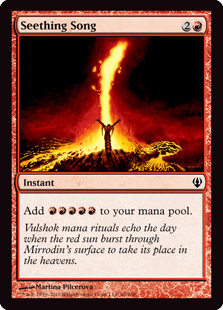
Applying this to Modern, we see a number of inconsistencies. We have not had "four months" of "large and public outcry" about the game's or format's ruination before Eldrazi arrived. True, some were unhappy with Twin's ban, but many others were not. Moreover, this discontent happened over a three-week period, not four months. There's also little evidence to suggest players were "leaving the game in droves" before Eldrazi. Paper event attendance had held steady through November and December at 64 and 65 players respectively. What about the weeks after Twin's removal? 66 players, right on track with the preceding months: StarCityGames' Columbus Classic on January 31 had a spectacular 260 Moderners in attendance. Given these numbers, there is no reason to think Jar's rationale applies to Eldrazi.

What if Wizards ignored this and acted anyway? This would be a long-term Modern disaster. Whenever a deck had a breakout performance, emergency banning would immediately be on the table. This would rattle player confidence even worse than the Twin ban, as it would Seething Songoccur after every significant tournament multiple times throughout the year. It would also suggest metagame adaptations and internal regulation no longer matter. Does a deck look too good? Forget sideboarding: clamor for bans and it will be gone. Some might contend Wizards has already pursued this in its Modern ban policy, but that is unsupported in their timeline. Since the first Modern Grand Prix, Wizards has always given cards at least 3-4 months (and often longer) before acting: only Seething Song and the delve sorceries perished on this schedule. Even Amulet Bloom got a full year, and Twin and Pod had more time still. Wizards must preserve metagame confidence. Even if we believe recent events have rocked that faith, it doesn't mean Wizards needs to need to capsize it forever with an emergency ban.
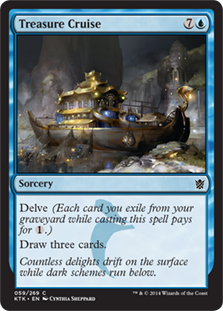
3. Modern can recover from two months of Eldrazi

Many argue the risk of a bad banning precedent is less than the cost of two more months of the Eldrazi terror. Won't tournament attendance crash? Could Modern recover from Eldrazi winter? History suggests Modern is likely to endure even a major Eldrazi insurgence, which is further reason to wait until April.

By most accounts, Treasure Cruise's run was worse for the Modern metagame than for Modern attendance. In the nine months leading up to Khans of Tarkir, non-Grand Prix Modern tournaments averaged 105 players in an N=50 sample (excluding season-Treasure Cruisespecific venues like Pro Tour Qualifiers and MTG States). After Cruise set sail? Attendance dipped to 93 in a 59-event sample, a noticeable but not statistically significant difference. StarCityGames' numbers didn't budge at all, with Cruiseless Modern Premier IQs averaging 147 players as compared with 144 after delve made its move. MTGO saw similar observable but insignificant drops. Pre-Cruise MTGO Dailies averaged 25 players (ranging from 10-39) in the 4-0 or 3-1 bracket. Post-Cruise, the average dipped slightly to 23, centered in a narrower 12-33 range. Complicating the MTGO and paper picture, Grand Prix attendance saw a much more decisive decline. Attendance at these flagship events plummeted from 2,681 in the first nine months down to 1,589 after Cruise. Even omitting Grand Prix Richmond's 4000+ players doesn't challenge the comparison, only lowering the pre-Cruise average to 2,140.
This late-2014 metagame saw Burn shares at 20% for over a month, Pod at 16% for two, and Delver climbing as high as 27% before settling in the 15%-20% range. Modern was a mess for four long months, and yet (as we saw above) this had only a very modest impact on attendance. The small dips didn't even last! After Cruise, Dig Through Time, and Birthing Pod went the way of Deathrite, Moderners did not bitterly shun future events. From January through February, attendance stayed in the 90-95 range before rebounding back to pre-Cruise levels of 110 in the summer. The 4-0 and 3-1 MTGO initially players jumped to 29 before reaching 36 by July. SCG Premier IQ attendance followed, leaping to a 170-player average.

All this shows Modern's remarkable resilience to short periods of even severe instability. If Modern can regain footing after almost four months of Cruise and Pod, it will easily endure an Eldrazi takeover for less than half that time. Reality Smasher's brief dominance will not imperil Modern's long-term health any more than Cruise's and Pod's much longer reign did in 2014-2015. But banning the wrong cards, or setting a frightening precedent, would be far more threatening. Besides, if Wizards is worried about player confidence, they can always unban something to sweeten the post-Eldrazi pot!

Wait and see!

I'm a believer in metagame adaptation, something we saw throughout 2015 as players kept Burn, Tron, Amulet Bloom, Infect, and other tides at bay. Today, I want to trust the metagame's ability to grapple with this new beast, but I admit early indicators are nerve wracking. Perhaps Modern's best technicians solve the Eldrazi problem and the format is saved over Grand Prix weekend. Or, perhaps even if decks can adapt, Eldrazi still proves itself a format-warping monster, forcing players to run narrow answers in a throwback to the Cruise era.

Fortunately, the three arguments in this section are independent of metagame confidence. Whether you casually despise the colorless overlords, or are quitting Modern until Wizards stuffs the monsters back in their hedrons, we must still acknowledge the importance of these points. The costs of premature action are too high: banning the wrong card, setting a dangerous precedent, the possibility of more bans, etc. Meanwhile, the risks of waiting are quite low: evidence strongly suggests Modern will recover from short-term Eldrazi shocks. Wizards needs to wait until April to act. Either the metagame adjusts and we keep a new decktype, or Wizards of the Gatewatch gathers the evidence needed to seal Eldrazi on the banlist for good.

Slaying the Monsters

Jace, Chandra, Gideon, and Nissa didn't imprison Ulamog and Kozilek by whining about it on the internet. They shut up, buttoned down, and blasted their way through some eldritch monstrosities. I've been testing Eldrazi matchups nonstop since Sunday and I want to share a few decks and cards which have showed early promise. I'm likely not going to any Modern events in the immediate future, but if I had to sleeve something up for an FNM or weekend IQ, I'd bring any of these sluggers to the inevitable Eldrazi brawl. Before we get started, remember that "Eldrazi" actually encompasses a huge array of color pairings which can make testing difficult and discussion imprecise. I'll try and focus on Colorless and UR Eldrazi, but if you have questions about other types, or notice something ambiguous, come find me in the comments.

Staying mainstream with Abzan Company

Last time we talked Eldrazi, I lauded Abzan Company's strengths in the matchups and overall Pro Tour performance. As Monday's numbers suggested, Abzan Company is at least as viable as Affinity in this format, and this is in no small part due to its commanding Eldrazi matchup. Melira's and Anafenza's posse is one of the safest top-tier bets in the Eldrazi world, and here's a draft of the list I'd play today.

Abzan Company, by Sheridan Lardner

Creatures

2 Melira, Sylvok Outcast
2 Anafenza, Kin-Tree Spirit
4 Kitchen Finks
3 Viscera Seer
1 Murderous Redcap
4 Birds of Paradise
3 Noble Hierarch
1 Wall of Roots
3 Eternal Witness
2 Fiend Hunter
1 Flickerwisp
2 Spellskite
1 Tidehollow Sculler

Instants

4 Collected Company
4 Chord of Calling

Lands

3 Forest
3 Gavony Township
4 Verdant Catacombs
4 Windswept Heath
2 Temple Garden
2 Overgrown Tomb
1 Godless Shrine
2 Horizon Canopy
1 Swamp
1 Plains

Sideboard

2 Tidehollow Sculler
1 Big Game Hunter
1 Scavenging Ooze
1 Qasali Pridemage
1 Orzhov Pontiff
3 Path to Exile
1 Pithing Needle
1 Kataki, War's Wage
1 Phyrexian Revoker
2 Fulminator Mage
1 Ethersworn Canonist 

If this looks like an Abzan Company greatest-hits list featuring Ari Lax, Logan Mize, and Lukas Blohon, that's because I started tinkering on this shell the moment we received the 8-2 and 7-3 lists from Wizards. This deck was already favored against Eldrazi before additional maindeck and sideboard tailoring. After, I'm batting a solid 60-40 in that matchup, with a heavier 65-35 in Game 1. Between immortal Kitchen Finks, the Gavony Township trio, a squad of Eldrazi slayers, and a combo the removal-light Eldrazi can't interact with, Abzan Company does a number on the Colorless and UR versions of the new format boss.

Fiend HunterI loved Blohon's double Fiend Hunter so much I almost went up to three. Then I remembered the metagame wasn't (yet) 100% Eldrazi and I still needed to beat Infect, Affinity, and Burn. I'm comfortable on two now with a Big Game Hunter bullet in the board: free tech courtesy of the Pro Tour Oath coverage team! Both Hunters bring down Reality Smasher without triggering the discard clause, and can even be Chorded in at instant speed to stop large Eldrazi Mimics. Fiend Hunter can also be sacrificed to Viscera Seer in response to their entrance trigger for an eternal exile. Hunter recursion gets really nasty with Eternal Witness in the mix, guaranteeing grindfests go to the Company player. I cut Lax's lone Decay to fit my added Hunter: the instant is mediocre against Eldrazi and other Company players did well without it in the main 60.
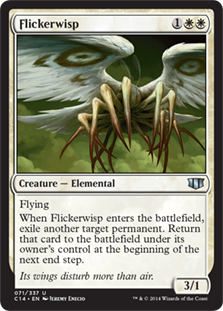
Tidehollow Sculler also joined the Company, with one replacing a Spellskite and another two signing on in the sideboard. FlickerwispOn the play, turn two Sculler is a huge pain for Eldrazi, proactively exiling Thought-Knot Seer before it hits or just taking an Endless One or Smasher out of the picture. Most Eldrazi variants don't have the removal to get their card back. Speaking of Endless One, I've always loved Flickerwisp in Modern and Eldrazi gave me newfound appreciation for the card. Between Elemental and Hunter, we're a little heavy on double-white in our curve, but I'm happy to take those risks for the upside. Flickerwisp fells even the largest Endless Ones, resets Mimics, Chalices, and Ratchet Bombs, and even slows mana development if Chorded in during the upkeep. This is on top of its natural synergies with Finks, Witness, and many other creatures. If Flickerwisp is too grindy for faster metagames, Orzhov Pontiff is a capable replacement (devastating against Affinity, Infect, and Eldrazi Scion swarms).
We round off the sideboard with the versatile Pithing Needle/Phyrexian Revoker duo, which are instrumental once Relic of Progenitus and Drowner of Hope come online. The rest of the sideboard matches up against the overall metagame, although I'm not sold on the Fulminator Mages in a world where RG Tron has been supplanted. Then again, I also don't want to auto-lose to Tron player who didn't get the Eldrazi memo, so I'm keeping two for now. All in all, Abzan Company has strong positioning in this metagame and I expect to see many players turn here before checking out wackier options.

Taking Command with UW Control

Old-school UW Control claimed a Tier 2 slot in both September and October of 2015, and although the deck has since lost tiered footing , I believe it's ready to Spread back into the metagame. As David discussed yesterday, Spreading Seas is just as scary against Eldrazi's Ancient Tombs in games as it looks on paper. UW Control brings not only Seas but also a punishing combination of sweepers, removal, and durable defenders. Control mages rarely need an excuse to go back to blue-based permission decks, which makes UW Control an attractive option over the next weeks.

UW Control, by Sheridan Lardner

Creatures

2 Snapcaster Mage
4 Wall of Omens
4 Kitchen Finks
3 Restoration Angel
1 Vendilion Clique

Enchantments

2 Spreading Seas
3 Detention Sphere

Instants

3 Mana Leak
4 Path to Exile
2 Spell Snare
3 Cryptic Command
1 Dismember

Sorceries

2 Supreme Verdict

Lands

4 Ghost Quarter
4 Celestial Colonnade
4 Flooded Strand
4 Hallowed Fountain
2 Glacial Fortress
1 Mystic Gate
1 Temple of Enlightenment
3 Island
3 Plains

Sideboard

3 Meddling Mage
1 Crucible of Worlds
2 Stony Silence
1 Rest in Peace
1 Spreading Seas
1 Supreme Verdict
1 Elspeth, Sun's Champion
1 Disenchant
2 Negate
1 Dispel
1 Celestial Purge

Recently, we've seen a few takes on UW Control, including Henry Lams' win at a Grand Prix Vancouver side event, Ben Vrba's 6th place finish at StarCityGames' Roseville Regionals, and another Regionals performance, this one only at 7-3, posted by Justin Gennari. MTGO also saw UW Control take 3rd at a Sunday PTQ overrun by Eldrazi. I already had UW Control ideas stewing on the backburner, largely based on Lams' list, and I revisited them in light of the Eldrazi uptick. The above 75 takes Lams' build as a foundation, adding elements from previous UW Control winners in January.

Spreading Seas packs a wallop in the Eldrazi matchup in all phases of the game. In the first few turns, it keeps them off the turn three Smasher (or turn two Seer if Detention Sphereyou are on the play) while also cantripping for you around Chalice at one. Later, it turns off manlands and stops the Eye of Ugin inevitability engine. I'm only on two Seas because we don't have the same clock as a deck like Merfolk and they can be a bad topdeck if you're a turn or spell behind a developed Eldrazi board. In place of that third Sea I'm up to three Detention Spheres, already an underrated Modern card before Eldrazi made them even better. Spheres remove Smasher without any discard cost and are often two-for-ones against Eldrazi mages and their creature playsets. You can also bring back Flickerwisp in place of Angel to make Sphere even better: you can exile something early at parity and then bounce the enchantment later to ensure a two-for-one as more monsters hit play.
Wall of OmensTurning to creatures, the Wall of Omens and Kitchen Finks playsets make it difficult for Eldrazi to capitalize on early aggression, especially if they don't have enough trampling Smashers. Curving turn two Wall, turn three Finks, and turn four Angel will stop all but the most obscene Colorless Eldrazi offenses. Wall is also another way we cantrip around active Chalices. Speaking of value, some UW Control lists eschew Snapcaster Mage in favor of more pressure in Vendilion Cliques 2-3, or haymakers like Sun Titan and Gideon Jura. Call me old-fashioned but Snapcaster is just too strong to pass up. Although I miss the burn-based reach we got in Jeskai variants, I feel invincible untapping on turn six with a Cryptic Command in your graveyard and a Snapcaster in hand.
Mana Leak rounds out the interaction over Remand (hard-countering those early Eldrazi goes a long way), along Mana Leakwith Spell Snare for a metagame thick with two-cost staples. Even Eldrazi is a player here, with Mimic, Spellskite, and Bomb in the maindeck. Double Supreme Verdicts punish overextended Eldrazi players, especially those churning out tokens in the UR builds. Verdict has the added edge of being uncounterable by Warping Wail, a sideboard benefit you'll be thankful for past Game 1. Because we're only playing two colors, I'm all-in on four Ghost Quarters, which get even better off our Crucible of Worlds out of the board. Other sideboard bullets include the underappreciated Meddling Mage (another card Eldrazi struggles to answer), an extra Verdict and Seas, and Elspeth, Sun's Champion to obliterate the Eldrazi board or flood the battlefield with Soldiers; I'd maindeck her if it weren't for all the linear decks tearing through Modern these days.

UW Control has a relatively basic shell, but there's a surprising degree of nuance in how you fill out some slots. I agonized over the third Sphere (it's beyond horrible against Infect) before deciding I'd rather have it than the third Snare or fourth Leak. Similarly, I'd caution against that lone Dismember if you find yourself in a metagame packed with Zoo variants, Burn, Merfolk, and other aggressive, damage-based strategies. Decisions like these will be tough ones, but UW Control is there to reward you if you make the proper calls.

Rolling the dice and going rogue

I've been testing a half-dozen alternates to these more established options, and you can bet I'll report back when I have more refined lists and clean results. If you're willing to go really deep in your Eldrazi-slaying quest, here are some strategic approaches that have shown promise for me. I might eventually end up on one of these candidates, but there's much more testing which needs to go into offbeat lists like these.

  • Restore BalanceRestore Balance Combo
    Like Living End, you hurl Eldrazi back to the stone age in resolving a Restore Balance off your cascade outlets. Greater Gargadon, Nihilith, and your choice of planeswalker can finish from there. Unlike Living End, you're less consistent without the cyclers and your clock is less decisive against an Eldrazi manabase that can recover given time. Also unlike Living End, you have zero vulnerability to graveyard hate, but are far softer to Chalice without reason to run Ingot Chewers. Depending on your preference and how you tweak the deck, this might still be a competitive choice. Go up to four Beast Within in the main to kill Chalice and go to town with a turn two Balance.
  • Magus of the TabernacleRW Lockdown
    In a fitting end for the Eldrazi blight, lockdown decks using Ensnaring Bridge, Blood Moon, and the brutal Magus of the Tabernacle are well-positioned to seal the Eldrazi on their side of the battlefield and throw away the key. The old-timer Extended combo of Flagstones of Troikar and Boom // Bust smashes Eldrazi's manabase early as Molten Rain and Magus abuse it later. UR Eldrazi lose much of their advantage once Tabernacle at Pendrell Vale's steward starts taxing all those tokens as Ajani Vengeant seals the shutout. All of lockdown's win conditions sneer at Dismember, and the deck can easily keep ahead with Simian Spirit Guide acceleration into land destruction and self-defense cards like Bridge and Ghostly Prison.
  • Enduring Ideal Prison
    Enduring IdealThis was one of my first Modern decks back in 2011, and also one of the first decks I lost to bannings (RIP, Seething Song). The deck was well under Tier 3 for ages, but the new Eldrazified world makes me a believer again. No Eldrazi build can negotiate a resolved Enduring Ideal into Form of the Dragon, and few can handle the Ghostly Prisons, Runed Halos, and Nevermores before that. Maindeck Leyline of Sanctity feels like cheating here, as does Halo naming Thought-Knot. Honestly, this has been my favorite deck in testing so far, with remarkable game against even Affinity with maindeck Suppression Field and Stony Silence  out of the board. Guess I'm an Idealist!
  • UB Tezzerator
    TezzeretShouta Yasooka would be so proud to see Tezzeret, Agent of Bolas have his day in Modern again. It's no secret that Ensnaring Bridge is a dynamite answer to Eldrazi aggression, just as many players are interested in Pithing Needle, Torpor Orb, and Vedalken Shackles. Tezzerator crams in all that artifact goodness alongside hard counters like Cryptic Command, hard sweepers like Damnation, and hard disruption like Inquisition of Kozilek for a linear metagame. As a two-colored deck, Tezzerator can accommodate at least 2 Ghost Quarters, along with plenty of spot removal to chop down large beatsticks. You can even put those abhorrently overpriced Painter's Servants to good use in your Tezzerator toolbox!

Sadly, my love affair with Shape Anew didn't make the cut. Blightsteel Colossus was just not proving decisive in the Eldrazi contest: Spellskite, Dismember, Thought-Knot Seer, and really frikkin' big blockers were all recurring issues. Drowner of Hope lived up to its name and sealed that deal for now. I guarantee you there are other fringe options I haven't mentioned (Lantern Control, Through the Breach Scapeshift, BW Smallpox, Troll Worship, anything with Unburial Rites as a Plan B, etc.), along with plenty of other Modern regulars (Affinity, Merfolk, Blue Moon, etc.). You'll need to do some of that legwork yourself to confirm if any and all of these decks really have what it takes, but early signs suggest the format is packed with anti-Eldrazi opportunities.

Bringing Down Eldrazi

The March Grand Prix weekend is coming in just over three weeks, and I'll be testing up a storm until then. I'm debating making the trip to Detroit, but that will depend on finding friends to make the roadtrip bearable, finding a deck to make the tournament worth the trek, and finding the time between personal and professional life. If I can find something I'm really amped about, I'll either sleeve it up and brave the four hour drive out of Chicago into Michigan, or I'll write about it here and hope someone else champions my baby. Either way, we're not taking the Eldrazi threat lying down, and you can bet we'll put our best technology and strategies into the ring come March.

I've already added "Eldrazi" to my computer dictionary in anticipation of the next months (the red lines reminded me of that devilish paper clip assistant from old Microsoft Word), and I hope you are as ready as I am to plunge into battle against this new menace. What decks and strategies are you working on? How are you structuring your testing against Eldrazi's many iterations? Do you have any last words on bans before I try to stay away from this topic in our ban-frenzied format? Head down to the comments and I'll see you all there soon!

A Beginners Guide to Legacy Storm

Are you a Quiet Speculation member?

If not, now is a perfect time to join up! Our powerful tools, breaking-news analysis, and exclusive Discord channel will make sure you stay up to date and ahead of the curve.

My plan was to talk about the decks from the Pro Tour, but that doesn't seem like a lot of fun considering that there isn't a wide range of material. The Eldrazi took over the Pro Tour. and the only thing that had a chance to save us were some robots. As it happened, they were smashed to bits by the Eldrazi. In short, if you are going to play Modern anytime soon either play Eldrazi or find a way to beat them.

Instead I'm going to talk about something near and dear to my heart: Legacy Storm. I get asked the question "How do I get good at Storm?" or "I want to learn how to play storm, but where do I start?" quite a bit. It is really hard to answer in just one or two sentences, so I thought I would write an article telling you a bit about how to get started at becoming a good Storm player. For the purpose of this article I will be talking about ANT as the Storm deck of choice, as it is the most common build and the one I play the most.

Ad Nauseam Tendrills

Spells

1 Chrome Mox
4 Lion's Eye Diamond
4 Lotus Petal
1 Sensei's Divining Top
1 Ad Nauseam
4 Brainstorm
4 Cabal Ritual
4 Dark Ritual
4 Cabal Therapy
1 Dark Petition
3 Duress
4 Gitaxian Probe
4 Infernal Tutor
1 Past in Flames
4 Ponder
1 Preordain
1 Tendrils of Agony

Lands

2 Island
1 Swamp
4 Misty Rainforest
4 Polluted Delta
2 Underground Sea
1 Volcanic Island

Sideboard

2 Xantid Swarm
2 Dread of Night
4 Abrupt Decay
1 Chain of Vapor
2 Disfigure
1 Rebuild
2 Empty the Warrens
1 Tropical Island

The first thing you have to ask yourself is whether you are a risk adverse person. There are going to be so many times where you don't really know if you have everything you need to kill your opponent. Maybe you got to see their hand last turn and they drew a card or two, or you have to try and kill them using Ad Nauseam as the set up card, or you have to play a Past in Flames and use some of the draw spells to try and get a lethal Tendrils of Agony. If making a play based on percentages is something that is far outside of your comfort zone, then this deck just isn't for you.

Another question you have to ask yourself is "How sharp can I stay during a tournament?" Are you a player that can play great all the way through a tournament? This might sound weird, because you want to stay sharp with every deck, right? The difference with storm is that it is very unforgiving if you mess up. While games and rounds can be short, the math and sequences can be very taxing. This is something that might be hard for some players, as self evaluation is something that many struggle with. If you can honestly say that you know how to stay focused and keep your play sharp throughout a whole tournament, then Storm is a deck that you can learn to pilot.

math

A lot of people think that you need to be a math genius to play Storm, and while it does help it's not a hard prerequisite. I know more than a few Storm players that might have trouble giving you correct change. I believe you can learn a lot about Storm through repetitions.

It Starts with Solitaire

gold fish

This is my first word of advice for the deck- goldfish extensively. Goldfish the deck a ton. A million times. Try and go off as early as possible, and if it doesn't work out, try and set things back to the beginning of your turn to see if there is something you could have done differently, or whether you would have had to wait a turn. All you are trying to accomplish is a feel for the deck. This will also get you used to the ritual math. Learning how to do that fast is just one of the shortcuts that you will need to know in order to play the deck in a timely fashion. Just for reference, Dark Ritual is +2, Cabal Ritual is either +1 or the more used +3, Lion's Eye Diamond is also +3, but can't help you cast spells in your hand, and Lotus Petal is +1. This math might seem easy, but if you memorize it that is one less thing you will have to think about. The less you have to think about the less draining the deck is, and the fewer amount of warnings you will get for slow play.

fancy

The next step is to get fancy. You can goldfish so learn some tricks. Here is the set up. You have Ad Nauseam in hand, but you only have two Lion's Eye Diamonds and Underground Sea as your mana available. The other cards available to you are Gitaxian Probe and [card]Brainstorm[card]. We said we want to goldfish as fast as possible, but it doesn't seem like we can cast the Ad Nauseam because the LEDs don't make mana to cast spells from our hand. In this scenario we can cast Brainstorm and put the Ad Nauseam on top of our library, then play both LEDs, then cast Gitaxian Probe. With that on the stack you can use both LEDs to get black mana, then resolve your Gitaxian Probe drawing Ad Nauseam, and cast it with the mana from the LEDs. This is a pretty simple trick the deck can do, but it is important to know these tricks because the more you have memorized the less draining the deck will be during the tournament. I can't stress the importance of this enough.

Now to Get in Some Actual Games

playtesting

Now that you have learned to goldfish, it's time to play against a real person. This can be tough for several reasons; some people don't want to test versus combo, not a lot of people have time to playtest, and you might not have enough legacy players around that want to playtest at all. If you are lucky enough to have a playtest partner then use that opportunity to play both pre and post-board games. Playing post-board is huge for Storm, as most decks don't put up that much of a fight in the pre-boarded games. Sometimes it can be the opposite, as some decks have cards like Gaddock Teeg which Storm has no maindeck answer for. Also, playing post board is how you will play most of your games in a tournament anyway, so it's just something you should learn how to do.

If you don't have a playtest partner, then try and put some decks together and play against yourself. This will be slightly less effective as part of the challenge to playing Storm is trying to figure out what the other player has, but it can still be great as you will be getting reps in against real cards and real situations.

The Art of Sideboarding

reading

Learning how to sideboard is something that can be difficult, but luckily it is also something you can read up on. Carsten Kotter wrote a great piece on this topic a couple years ago. It is also something that you will get a feel for as you play the deck more. The main thing is that you want to know what the other deck is boarding in against you so that you can counter what they are doing. For example, a deck like Lands will bring in cards like Chalice of the Void or Sphere of Resistance, which can both be dealt with by bringing in a cards like Abrupt Decay or Rebuild. Another thing to remember is to not over-board. I have seen many players bring in things like Xantid Swarm or Disfigure against decks like RUG Delver, but this is not good sideboarding. The main reason is that you are not a control deck. Not to mention that your deck is preboarded to beat counter magic with discard spells. The only card I bring in against decks like RUG Delver is Empty the Warrens, as they usually don't have an answer to a bunch of goblins so playing that card with a storm count of three or four in the first couple turns can just be game over.

Now You're Ready to Start Battling

tounrey

Finally, after all of this I think you would be ready to take Storm to a tournament. I will stress that you might not do well, as you are still learning, but you would do a lot better than had you just showed up with the deck with no practice. The goal of the first couple of tournaments is to get better. While at the tournament it's good practice to take notes; was there a time that you thought you could have killed someone and missed? Was there a time where you didn't think you could kill someone, but looking back maybe you could have? Was there a very tough decision that you could have chose differently and perhaps turned a loss into a victory? Maybe there was a cool new trick that you learned! These are things I try and write down every time I play the deck. I have been playing Storm variants for as long as I can remember, and I still learn new things to this day. That is why I love Storm and Magic so much. No matter how good you think you are there is still so much to learn.

I think that is enough about Storm for now. Let me know if you want to learn more. As always, thanks for reading!

Follow me on Twitter @conanhawk

Drafting with Morgan- OGW Draft 1

Are you a Quiet Speculation member?

If not, now is a perfect time to join up! Our powerful tools, breaking-news analysis, and exclusive Discord channel will make sure you stay up to date and ahead of the curve.

Avatar photo

Morgan Wentworth

Morgan has been playing Magic for seven years now and producing Draft content for four. She loves value and is notable for going out of her way to draw cards and nab two-for-ones. All of her content is made with a primary goal: improving her own game – and taking you along for the ride.

View More By Morgan Wentworth

Posted in Drafting, Free, MTGO Drafts, Oath of the Gatewatch, StrategyLeave a Comment on Drafting with Morgan- OGW Draft 1

Have you joined the Quiet Speculation Discord?

If you haven't, you're leaving value on the table! Join our community of experts, enthusiasts, entertainers, and educators and enjoy exclusive podcasts, questions asked and answered, trades, sales, and everything else Discord has to offer.

Want to create content with Quiet Speculation?

All you need to succeed is a passion for Magic: The Gathering, and the ability to write coherently. Share your knowledge of MTG and how you leverage it to win games, get value from your cards – or even turn a profit.

Want Prices?

Browse thousands of prices with the first and most comprehensive MTG Finance tool around.


Trader Tools lists both buylist and retail prices for every MTG card, going back a decade.

Quiet Speculation