menu

Stay Positive: U/G Infected Legacy

Are you a Quiet Speculation member?

If not, now is a perfect time to join up! Our powerful tools, breaking-news analysis, and exclusive Discord channel will make sure you stay up to date and ahead of the curve.
Dana Kinsella brings us a hyper-aggressive U/W Legacy Infect deck that proves itself as a quick win covered in fun.

So I think the reason most of us actually read these article isn’t because we’re interested in any author’s particular life.

The real reason is, of course, because we want the latest ā€œtechā€.

I don’t know that the list I am about to share with you is necessarily the latest ā€œtechā€, but it certainly is a bit different and has definitely done well enough for me to bring it to the table for discussion.

But first, I’m going to share a bit about my particular life and how Magic was introduced to me.

In the Beginning

As I sit here typing and listening to Ray Charles serenade me about Georgia and his mind, it’s hard not to think back….

In the beginning there was…LOST

The year was 2005. I was a Jr. in College, lying on the couch I had passed out any number of times, watching television’s premiere of LOST, Season 2.

OH! and I had mono…

I had been on that couch watching Scrubs, The West Wing, Smallville, and, of course, LOST for the better part of a month. No class for this guy. But, unfortunately, that also meant no drinking, playing or going out with the boys.

Or the girls, for that matter.

It was with this background my roommate Matt Quinn said to me, ā€œYou wanna learn to play Magic?ā€

Since I’m not sure what kind of language I can actually use in this articles, we’ll just say my response started with an F, sounded like Duck and ended with a resounding ā€œNO!ā€

Thank the lord Matt is a no BS kinda guy and told me I was learning so that he didn’t have to watch LOST anymore. *

This little lesson turned into a 4-5 hour a day ā€œcasualā€ habit between the four roommates of the house. Of course we all thought we were the ā€œbee’s kneesā€, but my first adventure into ā€œcompetitive Magicā€ (FNM) left me with a solid 0-4 in matches 0-8 in games, feeling like I had just woke up next to Kurt from Glee! after a LONG night of drinking.

Fast forward to the present. Unfortunately I still find myself occasionally feeling like the morning after with Kurt, but that’s another story entirely.

I have spent the last few years honing this crazy skill, travelling the country, making some awesome friends—sometimes winning, sometimes losing, but, above all, having a great time.

But why should anyone want to listen to me?

The sarcastic/likely answer is that you probably shouldn’t. But I have had some alright successes on my path.

I made Top 4 of Star City’s Open Minneapolis, helped design the U/G Scapeshift deck that took GP Atlanta by storm, and I traditionally start every major tournament and PTQ I enter at X-0 only to finish 9th-16th, or, in the case of Star City Opens, 33rd.

So, now you’re probably still asking yourself ā€œWhy do I care how you started Magic and your past?ā€

Truth is: I don’t know. But for now I’m going to blame the whole thing on Ray Charles…

U/G Infect. In Legacy.

A totally different Magic…

Back when they spoiled Glistener Elf, I thought
well there it is…1 mana 1/1 infector….can it be done?


This thought sat in the back of my mind for a while until one day, a little over a month ago, I found my old Pog collection.

Pogs, for those of you who don’t know, were these stupid little round pieces of cardboard, originally from milk cartons, with pictures on them. These became EXTREMELY popular when I was in elementary school. And then kinda disappeared.

I had some Crazy 8 Balls, Yin-Yangs, a few of Jordan and Pippen and then, low and behold…

Magic Johnson

My new roommate Jessen had been calling Poison Aids** for as long as it had been a mechanic, so I took this Pog as a sign.***

Legacy Infect Had to be Done!

ā€U/G Infectā€

Creatures

4 Glistener Elf
4 Blighted Agent
3 Ichorclaw Myr

Instants

4 Invigorate
4 Berserk
4 Might of Old Krosa
2 Vines of Vastwood
4 Force of Will
4 Mental Misstep
4 Brainstorm
2 Daze

Enchantments

3 Rancor

Lands

4 Inkmoth Nexus
4 Tropical Island
4 Misty Rainforest
2 Pendelhaven
2 Forest
2 Island

Sideboard

3 Misdirection
3 Divert
3 Nix
2 Daze
2 Tormods Crypt
2 Relic of Progenitus

Seriously. This deck is FAST.

However, unlike some of the turn 1-2 combo decks in Legacy, this one isn’t as much of a ā€œglass canonā€.

In fact, this deck loves to sit down and see a Tendrils player on the other side of the table.

Now, as we all know, Legacy is huge, so I can’t say that every matchup is peachy keen. However, I can say that this deck at least brings game against most of the tier one decks and is too fast for most of them.

The one card you don’t want to see the other guy lead with is Wild Nacatl. Game one vs. Zoo is pretty atrocious. After board, however, things look much rosier.

The main idea with this deck is to land a turn one infector.

This can be an Elf or an Inkmoth. Elf is superior here, as Inkmoth is a little trickier to win on turn two with, although it’s possible.

With a turn one infector, Invigorate+ Berserk is going to go a long way towards winning. And fast.

If a turn one infector isn’t possible, a turn two Blighted Agent is always nice, but nearly any old infector will do. Once you have an infector stuck on board, the game becomes one where you’re simply making sure that dude stays there.

Nearly the rest of the deck is designed with that specific goal in mind. Notice that all of our ā€œdudesā€ are 1/1s, as this makes them cheap and fast. But it also allows them to die to—quite literally—ANYTHING…

Imagine talking to Doom Blade guy about this deck.

The truth is that, while any removal will kill any of our dudes, we know the main culprits:


etc…

Our deck is made up of three convenient parts:

  1. Dudes
  2. Pumps
  3. and Counters

We also play Brainstorm for good measure, seeing that it’s the best card in the format.

So how do we save our dudes from Lightning Bolt?

Well, almost all of our pumps would work, although we’d rather have those hit the other guy’s dome. But that beautiful new card Mental Misstep seems right for the job. And with the game on the line, a little card disadvantage via Force of Will has never killed anyone (above one life).

Except the opponent when our dude survives. šŸ˜‰

When I first started playing this deck I used my counters like I would in a control deck.

Aether Vial? Nope.
Tarmogoyf? I think not.

Enter my Blighted Agent dying to some stupid removal spell a turn or two later.

With this deck we care little for the spells our opponents play unless our death is on the stack or the spell is pointed at one of our dudes.

Point is: SAVE YOUR COUNTERS.

Save them for a turn when you can make little old 1/1 Elf into 10/10 trample Elf with Force/Misstep backup.

Often that turn is 2 or 3.

Some points of Interest about this deck:

  1. Invigorate is SOOOO awesome here. We care not what our opponents life is at, so this is just a free +4/+4.
  2. One land hands can be okay. Most of the spells in this deck are free or close to free, so if your opener has a dude or two, a pump or two, and a counter or two with a Tropical Island, it could just be all you need. Just hope they don’t have the opening Wasteland.
  3. Ichorclaw Myr + Rancor= šŸ™‚

Sideboarding

While Legacy is an ever evolving format and there are any number of viable decks at any given time, let us look at the most recent SCG Open in Seattle for a semi-accurate expected metagame.

Hive Mind:

-2 Vines of Vastwood
-3 Ichorclaw Myr
+ 2 Daze
+3 Nix

As much as I hate to admit it, this deck is becoming more real every tournament lately. There were three copies in the Top 8 and four in the Top 16 this past weekend. However, the best way to beat Hive Mind is with situational counters (targeting the Hive Mind), and we have those. Daze is good here and Nix is pure GOLD. Other than that, our goal is to try and be faster than them. And we can be.

NO RUG:

This matchup is pretty solid to begin with. These are the only changes I would maybe ever make, and only if I feel they are running a particularly heavy counter suite.

-2 Ichorclaw Myr
+2 Daze

We’re normally quite a bit faster than NO RUG, as they either win through some heavy beats or slapping down a crazy 10/10 Protection from Everything kinda guy really early…. The extra Dazes can help us counter the Natural Order if they’re still alive by turn three or four.

ZOO/BLUE ZOO/BURN:

-4 Force of Will
-2 Ichorclaw Myr
+3 Misdirection
+3 Divert

Like I said earlier, these are our hardest matchups. Force is just card disadvantage against these decks and is WAY too expensive to get the right outcome. These decks have too much redundancy to care too much if one of their spells gets Forced. Misdirection and Divert, however, really shine in these matchups. When they attempt to Lightning Bolt our dude, it gets turned back around on THEIR dude… or at least at their dome. Though we really don’t care about that. Just so long as it doesn’t kill our infector.

U/W Stoneblade; U/W Control/Standstill; Team America:

-3 Ichorclaw Myr
-2 Vines of Vastwood
-1 Rancor
+3 Divert
+3 Misdirection

While the cards that come in are the same as they are versus Zoo (or any of those types of decks), the reasons are very different. Now we are not turning their own lightning bolt against them, but rather trying to steal their Visions. We side like this versus any Hymn deck as well for the same reason. We need our cards and they can easily answer a lot of our spells as one-for-ones, so we need to prevent them from getting ahead if the game goes long.

Dredge:

-2 Vines of Vastwood
-2 Daze
+4 of your favorite anti-graveyard card

The matchup isn’t bad, even without the graveyard hate, as they don’t interact with you and you really don’t care to interact with them. Use Mental Misstep to counter their first turn Dredge enabler. You’ll come to realize decks that don’t interact with you don’t do very well. Once you add some graveyard hate to deal with a possible NUTSO first Dredge or two, you’ve sealed the deal and are likely pretty solid.

Until Next Time…

While I don’t know if this deck has what it takes for a huge tournament, I would definitely recommend giving it a try.

If nothing else, it is really fun.

Which, in the end, is what this game is supposed to be about.

So go ahead give it a try. You may be as surprised as the guy who is poisoned across from you.

Thanks for reading. Please feel free to leave any advice or ideas on this deck (or even for future articles of interest!) in the comments.

The Demonic Attorney,
Dana Kinsella, E.S.Q.

*Other than that series finale, I still hold fast to the fact that Lost was a great series.
** Jessen keeps trying to convince me to bring informational pamphlets with me so I can educate the people I beat with this deck. I’m not quite there yet, though.
***Also, AIDS is very real and not something to take light-heartedly outside of funny jokes.

The Atomic Baby

Are you a Quiet Speculation member?

If not, now is a perfect time to join up! Our powerful tools, breaking-news analysis, and exclusive Discord channel will make sure you stay up to date and ahead of the curve.

Based on the feedback I've gotten, the most successful article I've put out so far is the article on my Child of Alara Lands Deck. I've gotten quite a few emails asking for tips on building and playing the deck, and just as many asking if there's a way to build the deck on a reasonable budget. For reference, here's the list I'm playing currently:

[deckbox did="a62" size="small" width="560"]

The shell of this deck is incredibly flexible and can be built a number of different ways, which is part of why I like the deck so much. The problem with tweaking this list is that once you change one or two cards, say Diamond Valley, then other cards become much worse, like Nim Deathmantle and Child of Alara. If you cut cards like Exploration, you become much more reliant on Azusa, Lost but Seeking and Oracle of Mul Daya, and you have to be more capable of finding and protecting those cards. Because of that, it can be difficult to talk about changes to the deck in vague terms.

While I would like to put out a budget list for this eventually, the focus of this article is to show some of the game play, and a few of the things I think about when I'm playing the deck. I'd like to start that by looking at some opening hands, talking about some of the ways that you could play the hand out, and some of the concerns I might have about keeping the hand. Let's take a look!

Hand, the First

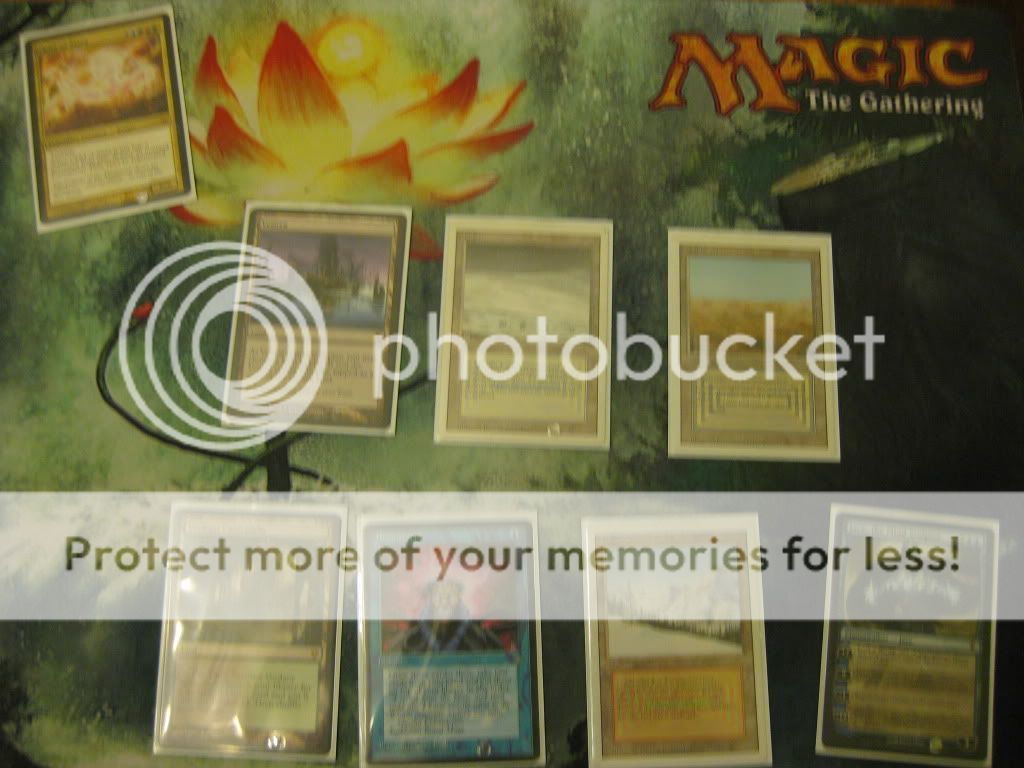
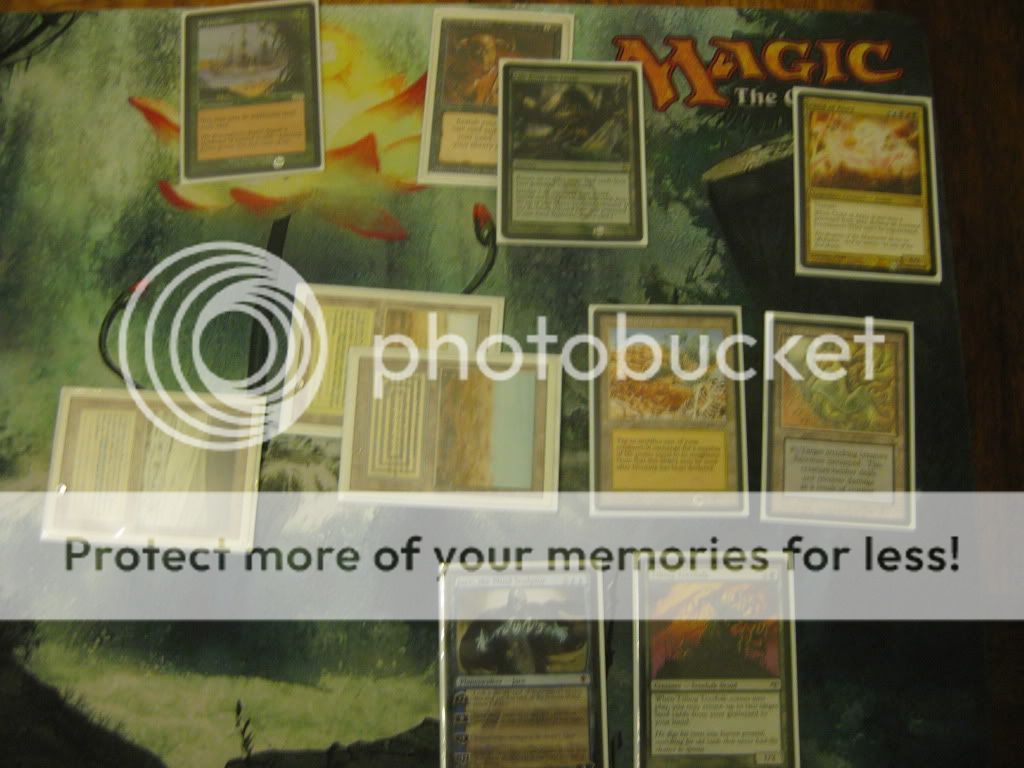
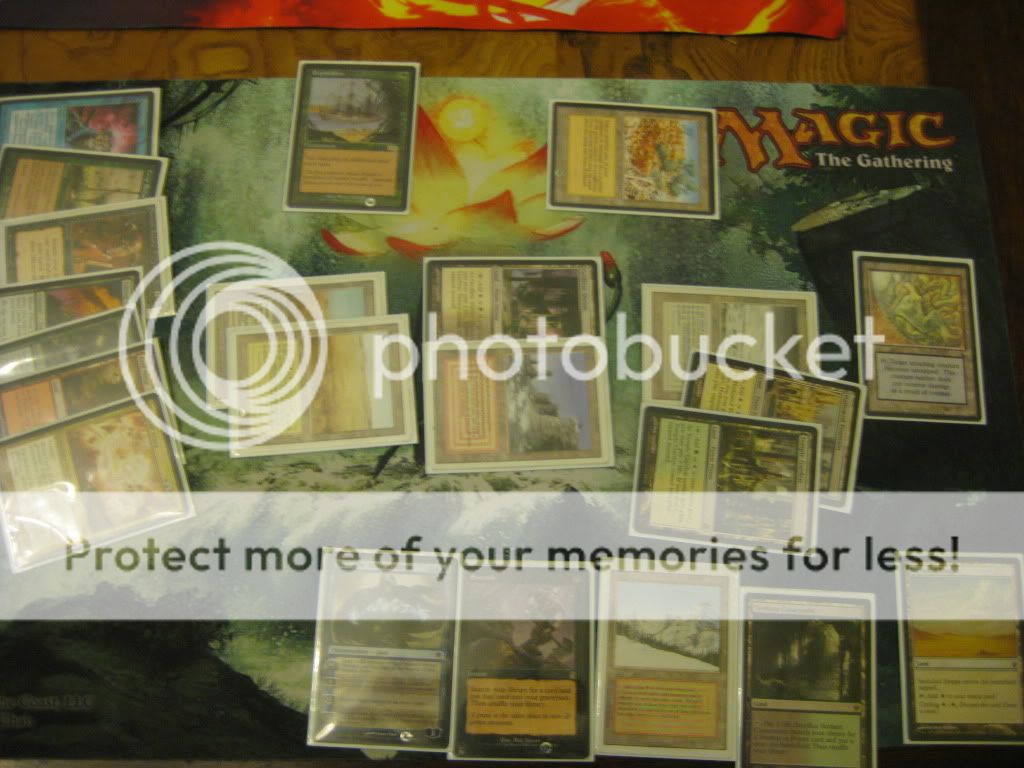
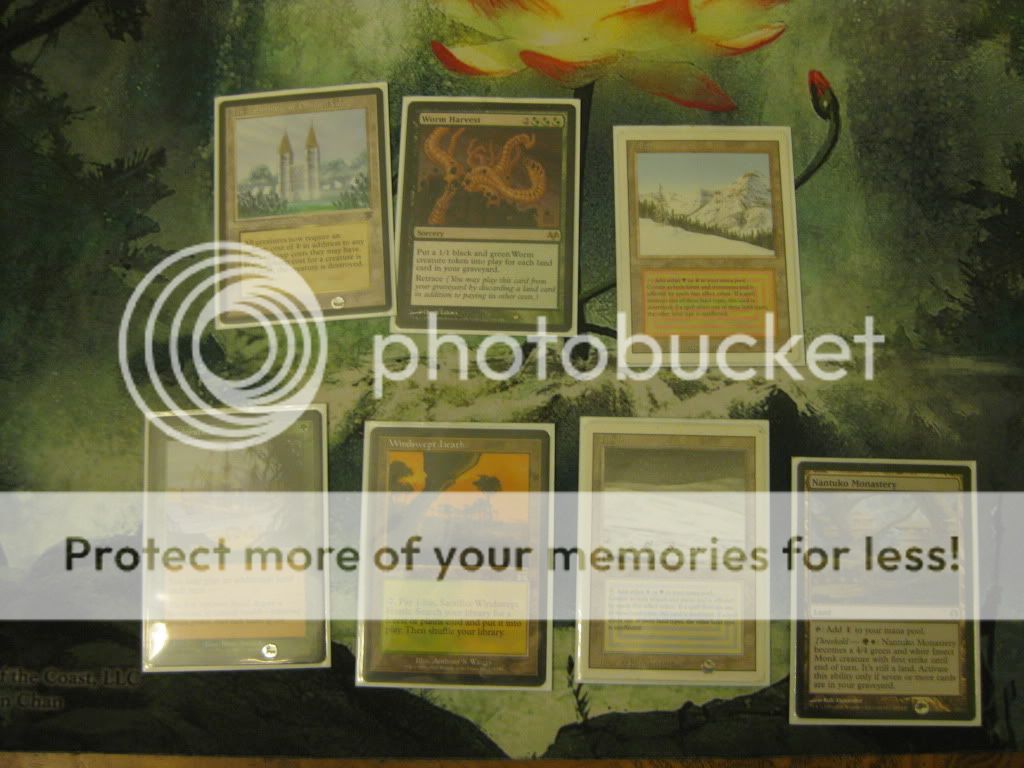
The Tabernacle at Pendrell Vale, Worm Harvest, Taiga, Exploration, Windswept Heath, Tundra, Nantuko Monastery

This hand is pretty questionable. You have a turn one Exploration, which can be a HUGE deal, and puts you really far ahead sometimes. However, you don't have a way to make sure you'll continue hitting land drops, so it's completely possible that you'll play the five lands in your hand and then run out of gas.

However the real problem is that this hand hinges on The Tabernacle of Pendrell Vale. You can run it out early if you think it'll buy you enough tempo to find something else to do, but it doesn't interact very well with your Worm Harvest, and makes it difficult to play around cards like Swords to Plowshares and Path to Exile. The reason for this is because you don't have an immediate sacrifice outlet like Diamond Valley, so you have to leave Child of Alara vulnerable to spot removal.

Hand, the Second

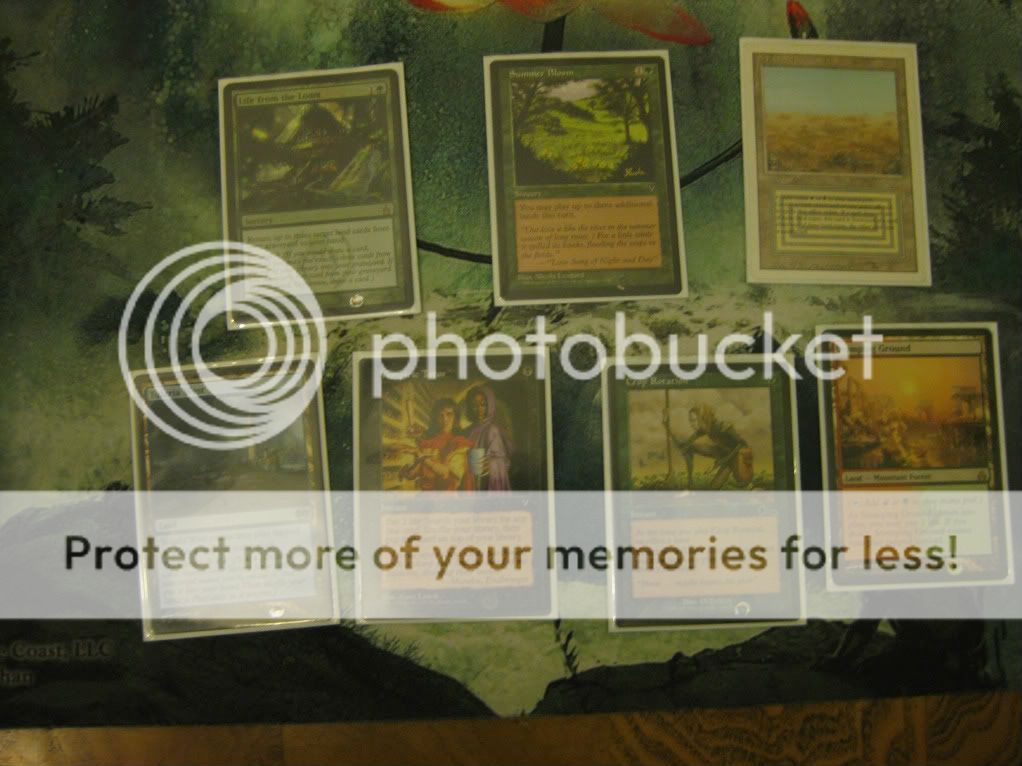
Life from the Loam, Summer Bloom, Scrubland, Tolaria West, Vampiric Tutor, Crop Rotation, Stomping Ground

Now, this is a hand. You have exactly enough lands to cast your Life from the Loam, a Summer Bloom to skip directly into the midgame, and then you get to start transmuting Tolaria West for the best land in your deck every turn. This hand is awesome against blue decks, since the only spells that they can counter in this sequence are Summer Bloom and Life from the Loam, and really, who wants to counter those?

In addition to that absurdly explosive and resilient opening, you also get two tutors. How insane is that? Think about how much flexibility that gives you! You could be really aggressive and tutor up an Exploration or Azusa, Lost but Seeking to go nuts. But I play this deck much more conservatively and would be more likely to ride the Life from the Loam and Tolaria West engine for as long as possible, let it get hit by Tormod's Crypt, then tutor up another engine to keep things going.

Hand, the Third

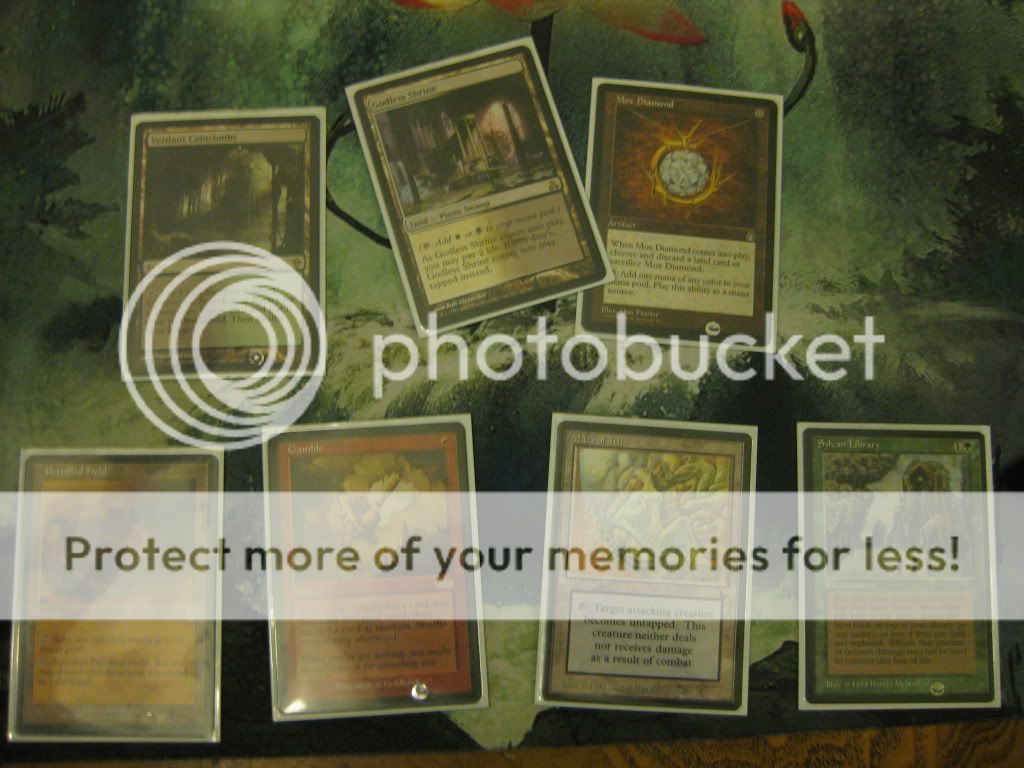
Verdant Catacombs, Godless Shrine, Mox Diamond, Petrified Field, Gamble, Maze of Ith, Sylvan Library

This last hand is absolutely insane. Turn one Sylvan Library is really good in Legacy, and is even better in Commander. Your life total is so high that you can afford to pay life to draw out of a glut of bad cards. You've even got shuffle effects to dig even deeper, Maze of Ith to keep people off of your back while you find gas, and Gamble for Life from the Loam or for a specific answer.

Now that we've taken some time to look at hands, talk about the strengths and weaknesses of them. I think it'll be helpful to try something completely different, and step through a quick game. For simplicity's sake, it'll be a one-on-one starting at 30 life, rather than 40, since game states get out of hand very quickly with multiple players.

Thanks very much to Becca, the girlfriend, for playing the other side of this game and for putting up with me taking forever to write down thoughts and take some pictures as the game progressed. We're playing against a relatively stock Kemba, Kha Regent deck which means we don't need an extraordinarily fast hand. Here's our opening seven:


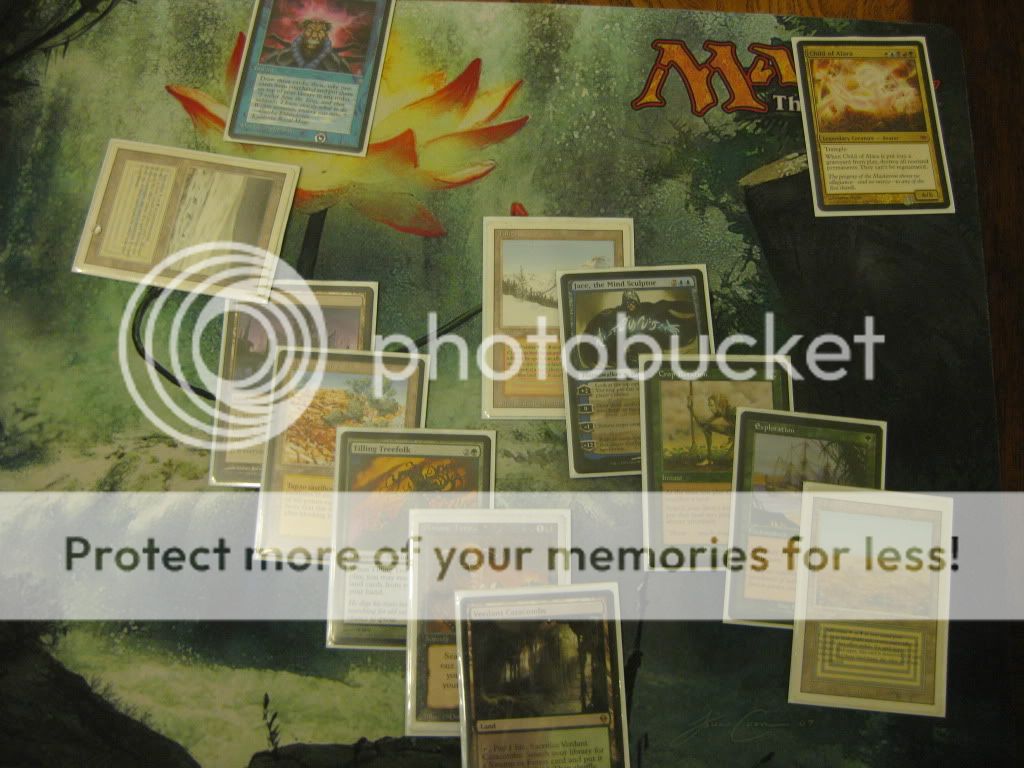
Vesuva, Tundra, Scrubland, Verdant Catacombs, Brainstorm, Taiga, [card]Jace, the Mind Sculptor[card]

This is probably me just being greedy, but I think this hand is really sweet. You have a Brainstorm and a shuffle effect, which should find you something to do. If we don't Brainstorm into gas, then we'll follow it up with a [card Jace, the Mindsculptor]Jace[/card] and that will find something.

Turn One

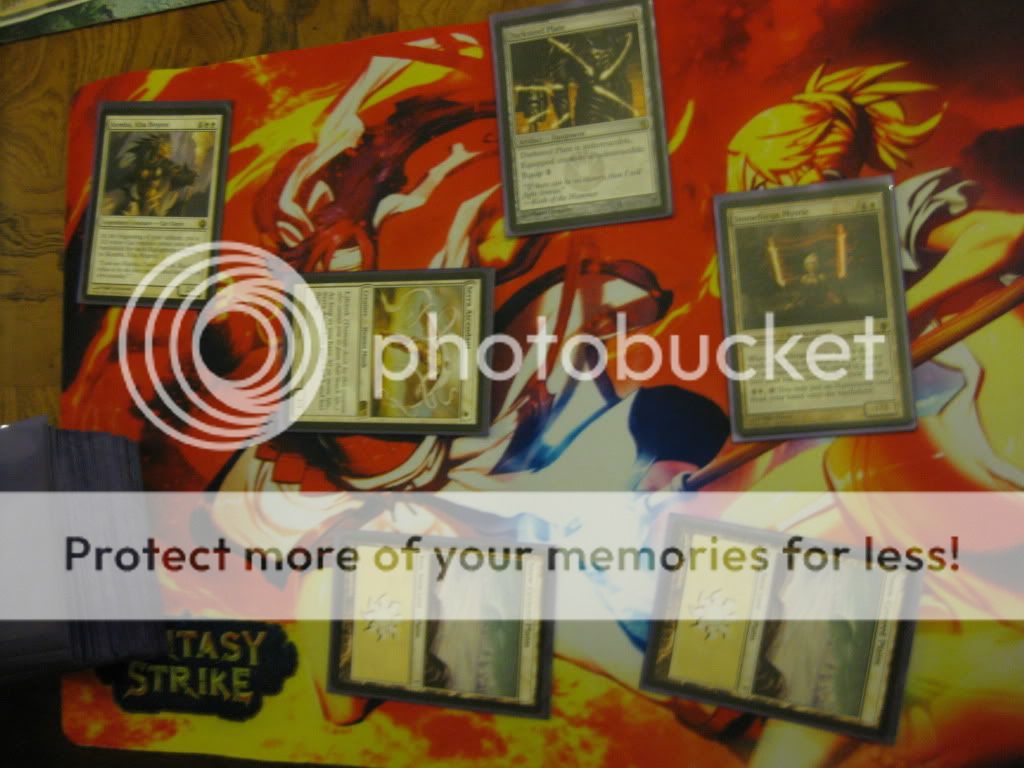
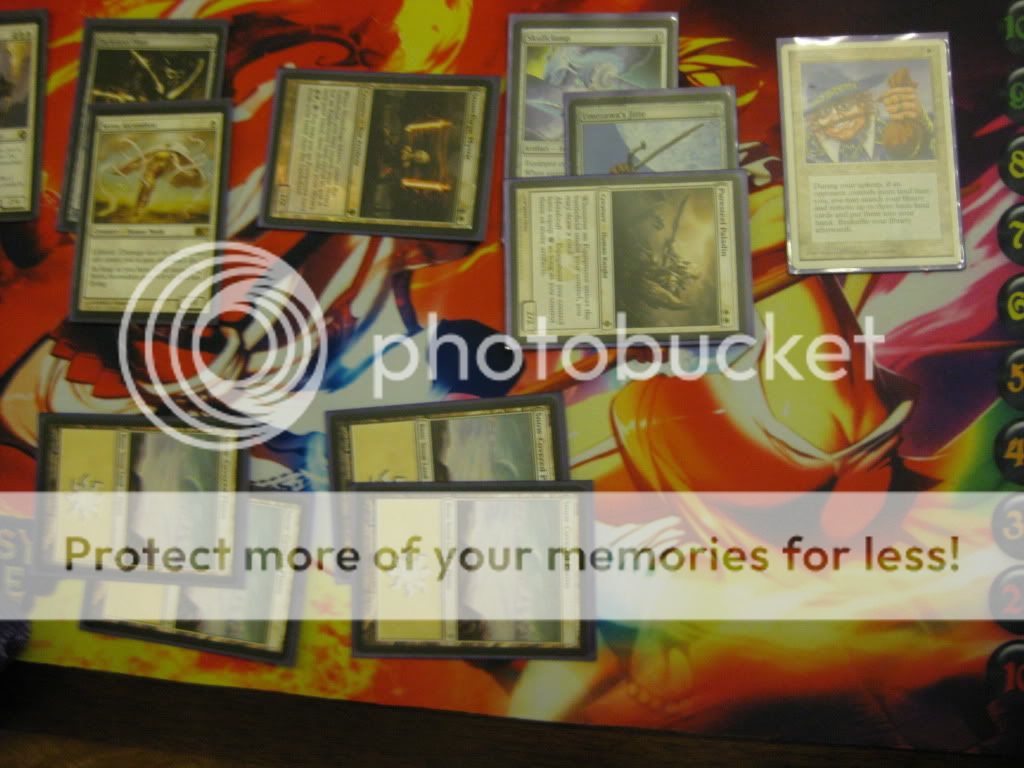
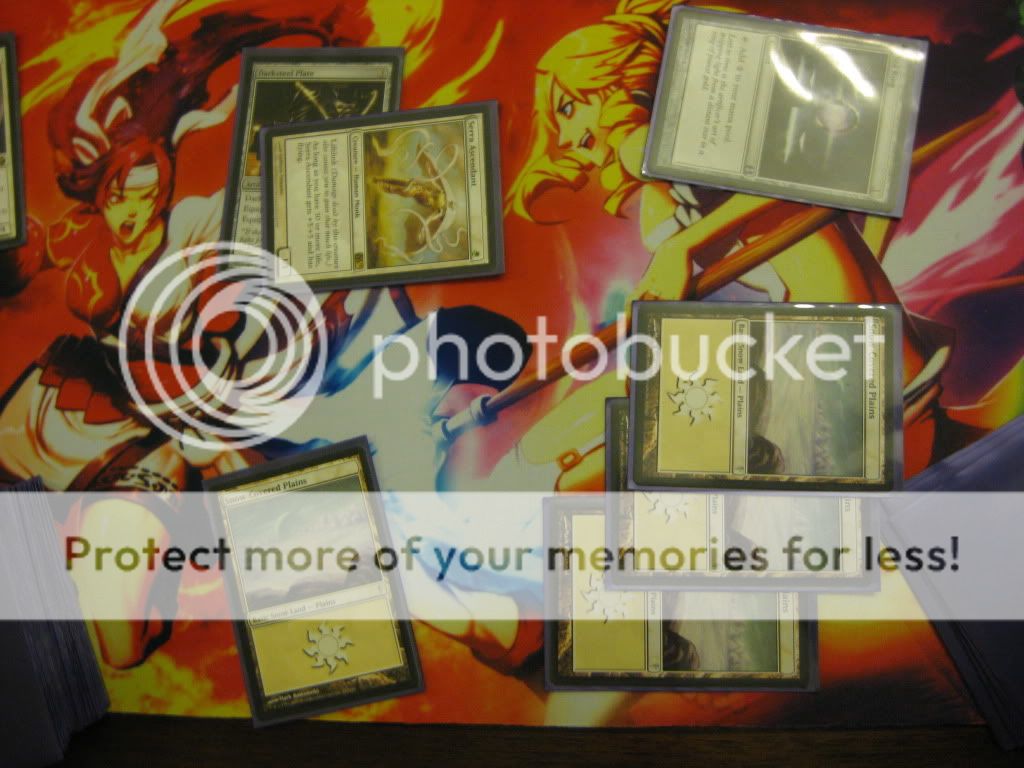
Kemba is on the play, and starts off strong with Snow-Covered Plains into Serra Ascendant. That's pretty bad news, since we kept a really slow hand without any real ways to interact with a quick clock. For our first turn, we draw Demonic Tutor, which is awesome, since it gives us all kinds of flexibility in the upcoming turns.

In the worst case, we'll use the Demonic Tutor to find a Maze of Ith to buy us a ton of time to find an answer for the Serra Ascendant. However, we're not under extraordinary pressure just yet, so there's no need to use Demonic Tutor that aggressively.

Turn Two

Kemba casts a turn two Stoneforge Mystic, but she fetches a Darksteel Plate rather than a [card Sword of Fire and Ice]Sword[/card] of some variety. Darksteel Plate is a pivotal card in this matchup, but seems a little out of place in a draw this aggressive. Kemba bashes for 6 and passes (CoA: 24, Kemba: 36). We'll untap, draw Tilling Treefolk, and Brainstorm:

After Brainstorming into three of the best cards in our deck, we're easily set up to wrath the board with Child of Alara on turn four or five. We've got Crop Rotation into Maze of Ith to buy us infinite time, and still have Demonic Tutor to find any additional answers we need.

We put back Tilling Treefolk and Vesuva, and play Verdant Catacombs, cracking it for a Savannah (CoA: 23, Kemba: 36). Exploration off of Savannah lets us play Taiga and leave up Crop Rotation.

Turn Three

Kemba, attacks for seven, and we Crop Rotation away a Taiga for Maze of Ith, and Maze the Serra Ascendant (Coa: 22, Kemba: 36). Post combat, Kemba misses a land drop, and plays Skullclamp and Land Tax.

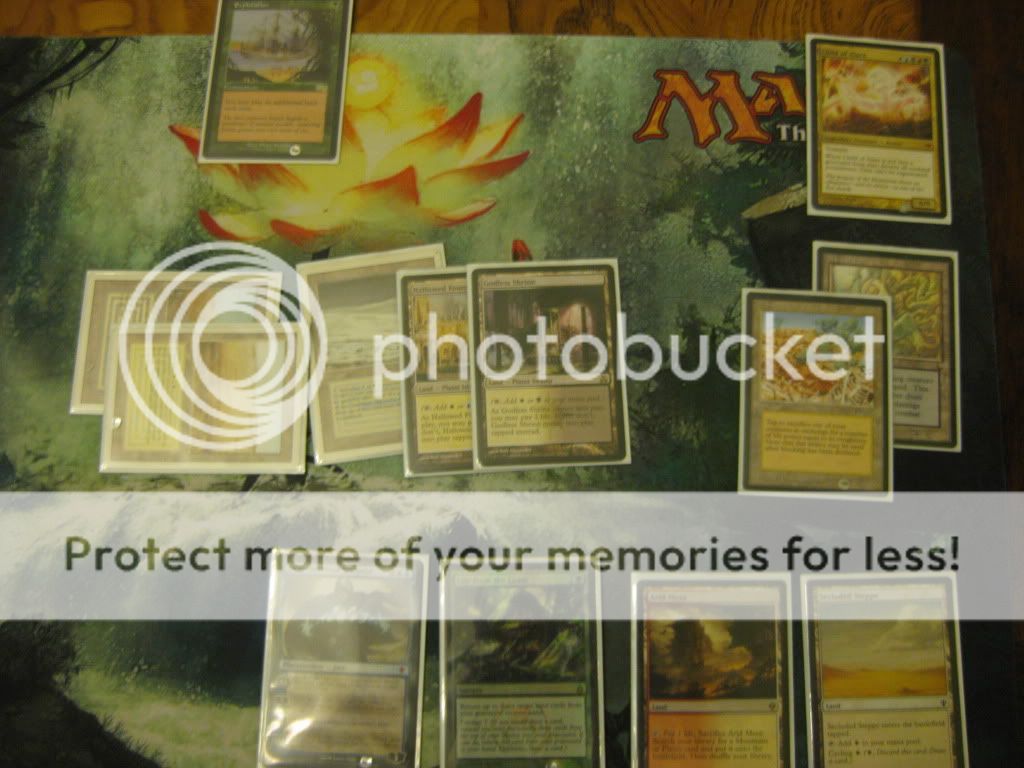
We untap and draw a Secluded Steppe. Since Kemba isn't applying pressure, all we really have to do is continue to hit land drops, so we'll cycle Secluded Steppe off of our Tundra, drawing into Tilling Treefolk (again?!). Then we play the Scrubland and Diamond Valley and Demonic Tutor for Life from the Loam. The plan is that [card Life from the Loam]Loam plus Secluded Steppe lets us dig for more lands that do something relevant.

Turn Four

Kemba Land Taxes up three Snow-Covered Plains, equips Stoneforge Mystic with a Skullclamp, and bashes. We'll maze the Serra Ascendant again and take two (CoA: 20, Kemba: 36). A post combat Puresteel Paladin is all Kemba can muster.

We untap and draw Arid Mesa, which is awesome since we want to play Life from the Loam this turn. We'll play Arid Mesa, crack it for Hallowed Fountain. Then Tilling Treefolk gets back Verdant Catacombs, Arid Mesa, and crack Verdant Catacombs for Godless Shrine (CoA: 18, Kemba: 36). Now we're easily set up to wrath the board with Child of Alara next turn and still have an engine to keep developing our board, and we're still at a very healthy 18 life!

Note: the Secluded Steppe shouldn't be in this hand, since Tilling Treefolk only gets back two lands. It doesn't really matter, but it was a mistake. Sorry about that!

Turn Five

Kemba Land Taxes for another 3 Snow-Covered Plains, and then goes a little nuts. She casts a Umezawa's Jitte, and then [card Stoneforge Mystic]Stoneforges[/card] in a Darksteel Plate to hit Metalcraft.

Puresteel Paladin picks up all the equipment, and Kemba crashes in. Again, we'll Maze the Serra Ascendant, and we'll block Puresteel Paladin with Tilling Treefolk, and then sacrifice the Tilling Treefolk to Diamond Valley before damage (CoA: 21, Kemba: 36). Post combat, Kemba moves the Darksteel Plate to Serra Ascendant and discards a Ranger of Eos and a Soul Warden, holding the lands to help deal with Strip Mine and The Tabernacle of Pendrell Vale.

We untap and draw Entomb, which is AWESOME with this Life from the Loam! We'll start by playing an Arid Mesa and cracking it for a Plateau. We can Life from the Loam back our Arid Mesa, Verdant Catacombs, and Taiga and crack Arid Mesa again for Temple Garden.

Finally, we can cast Child of Alara and sacrifice it to Diamond Valley to wrath the board.

Turn Six

Kemba is under a lot of pressure to put together some kind of offense or we'll just start digging for better lands with Life from the Loam and lock her out. She drops a Sol Ring into Expedition Map and tutors up a Tectonic Edge for our Maze of Ith, and then bashes in for 6 (CoA: 17, Kemba: 42).

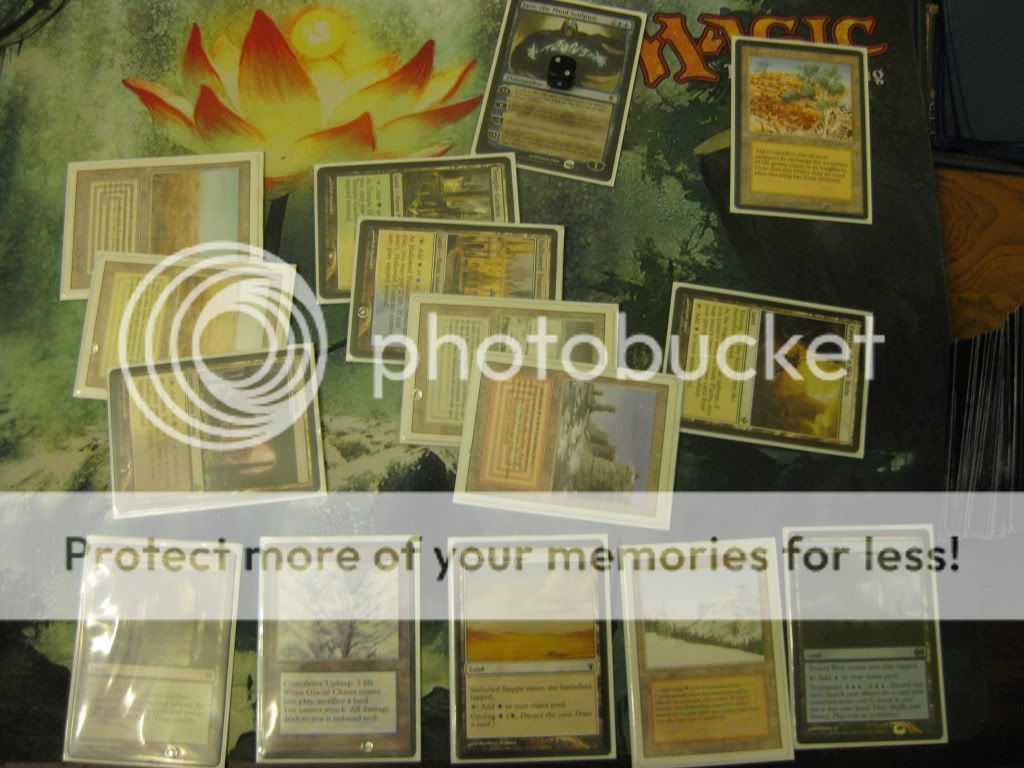
We untap and dredge Life from the Loam, hitting Glacial Chasm, Tolaria West, and Overgrown Tomb, aka two of the best lands left in our deck. Well, I suppose we should start wrapping this game up, right? So we'll cast [card Jace, the Mind Sculptor]Jace[/card] and bounce Serra Ascendant. Now we've got to think about what we're going to do with this Life from the Loam and Entomb.

What we want to do is assemble Glacial Chasm, Emeria, the Sky Ruin, and Dryad Arbor as a soft lock. We can add Vesuva and Zuran Orb for a hard lock. We have Verdant Catacombs to fetch Dryad Arbor, and Tolaria West to find Zuran Orb, so the most efficient way I can think to do this is to Entomb Emeria, the Sky Ruin.

Then we'll Life from the Loam back Tolaria West, Glacial Chasm, and Emeria, the Sky Ruin, and play the [card Emeria, the Sky Ruin]Emeria[/card]. Notice that, since we've been fetching up white duals, [card Emeria, the Sky Ruin]Emeria[/card] is already active, and will be recurring a Child of Alara next turn!

Turn Seven

Kemba casts Kemba, Kha Regent, equips her with Darksteel Plate, and casts a Serra Ascendant, and unfortunately has to pass back.

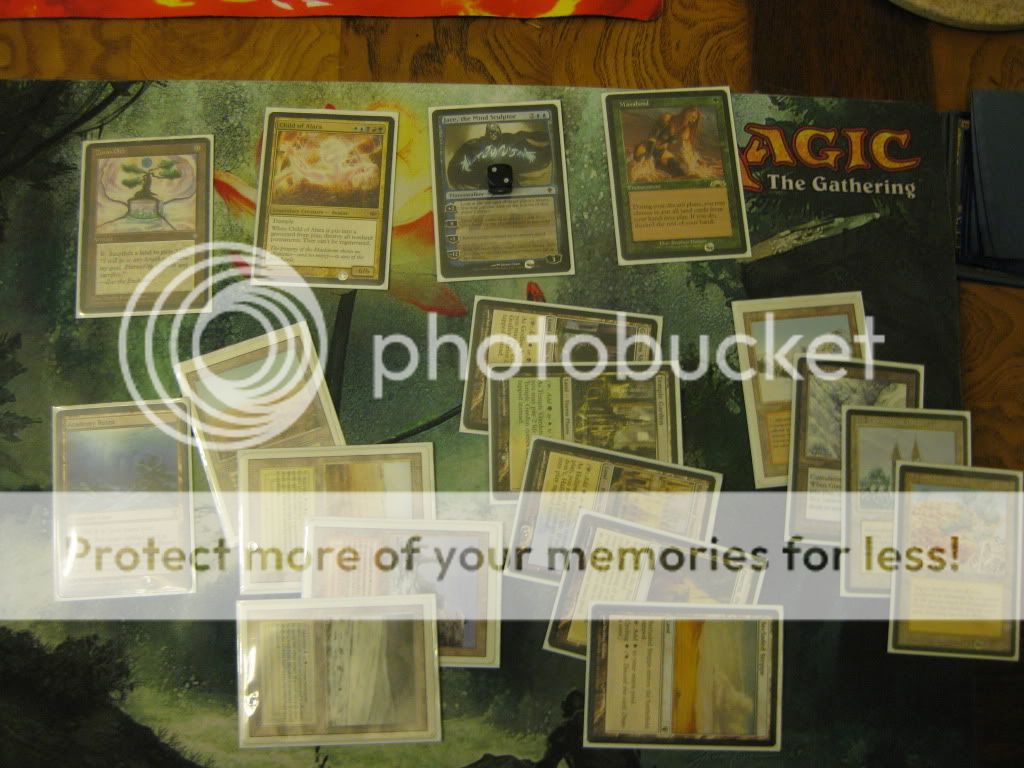
We untap, [card Emeria, the Sky Ruin]Emeria[/card] Child of Alara into play, and draw Azusa, Lost but Seeking, which will let us do some broken stuff, but let's [card Jace, the Mind Sculptor]Jace[/card] first. We Brainstorm into Manabond, Sylvan Library, and Realms Uncharted. Since Manabond will do the same thing as [card Azusa, Lost but Seeking]Azusa[/card], but better, we'll put back [card Azusa, Lost but Seeking]Azusa[/card] and Sylvan Library.

Now we can play Manabond and just try to get as many relevant lands in our hand as possible to dump into play. First, we'll Transmute Tolaria West for Zuran Orb, and then we'll cast Realms Uncharted.

The pile that I went with was Vesuva, Petrified Field, The Tabernacle at Pendrell Vale, and Academy Ruins. Vesuva and The Tabernacle at Pendrell Vale are parts of your lock, while Petrified Field will let you use your land drop to get back any other land in the pile, just to replay them with Manabond.

Kemba gives us Petrified Field and Academy Ruins, so we use the Petrified Field to get back [card The Tabernacle at Pendrell Vale]Tabernacle[/card] and then discard our hand to Manabond. In response to the Glacial Chasm trigger, we fetch a Dryad Arbor and sacrifice that. Once we Life from the Loam back Vesuva, we'll have basically locked Kemba out.

For those unfamiliar, here's how the lock works. You have one Glacial Chasm in play, pay the upkeep, and then play Vesuva as a copy of Glacial Chasm. On your next upkeep, pay the first upkeep for Vesuva and sacrifice the Glacial Chasm to Zuran Orb to make up the life. As long as you can keep alternating Vesuva and Glacial Chasm, you have two Glacial Chasms in play protecting you!

Well, the end of that game was a lot drier than I intended it to be, but the details really are necessary when you're playing a deck like this. Being able to take advantage of the mechanics of these combinations of cards is really important, since it lets you play around everything but very specific combinations of cards. Hopefully this was a helpful look under the hood for those of you interested in the deck!

Next week you can expect a return to form; I'm letting my inner-Johnny cut loose a little with a budget combo deck that is built around cards like Prismatic Lace. I'm especially interested to see what people thought of the format of this article, looking at gameplay rather than deck construction. It's not something I'd want to do often, since this was a ton of work, but it was certainly an interesting change in perspective. Let me know!

Carlos Gutierrez
cag5383@gmail.com
@cag5383 on Twitter

Artist Showcase of the Month: Card Kitty

Are you a Quiet Speculation member?

If not, now is a perfect time to join up! Our powerful tools, breaking-news analysis, and exclusive Discord channel will make sure you stay up to date and ahead of the curve.

Since I've been in the mood to grow the altering community lately, I think it's time I roll out a new feature. Occasionally I will be writing articles that will be dedicated to a specific artist. Notice that I did not define a specific type of artist. I firmly believe that broadening your own horizons and awareness of different forms of art (as they pertain to Magic altering) will improve your own work and skill. While most alter artists work in paint, there are some that choose to alter cards on the computer, or even with other cards! This week, we get an obvious candidate out of the way in CardKitty.

CardKitty has been a leader in Magic alterations for some time now, and a quick glance at their work will show you why. The smooth transition between original art and new art is virtually flawless. The use of colors and lines are fantastic. They work in all different types of alters from accents to full art and even fan-art.

Their website is a great resource to anyone who alters cards from beginner to expert. For starters, there is a step by step tutorial on how to alter a Trinket Mage and also one for Demonic Tutor. These tutorials give just enough detail to get you started and gives a general idea of which colors to use and how to use them, while also keeping some of the tricks of their trade a secret. The Demonic Tutor may not be safe for work. Recently they have released a number of video tutorials showing how they painted specific cards, notably Vengevine and Wasteland for those of you wishing to alter more expensive cards.

Then there is the gallery. Whenever I am lost as to which card to paint next, or how to approach a certain card or idea, I often look to CardKitty for that spark of inspiration. This is mainly because of the vast quantities of alters on their site. There are literally hundreds of altered cards in their gallery, so I am almost sure to find something that relates to the card I'm working if not the card itself.

Though CardKitty works mostly in paint, they do employ the cunning use of markers to complete some of their alters. This is something I would be most interested in learning as it does seem to help clean up an image rather nicely. I still have not learned which brand of markers they use, and the art markers I have don't seem to get the job done. So I leave that mystery to the community to share, or for CardKitty themselves if I am so honored as to count them among my readers.

For those of you who wish to own a CardKitty alter, there is a link to their Ebay store on the CardKitty website as well as a link to contact CardKitty for a commissioned alter. Even if you dont buy from them, I do encourage you to surf through their site from time to time and see what they are up to. I should warn you though, they do a lot of work with anime girls on basic lands, so the gallery is not always safe for work.

Today is also the day that I announce the raffle winners! To protect identities and such, they will be named by their respective screen names.

-JulesRobins (See how much using their Twitter name has protected them?) won the Oxida Scrapmelter

-JoshJMTG (Twiter) Won the Cancel

-the_toMatto (Twitter) Won an unaltered Mirran Crusader

-And one lucky member of our Facebook group won the playset of Lightning Bolts but has not replied. I'll give them until the end of this week, then I will draw another name to win them.

Though I dont feel I should have to bribe you to comment, I will still give out random prizes from time to time so keep the feedback coming! That's all for this week!

-The Painters' Servant

Twitter: PaintersServant

Email: Mbajorek02@gmail.com

**All images were borrowed from www.CardKitty.com with the intent of promoting the well being of the card altering community.

Visit www.CardKitty.com to support this fine artist!

Insider: Judge Foil Bobs & Maximizing Before Events

Are you a Quiet Speculation member?

If not, now is a perfect time to join up! Our powerful tools, breaking-news analysis, and exclusive Discord channel will make sure you stay up to date and ahead of the curve.

Before I start this week's article, I first want to address a small point of reality. Last week I talked about my rise and fall and the value that I have been able to gain from slinging cards. I want to make it known that my lifestyle is by no means extravagant.

Don't get me wrong, I love what I do. But to be certain that I can always get by, I don't limit myself from occasionally working other jobs.

Some may object to making Magic a full time job, as it isn't as "profitable" as a real job. This game can be lucrative and is a great source of an income, but would I leave a regular 9-5 strictly to play Magic?

No. The lifestyle is too unstable. Just like any high risk venture, sometimes you make money and sometimes you get burned. I have been both fortunate and burned, as you can see from last week's article, but I would say I have come out of this whole process on top--reaping far more reward than the threat of loss could inflict.

The moral of the story here is: Don't quit your day job to shuffle Magic cards because of the success I've had. There is a lot of extra, easily harnessed money to be had from following the financial side of Magic, and I fully endorse doing so. Be real with yourself and wade into the profit from the perspective of it being a part-time endeavor rather than your lottery ticket out of the daily grind.

Anywho. That's enough jibber jabber, onto the article!

Wait, a second before we start...

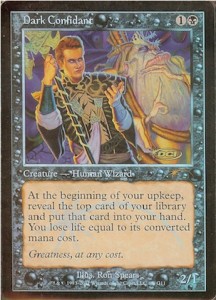
DARK CONFIDANT JUDGE FOILS!

I don't think this will actually affect the price of the original very much, if at all. It may drop the price of foils a bit, but not enough to scare me off of them. They aren't a threat to your current best creature ever printeds.

The old card border looks sweet. I loved when they did it with Sword of Fire and Ice and I love it now even more. Dark Confidant is a card that has proven itself to be one of the best creatures ever printed and will continue to prove itself as Magic continues.

As of July 25th, 2011, StarCityGames.com is buying the Foil Judge Promos at $60. They're buying regular ones at $25 and original Foils at $60.

For comparison's sake, they're also buying Foil Judge Promo Sword of Fire and Ices for $50, regular Sword of Fire and Ice at $17.50, and original Foils at $50.

They're selling the FoFIs at $35 for regular and $80 for both the original Foil and the Foil Judge Promo at $80. Dark Confidant sees the same consistency between the original Foil and Foil Judge Promo, both going for $100, with the non-foil original going for $50.

What does this mean? Well, they're currently perceived to be as valuable as it's original foil counterpart. SoFI is, however, typically used as a one-of in decks that play it, where Dark Confidant is a Legacy, Vintage, and (soon to be) Modern staple. People will want a playset of these over a a simple one-of.

Go pick up a set. Or ten. I would snap these up whenever you see them sitting around, as any foil-loving player will want a set of these (despite the silly artwork). The fact that they're going to be sought after as a playset makes them an ideal investment, but I don't think the $100 price tag is worth the cash investment. If you see them for less, however, you're nearly guaranteed to be able to get off of them for $100 somewhere. Or at least $60 from SCG.

Maximize the Amount of Actual Cash

Let's talk about making quick adjustments before a major event in order to maximize the amount of actual cash you will walk out of an event hall with.

I'm talking about that crisp, green cash money.

Unlike most guys on the trading room floor, I am typically less concerned with speculation, more in tune with a quick flip. I move in and out of Legacy cards like there is no tomorrow. When I do, I always make sure I am making a profit.

An Exercise

So, lets say there is a GP this weekend in Minneapolis. You have a solid binder filled with all kinds of goodies you want to sell. These are cards you have been trading for, planning on selling them to a dealer.

Why sell to a dealer instead of grinding it out on ebay? Well, dealers will gladly scoop up your three inch tall stack of staples at (typically) 75% retail value in one fell swoop, whereas ebay requires you to not only wait, but also go through the process of packaging, shipping, insuring, hoping they receive it (or don't claim they didn't), and dealing with the likes of Pay Pal and other virtual money.

When you're looking to turn cards quickly, dealers are your best bet at getting maximum value for your time. You hand them cards, they hand you money. Crisp, green cash money.

So as you prep for the big GP, remember: This is your last chance to increase your binder's cash value.

Your binder contains,

(assume all cards are NM/M)
Retail/Buylist

3x Tezzeret, agent of Bolas
29.99 /15.00

2x (Revised) Scrubland
59.99 /30.00

4x (Revised) Plateau
59.99 /30.00

Total
449.91/225.00

You do your research, looking at the buylists and a figuring out who has the highest buylist price. For purpose of this exercise, we will assume that these prices are the highest you can possibly get.

You meet a guy at your local shop with these cards in his binder:

3x Jace, the Mind Sculptor
79.99 /40.00

1x Diamond Valley
119.99/80.00

2x Karakas
59.99/30.00

1x Moat
299.99/175.00

Total
719.94/435.00

He wants all the cards in your binder. Everything in his binder is for trade.
He tells you that if he trades his Moat away, he wants a little extra value, since Moats are hard to come by.

You have a great opportunity here. In this instance, you able to make a trade that gives him a bit more value, all while making a profit.

What do you do?

Cash and Trade

Okay. So this was probably a little easy.

You trade everything in your binder for his Diamond Valley and his Moat. He gains around 30 dollars in retail, but you gain $30 in actual cash at the end of the day, making additional profit while appearing to take a loss.

You also ensure a return customer, since your trading partner gets his extra value. Next time this guy has an extra Moat, he will know who to go to.

I've used this "trick" a ton in my Magic career. It allows me to make extra money and maximize my sell value while still being a fair trader and not "sharking". This only works if you are selling cards, though, as it makes your trade value go down. I've done many trades with some loss in order to obtain cards I know I can flip with high cash value.

When I see cards in peoples trade binders, I see a buyllist price.
Not a retail price.

I know the retail price, but if you aren't sure, don't be afraid to look things up. If your goal is to make money, always think about to maximizing cash value. Worry less about your trade value, especially since you're getting rid of them anyway.

This Week In Review

Lets talk about this week's Legacy SCG 5k.

Okay, an aside:

On Saturday night I decided a little drinking was in order.

After going to my girlfriends house, I realized that writing this while hungover sounded terrible.

But I drank anyway.

I now regret that decision.

I'm tired, and my head is throbbing.

As I watch the coverage, I saw a lot of attention given to the Final Fortune, Sundial of the Infinite deck, mostly in the early rounds.

I don't think it has the potential to make a impact on the format.

If anything, it will make the price of Final Fortune go up a little bit, but I'm not saying that people should sink a ton of money into this card. It has the slight potential to go up a few dollars and could be a quick flip if you have a lot of Timmys in your local area, but this deck hasn't proven itself enough to justify a large price jump.

In the Top 8 I witnessed Jesse Hampton cast a terrible Brainstorm at the end of his opponent's, Jesse Roberts, turn 1.

Jesse Roberts cast Mental Misstep, targeting the Brainstorm, and Hampton responds with a Misstep of his own.

Roberts thinks for a minute and casts another Misstep.

Hampton then Force of Wills the final Misstep and resolves his Brainstorm without a shuffle effect.

...

I told everyone I wouldn't get into strategy in these articles, but come on people!

IF YOU'RE GOING TO PLAY BRAINSTORM, AT LEAST LEARN TO PLAY IT SEMI-COMPETENTLY!

If you haven't read this article, then read it right now.

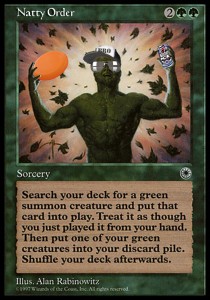
After watching Ben Swartz play Brainstorm masterfully in the Top 4, restoring my faith in the Magic community, the prevalence of Natty Order decks struck me as a very real trend.

Pick up your Natural Orders. They will continue to go up. I promise you.

I love this card. It is simply awesome and will continue to be played for a long time, turning Noble Hierarchs and Dryad Arbors into 10/10 pro-everything Progenituses. I wouldn't be surprised if it took a 25% price hike in the next few months.

Hive Mind had a strong showing in Top 8, with three of the eight decks being so.

If you don't own a set of Hive Minds, then pick them up for personal use, although I don't think this card has a whole lot of room to grow, price wise.

It may top out at around $5 a few years down the road if the deck continues to be as popular and successful as it currently is.

But the real money is in Pact of Negation.

It's becoming hard to find and will be in even higher demand after players find out about Hive Mind taking three of the Top 8 spots this weekend, eventually taking the whole thing down. That's some hype. Pact of Negation is one of the cards central to the deck's operation.

Very important trends are emerging.

As the Legacy metagame evolves, we see that equipment is getting better.

Having a powerful creature isn't enough unless it has protection from everything. Barring that, it has to be holding a sword of some kind.

Affinity has been falling of the map. Don't crucify me for saying this, but I personally think the deck is basically garbage. Garbage made out of shiny things. Like a dumpster full of washing machines.

Wizards has made sure to print plenty of artifact hosers. I wouldn't sell my extra affinity stuff quite yet, though. Hold on until Affinity shows up in a major tournament's Top 8 and then swoop in and trade for other staples. Tier 1 and 2 decks will always make occasional impressive showings in larger tournaments, but recognizing whether or not those are anomalies or trends is important. Affinity is trending out.

I love what is happening to the game. The dynamic formats keep new decks emerging every week. In many ways this means Magic is a growing game and the large GP schedule next year will continue to help increase the number of players.

What this means is that card value will continue to increase while more and more new cards are going to become available to Legacy players.

Protect your binder's staples and put little energy into picking up the cards that are still Standard legal.

With that said, let's head to the...

WEEKLY CHECKLIST!

(ECHO, Echo, echo...)

As a reminder, the purpose of this weekly list is to help you invest in a solid portfolio of Legacy cards. These cards are always worth having in your binder, as there are always players looking for them and their prices will continue to rise.

This week I want you to obtain some of my favorite cards.

Horizon Canopy - $6.99 on SCG (out of stock)

This card is showing up in more lists and has been slowly increasing in value. I know you can pretty easily pick these up at 3 to 5 dollars, and they are bound to continue going up in the long run.

Sylvan Library - $9.99 on SCG (out of stock)

This card has maintained its value for a long time. As green starts to show its face in Legacy, this card may start climbing even higher. It's a great addition to any collection and is getting harder to find. I recommend finding the black bordered versions as they have the most room to gain.

Knight of the Reliquary - $9.99 on SCG (out of stock)

Knight has made a major impact on Legacy, allowing you to tutor up silver bullet lands like Karakas, Bojuka Bog, and Wastelands. This card has been outclassing creatures for awhile now and its price tag seems just a little too low. This one feels like more of a long term gain than the other two cards on the checklist this week. If she never gets another reprint, the price tag will surely climb despite her alternative art reprint in the Knights vs. Dragons deck (which is worth less then a regular, only $7.99).

Until Next Time...

Remember to grow your Magic Social Circles. Networking is a great aspect of this game, so be sure to meet new people and be friendly.

And remember to have fun.

If you're not having fun, you're not risking anything.

Feel free to post question in the comments or email me.

Until next time,
-Mike Hawthorne
Twitter: Gamble4Value
Email: MTG_Mike@live.com

Commander Archetypes: Midrange

Are you a Quiet Speculation member?

If not, now is a perfect time to join up! Our powerful tools, breaking-news analysis, and exclusive Discord channel will make sure you stay up to date and ahead of the curve.

When you hear the word ā€œmidrangeā€ what do you think of? Personally, I have visions of green-black-something decks that make a lot of one-for-one trades with a little card advantage while playing the best threats they can find in the format. Decks like this are often referred to as ā€œRockā€ decks. Other color combinations can build a very similar deck (see red-white Boat Brew from Lorwyn-Shadowmoor-Shards of Alara Standard), but the basic principle is the same.

Rather than trying to kill the opponent before they can react or lock down the board and/or control the stack, the deck looks to make positive trades and grind out a win through playing with superior quality cards. Midrange decks usually win in the Red Zone, but they do it on their own terms and are usually doing it with a giant monster or two that already gave them some value before attacking.

You’ll see more midrange decks than any other type in a typical Commander group. Midrange is the ā€œgoodstuff.decā€ archetype. Goodstuff.dec jams the best acceleration, removal, and threats you can find into a pile and plays with it. There might be small inherent synergies that play well together and there might not be.

Having a theme does not necessarily exclude a deck from being a midrange deck. I have a Ghave, Guru of Spores token-themed deck that I consider much closer to a midrange deck than an aggro deck at this point because it grinds much more than the original Rith, the Awakener ever could hope to with all the Grave Pact effects and recursion. There are lots of other routes to pursue as well, and I’ll touch on some of them below.

Colors to Choose

In tournament and kitchen table Magic, the best colors for midrange involve some combination of green, black, and white or blue. This holds true for Commander as well.

Green gives you the best creatures and land-based acceleration, which are key to getting your powerful cards out in time to slow down another player’s aggressive start or start pressuring the combo and control players. Black gives you the most powerful tutoring effects and reanimation. The tutors let you play silver-bullet answers without diluting the strength of the deck and consistently get your best cards into the game. The reanimation effects in black, when coupled with the return-to-hand effects available in green, make it easy to reuse your best cards again and again. White and blue both provide strong value creatures while providing other means of dealing with threats (white sweepers, blue countermagic), and generally shore up the weaknesses of green and black.

The other point to consider when selecting your colors for midrange is which multicolor cards you might want to use. Vindicate is good in any format, as is Angel of Despair. Coiling Oracle and similar enters the battlefield creatures are often the cornerstone of a good midrange strategy.

With a midrange good stuff deck, you can end up choosing your deck before your commander quite easily. Even thought you might be tempted to put all your favorite cards in a deck and then pick a general, I strongly recommend you pick a general that has inherent synergy with all those cards and cut the ones that don't have the same synergy as the rest of the deck. Playing goodstuff.dec will get there sometimes, but you'll find the deck much more consistent if you build around your commander to some degree and take advantage of the abilities they provide to you.

On Monocolor Midrange

Midrange can be done with mono-color decks, despite no single color really having all the tools that a multicolor deck will have. To do midrange in mono-color effectively, you lean more on the card advantage engines available to you in that color.

White midrange tends to play with sweepers and breaking the symmetry somehow or locking down the board with various rules-setting cards. Blue draws a ton of cards to keep the threats coming while maintaining positive tempo. Black plays with undercosted cards with drawbacks and mitigates them with the 40 life in the format. Green just powers out fatties and rides them to victory.

Unfortunately for those Red mage out there, midrange is not the best strategy for red in Commander. All of the ramping effects available to red are one shot, which means you’re giving up cards to play threats faster. You can’t afford to do that while playing a midrange deck: a large percentage of your answers will be one-for-one or two-for-one at best (especially in red). If you want to play red, you’ll find yourself being pushed into the aggro role or the control roll by keeping the board clear while you attack with one or two big threats.

Regardless of the color you choose, monoc-olor midrange is doable, but I'd strongly recommend starting with green and at least one other color to truly get the archetype running on all cylinders. You can rely on artifact mana to make up for the loss of green acceleration, but that opens you up to getting your tempo shut down by any kind of artifact destruction. It's not a good place to be in.

How to Build Your Curve

Building the curve for a midrange deck is all about exploiting the power of mana ramping and finding the most efficient effects at a particular mana cost. Fortunately for those of you looking to play midrange, starting at 40 life rather than 20 life makes it much easier to spend the first few turns setting up your mana to do ridiculous things starting on turn 4 and beyond.

Starting with converted mana costs one through three, you want to focus on spells that will set up your midgame. The most common thing to do is play mana ramping spells, especially ones that give you a two-for-one like Cultivate and Kodama's Reach. Sticking to land-based acceleration lets you avoid the potentially ugly issues of having your acceleration removed by a random sweeper at a crucial point later. Very few mass land destruction spells see play in Commander, so as long your group doesn’t go for the mass LD route, you’ll be all set.

Four- and five-cost are where you start to hit a bit more diversity in your spells. If you’re going for sweepers to generate card advantage, you’ll likely have a few in this range to deal with creatures. If youĀ opted for card draw, this is where you want to have a few of those effects. This is where you start to generate a little card advantage alongside the mana acceleration. Fortunately, this is where the card advantage cards start to get good. You can Skyshroud Claim for two untapped Forests, or Wrath of God or Damnation, or stick a Jace, the Mind Sculptor and start drawing cards like crazy. Once you hit five you’ll have the occasional threat as well, but the good stuff mostly starts at six.

Six and above is where things start to get spicy, and you see the premier midrange creatures for Commander. The Titans from Magic 2011 and MagicĀ 2012 are perfect examples. They have dangerously large bodies, and they do more than just beat. If you're going for goodstuff.dec, you should definitely have all the Titans you can play in your colors. Look for more cards like them, and you'll be on the right track. You want every threat you play to be a must-answer card, along with providing value when it enters the battlefield or dies.

Recommended Commanders

Here's a quick list of possible commanders for both good stuff midrange and themed midrange generals and a couple notes on what you should include:

White

  • Hokori, Dust Drinker – While not on my list of commanders to play any time soon, Hokori is excellent at denying resources to your opponent while you break the symmetry.
  • Iona, Shield of Emeria – Locking an opponent out of a color will win you games, but you're better off cheating her into play somehow rather than paying retail.
  • Reya Dawnbringer – Bringing back any creatures you've lost without paying for it is a great way to make sure you stay ahead. Even better if those creatures have enters-the-battlefield triggers.

Blue

  • Heidar, Rimewind Master – While his body isn't super impressive, being able to bounce a permanent every turn is pretty nice, giving you a solid tempo boost while you get in with other threats.
  • Meloku the Clouded Mirror – A fantastic way to generate a board advantage when the game goes long.
  • Rayne, Academy Chancellor – Last week Doug Linn mentioned Rayne as a possible aggro commander. I think she'd be much better as the leader of a more midrange style build of deck with good blue threats backed up with countermagic for removal.

Black

  • Anowon, the Ruin Sage – A very good midrange choice since he can lock down the board for you while you deploy your other Vampires and take control of the game.
  • Drana, Kalastria Bloodchief – Repeatable removal that pumps is a fantastic way to keep yourself ahead into the late game after deploying her in the midgame.
  • Geth, Lord of the Vault – Evasion and a reusable reanimation ability like Chainer, Dementia Master, without his drawback. He even provides an alternate win condition in the milling ability.
  • Ink-Eyes, Servant of Oni – Are you getting the idea that great black midrange generals either kill everyone's creatures or reanimate them yet?
  • Sheoldred, Whispering One – A less restrictive, bigger, better Anowan.
  • Skithiryx, the Blight Dragon – The one exception to the "kill creatures or reanimate" them rule, because he has such a good clock all by himself that he can be backed up with just ways to control the board and other efficient creatures.
  • Xiahou Dun, the One-Eyed – Monetarily expensive, but oh so good at providing exactly what you want in a midrange deck: powerful recursion.

Red

  • Ashling the Pilgrim – She's one of the very few commanders you can run as midrange because she provides solid card advantage while being an aggressive beater. The "99 Mountain Ashling" deck definitely qualifies as midrange.
  • Kazuul, Tyrant of the Cliffs – Creating creatures whenever an opponent attacks you lets you be aggressive while still having some defense, and you'd be surprised how often people will send a creature somewhere else to avoid paying or giving you a token.
  • Kiki-Jiki, Mirror Breaker – Great midrange guy when combined with enters-the-battlefield creatures, but often played as a combo general, so be ready for people to try and hate you out.

Green

  • Azusa, Lost but Seeking – Quite popular after Sam Black posted a decklist designed around powering out turn 4 Eldrazi.
  • Kamahl, Fist of Krosa – A savage beater that only gets better the more mana you have available.
  • Molimo, Maro-Sorcerer – Getting bigger and more dangerous with every land you have out plays naturally into green's strengths.

Multicolor

  • The Invasion and Planar Chaos Dragons – All of the Dragons do a great job of giving you something at a big discount whenever you can hit a player, and the decks built around them play very much like a midrange deck most of the time.
  • Ghave, Guru of Spores – Having built the deck, I can confidently say that Ghave functions extremely well as in a midrange token based strategy. Almost all the commanders that give you access to black can play the role well when combined with Grave Pact effects and Aura Shards.
  • Glissa, the Traitor – Another one mentioned in comments on my aggro article, the Evil Glissa is a great way to grind out card advantage in traditional Rock style.
  • Kresh the Bloodbraided – One of the poster boys for midrange, Kresh is all about grinding out advantage by offing both yours and your opponent's threats.
  • Malfegor – The ODD (Original Demon Dragon) does wonders for making sure you stay ahead on the board against slow opponents while destroying anyone who dumped their hand too early.
  • Mayael the Anima – A lot of people consider Mayael to be either aggro or control. I personally think of her as a midrange general since she plays best as a combination of the two.
  • Merieke Ri Berit – Merieke can be a control general with very few other creatures, or she can be a 3-drop that steals your opponent's best creature while you beat down with your other guys.
  • Nath of the Gilt-Leaf – Getting free creatures for forcing opponents to discard is a fantastic advantage – one you can easily exploit in a Rock shell.
  • Oona, Queen of the Fae – Similar to other token generators, but be aware many people play her as a combo kill.
  • Rosheen Meanderer – Rosheen combines very well with additional ramp to let you pay silly amounts on X spells, quickly making them incredibly broken.
  • Sapling of Colfenor – She provides card advantage while being extremely difficult to kill.
  • Sygg, River Cutthroat – A card advantage engine that combines with your desire to get in for some damage every turn and profits off your opponents hurting each other.
  • Vish Kal, Blood Arbiter – Tailor-made for midrange, letting you take advantage of your dying creatures and make sure your opponents lose them too or just get hit for tons.
  • Wort, the Raidmother – Similar to Rosheen, but requires more tokens. She's a fantastically fun general in my experience.
  • Wrexial, the Risen Deep – Getting free spells for attacking is exactly what a midrange deck wants.

Ending in the Middle

That's all for midrange discussion. Next week we'll talk about all the different ways to play control in Commander. Until then, remember two-for-ones can win games.

Real Talk Redeux | CommanderCast S3E9

Are you a Quiet Speculation member?

If not, now is a perfect time to join up! Our powerful tools, breaking-news analysis, and exclusive Discord channel will make sure you stay up to date and ahead of the curve.

On a stirring episode of CommanderCast, Andy is joined by Brionne, Donovan, and Alex from the Commander Rules Committee to discuss your questions. They're also rounding out the series of mono-colored focused episodes by reviewing mono-white, finishing with an Entourage segment for Celestial Kirin.

For more Commander content, check outĀ http://commander.blogspot.com on Mondays, Wednesday, and Fridays.

This week's full show notes can be found here.

You can hit the button to play it, or click to download the whole episode!

Duel of the Planeswalkers 2012 Review

Are you a Quiet Speculation member?

If not, now is a perfect time to join up! Our powerful tools, breaking-news analysis, and exclusive Discord channel will make sure you stay up to date and ahead of the curve.

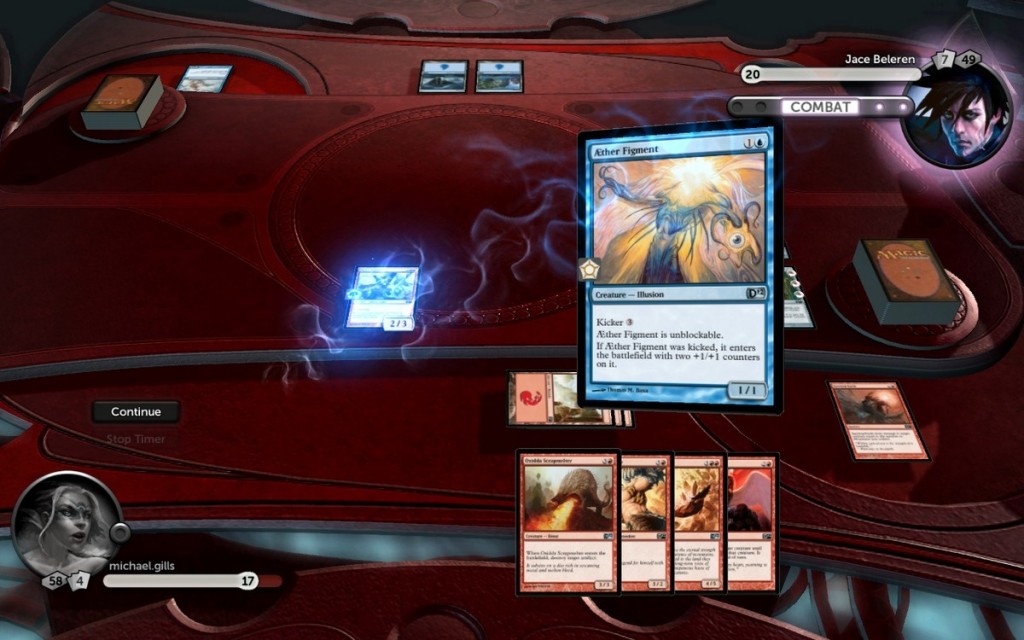
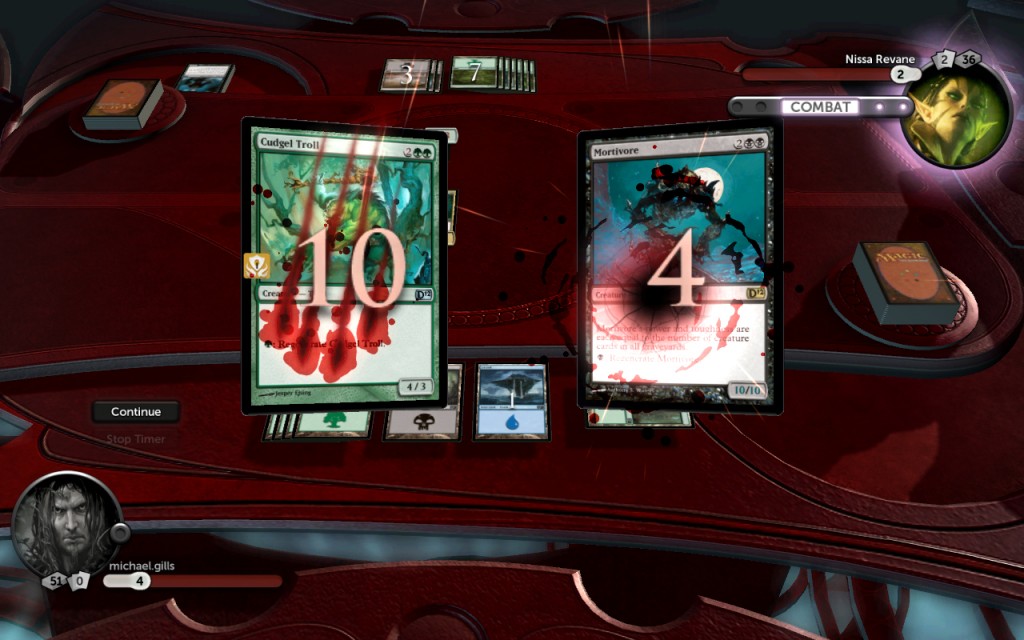
Last week, I was fortunate to receive a review copy of Duel of the Planeswalkers from the generous folks at Wizards of the Coast!Ā  I thought it only fitting to give the game a full review here on QS as a way of thanking them, and helping them publicize this excellent game.Ā  I have mixed feelings about the game due to some specific shortcomings, but my overall opinion of the game is a positive one, and I find myself going back for more after I play every game.

Installation

Things got off to a rocky start, as I had to install Steam, which I just dislike.Ā  I don't want to have to install secondary software in order to play a game I purchase.Ā  This may seem like a little annoyance, but it's most often a flood of tiny annoyances that render a game uninteresting.Ā  I sincerely hoped that this would not be the case!Ā  Once Steam was installed, the game wouldn't start.Ā  Lovely.Ā  I played around for a while and finally found the configuration file where I had to manually change the game's resolution so it would run on my screen.Ā  Modern games should not require editing a .ini file, or anything similar.Ā  I was already very frustrated, but I would discover later that my frustrations would be overshadowed by pure delight and enjoyment.

UI

Upon loading the game up, I was immediately impressed by the visual stylings of the User Interface.Ā  Everything is gorgeous and well-designed, but some of the menu systems make no sense.Ā  I get that the Apple-style "coverflow" design is all the rage right now, but there's no reason to make the game's main menu emulate it.Ā  It shouldn't take 5 mouse clicks to get to the Exit button from the main menu. Ā  Most of my issues with the game are related to the "workflow" and UI, which would be very easy to fix in an updated version.Ā  Its fundamentals are very, very good.

Graphics

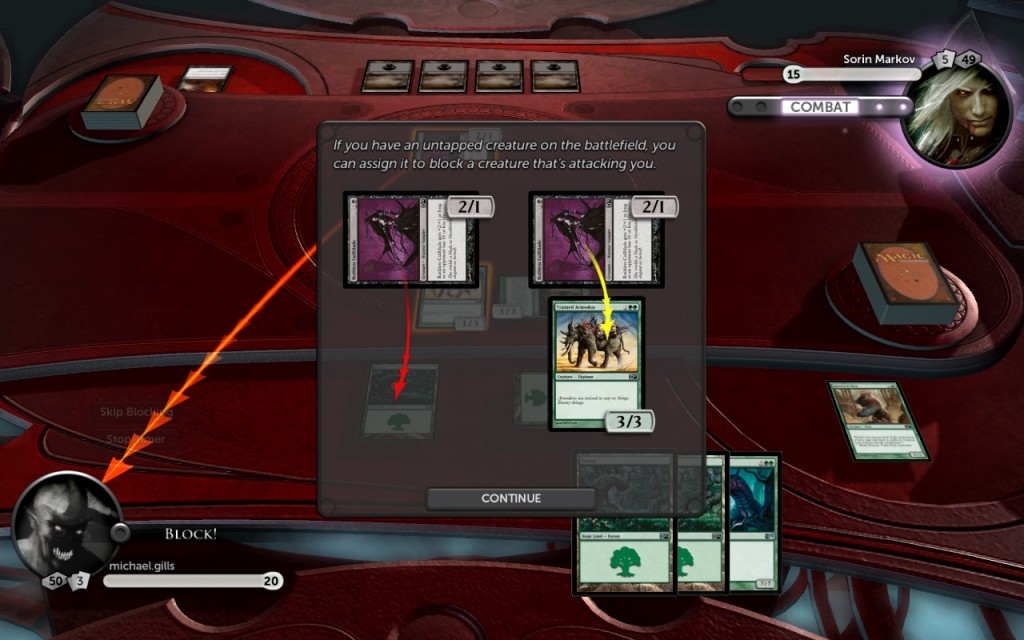
The pretty graphics got annoying very quickly.Ā  The swirly summoning sickness graphic was very helpful, as are the hovering flying creatures, but the random other swirly and sparkly graphics were really quite unnecessary, and lagged my system noticibly.Ā  For those with a dedicated graphics card, this will be no issue, but my system is an all-in-one tablet PC with a cheap, integrated chip.Ā  This could be solved by simply giving the user an option to turn down the animations.Ā  Oddly enough, it seems to not have Tablet PC support, so I can't play with the touch-screen.Ā  This is hardly an issue, but it bears mentioning.

Gameplay

Bearing in mind that I'm a veteran Magic player, and this game is meant for beginner to intermediate players, some of my gripes with the game won't apply to its target audience.Ā  For this site's readers these are relevant concerns, but they don't detract from the overall enjoyment of the game too badly.Ā  A few of these caused some oddities while I was learning to play, such as not giving me a window to tap an attacker in the beginning of combat step, but intelligent playing and the right options configurations can mostly fix that. Ā (Hint: Ā If you're reading this site, you should probably set everything to "advanced" or "expert".)

The AI makes some blunders even on the highest difficulty, but I understand the technical challenges of writing an AI to play Magic.Ā  In general, the AI does a good job of putting up a fight, but expert players might have a more fun time using it to play online instead.Ā Ā  Another thing that experienced players might find annoying: all the animations when cards change zones and such.Ā  It adds a lot of time to the gameplay, but it can also be very helpful.Ā  Again, an option to toggle all animations would be fantastic, but it's not a big deal.

Now that I've got all my little gripes out of the way, it's time to sing the praises of this freakin' awesome game.Ā  The aforementioned items are the little things you will notice and think "That's dumb, why can't they just fix that?" but the gameplay makes up for these shortcomings.Ā  First of all, the campaign mode and achievement system is absurdly additive.Ā  Everyone loves games with achievements, and DOTP handles this very well.Ā  Unlocking cards is great, and it lets you develop a deck while the game gets more difficult.Ā  The one change here I'd like to see?Ā  Stop adding my unlocked cards to my main deck!Ā  I keep starting my next game with 61 cards!Ā  Just add it to my sideboard, or even better, just give me a "deck editor" button on the "You Unlocked A Card!" screen.Ā  Having to return to the main menu just wastes time.Ā  I want to keep playing, not muck around in the menus.

The decks are very well balanced. Ā None feel too powerful, and they are all great fun to play. Ā I've never been so excited to see a Glory Seeker in my life. Ā DOTP feels like old-school Magic; you are almost playing for Ante with the card unlocking system, and the decks feel like 60-card Limited. Ā This makes the game a great low-commitment way to get your Magic fix. Ā Drafting on Magic Online takes hours, and getting people together to play is often like herding cats: chaotic, unreliable, and damn near impossible. Ā You can sling a single game on DOTP on your lunch break if you want!

Decks

The decks are also well-tuned against each other. Ā I was getting myself killed against the Merfolk Planeswalker, Kiora Atua, over and over again because the White Puresteel Paladin deck can't actually beat double Simic Sky Swallower. Ā Nice deck, Kiora. Ā Ironically, "Kia Ora" means "Be well and healthy" in the language of the New Zealand-native Maori people. Ā Don't ask why I know this

Anyway, I tried to beat her with the White deck a few times, and eventually switched over to the Red deck. I immediately beat her with Grim Lavamancers and Earth Elementals. Ā This really showcases the importance of match ups and metagaming to new players, since the lesson is taught harshly. Ā Sometimes, you're just a dog in that match, kid, and you only learn that the hard way.Ā  This also adds a load of flavor to the game, since you're ostensibly emulating a Planeswalker.Ā  It's up to you to choose the right tools for your battle!

Challenges

Another beginner's tool, which I believe every Magic player should try, are the Challenges.Ā  These are fabricated game states that are designed to teach a special lesson.Ā  For example, one can show you how to block effectively with a creature that has "Protection from Green", a lesson you'd be wise to put to use in the next campaign battle.Ā  The challenges are specifically designed to introduce new concepts to new players, but even old dogs like me will appreciate brushing up on fundamentals.

By breaking down specific game concepts into modular challenges, the game helps players form some mental shortcuts that are so crucial to success as a Magic player.Ā  The game doesn't overwhelm the player with new concepts either; they are slowly introduced at a pace that a new player will appreciate.Ā  A more advanced version of the challenges would be something worth paying for, even if it was only a buck for a 10-pack.Ā  These puzzles would be an excellent tool for intermediate and advanced players as well.

Despite all the minor annoyances, DOTP 12 is an exceptionally well-thought-through game that is still slightly rough around the edges.Ā  With minor modifications to the UI and to the options system, many of these little annoyances would disappear and we'd be left with a true gem.Ā  This game is responsible for a large influx of players into the paper version, since it is the best teacher I've ever met.Ā  Seriously, no human could match the structure provided, and it provides a perfect pace on the learning curve.Ā  Finally, online play lets the user grow out of the game while still enjoying it for what it truly is: a convenient way to play some casual Magic without a large commitment of time or money.Ā  I applaud WotC for producing a great project, and I only have one thing to say:Ā  give me a graphically simple version for my iPad already.

Seriously.

Insider: Why Making (and Meeting) Goals Matters

Are you a Quiet Speculation member?

If not, now is a perfect time to join up! Our powerful tools, breaking-news analysis, and exclusive Discord channel will make sure you stay up to date and ahead of the curve.

Obligatory London update

First of all, I want to thank everyone for the kind words and congratulations after my announcement last week. I arrived safely in London (after 30 hours of travel) and began the way-too-long walk to my hotel (poor directions were given) when disaster nearly struck.

London is a city of eight million people. As I’m carrying my bags through town and trying to find my way on a map, I glanced up and saw the one person in the entire country who I needed to avoid for a few more hours. Yes, out of the millions of people in London I managed to run into my girlfriend Marianne (now my fiancĆ©).

Luckily, her friends spotted me before I saw them and were able to direct Marianne’s attention away from me before she realized what was going on. Talk about a close call.

I’m writing this as my trip here is coming to a close. It’s been an incredible experience, but I won’t be disappointed to be home. I don’t know if it’s the five-plus miles of walking a day or the complete absence of American food, but I’m not sure that life in London is for me. The one upside to London is the weather, which, while rainy, is a comfortable 60 degrees nearly every day. Oklahoma is now on its 29th straight day of 100+ degree highs, with no end in sight. Yup, can’t wait to return home to that.

Onto the topic of today’s column, why is setting goals important to your development as a trader? I’m going to focus on the benefits to your trading and speculating portfolio rather than your development as a player, though obviously this applies there as well.

Why set a goal?

ā€œThe trouble with not having a goal is that you can spend your life running up and down the field and never score.ā€ – Bill Copeland

We’ve all had to sit through boring presentations about goal-setting in high school or college. While I’ve never enjoyed such experiences (since writing my goals in colored marker on a big sheet isn’t really my style), there is an important takeaway from such lessons.

The lifestyle of a Magic grinder, either a player or trader, is full of ups and downs. If you don’t have a destination in sight, it’s very easy to become discouraged by the grind and give it up. Getting burned on a trade, failing to sell off your Stoneforge Mystics in time, or speculating on the wrong card can be harsh experiences. Without concrete goals to work toward, overcoming these experiences gets harder every time.

While a few people can use trading and speculating as a full-time source of income, many of us don’t. I use it to supplement my playing collection and use it as a source of discretionary income, something I imagine most of you do as well. I’ve been lucky enough to effectively nullify the costs of my playing Magic at home, and my only Magic-related expenses come in the form of out-of-state trips, which I’ve never failed to cover in either winnings or trade profits. As such, trading income is nearly entirely profit for me, and that’s a pretty good feeling.

But, even though I’m making money trading, it’s hard to see that when that money is immediately flowed into my bank account and spent on things like car repairs. This is where goal-setting comes in, and the benefits become more apparent.

Setting goals for yourself also makes you accountable for those goals. This is good because you have no one but yourself to blame if things go wrong. Every goal you meet gives you a feeling of satisfaction, but, more importantly, every missed goal is a learning opportunity, much the way losing a match of Magic presents an opportunity to analyze your mistakes.

Applying Goals to Trading

For example, as I mentioned last week, one goal I set for myself was to raise enough money trading to buy an engagement ring. Once I made this goal and began making some tangible progress toward it, grinding away value at FNM became much more bearable, and those trades with the guy desperate to squeeze every last penny out of his cards became much less frustrating. The psychological benefit of having a tangible goal is a major reason I’m able to ā€œkeep my head in the game,ā€ so to speak, when trading.

Another successful goal I set was to buy a TV last year with money made from Magic. After enough work, not only was I able to watch ESPN on a fancy new television, I was able to do so without impacting my bank account at all! I can tell you there is no better feeling than to walk out of Best Buy with a TV that you paid for while at Friday Night Magic.

For the engagement ring, I ultimately decided I didn’t want to drain my ā€œMagic accountā€ (a concept I’ll get to a minute) to buy it, but I was able to pay for a sizeable amount of the ring with money made from Magic. Also, it turns out I lied in that last paragraph. Walking out of a jewelry store with a ring you paid for at Friday Night Magic beats walking out with a TV.

Another benefit that not everyone immediately thinks about (but is very important to those in relationships), is that purchases like this become infinitely easier to justify when you can say that you’ve paid for it with Magic cards.

Another type of goal to set in trading is that of price. On the Prediction Tracker we call this the target price. It means that when your cards hit a certain price point you are willing to sell them. This is an important goal to set, because without something external telling you "sell now" it can become too easy to sit on certain cards while hoping that they continue to go up. What inevitably happens is that they reach a tipping point and head back down, and you're left a week behind on a card that is already dropping. While the specifics of this are enough for the subject of an entire article (and Ryan Bushard has written about this), the easiest way to communicate this principle in short is for me to quote Doug Linn:

Let me take you on a zoological tour of the galaxy.

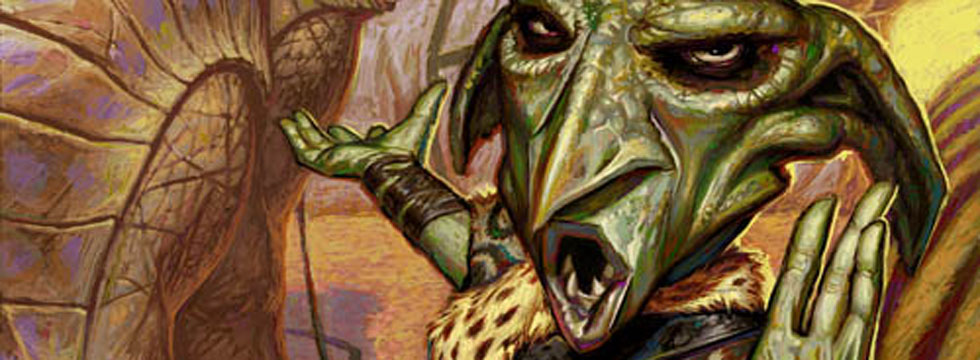
This is Greedo:

Greedo is a Rodian Bounty Hunter who set out to find Han Solo and bring him to Jabba.

Unfortunately, Greedo decided that the best way to get Han was to find him in a seedy bar and take him right there. Greedo got greedy and this happened:

"Don't be a Greedo. Greedo gets shot by Han Solo."

In other words, don't be afraid of pinching every penny from your cards. Sell when you're going to safely profit. Oftentimes, you'll lose more than you'll gain by waiting to squeeze out the very best possible margin.

Due to store credit for FNM and card borrowing, I’m in a situation where I can use my trading money entirely on ā€œreal-lifeā€ purchases like these, but many people want to reinvest that money to help pay for their Magic habit. Just because you aren’t buying a TV or a diamond with your trading money doesn’t mean you won’t benefit from setting a goal for yourself.

For example, many people use their trading money to play FNM. This is a worthwhile and easily attainable goal. If your local store buys cards, you should be able to keep a steady flow of store credit coming and pay for your drafts. If you and the store owner extend this concept to accepting store credit instead of prize packs, then you can easily ā€œgo infiniteā€ at FNM.

Meeting goals takes patience

Supposing this isn’t an option for you, either because of store policies or preference, then another option is to spend your trading money on new cards. Need that new Jace or want to foil out your cube? Set a goal to do it with money made from trading.

The caveat here is that in order to successfully do this, you need to have patience. Building a bankroll doesn’t happen overnight, and ā€œborrowingā€ from your regular funds to purchase something with the intention of paying it back later from your ā€œtrading fundsā€ defeats the purpose.

Instead, what I propose is this – Set up a separate bank account (I use a Paypal account) and run all of your trading money through there. There is no simpler way to see the benefit of your labors than to see the cash in a bank account. I run all my Magic-related income into my Paypal account, and pull it out when I want to use it for a special purchase.

If you take this route and start the account at $0, you likely won’t be able to immediately begin buying cards. Rather than start a new account immediately, I suggest doing so the next time you sell cards. PayPal accounts are very easy to create and maintain, and you can use them for all your internet-based purchases.
Setting a goal

With all this in mind, I’ve set my mind toward my next personal goal. As I said, I like to use my Magic funds for selfish goals that I would otherwise have a hard time justifying spending money on. In my opinion, this is one of the best uses of your trading money, since it’s a lot more satisfying to buy yourself a TV with your trading money than it is to fix your car. The net effect is the same, since you’re spending the same amount of money either way, but it just feels better to indulge yourself with this secondary income.

So my new goal is this: To raise an additional $750 in my Magic account by the end of November to buy myself a new personal desktop computer. I do a lot of gaming, and my current desktop is ancient and my Mac laptop isn’t ideal for gaming. By giving myself about four months to meet this goal, I’m able to easily break it down month-by-month and see that I need to raise about $200 a month to meet my goal.

This is ambitious but attainable with hard work and commitment. I’ll be revisiting this goal when November comes around, and using that opportunity to look back at what I did well and not so well between now and then.

Prediction Tracker

[iframe https://spreadsheets.google.com/spreadsheet/pub?hl=en_US&hl=en_US&key=0AqV8zg-4f2ehdEpBODI2eGozVFF5TlpOckI3WTBSZFE&single=true&gid=2&output=html 925px 1000px]

[iframe https://spreadsheets.google.com/spreadsheet/pub?key=0AqV8zg-4f2ehdEpBODI2eGozVFF5TlpOckI3WTBSZFE&single=true&gid=10&output=html 925px 700px]

[iframe https://spreadsheets.google.com/spreadsheet/pub?key=0AqV8zg-4f2ehdEpBODI2eGozVFF5TlpOckI3WTBSZFE&single=true&gid=11&output=html 925px 700px]

[iframe https://spreadsheets.google.com/spreadsheet/pub?key=0AqV8zg-4f2ehdEpBODI2eGozVFF5TlpOckI3WTBSZFE&single=true&gid=12&output=html 925px 700px]

That’s all I have for this week, and I hope you’ll find something useful from the system I use. Do you have any other ways or tips for tracking your Magic finance-related goals? Let me know in the comments.

Thanks,

Corbin Hosler

@Chosler88 on Twitter

Avatar photo

Corbin Hosler

Corbin Hosler is a journalist living in Norman, Oklahoma (also known as the hotbed of Magic). He started playing in Shadowmoor and chased the Pro Tour dream for a few years, culminating in a Star City Games Legacy Open finals appearance in 2011 before deciding to turn to trading and speculation full-time. He writes weekly at QuietSpeculation.com and biweekly for LegitMTG. He also cohosts Brainstorm Brewery, the only financial podcast on the net. He can best be reached @Chosler88 on Twitter.

View More By Corbin Hosler

Posted in Finance, Free Insider, PredictionsTagged , , , , , , , 2 Comments on Insider: Why Making (and Meeting) Goals Matters

Have you joined the Quiet Speculation Discord?

If you haven't, you're leaving value on the table! Join our community of experts, enthusiasts, entertainers, and educators and enjoy exclusive podcasts, questions asked and answered, trades, sales, and everything else Discord has to offer.

Want to create content with Quiet Speculation?

All you need to succeed is a passion for Magic: The Gathering, and the ability to write coherently. Share your knowledge of MTG and how you leverage it to win games, get value from your cards – or even turn a profit.

Going in Blind: The Cleansing Fire

Are you a Quiet Speculation member?

If not, now is a perfect time to join up! Our powerful tools, breaking-news analysis, and exclusive Discord channel will make sure you stay up to date and ahead of the curve.

It's 4:30 in the afternoon. I sit on my bed, laptop open in front of me with a list of potential article topics staring back.

ā€œThe Art of Hateā€ā€“I haven't even tested out any of my theories on the subject.

ā€œLending out Decks: Promoting Inspiration, not Imitationā€ā€“and I have no idea how to do that.

ā€œSetting a Tone: Selecting Basic Land Artā€ā€“Really?

None of this is going to cut it. My readership doesn't want a catchy title. They want a quality article, the kind that uses what I know about the Commander format.

Well, I know how to build decks. People seemed to like Congealing a Mimeoplasm, and Creating Commanders was pretty well received, but I don't like posting deck lists. It eats up creative space that people could discover on their own by building around those themes.

This column isn't about what I want. If people want deck lists, I should give them deck lists They read to get what they want, not to support my arbitrary conception of how things ought to be.

I have a [card Squee, Goblin Nabob]Squee[/card] list sitting unfinished in my deck lists folder. Maybe I can clean that up? I glance over at my watch, sitting lopsided on the counter. 5:03. It feels so random; why Squee? Sean McKeown has it easy. Each week he has a Commander fixed up to edit, but I don't want a bunch of reader submissions; I'd feel obligated to do one every week.

I think of what Abe Sargent said in The Top Ten Magic Columns:

It’s hard to write articles on a casual format. There’s no new tech. There’s not always a tournament every weekend. There’s only a modest metagame. After you write the articles you have in you, what do you do then?

I need something in Sean's vein, an ordained list of what I'm going to write about to fall back on when I temporarily run dry. I could go through every Legend in order. Most played to least. Oldest to newest. Alphabetically. But knowing what was coming I would stall. What do I do when I get to [card Lu Su, Wu Advisor]Lu Su[/card]?

I need unpredictability. Where better to look than the 'random' button?

Click.

Click.

Click.

Damn it.

Now what? Do I compromise my integrity and keep going? Do I just abandon the project altogether? The Myojin don't work in Commander. They don't do anything. I mean, I guess I can use Whitemane Lion. It's still just worse than [card Mageta the Lion]the other lion[/card].

Sigh.

Let's start with the bounce. There are a lot of Magic cards; maybe something will work.

Untitled Deck

Blood Clock

Cloudstone Curio

Dragon Mask

Dust Elemental

Eiganjo Free-Riders

Erratic Portal

Kor Skyfisher

Narrow Escape

Noetic Scales

Obelisk of Undoing

Scapegoat

Stonecloaker

Stormfront Riders

Umbilicus

Whitemane Lion

I guess this stuff would work well with some enters-the-battlefield abilities, and I get value out of those even if I [card Wrath of God]Wrath[/card] them away immediately. What did I run in that white-blue commander [card Unsummon]Bounce[/card] deck?

Untitled Deck

Wall of Omens

Karmic Guide

Duplicant

Myr Battlesphere

Myr Battlesphere!

I just saw Inheritance in Ilya's [card Uril, the Miststalker]Uril[/card] deck. Could tokens and triggers be a real strategy?

Untitled Deck

Angelic Chorus

Auriok Champion

Conclave Phalanx

Soul Warden

Souls Attendant

Suture Priest

Why can't white do anything but gain life?

Untitled Deck

Blade of the Bloodchief

Salvaging Station

This isn't going to cut it, I guess I'm back on "Plan: Indestructible". But how is [card Myojin of Cleansing Fire]the Myojin[/card] going to gain any utility that Mageta the Lion lacks?

It's a Spirit.

Nikko-Onna seems good, and soulshift returns things to my hand. There's no Soulshift 8 in white.

I make one last desperate attempt to find an advantage. What could make this Wrath-on-a-stick better than the other?

He's not a [card Wrath of God]Wrath[/card]. He's a [card Day of Judgment]Day[/card]. I can regenerate!

Untitled Deck

Clay Statue

Clergy of the Holy Nimbus

Clockwork Gnomes

Daru Mender

Dawn Charm

Death Ward

Debt of Loyalty

Diabolic Machine

Fanatical Devotion

Gore Vassal

Horizon Seed

Jhoiras Toolbox

Knight of the Holy Nimbus

Loxodon Mender

Malach of the Dawn

Masticore

Metallurgeon

Molten-Tail Masticore

Poultice Sliver

Revered Dead

Rusted Slasher

Soldevi Steam Beast

Vigilant Martyr

I stare dejectedly at the list. Not exactly top of the line. Well, it's not going to get any better, so I list off some other categories that need filling:

  • Ramp
  • Card Selection
  • Mass Removal
  • Point Removal
  • Utility Lands

In go too many staples. Disgusted, I close my laptop and go to find some dinner.

…

It's 10:47, and I'm still getting nowhere fast. By how frequently I'm checking Twitter, one might think a loved one of mine had been near a disaster.

Great. Abe Sargent says he's going to build around a random commander next week at the bottom of his article. I bet that one will go up before this does.

I start making a list of what cards in each category really qualify as playable. The number isn't impressive. What about the ones that should work if everything goes well? Now too many, and most really don't warrant a slot in this deck list.

I start trimming cards:

  • [card Yosei, the Morning Star]Yosei[/card]'s death trigger either isn't worthwhile or is doing something mean
  • Leonin Relic-Warder is bad at saving or removing things
  • Elspeth, Knight-Errant is rarely going to make any emblems

The cuts are getting tougher, which I guess is a good sign. Maybe these are worth playing.

I open up Magic Workstation, and stick in some numbers for deep deck analysis. How many extra sweepers should I run? Seven would give me one by turn 12 75% of the time. I don't think I'll need one that often; people play too many as it is. Goodbye Planar Cleansing and Nevinyrral's Disk. Is Nikko-Onna really worthwhile? I already have enough enchantment destruction to draw a piece consistently. Sun Titan should be good, but this deck has a ludicrously high curve. At least Reveillark must be good. 68% chance to have drawn the requisite two dudes by turn twelve, and a 5% chance to have none?

This deck is about to be terrible.

I leave it for the morning.

…

Time for the final cuts, the last few are always the hardest. My opponents will be able to abuse Lifeline better than I can. There aren't enough white creatures to make Antler Skulkin matter, and I was so excited to play him as a diamond in the rough. Even Fanatical Devotion isn't going to be good enough, so Deathrender has no infinite loops.

Untitled Deck

Commander

The Undying

Immortals' Path

Deity's Return

Wrath of Myojin

Fire's Selection

Glare of Myojin

Immortals' Imminence

Spirit's Domain

24 Snow-Covered Plains

I guess I should start writing:

Though it's always hard to say for sure, from what I can gleanĀ Congealing a Mimeoplasm was one of the better received articles that I've written here, and Creating Commanders got some support as well.

This is going to be bland. I need something to give it pizazz. I want this article to be engaging, like Gavin Verhey's Breaking Up is Hard to Do. I don't know how to relate this to relationships, but reading back over that piece it's not just the content that's engaging: it's Gavin's artistry as a wordsmith.

Maybe I can emulate that?

Author's Note: What did you think of this article? Would you like to see more writing in this vein, or do you prefer my usual, more detached analysis?

Jules Robins
julesdrobins@gmail.com
@JulesRobins on Twitter

Four Rounds, Four Different Decks

Are you a Quiet Speculation member?

If not, now is a perfect time to join up! Our powerful tools, breaking-news analysis, and exclusive Discord channel will make sure you stay up to date and ahead of the curve.

Well, I made the trip out to Cincinnati this past weekend and it was a lot of fun. Not successful on my part, but certainly fun. If you are interested in a detailed list and thoughts on it, take a look at the article from last week. The deck I played was almost the exact Vampires list I wrote about, but instead of the third Dismember, I played one Viscera Seer. That may seem an odd change but it was not really a change. Strangely enough, I never removed the last Viscera Seer. The deck I had been playing still had the one of in the deck the whole time. On that note, the one Viscera Seer will always be good and in that version I played, but you never want more than one. I am not saying that when playing Vampires you'll never want more than one in your list, I am saying for my version it was right. As an example of when you might want more than one was another Vampires deck that did quite well at this event.

We will get back to that Vampires list shortly, but first I wanted to talk about my experience at the tournament. If my title was not enough of a clue, I did not end up doing so well at this tournament. I only played in four of the ten rounds so that should give you a good idea right off the bat. This is a diverse format though, and now that some cards are banned your tournament experience is likely to be quite interesting.

My tournament was just that, interesting. Four rounds and four different decks.

Round one I played against Red Deck Wins. This deck is nothing new, but the new toys that got printed for it are some serious heavy hitters. Grim Lavamancer, Shrine of Burning Rage, and Incinerate are legitimate threats that you should consider in this archetype. Basically any version of red is going to be a pretty good match up for Vampires. The Vampires player gains some life, has recurring creatures, removal, and hopefully Phyrexian Obliterator. All these things are going to be a problem for any red deck. Manic Vandal and Duress help against the Shrine of You Now Have Half a Life Total a.k.a Shrine of Burning Rage. I was able to win this match and the way it played out was more of a close call than I was expecting. The match between these two decks is a lot like getting passed by a cop with its lights on. You are not sure if he is going to pull you over, but he usually doesn't and you get to go your own way. It's very close because you were actually speeding but the Vampires player gets the win the majority of the time. Don't speed too fast though and make sure you are careful otherwise the Red Deck Cop will pull you over before you know what happened!

Round two I played against Nate Pease with his Blue White Puresteel Paladin deck. His deck was very similar to the deck Caleb Durward top eighted with in this tournament. These games were some of the best magic I have played in a while on both sides of the table. All three games were very close, even with me never hitting a third land game one with my triple Gatekeeper of Malakir hand and never hitting a fourth land game three to basically win the game. Game three was one of those games that any small error or any dead draw would lose you the game. Not only did you need to play perfectly but you also needed to draw the right cards at the right time. Unfortunately for me I was on the side of drawing the wrong cards at the wrong time. Nate played a great game and it was a ton of fun but even though he complemented me on the match, it still was not enough and I was left unsatisfied at the loss.

Round three was by far the most interesting deck I played against and that was Blue/Black Dredge. This deck featured such interesting cards as Zombie Infestation, Merfolk Looter, Bloodghast, and Vengeful Pharaoh plus the normal Blue/Black Control cards like Inquisition of Kozilek and Go for the Throat. Game one featured me drawing fifteen lands and him killing me with Zombie Infestation tokens and his Creeping Tar Pit. Game two he could not handle my Bloodghasts, and then I played Phyrexian Obliterator. Game three was interesting, but I was able to pull it out with some Vampire aggro.

Round four I was made to play against my nemesis, Blue/White Control. Normally this should be a good match for me, I think. Maybe this version with Venser, the Sojourner and Blade Splicer was just more difficult due to those cards. I followed my normal sideboard plan of Duress and Dark Tutelage, but for some reason I walked the Dark Tutelage right into a Mana Leak! If not for that misplay, I may have been able to win this match.

What did I learn from this experience? Well, obviously Standard has many options to explore now but the more important lesson I learned was that Smallpox was just not good enough for this deck. Maybe there will be a home for Smallpox but it is not Vampires. Even in the matches where it should have been good, it just did not impact the game enough. I ended up siding them out all of the four rounds so the Smallpox experiment is over with. If Smallpox is going to be successful again it will have to be in a more controlling strategy like it was before or something that breaks the symmetry even more than just Bloodghast. In order to make the card one sided you would need to also play cards like Shrine of Loyal Legions, Shrine of Burning Rage, Glint Hawk Idol, and/or Chimeric Mass.

Let's compare the list that did well with say, a list I have played in the past.

Mike Lanigan
9th Place Midwest Master Indy
Vampires!

Untitled Deck

Creatures

3 Viscera Seer
4 Vampire Lacerator
4 Bloodghast
4 Kalastria Highborn
2 Vampire Hexmage
4 Gatekeeper of Malakir
1 Hero of Oxid Ridge

Spells

4 Lightning Bolt
2 Burst Lightning
2 Doom Blade
3 Staggershock
2 Mortarpod

Lands

4 Verdant Catacombs
4 Blackcleave Cliffs
4 Dragonskull Summit
4 Lavaclaw Reaches
9 Swamp

Sideboard

4 Mark of Mutiny
3 Shatter
2 Go For the Throat
3 Duress
3 Pyroclasm

Matt Farney
2nd Place Starcity 5k Cincy
Vampires!

Untitled Deck

Creatures

3 Viscera Seer
4 Vampire Lacerator
4 Bloodghast
4 Kalastria Highborn
4 Vampire Hexmage
4 Gatekeeper of Malakir

Spells

4 Lightning Bolt
4 Dismember
3 Go for the Throat
3 Arc Trail

Lands

4 Marsh Flats
4 Blackcleave Cliffs
4 Dragonskull Summit
3 Lavaclaw Reaches
8 Swamp

Sideboard

3 Shatter
3 Surgical Extraction
3 Sorins Thirst
3 Ratchet Bomb
1 Mimic Vat
1 Go for the Throat
1 Tectonic Edge

After comparing this deck to the one I played in Indianapolis, I can certainly see why this deck was successful and mine was not. If I play Vampires again, I will be playing a version similar to Matt's and my old version. The strengths of this list would have to be the Vampire Hexmages. They seem to be gaining value again with more planeswalkers seeing play in a variety of decks. Lots of removal is a key here as well. We do not agree on some sideboard choices, but that is often a bit fungible anyway. The point is, even though I was not successful with my Smallpox version of Vampires, it is still a deck worth playing and testing against in this new Standard.

Putting my Vampire love affair aside, I also wanted to mention the similarities between two other decks that have done well recently. The new version of Caw-Blade and Blue/White Puresteel Paladin. These two decks are similar in they aim to play some early creatures and gain advantage through the equipment they play. Just because Stoneforge Mystic is banned doesn't mean cards like Sword of Feast and Famine and Sword of War and Peace are not good. The new Caw-Blade uses Sword of Feast and Famine exclusively while UW Puresteel mixes it up with all three swords and tons of other equipment. Here are the two decks to compare.

Tim Pskowski
1st Place Starcity 5k Cincy
Caw-Blade

Untitled Deck

Creatures

4 Blade Splicer
4 Hero of Bladehold
4 Squadron Hawk
1 Sun Titan

Spells

4 Preordain
3 Spell Pierce
4 Mana Leak
2 Dismember
2 Oblivion Ring
1 Elspeth Tirel
2 Gideon Jura

Equipment

2 Sword of Feast and Famine

Lands

4 Celestial Colonnade
4 Glacial Fortress
3 Inkmoth Nexus
4 Seachrome Coast
4 Tectonic Edge
4 Island
4 Plains

Sideboard

4 Kor Firewalker
2 Celestial Purge
3 Flashfreeze
3 Mental Misstep
1 Stave Off
2 Day of Judgment

Caleb Durward
4th Place Starcity 5k Cincy
UW Puresteel

Untitled Deck

Creatures

1 Glint Hawk
2 Kor Firewalker
4 Puresteel Paladin
3 Trinket Mage
2 Etched Champion

Spells

2 Mox Opal
4 Preordain
4 Dispatch

Equipment

1 Accorders Shield
1 Basilisk Collar
3 Flayer Husk
4 Mortarpod
1 Sword of Body and Mind
2 Sword of Feast and Famine
2 Sword of War and Peace
1 Sylvok Lifestaff

Lands

2 Celestial Colonnade
4 Glacial Fortress
4 Inkmoth Nexus
4 Seachrome Coast
1 Island
8 Plains

Sideboard

2 Sword of Feast and Famine
1 Sword of War and Peace
1 Spellskite
2 Kor Firewalker
3 Dismember
4 Flashfreeze
2 Negate

Lots of authors have covered these two breakout decks but it is interesting to look at them side by side and compare what it is they are trying to do. Though these decks share many of the same cards they play out quite differently. The new Caw-Blade is comparable to the old version except not quite as fast without Stoneforge Mystic. Also since there is no more Stoneforge Mystic, the deck does not get anymore free wins from turn three Batterskull. Otherwise the deck is quite similar. The UW Puresteel deck on the other hand is more comparable to Boros. It has many early aggressive paths it can take to victory but usually they rely on the raw power of the equipment in the deck. The Puresteel Paladin deck also gets a new engine with its namesake. That card is quite powerful and if you have not played against it yet, make sure to find time to test against it so you do not underestimate how powerful it is. Both of these are powerful durable strategies that will prove to be strong choices in the coming months of Standard.

Find powerful cards and play the deck you want to play. So many strategies are viable right now, so have fun, prepare, and sideboard correctly.

Go find that Successful Force!

Mike Lanigan

MtgJedi on Twitter

Jedicouncilman23@gmail.com

Insider: Draft Season

Are you a Quiet Speculation member?

If not, now is a perfect time to join up! Our powerful tools, breaking-news analysis, and exclusive Discord channel will make sure you stay up to date and ahead of the curve.

This week our LGS had our first ā€˜Regular Season’ draft of M12 and it sure feels good to be a drafter. I like to revisit general tips on working your way through a draft season at the beginning of each set, but much of it has been addressed, and really we want to narrow down your specific plan to what this draft season needs to do for you, and we will primarily focus on the financial plan (although other priorities may exist). If you draft frequently, this is a must. If you want to draft frequently, this is the way to do it.

As I discussed a month ago, your trade binder is your portfolio. Do you have a plan for it? I’ve been working through my plan as this new set rolls in, and I start organizing all my product from limited events. There’s a Sealed PTQ season around the corner, so not only do I want to focus on this limited format as much as possible, but I want to be able to cover some expenses too, by being ready to trade at the events. I’m stashing at least 8 of almost all the uncommons, even ones that seem bad. I’m not trading for these, I’m not buying these, I’m just saving them in a longbox. If you draft, it won’t take long to hit 8 copies of each uncommon and common. Ones that seem marginally playable, I’ll stash even more. Notable ones, like Oblivion Ring, can be relegated to your normal trade stock. There is typically at least one of those uncommons that will suddenly spike at a big event when Standard season comes back around. When you have 4 to play, and 4+ to sell of the card everyone owns, but no one brought with them, you’ll know what I’m talking about. I’m not suggesting to bring this box with you to FNM. Just bigger events, where demand can suddenly spike if new tech runs rampant. Note: My local dealer pays $0.10 on Incinerate. What?! I’ve already got about 20 from the Pre-Release and Release alone. Sure, that’s only $2, but by the time you cover all the cards in the set, it really adds up.

If PTQ’s aren’t your thing, or rolling with rotation isn’t your plan, then you need to rethink how this works for you. Ultimately, not everyone is focused on free-rolling limited play, but the same rules apply. Have you created your plan yet? How can you progress further, and can drafting be part of that? The answer isn’t always, ā€˜Yes’; but it can be if that’s what you want. There are PTQ players who ā€œdon’t want to own cards.ā€ We here, obviously aren’t that crowd. I really believe that drafting does give you one of the best angles to trade with the most people in the store. Even the Spikes who tend to focus on Constructed have a certain respect for the 40-card crowd. You’ll often see EDH guys jumping in on a draft, or even just the regular pod of ringers. Not to mention, you always leave with a handful of cards to build your stock. The format is the most social format there is, and I’m probably one of the few that puts it above EDH. A draft pod goes through a drafting experience together, and while it may not be a long-term bond, there is definitely a social connection made over the passing of boosters. This opens up so many trade opportunities. A local dealer drafts with us all the time, because he knows we have cards to sell/trade, and he more than makes up any losses on the buys he picks up in the process. If you haven’t yet, write down your plan.

Onto the Prediction Tracker:
I’ve been a bit quiet on the tracker lately, but I’m not one to bandwagon if I don’t believe in something, and I’m not going to make a controversial call, unless I’m ready to stand behind it. There are some small items that I think are worth making a move on.

Leyline of Sanctity:
This card is arguably maindeckable in U/W control variants, and certainly a 3-4-of Sideboard spell for any White deck in Standard. There have been literally dozens of people looking for these around me, and since then, I’ve been looking for them too. I’m ordering on Ebay actively, so hopefully you’re not competing with me, but major retail sites are sold out (or very close to it) at $4+! Even since I posted it on the Tracker this weekend, they seem to be creeping up on Ebay, even though it hasn’t reflected on BlackLotusProject.com. As a result, I’ve updated my Buy/Sell price on these. I’m going to buy as many as I can at $3, and be trading for them aggressively. These will bring $5 a piece (or more) from someone who needs them.

Twisted Image:
This one is a bit more speculative, but very low risk. Spellskite is appearing everywhere, and Twisted Image eats it up quickly with such minimal opportunity cost. Especially with Valakut having Overgrown Battlement as an auto-include, this card is poised to see play in U/x control sideboards. Blue mages need to start being a bit more creative to eek out the massive advantage they once had with Jace, the Mind Sculptor in the format, and this card does a lot of work against two very relevant cards in the format. These are $0.25 at most retail sites, but can be traded for even cheaper. I’m going to try to pick up at least 4 sets of this card, which is a pretty minimal risk, but if the card picks up any steam, I want to grab them up quickly, and get out while I can.

Also, here are some foils that some of the EDH gang told me they are excited about. It’s always good to know which ones to stash. Sphinx of Unthuun, Angelic Destiny, Goblin Grenade, Jade Mage, Rune-Scarred Demon, and Aegis Angel. There were others, but their demand is already fairly known.

Hopefully you survived the Release weekend with some money in your pocket, and some growth in your binder.

Building the Better Intro Pack

Are you a Quiet Speculation member?

If not, now is a perfect time to join up! Our powerful tools, breaking-news analysis, and exclusive Discord channel will make sure you stay up to date and ahead of the curve.

The Magic 2012 Intro Packs are out, and the verdicts are rolling in. Depending on where you go, and whom you listen to, they vary anywhere between best-things-ever to steaming piles sealed inside a cardboard box. Although the former might be a shade overoptimistic, the latter is typically expressed by those who misunderstand what an Intro Pack is and what it's supposed to do. There was a very interesting article this week on magicthegathering.com from Mark Rosewater on the objectives of core sets, and it's safe to say that core set decks have comparably modest goals. Indeed, previous core set intro decks have proven to be a bit underwhelming, but this most recent bunch have a few new things going for them that we haven't seen before.

We're now in our third year of the Intro Pack Era, which began with Shards of Alara, and Magic 2012 is now the third core set series of decks we've seen. Longtime readers will be familiar with one of my principal (and oft-repeated) beliefs: once the theme decks died and were replaced by intro packs, intro packs plummeted in quality but have been steadily improving as R&D looks to tune more finely the intersection between playability and instruction. Today we'll be looking at the modern core set releases to see how the product has evolved over time. What sort of changes are we seeing? Are the core set decks improving alongside the other intro packs? And how do these decks reflect the desire of R&D to use them as 'teaching tools' to guide new players in deckbuilding?

Before we jump in, I'd like to briefly explain two metrics I've employed before in looking at precon decks.Ā The firstĀ of these is the Unique-Cards-per-60, or U/60. This measures the deck's overallĀ consistencyĀ of card selection. A 60-card deck with 36 nonland cards can have at most a U/60 of 9.0, or nine unique cards (naturally including four copies of each). This makes for a very consistent play experience: you can quickly understand what the deck is trying to do, and rely on seeing the same cards game after game. On the opposite end would be a 'highlander' deck with a U/60 of 36.0. This would offer a highly variable gameplay experience every time you played, and you could never count on seeing any particular card with any reliability.

Generally speaking, because one of the objects of Magic is to minimise variance, a lower U/60 score tends to yield a better overall deck (outside of Commander and similar formats, of course), though go too low and the deck can become less effective or uninteresting.Ā Maybe you don't want to have them look like constructed decks, with a large number of four-of's to provide maximum consistency, but some variety in the card pool is preferable. There's a fair balance to be struck between offering some diversity in play experience (high numbers of unique cards, as found in Duel Decks) and consistency of deck performance (which gives the deck some personality, a 'voice'). That's not to say that Duel Decks lack voice, as they are able to draw upon all of Magic's history, but they offer consistency not throughĀ multipleĀ copies of a given spell but rather through analogues, multiple copies ofĀ similar spells.

The second metric is the "vanilla card count." Vanilla creatures have their roles, but too great a concentration of them can also lead to uninteresting gameplay. For our purposes, we'll be considering a 'vanilla' creature here to have either no additional rules text, or having only flying. Creatures like Skywinder Drake with a blocking drawback will not be considered here, as the drawback adds an additional layer of intricacy and complexity.

With these yardsticks explained, we now turn to Magic 2010:

Magic 2010 was a watershed moment in Magic's history, completely revamping the core set tradition and execution. Widely credited with a central role in Magic's modern renaissance, it released with the following five decks:

Despite the expected variations, there were a number of commonalities between them. For one, the primary color was heavily dominant: in each deck the secondary colour was limited to only five lands, and each contained a Terramorphic Expanse for color-fixing. They were virtually mono-colored decks save for a few splash cards which often felt rather crammed-in, such as the Enormous Baloth tucked in amongst Death's Minions' host of undead.Ā Another intriguing threat was that with one lone exception, each deck contained exactly 20 unique nonland cards (Nature's Fury had 21). This gives M10 a U/60 score of 29.56, tied with Rise of the Eldrazi forĀ the highest of any set in the modern intro deck era. For recent comparison, New Phyrexia's U/60 score was 23.40.

Intro decks wereĀ conceivedĀ as a way to give players a deck based on the set that showcased the set's characteristics and mechanics while subtly guiding them towards deckbuilding. Prior to Magic 2012, one of the major ways this was accomplished was to seed the deck with obviously 'bad' cards which would then prompt the player to upgrade once they saw better. This need let the Goblin Piker cash a pretty steady paycheck for a time, at least until the player stumbled across the clearly-superior Goblin Shortcutter. This was an easy step to take that caused no anxiety or uncertainty for our aspiring deckbuilder, worried about taking out the wrong thing, but indisputably improved the deck (and built confidence). Again looking at through the prism of a 60-card standard, Magic 2010 had a vanillas-per-deck count of 5.27, leaving plenty of room for safeĀ customization.

A look at the decks themselves shows some of their more apparent shortcomings, particularly in theme and flavor. We Are Legion was a smattering of "white weenie" creatures (Knights, Soldiers, Angels, Lions, Griffins, and Pegasi) without any realĀ unifyingĀ thread outside of their color. Death's Minions did the same for black,Ā althoughĀ it's probably safe to say that an army of undead feels a little more thematic because we associate their types (Spirit, Wraith, Zombie, and others) more closely. None of the five have what you might refer to as a voice. They're just collections of creatures that fit on a curve along with support cards you'd expect to see from each color (combat tricks in green and white, counters in blue, etc). We wouldn't start to see movement in that direction, however limited, until the following year's core set.

Magic 2011 took the groundbreaking innovation of Magic 2010 and added another: each year, the core set would bring back a 'returning mechanic,' oneĀ retrievedĀ from Magic's past and given new life in new cards. For this set, Wizards lifted scry from Fifth Dawn, and its inclusion helped give added spice to two of the five decks. Those five were:

Once again we see five decks, three of them with enemy-colored pairs and two with allied-color, just as with Magic 2010. The similarities didn't stop there. These decks maintained a similar color imbalance, favoring one heavily and splashing the lesser. They, too, relied upon the "bad cards" method to spur deck building, with a vanillas-per-deck count of 3.40, though this was a dramatic reduction from before. Still, if you looked closely you could see some very encouraging signs of progress towards making these better decks than the ones before it.

For one thing, the number of unique cards was down, from 29.56 to 24.00. This meant that greater use was being made of multiples, and the decks would be that much more consistent as a result. While you still had some uncomfortable bedfellows, such as the green component of Reign of Vampirism had virtually no synergy with theĀ predominantĀ black, some of the decks really felt as if there were the beginnings of a theme to them. These were no longer just collections of cards thrown together, but cards that actually belonged in that sort of deck.

Synergies between cards became more than just an afterthought.Ā Power of Prophecy was very solid, focusing as it did around a core of flying creatures powered by the new scryĀ mechanic. The Conundrum Sphinx offered strong card advantage if you knew what was at the top of your library, which scry empowered you to do. And all those creatures were perfectly positioned to take full advantage of the deck's other rare, Stormtide Leviathan. Or how about Stampede of Beasts and its Garruk's Packleader, which made even your vanilla fatties exciting to play? Cards that interact with one another within the same deck help make the sum much greater than the whole of its parts, in both its power level and entertainment factor. They're just more fun to play.

Although Reign of Vampirism can be singled out above for having the worst inter-color synergy (Congratulations! You can go get your Captivating Vampire back with your Nature's Spiral.), it did foreshadow the direction that Wizards would soon take with encouraging deck building: it provided a core to work around. Sure the "bad cards" strategy was fine, but wouldn't it be better if you moved the imagination and not just the analytical mind? "This is better than that" is an important skill to cultivate, but it's not the sort of thing that prompts someone to imagine an entire deck concept. By appealing to the imagination, Reign said "come build a better Vampire deck," rather than "replace a few cards." It would be this strategy that would come to the forefront a year later.

Magic 2012 isn't universally acclaimed as a step forward in the Core Set evolution, though few view it in any way as a step back either. Unlike the year previous, there isn't any great leap in innovation. Rather, it simply adhered to Magic 2011's winning formula by retiring scry, dusting off bloodthirst from Guildpact, and adding a number of new cards to the mix. Of course, the seeming lack of innovation doesn't take into account the great strides made in their intro decks. They are the following:

The first thing to note is that each of the deck pairs are allied colors, a break from the trend of the past. The decks also carry a significant number of improvements. For one, they've scaled back the land content. Decks in Magic 2011 typically carried 25 lands, and there was little reason in the decks themselves to run a richer mixture. Instead, it's probably safe to consider it a hedge against mana screw, and another subtle prod to tinker with the deck.

Magic 2012 has no such 'freebie slot,' and instead dials in to the customary 40% mark (though Entangling Webs runs 25, but has a very bloated mana curve thatĀ justifiesĀ it). The U/60 score continues its welcomed downward trend, moving from past year's 24.00 mark to a healthy and hale 21.40. Scars of Mirrodin somewhat anomolously carried a U/60 just a fuzz lower, but you have to go back to the days of the almighty theme deck to consistently get scores that low (Eventide was a U/60 of 21.20;Ā Shadowmoor 21.40.). And while the vanillas-per-deck count saw a slight uptick (up 0.20 points to 3.60), the decks heaviest in them take pains to make them feel a part of the overall theme.

And it's there we have the real innovation of Magic 2012: theme. Far in excess of any previous decks discussed here, these decks have an identity. For some time now, I've been chronicling the slow return of intro decks to the fold of the theme decks, and this is yet another encouraging sign. Indeed, several of Magic 2012's decks carry more than one, but each is fleshed out sufficiently enough to be readily identifiable.

  • Blood and Fire: The mechanic-based deck, carrying bloodthirst creatures with enabler support
  • Entangling Webs: Spider tribal deck
  • Grab for Power: "Quest deck" that looks to have you assemble a trio of artifacts for a massive power gain
  • Mystical Might: A flying deck with a tribalĀ subthemeĀ of Illusions
  • Sacred Assault: Aura-based deck with a tribalĀ subthemeĀ of Griffins.

Aside from Blood and Fire and Grab for Power, which being mechanic-driven has only lateral room for improvement (mainly through improvements to consistency by tuning the bloodthirst creatures, the bloodthirst enablers, or more copies of the Throne of Empires, Scepter of Empires, and Crown of Empires), each of the other three decks offer a springboard to a deck design.Ā Want to build an all-Spider deck? Start with Entangling Webs. Or how about a tribal deck based on Illusions? Go with Mystical Might and adjust the creature mix. Like the Aura subtheme of Sacred Assault? Add some more of the cards that support it and cut out all the Griffins.

In short, rather than make a functioning deck that's seeded with inferior options to compel a player to try their hand at deckbuilding, Magic 2012 looks to 'provide a core to work around' much in the way of Reign of Vampirism, only on a larger scale.

Is this the face of things to come when Magic 2013 rolls around? I'd say it's almost certain. Given their role in keeping the game simple and 'grokkable,' I believe that the vanillas-per-deck ratio won't move much, especially if pains are taken to make them integrated into the strategy of the deck rather than being simple throw-ins. As for the U/60 scores, those are unlikely to witness any significant impact, though R&D may continue to fiddle with the card variety within the decks. It seems certain that 'three-of is the new four-of,' because it makes little sense to include a full playset of any card in a deck (after all, what incentive is there then for the player to acquire more and so modify the deck?). But if it's R&D's aim to help spur deckbuilding by giving us the core of an idea in the decks, that marks a significant departure from the past and is further evidence that Wizards is continually looking to fine-tune the intro deck experience.

So what was your impression of the newest precons? Any stand out as being particularly interesting (or ones to avoid)? Do you like the direction Wizards has taken with them, or are there additional changes you'd like to see? Let me know in the comments below!

________________________________

Jay Kirkman

@ErtaisLament

www.ErtaisLament.com

Insider: How much money has the Prediction Tracker made you?

Are you a Quiet Speculation member?

If not, now is a perfect time to join up! Our powerful tools, breaking-news analysis, and exclusive Discord channel will make sure you stay up to date and ahead of the curve.

[Dear QS Free Readers: Ā We decided to make this article available to you because we think it might sway you to make the leap to Insider. Ā We work extremely hard to make sure you get your money's worth when you're a subscriber, and we hope it shows! --Kelly]

Hello, and welcome back to the Revenue Review!

Fair warning, I’m about to devote a few paragraphs to my personal life. Personally, I like it when my favorite Magic writers share a bit about themselves, as long as their entire body of work isn’t ā€œmy life is so cool,ā€ or ā€œmy life sucks.ā€ If you’re the type of person who can’t stand reading anything but all Magic, all the time, go ahead and skip down to ā€œTo the Tracker.ā€

By the time you guys are reading this, I should already be in London (the suburb Surbiton, specifically), where I am surprising my girlfriend of 6 years and proposing (luckily, she doesn’t read this site). There are a couple reasons I bring this up. First of all, as I mentioned above, I like it when Magic authors are a little more than an automated machine that spit out deck tech (or financial tech). Secondly, it’s pretty damn awesome news, and I’m excited.

Thirdly, and more relevant to Magic, is how I got here. Setting goals is obviously an important part of succeeding in Magic or in life in general, and a while back I set a goal to make enough off Magic to buy an engagement ring. How did that go? If you follow my string of semi-coherent rambling on Twitter, you might already know part of the answer. I plan on devoting next week’s column to discussing Magic-related goals and why they’re important, especially in trading, but today we’re here to review the first few months of the Prediction Tracker.

Before I get to the Tracker, I want to preemptively answer the two questions I know you all have on the tips of your tongues (or fingers, as it were).

  1. Yes, this is the only romantic thing I’ve done or am ever going to do in my life, so I’m doing my best to make sure it’ll last me another 60 or so years.
  2. And yes, I am going to be playing Magic and doing some trading while I’m there. I’ll be there for a week, and Dan Barrett (@dangerawesome) is being awesome enough to take me to a draft while I’m there.

To the Tracker. When we first launched the Tracker back in May, we had some big goals. Getting the entire QS financial team to collaborate on one massive document to be the cutting edge in trading tech is not a simple task. While I think there is plenty of room to continue to improve (and I have some ideas for the release of Innistrad), I’m very pleased with how we’ve done so far.

One of the major questions we get from potential Insiders is ā€œwhat am I getting out of my subscription?ā€ While I think we can all agree that the speculating, trading tips and market expertise easily cover the cost of a monthly subscription, this isn’t even to pin a number on.

Before the Tracker, this wasn’t all that easy to do. After the Tracker, we have a week-to-week historical reference chart for all of the QS teams’ called shots. Today we’re going to look at some of the best called shots from the Tracker so far and how much money would have been made if you invested in a playset of these cards.

The one note I want to make before we start is this: I’m not approaching this from a ā€œwe’re so awesomeā€ point of view. Some of the calls made by individual contributors on the Tracker haven’t exactly shot up, and while some are still set to do so after rotation, the fact is not every called shot works out.

On the other hand, it’s very easy to determine which cards the team as a whole is in agreement on. If you’re a discerning Prediction Tracker user (as I suspect most subscribers to this site are), then you recognize that it’s a lot easier to buy into a card when four or five people are recommending it, rather than just one. These are the cards I’m going to be focusing on, as I feel like they are the cards most likely invested in by Insiders. We’ll also be working with only buy/sell prices, even though many of you probably traded for these cards, which means you actually had no costs going into these deals. Shipping a couple of Eternity Vessels for a Consecrated Sphinx back in the day means you’ve made much more ā€œrealā€ money (see The Myth of Making Profits if you need a refresher) than if you actually bought the cards in cash.

We’ll be using Black Lotus Project prices for this exercise, and we’re going to calculate profits assuming you invested into a playset of each card. The goal I hope to achieve is to put a number on the value of an Insider subscription. Of course, the value of a subscription is worth a lot more than the money made speculating (content, forums, etc), but I think this is a solid start.

Consecrated Sphinx

I don't think this guy qualifies as a "sleeper" any more

First appeared: May 26, 2011

Average price at the time: $3.42

Current price: $6.11

$6 and steadily rising. I’ve flipped some Sphinx to dealers for $7, and traded off still others at $10 apiece. The consensus seems to be that’s Sphinx is still on the way up, especially now that Besieged is no longer being opened.

Profit: $10.76

Jace, the Mind Sculptor

First appeared: May 26, 2011

Average price at the time: $72.31

Current price: $54

I figured we’d get Jace out of the way quickly, since there’s been so many factors going on with him. When this first appeared, we were advocating buying at a $45 price tag after the rotation while at the same time telling you to pitch all the copies you had. In reality, pretty much everyone from QS was saying to sell Jace long before we introduced the Tracker. His price peaked at $87 in March and had fallen more than $20 even before the bannings hit. Interestingly, his price has been popping back in the last week, so our $45 price tag was pretty accurate considering he just rotated a few months early.

Profit: Going to give this one a N/A, due to so many extenuating circumstances.

Dark Confidant

First appeared: June 3, 2011

Average price at the time: $15.62

Current price: $28.41

My personal buy call on Bob predated the Prediction Tracker for a few weeks, but everyone jumped on board in the Tracker’s second week. Confidant’s price has been going crazy since then, and while it’s probably closing in on its short-term peak, selling out now would net you a very healthy profit.

Profit: $51.16

Shock Lands

First appeared: June 3, 2011

Average price at the time: $6-10

Current Price $8-13

I’m going to lump these together as a whole after we suggested picking them up on the back of Community Cup hype, and the possible Modern or Overextended formats. In addition, the influx of new players about to enter the Commander market made these an attractive option. Many players want to play fetchlands and duals, but can’t drop hundreds of dollars on Tundras and so forth. In Commander, the 2 life drawback isn’t nearly as painful as in Legacy, and that also helped push demand for Shocks.

Since then, Star City Games massively upped their buy price on this cycle, meaning you made a very nice margin speculating on these.

Profit: We’ll count the cycle as once purchase for the purposes of lumping it together, and call it an average of $3 a card (using Hallowed Fountain as a guide), so our number here is $12.

Koth of the Hammer

First appeared: June 10, 2011

Average price at the time: $19.04

Current price: $19.94

Very much a call in progress, Koth is poised to gain in playability with a huge number of tools available to Red decks of all varieties.

Profit: $3.60

Tempered Steel

First appeared: June 24, 2011

Average price at the time: $2.95

Current Price: $3.39

Another called shot in the process of proving itself, Tempered Steel decks are gaining in both power, playability and popularity. Picking up Tempered Steels in trades is still a great idea, and this card could see $6-8 prices post-rotation.

Profit: $1.66

That’s a very modest list of the cards that were suggested by multiple people on the Tracker. A lot of the cards on the Buy List of the Tracker are longer-term calls, and some are already beginning to prove themselves, while others are set to do so after the rotation. Also not reflected here is that many of these cards popped up on the Watch List before the Buy List, so it’s also probable that you traded into some of these before they were promoted to the Buy List.

While there are plenty of other cards on the list that have seen an increase in value, these are the ones I believe were the ā€œeasiestā€ calls to buy into. After tallying up the values, we come to a total of…

Total Profit: $79.18

We’re not quite to three months of the Tracker, but for the purposes of this exercise, we’ll assume you paid full price ($8.99) a month for three months of an Insider subscription, and we’ll even assume you had to ship the cards in the mail, eating up another $12 in shipping costs. This is pretty much the worst-case scenario since many of you can either sell cards in person or combine shipping.

But even in the worst scenario, you netted more than $40 from just the ā€œeasiestā€ buy calls of the Tracker. Tacked onto the forums, the short-term calls of the Tracker, the Ditch List, and the other Insider content, that’s not such a bad deal, is it?

Prediction Tracker updates

[iframe https://spreadsheets.google.com/spreadsheet/pub?key=0AqV8zg-4f2ehdDR3Y2F5Wm1tem1KN2I0bmRJUUJvT2c&single=true&gid=2&output=html 925px 1000px]

[iframe https://spreadsheets.google.com/spreadsheet/pub?key=0AqV8zg-4f2ehdDR3Y2F5Wm1tem1KN2I0bmRJUUJvT2c&single=true&gid=10&output=html 925px 700px]

[iframe https://spreadsheets.google.com/spreadsheet/pub?key=0AqV8zg-4f2ehdDR3Y2F5Wm1tem1KN2I0bmRJUUJvT2c&single=true&gid=11&output=html 925px 700px]

[iframe https://spreadsheets.google.com/spreadsheet/pub?key=0AqV8zg-4f2ehdDR3Y2F5Wm1tem1KN2I0bmRJUUJvT2c&single=true&gid=12&output=html 925px 700px]

Thanks for reading,

Corbin Hosler

@Chosler88 on Twitter

Want Prices?

Browse thousands of prices with the first and most comprehensive MTG Finance tool around.


Trader Tools lists both buylist and retail prices for every MTG card, going back a decade.

Quiet Speculation