menu

N’Oko: Parsing the January Bans

Are you a Quiet Speculation member?

If not, now is a perfect time to join up! Our powerful tools, breaking-news analysis, and exclusive Discord channel will make sure you stay up to date and ahead of the curve.

Well, everyone should have seen another ban coming. There was no way that Wizards wasn't going to let their last scheduled banned and restricted announcement go by without doing something about Oko, Thief of Crowns. However, I didn't expect it to go this far. Three cards banned would be a fairly substantial shift by itself, but considering what is getting banned, I'm calling it a seismic shift. Another year, another entirely new Modern.
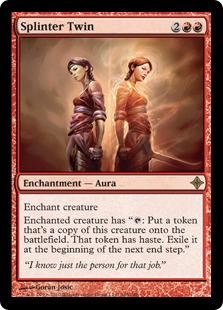
What should not be surprising is the lack of compensating unbans. As I've previously noted, there aren't many plausible candidates. My opinion on Splinter Twin seems to fall in line with Wizards'. And not unbanning the artifact lands makes sense in that Wizards is specifically trying to power down artifact decks.

Oko, Thief of Crowns
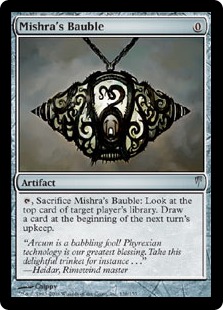
Everyone was expecting Oko to get banned. There didn't seem to be any other option, and Wizards' announcement reflects this fact:

Oko, Thief of Crowns has become the most played card in competitive Modern, with an inclusion rate approaching 40% of decks in recent league play and tabletop tournaments. In additional to having a high overall power level, Oko has proven to reduce metagame diversity and diversity of game play patterns in Modern.

The last few months of 2019 saw him shoot to the top of the format and just sit there. There was no opportunity cost to playing Oko. He made fodder for all his abilities. He never needed to downtick to do something. His starting loyalty was absurd, particularly for a three-mana planeswalker. Wizards admitted that Oko had just slipped through the cracks and they hadn't tested him enough, its high loyalty stemming from a broader issue of overestimating planeswalker vulnerability. Last weekend was the final straw, as GP Austin saw a Day 1 that was dominated by Oko...

Deck NameTotal #
Urza Decks82
Death's Shadow Decks61
Eldrazi Tron48
Tron41
Burn35
Titan Field35
Infect34
Jund 33
Snow Control31
Snowblade28
Mono-Red Prowess25
Humans24

...which would eventually translate into a Top 8 of primarily Oko decks. All the props in the world to Ian Birrell getting 4th with a completely stock Jund list, but he was the only player who wasn't riding a stream of food. Once a Top 8 has 26 of 32 (81%) possible Okos present, there's clearly something amiss. The pattern was repeating over at SCG Knoxville, where the Day 2 Metagame was dominated by various Oko decks:

Deck NameTotal #
Temur Urza10
Mono-Red Prowess9
Eldrazi Tron6
Infect6
Bant Snowblade5
Sultai Urza4
Burn4
Mono-Green Tron4
4-C Whirza3
Amulet Titan3
Humans3
Gifts Storm3
Devoted Devastation3
Simic Urza2
Urza Prison2
Oko Jund2
Jund2
Crabvine2
Titanshift2

An explicitly Oko-oriented deck was the most played, with lots of other decks running Oko as a package. Simply put, with little opportunity cost to doing so and the substantial upside of snowballing out of control, it was wrong for decks not to run Oko. Some decks splashing Oko included Infect, Amulet Titan, Death's Shadow, and Jund, as reflected in the Top 32:

Deck NameTotal #
Temur Urza7
Sultai Urza4
Bant Snowblade3
4-C Whirza3
Amulet Titan2
Mono-Red Prowess2
Infect 2
Golgari Yawgmoth1
Mono-Green Devotion1
Humans1
Oko Jund1
RG Eldrazi1
UR Kiki-Jiki1
Eldrazi Tron1
Crabvine1
Mono-Green Tron1

Oko dodged the finals not for lack of effort. Decks that went over Oko's top did very well, but that's likely because the SCG meta saw the impact of Oko first, and had more time to adjust. Perhaps Modern overall would have ended up in a similar spot, but with Oko already banned in multiple formats, Wizards elected to take one on the chin and ban the planeswalker.

Post-Oko Winners
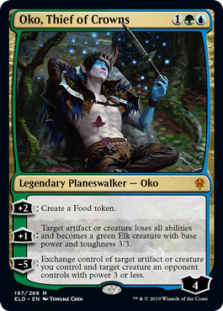
The format as a whole wins, as gameplay and deck strategy should diversify. No longer will it be a version of Standard's snowball-value gameplay. There's also no longer a power card for every single deck to play, which will incentivize innovation in deck configuration.

Any deck that was looking to actually do something with non-ETB artifacts and creatures also wins. Oko rendered big creatures and splashy artifacts useless by making them 3/3 Elk. Death's Shadow was initially seen as an answer to Urza, but Oko pilots have since turned plenty of 11/11s into Wild Nacatls. Death's Shadow is an obvious beneficiary as a result. Primeval Titan was very strong even with Oko around, but Oko made it far less threatening; the Titan is unleashed now, too. On a more somber note, prison pieces will come back into vogue. It didn't matter if Ensnaring Bridge was in play when it was just going to become an Elk, and the same follows for any artifact that wasn't part of the 0-1 CMC value engine common among Urza decks.
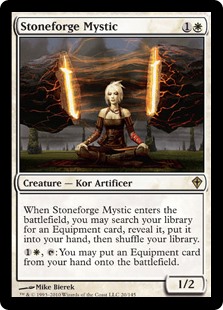
The largest individual winner is Stoneforge Mystic. Mystic hasn't yet had the chance to take off in Modern, and Oko tucked it further away. Fair cards with many possible homes take time to catch on, as did Jace, the Mind Sculptor. Oko forestalled the brewing process by rendering equipment ridiculous. Without it, Mystic may finally have a chance to spread her wings.

Post-Oko Losers

All the decks that were playing Oko take a hit. However, the loss won't be felt equally. UGx Urza decks will almost certainly disappear; the reasons to play green were Oko and Gilded Goose, the latter present mainly to pump Oko out faster. Simic Urza should revert to Grixis Whriza, which may actually benefit considerably for the same reasons I mentioned about artifact decks above.
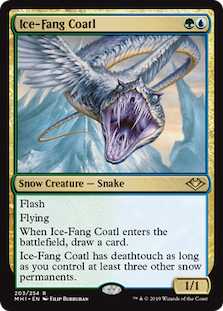
Oddly, I think the biggest loser will be Bant Snowblade. Snowblade was starting to gain some traction as an anti-Urza deck in the run-up to SCG Knoxville, and didn't do too badly in Austin either. However, this was based on it being a better Oko deck rather than its own merits as a deck. Snowblade had more ways to accelerate into Oko while playing less air than a typical Urza deck. Playing fewer artifacts meant dodging typical hate.
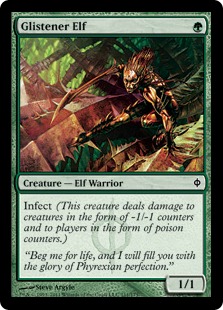
The deck also enjoyed turning its mana dorks into actual threats. Also, Elking a friendly Spell Queller and then bouncing Queller with Jace or Teferi meant that the Quelled card would stay exiled forever. With Oko gone, Bant is back to being filled with dinky creatures and uninspiring payoffs, as it was before Throne of Eldraine. Stoneblade will still be around, but its shell needs an overhaul.

The other big loser is Infect. Ever since Gitaxian Probe was banned, Infect has struggled. The deck never goes away completely, but without the information advantage of Probe, it just can't maneuver past all the removal and discard in Modern. Oko gave Infect new legs via an alternate win condition immune to typical Infect hate by virtue of its focus on value and stretching of enemy resources. Infect will now default back to its uninspiring pre-Eldraine configuration.

Mox Opal
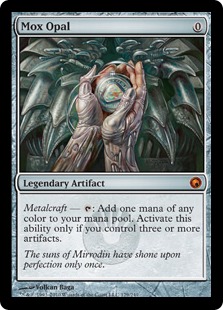
While some have speculated on Mox Opal getting banned for years, I've always disagreed. The problem was never Opal itself, as evidenced by Affinity. Opal needed a lot of setup and was frequently bad on its own. It was in the presence of overpowered engine cards that Opal became unfair. Even without Opal around, Ironworks would have been too good thanks to how absurd a mana engine it is. Meanwhile, there's no reason to play Affinity or similar artifact decks without the acceleration of Opal. They're too fragile easy to hate out otherwise. However, Wizards decided that Opal being a main component of Oko decks was the final straw:

As a source of fast mana in the early game, Mox Opal has long contributed to strategies that seek to end the game quickly and suddenly, whether with explosive attacks, one-turn win combos, or by locking out the opponent with “prison” elements. While none of these decks previously warranted a ban of Mox Opal, it has historically been a part of decks that approached problematic impact on the metagame or did indeed necessitate other bans.

Wizards is concerned about Urza just coming back. They're even more worried that Opal will be a greater problem in the future.

As the strongest enabler in the recent Urza artifact decks, and a card that has been concerning in the past and would likely cause balance issues in the future, Mox Opal is banned in Modern.

Reading between the lines, Wizards is concerned about future cards proving unsustainable alongside Opal, and wanted to get ahead of the problem. I think that means they're worried about Underworld Breach combo, a deck which is almost certainly dead before it ever got a chance to live. It may also imply another set with pushed artifacts in the pipeline.

Affinity is Dead
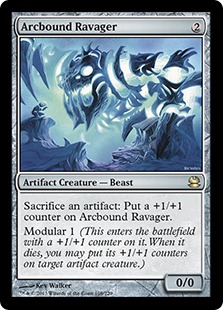
And with that, Affinity is finally dead. It hasn't done well for quite some time, but losing Opal is the final nail in the coffin. There's simply no reason to play an aggro deck that dies to not only Supreme Verdict but to Stony Silence, especially when it's no faster than other aggro decks. Humans sounded the knell by being a very similar deck that was more disruptive and resilient, but Affinity stuck around in some capacity as a metagame deck. Hardened Scales may remain, since it has green acceleration, but it's a tough sell. It will take some very pushed artifact creatures or synergies to make construct aggro a thing again.

Many fringe artifact decks also look significantly worse. Lantern (thankfully) died years ago, but this also means Cheeri0s is gone. The combo only generated mana by looping Opal, and trying to make Mox Amber work in its place takes Cheeri0s into a very different combo space.

Long Live Urza

Given that artifact decks are taking such a huge hit, the hope is that the targeted deck will also go. But I don't think that banning Opal will hurt Urza that much. He'll just roll with the punches and adapt. According to Wizards:

We considered options that would further weaken Urza-based artifact decks, while still allowing for decks based around that general strategy. Ultimately, we determined that banning Mox Opal was the correct option.
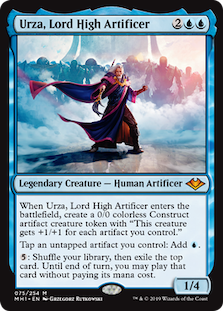
However, Urza, Lord High Artificer doesn't need Opal. Simic Urza decks did, because they were all about getting out a powerful engine quickly, be it Emry, Urza, Oko, or Karn. Gilded Goose coupled with Opal was the key to getting them online before opponents could respond, which was the key to Simic's success.

However, Grixis Whirza was already slower than Simic. Its main plan was as a prison deck, and all it needed to do was get out the right lock piece eventually. It can also combo win from nowhere. Earlier is obviously better than later, but it isn't necessary; Opal's greatest contribution was how efficiently it helped Urza empty its hand for Ensnaring Bridge, which is only relevant against hyper-aggressive decks. Against everything else, Whirza was playing a slower reactionary game anyway, so the Opals were primarily replacing lands. Whirza will just run an extra land or two and use the extra slots for either another artifact or some more interaction. Urza is still an absurd card, so I predict that all Wizards is dong is kicking the can down the road.

Mycosynth Lattice

Finally, there's the truly unexpected banning. I couldn't find any writers calling for banning Lattice before today, didn't see any discussion threads about it, and would never have expected such a ban to happen even if there were said calls. Mycosynth Lattice just doesn't do anything. The only reason for banning it is Karn, the Great Creator's non-symmetrical effect. However, Wizards thought lowly enough of the combination to pull the trigger.

This combination, popular in Eldrazi and other Tron decks, can completely lock the opponent out from casting further spells. While decks featuring this combination often win in other ways, the deckbuilding cost to include this interaction is low, causing it to show up more often than is fun in competitive play.
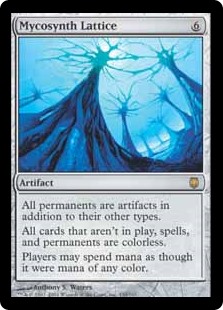
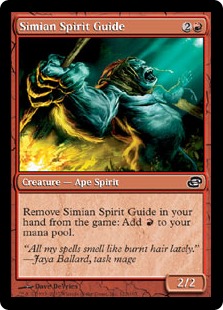
I don't disagree with the reasoning. Getting locked out of the game is horrible, but the deterministic nature of the Lattice lock is much worse. Against typical prison locks, you're only truly out of the game when you have no answers left in your deck. Lattice lock offers a one-time window to answer. Once Karn and Lattice are on the board, the only source of mana the opponent could have is Simian Spirit Guide. Unless enough creatures are on the board to kill Karn, that's the end.

I did not think that fact was enough for Wizards to ever take action. I suspect that, due to the Simic Oko decks, Wizards was seeing the lock come up far too much. With Oko leaving the format, the lock would have necessarily become far less frequent since his deck is going away. However, Wizards decided that they wanted to be sure. On Twitter, LSV called the Lattice ban "forward-looking." I see the point, and it is better to strike while the iron is hot. That said, I don't think I've ever been more surprised by a banning before. Even the Twin ban was less surprising, despite the reactions at the time.

Modern Moves On

With a major pillar removed and several recent distortions gone, Modern is once again wide open. The incoming set will further muddy the waters. We'll just have to wait and see how this all plays out.
Old School: Cautious Optimism for 2020

Are you a Quiet Speculation member?

If not, now is a perfect time to join up! Our powerful tools, breaking-news analysis, and exclusive Discord channel will make sure you stay up to date and ahead of the curve.

From 2017-2018, the Old School community exploded as the format gained traction outside Sweden (its birthplace) and around the globe. This growth was enough to earn the attention of the finance community. Speculators and investors alike flocked to these older cards as a safe haven, expecting to turn profits galore.

And it worked, if you purchased cards early enough in the cycle. But anyone who came to the party in late 2018 was met with an unpleasant surprise: prices plateaued and then dropped far from their peaks. This left speculators and vendors with excess stock for which they paid too much. Demand slowed at the higher prices (naturally) and prices had to drop back down again.

There was an error retrieving a chart for Angus Mackenzie

So where are we now? What’s the trajectory from here? What should we expect for 2020? This week I’ll share my lukewarm viewpoint and reveal how I’m cautiously approaching the year.

Assessing the Landscape

First, I need to examine where supply and demand stand as of this moment. These data will be important in determining both direction and timeline for the year to come.

On the supply side, things still look relatively glum. Browsing sites like Card Kingdom and ABUGames, which are known for keeping robust stock of Magic’s earliest cards, I find many copies of various cards sitting in stock.

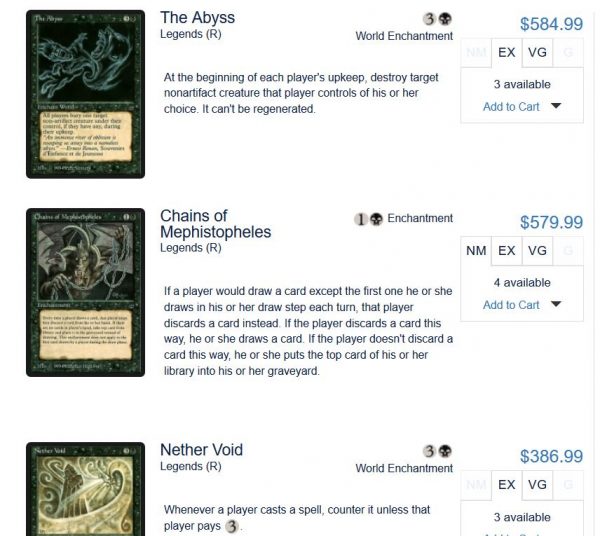
For example, at Card Kingdom, I’ve seen the same copies of Nether Void, The Abyss, and Chains of Mephistopheles in stock for weeks now. I’ve been following these closely in the hopes that they drop pricing further (making them more attractive to acquire with store credit). Since I started watching, their price has drifted down about $10-$20…still not enough. (As an aside, for some reason Moat has sold well for Card Kingdom, and they have increased their price twice in the past three months).

Browsing stock from other early sets, such as Arabian Nights and Antiquities yields a similar picture. Even Alpha is relatively plentiful. I remember thinking the time was soon coming when Alpha rares would disappear from the market due to their scant supply. Now, other than Black Lotus, you can have your pick of Power, Duals, and high-end rares on Card Kingdom’s site. While ABUGames’ stock of high-end Alpha and Beta cards isn’t as robust, Card Kingdom seems to have enough supply to keep the market afloat.

Besides these two vendors, I’ve also noticed supply has flowed back onto TCGPlayer and eBay. In general, if you want a fair price on an older card, there are plenty of options available.

So how about demand? The health of demand is a little trickier to evaluate. We can gauge demand by examining buylist prices, but these have obviously dropped as stores restocked the staples. Vendors have been slow in adjusting their prices, so it’s no surprise their overpriced cards haven’t been selling rapidly.

I’d prefer to look at this more anecdotally. I’m an active participant in the Old School Discord group, and cards are posted for sale there on an hourly basis. Most times a card is posted with a reasonable price (10-15% below TCG low and Card Kingdom), it sells. I have had success selling through a couple playsets of Thunder Spirit, a Beta Icy Manipulator, and some Dual Lands lately. In each case, these sold within a few hours.

Of course, this isn’t enough data to make a definitive claim about market demand. I’ll merely conclude that the most desirable, older cards can still sell easily as long as their prices are adjusted sufficiently. No one is paying retail on these cards right now, but a 10-20% discount to retail will net a quick sale. This market is still liquid enough if you’re an eager seller.

My Current Action Plan

The current landscape of supply and demand is questionable at best. Increasing supply and falling buylist prices make for a challenging environment in which to turn a profit. Up until recently, my favorite angle has been trade credit arbitrage with ABUGames. Falling trade credit offers has rendered this strategy nearly obsolete.

For example, I recently purchased a heavily played Beta Smoke from Cool Stuff Inc for $45 because ABUGames offered $90+ in credit. By the time the card arrived, however, ABU’s offer had dropped 30% to $69.60, eliminating the profit potential entirely. The same happened to me with Unlimited Fork as well.

There was an error retrieving a chart for Fork

These constantly dropping numbers has turned me off completely from ABU credit arbitrage. So where does that leave me?

Put simply, I’m in a “buy what I want to keep for a while” mode. Quick flips and easy arbitrage has mostly evaporated except for a few corner cases. I’ve shifted my focus away from these opportunities and towards adding cards I most want to collect and play. If I’m going to sink more cash into Old School, I want it to be in cards I can enjoy—I can’t count on easy gains at this time.

For those curious, my recent acquisitions have included a playset of Thunder Spirit, a Nether Void, and a Beta Copy Artifact. I’m trying to pick up cool cards I can potentially use, and have a decent enough demand profile. Prices have retreated so much that I felt content acquiring these at their current prices.

In summary, I’m a net buyer at these depressed prices, but only the most useful/interesting/playable cards. This is not the time to be buying random Old School junk that no one plays, such as garbage Alpha and Beta rares and terrible Legends cards.

Looking Ahead to 2020

After my failed attempt to predict trends in 2019, I’m hesitant to make any bold predictions for the year ahead. In Old School in particular, it is especially difficult to predict what will happen with prices.

And it’s not just me having this existential dilemma—this past weekend, the Old School Discord was abuzz with debate on what card prices will do in the future. Some felt that Old School play has leveled out and prices will continue to drift downward. Others were banging the drum on Alpha, stating that even a fading market could still support cards from Magic’s first set due to its collectability. Others still have seen new Old School players entering the format, and predict a recovery in prices this year.

For me, I am voting with my dollars. I don’t think buying a stack of inexpensive Alpha Holy Armors will be all that rewarding in 2020. Instead, I’d rather be taking advantage of these price drops by purchasing cards I’ve been wanting anyways. There are plenty of deals to be found these days, between eBay auctions ending lower, peer-to-peer deals, and coupons galore. Sticking to the most playable cards ensures the best demand profile.

Want some specific examples? Well, Winter Mishra's Factory seems to have pulled back dramatically and is highly desirable. I already mentioned Thunder Spirits and will double down on them here.  I especially like Beta cards that are playable in other formats: Swords to Plowshares, Lightning Bolt, and Sol Ring come immediately to mind. I’d avoid Dark Ritual, though—there just seems to be a ton of these for sale out there.

There was an error retrieving a chart for Lightning Bolt

Wrapping It Up

All the rampant speculation in 2017 and 2018 inflated Old School prices tremendously, and prices became highly unsustainable. It has taken over a year for prices to cool back down toward reality, and I genuinely believe we’re finally leveling out. That begs the question, though: where do things go from here?

I’m hesitant to be 100% bullish as I have been in the past. Magic is in a weird place right now, and prices aren’t as volatile as they once were. I check MTG Stocks daily, and many times there are only a few cards that have moved more than 5%. Most movement in Old School cards has just been noise.

The daily movement of up 3%, down 4%, up 5%, down 3%, etc. probably won’t end this month or next. As 2020 unfolds, however, I do expect some of the more desirable Old School cards to climb. But I wouldn’t advocate speculating in anticipation of this trend. Instead, buy only what you’ve been wanting to acquire so you don’t mind waiting patiently for things to unfold.

With some luck, we’ll see a nice rebound in staples. If not, and prices fall further, I know of dozens of players in the Old School Discord who will eagerly buy at lower prices given the opportunity. This provides a sort of price floor, making me feel more confident in my purchases today.

…

Sigbits

  • If you want to review what cards are most desirable from Old School, I’d recommend checking out their hotlist. You won’t find stuff like North Star and Cleanse on there. Instead, you’ll find the stuff that’s selling well for the store. The top card on their list today is Drop of Honey. This is a card that skyrocketed to $600 on Legacy play (of all things), but has pulled way back from that high. Now CK offers $245 on their buylist. A recovering Old School market would likely send this card higher.
  • I mentioned Beta Lightning Bolt before and it’s no coincidence the card is on Card Kingdom’s hotlist with a $140 buy price. Card Kingdom’s aggressive buy price is somewhat surprising given they nine copies in stock already. They must sell this one quickly to maintain the high buy price.
  • Here’s one I haven’t seen on Card Kingdom’s hotlist in quite some time, but is there now: Mirror Universe. This is one that speculators and investors hit hard due to the card’s more iconic nature. Then the price pulled way back down when people realized it had little utility in play. Card Kingdom’s buy price is $120 now, and they have a dozen copies in stock. No need to rush on this one if you need a copy—more inventory will have to drain before this can tick higher again.


U Mirin’: Theros Beyond Death Spoilers, Pt. 2

Are you a Quiet Speculation member?

If not, now is a perfect time to join up! Our powerful tools, breaking-news analysis, and exclusive Discord channel will make sure you stay up to date and ahead of the curve.

Theros: Beyond Death spoilers are well underway. David covered the heavy-hitters earlier this week, but more cards have been revealed, and the set seems packed full of low-level goodies that stand to very marginally improve some of Modern's many strategies. Let's take a look at at some of the most underrated tech in the new set!

A House Is Not a Home

The following cards may already have homes in Modern, however fringe. I can see these spells slotting into existing archetypes right away, albeit with a little tweaking.

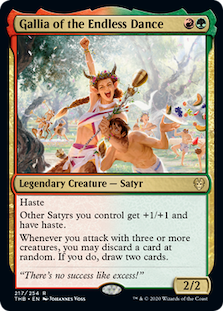
Gallia of the Endless Dance

"Other Satyrs you control get +1/+1 and have haste." Yawn! It's the rest of the text on Gallia that makes it interesting. Attacking with three creatures is par for the course in hyper-aggressive Zoo strains like 8-Whack, and that's exactly where I expect Gallia to end up. Even there, it's not realistically triggering until turn three. I still think that's enough to merit inclusion, as the looting effect is just bonkers in a deck that peters out so quickly.
Icing on the cake: if we do ever happen to get a Satyr on the level of pushed beaters like Hexdrinker or Grim Flayer, Gallia will start to look appealing as a build-around card.

Whirlwind Denial

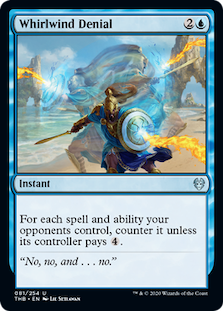
Our first control card, Whirlwind Denial sets the bar high for stack wars, functioning as Flusterstorm that also hits creatures and, critically, planeswalkers—that's the type of card blue mages duke it out over. Three mana is a heck of a lot for a stack war, but considering Denial's other fringe applications (such as dealing with storm), I can see it making the cut as a tech choice in sideboards.

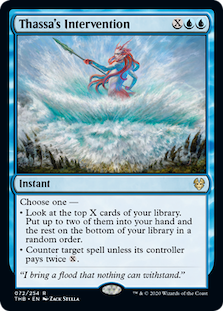
Thassa's Intervention

Yet another control card, Thassa's Intervention doesn't do one thing particularly well. But it offers players a choice between two extremely relevant effects. In a topdeck war, when opponents have little going on, or should players badly need an answer locked away within the deck, digging mode does an okay Dig Through Time impression. And otherwise, with a planeswalker on deck ticking up, counterspell mode says "no" and enables the snowball. Intervention offers enough utility for control mages to consider in the main.

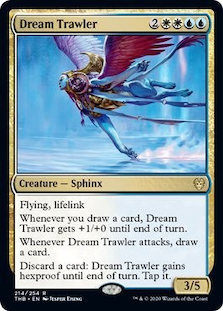
Dream Trawler

And, I'd argue, Dream Trawler offers enough raw power to reshape how control players build their decks. Trawler is the Morphling Modern never had; a Baneslayer Angel that draws extra cards and can give itself hexproof at will, both without any mana investment. Six mana is a ton, but if players are happy to tap out for Lyra Dawnbringer, I don't see why they wouldn't be happy to invest in this guy. The drawing alone gives this thing a tool against attrition and control decks as gamebreaking as lifelink is for aggro ones.

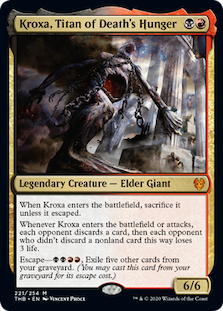
Kroxa, Titan of Death's Hunger

It's not all control cards I'm excited about. This escape cycle of fatties seems promising, too. Especially Kroxa, Titan of Death's Hunger, who I think fits pretty smoothly into Smallpox decks. We've seen these strategies have middling success in Modern, most recently with Rankle Pox. If they're up for splashing red, Kroxa provides inevitability and card neutrality while tapping the graveyard, a resource Pox players have otherwise struggled to capitalize on.

Utility Belt

My favorite kinds of spoilers are ones for cards that don't necessarily turn archetypes on their heads or spawn new strategies. I prefer cards with specific, niche applications; ones that either replace or simply provide alternatives to existing role-players. The more novel the design philosophy in a given set, the likelier we are to see such spells, and Theros: Beyond Death has already given us five.

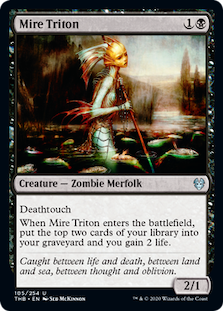
Mire Triton

First up is Mire Triton, which packs a ton of potentially relevant text into one sleek design. Triton gains pilots life, self-mills, swings for a passable 2 damage, and provides a deathtouch body on defense. On top of all that, it's a Zombie Merfolk, supporting two beloved tribes.
If Triton ends up belonging to either clan, it should be to Zombies; that's a deck that appreciates self-mill and is already in black to begin with. Two mana's not a great rate for 2/1s in Modern, but this little guy does enough stuff to perhaps make the cut somewhere anyway.

Omen of the Sea

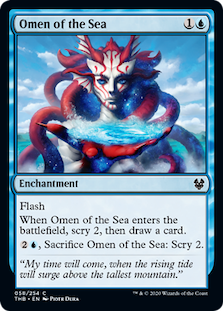
Speaking of two-drops, let's dive into escape, Magic's latest take on flashback. Omen of the Sea costs one more than the banned Preordain, but offers pilots flash; in instant-speed decks, spending mana on enemy turns can be quite similar to getting it for free. Additionally, Sea's extra effect lets pilots squeeze value out of the enchantment down the road, and its card type plays nice with certain mechanics (delirium, constellation, etc.).
I'm especially interested in how players will stack Sea's two abilities. With five mana available, pilots can cast Sea and respond to its enters-the-battlefield trigger by cracking it, yielding scry 2, scry 2, draw a card. This enchantment has a lot of modes and may be flying under the radar right now.

Escape Velocity

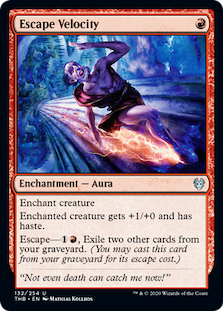
Anger might not be legal in Modern, but Escape Velocity gives players the possibility of having haste on all their guys thanks to a card in the graveyard. Sure, it costs mana to activate, and two can be a lot when a creature is also being cast that turn. But exiling just two cards is hardly a cost, meaning Escape Velocity will probably sit in the grave and threaten haste throughout a game. Plus, as an enchantment, the power boost lasts, and should add up over multiple attaches.

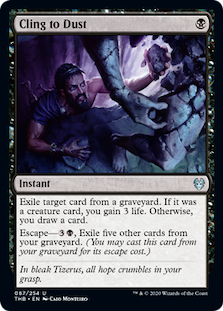
Cling to Dust

The last escape card we'll see today is my favorite design thus far. Early on, Cling to Dust provides cantripping (or life-gaining) grave disruption; on paper, it eventually morphs into a card advantage engine. Realistically, though, the spell sits somewhere in the middle, fronting a burst of value and then ensuring another one or two down the road. Escaping more than twice in a game should prove difficult with a five-card requirement.
Cantrips on passable effects are nothing to sneeze at, and neither is versatility. I love that Cling can function as lifegain or simply a cantrip in a pinch, but also blow opponents out in certain situations as well as just post a speed bump for anyone gently interacting with the graveyard (think Snapcaster Mage, Emry, Lurker of the Loch, or Unearth). This card's high floor and ceiling make it a winner in my book, even with with gold standards like Surgical Extraction legal.

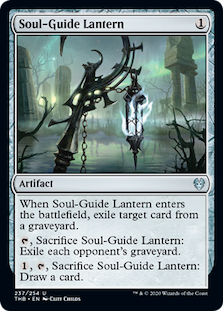
Soul-Guide Lantern

This lamp isn't playing when it comes to the graveyard, either. An update to Scrabbling Claws, Soul-Guide Lantern also offers players plenty of options. It immediately removes a card, threatens a grave nuke at any time, and can be cashed in for a card as needed. The artifact reminds me too of Nihil Spellbomb, but more generic in that nonblack decks can play it. I wonder if it's generic enough to see mainboard use alongside Mox Opal and the rest of the artifact core propelling Oko decks to the top of the format.
There's No Escape!

From spoilers, that is! And as long as they keep flowing, we'll keep hot-taking. Which Theros: Beyond Death cards have you brewing?

Heroes Arise: Theros Beyond Death Spoilers

Are you a Quiet Speculation member?

If not, now is a perfect time to join up! Our powerful tools, breaking-news analysis, and exclusive Discord channel will make sure you stay up to date and ahead of the curve.

Happy New Year! I'll be kicking off 2020 by leaping into spoiler season. Spoilers for Theros: Beyond Death began trickling in while everyone was on holiday break. Now, with our holiday hangovers but a painful memory, the flood has begun. There appears to be considerable potential for Modern cards, and given how 2019 went, I'm perhaps even underestimating their power.

As I was writing this article, I realized there was a thread running through the piece. Specifically, I was making the same point over and over again. I've therefore decided to lead off with that point so I don't have to mention it ad infinitum:

Graveyard hate is very important in Modern.

Many cards in Theros: Beyond Death care about the graveyard (appropriately enough). Particularly, they need large quantities of graveyard cards to work. Players packing mass graveyard removal will have more success against the new cards than those relying on Surgical Extraction. In fact, Rest in Peace is so effective against most of these new cards that my analyses carry this asterisk: They don't work against a Rest in Peace.

New Mechanic: Escape

First up is the only new mechanic, escape. Escape allows cards to be cast from the graveyard by paying a cost, then exiling some number of other graveyard cards. In effect, by trying to avoid just redoing flashback, Wizards has hybridized flashback with retrace. Modern has historically been a graveyard-centric format, so it makes sense that escape would have a home in Modern. At time of writing, there are two cards with potential, though both have problems beyond my above asterisk that make me wonder if they'll actually make it.

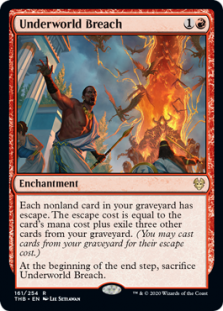
Underworld Breach

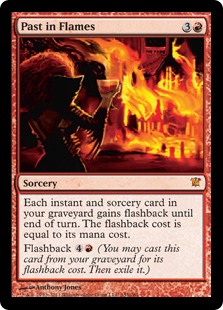
The big story so far is Underworld Breach. Breach is a two-mana enchantment that only stays in play for one turn and gives everything escape; a broader Past in Flames, but for half the mana cost. Cheating on mana is everything for combo decks, framing Breach as a strict upgrade to Past.

In practice, it's maybe not an improvement at all. Escape requires fodder, and current storm lists don't make enough to go around. From personal experience, the typical Past-fueled kill flashes back a minimum of four cards to successfully Grapeshot for the win. If you need to find a win-condition, it's much more. A minimum Storm-off would therefore need to exile 12+ cards from the graveyard to win. The typical Storm list doesn't run fetchlands or Thought Scour to just fill up the graveyard, so the exiled cards would have to be already-played cantrips and rituals... which are what pilots want to be replaying in the first place. It is possible that looping Manamorphose with Goblin Electromancer in play makes exiling everything else acceptable, but that seems precarious. Perhaps a drastic Storm redesign is in order, but Breach looks to me like a proverbial "six-of-one, half-dozen of the other" situation.
To really make Breach shine requires building around it, and the obvious combo has already been found: Grinding Station activations provide the right number of cards to feed each escape. Combine with any 0-CMC artifact to mill the entire deck. With Mox Opal being the looped card, mana is generated every escape, which then builds until Grapeshot or Banefire is lethal. It's a simple, straightforward combo (asterisk).
Storm has plenty of options to adapt against disruption and still combo off, while the early Grinding lists are very linear and vulnerable to attack. A Grinding Station combo deck will be vulnerable to all the Storm hate plus artifact hate. I think the combo will be worse Storm, but cheap artifacts often surprise.

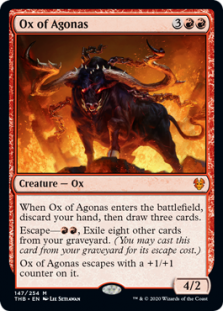
Ox of Agonas

The other escape card is Ox of Agonas. Reason being, it has the same critical text as Bedlam Reveler, and drawing three cards is very good. It's also beneficial to have Ox in hand when the first one is cast, thanks to escape. However, anyone planning to cast Ox is going to be disappointed. Reveler being a 3/4 prowess creature is better at the same rate, but more importantly, Reveler can be as cheap as two red. The only reason to play Ox is to always escape it for two red. As a bonus, the Ox will then be a better 5/3 creature.

This restriction naturally points towards Dredge, the deck that most wants creatures popping out of its graveyard. Skipping over the question of how to fit Ox into a list as tight as Dredge, the card looks like a fit. As Cathartic Reunion showed, Dredge really likes discarding its hand as a cost to draw cards and activate its namesake mechanic. Dredging is also the fastest way to get the necessary eight cards in the graveyard to actually escape Ox; normal dredging finds Ox and provides the fodder, then Ox creates more dredges and a big threat.
Everything I've said so far is indicative of a payoff card, not an enabler. Ox needs a full graveyard and to be in there itself to be worthwhile. This means that Dredge would have executed its gameplan before Ox does anything, which makes Ox seem superfluous. Also, eight cards is a lot to exile, and there's not a lot that Dredge wants to exile from its own graveyard. Even the lands are important for setting up late-game Conflagrates.

Dredge doesn't need more payoff cards; it needs something to replace Faithless Looting. Given that other decks that could set up Ox could also run Reveler without jumping through hoops, I don't think Ox will make it.

Returning Characters: Gods

The other big category are the new Gods. The only God to have a noticeable impact on Modern from our first trip to Theros was Keranos, God of Storms. I ran him as a finisher in Jeskai Control decks, but a more common role was in UR Twin as a mirror card. Twin mirrors tended to become counterspell wars, and the combo was often completely dropped. Therefore, Dispel and Negate were paramount cards. Keranos being a creature everywhere but in play let it slip through Negate walls and then grind to victory. I haven't seen Keranos or any other Theros god see serious play since. However, there are three new ones with potential, primarily of the combo variety.

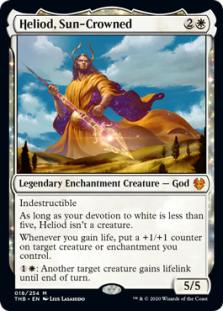
Heliod, Sun-Crowned

Heliod is notable only because he is an infinite combo piece. His fair usage is the same as that of Ajani's Pridemate, which lets him nicely slot into Soul Sisters, but not much else. Heliod would be a Thalia's Lieutenant-type effect in that deck, but if team-pumps were what Sisters was missing before now, they've already had access to everything from Honor of the Pure to Force of Virtue. The deck's anemic creatures and lack of disruption remain its primary problems.

The simplest combo with Heliod is infinite life with Spike Feeder. It's almost as if Heliod was designed with this combo in mind. Even better, this combo is findable off Collected Company. While this is a simple and effective combo, I don't think Company decks will bother. Infinite life via Kitchen Finks, Melira, Sylvok Outcast, and Viscera Seer used to be their main combo, but infinite mana with Devoted Druid and Vizier of Remedies has replaced it, as Tron could beat infinite life by restarting the game withKarn Liberated.
Winning outright with Heliod is more clunky. This combo needs a Walking Ballista with at least two counters and two mana to give Ballista lifelink; then, Ballista goes infinite. I don't think that any deck will plan around this combo. It requires Heliod to be in play and then six mana to kill in a single turn. It is possible to cheapen the mana cost with Hardened Scales, but that trades off with the additional setup work necessary. I could see this combo being an incidental one in a deck that already runs Heliod and Ballista, but I don't think any deck would do so. This fact likely limits Heliod only to Company decks, which may mean this combo never occurs in Modern.

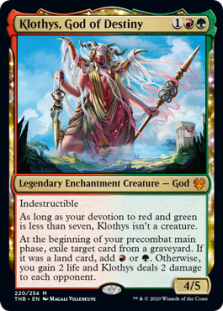
Klothys, God of Destiny

Next is an entirely new god. I seen some chatter about Klothys being an anti-control card similar to Keranos, but much cheaper, and incidentally hateful against Snapcaster Mage. As a three-mana creature, Klothys is a bit too slow to manage graveyard decks like Dredge or Grixis Death's Shadow. The former should have plenty of dredgers in the 'yard; the latter will have fed their 'yard to Gurmag Angler by then. However, if all that's needed is to prevent small numbers of specific cards from being reused later on, Klothys is more resilient than Scavenging Ooze.

But if all that's required is an inexorable clock against a control deck or Jund, she's not unreasonable. There will be plenty of non-land cards in a typical attrition match to guarantee two damage a turn for the whole game. I actually think that Klothys is better against Jund than against blue-based control, as the only way for Jund to kill Klothys is to discard her. UWx has counters and Detention Sphere and can always bounce Klothys with either Teferi.
Still, I can't think of a deck that actually wants to use her. Zoo is better off with Domri Rade, and GR Ramp doesn't need help against Jund or UW control. While Jund can't remove a resolved Klothys, I don't think they'd need to in a mirror match; she's not racing a Tarmogoyf or Tireless Tracker. Being a sticky, cheap value engine is fine, but I think Klothys is too slow and limited in its applications right now.

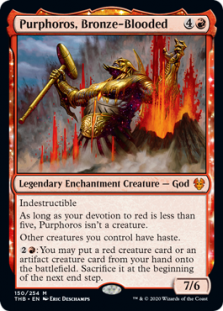
Purphoros, Bronze-Blooded

For the same cost as Through the Breach, the new Purphoros is a more inefficient and restrictive Sneak Attack. Which is fair; Sneak is a Legacy staple for a reason, and is why these effects are quite rare. Considering that Breach has had its moments in Modern and Sneak is pretty busted, Purphoros has a high bar to clear.

Purphoros won't be cheating in Griselbrand or Emrakul, the Aeons Torn, but there are plenty of red or artifact creatures available which are serviceable. Blightsteel Colossus is the best for winning immediately, while Combustible Gearhulk looks like the best option for card advantage; Darigaaz Reincarnated has meme value. Sundering Titan is also an interesting option for decks more interested in disruption, though I don't know how it beats immediately winning.
The question is if this is something Modern wants to do. The Legacy version is all about cantrips and Sol lands. Modern's cantrips are comparatively weak, and Eldrazi Temple is as close as we get to Ancient Tomb. The closest analogue to Show and Tell is Through the Breach, which sees considerable play but hasn't had much of a metagame impact for over a year. Given that Breach and Purphoros are five-mana cards, I can't see a deck for them that doesn't have acceleration, which most likely means green. And when going for green and ramping, why not just play Primeval Titan and be a Valakut deck?

Never-Ending Story

Theros: Beyond Death features many interesting build-around cards. I'm skeptical that they will make it in Modern given their limitations. However, like Underworld Breach, these cards will force reexamination of a stagnant archetypes and matchups. This is arguably as valuable as actually making the final deck; without new challenges, there's no growth, and the format becomes stagnant. I'm all for novel cards getting the juices flowing, even if they prove underwhelming in the end.

Time Walk: Is This the New Era of MTG Finance? (2018)

Are you a Quiet Speculation member?

If not, now is a perfect time to join up! Our powerful tools, breaking-news analysis, and exclusive Discord channel will make sure you stay up to date and ahead of the curve.

Editor's Note: Sigmund is out for the week, traveling to visit family. In the meantime, please enjoy this unlocked Insider article from 2018 regarding Springtime Reserved List buyouts. We may never see market behavior such as this again, but there are important lessons here to review. As we draw closer to that time of year, it is important to reflect on these lessons and plan accordingly. 

Nothing in life is guaranteed except for death and taxes. That’s the saying, at least. But I would posit there is a third phenomenon that has become nearly as predictable these last few years.

I’m referring to the annual Spring Reserved List Buyouts (I should get that trademarked!). It looks like early spring has catalyzed the rampant buying of Reserved List cards time and again, although trends were admittedly muted in 2014 and 2015.

There was an error retrieving a chart for Lion's Eye Diamond

In the past, these cards would spike in price, drift a little lower and then establish a new base. But look at the magnitude of the spike this year in comparison to previous years. The move is so much larger. What’s more, the move is much broader than in the past. Academy Rector, for example, has spiked recently but had been largely flat in price during previous buying frenzies.

There was an error retrieving a chart for Academy Rector

Is there a reason for the more pronounced moves? Are these trends going to be more permanent? Why are things different this time? This week Sig investigates these huge buyouts to try and decipher exactly what the long-term trajectory may be for these beloved, classic cards.

This Time Is Different

A couple years ago, Craig Berry posted a public video that announced his intent to buyout Lion's Eye Diamond. He also hit Moat around that same time, and the action resulted in a large price jump. This, in turn, triggered numerous other price increases across the Reserved List. The action was exciting, lasted a few weeks at most, and then people forgot about it.

Things are a little different this time. The breadth is so extreme. It’s not just the playable Legacy and Commander cards that are getting targeted—the distribution is far more complete. How else can you explain the lockstep move of stuff like Reparations and Grave Robbers?

There was an error retrieving a chart for Grave Robbers

These cards aren’t actually being played anywhere. Reparations shows up in 192 decklists on EDH REC. While that’s a huge number compared to Grave Robbers’ five lists, the number still isn’t relevant when it comes to impacting supply. It isn’t particularly strong in Old School, either, although it feels like a precursor to Deathrite Shaman.

The same can be said for so many of the spiking cards from less powerful sets such as Mirage, The Dark, and Homelands. Yes, even Homelands.

There was an error retrieving a chart for Mystic Decree

Then you need to look at the magnitude of these moves—they’re huge! When Craig Berry bought out LED, he helped spike the price from $75 to $175 in a few short days. That was a significant increase for sure. But the recent movement has taken this card from $145 to $275! While percentage-wise this may not be quite so large, the absolute magnitude of the move is larger. Also, this time around the movement happened much more quickly.

When you look at the change in some of the older cards, the movement is even crazier. Preacher spiked from $20 to $70 overnight. Jihad just recently jumped from $80 to $300-plus (the price still needs to settle). Over and over again we see this significant pressure to the upside in a much larger magnitude than any time before.

The other major difference is the participation in this market. When Craig Berry went viral with his Lion's Eye Diamond buyout, he became the face of market manipulation. Since then, multiple major investors have entered the market and started buying quantities of Reserved List cards. These are people with a deep appreciation for Magic’s nostalgia and even deeper pockets. The result: many copies of classic cards are disappearing from the market with no return in the foreseeable future.

And while some pump-and-dumps never even hit the radar for major vendors, this time it almost feels like vendors are in the forefront of the charge. ABU Games is paying record-high numbers on old favorites from Arabian Nights, Alpha, etc. (see Sigbits for examples). The fact that these moves are backed by large vendors tells me they have confidence the higher prices are here to stay. That is rather frightening.

Implications

I try not to publicize my pro-Reserved List views too frequently. My interest in the device that makes Magic spectacularly investable is not lauded by much of the socially active community. But the reality is, even I am starting to feel the pinch that is occurring with all these buyouts.

At first, I was mostly amused by the movement and the reaction in the community. It seemed like there would be some crazy prices for a few weeks and then they would settle back down. But things have not transpired this way. Instead, prices continue to climb, cards continue to disappear, and it’s making entry into some of my favorite formats absolutely prohibitive.

I really enjoy Vintage, and while I don’t play Legacy anymore, I still like watching coverage on camera. But Vintage and Legacy decks are approaching $20,000 and $10,000, respectively, making the formats prohibitively expensive. The Old School format is getting hit the worst, as people make key cards cost 5-10 times more than they were just a few weeks ago. If this appreciation was organically driven due to increased participation in the format that would be fine. But these big-time investors buying up hundreds of copies have little plans to play. They want the return on investment and that dollar is their bottom line.

There’s a nuanced difference here I want to dwell on. I’m a collector and Magic investor too, but I never advocate buying up dozens of copies of a single card. Not because I oppose the market manipulation, but because trying to move so many copies of something obscure may be impossibly difficult! If you listed Jihad on TCGplayer for a competitive price, you’ll probably get the sale. But if you were sitting on 100 copies of Jihad, liquidating that quantity will either be extremely slow, or crush the card’s value.

There was an error retrieving a chart for Jihad

Apparently that doesn’t matter to these investors. From what I’ve read and heard, these investors plan to sit on the cards for a long time. This has major implications.

Because many copies are being acquired to hold and not to flip, copies won’t be re-entering the market as they had in the past. These new prices may be far stickier than before, and this means it will become far more expensive for us smaller-time speculators and players to stay involved. I’ve already been priced out of many cards I once thought it would be really cool to own. If I’m right and these are investors buying copies, then these trends will continue and affordable old Magic cards will disappear altogether.

In other words, this may be “it.” This time, things are different. These cards may be disappearing from the market for a long time…

Prioritize, Prioritize, Prioritize

I hope I’m wrong. I hope what is going on is a run-of-the-mill pump and dump scheme, and copies will come back into the market as sellers undercut each other one by one. But we need to be prepared in case this really is the transition for older Magic cards from game pieces to investment pieces. Because we still love the game, we need to preserve as much as we can with deliberate actions.

First, as I’ve said many times before, you must prioritize what you wish to acquire most and act accordingly. If you’re like me, you get distracted by all these buyouts, experiencing regret each time a card you don’t own spikes in price. This reaction is unhealthy and breeds panic-buying. We have to learn to let things go.

It’s easier to do this if we have a cognizant plan in place to help organize our buying. For example, I really wanted to own a Guardian Beast. I noticed the quantities available for sale were extremely thin, so I spent some of my scant remaining cash to acquire one. Now if the card spikes I can ignore the noise as I already have a copy to play with. On the other hand, this meant I couldn’t buy something else that may have spiked. I need to accept the fact that I wanted Guardian Beast more, and that I was okay with missing other boats as a result.

It sounds simple on paper, but ignoring emotional reactions can be very difficult in practice. The more diligent we can be with our priorities, the better we’ll feel when there is another buyout day after day. Today I saw Field of Dreams spiked—I felt no remorse because that card was never a priority of mine. On the other hand, Rasputin Dreamweaver jumped 30% and I didn’t have to worry because I already own my copy. Because I am focused on priorities, I know I only have to worry about certain cards and I can ignore others.

There was an error retrieving a chart for Field of Dreams

I highly recommend you do the same if you have any interest in Old School or in collecting cards from Magic’s earliest sets. Just be cautious, monitor markets closely (both the U.S. and European market), and don’t contribute to the buyout madness. Try to avoid inciting panic, because it will inevitably cause a spike and lock some people out of the cards they wished to own. While we can’t be blamed for others’ inaction, we can at least try to protect those who also appreciate the game for what it is against the big-time investors who see only dollar signs.

Wrapping It Up

There have been buyouts before, and I haven’t dwelled as much on them because they were so often a flash in the pan. In the news for a day and then forgotten about.

I think it’s different this time.

I think there are enough people with deep pockets out there looking to convert capital into long-term investments. I heard a recent interview of high-end collector Brian Nocenti on the Fast Finance podcast. He describes his intent to form an investment firm of sorts with Magic cards. He also talked about how it wasn’t uncommon for comic book collectors to have seven figures worth of comic books—he is predicting Magic to go this direction soon.

I suspect there are a handful of others who agree and are now acting accordingly. Rudy of Alpha Investments is one of the more vocal proponents of MTG investing, but there are many quiet investors out there doing just as much damage to the secondary market.

If that’s the case, then buckle up because we are about to be taken on a wild ride that Richard Garfield could not have predicted in a million years. Things could get even more ridiculous than they already are, and the only way to stay sane in this environment is to have a definitive plan in place that we can execute against. Everyone’s plan will look different, but the key is to have one in place for acquisitions and exit prices. If we’re not purposeful in this regard, we will be left with buyers’ and sellers’ remorse as cards move in price and force our hand.

…

Editor's Note: These are a snapshot of buylist prices at the time. You will see far less aggressive prices from these buylists at current, so treat them as food for thought. 

Sigbits

  • Last weekend I discovered that ABU Games pays even more aggressively on older cards than Card Kingdom. For example, did you know ABU Games pays $280 on Near Mint Jihad? I thought Card Kingdom’s $140 buy price was attractive, but $280 is ludicrously high! They even pay $175 on played copies!
  • Another crazy number: Diamond Valley. ABU Games pays $420 on Near Mint copies and $224 on played copies. This is just insane. That’s a full $140 more than Card Kingdom’s current buy price of $280. I thought Card Kingdom was leading the charge on these older cards, but it turns out they are just trying to catch up to ABU Games' aggressive numbers.
  • Last week I posted an alert in the QS Discord that Card Kingdom upped their buy price of Library of Alexandria to $980. I thought that was a record high for the card. I was very wrong. It turns out ABU Games is paying $1200 for Near Mint copies. However, they’re only offering $600 on played copies currently, so if you need to sell to a vendor make sure you ship your played copies to Card Kingdom for a better number.

December Brew Report: A Story to Tell

Are you a Quiet Speculation member?

If not, now is a perfect time to join up! Our powerful tools, breaking-news analysis, and exclusive Discord channel will make sure you stay up to date and ahead of the curve.

Full bellies? Droopy eyes? Scrolling and clicking? It's the new year, all right! But why focus on the future when we could dwell on the past? Read on for an after-holiday treat: the spiciest brews to come out of 2019's death throes.

Technologic

Urza and Oko might be hogging the spotlight, but artifacts have a lot more to offer than those two dominators of the card type might have us believe.

Kethis 8Mox, TWISTEDWOMBAT (5-0)

Creatures

4 Kethis, the Hidden Hand
4 Emry, Lurker of the Loch
3 Hope of Ghirapur
2 Sai, Master Thopterist

Planeswalkers

2 Teferi, Time Raveler
1 Jace, Wielder of Mysteries

Artifacts

4 Arcum's Astrolabe
4 Mishra's Bauble
4 Mox Opal
2 Engineered Explosives
4 Mox Amber
4 Grinding Station
1 Wishclaw Talisman

Sorceries

3 Unearth

Lands

1 Eiganjo Castle
1 Hallowed Fountain
1 Minamo, School at Water's Edge
1 Misty Rainforest
1 Overgrown Tomb
1 Polluted Delta
3 Prismatic Vista
1 Snow-Covered Forest
1 Snow-Covered Island
1 Snow-Covered Plains
1 Snow-Covered Swamp
1 Temple Garden
1 Urborg, Tomb of Yawgmoth
2 Verdant Catacombs
1 Watery Grave

Sideboard

2 Ashiok, Dream Render
2 Assassin's Trophy
3 Fatal Push
2 Oko, Thief of Crowns
2 Urza, Lord High Artificer
2 Veil of Summer
2 Weather the Storm

First up is Kethis 8Mox, a deck that taps Simic Urza's most ridiculous element: the free mana generated by Mox Opal. Here, though, Mox Amber is added into the mix, supplementing the usual Simic Urza Mox package of Mox, Bauble, Astrolabe, and Engineered Explosives with a suite of cheap legends.

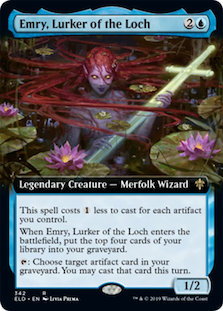
Emry, Lurker of the Loch has already proven itself alongside these enablers, generating infinite mana with a couple Moxen (an occurrence twice as likely with more cogs in the mix). Grinding Station rounds out the combo, threatening to mill opponents it comes together against. New to the party is Kethis, the Hidden Hand, who gives the deck inevitability against anyone trying to disrupt the combo over a series of turns. In the mid-game, pilots can simply slam Kethis, replay Moxen and Emry out of their graveyards, and go off that way. Unearth even functions as a Kethis should opponents strip it with Thoughtseize, and further bulletproofs the plan.
That plan, though, is still soft to all kinds of graveyard hate, as well as the ubiquitous Collector Ouphe. 8Mox acknowledges these shortcomings by including both Urza and Oko in the sideboard to attack prepared opponents from a more robust and decidedly proven angle.

Glitter Affinity, OHN (5-0)

Creatures

4 Gingerbrute
4 Arcbound Ravager
2 Memnite
4 Ornithopter
4 Signal Pest
4 Steel Overseer
4 Vault Skirge

Artifacts

4 Cranial Plating
4 Mox Opal
4 Springleaf Drum

Enchantments

4 All That Glitters

Instants

2 Galvanic Blast

Lands

3 Blinkmoth Nexus
4 Darksteel Citadel
2 Glimmervoid
4 Inkmoth Nexus
1 Plains
2 Spire of Industry

Sideboard

2 Blood Moon
1 Dispatch
2 Etched Champion
1 Experimental Frenzy
2 Ghirapur Aether Grid
1 Grafdigger's Cage
1 Spell Pierce
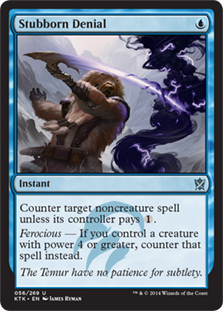
1 Stubborn Denial
2 Thoughtseize
1 Torpor Orb 1 Wear // Tear

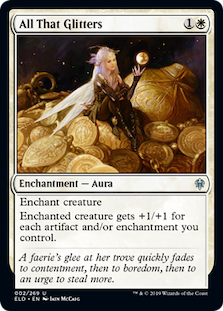
Who said Affinity was dead? The archetype suffered significant dips in the shadow of Hardened Scales, but with that deck now AWOL, faster shells reminiscent of the onetime giant's former self have started to surface. Glitter Affinity is one such shell, leaning on All That Glitters to functionally increase the number of its best card, Cranial Plating.
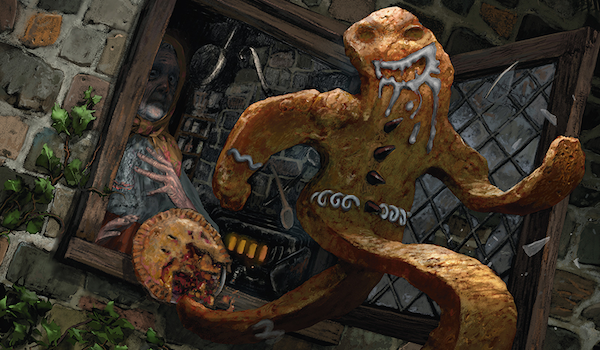
The rest of the mainboard should look quite familiar, but I'd like to draw attention to Gingerbrute, an innocuous one-drop that's been prying its way into artifact-based aggro shells by virtue of its sheer versatility. Brute gains life, enables Affinity's mana engines, and turns sideways right away for Signal Pest—or, more importantly, Plating.

Fighting Fit

Much as one-mana haste creatures might get your war drums beating, to me, nothing says "aggro" like a set of Lightning Bolts. And Modern still affords us a million ways to cast its best spell.

Season Zoo, OLAVOJUSMTM (5-0)

Creatures

4 Noble Hierarch
4 Monastery Swiftspear
4 Tarmogoyf
3 Eidolon of the Great Revel
1 Bloodbraid Elf

Artifacts

3 Mishra's Bauble

Enchantments

4 Season of Growth
2 Rancor

Instants

4 Lightning Bolt
4 Mutagenic Growth
3 Temur Battle Rage
2 Manamorphose
2 Become Immense
1 Tarfire

Lands

4 Arid Mesa
2 Horizon Canopy
2 Mountain
1 Snow-Covered Forest
4 Stomping Ground
2 Sunbaked Canyon
4 Wooded Foothills

Sideboard

1 Bloodbraid Elf
1 Abrade
3 Alpine Moon
2 Chandra, Acolyte of Flame
3 Cindervines
1 Huntmaster of the Fells
1 Pillage
3 Scavenging Ooze

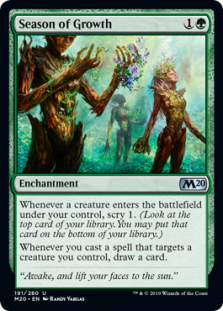
Season Zoo contains some of my favorite cards and synergies. Huge Goyfs? Got 'em. Mutagenic Growth to Mental Misstep enemy Bolts and win combat? Oh yeah. But this deck takes things one step further, abusing an unlikely enchantment called Season of Growth (had to hover? Me too).

Growth turns all those Mutagenic Growths we (well, I) would've played anyway into cantrips, but its real strength in this build is what it does for Rancor. The storied enchantment has never seen much play in Modern, as it nonetheless opens casters up to two-for-ones while on the stack and tends to lack huge creatures to enchant. Not here, where Goyf towers over the battlefield. Season makes sure Rancor replaces itself right away, and combines with the aura into a card advantage engine should opponents lack instant-speed interaction. Besides, +2/+0 and trample just doesn't suck in a Zoo deck—Swiftspear and Hierarchs suddenly hit like Goyfs themselves.
Mono-Red Prowess, MHAYASHI (5-0)

Creatures

4 Bedlam Reveler
4 Monastery Swiftspear
4 Soul-Scar Mage

Instants

4 Lava Dart
4 Lightning Bolt
4 Manamorphose

Sorceries

4 Crash Through
4 Firebolt
4 Light Up the Stage
4 Warlord's Fury

Artifacts

4 Mishra's Bauble

Lands

16 Mountain

Sideboard

4 Bonecrusher Giant
4 Kiln Fiend
3 Leyline of the Void
4 Smash to Smithereens

Upping the aggression quotient is Mono-Red Prowess, a deck that's no stranger to Modern. Its Phoenix-free variants, though, are breaking out in force for the first time now that Faithless Looting is banned.

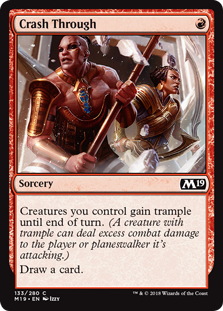
This particular build has a lot that pushes my buttons. I love the notion of balancing tension between the full set of Baubles (prowess triggers) and Bedlam Reveler (who could care less), and have tried that mix before (to middling results). Crash Through seems like the greatest card ever in this deck, forcing its damage disher-outters past whatever blockers opponents might be counting on. Same deal with Warlord's Fury, which actually has great synergy with Crash.

Another cool dimension at work is Mono-Red's transformative sideboard. Against linear decks, Kiln Fiend pushes it further up the spectrum towards aggression, while Bonecrusher Giant gives the deck some oomph against interactive opponents. Leyline and Smash are just great pieces of interaction for those few faster strategies.

Sickness & Spaghetti

These last two decks don't exactly lump together, hence my cheesy topic line. But they are pretty sweet!

Rankle Pox, SEPOMON (5-0)

Creatures

2 Rankle, Master of Pranks
3 Haakon, Stromgald Scourge
4 Bloodghast

Planeswalkers

4 Liliana of the Veil

Artifacts

1 Crucible of Worlds

Instants

2 Fatal Push
2 Nameless Inversion

Sorceries

4 Collective Brutality
3 Inquisition of Kozilek
4 Lingering Souls
4 Smallpox
3 Thoughtseize

Lands

1 Castle Locthwain
2 Fetid Heath
3 Flagstones of Trokair
3 Ghost Quarter
2 Godless Shrine
2 Marsh Flats
1 Plains
2 Shambling Vent
2 Silent Clearing
3 Snow-Covered Swamp
3 Urborg, Tomb of Yawgmoth

Sideboard

2 Cry of the Carnarium
2 Damnation
2 Disenchant
4 Leyline of the Void
1 Murderous Rider
2 Stony Silence
2 Surgical Extraction

Rankle, Master of Pranks is the new face of Pox, at least according to Rankle Pox. After disrupting opponents for a few turns, the Faerie aims to come down on-curve (perhaps a modified curve thanks to Smallpox) and seal the deal with a stream of "symmetrical" effects, each of which should break synergy.
The first mode denies answers to the 3/3, the second gasses up the turn player while feeding opponents tools that are unlikely to matter, and the third deals with problem creatures, freely with Bloodghast in the picture. I'd been hoping we'd see a home for Rankle in Modern since it was spoiled, and it seems like this could be it.

Once a Powder Tron, BAIBURQUENO (5-0)

Creatures

4 Eternal Scourge
4 Reality Smasher
4 Thought-Knot Seer
3 Walking Ballista

Planeswalkers

4 Karn, the Great Creator

Artifacts

4 Chalice of the Void
4 Expedition Map
3 Serum Powder

Instants

2 Dismember
4 Once Upon a Time

Lands

2 Blast Zone
4 Eldrazi Temple
1 Forest
2 Gemstone Caverns
1 Hashep Oasis
4 Urza's Mine
4 Urza's Power Plant
4 Urza's Tower
2 Wastes

Sideboard

1 Walking Ballista
2 Dismember
1 Ensnaring Bridge
1 Grafdigger's Cage
3 Leyline of the Void
1 Liquimetal Coating
1 Mycosynth Lattice
1 Pithing Needle
1 Spatial Contortion
1 Tormod's Crypt
1 Torpor Orb
1 Wurmcoil Engine

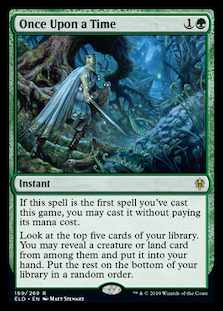
I think my old standby Colorless Eldrazi Stompy is still playable, in a loose sense of the word, but outclassed; Once Upon a Time does for all creature and land decks what Serum Powder once did for us and only us. I messed around with the instant in Eldrazi shells after it was spoiled, and was blown away by the consistency Once afforded. I've always categorized post-Eye-ban Eldrazi decks as approaching their prime in different ways: Bant via Hierarch, Tron via Tron lands, Colorless via Powder, and lately, Gx via Once. Something I hadn't considered is what would happen if multiple modes were combined.

Which brings us to Once a Powder Tron, an Eldrazi Stompy deck splashing green for Once to give it maximal control over its openers, and subsequently over its Temple draws. The Tron package is also included here, offering as many ways as possible to reach an absurd amount of mana early. Only the most critical Eldrazi make the cut: Scourge for its Powder synergies and control abuse, Thought-Knot for its all-around utility and bulk, and Smasher for its aptitude at sealing the deal. The other threats are Walking Ballista and Karn, the Great Creator, both standbys of the Eldrazi Tron deck itself making a comeback lately.

As for disruption, the deck preserves Chalice of the Void, but forgoes Simian Spirit Guide. Rather, Expedition Map and Dismember are the deck's turn one plays, while Chalice is reserved for turn two and the heavy-hitters come out reliably as of turn three.

I can imagine this build struggling at the exact stages where Colorless Eldrazi Stompy has the most fun: in the early-mid-game. Should opponents find a way to deal with its mana advantage, say, via Damping Sphere or Blood Moon, Once Upon a Tron is left drawing Powder and Once and Map and lacking plays that put the pressure on. And there's no room for Zhalfirin Void to smooth out the draws. But I'm excited to see whether its explosiveness can adequately compensate for its unreliability.

Happy Brew Year

These decks might be from 2019, but I'm sure the coming year holds plenty of innovation for us to slice into. Happy new year once again from Modern Nexus!

QS Insider Cast: Beyond Death and the New Year

Are you a Quiet Speculation member?

If not, now is a perfect time to join up! Our powerful tools, breaking-news analysis, and exclusive Discord channel will make sure you stay up to date and ahead of the curve.

Welcome back to the QS Cast! Join Chris Martin, Chris O’Berry, and Sam Lowe as they close out the year and look ahead to Theros: Beyond Death. This cast was originally broadcasted live to Insiders in the QS Insider Discord, December 30th, 2019.

Show Notes

Show notes provided by Chris Martin

- we recapped all things Theros: Beyond Death (spoiled to date)
- we generally really like Purphoros
- I mentioned the importance of Leylines in adding two of their respective color to the devotion pool
- we offered a few cards to consider: Leylines and Seraph of the Scales (on heels of possible aristocrats deck)
- Sam really likes the new Ox for Dredge purposes, but suggests a buy-in between $4-5
- we preached patience & discipline when investing (into anything), especially right now where things are a little bearish/quiet
- I mentioned Warren Buffet's famous phrase - "be fearful when others are greedy and greedy when others are fearful").... the reason for mentioning this is that people are not spending money right now, but tax refund season is around the corner and brighter days could be ahead
- we like investing in Pioneer specs still along with possible Modern Horizons pickups (no cards specifically mentioned - use discretion based on playability, etc.)
The edited cast will be posted later this week after the New Year. Thanks all for a great 2019! It's great to be back and casting again (and thank you all for your support/well-wishes during my recovery from surgery, too!)

Wanna chat? Find us on Twitter or in the QS Discord

Chroberry – @chroberry
Chris Martin – @ChiStyleGaming
Sam Lowe – @MahouManSam

Pioneer and Other Trends Heading Into 2020

Are you a Quiet Speculation member?

If not, now is a perfect time to join up! Our powerful tools, breaking-news analysis, and exclusive Discord channel will make sure you stay up to date and ahead of the curve.

The end of 2019 has been an exciting time for Magic and the market. The announcement of the Pioneer format two months ago has been the biggest driver of price movements, and regular bans have repeatedly shaken up the metagame and demand, but the days of weekly bans are now behind it, and the format is starting to stabilize.

Since the banning of Oko, Thief of Crowns, a green ramp deck has emerged as the biggest force in the metagame. It fills a similar niche to that of Urzatron in Modern, filled with haymaker plays and even sharing Ugin, the Spirit Dragon, and it’s establishing itself as the new deck-to-beat.

There was an error retrieving a chart for Cavalier of Thorns

The inclusion of Cavalier of Thorns has driven its price to incredible highs on Magic Online, to over 40 tickets. In the past week, its paper price has turned around, bottoming out at $4 last week, but now up to over $4.50 and heading towards $5. As a new Pioneer staple that also has plenty of life left in Standard, it looks like a great pickup.

There was an error retrieving a chart for Ulvenwald Hydra

All of the staples of deck, especially the mythics like Oblivion Sower and World Breaker, have seen major online gains online and look like strong buys. However, I’m paying closest attention to Ulvenwald Hydra, which previously was not a known factor. Picking up a few playsets at fractions of a ticket made me some easy gains online, as it’s now nearly three tickets. Its price has sat steadily at $6 on the back of strong casual appeal, but it’s heading higher, now past $6.5

Another emerging trend is red decks, which look to have finally firmly established themselves in the top-tier of the metagame. A Red-White burn deck with Boros Charm has proven most successful, winning the Challenge last weekend and performing well in Preliminary events all week.

There was an error retrieving a chart for Boros Charm

Boros Charm itself looks like the best spec in the deck, because in recent months all of the copies have shown significant growth. It was heading towards $4 before reprint in Masters 25 crashed its price to $1.50, but it has now broken $3,  and recent developments will only drive it higher. Most of the other staples in the deck, like Eidolon of the Great Revel and Monastery Swiftspear already spiked at the time of the Pioneer announcement or soon after, so any specs on said cards will be risky given the downside. One idea is to take a more long-term approach and stock up on something like Wizard's Lightning, which is quite cheap at not much more than a quarter, but over a long-term horizon seems likely to appreciate considerably.

It’s not a new trend, but Mono-Black aggro continues to thrive without Smuggler's Copter, and it continues to be a major threat in the metagame.

There was an error retrieving a chart for Gutterbones

The newest development in the deck is the adoption of a full playset of Gutterbones, which replaces Night Market Lookout  used primarily for its synergy with Vehicles. Gutterboneshas correspondingly seen large gains online, and its paper price is now heading the same direction. It's being helped by its recent success in Standard as a staple of the Rakdos deck that won MagicFest Portland last weekend, and should have a very bright 2020.

Delirium strategies were once a major force in Standard, and they are starting to finally break out in Pioneer, with a 5-0 in a Preliminary sure to draw attention. The deck is mostly comprised of known quantities that have already spiked and don’t look to be attractive specs, like Traverse the Ulvenwald, Tireless Trackerand Courser of Kruphix, but there are a few silver bullets farther off the radar.

There was an error retrieving a chart for Ishkanah, Grafwidow

At $30 I’m not too keen on Emrakul, the Promised End, but Ishkanah, Grafwidow looks like an incredible bargain under $2. Its price had done nothing but sink over the past years, bottoming out at just about $1 before spiking to $1.4 at the Pioneer announcement. It has slowly and steadily gained since to $1.75 and should only continue to grow as the deck further establishes itself in the metagame.

There was an error retrieving a chart for Nissa, Vastwood Seer


Nissa, Vastwood Seerhas maintained a solid price since leaving Standard because it has strong Commander appeal, but it has gained new life, and a couple dollars in price, as a Pioneer playable and good silver bullet in the Delirium deck, and I think it has more to gain in 2020.

Modern Movements

Looking outside of Pioneer, one important trend to be aware of is the rise of a new kind of Urza, Lord High Artificer deck in Modern. It has moved deeper into green by including Ice-Fang Coatl, and embracing its new more controlling role with Archmage's Charm, providing the most high-profile and successful home for the card yet.

There was an error retrieving a chart for Archmage's Charm

The card has always been an obvious staple, just one without a home, which has driven its price to a bargain of just over $1. After months around the same price or less online, it’s finally on the rise online, now over $2.25, and I expect the paper price to start following suit in 2020.

There was an error retrieving a chart for Ice-Fang Coatl

I’m also high on Ice-Fang Coatl, which has reached incredible highs online, over 22 tickets. Its paper price sagged to $4 before starting to rise this week, now past $5, and with a very bright 2020 as a Modern and Legacy playable, even if Oko, Thief of Crowns is eventually banned.

Theros Beyond Death Spoilers

This week also saw the first spoilers for the next set Theros Beyond Death, with Gray Merchant of Asphodel confirmed for a high-profile comeback.

There was an error retrieving a chart for Ayara, First of Locthwain

With a Mono-Black Devotion Standard deck inevitable, now looks like a good time to start stocking up on potential staples like Ayara, First of Locthwain. I’m also paying close attention to Bolas's Citadel, which in a popular tweet by pro and known deckbuilder Sam Black brought attention to as a very powerful card to combine with the Zombie.

There was an error retrieving a chart for Bolas's Citadel


Store Trends of 2019

Are you a Quiet Speculation member?

If not, now is a perfect time to join up! Our powerful tools, breaking-news analysis, and exclusive Discord channel will make sure you stay up to date and ahead of the curve.

In my last article, I discussed some lessons I'd learned in 2019. However, I didn't go over individual trends related to MTG Finance in that piece. Over the year I have developed and updated a google sheet I use to track all my MTG related expenses. I include:

  1. Individual card purchases
  2. Tournament entries
  3. Business-related expenses (envelopes, stamps, top loaders, etc).
  4. Bulk buys

This sheet includes a breakdown of my expenses as well as a category of sales, though admittedly sometimes I have to guess which format the card(s) is being purchased for. In today's article, I'll be mining the data from this spreadsheet. While I actually like MS Excel more because I know some Visual Basic coding, Google Sheets is free and I can access it from multiple devices, including my phone.

I only bring this up because the spreadsheets themselves are somewhat involved and my graphs build themselves as you add data points. It is important to note that these trends are from a single store's data, so they are likely more micro-level trends. I still believe we may be able to deduce some possible macro-level trends from the data. But before we do, I think it might be wise to define our business quarters.

  • Q1 - January 01-March 31
  • Q2- April 1 - June 30
  • Q3- July 1- September 30
  • Q4- October 1- December 31

Overall Sales Percentage


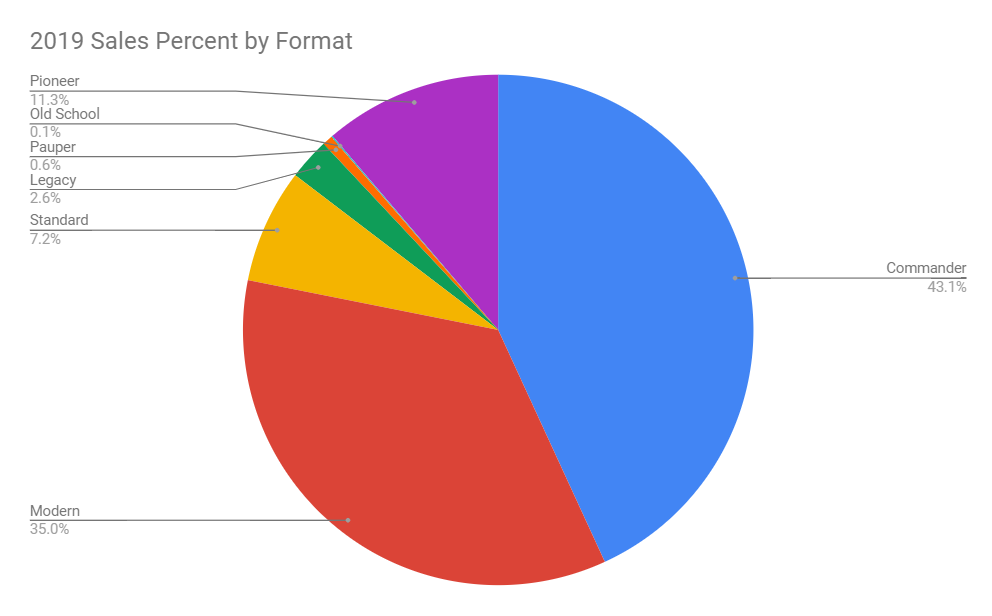
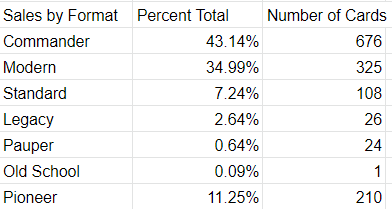
As you can see by the graph above, a significant portion of my sales came from Commander and Modern over the year. This isn't that unexpected, as I tend to avoid Standard cards due to their extra volatility and the fact that the sales window is much smaller than eternal cards. Thus, this data is heavily influenced by the stock I prefer to carry. One important takeaway though is the fact that Pioneer accounted for slightly over 11% of my total sales on the year despite the fact that the format didn't exist until late October.

I expect Pioneer to make up a very significant amount of the percentage of my overall sales next year, though it is important to note that when a new format exists demand is usually the highest and supply the lowest so it may cool off a bit in 2020. It's important to remember that WoTC actually started pushing the Pauper format this year, but sales for it were extremely minor with most of my sales for the format within about a 2-week time span after said announcement. I also keep a record of the number of sales per category:

When you compare the overall percentage total with the actual number of cards sold by format, you'll notice that while Commander had the largest overall percent also had over twice as many sales as Modern. This means that the average package value for Commander sales was significantly less than that of the average package value for Modern sales.

Looking over this data I would have been inclined to invest more heavily in Modern staples for store inventory than any other format, however, as previously mentioned the format staples have stagnated currently with the introduction of the Pioneer format so I'm fearful that any investment in those cards will likely pay smaller dividends now.

Expenses


The next graph I want to look at is overall yearly expenses by category. This is definitely micro-level data, but I think it's critical for any business to look at its expenses from an overhead view and review them. For example, almost 1/3 of my expenses last year were from speculation targets. When I look closer at those expenses, I see a lot of them were done in Q1 and a lot of them were UMA specs. I made those purchases assuming a steady growth of the modern playerbase brought about by a sudden drop in many staples prices.

Sadly, instead of demand growth, we had stagnation followed by what currently looks like a retraction thanks to the Pioneer format cannibalizing the same expendable income. We have typically seen Masters sets tank prices short-term, with a subsequent rebound about 3-12 months out; I think my logic at the time was sound and I don't think anyone predicted a brand new format this year. The point here is that I have a lot of capital sunk in speculation targets that have done nothing or even lost money over the last 9 to 12 months.

In 2020 I will be more cognizant of my speculation expenditures and likely be a bit less optimistic on many cards. I am also in the process of reducing my personal expenses when it comes to MTG.

I love the game, but I don't play it nearly as much as I used to. Throughout most of the year, I still purchased a lot of cards with the intent of playing with them only to put them into my personal binders and never take them out. I will likely be shifting some of these cards into my store inventory in the near future as I don't see the value in sitting on them as many aren't particularly attractive speculation targets either.

When looking at my business expenses, I found I likely saved a lot of money by buying in bulk. I purchased a large lot of played top loaders off of eBay and I purchase my stamps in large numbers as well. I unexpectedly had to purchase a lot of Card Savers from Amazon recently thanks in large part to a lot of playset sales of Pioneer staples that don't easily fit into top loaders.

Unfortunately, I wasn't able to find any used Card Saver lots on eBay before I was forced to buy new ones, solely to make sure I could support playset sales. One major lesson I learned from this year is to set a safety stock number on your shipping supplies and to track usage of them. This will prevent any impulse purchases at less than ideal prices. This is especially true when it comes to your padded envelopes, which when purchased in bulk can be as cheap as $0.05 each, whereas, if you are forced to buy them from a local store you're likely to be paying more like $0.5-$1.0 each.

Sales by Quarter


This graph is a simple pie chart of overall sales through each quarter. My best quarter in 2019 was clearly Q2, though it's important to note that I had a single major sale during that quarter that was near $1,000; if you remove that, it puts the best quarter at Q1. That's good news as we will soon be moving into Q1 of 2020. Normally, we expect Q4 to have the least in sales as many people's expendable income is tied up purchasing gifts for family members, due to the significant number of holidays that take place end of Q4. Pioneer's introduction in Q4 helped strengthen my sales and was actually a very good quarter for me.

Sales vs Expenditures

The last graph I want to go over today is my Sales vs Expenditures for each month. The first thing you'll notice is that I've trimmed off the actual sales dollar amounts. While I have no issue sharing generic information, I feel it's important for all businesses to keep important financial information confidential, including my own. However, we can still mine the information presented.

The most important thing of note is that my sales exceeded my expenses in 10 out of the 12 months, with January and September being the exceptions. This means that I had a good cash flow going throughout most of the year. When purchasing opportunities arose, I was able to take advantage of them because I had a positive cash flow. In fact, my overall expenses for the year made up only 57.8% of my sales volume, which means that I can easily reinvest going into January 2020.

Best of 2019: Twin’s Role in Modern

Are you a Quiet Speculation member?

If not, now is a perfect time to join up! Our powerful tools, breaking-news analysis, and exclusive Discord channel will make sure you stay up to date and ahead of the curve.

Editor's Note: The Twin ban remained highly controversial into 2019, especially among what I assume to be an extremely vocal minority of Modern die-hards. That sentiment pushed David to revisit Twin's previous role in the format with a thorough, data-driven approach. Also included in this re-run are David's thoughts headed into 2020, which deal with responses to the initial article and consider the metagame shifts we've seen over the last few months. We'll be back to our regularly scheduled programming this Friday; until then, happy new year from Modern Nexus! -J.B.

Assumptions and collectively-held beliefs are fickle and powerful things. They can affect perception and, in a way, become reality if unchallenged. Therefore, it is critical for the skeptical mind to evaluate and investigate these ideas for validity, especially in the wake of recent bannings. After being challenged on long-held beliefs about Splinter Twin's effect on Modern, I've decided to investigate them. Did Twin in fact regulate Modern successfully? My research has only made me more skeptical.

Initial Assumption

Twin's reputation as of January 2016 was one of format policeman. When the unexpected banning happened, many players panicked. We'd never lived in a Twinless format before, and the fear was that Modern would explode with fast linear decks. We all knew that Twin forced decks to play interaction to not die to the consistent combo on turn 4, so absent that pressure, why bother interacting? And yet, Wizards killed the deck for winning too much. Fair enough: Twin did seem to win everything. Despite this, Modern players continue to pine for Twin's return to reign in more linear decks.

The Question

However, would Twin even do that? I was explaining the many calls for Twin's unbanning to some newer players a few months ago, and one of them commented that Twin just seemed busted. Another asked why one deck mandating interaction was seen as acceptable instead of format-warping, a common argument against unbanning Twin. All were dubious that forcing interaction slowed decks down, and wondered if decks wouldn't just try and race Twin. My answer was that racing wasn't really an option, as Infect was the only deck that could, and doing so still proved a a long shot (especially given Twin's available tools at the time).
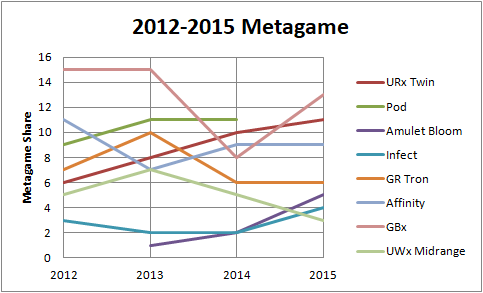
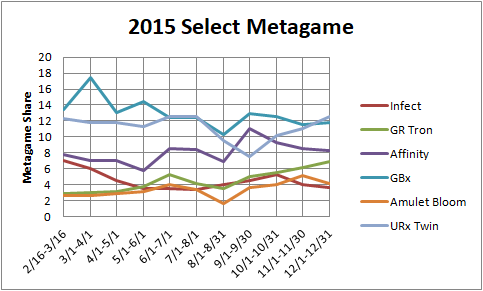
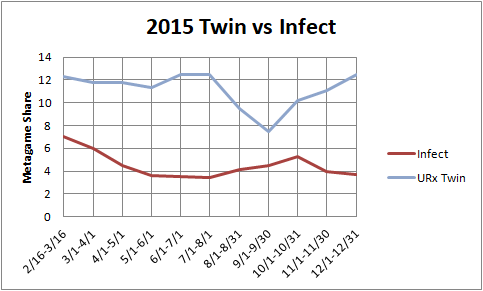
This conversation reminded me of how many cards in the linear/fast decks that get complained about didn't exist back in Twin's day. The power cards in Humans (Thalia's Lieutenant, Kitesail Freebooter, etc.), Cathartic Reunion, Arclight Phoenix, Spell Queller, Hollow One, Scrap Trawler, Search for Azcanta, and many others have all only existed in a Twinless world. Could Twin regulate them? For that matter, did Twin actually need to keep these kinds of decks out of Modern? Is there evidence of Twin regulating the format?

Year-by-Year Analysis

The logical place to start is by diving into the available data. Fortunately, MTGTop8 has been keeping stats for the Modern metagame forever, so I pulled their yearly data for the four full years that Twin was legal in Modern. I then collected data from top-performing unfair linear decks from the time of the Twin ban, some perfectly fair decks, and Birthing Pod. Note that Amulet Titan didn't have any reported metagame presence in 2012 and that Pod was banned in 2015.

Also, I'm aggregating all the Twin decks and all the GBx decks together in their respective mega-archetypes. This is mostly because my source grouped all Twin decks under the same banner, and frequently mixes Abzan and four-color lists in with straight Jund, but also to make the graph's I'm using less crowded.

Deck Name2012201320142015
URx Twin681011
Pod91111-
Amulet Bloom-125
Infect3224
GR Tron71066
Affinity11799
GBx1515813
UWx Midrange5753

Amulet and Infect enjoyed high points in their metagame shares while Twin was also at its peak. The other decks in the sample were below their peaks, but were relatively stable. Meanwhile, Twin had been rising prior to Pod's ban, and didn't affect Pod's share. In fact, only UWx declined between 2014 and 2015.

No Evidence Yet

The fact that Amulet Bloom and Infect increased their metagame share during Twin's 2014-2015 joyride pokes a hole in the Twin-as-regulator narrative. Twin had a pretty good matchup against both decks, so logically, they would fall off as Twin ascended. However, this is also a very zoomed-out view of things, and there are very few data points. Confounding variables and other metagame considerations could have affected the results, so I continued my investigation with a deeper dive.

Monthly Data Dive

Fortunately for me, 2015 was the year that Modern Nexus got started. Thus, I went back and gathered the Metagame Breakdowns for that year (oh, for Wizards to release that kind of data again) and pulled the decks that were available from my original investigation.

Deck Name2/16-3/163/1-4/14/1-5/15/1-6/16/1-7/17/1-8/18/1-8/319/1-9/3010/1-10/3111/1-11/3012/1-12/31
URx Twin12.311.811.811.312.512.59.57.510.211.112.5
Infect764.53.63.53.44.14.55.343.7
GR Tron2.933.13.85.34.23.55.15.56.26.9
Affinity7.877.15.88.58.46.9119.38.68.3
GBx13.417.413.114.512.412.410.312.912.511.611,8
Amulet Bloom2.72.72.93.24.13.41.73.74.15.24.2

Every deck shows volatility in the sample. Twin and Affinity finished the year meaninglessly higher than they started; Infect is very down; both Tron and Amulet Bloom are well above their starting positions. Again, this doesn't fit with the narrative about Twin. Also again, this isn't definitive.

I don't have enough individual data points for valid statistical analysis, so instead I have to rely on judging the observable trends in the data. However, this isn't arbitrary guesswork or Magic Eye interpretation. Specifically, if the belief that Twin regulated unfair or linear decks is true, then I should see a predator-prey relationship in the data. This would look like offset lines; in other words, the peak of the predator's line should match the midpoint of the decline of the prey's line, and vice-versa. This would clearly demonstrate that policing effect Twin was said to have.

This graph certainly doesn't look like the classic graph. There doesn't appear to be any real pattern in the data except for the dip every non-Infect deck in August and September, from which they all rebound. This was the period when Grixis Control was suddenly, though only briefly, a thing, but I can't be 100% certain this or any single deck or event were the cause. Again, this isn't helping Twin's case, but the graph is also busy enough that I separated the results to look for that predator-prey graph.

Deck by Deck

First up is Infect. Twin was favored, and as a result, Infect was considered a metagame call for when Twin was out of favor. Thus, I expected to see see Infect ascending where Twin was low.

There may be evidence in Twin's favor here. Infect is overall on a downward trend while Twin was effectively a flat line for February-May. Between May and July they both flatlined, then for the rest of the summer, Twin was in the summer slump while Infect was up. Once that was over and Twin rose again, there was a delayed decline for Infect, which is consistent with predator-prey. However, this was only demonstrated for part of the year, so I'm calling the relationship present, but weak.

For Twin vs Tron, there really isn't predator-prey type correlation. They're almost symmetrical and parallel lines. Tron is on an overall upward trend for 2015, but has a local peak the same time as Twin does in June. Tron recovers from the slump first and then follows Twin in recovery, ending well above its previous metagame share. This is more a lockstep kind of correlation, so this data doesn't support Twin policing Tron.

Affinity is very interesting. Up until August, Affinity and Twin are practically parallel, rising and falling at the same time (though not to the same degree). Afterwards, Affinity achieves its local peak at the same time as Twin's local trough. For the rest of the year, Affinity declines while Twin rises. This is consistent with both predator-prey and the metagaming cycle. Given that it's not true for about half the year, I'm saying on net it's weak evidence for Twin policing it.

Twin vs GBx and Jund in particular was generally seen as an even matchup. Jund could beat the Twin combo with Abrupt Decay and there was little Twin could do, so it turned into an attrition game. Their metagame percentages seem to reflect this analysis; Jund shows a lot of early volatility, while Twin is almost perfectly stable. They both feel the late-summer droop, but GBx recovers first, and they end the year equal. I don't think this provides any evidence in Twin's favor. Even if it does, it's very weak.

Twin was known to have a good Bloom matchup from Bloom's coming out party. The data does show signs of predator-prey, with Twin falling and recovering after Bloom. The early months see Bloom slowly rising, which is odd since Twin is fairly stable. Twin may have policed this deck.

Out of curiosity and as a comparison, I compared GBx to Infect and Amulet Bloom. I was surprised to see similarly weak predator-prey correlation. It makes sense that GBx would prey on Infect thanks to the discard and spot removal. However, midrange decks generally struggle against big mana, and Bloom had plenty of ways to get around discard. I'm not sure what to make of this.

Coincidental at Best

My monthly-data dive showed several possible instances of Twin preying on decks, as the model predicts. One was quite a solid example, while the others are questionable. This is complicated by there being a general decline in non-Infect decks in late summer, which may simply be a coincidence. The drop is integral to the predator-prey relationship being observably real, but again, I can't confirm that this wasn't some outside distortion making it look correct.
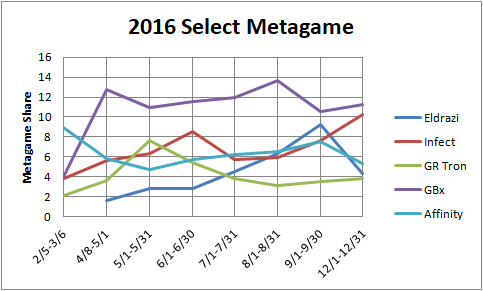
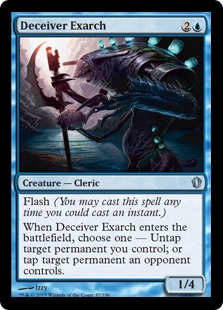
The overall picture indicates that Twin was not keeping Infect, Affinity, Tron, or Amulet Bloom down, as each gained metagame share while Twin was at its peak. The more detailed look suggests that Twin preying on these decks is at least plausible. This is neither evidence for or against the hypothesis that Twin regulated Modern, complicating a firm conclusion.

Beyond Twin in 2016

The other option is to look at the consequences of the Twin banning. In the aftermath, it was assumed that linear decks would dominate. Then Oath of the Gatewatch happened, and Modern went down the tubes for several months. This makes evaluating 2016, the year most free from the printings that supercharged a lot of linear decks in 2017, difficult. Once again, I'm using our metagame breakdown data from 2016, which is a bit fragmented since the January and March data was ruined and mooted by bannings with October and November lost to logistical problems.

Deck Name2/5-3/64/8-5/15/1-5/316/1-6/307/1-7/318/1-8/319/1-9/3012/1-12/31
Eldrazi34.91.62.82.84.56.39.24.3
Infect3.85.66.38.55.75.97.610.2
GR Tron2.13.67.65.43.83.13.53.8
GBx412.810.911.61213.710.511.2
Affinity8.95.84.75.76.26.57.55.3

Remember how bad Eldrazi Winter was? I didn't, until I started pulling up the data. I know there are those that believe that Twin would have kept Eldrazi in check for the same reasons it allegedly kept other decks down. While it is theoretically possible, the fact that Colorless Eldrazi dominated the No Banned List Modern Open makes that claim suspect. Maybe Eldrazi Winter wouldn't have been as bad, but I seriously doubt that Twin could have stood up to the spaghetti monsters.

Infect clearly ends the year as the highest performing stand-alone deck. This would suggest that once free of Twin and Eldrazi, it was the best deck in Modern, which supports the Twin-as-moderator argument. However, Affinity started the year strong having lost a bad matchup, then failed to maintain its position and fell quite a bit, which is contrary to the expectations. Tron also ends higher than it started, but on the same level as it was post-Eldrazi Winter. Jund recovered from its beating and did quite well, while Eldrazi turned into Bant Eldrazi and had a good September before falling off.

There's no real pattern to the data indicating that losing Twin unleashed a swath of linear decks. It is also worth remembering that the spike in Infect late in the year coincided with Blossoming Defense's printing.

Claims Unproven

After considering all the data I gathered, I cannot definitively say that Twin did in fact keep any linear deck in check. Since my assumption was that Twin was a policing agent, the ambiguity of the data is the more important result. If Twin was having a direct effect on the existing unfair decks by forcing them to interact, slowing down their kills, and therefore making them worse, I can't see it in the data.
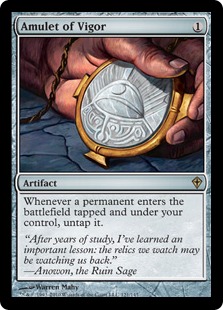
Whether Twin was keeping out otherwise viable non-interactive decks is similarly impossible to say. However, I doubt it. There wasn't a huge burst of diversity post-Eye of Ugin ban, and the metagame looked pretty similar to pre-Twin ban Modern. A lot of critical cards for the current linear decks were printed after January 2016. The only deck that could have existed then and didn't is Grixis Death's Shadow, but as that deck developed from Traverse Shadow, I doubt it would have. This leaves the pro-Twin claim on shakey ground.

Specific Examples

Since the overall data doesn't clearly answer the question, I've also looked at how specific decks reacted to the banning. This has only served to further weaken the case for Twin's police powers.
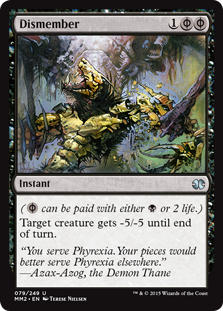
First, consider Amulet Bloom, arguably the poster child for broken linear decks. As demonstrated at the Pro Tour, the deck was insanely powerful and capable of winning on turn 2. However, it had an appallingly bad Twin matchup, to the point that Justin Cohen didn't consider it winnable by anything other than luck. Despite this and how well Twin did in 2015, Amulet still increased its metagame share over the year. That's impressive, especially considering how intimidating the deck was to pick up.

The second, and I think more damning, study was to compare Twin-era linears to their post-Twin counterparts. If they had removed interaction in favor of faster kills, there might be something to the notion of Twin forcing interaction.
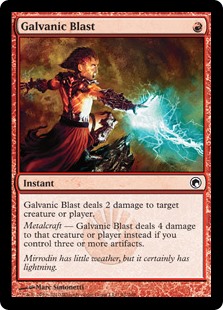
However, I didn't find that proof. Infect decks from the end of Twin era are virtually identical to decks from the eve of Gitaxian Probe's banning: no more or less interaction between the maindeck and sideboard. Spellskite and Wild Defiance got bumped from the maindeck to the sideboard to make room for Blossoming Defense, while the overall number of counters and Dismembers remained the same.

Perhaps the most devastating evidence against Twin's supposed policeman effect is Affinity. The latest traditional Affinity deck (as of writing) is virtually unchanged from the Affinity decks of 2015. Even Galvanic Blast is still a mainboard four-of, while a few counters or Thoughtseize remain in the sideboard. I'm not seeing proof that Twin forced interaction as much as proof that decks that want some interaction play some, regardless of the metagame.
Perception Becomes Reality

If Twin had no provable tangible effect on the viability of linear decks in Modern, why was that such a widespread belief? I suspect and will argue conventional wisdom. It makes perfect sense that Twin would have such an effect. It was a consistent turn four kill that had to be respected at all times. That was the speed limit, and there really weren't decks that consistently beat Twin in a footrace. It made logical sense for it to be true, and with everyone repeating the line for years, it became accepted as truth.

In this scenario, Twin was a format regulator through perception. The belief that a deck that would just lose to turn four Twin being unviable served as the format's gatekeeper. In other words, the conventional wisdom of Twin's effect produced a psychological barrier that had the effect of making the effect true, regardless of what was factually true.

Unbanning Complications

If the truth of Twin's regulatory powers were primarily psychological in the first place, it seems unlikely that it could be so again. Decks now have the means and likely the willingness to challenge Twin when this arguably wasn't true previously. Given how Modern's changed since January 2016, I believe such a challenge would be successful. Many of the linear decks that Twin's champions claim will be regulated were not viable in 2015 because the cards that made them decks didn't exist. Given the speed of decks like Hollow One, I have serious doubts that Twin would effectively regulate them.

The only certain impact of unbanning Splinter Twin would be the unleashing of a combo-control deck. This deck is capable of winning on turn four in a way that requires players to leave mana open or simply die. How healthy or desirable is this effect?
Finally, there's the diversity question. Back in Twin's day, the card pool was smaller, so fewer decks were viable. However, this was also a time when the best decks held 10% or more of the metagame year after year. In 2017 and 2018, only Death's Shadow was that high, a statistic that did not persist. Twin, Pod, and Affinity were at the top of the metagame every year from Modern's inception until relevant bannings took place. 2017 and 2018 saw huge shakeups in the top tiers. Whether the actual strategic diversity has changed is unclear, but it is clear that there is no longer a presumptive best deck year after year, and that increases competitive diversity.

My Bottom Line

I suspect that if Twin is unbanned and is still good (which is unknowable), it would draw in significant metagame share. After all, why play any other deck? Why play Arclight Phoenix or Storm when Twin is a more reliable combo than storm and can incorporate most of Phoenix's tools? Would Twin just coopt Thing in the Ice to easily outclass anything in its colors?

Twin also resists hate. There was no sideboard card or deck that knocked Twin off its perch prior to the ban, and if Twin is still good I have no reason to think one would today. Torpor Orb, Suppression Field, and Ghostly Prison were all effective against the combo, but weren't enough then, and there's nothing better now. Fatal Push requires a revolt trigger to kill Exarch or Pestermite. Twin can also play into this, because it's extremely hard to be prepared for both the combo and control plans; if there's going to be hate, just sideboard around it and still win.
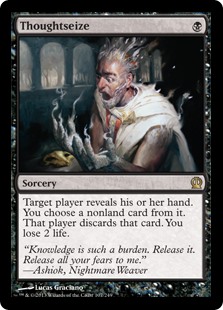
Right now, there are good reasons to pick any deck and to switch off decks as the metagame shifts. Is that something worth risking?

Addendum: Interactivity in Modern

Since this article was originally published, I've been challenged by a number of players about Modern's interactivity being relativley unchanged since Twin was banned. Their claim is that it was never about Twin actually making players play interactive spells, but instead, that it made players consider and care about opposing decks. With Twin around, players couldn't just goldfish opponents but had to be aware of what they could do, and this slowed the format down. It is hard to argue that Modern saw a high point in goldfishing right after the Twin ban, and Hogaak Summer didn't help. Therefore, the notion goes that having Twin back could punish goldfishing and improve the format.

Again, there is no evidence that this was ever true. Cohen knew what Twin was capable of, but it didn't matter to him. He was going to execute his gameplan regardless of what Twin did, which is goldfishing. Affinity and Infect demonstrated similar gameplans then, and continue to do so now. The evidence is clear that decks that want to interact will do so regardless of what an opponent is planning. It's impossible to predict which decks will be at a Modern tournament, so why bother trying? It's just better to do something well and place the onus of interaction on the opponent. No one deck is going to change that.

What is Interaction?

I think a significant part of the resistance I've encountered is disagreement over what it means to be interactive. If players are looking for interactive games in terms of trading cardboard and the last threat standing wins, Ă  la Jund mirrors, then yes; there's very little of that type of Magic in Modern. It's actually fairly rare to have that style of Magic at all, outside of some Legacy matchups. If interactive instead means caring about and interfering with opposing gameplans, then Modern is often highly interactive.

Under the former definition, Humans is uninteractive. Under the latter, the opposite is true. Humans doesn't trade cardboard, but instead seeks to disrupt the opponent's gameplan on-board: Meddling Mage, Thalia, Guardian of Thraben, Reflector Mage, and Kitesail Freebooter explicitly care about what the opponent is doing, and are therefore interactive. I think that those pining for Twin to make Modern an interactive haven are using too narrow a definition.

What Do you Want?

On that basis, I'd argue that the metagame in 2019 was (on the whole) more interactive than in 2015. In 2015, Twin had 11% of the meta, followed by Affinity with 9%. Twin is defined as being interactive because it played a lot of counterspells and some burn spells to supplement its combo kill, which let it sometimes win via midrange-style attrition. The primary purpose of the interaction was to protect the combo, but it could become the primary plan depending on the situation. Affinity is very much a linear attack deck despite having some interactive elements.

In 2019, there's a three-way tie at 7% between Burn, Izzet Phoenix, and Dredge for best deck. Dredge is similar to Affinity interactively (and is being boosted by Hogaak decks), but Burn and Izzet Phoenix are more like Twin. They have linear attack plans, but also have elements than can be used to interact if necessary. Thing in the Ice is functionally a sweeper, while Grim Lavamancer isn't played to go for the face. They're not as good at switching gears as Twin was, but it is something that can happen, and some Izzet players embraced the role.

Looking down the listings, 2019 saw Humans, Tron, Grixis Death's Shadow, Jund, and UW Control do very well. 2015 had GBx, Tron, Burn, Delver, Amulet, and Infect in similar positions. I count 4 interactive decks in 2019 compared to 3 in 2015, and the metagame is noticeably more diverse in 2019. Thus I conclude that the thinking on what interaction means is too reductive and is hiding the fact that most decks in Modern care about opposing strategies.

Murky Waters

I cannot say definitively if Twin actually policed Modern because I cannot prove it with data. Thus, I cannot extrapolate whether it would do so now. Absence of evidence is not evidence of absence, but the fact that data did not support the policing claim strongly suggests the claim is untrue. The only effect that I can say unbanning Twin would have is to return that turn-four combo deck to Modern. Given that there are serious concerns about the gameplay the deck encourages, I don't think it's something Modern needs. Krark-Clan Ironworks being banned for similar gameplay demands makes a Twin unban look even more remote.

If Twin doesn't actually police Modern, but is just another busted combo deck that sucks up everyone else's metagame share, is it worth having? If it does police Modern, is the way it does so good for format health and player enjoyment? The thought I can't shake after this data dive: quis custodiet ipsos custodes?

Facing Reality: A 2019 Look Back

Are you a Quiet Speculation member?

If not, now is a perfect time to join up! Our powerful tools, breaking-news analysis, and exclusive Discord channel will make sure you stay up to date and ahead of the curve.

It’s the holiday season already, and 2019 has flown by. As the year comes to a close, I was looking back at my content from last year and I stumbled upon this prediction article, entitled “MTG Finance Predictions for 2019.” As a way to hold myself accountable, I’m going to review each of the predictions to see if they came to fruition or if I was a way off.

The results may surprise you…

Prediction 1: Box Topper Madness

Twelve months ago I discussed the scarcity and desirability of Ultimate Masters Box Toppers. After exploring their print run, I concluded these cards would take off, following their Masterpiece brethren. In all honesty, I hadn’t been tracking these prices closely, so I wasn’t sure what to expect when I look0ed them up.

Within the article, I shared some hot buy prices for key Ultimate Box Toppers. Let’s see how they compare with buylist prices one year later. Below are the hot buy pictures from an event that took place at the beginning of 2019.

I’ll use Card Kingdom’s buylist as reference, though prices may vary marginally from vendor to vendor.

Card: Today’s Buy Price (Last Year’s Buy Price In Picture), % Change
Liliana of the Veil: $120 ($210), -43%
Snapcaster Mage: $90 ($145), -38%
Cavern of Souls: $100 ($140), -29%
Tarmogoyf: $80 ($100), -20%
Karn Liberated: $80 ($110), -27%
Dark Depths: $39 ($80), -51%

The list goes on, but I think the point is clear. My prediction that “folks will catch on in 2019 and start to make moves” didn’t come to fruition. What’s more, I had expected the #MTGfinance crowd on social media to bang the drum on these rarities, catalyzing buyouts. That never happen, nor did tax return refunds funnel into these chase foils as I had anticipated.

In short, my prediction was a complete bust and any Ultimate Box Topper investment, with few if any exceptions, did not payout.

Grade: F

Prediction 2: Fewer Reprints = Rising Modern Prices

Wizards of the Coast is taking a break from Masters sets, and this was supposed to cut down on reprints. My hypothesis was simple: fewer reprint sets meant Modern cards had a runway to take off. After all, the format was arguably healthy and that momentum should have seen demand for Modern cards remain robust.

Two things happened that completely unraveled this thesis. First, Wizards found new ways to introduce reprints into the market. The Mystery Booster Packs were one avenue to bring reprints into the market, but there were a couple others. This included the Signature Spellbook series and Modern Horizons (no Modern reprints, but some older cards).

Granted, these reprints were relatively inconsequential when compared to the nonstop release of Masters sets from previous years. That’s where the second disrupting factor comes into play: the introduction of Pioneer, a new non-rotating Magic format.

Pioneer is going to cannibalize Modern; there’s no way around this. The nascent format has already generated a load of buzz, brewing, and excitement, and I don’t expect this to diminish in 2020. Just as Legacy suffered as Modern grew in popularity, the same will now take place between Modern and Pioneer. The result: a reduction in demand for Modern cards.

My number one target this time last year was Jace, the Mind Sculptor. According to Trader Tools, the best buylist for a Masters 25 Jace this time last year was $75 and retail was $124. Now the best buylist price is $71 and retail is $140.

There was an error retrieving a chart for Jace, the Mind Sculptor

In essence, any investment in Jace would have netted 0% returns for 2019—an abysmal performance, though better than all those Ultimate Box Toppers at least.

I also mentioned Mox Opal and Manamorphose as Modern cards with upside. Throughout 2019, the buylist on these two cards from $71 to $72 and $10 to $6, respectively. It’s worth noting that Mox Opal’s buy price did peak up near $100 at one point in 2019 and Manamorphose’s buy price was up near $13.50. So these buys may have paid out if you followed in 2019, but it would have depended on timing.

There was an error retrieving a chart for Mox Opal

Suffice to say, my second 2019 prediction was lukewarm at best.

In this section, I also called out Reserved List staples Yawgmoth's Will and Gaea's Cradle. Buylist on these two cards went from $57 to $50 and $270 to $230, respectively.

There was an error retrieving a chart for Gaea's Cradle

Even these two popular Urza’s Saga cards didn’t do much of anything throughout 2019—another disappointing result.

Grade: C-

Prediction 3: Stabilization in “The Four Horsemen” Sets

This was my biggest bet of the year: that after rampant buyouts of 2018, 2019 would be a year of stabilization for desirable cards from Arabian Nights, Antiquities, Legends, and The Dark.

Old School is still a lively format, and I often see its dedicated Discord channel abuzz with chatter. Cards are posted for sale on a daily basis, and often times anything well-priced is picked up quickly. The format is clearly still popular in certain pockets throughout the country.

How does that translate into prices? Well, last year I mentioned that The Tabernacle at Pendrell Vale’s buy price at Card Kingdom spiked to over $2,000, and had since reduced to $1,150. Let’s see how this compares with today’s buy price:

There was an error retrieving a chart for The Tabernacle at Pendrell Vale

Currently, Card Kingdom is paying $1,065 for the Legendary Land from Legends (Channel Fireball is paying $1,100). After dropping over 50%, I’d say this modest decrease throughout 2019 is minimal, and does reflect stabilizing market prices.

Another example I specifically referenced is Singing Tree. Last year, I buylisted a copy to Card Kingdom for $95, then purchased another copy at $68. How has that purchase shaken out?

There was an error retrieving a chart for Singing Tree

Not so hot: Card Kingdom currently pays $46. That said, they used to pay even less, so perhaps this one has also finally bottomed out. Other cards I discussed included Haunting Wind, Recall, Citanul Druid, and Pyramids. Haunting Wind and Citanul Druid pulled back hard, but Recall has held up fairly well. Pyramids is a whole separate situation given its buyout by a single individual.

I was right in predicting there wouldn’t be “massive buyouts in 2019,” I believe my call that “prices will stabilize and slowly grind higher throughout the year” wasn’t too far off. We’ve seen a bit more stabilization and less grinding higher than I would have liked, but I think we’re on track for that come 2020. I’m still optimistic about these cards’ prospects and I continue to buy, sell, and trade them on a weekly basis as I attempt to optimize my collection for a strong year ahead.

Grade: C+

Wrapping It Up

Taking an estimated average of my three grades, I have concluded that the grade for my overall predictions of 2019 is a D. That’s pretty horrendous, honestly, and it brings into question where I went wrong. I mean, at the time of writing last year’s article I was so confident in my predictions. For none of them to play out as I had expected is embarrassing.

I have no real excuse for these poor predictions. All I can say is that Wizards did drop a few surprises on me last year (Pioneer being the biggest one). The hype around Ultimate Box Toppers did not maintain its momentum as I had predicted. Old School cards didn’t begin their grind higher in 2019, but I truly believe prices have stabilized and should be healthy come 2020.

My biggest takeaway here is that predicting the direction of the Magic market in a broader sense is extremely difficult. Rather than try to anticipate what events will unfold over the course of a year, it’s best to react to trends on a daily or weekly timeline. This is the best way to minimize risk while taking advantage of market fluctuations.

Often times, we see card prices take off as they become the “story of the day”, only to drop right back down again days later. These are perhaps the best opportunities to profit from the hobby, rather than taking Magic as a broad investment strategy. I genuinely believe holding a basket of Reserved List cards will offer positive returns over the long run. But any other cards not on the Reserved List are not worth holding for long periods of time as investments (of course if you’re playing with the cards, then holding cards makes sense).

This is my biggest takeaway from 2019: that card prices will fluctuate and I need to remain agile day in and day out. Buying a bunch of cards and throwing them in a closet for a few years isn’t an actionable strategy to make money like it used to be. Sure, you may get lucky. But any profits from such an approach is just that: luck. I don’t plan on following that strategy, and I expect my activity in 2020 will eclipse that of 2019 as a result.

No more 12-month predictions for me. From now on, I’m going to make transactional decisions day-to-day or, at most, week-to-week. Trying to look out beyond that horizon is akin to trying to predict stock market movement—it is a fool’s errand to try and time the market.

…

Sigbits

  • Many Old School cards have indeed seen recovery as 2019 comes to a close. I was perhaps a little harsh on myself in giving that C+ grade. For example, Serendib Efreet is on Card Kingdom’s hotlist, and recently its buy price jumped from $230 to $280. This one is seeing its recovery take shape.
  • Even though Gaea's Cradle is well off its high, it is on Card Kingdom’s hotlist with a robust $230 buy price. This is another one that is fine to hold long term. But if you choose to do so, be fully aware that its price will fluctuate from week to week and month to month. That said, I do think the general direction for this card over a multi-year timeframe is upward.
  • Another Old School card that has recently made its return to Card Kingdom’s hotlist is Erhnam Djinn. Currently, they are offering $130 for near mint copies. During Old School’s peak, I once declared that if this card’s buy price would get near $200, I’d cash out of my copies and play budget Chronicles copies in their place. It got close, but never got there. I don’t think we’re near a $200 buy price today, but I could see a steady grind higher in 2020 (then again, don’t count on it…my 12-month predictive capability is questionable at best).

My 2020 Racehorse: Simic Urza

Are you a Quiet Speculation member?

If not, now is a perfect time to join up! Our powerful tools, breaking-news analysis, and exclusive Discord channel will make sure you stay up to date and ahead of the curve.

With the new year just days away, every Modern player's got something on their mind: which new goodies will we get next? What's the deal with Pioneer? How are winning grinders tweaking their decks going into 2020? While we'll cover all that in the coming weeks, today I want to focus in on the format boogeyman, Simic Urza, drawing special attention to what I think is the deck's most promising build yet.

For starters, here's the list:

Urza Control, TOASTXP (1st, Modern Challenge#12049241)

Creatures

4 Urza, Lord High Artificer
4 Gilded Goose
4 Ice-Fang Coatl

Planeswalkers

4 Oko, Thief of Crowns

Artifacts

4 Arcum's Astrolabe
4 Mishra's Bauble
4 Mox Opal
3 Engineered Explosives

Instants

4 Archmage's Charm
3 Cryptic Command
2 Metallic Rebuke

Lands

1 Breeding Pool
1 Flooded Strand
1 Hallowed Fountain
4 Misty Rainforest
2 Mystic Sanctuary
4 Polluted Delta
2 Scalding Tarn
1 Snow-Covered Forest
4 Snow-Covered Island

Sideboard

2 Ashiok, Dream Render
4 Damping Sphere
4 Path to Exile
2 Pithing Needle
1 Teferi, Time Raveler
2 Veil of Summer

Today, we'll look at how the deck's latest iteration calls back to the Death's Shadow archetype's own storied history and at the potential for Simic Urza to similarly homogenize midrange.

The Death's-Shadow-fication of Urza

Back in November, David provided detailed coverage of the different Urza builds we'd seen so far. The final build in that grouping was the first iteration of Simic Urza, or Oko Urza, a 60 that splashed green for the infamous/ubiquitous three-mana planeswalker.

A month and some change later, that draft seems especially limited; it clung to the Whir of Invention package to keep Thopter-Sword, and was generally light on interaction. Rather, Emry, Lurker of the Loch featured prominently to give the deck three distinct angles of attack: Urza, Emry, and Oko, with all of them synergizing to various degrees. Regarded through this lens, Thopter-Sword feels excessive.

A Looming Shadow

The deck's major predator coming out of SCG Atlanta was Grixis Shadow. That strategy packs everything combo decks fear: high consistency, quick clocks, and ample, relevant disruption. Simic Urza had little hope of interacting with the likes of Gurmag Angler and Death's Shadow other than turning them into Elk, a plan Stubborn Denial, Inquisition of Kozilek, and Thoughtseize had more than covered. It was also especially soft to the tools Grixis Shadow wielded both in and out of the sideboard, relying on both individual playmakers (opening it up to discard) and graveyard loops (to Surgical Extraction).

If You Can't Beat 'Em...

I find it fitting, then, that Urza's response to such a gatekeeper was to take a similar path to Shadow's. Shadow decks were originally hyper-streamlined versions of Jund Rock; they kept only the strongest, most dedicated beaters and splashed every which color to benefit from the most impactful, efficient disruption.

Simic Urza, too, is trimming the fat; gone is the Emry package, and the Whir package. In their place? More disruption, notably full sets of Archmage's Charm and Ice-Fang Coatl. The former counters spells, draws cards, and even steals Death's Shadow; the latter blocks Shadow and everything else at a card-positive rate for the caster.

Since all eight of these disruption pieces also dig through the deck, I find this trajectory similar to Shadow's; after gutting their Jund Rock prototype, those decks had some space to fill, and they did so with cantrips ranging from Street Wraith and Mishra's Bauble (now longstanding staples there) to Traverse the Ulvenwald (still a necessity in green versions) to Manamorphose (more of a blip) to Once Upon a Time (which seems to have antiquated Manamorphose).
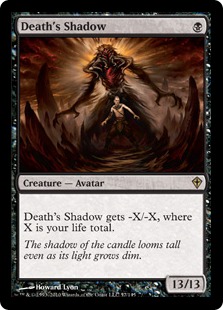

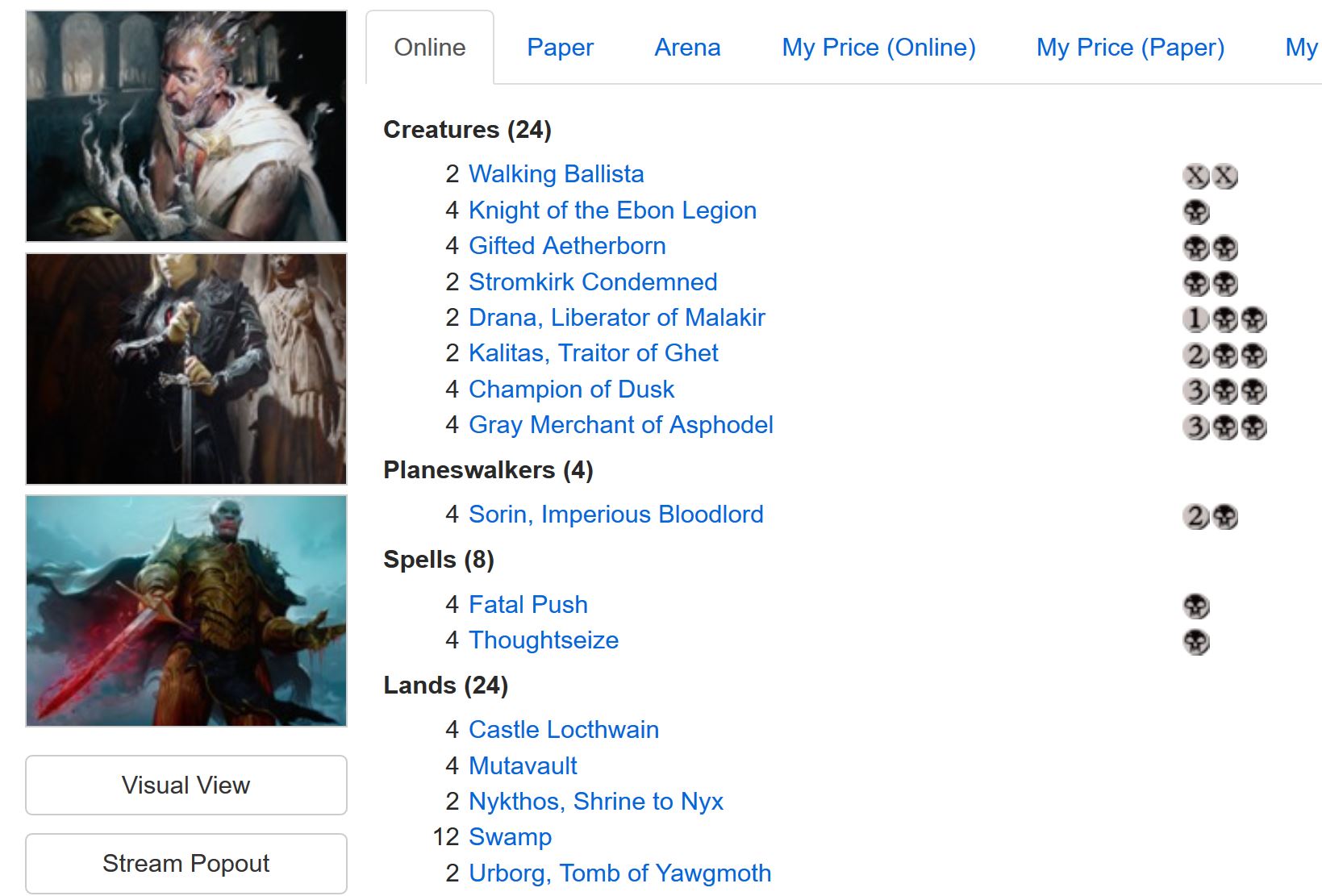
One major difference between the development of each deck is their motivation. Boiling Jund down to its bare strategic essentials with Death's Shadow increased deck consistency and proactivity, but at the cost of accepting some fragility; Jund Rock is much more robust than Shadow in the face of, say, Rest in Peace or Chalice of the Void. Urza seems to be vying for the opposite. It's now less explosive against combo, but significantly sturdier when met with enemy disruption, as it's suddenly loaded with two-for-one exchanges (including even Urza and Oko themselves).

Simic Central

One question the shift has raised for me is how similar Simic Urza ends up to other midrange decks. David has pointed to both Urza and Oko as some of the most decisive midrange plays in the format, and recognized that each is most at home in this sort of shell. With the shell itself transitioning even further away from its old combo focus, I wonder whether other midrange decks have much of a niche in Modern, especially when they're running some of the same components.

Consider this Bant Midrange list:

Bant Midrange, SPIRITMONGER17 (5-0)

Creatures

2 Brazen Borrower
4 Gilded Goose
4 Ice-Fang Coatl
4 Noble Hierarch
4 Spell Queller

Planeswalkers

2 Jace, the Mind Sculptor
4 Oko, Thief of Crowns
3 Teferi, Time Raveler

Artifacts

2 Arcum's Astrolabe

Instants

4 Path to Exile
2 Cryptic Command
2 Force of Negation
1 Settle the Wreckage

Lands

2 Breeding Pool
3 Flooded Strand
2 Hallowed Fountain
4 Misty Rainforest
1 Mystic Sanctuary
3 Snow-Covered Forest
3 Snow-Covered Island
1 Snow-Covered Plains
1 Temple Garden
2 Waterlogged Grove

Sideboard

1 Settle the Wreckage
2 Ashiok, Dream Render
2 Ceremonious Rejection
1 Dovin's Veto
1 Lyra Dawnbringer
2 Mystical Dispute
2 Rest in Peace
2 Stony Silence
2 Veil of Summer

Or this Temur Midrange one:

Temur Midrange, YAMAYAMA (5-0)

Creatures

4 Snapcaster Mage
4 Ice-Fang Coatl

Planeswalkers

1 Jace, the Mind Sculptor
1 Narset, Parter of Veils
3 Oko, Thief of Crowns
2 Wrenn and Six

Artifacts

4 Arcum's Astrolabe

Enchantments

1 Blood Moon

Instants

2 Archmage's Charm
2 Cryptic Command
2 Force of Negation
4 Lightning Bolt
1 Magmatic Sinkhole
3 Opt
3 Remand

Lands

1 Breeding Pool
1 Flooded Strand
1 Lonely Sandbar
4 Misty Rainforest
1 Mystic Sanctuary
4 Scalding Tarn
2 Snow-Covered Forest
6 Snow-Covered Island
1 Snow-Covered Mountain
1 Steam Vents
1 Stomping Ground

Sideboard

1 Blood Moon
1 Force of Negation
1 Magmatic Sinkhole
3 Anger of the Gods
1 Ashiok, Dream Render
1 Ceremonious Rejection
1 Collector Ouphe
1 Flame Slash
2 Mystical Dispute
2 Veil of Summer
1 Weather the Storm

Both decks were published in 5-0 dumps this month, and each strikes me as significantly worse than Simic Urza. They're both doing the midrange thing: interacting with opponents and then closing the game with bigger threats or added-up chip damage from value-stocked utility creatures like Snapcaster Mage. Oko is a worse payoff here than in Simic Urza, but it's still the best payoff available, as there's no Urza, Lord High Artificer.

Gone is the flexibility of Engineered Explosives, and with it, the critical artifact package; not only does that package enable Oko to shine (and Urza to be featured at all), but it turns on Mox Opal, allowing the threats to consistently drop a turn early. Perhaps the benefits of Jace, the Mind Sculptor over Urza, Lord High Artificer can be argued, but I'm not so willing to entertain a debate about whether or not it's good to run a Mox in a deck centered around three- and four-drops.

All these concessions add up to very large shoes non-Simic Urza decks must fill. And if recent innovation is any indication, the deck has plenty of forms. Lots of combo in the metagame? Back to Emry. Something of a mix? Nothing wrong with splits. Missing Thoughtseize and Fatal Push? With the Goose-Mox mana package, splashing is trivial.

Like Death's Shadow before it, the deck is bursting with possibilities, especially now that the "control version" has been discovered. Where players want to fall along the spectrum is up to them, bolstering the importance of metagame reads. Also like Death's Shadow, I expect Simic Urza to have a centralizing effect on midrange over the next few months before the Next Big Thing arrives and relegates it to mere format stalwart.

Galloping Into the '20s

That's why my money's on Simic Urza for the new year. Let me know where you're placing your bets, and we'll see you in 2020!

A Guide to Renting on MTGO: Part III

Are you a Quiet Speculation member?

If not, now is a perfect time to join up! Our powerful tools, breaking-news analysis, and exclusive Discord channel will make sure you stay up to date and ahead of the curve.

Welcome back, folks.

In Part I, I covered the basics of renting on MTGO, and in Part II I provided details about the renting plans that Cardhoarder and ManaTraders offer. Today I'd like to go beyond the basics and explore a few more "advanced" applications of renting, strategies useful to both investors and players alike. These strategies are not exhaustive, but they show some the breadth of how renting can help you play Magic in the way you want to.

I. Renting As You Build your Collection

Maybe you came to MTGO from Magic Arena looking to play Pioneer or have a more traditional TCG experience. Maybe you came to MTGO because your local game store closed down or, due to changing personal circumstances, you no longer have time to go as often as you'd like. Maybe you're like me, an MTGO Limited player dipping his toes into Pioneer and Modern for the first time, and that $600 price tag looks a bit steep.

Renting is a great tool you can use to play Constructed without making a steep initial investment. I mentioned this in Part I of this series, but what I didn't discuss is that this can be placed into a collection-building context. You can use renting as an on-ramp of sorts, renting the majority of cards in a deck you play at first, and then gradually renting less and less over time as you build your collection.

Case Study: B Vampires (Pioneer)

Let's say you're new to MTGO and you want to play B Vampires in Pioneer (decklist here). The total value of that deck is $319.92. To rent this deck would cost $9.60/week on Cardhoarder and $8.07/week on ManaTraders, so you decide to go with ManaTraders.

$8.07/week is great if you're playing with the deck a lot. In general, too, Constructed on MTGO is positive EV, so you aren't likely to incur any additional costs by playing with the deck, and a single 4-1 finish pays for your subscription for the whole week! But, consider this: If you rent this deck for three-quarters of a year (38 weeks to be exact), you will have paid more than the whole cost of the deck just to rent it! If you're a black mage, really enjoy the B Vampire deck, and want to keep playing the Pioneer or Modern formats, it is strongly worth considering gradually purchasing some Black staples in the B Vampire deck so that you can gradually lower your rental limit and save money in the long run.

Here's how I might adopt this strategy with this deck:

Month 1: Rent $8.07/week with ManaTraders
Month 2: Rent $8.07/week, buy 2 Thoughtseize
Month 3: Rent $8.07/week, buy 2 Thoughtseize
Month 4: Rent $7.39/week with Cardhoarder, buy 1 Liliana, the Last Hope
Month 5: Rent $6.40/week, buy 4 Mutavault
Month 6: Rent $6.09/week, buy 4 Fatal Push; 4 Castle Lochthwain;  & 1 Nykthos, Shrine to Nyx,
Month 7: Rent $5.03/week, buy 1 Murderous Rider & 2 Kalitas, Traitor of Ghet

Now, after 7 months, the rental limit you need is $168 instead of $320, and you own a lot of Pioneer, Modern, and Standard staples that you can use in other decks and formats. This means that you'll be paying about $10/month less for your subscription, and you'll have greater flexibility to play different decks in the future.

When implementing this strategy, remember the following two pointers. (1) This strategy is easier to implement with Cardhoarder because you can continually lower your rental limit. (2) Notice how I opted to buy more generic cards instead of the Vampire cards. I opted to own the Thoughtseize, Murderous Rider, and Liliana, the Last Hope instead of Knight of the Ebon Legion and Sorin, Imperious Bloodlord.

That's because these cards are more likely useable in other strategies, and thus will be more "valuable" for those who like to rent decks. Remember that a big advantage of renting is that you aren't losing money from buying and selling the same card over and over again, essentially paying the difference between the buy and sell price every time you complete this transaction cycle. When exchanging decks, you're far more likely going to want to send back those vampire cards instead of those Thoughtseizes and Fatal Pushes.

II. Mitigating the Risk of Ownership

Renting cards that you suspect will be worth less in the future is a way for all players on MTGO to benefit from renting. This is the main reason why I'm interested in signing up for a rental plan, and it is likely going to make me more comfortable jumping into Constructed on MTGO.

The last time I tried to seriously start playing Constructed on MTGO I got burned by the declining price of Exploration.

I bought into a Lands deck for Legacy, and from the time I started to the time I stopped, Exploration had crashed from $80 to $30, wiping out $200 from my account in a flash. Renting can protect you from this scenario if you can predict whether a card is going to decline in value. Here are some good guidelines:

(a) Rent cards with Treasure Chest frequencies 12 or greater.

MTGO maintains a treasure chest page where you can look at what cards are being added to the MTGO economy through treasure chests, as well as how often they are being added. Bookmark this page. The higher the treasure chest frequency, the more are being pumped into the system. Any card with a 6 or greater frequency will create significant downward pressure on Standard, Pauper, Legacy, or Vintage; any card with a 12 or greater frequency will create significant downward pressure on Pioneer or Modern cards.

(b) Rent cards that are likely to be banned.

If a card is dominating a format and you see a lot of player anger being directed at that card, there's no reason for you to assume the risk that comes with owning that card. Just rent it instead.

(C) Rent cards that have been trending downward over time.

Some cards, even iconic ones, just aren't as good as they used to be. Others have had their price buried by reprints or past treasure chest inclusion. Avoid these cards. If the card's price history on MTGGoldfish looks like those of the Innistrad trifecta of Liliana of the Veil, Tarmogoyf, or Snapcaster Mage, rent!

III. Shorting

For those unfamiliar with the term, shorting is the trading practice of selling a commodity, stock, or security with the intention of buying it later at a cheaper price. Applied to Magic and specifically to renting on MTGO, shorting is the practice of renting a card, selling it, then buying it again to return to the company you rented the card from. The goal of the practice is to rent the card at a certain price, then sell it before it drops in price; that way when you buy the card again to return, you'll have made a profit.

Shorting is against the terms of service for both Cardhoarder and ManaTraders, and thus has something of the allure of Eden's forbidden fruit. It is the only way to profit off a card that drops in price.

Putting aside the ethical concerns, shorting is not a good investment strategy to "seek out". The main reason for this is that you have to pay a weekly fee in the form of a rental subscription to be in a position to short cards in the first place. A second main reason is that you can only short four copies of any given card, so you can't profit in a major way in the same way that you can through traditional speculation and investment. This means that the only people who should even consider shorting are those who are already using the rental service for the sake of playing MTGO; you shouldn't sign up for a rental service for the sake of unlocking the ability to short cards.

Now that B&R announcements will no longer be regular and forecasted, the best opportunity for shorting cards is no longer available (e.g. renting out Okos and OUATs and selling them before each B&R announcement until the cards get banned). There will be instances when shorting makes sense for those with a good pulse on the market, but I would only short cards you are already renting for playing purposes. My recommendation is to focus your MTGO finance energy on investment and speculation, not on shorting.

Signing Off

Thus concludes this series on renting on MTGO. I'm happy this series was so well received and helped so many people. I will be signing up for a rental service myself (likely with a card value limit of $100) that will help me get into Pioneer and Modern, and I know from your feedback that many others are doing the same.

I wish all of you a merry Christmas and a happy New Year, and I'll be back in the new year with more MTGO finance content. I'm enjoying being back in Texas for a while before returning to Toronto, where I expect the ground to be blanketed in snow upon my return. Until then, hopefully, I'll bump into some of y'all on MTGO!

Want Prices?

Browse thousands of prices with the first and most comprehensive MTG Finance tool around.


Trader Tools lists both buylist and retail prices for every MTG card, going back a decade.

Quiet Speculation