menu

Digging through Destiny

Are you a Quiet Speculation member?

If not, now is a perfect time to join up! Our powerful tools, breaking-news analysis, and exclusive Discord channel will make sure you stay up to date and ahead of the curve.
This week brings us to the last part of Urza Block. We'll look at the set's theme of enchantments and their enablers while we go through a big history lesson in the process. You'll see the other “best creature ever printed” after Morphling (and Goblin Welder!) and see piles of beloved casual cards. Interestingly, Destiny lacks the power uncommons that you saw in Legacy and Saga, so the potential for cards like those $10 Crop Rotations doesn't exist here. However, there's still a lot of money to be mined from the set with the beaker for a symbol. Let's get started!

GMILF.

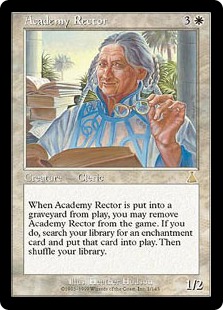
Academy Rector

The Sexy Rector has been a favorite from Day One. She would get out a Sneak Attack if you wanted to play halfway fair, and would do absurd things otherwise. Rector was superb in Sabre Bargain, a deck that used her to go get, you guessed it, Yawgmoth's Bargain. The trick with making Rector sing is combining her with effects that let you regulate when you sacrifice her. For example, you can use Phyrexian Tower or Renounce, both of which Sabre Bargain used.

The Rector is also sharp in multiplayer, since she represents a torrent of awful, dangerous things to throw out. In many ways, she acts like Moat, even if you aren't running Moat in your deck! Maybe when she dies, she gets Debtor's Knell, Meishin, the Mind Cage, Defense of the Heart or all manner of other nasty things to punish your attacker.

Interestingly, Rector was one of the first creatures that people wanted to restrict in Vintage. Before Goblin Welder, before Psychatog (which was a factor but not great at the time) and before Worldgorger Dragon, there was this lonely 3W creature. The supremely powerful thing about Rector is that she could combine well with Cabal Therapy to make Rector Trix, a deck that utilized the creature to fetch up Yawgmoth's Bargain. With the instant shot of cards, you would eventually find Illusions of Grandeur and hardcast it. Up twenty more life, you could then find that one Donate and give away your prize. In an era before Storm, Rector was a powerful creature for combination decks. Though she's relegated to casual play now, it is a powerful and recognized card.

$5.75

Apprentice Necromancer

This guy features some pretty rad art, but he's really slow in other aspects. It's a Shallow Grave on a creature, which is desirable in some circles. Mainly, it's above bulk because it has a cheap, potentially powerful effect that works well in EDH. There's about a dozen creatures that are just better for reanimation engines, but this one is fine.

$1.25

Attrition

I first came across Attrition when I was building an EDH deck recently. It's a very versatile card when you have a lot of targets to point it at, like in a multiplayer game. The enchantment is incredible when you can pair it with something like Ker Keep or Sengir Autocrat, making for a sick mess of creature removal. In a way, it's like a Grave Pact that's a little less obvious.

$1.00

Covetous Dragon

Remember a few columns ago when I mentioned that Wildfire is a perennially popular deck for nostalgic people to build? The dragon was the favored kill mechanism in the decks. It's a huge monster for what you pay for it and I'd be inclined to say that it would be Constructed playable today, especially since it's so simple to splash for. On top of that, it's part of a desirable tribe. It's not as expensive as Lightning Dragon, but it's a whole lot better.

$1.25

Donate

Michelle Bush came up with the idea of pairing Donate, Illusions of Grandeur and Necropotence together to make a mean machine. The Trix combo, as Illlusions/Donate was called, ruled Extended for a long time and I think it was the first iconic “two card kill” that people had seen beyond Channelball. What I love about it is how it took two crap rares to make the combo.

Donate's price comes mainly from its appeal in building Trix decks, but some Johnnys like it for wacky combos. Try giving someone Colfenor's Plans, for example!

$2.75

Elvish Piper

I remember when Elvis was a $10 card – its text will make a Timmy player's eyes go wide with glee. Before it was reprinted into oblivion, it was the iconic sleeper hit, the card to pull out of a junk binder or rare bin and make big cash. It still holds a bit of value because people like having the originals, but they have definitely plummeted in value.

$3.75

False Prophet

A.K.A. Enron.

I like the real multiplayer dynamic of this; you have it out and everyone else is telling that one guy not to attack you because they're assembling their elf armies or horde of dragons. Alternately, you can have a buddy crash into you and throw False Profits in front of it to wipe the board. This also has the very rare effect of being a white sweeper that exiles cards, not just kills them. They are attractive in a trade binder to the right crowd.

$1.25

Masticore

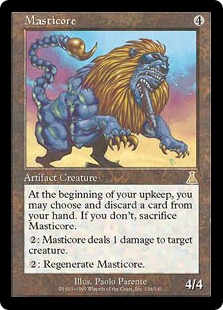
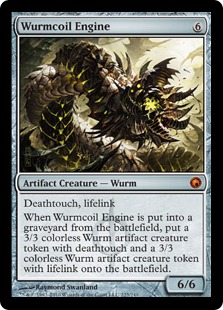
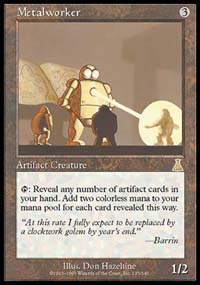
Ignoring what's coming out of his mouth, Masticore was a total dominator for the tournament scene. He could rambo away Rebels, eliminate elves and thrash... wumpuses. Masticore saw a great deal of attention in Standard and Extended because it could completely control a board; with a little mana left over, you could easily make up for the lost card advantage each turn. Greedy players combined him with Squee, Goblin Nabob, while cutthroat ones put him in Accelerated Blue decks alongside Grim Monolith. Cranking out a Masticore on the second turn was a rude move.However, as creatures have gotten better, Masticore has lost all of its shimmer. We don't play in Standard environments full of x/2s anymore, so having this giant wouldn't make a big impact. For example, could you imagine it against Frost Titan? Yuck! Masticore has a lot of nostalgia to it, though, and saw reverential reprints that have overshadowed it. Razormane Masticore does things the first one never could because it can be used to beat Null Rod decks in Vintage. Molten-Tail Masticore has also gotten some attention in Constructed, since it can close the distance pretty quickly against an opponent and kill most things that hit the board.That said, Masticore, like Morphling, enjoys a good price. I think this is partly due to players who, having dropped out around Masques, want to rebuy their decks now that they have real jobs and find that the cards are easy and inexpensive to acquire.$3.50 (shocking, right?)MetalworkerThe Robot brings all his friends to the party and sees play currently in both Eternal formats. I expect the price to go up a bit since the MUD performance in Indy, and it could jump a few more dollars if that deck sees more high-profile finishes. It also powers out some serious threats in Vintage, allowing for second-turn hand dumps. Metalworker hasn't ever been played fairly; I think the first time it saw play, it was in Tinker decks – you can draw your own conclusions there!$11.25OpalescenceThat word, by the way, means an object that radiates a certain internal light back at the viewer due to reflective planes in the object that act like an opal stone.Opalescence is also a combo card, and in this case, it fuels Replenish. The goal at the height of Replenish popularity was to bin Opalescence, some of the Parallax enchantments and random enablers like Attunement. You'd fire off that Replenish and then Parallax out the opposition's lands and creatures. Next turn, you'd have a horde of enchantments cruising in to kill. Outside of junky casual Enchantress decks, it sees no other attention.$1.75Opposition Did they never playtest this card? Opposition is painfully unfair, especially with Merfolk and Elves. Those two let you make all sorts of dumb little guys, letting you ice down the opponent every turn. As annoying as Stasis. When combined with Quirion Ranger, it was downright stupid, especially if you could later land a Deranged Hermit. It has seen a little bit of reprinting but most recently came out in the form of Glare of Subdual, which was, unsurprisingly, also dominant! Combine this enchantment with lots of little guys from other colors for the best effect. Believe it or not, Squirrel Nest/Opposition was a legitimate Standard deck for a long time. Players combined it with Static Orb to make it entirely one-sided. Vom. In. My. Mouth. Disgusting.$2.50Pattern of RebirthIn the dark ages before Storm made combo decks so linear, there were a variety of goofy Extended decks, and Pattern Husk was one of them. Here's how it works: you land Phyrexian Ghoul or Nantuko Husk. You get out, say, Academy Rector and eat her to get Pattern, putting it on a Birds of Paradise. Your Husk eats the birds (with wine on the side) and gets Symbiotic Wurm. It eats the Wurm and all the insects and is now huuuuuuge. It cruises in, unblocked, to win the game. Pattern probably has other legitimate uses, like cheating out a big Eldrazi or Blightsteel Colossus.$2.00Phyrexian NegatorIt took a little while for people to realize how good Negator was. The thing to remember was that the opponent probably wouldn't get a chance to even damage it, between Dark Ritual and Ancient Tomb powering it out. Negator was part of Finkel's Napster deck, acting like a quick clock to end the game. It has also gotten attention in Vintage deck combo sideboards; you'd bring them in during the second game when your opponent has loaded up on Stifles and such, then just monster them with a 5/5 on the first turn. Even Control Slaver decks would sometimes run it to surprise opponents. Negator has largely been replaced by Tarmogoyf for sideboard transformation, but it's a fan classic and people love to play with them. They embody Phryexia so well!$2.75Plow UnderThis innocuous green card has seen a lot of play in a lot of really annoying decks. Combined with Rofellos, it was part of Trinity Green. That deck aimed to use Plow Under and Tangle Wires to make an opponent concede from frustration. It was reprinted later and saw a lot of play after Affinity was permabanned and people figured out Tooth and Nail. You could ramp up the mana quickly in a green deck like Tooth, and hitting an opponent's Urza lands with it was absolutely devastating. Plow Under is definitely a card that most folks undervalue until they've been Plowed on the third turn and again on the fifth. It makes people feel like they aren't playing a game of Magic to face it down.$1.25Powder KegAlthough Ratchet Bomb has supplanted Powder Keg, it's a versatile card for many decks and saw plenty of play. Keg was a 4-of sideboard card for years and contributed to the decline of fast Sligh decks. If you led with Jackal Pup and followed with a Shock and Cursed Scroll, a Keg from the opponent would stop you in your tracks. It was such that some Sligh players took to running Viashino Heretics just to diversify their mana costs.Keg also works well in Vintage, where it will kill moxes off the bat and threaten cards like Goblin Welder or Sol Ring. It is a highly popular EDH card because you can hone it to do only what you need to. Because of this, Powder Keg maintains a value above most of the cards from Destiny.$3.75RepercussionThis is here mainly because of EDH. All of your creatures are Thorn Elementals! It's even better combined with Earthquake against a token army... Repercussion is easily discarded as a bulk rare, so really make an effort to remember that this card is valuable.$2.50ReplenishI sort of tipped my hand about how Replenish worked when I talked about Opalescence, but it's worth mentioning that the sorcery is played in Legacy Enchantress. You can use it to buy back all those cards you tossed into Counterbalance or those Sterling Groves that you popped to stay alive. People love Replenish because they love their goofy enchantment decks. It's come down a little in price, but it is still really valuable for being a fringe Legacy card.$8.25Rofellos, Llanowar EmissaryThe Elf of all Elves, the monster mana generator who was so powerful that he got rebanned in EDH as a general! Rofellos makes sick piles of mana, and now that there are actually good green spells like Tooth and Nail and Plow Under, you have things to spend it on. I picked up a copy years ago for my Survival of the Fittest decks and never regretted it. Rofellos trades highly for some people, simply because it's hard to find people with him in their binder. On top of that, it's a Legend that you definitely want four copies of in your deck if you can swing it.$8.75Thorn ElementalAnother responsible green fattie that didn't suck to cast – Thorn Elemental was probably the first in the line of Modern Design of creatures which said that hey, for seven mana, you shouldn't get a pile of suck. It has been heavily reprinted but people still like the original.$1.50Thran DynamoThis card was a strict upgrade over Sisay's Ring and is unbelievably powerful. Four mana in the current Standard environment gets you Jace or Koth, and while the Dynamo is no planeswalker, it's still stupidly powerful. I could easily see it played in most decks if it were in the current pool, which says a lot about its longevity. It saw a bit of play in Wildfire decks and casual players just love the card. For EDH, it's a staple. Foil copies are exorbitantly expensive.$2.75TreacheryWhat's better than getting your best man? Getting him for free! Treachery saw instant play in Standard, especially in Accelerated Blue. People still love the card because they like taking their friends' toys. It's one of the best cards in blue in EDH for a reason, and its untap ability means that traditionally monoblue counterspell decks could just take a win condition from the opponent and still keep countermagic online.$4.75Urza's IncubatorIt's a slow cooker. I'm making $5 bills.
I had to look up the price on this guy, since it's crazy. What are people incubating with this? Most tribal strategies have really inexpensive dorks. Maybe it's Dragons or Angels. Who knows. All I know is that this card is a lotto ticket when you find one in a bulk bin. Trade for them low and get them in the hands of people who need to make their Spirit decks work.

$5.50

Wake of Destruction

This is pretty close to a Red Armageddon against a lot of decks, letting you selectively ruin someone's day with the ultra Stone Rain. I had to look it up when I first saw it, which tells me that it's entirely a casual card. That said, it's a popular casual card.

$1.25

Yavimaya Hollow

In their quest to trim excess, EDH players look to make their lands do more work. The Hollow is a nice surprise to stop opponents trying to off your guys, and it's got a pretty low opportunity cost. The land is unglamorous, but people like Legendary Lands and they especially like green-themed ones. Good EDH utility lands are often very expensive.

$4.75

Yawgmoth's Bargain

And now, we come to an iconic card to wrap up a look through this block. I could think of no better emblem of the excesses of Urza Block than Yawgmoth's not-so-bad Deal. I imagine the scene in The Godfather; it's the end, the baptism, and the priest says “do you reject Satan and all his empty promises?” If Satan is Yawgmoth, then his deal is anything but empty. 4BB and nineteen life gets you a third of your deck in hand. Toss in Drain Life, Corrupt, Soul Feast, Tendrils of Agony, or all manner of other life-syphons and see just what happens.

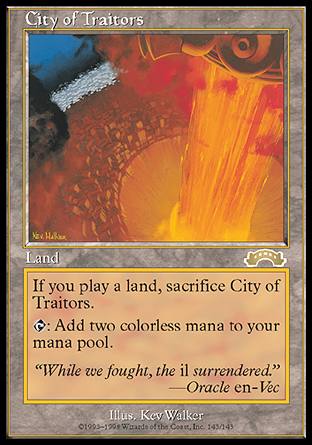
Bargain is a Vintage staple. It's restricted there and banned in most sane formats (with Urza Block being an exception). It was the “fixed” Necropotence from Mark Rosewater, the card vainly designed in the belief that a block containing Dark Ritual, bearing Ancient Tomb and City of Traitors before it, could not get the Bargain out as fast as Necropotence. Boy, were they wrong.

$5.00

It's said in Italy that there is a fat pope and then a skinny pope – a colloquialism meaning that one will serve a long time and do great works, and the one after might reign for a short period or be insignificant. Magic follows the same cycle most of the time, and that cycle was kickstarted with Urza Block. You went from stupidity at every level to tameness and lameness from Masques block. It was driving an Escalade to school and then having to borrow your brother's Celica for the rest of the year. The over-corrections made a format so dilute that menial strategies like Rebels were dominant and a lack of testing cards like Rishadan Port meant that the game was just as dumb in Standard. But alas, I have already revealed too much of next week's rant!

Until then,

Doug Linn

www.twitter.com/legacysallure

From the Vault: Soothsaying

Are you a Quiet Speculation member?

If not, now is a perfect time to join up! Our powerful tools, breaking-news analysis, and exclusive Discord channel will make sure you stay up to date and ahead of the curve.

Wizards has once finally announced their From the Vault product to be released this August. As happens every year, it is now time for the 6½ months of speculation on the 15 card contents of this box set to begin. That may seem like an awful lot of speculating for only 15 cards, but when you consider that a lot of people are going to spend upwards of $100 on this thing, it make sense that it would excite them enough to talk about it.

This year the From the Vault theme is Legends. This seems to have been met with somewhat mixed reviews, but I have to say that I'm thrilled with the idea. EDH is being pushed hard, even if they changed the name on us, with the release of the Commander decks this summer featuring new generals and cards only available in those decks. Having an EDH themed From the Vault is certainly a logical followup for them.

So what 15 legends do we expect to see in this set? And more importantly, shouldn't it be called From the Vault: Legendary Creatures? I mean, "Legend" stopped being an officially recognized creature type (Leaving many, many old cards to be of the type "Legendary Creature - (null space)" until the grand creature type update) so it seems odd that they're pick up the old terminology. Why not FTV: Summon Legends? Speaking of which, I'd love to see a FTV: Interrupts and Mana Sources; I demand 10/11 Tarmogoyfs, damnit!

Holy tangent, Batman! There are 456 legendary creatures in Magic, and we need to talk about every one individually. Even Boris Devilboon. ESPECIALLY Boris Devilboon. He's my favourite card to ever produce Minor Demon tokens. He's also one of like 70 legends that are on the reserved list, which means my job just got a whole lot easier. It also means, unfortunately, that there will be no Daughter of Autumn, General Jarkeld, or Morinfen. Try not to lose any sleep over those ones.

Back to the original question: what do we expect? Well there are  number of things that we should expect to see. Let's start with the most obvious: We can expect [card Teferi Mage of Zhalfir]Teferi[/card]; they showed us the art. We can expect at least one mono-colour legend of each colour. We can expect the obligatory five colour legend. We can expect to see zero wedge colour legends thanks to the Commander precons. We can expect to see at least one legend with an ability referencing legends. We can expect a legendary artifact. We can expect at least one Portal: Three Kingdoms card. Finally, and of most interest to the majority of people, we can expect a card with moderate-high value.

Let's start with the chase card, as that's the most interesting. So far, the chase cards (previously, Thunder Dragon, Berserk, and Mox Diamond) have been cards that did not previously exist in foil. I expect this trend to continue. Not only do I expect this to continue, it's really a necessity. Despite the immense list of legends that they can choose to print most of them aren't worth anything, at least not the non-foil versions. The only legends that carry any real value are those from Three Kingdoms, and that is where the chase rare will come from. This isn't exactly a bold prediction, but one of the two cards I've narrowed it down to may be. Despite the rarity of Three Kingdoms, most of the legends aren't worth a whole lot. This is probably attributed to their overall terribleness. Even seemingly awesome generals like Sun Quan, Lord of Wu don't carry much of a price tag. There are only two cards I've found that fit the criteria of having decent value and being desirable as EDH generals and not just collector's items.

The first possibility for money card is more wishful thinking than anything, and it's the one that's been talked about most from what I've seen. I'm talking, of course, about Xiahou Dun, the One-Eyed. For those who don't know, this guy has climbed over the last year from being about a $30 card to being about a $130 card. Because this price increase is so recent, I don't think it's unreasonable for Wizards to reprint the card. This isn't an investment people have made for nearly two decades like power nine cards, and there are likely more people that stand to be happy with this decision than pissed off by it. Xiahou Dun being the chase rare is a distinct possibility (and an exciting one!), however I think the much more realistic choice is Hua Tuo, Honored Physician. It's not nearly as exciting, but it's still worth something and makes a decent general. Perhaps there'll be some shocking twist, but I'd say it's between these two guys. and about 75/25 in favour of Hua Tuo.

Next comes the obligatory five colour legend. There's only 11 of these guys which makes things nice and easy. Karona, False God is right out as it's been brought to my attention that current R&D is embarassed that this thing saw print. After the love Slivers got with the premium decks, I think we can assume no slivers this time around either. As much as I love Child of Alara, it would basically require the FTV to come with a rules tip card explaining how it works in EDH, so sadly that one's probably a no go. Basically, our options here are really Scion of the Ur-Dragon, Reaper King, Horde of Notions,Cromat and...**sigh**....Atogatog. Again, this slot really comes down to two cards for me, neither of which are what people really want. Reaper King is too niche, dragons already had a FTV, and filling a deck with worthwhile elementals proves harder than you think. I'm about 90% sure this slot is going to Cromat, but a surprise upset by Atogatog would not surprise me at all.

There are only three legendary creatures that interact with legendary creatures in any meaningful way in EDH: Captain Sisay, Empress Galina, and Tsabo Tavoc. Not much to be said here; Sisay will totally be in there, but I wouldn't be shocked to see Tsabo alongside her (But not instead of).

Artifact creatures is another easy one: the only options (Excluding esper guys) are Karn, Silver Golem, Bosh, Iron Golem, and Memnarch. We just had Karn in FTV: Relics, so I think this one goes hands down to Memnarch.

Blue is already known, and I've already made my pick for green, so let's go to red. There are  a few guys that I'd consider being options here. There's a good case to be made for Jaya Balard, Task Mage, Akroma, Angel of Fury, and Kumano, Master Yamabushi. Mono-red EDH decks seem to be few and far between, however, so I think the mono-red slot will actually be used to try to expand the audience beyond strictly the casual market. To that end, I think Squee, Goblin Nabob  has a pretty solid chance, but far more likely  a choice is Kiki-Jiki, Mirror Breaker who has both competitive and casual applications.

Ignoring the chance of seeing Xiahou reprinted, this brings us to black. Popular EDH generals that could fill this slot include Anowon, the Ruin Sage, Chainer, Dementia Master, Geth, Lord of the Vault, Kagemaro, First to Suffer, Lim-Dul, the Necromancer, Maga, Traitor of Mortals, Myojin of Night's Reach, Seizan, Perverter of Truth, and Skithiryx, the Blight Dragon. If we expand the search to popular cards beyond just generals, we also get Ink-Eyes, Servant of Oni and Visara, the Dreadful. Some of these cards I think are disqualified as being too new. Ink-Eyes already has a promo version which makes it unlikely, but hardly impossible. To be honest, I want it to Visara. Every casual deck with a decent commitment to black can run her, and if I was choosing beyond just one of each colour I would absolutely pick her. However, I think this is gonna be where Wizards pulls one of their wacky audibles (I'm looking at you, Kird Ape!) and throws us Phage the Untouchable. And I'm fine with that.

Finally, this brings us to white. I saved white for last because it has, by far, the most options. Cards that could be reasonably selected from white include Akroma, Angel of Wrath, Commander Eesha, Crovax, Ascendant Hero, Eight-and-a-Half-Tails, Iona, Shield of Emeria, Isamaru, Hound of Konda, Jareth, Leonine Titan, Kemba, Kha Regent, Konda, Lord of Eiganjo, Lin-Sivvi, Defiant Hero, Linvala, Keeper of Silence, Mageta the Lion, Raksha Golden Cub, Reya Dawnbringer, and Yosei, the Morning Star. And that's just generals! There are plenty more cards like Kataki, War's Wage  that could be thrown in this slot as solid legends that people actually care about, but we've already got enough to deal with. This is a slot that I fear for, because I think there's far too high a chance that they'll pick Isamaru. People do use it as an EDH general, many have fond memories of running it in standard and extended, and God knows it'll probably continue to show up in random zoo decks from time to time. This is a slot that I would love to see filled by Raksha, but there seems to be just too much incentive for them to go with Isamaru. Blarg.

As for the remaining slots, it's pretty much anyone's guess. With all the different options for multicoloured legends, as well as the possibility of multiple mono-coloured legends from a single colour, there's no real way to be sure beyond this. I've gone on long enough so I won't bore you by listing every possible card and discussing why I do or don't think it will be in, but know that I have considered every card carefully in presenting you this, my final prediction:

From the Vault: Soothsaying

Captain Sisay

Cromat

Crosis, the Purger

Experiment Kraj

Hua Tuo, Honored Physician

Isamaru, Hound of Konda

Jhoira of the Ghitu

Kiki-Jiki-Mirror Breaker

Memnarch

Oona, Queen of the Fae

Phage the Untouchable

Stonebrow, Krosan Hero

Teferi, Mage of Zhalfir

Zur, the Enchanter

Fall set preview card

I can tell that my own preferences are showing considering five of the seven multicolour cards (Not counting Cromat) have blue in them, but this is my official prediction and I'm standing by it. Meet me back here in six months when I feast on crow!

This. Is. Legendary.

Are you a Quiet Speculation member?

If not, now is a perfect time to join up! Our powerful tools, breaking-news analysis, and exclusive Discord channel will make sure you stay up to date and ahead of the curve.

Last week Wizards of the Coast announced its newest From the Vaults set, titled From the Vault: Legends. We know from the announcement that one of the Legends will be a mythic rare from the October set codenamed “Shake,” and we also know from the illustration featured on the announcement page that another Legend will be Teferi, Mage of Zhalfir. But the other 13? That’s anyone’s guess.

If I may be so bold, From the Vault: Legends is a clear play to the Commander market. June will feature the new Commander decks and the addition of a Legend-specific From the Vaults set in August will cement this coming summer as the “Summer of Commander.”

One of the reasons why I think this set will be the most valuable is that many Legends are very rare in foil form. Even cheap non-foil Legends like Zur, the Enchanter fetch an exorbitant price in foil. While Wizards may disappoint people by choosing to reprint mainly newer Legends, I think they will attempt to make a bigger splash by reaching back into the archives and re-introducing some of the older names with new borders in foil form, many of which will fetch a fair price on the secondary market.

As a fun exercise, I am going to guess the 13 other inclusions in From the Vault: Legends. Be warned: there are more than 400 Legends printed in Magic. But I think there some basic criteria that Wizards will employ to narrow the field down considerably:

  • Reputation: These Legends will have strong name power, whether they are from the past or present. They are known for impacting Magic both inside and outside the game.
  • Aesthetically impressive: Nothing gets a Timmy going like a Legend that wrecks face in combat or spearheads a Tribal deck. Some of these Legends will have broken the rules on what creatures can or cannot do.
  • Un-reserved: None of these Legends can be on the Reserved List.
  • Previously unfeatured: These Legends have not been featured in a previous boxed set or promotion (ie. From the Vaults, Archenemy, Planechase, Duels of the Planeswalkers, etc.).
  • Commander-playable: All of these Legends serve as fun, playable Commanders, for both newbies and veterans alike. No obscure keywords or abilities, no weird rules interactions. They are straightforward in what they do and how they do it.
  • It is also my guess that the 15 Legends will be divided evenly by color. That means two of each of the main colors, plus five gold Legends. I do not think the Eldrazi will be featured because their associated reputation with Emrakul, the Aeons Torn. And artifact Legends like Bosh, Iron Golem, Karn, Silver Golem and Memnarch have already been reprinted in recent memory.

    So, without further ado, my guesses for the From the Vault: Legends inclusions:

    White:

    Iona, Shield of Emeria - Everybody loves Angels, and what is better than a freaking 7/7 flying Angel that locks a color out of the game? While it can be argued that this is an un-fun thing to do, I believe the balancing multiplayer aspect of Commander, combined with Iona’s hefty mana cost, permit the splashiness of the card against concerns about its fairness.

    Lin Sivvi, Defiant Hero (New art) - Remember how awesome Rebels was in Constructed? Okay, maybe you don’t, but the Rebel search mechanic was both powerful and fun. I don’t think we see enough of Reb-reb-rebels in Commander because White has more prominent Tribal archetypes like Soldiers or Angels. Reprinting Lin Sivvi, with new artwork that doesn’t give her a man-face, will bring this tribe back to the fore and do it proper justice.

    Blue:

    Azami, Lady of Scrolls - A queen to both Timmys and Spikes alike, for better or worse, Azami is a figurehead of Commander. As a Legend that drives the Wizard tribe while offering an utterly destructive draw engine, Azami’s splashiness and power level are without question. Of the blue Kamigawa representatives, Meloku, the Clouded Mirror ruled the Kamigawa Constructed format, but here Azami rules. A play to the more Spike-ish Commander players out there.

    Teferi, Mage of Zhalfir (New art) - This was a freebie.

    Black:

    Volrath the Fallen - I almost chose Visara the Dreadful over Volrath but changed my mind at the last minute. While Volrath doesn’t have the sheer power of the Gorgon queen, he is steeped in history (Weatherlight Saga, anyone?) and is a fun Commander to play. There was a big hullabaloo when he was finally printed as a creature, and I think it would be remiss to ignore his impact on the Magic storyline. Plus, he fuels recursion strategies like nobody’s business.

    Xiahou Dun, the One-Eyed (New art) - Every From the Vaults set has its Berserk or Mox Diamond; here is ours. You cannot ignore the history of Magic Legends without offering a nod to Portal: Three Kingdoms, a set shrouded by years past and limited distribution. And when you need to choose one representative from Three Kingdoms you need to pick one that will make an impact. Luckily, there is no shortage of awesome Legends from this set but Xiahou Dun offers an ability that is unparalleled in Commander. Reprinting this Legend is a risky step to take, but one that would excite many players.

    Red:

    Ashling, the Pilgrim - Ashling represents much of what Red stands for: she’s explosive, dangerous and volatile. Mono-red has only a handful of straightforward, playable Commanders, and Ashling is perhaps the most newbie-friendly. You can always run 99 land Ashling for funsies, but the truth is that she plays very well with fan favorites like Furnace of Rath, Seismic Assault and Mana Flare.

    Kiki-Jiki, Mirror Breaker - If KJ is not included in this set, I will eat my hat (and hopefully become famous by filming the act and uploading it to YouTube). Very few creatures can excite Timmies, Johnnies, and Spikes quite like Kiki-Jiki. His reputation for shenanigans is widespread and well-known, and he’s a Goblin, to boot! You cannot say no to the Keej.

    Green:

    Omnath, Locus of Mana - Omnath is one of the new breed of Legends that was created almost solely for the Commander demographic. He is splashy, mana-happy like many of green’s mechanics, and can turn into a huge monster to the joy of Timmies everywhere. He may not be the most exciting choice of Legend, but he is more than playable and a worthwhile inclusion.

    Silvos, Rogue Elemental (New art) - To balance Omnath’s inclusion I wanted to pair him with a Legend that was both an homage to the older sets while still serving as a veritable beatstick in combat. Six mana for an 8/5 regenerating trampler is still a great deal, and if there’s one Legend who can get that 21 Commander damage in it’s this guy. Plus, his flavor text is amazing.

    Gold:

    Captain Sisay - Oh captain, my captain! In a set titled From the Vault: Legends I think it would be a glaring omission not to include the one Legend who can search for other Legends! I am obviously biased because Sisay is my primary Commander, but she was a huge player in the Magic storyline to go with the fact that her ability is unique and relevant to the format.

    Dakkon Blackblade (New art) - Luckily for us, the Legends Legends reprinted in Chronicles are saved from Reserved List banishment. Unluckily for us, most of them suck. But if one Legend had to represent the original breed of Legends, I would choose Dakkon Blackblade for his reputation as a badass. The flavor text is brilliant and his ability is a clear ringer for Commander. And when you are given an homage in the Time Spiral block (Korlash, Heir to Blackblade) that just seals the deal.

    Scion of the Ur-Dragon (New art) - No legendary boxed set would be complete without a Dragon representative, and who represents Dragons better than the guy who becomes any other Dragon? Scion is the home run of a Legendary creature: he’s powerful, he’s a tribe leader, and he resonates with people. While a few of my guesses are more tentative than others I would be very surprised if this guy doesn’t make it in the box.

    Tsabo Tavoc - Villains are always welcome in the world of Magic, and those who experienced Invasion Block will remember the devious Tsabo Tavoc, who aptly represents Yawgmoth. There’s nothing cooler than a Legend who can assassinate other Legends while being immune to them and holding up quite capably in combat. No new art necessary; Tsabo Tavoc is as creepy today as she was a decade ago.

    Here Comes a New Challenger! - We have not seen too many Gold Legends in recent Magic sets, so it is my completely unfounded guess that the “Shake” Legend will be multicolored.

    Honorable mention: Cromat - We want Crome-Dome!
    Honorable mention: Phelddagrif - I’d include you if I could, old buddy. (Banished by the Reserved List)

    So there you have it: my completely design-ignorant shot in the dark as to the inclusions in the From the Vaults: Legends set. I am extremely excited by the prospect of new foil Legends, because there are so many great options available. I could do several more “sets” and not run out of fun Legends to include. As long as Wizards adheres to the description it used for the announcement (“legends heralded for their devastating powers and fearsome abilities”) I think this set will be another smashing success.

    What do you think of my list? Too wishful? Too much Magical Christmasland? Who would you like to see included in the set?

    David Lee
    @derfington on Twitter

    Live! PT Paris Top 8

    Are you a Quiet Speculation member?

    If not, now is a perfect time to join up! Our powerful tools, breaking-news analysis, and exclusive Discord channel will make sure you stay up to date and ahead of the curve.

    Congratulations to Ben Stark, Pro Tour: Paris 2011 Champion!

    Note: This posting is being updated as every game ends. Check back often for more play-by-play!

    Hello, and welcome back to The Brewery at the uncharacteristically early 8:00 AM hour. Why be awake so early? To watch the Top 8 of Pro Tour: Paris, of course! The Quarterfinals have come and gone, and here are the results:

    Vincent Lemoine (BEL) 3-2 Shintaro Ishimura (JAP)

    Prediction: Ishimura in 5 (Boo)

    Paul Rietzl (USA) 3-0 Patrick Chapin (USA)

    Prediction: Rietzl in 4 (Yay)

    Naoki Nakada (JAP) 3-2 Nico Bohny (SUI)

    Prediction: Nakada in 4 (Yay)

    Ben Stark (USA) 3-2 Tom Martell (USA)

    Prediction: Stark in 5 (Yay))

    Not bad on the predictions, if I might say. 😉

    Boros prevails over Blue-based Control in both Quarterfinal matches, and two UW Control decks make up the other half of the bracket. The finals are set to be Boros versus UW Control, but will it be Vincent Lemoine or Paul Rietzl piloting the RW deck? And will it be Ben Stark or Naoki Nakada trying to dig for answers? We should know within the next couple of hours!

    Obligatory decklists, in case they haven't been burned into your memories yet from seeing them all weekend.

    Vincent Lemoine, PT Paris Top 8

    Untitled Deck

    Creatures

    4 Goblin Guide
    4 Mirran Crusader
    3 Plated Geopede
    4 Squadron Hawk
    4 Steppe Lynx
    4 Stoneforge Mystic

    Artifacts

    2 Adventuring Gear
    1 Bonehoard
    1 Sword of Body and Mind

    Planeswalkers

    1 Koth of the Hammer

    Sorceries

    2 Arc Trail

    Enchantments

    3 Journey to Nowhere

    Instants

    2 Lightning Bolt

    Lands

    4 Arid Mesa
    4 Marsh Flats
    3 Mountain
    6 Plains
    4 Scalding Tarn
    2 Teetering Peaks
    2 Terramorphic Expanse

    Sideboard

    2 Arc Trail
    1 Journey to Nowhere
    4 Kor Firewalker
    2 Koth of the Hammer
    3 Luminarch Ascension
    2 Mark of Mutiny
    1 Sword of Feast and Famine

    Paul Rietzl, PT Paris Top 8

    Untitled Deck

    Creatures

    4 Goblin Guide
    2 Hero of Oxid Ridge
    2 Mirran Crusader
    4 Plated Geopede
    1 Spikeshot Elder
    4 Squadron Hawk
    4 Steppe Lynx
    3 Stoneforge Mystic

    Artifacts

    2 Adventuring Gear
    1 Sword of Body and Mind
    1 Sword of Feast and Famine

    Instants

    3 Lightning Bolt

    Enchantments

    2 Journey to Nowhere

    Planeswalkers

    1 Koth of the Hammer

    Lands

    4 Arid Mesa
    3 Evolving Wilds
    4 Marsh Flats
    5 Mountain
    5 Plains
    4 Scalding Tarn
    1 Teetering Peaks

    Sideboard

    4 Arc Trail
    1 Basilisk Collar
    4 Cunning Sparkmage
    3 Kor Firewalker
    1 Koth of the Hammer
    1 Mark of Mutiny
    1 Mirran Crusader

    Naoki Nakada, PT Paris Top 8

    Untitled Deck

    Creatures

    4 Squadron Hawk
    2 Stoneforge Mystic
    2 Sun Titan

    Planeswalkers

    1 Venser, the Sojourner
    3 Jace, the Mind Sculptor
    2 Elspeth Tirel
    2 Gideon Jura

    Sorceries

    4 Day of Judgment
    4 Preordain

    Instants

    1 Deprive
    1 Into the Roil

    Enchantments

    2 Spreading Seas
    2 Journey to Nowhere

    Artifacts

    2 Tumble Magnet
    1 Sword of Body and Mind
    1 Sword of Fire and Ice

    Lands

    4 Celestial Colonnade
    4 Glacial Fortress
    4 Island
    1 Marsh Flats
    5 Plains
    4 Seachrome Coast
    4 Tectonic Edge

    Sideboard

    2 Condemn
    1 Kor Sanctifiers
    3 Leyline of Sanctity
    4 Luminarch Ascension
    1 Ratchet Bomb
    2 Revoke Existence
    2 Spreading Seas

    Ben Stark, PT Paris Top 8

    Untitled Deck

    Creatures

    4 Squadron Hawk
    4 Stoneforge Mystic

    Sorceries

    4 Day of Judgment
    4 Preordain

    Planeswalkers

    3 Gideon Jura
    4 Jace, the Mind Sculptor

    Instants

    3 Mana Leak
    1 Deprive
    4 Spell Pierce
    1 Stoic Rebuttal

    Artifacts

    1 Sword of Feast and Famine
    1 Sylvok Lifestaff

    Lands

    1 Arid Mesa
    4 Celestial Colonnade
    4 Glacial Fortress
    5 Island
    4 Plains
    4 Seachrome Coast
    4 Tectonic Edge

    Sideboard

    2 Baneslayer Angel
    2 Divine Offering
    1 Negate
    2 Flashfreeze
    4 Oust
    3 Ratchet Bomb
    1 Sword of Body and Mind

    Vincent Lemoine (Boros) versus Paul Rietzl (Boros)

    Preview: Both players are piloting Aggressive RW Boros decks, and the differences between the decks are fairly minimal. However, there are significant departures in strategy from each player in their 15-card sideboards.

    Maindecks:

    Paul Rietzl has a similar makeup of creatures to Lemoine, but Rietzl has a couple of key differences: Instead of the full set of Mirran Crusader, Rietzl has access to a singleton Spikeshot Elder and a couple of Hero of Oxid Ridge. However, hiding in Rietzl's sideboard is a playset of Cunning Sparkmage (hello, Landfall creatures!) and the lone copy of Basilisk Collar in the entire Top 8. Will this be enough against Lemoine?

    Both players have the same set of equipment except for one key difference: Lemoine has Bonehoard, and having a "creature" to search for with Stoneforge Mystic is pretty killer.

    Sideboards:

    Rietzl has 4 Arc Trail, 3 Kor Firewalker, 4 Cunning Sparkmage, and a Basilisk Collar. Lemoine has 2 Arc Trail (with 2 maindeck) and 4 Kor Firewalker.

    Overall, this match would appear to favor Paul Rietzl!

    Ben Stark versus Naoki Nakada

    The webscast begins with Ben Stark and Naoki Nakada trading short words and drawing their openers. Island and Glacial Fortress for Stark are met by a pair of Celestial Colonnades for the lone Japanese left in the Top 8.

    Both players play draw-go until Tumble Magnet for Nakada is met with a Mana Leak from Stark, who untaps and drops down a Jace, the Mind Sculptor and a Brainstorm. Nakada's hand appears to be a Day of Judgment, a Tectonic Edge, and a Stoneforge Mystic as he draws his 4th card. Stoneforge Mystic is the choice, fetching up Sword of Feast and Famine, but there is no immediate answer to Stark's billion dollar Planeswalker. Nakada reveals the last cards in his hand to be land and an unknown, playing a Plains and passing the turn back to Stark with Mana Leak mana up as a bluff.

    Stark responds with his own Stoneforge Mystic and searches for his own Sword, however this time it's a... Sword of Feast and Famine. Jace, the Mind Sculptor sits on the table with a "3" showing after another Brainstorm, and Stark's hands are full of cards! Stoic Rebuttal, 2x Day of Judgment, Spell Pierce, and others are staring up at the camera as he chooses his option, which ends up being Squadron Hawk (with Spell Pierce mana up). Stark shuffles up and passes back the turn.

    Elspeth Tirel and Journey to Nowhere are waiting in Nakada's hand for the right opportunity to play them, and he shuffles his cards up with a purpose as he tries to break through Jace and Stark's superior board presence. Nakada ends up simply casting Journey to Nowhere on the Squadron Hawk and passes the turn back.

    Stark untaps, equips his Sword onto Stoneforge Mystic, and attacks Nakada down to 17 for the first damage in the match. The camera pans down to a gassy hand for Ben Stark after casting another Squadron Hawk and a Preordain. Stoneforge Mystic goes to the bottom and Tectonic Edge stays on the top of the deck.

    (Note: Paul Rietzl has just won game 1 of his matchup)

    Nakada slams down Day of Judgment with a purpose after playing a Tectonic Edge of his own. Ben Stark, for his part, "just" gets to draw 3 with Jace, and another Squadron Hawk hits the board alongside his earlier Sword of Feast and Famine, and the bird gets equipped. Stark is left with 2 Counterspells in hand while Nakada has a Tectonic Edge, Stoneforge Mystic, and the earlier Elspeth Tirel. They flip back and forth in his hands as he settles on Tectonic Edge #2 (facing down 2 Celestial Colonnades for Stark) and an Elspeth Tirel that gets Mana Leaked. Nakada has to just play Stoneforge Mystic (no search) and passes the turn.

    Ben Stark would appear to have a stranglehold on this match as Gideon Jura hits his side of board. A second die adds his loyalty to 8, Squadron Spector attacks for 3, and Stark gets to untap all of his lands before saying, "Go."

    Nakada draws his card and puts both hands on his two piles of lands. He holds them there for a few moments, separated into piles of 5 and 2, and just says, "Go" himself. Ben Stark starts his turn off the way all of his others have been: Drawing 3 with Jace. Gideon, Celestial Colonnade, and Squadron Hawk get into the formerly Red Zone, and Tectonic Edges trade for each player with a Celestial Colonnade before Nakada scoops.

    Stark 1 - 0 Nakada

    Nakada leads with a Tectonic Edge and a Plains into Squadron Hawk (getting all 3 after his mulligan), and Stark has a Celestial Colonnade and Plains into Stoneforge Mystic (Sword of Feast and Famine).

    Tumble Magnet and an attack for 1 is Nakada's play, and two Tectonic Edge for the Japanese player should be a threatening sight for Stark, whose third land enables Sword of Feast and Famine to hit the board. Another Hawk hits the board for Nakada, and Tumble Magnet keeps the Hawk/Sword from attacking. Tectonic Edge then hits Stark's Colonnade in an action-filled turn.

    Stark uses his last Colonnade to Preordain before dropping his critical fourth land again. One card scrys to the bottom and Stark pauses a little longer before scrying the second card to the bottom too. An attack gets stopped by Tumble Magnet, now on 1 counter, and Stark plays a second [card Sword of Body and Mind]Sword[/card] with an Island.

    Three Hawks now turn sideways for Nakada, and is joined by another of its buddies. Tectonic Edge again takes out Stark's Colonnade, and the last Tumble Magnet stops a Squadron Hawk with both Swords equipped. 19-10 Nakada after 3 Hawks attack.

    Stark untaps, plays his fourth land for what seems like the tenth time, and attacks with his double-equipped Hawk into Nakada's untapped Hawk. Nakada's Tectonic Edges have given him a huge advantage in land, but he's struggling to find colored mana symbols with his board being 1 Plains and 2 Tectonic Edge.

    Stark plays Gideon Jura and pumps him up to 8 immediately. He once again looks to be in a fairly commanding position.

    Nakada finally hits a Blue source, playing an untapped Glacial Fortress, and gets to cast his Preordain (into Preordain and Jace, the Mind Sculptor). Tectonic Edge again hits the graveyard, this time targetting Stark's Tectonic Edge. The Hawks crash into Gideon, and Ben Stark's response is to untap and slam down Jace, the Mind Sculptor.

    Nakada is forced to discard Jace when attacked by Stark's lone Hawk, and Ben Stark moves even further ahead before Nakada finally gets a chance to cast his Day of Judgment. Still, the American has a hand full of gas, Jace, the Mind Sculptor, and Gideon Jura on board.

    Gideon does his best Squadron Hawk impression, animating into a 6/6 and picking up both Swords. 14-9 Nakada. Stark untaps all his lands, casts Baneslayer Angel, and Nakada scoops again.

    Ben Stark 2 – 0 Naoki Nakada

    The start of game 3 mirrors that of game 2, though this time without a Nakada mulligan so Squadron Hawk only got 2 buddies. Stark responds with a Hawk of his own instead of a Stoneforge Mystic, however.

    Nakada Preordains, plays an Island, and the Squadron Hawks trade in the air. Nakada plays his second Hawk and searches up the future fourth Hawk before passing the turn tapped out.

    Ben Stark untaps, plays a Seachrome Coast, and casts another Squadron Hawk as well. Caw! Caw! Caw! Baneslayer Angel, Spell Pierce, Squadron Hawks, and a couple of White cards sit in Stark's hand against a few lands, Deprive, and Squadron Hawks for Nakada. Squadron Hawk and Celestial Colonnade are Nakada's plays, and it's once again Ben Stark's turn to do something.

    Stark however has no 4th land drop, simply casting a Squadron Hawk and shuffling up his library. Oh, there's the fourth land, a Celestial Colonnade. The Squadron Hawks trade in the air before Stoneforge Mystic searches up Sword of Feast and Famine for Nakada before Naoki casts, no surprise, Squadron Hawk.

    Stark pauses for a few minutes before settling on Tectonic Edge and another Squadron Hawk. Nakada uses Stoneforge Mystic to play Sword of Feast and Famine, and he uses his remaining 3 lands to equip his Squadron Hawk and attack. However, Stark has the Divine Offering to trade Hawks once again in the air. 23-20 Stark after the lifegain.

    Tectonic Edge for Stark takes out a land for Nakada, and Stark has yet another Tectonic Edge to keep the pressure on, but Luminarch Ascension hits the board for Nakada after most (all?) of the Squadron Hawks in the two decks are depleted.

    Jace, the Mind Sculptor for Nakada! But Stark has the Mana Leak as well as the Tectonic Edge at the end of Nakada's turn. Nakada's hand appears to be Elspeth Tirel, Gideon Jura, and Deprive. Stark has Tectonic Edge, Spell Pierce, Jace, the Mind Sculptor, and Baneslayer Angel.

    Baneslayer Angel gets Deprived, and Deprive gets Spell Pierced. Take THAT! Luminarch Ascension (on two counters).

    (Paul Rietzl just lost the first game of his life, or something similar, and he's tied 1-1 with Vincent Lemoine)

    Naoki Nakada plays a Gideon Jura and taunts the Baneslayer Angel to crack him in the face. Awkward spot for Ben Stark, but he takes out Gideon with Baneslayer and Celestial Colonnade together and still has the mana to play a Stoneforge Mystic post combat.

    Luminarch Ascension hits the third counter and he stops to survey his options. Five lands, a handful of cards, and a very unfortunate board position for the Japanese pro, lead to what looks like a very painful set of decisions with his back to the wall in game 3. Nakada ends up playing the Sword of Body and Mind and equipping up the Stoneforge Mystic. Ben Stark gets the opportunity to untap against his tapped out opponent.

    How better to take advantage of that than Jace, the Mind Sculptor? Stark Brainstorms and passes the turn after Baneslayer takes another slice out of Nakada's life total. 33-13 Stark.

    Stoneforge Mystic sends Jace to the graveyard, but Nakada is left drawing pretty slim. Baneslayer Angel attacks alongside a Sword-wielding Celestial Colonnade. Nakada slowrolls a.... Celestial Colonnade! He scoops Stark into the finals!

    Ben Stark 3 – 0 Naoki Nakada

    We resume the Boros mirror matchup between Paul Rietzl and Vincent Lemoine in game 3, tied 1-1.

    Game 3

    Paul Rietzl begins his game with a mulligan to 4 on the play, but he has a Mountain and an Evolving Wilds to keep up with Lemoine's Plains and Marsh Flats. Rietzl unmulligans a few times by casting Squadron Hawk, getting three buddies, and passes back the turn.

    Vincent Lemoine has no play except Scalding Tarn, and Paul Rietzl swings with his Squadron Hawk. 20-18 Rietzl thanks to the Marsh Flats. Another Squadron Hawk hits Rietzl's board, but Lemoine has the Arc Trail to undo some of that unmulliganing. Bonehoard, Journey to Nowhere, Lightning Bolt, Arid Mesa, and Teetering Peaks sit in Lemoine's hand, facing off against Rietzl's depleted resources, who has just a Sword of Body and Mind to join his otherwise empty board.

    Lemoine draws Steppe Lynx for his turn, and casts a Bonehoard. Paul Rietzl's hand appears to consist of Lightning Bolt, Steppe Lynx, 2 Squadron Hawks, and a pair of Arc Trail, though the Arc Trails are hard to see. He massages his forehead with his head hung slightly, clearly trying to figure out the optimal play before settling on Arc Trail for Bonehoard. 19-15 Rietzl.

    Lemoine, unsurprisingly, casts Steppe Lynx and equips Bonehoard with an Arid Mesa held back. Rietzl's board is Steppe Lynx, 2 Plains, 1 Mountain, and a Sword of Body and Mind. Lemoine has a Lightning Bolt for Steppe Lynx in response to Rietzl's equipment activation, and Rietzl has no real answer.

    Vincent Lemoine's massive Steppe Lynx smashes in for 7 with Teetering Peaks and passes the turn back. His hand appears now to be Mirran Crusader, Basilisk Collar, and the same cards from earlier. Six cards in total. Squadron Hawk and Basilisk Collar is the play. 15-12 Lemoine.

    Marsh Flats makes Steppe Lynx a little larger for Lemoine, and it turns sideways for another attack. The Steppe Lynx is not lethal, but it's close, and Paul Rietzl pauses for some math. He doesn't look at all like someone who has played almost three dozen PT and GP matches this weekend, but he's clearly behind in this game.

    Lemoine shuffles Journey to Nowhere to the front of his hand, joined by two lands, as he waits for Rietzl to decide on blockers, but the Steppe Lynx gets through unblocked. 14-5 Lemoine.

    Rietzl keeps the pressure on and attacks with a Sword-equipped Hawk. 11-5 Lemoine. A Wolf token hits the board, but Lemoine has the Journey to Nowhere for the win.

    Vincent Lemoine 2 - 1 Paul Rietzl

    Paul Rietzl keeps a gassy 1-lander after a long, agonizing wait while Vincent Lemoine sends his first 7 back.

    Lemoine keeps his 5-card hand with a shrug, and Paul Rietzl starts things off quickly with a fetchland, Plains, and Steppe Lynx. That card has been so kind to him over the last 6 months.

    Squadron Hawk, Stoneforge Mystic, Goblin Guide, and Steppe Lynx sit in Lemoine's solid hand. Steppe Lynx, Kor Firewalker, Adventuring Gear, and Arc Trail sit in Rietzl's hand, but he still does not have another land. Steppe Lynx stays back as a 0/1 and Lemoine gets his second turn.

    Arid Mesa for a Plains lets Squadron Hawk hit the board. Lemoine had Goblin Guide on turn 1, but elected to lead with Teetering Peaks instead. Perhaps because Rietzl took so long to keep his hand, and Lemoine didn't want to gift Rietzl any cards?

    Stoneforge Mystic for the Belgian hits the board, searching of a Bonehoard, and Squadron Hawk smacks Rietzl's gourd for 1. Okay, no more rhyming, I promise. Lemoine has a hand full of gas but no 3rd land, and he is forced to discard an extra Squadron Hawk.

    Paul Rietzl finally rips a Scalding Tarn, and he sacrifices it immediately for a Mountain. Both of his Steppe Lynxes grow massively to 4/5 monsters as Arc Trail clears off Lemoine's board and the life totals sit at 18-11, Rietzl.

    Goblin Guide and Steppe Lynx both come down for Lemoine, still stalled on land. Paul Rietzl does not have another land, simply a Squadron Hawk, and the Steppe Lynx duo is forced to sit back. Three Squadron Hawks leave Rietzl with 7 cards in hand to Lemoine's 6.

    Lemoine (strangely?) attacks with Goblin Guide, and Rietzl is rewarded with a land. Squadron Hawk is the play for Lemoine post combat, and Rietzl gets another turn with his growing team. That third land enables Cunning Sparkmage, and his attackers take Lemoine down to 8. 16-8 Rietzl.

    Lemoine finally rips his third land too, and the Marsh Flats takes him down to 7 as this game enters its end stage. Kor Firewalker for Lemoine is likely too little, too late.

    Rietzl thinks for a few minutes before playing his second Cunning Sparkmage, but Goblin Guide doesn't think it's a very funny joke. Evolving Wilds prompts the concession from Lemoine.[card]

    Paul Rietzl 2 - 2 Vincent Lemoine

    Vincent Lemoine is on the play for the deciding game, and he ships his opening 7 back. It would appear as if going to Paris is a lot easier when actually playing in its namesake city. Rietzl keeps his 7 and Lemoine keeps his 6.

    Mountain and Marsh Flats for Lemoine leads into a Stoneforge Mystic, whereas Rietzl's side of the board has a single Steppe Lynx. Bonehoard goes straight into Lemoine's hand.

    Steppe Lynx, Mountain, Mountain, Arid Mesa, Squadron Hawk, Mountain, and Kor Firewalker are Paul Rietzl's cards in hand. Steppe Lynx and Arid Mesa is his play, leaving Arid Mesa uncracked.

    Kor Firewalker, Arc Trail, Kor Firewalker, and Sword of Body and Mind join the Bonehoard in Lemoine's hand, and the Belgian plays a Goblin Guide and passes the turn back. This is setting up to be an extremely entertaining finale.

    Both Steppe Lynxes attack Lemoine down to 13 after no one blocks the 2/3 cats. Arc Trail from Paul Rietzl takes out the Stoneforge Mystic before it can put Bonehoard into play. Journey to Nowhere is Lemoine's only response, taking out one of the two Steppe Lynxes and leaving Goblin Guide on defense once again.

    Steppe Lynx eats a Goblin Guide before Squadron Hawk refills Rietzl's hand (which, remember, has a waiting Kor Firewalker). Rietzl passes back the turn with two fetchlands unused rather than play the Kor Firewalker, and a Marsh Flats saves his Steppe Lynx from Arc Trail on Lemoine's turn. Squadron Hawk isn't so lucky and hits the bin.

    Rietzl untaps, draws his cards, and bobs his head to some sort of imaginary music. The game looks to be his if there are no surprises. After drawing Cunning Sparkmage, perhaps that explains it slightly. Steppe Lynx becomes a 4/5 and takes off half of Lemoine's life total. 18-4 Rietzl. Kor Firewalker and Cunning Sparkmage both hit the board, in the order, putting Rietzl back up to 18.

    Arc Trail for Lemoine takes out Steppe Lynx and Cunning Sparkmage, leaving just a Kor Firewalker for Rietzl. Half of Lemoine's life again goes away as Rietzl drops down 3 Squadron Hawks at once.

    Lemoine draws his card and extends his hand. Paul Rietzl will meet Ben Stark in the finals!

    Paul Rietzl 3 - 2 Vincent Lemoine

    Pro Tour: Paris, 2011 Finals - Paul Rietzl (USA) versus Ben Stark (USA)

    Paul Rietzl, PT Paris Top 8

    Untitled Deck

    Creatures

    4 Goblin Guide
    2 Hero of Oxid Ridge
    2 Mirran Crusader
    4 Plated Geopede
    1 Spikeshot Elder
    4 Squadron Hawk
    4 Steppe Lynx
    3 Stoneforge Mystic

    Artifacts

    2 Adventuring Gear
    1 Sword of Body and Mind
    1 Sword of Feast and Famine

    Instants

    3 Lightning Bolt

    Enchantments

    2 Journey to Nowhere

    Planeswalkers

    1 Koth of the Hammer

    Lands

    4 Arid Mesa
    3 Evolving Wilds
    4 Marsh Flats
    5 Mountain
    5 Plains
    4 Scalding Tarn
    1 Teetering Peaks

    Sideboard

    4 Arc Trail
    1 Basilisk Collar
    4 Cunning Sparkmage
    3 Kor Firewalker
    1 Koth of the Hammer
    1 Mark of Mutiny
    1 Mirran Crusader

    Ben Stark, PT Paris Top 8

    Untitled Deck

    Creatures

    4 Squadron Hawk
    4 Stoneforge Mystic

    Sorceries

    4 Day of Judgment
    4 Preordain

    Planeswalkers

    3 Gideon Jura
    4 Jace, the Mind Sculptor

    Instants

    3 Mana Leak
    1 Deprive
    4 Spell Pierce
    1 Stoic Rebuttal

    Artifacts

    1 Sword of Feast and Famine
    1 Sylvok Lifestaff

    Lands

    1 Arid Mesa
    4 Celestial Colonnade
    4 Glacial Fortress
    5 Island
    4 Plains
    4 Seachrome Coast
    4 Tectonic Edge

    Sideboard

    2 Baneslayer Angel
    2 Divine Offering
    1 Negate
    2 Flashfreeze
    4 Oust
    3 Ratchet Bomb
    1 Sword of Body and Mind

    This matchup would appear to favor Ben Stark in 5 games, thanks in large part to his sideboard plan. 2 Baneslayer Angels, 2 Divine Offerings, 2 Flashfreeze, 4 Oust, and 3 Ratchet Bomb, in some quantities, will all be making the maindeck for Stark after game 1. For his part, Rietzl looks to be able to add on Koth of the Hammer and Mark of Mutiny. I would like Rietzl's chances a lot better in a 3-game match, but then again, he has appeared to be downright unbeatable at times on the weekend. Look for Rietzl to snag game 1, with Stark battling back to win the finals in 4 or 5 games. Boros is typically favored in this matchup, but I like Ben Stark's particular sideboard configuration to give him the overall edge here.

    Divine Offering in particular my be key. It turns off Bonehoard and, by extension, Stoneforge Mystic, and it gains critical life against the extremely aggressive Boros deck for Ben Stark.

    We should be in for an exceptional finals! Thank you so much for reading <3 Both players draw their opening hands in black-sleeved decks. Stark keeps. Paul Rietzl shrugs his eyebrows a couple of times before checking the top few cards of his deck and shipping his 7 cards back, then 6. His 5 card hand is better, leading to a turn 1 Steppe Lynx against Stark's turn 2 Stoneforge Mystic for Sword of Feast and Famine. Stark ships the turn back with two tapped Seachrome Coasts and a grip full of cards. Squadron Hawk, Mana Leak, Spell Pierce, and a couple of lands sit in Stark's hand. Arid Mesa, Steppe Lynx, Evolving Wilds, Marsh Flats, and Squadron Hawk are in Rietzl's grip as he plays an Arid Mesa, a Steppe Lynx, and serves for 2. 20-18 Rietzl. Stark untaps, casts a Squadron Hawk, and searches for two buddies. Stoneforge Mystic stays out of combat and the turn ships back to Rietzl, who quickly plays Evolving Wilds. The 2/3 Steppe Lynxes both crash in, threatening to get extremely large with the two unused fetchlands. No blockers leads Rietzl to crack both fetchlands, taking Stark down to 6 after a couple of massive 6/7 Steppe Lynxes deal damage. Rietzl plays a Squadron Hawk of his own and searches up three avian reinforcements too. 19-6 Paul Rietzl. Stark untaps and purses his lips to decide what to do. Island is his fourth land, and he stops to consider his options. He eventually settles on another Squadron Hawk to search up the 4th copy out of his library and simply passes the turn with two lands untapped. Jace, the Mind Sculptor and Deprive join the rest of Stark's gassy hand. Marsh Flats hits the board for Rietzl, and he crashes in with two 2/3 cats and a 1/1 bird. Stark picks up his Stoneforge Mystic to chump block, preparing to play his Sword of Feast and Famine at instant-speed during combat. The limited master Ben Stark picks up his three creatures and sets them all back down, trying to order his blockers in an optimal way. Squadron Hawks trade, and Stoneforge Mystic blocks a Steppe Lynx. Stark takes 2, falling to 4, and Rietzl plays another Squadron Hawk. 2x Plated Geopede, 2x Squadron Hawk remain in Rietzl's hand. Rietzl sits looking extraordinarily calm and composed as the two players chat about the game state. Ben Stark casts a Squadron Hawk and equips it up with Sword of Feast and Famine before casting a second Hawk and passing the turn. Now, with Stark at just 4 life, Rietzl calculates his options to push through those last bits of damage. Teetering Peaks targets his Squadron Hawk, and he attacks with his whole team to take Stark to a single life point. Ben Stark now needs Day of Judgment or Gideon Jura or his first game will be over. Two Plated Geopedes from Paul Rietzl leads to a concession from Ben Stark. Paul Rietzl 1 - 0 Ben Stark

    Both players keep their opening hands, although Ben Stark has Oust for the turn 1 Steppe Lynx from Rietzl. No turn two play from Rietzl except for a Mountain has Stark in a comfortable opening sequence, and he responds with Preordain. His hand is Day of Judgment, Gideon Jura, Jace, the Mind Sculptor, and a land. Rietzl plays a Squadron Hawk and Steppe Lynx on his third turn, and Stark has another Oust for the cat. His hand flashes to the camera and shows a bunch of Squadron Hawks and land. Ben Stark appears to be in a commanding position for this game. 26-19 Rietzl.

    Rietzl draws his card and gives a small fist pump. Or was it in frustration? He casts a Stoneforge Mystic and reveals what his topdeck was. Rietzl searches up Adventuring Gear, plays it, equips it to a Squadron Hawk, and Evolving Wilds comes down to make the Steppe Hawk a 3/3. Stark's Squadron Hawk blocks the Steppe Hawk and Stark falls to 17 on the attack. His response is simply to play another Hawk on his own turn and passes back to the Boros deck.

    Rietzl untaps and plays a land, making Squadron Hawk a 3/3, then moves his Adventuring Gear onto another Hawk. Two fetchlands threaten to make this a fairly big turn for Rietzl. He fetches with Evolving Wilds, moves the Adventuring Gear once more to a third Hawk, and then serves with his entire team of 2 3/3 Hawks, a 1/1 Hawk with Adventuring Gear (and Arid Mesa open), and Stoneforge Mystic. The end result of the attack step is Ben Stark takes 5 damage. 26-12, Rietzl.

    Ben Stark wipes the board with Day of Judgment and passes back to Rietzl.

    Squadron Hawk and Steppe Lynx make up Rietzl's followup, and Adventuring Gear gets suited up in some strange way to a Squadron Hawk. Rietzl has two fetchlands in play and two more lands in hand.

    Ben Stark untaps and fails to draw his 5th land, but he has Divine Offering for Adventuring Gear. Squadron Hawk uses up the rest of his untapped lands, and Stark passes back after flashing a hand of Ratchet Bomb, Day of Judgment, Gideon Jura, and Jace, the Mind Sculptor.

    Stark's Squadron Hawk chump blocks Rietzl's Steppe Lynx, and he has a Plated Geopede off the top to follow it up. Day of Judgment ends Rietzl's fun once more. Finally, without a play on his turn, Stark has an opportunity to play Jace, the Mind Sculptor but plays Squadron Hawk, land #5, and Squadron Hawk instead. Gideon Jura should hit play the following turn, sealing Rietzl's fate as Stark draws a Baneslayer Angel to follow it all up. All that Rietzl can come back with is a lowly 1/1 Spikeshot Elder. 25-11 Rietzl.

    Baneslayer Angel hits the board, and instead of attacking with Gideon, he +2s the Planeswalker to protect against Mark of Mutiny. Journey to Nowhere makes the Angel moot, with Stoneforge Mystic and Lightning Bolt as Rietzl's remaining two cards. Stoneforge Mystic searches up Adventuring Gear, which ends up equipping the 1/2 White creature.

    Jace, the Mind Sculptor joins his friend Gideon as Stark shows another Day of Judgment and another Oust during his Brainstorm. Insane! This game should be over very shortly. Rietzl's attack with Stoneforge Mystic, and the 3 fetchlands he used to power it up take a chunk out of Gideon Jura's loyalty count, with Arc Trail + Lightning Bolt finishing the job.

    Jace, the Mind Sculptor lets Paul Rietzl draw his top card twice before turning on the 10-damage-per-turn clock of Gideon Jura and Celestial Colonnade. 12-11 Rietzl.

    Rietzl scoops up his cards on the next turn.

    Ben Stark 1 - 1 Paul Rietzl

    Steppe Lynx starts things off for Paul Rietzl, and Preordain ships a land to the bottom of Ben Stark's deck and a Day of Judgmentinto his hand off of Seachrome Coast. Rietzl's Mountain makes Steppe Lynx a 2/3, and Goblin Guide joins the board to take Stark down to 16. 19-16 Rietzl.

    Squadron Hawk is the play for Stark, passing the turn back to Rietzl. Rietzl shows Goblin Guide, Scalding Tarn, Teetering Peaks, Mountain, and an unknown 5th card. Goblin Guide hits the board, along with a Scalding Tarn, and the team crashes in. Sylvok Lifestaff is the top card of Stark's deck as he falls to 10. 19-10 Rietzl.

    Ben Stark casts another Squadron Hawk and tries to buy one more turn for Day of Judgment. Sylvok Lifestaff hits the board as well for the UW Control player.

    Paul Rietzl untaps and makes room for a 4th land, a Teetering Peaks. He attacks with everything and reveals a Ratchet Bomb for Stark. Squadron Hawk blocks the 4/2 Goblin Guide, and Rietzl uses his Scalding Tarn to take Stark down to 4. 18-4 Rietzl.

    Ben Stark casts his Day of Judgment before Rietzl is finished shuffling his deck, and the board is wiped except for the single Sylvok Lifestaff. Plated Geopede and Marsh Flats are the only followups for Rietzl, finally allowing Ben Stark a little bit of breathing room. Jace, the Mind Sculptor comes down and Unsummons the Plated Geopede, showing Ratchet Bomb, Squadron Hawk, Day of Judgment, and Tectonic Edge as his hand. Rietzl, for his part, has a Squadron Hawk, the earlier Geopede, and a couple of land. Squadron Hawk hits play and searches for three more for Rietzl, dropping down one more Hawk and the Plated Geopede to threaten Stark. The board at this point is 2 Squadron Hawk and 1 Plated Geopede for Rietzel, and Jace, the Mind Sculptor and Sylvok Lifestaff for Ben Stark.

    Stark has an excellent opportunity for Day of Judgment #2, but chooses to play Gideon Jura instead. Jace Brainstorms for Stark, and the turn is Rietzl's to try and clean up the mess he's been presented with. Stoneforge Mystic comes off the top for Rietzl and he searches up his Sword of Body and Mind with just enough mana to play the Sword, equip to the Geopede, and attack Gideon Jura with his team. Gideon falls to a single loyalty with Jace on two.

    Jace, the Mind Sculptor's fateseal pushes Rietzl's top card (Goblin Guide) to the bottom of his deck, good news for the Boros player as he's drawing live. Day of Judgment has Gideon Jura's back though, and the board is clear of critters once more. Gideon then jumps up to 3 counters and Sword of Feast and Famine hit the board as well for Stark.

    Squadron Hawk again hits the board for Paul Rietzl, equipping it with the Sword of Body and Mind. The last two cards in his hand are Squadron Hawk and Arid Mesa, but not for long as the last Squadron Hawk caws into play.

    Stark shows two Gideon Jura in his hand as he casts a Squadron Hawk of his own, searching up the last copy in his deck. Both pieces of Stark's equipment jump onto the Squadron Hawk, Jace, the Mind Sculptor does some Brainstorming, and Gideon jumps up 2 more loyalty. Stark gains 3 life from the Squadron Hawk trade the next turn, sitting at a much more comfortable 7 life. 17-7 Rietzl.

    Stark starts his turn off with Brainstorm, Jace still sitting at 4 loyalty. He ships back a couple of lands and reshuffles with his last Squadron Hawk.

    Oust from Ben Stark leaves Rietzl with zero creatures on board, and Stark fiddles with the die on his Ratchet Bomb before leaving it at 1 counter and untapping. Gideon animates, equips with both equipment, and a Stoneforge Mystic hits the board for Stark, prompting the concession from Rietzl.

    Ben Stark 2 - 1 Paul Rietzl

    Paul Rietzl starts game 4 on the play again, and he ships back his hand for yet another 6-card hand, but 6 is good enough. Fetchland into Mountain into Goblin Guide is his start. 19-18 Rietzl, but Oust undoes Rietzl's first turn. 22-18 Rietzl.

    Rietzl untaps and casts Stoneforge Mystic, searching up Sword of Body and Mind and shuffling the Goblin Guide into his library for later. Squadron Hawk is Ben Stark's response, finding just a single reinforcement Hawk as Stark shows a hand of 2x Day of Judgment, Squadron Hawk, and land. Rietzl has Steppe Lynx, Squadron Hawk, Goblin Guide, and Sword of Body and Mind in his hand to go along with a Plains and a Mountain in play.

    Could this be the end for Paul Rietzl? It certainly seems like it as Stark gets more and more control over the game with Squadron Hawk #2 (finding #3).

    Paul Rietzl dumps the Sword into play with Stoneforge Mystic, and when it attacks on his next turn equipped, Stark chump blocks with his extra Hawk. On his turn, Stark plays draw go and simply plays his 4th land.

    Rietzl's Squadron Hawk searches up another Squadron Hawk (So. Annoying. To. Type. Every. Time. At least I'm not shuffling a deck every time?) and the Stoneforge Mystic eats Stark's Hawk during combat.

    Day of Judgment and a Celestial Colonnade are Stark's answer, but Rietzl has a Goblin Guide and a land to attack back for 4 hasty damage. The Wolf token is likely not long for this world as Stark threatens another Day of Judgment, but goes with just a Squadron Hawk instead. Rietzl's grip is 3 Squadron Hawk, a Steppe Lynx, two land, and Lightning Bolt as every turn that drags on makes a Ben Stark PT Paris victory more and more likely. 20-13 Rietzl after the combat step.

    Goblin Guide shows Jace, the Mind Sculptor on the top of the deck, and Celestial Colonnade animates to reveal Ben Stark's plan. Squadron Hawks trade and the Colonnade blocks the Wolf token, leaving it vulnerable to a Lightning Bolt that kills the Worldwake manland. Goblin Guide gets in for 2. 20-11 Rietzl. Postcombat, he drops another Squadron Hawk and passes back.

    Jace, the Mind Sculptor gets cast for Caw Go and immediately Brainstorms. Gideon Jura, among a grip full of other cards, is revealed to be in Stark's hand. Squadron Hawk reshuffles the Brainstorm rejects, and Paul Rietzl gets another crack at an attack step with two creatures in play. Goblin Guide takes Jace down to 1 loyalty, and the Squadron Hawks trade. Paul Rietzl plays one of the Steppe Lynxes that he's been holding for what seems like ages and passes the turn back.

    Jace, the Mind Sculptor Brainstorms again (did anyone mention that this card is pretty good?) and Day of Judgment clears the board. Stoneforge Mystic follows up the carnage and finds Sylvok Lifestaff.

    The board is now 2 Mountains, 1 Plains, Evolving Wilds, and Scalding Tarn for Paul Rietzl. Ben Stark has a Stoneforge Mystic and Jace, the Mind Sculptor on 1 loyalty to go along with his pile of lands (7). Paul Rietzl's only play is a Squadron Hawk.

    Preordain puts Gideon Jura on the bottom of his library and he draws an unknown card before Brainstorming with Jace again. Stark has just enough lands to cast Gideon Jura without cracking his Misty Rainforest, and Stoneforge Mystic serves for 1. 19-11 Rietzl.

    Rietzl attacks Gideon Jura down to 7 loyalty and casts Steppe Lynx, but this game is almost over. The crowd looks excited to see Ben Stark crowned the PT: Paris 2011 champion, but he has to finish off Paul Rietzl first.

    Sylvok Lifestaff gets cast and equipped to the Stoneforge Mystic, and Stark attacks with the 2/2. Day of Judgment is the followup, and Stark's Planeswalkers are the only permanents on the board (oh, and the mostly irrelevant Sylvok Lifestaff). Ben Stark's hands are shaking slightly as he leafs through his cards, and both players start getting a little more chatty. And while all this is happening, Jace, the Mind Sculptor draws about a billion cards before Stark got around to casting Baneslayer Angel and Ratchet Bomb.

    Rietzl draws his card and fans his hand out a couple times, but Mark of Mutiny into Gideon Jura's loyalty count, and a Journey to Nowhere on the Baneslayer Angel is nowhere near enough to keep his hopes alive.

    Ben Stark wins Pro Tour Paris 2011, 3 games to 1

    Live! Brad Nelson versus Guillaume Matignon: 2010 PoY Finals

    Are you a Quiet Speculation member?

    If not, now is a perfect time to join up! Our powerful tools, breaking-news analysis, and exclusive Discord channel will make sure you stay up to date and ahead of the curve.

    Game 1, Standard

    Matignon starts off with Scalding Tarn, matched by Seachrome Coast for Brad Nelson. Matignon searches up an Island, shuffles up his deck, and presents it to Brad Nelson to shuffle and cut himself. Matignon drops a Mountain and tries to play Sphere of the Suns, waiting for Nelson to signal a Spell Pierce or not. Brad Nelson has no response and plays a Squadron Hawk (with Seachrome Coast #2) on his turn. "Caw! Caw!" Are the calls of the two Hawks he searched up.

    Matignon answers with Tectonic Edge and Tezzeret, Agent of Bolas. Sick turn 3 play. He activates the +1 Loyalty, netting Prophetic Prism. Nelson attacks Tezzeret back down to 3 with Squadron Hawk, casting Hawk #2 and playing Celestial Colonnade.

    Matignon casts the Prophetic Prism from last turn, then Pyroclasms the two Squadron Hawks away. Tezzeret turns Sphere of the Suns into a 5/5 beater and takes Nelson down to 15 in the first game of the Player of the Year playoff.

    Nelson untaps and surveys his options. He pauses, shuffles the cards around in his hand, and Matignon holds his head as Brad quickly drops an Island and two Squadron Hawks before passing the turn.

    Matignon untaps, Pyroclasms, and Brad Nelson scoops up his cards for a very, very quick game 1.

    Please check back here for coverage of the rest of the match!

    1-0, Guillaume Matignon

    Game 2, Standard

    Turn 1 Preordain from Guillaume Matignon was countered by Brad Nelson's Spell Pierce. Nelson plays a Ratchet Bomb on turn 2, matched by Matignon with a Sphere of the Suns on his turn 2. Nelson puts a charge counter on his Ratchet Bomb, lays a Marsh Flats, and passes the turn.

    Matignon thinks for a moment and casts Preordain off of Darkslick Shores, with Blackcleave Cliffs back untapped. Brad thinks for a moment of his own and Mana Leaks the Preordain. Matignon has no land and simply plays Everflowing Chalice. Nelson responds with the second charge counter on Ratchet Bomb and searches his library with Marsh Flats for a Plains.

    Nelson's play on his turn is Squadron Hawk off of Plains and Tectonic Edge, searching up three more birds before passing the turn back.

    Matignon untaps, draws a card, and stops to think. About 15 seconds later, Tezzeret, Agent of Bolas goes from Matignon's hand, to the tabletop, to the graveyard thanks to Spell Pierce. With no other mana at his disposal, Nelson gets another crack at the Frenchman.

    Nelson thinks for a few moments about his turn, then attacks with Squadron Hawk. 19-19. The American does not appear to have a fourth land, whereas Matignon is stuck on 2 lands himself. Brad finally finishes off his turn with Ratchet Bomb to take out the Sphere of the Suns and a Divine Offering on the Everflowing Chalice.

    Matignon untaps, topdecks a Creeping Tar Pit, and plays a Prophetic Prism. Brad Nelson, given another chance to hit land #4, spikes an Island for Jace, the Mind Sculptor and a Brainstorm.

    Matignon untaps and kills Jace with his Creeping Tar Pit. Planeswalkers are not long for this world! Thankfully for Nelson, he has another Squadron Hawk to follow up on his next turn. A Celestial Colonnade leaves Nelson with Mana Leak mana available to face Matignon's relatively empty board.

    Matignon untaps, Preordains, and gets to Scry. Both cards get scryed to the bottom, and Matignon draws his replacement. His board is now 2 Creeping Tar Pits, 2 Island, 1 Blackcleave Cliffs, and Prophetic Prism against Brad Nelson's Squadron Hawk, 2 Island, 1 Plains, 1 Celestial Colonnade, and Tectonic Edge. Brad Nelson untaps and surveys his options. Still thinking. He groups his lands in a couple different ways before leaving them alone and attacking for 1. 18-19 in favor of the American before the Tectonic Edge takes out a Creeping Tar Pit and another Squadron Hawk joins the field.

    Matignon draws Tectonic Edge for his turn and tries a Pyroclasm quite gingerly. Nelson just scoops up his birds and bins them. With 5 lands each, the board slightly favours Matignon here. Nelson plays another Squadron Hawk and passes back again.

    Matignon simply draws a Creeping Tar Pit and passes the turn back.

    Brad Nelson, as he has been want to do this matchup, takes a few moments for his turn before trying a Jace, the Mind Sculptor. Nope, Stoic Rebuttal. Brad Nelson pauses to sacrific Scalding Tarn for an Island, and answers with his own Mana Leak. Jace, the Mind Sculptor hits play again and goes to 5 loyalty with a Fateseal on Guillaume.

    Guillaume untaps against a tapped-out Brad Nelson. He shifts around his lands slightly before animating a Creeping Tar Pit and taking Jace down to 2 loyalty. Brad Nelson gets another crack at his library, with an active Jace, the Mind Sculptor, and chooses to Brainstorm this time. Brainstorm finds Gideon Jura, and Jace appears to be temporarily safe unless Matignon has a Stoic Rebuttal.

    Does he have it? Matignon immediately goes to his library to search up an Island with Scalding Tarn. Stoic Rebuttal it is! Squadron Hawk hits the Frenchman again to make the score 18-16 in favor of Nelson. I have a feeling Jace is not long for this world.

    Matignon untaps, animates his Creeping Tar Pit, and sends another Jace to the graveyard. Nelson then responds by running a Stoneforge Mystic into another Stoic Rebuttal. Squadron Hawk again hits for 1, 18-15.

    Guillaume Matignon haws another Prophetic Prism to cycle and attacks Brad Nelson finally with the Creeping Tar Pit directly, promting Brad Nelson to crack back with a manland of his own into Matignon's Tectonic Edge. After all of that, we're left with Brad Nelson at 15 and Guillaume Matignon at 13. The race is on.

    Tumble Magnet comes down for Matignon, which gets met with another Divine Offering. Brad Nelson has 1 card left in hand, which turns out to be Stoneforge Mystic searching for Sword of Body and Mind. It gets equipped to a Squadron Hawk and the bird gets in there for 3 more. 15-10 Nelson.

    Guillaume Matignon surveys his situation as it deteriorates turn-by-turn. He appears to have two cards in hand to Nelson's empty grip before casting Pyroclasm to kill the lone Stoneforge Mystic. Creeping Tar Pit looks puny by comparison to Brad Nelson's answer of Celestial Colonnade + Squadron Hawk/Sword of Body and Mind. Matignon falls to 3 and this game looks to be in hand for the American. Brad Nelson switches the equipment to his Wolf token and Guillaume scoops up his cards.

    1-1

    Check back later for the next round!

    Game 3, "Super Sealed"

    Both players lead with a Swamp, and Brad Nelson's Necropede gets Disfigured. Matignon plays a Sylvok Replica on his third turn, which is matched by... nothing by Brad Nelson. Virulent Wound stops Brad Nelson from getting smashed by Blackcleave Goblin, and Sylvok Replica gets in for 1. Brad Nelson gets his second Forest and passes the turn.

    Matignon swings for 1, 20-18, and plays down a Tumble Magnet and another Swamp. Nelson draws another nonland card, but Contagion Clasp comes down on the Sylvok Replica. The fourth land for Nelson enables a Corpse Cur for Necropede.

    Guillaume trades Sylvok Replica for Corpse Cur, and then casts Morbid Plunder for Blackcleave Goblin. Nelson's Inkmoth Nexus gives him another threat before playing Necropede.

    Tumble Magnet end of turn targets the Necropede and allows Blackcleave Goblin to get in for 2 poison. Sylvok Replica joins him and Brad Nelson gets another turn.

    A sequence of plays involving Necropede and Spread the Sickness leave Matignon with 20 life, 2 poison counters, and just a Tumble Magnet on the board. Brad Nelson has an Inkmoth Nexus, Contagion Clasp, and he plays a Trigon of Corruption to the board. Guillaume has no answer and Nelson looks to be in a fairly commanding position. Nelson animates his Nexus and attacks, threatening to take Guillaume Matignon up to 3 poison counters before passing the turn again.

    Guillaume draws, shuffles up the cards in his hand, and points his finger at Nelson to pass the turn. Nelson quickly Proliferates with Contagion Clasp before drawing his card. With a full grip, Nelson separates out his lands a bit and reaches his hand over to Matignon's side of the board to count out some math. After all of that, he settles on casting Plague Myr and passing the turn. Matignon stops things there with Tangle Magnet on the Trigon of Corruption at Nelson's end step.

    Spread the Sickness is Matignon's answer, targeting the Plague Myr. Proliferate boosts up the Tangle Magnet and adds another poison counter to Brad, making the totals 5 poison for Matignon and 3 poison for Nelson. Brad Nelson taps 6 lands dramatically, stops and pauses, picks up his hand, stops and pauses, then calmly sets down a Carnifex Demon. Unfortunately for Matignon, Nelson gets to untap with his Demon still in pristine (4/4) condition.

    Another Corpse Cur from Nelson is the play, targeting the previous Corpse Cur, and Nelson passes the turn back without attacking. Matignon's draw step reveals a Skinrender to take out the Corpse Cur, and Nelson's Proliferate with Contagion Clasp to signal the game will probably end shortly. Brad crosses his arms and sits back to survey the board before spending any mana. Corpse Cur is once again the play for the American.

    Guillaume Matignon taps BGG for Glissa, the Traitor, and Brad Nelson picks up Matignon's graveyard immediately to survey. However, Carnifex Demon and Proliferate threaten to end Glissa's life pretty shortly. Matignon hits his 7th poison counter as Nelson, with 3 poison counters himself, untaps for another turn with Carnifex Demon. Nelson Proliferates away Matignon's entire board, and Guillaume scoops up his cards.

    2-1, Brad Nelson

    Nelson starts out on the draw with Vedalken Anatomist from Matignon.

    Brad Nelson slams down an Arrest to stop the Blue creature and lays down a Phyrexian Crusader of his own to threaten Matignon. Trigon of Corruption for Nelson hits the board just before Phyrexian Crusader gets sent back to his hand. Contagion Clasp for Brad once again eliminates Matignon's board prior to Argent Sphinx getting cast for the first time in the match.

    Brad Nelson responds with Plague Myr and Phyrexian Crusader, with Matignon responding with a Sky-Eel School (discarding another land), and attacks for 4. Spread the Sickness hits the Sky-Eel School and Matignon creeps up to 6 poison with an active Contagion Clasp. Steel Sabotage on the Trigon of Corruption is Guillaume's answer, leaving Nelson with a grip full of cards and another Arrest for the Argent Sphinx. Guillaume Matignon scoops his cards up for another Brad Nelson victory.

    3-1, Brad Nelson

    Game 5, "Super Sealed"

    Matignon leads off with a Plains and a Mountain, making it the third deck in three games for Matignon. Brad Nelson preemptively answers Matignon's Training Drone with a Culling Dais and gets hit for 2 by Sunspear Shikari. Brad Nelson's Arrest makes for some very awkward training by the Drone, and Matignon casts a Spin Engine and attacks for 2. Priests of Norn hits the board for Brad, threatening to slow the board to a crawl and halt the combat step.

    Piston Sledge gets cast and goes straight onto the Sunspear Shikari to make a 5/3 first strike, lifelink beater. Matignon stops the Priests of Norn from blocking and Matignon cracks Nelson down to 8. Priests of Norn attack back for 1 poison, Nelson plays Inkmoth Nexus, and has a Contagion Clasp for the Spin Engine.

    Inkmoth Nexus chumpblocks the Shikari before it gets sacrificed to Culling Dais. Galvanic Blast and Burn the Impure for Matignon, with 1 card left in hand, has Nelson down to 5 life before Spread the Sickness ends the Sunspear Shikari's life. Pierce Strider takes Nelson down to a precarious 2 life total before checking the top of his deck. Seeing nothing, he scoops up his cards and we're onto Game 6.

    3-2, Brad Nelson

    Game 6, Standard

    Brad Nelson starts off with two Seachrome Coast to Matignon's Creeping Tar Pit and Darkslick Shores. Matignon casually tosses Sphere of the Suns out on the table before Brad Nelson responds with Divine Offering.

    Matignon just has an Island and passes the turn back to Brad Nelson. Tectonic Edge hits the board for the American and the turn shifts back to Matignon.

    Draw go leaves Nelson in a positon to play Jace, the Mind Sculptor with Spell Pierce backup for Guillaume's Stoic Rebuttal. Jace hits play! Nelson fateseals Guillaume and ships the card to the bottom of his deck.

    Jace, the Mind Sculptor has a bit of an identity crisis and both Planeswalkers die after Matignon plays one of his own. Brad Nelson sets his cards on the table and leans back to think about what to do. Two Tectonic Edges sit on his side of the tables, facing off against two Creeping Tar Pits and 3 other lands for Matignon. Gideon Jura is the answer and Matignon only has a Preordain as a response.

    Matignon scrys both cards to the bottom, casts another Preordain, and ships both cards again. Tectonic Edge and Tumble Magnet round out Guillaume's turn. Nelson then animates Gideon and swings for 6, Tumble Magnet remaining unused. Elspeth Tirel makes life more difficult for Guillaume as she hits the board for Brad Nelson and makes a trio of 1/1 Soldier tokens.

    Four cards for Matignon, two for Nelson. Nelson looks to be in a commanding position here.

    Matignon casts Prophetic Prism to cycle before a Creeping Tar Pit takes down Elspeth Tirel.

    Tumble Magnet puts a stop to the 6/6 Gideon, but Matignon still takes 3 damage from the Soldier tokens to go to 11 life. Matignon flashes a Pyroclasm or a Slagstorm at the top of his hand, but Jace, the Mind Sculptor gets countered and Pyroclasm gets countered too. Things are not looking good for the Frenchman. Sword of Body and Mind hits the board for Brad Nelson, Tumble Magnet delays the inevitable by a single turn, and Matignon falls to just 6 life. His options are running out here in this match.

    Both Tectonic Edges blow up Matignon's Creeping Tar Pits, and Guillaume hunches over the table holding a Stoic Rebuttal at the top of his hand. He's likely got zero outs, and Brad Nelson will be the 2010 Player of the Year.

    Tezzeret, Agent of Bolas tries to hang on for Guillaume, making a 5/5 Prophetic Prism, but Matignon's board position looks bleak and it shows in his body language.

    Brad Nelson enters his attack step, and Matignon declines to use the Tumble Magnet. Brad's attack step takes Matignon down to 4, kills off Tezzeret, but also loses a Wolf token.

    Matignon's attack with Prophetic Prism takes Gideon Jura down from 10 loyalty to 5, casts a Tumble Magnet, and ships back the turn with Metalcraft active.

    Nelson, for his part, sets his hand down on the table and folds his arms to decide his line of play. To animate Gideon or not appears to be his dilemma. Gideon stays back, and Guillaume taps down the big Soldier and goes to 2 life. Gideon Assassinates the Prophetic Prism and passes the turn.

    Creeping Tar Pit destroys Gideon Jura and the turn is Brad's again. Preordain is the first choice, and he scrys 1 to the top and 1 to the bottom. Preordain #2 makes Brad pause as he thinks. A quick look through Guillaume's graveyard, another look through his hand, another look at the top two cards of his library, and another long pause. The graveyard gets flipped through again, and Nelson holds his head in his hands as he ponders his options.The life totals stand 22-2 in favor of Brad as he scrys 1 card to the top and 1 card to the bottom again. The card on top turns out to be Sword of Feast and Famine, which equips up another Soldier token.

    Guillaume Matignon holds two Tumble Magnets, one of which having charge, and runs his fingers through his hair as he tries to figure out an answer. Tumble Magnet #3 it is, leaving Stoic Rebuttal as his last card in hand.

    Celestial Colonnade is Brad Nelson's play, and Guillaume Matignon draws what might be his last card. Mox Opal hits the board, and this game looks to be over! Brad animates Celestial Colonnade, and Guillaume taps down a creature with the Tumble Magnet. Inkmoth Nexus throws itself in front of a Soldier token, Tectonic Edge takes out the Colonnade, and Ratchet Bomb hits the board for Nelson... or it would if Matignon didn't cast his last card in hand to counter the artifact.

    Pyroclasm is ineffective at killing Brad from 18 life, and Prophetic Prism bricks in finding Matignon an unlikely (or impossible) out!

    4-2, Brad Nelson


    Congratulations to Brad Nelson, the 2010 Magic: the Gathering Player of the Year!

    Pro Tour: Paris, 2011 Top 8 Decks/Analysis

    Are you a Quiet Speculation member?

    If not, now is a perfect time to join up! Our powerful tools, breaking-news analysis, and exclusive Discord channel will make sure you stay up to date and ahead of the curve.

    The Top 8 of Pro Tour: Paris has been set, and the finals are set to play later today. In the mean time however, we have eight new decklists to analyze and drool over! I've been losing a lot of interest in Standard lately with Extended being the current Constructed PTQ season and Standard feeling a bit stale, but it appears as if Mirrodin Beseiged (and the full force of MTG pros working on the format) have shown that I was wrong. Without further ado, here are some interesting (at least I find them interesting!) lists of the Top 8*:

    *All of the following analysis is of the "Top 8 decks," not the best-performing Standard decks of the weekend. Once the best-performing decklists from the Standard portion alone are released, more useful analysis can be done!

    Basic Lands:
    36 Plains
    20 Island
    10 Mountain
    4 Forest
    0 Swamp

    Top 10 Nonbasic Lands:
    19 Tectonic Edge
    16 Celestial Colonnade
    16 Glacial Fortress
    16 Seachrome Coast
    13 Scalding Tarn
    10 Arid Mesa
    9 Marsh Flats
    4 Razorverge Thicket
    4 Sunpetal Grove
    4 Creeping Tar Pit

    Fetchlands:
    13 Scalding Tarn (U/R)
    10 Arid Mesa (W/R)
    9 Marsh Flats (W/B)
    3 Evolving Wilds (WUBRG)
    2 Terramorphic Expanse (WUBRG)
    1 Misty Rainforest (U/G)

    19 W
    14 U
    9 B
    23 R
    1 G
    5 WUBRG

    Top 10 Nonland Maindeck Cards:
    24 Squadron Hawk
    22 Stoneforge Mystic
    20 Preordain
    18 Jace, the Mind Sculptor
    12 Day of Judgment
    11 Spell Pierce
    10 Mana Leak
    9 Mirran Crusader
    9 Journey to Nowhere
    8 Goblin Guide
    8 Steppe Lynx
    8 Gideon Jura

    Top 10 Combined Maindeck & Sideboard:
    36 Plains
    28 Squadron Hawk
    22 Stoneforge Mystic
    20 Island
    20 Preordain
    19 Tectonic Edge
    18 Jace, the Mind Sculptor
    16 Celestial Colonnade
    16 Glacial Fortress
    16 Seachrome Coast

    ...and so on.

    A few interesting points of note:

    1. Squadron Hawk is everywhere. Six of the 8 decks played 4 maindeck copies, and a seventh played a full playset in the sideboard. The only deck eschewing the maximum copies of the card in its 75 is Patrick Chapin's Grixis-colored Tezzeret, Agent of Bolas Control.

    2. Stoneforge Mystic is the other piece of the "Squadron Hawk package." Stoneforge Mystic has seen cross-format play and has been the staple of White Aggro, but this weekend has shown it to be a force in Blue-based Control strategies as well. The threat of an unending stream of 1/1 flyers, boosted by mostly by Sword of Body and Mind or Sword of Feast and Famine, is too powerful to ignore. In fact, every single deck that played Squadron Hawk also played Stoneforge Mystic (once again, notably absent is Patrick Chapin).

    That was in response to Sword of Feast and Famine first being spoiled and of fitting it with Squadron Hawk. I very clearly missed the awesomeness of Sword of Body and Mind as well in that package. Other equipment of note from the tournament was Bonehoard, Sylvok Lifestaff, and Adventuring Gear. Notably absent, except for a single copy, is Extended Stoneforge Mystic staple, Basilisk Collar. With its best friends Inferno Titan and Cunning Sparkmage still in the format, I wonder if this omission is incorrect.

    3. Speaking of Mirrodin's Swords, they were pretty popular too. Every deck besides, once again, Patrick Chapin's, played at least Sword of Body and Mind and usually Sword of Feast and Famine as well.

    0 Swords: 1
    2 Sword of Body and Mind, 1 Sword of Feast and Famine: 1
    1 Sword of Body and Mind, 1 Sword of Feast and Famine: 5
    1 Sword of Body and Mind, 0 Sword of Feast and Famine: 1

    4. Black and Green are almost completely absent. Green shows up in G/W Quest, most notably with Fauna Shaman and Vengevine. Black (and its most notorious new addition, Go For the Throat) can only be found in the single Grixis Tezzeret, Agent of Bolas deck. There were no basic Swamps, no Grave Titans, no Black Sun's Zeniths. There were no Green Sun's Zeniths, no Primeval Titans, and no Vampires.

    Note that Sword of Feast and Famine, Sword of Body and Mind, and Mirran Crusader all offer Protection from Green on very solid cards.

    5. Rather than looking at a Top 8 full of 32 Jace, the Mind Sculptor, we're looking at one with 28 Squadron Hawk. That's not to say the Big Blue Planeswalker was nowhere to be found, but it was present in "just" 18 slots (including 1 in the Sideboard). The real loser of the format would appear to be Jace Beleren, who was nowhere to be seen, with not a single copy of Baby Jace (lol MTV) anywhere to be found in the entire Top 8! Something had to clear out to make room for all of the Squadron Hawks, Stoneforge Mystic and equipment, and Tezzeret, Agent of Bolas.

    6. On Counterspells: This format has quite a few, but they're very situational. The Top 8 decks played a combined total of 11 Spell Pierce, 10 Mana Leak, 6 Flashfreeze, 6 Stoic Rebuttal, 3 Deprive, and 1 Negate. Hard counters are obviously hard to come by, but players continue to be split on Spell Pierce versus Mana Leak. In my own testing, I've found Spell Pierce to be an upgrade in most situations. It's lost the surprise factor that it had circa Worlds 2010, but with Mana Leak already so hard to use effectively in the Aggro matchups, having a Counterspell effect at U is so valuable (Remember how much more fun Control was to play with when Force Spike was around?).

    7. On removal: There isn't much spot removal in the format. Journey To Nowhere (if Jace, the Mind Sculptor's Unsummon is exempted) is the go-to removal spell in the Top 8, and it's a pretty versatile one at that. Gideon Jura is next on the list, followed by Lightning Bolt, Tumble Magnet, Cunning Sparkmage, and others. Again, no Go For the Throat shouldn't be a strike against the card, as it's worth noting that the only artifact creature in the Top 8 is a singleton Wurmcoil Engine. Other removal of note is Oust and Condemn, again cementing White as the top color in the format alongside Blue.

    7b. On mass removal: Day of Judgement, Ratchet Bomb, Pyroclasm, and Slagstorm, in that order, both in terms of most-played-to-least-played and most-powerful-to-least-powerful. Slagstorm is a nice effect in theory, and in a Big Red or U/R Control deck, for example, it might be able to supplement Pyroclasm nicely, but Pyroclasm is still going to be the board sweeper of choice for Red for the foreseeable future. The 3- versus 2-damage difference isn't highly relevant in most situations, and costing 1R versus 1RR is extremely relevant with the makeup of Standard Aggro decks today. Midrange decks are noticeably absent from the format, so so-called "Swarm" Aggro is what board sweepers most need to control.

    8. Tectonic Edge may be to explain for the lack of expensive spells in the format. Look at every card in the Top 8. Of the entire 480 cards, the only cards costing 5 mana or more are Gideon Jura (8 copies), Baneslayer Angel (6 copies), Argentum Armor (2 copies, though a special case), Sun Titan (2 copies), and a singleton copy each of Wurmcoil Engine, Mindslaver, and Venser the Sojourner.

    9. Half of the decks played Baneslayer Angel (obviously including 4 of the 7 playing White), though it was always in 1-of or 2-of spots.

    10. On Tezzeret, Agent of Bolas: Here's Patrick Chapin's Top 8 decklist:

    Untitled Deck

    Land

    1 Blackcleave Cliffs
    4 Creeping Tar Pit
    3 Darkslick Shores
    2 Inkmoth Nexus
    3 Island
    2 Mountain
    4 Scalding Tarn
    3 Tectonic Edge

    Creatures

    1 Treasure Mage
    1 Wurmcoil Engine

    Artifacts

    4 Everflowing Chalice
    4 Prophetic Prism
    1 Mindslaver
    2 Mox Opal
    3 Sphere of the Suns
    3 Tumble Magnet

    Planeswalkers

    4 Tezzeret, Agent of Bolas
    3 Jace, the Mind Sculptor

    Instants

    2 Galvanic Blast
    2 Stoic Rebuttal

    Sorceries

    4 Preordain
    2 Pyroclasm
    2 Slagstorm

    Sideboard

    3 Duress
    1 Flashfreeze
    1 Jace, the Mind Sculptor
    1 Kuldotha Rebirth
    2 Pyroclasm
    1 Ratchet Bomb
    4 Spreading Seas
    2 Stoic Rebuttal

    What. A. Cool. Deck.

    First, the obvious: this is a very land-light deck. 22 lands, 3 of which are Tectonic Edge, would signal a deck that doesn't have much use for mana, but dig a little deeper. At first, 3 lands is the sweet spot, and with 22 lands + 4 Preordain + 2 Mox Opal should play as a deck with closer to 25 or 26 lands than the 22 at first glance. And then you have to consider the rest of the artifact mana acceleration, 4 Everflowing Chalice and 3 Sphere of the Suns, as contributing to a deck that's actually got a deceptively large amount of mana and can be a little loose with its lands (hence the Tectonic Edges, and also note that Prophetic Prism gives quite a lot of flexibility in crafting the mana base.

    In all, roughly 35 cards of the deck either make mana or filter mana, and that doesn't include the 4 Preordain to dig for early lands if necessary.

    I'm sure the deck just kills with Tezzeret and Creeping Tar Pit (or just Jace, the Mind Sculptor) the majority of the time, but it has a high-end of Wurmcoil Engine or Mindslaver. I think it's noteworthy that this deck is very resilient against Go For the Throat.

    The Red splash is for Galvanic Blast, Pyroclasm, and Slagstorm, as well as a Kuldotha Rebirth (to provide 3 quick, cheap blockers against Aggro). Clearly the team behind the deck thought that Disfigure, Infest, and the rest of the Black removal suite was not good enough and/or the Red easy enough to add. Pyroclasm is an extremely effective spell, but I wonder how necessary a splash really is. The deck plays no Swamps, but actually has more Black sources than Red (4 Creeping Tar Pit + 3 Darkslick Shores + 1 Blackcleave Cliffs versus 1 Blackcleave Cliffs + 2 Mountain + 4 Scalding Tarn, or 8 > 7.

    I'm very curious to see any other takes on this particular archetype in particular as more decklists are revealed.

    Top 8 Bracket and Predictions:

    In the Quarterfinals, we have the following:

    1. Vincent Lemoine (Boros) versus
    8. Shintaro Ishimura (UW Control/)

    4. Patrick Chapin (Tezzeret) versus
    5. Paul Rietzl (Boros)

    2. Nico Bohny (GW Quest) versus
    7. Naoki Nakada (UW Control)

    3. Ben Stark (UW Control) versus
    6. Tom Martell (UW Control)

    The 1-8 Matchup features Vincent Lemoine with Boros against Shintaro Ishimura with a very aggressive UW Control.

    Vincent Lemoine, PT Paris Top 8

    Untitled Deck

    Creatures

    4 Goblin Guide
    4 Mirran Crusader
    3 Plated Geopede
    4 Squadron Hawk
    4 Steppe Lynx
    4 Stoneforge Mystic

    Artifacts

    2 Adventuring Gear
    1 Bonehoard
    1 Sword of Body and Mind

    Planeswalkers

    1 Koth of the Hammer

    Sorceries

    2 Arc Trail

    Enchantments

    3 Journey to Nowhere

    Instants

    2 Lightning Bolt

    Lands

    4 Arid Mesa
    4 Marsh Flats
    3 Mountain
    6 Plains
    4 Scalding Tarn
    2 Teetering Peaks
    2 Terramorphic Expanse

    Sideboard

    2 Arc Trail
    1 Journey to Nowhere
    4 Kor Firewalker
    2 Koth of the Hammer
    3 Luminarch Ascension
    2 Mark of Mutiny
    1 Sword of Feast and Famine

    Shintaro Ishimura, PT Paris Top 8

    Untitled Deck

    Creatures

    3 Mirran Crusader
    4 Stoneforge Mystic
    4 Student of Warfare

    Planeswalkers

    4 Jace, the Mind Sculptor

    Instants

    4 Mana Leak
    3 Spell Pierce

    Sorceries

    4 Oust
    4 Preordain

    Enchantments

    2 Journey to Nowhere

    Artifacts

    2 Sword of Body and Mind
    1 Sword of Feast and Famine

    Lands

    1 Arid Mesa
    4 Celestial Colonnade
    4 Glacial Fortress
    3 Island
    4 Plains
    1 Scalding Tarn
    4 Seachrome Coast
    4 Tectonic Edge

    Sideboard

    2 Baneslayer Angel
    1 Celestial Purge
    1 Flashfreeze
    1 Kor Sanctifiers
    3 Ratchet Bomb
    1 Refraction Trap
    2 Sea Gate Oracle
    4 Squadron Hawk

    Mirran Crusader is going to be a pretty dud card for both decks unless it can get a [card Sword of Body and Mind]Sword of Something[/card] or [card Sword of Feast and Famine]Something Else[/card] on it as a 4/4 Double striker. Black removal is nowhere to be found and Green is just half of a single deck in the entire Top 8. In this matchup, they'll play a very secondary role to other cards available.

    For Lemoine, Bonehoard should be huge. Nothing in Ishimura's deck does anything about it short of racing it, although Ishimura does get Kor Sanctifiers as a 1-of postboard.

    Sideboarding sees Lemoine gain access to Luminarch Ascension, an additional Sword of Feast and Famine, and Koth of the Hammer. I'm unsure if Mark of Mutiny would come in or not, as well as the exact sideboarding plan for either player. These are all clearly just exploring the possible options.

    Ishimura gets to add on any of Baneslayer Angels, Celestial Purge, Flashfreeze, Kor Sanctifiers, Ratchet Bomb, Squadron Hawks, and Sea Gate Oracle to replace things like Mirran Crusader, Mana Leak, and Jace, the Mind Sculptor.

    Overall the edge would appear to go to Shintaro Ishimura. Lemoine's plan with Luminarch Ascension would appear to be his go-to against UW Control, but Squadron Hawk and Student of Warfare combine to make that pretty ineffective against the UW deck here. Ishimura plays zero Day of Judgment, but has 4 Oust, 2 Journey to Nowhere, and 3 Ratchet Bomb after boarding. He appears to have enough answers at his disposal to make it to Baneslayer Angel mana.

    Prediction: Shintaro Ishimura in 5 games.

    Patrick Chapin, PT Paris Top 8

    Untitled Deck

    Land

    1 Blackcleave Cliffs
    4 Creeping Tar Pit
    3 Darkslick Shores
    2 Inkmoth Nexus
    3 Island
    2 Mountain
    4 Scalding Tarn
    3 Tectonic Edge

    Creatures

    1 Treasure Mage
    1 Wurmcoil Engine

    Artifacts

    4 Everflowing Chalice
    4 Prophetic Prism
    1 Mindslaver
    2 Mox Opal
    3 Sphere of the Suns
    3 Tumble Magnet

    Planeswalkers

    4 Tezzeret, Agent of Bolas
    3 Jace, the Mind Sculptor

    Instants

    2 Galvanic Blast
    2 Stoic Rebuttal

    Sorceries

    4 Preordain
    2 Pyroclasm
    2 Slagstorm

    Sideboard

    3 Duress
    1 Flashfreeze
    1 Jace, the Mind Sculptor
    1 Kuldotha Rebirth
    2 Pyroclasm
    1 Ratchet Bomb
    4 Spreading Seas
    2 Stoic Rebuttal

    Paul Rietzl, PT Paris Top 8

    Untitled Deck

    Creatures

    4 Goblin Guide
    2 Hero of Oxid Ridge
    2 Mirran Crusader
    4 Plated Geopede
    1 Spikeshot Elder
    4 Squadron Hawk
    4 Steppe Lynx
    3 Stoneforge Mystic

    Artifacts

    2 Adventuring Gear
    1 Sword of Body and Mind
    1 Sword of Feast and Famine

    Instants

    3 Lightning Bolt

    Enchantments

    2 Journey to Nowhere

    Planeswalkers

    1 Koth of the Hammer

    Lands

    4 Arid Mesa
    3 Evolving Wilds
    4 Marsh Flats
    5 Mountain
    5 Plains
    4 Scalding Tarn
    1 Teetering Peaks

    Sideboard

    4 Arc Trail
    1 Basilisk Collar
    4 Cunning Sparkmage
    3 Kor Firewalker
    1 Koth of the Hammer
    1 Mark of Mutiny
    1 Mirran Crusader

    This is going to be a very difficult matchup for Patrick Chapin.

    Postboard, Paul Reitzl gets to replace his relatively ineffective Mirran Crusaders and perhaps Spikeshot Elder to bring in 3 Kor Firewalker and perhaps a Koth of the Hammer. Chapin has access to just 2 Stoic Rebuttal (probably getting boarded out) and 1 Flashfreeze as countermagic here, and no good ways to remove Koth of the Hammer on 4 Loyalty without Metalcraft and Galvanic Blast.

    Chapin is going to have to lean heavily on Pyroclasm and Slagstorm, but this seems like a pretty nightmare matchup for The Innovator. Chapin cannot kill a Kor Firewalker outside of combat.

    Prediction: Paul Rietzl in 4 games.

    Nico Bohny, PT Paris Top 8

    Untitled Deck

    Creatures

    4 Fauna Shaman
    4 Glint Hawk
    1 Kor Outfitter
    4 Kor Skyfisher
    4 Memnite
    4 Ornithopter
    4 Squadron Hawk
    1 Stoneforge Mystic
    4 Vengevine

    Enchantments

    4 Quest for the Holy Relic

    Artifacts

    2 Argentum Armor
    1 Sword of Body and Mind

    Lands

    4 Forest
    8 Plains
    4 Razorverge Thicket
    3 Stirring Wildwood
    4 Sunpetal Grove

    Sideboard

    1 Baneslayer Angel
    4 Devout Lightcaster
    1 Kor Firewalker
    4 Leonin Arbiter
    1 Leonin Relic-Warder
    1 Linvala, Keeper of Silence
    2 Refraction Trap
    1 War Priest of Thune

    Naoki Nakada, PT Paris Top 8

    Untitled Deck

    Creatures

    4 Squadron Hawk
    2 Stoneforge Mystic
    2 Sun Titan

    Planeswalkers

    1 Venser, the Sojourner
    3 Jace, the Mind Sculptor
    2 Elspeth Tirel
    2 Gideon Jura

    Sorceries

    4 Day of Judgment
    4 Preordain

    Instants

    1 Deprive
    1 Into the Roil

    Enchantments

    2 Spreading Seas
    2 Journey to Nowhere

    Artifacts

    2 Tumble Magnet
    1 Sword of Body and Mind
    1 Sword of Fire and Ice

    Lands

    4 Celestial Colonnade
    4 Glacial Fortress
    4 Island
    1 Marsh Flats
    5 Plains
    4 Seachrome Coast
    4 Tectonic Edge

    Sideboard

    2 Condemn
    1 Kor Sanctifiers
    3 Leyline of Sanctity
    4 Luminarch Ascension
    1 Ratchet Bomb
    2 Revoke Existence
    2 Spreading Seas

    In what might be the most interesting of the Top 8 Quarterfinal matchupss, Naoki Nakada's UW Control faces off against Nico Bohny's GW Quest deck.

    It's curious that Bohny only has access to a single Stoneforge Mystic, and with it can get a single Sword of Body and Mind (as well as an unlikely-to-be-relevant Argentum Armor). The key cards for Bohny will obviously be Fauna Shaman and Vengevine, and he doesn't get much to add to that list postboard. Leonin Relic-Warder may come in to protect against Stoneforge Mystic, but that's about it. Bohny may also like to have access to a Baneslayer Angel. Otherwise, all of the postboard help will go to Nakada, who gets to add a pair of Condemn, a Ratchet Bomb, Kor Sanctifiers, and Revoke Existence. Though I'm unsure if he'll board in the whole package of artifact/enchantment removal, it's certainly a possibility.

    Naoki Nakada's removal suite of 2 Gideon Jura, 4 Day of Judgment, 2 Journey to Nowhere, and 1 Into the Roil (plus 2 Tumble Magnet and, postboard, 1 Ratchet Bomb) seems pretty insurmountable here for Nico Bohny. However, it'll likely come down to a Quest for the Holy Relic nut draw and/or Vengevine variance to determine who will win this match. That being said, Nakada should have the clear edge.

    Prediction: Naoki Nakada in 4 games.

    Tom Martell, PT Paris Top 8

    Untitled Deck

    Creatures

    4 Squadron Hawk
    4 Stoneforge Mystic

    Sorceries

    4 Day of Judgment
    4 Preordain

    Planeswalkers

    3 Gideon Jura
    4 Jace, the Mind Sculptor

    Instants

    3 Mana Leak
    1 Deprive
    4 Spell Pierce
    1 Stoic Rebuttal

    Artifacts

    1 Sword of Feast and Famine
    1 Sylvok Lifestaff

    Lands

    1 Arid Mesa
    4 Celestial Colonnade
    4 Glacial Fortress
    5 Island
    4 Plains
    4 Seachrome Coast
    4 Tectonic Edge

    Sideboard

    1 Baneslayer Angel
    2 Divine Offering
    2 Elspeth Tirel
    2 Flashfreeze
    4 Oust
    3 Ratchet Bomb
    1 Sword of Body and Mind

    Ben Stark, PT Paris Top 8

    Untitled Deck

    Creatures

    4 Squadron Hawk
    4 Stoneforge Mystic

    Sorceries

    4 Day of Judgment
    4 Preordain

    Planeswalkers

    3 Gideon Jura
    4 Jace, the Mind Sculptor

    Instants

    3 Mana Leak
    1 Deprive
    4 Spell Pierce
    1 Stoic Rebuttal

    Artifacts

    1 Sword of Feast and Famine
    1 Sylvok Lifestaff

    Lands

    1 Arid Mesa
    4 Celestial Colonnade
    4 Glacial Fortress
    5 Island
    4 Plains
    4 Seachrome Coast
    4 Tectonic Edge

    Sideboard

    2 Baneslayer Angel
    2 Divine Offering
    1 Negate
    2 Flashfreeze
    4 Oust
    3 Ratchet Bomb
    1 Sword of Body and Mind

    Notice something? Yeah, they're almost the exact same 75 for a true mirror match. Martell has 2 Elspeth Tirel where Stark has 1 Baneslayer Angel and 1 Negate. It should be an entertaining matchup, though the matchup commentary is a little lacking. I imagine both players will have the same sideboard plan as well. The Caw Go deck both players brought looks pretty well pre-sideboarded for against the Control matchup, featuring 4 Oust and 3 Ratchet Bomb in the sideboard. Sword of Body and Mind will most likely come in for both players, as well as perhaps some combination of Baneslayer Angel and/or Elspeth Tirel. The singleton Negate obviously comes in for Stark. It will be interesting to see how that goes.

    Prediction: Flip a coin. Ben Stark in 5 if pressed.

    If you're keeping track at home, that would leave the Semifinals as UW Control v Boros and UW Control v UW Control.

    If I had to speculate from there, I would bank on Paul Reitzl prevailing with his Boros deck against the winner of Ben Stark & Tom Martell's QF mirror match in the Finals. Anything can happen, though 🙂

    Thank you so much for reading. I hope you're watching as I do when the Top 8 is broadcast live today!

    Dylan Lerch

    The Brewery

    Kinarus on MTGO

    @dtlerch on Twitter

    Hometown Heroes

    Are you a Quiet Speculation member?

    If not, now is a perfect time to join up! Our powerful tools, breaking-news analysis, and exclusive Discord channel will make sure you stay up to date and ahead of the curve.

    Hey Everyone, David, editor for the financial side of things, here! I know I don't show my face too much, but I wanted to share something with you all. I met Doug locally before starting working here, and because of that I get access to things such as Bloomington's Indiana Daily Student. It just so happens Mr. Doug Linn and Mr. Kelly Reid made it into the paper, so I thought I would share it with everyone. I know its not our typical article, but I thought it was quirky enough to be worth posting. Obviously this won't be part of the Insider tract, so everyone is free to get to know Doug and Kelly a bit more!

    You can follow Kelly's Journey across the world at http://untappedworldtour.com/

    Avatar photo

    Conrad

    David Conrad has been playing magic since the "Modern"era began in Mirrodin. Graduating from Indiana University Bloomington with a bachelor's of Journalism, he plays regularly and devours as much Magic media as possible.

    View More By Conrad

    Posted in FreeTagged Leave a Comment on Hometown Heroes

    Have you joined the Quiet Speculation Discord?

    If you haven't, you're leaving value on the table! Join our community of experts, enthusiasts, entertainers, and educators and enjoy exclusive podcasts, questions asked and answered, trades, sales, and everything else Discord has to offer.

    Want to create content with Quiet Speculation?

    All you need to succeed is a passion for Magic: The Gathering, and the ability to write coherently. Share your knowledge of MTG and how you leverage it to win games, get value from your cards – or even turn a profit.

    The Indianapolis Run-Bad

    Are you a Quiet Speculation member?

    If not, now is a perfect time to join up! Our powerful tools, breaking-news analysis, and exclusive Discord channel will make sure you stay up to date and ahead of the curve.

    I spent the weekend in Indianapolis attempting to play Magic, but failing miserably.

    The first failure, of course, was disregarding everything I wrote last week and deciding to play Valakut, the Molten Pinnacle. I believed that the addition of Green Sun's Zenith and my metagame call of maindecking Slagstorm would be enough to push the deck over the top. Instead, I faced a miserable 2-3 performance, including 2 mirror matches (1-1), a loss to a White Weenie deck topdecking a Day of Judgment, and a mulligan to 5 because I couldn't get an opening hand with more than 1 land in it... in a deck which is almost half land. Variance is a cruel mistress.

    On Sunday I played in the Legacy Open, and went 1-3 with the same deck that had gone 3-1 in the Legacy Challenge the night before: Cantrip Ad Nauseam [card Tendrils of Agony]Tendrils[/card]. I made money with the deck in Nashville last year, and I felt that the deck was grossly underrated - the Merfolk matchup is nowhere near as bad as people make it out to be, and Aggro decks such as Zoo and Goblins are effectively a bye. I lost to such ridiculous setups as Zoo blowing me out with Orim's Chant out of the sideboard after Ghastly Demise took out his Gaddock Teeg, never actually being able to set up the combo against Affinity despite a million cantrips, and Counter-Top topdecking a Force of Will the turn after I Thoughtseized him, revealing a hand I could combo off against. The next game he ignored my Xantid Swarm and set up an impossible lock of Ethersworn Canonist, Academy Ruins, Counterbalance, Leyline of Sanctity, and got me with the coup de grace: a Blood Moon shutting off my [card Tropical Island]green mana[/card] so I couldn't even hit my absurdly improbable lone out of EOT Krosan Grip (Canonist), Krosan Grip (Counterbalance) + Ill-Gotten Gains into Dark Ritual+ Krosan Grip (Leyline)+ Ad Nauseam (possibly via an Infernal Tutor, I can't remember if it was already in my graveyard).

    You win some, you lose some. Clearly I'm not an absolute failure at Magic, considering I've been to the PT and am qualified for another one this year; but it's very easy to take a weekend like this rough and to let it get to you. I'm going to make sure that doesn't happen, and I'm planning on crushing SCG Memphis (and possibly SCG DC before that). Furthermore, once Besieged hits Magic Online, I'm going to buy into Block Constructed there to prepare for PT: Nagoya. Nobody wants to read detailed bad beats stories, so I've culled a couple of mini-article topics from Twitter instead.

    Mailbag 1: Standard

    First off, I've been asked what to do in Standard by two people too impatient to wait on PT: Paris results.

    I told the first one to build a spreadsheet and just goldfish 100 hands of different variations of [card Kuldotha Rebirth]Kuldotha Red[/card] to figure out which versions got the highest percentage of turn 3 kills and the lowest percentage of bricking (probably best defined as a turn 6 or later kill). The deck practically rolls over to Pyroclasm as it stands, so you might as well go balls to the wall game 1 and then sideboard into resiliency somehow. It's worth noting that with Goblin Bushwhacker it's entirely possible to deal ten-plus off an empty board if you sandbag Kuldotha Rebirth (or Devastating Summons), so it may be preferable to board out the stuff that tends to lead to the “all-in” hands which lose to Pyroclasm, especially when on the draw. A more Goblins-like list that eschews Ornithopters and the like wouldn't have this problem, but would lose the sheer appeal of the blazing fast speed. Perhaps a transformative sideboard should be investigated. If you didn't buy at least 2 Contested War Zone for your own use before it went all the way up to $6, you should have been paying more attention.

    The second person said he didn't want to play Kuldotha Red or Valakut, so I pointed him in the direction of Blue/Black Control, given that it has access to sweepers and Memoricide - perfect for beating Kuldotha Red and Valakut. People seem to have forgotten that Marsh Casualties exists, and the card's actually better than Black Sun's Zenith against Kuldotha Red, since it'll actually save your life on the draw when they have the turn three kill. I would probably hedge by maindecking 2-3 Zenith and boarding in a full playset of Marsh Casualties.

    As for Blue-White Control or Caw-Go, you shouldn't play it. I saw a U/W player in the feature match area keep a hand of 3 lands, Preordain, Squadron Hawk, [card Jace the Mind Sculptor]Jace[/card], and Day of Judgment on the draw. You can't really ask for a better hand than that. Turn one Preordain, turn 2 Squadron Hawk, and no third turn. Kuldotha Red's got this truly perverse form of card advantage where anything in the opponent's deck that costs 4 or more mana is a complete blank because it'll never, ever be relevant. If the Control deck actually stops the absurd initial swarm, it can win with pretty much whatever it feels like, as long as it doesn't take so long that the Kuldotha deck gets to build a secondary swarm.

    The lesson to be learned here is that Kuldotha Red isn't really an Aggro deck. It looks like one because it's attacking you with creatures, but it's really not:

    Does that really look like an aggro draw? To me it looks something like this:

    The point I'm trying to make is that the Kuldotha Red player doesn't actually have to slam down the swarm on turn 1 or 2. If you're playing K-Red and you know your opponent has Pyroclasm, Slagstorm, or whatever sweeper is going to mess up your plans, you can sit there and wait for a situation where a Goblin Bushwhacker (or Goblin Chieftain if you're playing it) will allow you to slam the full 20 points across the table in one shot after they do something asinine like tap out for Jace, the Mind Sculptor. Or perhaps you bait them into blowing a sweeper on a board with nothing but Mountains, a Mox Opal, a Goblin Guide, and a Signal Pest, while you're holding something like double Kuldotha Rebirth, Ornithopter, and Goblin Bushwhacker. Playing the deck as a smart Combo deck rather than a stupid Aggro deck will result in additional wins, especially where sweepers are concerned. The Control player, of course, gets the upside that if he plays smarter, he can stall you out even further and establish control for real.

    Mailbag 2: Travel Expenses

    For any given event, we max out at a round-trip flight, a hotel room for 3 nights (Friday night, Saturday night, Sunday night), and food. If you're chaining events (such as going from your home town to the SCG Invitational to Japan for PT: Nagoya) or flying internationally you'll need more nights' worth of hotel stay in your budget. Keep in mind that you're burning vacation days or going without pay by doing that, so make sure to take that into account when checking if you've got the room in your budget. If you're driving instead of flying, you're looking at either 2 or 3 nights' worth of hotels; sometimes 1. It's far better to drive somewhere the night before and be well-rested for the event than to try to drive 4 hours the morning of the event. For any event more than 2 hours' drive away, I recommend skipping FNM and driving to the event.

    Back to flights. If you're flying somewhere, Priceline.com is your best bet for cheap - I got my round trip ticket from Atlanta to Indianapolis plus 3 nights in a fancy hotel for $350 - but cheap also meant terrible flight times. Getting up at 4 AM Friday and returning at 3 AM Tuesday (thanks in part to delays - the itinerary had 12:30 AM or so) weren't exactly ideal, and I won't be letting Priceline pick the flight times for me ever again. I could have picked my own flights and worked some on Friday and Monday to make back the extra $100 or so I'd have spent on the pricier flight times. Still, Priceline came out way to my advantage: the price for a room at the hotel I stayed in is $129 a night. If you do the math there, I effectively got the flights for free.

    The other main place to look for flights, and the place I'm probably going to use to set up my trip to Nagoya, is Hipmunk. They don't have any affiliation with the hotels so you can't get the combined rate like you can via Priceline or the other big shots.

    If you're going to fly to events regularly, pick a particular carrier and try to stick to them, and sign up for their Frequent Flyer program, especially if it lets you pick up miles off restaurants, store purchases, and the like. You should already be in a hotel rewards program for whatever hotels you find yourself visiting a lot for tournaments you drive to in the usual 4-6 hour radius. Even if it takes ten trips to get a freebie, you're still better off with the freebie than without. If you're really flying extremely frequently, check out Jeph Foster's article.

    Split stuff as much as you can. Obviously you can't split airline tickets, but gas money (or alternating drivers) should be split and hotel rooms absolutely should be split. I didn't actually get a split for my hotel room in Indy, which annoyed me since I was planning on giving someone a place to sleep in my room for $25/night - that would have saved me $75 over 3 nights and someone who paid full price for a hotel room close to the event would have gone from paying close to $400 to paying $75. That's a great deal both ways.

    GP: Nashville involved a hotel/parking/food split that took my costs for the event from over $250 to less than $100 (half of which I made back up in a 3-way trade involving an Alpha Black Lotus some idiot kid wrote his name on). Of course, I got the best deal possible at GP: Atlanta since I could walk to the tournament from my apartment and had the home-field advantage of no jet lag. That doesn't happen very often, but it's instructive in some ways: it might actually be cheaper for you to stay at a hotel 20 minutes away for $30-$50 a night than it is for you to stay in the “special event rates” at the uber-swanky hotel they hold the tournament in. The downside, which you really need to watch for, is that some hotels (Opryland in Nashville, for one) charge obscene prices for parking but waive them for people who stay the night. Opryland was still expensive enough that it was worth it to toss them $18/day twice, but in other places it may be worth staying in the more expensive hotel on-site, especially once you start splitting.

    Event entry fees: No help here, you're hosed. It's unsplittable and unavoidable.

    Food: In general, food's unsplittable, but if you find yourself in a place like Five Guys where the burger is accompanied by approximately eight giant potatoes' worth of french fries, you might be able to save a few bucks by splitting the sides. If you've got things really hammered down to where you have free time, you can buy a loaf of bread, a jar of peanut butter, and a jar of jelly for less than $5 and keep a couple people going during the event without having to resort to vending machines or $8 convention caterer sandwiches, then it's just a matter of finding dinner afterward. This is even more vital when driving somewhere that involves a day trip. Take a box of Pop-Tarts or whatever if you're sleeping in a cheap hotel, because you won't necessarily have breakfast, and the morning McD's run is a massive timesink. I'm also pretty sure the Pop-Tarts are actually less bad for you. Of course, if you've got a carload of people you'll probably have to resign yourself to the fast food plan, as trying to get 4 Magic players to plan ahead is impossible.

    To summarize, here's a rough guess of what to expect:

    2 hours each way (day trip): $20-40 in gas each way, plus event fees and food. This varies depending on car, distance, speed, driver, current price of gas, etc.; but $10 an hour is a reasonable ballpark estimate for gas for most of us. If you go with the same group of people regularly, switching drivers is fine. If someone starts mooching, he starts paying - it ends up being pretty easy to enforce. If you don't yet have a regular trip crew, split it up. Round down for the driver and up for everyone else. This is actually not too bad food-wise: you can eat breakfast on the road and dinner back; just check ahead of time to figure out if lunch is within walking range. If not, Mr. Zero Two Drop can take the keys and make a food run for his carmates that are still playing. If you don't trust him with the car, he's in charge of standing outside and paying the delivery guy. Once he fulfills that obligation, he's free to play in side events.

    2-8 hour drive (weekend trip): Gas is a real cost here and the idea of splitting it up over time is not really workable. To save the hassle, mix it in with the hotel costs. Hotel ranges from $50 a night (smaller areas) to $150 a night (really fancy hotels at major convention centers). Most likely you're going to be sticking in the 50 to 120 range. If you have the hotel room for free via rewards, split it up fairly according to something like half the standard price. Hotel room splits are pretty simple if you've got something like 2 beds and 2 people (or 2 king-sized beds and 4 people who are not excessively homophobic or touchy-feely): you just run the even split and call it a day.

    Otherwise, driver gets first shot at the bed, especially if the trip was so long that the passengers were sleeping in the car. If you've got some sort of situation where there's 2 people on a bed, a couch, and the rest are on the floor; you split it up accordingly. For 4 people I'd say something like 40% bed, 30% couch, 15% floor; or 35/35/15/15 if the bed can be split. It's all ballpark numbers and being overly precise with things in something like a $50 hotel room is kind of dickish- just do $15/15/10/10 or $20/20/5/5. The important thing here isn't really so much the exact numbers as much as it is keeping people from fighting over who gets the bed/couch/chair/whatever. Some hotels keep an air mattress in the closet for the kids. Check for one, you might be lucky and find yourself in a “family” room.

    Flight to event: You'll be lucky to split anything besides the hotel in this situation. Again, whoever reserves the hotel room makes the rules, but in cases of excessive dickishness, he may end up with the entire room to himself (if not now, then in the future), so it's in his interest to be reasonable. Cost here should total a bit under $500 (unsplit) for people flying domestically within the US, and you should be able to split it down to $200-300 or so, assuming you're not scoring a free/discounted flight somehow. Take full advantage of the free toothbrush+toothpaste most hotels offer, given the TSA lunacy regarding fluids. If you're flying, you should be packing nothing but clothes, cards, and possibly an alarm clock or a couple of books. Don't risk delays by screwing around with liquids or checked baggage. A suitcase that can go planeside valet and one of the Magic shoulder bags for your cards to be put in the overhead compartment is the way to go.

    International Flight: Again, splitting the hotel is pretty much the only thing you'll be able to pull off. Depending on where you're going, local transportation may be an issue. In Amsterdam you're scoring a bike at something like 8 Euro a day; in other places it may be taxis, trains, buses, or just plain getting a close-by hotel and walking. As a general rule, the less you know of the language, the more you're going to spend. Check if your hotel offers power converters - I could have saved myself some hassle in Amsterdam if I'd checked that on day one instead of on Sunday. In total, you're going to look at $200 to $300 on top of the flight+hotel; more if you're looking for cards at the event. Most countries have really expensive cards compared to the US (at Amsterdam, cards were going for prices in Euro higher than the price in USD, with 1 EUR at around 1.3USD), so you really want to have as much as possible ready in advance. In extreme cases, you can actually stock up on cards in the US and sell them overseas, even to dealers, for more than you paid for them in the States. This can actually let you skip the currency-switching fee the airport or your bank charges.

    Mailbag 3: Avoiding Tilt

    How do you stop bad tournaments from getting to you? The first and most important answer is to attend lots of tournaments at the highest level possible: SCG Opens, GPs, PTQs, and National Qualifiers. I'll skip FNM the night before any of those, even if FNM is 5 minutes away. I want the extra sleep, and I want to hit up enough of those tournaments that losing one isn't going to make me feel miserable. If you go to 2 PTQs and the National Qualifiers as your only real tournaments in a given year, you've got shitty chances of actually winning anything at all, even if you've actually got the advantage over your opponents. It's also likely that you won't have the advantage over them just because of your lack of experience.

    The next thing is to focus on your overall win percentage. If you keep it high, you'll get money finishes eventually. The winning percentages of top pros are something like 70%. You'll notice that even 75% translates to a mere 6-2 in an 8 round PTQ, which typically misses the top 8! Realize that even the best players have to deal with variance, and you do too. In your local 4-round FNMs or MTGO Daily Events, do you always finish at the same record? Obviously not. Sometimes you go 2-2, sometimes you go 4-0. Your win rate is just the average of those, but the higher your win rate is the more you're going 4-0 and the less you're going 2-2.

    What you've got to look at is the fact that things work out in the long run, and the more you play, the more likely you are to get an event far enough on the upside of your current average to make it to the Tour by winning a PTQ or making top 16 of a GP.

    On paper, a 70 man PTQ sees 8 out of 70 people (11.4%) make the top 8. If your lifetime win rate is 50%, those are your odds of making top 8. If your lifetime win rate is 66%, you're ahead of the curve.

    A 50-50 player has a 0.19% chance of getting 9 straight wins. A 66% player has a 2.6% chance. A 75% player is looking at a 7.5% chance. 9 straight is what it took me to win my trip to Amsterdam last year after losing round one of a PTQ. My lifetime win rate is close to 66%, so I had roughly a 1 in 40 chance of going to Amsterdam after losing in the first round. This was a 70-man event, and even after losing the first round I was still more likely to win than a generic 50-50 player was before the tournament started! Even with that advantage, of course, 1 in 40 is not a great set of odds, but it really drives home how big of an impact a shift in your overall winning percentage can make.

    Perspective is critical to avoid going on tilt. Your odds suck in any one event, even if you have a very high lifetime winning record. That's why it's important to play in tons of events - so you have a higher chance of doing well in any given time frame. If you're at a multi-tournament event such as a SCG Open, play in as many events as possible. Don't have a Legacy deck? Draft or borrow one. Focus on improving your overall rate of victory. Don't play crappy rogue decks just for the sake of being different - play the best deck you can, as well as you can, and if you're well above a 50-50 win-loss record, you'll get there eventually.

    Thanks again for reading,

    Joshua Justice

    JoshJMTG on Twitter.

    Lessons Learned, and Applied

    Are you a Quiet Speculation member?

    If not, now is a perfect time to join up! Our powerful tools, breaking-news analysis, and exclusive Discord channel will make sure you stay up to date and ahead of the curve.

    You should know my steelo/

    went from 10 Gs for blow/

    to 30 Gs a show/

    The Notorious B.I.G.

    For anyone not into Hip-Hop, or anyone that is a fan but has still somehow managed to avoid the term, steez (or steelo) is what makes you you. It's a slang term for your personal style, your way of doing things, etc. With that in mind, I thought I would share a bit more of my Magical history with you and some of the lessons I have learned that have led me to the success I've had.

    I have been playing off and on since about Ice Age, which came out in 1995. I was born in 1989, which means I was barely six when I started playing. Like most new players and most players that age, I started with mono Green.

    Deck/Lesson Number One: Attack From Multiple Angles

    [deckbox did="a46" size="small" width="567"]

    A clear masterpiece, I know. After graduating from my friends' basements to the local card shop, I began to realize that some diversity in cards could be helpful. While I did have some range in the form of a basic mana curve, more due to luck and pictures than any initial understanding or skill I'm sure, all I did was play a guy and attack with it. If they had a game plan for creatures or had small, early creatures of their own, I was in trouble. While Magic was not terribly advanced at the time, and the lack of widespread decklists meant that you could get away with a lot of bad ideas, this was still below the curve.

    After getting destroyed at a local tournament, I decided that I was going to try to play decks that could do more than one thing at a time. Even if I could beat some players, there was always going to be someone in the room that had a deck that could beat my plan of attack. I wanted to be able to do attack from multiple angles at a time.

    This is why I don't like decks like RDW much, regardless of any results they post. I like to play decks that let me have a chance against everyone and don't just automatically scoop to anyone. RDW is more vulnerable than most decks to hate, and if you play against someone that lost to RDW in their last three tournaments and decided to overload on hate this time, you're simply going to lose that matchup. If the other person is playing with [card Celestial Purge]Celestial Purges[/card], Kitchen Finks, [card Obstinate Baloth]Obstinate Baloths[/card], [card Runed Halo]Runed Halos[/card], etc, there isn't much you can do because you don't have any other plans of attack. You can't go around any [card Wall of Omens]walls[/card] they put in front of you; you have to just keep bashing your head into, hoping you can break through. If enough people play a deck at enough tournaments, it is going to get a win every now and then, but decks with a single line of attack that are easily disrupted, such as RDW or Dredge, do not appeal to me because they are such risky gambles.

    Deck/Lesson Number Two: Don't Play Theme Decks

    Anxious to prove I had learned my lesson and I was prepared to conquer the world with decks that could attack from multiple angles, I set about building a new deck and came back with this piece of treasure:

    David's Direct Damage Deck of Doom*

    [deckbox did="a47" size="small" width="567"]

    This was the first time I had built a deck, or seen a deck built by someone else, that had an idea of what it was going to do and then found the cards to do it, rather the other way around. When I build decks today, I look at the metagame and the available cards and decide what to play based on what I think can be exploited. If all the decks are very mana-hungry, I'll try to build a land destruction deck. If everyone is attacking with Grizzly Bears, I'll build a deck with either [card Wrath of God]Wrath of Gods[/card] or a bunch of 3/3s. For this deck, however, I decided I wanted to play a deck with a bunch of Fireballs, and I looked at the quality of the deck later.

    This is a mistake I see many players making when building a new deck, or choosing a deck to play. Building a deck full of Goblins, or Elves, or artifacts, or whatever else you choose might be great fun to play. At times, the cards will be strong enough that you can have a competitive deck of your chosen theme, but if you are trying to build/play a deck with a theme in mind before you start looking at the available cards you are going to be severely handicapped. If you decide to play an Elf deck and the cards simply don't exist to build a competitive Elf deck at the time, you're in trouble. You are going to have more success building an Elf deck because it seems the cardpool exists to create a viable deck and the metagame is weak to a swarm of little Green men than if you decide to build an Elf deck, then look at the cardpool to see what tools are available to you.

    Deck/Lesson Number Three: Mana

    [deckbox did="a48" size="small" width="567"]

    At last, I had expanded into multiple colors.

    "You know, I believe we're making progress."

    I had a manacurve that wasn't vomit-inducing, removal and creatures, and even a combo or two. While I didn't know that I could make a creature attack with Nettling Imp and kill their attacker before blocking or taking damage with a Royal Assassin, Nettling Imp and Sengir Vampire was good enough to win a lot of games, and Icy Manipulator with [card Royal Assassin]the Royal[/card] was good enough to win a lot of others.

    My biggest problem here was with the mana. I was only playing eight White cards, but my mana was split right down the middle. Even worse, I had both White Knight and Black Knight in the same deck with no dual lands. Even if I got a perfect distribution of lands, it was not possible for me to play a Knight of either color on turn two and a Knight of the other color the next turn without a Dark Ritual, which I preferred to use for an early [card Hypnotic Specter]Hippie[/card] or Sengir Vampire. While a turn two Knight was worth mentioning, it was much less impressive on turn four or later. The [card Serra Angel]Angel[/card] was good enough to be worth the stretch on the mana, but the [card White Knight]White Knights[/card] should have gone. They were bad for the deck, both on the mana, and on the manacurve. Because I had no dual lands to help with the mana, they were going to be cast on turn four or later most of the time, but this deck had plenty of business on the later turns. I had [card Sengir Vampire]eight[/card] [card Serra Angel]fatties[/card] plus the Icy Manipulator for action on turn four or later. Playing a [card White Knight]Knight[/card] on turn four instead of a [card Dark Ritual]Ritual[/card] into a Sengir Vampire seems incorrect, and if I played the [card Sengir Vampire]Vampire[/card] first instead I was pushing the White Knight even later in the game, when it was going to have even less impact on the board.

    I learned two lessons from this deck, both mana-related. You have to pay attention to your mana base and make sure you have the ability to realistically cast your spells, and you also have to be able to cast your spells on time. While the Vivid lands have allowed some fairly ridiculous mana symbols to exist side by side in the same deck recently, this is a good lesson for when Standard or for Extended after it returns to reality. In any sane world, you can not play Demigod of Revenge and Cryptic Command in the same deck and expect to cast them both on curve. You have to pay attention to the needs and constraints of your mana, and sometimes you don't get to play with all of your toys at once. Before States this year, my buddies and I spent entirely too long trying to get Doom Blade and Creeping Tar Pitinto UW Control without crashing the mana, but we were unable to get a configuration of lands that could cast Doom Blade on turn two and still cast Jace, the Mind Sculptor, then Gideon Jura on turn five. While it was fairly easy to cast all of them in the same deck, we were unable to cast them on the turn we needed them to be cast.

    It is almost a shame that the most mana-intensive cards in Extended, such as Cryptic Command, Demigod of Revengeand Cloudthresher are all going to be leaving at the same time as the cards that allow ridiculous manabases, such as [card Vivid Crag]Vivid[/card] [card Vivid Creek]lands[/card] and the [card Twilight Mire]filter[/card] [card Fetid Heath]lands[/card], because I think it would be quite interesting to see what the decks would look like if people had to choose more carefully what toys to play with.

    Deck/Lesson Number Four: Blue Instants

    After the Black-White deck, I quit Magic for a while. I missed out on [card Tolarian Academy]Combo Winter[/card] (Combo Summer? I always forget) and [card Lin Sivvi, Defiant Hero]Rebels[/card], as well as most of Invasion block. I came back to the cardboard crack when Odyssey was about to come out. After some time getting some cards again and catching up on the rules, I built my first post-comeback deck:

    [deckbox did="a49" size="small" width="567"]

    + lands

    While this did reasonably well, I had problems with another popular deck at the time, [card Mystic Snake]Snake[/card]-[card Flametongue Kavu]Tongue[/card]. Snake-Tongue was a similar base to this, with eight mana dorks, [card Flametongue Kavu]FTk[/card] and Shivan Wurm, but it played blue for Mystic Snake and The Acronym. The Acronym was EOTFOFYL, which was one of the most powerful plays around at the time. It went like this: End of Turn, Fact or Fiction, You Lose. Barring an extremely unlucky top five cards, [card Fact or Fiction]Facting[/card] at the end of the turn would put a player far ahead in the game. One of my clearest memories in my development as a spell-slinger was a playtest session with an unfortunately named local player who was piloting Snake-Tongue. Every game seemed to play out the same way. We would go back and forth for a little while, and I would gain a slight edge in life because my deck was a little more aggressive, then he would cast a Fact or Fiction and the game would be over. I might be able to fight on for a little while, but the writing was on the wall. I could win a few games if I got an amazing draw, he flipped bricks from his [card Fact or Fiction]FoF[/card], he didn't draw a [card Fact or Fiction]FoF[/card], or if he stumbled on his mana, but I was losing far more than I won.

    There was a very simple lesson to be learned here: play Blue instants. Mike Flores said on a podcast he did with Brian David-Marshall (for their site Top8Magic) a while back that the best way to improve a deck was to cut the worst card and add a land, because no one played enough lands. I prefer to add more Blue instants. If you are having problems playing a creature-based deck against other creature decks, try cutting [card Gatekeeper of Malakir]your worst creature[/card] for some way to [card Jace, the Mind Sculptor]draw cards[/card], or otherwise create card advantage.

    [card Cunning Sparkmage]Spark[/card]-[card Basilisk Collar]Collar[/card] and Linvala, Keeper of Silence don't draw you cards, but they create a large amount of card advantage in any mirrors between the various Noble Hierarch decks in extended by turning off each others creatures or mana, respectively. Without either of those, you are going to have a hard time winning any Naya/Mythic-like mirrors, because you have no way to create card advantage.

    "He is refining his methods."

    Deck/Lesson Number Five: Social, and Sideboards

    A while later, I put together UG Madness.

    [deckbox did="a50" size="small" width="567"]

    + lands and irrelevant sideboard cards

    I was hanging out at the shop one day with nothing better to do (I was thirteen-ish and played Magic regularly) when two of the older players came in. They were on their way to the next town over, a couple of hours drive away, for an Extended tournament and were just stopping to purchase a couple of last minute singles. After a minute or two talking to them about their decks, they asked me if I wanted to come along. I was shocked. It had never occurred to me that these guys would be willing to take me along for the ride. At the time, I was freshman in high school, and these guys were in COLLEGE. I was lucky to go 2-2 at FNMs, and I made an intense study of the tops of my shoes when I walked from class to class. These two not only won at Friday Night Magic, they had GIRLFRIENDS. I idolized these guys, and here they were - just asking if I wanted to go sling spells like it was the most casual thing in the world. Imagine Zeus had called you to Mount Olympus, and when you finished the journey, he asked if you wanted to have a drink and watch the game.

    This was my first experience with Magic as a social game. I had made some friends playing at FNMs, and I had introduced a couple of existing friends to the game, but I had never before seen Magic foster community between people with little or nothing else in common. Since then, I have crashed on couches all over the Northwest. I went to the SCG Open last summer in Denver by Greyhound because I couldn't get enough people together from town to fill a car. When I got off the bus, I knew nobody in town and had nowhere to stay. After getting lost for a while, I eventually found my way to the tournament site and met a couple of guys that were willing to let me crash on their floor. The next day I found another guy that had an extra bed in his hotel room because his friend had bailed at the last minute, and I talked him into letting me make use of it. We didn't know each others' names and hadn't even discussed payment when he agreed to put me up - he just saw a fellow gamer in need. I later learned he was Ben Wienburg.

    Magic is a great game not because of the complexity and the intellectual requirements, where it is not terribly far beyond other games. What makes it a great game in my eyes is the social interaction and camaraderie it fosters, which other games lack. I enjoy the intellectual challenge of the game, but there are many games capable of offering that which I don't play. I have stayed in mansions with three beautiful garages owned by the grandparents of a friend of a friend on my way to a tournament. I've gotten lost in ax-murder territory, been put up in a mansion owned by the former step-mother of a guy I barely knew, and driven sixteen hours inside a twenty-four hour period for the privilege of 2-2-dropping, all due to Magic. I have had the opportunity to play Type Four with Judges from a stack made of our shuffled together Highlander decks at gas stations after our shared bus broke down. I have played mental Magic with the SCG buyers after hours, woke up in Salt Lake City when I thought I was going to Seattle, and accidentally ordered "COCK!!" at a drive-thru at five in the morning thanks to traveling for tournaments and I wouldn't change a second of it. Magic is a great game because of the stories that its players become a part of and participate in, and this was my first encounter with that side of the game.

    But the fact that Magic had a more interesting social side was not the only thing I got from this trip. I also learned the value of a sideboard for the first time. When I was in the car on the way to Billings, I made the two guys fill me in on what to expect, as this was several firsts for me. It was my first out-of-town tournament and my first tournament with higher REL than FNM, as well as my first Extended tournament.

    I forget what one of the guys was playing, but Sam was packing a Combo deck that eventually milled the other player for their entire library. I want to say it used Brain Freeze, but the timing doesn't seem right, and I don't remember for sure. When I saw he intended to mill me, I put two [card Krosan Reclamation]Krosan Reclamations[/card] in my sideboard, figuring I could buy myself another four turns of beatdown if he combo-ed me out, which should be enough as I could win even after being milled for my entire library. We ended up playing against each other in the finals, and after fighting over his Combo briefly, he milled me for everything in my library. The same thing happened in game two, and after I put my deck into my graveyard he started scooping up his cards. He looked puzzled when I insisted he wait and we play it out, but when I untapped and flashed back a Krosan Reclamation on my upkeep, buying myself enough turns to finish him off with what was in play, he understood. Even more importantly, I finally understood what the big deal was about sideboards. I had never bothered to build or play with one before then, and I have never played without one since.

    Sideboards are incredibly important parts of Magic. They allow you to customize your deck to your opponent's strategy, hopefully allowing you to maintain or regain the upper hand. One of the most impressive sideboards I have seen recently was Owen Turtenwald's, from the recent Grand Prix in Atlanta:

    The best thing about this sideboard is that it doesn't just help against the Fae's bad matchups, it is also full of cards that are good against the cards they expected other players to sideboard against them, by repositioning. After sideboarding, when other players were going to be bringing in cards like Volcanic Fallout, Cloudthresher, War Priest of Thune and others in an attempt to keep Bitterblossom and the army of 1/1s at bay, they could simply become a UB Control deck with more removal, counterspells, and [card Vampire Nighthawk]lifelink[/card] [card Wurmcoil Engine]creatures[/card], thus changing the field of battle. If the enemy is bringing in reinforcements (sideboarding) would you rather try to fight through their additional cavalry, or just move to their flank and hit them in an unexpected way (reposition)?

    "He is...evolving."

    Deck/Lesson Number Six: The Prime Directive

    [deckbox did="a51" size="small" width="567"]

    After other locals started riding the UG Madness bandwagon, I decided I wanted to be different, so I concocted this. While I met my goal of doing something different, I hadn't built anything special or good. The problem was that this didn't beat anything that a normal UG deck had problems with, and it lost to other UG Madness decks. If you played a stock UG Madness list you could expect to go about 50-50 in the mirror, but this list had a problem with other UG decks because it lacked the capability to draw a late game Wonder and suddenly win through what had been a clogged battlefield. Sometimes I could get a couple of [card Standstill]Standstills[/card] and bury them in card advantage, and occasionally a [card Phantom Centaur]Centaur[/card] with a [card Elephant Guide]Guide[/card] could attack through any of their defenses before they were able to make [card Wonder]flying[/card] [card Roar of the Wurm]6/6s[/card] and alpha strike through the air, but most of the time I just lost.

    This was a violation of the Prime Directive of Magic, which states:

    You will not play a deck that is a bad version of another deck.

    If this list had been able to beat some matchups that a standard UG Madness list had trouble with, then it would make sense to pilot it in some metagames. It didn't. It had the same percentages against every other deck as stock UG, but it had a worse mirror match.

    A recent example of this is playing Mono Green Eldrazi in standard instead of Valakut. Mono Green Eldrazi and Valakut share the same important cards, Primeval Titan and Summoning Trap, but Valakut has access to Lightning Bolt and Pyroclasm which gives it a better matchup against aggressive strategies. Because Mono Green Eldrazi is trying to cast [card Emrakul, the Aeons Torn]giant[/card] [card Kozilek, Butcher of Truth]aliens[/card] while Valakut's curve stops at [card Avenger of Zendikar]seven[/card], Valakut is also less susceptible to disruption, as it can conceivably cast its spells even if it its ramp spells are countered.

    The idea of looking at decks in terms of being good/bad other decks is a quite interesting and insightful way to approach a format. The 'X is a good/bad Y' argument can be applied to any two similar decks. In current extended, I could see the argument being applied to Faeries/Merfolk, UW Control/5 Color Control, RG Valakut/RUG Valakut, Mythic/Naya, or other decks that share a similar philosophy and game plan.

    If your deck does not beat anything that a stock list has problems with, but has a worse matchup against anything that the stock list is good against, you are in violation of the Prime Directive.

    Deck/Lesson Number Seven: Netdecks, Money, Judges, and Confidence

    [deckbox did="a52" size="small" width="567"]

    This was right around the time The Internet started playing a larger role in the Magic world. While The Dojo and others had been around a while, it was not yet taken for granted that you could easily check the decklists from a dozen finished tournaments or find the writings of any writer you wanted. I had heard rumblings from here and there that UW Control was a good deck, but this was entirely my list**, built independently.

    When I showed up at States that year, I was shocked that so many people had built my deck. I even got in an argument with a couple of people about whether my deck was or was not a netdeck. I saw my creation, which I built from the ground up, while they saw another UW deck in a sea of UW Control.

    States that year was my first large tournament, and I was extremely nervous going in. Despite my play mistakes, however, I managed to put myself in a position to draw into the top eight in the last round. My opponent and I agreed to the draw and reported the judge, then went to watch the other matches. After fifteen or twenty minutes, my opponent decided he wanted to play it out, and talked the judge into letting us start.

    I lost.

    I ended in tenth place, the highest I could place without getting any prizes, as they gave a consolation prize to ninth.

    I learned more from that tournament that any other. First, when I saw so many other people playing "my" deck, I realized I should be taking advantage of the many articles available on The Internet. My list had one person working on it, while everyone else had The Internet working on their list. We weren't terribly far apart, but it was enough I would have had a much better chance in my last match that kept me from the top eight if I had used the stock list.

    The second thing I learned was that you have to pay for all the cards to truly compete. My list would have been significantly better if I had [card Exalted Angel]Exalted Angels[/card] in my main, but I couldn't afford them at the time because I was too young for a job. I had been able to turn my weekly allowance and what was left of my Christmas money into most of the deck, but I couldn't afford the $15 [card Exalted Angel]Exalteds[/card]. At the time, I believe she was a new high for a Standard card. It is unfortunate that the prices of tournament decks have spiraled so far upward, but it is what it is. Magic is an expensive game to play, especially if you play competitively, and there are no two ways around it. You can mitigate a significant amount of the expense if you share cards or borrow cards from a friend, but you are still going to be paying for gas or airfare, hotel rooms, etc if you plan to play in the larger tournaments and that adds up quickly. All my previous decks had been fairly cheap for me to build, and this was the first time I had been wanting for a card due to price. I decided I had to either jump in or get out, as dipping my toe in the water of Magic wasn't going to cut it.

    I frequently see people at larger tournaments complaining about their losses to a more expensive deck full of [card Tarmogoyf]Goyfs[/card], [card Jace, the Mind Sculptor]Jaces[/card], or whatever the money card at the moment is. If you want to compete in real tournaments, it seems better to me to go to one event with all the cards you need than three or four events with a budget deck that you know is not going to perform well. You are going to have a better time at any tournament if you feel you actually have a shot at doing well, rather than being regulated to the lower tables because your deck doesn't have all the tools necessary to compete. Better to take the money you spent on hotel, gas, etc for three tournaments and put that towards a set of [card Jace, the Mind Sculptor]Jaces[/card] so that you can play a fourth tournament with everything you need than to go to four tournaments with nothing to show for it.

    I also learned that sometimes judges get it wrong. I don't believe that it was correct for him to allow us to start playing after having already reported a draw, especially with so much of the time in the round gone. At the time, however, it didn't occur to me that a judge might be incorrect about a ruling and I could appeal. It was my first tournament large enough to even have a judge, and I viewed his word as law.

    Judges are people too. They are fallible. If you disagree with a judge's ruling, appeal to the Head Judge. As long as you are civil about it, they shouldn't take it as an insult that you are questioning them.

    The most important thing I learned from this tournament was confidence. I was still hovering around the middle of the standings at FNM, my tournament wins were few and far between, and I had never played a tournament this size before. I didn't have all the cards I needed, I was the only person working on my deck while other lists were the result of the Hive Mind, and I was going against the wisdom of many of the respected local players on a number of my card choices and numbers. Despite it all, however, I had to be cheated to miss the top eight and I ended in tenth, better than any of my friends and most of the local players.

    Have a bit of faith in yourself. Your list might not be optimal: it might be a homebrew in a sea of netdecks, it may be a budget list - if you know what you are doing with it and know your matchups, you can still be competitive. I heard recently that a number of LSV's opponents in his draft videos have had him dead on board but they assumed he must have something and waited long enough they died. The fact you are playing a name player does not automatically mean you are going to lose or that they have the perfect card in hand to wreck you if you alpha strike.

    Deck/Lesson Number Eight: The Best Deck

    After Onslaught block came Affinity Block, also known in some circles as "Mirrodin." If you never played during that time, let me tell you a story. It goes like this: life was terrible.

    The End.

    I wasn't playing during the rein of Combo when [card Necropotence]The Skull[/card] was king or later when Urza's Saga block gave us a whole slew of broken decks, so this was my first experience with a truly degenerate format. I had no practice playing with or against decks that ended the game before turn five, and it was quite a shock to me to suddenly be dead on board from attackers before I had the mana to cast a Wrath of God. [card Arcbound Ravager]Ravagers[/card] and [card Disciple of the Vault]Disciples[/card] could do that.

    I decided to fight the power and play anything but the best deck, in an attempt at protest. Instead, I played Tooth and Nail:

    [deckbox did="a53" size="small" width="567"]

    I knew that Affinity was better and I knew that my hate wasn't enough to beat it when I went to Regionals that year, but I was in denial.

    I got royally stomped and deserved it. I had no real game plan against Affinity, I had just jammed a couple of hate cards into my deck and hoped it would be enough. While other players had success playing decks that were not Affinity, they had put in the time to develop a real plan against the deck and had searched for more technology in the available cardpool, while I had not.

    The best deck is the best deck for a reason. It is resistant to lazy, unfocused attempts to beat it with ineffectual hate cards, and it punishes those who believe they beat it when they don't. You can not simply put a card you know is good against it in your pet deck and expect to suddenly win what was previously a miserable matchup.

    This is a mistake I see many people repeating in Extended today. Yes, Great Sable Stag is good against Faeries. That does not mean you can just jam it in the sideboard of any deck and expect to beat Fae. Faeries has a number of answers to the [card Great Sable Stag]Stag[/card], ranging from Wall of Tanglecord to Vampire Nighthawk to Wurmcoil Engine, so you can not just expect them to roll over and die when you resolve your Stag.

    If you have a viable plan against Faeries that the [card Great Sable Stag]Stag[/card] fits well with, by all means board it. If you have not thoroughly tested the matchup between your deck and Faeries, however, do not think you can add a playset of [card Great Sable Stag]Stags[/card] to your board and suddenly cruise through your Fae matchup.

    Thanks for reading,

    Brook Gardner-Durbin

    @BGardnerDurbin on Twitter

    *My first name is David, I just go by my middle name Brook.

    **My list actually played three [card Sunbeam Spellbomb]Sunbeam Spellbombs[/card] to gain life against aggressive decks, but you'd never catch me admitting it today.

    The Theme Deck Renaissance

    Are you a Quiet Speculation member?

    If not, now is a perfect time to join up! Our powerful tools, breaking-news analysis, and exclusive Discord channel will make sure you stay up to date and ahead of the curve.

    The dust has finally started to settle on Mirrodin Besieged. The cards are all known, the prereleases happily attended, the factions championed, and the set officially launched. Now we all get to start sifting through the finer points of the set: the card reviews, cards themselves, decks they go into, and new decks on the rise. As we count down to Game Day and the Event Decks at the end of the month it's a great time to take a moment and reflect upon the foursome of intro decks Wizards has prepared to immortalize the set for us.

    In some ways it's a rather historic occasion as the four decks in question confirm some things I'd begun to suspect with the release of Scars of Mirrodin. There was an awakening realization that we were undergoing a sea change with regards to the preconstructed offerings for the set, and really needed to see the next set to be certain. Put simply, I think it's now safe to declare that the intro pack is dead- long live the theme deck!

    True confession time: I'm at least as guilty as the next person at conflating those two terms but they bear some explanation to appreciate their distinctions. Theme decks are those preconstructed decks that were launched in 1997 with the start of the Tempest Block. For most of their history, the magic number was four and each subsequent set brought another quad to the table. 2006's Guildpact was the first major set to deviate from this, releasing only three: Code of the Orzhov, Gruul Wilding, and Izzet Gizmometry. Thematically, this was a perfect fit as there were ten guilds in the block, and each guild was given a theme deck within which it could showcase its cards and strut its stuff. Once the block was over it was right back to four with Coldsnap moving forward.

    Meanwhile, on the parallel plane that the Core Sets exist in, the business model was a little bit different. Beginning with 2001's Seventh Edition theme decks became part of the package here as well. No more would the Core Sets be relegated to overt second-class citizen status for preconstructed products. Tailored for the new or junior player these theme decks each had two interesting characteristics. First, each deck was monocolored, a pattern which would not be broken for another eight years (when the landmark Magic 2010 redefined the Core Set concept). Secondly, in a bit of sinister foreshadowing, each deck was comprised of only forty cards. Those bemoaning the advent of the 'Intro Pack' as confusing for newer players with regards to deck standards might note that, if nothing else, there was at least considerable precedent for the concept.

    Returning to the expansion set world, 2007's Lorywn finally cribbed the notion of five decks per set and despite a brief reversion in the very next set (Morningtide), five became the new gold standard carried forward every set since. Until, of course, Mirrodin Besieged. This is hardly radical, though. Recall that Ravnica Block established the idea that the number of preconstructed products released as tie-ins to a given set could be influenced by the story surrounding it. We were given the customary five for Scars of Mirrodin, but shaving one deck off was the perfect way to reinforce one of the design aims of Mirrodin Besieged: parity between the factions as the Phyrexians come out of the shadows and the Mirrans start fighting back. There are four decks: two Mirran (Battle Cries, Mirromancy) and two Phyrexian (Doom Inevitable, Path of Blight). But we're getting a bit ahead of ourselves here.

    The Joyous Work Continues

    The next seismic shift in preconstructed deck design came just a year after Lorwyn had expanded the slate of offerings and it was a most unwelcome one. Looking to better position the decks as gateways to the game rather than showcases for a set, Wizards shrunk down the deck to 41 cards, threw in a booster pack of the relevant set, topped it off with the inclusion of a premium foil rare, and rechristened the theme deck as an "Intro Pack." Thus began the two year period of the theme deck's Dark Ages.

    Were the greatest crime of the advent of the Intro Pack the simply deck size reduction perhaps much of the venom would have fizzled but the products themselves were largely worse. Consistency, that enemy of variance and patron saint of victory, was discarded to the scrapheap. This can be measured by the metric of unique cards per sixty (U/60), a measure of nonland card diversity that quantifies how many different cards comprise a deck. The most consistent deck might have a U/60 of 9.00 in your average deck with 24 lands and nine different four-ofs in the deck (note that I'm deliberately discounting Relentless Rats here). A similarly-build highlander deck would naturally bear a U/60 of 36.00.

    In Magic's "Modern Era" (Ravnica forward), expansion set theme decks have had an average U/60 rating of 21.34. Even the first Intro Packs to roll off the assembly line (that is those for Shards of Alara) were well within the norm at 23.71. But after that the notions of deck consistency through card repeats went right out the window as the designers instead sought to show off their new toys through handfuls of singletons. This was the design philosophy for the rest of Alara Block and all the way through Zendikar Block, as if taking a page out of the popular highlander formats:

    Zendikar compounded this excess with excess of another kind: the desire to flaunt not only new cards from the expansion sets but to give center stage to Core Set throw-ins as well. Prior to the Intro Pack's inception theme decks invariably contained cards only from their respective Block. Open a Ravnica deck, you got Ravnica cards. Open a Dissension deck, you might get some from Ravnica and Guildpact but, again, all within the block.

    Not so with the Alara decks. For the first time in an expansion set product Core Set filler began creeping in. This wasn't so bad in one sense for it gave the decks some additional flexibility in design when needed or desirable effects not found in the expansion set could be included. But there was the peril of eroding the flavor and thematic cohesion that made a given deck distinct. At first this hovered around a somewhat unobtrusive 15% but, again, Zendikar Block went off the deep end, resulting in decks that have a very generic feel to them and don't convey the sense of the set in a way that past theme decks once did.

    Hope For What It Will Be Again

    So how does Scars Block fit into all this? What are the things we've noticed that gave such cause for triumph at the beginning of the article?

    1. The 41-card format is dead. True it died with Magic 2011, but Core Set decks tend towards the generic anyway. The Scars/Besieged decks now have the design space needed to both showcase new mechanics and slick new cards while balancing that with the consistency needed for a deck to be successful.

    2. Consistency is back! That's right, the Alara-Zendikar era of bloated unique card counts appears to be over. Three [card Galvanic Blast]Galvanic Blasts[/card]? "Yes sir!" and "Thank you!" to Metalcraft! Even when you include analogues (different cards that fundamentally do the same thing) there's a huge difference in how each card fits in a deck. Rise of the Eldrazi's Invading Spawn contained one each of Corpsehatch and Vendetta. The times when each of these was desirable (and when it was unplayable) were quite different even though at heart they both just kill a creature. Consistency lets players plan, trust in their deck, and learn to play to their outs.

    3. Core Set filler is restrained. Scars of Mirrodin Intro Decks have an average Core Set content of 8.52% which is the lowest it had even been in any deck of the Intro Pack era. As a result the five decks Scars supplied are splendidly representative of the revisited world of Mirrodin. You really can feel that you are casting spells and summoning creatures from the beleaguered plane rather than just another generic Goblin Piker. While Mirrodin Besieged nearly doubled this rate it bears mention that this is due in large part to the spell-heavy Mirromancy. Looking to draw into (and capitalize on) Galvanoth, Mirromancy lifted a ton of card draw and library manipulation from Magic 2011, and as such it is a vital component of what the deck is trying to do that actually works. Cut Mirromancy and now we have a Core Set filler rate of just over 11%. I'm not saying Core Set cards need to get the axe (it might well be part of the marketing or some other external plan to have them in there) but it should be kept to a minimum so as to not dilute the deck itself. When you're playing a Phyrexian Deck and casting an Armored Cancrix something just feels a little off.

    4. Wizards is dipping its toes into the pool of risk. I was thrilled when I read the deck lists of the Mirrodin Besieged decks, and Mirromancy had me at hello. For too long the intro pack has adhered to the simplistic, cookie-cutter formula of 2/3 creatures, 1/3 noncreature support. It's simple, it's amusing enough, and it works. Why change it? (I've covered this point in detail on the Lament this week with our deck reviews, so I won't belabor it here.)

    In short, the signs we're seeing from Wizards on the Intro Packs are both exciting and encouraging. These are quite simply better products and a return to levels of quality that seem to have been suspended for the past couple of sets. If you've been a fan of the theme decks of old but have stopped buying them because of the simplified, shaved-down aspect they took on from Shards of Alara through Rise of the Eldrazi let me be the first to say "Welcome back." Although still called "Intro Pack" don't let the name fool you: the theme deck has returned.

    Now it's contest time!

    Want to win either a foil Elspeth Tirel or foil Fauna Shaman? How about both?

    As a writer it always thrills me to know that I'm being read. I'm quite pleased to share that I know just how many of you read me here!

    I mean it sincerely: I couldn't have done it without you, the members of the Preconstructed Community who have been on-board with Magic Beyond the Box from the start as well as everyone else who ever clicked a link and took a read.

    To give something back I'll be holding a drawing for both of these cards on Wednesday, 16 February, and post the winners the following day in this column.

    To Win the Elspeth

    There are two ways to get a raffle entry. The first is to leave a comment on this article while answering the question "What is your favorite preconstructed deck, and why?" Comments about this article will also count so there's something for everyone!

    The other way is to retweet the Twitter message I send out about this contest from @ErtaisLament.

    And if you do both, well, then you've got two chances to win!

    To Win the Fauna Shaman

    Under the steady guidance of editor Adam 'Fearless Leader' Styborski, QS's Timmy section has continued to offer some fantastic reads. Starting today, any substantive comment left on another Timmy article gets an entry in the raffle. (By 'substantive' I mean it actually has to respond to some point in the article- it doesn't have to be the Great American Novel, but it should be a little more than "great post kthxbai.")

    Good luck to everyone!

    Picking and Choosing

    Are you a Quiet Speculation member?

    If not, now is a perfect time to join up! Our powerful tools, breaking-news analysis, and exclusive Discord channel will make sure you stay up to date and ahead of the curve.

    Hey everyone, and how nice to see you again on QuietSpec’s corner of the interwebs. We’re back this week with more Whinston’s Whisdom, revamped to take some reader feedback into account. Today’s article is less theory oriented, and more about looking at specific cards that you, as the savvy traders that you are, might want to keep an eye on. By keeping track of these cards, you’ll be able to respond to any rapid shifts in a metagame, or more recent tournament results, and profit based on your foresight.

    I think the first thing that has to be covered in any card price specific article, is what I think of the new Tezzeret. Though others have disagreed, some even on this very site, I do not believe that Tezzeret is currently worth the $25-$30 that he sells for on Ebay, let alone the higher price that online superstores sell him at. Why? Because he simply will not see enough play to merit such a price. Yes, artifacts are very powerful. Yes, he may very well see play in Block Constructed, or in Eternal artifact based decks, but this doesn’t mean he’s a good choice for the newer and more profitable Extended or Standard formats. Every artifact decklist I’ve seen for Extended or Type 2 has tried to warp itself around Tezzeret. Take Open the Vaults combo. Everyone and their mother have jammed 4 copies of Tezz into it because they assume it will be good. And guess what? It will be! But building a decklist around a planeswalker is not a good way to show how widely playable it is. Any FNM scrub can build a discard deck and shove Liliana in it. A Blue deck with Jace? So original! But the value of a planeswalker is determined by the ability of that planeswalker to be good even in situations, which are not optimized for it. Jace is good because in any Blue deck, of any strategy, he will always be good, but Tezzeret requires a bare minimum of 12+ artifacts to even be playable, let alone optimal. Tezzerret will fall in price, briefly spiking if anyone manages to win a PTQ with an artifact deck, but at the moment, his price tag is far too high for its affect.

    A card I’m a bit more optimistic about though is Shape Anew. The “Artifact Polymorph” recently became a legitimate possibility in Standard because of the printing of a monstrous target, Blightsteel Colossus. Big Bad Blightsteel kills in one hit, through a 1 power blocker, and represents a massive powercreep from the original Darksteel variety. Shape Anew is in the current position of a dollar rare, but stands to spike dramatically if a deck based around it ever puts up numbers. And I think the numbers will be put up. Why? Because of the reduction in effective removal being played at the moment. Aggressive Kuldotha Red strategies may have burn, but if they’re afraid of tapping out in the first 4 turns, you’ll buy enough time to take the game fully under your control. Journey to Nowhere has almost disappeared from view. Control decks have turned to playing Go for the Throat, which can neither stop a Shape Anew from resolving, nor deal with a Colossus after it’s been plunked on the battlefield, though you may need to be careful of opposing Jaces. I’ve even been investigating Shape Anew variations for Extended, though I’ve realized that Open the Vaults, as combo decks go, is probably just a better choice. But overall, Shape Anew still shows huge potential, and is still cheap. Don’t be left behind in the dust later on! With a minute amount of risk, you can pick up a few playsets now for $15, then sell them if the card peaks.

    Finally, we turn to the world of Extended, where the grass is green and the girls are pretty. OH WON’T YOU PLEEEAAASE TAKE ME HOOOOOOOME! Here, I have less card specific advice for you, and more archetype specific. I have recently been picking up cards for Elf combo on MTGO. I feel that with the release of Mirrodin Besieged, G/W Elf combo with Ranger of Eos is a very strong contender in the current environment. The results from the last MTGO Extended PTQ show Faeries as the most popular archetype, closely followed by RDW. And while the Fae may seem to be a poor matchup, the addition of Green Sun's Zenith, making copies 5-8 of any creature in the deck, will make the matchup much better for the little Green men. Against Red, a combination of Fauna Shaman and Ranger of Eos to tutor up multiple Burrenton Forgetenders will shut down pretty much any game plan, and you can even throw a few Kor Firewalker or Basilisk Collar in the sideboard if you feel that they’re necessary. Vengevine makes the deck resilient to removal, and Regal Force gives it gas. Another direction to go in might be more based off of Travis Woo’s recent list that he published in an article on Channelfireball.com, talking about a Druid based Elf combo list using Gilt-Leaf Archdruid as a card drawing engine, which eventually culminated in stealing his opponent’s lands many games in a row. Whatever floats your boat, Elf combo is a major contender in the Extended PTQ season, so once again, don’t let an opportunity pass you by.

    I’ve been hearing pretty consistent requests for some kind of “financial tip of the week” to cap off my articles, and as a more specific piece of advice for my readers. And who am I to deny the people what they want? Welcome, to the Whinston’s Whisdom Oracle®. Though today’s article was almost entirely composed of similar tips, I decided to separate one out just to establish a precedent. Now, I want to talk about a card that I have talked about elsewhere, and that I have not been the only one to notice significant potential from. Contested Warzone has become a fantastically strong card in aggressive decks, providing them a late or mid-game mana sink. Also, because the opponent will usually need to keep his creatures back as blockers, the War Zone’s downside very rarely comes into play. Though War Zone has already seen a significant price increase in the past week, it’s still a card to watch (along with Shape Anew) going into the later rounds of Pro Tour Paris.

    Let’s round out this week’s article with the comment contest. Congratulations to our winner: zrbrt, so please send me your mailing address and I’ll get your cards out to you. Participation was significantly lower this week, maybe because of the topic of the last article, but I hope it picks up again for this week’s edition. Remember, to be entered in the comment contest, comment under this article or send me a message on twitter (@NWhinston) containing one positive comment, one constructive criticism, and one future article idea. I’ll pick what I feel is the best answer, and award you absolutely FREE cards. This week’s prize is an MP Foil Rude Awakening, so get your comments in!

    Signing off,

    --Noah Whinston

    mtgplayer@sbcglobal.net

    nwhinston on Twitter

    Arcadefire on MTGO

    Baldr7mtgstore on ebay

    Cube SWOT: Red

    Are you a Quiet Speculation member?

    If not, now is a perfect time to join up! Our powerful tools, breaking-news analysis, and exclusive Discord channel will make sure you stay up to date and ahead of the curve.

    Red's overall strategy plays as the ideological opposite of blue. Blue plays for a long game, focusing on slowing things down, neutralizing an opponent's threats, and winning through incremental card advantage and superior board position. On the other hand, red's arsenal of aggressively costed creatures, burn spells, land destruction, haste, and cards that convert resources into sources of damage promote a short-term game strategy focused on winning as soon as possible and at any cost.

    In order for red to perform well it's important to play to red's strengths. Let's discuss exactly what they are.

    Strengths:

    Mike Flores mused that people in the know considered Jackal Pup to be better than Savannah Lions even when considering the hound's drawback! The logic is that Jackal Pup's function as an aggressive 2-power 1-drop works better than Savannah Lions because of the excellent aggressive support that red gives it from other aggressively costed, efficient and cheap creatures.

    • Goblin Guide
    • Jackal Pup
    • Plated Geopede
    • Blood Knight

    Aside from corner cases, like blue's Psionic Blast and green's "hurricane" effects (Hurricane, Cloudthresher), no color has access to direct damage that can go to the dome and creatures than red.

    • Chain Lightning
    • Burst Lightning
    • Flame Javelin
    • Magma Jet

    Despite red's affinity for a short-term game plan it has a surprising number of ways of gaining card advantage through more traditional two-for-ones or mass-removal.

    • Grim Lavamancer
    • Sulfuric Vortex
    • Crater Hellion
    • Wildfire

    Red is also a very good source of disruption, providing artifact and land destruction tools. Since many provide additional benefits, such as extra damage through creature bodies or direct damage, they are also very useful for providing reach in closing the game.

    • Avalanche Riders
    • Keldon Vandals
    • Smash to Smithereens
    • Molten Rain

    Weaknesses:

    Much of red's arsenal of burn can easily destroy creatures with three or less toughness because the color packs more 'Bolts than a hardware store. Red can also deal with creatures with four toughness because of cards like Flame Javelin, Char and creatures like Flametongue Kavu and Crater Hellion. Unfortunately, one of red's weaknesses lie with its relative difficulty in destroying creatures with five or more toughness. Cards like the "X" spells (Banefire, Demonfire) can help cover this weakness but they are not as useful in aggressive decks due to their relative inefficiency at converting mana to damage.

    Another weakness is that red's "punisher" cards like Browbeat ultimately put the opponent in the driver's seat for being able to choose the outcome that is best for them. While Torment tried to push the mechanic through cards like Browbeat and Skullscorch, cards like Keldon Marauders, Hellspark Elemental and Ball Lightning represent this mechanic as well, albeit in a more subtle way. "Do I want to take 3 from that Hellspark Elemental or should I block it with my Solemn Simulacrum and just take 1 damage?" The lack of true evasion still leaves the decisions to the defending player.

    Let's now discuss how red manifests itself in its 2-color archetypes.

    Opportunities and Threats - Archetypes:

    Photobucket
    Boros (Red-White) Aggressive

    The most obvious strength that red provides aggressive archetypes is in its direct damage.  Boros seeks to deal as much damage to the opponent as quickly as possible. The direct damage isn't as necessary to the archetype as it is to others, since white already has a suite of powerful removal effects like Swords to Plowshares that can remove potential blockers, yet cards like Lightning Bolt provide for a cheap way to win the game when the opponent is already at a low life total.

    Red's 1 and 2-drop creatures provide excellent redundancy to white's 1 and 2-drop creatures since both perform similar roles in dealing as much damage as possible to the opponent. However, since white tends to be pretty weak at the 3-mana slot, red's strong 3-mana spells such as Staggershock and Molten Rain are excellent for Boros aggro decks because they clear blockers, deal damage, and disrupt the opponent.

    As mentioned before, red has a surprisingly high amount of card advantage in the color which helps to support Boros desks since white's aggressive tools provide surprisingly little card advantage since much of the card advantage in white is through either its planeswalkers or its mass removal, both of which can only comprise a few slots in a Boros aggro deck.

    Red also provides some additional disruption for Boros decks. Cards like Armageddon are excellent in the archetype because they are able to easily win the game once resolved.  Red's arsenal of pinpoint land destruction in cards like Molten Rain won't win the game once resolved like Armageddon, but these cards do serve as a temporary tempo boost and often come with a creature attached: Avalanche Riders, Goblin Ruinblaster and Ravenous Baboons all essentially cost 4 mana, an already crowded mana cost for white.

    Photobucket
    Gruul (Red-Green) Aggressive

    Archetypes like Gruul are classical archetypes that have been around since the early days of magic because of the redundancy that is provided by both colors. Much like Boros, Gruul decks seek to win the game as soon as possible through aggressive creature hordes, disruption, and a flurry of burn or other reach elements to win the game.

    Much like with Boros, Gruul gets redundancy through red's 1- and 2-drop creatures, since many of green's aggressive creatures, like Wild Dogs, play similarly to red's,  like Jackal Pup. Even its artifact-destruction-on-a-body creatures are mostly the same with Manic Vandal being nearly identical to Viridian Shaman.  However, in terms of raw creature power, green's aggressive creatures out-muscle red's. So what does red bring?

    Direct damage is definitely the most important component of the archetype. This is because of green's inability to directly deal with creatures outside of combat, red's ability to clear blockers out of the way is often just as important than its ability to finish off a wounded opponent. And while green decks historically have had problems with dealing the last few points of damage to win the game, cards like Sulfuric Vortex are able to do that quite easily.

    Photobucket
    Rakdos (Red-Black) Aggressive

    Rakdos decks in cube perform extremely well as streamlined, efficient, and disruptive aggressive decks.  Rakdos decks combine red's pinpoint land destruction and black's discard to leave a disrupted opponent with fewer tools to fend off the assault. Some of red's cards, like Jackal Pup and Sulfuric Vortex, almost feel like black cards since they seek to trade a life loss liability for immediate gain. Much like with monoblack, the archetype must take into account how many self-damaging effects are in the deck, but for the most part this is less of a factor here. However, even without a single self-damaging card, the archetype works similarly to Gruul in that the archetype is powered through redundancy.

    While it may be argued that red's 1-drop creatures are weaker than black's, as of right now red's 1-drop creatures vastly outnumber black's, yielding the added redundancy and increase in power level along the curve.

    Like for others, red brings its artifact destruction to the archetype. Much of it provides redundant to the archetype's goals since it damages the opponent either via direct damage or a body attached to the effect, as well as cover black's weakness to artifacts.  Unfortunately, black and red share a weakness in their inability to destroy enchantments but is still able to win despite this handicap. Creature destruction isn't as important for red to bring because black already has a lot of ways to kill creatures, but direct damage is still useful against pesky ones with protection from black or to provide addition game-ending reach..

    Photobucket
    Izzet (Red-Blue) Control

    Red brings some extremely valuable tools to the Izzet control archetype.  While blue is able to deal with nearly everything when it's on the stack it has a much harder time with creatures that slip through the "counter wall." I have mentioned that direct damage is very important for nearly every red deck because it answers many creatures, which explains its universally playable nature. Blue is able to deal with some creatures through theft effects and bounce effects, but red brings more consistent tools, namely cheap direct damage, in cards like Burst Lightning, and mass removal, through cards like Starstorm.

    While it may be argued that red's mass removal effects are weaker than ones in white because of their inability to destroy everything, this weakness can be turned into a strength when using creatures that can survive the damage. Remember when I said that one of red's weaknesses was its inability to destroy 5+ toughness creatures?  Decks can also be created to exploit this by combining Dragons, Wurmcoil Engine, or Sphinxes with cards like Starstorm and Wildfire to have game-ending creatures that will survive the spell.

    Red's card advantage tools are also useful for the Izzet decks since cards like Arc Trail and Staggershock can deal with multiple creatures that slip through the counter wall all burn, providing additional incremental advantage. Because of blue's ability to deal with larger creatures, expensive one-shot removal like Flame Javelin isn't as important for Izzet as it is for other red-based color pairs since they will likely use these spells to win.

    Additionally, red's artifact destruction helps to deal with troublesome artifacts, especially mana accelerants and equipment since both of these cards can increase the pace of the game for the Izzet opponent.

    Photobucket
    Monored Aggressive

    Monored decks tend to be extremely streamlined in function: grab as much burn as possible, pair it with the most efficient creatures and other sources of damage, and win as quickly as possible. Cards like Molten-Tail Masticore and Cursed Scroll are very useful in monocolor decks, but they serve as redundancy in monored since they can destroy creatures with protection from red and burn an opponent out.

    Analysis:

    Due to the fact that the color almost overwhelmingly supports aggressive archetypes (three aggressive archetypes to one control) it is imperative to support aggressive strategies in red.

    I've written an article on this very topic for cube as a whole (and may revisit the topic in the future) but how should this be done in red?

    1)  Curtailing red control and midrange cards:  There's a big temptation to use as many X-spells in a cube because they're generally powerful in Limited. However, this rule doesn't apply in cube because aggressive decks seek more efficient cards, like Lightning Bolt and Chain Lightning, rather than ones like Demonfire.

    In The Third Power's podcast review of Mirrodin Besieged, I noted that while Slagstorm is a quality card, there may not be the room for it since there is only room for so many "control" (and midrange) cards due to the color's aggressive nature.  This is because if red is represented with half of its cards being "control" cards, the color overall will suffer since a majority of red decks are aggressive in nature.  While it is important to have these tools to assist control and midrange decks, you must bee disciplined to make sure that these cards don't make up a significant portion of your red section.

    2)  MTGSalvation forum user wtwlf123 came up with the idea to have half of your red cards be able to deal damage to a player without attacking and I agree with this. An aggressive red deck can typically get an opponent down to single-digit life totals and kill the opponent with a flurry of burn effects. Having insufficient burn makes it so that this strategy is hampered, since red-based decks won't be able to capitalize on one of their major avenues of victory. Having too much burn makes it difficult to deal enough damage at the start.

    I hope you've enjoyed this SWOT analysis of one of the more misunderstood colors in cube. I typically see substandard red sections in cube because designers do not build the color to take advantage of red's strengths and this article aims to help designers avoid that same mistake. I hope you'll take a second look at yours.

    Thanks for reading!

    @UsmanTheRad on Twitter.
    idratherbecubing.wordpress.com for my blog.
    The Third Power - a cube podcast that Anthony Avitollo and I co-host.

    Slinging MUD: 2nd Place at SCG: Indy

    Are you a Quiet Speculation member?

    If not, now is a perfect time to join up! Our powerful tools, breaking-news analysis, and exclusive Discord channel will make sure you stay up to date and ahead of the curve.

    By Michael Bomholt

    Editor's Note: Mike Bomholt is, in addition to being a great friend and teammate of mine, an accomplished deckbuilder and player. You know the Ill-Gotten Gains deck in Legacy? Mike invented it. He is also great with all kinds of artifacts in Vintage and Legacy. He was kind enough to write this tournament report for Quiet Speculation, and I hope you enjoy it as much as I did!

    -Doug

    I've been developing this deck with local players at Miami University and my teammates on Team Meandeck since just after the release of Scars of Mirrodin. After having a bit of success with metalworker in vintage MUD decks, I thought I would attempt to port the deck over to legacy. My first attempts proved really powerful in testing, so I dug in and started tuning the deck to create the beast you saw me play in Indy. Here is the list, for reference:

    Meandeck MUD

    4 Wurmcoil Engine
    4 Ancient Tomb
    4 City of Traitors
    4 Wasteland
    4 Great Furnace
    3 Mox Diamond
    3 Mox Opal
    4 Voltaic Key
    4 Grim Monolith
    4 Metalworker
    4 Goblin Welder
    4 Lodestone Golem
    4 Kuldotha Forgemaster
    2 Myr Battlesphere
    1 Sundering Titan
    2 Crucible of Worlds
    1 Steel Hellkite
    2 Lightning Greaves
    2 Sensei's Divining Top

    Sideboard
    4 Chalice of the Void
    2 Duplicant
    2 Sword of Fire and Ice
    4 Phyrexian Revoker
    3 Trinisphere

    The Manabase

    Ancient tomb and City of Traitors are the Sol lands (from Sol Ring).  These cards are what allow this deck to exist; because of them, your curve effectively starts at two.  They both have their drawbacks, but I built in several synergies to deal with them.  First, to make up for the damage you take from Ancient Tomb I'm packing 4x wurmcoil engine. One swing with that guy makes up for most of the damage you take from an Ancient Tomb.  City of Traitors is addressed with the inclusion of two Crucible of Worlds and three Mox Diamond. Both cards turn the disadvantage of City into a kind of virtual card advantage akin to the Ravnica bounce lands or Gush.

    Great Furnace is the deck's primary red source for Goblin Welder and allows you to hit metalcraft for Mox Opal very easily.  It also lets you get Goblin Welder active quickly by either discarding it to Mox Diamond or using Wasteland to get it in the yard. Sometimes, losing your own land is crucial to start swapping Wurmcoil Engines, for example.

    Wasteland is just awesome in this format and tapping for colorless obviously isn't much of a disadvantage in this deck.

    The Acceleration

    Grim Monolith is one of the best cards in the deck. Opening up with turn one [card]Ancient Tomb[card], Grim Monolith will set you up for some insane turn two plays.  It also enables things like Metalworker or Lodestone Golem on turn one. The obvious synergy here is Voltaic Key, which becomes a Sol Ring with Monolith in play. Voltaic Key is the Swiss army knife of the deck. In Meandeck MUD, it reads:

    T: draw a card, or add 2-12 mana to your mana pool, or Tinker
    All your creatures have vigilance.

    Mox Diamond is probably one of the cards that will generate the most questions about the deck. At first glance, it doesn't seem reasonable with only 16 land, but trust me - it works.  It has a lot of important synergies in the deck.  It enables more turn one Metalworker openings, it lets you "play land" with City of Traitors in play, and it is also a very good metalcraft enabler for Mox Opal. You need cheap artifacts like the Diamond to turn on Mox Opal, so in way, the two moxes are intricately linked.

    Mox Opal is just plain awesome - this deck gets metalcraft very easily and makes this card feel like cheating.  Welder, Metalworker, and Forgemaster also mean the legendary drawback doesn't really matter. You can get rid of extra copies in play and then deploy the extra Opals. Both Moxes, plus the Great Furnaces, give us 10 red sources, making Welder pretty easy to cast.

    Metalworker doesn't really need much explaining. If he doesn't get answered, it is pretty much game over because you play your entire hand. Metalworker plays much the same role as Goblin Lackey in Goblins. Aside from Welder, just about every card you draw makes two mana with Metalworker in play.

    The Creatures

    Wurmcoil Engine completely dominates the board, does broken things with Welder/Forgemaster and makes up for all the damage you do to yourself with Ancient Tomb. The mana acceleration means that this costs substantially less than six. On turn two, with Grim Monolith or Metalworker, the Engine is a real problem.

    Lodestone golem adds to the light disruption package and is a nice fat dude.  Sometimes you can win the game with just this guy and a Wasteland. He gets even better when you bring Phyrexian Revoker in from the board, because you can use both to apply a lot of early pressure to the opponent.

    Kuldotha Forgemaster is one of the reasons to play this deck at all. His Tinker ability pretty much wins the game on the spot. I produced many a scoop when this guy dropped Myr Battlespheres and Sundering Titans onto the board. A 3/5 body isn't terrible for five mana, blocking Tarmogyf and other dudes all day.  His interactions with Welder and Key are some of the most powerful things you can do in the deck, allowing for extra Tinkers or rebuying sacrificed artifacts.

    Myr Battlesphere is the go-to guy for Forgemaster and it is fairly easy to cast without a Metalworker.  Sacrificing three permanents to Tinker up five is a pretty good deal, and the shenanigans you can pull with Battlesphere and Welder are just incredible. I run two so that I can kill my opponent with two Forgemaster activations, as well as having a target if I have drawn my first Battlesphere.

    Steel Hellkite can win games on his own and turns Forgemaster into a one-sided 5/5 flying Pernicious Deed.

    Sundering Titan is just amazing, and I doubt I really need to explain its inclusion. If you are new to Legacy, know that Titan can hit dual lands, meaning it is actually an Armageddon against most decks. With Welder and Forgemaster, you can give it to the opponent both coming and going.

    Goblin Welder turns off your opponents countermagic and does completely broken things with all the comes into play and leaves play abilities that the robots in this deck have.  One of the best cards in the deck. If left uncountered, Goblin Welder tends to dominate the board.

    The Utility

    Lightning Greaves was suggested by some of my teammates and proved to be very potent.  Giving Welder, Forgemaster or Metalworker haste leads to some incredibly explosive plays.  It also makes your topdecks very dangerous, since any drawn Wurmcoil can immediately start doing damage.  The shroud is also pretty important in a format crawling with Swords to Plowshares.

    Sensei's Divining Top was a card that I included the week before Indy.  I wanted to shore up some of the inconsistencies that the mana base produces, while also giving myself something lower on the curve to cast.  It's synergies with Key/Welder/Forgemaster are just an added bonus. You can tap the Top and use any of those cards in response to get rid of the top, so you draw a fresh card and have something new on the deck. With Key, you activate the Top again, so you draw both a new card and your Top.

    Crucible of Worlds is awesome with Wasteland, it makes up for City of Traitors drawback and is really great with Mox Diamond.  Crucible+Waste also caps off your disruption package.

    The Sideboard

    Chalice of the void stops so many cards in this format that I'm surprised it doesn't see more play.  Setting it at one counter on turn one off of a Sol land can win you games on its own.  Against decks like Zoo and Elves, they have very few spells they can even play after this resolves. It is great against combo decks because you can lock out Dark Rituals and Brainstorms. Against many decks, Chalice is worth thinking about bringing in if you don't need Goblin Welders very much (since they compete) or you really want to lock out a deck full of hate like Thoughtseize and Swords to Plowshares.

    Phyrexian Revoker is a brand new card that I am super excited about. I was giddy the day this thing was spoiled.  It comes in against most of the field and names powerhouse cards like Aether Vial, Top, Pridemage, Jace, Jitte, Gempalm Incinerator, Lion's Eye Diamond, Engineered Explosives, Pernicious Deed and whatever you can think of.  The only reason this guy doesn't make the maindeck is because I don't want to blindly name things when I drop him turn one.

    Sword of Fire and Ice was included because I knew I would bring in Revoker against both Goblins and Merfolk and I wanted to make my little guys (Welder, Metalworker, Revoker) more of an aggro threat.

    Duplicant was included to deal with annoyances like Peacekeeper and to bring in against Show and Tell decks.

    Trinisphere was an audible from graveyard hate in my last week of testing. I figured I really didn't want to lose to Storm and the graveyard hate that I tried against Dredge wasn't getting the job done.  I only brought it in against Elves and Belcher, and it was probably the weakest card in my board.

    Now, on to the tournament report!

    I showed up at the convention center bright and early to pick up 2x Revokers I ordered from Starcity (I only managed to get two at my pre-release in Dayton).  People start to show up and I realize I pretty much don't know a single person at the event. I was very much a lone gunman in Indy.  I eventually see the Team Lucksack crew from Columbus and head over to them to chat before the tournament.  They know my deck from a Meandeck Open tournament we held earlier in the year (the list that got posted on The Source came from that event). Being a bunch of Mishra's Workshop players, they seemed excited for me to bust it out on this event. While we are waiting for round one pairings, I tell the guys that I would probably play against Burn round one and how much that sucked because you either lose to the nuts draw or you win and it doesn't contribute to your tiebreakers at all.

    Round One: Dennis Taylor - burn 2-1

    Protip: Set this thing at 1.

    Game one: I win the die roll and lead with an early Metalworker. He Lightning Bolts it and I never really get anything going while he throws red spells at my face.  He finishes me off with a Price of Progress.

    Game two: In comes 4x chalice of the void, out goes Welders and other things that cost 1 so that I can set chalice at 1.
    I go turn one Ancient Tomb, Chalice of the Void at 1, turn two land, Grim Monolith, turn three land, Myr Battlesphere. I don't think he played a card.

    Game three: turn one he suspends Rift Bolt, while I play Lightning Greaves off of Ancient Tomb. On turn two, he taps out for a guy. I play Metalworker, Greaves it, play Wurmcoil Engine, equip and swing, and then get a second Wurmcoil Engine next turn. He scoops. Six power and lifelink trumps burn pretty hard.
    Round two:  Steve Walsh - Goblins 2-1

    Game one: he had a slower hand and I had the nuts with Forgemaster shenanigans.
    Game two: I mulled pretty hard and he had a turn one Goblin Lackey. Sometimes they get the good draws, too.
    Game three: I played turn one Ancient Tomb, Phyrexian Revoker on Aether Vial (the only card that can comparably accelerate against me). On turn two, I played City of Traitors, Mox Diamond, Mox Opal, Wurmcoil Engine. His buddy watching the game immediately ran off to tell his friends about it and I proceeded to win.

    Round three: Stanley Smith - Zoo 2-1

    I've found my deck to be pretty weak game one against Zoo but Chalice of the Void completely switches it into my favor postboard. This match demonstrated that.

    Game one I lead with Welder and Metalworker early, but he has the removal and gets Wild Nacatl and friends online before I establish a board. He takes this game.
    Game two: I bring in 4x Chalice and 4x Revoker, while I board out Welders, Top, and two other cards.  I open with Ancient Tomb, Phyrexian Revoker on Quasali Pridemage.  He gets an early Goyf, but I get big robots online pretty fast and beat him. I think I got Crucible of Worlds going with Wasteland in this one, but I'm not sure. After the game, he shows me the two Pridemages he had in his opening hand that I totally blanked with Revoker.
    Game three: he leads with Forest, Noble Heirarch. I have a turn one Chalice at one off of a Sol land.  Chalice at one is such a beating against zoo, since it blanks half of their deck.  He plays a land and passes. I then got a second Sol land and played Lodestone Golem on my turn two.  He never really recovers from that lock and I kill him with some robots.

    Round four: Andrew Ellis - combo elves 2-1

    This is another match up where my testing showed that Chalice of the Void completely swings the game in my favor.

    Game one: I won the die roll and played Metalworker on turn one. He played a Forest and an elf, then on turn two I activated Metalworker and revealed three artifacts. That gave me six mana and three mana on the table.  I have the option of either playing Lodestone Golem or Myr Battlesphere first and choose Battlesphere, taking the bet that he can't kill me turn two. I don't remember what his turn two play was, but he didn't combo off.  On my turn I swing in with the Battlesphere. He declines to block and I play the Golem.  On his turn, he does some math and then scoops.

    Game two: I bring in Chalice of the Void and Revokers and board out stuff that costs one (4 welders, 2 top, 2 key).  I mulligan to a five card had that has a little gas but isn't great.  he establishes Viridian Shaman, Wirewood Symbiote recursion around turn three and I scoop to it.

    Game three: I keep my seven and play Chalice at one on turn one. I don't really remember how the game went after that but it involved him not playing any cards and me playing some robots to kill him. Chalice at one blanks most of his deck.  I do have in my notes that I played a Revoker naming Elvish Archdruid at some point during the game.

    I want to note here that Andrew was a real pleasure to play against and hope to see him at more events.

    Round five: Nathan Connor - Belcher 0-2

    This was really the only bad beats I had all day.

    Game one: I keep a seven card hand with one of my favorite openings. I won the die roll and go turn one Great Furnace, Top, Opal, Welder.  Feeling pretty good, I pass the turn. On his turn he has a substantially better opening of "make 16 goblins and pass." Sad.

    Game two: I bring in 4x Revoker, 4x Chalice, 3x Trinisphere.  I mulligan to four and don't see any of my hate but have a turn two Lodestone Golem.  He makes 18 goblins on his first turn.  Sometimes you just lose to Belcher.

    Round Six:  Rodney Beal - Merfolk 2-0

    "uh, is that card legal?"

    Game one: I win the die roll keep my opening seven and proceed with one of my favorite lines of play.  I go Ancient Tomb, Grim Monolith turn one and pass.  Rodney plays an Island and passes.  I play turn two land, Greaves, Metalworker.  At this point, Rodney does a double take and then produces my favorite moment of the entire tournament.

    "...Is that card legal?"

    We call the judge over and he confirms that Metalworker is indeed legal in the format.I mention that "he isn't fair but he sure is legal."  The neighboring matches all get a good laugh and I attach Greaves and activate the Metalworker, then proceed to completely wreck poor Rodney.

    Game two I don't really remember but it involved large robots eating tuna sandwiches. NOM NOM NOM.

    Round Seven: Patrick Becerra - 2-1 Landstill

    This match started out very antagonistically.  At the beginning of the match, I mulligan my seven away and begin to pile shuffle my deck. At this point, Patrick says something like "we don't have time for that."  I shoot him an "are you f****** kidding me" look and think to myself "well, thanks for telling me you're playing control".

    Game one goes back and forth for a while with me throwing out threats and him answering each of them. Eventually, I run out of gas and he establishes a Crucible/Waste lock on me and I scoop.

    Game two: I mulligan to six again and begin to pile shuffle. I've been very deliberate about my shuffling the whole tournament because I know my deck can mulligan pretty hard but in no way have I been unreasonable about it.  Patrick calls the judge over and tries to get me called for stalling. I let him talk himself deeper into a hole. The judge then rules in my favor because he is competent and we continue the match.  I keep my six and play turn one Greaves, turn two Lodestone, equip, attack.  Patrick attempts to play Peacekeeper on turn three with three mana, but I point out the extra cost and he passes.  I Waste one of his lands and attack.  He plays a land and passes. I attack him down to five and pass.  He gets to four mana and resolves Peacekeeper.  At this point, my only out to Peacekeeper is to establish Sundering Titan recursion to knock out his mana base and keep him from paying the upkeep.  I realize this, but still try to put on the "oh man I lose" show to this guy.  On his next turn, he plays Standstill and I just smile inside - that is exactly what I needed to give me the time to sculpt a hand.

    We play draw go for quite a few turns, each of us playing a couple of lands.  Once I have a hand with two Welders and two Forgemasters, I decide to break his Standstill.  I play Forgemaster and he breaks Standstill. After drawing, he plays Force of Will.  On his turn, he pays for Peacekeeper and pays five mana to play Jace, The Mind Sculptor, leaving only one land open.  On my turn, I play Welder number one.  He pays one mana for Lodestone and Forces the Welder.  I play Welder number two with him unable to play any spells.  Welder is equipped with Greaves and welds Forgemaster back into play.  Forgemaster gets equipped with Greaves and Tinkers up Sundering Titan, who kills two of Patrick's lands.  I then play my second Greaves out of my hand and equip it to Sundering Titan so he can't Jace it back into my hand.

    On Patrick's turn, he totally punts the game.  He plays Engineered Explosives, announcing "X equals zero" and attempts to pay one colored mana for the extra cost from Lodestone Golem. I remind him that it is an artifact and he sinks, realizing that I'm perfectly willing to call the judge on his spell announcement after what he pulled when I was shuffling.  On my turn, I proceed to use Forgemaster and Welder to recur Sundering Titan and completely blow out his mana base and he scoops.

    Game three: I don't remember the details but I boarded in a copy of Duplicant for his Peacekeeper.  I resolved a Forgemaster, he resolved Peacekeeper. I Forgemastered up a Battlesphere and then a Duplicant to kill his Peacekeeper and won from there.

    Round 8: Julian Booher - Goblins 2-1

    Game one: he opens with turn one Badlands and I waste it on my turn. Second turn, he plays a Mountain and passes. I play Metalworker off of Ancient Tomb and Grim Monolith.  Turn three, I activate Metalworker and drop 2x Top, Key, Forgemaster, Key+ Top to draw a card and cast Lodestone Golem... I won that game.

    Game two: I mulled to five, keeping a hand with several land and a Sundering Titan.  He opened with Badlands and Cabal Therapy naming Top. He doesn't hit anything and passes. I play a land and pass.  He plays [/card]Mogg War Marshal[/card] and sacrifices to flashback Therapy, naming the Titan which gives me a really nice out if I topdeck Welder.  I don't and he proceeds to make a bunch of little red guys and kill me.

    Game three I play a turn one Metalworker and he doesn't answer it. I then drop my hand on the table and win.  This match really drove home the lackey-esque nature of Metalworker in the deck.  It is one of those things where if they don't answer it, you just win.

    Round 9: Ben Wienburg - Intentional draw

    We are given our opponents deck lists before the first round of the top 8 and Alex Bertoncini seems less than confident in his chances with mono blue Merfolk against my list. He exclaims "four Wurmcoil Engine!!" several times in disbelief.

    I listed Merfolk as the deck's best matchup in my top eight player profile and I'm eager to prove it.

    Top 8: Alex Bertoncini - Merfolk 2-1

    I don't remember a lot of the early details of game one, but I certainly remember establishing Welder+Wurmcoil combo and Alex having no way to deal with it. I only brought two copies of each of the Wurmcoil Engine tokens to the event and, as one of the commentators noted, "if you need more than that you win."

    Game two: one of the big weaknesses of the deck reared its head and I mulled down to four cards.  Alex commented that I still probably had a 30% chance of winning at four cards, which certainly bolstered my ego.  I proceeded to not really get there game two with Alex commenting,  after he killed me, that I still had a ton of permanents in play, considering I mulled to four.

    Game three: I had a pretty broken opening - turn one Metalworker.  He plays turn one Vial, while I play turn two Wurmcoil and Revoker on Vial.  After a few turns, Alex is able to double block my Wurmcoil and kill it, but I had the Goblin Welder to seal the deal.

    Semifinals: Bryan Fisher - 2-0

    Looking over Bryan's decklist before the semifinals, I was fairly concerned.  He had a LOT of removal.

    My opening hand had double Metalworker, Sol land, Mox Diamond, another land, and Forgemaster (if my memory serves me).  He had a Swords for my first Metalworker but didn't have one for the second.  This let me drop my hand onto the table and tutor up Battlesphere and Sundering Titan for the win game one.

    Game two: I kept a hand of nothing but lands and creatures and I think I opened with Revoker naming Pridemage.  I know he spent a Mangara of Corondor to kill my Revoker and used Pridemage to destroy something.  He resolved a Goyf and started beating down.

    I was sitting on Ancient Tomb, Great Furnace Voltaic Key, while he had Goyf in play.  Though he had Thoughtsiezed away a Lodestone Golem earlier, I had a City of Traitors and a Sundering Titan in hand.

    I was in a grim spot but luckily, my deck topdecked like a champion and I rip Grim Monolith.  I play City, Monolith, tap it untap it with Key, make 8 mana and resolve Sundering Titan at three life.  From there, I draw into Wurmcoil Engine and Revoker.  I made a bit of a misplay, naming Jitte with Revoker instead of Pridemage, but it didn't end up mattering because I was able to attack for the win.

    Finals Ben Wienberg - counterbalance 0-2

    Going into the finals, I was happy to see that Ben had defeated Josh Guibault in the semi-finals because I was fairly anxious about facing cards like Moat, Ensnaring Bridge and Serenity.

    You can see the recap of the match over at GGsLive; I mulled to six game one and kept a hand that resolved four quick threats, but unfortunately, Ben had very good answers to those threats and killed me.

    Game two: I decided that Goblin Welder was more important against control than Chalice of the Void and only boarded in Revokers instead of Revokers + Chalice.  I'm not sure if it was the right decision.  I ended up mulling to five. I played four threats but yet again, Ben had answers for all of them.  I feel like if I had drawn Wurmcoil instead of Battlesphere in either of the games, things would have gone a lot differently.  My manabase in both games leaned hard on Ancient Tomb and his Grim Lavamancers were able to really capitalize on that when I didn't draw Wurmcoils to counteract the effects of Ancient Tomb.

    I'm extremely proud of the deck and my performance at this event but I couldn't have done it alone. I'd like to thank my Miami University testing partners Stephen Seliskar and Adam Tukel-Finegood as well as the rest of the gaming club for all the help they gave me testing the deck against the field.  I'd also like to thank my teamates at Meandeck for brainstorming with me on the deck and Wizards of the Coast for bringing us back to Mirrodin!

    If you want to learn more about trading and making the most of the breakout MUD deck, with an analysis of what cards to watch, pop over to our Insider exclusive article Playing In The MUD, by Corbin Hosler. Get a sense of what cards in this deck will go up in value, which ones don't have room to move, and what the long-term bets are in making money from MUD!

    Want Prices?

    Browse thousands of prices with the first and most comprehensive MTG Finance tool around.


    Trader Tools lists both buylist and retail prices for every MTG card, going back a decade.

    Quiet Speculation