menu

Examining UG/x Control

Are you a Quiet Speculation member?

If not, now is a perfect time to join up! Our powerful tools, breaking-news analysis, and exclusive Discord channel will make sure you stay up to date and ahead of the curve.

First, an introduction: I know it's been a week full of them here at Quiet Speculation, but new content is always exciting! My name is Dylan Lerch, and I am both a writer and editor for Spike content here at QS. I began playing Magic in 3rd grade, way back in 1995. Countless booster packs and starter decks (Remember those!?) of Revised later, I found myself drawn to competitive tournaments. I still remember walking away from my first JSS trial sobbing, in complete disbelief that my ATM deck (An intriguing WW build featuring Tempest's Shadow creatures and Empyrial Armor) performed so poorly! Well, most likely, it was pilot error, but that's not something a 5th grader can really comprehend all the time. šŸ™‚

So, after two long breaks from the game, one Pro Tour money finish (53rd, Columbus, 2005 - I'm still bitter about my soul-crushing defea... er, feature match against eventual winner, Pierre Canali!), and way more time spent thinking about MTG than should be considered healthy, I started writing The Brewery independently in October of 2010. That led me here: It is my intention for Quiet Speculation to become every bit the destination for competitive Magic: the Gathering content as any other website on The Internet. To that end, welcome to The Brewery!

Examining UG/x Control

Whereas the MTGO Standard fields are saturated with Valakut Ramp and Aggro decks of various shapes and sizes (B/r Vampires and Quest WW have been the most prolific), paper Magic tournaments have seen a much heavier representation from various UG/x (Typically Zendikar-block all star RUG) Control decks.

These are all of the major offline events run since States/Provincials 2010:

Kentucky Open, November 13th: 4 RUG, 1 BUG (including both semifinalists)

TCGplayer WWS, Austin, TX, November 13th: 1 RUG

SCG Open, Boston, MA, November 7th: 1 RUG (1st place)

SCG Open, Charlotte, NC, October 31st: 3 RUG Control (1st place), 1 RUG Destructive Force

SCG Open, Nashville, TN, October 16th: 1 RUG (2nd place)

TCGplayer WWS, Boston, MA, October 16th: No UG/x Control representation

To make the math easier, that's 6 events (=48 Top 8 decks) with 12 spots (25%) being taken up by UG/x Control. Three of the six events were won by the deck, and two of the six had 2nd place taken down by RUG Control.

Let's start by examining some representative decklists:

BUG Control by Donnie Noland

Main Deck

1 Sphinx of Lost Truths
3 Oracle of Mul Daya
3 Frost Titan
1 Avenger of Zendikar
4 Lotus Cobra
3 Doom Blade
4 Mana Leak
1 Jaces Ingenuity
4 Explore
4 Preordain
4 Verdant Catacombs
4 Misty Rainforest
4 Creeping Tar Pit
3 Drowned Catacomb
5 Forest
3 Island
1 Halimar Depths
2 Swamp
2 Garruk Wildspeaker
4 Jace, the Mind Sculptor

SB

1 Molten-Tail Masticore
2 Obstinate Baloth
1 Wurmcoil Engine
3 Acidic Slime
2 Flashfreeze
3 Consume the Meek
3 Memoricide

RUG Control by Chris Anderson

Main Deck

4 Lotus Cobra
3 Oracle of Mul Daya
2 Frost Titan
2 Avenger of Zendikar
4 Lightning Bolt
1 Deprive
3 Mana Leak
1 Pyroclasm
4 Preordain
4 Explore
1 Volition Reins
4 Scalding Tarn
4 Misty Rainforest
2 Mountain
4 Raging Ravine
5 Island
3 Forest
3 Copperline Gorge
2 Halimar Depths
4 Jace, the Mind Sculptor

SB

1 Frost Titan
4 Goblin Ruinblaster
4 Obstinate Baloth
2 Natures Claim
3 Pyroclasm
1 Ratchet Bomb

There are a lot of similarities between these two decklists from the Kentucky Open. Here are the shared non-land cards:

4 Lotus Cobra
3 Oracle of Mul Daya
2 Frost Titan
1 Avenger of Zendikar
3 Mana Leak
4 Preordain
4 Explore
4 Jace, the Mind Sculptor

Additionally, each deck had the following:

1 Extra Counterspell effect: Mana Leak or Deprive
1 Extra Fatty: Frost Titan or Avenger of Zendikar

That gives 27 cards total and not a whole lot else to work with in a deck with either 26 or 27 lands. After all, leaning on Explore and Lotus Cobra so heavily for mana acceleration means you need a lot of lands to work with! We're left with either 6 or 7 free card slots.

Donnie Noland filled out his BUG Control list with the following:

3 Doom Blade
1 Sphinx of Lost Truths
1 Jace's Ingenuity
2 Garruk Wildspeaker
26 Land (We'll discuss these later)

Chris Anderson went with these in his RUG Control list:

4 Lightning Bolt
1 Pyroclasm
1 Volition Reins
27 Land (Again, later!)

Removal

Most UG/x Control decks in Standard today turn to Blue for card advantage and Green for ramping and/or finishers. The choice between Black or Red as a third maindeck color comes down largely to your choice of removal suite. Donnie Noland went with 3 Doom Blade. Chris Anderson played 4 Lightning Bolt and 1 Pyroclasm. It's important to note here that Lightning Bolt functions as a 1-time Creeping Tar Pit - and it's the most important reason why anyone might choose RUG over BUG! However, no amount of Lightning Bolts (okay, maybe two) will help you when that Frost Titan hits the board for your opponent... and what are you supposed to do against Avenger of Zendikar? Doom Blade solves that problem quite neatly at the expense of answering smaller, quicker threats like Goblin Guide.

In the lists above, Chris Anderson also had the benefit of a singleton Pyroclasm to answer fast Aggro starts.

Later is now

What's the difference in these two sets of lands? Both RUG and BUG Control have access to Misty Rainforest and a second fetchland (Verdant Catacombs or Scalding Tarn). Both have one set of allied colors for M11 or SOM duals. Both have basic lands, Halimar Depths, and one set of Worldwake manlands... but that's where the similarities end. In fact, it's the difference between Raging Ravine and Creeping Tar Pit that helps set these two decks apart more than anything!

Everyone who remembers the Jund or Naya decks from last season knows how solid Raging Ravine is. It's a very good card, and it's probably better than Celestial Colonnade, Lavaclaw Reaches, and Stirring Wildwood (in that order!). But you know what card it isn't better than? Creeping Tar Pit. Creeping Tar Pit is, in my opinion, the #1 reason to play BUG Control over RUG Control. Creeping Tar Pit gives you an unblockable win condition, an uncounterable (and recurring) answer to Jace, the Mind Sculptor and Jace Beleren, and provides a pretty disgusting interaction with Garruk Wildspeaker. Unblockable and Overrun? Sign me up, please!

Sure, Raging Ravine is pretty awesome. It may often be a "win more" card, and it costs 2RG to activate versus the 1UB that Creeping Tar Pit, but it does attack first as a 4/4 and gets bigger from there. However, without any kind of evasion or Trample, your opponent is able to do unfair things like "blocking" to protect his Planeswalkers or precious life total. I know, lame, right?

What's Left?

To be honest, not a whole lot. After you pick your removal suite, there are only a couple of flexible spots left in these decks. That's the downside to playing with an extremely powerful, but necessary, utility package consisting of Explore, Preordain, and Mana Leak. Noland played with Garruk Wildspeaker, Sphinx of Lost Truths and Jace's Ingenuity, whereas Anderson played a single Volition Reins with his extra removal.

Sideboards

The Sideboard becomes the final spot of innovation and distinction between BUG and RUG Control. Here are the main differences between the two lists above:

Red
Goblin Ruinblaster
Pyroclasm

Black
Consume the Meek
Memoricide

Board sweepers of different flavors and very different, but conditionally very powerful, utility cards. These two sets of cards appear fairly different on the surface, but beyond that, they perform fairly similar roles. First, Pyroclasm and Consume the Meek are both board sweepers for smaller creatures (though I know which one I'd rather have against a Leatherback Baloth or Ezuri, Renegade Leader!). Second, Goblin Ruinblaster and Memoricide come in for similar matchups, though they have slightly opposite effects. Goblin Ruinblaster has an immediate effect on the board, setting your opponent back a turn or answering a Valakut, the Molten Pinnacle or Worldwake manland. Memoricide has no effect on the board (and no guaranteed effect on the game whatsoever), but can potentially answer a similar suite of problems.

Which to Choose?

Well, this choice is usually more dependent on your play style and local Standard field makeup more than anything. This case is no different. As you can see above, choosing Red or Black has little effect on roles your cards fill, but instead rather on the specific card choices you're afforded. Although for my money, nothing Red can offer would get me to trade my Creeping Tar Pits in for Raging Ravines... As far as I'm concerned, the trio of Creeping Tar Pit, Doom Blade, and Memoricide are so much more versatile than Raging Ravine, Lightning Bolt, and Goblin Ruinblaster.

I do believe Donnie Noland's BUG Control list would be better suited for metagaming offline with the abundance of Control decks, whereas a more traditional RUG Control like Chris Anderson's would do better against the lightning-fast Aggro decks taking over MTGO. Either way, both decks are clearly here to stay.

Bonus: What about White?

UG/x Control is built around a small number of cards. So far, they've been largely Jace, the Mind Sculptor, Explore, Lotus Cobra, Mana Leak, and Preordain. Does White have a place beside (or above) Red and Black? Unfortunately, there are a few obstacles. First, if you'll take a look at recent successful UW Control lists, you'll notice that White's main draw for a Control deck is not its spot removal. Gone are Oblivion Ring and Path to Exile, and in their places are Journey to Nowhere, Oust, and Condemn. Yuck. And who wants to cast Day of Judgment on a board with Lotus Cobras, Frost Titan, and/or Oracle of Mul Daya? UG/w clearly cannot be directly analogous to RUG or BUG, but it does have its benefits:

UGW Control, by Nick Spagnolo

Untitled Deck

2 Admonition Angel
2 Gideon Jura
4 Jace, the Mind Sculptor
4 Lotus Cobra
3 Oracle of Mul Daya
4 Primeval Titan
4 Explore
4 Mana Leak
3 Oust
4 Preordain
4 Celestial Colonnade
3 Forest
3 Glacial Fortress
2 Island
4 Misty Rainforest
1 Plains
2 Razorverge Thicket
4 Stirring Wildwood
1 Tectonic Edge
2 Terramorphic Expanse

Nick Spagnolo has been on a tear lately, and he clearly knows what he's talking about when it comes to the magical cards. Gideon Jura provides board control and protects Jace, the Mind Sculptor (and your life total!). In my opinion, the 3WW Planeswalker is one of the most powerful cards in Standard. As a long-time proponent of RDW both this season and last, I will be the first to tell you how much it sucks to see Mr. Jura come off the bench for your opponent. Spagnolo's deck follows most of the same patterns as the other UG/x decks above, though one important difference of note is two sets of Worldwake manlands and just one set of Zendikar fetchlands (which explains the appearance of second string fetchland, Terramorphic Expanse).

The one thing that's clear is that UG/x Control is at the top of the Control options. Whether or not it's a stronger choice than UW, UB, UR for Blue-based Control supremacy, it's most definitely a Tier 1 Control deck.

Thank you very much for reading the first installment of The Brewery on Quiet Speculation, and as the managing editor for Spike content here, I'd appreciate any feedback on this or any article here!

Dylan Lerch
@dtlerch on Twitter
dtlerch at gmail dot com
The Brewery

Two Heads Are Better Than One

Are you a Quiet Speculation member?

If not, now is a perfect time to join up! Our powerful tools, breaking-news analysis, and exclusive Discord channel will make sure you stay up to date and ahead of the curve.

Hello! My name is Alex Ruggeri, and my very first pack of Magic was from Fallen Empires. I remember afterward borrowing some cards from my brother and piecing together a bad Thrull deck. It wasn't bad because it was a Thrull deck, although that does count too; it was bad because it was poorly constructed. But over the years since, I've learned a lot and have improved and refined my brewing skills. The lists have gotten crazier and crazier, but one of my favorite formats to play would be Two-Headed Giant. So many doors open up and there are so much possibilities. Its a whole new world out there full of crazy new deck lists! Decks that you thought would be bad can actually be the best. Decks you thought were strong can be weak. Everything is flipped over on its back and that is where I come in. I love the format because it is basically a blank slate. There isn't really a "best" deck. And if you take a minute to think about it, I think you too can look at it more competitively.

It was Two-Headed Giant (2HG) again this week at Genesis, and let me tell you my playtest partner Keith and I were pumped! Unfortunately this week was not a week of crushing other mighty planeswalkers but a week of learning. As much as I feel that Keith and I have a better understanding of the makings of a 2HG deck than your average person, I'm always amazed to figure out that we still have a lot to learn.

In case you don't know the important rules for deck building your 2HG brews, they are that no more than four copies of any one card can be used in both decks combined, and if one player loses then both players lose.

It's important to realize a few things before you get cracking on your 2HG brew. First and foremost is that cards that are generally undervalued in a 1v1 player environment can be killer in 2HG. For instance Time Warp is one of the most powerful cards in the format, especially when combined with cards like Howling Mine. And believe it or not, Silence is just a one mana Time Warp! Secondly you are not trying to build two 60 card decks. I've seen a lot of people show up with the top two decks in the Standard metagame and just get wiped. While this can work I like to think of it as a 120 card deck. The third thing, and in fact the lesson I learned last night, is that you need to make your decks as consistent as possible. Now you might be saying ... "duh" ... and I kind of agree with you there! But it isn't two out of three games. There is only one game to a match and if even one of your decks completely whiffs, you can be looking at a match loss because you missed that one land drop. I think the last thing to pay attention to is playtesting. It's important to get a few games in. You can learn a lot from even 2 games. I don't even think it matters what you are playing. We like to pick up any two decks on the table that we think combine well, for example Legacy Fish and Extended Faeries. Do you have any idea how dumb a card Force of Will is in Standard? Oof!

I like to start by brainstorming about all of the Combo decks out in the current format. Right now the Combo decks we were focussed on were Infect and Pyromancer Ascension. We decided that Pyromancer Ascension had lost much too much with Time Warp rotating and we decided to go for Infect. Now I've found the best place to start with any 2HG list is with a normal Standard list. This is a list I brewed up for FNM after Scars of Mirrodin came out:

Untitled Deck

4 Necropede
4 Ichorclaw Myr
4 Blight Mamba
4 Carrion Call
4 Giant Growth
4 Groundswell
4 Distortion Strike
4 Preordain
4 Vines of Vastwood
2 Livewire Lash
4 Soaring Seacliff
4 Misty Rainforest
4 Island
11 Forest

So how do we go about turning this deck into two decks? First we need to know its weakness: Removal. This deck has an astronomical win percentage vs the mono Green decks in the format right now. Above and beyond anything, this deck needs a creature to live until after you can untap, and I'll tell you what, Lightning Bolt makes this deck a sad panda. That means you want your team mate to be playing Control, whch is probably a good idea anyway in 2HG. Most Combo decks have a weakness to counterspells, so a Control player lending assistance is usually your best bet. If both players run counterspells that is even better! Cards that can counter and also kill like Reverberate are definitely good, too. Nothing better then having the other team think they are going to win the counterwar and then having victory snatched away because you are running a "bad" card like Guttural Response maindeck. But you are Combo and the people that aren't playing counters will hopefully lose anyway. So if we have one side Control and one side Infect that means that Blue can come out of the deck because the other player will be running Blue! The loss of Preordain is huge, but it can be overcome by putting more creatures and pump effects into the decks to make up for the lack of consistency that it brings. The Infect list went something like:

Untitled Deck

4 Necropede
4 Ichorclaw Myr
4 Blight Mamba
4 Cystbearer
4 Giant Growth
4 Groundswell
4 Vines of Vastwood
4 Assault Strobe
4 Lightning Bolt
4 Copperline Gorge
2 Raging Ravine
4 Rootbound Crag
14 Forest

The Carrion Call is worse then Cystbearer here because you are looking less for a surprise and more to just stick a creature as soon as possible. In hindsight the introduction of Silence might make Carrion Call better. The Lightning Bolts were just good removal, and Vines of Vastwood doubles as a counterspell when need be. And the Control brew we came up with looked like:

Untitled Deck

4 Plague Stinger
4 Preordain
3 Duress
2 Unsummon
2 Into the Roil
4 Mana Leak
4 Spell Pierce
4 Dispel
3 Vampires Bite
4 Distortion Strike
2 Negate
4 Soaring Seacliff
4 Drowned Catacomb
4 Darkslick Shores
2 Creeping Tar Pit
10 Island

This deck felt a little unfocused to me. It wasn't sure whether to tap out for creatures, Duress or pump, or to hold back for more countermagic. It wanted the game to get to turn 4 before it was ready to do some real protecting. I think it was trying too hard to make up for the loss of Preordain in the Infect deck. It's possible we should have mostly kept the original list with all of the one mana counterspells out there and just focused on keeping things alive in the Control side. That is when we remembered Molten Psyche! The lists we quickly brewed up last minute were:

Untitled Deck

4 Preordain
4 Silence
1 Time Reversal
3 Jace Beleren
4 Spell Pierce
4 Unsummon
3 Voltaic Key
2 Dispel
4 Into the Roil
4 Mana Leak
4 Negate
4 Glacial Fortress
4 Seachrome Coast
2 Celestial Colonnade
14 Island

Untitled Deck

3 Runeflare Trap
2 Pyroclasm
4 Lightning Bolt
4 Burst Lightning
4 Molten Psyche
2 Forked Bolt
4 Temple Bell
4 Everflowing Chalice
3 Liquimetal Coating
3 Reverberate
2 Galvanic Blast
3 Mox Opal
23 Mountain

You see the thing we did wrong? We put Preordain in the wrong deck! Gaaaaah! It was the difference between going 1-2 and 3-0. I think our Control list was better than the team that went undefeated, but we spent two of our games just praying to topdeck a Temple Bell or a Molten Psyche! To be fair at some point with two Temple Bells and a Voltaic Key active you'd think we could have hit a Molten Psyche, but that is Magic sometimes! If your deck revolves around sticking a card then you should definitely put the "tutors" (read: Preordain) in that one. On top of that, we could have put another two Dispels and probably Trinket Mages in the Control list.

As a side note, I liked everything about the way these two decks fit together: from using Voltaic Keys to untap my teammate's Temple Bells, to nullifying a Frost Titan because we used Liquimetal Coating to turn a land into an artifact and then untapping it with Voltaic Key, to being able to cast Silence and Unsummon to put another card in their hands so they take more damage. We just had trouble finding our win conditions. We spent one of our games hoping a we could topdeck a Temple Bell and one of our games hoping that two Temple Bells and a Voltaic Key would draw us into a Molten Psyche. The one game we won, we saw 3 Temple Bells and 2 Voltaic Keys and still needed to draw well over half our decks in order to squeak by. Which brings us all the way back around to the point of consistency: splashing Blue for Preordain and Halimar Depths would have helped our games out a lot. If 2HG happened more often I would like to play around with the same deck concept except for maybe using more Quest for Pure Flame and Proliferate.

It's a whole new world out there just waiting for the proper deck fusions!

Alex Ruggeri

Slivers and the Secret of Fire

Are you a Quiet Speculation member?

If not, now is a perfect time to join up! Our powerful tools, breaking-news analysis, and exclusive Discord channel will make sure you stay up to date and ahead of the curve.

Welcome to the first installment of Magic Beyond the Box, the series on Quiet Speculation dedicated to preconstructed Magic, the principles of the game and the terrain where the two intersect. In the weeks ahead we’ll be exploring how the intro packs and other out-of-the-box decks serve to illustrate the fundamentals and theories of the game as well as how you can improve your game through them.

Unlike many features and series on the internet which are keyed to the player with Pro Tour ambitions or aspirations, Magic Beyond the Box instead looks back to a time each and every one of us has crossed at one point or another: the beginning. Alright, not the very beginning – learning how to tap mana and smash face with critters is probably something you learned before you started looking for more advanced play techniques on the net – and we’ll safely assume you’re proficient in how to actually play. Today we’ll be taking a look at Magic design, a chief worry of R&D, and how this has influenced the evolution of the Premium Deck Series.

Let’s begin with a pop quiz. What do the following things have in common:

Liver Flukes. Infect. Common Cuckoos. Allies. Tapeworms. Splice.

While there may be several correct answers – including "things you don’t want to find on your kitchen table" – the answer for today is this: they’re all parasitic.

Of course, the Magic definition of parasitic differs slightly from something that sustains itself in your lower intestines but it is important to understand if you’re looking to have a comprehensive idea of how your cards are actually designed. With the Great Designer Search 2 currently underway there’s no time like the present to start looking beyond the cards.

The R&D definition of parasitic is relatively simple. In short, parasitic cards are those that compel you to play with other cards. Here’s an example: taken in a vacuum Oran-Rief Survivalist is little different from Grizzly Bears. They both cost two for a 2/2. However take that same Survivalist and put him in a deck filled with other Allies, such as The Adventurers, and suddenly he’s punching well above his weight.

The Survivalist is parasitic, then, because he compels you to play with other Allies. Yet because many Allies are decently-costed on their own you don’t necessarily handicap yourself by playing with a few of them at the draft table. You might say that Allies are lightly parasitic.

Magic’s latest darling mechanic, Scars of Mirrodin’s Infect, is a little further up the parasitic chain. If you’ve put together a deck that contains about half Infect-creatures and half conventional ones, you might be excused for thinking you’re getting the best of both worlds (especially when you’re passed a Skinrender or two). But careful! Because the Infect and non-Infect creatures are interacting with what are essentially two different life totals you’ve actually managed to extend your opponent’s life by about 50%.

Can you do this? Sure, but much like heavily playing creature auras it begs the question: why would you want to? The upside is far outweighed by the negatives, and playing this sort of strategy hinders your ability to consistently win. Still it’s certainly doable and Infect creatures can be used to weaken your opponent’s defenses for your conventional creatures, so we’ll call this moderately parasitic.

See where we’re going here? Now if we wanted to find something that was heavily parasitic, we can find a great example a few years ago with 2004’s Champions of Kamigawa and the Splice onto Arcane mechanic.

Splice onto Arcane was a very intricate and somewhat complicated keyword that allowed you to get multiple uses out of certain spells by ā€œsplicingā€ their effects onto other spells with the Arcane subtype. Well, you seldom get anything for free in Magic, and the ability to reuse spells over and over again comes at a cost. Compare the following analogues: Shock and Glacial Ray, Giant Growth and Kodama's Might, Consuming Vortex and Unsummon. In each case, the Kamigawa version is either more expensive or simply weaker for the same cost.

Imagine, then, if you played with just a handful of Splice cards. You’d effectively be hamstringing yourself for little appreciable benefit (unless the amusement of your playgroup qualifies as a ā€˜benefit’). Splice onto Arcane is heavily parasitic: it all but demands you play with Arcane spells, or your deck is strictly worse that it might otherwise be.

So what does all this have to do with the Premium Deck Series? Given the buzz and interest surrounding Fire & Lightning you can be reasonably certain that these premium decks will be an annual release. But understanding parasitism in Magic gives you an idea of the direction they’re coming from, and some ability to predict the focus of future sets.

Last year’s Premium Deck Series: Slivers was the first of its kind. At that point there had not been any product like it and there was certainly some understandable concern as to whether or not players would shell out $35 for what was in essence just a shiny precon deck. It seems that Wizards hedged their bets a little in their theme selection, going for something they knew had been a money-maker in the past (Legions was a big success, in large part to the reintroduction after a five-year hiatus of the Sliver subtype. Indeed, when Scourge was released Sliver Overlord was the ā€œchase rareā€ of the set, worth twice as much as nearly any other). It’s understandable logic: ā€œHey! If the players have gone nuts for these things in the past let’s use them to move this premium deck concept!ā€

Unfortunately, the charmed life of Slivers had run out. Today many copies of The Slivers are still available on the open market, going for even for less than half of their initial cost. The players had spoken: $35 for a pack of shiny Slivers was simply a price too high to pay.

What was Wizards to do? They certainly didn’t want to give up on the concept of selling their cards at an enormous markup:Ā what company would? They simply went back in the tank and evaluated where they’d gone wrong with this initial foray and how they might apply those lessons to turn the product line’s fortunes around.

And the answer was bound up in the heart of parasitism.

One of the factors that has most contributed to the success of the game has been the advent of new formats. There wasn’t always a draft, of course, and other ways have playing the game have emerged and taken hold. Two of these in particular – cube drafting and EDH – have found many adherents very interesting in ā€œpimping out their decksā€ by using premium cards wherever possible in lieu of normal versions. As the From the Vault series has shown, players are willing to spend top-dollar for premium cards that have wide utility in these sorts of decks. And that was Wizard’s misplay: by releasing a parasitic product they greatly narrowed their potential customer base.

Slivers are certainly a parasitic card type, spanning the range from lightly to heavily depending on the particular Sliver. A Muscle Sliver is the same as the Oran-Rief Survivalist is the same as Grizzly Bears. A Homing Sliver on its own? Gray Ogre. A Clot Sliver is a slightly worse Drudge Skeletons, while a Heart Sliver is a much worse Raging Goblin. That said, Slivers quite obviously optimize in packs and few players are clamouring to play onesies or twosies of them.

Burn spells, on the other hand, simply aren’t parasitic. The value of one is not contingent on how many more you have in the deck, and most every deck that plays Red plays burn as a matter of course (Why wouldn’t you?). Throw 35 shiny, foily burn spells and iconic red nasties in a deck and what do you get? A moth-flame magnet for every EDH player or cubemaker who pimps out their cards. To get any comparable use out of Slivers you either needed a Sliver general in EDH or a huge swath of card space taken up by Slivers in your cube.

It’s only been out for a couple weeks at the time of this writing, but look for Fire & Lightning to be the premium product that Slivers fell short of being. By selecting a far less parasitic theme Wizards consequently broadened the scope of the deck’s appeal and it's success will cement the likelihood of future Premium Deck Series releases.

And while only the future (and Wizards) knows what forms these future decks will take it’s certain that they’ve learned their lesson – and have already started applying them.

On the Hunt – Gruuling it Out

Are you a Quiet Speculation member?

If not, now is a perfect time to join up! Our powerful tools, breaking-news analysis, and exclusive Discord channel will make sure you stay up to date and ahead of the curve.

My name is Kellen Huber. As a Magic player I was very excited to buy my very first pre-constructed deck from the two player box set of Sixth Edition in 1999. I brought it home and started to go through the cards to see what the game was about. After putting together the two learning decks and having no one to play with, I decided to play solitaire games by going through games with different deck combinations. A few months and a couple boosters later, I bought a starter and tried to find a place to play. With no luck in sight I took a break from the game. It wasn't until I was able to play at my high school, after noticing a couple of other Magic players playing during their lunch breaks and after school, that I rediscovered the game. Unfortunately our Catholic High School banned Magic (since it had the whole demonic and magic thing going), and we had to stop playing or have our cards confiscated. During this time I found a new place to play at my store in Lauderhill, Florida. It was there I learned how to properly play and learn the game.

Anyway, enough with how I started in Magic. I'll let you know right now that, though I do build and play midrange, combo, and control decks, I am an Aggro player at heart. But since this is my first article, I thought I'd start things off with an Aggro deck that seems like it can float under the radar with your current meta. It's a Green and Red Aggro deck, since it's one of my favorite Aggro archetypes of all time. I was working on a similar list, but since that was put on the shelf for now, I will work within what I call a ā€œdevelopment list phase.ā€ It's within this phase of the development process that I go through the old Gruul archetypes that I want to play. Since I want to play an old school Gruul Aggro, I go through what was played back in the day. A basic list would look like this:

Old School Gruul

Main Deck

4 Mogg Fanatic
4 Scab-Clan Mauler
3 Burning-Tree Shaman
4 Troll Ascetic
4 Giant Solifuge
4 Rift Bolt
4 Incinerate
4 Char
1 Demonfire
3 Stonewood Invocation
3 Loxodon Warhammer
4 Karplusan Forest
4 Stomping Ground
2 Treetop Village
1 Pendelhaven
1 Skarrg, the Rage Pits
5 Mountain
5 Forest

SB

4 Magus of the Moon
4 Krosan Grip
3 Beacon of Destruction
4 Tormod's Crypt

After that I look through the deck list and consider options that I would take in the current Standard environment by creating a base list of each color I would use in the deck. I do this by going off the top of my head as to what cards would be used and then use Gatherer as my base resource for card information. I would then make a list of deck lists, without manabases, that I think would be good, and then proceed to go through each deck's mana curve. I want the quickest deck I can use since in my opinion, it has become a very controlling format. To explain my system in more detail I go first by the basic units of a deck: Removal, Staples, Utility and Base.

Removal is basically cards that do just that: remove creatures, artifacts, enchantments, etc. Staples are what most decks would use and employ in their main strategies. Utility cards have the ability to cantrip, ramp, or other effects that stabilize or alter board position in our favor, and/or also create card advantage. Any card a user would consider "tech" would also be considered under utility. I now consider base cards to be cards that are only occasionally used, maybe as a test run that can be used in your meta. So right now I'm first going to start with Green and precede on after that.

Green

Removal:

Acidic Slime - Deathtouch
Oran-Rief Recluse – Destroys flyer
Plummet - Destroys flyer
Slingbow Trap – Destroys flyer
Hornet Sting- Combat trick and low toughness removal
Turntimber Basilisk- Deathtouch

So far we have a small amount of creature destruction and that's normal for Green since the only thing Green really has with destroying creatures is the Deathtouch mechanic. The other cards are conditional due to our opponent needing to have fliers to destroy anything. So for now I'm going to ignore the removal portion of Green.

Staples:
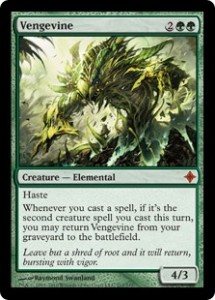
Vengevine – Awesome four casting cost creature with good power, toughness and recursion
Fauna Shaman – Good tool box to get our finishers and to get rid of stuff we don't need (or want in grave)
Avenger of Zendikar – Big body to boot and mass token producer that pumps the tokens
Birds of Paradise – Early drop mana producer plus evasion. Relevant with pump options and as blocker against flyers
Lotus Cobra – Multi-purpose ramp creature. Drop two lands to produce two mana to get our finishers faster
Primeval Titan -Big body to boot and ramps us faster
Llanowar Elves - Early drop mana producer and good creature type
Garruk Wildspeaker - Mana producer, token generator and pump effect, and it's a permanent that's hard to deal with in the current format

Here we have a fairly good amount of staples cards to use at our disposal; most notable is the interaction with Fauna Shaman and Vengevine. Also notable is Primeval Titan and Lotus Cobra for the nice ramp utility that those can give us. If we have a need to switch from an Aggro perspective to a midrange or Control we possibly could. For right now I'll keep this list in case we would have a need for it, however I would like to focus on an Aggro archetype.

Utility:

Explore - Ramp and draw card
Garruk's Packleader – Card draw
Momentous Fall – Life gain and card draw
Pelakka Wurm – Life gain and card draw
Cultivate – Ramp
Harrow – Ramp
Growth Spasm – Ramp plus token producer that also ramps
Khalni Heart Expedition - Ramp
Nissa Revane – Lifegain, recursion, potential finisher with the right creature type
Primeval Titan- Big body to boot and ramps us faster
Realms Uncharted – Fixes mana and thins out the deck to get to our answers and/or finishers
Sylvan Ranger – Ramp
Arbor Elf – Conditional mana producer
Elvish Archdruid – Pump, conditional mana producer
Joraga Treespeaker – conditional/mana producer
Acidic Slime – Destroys artifacts, enchantments and lands
Naturalize - Destroys artifacts and enchantments
Natures Claim - Destroys artifacts and enchantments, opponent gains life
Relic Crush – Destroys multiple artifacts and enchantments with conditions
Slice in Twain -Destroys artifacts and enchantments
Terastodon – Destroys multiple permanent types but not creatures, leaves you or opponent good power and toughness tokens.
Nature's Spiral – Recursion
Vengevine – Recursion and Haste
Giant Growth – Combat trick and pump
Autumn's Veil – Protection: Blue and Black, alternative strategy to null counter spells for finishers
Might of the Masses – Pump, conditional requirements
Groundswell – Pump, conditional requirements
Vines of Vastwood – Versatile pump, conditional Shroud
Beastmaster Ascension – Pump, conditional requirements
Asceticism – Troll Shroud, regeneration with payment

Ok, now we're talking! These are a lot of utility cards we can use: lots of card draw, ramp, removal of artifacts and enchantments, combat tricks with pump spells and a bit of recursion to bring back our creatures or permanents. We have some good options for an aggro deck, but let's continue.

Base:

Mul Daya Channelers – Beater with a creature on top, mana producer with a land. Conditional
Overgrown Battlement – Multi-purpose mana producer
Nest Invader – Mana producer with token
Genesis Wave – Finisher with conditions
Rampaging Baloths – Big body and conditional token producer
Gigantiform – Pump enchantment with alternative ability
Nissas Chosen – Good two drop body, good creature type, recursion potential
Ezuri, Renegade Leader – Regenerator with payment, finisher with Overrun condition
Obstinate Baloth – Lifegain, temporal recursion with discard
Tajuru Preserver – Sacrifice prevention, good option against sacrifice abilities i.e., Vamps, Annihilator
Wolfbriar Elemental – good body, conditional token producer
Leyline of Vitality – Lifegain plus toughness
Leatherback Baloth – Big creature for three mana cost
Overwhelming Stampede – Conditional finisher
Fog – Combat Trick
Awakening Zone – Token and mana producer

Alright, so we have some very valid cards to use, however some might not have the effect we want for an Aggro deck. So let's take a look at what I would consider for our Aggro deck out of the current lists:

Vengevine
Fauna Shaman
Avenger of Zendikar
Nissas Chosen
Nest Invader
Mul Daya Channelers
Beastmaster Ascension
Vines of Vastwood
Natures Claim
Explore
Lotus Cobra
Primeval Titan
Llanowar Elves
Garruk Wildspeaker
Leatherback Baloth

So far we have some good outlets to work with. Some are the staples which could go into the deck, and some seem like they're better in another kind of aggro archetype. Let's take a look at what our Red provides:

Red

Removal:

Arc Trail – Good multiple removal spell, conditional in situations where no creature is present
Burst Lightning – Quick burn plus removal, conditional extra damage with payment
Cerebral Eruption– One-sided Wrath of God, very conditional if opponent reveals low mana cost spell with larger creatures on board
Chain Reaction – The main red Wrath of God, almost as conditional as Cerebral but deals with creatures on the board and, conditionally, higher toughness
Chandra Nalaar – Multi-purpose permanent, more of a midrange or control card
Chandra Ablaze – Multi-purpose permanent, more of a midrange or control card, conditional finisher
Chandra's Outrage – Conditional removal
Combust – Conditional removal but overall in the current format solid removal
Comet Storm – Another Fireball-type card, multi-purpose removal with extra payment
Cunning Sparkmage – Decent removal of low toughness creatures or post combat
Destructive Force – Alright removal, better as utility
Ember Hauler – Good removal plus good creature type
Flame Slash – Good removal for Sorcery
Forked Bolt – Good multiple removal spell
Galvanic Blast – See Burst Lightning, conditional with artifacts
Koth of the Hammer – Produces beater, ramps, and finisher. Overall great card in the right deck
Lightning Bolt – Best removal spell Red has produced, always in the Red deck
Pyroclasm – Mass removal of small toughness creatures, post combat board wiper
Searing Blaze – Decent removal, conditional with extra damage
Staggershock – Recurring removal
Inferno Titan- Awesome recurring removal spell

Ok... wow, that's why Red in my opinion has the best removal in the game. We just have so many options to use. Mostly, these are all spells, which is ok: We need as much removal here as we possibly can since Green didn't leave us with much. Now, we still have plenty more to look at in the deck building process.

Staples:

Lightning Bolt – Best removal spell Red has produced, always in the Red deck
Koth of the Hammer – Good card overall in a mono Red deck
Arc Trail – Multiple removal
Pyroclasm – Mass removal of small toughness creatures, post combat board wiper
Kargan Dragonlord- Solid beater in a mono Red deck
Goblin Guide- Probably one of, if not the best, Red one drops besides Kird Ape
Inferno Titan- Awesome recurring removal spell, good body and Firebreathing

Alright we have ourselves some decent staples to use! The first couple of cards I'm going to look at are Koth of the Hammer and Goblin Guide. These are the typical staples that the Red deck uses, not only for the advantages they provide but for their overall power. Early drops are key to consider in an Aggro deck so Goblin Guide is something to keep track of. Our friend Koth on the other hand is more along the lines of belonging in a mono Red deck instead of the typical Green/Red Aggro deck. Inferno Titan seems to fit well into the ramp Aggro deck quite nicely and another card to keep track off. However I think a quick Aggro deck is what we're paced to find so lets continue.

Utility:
Destructive Force- Land Destruction plus decent removal
Shatter- Destroys artifact
Mark of Mutiny- A Threaten that pumps the creature
Act of Treason- Another Threaten
Plated Geopede- Good solid early drop with First Strike, along with a conditional pump effect
Tunnel Ignus- Great against opponents early ramp effects and punishes them with damage
Bazaar Trader- A unique utility card that has some input, uses the current Threaten cards to our advantage in the current format
Kuldotha Phoenix- Conditional recursion, solid flier and haste to boot.
Kuldotha Rebirth- Able to give us three creature tokens turn one with an artifact, solid creature type

Here we have some interesting uses we can consider with our utility cards. The fact that we have at least a good amount of Threaten cards in the current format means we can abuse our opponent for playing big creatures with the use of Act of Treason and Mark of Mutiny. Plated Geopede seems like it would fit nicely into the aggro deck and needs to take note that in order to fully meet its potential we need ramp effects. Kuldotha Phoenix is an interesting card choice because it can be really powerful in the right deck. It can be revived when Metalcraft is online, and it has Haste and evasion with Flying. It's also got a good power and toughness so its hard to remove.

Base:

Lavaball Trap - Conditional alternative cost, land destruction plus removal
Manic Vandal - Good overall creature, destroys artifacts, and is a creature on board to attack and block
Goblin Ruinblaster - Destroys nonbasic lands with conditional payment, Haste creature with good creature type
Hoard-Smelter Dragon - Destroys artifacts and gains a pump ability from it, evasion through Flying, heavy mana cost
Spikeshot Elder - Good low casting creature that has ability to damage creatures and players with payment on condition of its power and toughness
Reverberate- Wild Ricochet or Reiterate anyone?

Not a lot to go on here, mostly these would be considered for us as sideboard options to use against the current meta. Two noticeable cards here are Goblin Ruinblaster and Reverberate. I love destroying my opponent's manlands, especially if they leave their mana up to block one of my creatures. I've always been a fan of Wild Ricochet because the card will usually let you change the game state in your favor by either simply killing your opponent or taking away the counterspell that targeted your finisher.

Artifact/Colorless

Removal:

Argentum Armor- Destroy permanents, expensive artifact and equip cost
Lux Cannon- Destroy permanents with conditional payment
Ratchet Bomb - Destroys all permanents with condition of number of charge counters, one time removal
Blazing Torch - Alright removal, although sacrifices itself for damage
Heavy Arbalest - Heavy mana cost with a draw back to dealing damage
Livewire Lash - Good Equipment, damage is conditional due to ability
Molten-Tail Masticore - Flame Javelin anyone?
Perilous Myr - Decent removal, needs to be sent to graveyard from the field to deal damage
Triskelion - Ok removal, in right deck it can be well developed, heavy mana cost
Tower of Calamities - Heavy damage to creature, too expensive to be played
Brittle Effigy- One time removal spell, exiles their finisher or threat
All Is Dust - Good removal spell, heavy mana cost, doesn't affect Eldrazi creatures or artifacts
Ulamog, the Infinite Gyre- Destroys a permanents, expensive mana cost

So here we have a fair amount of removal that the colorless cards provide us with. I notice that here we have cards that mostly belong in a midrange or control deck, because the Aggro deck wants quick removal or a creature that provides us with a body at least i.e., Flametongue Kavu. Note that the only two cards that actually do it here are Molten-Tail Masticore and Ulamog, the Infinite Gyre. I think in my opinion that Molten-Tail Masticore is probably the best card in Scars of Mirrodin. Not only does it have a great casting cost, it has a good solid body with the power to boot, and its abilities are quite powerful. Its downside is not too bad in terms of using it in the right deck, it has the ability to kill a creature pre-combat or post-combat by either Flame Javelining your opponent's creature, or it can just target your opponents themselves by exiling a creature in the grave that did it's job. Not only that, but it regenerates itself which is what Aggro decks love to have: Remember Troll Ascetic? Unfortunately, the same praise cannot go to Ulamog, the Infinite Gyre so easily. Even if it has a good ability and is very hard to remove, the two problems I have with it is the mana cost and the fact that it's a legendary creature. It's expensive and you can't use the second one in your hand unless your want to lose board position. More likely Ulamog would fit well with the ramp decks instead of an Aggro deck.

Staples:
Eldrazi Monument- Giving your creatures Flying, Indestructibility, and +1/+1 is good.
Everflowing Chalice- Artificer's mana ramp card
Lodestone Golem- Good stall card through adding mana cost to cards
Memnite - Good zero costing beater
Mimic Vat- Great card that reanimates creatures
Mindslaver - Take your opponents turn to deplete them of resources or put tempo in your favor
Molten-Tail Masticore- Flame Javelin and Regeneration
Ornithopter- Zero costing Flier
Wurmcoil Engine - Lifelink and Deathtouch? Along with putting two 3/3's out with one of each ability and a 6/6 is good in my book
Raging Ravine- Able to attack and gain more power and toughness each turn
Rootbound Crag- One of the only cards we have to consider as a Stomping Ground that's neither a Forest nor a Mountain
Copperline Gorge -One of the only cards we have to consider as a Stomping Ground that's neither a Forest nor a Mountain, also lets us play spells early on as one of our first 3 land drops.

Well, we have a fairly good amount of staples to use; some way too expensive and some about right where we might want to use. Again Molten-Tail Masticore is noteworthy, however I'm also looking at Wurmcoil Engine, Mimic Vat, Memnite, and Lodestone Golem. Some of these are midrange cards but can be used in some sort of ramping Aggro deck.

Utility:
Adventuring Gear- Pump equipment with condition
Basilisk Collar- Equipment that gives Deathtouch and Lifelink
Mox Opal - Mana accelerator with Metalcraft condition
Steel Hellkite- Big creature with flying that sort of Pernicious Deed's the board
Strata Scythe- Good equipment in mono colored decks for fast Aggro
Sword of Body and Mind- Good overall equipment, pumps, token producer, protection from Green and Blue and mills your opponent
Sword of Vengeance- +2/+0, Haste, First Strike, Trample and Vigilance seems pretty good for a equipment
Temple Bell- Lets each player draw a card
Trusty Machete - Pump equipment
Voltaic Key- Untaps an artifact

The only cards I see that might be useful here are Trusty Machete, Sword of Vengeance, Sword of Body and Mindand Basilisk Collar.

Base:
Sylvok Replica- Creature that sacrifices to destroy an enchantment or artifact
Temple Bell- Lets players draw a card
Tumble Magnet- Conditional usage, but allows user to tap a creature, artifact or land
Voltaic Key- Untaps an artifact

Nothing that catches my attention so lets continue on with the final deck list that I have made so far with what we have.

Final List:

Main Deck

4 Memnite
4 Ornithopter
4 Vengevine
3 Kuldotha Phoenix
4 Fauna Shaman
4 Beastmaster Ascension
3 Mox Opal
3 Kuldotha Rebirth
4 Lightning Bolt
3 Arc Trail
4 Rootbound Crag
4 Copperline Gorge
4 Raging Ravine
3 Khalni Garden
5 Forest
4 Mountain

SB

3 Pyroclasm
4 Tunnel Ignus
3 Nature's Claim
3 Staggershock
2 Sword of Body and Mind

Reasons for card choices:

Beastmaster Ascension - I choose this card as a means of an alternative way to pump my creatures. With the Ornithopters and Memnites, I don't consider it hard to do.

Ornithopter - It is a Flier that fuels the deck nicely, it can be tossed to Fauna Shaman to fetch Vengevine, add counters to Beastmaster Ascension as another way to finish off an opponent, and activates Metalcraft for Mox Opal and Kuldotha Phoenix.

Memnite - A very early ground beater for zero casting cost with a similar role as Ornithopter. It can be tossed to Fauna Shaman to fetch Vengevine, add counters to Beastmaster Ascension as another way to finish off an opponent, and activates Metalcraft for Mox Opal and Kuldotha Phoenix.

Kuldotha Phoenix - Another finisher of the deck. It's a recurring creature that can be activated with Ornithopter and Memnite. It's still a 4/4 flier that also has Haste to boot.

Vengevine and Fauna Shaman - The aggro tool box. In my opinion, most of the cards in the deck have synergy with these two. I can toss any creature to Fauna Shaman to bring out Vengevine or Kuldotha Phoenix, and also play each of our zero casting cost creatures to bring both of those back.

Kuldotha Rebirth- With all our artifact creatures and Mox Opals playing this card on turn one puts three 1/1's out on the field that can give us early damage as well as fueling a midgame Beastmaster Ascension.

Mox Opal- Early ramp effect that can give us an early Fauna Shaman to start putting Kuldotha Phoenix in the grave or to sacrifice to Kuldotha Rebirth.

Side Board Options

Pyroclasm- More for against the White Weenie Quest deck with Argentum Armor and other equipment.

Staggershock- Damage to finish an opponent off or to clear the board to alpha strike.

Tunnel Ignus This is a meta call against the Valakut match up.

Natures Claim- A tech card that should be run in my opinion in most Green decks. Helps with the White Weenie Quest deck, along with decks running multiple artifacts and enchantments such as Wurmcoil Engine, Everflowing Chalice, Journey to Nowhere, etc.

Sword of Body and Mind - This card I admit is something of a meta choice, I have plenty of UW & UB Control decks alongside Mono Green Eldrazi ramp. This allows me to not worry about some of the problems that can occur during these matches.

Overall questions about my metagame:

How does this deck handle UW or UB control decks?
I think that this deck can be fast enough to handle these kinds of decks. It's better to not overextend the board so we won't lose tempo. Frost Titan and Jace, the Mind Sculptor are cards we need to look out for. Postboard we can bring in more burn and Sword of Body and Mind to deal with these decks. Usually you want to get out your low casting cost guys as fast as possible but keep a few in hand for Vengevine and Kuldotha Phoenix, and to play around counters so you can get Beastmaster Ascension out.

How does this deck handle GR Valakut/Eldrazi Ramp?
I believe this is one of the harder matchups we have to face. They can easily ramp into an Eldrazi spell or into the Valakut combo. We have Tunnel Ignus to face them, but we will have to wait and see. We need to keep them on guard by killing their Lotus Cobras and Oracle of Mul Dayas. Summoning Trap is something we can't do anything about but play around it. Our goal in these matchups is to kill the mana producers and Aggro out as quickly as possible.

How does this deck handle RDW?
Another one of our harder match ups. Usually in this match up we have to out Aggro them or play around each others Pyroclasms. Arc Trail is important here for us because most of the time it's in the Red deck's sideboard. It can give us an early advantage and get in without having to worry about blockers.

Thanks for tuning in and I'll see ya next time On the Hunt. I look forward to hearing from you guys on what you might have considered.

Kellen Huber

@cavemankellen on Twitter

Selling Your Binder

Are you a Quiet Speculation member?

If not, now is a perfect time to join up! Our powerful tools, breaking-news analysis, and exclusive Discord channel will make sure you stay up to date and ahead of the curve.

Welcome back to the Revenue Review, where this week I hope to shed some light on the process of selling off some of your stock.

I figured the best way to walk you through this topic was to clean out some of my own stock, something I’m overdue for. My girlfriend and I got a pretty sweet Black Friday deal for a TV (42 inches, $400 for a name-brand plasma set), which dovetailed nicely with my decision to sale some cards. My goal when I set out thumbing through my binder was to sell enough to pay for my half of the TV, something I should be able to do.

Cleaning out your binder


The first step I took was going through my binder and pulling out everything I knew I could sell off for a decent price, such as my extra Vengevine and Aether Vial. Then I pulled out cards I have tons of extras of that are a little higher than bulk rares, such as Oran-Rief, the Vastwood and Devastating Summons. I also grabbed cards like Grim Monolith that I’m unlikely to be able to trade off in my area.
I left a number of cards in my binder. For starters, I decided to keep my bulk, because I don’t have enough to justify shipping it off. If I’m going to sell cards in bulk, I’m going to do so in person rather than mail it off. The shipping costs on the bulk makes it rather unappealing, regardless of whatever small profit I could make. Keeping those cards in my binder gives me some opportunity to trade back up, as I talked about last week.

Where to sell


The next question I faced was where to sell off my cards. First of all, I consulted this website. Looking over the Nutt Draw by Chris McNutt gave me a great place to start. Once I realized that I was going to be using Ebay for a number of my cards, this article by Doug Linn was pretty useful while setting up my sales.

One of the first major decisions I made was to choose one buylist to sell to rather than spread my cards around. Even though I inevitably lose some profit this way, I did this for convenience. It can become pretty convoluted to sell to three or four buylists and keeps track of all of that on top of Ebay sells. I chose Star City Games as my buylist of choice because it was simple and easy, as well as being a reputable source. I don’t have enough experience with other buylists to compare, but you’ll be fine as long as you choose a reputable store.

My (awesome) girlfriend happens to be a whiz with Excel spreadsheets, so she started a list comparing Ebay and Star City prices as we chose which source to sell individual cards to. We compared prices and divided the cards into piles as we made each decision. I chose to sell a number of cards to Star City even though I could fetch marginally higher prices on Ebay because there’s other costs associated with Ebay, such as Ebay fees, shipping fees and, most importantly to me, my time. With finals coming up in a few weeks in addition to my usual hectic life, convenience was a big factor for me. With all that in mind, I decided to Ebay only those cards that I either couldn’t sell to Star City or that represented a large difference in profit.

Here’s the sheets showing the cards I decided to move and the prices we estimated for them, based on completed sales.

Card Ā  Ā  Ā  Ā  Ā  Ā  Ā  Ā  Ā  Ā  Ā  Ā  Ā  Ā  Ā  Ā  Ā  Ā  Ā  Ā  Ā  Ā  Ā  Ā  Ā Ebay Price

Oran Rief, the Vastwood 4x Ā  Ā Ā  $4
Promo Krosan Grip 2x Ā  Ā  Ā  Ā  Ā  Ā  Ā  Ā Ā  $5.50
Indomitable Archangel Ā  Ā  Ā  Ā  Ā  Ā  Ā Ā  $1.50
Devastating Summons 4x Ā  Ā  Ā  Ā  Ā  $0.99
Thornling Ā  Ā  Ā  Ā  Ā  Ā  Ā  Ā  Ā  Ā  Ā  Ā  Ā  Ā  Ā  Ā  Ā  Ā  Ā Ā  $2.00
Survival of the Fittest Ā  Ā  Ā  Ā  Ā  Ā  Ā  Ā Ā  $35.00
Ball Lightning 4X Ā  Ā  Ā  Ā  Ā  Ā  Ā  Ā  Ā  Ā  Ā  Ā $4.50
Consuming Vapors 4X Ā  Ā  Ā  Ā  Ā  Ā  Ā  $8.00
Eldrazi monument 4X Ā  Ā  Ā  Ā  Ā  Ā  Ā  Ā $61
Cunning Wish 1X Ā  Ā  Ā  Ā  Ā  Ā  Ā  Ā  Ā  Ā  Ā  Ā $4
Stoneforge Mysticp 4X Ā  Ā  Ā  Ā  Ā  Ā  Ā  Ā  Ā $30
Tinker 1X Ā  Ā  Ā  Ā  Ā  Ā  Ā  Ā  Ā  Ā  Ā  Ā  Ā  Ā  Ā  Ā  Ā  Ā  Ā  Ā $4
Gideon Jura 2X Ā  Ā  Ā  Ā  Ā  Ā  Ā  Ā  Ā  Ā  Ā  Ā  Ā  Ā  $30
Frost Titan 1X Ā  Ā  Ā  Ā  Ā  Ā  Ā  Ā  Ā  Ā  Ā  Ā  Ā  Ā  Ā  $14
Avenger of Zendikar 1X Ā  Ā  Ā  Ā  Ā  Ā  Ā $7
Sensei's Divining Top 1X Ā  Ā  Ā  Ā  Ā  Ā $4.50
Misdirection Ā  Ā  Ā  Ā  Ā  Ā  Ā  Ā  Ā  Ā  Ā  Ā  Ā  Ā  Ā  Ā Ā  $10
Vengevine Ā  Ā  Ā  Ā  Ā  Ā  Ā  Ā  Ā  Ā  Ā  Ā  Ā  Ā  Ā  Ā  Ā  Ā Ā  $26
Grim Monolith Ā  Ā  Ā  Ā  Ā  Ā  Ā  Ā  Ā  Ā  Ā  Ā  Ā  Ā  $9
Aether Vial 2X Ā  Ā  Ā  Ā  Ā  Ā  Ā  Ā  Ā  Ā  Ā  Ā  Ā  Ā  Ā $15
Steel Overseer 4X Ā  Ā  Ā  Ā  Ā  Ā  Ā  Ā  Ā  Ā  Ā  Ā  $7.00
Total $283

Card Name Ā  Ā  Ā  Ā  Ā  Ā  Ā  Ā  Ā  Ā  SCG Buy Price Ā  Ā  Ā Number of Cards Ā  Ā  Ā  Total $
Grim Monolith Ā  Ā  Ā  Ā  Ā  Ā  Ā  Ā  Ā  Ā  Ā  $8.00 Ā  Ā  Ā  Ā  Ā  Ā  Ā  Ā  Ā  Ā  Ā  Ā  Ā  Ā  Ā  1 Ā  Ā  Ā  Ā  Ā  Ā  Ā  Ā  Ā  Ā  Ā  Ā  Ā  Ā  Ā  Ā  Ā  Ā  Ā  Ā  Ā  $8.00
Sensei's Diving Top Ā  Ā  Ā  Ā  Ā Ā  $3.00 Ā  Ā  Ā  Ā  Ā  Ā  Ā  Ā  Ā  Ā  Ā  Ā  Ā  Ā  Ā  1 Ā  Ā  Ā  Ā  Ā  Ā  Ā  Ā  Ā  Ā  Ā  Ā  Ā  Ā  Ā  Ā  Ā  Ā  Ā  Ā  Ā  $3.00
Ball Lightning Ā  Ā  Ā  Ā  Ā  Ā  Ā  Ā  Ā  Ā  Ā  $1.00 Ā  Ā  Ā  Ā  Ā  Ā  Ā  Ā  Ā  Ā  Ā  Ā  Ā  Ā  Ā  Ā 4 Ā  Ā  Ā  Ā  Ā  Ā  Ā  Ā  Ā  Ā  Ā  Ā  Ā  Ā  Ā  Ā  Ā  Ā  Ā  Ā  Ā $4.00
Goblin Guide (FOIL) Ā  Ā  Ā  Ā  Ā  $8.00 Ā  Ā  Ā  Ā  Ā  Ā  Ā  Ā  Ā  Ā  Ā  Ā  Ā  Ā  Ā  Ā 1 Ā  Ā  Ā  Ā  Ā  Ā  Ā  Ā  Ā  Ā  Ā  Ā  Ā  Ā  Ā  Ā  Ā  Ā  Ā  Ā  Ā $8.00
Awakening Zone Ā  Ā  Ā  Ā  Ā  Ā  Ā  Ā Ā  $0.50 Ā  Ā  Ā  Ā  Ā  Ā  Ā  Ā  Ā  Ā  Ā  Ā  Ā  Ā  Ā  Ā  1 Ā  Ā  Ā  Ā  Ā  Ā  Ā  Ā  Ā  Ā  Ā  Ā  Ā  Ā  Ā  Ā  Ā  Ā  Ā  Ā  Ā $0.50
Consuming Vapors Ā  Ā  Ā  Ā  Ā  Ā Ā  $2.00 Ā  Ā  Ā  Ā  Ā  Ā  Ā  Ā  Ā  Ā  Ā  Ā  Ā  Ā  Ā  Ā 4 Ā  Ā  Ā  Ā  Ā  Ā  Ā  Ā  Ā  Ā  Ā  Ā  Ā  Ā  Ā  Ā  Ā  Ā  Ā  Ā  Ā $8.00
Elvish Piper Ā  Ā  Ā  Ā  Ā  Ā  Ā  Ā  Ā  Ā  Ā  Ā  Ā  $1.00 Ā  Ā  Ā  Ā  Ā  Ā  Ā  Ā  Ā  Ā  Ā  Ā  Ā  Ā  Ā  Ā  1 Ā  Ā  Ā  Ā  Ā  Ā  Ā  Ā  Ā  Ā  Ā  Ā  Ā  Ā  Ā  Ā  Ā  Ā  Ā  Ā  Ā $1.00
Elvish Champion (Ninth Edition) $0.75 Ā  Ā  Ā  Ā  Ā  Ā  Ā  Ā  Ā 1 Ā  Ā  Ā  Ā  Ā  Ā  Ā  Ā  Ā  Ā  Ā  Ā  Ā  Ā  Ā  Ā  Ā  Ā  Ā  Ā  Ā $0.75
Avenger of Zendikar Ā  Ā  Ā  Ā  Ā  $6.00 Ā  Ā  Ā  Ā  Ā  Ā  Ā  Ā  Ā  Ā  Ā  Ā  Ā  Ā  Ā  Ā  1 Ā  Ā  Ā  Ā  Ā  Ā  Ā  Ā  Ā  Ā  Ā  Ā  Ā  Ā  Ā  Ā  Ā  Ā  Ā  Ā  Ā $6.00
Warren Instigator Ā  Ā  Ā  Ā  Ā  Ā  Ā  $1.00 Ā  Ā  Ā  Ā  Ā  Ā  Ā  Ā  Ā  Ā  Ā  Ā  Ā  Ā  Ā  Ā  2 Ā  Ā  Ā  Ā  Ā  Ā  Ā  Ā  Ā  Ā  Ā  Ā  Ā  Ā  Ā  Ā  Ā  Ā  Ā  Ā  Ā $2.00
Cunning Wish Ā  Ā  Ā  Ā  Ā  Ā  Ā  Ā  Ā  Ā  $2.00 Ā  Ā  Ā  Ā  Ā  Ā  Ā  Ā  Ā  Ā  Ā  Ā  Ā  Ā  Ā  Ā  Ā 1 Ā  Ā  Ā  Ā  Ā  Ā  Ā  Ā  Ā  Ā  Ā  Ā  Ā  Ā  Ā  Ā  Ā  Ā  Ā  Ā  Ā $2.00
Frost Titan Ā  Ā  Ā  Ā  Ā  Ā  Ā  Ā  Ā  Ā  Ā  Ā  Ā Ā  $12.50 Ā  Ā  Ā  Ā  Ā  Ā  Ā  Ā  Ā  Ā  Ā  Ā  Ā  Ā  Ā  Ā 1 Ā  Ā  Ā  Ā  Ā  Ā  Ā  Ā  Ā  Ā  Ā  Ā  Ā  Ā  Ā  Ā  Ā  Ā  Ā  Ā  Ā $12.50
Grove of the Burnwillows $0.50 Ā  Ā  Ā  Ā  Ā  Ā  Ā  Ā  Ā  Ā  Ā  Ā  Ā  Ā  Ā  Ā  1 Ā  Ā  Ā  Ā  Ā  Ā  Ā  Ā  Ā  Ā  Ā  Ā  Ā  Ā  Ā  Ā  Ā  Ā  Ā  Ā  $0.50
Blood Crypt Ā  Ā  Ā  Ā  Ā  Ā  Ā  Ā  Ā  Ā  Ā  Ā  Ā  $4.00 Ā  Ā  Ā  Ā  Ā  Ā  Ā  Ā  Ā  Ā  Ā  Ā  Ā  Ā  Ā  Ā  Ā 1 Ā  Ā  Ā  Ā  Ā  Ā  Ā  Ā  Ā  Ā  Ā  Ā  Ā  Ā  Ā  Ā  Ā  Ā  Ā  Ā  Ā $4.00
Trinisphere Ā  Ā  Ā  Ā  Ā  Ā  Ā  Ā  Ā  Ā  Ā  Ā Ā  $0.50 Ā  Ā  Ā  Ā  Ā  Ā  Ā  Ā  Ā  Ā  Ā  Ā  Ā  Ā  Ā  Ā  Ā 1 Ā  Ā  Ā  Ā  Ā  Ā  Ā  Ā  Ā  Ā  Ā  Ā  Ā  Ā  Ā  Ā  Ā  Ā  Ā  Ā  Ā $0.50
Nevinyrral's Disk, 4th Edition $2.00 Ā  Ā  Ā  Ā  Ā  Ā  Ā  Ā  Ā  Ā  Ā  Ā 1 Ā  Ā  Ā  Ā  Ā  Ā  Ā  Ā  Ā  Ā  Ā  Ā  Ā  Ā  Ā  Ā  Ā  Ā  Ā  Ā  Ā $2.00
Boseiju, Who Shelters All $0.50 Ā  Ā  Ā  Ā  Ā  Ā  Ā  Ā  Ā  Ā  Ā  Ā  Ā  Ā  Ā  Ā 1 Ā  Ā  Ā  Ā  Ā  Ā  Ā  Ā  Ā  Ā  Ā  Ā  Ā  Ā  Ā  Ā  Ā  Ā  Ā  Ā  Ā $0.50
Total $63

Factoring in Ebay fees, we estimated I can make at least $240 from my Ebay sells, and with the $60 from my Star City sales, I’ll easily cover my half of the TV, and have a bit to pocket after that.
Since I’m selling off relatively few cards, I still have a solid collection to work from. It’s nice to see the money I’m making here because it’s a direct reflection of months of solid trading. I have a few cards in particular I want to touch on.

Frost Titan
This card may not have actually peaked, but I think it’s pretty close to it. I have no problem unloading this now, because I don’t think it has much farther up to go. The metagame is likely to shift as people find ways to answer the Titan. He is powerful, yes, but he only locks down one card at a time. I’m not saying it’s definitely time to sell Frost Titan but it’s way past buy time.

Grim Monolith
This card has done nothing but come down in price since its unbanning, so I’m getting rid of the one I picked up now. It’s possible this card gets broken and I regret it, but it seems rather unlikely.

Steel Overseer
Much like Eye of Ugin, speculation on the Overseer did more for its price than the cards it was designed to work with. No reason to hold on to these anymore, so it’s an easy sell.

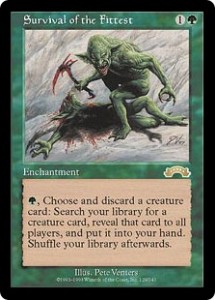
Survival of the Fittest
Doug Linn wrote an excellent article on this a few weeks back about whether it’s worth holding on to your Survivals right now, and I’m of the opinion it’s time to let go. The downside on this card massively outweighs the upside right now. Basically, If it gets banned, you’re screwed. If it’s not, there’s not much higher it can climb. I listed mine on Ebay and set it to expire tonight, so I’ll beat the Dec. 2 banlist update.

Eldrazi Monument
I’m not about to miss an ā€œI told you soā€ moment, and this is it. Monument has risen steadily since I wrote about picking them up more than a month ago. Now’s a pretty good time to cash out, because the Monument is holding steady at its current price while seeing play in a Tier 1 deck (Elves).

Tips for selling cards


- When in doubt – do it. Cash in hand is better than cards in binders. It’s easy to develop an emotional connection to your collection and be hesitant to sell it off, but you will almost always be better served doing it.
- Know your underrepresented cards – Elvish Piper and Elvish Champion are cards it’s very easy to classify as bulk if you don’t know better. Make sure to check buylists for all your cards before bulking them out.
- Choose only a few outlets to sell your cards. Grinding out every possible penny is great, but unless you have tons of time on your hands it’s probably a more efficient use of your time to use just two or three outlets for your cards.
- Bulk in person. You will lose a ton of potential profit if you try to ship out bulked cards, especially as your number grows. Bulk prices don’t change, so just hold onto them and sell them off at your next PTQ or Grand Prix.

Since an important part of cleaning out your binder is having the ability to rebuild it, I made it out to my first Scars draft Saturday night (working on Fridays sucks). At least, I thought I did. If you don’t know, I live in Oklahoma, and Saturday was the Oklahoma-Oklahoma State game, otherwise known as Bedlam. Bedlam pretty much trumps everything but Christmas in this state, so only six people showed up to the event. We weren’t able to draft (so I’m still a Scars draft virgin), but I did get in a trade with an EDH enthusiast before everyone cleared out to watch the game (Go Pokes!).

His: Eldrazi Monument ($18)
Isochron Scepter ($6)
Wanderwine Hub ($2.50)
Scion of Oona ($3.50)
Glen Elendra Archmage ($4)
Bloodghast ($6)
Total: $40

Mine: Oracle of Mul Daya ($3)
Primal Command ($1.50)
Foil Stalking Vengeance ($2)
Fire-lit Thicket ($4)
Dread Return ($1)
Total: $11.50
Net: $28.50

My partner actually priced this all out on Star City as we were making the trade. I told him I valued the filter land at $8, because of the fact Jund is the real deal in Extended, which I think is true. He threw a lot of it in because he really wanted the cards for EDH, including the foil Stalking Vengeance, which I’m pretty sure is literally the first rare I ever opened. Nonetheless, it’s a good trade to start rebuilding my binder.

That wraps up this week’s column, as well as my series on building, organizing, and selling your binder. I hope you found this series useful. I’ll make sure to touch on this again in a few weeks with an update on how much I ended up making from the sells. Come back next week, when I’ll check in with an update to Extended and the cards to pick up now. I’ve been doing a good amount of testing and brewing with the format, and I have some solid tips heading into the season. I'll give you a hint - The boogeyman is back (and it's not Faeries).

Until then,
Corbin Hosler
@Chosler88 on Twitter

Survival of the Fittest: or, How I Learned to Love the Game

Are you a Quiet Speculation member?

If not, now is a perfect time to join up! Our powerful tools, breaking-news analysis, and exclusive Discord channel will make sure you stay up to date and ahead of the curve.

[Note: James wrote this article during the last week. Keep an eye out for today's DCI Banned/Restricted List update announcement, but Survival's status has very little impact on the message of this article. Enjoy! -Dylan]

Hello! My name is James Madonna, and I'd like to welcome you all to Quiet Speculation! As for me, I have a quick list of notable qualities about myself for those that want it (some more evident than others): 1. Canadian, 2. Junior in college, 3. Loves to sling cardboard. I can be found grinding amongst the the crowd in PTQs around Pennsylvania, trying to earn my chance at the Pro Tour. However, outside of PTQs, you can always find me playing the Eternal formats, with a heavy focus on Legacy, the best format around. šŸ™‚ This is where my articles will focus on. Whenever you see one of my articles, you can expect it to be on said format, as it is the fastest growing currently. But enough jib-jab!, let's delve into the reading.

Survival of the Fittest
Will there be an Exodus of Survival from Legacy?

Legacy, for being a format of so many cards, ends up boiling down to just a few amazing strategies from its vast card pool. The problem that comes with being a player of the format is that we have to wade through the unexpected and sometimes brilliant innovations people come up with. This generally leads to the establishment of new decks in the metagame, with some decks being amazingly consistent and format dominating like Jund was in last year's Standard.

Unlike Standard, nothing rotates in Legacy. We players can't just say that it will be gone next year. The card pool is there and the only way to fix a problem is to ban or restrict it. These changes generally come when the DCI deem the card in question to be too dominating, e.g., Mystical Tutor. These banning updates are certainly needed in some instances, but they are not a catch-all for problems in any format.

Getting right to a glaring "problem," Survival of the Fittest has always been a spectacular (read as "Unfair") card to play against. With that said, it was beatable then and it's still beatable now. With the current thought that it will be banned, I want to take a different look at reasons why the Green enchantment should stay and what my ludicrous reasoning is behind it.

Vengevine
Or will Vengevine head to the bin... forever?

Foolproof Plan to alleviating a situation:

Step #1: Find a problem.

Step #2: Fix IT!

(This is a joke but you get the point)

No magic deck tries to play fair. Magic decks are made to not be fair. They want to gain an advantage any way possible and the methods often boil down to breaking a fundamental of the game, and this is the game plan for all Legacy decks. The catch being is that they must do it very well.

Survival, at the end of the day, is just a card. The recent printing of Vengevine has currently "busted" said card, but last I checked, it's a piece of cardboard that people sling. True, its hard beating a first turn Lion's Eye Diamond, dumping your hand to cast two Basking Rootwalla while returning two Vengevines, but so is a first turn Tendrils of Agony or Goblin Charbelcher, and just like the aforementioned two, countering key cards can be enough to throw off the Survival player's game plan.

If Counterspells are not your forte or your preferred play style, there are other options that do exist. Say you like bashing with dudes in the form of Zoo or Goblins, for example. Your game plan is pretty straightforward: you're off to the races. You need to apply pressure at all times. Goblins have a rougher time due to the lack of removal, but Wasteland, Goblin Lackey and Rishadan Port go a long way at slowing down the green monster. Zoo has nutty amount of removal, so it's business as usual: play the best cheap creatures, make a hole, and swing.

And if you prefer to play more non-interactive decks, be it prison or combo, the matchup is quite obvious: just do your thing. Survival is going to play their game and you play yours. Chances are, if you play tight, you should win, especially versus the Necrotic Ooze variant. Trinisphere in Stax, Elephant Grass in Enchantress, Glacial Chasm in Lands!, or even belching with Belcher for 20 are all fine ways of dealing with your opponent.

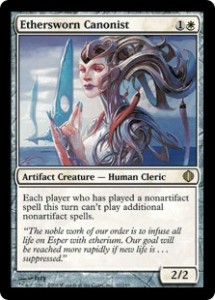
Ethersworn Canonist
I swear, I can stop those angry plants!

Sometimes though, you cannot fit all the hate in the main 60, so you need then to turn to the sideboard. The obvious way to beat any deck is to have a plan against it, but time and time again, improper sideboarding is a key problem with playing competitive Magic. Survival is a graveyard abuser. Ways to disrupt that lie in almost every single sideboard and is a good place to start for not only Survival, but Lands! and Dredge to name a few. A great example of a card that can shut down many things in Survival is Extirpate.

Turns out creatures have been printed that are applicable too. Ethersworn Canonist (a.k.a. Arcane Laboratory/Rule of Law on legs) is pretty good at preventing a player from casting two creatures in one turn. Peacekeeper is another creature receiving play due to its ability to shut down hasty 4/3s as well, among other things.

I can go on and on with cards that are applicable, but that promotes lazy players. If you take anything from this article, it is this: Play smart. There are plenty of options out there to fight any deck. Fact: Survival is a dominating force right now. Fact: Have a game plan for it. Looking at the last 4 SCG Opens, the top 8s have literally been dominated (50 percent!) by Survival decks. If it doesn't receive the ban hammer, flavors of Survival decks will continue to dominate until it's kicked off of its pedestal, and until then, we will have to deal with it and continue to fight on.

- James Madonna

yawgmothsfolly at gmailDOTcom

Six Degrees of Foundations

Are you a Quiet Speculation member?

If not, now is a perfect time to join up! Our powerful tools, breaking-news analysis, and exclusive Discord channel will make sure you stay up to date and ahead of the curve.

When I wrote my first article on cube drafting, I discussed how to support aggressive strategies in a cube. However, learning about aggro support is only one of the lessons in how to design an entire cube. A cube shouldn’t dominated by dragons and X-spells but how many of those types of cards should be in a cube? Which ones should be used?

The beginnings of my writing on Quiet Speculation will echo this article’s content by discussing building the foundations of your cube and how this affects your cube. After all, you can't build a house without a solid foundation and a cube's no different! In future articles, I’ll discuss how to build upon the foundation: how to build a pool of cards for your cube, how to pare it down, general cube design theory and how to change your cube's contents – information that's useful for cube designers at any level of experience.

One of the foundations of your cube is dictated through card restrictions. The restriction of the rarity of cards allowed will mainly dictate what cards can be used in your cube.

When people think of cube drafting, many think of ā€œpowered cubesā€ (cubes that allow for all rarities and include the ā€œpower 9ā€). Ā However cubes that restrict rarity are becoming more popular, such as common cubes and common/uncommon cubes, which feature very different card pools than powered cubes.

What type is right for you? Here are some factors to keep in mind when deciding on rarity structures:

Common: Commons cubes are pretty cheap as cards like Sinkhole, Chain Lightning, Jungle Lion, Lotus Petal and Rancor will make up most of a common cube's price tag due to the cheap price of the other commons. Ā  If you're on a budget and don't want to proxy cards, these 5 expensive cards can be pretty easily replaced.

Commons cubes can also be useful for beginning cube designers in that it's a very self-disciplining cube format. Ā In cubes of any size and rarity, it's a good idea to only have a few high-cost finishers and mass-removal in each color; the options available at the commons level make it so that having too many of either is difficult to achieve.

This isn't to say that those who create common cubes are undisciplined, nor that common cubes are easily built - it's just that the natural constraints of the format itself help beginning designers avoid frequent cube pitfalls. After all, it's hard to include too many 6+ casting cost creatures when the common ones are awful (granted, it can still can and does happen.)

Creatures in commons cubes are generally small: few non-green creatures get above the 4 power mark and non-blue evasive creatures typically don't get above 2 power (with blue fliers sometimes having 3 power) so evasive creatures are also generally small.

This isn't to say that a commons cube will end up in games that replicate your normal draft environment, because removal is much better and more plentiful and creatures are much more efficient ( In fact, Prodigal Pyromancer isn't a first pick or even good enough to be in a common cube, as I discussed on my article on context at ManaNation.)

There are fewer "big and splashy effects" at the common level although some do exist, like Pestilence, Opaline Bracers and Capsize. Ā I've found that commons cubes are more based on"boring" (a claim that I obviously don't agree with) workhorse cards Ā like Shimmering Glasskite and Wretched Anurid, so if you're a fan of that aspect of play, common cubes may be a good option to consider.

Common/Uncommon: Uncommons bring many mass-removal effects to the format, with red getting the lion's share through cards like Sulfurous Blast, Volcanic Fallout and Pyroclasm. Uncommons also bring powerful creatures who trigger when they enter the battlefield: ā€œ187ā€ creatures like the Predatory Nightstalker and Shriekmaw, huge beatsticks like Pelakka Wurm and ā€œarmies in a canā€ like Cloudgoat Ranger - all of which represent themes that aren't well-represented at the common level. Creatures are still generally on the small side and evasive creatures get bigger through cards like Serra Angel, but they typically don't match dragon size (5 power.)

Allowing for the use of uncommons also allows for generally powerful like Force of Will, Control Magic and Swords to Plowshares and cards like Sol Ring, Library of Alexandria and Skullclamp, cards that are in the top tier of powered cubes (to the point where these cards are banned in some common/uncommons cubes like Eric Klug's.) Ā Common/Uncommon cubes bring some of the flavor of the "epic" feel of rares through these cards and I feel that they're a nice midpoint between commons cubes and rare cubes.

Rare: One of the many draws of cube drafting for people is being able to use cards with monumental effects like Sundering Titan, Jace, the Mind Sculptor and Wildfire are all rare. This isn't to say that powerful rare cards like planeswalkers and dragons define rare cubes, they merely make up a part of it as allowing for rares also brings equally important ā€œboringā€ cards like Isamaru, Hound of Konda and Call of the Herd to a cube.

These cubes can be pricey, even if you aren't using cards like Ancestral Recall. Ā  Costs can add up, but smart purchases and trades as well as help from your friends and playgroup can help drive the price down.

Due to the fact that a card's rarity dictates the content of a cube, changing a cube’s allowed rarity is ill-advised as it's a big transition; many people tend to stick with a rarity structure for this very reason.

Individual card/set restrictions, however, can be changed pretty easily.

Examples of this kind of restriction include whether you are allowing the use of cards from the ā€œUnā€-sets (Unglued, Unhinged) or the Portal card sets (because the cards in the Portal and "Un"-sets were designed to not meant to be played alongside non-Portal/"Un"-set cards with the "Un"-set cards also being banned from sanctioned tournaments.)

Set restrictions like these can affect the inclusion of a few cards in your cube, like whether cards like Blast from the Past, Rolling Earthquake and Booster Tutor are allowed in your cube. Other restrictions deal with individual cards, such as whether to include or ban cards for power reasons, such as the aforementioned banning of Library of Alexandria from some common/uncommon cubes.Ā Ā  Some cube designers allow for functional errata so that cards like Contract from Below and Chaos Orb are able to be used (Contract exiling the card instead of putting it for ante and Chaos Orb destroying a permanent.)

A popular cube variant is to make all basic lands in a cube count as snow-covered basic lands to allow cards like Skred and Phyrexian Ironfoot to be powerful cards.

Restrictions that dictate the use of individual cards or sets can be changed pretty easily in all steps of cube design, from building its foundation to a cube that's been around for years.

For example, while something like Ancestral Recall is an extremely powerful card that is a very high draft pick, its inclusion or banning doesn't require a major cube overhaul. A card like Deep Analysis isn’t suddenly made obsolete by the inclusion of Ancestral Recall, since it's still a great card regardless of whether Ancestral Recall is in the same cube.

The same concept works in reverse. I used to have the basic lands in my cube count as snow-covered for Skred and Phyrexian Ironfoot, but I eventually reversed this change. I also used to run Contract from Below and Chaos Orb with functional errata, but I chose to remove those cards. Ā I did this so that my cube would be able to be played by anyone easily without needing to know these rules since I didn't cube draft with a regular group. Ā When these were removed all that was really required was to find adequate replacements, not a massive overhaul.

There are other things to consider when designing the foundation of a cube, mainly factors of composition.

Cube Size: Ā When the idea of cube drafting started in 2002, many people used the basic structure that was used in Toronto, the format's city of origin. The idea was to have the best 50 cards in WUBRG (white, blue, black, red and green), lands, artifacts and to have the best 60 multicolor cards, (5 for each dual-color pair and 1 for each tri-color pair.) For years, this was considered the cube gold standard and this made it so that people referred to a cube as ā€œthe cubeā€ – due to the fact that people thought of cube design as a uniform process:Ā deciding on the best 410 cards and making that a cube.

Due to the addition of many cubeworthy cards in recent years, many designers have changed from the ā€œtraditionalā€ size of 410 to a modern range from 360 cards to about 900 cards. Ā What what size of cube should you use?

Fellow writer cube writer Adam Styborski is discussing the very question on his blog in a 4-part series [More should be up this week! - Adam] and fellow cube enthusiast and writer Mark Oberdries addressed the topic in his article ā€œCube Design Philosophy.ā€

To summarize their points, 360 cards allows for the most concentrated pool of card power in an 8-person draft. Ā My friend Charles and I designed a 360-card cube for Ogre's Games in St. Louis and some extremely good cards like Myr Battlesphere had to be cut because there wasn't room for them. Mark mentioned that a problem with smaller cubes is that their drafts can lack variety due to the lack of cards in the pool. When doing an 8-man draft with a 360-card cube, you will always see every single card and that can get old.

Some cards like ā€œtoolbox cardsā€ (Enlightened Tutor, Mystical Tutor) tend to be better in smaller cubes since it's easier to achieve the critical mass to make such cards good.

Deciding on card cuts is more difficult for smaller cubes than it is for larger cubes (in the same way that it's harder to edit a week's worth of film footage into a 2-hour documentary than it is to make into a 3-hour one) and because of this, I wouldn't recommend a small cube for a cube beginner. For an 8-person group, between 450 and 550 cards is a good cube size, as it's a good compromise between variety and card power.

Distribution of colors: Many cubes have an equal distribution of white, blue, black, red and green cards and I agree with this. Doing something like having more blue cards than non-blue cards is a bad idea since a well-designed cube is all about achieving balance amongst colors and archetypes. Ā Having color imbalance starts everything off on the wrong foot and makes it that much harder to achieve balance.

But what about the other cards like artifacts, multicolor and lands?

In general, the fewer multicolor cards you have in your cube, the stronger it will be. This is because multicolor cards naturally limit the decks that can play them so they need to be much stronger than their mono-color counterparts. A card like Watchwolf ends up in few cubes simply because, while it is a good card, it can't compete with the other amazing cards in green-white. Tri-color cards are especially limiting and suboptimal tri-color cards like Doran, the Siege Tower are typically last picks (while it's great when you can reliably cast it on turn 3 you can't make that assumption in a cube). Ā  Having fewer multicolor cards results in fewer dead picks and in general, a stronger overall cube.

Artifacts and lands are different in that they are able to go into decks much easier than multicolor cards, since a card like Masticore or Maze of Ith doesn't care if it's being used alongside Plains or Swamps. Ā However, the same rule applies in that the artifact and land sections should also be smaller than the individual color sections (but larger than the multicolor section.) Ā My friend Brandon came up with analogy that the cards in WUBRG are the cogs in a cube and that multicolor, artifacts and lands are the oil that keep the cogs moving: having too many artifacts and lands can throw a wrench into the cogs.

There are other ways to categorize these kinds of cards, like the system that myself and Mark Oberdries uses where cards like Azorius Signet and Celestial Colonnade are considered to be blue-white cards. Concepts like these will be featured in future articles as I discuss how to build upon and improve your cube's foundations, no matter how old your cube is.

Tune in next week, when I'll be discussing how to build a pool of cards that you'll use to build a cube. Ā If that's not enough cube content for you, check out my blog at idratherbecubing.wordpress.com and my twitter @UsmanTheRad!

Tis the Season…For a New PTQ Season

Are you a Quiet Speculation member?

If not, now is a perfect time to join up! Our powerful tools, breaking-news analysis, and exclusive Discord channel will make sure you stay up to date and ahead of the curve.

I went shopping a bit this last weekend and I saw something that happens to be one of my biggest pet peeves when trying to park. There was a line of cars driving down one particular aisle when the lead car noticed someone walking to their car so they just stopped and waited for them to load the car, get in and drive away so they could get their spot. Meanwhile there are a ton of spots one and two rows over that everyone can see. By the time they parked they could have already been inside shopping. This seems to happen to me every single time I go somewhere so I honestly think I'm just getting trolled by life. Anyway, the point of this story is that Extended season is almost here!

The reason I think that lead car fails to see the other parking spots is that we all tend to focus on our immediate surroundings. Right now the PTQ format is Sealed which doesn't really help us much for trading other than increasing the pool of cards to trade for. The next season is Extended though and it is coming up soon; the last Sealed PTQs are right before Christmas! Unfortunately we haven't seen many Extended results since Scars was released. You can look for online results but until the 6 rounds of Extended we will see at Worlds there isn't going to be much to study.

Fortunately, since Worlds is such a big event, the Extended portion probably won't make a huge splash. Standard will probably get much of the attention since we haven't seen a pro Standard event in awhile. I'll be paying close attention to the Saturday results and I encourage you to do the same. Right now I honestly have no ideas how the format will turn out because like most players who won't be playing at Worlds I haven't played any Extended. If I had to guess I would think that Doran decks might be good since they are able to answer pretty much anything thrown at them but I'm going to wait until Worlds and start my testing from there.

Once those results come in don't just pick up cards for the best decks but also start to look at what cards work well against those decks and try to pick them up. The majority of players will start off by putting together a deck straight from the top so you will want to have those cards available but within a couple of weeks those decks will be getting beat by some other deck and you will want to have those cards as well. By not just focusing on getting the cards for decks that are popular right now you can set yourself up for some good gains down the road.

Now I haven't talked much about internet trading in awhile so I want to spend some time on that. The biggest difference between internet trading and trading in person is that trading over the internet costs money. You have to pay for postage and envelopes, plus you will need some top-loaders and penny sleeves to start. When I first started I sent everything in a bubble mailer and most of my trades included delivery confirmation. That can get expensive and it will easily negate any gains you make in the trades themselves.

For large trades I still ship the cards with delivery confirmation but for trades under $20 it is much less likely. In those cases I will often just ship them in a toploader and a regular envelope. Mail usually doesn't get lost or damaged so I expect that when it does happen the cost to replace the cards will be less than what I've saved by only paying for a stamp (since the cost of the envelopes is almost negligible). I wouldn't recommend doing this until you are an established trader and you feel comfortable with the person you are trading with. If I am trading with someone who has very few refs and the trade is more than ten dollars I will usually get the delivery confirmation so they can't claim the cards weren't received.
Some traders expect you to send the cards packed with extra care and in those cases you should generally respect their wishes or not make a trade with them. Customer service really is key when trading. The other day I made a trade with someone and after they received my cards they sent me a message claiming that one of the cards I sent them was damaged. I asked for a picture of the card and told them that if the damage was bad enough I would replace it for them. When they sent me the image it was just some light whitening on the border. Some people are more picky about condition than others and as a collector I can respect that. I would have had no problem replacing that card with a mint one and just trading the slightly played one away to someone else.

The worst thing I could have done was argue with him about how small the border whitening was. In the end he was fine with keeping the card but had he wanted to make an exchange I would have had no problems since it was my fault for not letting him know the card was not mint. I also received a message from someone else saying that he had to pay extra postage for something I sent him. This was surprising to me since I take everything to the post office and in that case the post office would have been in the wrong. Still, I offered to pay for the difference although it ended up being a non-issue.

There seem to be tons of new traders looking to trade for profit every week. Trading with them isn't usually going to be worth your while and other players don't usually like to trade with so-called ā€œsharksā€ so finding ways to separate yourself from the pack is key. Being friendly and providing excellent customer service is the best way. If people enjoy trading with you they will continue to do so in the future and they will be more likely to trade down. When they draft a hot mythic they will look to you first and in this way you can stay top dog in your local community.

What decks do you expect to make a showing at Worlds and what cards are you stocking up on in anticipation for the next PTQ season? Do you expect the new Extended season to raise the popularity of Extended as a format? Right now it isn't very popular but I have a feeling it will pick up. There have been a ton of new players since Lorwyn block and players always seem to enjoy the first Standard decks they played. This will give them a chance to play improved versions of those decks and that is one reason I think it may become more popular than previous Extended formats. What do you guys think?

Everything You Ever Wanted To Know About Standard

Are you a Quiet Speculation member?

If not, now is a perfect time to join up! Our powerful tools, breaking-news analysis, and exclusive Discord channel will make sure you stay up to date and ahead of the curve.

Hello everyone, and welcome to Quiet Speculation! My name is Josh Lalo, and each week I will be taking you on a journey through the many worlds of competitive Magic. I’ll keep the boring stuff brief: I’ve been playing since around the time the first Mirrodin block came out, but I played almost exclusively Vintage for years. After ā€œquittingā€ a few times (you know how it is) I came back to the game last year, and started diving head first into Wizard’s supported competitive formats this past summer with the Standard PTQ season. I have a few Top 8’s to my name but no major wins, and, probably just like you, I’m looking to break through to the next level.

Each week, I’ll be providing you with my insight into the many facets of competitive Magic. There will be tournament reports and decklists, there will be theory, there will be discussion of community issues. I try to follow every format (yes, even Block and Vintage) as well as Limited, so you can expect to see quite a diverse array of subject matter here.

This past weekend, I attended Grand Prix Nashville. Suffice it to say that there are many more qualified than I to write a tournament report for this particular event (although there are quite a few good stories to share). I got a pool with a pretty decent R/W deck with the highlights being Strata Scythe + Spikeshot Elder and Kuldotha Phoenix). It was super, super aggressive, curving out nicely with Phoenix being the only 5-drop. I made a decision that I’m still deciding if I regret: 15 lands. It worked for 8 rounds but not 9, and alas, I missed day two, ending at a disappointing 6-3.

So, on to Standard. I’ve been testing with a few friends for the upcoming StarCityGames.com Invitational in Richmond, and at this point, the metagame is pretty clearly defined. There are Jace decks, Titan decks, and Aggro decks. Sure, there are some other fringe players, but those are the main archetypes one should expect to face at any larger tournament. My friend, totally bewildered by the openness of the format, asked me this: ā€œIf the Invitational were tomorrow, what would your top three deck choices be? And, more importantly, why?ā€

Here’s my answer, in no particular order:

1. UG Fauna Shaman.

This is the deck that some local guys and I took to the Kentucky Open. I ended the day X-2, losing to Red Deck and a UGr near-mirror deck packing Cunning Sparkmage + Basilisk Collar. Every single other round, I played RUG Control. Every single other round, I felt unstoppable. There is no good answer to Vengevine in that deck. So long as you keep a decently fast start, there is little the RUG deck can do to stabilize before you overwhelm them. Your Jaces come out as fast as theirs, and you have pressure to keep them off of their only real card draw engine. Without sticking a Jace, it’s quite easy to push the Control player into topdeck mode and beat down through almost anything.

UG Fauna Shaman

Main Deck

4 Misty Rainforest
4 Verdant Catacombs
2 Scalding Tarn
6 Island
6 Forest
3 Tectonic Edge
4 Birds of Paradise
4 Lotus Cobra
4 Fauna Shaman
4 Nest Invader
4 Jace, the Mind Sculptor
4 Vengevine
3 Sea Gate Oracle
1 Molten-Tail Masticore
1 Trinket Mage
1 Memnite
2 Frost Titan
2 Garruk Wildspeaker
1 Lodestone Golem

SB

1 Brittle Effigy
1 Basilisk Collar
4 Unified Will
2 Lodestone Golem
4 Obstinate Baloth
3 Ratchet Bomb

The maindeck is suited to beat Titan Ramp decks (especially Valakut) and RUG/BUG Control before they can stabilize. Lodestone Golem is well suited to this plan, since you have so many accelerators that he is often significantly easier for you to play through than them, all while providing a huge clock. UB Control will have a hard time with Vengevine before they bring in the hate cards in the post-board games as well. You do have some trumps to Aggro decks in Masticore, Titan, Vengevine, and even Jace, the Mind Sculptor.

You are a little weak to Aggro decks like Red Deck, Elves and Vampires of all shades, as well as a few cards in the format like Avenger of Zendikar, Abyssal Persecutor, and especially Grave Titan. The new UW Tapout match is also a little iffy, since Baneslayer Angel goes way over the top of the Vine plan. The sideboard plan addresses all these problems: Unified Will is always turned on against the decks where you’d want a hard counter (mainly for Day of Judgment, Pyroclasm, etc.). Brittle Effigy allows you a tutorable out to the aforementioned annoying creatures, and Baloth provides some fast meat against Aggro, especially Red Deck. Ratchet Bomb is added protection against these decks as well, and it takes out the annoying part of Avenger and answers Pyromancer Ascension and Quest for the Holy Relic.

Cards that didn’t make the cut but certainly can be good in the deck:

Acidic Slime: This guy is sweet with Lotus Cobra (Stone Rain? Yes please!). Also provides outs to some rather annoying permanents, like Ascensions and Creeping Tar Pit.

Roil Elemental: If you expect the Mono Green Eldrazi deck, this guy is an unanswerable trump.

Gaea's Revenge: This helps you go over the top of UB postboard, who will definitely be prepared for your Vine recursion.

Clone: Believe it or not, there are so many huge game ending threats out there right now that this might possibly work. Hitting an Avenger or Titan with this guy can be quite sweet. This, like Roil Elemental, is definitely best as a 1-of Shaman target.

2. UB Control

After tinkering around with Jace control of all varieties, and finding some limited success with a more tapout UW list, I’ve come around to UB once again. Finding the optimal list is tough, and is certainly metagame dependent, but for the time being, RUG ramp, the mirror, and Valakut are the major targets. Aggro decks are inherently decent matchups due to Doom Blade, and can easily be improved with some sideboarding.

UB Control

Main Deck

2 Creeping Tar Pit
4 Darkslick Shores
4 Drowned Catacomb
4 Tectonic Edge
6 Island
3 Swamp
4 Jace, the Mind Sculptor
4 Mana Leak
3 Stoic Rebuttal
3 Spell Pierce
4 Preordain
4 Doom Blade
2 Ratchet Bomb
1 Consume the Meek
2 Jace's Ingenuity
2 Frost Titan
1 Abyssal Persecutor
2 Into the Roil
3 Inquisition of Kozilek

SB

4 Disfigure
1 Consume the Meek
1 Ratchet Bomb
2 Mindbreak Trap
2 Jace Beleren
3 Memoricide
2 Mind Rot

This is very much a draw-go style of UB. You have answers to pretty much any card that will be played. Inquisition of Kozilek will grab something pretty juicy against literally every deck in this format, and allow you to plan your entire game. Ratchet Bomb is incredibly underrated right now as aside from Ramp and Control, it answers everything. It beats cards that you have no right beating (Luminarch and Pyromancer Ascensions, Quest, Vampires that don’t die to Doom Blade, and it even kills your Persecutor in a pinch).

This list is pretty standard and I’m sure you’ve all seen something similar by now, but the one card I’d really like to discuss is Mind Rot. This card is severely underplayed right now. There are so many decks that, should you answer their one source of card advantage (mainly Jace) are totally playing off the top. RUG is a prime example of this. This is not to mention decks like Valakut who have no card drawing at all and rely on being able to use every single card in their hand, even their lands. It may not kill Jace, but the best part of Blightning is still very, very good. I’d advise you at least give it a try.

3. Goblin Guide decks

There is definitely a place in this Control and Ramp infested format for super fast Aggro, if that’s your type of thing. The Vampires deck and the Br Vamps deck certainly have legs, but personally, I’m partial to good ol’ Goblin Guide and crew. Consistency is key, and Red Deck allows you to keep up pressure and have a semblance of a late game with Koths and Masticores. Adding white gives you some good options as well, and the Adventuring Gear + Spikeshot Elder synergy is hard to ignore. Quite honestly, I don’t have quite enough experience with Boros to offer a list that I think is better than what’s out there GerryT's is quite good), but straight Red is a different story:

Red Deck

Main Deck

2 Teetering Peaks
4 Scalding Tarn
4 Arid Mesa
15 Mountain
4 Goblin Guide
4 Plated Geopede
4 Kargan Dragonlord
4 Lightning Bolt
4 Burst Lightning
3 Koth of the Hammer
2 Molten-Tail Masticore
4 Staggershock
4 Searing Blaze
2 Mark of Mutiny

SB

3 Ratchet Bomb
4 Arc Trail
1 Koth of the Hammer
2 Mark of Mutiny
2 Pyroclasm
3 Brittle Effigy

The maindeck is streamlined to allow for fast Aggro starts backed up with real pressure from leveled up Kargans, Koths, and Masticores. With even the Control decks adopting the small, important creature plan, Searing Blaze is poised to make a triumphant return. Mark of Mutiny maindeck is unexpected, but will totally seal the deal whenever your opponent taps out for their finisher. Since this deck is well prepared for the Ramp decks and RUG, the sideboard is built to let you beat your nemesis, UW Tapout (Koth, Brittle Effigy), and to transform into Control for all types of Aggro matchups with Arc Trail, Pyroclasm, and Ratchet Bomb. If Jace or Titans aren’t your thing, this deck is certainly well prepared to take on the field. The most important piece of advice: Red Deck is a lot more complicated than it’s given credit for. If you’re going to play this, play smart, squeeze in damage when you can, and playest, playtest, playtest. There is a lot of power in this deck, and you have to be prepared to milk every last ounce out of it.

Aside: Why I Would Never Play Valakut:

Seriously, has anyone ever sat down and played this deck? I know I’m not the only one who groans any time someone asks, ā€œWill you test Valakut against my deck?ā€ But yet, surprisingly, it still manages to do consistently well (more so on MODO than in real life). Someone must like playing it. But that person is definitely not me.

This deck cannot recover from a mulligan, at all. And yet, as a ramp deck, it has to mulligan the ā€œall big dudesā€ hand, as well as everyone’s favorite ā€œwhere’s the Green?ā€ hands (note how the deck is all Green spells and all Mountains…). It’s probably ok to keep ā€œall ramp hope to draw something bigā€ but it’s certainly not optimal. So with a good portion of your starting hands being sketchy, with only a few being super awesome, and even those few relying on drawing well and resolving critical spells, I find this deck incredibly frustrating. You see, there are a lot of ways to lose at Magic. If I misbuild my deck, if I sideboard improperly, if I’m outplayed or even if I punt horribly, I’m upset, sure, but I can take responsibility for my loss and fix it in the future. This is stuff you’ve heard a million times. Mulligans are a different story. Yes, there is a lot of skill in knowing when to send a hand back and when to run it, but those aren’t the kinds of mullligans that Valakut has to take. You’re looking at the obvious all six-drops and one landers, etc. Remember pre-M11 Mythic from last season? Where every spell that cost one or two mana was Green and everything else was Blue or White? So that your mana guys would die and then your board would be: Forest, Stirring Wildwood, Celestial Colonnade, Plains with a hand of Jace, Sovereigns of Lost Alara, and Birds of Paradise? Same concept, same frustrations. My worst PTQ experience came when I played Mythic, mulliganed to 4 or 5 every game just to find a hand that is actually playable, and then lost horribly, only to go to Arby’s to find out that they’re out of meat, and, when I settled for Subway, of course they’re out of bread. Sweet. So, if you’re like me, you like playing Magic. And, if shuffling up and drawing one less card frustrates you to no end, don’t play Valakut. It might be the best deck, it might work for everyone else, but don’t play it. It’ll only make you wonder just how flammable your deck really is.

Experiments:

I’m a college senior, and I’m not afraid to admit that I spend most of my class time writing decklists. My school notebook is about 5% class notes, 50% doodles, 40% decklists. The rest is life totals. I like to try out a bunch of crazy ideas, across all formats and with lots of unusual cards that I develop an affinity for. Recently, I had a love affair with one Skithiryx, the Blight Dragon. Now I knew he wasn’t ACTUALLY going to work in Standard, even in that U/B Proliferate Control from Conley Woods’ Deck Doctor. But I eventually found a good home from him in my EDH deck. It’s a lot easier to deal 10 damage than 21.

My local shop runs Standard tournaments every Tuesday and Thursday night in addition to FNMs. They’re not super competitive, so often I’ll try out some of these strange creations. I’d like to leave you guys every week with something rough yet potentially really good to check out and report back on. Feel free to tweak it, and let me know how it goes!

This week’s experiment, which is a list I got from a friend and promptly cut a bunch of 6+ drops from:

Venser Bant

Main Deck

4 Celestial Colonnade
2 Glacial Fortress
1 Sunpetal Grove
3 Razorverge Thicket
1 Seachrome Coast
4 Misty Rainforest
5 Forest
3 Island
2 Plains
4 Jace, the Mind Sculptor
2 Venser, the Sojourner
4 Nest Invader
4 Birds of Paradise
4 Wall of Omens
4 Spreading Seas
4 Sea Gate Oracle
4 Obstinate Baloth
2 Frost Titan
1 Admonition Angel
2 Baneslayer Angel

SB

1 Gideon Jura
2 Ratchet Bomb
4 Luminarch Ascension
4 Leyline of Sanctity
4 Leonin Arbiter

Let me know what you think! I’m always open to talk, share ideas, etc.

-Josh Lalo
xhollwy0odx on AIM
joshualalo at gmail dot com

Extended profit sharing

Are you a Quiet Speculation member?

If not, now is a perfect time to join up! Our powerful tools, breaking-news analysis, and exclusive Discord channel will make sure you stay up to date and ahead of the curve.

Recently we talked about a few standard cards that stand a good chance to see a rise in price. With the PTQ season for Nagoya being Extended, I feel that now is the best time for us to take a look at some of the cards that could also see a price rise. Given that extended was cut down so dramatically earlier this year we currently have very little data to work with. In an attempt to give us some kind of starting point I’ve contacted a few people I know from Magic-league.com, namely CMA-Flippi who creates a monthly report on the status of the extended metagame. Through the use of his tables, a little investigative reporting, and smart use of speculation I’m sure we can secure some profits for ourselves.

A quick aside for a moment here, Magic league is an amazing place to work on sharpening your play skills. While I’m no professional player I do maintain a respectable DCI rating, currently at a total of 1853 which is good enough for a bye at a GP. I can honestly say that Magic League helped me get there, and was some of the most productive testing and brewing I’ve ever done. As with every community there are good members and bad ones, but don’t let the few bad ones stop you from going and finding out for yourself. It’s a great investment of time if you’re looking to become a better player. My IRC name there is Omegaorb.

Let’s look at the data we have

Tables below thanks to CMA-Flippi of Magic-league.com
Decktitle Played Metagame Won Lost W/L
Merfolk 17 4.57% 39 14 2.79
GW Ramp 19 5.11% 34 19 1.79
WW 24 6.45% 35 22 1.59
Shamans 12 3.23% 14 10 1.40
Reveillark 37 9.95% 46 34 1.35
RDW 19 5.11% 23 17 1.35
Big Red 26 6.99% 34 28 1.21
Elves 16 4.30% 16 14 1.14
Valakut 16 4.30% 11 11 1.00
Pyromancer Ascension 12 3.23% 15 16 0.94
All other 59 15.86% 60 66 0.91
Faeries 50 13.44% 44 49 0.90
Jund 23 6.18% 22 25 0.88
5c Control 22 5.91% 20 26 0.77
Metal Aggro 10 2.69% 8 13 0.62
Doran 10 2.69% 7 12 0.58
Total: 100.01%

Could it rise to dominance once again?

Examining that data we see that Merfolk currently has the highest win percentage by a decent margin over GW Ramp. We also see that Faeries is the most commonly played established archetype, but has an abysmal win percentage. The other most popular archetype is ā€œAll otherā€, also known as the Home Brew. The three powerhouse decks from recent years; Jund, Faeries, and 5c Control, also take up 3 of the bottom 5 slots in performance. But what does that mean for us as traders? Well at the start of the season we know Faeries will be popular as seen by the numbers represented here. Many of its staple cards such as Bitterblossom and Thoughtseize are already in high demand, but from the results we have here it stands to drop off soon after the season starts unless changes something and the deck performs well. Another thing to note is that the best numbers currently belong to Merfolk, a deck full of cards that are currently very cheap to acquire, but if the deck shows up with good PTQ top 8 numbers, every card on the list has a strong chance to go up in price. A few other decks to watch would be Reveillark, Shamans, and WW which also currently have quite a few cards in them that are currently inexpensive. Here’s a quick list of a few cards to note:

Name SCG CFB MOTL Price Peak
Reveillark $3.99 $3.99 $2.87 April 2008, $10.00
Merrow Reejerey $3.99 $2.99 $2.60 Current $1.50
Reflecting Pool $5.99 $9.99 $6.78 May 2009, $25.00
Cryptic Command $14.99 $11.99 $9.82 July 2008, $26.00
Boggart Ram-Gang $1.99 $1.49 $1.58 August 2009, $3.00
Scapeshift $2.99 $1.99 $2.46 Feb. 2008, $4.00
Cloudthresher $0.99 $0.99 $0.74 July 2008, $10.00
Doran, the Siege Tower $3.99 $4.99 $3.90 July 2008, $10.00
Figure of Destiny $9.99 $8.99 $7.66 Sep. 2008, $21.00
Murmuring Bosk $4.99 $4.99 $3,74 Feb. 2008, $15.00
Noble Hierarch $7.99 $11.99 $9.12 July 2009, $18.00
Scion of Oona $3.49 $2.99 $2.48 July 2008, $10.00
Glen Elendra Archmage $3.99 $4.99 $3.72 May 2009, $9.00

I’ve interviewed a well known member of Magic-league, Duodax, to see where he sees the metagame going, so hopefully his views on the format and how it will evolve will help you to zero in on cards that will go from cardboard to green.

"..Trap ramp can't beat Sower.."

Duodax: ā€œI basically played two decks, first trap ramp and then Merfolk. Trap ramp can’t beat Sower of Temptation, so I dropped it since both Fae and Merfolk run Sower now.

Omegaorb: ā€œAlright, Thoughts on RDW/Big Red/other incarnation of red?ā€

Duodax: ā€œReds weakness to Kor Firewalker and Forge tender are too much.ā€

Omegaorb: ā€œDo you see Murmuring Bosk seeing more play? Will it being the only fetchable ā€œdualā€ land help it?ā€

Duodax: ā€œYep, Doran needs four, and trap ramp usually uses at least one. The fetch argument also really helps it.ā€

Omegaorb: ā€œOn the subject of Doran, do you see it as more of a contender as the season continues?ā€

Duodax: ā€œYep, Doran playing more removal and duress effects can easily beat Merfolk. I think the format will need to evolve a bit more before Doran is at its strongest, but it will be a deck mid to late season.ā€

Omegaorb: ā€œAwesome. Thanks a ton, this has been really informative. I wanted the inside look from the perspective of someone that’s done some testing for this formatā€

Duodax: ā€œNo problemā€

Probably the most notable thing here is the mention of Doran style decks. Currently Murmuring Bosk is the only non-basic you can get with a fetchland, and they have already doubled in value since PT Amsterdam. I only see this card going up, so if you can find them for a reasonable price, about $3.50-$4.50 each, I would get them. We will continue to see the format evolve, and prices will fluctuate week to week. If you have plans on playing in the extended season, or are just looking for some cards that will be in demand in just a couple short months the list above is a great start.

I would also like to point out that in my November 9th article, found here, I stated that as the standard metagame continued to evolve RUG decks that were using Frost Titan at the time would switch to Inferno Titan as the titan of choice. This claim has been at least partially validated in Patrick Chapins Innovations article from November 29th, claiming that he would be playing RUG with Inferno Titan for the Star City Invitational, and that the decks designer Michael Jacob has been saying to update the deck in the same way. If Inferno Titan does show up in the Top 8 lists for the invitational, I hope you picked yours up when they were the "bad titan" so you can unload them for tons of profits when they become the current "good titan".

Thanks for reading, and if you loved or hated this article, or you just have something you want covered, let me know in the comments below.

Until next week,

Stephen Moss

MTGstephenmoss on twitter

stephen.moss@ymail.com

Metagaming in Limited

Are you a Quiet Speculation member?

If not, now is a perfect time to join up! Our powerful tools, breaking-news analysis, and exclusive Discord channel will make sure you stay up to date and ahead of the curve.

Greetings and salutations, kind readers. Before we jump into today’s article, let’s get the introductions out of the way. My name is Greg Peloquin, but pretty much everyone in the Magic community calls me G Pelly. I am an ardent PTQ warrior and level 1 judge. I’m no pro, but I’ve had my fair share of small successes, with some PTQ top 8s and GP day 2s.

My good friend and fellow judge, Chris McNutt, asked me if I'd be interested in writing for this here site. After mulling it over a bit, I entertained articles about EDH, cube, Standard and judging. That sounds like I should have no trouble finding article worthy material.

I was in.

Not too long after, I’m chatting with Dylan, my esteemed editor.

ā€œNice to meet you, Greg. I would like you to write about Limited.ā€

Oh bother.

Instantaneously, my genius ideas evaporated. What am I going to write about now?

Obviously, I did what any studious writer with a deadline would do. I put it off. Fortunately, inspiration hit like a sack of bowling balls to the face. If I had to give someone else one piece of advice about Limited, what it be?

Metagame.

Just like in Constructed, metagaming in Limited is a valuable tool to have in one’s arsenal. It’s important to zig when everyone else is zagging. It’s all about figuring out what they are going to do, and drafting something to beat them, or just avoiding colors/strategies that will inevitably be overdrafted. Metagaming in limited accounts for what little modicum of success I have happened upon.

For example, I love me some cube drafting, especially pauper cube (commons and uncommons only). When I sit down to cube with my fellow grizzled PTQ veterans, I have one main strategy: Avoid Blue.

It’s no secret that Blue is the best color in most pauper cubes. The combination of counterspells, control magic effects and card draw are hard for other colors to compete with. You can draft some very powerful Blue Control decks in this format.

The problem is everyone else at the table wants to be the one doing all the cool things. I’d rather just win. I opened the following in a 3-on-3 team draft after scrubbing out of a PTQ not too long ago:

I took one look at the pack and instantly slammed the Sparkmage. I was rewarded with an insane mono Red deck and had little trouble going 3-0. I try to go mono red aggro when possible as you simply overrun the slower Control decks. Genju of the Spires is actually in my top 5 cards to draft in my 750 card cube.

Over the summer, I was playing M11 limited in as many Grand Prix: Portland trials as possible and couldn’t quite close the deal in the draft portion. I ended up muscling my way to the finals of the fourth one due to correctly guessing that everyone passing to me was going to be in Blue. I passed every Blue card I saw and was rewarded with a fairly powerful nearly mono Green deck with two Pacifisms. The draft was a train wreck for the people to my right as they all fought over Blue and White and ended up with subpar decks.

I would love to tell you I carried the day and hoisted the trophy triumphantly in the air as throngs of women enveloped me. Sadly, it was not to be. I lost to Palace Guard in the finals (don’t ask). As it turned out, I ended up doing fairly well online with this strategy as well as I found Green open a fair amount of the time.

Now I know what you are thinking: G Pelly, how is this relevant to me right now? How can I gain an advantage in Scars of Mirrodin Limited? The first step is to figure out what types of decks you will face most often. In this case, in sealed you will see Red/White Metalcraft and a smattering of Infect. Most of the R/W decks are going to hit you with Shatters, Revoke Existences and bombs.

During the GGSlive coverage for GP Nashville, they mentioned that Ari Lax opened a rather underpowered Sealed deck for day 1. So what did he do? He loaded his deck up with as many large creatures as possible and played few to no artifacts. Although the decklist isn’t available, I believe they mentioned he was playing creatures such as Alpha Tyrranax, Molder Beast and Flameborn Hellion. His lack of artifacts, and his abundance of hard to deal with threats, blanked his opponents Shatters and allowed him to cruise to a 9-1 record in day 1. This same plan was used in the draft portion (both draft decks reportedly contained 3 Molder Beasts) and landed Mr. Lax in the top 8.

A buddy of mine, Justin Rider, has been using this plan in the 8-4 draft queues on Magic Online to similar success. He showed me some of his winning decks and I looked at him like he was insane. How do you win with THAT? It’s too slow. Again, it was the same story, they simply couldn’t answer his bevy of boom-booms.

I haven’t employed this strategy too much myself, but hopefully I will get the chance. The fun thing about Scars draft is there are a fair amount of strategies that are off the beaten path that can be successful. I’ve won a couple of drafts (one online, the other in real life) with Green/White Metalcraft. The deck wants to be very aggressive and the plan is to scoop up those late Carapace Forgers no one wants. I get them on the wheel fairly routinely. The deck combines those with the more traditional Metalcraft cards such as Chrome Steed and Rusted Relic. Even Auriok Sunchaser isn’t too bad here, but I wouldn’t want to pick it too highly, since you want 15 artifacts, meaning your non artifact spells need to be all-stars to make the cut. This is also the deck where Ezuris Brigade and Ezuri himself become bombs that just take over games. I actually dug through my draft leavings and found most of the deck for the real life draft. I will post it for you here and reconstruct the rest:

Carapace Forger 3
Chrome Steed 2
Sylvok Replica 2
Sylvok Lifestaff
Rusted Relic
Darksteel Axe
Ezuri Renegade Leader
Revoke Existence
Arrest
Copper Myr
Snapsail Glider
Iron Myr
Razor Hippogriff
Strider Harness
Origin Spellbomb 2
Auriok Sunchaser
Liquimetal Coating
Auriok Replica
Untamed Might
Forest 9
Plains 7

It’s not the strongest deck I’ve ever drafted, but it ran over the Metalcraft decks fairly easily. That about wraps it up. Join me next time as I brave the shark-infested waters of a Scars of Mirrodin Sealed PTQ.

-Cheers
Greg ā€˜G Pelly’ Peloquin

JUDGE! I Have a Question – Fireball

Are you a Quiet Speculation member?

If not, now is a perfect time to join up! Our powerful tools, breaking-news analysis, and exclusive Discord channel will make sure you stay up to date and ahead of the curve.

So when I was asked to write for Quiet Speculation, I wasn’t entirely sure what to write about. There is a lot going on in the world of the DCI and Judging in general. There are policy changes, cool judging experiences, awesome EDH questions, and so much more. What was I going to write about? Well, why do I have to pick just one? So each week I’ll have an article up here about something interesting in the life of a Judge!

Now that that is all out of the way, what is this article going to be about? Well, I’m going to discuss an interesting Judge call I got while working US Nationals this year. I was a floor judge for day one of the event. I spent most of my time fielding judge calls and answering questions. Things were going smoothly and nothing terribly exiting had come my way through the standard portion of the event. Then during the second round of the first draft I catch a judge call.

ā€œJUDGE! I have a question. I cast a Fireball, targeting a Prodigal Pyromancer and a Fiery Hellhound. I tapped one R for the cost, 3 for X, and 1 for the additional target; and I said ā€˜2 to the Hellhound, and 1 to the Pyromancer.’ My opponent says that I can’t do that, what happens?ā€

There are a couple of interesting things happening here, more than might seem at first glance. The first thing that I looked at was what the exact wording on Fireball was. ā€œFireball deals X damage divided evenly, rounded down, among any number of target creatures and/or players.ā€ So the only thing that a player gets to decide is the value for X, and the targets. The final cost of the spell is then determined by the number of targets. This player did in fact hit both of those requirements, and cast the spell.

My initial ruling was that his Fireball was going to be less exciting than he had hoped. X = 3, divided evenly (rounded down) between 2 targets, each target takes one. The Hellhound gets away only slightly more fiery than before.
The flame throwing player than asks me this, ā€œIf what I said couldn’t have actually happened, isn’t that an illegal casting of my spell? Shouldn’t it be rewound back into my hand?ā€

Well, he is half right. If he had truly cast the spell illegally, we would have rewound the spell, untapped his lands, and let him try again. In this case however he cast his spell legally, it just wasn’t going to do what he wanted it to do. Just because I say ā€œI draw four cardsā€ when I cast my Ancestral Recall, doesn’t make it true. Or more importantly I don’t get to take my Recall back after I realize I’m only going to draw 3. I stuck to my original ruling. Needless to say, the player asked for an Appeal.

Off I go to get Eric Shukan, Level 3 Judge and Head Judge of US Nationals. I explain the situation at first and Eric and I have a brief discussion about what exactly goes into casting a spell and weather this player’s argument held water. In the end, we determined two things.

First, there are many individual steps to casting a spell, most of which, many players just gloss over and hit the important parts in any order. And from a judge’s standpoint, we are 100% okay with this practice. If players took the time to announce each step of casting their Lightning Bolts, or heaven forbid, their Cryptic Commands, you would need a lot more than 50 minutes to play best 2 out of 3 games. The important thing is that each step is only done if the spell you are trying to cast requires you to. Fireball requires you to: announce your spell, choose a value for X, choose target(s), determine the cost, and pay the cost. Since Fireball does all the dividing itself, the player isn’t allowed to make the choice of 2 and 1. It isn’t even offered to him.

Second, this is US Nationals! Each player had to play his way to this event one way or another. Either by earning rating, or placing in a Nationals Qualifier, they had to be at least vaguely familiar with Magic or how things work. At this level, and at this Rules Enforcement Level (REL, Competitive), you are required to know what your cards do. You should know what your cards do. Fireball is a new card though isn’t it? Wait hold on (http://gatherer.wizards.com/Pages/Card/Details.aspx?multiverseid=221511) Oh right, Limited EditionĀ Alpha was its first printing, so this card has been around a while. We can’t even use the prerelease excuse of ā€œIt’s a new card and I didn’t understand how it works.ā€ At a Competitive REL event that excuse doesn’t work anyway, but even more so with Fireball.

After our discussion, Eric approached the table and upheld my original ruling. One dead Pyromancer, one Fiery Hellhound, and one wasted mana. The best part about this, was that as Eric was walking away, another judge had an appeal from another table with the same Fireball slip up. Only this time we had a Baneslayer Angel survive while a Canyon Minotaur with an Ice Cage on it was suddenly taking 3 instead of one. Same ruling, much worse outcome for the player casting Fireball, but a good example of how we, as judges, can’t take the game state or outcome into account when making a ruling. No matter how bad it is for the player, Fireball will always be divided evenly (rounded down).

That’s all from an event that happened 3 months ago, but I thought it would be a good icebreaker for us. If you have any questions you would like answered about this or anything rules/policy related, feel free to email me allon3word at gmail.com.

As always, Keeping it Fun,

Kyle Knudson

Level 2 Judge

Allon3word at gmail.com

BONUS RULES STUFF:

Here are the steps of casting a spell, mostly from the comprehensive rules, but not quite as wordy. Keep in mind that if your spell doesn’t require you to do any of these steps, you just skip them.

Casting Spells

1. Announce your spell. Take the spell from where it is (usually the hand, but sometimes other zones) and put it on the Stack (the stack is another bonus rules stuff for another week)

2. Choose any Modes (see Cryptic Command). You also announce any additional or alternative costs at this point (buyback, kicker, convoke, etc.) This is important because you some of the choices in the next few steps may depend on modes, kickers, etc.

3. Choose Targets. The comp rules section for this step (601.2c) is really long and wordy, but there are a lot of intricacies involved here, but my oversimplification sums it up in two words.

4. Choose how effects will be divided or distributed. This was the key step in our article today, even though we never legally used it.

5. Determine the total cost of your spell, including all your stuff from step 2. This could also involve other effects that increases or decreases the cost of your spells (Trinisphere).

6. Activate mana abilities. Usually this means, tap your lands, but there are other things that produce mana too.

7. Pay your costs in any order. This can be many things: sacrificing things, or tapping creatures, but usually this is just mana.

8. Your spell is officially cast. Many triggered abilities that say ā€œwhen a spells is castā€ trigger right now.

Grindclock

Are you a Quiet Speculation member?

If not, now is a perfect time to join up! Our powerful tools, breaking-news analysis, and exclusive Discord channel will make sure you stay up to date and ahead of the curve.

Welcome to the new QuietSpeculation.com format! There are a lot of changes but, fortunately, I’m not on the hook for all of them. What I am here for falls under two functions:

  • Editor for all of the casual and fun-focused articles, which you’ll find tagged under ā€œTimmyā€
  • Writer of a weekly article about casual and fun-focused stuff

It sounds simple but there’s a little bit more underneath of it all I’d like to get into. Before I do that, however, I’d like to introduce the lineup of writers for this week (and weeks after that):

  • Myself, which I’ll go into here later
  • Kyle Knudson, a Level 2 Judge who will be sharing awesome stories and straight answers to situations in the world of DCI rules enforcement, card interactions, and more.
  • Usman Jamil, a cube specialist, with his own blog idratherbecubing.wordpress.com, who will be sharing the theory and principles underlying cube development along with other cube considerations.
  • Jay Kirkman, the man behind ertaislament.com will be looking a bit harder at the preconstructed decks we all love and exploring more of how these guys work.
  • Robby Rothe, the personification of the color pie through mtgcolorpie.com who will be delivering deep insight into some facet of Magic at least once every month.

There’s a diversity of things there for everyone in Magic – new or veteran, hungry for competition or not – and it’s my sincere hope that those of us who aren’t as keen on other topics being shared on Quiet Speculation will find something here.

Expedition Map

Which brings me to my article here: what does the guy who’s already writing about casual and fun at magicthegathering.com and mananation.com have more to write about?

The answer is everything that stretches the definitions I’ve so carefully laid out elsewhere.

What casual means to players varies so wildly not because it can’t be defined clearly but that the very definition of casual is so subjective. It’s been referenced before and I don’t think too much introduction to the idea is needed.

However how a writer handles casual greatly influences what they write about. There’s a significant difference between the guy whose definition of ā€œcasualā€ is piling up some very random decks to play against a few buddies and another who believes ā€œcasualā€ is simply not being an aspiring or active professional player.

The framework is wildly different and presents unique views of all things Magical. For the Mothership I strictly adhere to the super-fun and awesome thing things that abound is just playing for the sake of playing – no strings attached. For ManaNation I straddle the middle, sometimes championing the view of super fun and sometimes moving more towards the competitive side to share the features that benefit there.

Quiet Speculation gives me the opportunity to flex in the third direction by focusing on more competitive things. It’s clear that anyone who rides the PTQ circuit is trying to grind their way into a Pro Tour invite.

But what about the player who just has time for one and isn’t placing all their hopes and dreams on picking up a blue envelope? Are they truly a competitive player?

What about the player who shows up to FNM every now and then, jumping into Two-Headed Giant Sealed or Constructed Standard for a day? Are they really being competitive?

The answer is fuzzier than before but I would say that being interested and trying your hand at competition doesn’t mean you aren’t still casual at heart. The three psychographic profiles – Timmy, Johnny, and Spike, which Mark Rosewater described so well – are not exclusive domains. You can score on multiple profiles, even all three at once.

The secret is mostly out of the bag but it’s worth mentioning again: I score as both a Timmy and a Spike. While I would easily say that the Timmy ā€œsideā€ of me is stronger it would do injustice to my mind in the heat of gaming moments and outside of the game itself to say that Spike doesn't appear strong as well.

What I mean is that the Spike angle weaves its way into more than a few things I do. When I play Sealed or Draft I force myself to cut down and make a 40 card deck, and argue gently with others to do the same when they ask me ā€œShould I just 41?ā€ I created a cube and work diligently to tune and understand it; while it’s a slow process that has required enormous learning on my part, the reward has been an incrementally better and better Limited experience and understanding of drafting archetypes.

Even my EDH decks all-too-often pull no punches, laying savage beats through hyper-efficient interactions and as much consistency through redundancy where possible. Yes, I skip including Crucible of Worlds to go with my Strip Mine and Wasteland, but what player was going to let that happen anyway?

I like winning. Actually, I rather enjoying winning, thank you very much. And when I sit down to game I often find myself unconsciously trying to do just that.

No Rest for the Wicked

Self-mitigation and trying to avoid pressing players too hard when we all sit down to not do just that is a skill I’ve had to work on. I understand some of the motivations and desires of my friends and I scale my actions and strategies accordingly. Since I score on both types my brain doesn’t have a problem with that concept and while some of you do the majority of feedback around ā€œYou don’t always have to play to win.ā€ has been positive and appreciative.

I’ve been an advocate of that idea and I still will be, but not everyone who plays casually doesn’t not care about winning. I know I do and I from feedback I know there is a chunk of you who feel the same way:

  • EDH combos and interactions
  • Multiplayer Strategy
  • Politicking, a huge subset of bluffing in the abstract
  • The ā€œcasualā€ deck to win an FNM

I’ve been asked about all of these things in just the past week. These are questions that I sometimes have answers for, and other times find completely compelling and new to me. And they all deserve attention in their own ways.

Which brings me to today’s article, and hopefully every article after this. I want to answer your questions, explore the topics you find interesting, and open up territory new and old for fresh discussion. Beyond a simple ā€œmailbagā€ or ā€œLetter to the Editorā€ type column, I’d like to create a place where every week something fresh, relevant, or raw within our Magic community is opened up for everyone.

Let’s start with something that’s relevant for competitive players at even the highest levels but, I believe, has a potential positive trickledown effect for all players: Tomoharu Saito was disqualified without prize from Grand Prix Florence.

Tomoharu Saito, for the uninitiated, is a professional Magic player from Japan, member of the successful Channel Fireball team of professional players, and was voted into the Hall of Fame for this year’s call. In sum, he’s acknowledged to be an exceptional player with a high level of skill and mastery – and has been for years.

The gist of this Florence issue is that the judges felt he slowed down the game based on the time remaining in the round. ā€œStallingā€ requires intent and an outside influence (the clock) making the player play slower. The result is aiming for a draw when the board position is often untenable or winning quickly from the current position becomes impossible in a short period of time.

I wasn’t in Florence and, let’s face it, virtually nobody else reading this was either. I can’t pass judgment but I will trust in the DCI and its representative judges in that the events occurred as depicted unless declared otherwise: I’m not here to debate what Saito did or didn’t do, reputation and hearsay aside.

What I do want to key off of is how long some games, especially multiplayer games, can take. Boards are cluttered. Strange, unforeseen cards are being used. Distractions and people not within the same game abound.

I know I’m guilty of taking an extra few seconds to finish a trade when my turn had already popped up. I’ve taken phone calls while playing. I’ve jumped up to greet other players and chat for a minute. I’ve ordered food and tried to eat-and-play. I even (just once) tried to play two games simultaneously.

And I’m not alone.

Abusing time is something that happens at all levels of gameplay. While prizes may not be riding on the games in your basement, glory just might be. I’ve heard too many stories ending with ā€œThis awesome thing was happening but I had to leave!ā€ Everyone likes to play games and everyone likes them to finish.

Time running out is not fun.

While there aren’t judges in the formal sense for casual games, the idea of being disciplined and self-governing isn’t. That’s the root of social mores and group dynamics: there are expected behaviors and actions that guide the whole. It’s part ā€œsocial contractā€ and part gaming tradition.

There aren’t hard rules and, as gamers are apt to do, rules get broken. Discussions on social rules always fall into grey areas of the world.

But have you ever taken a stopwatch and timed out how much time you’re taking when you play?

While I don’t believe we need to start do this, recognition of the time we’re taking up from everyone else is vitally important. Consider it this way: if the other players you’re sitting with were your paid-by-the-hour employees would you want them waiting on your input?

Decisions can be hard. Politicking invites discussion and others opinions. Attacking in a complex array of potential interactions requires thought. I would never say to simply ignore how you want to play.

But working to move a half-step quicker, trusting your instincts, and aiming to play rather than other activities doesn’t just benefit you but everyone you’re playing with. By playing more fluidly you also encourage others to do the same. The net benefit of everyone moving smoother is that everyone gets to game a little bit more.

And, as it's abundantly evident, adhering to playing to the game in competitive environments is a requirement through and through.

If you’re using time as a way to encourage opponents to made poor decisions, concede, or otherwise manipulate them then you’re doing it all wrong. Step up, play nice: inside or outside of a judge's purview, playing to the game and not any other beat is vitally important. You don't want to be disqualified from anything you're entitled to.

Adam Styborski

Adam Styborski is a Magic player, marketer, and writer based out of the Washington, D.C. metro area. An acolyte of big events, kitchen tables, and everything inbetween, Adam finds interesting and contemplative subject matter across the entire range of Magic. With his trusty pauper cube, EDH decks, and occasional Constructed favorite you'll find just about everything touched at some point - mainly what you are asking to hear. As an editor for Quiet Speculation, Adam is a resource for your suggestions, submissions, questions, and concerns about anything that doesn't involve tournament decks and financial musings. You can reach out to him at styborski@gmail.com or on Twitter as @the_stybs.

View More By Adam Styborski

Posted in Feature, Free, Timmy4 Comments on Grindclock

Have you joined the Quiet Speculation Discord?

If you haven't, you're leaving value on the table! Join our community of experts, enthusiasts, entertainers, and educators and enjoy exclusive podcasts, questions asked and answered, trades, sales, and everything else Discord has to offer.

Want to create content with Quiet Speculation?

All you need to succeed is a passion for Magic: The Gathering, and the ability to write coherently. Share your knowledge of MTG and how you leverage it to win games, get value from your cards – or even turn a profit.

Want Prices?

Browse thousands of prices with the first and most comprehensive MTG Finance tool around.


Trader Tools lists both buylist and retail prices for every MTG card, going back a decade.

Quiet Speculation