
Are you a Quiet Speculation member?
If not, now is a perfect time to join up! Our powerful tools, breaking-news analysis, and exclusive Discord channel will make sure you stay up to date and ahead of the curve.
Picture this. You're playing a crazy, three-hour game of Commander and the person across from you slams down a Paradox Engine. That person proceeds to combo off–and suddenly you're interested in getting a copy for yourself.
You ask, "Hey, how much was that?" and they respond, "I got it for $12 when it rotated out of Standard." You have $15 in your pocket and decide to go get one of your own, but the tag on the card says $26. What caused this card to spike? Was there an article about it on a website or did someone on YouTube talk about it?
Maybe this is the instigating event that opens the door of MTG finance for you. Whatever your instigating event was, I'm confident that you asked yourself or someone else, "Where do I start?" One way or another, you came to the right place in Quiet Speculation.
MTG finance can be daunting, intimidating, and often times very risky, but it can also be incredibly rewarding. Everyone has their failed specs (I went deep on Summoning Trap when it first came out and I still cry on the inside about it once in a while), and everyone has their success stories (those folks who bought into Arclight Phoenix at less than $3). But where do you start? How do people figure out these cards to speculate on?
Long-Term Speculation
That depends on what you want to speculate on, really. Do you want to spend some money as a longer-term investment for slow, low-risk gains? These are situations when you can literally set it and forget it... cards that you know will increase. A good example of this is the original ABUR dual lands.
Don't just take someone's word for it, though–do some research. In the stock world, they call it due diligence.
Why are these good longer-term investments? Several factors help provide reassurance of stability and growth. Underground Sea is on the Reserved List, so you know it won't be printed again; it's used in almost every blue deck in Legacy/Vintage/Old School; it's a collector's item for some players (who never had the chance to own them in their youth but now have a bit more liquidity in their lives); and finally its financial history shows consistent upward movement.
Plateau hits a lot of those same points, but it's not as popular of a card. In older formats, red-white doesn't fit in as many decks as blue-black, thus Plateau's growth has been slower. However, that doesn't mean it's a bad choice either. Unlimited and Revised versions of less popular dual lands are still a great thing to pick up and let sit in top-loaders or your binder. You can take what these cards have to offer, and compare that to cards that might be great targets for long-term investments and haven't moved on the graphs yet.
Take As Foretold for example.
Foil cards often have a greater ROI (Return on Investment) because they have a large appeal to casual groups, Commander, and Legacy/Vintage. Modern is also a format where players love to foil out their decks, but those cards often see a faster spike once the decks start doing well.
As Foretold has an appeal to every format that can play blue, but the biggest attraction comes from Commander and casual decks. Being able to play cards for free is a huge deal, especially when the only drawback is... well... just waiting to put counters on the card. It's a cheap mana cost, it's splash-able, Amonkhet didn't rotate out of Standard too long ago so the reprint chance is fairly low, and it has long-term effects for the board state. As of the writing of this article, you can find foils roughly $20. This card has great appeal and thus a potential to climb upwards of $40 or 50.
Short-Term Speculation
The other major type of speculation is short-term.
Short-term as a category is a bit broad, as it can mean cards that can be flipped within a day (whether due to random hype from Reddit, winning on camera, or SaffronOlive posting some crazy deck that goes 5-0) or cards you are waiting on for a new set (such as Mox Amber with the War of the Spark hype). If you are looking to turn them around in less than a year, it's probably short-term speculation.
This type of spec often requires a lot more research, confidence (this is important), and watching the market. Following trends is important–good places to do this are on MTGGoldfish, MTGStocks, and TCGplayer. These cards can also spike out of nowhere sometimes, especially if there is hype from Twitter and Reddit.
Both of these cards were set for a gain, due to the fact that they have started to become more popular in their respective formats and they lack reprints.
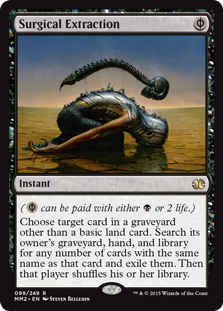
Surgical Extraction is seeing a ton of play related to the recent Arclight Phoenix decks that have exploded in Modern. It's main-decked by many of them to act as a free card for the Phoenix's ability as well as a way to combat the mirror match. Because of the Phoenix decks, it has also gained popularity in many other decks, as the mana restriction is almost non-existent. Any deck can afford to sideboard Surgical.
Paradox Engine is, as of writing, in 13,707 decks on EDHRec. It's an absolute bomb in Commander and fits a ton of strategies. Being an artifact also gives it the benefit of having no mana restrictions. Who wouldn't want to untap their cards whenever they cast something? If you missed the hype train for Engine, have no fear, because we can use it to look for other great targets that have seen little to no gain yet. What else has similar features to Paradox Engine? I'll give you a few hints... it's an artifact, it was printed in a set recently and is still obtainable, it has an alternate printing that is desirable for Commander and casual collections, and it has an effect that could alter entire games regardless of when it is played and activated.
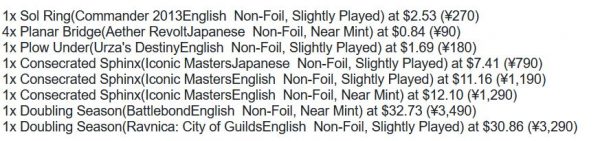
If you guessed Planar Bridge, you're correct! This card has already started to see gains within the last week or two and will continue to see gains in the coming weeks. Again, foils are a better target for ROI than non-foils, but non-foils will also see a bit of trending as well. The greatest appeal towards this card though is the Masterpiece printing. It's become quite clear that players and collectors alike have a love for the Kaladesh Inventions. It is only in 5,300 decks on EDHRec, but that number has slowly been going up. One of the resources we can use to follow trends and buy-outs is the number of suppliers on TCGplayer. Foils and MSP copies are being scooped up fairly fast on all major vendors and TCGPlayer, so this is primed to pop fairly soon.
Conclusion
Looking to the future, we have to assess the resources we have and how we can connect those to what we want to spec on. The resources to look for these cards are all over the internet, you just have to keep an eye on them. Look for trends, common conversations, similar YouTube videos, constantly being called out in Podcasts, etc., and have faith in your specs. You have to have confidence and believe in your specs for justifiable reasons. Recently I saw a conversation on Facebook about Mistcaller as tech against graveyard decks like UR Phoenix, Dredge, and various builds of Company. No one knows if it will work until it's tried and tested, but at almost-bulk prices (and under a dollar for foils) while being a few months from rotation... it's something to think about.
In my next few articles, I'll take a closer look at the many variables that can affect our specs, as well as how to prepare for them. I'll also go a bit more in depth about what it means to invest in safety versus playing with different Risk Factors. Once we have some specs lined up, we can look at how to obtain them, and the best way to make profits on them.
Thanks, everyone. I'll leave you with a few thoughts of my own for specs and finance.
Pat's Predictions
Cards on my watch list:
- I already mentioned this one, but Mistcaller is worth watching. It fits in Modern Merfolk and CoCo builds, so foils look pretty nice. You can currently pick foils up at Card Kingdom for $2.49 and there are a handful of cheaper ones on TCG. I expect it to slightly dip at rotation before making its way up again. It wouldn't be surprising if these end up at $5+.
- I'm not big on Modern Horizons predictions this early in the game, but keep your eyes on Containment Priest, especially the UMA copies. I'm certain it has room to grow, even if it's not printed in Horizons.
- Arclight Phoenix has made its way into Legacy recently and is shining in the Grixis builds. Those decks are running Dark Ritual into Buried Alive to put three Phoenixes in the yard on turn one and two. Add in a third spell and suddenly you're being hit for 12. Buried Alive was reprinted in UMA and foils can be found for $2.49 and under. Even if the deck doesn't spike them, the gap between the UMA foils and the Odyssey foils is quite large and over time could begin to close.
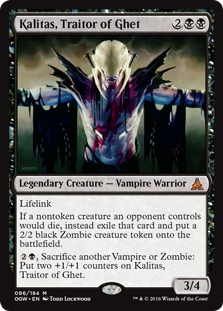 recover from a single graveyard purge; it's the second one that actually hurts. And again, that frequent refrain, Surgical Extraction is not Dredge hate. It's fine against Phoenix, but only mediocre against Dredge's multiple targets and threats.
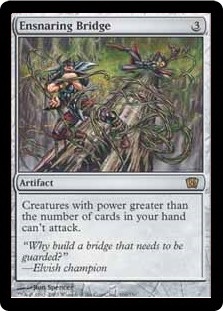 without Bridge. Everything either finds, protects Bridge, or is easy to dump from hand to enable Bridge and do nothing otherwise. This prison is far faster to build than any other
  However, in a world where the most popular deck by far
 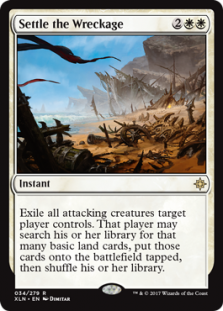 creatures. He is running full sets of both Lightning Helix and Cryptic Command, perfect for regaining lost ground in the early turns. He's also maindecking Settle the Wreckage, though I don't see the value in splitting numbers with Supreme Verdict. Destroying creatures is at an all-time low in value, and while Supreme is more versatile, this isn't the time for extra versatility.

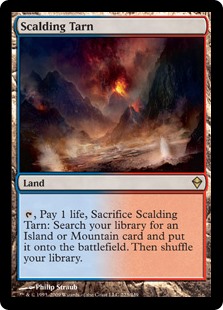 Something Modern routinely comes under fire for is the high cost of its decks. Compared with many strategies the format offers, Izzet Phoenix ranks among the cheapest. Sure, the deck is $1000 now, but it wasn't a month or even a couple weeks ago; the announcements surrounding Modern Horizons, coupled with Phoenix's growing popularity, have significantly increased the price of certain Modern staples—most notably Scalding Tarn, the single most expensive card in Izzet by a mile. Add to that the fact that many players bought into Phoenix earlier than just yesterday, and lots of Modern players already own Scalding Tarns, and Phoenix becomes a very affordable option.
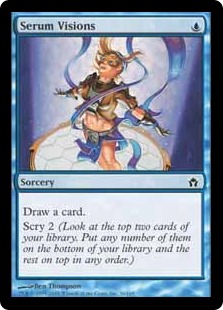 Another key factor is Phoenix's strategic profile. Its mass of cantrips give the deck a low skill floor, meaning newer pilots can expect to do okay with the deck—its gameplan of bin-a-Phoenix or land-a-Thing and then chain together cantrips is both powerful and intuitive. Simply being in a resource-strapped mid-game state will advantage the Phoenix deck over more interactive strategies, as topdecking but one cantrip can lead to a chain that revives the 3/2s. In this way, Izzet is a critical mass deck (like Burn or Infect) that doesn't necessarily rely on having those pieces in the hand to begin with: they all find each other.
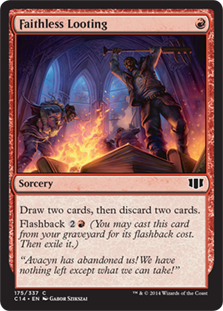 A simple Google search pegs Faithless Looting as the most popular ban target according to most Modern players, with pros and content creators
 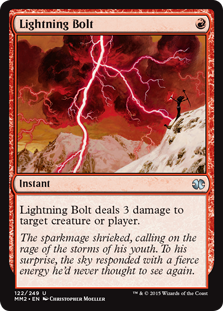 Bolt, as the format would shift radically in its absence, food-chain-style; while Bolt is more played overall, it's less crucial to any strategy, as similar options exist.
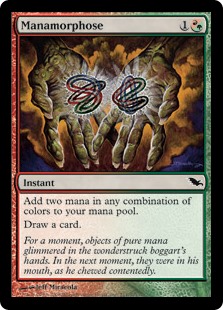 think the effects are close. Early Phoenixes still exist between Gut Shot and Surgical Extraction. Thing in the Ice becomes about a turn slower on average.
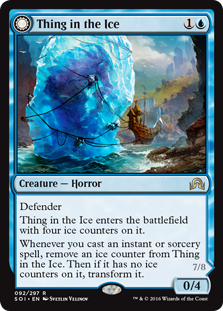 Thing in the Ice has been called the best creature in the deck, with Ross Merriam
  While other decks exist, the fact still remains that all signs point to Phoenix taking up a huge slice of the competitive Modern metagame; something like 20%. That's more than Twin ever claimed, but I don't think Twin should necessarily be our point of reference, as
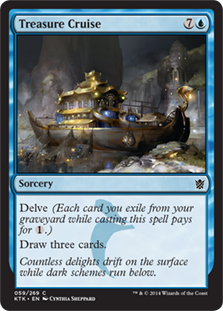
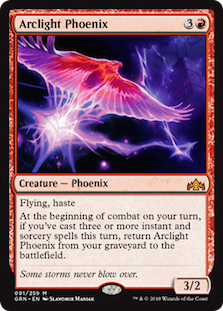
  If Arclight Phoenix is as egregious as Treasure Cruise, why isn't it banned? I think at this point, we're looking at less of a "why" question and more of a "when." While the Los Angeles and Bilbao trends are troubling from a save-the-Phoenix perspective, the fact is they haven't so far been enough to warrant direct action from Wizards. The company is likely waiting until the next scheduled update on May 20 to do something about Phoenix.
  Another argument I've heard for leaving the format as-is: Modern Horizons releases on June 14, and



 mean no offense to Austin Collins on his win, but he got very lucky in games 2 and 3 to win the Open. Game 2 saw Jonathan Orr fail to draw removal spells in an otherwise strong position and die to double Thing in the Ice. Game 3, Orr was mana screwed against what was close to a nut draw from Collins. Game 1, where both decks were playing closer to their average draws, Orr won handily.
 However, even if that does come to pass, it won't be for some time. It is critical for players to recognize the reality that Izzet Phoenix is everywhere at the big events and prepare accordingly. This may require players to
  The same holds for smaller paper events. The Modern Classic
  The second, and I think more likely, probability is that perception and the nature of the events is at work. Arclight Phoenix

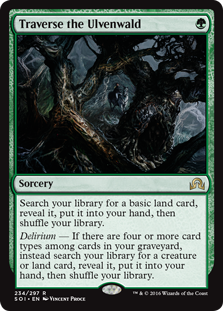 death slowly like UW Control does). Tarmogoyf is harder to just throw our support behind than it used to be, but this shell incidentally does
 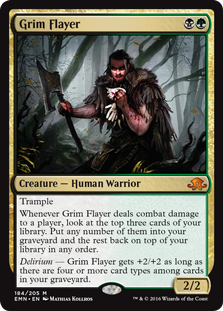 Being that I'd already committed to Faithless Looting and a beefy graveyard, Grim Flayer seemed like a good fit, and would end up being the best threat in the deck. Flayer's obvious application: he's an undercosted, trampling body. Less so: dumping Arclight Phoenix and flash-backing Lootings for random plusses; growing Tarmogoyf. Perks that only hit home after a few days of experimentation: preventing us from ever again drawing Leyline of the Void; setting up killer Arclight Phoenix turns by stacking Manamorphose into one-drop. Flayer just does everything we want our creatures to do. It even operates passably under heavy-duty grave-hate, sifting past the dead stuff (Traverse, Tarmogoyf) and finding the heavy-hitters.
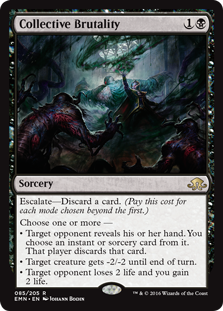 save Surgical for the Phoenix trigger, and why shouldn't they? But such a line is deathly soft to Inquisition of Kozilek, which even adds towards the Phoenix trigger count. Manamorphoseinto Inquisition into Looting sets up turn two Phoenix without ever opening us to a blowout.
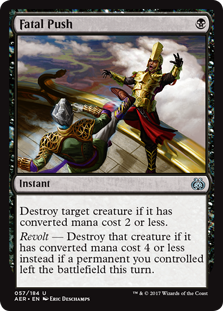 Some cards I wanted but ended up omitting were Tarfire and Fatal Push. The former could further grow Goyf out of the library with Grim Flayer, or from the hand with Looting. But I figured it was win-more and not worth trading in the walker-and-creature-killing Lightning Bolt;
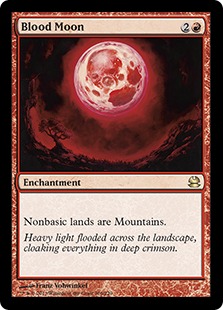
  We've mentioned the Pushes already, but another card in large numbers here is Alpine Moon. Tron continues to pose a problem for this sort of deck despite our supposed speed, and the Moons round out that matchup.
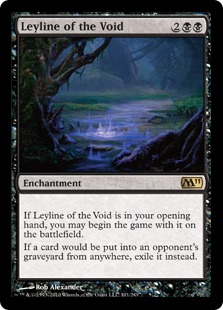 I did come to one conclusion I think might have been obvious to some readers before I even started, and one I feel confident about asserting after this experiment: Leyline of the Void does not work in the mainboard of midrange decks. I think there might be a case for maining it in some decks, but those decks are almost always aggro-combo. The faster the game is over, the less we feel the pain of having functional dead draws. Keeping a great hand without Leyline that happens to get disrupted guarantees trouble if pilots aim to go long. I think this aspect of the card explains why we rarely see Leyline in midrange decks at all, even in the sideboard, while it's a common player for more aggressive decks like Hollow One.
 Simply put, Izzet Phoenix is meant to burn through cards and hopes to turn that into a win. There's no guarantee. While
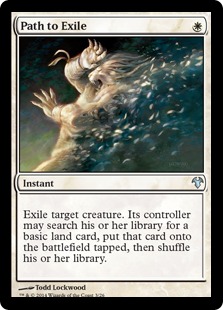
  Still, other players are opting for more direct approaches. Most of the UW players in the sample picked up on Phoenix's vulnerabilities and have Settle the Wreckage and Celestial Purge to complement Path to Exile. Exile solves recursion, and Settle's better than Supreme Verdict in a recursive world. There's also the option to think laterally:
  The past few months have changed everything. Obviously,