
menu

Double Masters: Are Boosters Worth Opening?

Are you a Quiet Speculation member?

If not, now is a perfect time to join up! Our powerful tools, breaking-news analysis, and exclusive Discord channel will make sure you stay up to date and ahead of the curve.

We are in the thick of Double Masters spoiler season, and so far my social media feed is giving the set mixed reviews. When spoilers first started, Wizards chose to led with some fairly underwhelming reprints—this introduced the set starting on the wrong foot, in a sense. Since then, we have seen some fairly impressive reprints with really nice artwork.

Is it enough to incentivize buying? Should you purchase and crack sealed packs of this set? Let’s take a look at the numbers!

The Rares

A standard booster pack of Double Masters will yield you two rares/mythic rares! Double the flavor, double the fun! So what do the rares look like in this set?

Well, as of Sunday, July 27th the average rare in Double Masters is worth $3.78 (70 rares spoiled so far). The most valuable is Exploration, currently worth $24 and change. Bringing up the rear is the rare I’m most likely to open, Sphinx Summoner (did we really need a reprint of this card?).

There was an error retrieving a chart for Exploration
There was an error retrieving a chart for Sphinx Summoner

The set has a total of 121 rares, so there are still 41 to be spoiled as of this article’s writing. But, judging from past experience, I don’t expect the average rare value to deviate too much—there’s enough data already so that a surprise outlier wouldn’t shift the mean all that much.

So, with this data in hand, if you crack open two rares (no mythics) in Double Masters booster pack, you’re going to see $7.56 in value. Consider this: on TCGplayer, the cheapest sealed booster packs for preorder are selling for $14.73. That seems like awful value, especially considering the fact that the average rare value is certainly going to drop over the next couple weeks, even if the print run is tiny. Players are going to rush out to sell the cards they open to recoup costs and we’ll see some weak buylists in the near future.

So does that mean this set is a bust? Not yet! Let’s examine the mythic rares to see if they salvage this set’s EV!

The Mythic Rares

So far, 25 mythic rares have been spoiled out of a total 40. Not surprisingly, the mythic list is far more exciting and flashy than the rare list. The headliners include favorites such as Force of Will ($100), Mana Crypt ($120), and Jace, the Mind Sculptor ($59). These have each been reprinted multiple times, yet they seem to cling to their high price tag. I don’t even know if Big Jace aka Jace 2.0 sees much constructed play anymore. Yet, I would still be delighted to open one in a Double Masters booster!

There was an error retrieving a chart for Jace, the Mind Sculptor
There was an error retrieving a chart for Mana Crypt

The average value of the mythic rares spoiled so far is $30.85. So far, most of the mythics spoiled would make cracking open your Double Masters pack worthwhile. If we assume you open one rare and one mythic, and your rare is worth $3.78 on average, then you need your mythic to be worth a little over $10 to break even on the booster pack (besides uncommons and foils…more on that later).

Of the 25 spoiled mythics, only 6 of them don’t crack the $10 mark. Arcum Dagsson is the first mythic to miss, at $7.63. Following this is Vengevine, Breya, Etherium Shaper, Voice of Resurgence, Geist of Saint Traft, and finally Jhoira, Weatherlight Captain, which has no business being a mythic.

There was an error retrieving a chart for Jhoira, Weatherlight Captain

Now, I’m not sure about the frequency at which mythic rares will appear in boosters. In a normal set, you open a mythic rare with approximately 1:6 odds. So for the sake of this calculation, I’ll assume similar for Double Masters, only that you have two chances at a mythic instead of one in each pack! So if we apply the 1:6 odds, the average rare/mythic slot is worth $8.29. Doubling that, we have $16.58 of value in each booster pack. Comparing this to the going market price for boosters, it looks like cracking open packs is suddenly a worthwhile proposition!

But hold your horses! There are two more points I need to make before rounding out my final judgment.

Commons, Uncommons, and Foils

First, we need to acknowledge that this set has a couple of money uncommons and commons as well. Of the 18 uncommons to be spoiled so far, four are worth over a buck. Manamorphose leads the pack, followed by Mishra's Bauble and repeat reprint Path to Exile.

There was an error retrieving a chart for Manamorphose

The last card worth at least a buck at uncommon (so far) is Dread Return. These will most definitely drop in price as more product is opened, but it’s good to know that you may be able to buylist an uncommon or two right out the gate.

You also have the tron lands and Expedition Map at common. This will make the draft experience really cool (when was the last time you could assemble Tron in limited?!) but it will also give you a tiny bit of value from your average common.

Then there are the foils: two per booster pack! Those foils could be any rarity from common through mythic rare. This certainly adds a difficult-to-quantify value to each booster pack. But it’s worth noting that Masters set foils typically don’t carry much premium relative to their non-foil counterparts. Let’s call this a “cherry on top” of the value sundae, which this is shaping up to be. But there’s one last detail that needs to be emphasized before we start buying out the internet of Double Masters packs.

The Fine Print

It’s time for me to come clean: all the prices I referenced are from MTG Stocks, which in turn takes pricing from TCGplayer’s average price. These values are not a reflection of what the cards are selling for, though they’re frequently close. These values are also effectively a “retail” price—if you sell copies of these cards, you will not be netting these dollar amounts. There are fees, shipping, and general market competition that will result in a lower net for your sales.

Therefore, while you may break even on average by buying a booster of Double Masters and trading singles at today’s TCGplayer pricing, chances are you won’t be so fortunate two weeks into the set’s release. As players rush to sell the valuable cards they opened, pricing will momentarily drop. At that point, you will be losing money on an average, per-booster basis.

Do not despair! This is typical for new sets—and especially for reprint sets! If one could profit simply by cracking boosters and selling singles, then boosters would be in higher demand. That higher demand would drive booster prices upward until the point where that pack-opening arbitrage was no longer a possibility. It’s how this market works, and Double Masters is no exception.

Wrapping It Up

Taking all the data into account thus far, I must say I’m not as disappointed in Double Masters as my social media feed appears to be. I’ll admit I was a bit disappointed by the first couple spoilers, but things have improved dramatically since then. I’m not a big gambler, but there’s a good chance I’ll crack open a few boosters of this set to try my luck—there’s enough value in the set to make it worth a shot.

Now, one thing I didn’t go anywhere near in this week’s article is the VIP Booster value. According to Wizards’ site (which admittedly has been adjusted multiple times), each VIP Edition booster contains 33 cards and 2 foil tokens: 2 foil borderless cards, 2 foil rare/mythic rares, 8 foil uncommons, 9 foil commons, 10 full-art basic lands, 2 foil full-art basic lands, and 2 foil tokens.

The high-dollar foil borderless cards will be worth a lot of money, but I’m not sure if the regular foils will be worth anything more than their nonfoil counterparts. These will be gambles for the high rollers of the Magic community—crack open a foil borderless Force of Will or Mana Crypt and you’ll be riding high. But I have to imagine the average value of these will be well below the $100 price tag.

I also didn’t talk about the Box Toppers, yet another way of receiving value when purchasing Double Masters product.

It seems Wizards pulled out all the stops for this set, making it a highly anticipated, if not somewhat complicated premium set (what cards come in what product again?). I anticipate the Double Masters release will be a big success based on spoilers so far—there’s a good balance of value and desirable reprints. Two rares/mythics per pack also doubles your chances at opening value and should reduce the amount of time you feel awful by opening a $0.10 rare in a $10 booster pack. That alone convinces me to roll the dice a couple times on this unprecedented set!
Exploring Delirium Delver with Stormwing Entity

Are you a Quiet Speculation member?

If not, now is a perfect time to join up! Our powerful tools, breaking-news analysis, and exclusive Discord channel will make sure you stay up to date and ahead of the curve.

A trend I'm seeing in the published results from July is a marked uptick in spell-based aggro-control strategies. Most of those are of the UR Prowess variety, but plenty of Delver of Secrets decks are making the rounds, too. We'll cover those more academically next week. Today, I'd like to unveil the build I'm currently working on, which reworks Stormwing Temur Delver around Traverse the Ulvenwald.

On June 30, TUBBYBATMAN scored a 5-0 with a Temur Delver list almost identical to the Stormwing list I'd posted a week prior. He'd changed the two flex spots, and cut a pair of Opts for Flame Slashes. Finally, Mutagenic Growth was cut for Blossoming Defense.

While I remain skeptical of the Muta swap, I hear dude on snipping the Opts. These decks certainly walk a fine line when it comes to interacting versus cantripping, and mustn't spend too much time treading water; at their bests, our cantrips should fuel our gameplans, not overshadow them. I may have overestimated Stormwing's vulnerability without instant-speed cantrips protecting it at all times; many Modern decks don't run 4 Lightning Bolt.
Tracking down TUBBYBATMAN to pick his brain also led me to his latest Temur Delver build, which maxes out on both Stormwing Entity and Traverse the Ulvenwald. A few quick games with the list and I was hooked on the duo's incredible synergy. I've spent the last week working on such a list.

I Get Delirious... Again

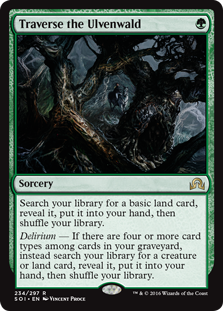
Traverse the Ulvenwald grabbed my attention the day it was spoiled, revealing itself to work exactly the same way as my all-time favorite creature, Tarmogoyf. I'd go on to feature the sorcery in different aggro-control builds and finally slot it into Temur Delver, yielding a build I was very confident in and took down a PPTQ with. When Gitaxian Probe was banned, I turned to Traverse to save the shell, a task that proved too demanding for the humble spell—by which I mean the deck's threat suite had become too graveyard-centric for such a plan to work in Modern.
"Traverse for Stormwing"

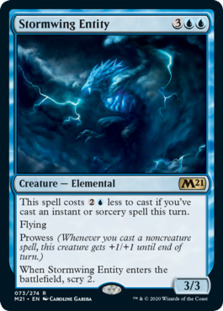
Enter Stormwing Entity, a creature that's wonderful alongside Traverse as well as totally grave-independent; no Rest in Peace will shoot down this duck. Entity is a sweet creature to Traverse for because the act of doing so fulfils its condition, essentially turning every delirious Traverse into a three-mana Stormwing.

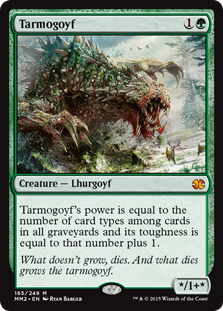
So is the creature worth three mana? Absolutely, just as Tarmogoyf is—er, was. I mean, who are we kidding? Traverse Shadow is all about three-mana Goyf, even post-Push. But a huge benefit of grabbing Stormwing instead is its "scry 2" clause. In many of my games, Traverse-Stormwing sets up more cantrips which lead to more Traversing, creating a chain of sorts.
Of course, running Traverse means abandoning the Hooting Mandrills-Thought Scour package, which cannibalizes delirium. But I think such a move could be well worth points against graveyard hate, as well as the option of better abusing the graveyard in lieu of any.

Delirium Delver, Jordan Boisvert

Creatures

4 Delver of Secrets
4 Tarmogoyf
4 Stormwing Entity
1 Hooting Mandrills
1 Snapcaster Mage
1 Brazen Borrower

Artifacts

4 Mishra's Bauble

Instants

4 Manamorphose
4 Lightning Bolt
3 Tarfire
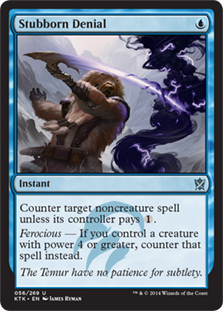
3 Stubborn Denial
1 Mutagenic Growth
1 Blitz of the Thunder Raptor

Sorceries

4 Serum Visions
4 Traverse the Ulvenwald
1 Spite of Mogis

Lands

4 Misty Rainforest
4 Scalding Tarn
2 Steam Vents
1 Breeding Pool
1 Stomping Ground
1 Wooded Foothills
2 Island
1 Forest

Sideboard

2 Grafdigger's Cage
2 Feed the Clan
2 Mana Leak
2 Veil of Summer
1 Snapcaster Mage
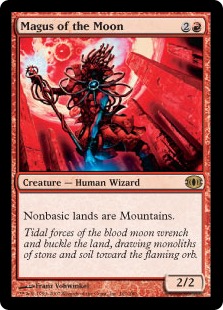
1 Magus of the Moon
1 Huntmaster of the Fells
1 Klothys, God of Destiny
1 Stubborn Denial
1 Surgical Extraction
1 Ancient Grudge

U Trippin... Slow

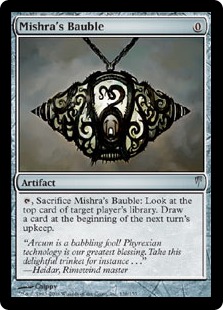
Allow me a moment to extoll the virtues of Mishra's Bauble. In my first Stormwing Delver build, I omitted the artifact, fearful of running too many non-instants or sorceries lest I'd have trouble powering out the bird. But Bauble and Stormwing actually play very nice together.
For one, the issue of having Baubles and needing to pump out a Stormwing almost never occurs, as Bauble freely cycles into a new card. Sure, we'll have to wait until next turn to have a go at Stormwing, but we tend to have other things to do with our mana on such a low land count.

Then there's Bauble's palpable synergy with Stormwing. As it does with Delver of Secrets, which Bauble helps flip when the two are paired, the trinket is actually great alongside Entity. Cast with Stormwing in play, Bauble provides a free prowess trigger, as the many new jacks on UR Prowess know all too well. But its most attractive dimension is setting up a pseudo-Preordain. Stormwing comes down to scry 2, and Bauble is free to fire off looking at the opponent's top card, only to draw a stacked Denial or Bolt for the opponent's turn. Or if we really need a specific instant and fail to see it with Stormwing, we can bottom-bottom and have one more chance to draw it. Just like the real thing!
Of course, Bauble is all but a necessity in decks built around quickly reaching delirium. It's not uncommon for us to find ourselves with three card types on turn three, but lack the fourth, be it sorcery or creature. Bauble, and also Tarfire, alleviate this pressure.

More Than a Flex

When it comes to one-ofs and bullets in general, I think this deck is poised to take advantage of a wealth of options. Between Serum, Bauble, and Traverse-chaining Entities, we have access to plenty of library manipulation, making it quite achievable to find niche answers as needed.
Flex Spots

1 Spite of Mogis
1 Blitz of the Thunder Raptor
1 Mutagenic Growth

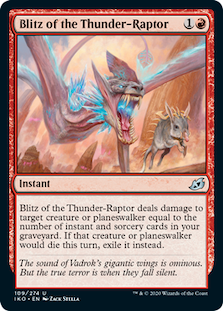
Spite and Blitz serve to remove big creatures in the late-game. Both have their benefits: Spite costs one, scries one, and adds a sorcery to the graveyard; Blitz hits planeswalkers, removes pesky recursive creatures, and fires at instant speed. At first, I preferred Spite alongside Stormwing specifically, since it's meant to be cast in the main phase and therefore lends itself to reducing the creature's cost. But the ability to grow Stormwing with Blitz in response to an enemy Bolt is also relevant. As of now, I like a split of these to supplement the removal suite of 4 Bolt, 3 Tarfire.

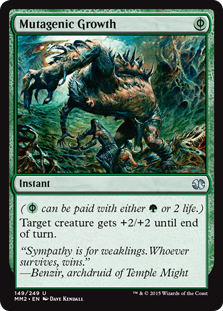
Mutagenic Growth is a holdover from my original Stormwing Delver build. While it was phenomenal with Hooting Mandrills, it's still great with Stormwing and Goyf, and I really like the ability to dig for it with a landed Stormwing and a Serum, Manamorphose, or Bauble to beat Bolts.
I definitely think a fourth Tarfire or Stubborn can be run in these slots; in fact, I started with full sets of each. But I found them a little situational for game 1, where Tarfire would clog against creature decks and Stubborn floundered without a beater in play. Compared with Stormwing, Mandrills is a lot easier to slide out on turn two, especially with Denial backup, in Traverse-less Thought Scour builds.

Traverse Bullets

1 Hooting Mandrills
1 Snapcaster Mage
1 Brazen Borrower

Some early runs with the deck made me wonder if we couldn't support one Hooting Mandrills naturally, meaning without Thought Scour. Sure, it eats delirium, but a lot of the time that turn two Mandrills with Denial backup will just win the game. Besides, having just one lets us Traverse for and then cast it if we're light on mana or want to hold up interaction, a line I've employed multiple times so far. Snapcaster often functions as a Demonic Tutor of sorts, and since it can be scooped up by Traverse, having one in the deck gives us massive utility in the mid-game... especially alongside the slew of one-ofs we already run and can flash back!

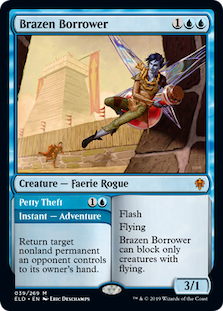
I'd call Borrower the most off-the-wall of these options, and will admit that so far in my testing, it hasn't been superb; on just 16 lands, we are far from optimized to wield the Faerie as a primary plan, unlike other Temur Delver shells. What Borrower does for us, though, is insulate against a range of random strategies in Modern's lower tiers that can nonetheless show up and ruin our game 1: prison decks, enchantment-based combos, etc. Not to mention big planeswalkers or huge creatures. It just outs anything. While Borrower isn't much of a head-turner on its own, having a two-mana bounce effect to search with Traverse makes the sorcery that much more pliable.

Flipping the Script

I'll say this: Stormwing Entity has me more excited about actually playing Modern than I have been in quite a while. The last deck I built that really jived with me, or so I felt, was Six Shadow, which barely lasted a month before some bans neutered it. The cards I'm throwing around now feel decidedly safe on that front, and are a blast to cast; the question remains whether I can cobble together a mix that's consistently beating the top decks. When the work is enjoyable, though, anything is possible! Join me next week for an exposé on the other ways Delver is making its comeback this month.

Double Masters: Initial Spoilers

Are you a Quiet Speculation member?

If not, now is a perfect time to join up! Our powerful tools, breaking-news analysis, and exclusive Discord channel will make sure you stay up to date and ahead of the curve.

Well, here we are, yet another spoiler season already! We've been seeing a stream of Double Masters previews coming out, and if I'm being honest, I'm not sure how I personally feel about the set. I think with the pandemic, a ton of Magic products all coming out at once, and a hefty price tag, I'm suffering from some fatigue. That's not to say I'm not at least a little excited about the spoilers and their financial implications though! It's hard to not be interested when they've announced some great reprints and plenty of alternate art box toppers.

Not to mention when they bring back some of my favorite old school Magic artists. We'll talk more about these Mark Tedin pieces in a minute.

According to Wizards' announcement, Double Masters releases on August 7, 2020. There are 332 cards in the set, 24 packs per booster box, 15-card booster packs with two rares and two foil cards (which can also be rares), two non-foil borderless showcase box topper cards are included in each booster box, and they will be available in the following languages: English, French, German, Simplified Chinese, and Japanese.

There will also be a new VIP Edition of Double Masters, which are packs of 33 cards plus 2 foil tokens that feature: 2 foil borderless cards (only found in the VIP edition), 2 foil rares/mythic rares, 8 foil uncommons, 9 foil commons, 10 full-art basic lands (only found in VIP edition, 2 of each basic), 2 foil full-art basic lands (only found in VIP edition, 2 randomly selected from among the 10 options), and 2 foil tokens (only found in VIP edition, token on both sides). The regular Double Masters packs seem to be pre-orderable most places for around $15, while the Vip Edition packs are preordering for around $100.

There has been some drama on Twitter lately due to the fact that Wizards accidentally erred in their original description of the contents of the 2 foil borderless cards. Originally, consumers were led to believe they would all be rares or mythics from the set, but in actuality eight of the possible cards are "popular, powerful cards found at other rarities in the set" such as Expedition Map and Urza's Mine. At $100 a pack, I can understand some of the disappointment, but I'm still excited about these "popular, powerful cards" (as we'll talk about in just a bit).

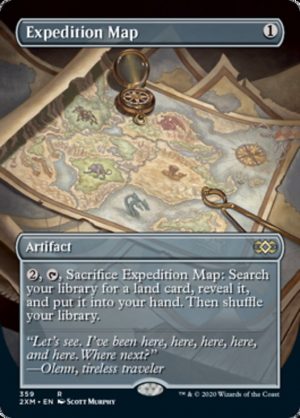
VIP Edition Expedition Map

That's enough introduction! Let's take a look at 5 of the Double Masters reprints I'm most excited about and talk about their financial implications! After that, I'll talk a little bit about a few of the duds from the set that I would be incredibly bummed out to open if I were to be opening these packs.

Karn Liberated

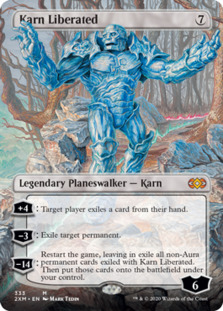
One reprint that's already had some recent reprintings that I'm still excited about is Karn Liberated. Partly because the price has still been fairly high for its printings and partly because I adore the new Mark Tedin art for the borderless, VIP Edition of the card.

There was an error retrieving a chart for Karn Liberated

Even with the reprintings, we can see that Karn has often been selling in the $30-$50 range for the past year or so, which indicates that there is plenty of demand for the card. It's always been a mythic and sees play in various formats. Players seem to be pretty passionate about the card, and after an initial dip, I wouldn't be surprised if the card stayed right around the same price it's been for a while now.

But what about the VIP Edition, with new art by Mark Tedin?

People seem to be split on the art (I for one, adore it) but I wouldn't be surprised in the slightest if it eventually ended up passing the 90-100 dollar mark. Especially since Mark Tedin did new art for the Tron Lands that form a panorama with it - which we're going to look at next.

The Tron Lands

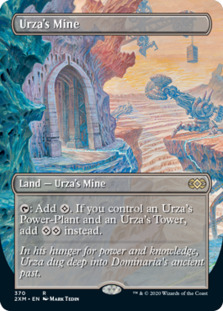
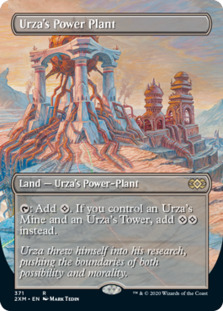
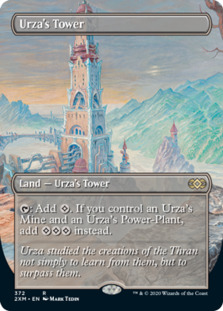
I think it's really cool that Urza's Mine, Urza's Power Plant, and Urza's Tower are going to be in the set at common, along with Expedition Map. Because of the timing of the release, I doubt I'll get a chance to draft this set but if I do I can only imagine getting to assemble Tron in a draft environment would feel very cool. These commons will always be worth pulling out of your bulk bin, but what's more financially interesting is the VIP Edition versions with Mark Tedin art:

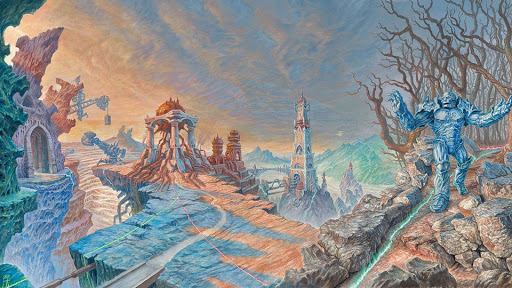
As you can see, they match the new Karn Liberated art and form a panorama with it when arranged side by side. These special versions of the lands feature a rare marking instead of the common symbol. I've noticed people on Twitter being upset by this and complaining about commons getting the special treatment, but I'm actually pretty excited because these are, for the most part, all looking to be powerful, often played cards which I imagine will still command fairly high price points.

I mean, look at the Kaladesh Inventions Ornithopter. Ornithopter has a ton of printings, is played less than Expedition Map and the Tron lands, and it's Invention printing still manages to hold a $30-$50 price tag. Looking at the spoilers so far, opening one of these as one of your borderless VIP Edition cards doesn't look like too bad of an option.

Jace, the Mind Sculptor

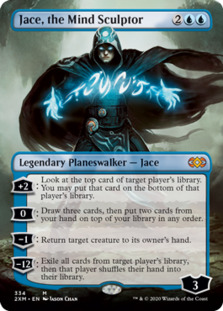
Jace, the Mind Sculptor is one of Magic's most famous cards, being touted as one of the most powerful Legacy staples for years as well as being banned in Modern up until 2018. It went from not having many printings at all to getting several in rapid succession, adding one more to the pile with Double Masters. While it may not hold the power level that it once did, Jace is still a very powerful card and a sought after mythic. Even the Eternal Masters version has continued to hold a premium price point.

There was an error retrieving a chart for Jace, the Mind Sculptor

I feel like this printing will follow suit, and I would recommend trying to trade into them right at release when the price should dip, and holding onto them for a while. Jace is also getting the borderless VIP Edition treatment, which is almost guaranteed to continue to hold at a premium.

Exploration

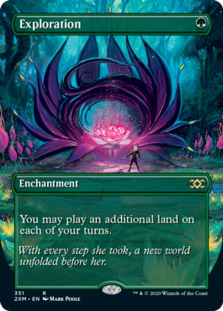
As I'm writing this article, I'm realizing a trend: all of the spoilers I'm excited about are also being reprinted with borderless VIP Edition art. Exploration is another card I've been thinking really deserved a reprint, and I wasn't very surprised to see it spoiled.

There was an error retrieving a chart for Exploration

Exploration is a super powerful card for ramp strategies and has only seen printings in Urza's Saga and Conspiracy. With both Legacy Lands players packing full playsets and green EDH players needing copies, I think this is a much-needed reprint with an absolutely gorgeous VIP printing. I don't even play this card and I'm going to try to at least trade into one copy of the Mark Poole art, it's just so pretty.

I'll be aggressively trading for the regular printing at around the $20 mark or below if I can, and wouldn't be surprised if it maintained a close to $30+ price tag moving forward. I'm not confident enough to try to predict how expensive the VIP printing will be, but I don't think there's any way it doesn't maintain a significantly higher price than the other printings.

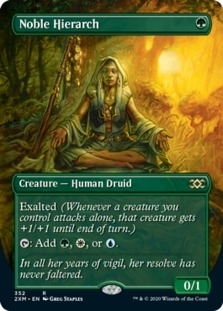
Noble Hierarch

Noble Hierarch is one of my favorite cards of all time. It was in the first competitive deck I ever played and a huge part of my first ever Grand Prix experience. At one point I co-owned a Judge Promo with one of my best friends (he was something like $10 short when he spotted it for a steal at a booth), and we ended up selling it for a lot more than he had originally bought it. This was my first Magic finance experience, silly as it was, and since then Noble's price has plummeted.

However, I'm still super excited about the reprint for several reasons (and yes, one of the big reasons is the VIP Edition art.)

There was an error retrieving a chart for Noble Hierarch

The original printing hasn't trended near it's peak price in a long time, and I doubt it ever will, but it has still managed to hold around the $20 and up range. It's a very versatile card, showing up in plenty of different Modern and Legacy decks. If you can get these new copies for cheap around release, I don't think picking up a playset or two is a bad idea.

I'm super surprised the gorgeous VIP Edition with art from Greg Staples is only preordering for around the $60 mark.

I've been thinking about un-foiling my Modern Infect deck for competitive play for a while now, and I think I'm going to have to trade into these as quickly as possible for it. I would love to have copies of all the borderless cards in my collection, but I think Noble Hierarch is the one I'm going to be most aggressively seeking out.

A Note on Stinkers

Unfortunately, I don't think there's any way to print a set where every rare in the set is a slam dunk from a financial perspective. Wizards designs these sets to be drafted, and as such there will always be draft chaff rares that aren't worth anything in any set - but it feels especially bad to open them when you're paying a premium price for the pack you opened them in. While I generally advise staying away from gambling on opening sealed product in general, it's hard to resist when the set is full of really exciting cards.

Still, I would not be happy to open something along the lines of a Cragganwick Cremator, Champion of Lambholt, or Thought Reflection.

There was an error retrieving a chart for Champion of Lambholt

Anyway, that's it for now! I hope you all are having as good of a time watching the spoilers roll out as I am. I hope you're in a place where it's safe to meet up and draft this awesome looking set with your friends, and if not I sincerely hope you're staying safe and will still be able to obtain all the Double Masters goodies you need for your decks and speculation boxes. This is shaping up to be quite an interesting set! The financial market always seems to get extra swingy during a Masters set release, so if you're not already I'd highly recommend using our Trader Tools to help you make sure you're on top of your Magic finance game.

Feel free to stop by and say hi on my Twitch channel or hit me up on Twitter, I'd love to chat with you about Double Masters or anything else Magic related! Take care out there friends, I'll catch you later.


Twin’s Alive: Modern Dimir Inverter

Are you a Quiet Speculation member?

If not, now is a perfect time to join up! Our powerful tools, breaking-news analysis, and exclusive Discord channel will make sure you stay up to date and ahead of the curve.

The greatest problem I face as an article writer is finding something to write about. Inspiration is fickle, as motivation can also be. This is made especially difficult by the pandemic choking off my easiest content source: actual Modern tournaments. Without much happening in greater Modern to discuss and limited source material, I find myself struggling at times. Thus, I sometimes must resort to stirring up arguments to find content. If you're ever bored to tears, try kicking over a hornet's nest; you're guaranteed to not be bored anymore.

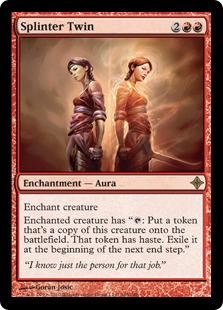
I know a lot of players, many of whom are reading this now. And some among them can be mined for content with a simple trollish jab. At the end of last week's article, I made a fairly trolly statement of support for bringing back Splinter Twin just to break its stalwarts' hearts. Cue the hornets: I was met with an angry DM complaining about how unfair it is that there are plenty of two-card combos in Modern these days, yet Twin is unavailable. I asked, why not just play one of those? The answer: "They all suck!"

So today we'll look at some of those combos, particularly the one closest to Twin, and examine why they're just not on the UR behemoth's level.

The Reincarnations...

When Twin was banned it threw Modern for a loop. Since then, there have been many attempts to claim Twin's throne. None have succeeded, primarily because Modern isn't constant year-to-year anymore. Decks can no longer simply sit atop the metagame for years, and this is probably a good thing. Decks have to evolve more often now, and each Modern season has been wildly different from the preceding one. I'd argue that Modern is in far better shape as a dynamic format than it was when Twin was always the deck to beat.

And it isn't like Modern is short on combo decks. They're mostly fringe these days, but Storm, Ad Nauseam, and Toolbox combo decks are all viable. However, I know full well that what the Twin stalwarts are looking for are two-card A+B combos. Look at any Toolbox deck, particularly pre-Lurrus of the Dream-Den, and you'll see plenty such combos, from Heliod, Sun-Crowned and Walking Ballista to Spike Feeder and Archangel of Thune to Devoted Druid combo. However, these decks are primarily combo decks, and don't scratch the itch for Twin players looking for an incidental "I Win" combo.

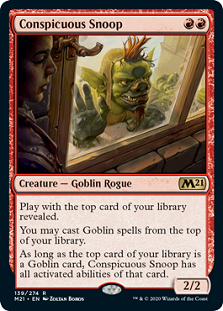
However, those exist too. The most recent addition is Conspicuous Snoop and Boggart Harbinger, which I've already covered.
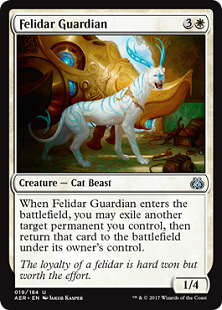
However, well before that, the first attempt to replace Twin was just to replace Twin with Kiki-Jiki, Mirror Breaker. I remember a number of Twin players at the time desperately holding onto their decks by replacing the banned Twin with Kiki. And it kinda works. Then there's Copycat. Following its emergency banning in Standard, players have tried to make Saheeli Rai and Felidar Guardian a thing in Modern. Which also sort of works.

...Are Flawed

The problem is, as my associate so boldly declared, these decks aren't very good in Modern. I realize that I just linked to fairly lengthy results pages, but the vast majority of said results are MTGO League results, and anything can 5-0 a League. Even Mono-Green Stompy. The real measure of strength is paper success, and that has been very limited. Yes, Snoop doesn't count; it can't have paper results because paper's shut down. Snoop is seeing lots of play online, and even having success. That said, it is also the new kid on the block, and seeing lots of play on the basis of being new and exciting rather than necessarily good. Time will tell if Snoop was just a flavor of the month or the real deal.
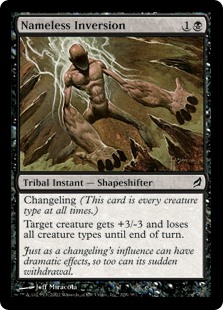
As for the other decks, the best example is Copycat. Subject of only the second emergency ban in Magic's history, it has had no measurable impact on Modern. If this be an heir to the mighty Twin, a pale and callow shadow it be at best. And even if that weren't the case, it's not actually a Twin deck. Twin was an interactive deck that played a hybrid control-tempo game and then incidentally won via combo. As they said of Trix, the best control decks have to be combos. There's no room for real win conditions. Copycat and Snoop Goblins are creature decks first and foremost. They have little, if any, interaction. Their success isn't worthy of Twin's name and they don't even act like the legend. Thus, Twin doesn't have a direct lineage in Modern anymore.

One Exception

Or so it appeared. Until players remembered that there is a monster in another format. A monster that closely resembles Twin's combo and gameplan. The monster from Pioneer named Dimir Inverter. I will argue that Dimir Inverter is the closest deck Modern has to Twin, even if the combos work differently. Consider this fairly standard Twin list from its heyday:

UR Twin, Gabriel Fehr (GP Puerto Alegre)

Creatures

4 Snapcaster Mage
4 Deceiver Exarch
2 Pestermite
2 Vendilion Clique

Enchantments

4 Splinter Twin

Instants

4 Lightning Bolt
3 Dispel
2 Spell Snare
4 Remand
2 Electrolyze
2 Cryptic Command

Sorceries

4 Serum Visions

Lands

4 Misty Rainforest
4 Scalding Tarn
3 Steam Vents
3 Sulfur Falls
2 Desolate Lighthouse
1 Stomping Ground
5 Island
1 Mountain

Sideboard

1 Grim Lavamancer
3 Ancient Grudge
2 Pyroclasm
2 Roast
1 Negate
2 Blood Moon
2 Jace, Architect of Thought
2 Keranos, God of Storms

Ah, memories. Now consider Inverter. Incidentally, when I was looking through the available decklists, I discovered that Modern Inverter is a fairly new creation. And it's only in the past month that they've taken a leaf from the Pioneer version. Before June, all the decks seem to have been trying to be pure combo decks with Angel's Grace and Spoils of the Vault. After the switch, there are far more results, and they're clustered together, indicating that embracing Inverter's innate Twinness was a strong call.

Dimir Inverter, wefald (MTGO League 5-0, 7/14)

Creatures

4 Thassa's Oracle
4 Inverter of Truth

Planeswalkers

3 Jace, Wielder of Mysteries

Artifacts

3 Relic of Progenitus

Enchantments

4 Omen of the Sea

Instants

4 Fatal Push
4 Opt
1 Cling to Dust
4 Remand
1 Murderous Cut

Sorceries

3 Inquisition of Kozilek
3 Thoughtseize

Lands

4 Darkslick Shores
4 River of Tears
4 Watery Grave
3 Drowned Catacombs
3 Eldrazi Temple
2 Polluted Delta
1 Snow-Covered Island
1 Snow-Covered Swamp

Sideboard

3 Aether Gust
2 Ashiok, Dream Render
2 Collective Brutality
1 Disdainful Stroke
2 Flusterstorm
1 Liliana, the Last Hope
2 Mystical Dispute
2 Spreading Seas

A True Inheritor...

Ignoring the superficial differences in color and combo, the gameplan is the same for both decks. Both Twin and Inverter are interaction-heavy control-combo hybrids playing a tempo game. Twin's is entirely reactive, focusing on counterspells, while Inverter has proactive discard, but their purpose is the same: break up the opponent's gameplan until the combo is assembled. These are primarily interactive decks; they just win via combos, rather than finisher-type creatures like Baneslayer Angel.
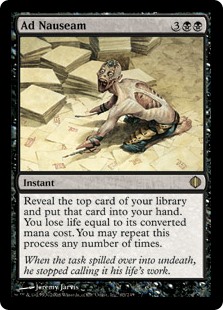
Secondly, both decks can treat the combo as incidental. Twin's greatest defense has always been that the combo was an afterthought. The primary route to victory was attrition, tempo, and Bolt-Snap-Bolt. Sideboard games were about being a true control deck, as they often sided out most of the Twins. Inverter plays a similar game, controlling the game and then landing the Inverter of Truth to win the game. Inverter is actually a decent threat on its own, and many games never involve winning via Thassa's Oracle. I actually know of attempts to use Inverter as intended: filling the graveyard with only useful spells, playing Inverter, and winning with a small, but stacked, library.

This is in stark contrast to Copycat decks, which are piles of value creatures, cantrips, and planeswalkers more reminiscent of Ephemerate decks than Twin. Or consider Snoop Goblins, which is just a Goblin deck with the combo added. There are plenty of two card combo decks in Modern, but only one of which share's Twin's genetics. Thus, if you really want to play Twin again, why not pick up Inverter?

...In Another Format

Probably because Inverter is not replicating Twin's success in Modern. Granted, it is fairly new and is picking up more results, but most of those are League 5-0s. Compare Inverter to an established combo like Storm over the same timeframe: far more results, far more impressive tournaments. For some reason, this style of deck just isn't working in Modern. Perhaps the playerbase just isn't there, or maybe it actually isn't good enough.
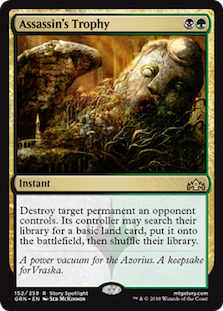
This is especially strange given that Inverter is king in Pioneer. To the point that it's the default Best Deck. And those actually invested in the format hate it. And is probably the main factor driving players away from Pioneer. I actually started thinking about Modern Inverter with the expectation that Modern would see an influx of players following an Inverter ban last week. Obviously that hasn't happened, but even if it had, the evidence seems to indicate that nothing would have changed regarding Inverter's viability.

Where's the Problem?

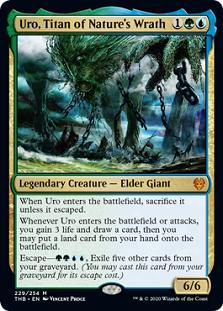
While I think the decks are viable and reasonable in Modern, the evidence does back up that "They all suck!" assessment from earlier, at least in comparison to what Twin used to be. The most common explanation I hear is that Modern has moved on. The other answers and threats are so much better now than in Twin's heyday that its style of Magic is simply outclassed. Fatal Push, Assassin's Trophy, and Uro, Titan of Nature's Wrath didn't exist back then. This line of thought seems to conveniently ignore that Teferi, Time Raveler and Veil of Summer also didn't exist in 2015.
In Comparison

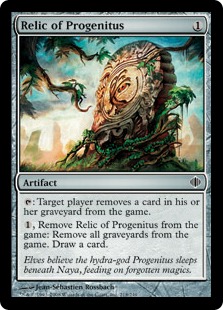
However, the fact that the answers are better doesn't explain Inverter's lack of success. The counters and discard aren't much better now than in 2015, and those are the only relevant answers to Inverter combo. The combo is creature-based, sure, but happens due to ETB triggers. Removal doesn't matter, and can't break up the combo. Once Inverter empties the library (often helped by Relic of Progenitus), the only thing that matters is resolving Oracle. If that happens, Inverter wins, end of story. It's a far more robust combo than Twin in that sense.
Which adds to the mystery of Inverter's poor Modern performance compared to Pioneer. Yes, there are better answers in Modern, but the answers relevant to Inverter aren't that much better. It's not about removal; it's about preventing the pieces from resolving. There are better counterspells in Modern, but they're played in smaller numbers than in Pioneer. Thoughseizesees extensive Pioneer play as a four-of, and it doesn't in Modern. Inquisition isn't Pioneer legal but Thought Erasure is and sees lots of play. Both formats have the same threat powercreep. It may be true that Modern is more powerful, but it isn't relevantly more powerful to keep out Twin's successor.

The Key

I think the problem is format speed. Pioneer is not a very fast format. Mono-Red is a good deck there, but it's got nothing on Modern Burn or Prowess. Humans regularly kills on turn four, and every combo deck is at least that fast. Inverter can hit on turn three with Eldrazi Temple, setting up a turn four Oracle, but that requires a lot to go right. It's more common to go for the combo on turn five or later in Modern. In Pioneer, there's far more time to get set up, and so this more ponderous combo is more threatening.
Moreover, players can see Inverter coming. This is also true of the other A+B non-Company combos in Modern. To go off requires playing one creature/planeswalker one turn, then the other piece the following turn. That's a clear signal that you're in danger. That was never the case with Twin. Exarch and Pestermite got flashed in on end-step for a surprise win. I've been over this before, but the power of Twin was never in the combo. Twin's advantage was being a tempo thief and keeping opponent's off their gameplan via fear. That is missing from every other deck, and that's the real reason they haven't found success.

A Lesson

There are a lot of very powerful and successful decks in Modern. There are some that ape arguably the most successful deck ever. None can match its success because they cannot take advantage of the opponent in the same way. To be successful, they're going to have to find a way on their own merits.

Insider: An In-Depth Look at All the New “Rarities”

Are you a Quiet Speculation member?

If not, now is a perfect time to join up! Our powerful tools, breaking-news analysis, and exclusive Discord channel will make sure you stay up to date and ahead of the curve.

Since Throne of Eldraine, Wizards of the Coast has added a lot of new card variants. We currently have:

  • Regular
  • Foil
  • Showcase
  • Extended Art
  • Borderless
  • Showcase Foil
  • Borderless Foil
  • Extended Art Foil

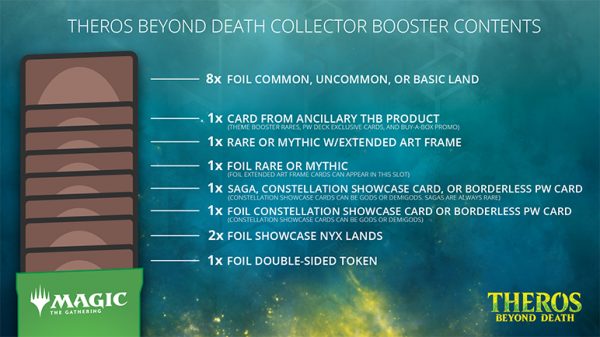
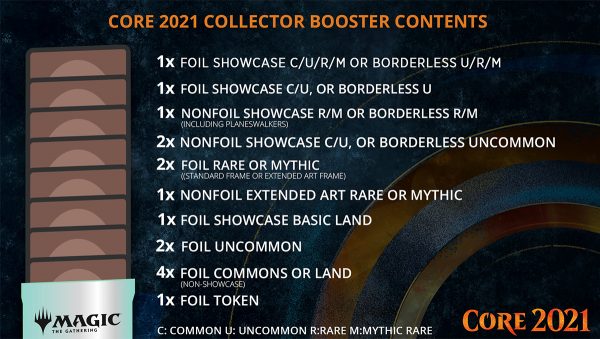
The biggest challenge currently is that we no longer know exactly how rare any of those given things are. A lot of these new variants were tied in with the new Collector Boosters. Now thanks to WotC, we know what to generally expect from these boosters.

Collector Boosters

So if we look at just the Collector Booster Box with 12 packs per box, it means that each box will provide;

  • 48 foil commons/lands
  • 24 foil uncommons
  • 12 Extended Art Rares/Mythics
  • 24 Foil Extended Art or Regular Foil/Mythics (unfortunately, we currently don't know the exact ratio)
  • 24 showcase commons or uncommons
  • 12 showcase or borderless rares or mythics (again don't know the ratio)
  • 12 foil showcase commons or uncommons or borderless uncommons
  • 12 foil showcase or borderless of any rarity.

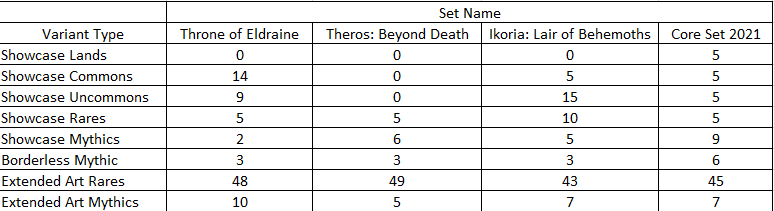
For clarity, cards that are labeled as "borderless" have different art on them, whereas, "extended art" cards have the same art as the regular, but with no border. Here is a breakdown of each rarity in each set of these special variants.

It is also important to note that the Collector Booster makeup has changed.

Throne of Eldraine (no pre-made graphic):

Number of Cards: 15 cards and 1 foil token card
Number of Versions: 1
Contents:

  • 1 rare/mythic rare with extended art
  • 1 foil rare/mythic rare
  • 9 foil commons/uncommons
  • 3 special-frame cards (showcase or borderless planeswalkers)
  • 1 ancillary card
  • 1 foil token

I got the following data from Mr. Thomas Vanek regarding some of his stores Collector Booster Breakdowns:

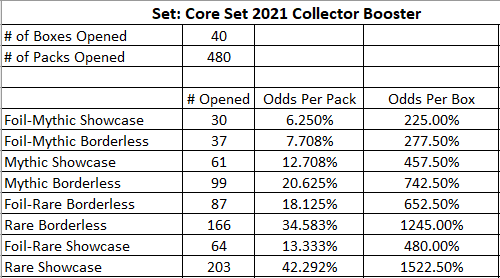
**Unfortunately, I only found data for the Extended Art cards for Ikoria, so please keep in mind the sample size is limited to one set.

Draft Boosters

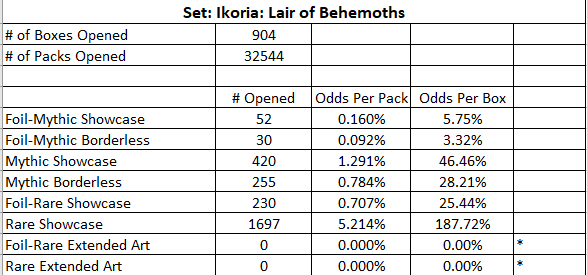
Thankfully QS has a lot of store owners as members and some were able to give me some great information regarding breakdowns, so a special thank you to Swaga and Mr. Thomas Vanek for the data below:

*Extended Art cards are NOT available in standard draft boosters.

Variant Options

Lastly, it's important that we know how many of any potential option there are from each set to determine just how rare (or not rare) a given version of these new variants might actually be.

Set Breakdowns

Now it gets a bit more complicated because the Collector Boosters makeup changed; we need to look at the data per set, instead of as a whole. I have provided a ton of information in the charts above and because we don't know print run sizes between Collector Boosters boxes and Draft Booster boxes, I think it would be unwise to dig too deep regarding specifics. However, I think it's fair to look for some generalizations between the sets and these new variant rarities.

Throne of Eldraine

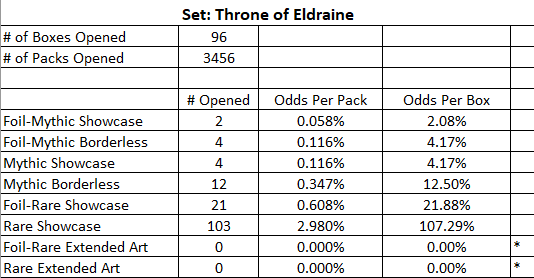
  • Foil Mythic Showcases are likely rarer than Foil Mythic Borderless.
  • Mythic Showcases are likely rarer than Mythic Borderless
  • Showcase rares are likely a lot more common from Draft Booster Boxes than Showcase Mythics, and the fact that there are only 5 showcase rares to choose from implies that any given one may be more common than you might think.

Ikoria: Lair of Behemoths

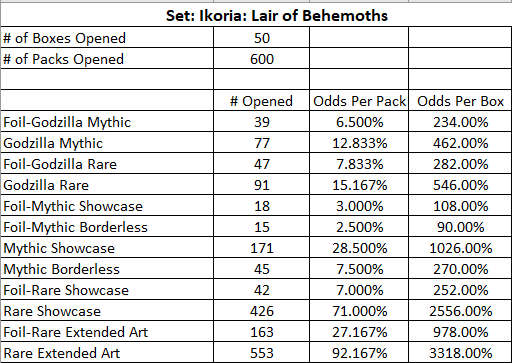
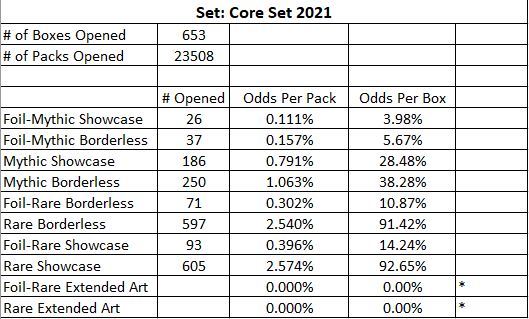
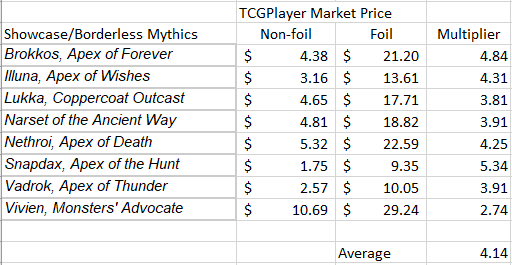
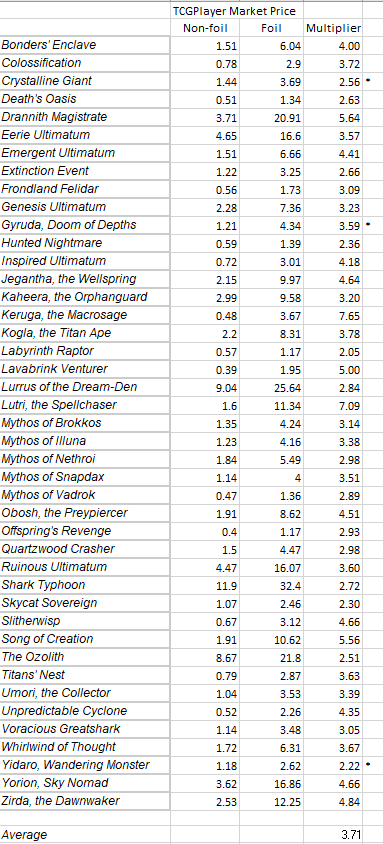
  • In our data set between 32,544 Draft Booster packs and 600 Collector Booster packs there were only 100 foil mythic borderless and showcase cards. You would need to open about 10 Draft Booster Boxes to get 1 of the 8 potential options. Looking at prices between the two we see a relatively small multiplier between the foil and non foil Market prices.

    • The average multiplier is only a little over 4x as much, despite the fact that these are extremely rare.
    • It is important to note that the Apex cycle had alternate Godzilla card options also available and that those options are likely eating into the demand for the Showcase foils.
      • There is some additional data on the google sheet that shows that the foil Godzilla variants for these mythics was only between 1-2x rarer than the regular Godzilla variant.
    • While there are additional options for the Apex cycle the relatively low multiplier between the foil and non-foil borderless planeswalkers is a bit baffling which averages 3.49x, granted none of these planeswalkers has shown up in any eternal formats, but there are plenty of people who just collect planeswalkers and want each version.
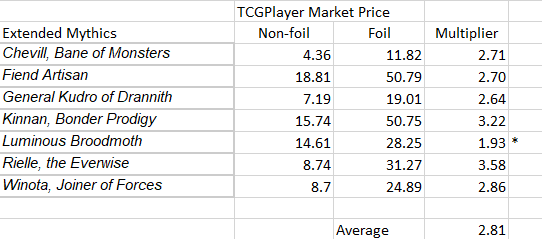
  • While I wish I had a lot more data regarding the extended art variants, the fact that they are only available in Collector Booster packs and while guaranteed 1 nonfoil mythic or rare extended art the fact that there are between 50 and 60 different cards per set that could be pulled in that slot makes me think that any particular one is likely a lot rarer than one would think.

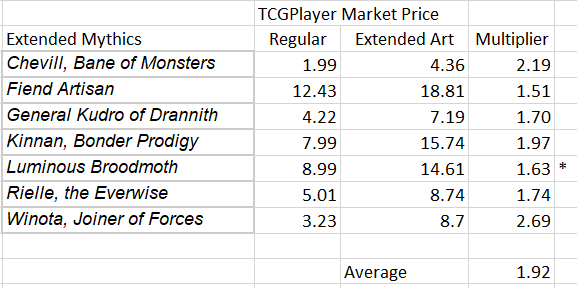
*It's important to note that cards with an * next to them have Godzilla alternate cards and thus are likely considered less of a premium as an extended art card.

  • If we just focus on the Mythic Extended Art vs Regular Art versions we see a multiplier of a little under 2, however, I think it's fair to argue that since the Extended Art variants are only available from Collector Booster packs and Collector Booster packs are a limited print run we will likely see this multiplier climb as the initial first wave of cards from the Collector Boosters dries up. If you were going to speculate on any I would focus on ones that do not have a Godzilla alternate and are desirable by Commander players.

Continued next week...

Valuable Lessons From a Newbie Streamer

Are you a Quiet Speculation member?

If not, now is a perfect time to join up! Our powerful tools, breaking-news analysis, and exclusive Discord channel will make sure you stay up to date and ahead of the curve.

You may or may not have noticed that last week I didn’t have an article published on Quiet Speculation’s site. This is an extremely rare occurrence—in my eight years writing about Magic finance, I probably average 1-2 weeks per year when I don’t produce an article.

There were two key reasons I skipped last week. First, I was traveling on business for my job. This was my first trip in COVID-19 world, and the stress of the trip was slightly higher than normal as a result. I found myself needing to rent a car and drive eight hours to northeastern Pennsylvania, where I stayed for a full week. I had a tough time focusing enough energy on MTG writing during this week.

The second reason was that I wanted to try engaging in Magic in a completely novel way: by live streaming Magic Arena gameplay on Twitch! This is something I’ve always wanted to try, and being alone in a hotel for a full week seemed like the perfect time to test things out!

This week, I’m going to share a few key takeaways I learned while attempting my first ever stream. After all, with a little success, such practice can be monetized—yet another path one could take to make money from Magic!

What Worked

Eager and ready, I fired up Arena last Tuesday night. Chroberry, contributor and editor for Quiet Speculation, gave me some pointers. Our content team pointed me to Streamlabs for setup, a relatively intuitive software with many convenient built-in features to help set up a professional-looking stream.

Since I have been really getting into Arena lately, it seemed like a natural transition to go from avid player to streamer. I figured if I was going to play the game a couple hours a day—especially while traveling for business and having little to do in the evenings—I might as well try generating a following in the process! There’s nothing like killing two birds with one stone, attempting to make a few bucks while doing something I love.

After a couple of false starts, I was up and running! After broadcasting my live streaming status, I immediately had a couple of people join to watch. Before you know it, I was drafting and battling in Standard, talking through all of my picks and plays like the professional streamers do. My audience was modest in size, but highly engaging and I had a blast.

Three hours into the stream, it was time to pack it up and call it a night. I was exhilarated by the experience—I am an extroverted, people-person in general. So being able to once again enjoy Magic while engaging with others in the community (rather than playing online in isolation) really cheered me up. Talking as I played came naturally because I tend to talk out loud while I play anyway!

The successful experience was highly motivating, and I started fantasizing about the potential! Was I onto something here? Would I generate a large enough following/audience to monetize my stream? I had no idea the process would be so simple.

Or was it?

What Didn’t Work

The next day (Wednesday), I found myself once again sitting alone in the hotel in the evening with little to do. Thinking of the successful stream from the night before, I booted up Streamlabs and Arena and started streaming again. This time, I attempted to generate a little more hype by tweeting a couple times in advance, letting followers know my intent to stream that evening.

Two minutes into the process, I realized that Wednesday was not going to bring the same positive experience as Tuesday brought. A friend of mine joined the stream first, and immediately pointed out the poor connectivity. The hotel internet was simply not keeping up with the constant bandwidth draw from both Arena and Streamlabs. We powered through for a little bit, but my video was continuously freezing up and my audio was robot-like.

It didn’t help that I was also communicating through my laptop’s built-in microphone, which contributed to poorer audio quality. A few other folks trickled in, but didn’t stick around. Who could blame them? The stream’s quality was far too poor to host a worthwhile session.

Defeated and deflated, I stopped the stream, tweeted out an apology, and played alone on Arena without an audience.

Valuable Takeaways

It was like A Tale of Two Cities: Tuesday and Wednesday brought “the best of times and the worst of times.” Clearly, this streaming thing wasn’t as easy as it initially seemed.

Throughout the process, I learned many valuable lessons that I want to share here, in case readers are thinking of trying out a stream themselves.

  1. GOOD INTERNET IS KEY!!! – In order to deliver a positive experience for viewers, you must, at a minimum, be able to deliver a quality stream. Without a good internet connection, you have no stream to begin with. No one is going to have the patience to watch a robot-sounding voice talk over gameplay at one frame-per-second frame rate. Hotel internet likely doesn’t cut it!
  2. Leverage Technology – I watch a few Magic streamers regularly and I’m always impressed by the little things that make their stream look well-polished and deliberate. It turns out those features aren’t only available to Twitch partners. Anyone can download Streamlabs for free and implement widgets to help their stream look professional. It takes a little time playing around with the software to find the right features, but it’s well worth it.
  3. Stay Positive – A positive attitude is absolutely critical on so many levels. First, if you’re brand new to streaming and have a couple false starts like I did, don’t be discouraged! I was disappointed I couldn’t stream last Wednesday due to internet issues, but I can always try again! During gameplay, it’s also important to put on a positive game face even in the face of mana screw and a losing streak.
  4. Engage the Community – During my stream, I did my best to respond to the chat whenever I could (it was easy, having only a couple viewers of course). But besides answering viewer questions and making chit chat, I tried to take it one step further by letting viewers pick my next match format. I would say, “The first person to comment can pick whether I play a draft or a Standard draft next.” I believe this audience participation can add a layer of entertainment for viewers, and may motivate them to stick around a little longer to watch the match they asked for. In general, being talkative, explaining picks and plays, and engaging viewers will help build a positive experience for everyone.
  5. Equipment is a “Nice to Have” – I don’t think I’ll ever get to 100 simultaneous viewers with my current setup. Talking through my computer’s speakers and using my computer’s webcam is a recipe for a lower-quality stream. At the same time, they were sufficient to get started. I personally don’t think it’s necessary to invest $100’s in audio/visual equipment right off the bat. Try out a few sessions of streaming first to see if you like it and if you can connect with your viewers before considering a larger investment. Buying expensive equipment and then not making enough money streaming to pay for said equipment is the equivalent of a failed spec.
  6. Have Fun! – If you aren’t having fun with the stream, don’t do it. There are other ways to make money from Magic that it’s not worth stressing out over.

Wrapping It Up

Making money from Magic is the equivalent of having one’s cake and eating it too. You get to enjoy the best game of all time while also making some spare cash to help fund the hobby! Historically, I’ve run this grind via speculation, buying and selling cards, and of course writing weekly articles. Recently I attempted a new avenue: streaming.

My first experience was overall positive, but it wasn’t flawless. Being the scientist, I made many observations and took away some valuable insights throughout the process. This week I wanted to share those key takeaways to transparently share what it’s like attempting a first Twitch stream. Hopefully, this provides you with the information and motivation you need to get off the couch and start streaming yourself! I don’t know how hard it is or how long it takes to monetize a stream, but if you’re playing anyway and have positive energy, you may want to give it a try. The initial investment is minimal, and you never know if you’ll have success without trying!

Oh, and if you want to throw me a follow and watch a future stream of mine, please visit www.Twitch.tv/sigfig8 and throw me a follow. In future streams, I plan on talking Magic finance while I play, answering viewer questions and sharing my latest spec targets.

Happy streaming everyone!

Avatar photo

Sigmund Ausfresser

Sigmund first started playing Magic when Visions was the newest set, back in 1997. Things were simpler back then. After playing casual Magic for about ten years, he tried his hand at competitive play. It took about two years before Sigmund starting taking down drafts. Since then, he moved his focus towards Legacy and MTG finance. Now that he's married and works full-time, Sigmund enjoys the game by reading up on trends and using this knowledge in buying/selling cards.

View More By Sigmund Ausfresser

Posted in Arena, Community, Finance, TwitchTagged , , , , Leave a Comment on Valuable Lessons From a Newbie Streamer

Have you joined the Quiet Speculation Discord?

If you haven't, you're leaving value on the table! Join our community of experts, enthusiasts, entertainers, and educators and enjoy exclusive podcasts, questions asked and answered, trades, sales, and everything else Discord has to offer.

Want to create content with Quiet Speculation?

All you need to succeed is a passion for Magic: The Gathering, and the ability to write coherently. Share your knowledge of MTG and how you leverage it to win games, get value from your cards – or even turn a profit.

July ’20 Brew Report, Pt. 1: Claws & Fins

Are you a Quiet Speculation member?

If not, now is a perfect time to join up! Our powerful tools, breaking-news analysis, and exclusive Discord channel will make sure you stay up to date and ahead of the curve.

Well, I've dutifully done my snooping, and am proud to present some of Modern's new directions in a Snow-less world! Chomping at the bit for more? Ready the sails... if you dare!

Nuthin' But a "G" Thang

"One, two, three and to the four / Boggart Harbinger and Conspicuous Snoop is at the door." In fact, this dynamic duo has long gotten past the door, and they ain't leavin' til six in the morning. If July 2020 is remembered for one thing, let it be Snoop Gobbs's impressive debut.

Snoop Gobbs, KARATEDOM (3-2, Modern Preliminary #12176966)

Creatures

4 Boggart Harbinger
4 Conspicuous Snoop
4 Goblin Matron
4 Goblin Ringleader
1 Goblin Warchief
1 Kiki-Jiki, Mirror Breaker
1 Krenko, Mob Boss
4 Mogg War Marshal
4 Munitions Expert
1 Pashalik Mons
2 Skirk Prospector
2 Sling-Gang Lieutenant

Artifacts

4 Aether Vial

Instants

1 Tarfire

Lands

4 Auntie's Hovel
4 Blackcleave Cliffs
2 Blood Crypt
4 Bloodstained Mire
4 Cavern of Souls
1 Fiery Islet
2 Mountain
1 Swamp
1 Unclaimed Territory

Sideboard

1 Tarfire
2 Blood Moon
1 Goblin Chainwhirler
1 Goblin Cratermaker
1 Goblin Trashmaster
3 Leyline of the Void
3 Plague Engineer
3 Thoughtseize

The above build of Snoop Gobbs has been tearing it up online this month, to the extent that I considered omitting it from the "Brew" report at all. But the development nonetheless represents the first foot forward in tuning and refining a brand-new archetype. Besides the above Preliminary list, the first July build I came across, I found similar builds in four other Preliminaries (including one that went 5-0), three Challenges (with one making Top 8), and four regular ol' leagues—in other words, almost every data set I worked with.

The deck and its ilk are built similarly to David's experiment with Snoop early in spoiler season, with the combo shoehorned into an otherwise unremarkable Vial Goblins strategy. Apparently, boasting access to the combo plan plugs gaping holes previously unfixable for Goblins, an archetype we haven't ever seen experience this level of success in Modern.

There are, of course, slight variations between the above lists, mostly coming down to amounts of interaction (some decks run multiple Tarfire, others main Fatal Push, and others still forego noncreature removal entirely) and whether or not Goblin Ringleader is played. Ringleader cemented itself as a Goblins staple as soon as it came to Modern, but it's worth noting that these Snoop-less versions of Goblins still struggled to find footing. As a card that primarily helps overwhelm interactive opponents, it makes sense that Ringleader might under-perform in certain matchups, and therefore predicted metagames.

I also spotted some Goblins decks that diverged from the core more significantly.

Putrid Gobbs, MASTERA (23rd, Modern Challenge #12176992)

Creatures

4 Putrid Goblin
4 Boggart Harbinger
4 Conspicuous Snoop
4 Goblin Matron
1 Grumgully, the Generous
1 Kiki-Jiki, Mirror Breaker
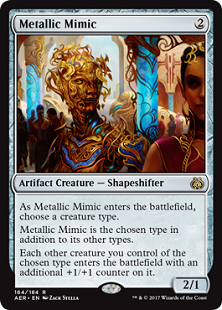
4 Metallic Mimic
2 Munitions Expert
1 Murderous Redcap
3 Skirk Prospector
3 Sling-Gang Lieutenant

Artifacts

3 Aether Vial

Sorceries

2 Inquisition of Kozilek
2 Thoughtseize

Lands

4 Auntie's Hovel
4 Blackcleave Cliffs
1 Blood Crypt
4 Bloodstained Mire
4 Cavern of Souls
2 Mountain
1 Stomping Ground
1 Swamp
1 Verdant Catacombs

Sideboard

2 Blood Moon
2 Boil
1 Goblin Trashmaster
4 Plague Engineer
4 Relic of Progenitus
2 Tarfire

This version of Putrid Gobbs maxes out on Skirk Prospector, usually a two-of, to make use of its mana-making synergy with Putrid Goblin. Mogg War Marshall already provides multiple mana with Prospector, but Putrid takes things a step further with Metallic Mimic in the picture, which lets Goblins go infinite and chain together all the Ringleaders, Matrons, or Kiki-Jiki clones it wants. Sling-Gang Lieutenant pays off the digging by providing a damage-dealing sac outlet that kills opponents on the spot.

While adding a second combo to an already shaky tribal aggro core might seem precarious, it helps that none of these pieces play that poorly with the strategy at hand. Mimic is really just another lord, and Putrid's built-in card advantage can help against the types of decks Goblins naturally struggles against: those loaded with cheap removal spells.

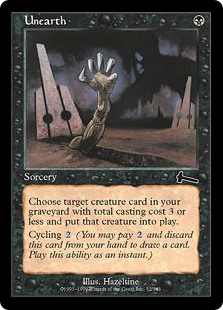
Snoop Unearth, B4NN3D22 (5-0)

Creatures

4 Dark Confidant
4 Goblin Matron
4 Boggart Harbinger
4 Conspicuous Snoop
1 Goblin Cratermaker
1 Goblin Rabblemaster
2 Kiki-Jiki, Mirror Breaker
2 Sling-Gang Lieutenant

Instants

2 Tarfire

Sorceries

4 Inquisition of Kozilek
4 Thoughtseize
4 Unearth
1 Warren Weirding

Lands

4 Auntie's Hovel
4 Blackcleave Cliffs
4 Blood Crypt
4 Bloodstained Mire
2 Fiery Islet
2 Mountain
2 Polluted Delta
1 Swamp

Sideboard

1 Tarfire
1 Warren Weirding
2 Collective Brutality
3 Damping Sphere
4 Fatal Push
4 Nihil Spellbomb

Snoop Unearth switches things up even more drastically, focusing single-mindedly on the combo and employing Dark Confidant both to dig for pieces and overwhelm opponents light on interaction. Should the other side happen to have Bolt or Push for the 2/1, a whopping four copies of Unearth form this deck's backbone, reanimating the draw engine or literally any of its combo pieces throughout the game. Inquisition of Kozilek and Thoughtseize each join Unearth at 4 to prevent opponents from messing with the deck's plans.

This deck, too, has established pedigree this month, earning another 5-0 and netting one player Top 16 in a Challenge. Whether these results speak to the viability of Snoop Unearth as a build or just to the Snoop combo's own merits in Modern remains to be seen.

Swimming with the Sharks

The Goblin tribe may have enjoyed an explosive month, but Goblins have been in Magic parlance since the game's inception. Another, more slept-on creature type also had its day in July, rising out of obscurity to sink its hundreds of teeth into Modern.

Dimir Sharks, MECHINT (5-0)

Enchantments

4 Shark Typhoon

Creatures

4 Snapcaster Mage

Instants

3 Archmage's Charm
2 Cling to Dust
3 Cryptic Command
3 Drown in the Loch
4 Fatal Push
2 Force of Negation
4 Frantic Inventory
1 Logic Knot
1 Shadow of Doubt
2 Spell Snare
4 Thought Scour

Lands

1 Field of Ruin
6 Island
1 Misty Rainforest
3 Mystic Sanctuary
4 Polluted Delta
4 Scalding Tarn
1 Sunken Hollow
1 Swamp
2 Watery Grave

Sideboard

4 Aether Gust
2 Flusterstorm
1 Kalitas, Traitor of Ghet
2 Narset, Parter of Veils
3 Plague Engineer
3 Yixlid Jailer

Behold Dimir Sharks, a fins-to-the-shins control deck that wins by cycling, and perhaps even casting, Shark Typhoon. As cycling can't be countered and is available at instant speed, it's an attractive option for control decks if the right card presents itself—and on a finisher, players can simply cycle the card early in a pinch, confident they'll find more copies down the road. Decree of Justice once saw play in control decks for exactly this reason, although Decree also had the benefit of triggering Astral Slide. No such synergy here, although Typhoon is significantly easier to cycle.

Among the decks sleeving up Shark Typhoon are Sultai Snow (RIP) and UW Control, but I did find one other pile maxing out on the thing.

Izzet Sharks, ASPIRINGSPIKE (17th, Modern Challenge #12176998)

Creatures

4 Snapcaster Mage

Planeswalkers

2 Narset, Parter of Veils

Enchantments

4 Shark Typhoon

Instants

1 Abrade
3 Archmage's Charm
3 Cryptic Command
3 Force of Negation
4 Lightning Bolt
3 Mana Leak
4 Opt
2 Remand
1 Shadow of Doubt
2 Spell Snare

Sorceries

1 Flame Slash

Lands

4 Cascade Bluffs
2 Fiery Islet
1 Minamo, School at Water's Edge
2 Mountain
1 Oboro, Palace in the Clouds
4 Reflecting Pool
1 River of Tears
4 Spirebluff Canal
4 Temple of Epiphany

Sideboard

4 Aether Gust
3 Boil
2 Flusterstorm
3 Izzet Staticaster
3 Relic of Progenitus

Behold, Izzet Sharks! ASPIRINGSPIKE is no stranger to the Brew Report column, so of course dude had to deliver a twist to the tornado. In fact, he's already on to the next whirlwind, having trophied with an abomination dubbed "UW Sharkblade."

Just When You Thought It Was Safe...

With Arcum's Astrolabe banned, Modern's waters are indeed a-churning. Join me next week for an exposé on July's non-Goblins breakout deck.

Budget-Focused: Four Cards to Pick up for Pioneer!

Are you a Quiet Speculation member?

If not, now is a perfect time to join up! Our powerful tools, breaking-news analysis, and exclusive Discord channel will make sure you stay up to date and ahead of the curve.

Welcome back everyone to another week and another article! Today is our third installment going over some lower cmc cards to utilize in Pioneer, or ones that have long-term potential. Last week we went over three cards that look solid for the format.

Blossoming Defense with room to blossom

There was an error retrieving a chart for Blossoming Defense

The first one we are going to discuss is a budget staple and has room to grow in the non-foil print. The card we are talking about is Blossoming Defense. This is literally the “nope” to any target creature spell. There is no better satisfaction than to nullify a three drop by tapping for one! The other thing to note here is that the creature we target gets a 2/2 buff. There are a couple cards from Core Set 2021 that can benefit heavily from this, but we will touch on that in a later article! The instant aspect here is what makes this so versatile, as we can use it defensively or offensively.

The current price tag on this is $0.24 for the non-foils and $3.05 for the foils. One thing to note is as of now there are no other printings of this, and for speculating that is fantastic! Secondly, the non-foil over time has more than enough leverage to pull over the $1.00 range if the foil stays at its current price. If the foil continues to grow, then this helps raise the ceiling on the non-foil copies like Fatal Push. One could argue that Fatal Push is going for $3.75 for non-foils, and it is used in other formats. How can we then say this could grow potentially to that point? The answer is one that was touched on in a previous article, total printings.

Right now, Fatal Push has a total of four different printings, one being an FNM promo. With Blossoming Defense only having two available, it has less in total circulation. If this trend stays the course Blossoming Defense has an edge.

Get more dominant with Display of Dominance and Quickling

There was an error retrieving a chart for Display of Dominance
There was an error retrieving a chart for Quickling

Staying on course with green “nope” spells we must discuss Display of Dominance. This is a solid two drop with options with removal or protection. At first glance it being narrow with “target non-creature permanent” seems unappealing. Keep an open mind on this as there are plenty of non-creature threats in black and blue builds. This is just the secondary use, so keep that in mind. What we primarily want to do is use the ability to give our permanents hexproof from blue and black spells. Like Blossoming Defense, nothing will aggravate a control player more than you not allowing them to remove your plays. Let them go ahead and play that removal spell, you tap for two, and “nope” them in response.

Display of Dominance’s price is currently at $0.25 for the non-foils and $1.29 for the foil copies. This card did in fact pop back in January, but the current price is a bargain! There are four color combinations that are in the competitive meta where this can be a factor. Mono Black aggro, Spirit aggro, Mono Green, and Gruul aggro. Mono Green and Gruul is where we can at the minimum sideboard this in for defense. Mono Black aggro and Spirits aggro will have target spells that we can negate using this. Outside of Spirits and Mono Black, there are other control decks that could be a threat to Gruul and Mono Green. This is one to pick up while the price is low!

Quickling is our next card that is flying (literally and figuratively) under the radar. The current price is at $0.33 for non-foils and $2.37 for the foils. Both versions have room to grow, but the non-foil is where our upside lies. This can be used as a complementary piece to decks that not only utilize flyers but anything looking for sneaky defensive ways to counter target creature spells. The power and toughness being 2/2 is rather intriguing for it the text this one holds it would be a 1/1 given the mana cost and rarity. Long term, this could see the $1.00-$2.00 range for the non-foil copies without a reprint. Be sure to snag up some playsets of both copies of this awesome card!

Frontline Medic - an unsung hero to Aggro

The last card we are going to discuss today in not a two or one-drop but deserves to be mentioned for the format. Frontline Medic is a great three-drop that can be used in a slew of white builds for defensive measures. Just in aggro alone this can be used in White Weenies, Boros Aggro, Spirit Aggro, Sram Aggro, and Abzan Aggro. Those decks as of right now make up 19% of the competitive meta, and a card like this potentially bolsters them up more! Giving your creatures indestructible when attacking can drive players crazy if they have no response. Not to mention the fact it can counter a spell if the play is available! Some critics feel that this is a card that is not worth the play given its cmc. However, in the right build like those stated above it can be a threat.

The current price for Frontline Medic is $0.50 for the non-foils and $1.27 for the foil copies. There is a Commander 2020 reprint that is coming out with a price of $0.39. The reprint hurts the value slightly for the non-foil, but the foil will hold plenty of upside. Here is a build that could benefit from Frontline Medics ability mid-late game.

Devotion to White by E_Kaminuma

Creatures

2 Anafenza, Kin-Tree Spirit
3 Arcanist's Owl
2 Daxos, Blessed by the Sun
4 Heliod, Sun-Crowned
3 Knight of the White Orchid
4 Thraben Inspector
2 Tomik, Distinguished Advokist
3 Walking Ballista

Other Spells

2 Baffling End
2 Elspeth Conquers Death
4 Karn, the Great Creator
3 Stasis Snare

Lands

2 Castle Ardenvale
3 Idyllic Grange
3 Nykthos, Shrine to Nyx
18 Plains

Sideboard

2 Lurrus of the Dream-Den
1 Baffling End
1 Baneslayer Angel
1 Damping Sphere
3 Gideon's Intervention
1 Glass Casket
1 Grafdigger's Cage
1 Pithing Needle
1 Skysovereign, Consul Flagship
1 The Immortal Sun
1 Tormod's Crypt
1 Walking Ballista

In closing, all the cards stated above have plenty of usability in the future of Pioneer. The meta is ever-changing as everyone tries to figure it out. New threats will immerge, and new answers will be found. These cards have a great chance of having a role in some way shape or form. Even if some only go up a buck or two that is still a win, especially if you buy/trade for a high quantity. Thank you for checking this out, and be sure to stop back for the next installment!

Late Summer Thaw: Arcum’s Astrolabe Banned

Are you a Quiet Speculation member?

If not, now is a perfect time to join up! Our powerful tools, breaking-news analysis, and exclusive Discord channel will make sure you stay up to date and ahead of the curve.

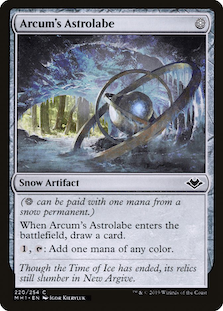
But for copyright concerns, I would have led off this article with the lyrics to "Another One Bites the Dust." I hope perfectly reasonable intellectual property law is happy with itself. There's been another B&R Announcement. This time something actually is banned in Modern. So that's nice. Even if it does moot a number of articles that I was planning. Fortunately, some of that work is relevant to the bannings, as we'll soon see.

While Modern is seeing a significant banning, the bigger story is what didn't happen: absolutely everyone was expecting a big change for Pioneer. Various combo decks are dominating the format, and players are bored. For evidence, I had been tracking match firing rates in the Tournament Practice Rooms on MTGO. Modern fired a minimum 3x more often than Pioneer, usually 5x or more. Thus, Pioneer players hoped for a big ban to open up the field. That didn't happen. Instead, Wizards unbanned Oath of Nissa to revive the green devotion decks. I've always been ambivalent towards Pioneer: On the one hand, I had a lot of Pioneer decks laying around by happenstance; on the other, I think a format of Wizards' Greatest Standard Mistakes is doomed to either collapse or be turned into Modern-lite.

However, this unban makes me care again. Not to play Pioneer, but to watch it as a researcher. There's been an argument that instead of banning cards, Wizards should prioritize unbanning cards to fix problems. Unbanning Deathrite Shaman to fix Hogaak stands out. Now, there's an opportunity to see in practice whether the argument works in theory. Or if the unban crowd should shut up.

The Banning

Arcum's Astrolabe is banned. It's exactly what I thought would happen when the announcement came out. A few hours after my article, which was discussing something relevant to the decision, went up. Just like with the companion rules change. I'm starting to think they're doing it deliberately.

Astrolabe was the logical target for a ban, having found its way into a lot of decks and being the object of many player's hatred. But I was surprised that Wizards felt the need to ban anything in Modern. My data indicated that the metagame was overall healthy. Furthermore, Snow decks in general, and Bant Snow specifically, had been hammered in the standings. It looked to me that Modern was self-correcting. Once over the surprise that Wizards felt differently, I immediately went to Astrolabe, and never felt that anything else was probable.

The Decision

However, Wizards has the totality of the data available, while I only have access to the Challenge and Preliminary results. Thus, they saw something that I couldn't, specifically win rates:

...we have seen a rise in popularity and win rate of multicolor decks using Arcum's Astrolabe, with some variants approaching 55% non-mirror match win rate.

Once again, we see 55% across the board win-rate as the critical threshold. However, it's important again to note that Snow variants weren't actually at the threshold, but merely approaching it. Given their mediocre performance in the Challenges and Preliminaries, I'm very surprised that Snow was anywhere close to that level. Snow must have really been tearing it up in the Leagues for that statistic to be true. However, that wasn't the only consideration. Wizards' primary ones were non-statistic factors and premonitions of looming problems:

While there’s nothing intrinsically bad about multicolor “good stuff” decks having a place in the metagame, their power and flexibility is usually counterbalanced by making concessions in their mana bases...

Arcum's Astrolabe makes this tradeoff come at too low of a cost...

Arcum's Astrolabe leads to other synergy by virtue of being a cheap artifact permanent, and it can be blinked or recurred for card advantage. In short, Arcum's Astrolabe adds too much to these decks for too little cost, resulting in win rates that are unhealthy and unsustainable for the metagame.

Ultimately, it wasn't Snow's win percentage that did Astrolabe in, but the environment it created. It was too efficient, had too low of an opportunity cost, and had too big an impact to be healthy. As far as Wizards was concerned, Snow was trending strongly enough towards needing a ban eventually. With players unhappy and a ban decision coming, Wizards chose to nip Snow in the bud.

My Reaction

This is a weird banning. I don't disagree that Astrolabe is too good. Mana should be a sticking point for good stuff decks, and Astrolabe facilitated some otherwise suspect manabases being highly successful. That said, it's extremely rare for a card to be pre-emptively banned. The initial list doesn't count. Mycosynth Lattice leaps to mind as the only other example. It was very un-fun, but wasn't really having an impact when it got axed. Once Upon a Time had reached fairly ridiculous saturation levels when it was axed. Faithless Looting was a known offender, as Wizards argued Mox Opal was.
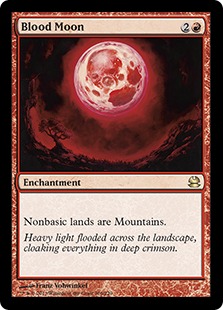
With some luck, this signals that Wizards is finally willing to head off developing problems rather than wait until they've got no remaining choice. If this is the case, we may never have to suffer through a Hogaak Summer or Eldrazi Winter again. Of course, this could be entirely down to Magic play being down across the board with paper on hold and Wizards needing to reinject life into formats. I'd prefer Wizards more active than passive, but we need to wait and see if this is actually a policy change or purely circumstantial.

What it Means

I'd actually been testing Bant Snow without Astrolabe prior to the announcement. Not because I suspected a banning, but because I was trying to quantify its impact on various matchups. I took a stock Bant Snow control list, subbed out Astrolabe for Serum Visions, and started testing against various gauntlet decks to see how Astrolabe affected the matchups. I'd only done Ponza and Humans when the announcement came down, so I'll only speak to those matchups.

Losing Astrolabe will not significantly impact Snow's matchup against Ponza. As mentioned, Ponza has a good matchup against Bant Snow because of its impressive threats combined with Blood Moon effects. A turn 2 Moon is killer with or without Astrolabe. Reason being: number of fetches mattered more than what was being fetched. Regardless of whether Snow sees Astrolabe, an early Moon will stall development and constrain mana. That's all it takes. If Ponza can capitalize, it wins. Without early Moon and lots of pressure, Snow eventually pulls itself out thanks to all the basics and cantrips and comes back. Snow has too many basics to be locked out completely, so it's a question of how much time it has, which Astrolabe didn't really affect.
As for Humans, I thought that Astrolabe's mana fixing wouldn't matter much. Unless Humans is running Magus of the Moon, it can't attack Snow's mana. However, Astrolabe's fixing was very important here because Humans punishes stumbles. Snow needed more fetchable shocklands more often to hit its color requirements. Astrolabe's largest contribution was Ice-Fang Coatl; despite being a control deck, Bant has very little removal. It leans on counterspells and Coatl to cover this weakness. With Astrolabe, Coatl's a removal spell starting turn 2. Without, it's turn three at best. This extra turn moved the matchup in Humans' favor.

Snow's Future

The snow strategies, as we knew them, are dead. Bant, Sultai, or Temur midrange are not. The reason is that the Snow manabase isn't going to work without Astrolabe. I know that I said Astrolabe didn't affect the Ponza matchup, but that's because of Blood Moon. The mana base is, unsurprisingly, very well tuned for that specific matchup. However, the strains of having a basic-heavy manabase in a three-color deck, especially with such intense color requirements, definitely showed in the Humans testing. Without Astrolabe, the risk of going for just basics makes itself known. In longer games, mana problems are mitigated thanks to the cantrips and Field of Ruin. That same manabase can't achieve the same impact in a shorter game, and will need retooling. It may be drastic, or it may be limited, but it will need to happen.

Along with that retooling, Ice-Fang's stock will change. As noted, there's no way to cheat on Coatl's deathtouch anymore with Astrolabe. That will have to be earned the hard way with Snow basics, and that is a risk. Fetching three basics over shocklands was always the right call. Now, there's a risk of fetching into mana problems. A deck with Bant's intense color requirements will struggle to both cast its spells and turn on Coatl more often, meaning it can't lean as heavily on it as removal. Thus, the spell suite must be retooled as well.
That said, the UGx strategy should still be viable. The strategy of Coatl, Archmage's Charm, Uro, Titan of Nature's Wrath, and planeswalkers is powerful enough to survive. I can't guess at the form it will take (though I suspect that Temur Uro will be discarded because that's how it usually goes), but there should still be a viable UGx midrange deck in Modern.

How's Urza?

As for the Urza decks, I'm not sure. There are still lots of one-mana artifacts that cantrip in Modern. However, none of them draw as an ETB. Urza loved Astrolabe because it sat around to be used for mana. Thus, I have doubts that the midrange value Urza decks will be successful. However, older prison-style Whirza decks should be unaffected. Astrolabe was just bulk and not critical to anything they were doing. Urza has too many lines of text to just drop out of Modern, but he's losing so many tools that he's starting to approach fair territory.

The Winners

I put aggro decks as the biggest winners of the banning. Coatl getting nerfed really is a huge deal. This is particularly true for Spirits, which should have a great matchup against Snow, or any durdly deck full of expensive cards which care about card advantage. Coatl props up UGx, and Spirits doesn't have good answers. It's particularly bad when critical Spirits with hexproof get sniped. Humans will also appreciate having Mantis Rider picked off at advantage less often.
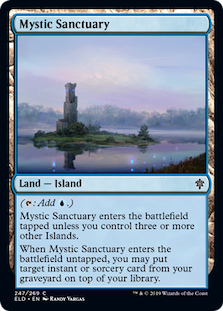
The next winner is Jund. Jund's fallen out of the meta, and Snow was at least partially to blame (though I think Ponza's a bigger factor). Jund wants to 1-for-1 with value until opponents lack the resources needed to win. That strategy doesn't work against a deck as full of 2-for-1s like UGx. I've seen Jund knock Bant down to no cards in hand and nothing on the board while attacking with Kroxa, Titan of Death's Hunger and still lose to topdecked Uro. With UGx taken down a peg, Jund has a chance to reclaim some ground.

What Didn't Happen

While everyone took it as given that Astrolabe would be banned, there was additional speculation that more could be banned. Mystic Sanctuary and Uro (the two most frequently cited other targets) are really repetitive, but pretty easy to answer because PLAY GRAVEYARD HATE IN MODERN! I don't get why this is such a problem, especially with General Kudro and Scavenging Ooze available as maindeck options. Just do it already. Plus, I'm glad Sanctuary didn't get axed for entirely selfish reasons. I know three players utterly enamored of their 4-Color Snow goodstuff decks and their whining about Astrolabe and Modern doomsaying is already melting my DM inbox. I can't imagine the anguished lamentations if their other baby, Sanctuary, got hit too.

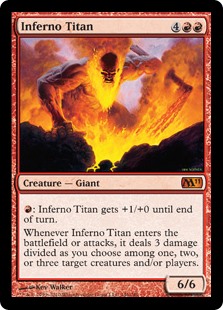
The other thing was no unbannings. This is also not unexpected; there's little left that isn't clearly absurd and/or didn't earn its place in actual Modern tournaments. That didn't stop the wild speculation, but the bar keeps rising on unbannings, so I wouldn't get my hopes up. Though I am opening up to a Splinter Twin unban. Not because I think it's fine in Modern, but because doing so will be a lose-lose for the stalwarts who won't give Twin up. Either it's still too good (as I think) and will be rebanned, breaking their hearts, or they're right and the format has moved on enough that Twin's not actually good anymore; then, they get their hearts broken that their love's gone forever. And we can all just move on. I win either way!

Onward!

Another ban, another Modern shakeup. And another time to see how the metagame will start settling. I don't expect huge changes given that nothing's explicitly non-viable anymore, but I am certain that the brewer's paradise will continue for a while longer.

Banned and Restricted List Update – July 13, 2020

Are you a Quiet Speculation member?

If not, now is a perfect time to join up! Our powerful tools, breaking-news analysis, and exclusive Discord channel will make sure you stay up to date and ahead of the curve.

The July 13, 2020 Banned and Restricted announcement is live! Here's the full list of cards in every format.

Historic

Agent of Treachery is banned (from suspended)

Winota, Joiner of Forces is banned (from suspended)

Fires of Invention is banned (from suspended)

Nexus of Fate is banned

Burning-Tree Emissary is suspended

Pioneer

Oath of Nissa is unbanned.

There was an error retrieving a chart for Oath of Nissa

Due to the unbanning of this once very powerful card in the format, we can expect immediate demand increase.

Modern

Arcum's Astrolabe is banned.

There was an error retrieving a chart for Arcum's Astrolabe

This 1-mana artifact from Modern Horizons is finally making an exit in Modern, a staple in several tier 1 decks and supporting a near "55% match-win rate" for some. Due to its prevalence and efficiency, it was noted that they are keeping an eye on it in Legacy as well.

Pauper

Expedition Map is banned.

Mystic Sanctuary is banned.

There was an error retrieving a chart for Expedition Map

Tron's high win rate and high metagame share in Pauper have led to the removal of Expedition Map, significantly hindering Tron decks ability to find its lands as consistently. Blue decks leveraging Mystic Sanctuary to create looping game states will now need to look elsewhere to make it work.

Notable Takeaways

Aside from the ban list changes, it was hinted that Standard decks leaning on a UG ramp package featuring Growth Spiral were on notice, and will be closely examined as the Standard metagame evolves. Related cards include Uro, Titan of Nature's Wrath and Jolrael, Mwonvuli Recluse.

Missing from the discussion is the unbanning of cards like Splinter Twin and Birthing Pod, which had seen quite a bit of discussion in the week leading up to the announcement.

There was an error retrieving a chart for Splinter Twin
There was an error retrieving a chart for Birthing Pod

The bans take effect as follows:

Tabletop Effective Date: July 13, 2020

Magic Online Effective Date: July 13, 2020

MTG Arena effective date: July 16, 2020

Link to the full article by Ian Duke on the mothership.

The Little Goyf That Couldn’t: Ponza vs. GRx Moon

Are you a Quiet Speculation member?

If not, now is a perfect time to join up! Our powerful tools, breaking-news analysis, and exclusive Discord channel will make sure you stay up to date and ahead of the curve.

Earlier this week, David dissected RG Ponza, the format's sleeper centralizer that may well overtake other Modern decks in the numbers soon. The deck exploits a peculiar vulnerability of Modern manabases: their softness to turn two Blood Moon. Of course, reliably powering out Moon effects isn't something any old deck can do with great consistency. But it just so happens to be a plan I've spent years developing. Today, we'll compare Ponza to my own GRx Moon builds and see what the big man on campus has that we don't.

"Many Moons" Ago...

It was my love of Tarmogoyf that drew me to Blood Moon shells, but I'd be lying if I said I didn't always have a soft spot for Blood Moon, too. Either way, many reps with Temur Delver had convinced me of the enchantment's power, but also left me hungry for a way to cheat in Moon a critical turn early. Savvy opponents could simply fetch around Moon most of the time when they saw it coming. The premise of GRx Moon was simple: use a mana dork to ramp into Moon early and then turn up the heat with Tarmogoyf. If the dork dies, turn up the heat with Tarmogoyf.

I reinvented the shell countless times over the next five years to accomodate for metagame changes and integrate new toys. And now, RG Ponza seems to be settling on top of the heap. Of course, Ponza doesn't run Tarmogoyf, so it's not for me. I still put in the reps to see if a Goyf-featuring shell could learn from that more successful version and put up results.

GRx Moon vs. RG Ponza

I actually compared GRx Moon to RG Ponza before, back in 2016; at the time, Ponza was gaining traction in Modern for the first time. Here's what I had to say:

When I introduced GRx Moon to Modern Nexus, the deck didn’t have a proper analog in Modern. I’d adapted the deck from Skred Red after having adding green to that deck for Tarmogoyf. Today, another deck exists that plays similarly: RG Ponza.
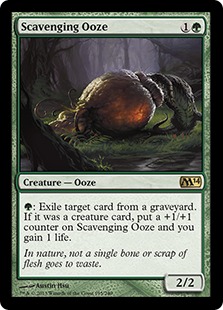
Ponza is a Stone Rain deck that rides mana advantages from Arbor Elf and Utopia Sprawl to power out Inferno Titan and Stormbreath Dragons, all with a turn two Moon in play. I don’t like how soft these decks are to Bolt effects, and especially to sweepers—if Arbor Elf gets taken out, it takes the Ponza deck five to six actual mana cards (be they lands or Utopia Sprawls) to start casting threats. Mana Leak also ends the deck.

GRx Moon has great insurance for dead dorks in Tarmogoyf, and stops its curve at four mana for threats. Extra mana sources (or disruption) can be cycled into more threats with Looting effects, or just played to get around taxing permission.

How much of that holds up now? Ponza has switched its top-end to the superior Glorybringer, and combines Utopia Sprawl with the London Mulligan to loosely patch up its enemy-Bolt problem. It's still clunky in the face of effective removal, but compensates by running more smoothly overall.

The Juggernaut

Here's RG Ponza, in all its "glory:"

RG Ponza, PTarts2win (2nd, Challenge 7/5)

Creatures

4 Glorybringer
4 Arbor Elf
2 Scavenging Ooze
3 Klothys, God of Destiny
4 Magus of the Moon
4 Seasoned Pyromancer
2 Bonecrusher Giant
4 Bloodbraid Elf

Instants

4 Lightning Bolt

Enchantments

4 Utopia Sprawl

Sorceries

3 Pillage

Planeswalkers

2 Chandra, Torch of Defiance

Lands

4 Windswept Heath
4 Wooded Foothills
4 Stomping Ground
6 Forest
2 Mountain

Sideboard

4 Relic of Progenitus
3 Choke
2 Cindervines
2 Anger of the Gods
2 Obstinate Baloth
2 Weather the Storm

What It's Missing

Elephant in the room: Goyf! But why would this deck want Goyf? Not only is the creature far softer than it used to be, Ponza has other things to do with its two-mana slot. There's Bonecrusher Giant, a versatile bump in card advantage; Scavenging Ooze, a late-game mana-sink and incidental graveyard hate; and nothing else. This deck is very intent on its dork surviving.
Naturally, half of them will; Utopia Sprawl is awfully hard to remove on turn one. That full playset and a few choice two-drops plug the curve hole left by the odd Arbor Elf eating Lightning Bolt. That being said, neither of those two-drops are cards players badly want to cast on turn two in lieu of something more powerful, and both fail to apply early pressure the way Goyf can when it's replacing a fallen soldier.

Sprawl can still be plucked from the hand by Inquisition of Kozilek, and I think the recent downtick in targeted discard is part of what makes this deck appealing. With those back in high numbers, Tarmogoyf becomes more of a solid crutch.

What It's Got

In my eyes, the single biggest addition to Ponza is Seasoned Pyromancer. Without this creature, the deck was truly all over the place, and suffered major mid- to late-game consistency issues. GRx Moon always sidestepped the issue with a lower curve, which would never exceed 4 CMC. That way, excess lands could be pitched to Faithless Looting. When we lost the sorcery, the appeal of "going cheap" plummeted similarly, giving an edge to Moon decks looking to hire bigger gats, such as Glorybringer.

Another major boon to the deck is Pillage. Back in 2015, when I experimented with faster mana and Goblin Rabblemaster in GRx Moon, I dreamed about "some magical Pillage reprint down the line;" lamenting Stone Rain the following year, as I strove to include a Lotus Cobra package, I wrote, "Without a Pillage reprint, Modern has always lacked a land destruction card flexible enough to warrant mainboard inclusion." Well, guess what? We got Pillage! And it's amazing! Pillage is the gold standard of three-mana land destruction for the same reason Kolaghan's Command and even Oko, Thief of Crowns were such big hits: incidental artifact hate is super powerful in Modern.
The Hopeful

And Goyf Moon, tweaked to more closely resemble its newfound big bro:

Goyf Moon, Jordan Boisvert

Creatures

4 Tarmogoyf
4 Arbor Elf
4 Seasoned Pyromancer
2 Magus of the Moon
3 Klothys, God of Destiny
3 Bonecrusher Giant
4 Bloodbraid Elf

Planeswalkers

4 Wrenn and Six

Enchantments

4 Utopia Sprawl
3 Blood Moon

Instants

4 Lightning Bolt

Sorceries

2 Pillage

Lands

4 Wooded Foothills
4 Misty Rainforest
2 Verdant Catacombs
2 Stomping Ground
2 Forest
2 Mountain
2 Forgotten Cave
1 Dryad Arbor

Sideboard

2 Grafdigger's Cage
2 Collector Ouphe
2 Choke
2 Cindervines
3 Veil of Summer
1 Ancient Grudge
1 Feed the Clan
2 Anger of the Gods

What It's Missing

Gone are the five-drops of Ponza, in part because I'm allergic to high land counts. We've still got mana sinks mostly, the back-ends on Pyromancer and Bonecrusher. But it's more of a backup than an inevitability. That's because GRx Moon wants to keep the hits coming, whether it's turn two Moon or some speedy attackers, and end the game a little earlier.
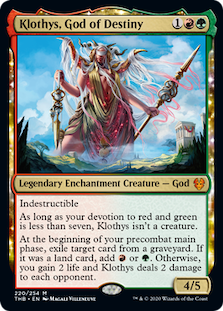
Granted, in some matchups, that can be harder without Glorybringer. The Dragon is great against creature decks, clocking effectively while gunning down even beefy threats. Chandra, Torch of Defiance is also out of here, replaced by a cheaper card-advantage generator in Wrenn and Six.

What It's Got

The aggressive bump gained from deploying Goyf early pairs nicely with Bloodbraid and Klothys, which sneak in plenty of extra damage. Backup plans for disruption are extremely reliable in this deck because Goyf is joined by Wrenn and Six. The planeswalker wowed me in GRx Moon when it was spoiled, but certainly becomes less potent without Looting in the picture. It's still good: Wrenn lets us keep one-land hands with a dork and still make land drops all game, which feels pretty great when it happens.
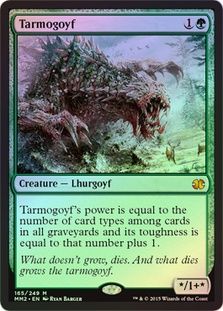
As such, the land count is very light, at a functional 16; Forgotten Cave is splashed in high numbers to let us relive the glory days with Wrenn, turning the card into a draw engine, and Dryad Arbor, an eternal blocker. I'm not totally sold on either of these plans at the moment—Cave is sometimes clunky and impossible to get out of the deck when needed, while blocking all the time isn't something I've necessarily wanted in most of my games—and could see cutting 2 or more of these lands for other spells. Either way, Wrenn would need to stay at 4 copies to enable such a low count.

Really, this build's strength relative to RG Ponza is its resilience to Lightning Bolt specifically. For them, Magic is easy mush for the instant, and losing turn one Arbor Elf is all but a death sentence. We've got actual Blood Moons to ensure the effect sticks and a gang of ways to trump Bolt on turn two. As such, I think this build will improve slightly as Bold decks start to pick up steam... which thy should, as running Bolt is a great way to beat Ponza. Not only does it stop many of its lines and plans cold, it forces red, which is still produceable under Blood Moon!

Goyf's Return... NOT!

Will the metagame winds suddenly blow favorable for Tarmogoyf? My guess is not, Borat voice. What's more likely is both GRx Moon and RG Ponza will, after the latter spikes a bit in terms of wins over the next month or so, again become less viable as the metagame adapts. And adapt it shall: should Ponza maintain its shares, players will figure out how to build manabases that don't fold to turn two Moon. If Counter-Cat could do it, so can everything else. Until then, may you tap for two!

Budget-Focused: More Pioneer cards you need to acquire!

Are you a Quiet Speculation member?

If not, now is a perfect time to join up! Our powerful tools, breaking-news analysis, and exclusive Discord channel will make sure you stay up to date and ahead of the curve.

Welcome everyone to this week’s article and a continuation of last week’s topic. For those that may have missed the last article, you can click the link here! We are diving a bit harder into Pioneer and where some diamonds in the rough might be lying dormant. We went over four cards last week and this week and this week we have three more to add!

Bring on Bloodsoaked Champion!

To start we are going to discuss a card that popped and then came back down a bit. The card being referenced is Bloodsoaked Champion. This thing looks like it can be the Gravecrawler of Pioneer, and that was the initial thought when the format was announced. It did see a lot of play in the early goings, but it has kind of fizzled as of late. This is one that nobody should sleep on, and it has plenty of opportunities to grow down the line.

There was an error retrieving a chart for Bloodsoaked Champion

The current price for this is at $0.79 for the non-foils, $4.50 for the foils, and $6.47 for the prerelease copies. What needs to be driven home with this is the average on the non-foil copies. The margin for growth is most certainly there and should not be ignored. Where its foil counterpart lies one would think the non-foils would be closer to the $2.00 range. Regarding the foils, there is room for growth within the format.

It is currently being used more often in Mono Black Aggro but can be used elsewhere. Any deck leaning on reanimator, alternate sac outlets, or speed strategies should have this at the top of their list for one-drops. There was a Sultai build that I used this in with Grim Flayer and Prized Amalgam. It played rather well on MTGO, but never got to test in outside of tournament practice. The synergies within it did exactly as one would have hoped, it just needed some fine-tuning. Here is an example where this would fit perfectly, and this build recently placed fourth at MTGO Pioneer Preliminary.

Abzan Rally by Ma7x

Creatures

4 Blisterpod
4 Cartel Aristocrat
3 Cruel Celebrant
4 Fiend Artisan
3 Hunted Witness
3 Priest of Forgotten Gods
4 Satyr Wayfinder
4 Stitcher's Supplier
4 Zulaport Cutthroat

Instants and Sorceries

2 Rally the Ancestors
4 Return to the Ranks

Lands

4 Blooming Marsh
4 Concealed Courtyard
4 Godless Shrine
2 Overgrown Tomb
1 Plains
2 Sunpetal Grove
4 Temple Garden

Sideboard

1 Lurrus of the Dream-Den
1 Abrupt Decay
2 Assassin's Trophy
1 Caustic Caterpillar
2 Damping Sphere
3 Dead Weight
1 Drannith Magistrate
1 Enlightened Ascetic
3 Thoughtseize

Tutoring in Gruul with Signal the Clans

Next, we are going to talk about a Gruul card that has great upside with a little risk. Signal the Clans is an instant spell that should be in consideration for Gruul builds going forward. Its current price is $0.36 for the non-foils and $0.92 for the foil copies. One thing to consider when speculating this is the fact there is no promo and no reprints.

There was an error retrieving a chart for Signal the Clans

Now let us investigate why we should consider this card. The first is that there are not a whole lot of tutors within the format. Secondly, it is an instant, so we can cast this on our opponent's end step. Last and most obvious, Gruul loves creatures and loves ramp. Having this will allow us to get an option to put on the board. The negative here is that you get one of the cards you pick at random. Even though it is random we can still pick three valuable options that can complement our play. Here is a recent Gruul build that took second in MTGO Pioneer League.

Gruul Aggro by citizenofnerdvana

Creatures

4 Bonecrusher Giant
4 Elvish Mystic
2 Ghor-Clan Rampager
4 Goblin Rabblemaster
1 Klothys, God of Destiny
3 Legion Warboss
4 Llanowar Elves
4 Lovestruck Beast
1 Rhonas the Indomitable
3 Steel Leaf Champion

Instants and Sorceries

4 Collected Company
2 Crater's Claws

Other Spells

2 Embercleave

Lands

8 Forest
2 Game Trail
6 Mountain
2 Rootbound Crag
4 Stomping Ground

Sideboard

2 Cindervines
1 Fry
3 Heroic Intervention
3 Lava Coil
2 Reclamation Sage
4 Scavenging Ooze

Although this deck has Collected Company in it, having 2 copies of Signal the Clans for an early play could help speed things up! Looking further at this build how mad can you really be at tutoring for any of those cards!

Breaking Into Your Wallets With Cryptbreaker

This next is definitely one to snag up, and that is Cryptbreaker! This surprisingly enough has not been in a top eight Pioneer deck since January (MTGtop8.com)! The current price is at $3.50 for the non-foils, $6.28 for the foils, and $8.32 for the prerelease copies. This card is so versatile it should be considered in most black builds. Not only will we get aggro with token creation, but it is great card advantage. For a one drop, the upside is worth having a 1/1 body out on the board. It compliments Priest of Forgotten Gods ability using our tokens as potential sac outlets. It also compliments every deck that is wanting to dump cards into the graveyard. Outside of Pioneer, it gets used in just about every zombie build in Commander. We are not discussing Commander, but it is worth noting the usage.

There was an error retrieving a chart for Cryptbreaker

To try and see where this can go in the present time, here is a list that got third place at an MTGO Preliminary.

Mono Black Aggro by Phill_Hellmuth

Creatures

4 Champion of Dusk
4 Dusk Legion Zealot
4 Gifted Aetherborn
2 Kalitas, Traitor of Ghet
4 Knight of the Ebon Legion
3 Murderous Rider

Instants and Sorceries

4 Fatal Push
2 Heartless Act
4 Thoughtseize

Other Spells

4 Sorin, Imperious Bloodlord

Lands

4 Castle Locthwain
4 Mutavault
1 Nykthos, Shrine to Nyx
15 Swamp
1 Urborg, Tomb of Yawgmoth

Sideboard

3 Drill Bit
1 Heartless Act
1 Kalitas, Traitor of Ghet
2 Liliana, the Last Hope
3 Lost Legacy
3 Rankle, Master of Pranks
2 Soul-Guide Lantern

This is just one of many options, and this should not be one to sleep on for a long-term spec in the format!

Final Thoughts

To close this one out I just wanted to say that there are a vast number of cards flying under the radar in my opinion. We will have more to discuss over the coming weeks, and I hope that some fly under a bit longer so I can talk about them! Do a little research and I know you will find some great cards to pick up! All the cards mentioned should be traded into at the very least and buy them if the cash is available. I hope you enjoyed this week’s article and come back for the next one!

Blood Moon’s Zenith: The New Police

Are you a Quiet Speculation member?

If not, now is a perfect time to join up! Our powerful tools, breaking-news analysis, and exclusive Discord channel will make sure you stay up to date and ahead of the curve.

Tracking events and collecting and then presenting data is all well and good. It's how observations are turned into good science and how we analyze Magic's metagame ecosystem. However, saying that Bant Snow and Eldrazi Tron are tied for most played deck is only half the story. Why this is happening is a far harder, but more interesting question to answer. A question that I'm going to tackle this week.

The knee-jerk response will always be "They're the best decks." However, that still invites the question of why? And also glosses over the rest of Modern's incredible diversity. Why aren't former heavyweights like Grixis Death's Shadow or Amulet Titan dominating? I believe that the answer lies with an unexpected deck. My hypothesis is that Ponza is actually driving the metagame trends because it's wielding the card that is actually defining Modern right now. And with most players focusing on snow, it's going unchallenged.

Examining the Metagame

As a reminder, the June metagame looked like this:

Deck NameTotal #Metagame %
Other5518.7
Bant Snow289.5
Eldrazi Tron289.5
Ponza279.2
Burn227.5
Humans165.4
Storm134.4
Toolbox134.4
Dredge124.1
Amulet Titan124.1
Sultai Snow113.7
Whirza103.4
Temur Urza82.7
Prowess72.4
Temur Snow51.7
Mono-Green Tron51.7
Infect41.4
Neobrand31
Sultai Reclamation31
Izzet Tempo31
Unearth 31
Ad Nauseam31
Niv 2 Light31

The top five decks are Bant Snow variants, Eldrazi Tron, RG Ponza, Burn, and Humans. This means that Tier 1 is skewed towards the midrange, as 3/5 of the decks are on the slower side. Below them lies a range of combo decks, Amulet Titan, and artifact decks. This Tier 2 would tend to back up the conclusions about Tier 1, as combo tends to rise in response to grindy value. The artifact decks are on the midrange end, and given their higher exposure to hate, it makes sense that they're in a lower tier than Bant Snow.

As for why this happened, the simplistic answer is blaming Snow. After all, for months Bant Snow has apparently been everywhere, and was the deck to beat before companions ruined everything. Following then, Sultai Snow has seen a lot of play to the point that Gabriel Nassif at one point said "You are literally hemorrhaging equity if you're not playing this rn." He's in the Hall of Fame, so he knows what he's talking about. If the best decks are UGx Snow, and then the metagame is being defined by matchups against snow decks.

On the surface, the data would support this conclusion. Burn is faster than all the midrange decks and so consistent that opposing stumbles are mercilessly punished.  Humans excels against decks with low removal variety, few threats, and many non-creature cards. Eldrazi Tron has Chalice of the Void to shut off Path to Exile and giant monsters to win. And Ponza preys on snow decks, so of course it's doing well with Snow doing well.

A Twist

However, that's not the full picture. Remember, the data doesn't back up Bant Snow being the best deck. Bant's metagame share just plummeted through June, and but for that amazing first week, it wouldn't have been top tier. Sultai and Temur Snow were also nothing special in the overall data: Sultai had one good week then dropped off; Temur was mediocre at best throughout. You'd think that a busted, clear best deck would simply dominate in every expression, but that hasn't been the case.

And then there's Ponza. There's no question that Ponza is a rough matchup for snow decks. I've claimed, as the data suggests, that Ponza preys on Snow. Anti-decks will struggle against decks that are bad against the deck they're targeting, and therefore tend to be lower tier. Thus, the simple fact that Ponza is well positioned against the possibly overrated snow decks can't explain its metagame position.

Then there's that lingering question of why Ponza is well positioned in the first place. It's a beatdown deck with Blood Moon/Magus of the Moon. Nothing to see here against decks with tons of basics and Arcum's Astrolabe. After that, it's a pile of green and red creatures. Which should be simple for answer decks to overcome, but that isn't happening. And that's because I think that Blood Moon is the actual defining piece of the current metagame. Ponza just happens to be the best shell for Moon effects, and the metagame's vulnerability to those is driving Ponza's stock up.

What is Ponza?

Ponza is not a new deck. The name and the deck have existed since 1997, making it one of the oldest archetypes in Magic. And an idea that almost everyone has tried when learning the game. And yet the thing is named after some food Brian Kowal likes, I don't get it. In any case, as it has always been, the deck is just ramp beatdown with some land destruction for disruption.

RG Ponza, PTarts2win (2nd, Challenge 7/5)

Creatures

4 Arbor Elf
2 Scavenging Ooze
3 Klothys, God of Destiny
4 Magus of the Moon
4 Seasoned Pyromancer
2 Bonecrusher Giant
4 Bloodbraid Elf
4 Glorybringer

Instants

4 Lightning Bolt

Enchantments

4 Utopia Sprawl

Sorceries

3 Pillage

Planeswalkers

2 Chandra, Torch of Defiance

Lands

4 Windswept Heath
4 Wooded Foothills
4 Stomping Ground
6 Forest
2 Mountain

Sideboard

4 Relic of Progenitus
3 Choke
2 Cindervines
2 Anger of the Gods
2 Obstinate Baloth
2 Weather the Storm

Thing is, regardless of iteration, it's never really been good. More of a joke really.

In ages past, it was the red deck with bad and uncastable spells. During the Mirrodin Block Constructed season, I remember some author (I have looked EVERYWHERE for that article!) saying that the only time Ponza gets turn one Slith Firewalker and turns two and three Molten Rain are the games it will lose anyway. That was literally the perfect hand for that deck. I've hit various versions of this deck over the years and always won easily and/or watched it fail. Usually against supposedly favorable matchups with perfect curves.

And then, over the past few months, something changed. Ponza has been doing well, even making it high into the standings. Typically it was only happening when the decks it preyed on, Bant Snow mainly, were doing well, but during the companion era it still hung on. And now it's actively doing well. To the point that I dread the matchup playing Humans, which has never happened before. Something is different, and it can't just be that Ponza's cheap online. It's comparatively cheap, but not the cheapest of the top tier decks.

Theros to the Rescue

The first change was Klothys, God of Destiny. In my preview article, I posited that Klothys would find a niche as an anti-control card in Jund. That didn't happen, and even when I reexamined my predictions, I glossed over her new role in what would become the current Ponza decks. Frankly, that Ponza could actually be good is not a thought I entertain regularly. It would seem I was wrong.

Klothys has become critical to the deck in a way I didn't appreciate. Yes, it is an inexorable clock against control, particularly Bant Snow decks. Those decks fill up their graveyards compulsively, and Klothy's just drains them down. And nerfs, if not defeats, their main win condition in Uro. However, Klothys is also part of the acceleration plan against everything else. Ponza is just a pile of beef and a Moon effect. To beat "better" decks requires dumping all that beef fast. Ponza generates lots of mana thanks to Utopia Sprawl and Arbor Elf, but that's not always enough. And once their job's done, Elf and Sprawl are kinda bad. Klothys is not bad once acceleration is unnecessary, making the rest of the shell more cohesive.

The Moon Rises

However, Ponza would still be Ponza were it not for Blood Moon effects being supremely well positioned. I hypothesize, and am doing testing to support, that Blood Moon is what's actually defining Modern right now. As I mentioned above, Ponza is doing well right now because it is the best Blood Moon deck. Not being burdened by Moon is a big part of that, but not the real story.

Ponza is an accelerated Moon deck. I realize that accelerating out Moon isn't a new idea, probably dating back to the original printing, and forms the basis of a successful Legacy deck. However, before now, a lot of that was on the back of ritual effects or Ancient Tomb[/mtg_card. The former is unreliable and the latter isn't legal. A deck which could reliably, efficiently, and economically hit turn two Moon is new and powerful. And this is the key to Ponza being successful. Modern has always been vulnerable to [mtg_card]Blood Moon. However, it wasn't early enough to really lock out most decks. Now it can, and Modern as a whole is still operating like it isn't a thing.

Consider the Rivals

I've been on the receiving end of this change more than I care to admit. Humans is extremely weak to Blood Moon thanks to its five-color manabase. Aether Vial is only helpful when given time, and Noble Hierarch gets Bolted a lot. Previously, this wasn't much of a problem because Moon was unlikely to hit early enough to prevent Humans from getting a board started with its nonbasic lands. Now I'm finding myself actually getting locked out more and a matchup that is, on paper, favorable is in practice very hard. Humans is generally too fast for low-removal decks to stop and has Reflector Mage and Mantis Rider, letting it zoom past land disruption. Now, it's locking in too fast.
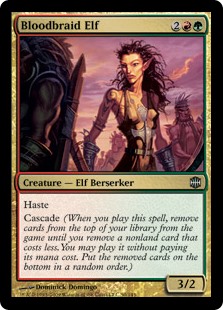
However, I think Eldrazi Tron's matchup against Ponza is the most instructive. Moon was never that effective against normal Tron because its spells are truly colorless. The Eldrazi, on the other hand, need colorless mana. Thus, it should be a pushover for a Moon deck. However, that's not exactly the case.

Eldrazi Tron, Bullz0eye (1st Place, Modern Challenge 7/5)

Creatures

4 Matter Reshaper
4 Thought-Knot Seer
4 Reality Smasher
1 Endbringer
3 Walking Ballista

Artifacts

4 Chalice of the Void
4 Expedition Map
3 Mazemind Tome
1 Mind Stone

Instants

2 Dismember

Planeswalkers

4 Karn, the Great Creator
2 Ugin, the Ineffable

Lands

4 Urza's Mine
4 Urza's Power Plant
4 Urza's Tower
4 Eldrazi Temple
2 Cavern of Souls
2 Ghost Quarter
1 Blast Zone
1 Scavenging Grounds
2 Waste

Sideboard

2 Relic of Progenitus
2 Spatial Contortion
1 Walking Ballista
1 Grafdigger's Cage
1 Mystic Forge
1 Sorcerous Spyglass
1 Sundering Titan
1 Wurmcoil Engine
1 Ensnaring Bridge
1 Liquidmetal Coating
1 Ratchet Bomb
1 Skysovereign, Consul Flagship
1 Tormod's Crypt

E-Tron looks very vulnerable to Ponza, especially with many lists cutting Mind Stone. And it is, though it's not as bad as it looks. Expedition Map for Wastes breaks the lock. Walking Ballista deals with the Magus of the Moon. And Karn, the Great Creator's toolbox fixes everything. The key is that these all take time, and previous Ponza decks tended to have relatively anemic clocks.

No longer. Klothys into Glorybringer is a phenomenal curve and clock in this matchup. Seasoned Pyromancer goes wide and finds more beef. Bloodbraid Elf can swing games from nowhere. This was all possible before, but older versions had more land destruction, which often meant dead draws, and had higher curves. The new wave of Ponza has learned from the deck's unfortunate past, prioritizing faster clocks and more widespread disruption. This actually constricts the opponent's time to recover rather than leaving everyone spinning their wheels destroying and playing lands. Ponza has closed the gap in its attack and is finally a scary deck.
Blood on the Snow

Which at last brings us to Snow. On paper, snow decks of all stripes shouldn't be vulnerable to Moon. They're playing color fixing Arcum's Astrolabe and have a lot of basics. Moon's only real purpose is shutting off Mystic Sanctuary. Which isn't nothing, but could be done just as easily with Relic of Progenitus. However, that is over simplified. Consider this representative deck:

Bant Snow, Zyuryo (5th Place, Modern Challenge 7/5)

Creatures

4 Ice-Fang Coatl
2 Snapcaster Mage
3 Uro, Titan of Nature's Wrath

Artifacts

4 Arcum's Astrolabe

Instants

4 Path to Exile
1 Spell Snare
2 Mana Leak
1 Dovin's Veto
3 Force of Negation
2 Archmage's Charm
2 Cryptic Command

Sorceries

2 Supreme Verdict
1 Timely Reinforcements

Planeswalkers

2 Teferi, Time Raveler
2 Jace, the Mind Sculptor
1 Teferi, Hero of Dominaria

Lands

4 Misty Rainforest
4 Flooded Strand
4 Field of Ruin
1 Breeding Pool
1 Hallowed Fountain
1 Temple Garden
1 Mystic Sanctuary
5 Snow-Covered Island
2 Snow-Covered Plains
1 Snow-Covered Forest

Sideboard

2 Veil of Summer
2 Celestial Purge
2 Surgical Extraction
2 Ashiok, Dream Render
2 Aether Gust
1 Timely Reinforcements
1 Containment Priest
1 Monastery Mentor
1 Disdainful Stroke
1 Mystical Dispute

This deck has eight basic lands, the vast majority being Islands. It uses this manabase to cast double-white Supreme Verdict, triple-blue spells, and double-green Uro. The key is that snow decks have lots of fetchlands to make it happen, and Field of Ruin to make the opponent's mana worse while fixing their own. The snow manabase is strong, but brittle. It's surprisingly effective and flexible, but hit those search effects and the whole thing starts to fall apart.

This is where Ponza shines. That fast Moon will shut off the fetchlands before Bant can find the basics or Astrolabe. This isn't fatal, as Bant will likely draw basics, but not necessarily the right ones. And Ponza can exacerbate that with Pillage. All while having a lot of mana to advance its clock. And what a clock! As mentioned, Klothys is a house, and as long as devotion stays low the only way Bant can avoid being drained out is to bounce, then counter, the God. However, the other creatures net value too, which lets Ponza keep up with Bant's 2-for-1's, particularly Ice-Fang Coatl.


The real benefit, however, is how those threats line up against Bant. The main plan is Ice-Fang, which stacks up poorly against Lightning Bolt or Stomp. Force of Negation and Dovin's Veto are pretty poor. Sideboard Choke is even worse for snow than Moon, particularly when Force and Veto are getting cut. Ponza has found Snow's weak points, and by sheer luck, they're the exact points that Ponza targets anyway.

The New Sheriff

I've been down this road before. Three years ago, Jund mysteriously disappeared from the metagame standings. I posited that a metagame shift that wasn't reflected in the data was a fault. The data over that summer backed me up. We'll see how things go this time.

Want Prices?

Browse thousands of prices with the first and most comprehensive MTG Finance tool around.


Trader Tools lists both buylist and retail prices for every MTG card, going back a decade.

Quiet Speculation