menu

Daily Stock Watch: Dictate of Erebos

Are you a Quiet Speculation member?

If not, now is a perfect time to join up! Our powerful tools, breaking-news analysis, and exclusive Discord channel will make sure you stay up to date and ahead of the curve.

Hello, everyone and welcome to a new week of the Daily Stock Watch! Unstable hit the market over the weekend, and I'm not so sure how the Commander players are embracing the legality of the silver-bordered cards in the format. I don't think it's a safe venture to get involved in that market, but the great Sigmund Ausfresser got that covered here, so we'll stick to our regular segment and feature an actual card that's on the move due to Commander demand.

Our card for the day is Dictate of Erebos

There was an error retrieving a chart for Dictate of Erebos

This was one of the cards that I speculated on from Journey into Nyx before I took a hiatus from Magic. I remember buying normal copies of this card for under a dollar, and I eventually ended up selling them for the same price, along with my other bulk cards, when I decided it was time to take a break from the game. Today, it just hit its all-time high of $4.99, and you should be very excited if you're one of those people that have kept their copies in up to date.

It's no co-incidence that another card that has the same effect in Grave Pact also hit its all-time high just recently, so I started to wonder where else these cards are being used besides Commander. Based on the Utility Checker, there are no traces of both cards in Legacy or Modern, so this means that the spike is driven by EDH demand alone. It's quite popular in a deck that looks just like this:

Meren, of Clan Nel Toth

Commander

Creatures

1 Acidic Slime
1 Avenger of Zendikar
1 Blisterpod
1 Caustic Caterpillar
1 Deathrite Shaman
1 Devoted Druid
1 Dryad Arbor
1 Eternal Witness
1 Fleshbag Marauder
1 Golgari Grave-Troll
1 Grim Haruspex
1 Hermit Druid
1 Kokusho, the Evening Star
1 Liliana, Heretical Healer
1 Massacre Wurm
1 Merciless Executioner
1 Mindslicer
1 Rune-Scarred Demon
1 Sakura-Tribe Elder
1 Savra, Queen of the Golgari
1 Sheoldred, Whispering One
1 Shriekmaw
1 Sidisi, Undead Vizier
1 Solemn Simulacrum
1 Spore Frog
1 Stinkweed Imp
1 Viscera Seer
1 Vorinclex, Voice of Hunger
1 Woodfall Primus

Instants and Sorceries

1 Crop Rotation
1 Entomb
1 Buried Alive
1 Damnation
1 Death Cloud
1 Demonic Tutor
1 Diabolic Intent
1 Eldritch Evolution
1 Exsanguinate
1 Green Sun's Zenith
1 Life from the Loam
1 Living Death
1 Maelstrom Pulse
1 Pox
1 Reanimate
1 Smallpox
1 Toxic Deluge
1 Victimize

Other Spells

1 Ashnod's Altar
1 Birthing Pod
1 Mana Crypt
1 Skullclamp
1 Smokestack
1 Sol Ring
1 Animate Dead
1 Awakening Zone
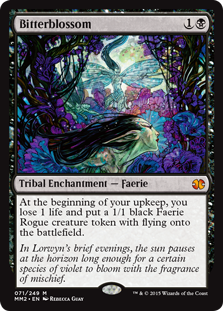
1 Bitterblossom
1 Chains of Mephistopheles
1 Choke
1 Contamination
1 Dictate of Erebos
1 Grave Pact
1 Survival of the Fittest
1 Sylvan Library

Lands

1 Bayou
1 Bazaar of Baghdad
1 Bloodstained Mire
1 Blooming Marsh
1 Bojuka Bog
1 City of Brass
1 Command Tower
1 Crypt of Agadeem
1 Dakmor Salvage
1 Dust Bowl
2 Forest
1 Glacial Chasm
1 Golgari Rot Farm
1 High Market
1 Hissing Quagmire
1 Khalni Garden
1 Llanowar Wastes
1 Mana Confluence
1 Marsh Flats
1 Misty Rainforest
1 Overgrown Tomb
1 Phyrexian Tower
1 Polluted Delta
1 Strip Mine
2 Swamp
1 Tainted Wood
1 Temple of Malady
1 Twilight Mire
1 Urborg, Tomb of Yawgmoth
1 Verdant Catacombs
1 Wasteland
1 Windswept Heath
1 Wooded Foothills
1 Woodland Cemetery

My creature dies, then so does yours. Wash, rinse, repeat.

This deck is pretty much all about punishing your opponents creatures using your kamikazee crits that will still return to play or your hand via Meren, of Clan Nel Toth. Seeing Grave Pact and Dictate of Erebos beside each other is a scary sight to behold, and it seems that we will be seeing more of this tag team in the future.

The Other Dictates

I like the chances that cards built around the same concept, ala Leylines and Commands, would see some financial gains in the future. From this batch, I think Dictate of Kruphix or Dictate of Karametra could be next in line, but it won't be as high as this spike from Dictate of Erebos. But then again, Magic has proven that we could always be wrong about any card.

At the moment, online stores such as Star City Games, TCGPlayer, Channel Fireball, and Card Kingdom have copies listed at $5.98 up to $6.99. If you're not particularly choosy with your collection, you could grab Japanese versions via TCGPlayer for $3.79 while supplies last. I think that this upward trend will continue for a while, so it might be best to grab your copies now for $5 or less if that's possible. I won't be surprised if this card hits $10 in the coming months, so get yours now while the supplies are high. Journey into Nyx wasn't really a popular set, so the demand might be higher in the long run. I'd stay away from foils from now, but you should be fine if you could get them for $8-$10.

And that’s it for the Monday edition of the Daily Stock Watch! See you again tomorrow, as we check out a new card that should be on the go, or good enough for speculating. As always, feel free to share your opinion in the comments section below. And if you want to keep up with all the market movement, be sure to check in with the QS Discord Channel for real time market information, and stay ahead of the hottest specs!

Insider: Be Nimble in This Unstable Market

Are you a Quiet Speculation member?

If not, now is a perfect time to join up! Our powerful tools, breaking-news analysis, and exclusive Discord channel will make sure you stay up to date and ahead of the curve.

It took nearly twenty years, but at last the Un-block is completed. This past weekend, players got to experience the third joke set in Magic, Unstable. Judging by players’ reactions on Twitter, it seems that overall the set was a success. Granted, there will always be the dissenters who will complain on Twitter no matter what Wizards does. Ignoring that vocal minority, I’m feeling pretty good about where Unstable will fall when it comes to sales.

But of course, this is an MTG finance website. What readers here care about isn’t how fun the set is or how many laughs they enjoyed during their local prerelease. Instead, they want to know how to make and save money. When you look back at past Un-sets—especially Unhinged, which had some very exciting foils—you can readily see the financial relevance to Unstable. But can every card be purchased aggressively right now with the expectation of profits? Absolutely not.

This week I’ll review some Unstable data and make some predictions about the trajectory of these wacky, fun cards.

Looking at What’s Hot

Right out of the gate there is one overwhelmingly powerful trend: foils are hot, nonfoils are not. According to TCGplayer, the best-selling cards over the past few days are the basic lands ($2 - $3.50), the foil tokens ($0.20-$0.70), and Very Cryptic Command ($1.50). Not surprisingly, the most valuable cards in the set don’t even crack $10, with Urza, Academy Headmaster topping the list at around $8.

Does that mean the EV of the set is absolutely horrendous? Not necessarily. For one, almost every pack should contain a basic land. It’s not often you are guaranteed to pull a $1-$2 card in almost every pack, and this will eat up some of the total value of the set. If you subtract that out of the price of a pack, you really are paying only 50-75% of a normal booster pack’s price since you can liquidate the basic land very easily. After all, they are quite beautiful.

But the real excitement with this set comes in with the foils. When I look at the top-selling cards on TCGplayer and filter down to the foil prices, the values are far more exciting. Basic lands range from $40-$80, for example. Very Cryptic Command is fetching close to $30. And no one can overlook the fact that foil Urza, Academy Headmaster is going for $80!

Open one of those and your box is covered. Open a different random foil, and you still have a shot at outing it for money. These will be highly sought-after due to the allure of silver-bordered foils.

So Just Buy All the Foils Then?

When looking back to Unhinged prices, it’s easy to see how alluring the foils are and the resulting impact on their value in the secondary market. Foil basics from that set still fetch a pretty penny, and other random cards in the set with a cult following also demand a huge premium in foil.

I’ll always be amazed at Richard Garfield, Ph.D.’s foil pricing ($200 retail, if you can find one). Johnny, Combo Player and Mox Lotus also demand huge foil premiums. And who could forget collector favorite Little Girl, which has a nonfoil retail value of $0.25 and a foil value of $25. That’s a 100x foil multiplier!

There was an error retrieving a chart for Mox Lotus

So with this data in hand, and the hype Unstable foils are receiving at launch, one may come to the conclusion that buying all popular Unstable foils is the right play. It very well may be the correct choice, but I don’t think it is on day one. Just like with any set, there’s an artificial scarcity that is driving up prices on all Unstable cards—even the foils. And while it may be easy to panic-buy a few cards thinking more copies will not hit the market, I can assure you these prices will drop in time.

With previous Un-sets, there was a ton of hype at launch. But this was quickly squelched by subsequent set releases. The appetite the MTG world has for non-tournament-legal cards is very limited. While it’s cute that these cards are playable in Commander for another month or so, there will come a time when these foil cards will be largely forgotten. That’s when you’ll have an opportunity to buy the foils you’re looking for at a better price.

Take foil Urza, Academy Headmaster for example. It’s obvious this card is going to remain one of the chase cards of the set. It is wacky, but balanced sufficiently to play in cubes and whatnot. The TCGplayer market price on foils is around $110 (meaning recent copies had sold for around that much). But in the meantime, copies are readily available for $82. That indicates to me that the price has already pulled back 25% in the couple days the set has been available. That’s a steep decline!

For something like foil Very Cryptic Commands, there are some versions that haven’t even sold yet on TCGplayer. The copies listed are deemed too expensive by the broader market. It will take time for the bid/ask spread to close on these cards so that we can get a true read on what these should be valued at. Until then, any foils you chase will be purchased “at your own risk.”

(Click to expand.)

I can almost guarantee most of these foils will drop at least some amount in the coming weeks. If the set is as popular as it seems, there will be plenty of product opened in the near future.

Is there Anything Worth Watching?

Just because I rain on the preorder parade every year doesn’t mean I find the set financially uninteresting. As prices come down, there will be plenty that is worth keeping an eye on. With some of the Unhinged foils, the prices weren’t always as high as they are today. There’s plenty of potential profit to be made here. And unlike with other new sets, you have fairly high assurance here that these Unstable cards won’t be reprinted any time soon. This is as close to new “Reserved List” cards as you’re going to get!

So what is worth targeting? With Unhinged, the most iconic cards and most playable cube cards seemed to do the best. Cheatyface was a fun, balanced uncommon that caught the attention of casual collectors as well. As a result, the foil and nonfoil demand a healthy premium relative to the average uncommon. Mox Lotus, Gleemax, and Super Secret Tech carried a “coolness” premium due to their unique abilities and/or special rarity. These are the kinds of cards we should look to buy when pricing bottoms in the next couple of months.

There was an error retrieving a chart for Gleemax

So far, it definitely looks like Very Cryptic Command foils will merit “iconic” status, and should demand a significant premium. The card this spoofs, Cryptic Command, has been a format staple since it was originally printed in Lorwyn. The silliness factor of there being many versions of the card makes this especially interesting: it’s cube-playable and highly collectible. People are going to want one foil of each. Expect these foils to remain hot. Copies are listed on eBay for between $60 and $175 as of now. Hold off and wait for these to come down significantly before making a purchase.

Baron Von Count foils will also likely maintain some value over time. Besides being a mythic rare (something that didn’t exist when Unhinged launched), it’s ability seems both fun and powerful. Casual players love alternate win conditions, and besides The Cheese Stands Alone, this may be one of the wackiest win conditions ever printed. The fact that the rules text states “destroy target player” rather than “target player loses the game” adds another layer of fun. I wonder if there will ever be a card that regenerates a player?

These are currently listed on eBay in the $14 range, and really that’s not a terrible price. I don’t know how low this one will get, but it seems like a price below $10 is quite attractive if you’re after a copy.

Then we have Spike, Tournament Grinder, which rounds out the set of three player psychographics: Timmy, Johnny, and Spike. Timmy, Power Gamer from Unglued has been on the rise lately, but does not exist in foil. Foil Johnny, Combo Player has blown up lately and now the only foils on TCGplayer are listed at $100.

There was an error retrieving a chart for Johnny, Combo Player

With the collectability of these cards, I expect Spike, Tournament Grinder foils to be one of the most valuable foils in the set. But don’t buy any just yet. New copies are listed daily, and the cheapest TCGplayer copy is already down to $24. I don’t have data going back to Unhinged’s release, but foil Johnny, Combo Player was worth around $20 steadily from 2013 to today. It was only recently that the card popped.

I suspect you’ll have ample opportunity to acquire foil Spike, Tournament Grinders for under $20. It may take a while for them to bounce, but I can see these climbing higher over the years…especially if Wizards ever prints a fourth Un-set!

Of course foil Urza, Academy Headmaster will remain extremely popular because it’s the only Un-planeswalker. Watch these closely before pulling the trigger. Then there are the cute/collectible cards that may be a little less noteworthy on day one. The four seasons of Extremely Slow Zombie create a very flavorful and collectible set of cards. These foils may demand a premium someday—especially the winter one. That Santa hat…

Adorable Kitten is also on my radar. Could this be the foil Little Girl of Unstable? It’s too early to tell. But I’ve already seen a tweet about someone collecting these, so it certainly seems plausible. I’m tempted to pick up a few foils of these at $0.25-$0.50 to sit on for a few years just to see what happens.

Wrapping It Up

The MTG twitterverse is swept away by Unstable’s release. Thus far, I’d consider the set a huge success. And with previous Un-sets, this means there are some very interesting financial opportunities. But it may be a bit too early. I’d suggest waiting a bit to see where prices stabilize before picking up copies for speculation or collecting.

Personally, I’m not going to purchase any singles this month. I have a box coming that I plan on opening with friends around New Years, and I’ll see what catches my fancy then. I’ll probably pick up a couple foils I mentioned in this article, but all in good time. Don’t forget we’re approaching a slow period for MTG finance, and there may be plenty of opportunities for some deals throughout December and January. Patience will be your friend this time of year.

Until then, I hope everyone has an Un-Happy Holiday! (Wait, that doesn’t really work, does it?)

…

Sigbits

  • Timmy, Power Gamer seems to be the most recent Un-card to jump in price lately. Star City Games has a price tag of just $2.99 for the card, but market price is probably twice that. I expect when they restock this card, they’ll need to increase the price. It is interesting, though, to see the slow responsiveness major vendors have had to the spike in Unglued and Unhinged. Perhaps they are still feeling out the market to see if higher prices stick.
  • First it was Nicol Bolas, and now Chromium from Legends has become a bit more expensive than it was a couple months ago. Star City Games is completely sold out of the card at $19.99, and I think another $5-$10 bump in price is probably going to be necessary for them to keep any copies in stock.
  • Since I started working on an all-Alpha deck to give myself another project in Old School, I decided to look into acquiring some Alpha Hypnotic Specters. They’re only uncommons, how expensive could they be? Very! The cheapest copies I can find are still over $100 even in played condition. Don’t be fooled by Star City’s $149.99 price tag, chances are that Near Mint copies will fetch a higher dollar amount and SCG will have to adjust their price accordingly…if they ever get any in stock!

Deck of the Week: As Foretold Living End

Are you a Quiet Speculation member?

If not, now is a perfect time to join up! Our powerful tools, breaking-news analysis, and exclusive Discord channel will make sure you stay up to date and ahead of the curve.

Hello, Nexites, and welcome to a new edition of Deck of the Week. I must admit that MTGO player 1310HaZzZaRd has been one of my favorite deck brewers, and he was at his best again last week. The deck we're looking at today is a radical new look for Living End, hybridized with an As Foretold control shell. 1310HaZzZaRd steered this list to 5-0 finishes in two separate Competitive Leagues.

Living End has been around for a while, and any Modern regular is familiar with its wonky, strange—and extremely inflexible—strategy. It has spent much of its time in fringe Tier 2/3 territory, appearing now and again to take on an unprepared metagame. Could this shift to a combo-control shell be what the archetype needed to push it over the top?

Living End, by 1310HaZzZaRd (5-0, Competitive League)

Creatures

3 Architects of Will
4 Curator of Mysteries
1 Drift of Phantasms
3 Street Wraith
4 Striped Riverwinder

Instants

3 Cryptic Command
2 Disallow
3 Mana Leak
4 Remand

Sorceries

4 Living End
4 Ancestral Vision

Enchantments

4 As Foretold

Lands

4 Field of Ruin
1 Ghost Quarter
12 Island
4 Tolaria West

Sideboard

3 Dismember
2 Hurkyl's Recall
4 Leyline of Sanctity
4 Leyline of the Void
2 Nimble Obstructionist

Although this list looks entirely different from the conventional build, the deck still follows the same concept. It tries to fill its graveyard early with cycling creatures, then resolve a Living End for a one-sided wrath effect and a board of creatures that represent lethal damage on your next turn. This is easier said than done, as decks that pack hand disruption and/or countermagic such as Grixis Shadow and Jeskai are prominent in the format. This is where As Foretold does its magic, as it allows you to go off with Living End on the same turn that it enters play.

This list is mono-blue for a reason, as it is stacked with 12 counter spells which are all vital in helping you to protect your hand until you can resolve As Foretold. It is the only means for you to cast Living End, so making sure that it enters play is of utmost importance. Not all of your creatures are castable with your manabase, so make sure that you prioritize cycling the ones that you can't cast such as Street Wraith and Architects of Will. The rest of the creatures are pretty much vanilla, and the absence of removal could make you vulnerable to aggression if you don't get to power out Living End in time.

The deck's sideboard might come across as weird, as the 8 Leylines are completely dead draws outside of the opening hand. Both Leyline of Sanctity and Leyline of the Void can shut down some decks as soon as they hit play, but it is a risky predicament considering that you'll have to draw them on your opening hand for them to be of any use at all. The rest of the sideboard consists of more disruption and removal. The exact choices here are something that could be tinkered with once you've grown accustomed to the deck.

With the element of unpredictability as your main weapon, this list could help you take down tournaments once you've mastered the correct hands to keep. Modern will continue to be a wide-open format until Pro Tour Rivals of Ixalan, so trying this out might be a good idea after all. Just make sure that you test it against as many decks as possible!

So that’s it for this edition of “Deck of the Week.” Stay posted for our next feature next week. Until then, happy shuffling and thanks for reading!

Unstable, FTV, and More – Today with Jake and Joel

Are you a Quiet Speculation member?

If not, now is a perfect time to join up! Our powerful tools, breaking-news analysis, and exclusive Discord channel will make sure you stay up to date and ahead of the curve.

Great MTG Holiday Gift Ideas

Are you a Quiet Speculation member?

If not, now is a perfect time to join up! Our powerful tools, breaking-news analysis, and exclusive Discord channel will make sure you stay up to date and ahead of the curve.

Looking for some great Magic: The Gathering related holiday gift ideas? Well, you've come to the right place because I've got a handful that I think are pretty neat. Spoiler alert, if you are a personal friend of mine that is likely to exchange holiday gifts with me, there is a chance you could be getting something from this article—you've been warned.

Magic-related stuff can be a weird place for trying to buy gifts. It feels pretty lame to give somebody single cards. Happy Holidays! Here's a Sword of Fire and Ice for your Commander deck.

I suppose you've got to know your audience when it comes to singles for presents. If it is a card that somebody really, really wants and they are going to keep it forever and use it a lot, it's a great gift idea. On the other hand, if your friend or loved one jumps from deck to deck and sells their cards often, it feels kind of weird to buy them rotating-door cards. It's almost like giving them cash and saying, "Buy what you want." Honestly, its hard to go wrong with giving cash but the upside is pretty low. It often comes off like you couldn't be bothered to find a more personal gift for a close friend or loved one.

I'm not saying that singles are off the table in terms of being a good gift. However, it's got to be a special single that they actually want and are likely to want to own for a long time. A really cool foil. An old card for a deck or a cube. Something like that.

5. Special Singles

There are a lot of people where this will be the best option. They collect and they know what they like and an Arabian Nights Old Man of the Sea is exactly what they need for their Battle Box. It'll get use. It's cool.

4. Commander Deck

I've had pretty good success with giving Commander decks as holiday gifts. It works out particularly well if there are multiple Magic players at your Christmas party. You can knock out several gifts by buying multiple people pre-constructed Commander decks. Maybe you even buy one for yourself and bring it to the gathering in case some multiplayer Commander breaks out later in the evening... Battling multi-player with the pre-cons is a pretty awesome way to pass some time in the evening with the eggnog and snacks.

It's also a great way to bring a new player into the fold. You can buy a couple of precons for more established players and a couple for younger kids who are just getting into the game, or are beginners, and that is a great way to incorporate some newer players and game on an even playing field.

I've done this a couple of times and it has always gone over really well.

3. Other Table-Top Games

Not completely in the Magic vein but there is a nice tie in. Good games are always a solid place to look for a gift. I give a lot of game-related gifts and they always go over well. It helps that they provide an activity for everybody to do at the party just in case things get a little boring or dry.

I'm a huge fan of Love Letter because it can be taught to anyone in the room. Gamers love the game—but it is straightforward enough that anybody can play.

I'm also a big fan of Code Names (a gift that has become a holiday tradition in my family) and Roll for It!

These kinds of games are also great for Magic players because they are a useful activity that players can take to do in between rounds at a tournament.

2. Playmats (Preferably Altered)

I've always felt like the best gifts are things that people want but really don't feel like spending their own money on. Things that people can live without but are really appreciated once acquired. Luxury items.

Playmats fit that category. A really cool playmat featuring artwork you know a friend will appreciate is pretty great. There are also playmats that cover an entire tabletop that are pretty sweet for an individual who tends to host drafts or cube events at their home. These are kind of pricey, but workable on a gift budget, and are a solid gift.

Keep in mind that having a custom alter or commission done is a super boss move for a gift.

More so than simply giving a friend singles, I'm a big fan of having a card altered. I'd be more likely to give someone a sick custom altered Sword of Fire and Ice than just a regular one. It feels more like a gift and less like cash.

1. Custom Deckbox

In my opinion this is the coolest idea on the list. There are several individuals in the community who make some truly sick deckboxes. I don't want to recommend anybody specifically, but do some Google searches and see what comes up.

You can get a box customized in ways that you probably didn't even think possible! Size, material, color, patterns, designs, images, the list goes on and on.

It's a really cool gift idea for somebody who has a few decks or projects that are really important to them. For instance, you might get somebody a really awesome custom box to hold their Cube, Battle Box, or even Commander deck that is tailored toward their specific preferences.

I'd say that if you're looking for a slam-dunk gift idea for a die-hard Magic player, it would be hard to go wrong with a really neat custom deckbox in the style a friend would really dig.

~

Do any of you out there have amazing Magic-related holiday gift ideas? I'd love to hear them, so be sure to drop them in the comments. Happy Capitalism Season, everyone, and good luck finding gifts your friends and family will enjoy!

Daily Stock Watch: As Foretold

Are you a Quiet Speculation member?

If not, now is a perfect time to join up! Our powerful tools, breaking-news analysis, and exclusive Discord channel will make sure you stay up to date and ahead of the curve.

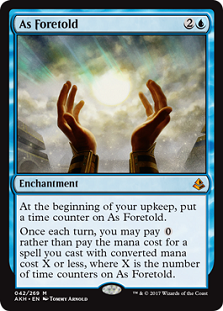
Hello, everyone and welcome to the Friday edition of the Daily Stock Watch! I won't be able to do an Unstable feature for today, but we'll see if we could squeeze one in some time in the future. For the meantime, I'd like to talk about a card that I think, some of us were very high on back in the day, but ended up being a disappointed by how it fared after a while. It's still in Standard, so it should be a familiar card to most of us.

There was an error retrieving a chart for As Foretold

Free spells after casting this on turn three? That's broken! Nah.. That's what most of us thought, anyway. I'm guilty of the fact that I was also enticed by the idea of hoarding this card, especially the foil ones. Talks in reddit somehow influenced me to think that this card has the potential to be a breakout card in the future, given the right brew. You could cast cards with suspend by as early as turn three, and have free instant spells on your opponent's turns, once it gets going.

But no one was actually able to "break" the card. Well, not now, at least. I still believe, though, that there's hope.

Living End by 1310HaZzZaRd

Creatures

3 Architects of Will
4 Curator of Mysteries
4 Street Wraith
4 Striped Riverwinder

Instants and Sorceries

4 Ancestral Vision
3 Cryptic Command
2 Disallow
4 Living End
3 Mana Leak
4 Remand

Other Spells

4 As Foretold

Lands

4 Field of Ruin
1 Ghost Quarter
12 Island
4 Tolaria West

Sideboard

3 Dismember
2 Dispel
2 Hurkyl's Recall
4 Leyline of Sanctity
4 Leyline of the Void

This was one of the dream scenarios of where this card would fit in perfectly; a deck where a turn three As Foretold could have a wrath-effect to your opponents and give you some creatures, or a slightly better version of Divination to set you up for the coming turns. It was actually an idea that was born almost nine months ago, but never came into fruition. One of my favorite online players by the name of 1310HaZzZaRd, made it a reality, and actually went 5-0 in an MTGO Competitive Modern League using this deck. It's not as big as a tourney where Sam Black steered his Whir of Invention-powered Lantern Control to the top, but Collins Mullen came out of nowhere to win SCG Open Cincinnati with his own take of the Humans deck. Maybe a few more wins, and we could actually be on to something with As Foretold.

Suspend Toys in Modern

These are the cards that are basically "free" to cast on the turn that As Foretold enters play, with the exception of the much-maligned (and banned) Hypergenesis. These cards have been around, and no one was really able to create a deck that would fit these pieces to take advantage of As Foretold's abilities. I don't see the same thing happening in the near future, but this rendition of Living End might be the start of something beautiful.

As of today, there was some positive movement in the market for this card, as it almost hit the $4 mark again. There should be plenty of stocks everywhere, as I have already checked out the usual suspects such as Star City Games, TCGPlayer, Card Kingdom, and Channel Fireball. I'm not going to ask you to buy in again, as some of us have already been torched by its early appeal. However, I think that you shouldn't bail out on this card as soon as it hits $5. I have this feeling that some card in the future will set this off and make it broken like what some of us initially thought it is. Just hang on a little longer, and keep the faith!

And that’s it for this week's edition of the Daily Stock Watch! See you again next week, as we check out a new card that should be on the go, or good enough for speculating. As always, feel free to share your opinion in the comments section below. And if you want to keep up with all the market movement, be sure to check in with the QS Discord Channel for real time market information, and stay ahead of the hottest specs!

Colorless Eldrazi Stompy Mini-Primer: Mulligans

Are you a Quiet Speculation member?

If not, now is a perfect time to join up! Our powerful tools, breaking-news analysis, and exclusive Discord channel will make sure you stay up to date and ahead of the curve.

I've written that the average Magic player is too afraid of taking mulligans. That goes double for Modern, where card advantage matters less than in other formats, and triple for Colorless Eldrazi Stompy, which is built to mulligan aggressively into lean, powerful openers. Whether it's because of my own results with the deck, the attention it's gotten from other players, or the fact that it runs a set of Serum Powder, that deck has resonated impressively among the Moderners I interact with online and locally.

My default encouragement to Colorless Eldrazi Stompy newcomers of "reps, reps, reps" sufficed for a while, but I think the time has come to publish some more specific playing theory. Today, we'll take a close look at the deck's most integral and challenging aspect: mulligans.

For reference, here's my current list, which we'll be working from in this article:

Colorless Eldrazi Stompy, by Jordan Boisvert

Creatures

4 Eldrazi Mimic
4 Eternal Scourge
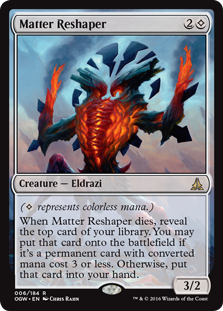
2 Matter Reshaper
2 Endless One
4 Thought-Knot Seer
4 Reality Smasher
4 Simian Spirit Guide

Artifacts

4 Serum Powder
4 Chalice of the Void
1 Smuggler's Copter

Instants

4 Dismember

Lands

4 Eldrazi Temple
3 Gemstone Caverns
4 Ghost Quarter
4 Blinkmoth Nexus
2 Mutavault
2 Sea Gate Wreckage
2 Scavenger Grounds
2 Wastes

Sideboard

4 Relic of Progenitus
1 Surgical Extraction
3 Ratchet Bomb
1 Pithing Needle
1 Grafdigger's Cage
3 Spatial Contortion
1 Gut Shot
1 All is Dust

What to Look For

I measure my openers on three metrics: free-win dimensions, curving possibilities, and effect variety. The one I value most varies by opener or opponent.

As we explore these aspects in detail, it's crucial to remember that the pressure on our openers to embody them lightens as we mulligan lower and lower. While this tip seems intuitive in writing, it's easy to neglect during a match, and the ensuing hands can spell a loss.

"Free Wins"

Freedom isn't free, as I've heard in many a rousing song of late. And neither are "free wins," hence the scare quotes. But they're close—hence this section at all. Colorless Eldrazi Stompy boasts a few cards that will put it deeply ahead in certain matchups.
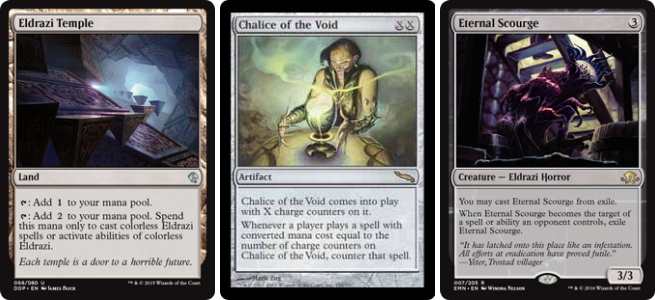

Any seven-card hand without a free win dimension should be mulliganed. The same goes for many six-carders. We do start cutting corners at six, but those hands must check off other requirements (covered in the following sections). That makes "free wins" the most important factor to consider when mulliganing with this deck. Here's a breakdown of our free-win cards:

  • Eldrazi Temple: A functional zero-mana Time Walk. Temple lets us play a turn ahead of our opponents and is our most universal free-win card.
  • Chalice of the Void: Beats one-drop-centric decks (and zero-drop-centric ones post-board, like Affinity, Cheeri0s, and Living End). Also cuts out most pre-sideboard interaction from fair decks (Bolt; Push; Path) and greasing engines generally (Noble Hierarch; Serum Visions). Chalice provides more blowout victories than any of our other cards, especially in conjunction with Simian Spirit Guide.
  • Eternal Scourge: Beats removal-heavy decks by letting us "go Dredge" with a recursive threat. Most fair opponents are forced to race us to defeat Scourge, a plan complicated by our manlands, fatties, and removal. Exiling Scourge to Serum Powder means we begin the game with it for free, which makes finding the bugger quite easy and greatly reduces pressure on our subsequent mulligans.

Free-win cards also allow us to mulligan down to four or even three. A hand of four single-tap lands isn't likely to beat anyone, for instance; I would ship that in a heartbeat. There's still a chance our three yields two Temples and a Thought-Knot Seer; or land, Guide, and Chalice; or two lands and Eternal Scourge. And there's a chance those cards beat our opponents single-handedly.

A Reasonable Curve

Colorless Eldrazi Stompy goes to great lengths to ensure graceful curves occur frequently, and in spite of aggressive mulligans.
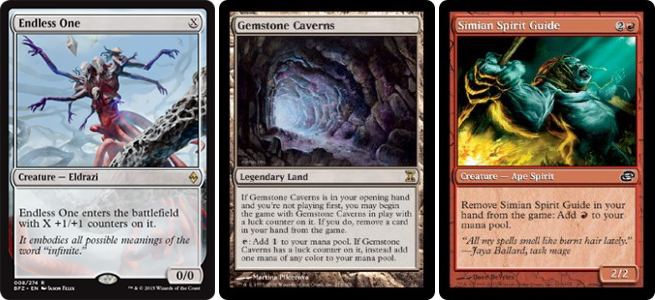

Hands with full-mana plays on the first, second, and third turns of the game should always be kept. These hands involve either Eldrazi Temple and Mimic/Endless One; Gemstone Caverns/Simian Spirit Guide with Chalice/Mimic or Temple and three-drops; or Dismember and Chalice/Mimic. A 1/1 Endless One is not an acceptable turn-one play, and neither is using Guide to accelerate into anything besides Chalice or a three-drop. But everything else goes. Endless One is particularly useful for plugging holes in clunky curves by costing what we need it to for a decent return on our investment.

Given Modern's tempo-centric nature, its fair decks are all about curving. The primary reason for Eldrazi's sustained success here is the archetype's increased ability to curve out admirably thanks to its namesake land. Thanks also to the efficiency of our threats and interaction, curving out properly in Colorless Eldrazi Stompy regularly paves a path to victory.

The Spice of Life

In other words, variety. Some openers are keepable by virtue of their heterogeneity. Look specifically for diverse forms of interaction when sitting down to a match in the dark.
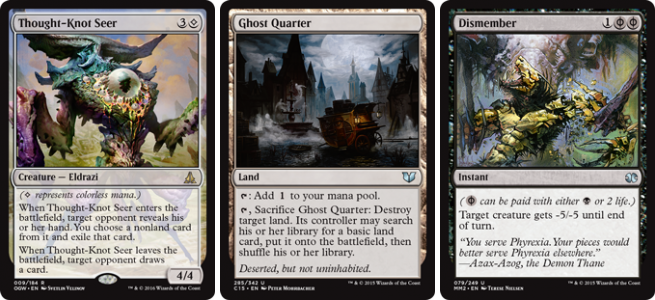
Know the value of your cards in different matchups. Eldrazi Mimic and Thought-Knot Seer shine against noninteractive decks of all flavors; Matter Reshaper and Eternal Scourge hassle removal-heavy decks; Smuggler's Copter and Blinkmoth Nexus fly over board stalls; Chalice of the Void hoses aggro-combo and low-curve decks generally; Dismember ensures you don't fold to Baral, Chief of Compliance or Blighted Agent; Ghost Quarter provides some insurance for big mana.

Hands featuring multiple avenues of coverage can excuse a truant Eldrazi Temple so long as they curve well, or a wonky curve so long as they contain a free-win dimension.

Take this seven:
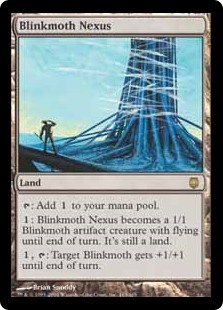
Blinkmoth Nexus, Ghost Quarter, Dismember, Eldrazi Mimic, Simian Spirit Guide, Chalice of the Void, Eternal Scourge

This hand free-wins against one-drop decks and removal with Chalice and Scourge, respectively; pressures big mana with Mimic and Quarter; and keeps pesky one-drops off the table. Mimic puts opponents on the back foot, and therefore combines with Chalice to buy us the time needed to make some land drops. The hand lacks Eldrazi Temple and a built-in way to cast even Eternal Scourge, and we're likely to lose a mana to our awkward curve if we cast Dismember. But I'd keep this seven blind because it interacts efficiently with many possible opponents.

What to Send Away

So we know what to look for. But what should we look to avoid? Of course there's a lot of overlap here, so I'll keep this section brief.

Lackluster Sevens and Sixes

Lands and three-drops? Yawn. One threat and some removal? No thanks! We've got four Serum Powders in the deck, so our mulligans tend to be pretty great. Any six- or seven-card hand that doesn't wow us should be mulliganed, regardless of how many Powders we've got left—if we've used some, that's a bunch of non-Temple cards out of the deck already; if not, we're likelier to hit them and dig into those Temples.

Hands Light on Plays
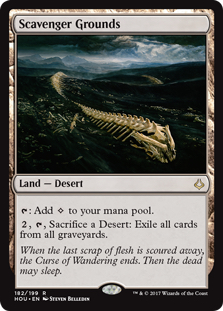
In the dark and on the play, the only seven-card one-landers I'd keep with this deck have Eldrazi Temple and a turn one Chalice. On six, I'd also keep one land with Temple and Eldrazi Mimic, as long as it also has three-drops or Dismember. Sevens with only Temple and no turn-one Chalice are excusable only on the draw, and only if they feature Mimic, Thought-Knot Seer, and Simian Spirit Guide.

The purpose of these examples: to illustrate how crucial it is to act during Modern games. This deck does not ever want to durdle pre-board.

Hands that don't feature more than a couple plays before any draw steps occur ride up the sliding scale of playability depending on the potency of their free-win dimensions. For instance, a six of two Guides, Scourge, Temple, Thought-Knot, and Chalice assures a fine mid-game should land arrive in a turn or two; replace Reshaper with a third Guide, and it now has Chalice into Thought-Knot built-in at the cost of robustness—no way does this new hand beat Terminate, but no way does it lose to Grixis Shadow, either. The first hand could go either way.

Since different cards provide free wins against different decks, accurate metagame prediction helps settle on these risky hands. Taking this idea a step further, deducing with some precision which decks are likelier to stay live deeper into a tournament may change how you interact with the same opener over multiple rounds.

Mastering Serum Powder
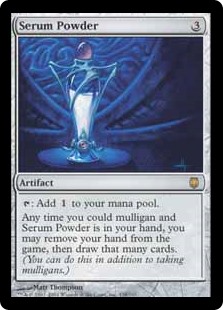
Serum Powder is the single best card we can see in our opener. A good hand with Powder is a good hand—even if it has Powder! And a bad hand with Powder is a free shot at a good hand. Considering the requirements we have of our openers, milking those re-rolls makes an enormous difference over the course of an event.

As an example of how not to use Serum Powder, take the first game of Corbin Hosler's Mining Modern feature on the deck. The first 20 seconds see him Powder away an easy keep and then keep an easy mull; that first hand contained two free-win dimensions and a reasonable curve in spite of two dead Powders, while the second had only Scourge and was way too slow for comfort. In this section, we'll take a look at why those decisions are wrong.

Primary Objective: Locating Eldrazi Temple
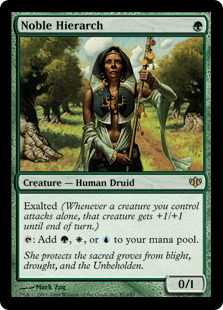
Eldrazi Temple is the reason we play Serum Powder. The artifact's primary goal is to find this land. Since the Eye of Ugin ban, each of Modern's Eldrazi decks has featured a non-Temple way to cheat on mana: Bant employs Noble Hierarch; Taxes uses Aether Vial; Tron has, well, Tron. And colorless Eldrazi Stompy has Serum Powder, a card that helps us aggressively mulligan into our sol land.

Almost every hand with Serum Powder that lacks Eldrazi Temple should be Powdered. The only exception: hands with turn-one Chalice and a good curve or effect variety (i.e. Chalice, Guide, Quarter, Mutavault, Dismember, Mimic, Powder).

"There Is No Powder"
Back to that good hand with Powder. How "good" should it be? After all, we certainly don't want to keep a lackluster hand with Powder. And having Powder in a keepable hand instead of pretty much any other card does dumb it down.

I follow a simple rule to analyze Powder-featuring openers: pretend there is no Powder. You know, like that kid in The Matrix. If a seven-card hand with one Powder is a passable six-card hand without it, keep the hand. The same goes for six- and five-card hands. This rule does a 180 for hands of four or smaller—we're likely to Powder these away no matter what, as most fours are significantly better than three and so on.

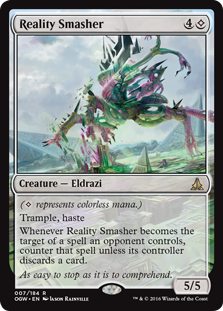
Things change a little for hands featuring two Powders. These hands put extra pressure on the remaining cards. Take Corbin's opener of two Powders, Chalice, Smasher, Thought-Knot, Temple, and Quarter, which minus the Powders becomes a five of Chalice, Smasher, Thought-Knot, Temple, Quarter. This five isn't just keepable, it's better than most sixes; besides, Powdering it away means one less Eldrazi Temple in the deck, and so overall worse openers down the road. So I like keeping. But replace Thought-Knot or Chalice with a second Smasher, and the hand gets significantly worse; I would indeed Powder it away in that case.

Notably, it's never correct to mulligan a hand with Serum Powder. Even one with three Eldrazi Temples. That hand is either a keep (on, say, four cards) or a Powder (on 5+ if it has no real business). As a rule of thumb, don't worry about losing certain cards in the deck to Powder; just focus on finding competent openers. Eldrazi Temple is the only completely non-interchangable card in the deck, so this rule applies just partially to that land; factor into your decision that your next opener is somewhat less likely to feature it.

Accounting for Scourge and Caverns
Powdering away a hand with Eternal Scourge is one of this deck's sublime joys. We can cast the Scourge from exile, so doing so provides us with a functional "mulligan to eight."

Every hand with Powder and Scourge that lacks Eldrazi Temple should be Powdered. That extends to hands with Guide and Chalice, and only changes in a post-board scenario. Since Temple and Scourge together provide two free win dimensions, we tend to keep hands with both, even if they have Powder. Having just Temple as a land and having just Scourge as a non-mana card are the only two reasons to Powder them away.

On the draw, Gemstone Caverns also interacts with Serum Powder. Taking a new hand here can seem appealing since Caverns is legendary, so it's nice to get extra copies out of the deck. But it's also nice to start the game on the play, which Caverns allows and is here for in the first place. Since we can exile the useless Powder to Caverns, we usually keep these hands.

Things change if we open more than one dead card; say, two Gemstone Caverns or Serum Powders, or an Eternal Scourge. Now, we have multiple cards to exile for Gemstone. In these cases, we often just Powder.

Extra Effects

Even if that's its primary goal, Powder doesn't just offer us extra mulligans. The card does have some in-game uses.
  • Ramping. Okay, here's the obvious one. In lieu of a Temple, turn three Powder lets us cast turn four Reality Smasher. And on four lands and a Temple, we can cast Powder and then play a three-drop. This play might not seem like much, but dumping our hand onto the table in the form of extra mana plays nicely with our utility lands, specifically Sea Gate Wreckage.
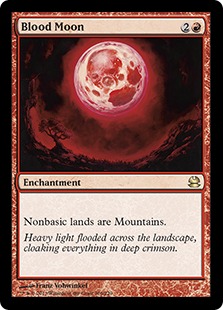
  • Tapping for colorless. Blood Moon is a great speed-bump for Eldrazi Tron and stops land-combo decks like Valakut and Amulet in their tracks. So it's no wonder the decks that can pack it---well, mostly Storm---do so. But the card is hilariously bad against an Eldrazi deck with four Serum Powders to back up a set of Quarters and two Wastes. The extra mana source (bringing our mainboard count to 31) also doesn't hurt against Fulminator Mage and Stone Rain, both of which can handily mana-screw other Eldrazi decks.
  • Doing artifact things. Artifact things? Artifact things. Like baiting Abrade so we can stick Ratchet Bomb. Or discarding to Wrench Mind to save us from Shrieking Affliction. These cases may be rare, but they do come up.

You Always Were... The Perfect Hand

There you have it—a crash course on mulliganing with Colorless Eldrazi Stompy. Join me soon for a comprehensive guide to sideboarding with the deck, and you'll be well on your way to dominating your local game store and getting kicked from "competitive" online Modern rooms!

Read Part 2 of this article series, "Colorless Eldrazi Stompy Mini-Primer: Sideboarding," here.

Insider: Modern Trends and the Market

Are you a Quiet Speculation member?

If not, now is a perfect time to join up! Our powerful tools, breaking-news analysis, and exclusive Discord channel will make sure you stay up to date and ahead of the curve.

The modern RPTQ season is over, but Modern is still on the minds of many, especially with two Modern Grand Prix coming up this weekend, and the Modern Pro Tour in February quickly approaching. Ixalan had a significant impact on the metagame, which continues to evolve, and there are some decks on the upswing that could have some major market implications over the coming days and weeks.

There was an error retrieving a chart for Whir of Invention

Lantern control is quickly approaching tier-one status, with Whir of Invention-driven lists coming up big online, and last weekend Sam Black played it to a perfect record in the SCG Invitational, while Brian Braun-Duin played it the top eight of the Modern Classic. It seems inevitable that the deck will put up some big paper results, maybe as soon as this weekend, that will cause its cards to appreciate. Whir of Invention is a potential target, and foils seem like a great buy with little downside. Pyxis of Pandemonium could be a great buy as its current price barely over a quarter, with foils coming in at a $1.

There was an error retrieving a chart for Witchbane Orb

I'm especially interested in Witchbane Orb, which is now played main as a one-of, and has crossover appeal in Commander, Legacy, and Vintage. The foil price has been trending sharply upwards over the past two weeks, from $2 to $3.50, and could just keep humming along.

There was an error retrieving a chart for The Rack

Another deck that suddenly is seeing a lot of support is 8-Rack, which drew heads by placing three players into the top eight of the Modern Classic. It doesn't have a lot of online results, but momentum is on its side, and it's trending upwards, so a break out could be imminent. The top eight lists had a lot of tech that could good buys, including Blackmail, Funeral Charm, and Nezumi Shortfang, but money is with foil versions of the four-of staples, including Shrieking Affliction, which is still cheap at $3, The Rack, which only has one foil printing, and Smallpox, which has seen its original Time Spiral printing go up from $6 to $10 over the past month after falling from a high over $12, and alternative versions sitting still at $3.

The Black-Red Madness deck has been growing in popularity, which this week brought Call to the Netherworld from a couple dollars to over $10, a spike I called when I first mentioned the deck last month. My eyes are now on Goblin Lore, which is being adopted into lists online as a powerful discard outlet.

There was an error retrieving a chart for Goblin Lore

It's also seeing play as a four-of in Vengevine decks, and I could even see potential in Dredge. Its online price has spiked from bulk to 0.1 tix, while the paper price of 30 cents for the Tenth Edition version is starting to visibly move upwards. Its Starter 1999 and Portal Second Age price of around 60 cents seems destined for $1 and above, but I am most interested in its only foil version, from Tenth Edition, which at $4 seems like a steal, especially since it has a history of spiking to $7.

The player with the most online League 5-0 trophies did it with a Mardu Control deck, and it gained widespread attention after a player fought to the top eight of the online RPTQ with the deck. It's perfect for cutting through Five-Color Humans, which explains some of the success, but it seems like the real deal in the metagame, and there's a real likelihood for a breakout at a major paper event. The deck plays an assortment of all the familiar quality cards that other decks do, basically a Mardu-colored version of Jeskai Control or Jund Midrange, but Bedlam Reveler stands out as a card it uniquely uses and is liable to spike.

There was an error retrieving a chart for Bedlam Reveler

Its foil price had been in steady decline to an all-time low of $3.30, but last week it started trending upwards, to $3.43. It seems like now is a great time to buy-in to a card with immediate potential and a lot of long-term upside, because it only gets better with each new instant and sorcery printed.

There was an error retrieving a chart for Forked Bolt

Another card that the the Mardu deck uses that isn't found much elsewhere, and which has a similar price graph, is foil Forked Bolt. Its price had been in slow decline for years, but bottomed out just under $10 this summer and maintained that price until the end of October, when it started trending upwards to the nearly $10.50 where it now sits. It's a relatively old Modern card from a set that has historically demanded high prices, and it has Legacy crossover in Delver decks, so it seems like a solid and stable buy that due to the Mardu deck is no longer getting any cheaper.

Online there has been a very noticeable upsurge in pseudo-Splinter Twin decks that use Kiki-Jiki, Mirror Breaker to combo, in part due to Opt, and the deck could potentially fight its way back into the top-tier metagame picture. The trend would have led me to believe that Kiki-Jiki, Mirror Breaker was a clear buy, given that the price has moved down to under half of its previous high, but its printing in Iconic Masters has further exerted downward pressure, and is currently undercutting the price of previous versions by about 50 percent. There could be some room for that $6 price to grow towards the $10 to $12 we see for the others, but it would take the deck truly becoming a major part of the metagame for the price of any versions to grow above $12.

There was an error retrieving a chart for Harvest Pyre

A cool piece of tech that the decks are using as a one-of is Harvest Pyre, which is something like a do-it-yourself Terminate without needing black mana, and at 50 cents it seems like a nice buy for what could become a Modern staple.

–Adam

Daily Stock Watch: Mesmeric Orb

Are you a Quiet Speculation member?

If not, now is a perfect time to join up! Our powerful tools, breaking-news analysis, and exclusive Discord channel will make sure you stay up to date and ahead of the curve.

Hello, readers and welcome to the Thursday edition of the Daily Stock Watch! Unstable is coming, and it should be a fun weekend for those who would be drafting their boxes. I'm not sure if I could come up with a special edition for it tomorrow, so let's stick to our regular segment for today. Let's check out one of the biggest gainers for the past few weeks.

There was an error retrieving a chart for Mesmeric Orb

This card just hit its all-time high of $19.99 today (that's for normal copies) and it's out of stock everywhere. It's a pretty amazing price tag for a card that only saw action in a measly 0.1% of winning Modern decks for the year based on my Utility Checker. It's a no-show in competitive Legacy and Commander decks, so we could think of it as a second coming of Glimpse the Unthinkable(in a casual sense), but an artifact is easier to fit in most decks, particularly in the sideboard, than a two color sorcery spell.

But then again, why not put those two in one deck and see how it goes?

Esper Mill by Azeem Lyons

Creatures

4 Hedron Crab

Instants and Sorceries

4 Archive Trap
2 Crypt Incursion
2 Fatal Push
4 Path to Exile
3 Surgical Extraction
2 Trapmaker's Snare
3 Visions of Beyond
1 Breaking
1 Damnation
4 Glimpse the Unthinkable

Other Spells

3 Ensnaring Bridge
4 Mesmeric Orb
2 Fraying Sanity

Lands

2 Island
1 Plains
2 Swamp
2 Field of Ruin
4 Flooded Strand
1 Godless Shrine
1 Hallowed Fountain
4 Polluted Delta
2 Shelldock Isle
1 Watery Grave
1 Oboro, Palace in the Clouds

Sideboard

1 Pithing Needle
1 Detention Sphere
2 Blessed Alliance
2 Crypt Incursion
1 Ravenous Trap
1 Surgical Extraction
1 Ashiok, Nightmare Weaver
1 Collective Brutality
4 Fragmentize
1 Supreme Verdict

This beautiful mill deck isn't just your average casual delight; it finished in 14th place of SCG Classic Baltimore that was packed with the best decks that Modern has to offer. I'm not so sure how vital Mesmeric Orb was in this deck, seeing how loaded it was with mill spells, but it nicely fits the curve along with Hedron Crab and Fraying Sanity to set up its game plan in the succeeding turns.

But do you think that this exposure is enough to catapult its price to something north of $20? Chances are, it is.

Miller Time

Cards that mill libraries are known casual favorites in the short history of Magic, and the ones above are just some of them. It's a known fact to pros that decks of this kind will pop up every once in a while as a rogue variant, but the strategy is not poised to be that successful, especially in a format as diverse as Modern. I'm not saying that Azeem Lyons' finish was a fluke, but I think that it's more of a deck mastery success rather than a good metagame call. Either way, it was a very good finish for a deck that's not even in tier 3 territory.

I've scanned through big online stores such as Star City Games, TCGPlayer, Card Kingdom, and Channel Fireball, and they're all out of stock just like what I mentioned earlier. I don't think we'll see this in Masters 25, so it's safe to say that this could go up a little more up to the $25-$30 range ala Glimpse the Unthinkable, so buying or trading for copies of the card in the $15 range is fine. If you happen to have spare copies and people are willing to trade or buy them for $25 and up, I think that's also fine to do. Mirrodin is the only expansion where it was printed, so it could be missing in the next Masters set, but could still be part of a Duel Deck or some FTV that will be printed down the road. After all, some profit is better than no profit at all.

And that’s it for the Thursday edition of the Daily Stock Watch! See you again tomorrow, as we check out our last card for the week. As always, feel free to share your opinion in the comments section below. And if you want to keep up with all the market movement, be sure to check in with the QS Discord Channel for real time market information, and stay ahead of the hottest specs!

Careful Study: Determining the Fairness of Modern Decks

Are you a Quiet Speculation member?

If not, now is a perfect time to join up! Our powerful tools, breaking-news analysis, and exclusive Discord channel will make sure you stay up to date and ahead of the curve.

Fair and unfair can prove contentious terms when it comes to deck discussion, perhaps especially in Modern. This week, I’d like to expand upon some of the ways to categorize and define decks that I initially touched upon in my articles on how to tune a deck’s mainboard flex spots and sideboard to an open meta. In these articles, I differentiated between proactive and interactive decks for the purposes of determining what strategies should be employed by the decks that fell within these categories. However, after discussing these categories in some more detail, it occurred to me that the terms I used in these articles are somewhat clumsy, leading me to think on Magic terminology generally.

This article will define the terms fair and unfair in the context of Magic gameplay, and introduce a comparison scale using some of the more common decks in Modern as references. I will also touch upon the utility of categorizing decks in this manner.

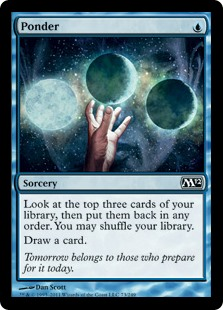
Pondering Purpose

I believe that this type of assessment has two major plusses on its ledger. The first is that improving one’s theoretical understanding of the game is a way to improve at the game itself. A glance at the ranks of professional Magic players will show this is true – many among them (notably the likes of Frank Karsten and Paulo Vitor Damo da Rosa) understand Magic at a high level, and that aids them in their play.

Second, one of the best ways to attack a given metagame is to figure out whether the decks in it share a common thread, and play cards (or sometimes an entire deck) dedicated to a strategy that they can’t handle. Take an expected field full of midrange and control decks that care about accruing card advantage. The natural counter to that sort of deck is to go over the top and play cards that are individually too powerful for midrange to handle, such as with a big-mana deck like Gx Tron. Making these sorts of calls can make the difference between showing up at an event or placing at an event.

A practical example in which tuning your deck to be more fair or unfair can be to one's benefit is when preparing a deck like Eldrazi Tron for an event. As will be discussed later on in the article, this deck is composed of a mix of fair and unfair elements. In general, it behooves Eldrazi Tron to zig when the metagame is zagging; this means leaning harder on its unfair plan when fair decks are ascendant, and doing the opposite when unfair decks are the order of the day. These sorts of decisions can make a real difference in how useful a deck's pilot finds their flex spots to be in any given tournament.

Defining Fair and Unfair

Now that we’ve gotten our purpose defined, what categories can we use to characterize decks? Fortunately, we don’t need to lay the groundwork from scratch – many terms used to describe how a deck operates are already part of the Magic players’ lexicon. For the purposes of this article, I'll be focusing on diametrically opposed terms fair and unfair. Many perspectives have been written on this topic; however, for the purposes of this article, we will use the following definitions:

Fair – A fair deck looks to operate under the base rules of Magic. These decks generally pay full price for their spells, look to win by reducing their opponent’s life total to zero, draw one card per turn, play one land per turn, and feature lands that produce one mana.

Unfair – An unfair deck circumvents these rules. Whether it be by cheating on mana, cards, or by winning in unconventional ways, unfair decks try to do things the game typically does not allow a player to do. It's readily apparent from this definition that unfair decks tend to have characteristics that many players associate with combo decks, but this relationship does not go both ways. While it is true that virtually every combo deck contains unfair elements, not every deck that contains those elements is a combo deck.

Justice for All: A Fair to Unfair Scale

Now that we know what we’re looking for, let's dive into the fair-unfair axis. we’ll set a scale of 1 to 10, where 1 is a completely unfair strategy, and 10 is a completely fair one. One thing that becomes apparent when looking at Modern’s current top decks is that very few decks truly sit at either extreme; most contain fair and unfair elements. To aid us in our categorization, we will establish ranges in which certain decks can be grouped, as summarized by the following table.

Score on Scale Category Description
1-3 Unfair deck Mostly composed of unfair elements
4-5 Mostly unfair deck Contains some unfair elements, but has fair “backup plan”
6-7 Mostly fair deck Mostly fair elements, but has some unfair elements specifically intended to generate advantage
8-10 Fair deck Mostly or totally composed of fair elements

Scale Extremes

Now that our scale and ranges have been defined, we can move on to the next step, which is to define our extremes. In my opinion, the foremost example of a fair deck in this format is currently Jeskai Tempo. Here’s an example of what that deck looks like from the most recent SCG Open:

Jeskai Tempo, by Jonathan Hobbs (12th, SCG Open Roanoke)

Creatures

3 Geist of Saint Traft
4 Snapcaster Mage
4 Spell Queller

Instants

4 Cryptic Command
2 Electrolyze
4 Lightning Bolt
3 Lightning Helix
2 Logic Knot
4 Path to Exile
2 Spell Snare

Sorceries

4 Serum Visions

Lands

4 Celestial Colonnade
4 Flooded Strand
2 Hallowed Fountain
3 Island
1 Mountain
1 Plains
1 Sacred Foundry
4 Scalding Tarn
2 Steam Vents
2 Sulfur Falls

Sideboard

1 Abrade
1 Anger of the Gods
1 Celestial Purge
2 Disdainful Stroke
2 Dispel
1 Elspeth, Sun's Champion
1 Engineered Explosives
1 Negate
1 Pia and Kiran Nalaar
2 Relic of Progenitus
1 Supreme Verdict
1 Vendilion Clique

This deck generally doesn’t cheat on mana, cards, or other resources (the only semi-offender is Logic Knot, which has delve, but 2 mana is more or less the going rate for countermagic in Modern anyway). It also has no ways to win other than by reducing its opponent’s life total to 0. I give this deck a 10 on the fairness scale.

Next, let’s look at a 1. A variety of decks sprang to mind, but the one I felt best represented the playstyle was Ad Nauseam. Here’s a list that made a Top8 at a recent RPTQ:

Ad Nauseam, by Max McVety (3rd, RPTQ Monroeville)

Creatures

1 Laboratory Maniac
4 Simian Spirit Guide

Artifacts

4 Lotus Bloom
3 Pentad Prism

Enchantments

3 Phyrexian Unlife

Instants

4 Ad Nauseam
4 Angel's Grace
1 Desperate Ritual
1 Lightning Storm
3 Pact of Negation
1 Slaughter Pact
3 Spoils of the Vault

Sorceries

4 Serum Visions
4 Sleight of Hand

Lands

2 City of Brass
3 Darkslick Shores
1 Dreadship Reef
3 Gemstone Mine
1 Island
1 Plains
1 Seachrome Coast
4 Temple of Deceit
4 Temple of Enlightenment

Sideboard

2 Bontu's Last Reckoning
1 Echoing Truth
2 Fatal Push
2 Hurkyl's Recall
4 Leyline of Sanctity
1 Pact of Negation
1 Phyrexian Unlife
2 Thoughtseize

This deck, in direct contrast to Jeskai, breaks fundamental rules of Magic left and right. It cheats on mana, cards, and other resources in order to fuel a variety of combo finishes. It has cards that outright change the circumstances in which the player loses the game, as well as multiple ways of winning the game other than reducing its opponent to 0 life.

Sorting Popular Decks

With the ends of our scale defined, we can start looking at some decklists. We’ll begin with some of the decks that have been the most popular of late, starting with Eldrazi Tron. This list is Sam Pardee's take on the archetype, courtesy of an MTGO league.

Eldrazi Tron, by Smdster (5-0, MTGO Competitive League)

Creatures

4 Walking Ballista
4 Matter Reshaper
4 Thought-Knot Seer
4 Reality Smasher
4 Endbringer

Artifacts

4 Chalice of the Void
4 Expedition Map
2 Mind Stone

Instants

2 Dismember

Sorceries

2 All is Dust

Lands

2 Cavern of Souls
4 Eldrazi Temple
3 Ghost Quarter
1 Sea Gate Wreckage
4 Urza's Mine
4 Urza's Power Plant
4 Urza's Tower
2 Wastes

Sideboard

1 Basilisk Collar
1 Gradigger's Cage
2 Gut Shot
2 Hangarback Walker
2 Pithing Needle
2 Ratchet Bomb
3 Relic of Progenitus
1 Warping Wail
1 Wurmcoil Engine

Here’s the breakdown on how this Eldrazi Tron list falls on our scale.

Unfair Elements: Changes the rules of the game (Chalice of the Void); cheats on mana (Eldrazi Temple/Urza lands)

Score: 5

Sam's deck relies heavily on Eldrazi Tron's fairer aspects, indicating that he anticipated decks would attack his unfair elements. Omitting Karn in favor of cheaper Eldrazi creatures and running Mind Stone help him play in the face of land destruction.

Next, let’s take a look at the hottest new deck on the scene in 5c Humans.

5c Humans, by Kurt Zimmer (22nd, SCG Open Roanoke)

Creatures

4 Champion of the Parish
1 Dark Confidant
4 Kitesail Freebooter
4 Mantis Rider
3 Mayor of Avabruck
4 Meddling Mage
4 Noble Hierarch
4 Reflector Mage
4 Thalia's Lieutenant
4 Thalia, Guardian of Thraben
1 Thalia, Heretic Cathar

Artifacts

4 Aether Vial

Lands

4 Ancient Ziggurat
4 Cavern of Souls
1 Hallowed Fountain
2 Horizon Canopy
1 Plains
1 Temple Garden
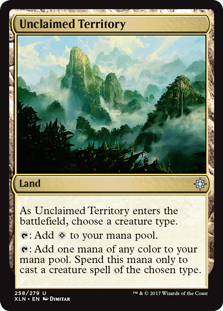
4 Unclaimed Territory
2 Windswept Heath

Sideboard

2 Dark Confidant
2 Dismember
2 Ethersworn Canonist
1 Fiend Hunter
2 Izzet Staticaster
1 Mirran Crusader
1 Riders of Gavony
1 Sin Collector
2 Vithian Renegades
1 Xathrid Necromancer

Here’s how Humans stacks up, according to our scale.

Unfair Elements: Aether Vial (cheats on mana), Dark Confidant (cheats on cards)

Score: 8

Next, let’s look at one of the pillars of the format in Affinity. This list found its way to place at the aforementioned Open:

Affinity, by James Johnston (9th, SCG Modern Open Roanoke)

Creatures

4 Arcbound Ravager
1 Hope of Ghirapur
4 Master of Etherium
2 Memnite
4 Ornithopter
4 Signal Pest
4 Steel Overseer
4 Vault Skirge

Artifacts

4 Cranial Plating
4 Mox Opal
4 Springleaf Drum

Instants

4 Galvanic Blast

Lands

4 Blinkmoth Nexus
4 Darksteel Citadel
4 Inkmoth Nexus
1 Mountain
4 Spire of Industry

Sideboard

2 Ancient Grudge
1 Bitterblossom
3 Blood Moon
2 Dispatch
2 Ghirapur Aether Grid
2 Rest in Peace
1 Spell Pierce
1 Thoughtseize
1 Whipflare

Affinity’s rating according to our scale is the following:

Unfair Elements: Cheats on mana (Mox Opal/Springleaf Drum); wins regardless of life total (Inkmoth Nexus); employs a combo finish (Cranial Plating/Arcbound Ravager)

Score: 5

On to one of the format’s premier interactive decks, Grixis Shadow.

Grixis Shadow, by Austin Collins (3rd Place, SCG Invitational Roanoke)

Creatures

4 Death's Shadow
2 Gurmag Angler
4 Snapcaster Mage
4 Street Wraith
2 Tasigur, the Golden Fang

Instants

2 Dismember
4 Fatal Push
1 Lightning Bolt
3 Stubborn Denial
2 Temur Battle Rage
4 Thought Scour

Sorceries

2 Inquisition of Kozilek
4 Serum Visions
4 Thoughtseize

Lands

2 Blood Crypt
4 Bloodstained Mire
1 Island
4 Polluted Delta
3 Scalding Tarn
1 Steam Vents
1 Swamp
2 Watery Grave

Sideboard

3 Ceremonious Rejection
1 Collective Brutality
2 Disdainful Stroke
1 Izzet Staticaster
2 Kolaghan's Command
2 Kozilek's Return
2 Liliana of the Veil
1 Liliana, the Last Hope
1 Stubborn Denial

Here’s how I believe Grixis Shadow stacks up according to our scale:

Unfair Elements: Cheats on mana (Gurmag Angler/Tasigur, the Golden Fang/Death's Shadow); contains a combo finish (Temur Battle Rage)

Score: 6

Last but not least, let’s take a look at the hottest combo deck in the format: Gifts Storm. This deck took down the SCG Invitational at Roanoke:

Gifts Storm, by Eli Kassis (1st Place, SCG Invitational Roanoke)

Creatures

4 Baral, Chief of Compliance
4 Goblin Electromancer

Instants

4 Desperate Ritual
4 Gifts Ungiven
4 Manamorphose
3 Opt
4 Pyretic Ritual
3 Remand

Sorceries

1 Empty the Warrens
2 Grapeshot
2 Past in Flames
3 See Beyond
4 Serum Visions

Lands

1 Flooded Strand
2 Island
1 Misty Rainforest
1 Mountain
1 Polluted Delta
4 Scalding Tarn
1 Shivan Reef
1 Snow-Covered Island
4 Spirebluff Canal
2 Steam Vents

Sideboard

2 Anger of the Gods
1 By Force
2 Echoing Truth
1 Empty the Warrens
3 Lightning Bolt
2 Madcap Experiment
2 Pieces of the Puzzle
1 Platinum Emperion
1 Shattering Spree

Needless to say, a dedicated combo deck like Storm is going to trend heavily towards the unfair side of things. Here’s the way I see it:

Unfair Elements: Cheats on mana (Madcap Experiment, Baral/Electromancer/rituals); employs a combo finish (storm cards); cheats on cards (Past in Flames); Platinum Emperion (changes the rules of the game)

Score: 2

Fade to Black

That’s all I have for you this time around. I expect there to be some dissent regarding some of my numerical values, and perhaps some of the criteria used to decide what constitutes a fair or an unfair deck. If so, please leave any comments below – I'd be happy to discuss rationale on this topic, and to discuss the fairness or unfairness of other decks.

Insider: MTGO Market Report for December 6th, 2017

Are you a Quiet Speculation member?

If not, now is a perfect time to join up! Our powerful tools, breaking-news analysis, and exclusive Discord channel will make sure you stay up to date and ahead of the curve.

Welcome to the MTGO Market Report as compiled by Matthew Lewis. The report will cover a range of topics, including a summary of set prices and price changes for redeemable sets, a look at the major trends in various Constructed formats and a "Trade of the Week" section that highlights a particular speculative strategy with an example and accompanying explanation.

As always, speculators should take into account their own budgets, risk tolerances and current portfolios before buying or selling any digital objects. Please send questions via private message or post below in the article comments.

Redemption

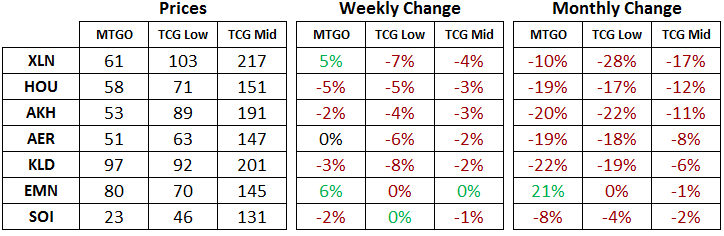
Below are the total set prices for all redeemable sets on MTGO. All prices are current as of December 5, 2017. The TCGplayer low and TCGplayer mid prices are the sum of each set's individual card prices on TCGplayer, either the low price or the mid price respectively.

All MTGO set prices this week are taken from GoatBot's website, and all weekly changes are now calculated relative to GoatBot's "full set" prices from the previous week. All monthly changes are also relative to the previous month's prices, taken from GoatBot's website at that time. Occasionally, full set prices are not available, and so estimated set prices are used instead. Although Hour of Devastation (HOU), Amonkhet (AKH), Aether Revolt (AER) and Kaladesh (KLD) are no longer available for redemption, their prices will continue to be tracked while they are in Standard.

With only three sets still available for redemption, the purpose of tracking both the digital and paper prices has largely run its course. I will continue to track set prices with an eye to the overall market, but look for a redesigned price section next week. If you have any feedback on what you might like to see reported every week, please leave a comment.

Vintage Masters

The big news this week is the return of Vintage Masters (VMA) draft instead of the previously scheduled Lorwyn draft. Check out the full announcement here. The real surprise is that they've updated the art on the Power 9 to be the original art and original card frame. This will be the first time these are available online, combined with their super mythic rarity and a short release window, these are going to be hot commodities.

There was an error retrieving a chart for Black Lotus

There's not much strategy for speculators. If you like drafting Masters sets, then you'll enjoy drafting VMA. Good luck in opening a piece of Magic history! The one thing that speculators might leverage is the surprise reprinting of a couple of Legacy staples in Force of Will and Lion's Eye Diamond. Both of these cards have been showing some price strength lately and are up 25% since the release of Ixalan (XLN). Depending on how the market develops, they could be worth a look while VMA is being drafted.

Standard

The set price of XLN has recovered this week back over 60 tix. This is a due to a combination of a slowdown in draft while redeemers are still capturing the price differential between digital and paper. Interest in Standard seems quite low with a stable and uninspiring metagame dominated by the Energy mechanic. I still maintain that a ban in the near term is unlikely, with the release of Rivals of Ixalan scheduled for January and the associated Pro Tour event featuring Modern constructed. I think the most logical time to look for a card to be banned in Standard will be in February, in the post Pro Tour timeframe which is an option they have left open for making changes to any format. Here's the last announcement for reference.

With all that in mind, I decided to liquidate my remaining Standard only positions, including booking a loss on last week's spec on The Scarab God and a longer term holding in Heart of Kiran. A stable Standard metagame is a bad environment for speculating and there will be plenty of reasons for players to sell their cards over the next few weeks. The opportunity cost of holding Standard cards is also high right now, with IMA boosters about to go on sale. I'll wait for the release of Rivals of Ixalan before considering Standard cards to speculate on.

Modern

This week I did make a sell out of one of my Modern holdings in Karn Liberated. Although most Modern cards are still in an upswing, and the Modern Pro Tour is still ahead of us, this card looked like it had peaked at close to 40 tix. It also looks like Tron decks are not taking up a growing share of the metagame; the die hards enjoy the deck, but it's not grabbing new interest. It's definitely possible that something changes to favor this card and Tron decks, but I am looking for reasons to start selling my Modern positions over the coming weeks and this was one way to start. I don't want to try and convince myself that a particular card or strategy is just about to break out. It's always easier to sell when interest in the format is high and players are still anticipating events to come.

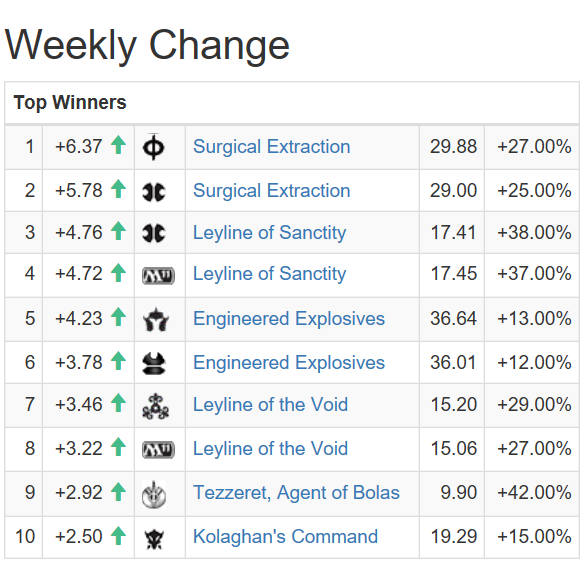
I took a screen shot of the weekly gainers from mtggoldfish as it tells a particular story. Have a look.

Although they get the benefit of having multiple printings, the top eight cards share a few characteristics. They are cheap to play sideboard options that multiple decks have access too. The original sets they showed up in were spring or summer sets, either the third set of block or a core set. Finally, they have not been reprinted lately in a Masters set lately. These are all characteristics of cards that speculators should be aware of if they want to find success.

Boosters

XLN boosters bounced back up to 3.2 tix, but have fallen again back to around 3.1 tix. The outlook on these is unchanged. Don't be caught holding excess boosters as we get closer to Christmas. Vintage Cube and Vintage Masters (VMA) draft is going to soak up a lot of drafters attention, leaving XLN as a second or even third choice. The price of this booster has a strong negative outlook.

On the positive front, Iconic Masters (IMA) draft is going to wind down this week, and these boosters have already gone on sale somewhat, dropping from 6 to 4 tix. There should be another wave of selling in the coming days so be ready to scoop these up at 3.5 tix or less. I will be buying as much as I can at this price; they will be excellent candidates to recover the 4 tix price over the coming months and boosters are a very liquid object with a low spread. They are perfect for speculators with excess tix.

Trade of the Week

For a complete look at my recent trades, please check out the portfolio. Infernal Tutor is a card that I've successfully speculated on in the past. It's regularly cycled up over 40 tix and down into the 20 to 30 tix range. With that pattern in place, I bought this card for the portfolio a few weeks ago at about 20 tix, with an eye on the Legacy and team Grand Prix events slated for 2018. Subsequently I've watched the price drop steadily and it now sits below 13 tix. Have a look at the chart, courtesy of mtggoldfish.

This is another example of how a card that is lightly played but expensive can have its price greatly reduced by the influx of supply from Treasure Chests. I think there will be an opportunity on this card in the future, but the steady drop past the previous price floor is a big red flag. As a result I decided this morning to cut my losses and sell my copies.

I have to remind myself to avoid niche cards, previously valuable due to their scarcity, that are being printed in Treasure Chests. Modern staples have the demand to support their price but a card like Infernal Tutor does not. I'll be watching this card for signs of establishing a new price floor, but for the time being it looks like it's going to continue dropping and head lower than 10 tix.


November Metagame & Announcements

Are you a Quiet Speculation member?

If not, now is a perfect time to join up! Our powerful tools, breaking-news analysis, and exclusive Discord channel will make sure you stay up to date and ahead of the curve.

Well, it's been a long time since I've written the full metagame update, but you folks haven't gotten rid of me that easily. Know that our plans here at Nexus have always been to resume these and make them regular, but in a way that was sustainable moving forward. Rather than make speculative promises I couldn't keep to the readership, I have elected to work on the scaffolding behind the scenes to make it all possible. Fortunately, we've been able to dedicate more resources lately to developing the required software, and have hired several people to assist. This has freed me up to work on the metagame report itself—hence our return for the month of November.

The workload involved in the metagame report is always pretty daunting, so as part of my new "keep Jason fully sane" policy, I won't be going quite as in-depth as before. The numbers are all just as robust, mind you—and they're all available in our Top Decks page as always. But rather than trying to offer a comprehensive analysis of everything, I'll be more so spit-balling about what I see as interesting developments in the data. After that, I'll have some brief announcements about what we have planned at Nexus, and what timeline you can expect it on.

November Metagame

David has been doing an admirable job of tracking the metagame in larger tournaments over the last month or so. The full November report encompasses most of these same events, but it adds a host of others for a much more complete picture. So expect my results here to differ from David's.

The sample size is substantially larger, which bodes well for statistical significance—but there are a large number of smaller, less competitive tournaments that form part of the data set too. Remember, this is a picture of the metagame "as it is played," not a theoretical treatise on strategic viability. But, of course, it still carries strategic implications. The data below should form a solid picture of what to expect if you're playing in Grand Prix Oklahoma City or Grand Prix Madrid this weekend.

Data Collection Methods

As we're coming off a long hiatus, now is as good a time as any to review the methodology we use at Nexus to calculate metagame numbers. To begin with, we compile decks from a variety of online sources, representing both MTGO results and paper tournaments from around the world. All reported archetype names are double-checked to ensure accuracy, and then normalized across sites to get a single name for each given deck.

These archetypes are placed on a bell curve, and then assigned tiers based on their deviation from the expected percentage in the metagame (one standard deviation for Tier 2, two standard deviations for Tier 1). Tierings are calculated individually for MTGO and Paper metagames, then compiled together with additional points from large-scale major events for the final metagame picture.
November's data set consists of 374 MTGO decks and 775 paper decks, for a total of 1149. Errors of margin on the Paper and MTGO metagames were 3.52% and 5.07% respectively. That latter figure seems high to me, but I will have to dive back into the data on a later date to confirm or deny. What I feel comfortable saying is that, if the exact percentages in the sample are not guaranteed to reflect percentages in the population, the tiers assigned to each archetype will be (mostly) accurate.

Paper Events

Paper events this month included the Star City Games Regional Championships, Top 8s from all reported RPTQs, the SCG Baltimore Classic, and the SCG Baltimore Team Constructed Open. For the latter, the Modern deck played by each of the Top 8 teams is included. Note that all caveats of split-format events apply here, but as only a small part of the total sample came from this event, it was unlikely to corrupt the data.

A few additional notes:

  • Hareruya. The Hareruya store in Japan runs a copious number of events each week. I've generally made a policy of omitting the weekly pick-up tournaments they publish, as attendance for these events is often lower than 20. What we retain are any larger-scale tournaments (like this one) as well as all the ongoing Sunny Day Modern Cup events.
  • LigaMagic. This site runs an independent tournament series across much of Brazil. The structure is somewhat unique, so it merits a brief description here. Each store that's part of the series will run five "qualifier" events, any number of which local players may attend. At the end of those five tournaments, the top eight point finishers are invited to a run-off tournament. Note this is done for each store in the league. Qualifier events have low attendance sizes and represent a lot of duplicate decklists, so we omit them here. But the Top 8s are a good stand-in for that of a single, larger tournament. Altogether, 17 of these run-off Top 8s are included in our sample for November.

MTGO

Much has been said of Wizards' recent decision to put the kibosh on representative reporting of MTGO Competitive Leagues. Two things hearten me in this regard. First, the makeup of archetypes in the reported League data is very similar to what we see in the rest of the metagame. While a deck can't appear on one day twice, it can appear several days in a row. The decks doing this were not fringe or rogue strategies, but the exact ones you would expect—proven, Tier 1 contenders like Affinity, Grixis Shadow, and Humans.

The other positive development is the presence of MTGO Challenges to buttress the League results. In November we had four tournaments of this kind, each of which represents a serious competitive environment where many pros and regular grinders attend. These results are not curated by WotC, but reported as-is, so we get a clear picture of which decks rose to the top.
All in all, I think the MTGO results are about as useful as they were before (assuming a similar number of Challenges each month). What they probably provide a less clear picture of is the state of the MTGO "hive mind," the collective effect of online players iterating the metagame ahead of the general population. To be sure, this process is still occurring, but it might be slightly more opaque to our analysis than before.

In addition to Leagues and Challenges, three Pro Tour Qualifiers on MTGO were held in November. One was a normal PTQ. The other two were RPTQs qualified players could attend in lieu of a paper RPTQ. In each case the Top 32 was included. Given the notorious difficultly, strategically speaking, that events like these on MTGO are known for, assigning them extra weight seemed justified.

Day 2 Data

This is another area of our analysis that has suffered from Wizards' decision to scale back deck reporting. That said, it's always been a little spotty given the low number of SCG Opens and Grand Prix. For this month, we're looking at two events. The first is the SCG Team Constructed Open in Baltimore. Decks making Day 2 in this event were undeniably influenced by their teammates' choices in Standard and Legacy. The second isn't Day 2 data per se, but each archetype's collective share of the RPTQ Top 8s, which I felt was a similar phenomenon.

Because these events don't do a great job of representing conversion after a long tournament of many rounds, the Day 2 data was weighted at half its normal value. I'll be revisiting Day 2 data in future updates, and evaluating whether or not it should continue to form a regular part of our analysis.

The Compiled Metagame

Onto the metagame numbers themselves. The most prominent narrative I've heard over the last few months is that Storm and Death's Shadow are the decks to beat. That is, at minimum, what most people in my own testing group have concluded. The November data seem to corroborate that conclusion, but they also present a relatively healthy metagame with a variety of other strategies in the top tier. For an easy-to-read version of all this data in one place, go here.

Tier 1: 11/1/17 - 11/30/17

DeckOverall
Metagame %
Paper %MTGO %
[archetype]Affinity[/archetype]7.0%7.5%4.8%
[archetype]Gifts Storm[/archetype]5.7%5.0%6.4%
Jeskai Tempo5.5%5.3%5.9%
[archetype]Burn[/archetype]4.9%5.0%4.8%
[archetype]Humans[/archetype]4.9%3.9%7.2%
[archetype]Eldrazi Tron[/archetype]4.8%5.7%2.4%
Grixis Shadow4.7%3.9%4.5%
[archetype]Counters Company[/archetype]4.5%5.4%2.7%
[archetype]RG Valakut[/archetype]4.5%5.3%3.5%

First, a note about what exactly we're looking at is in order. Whenever Magic players get together to discuss a format, the twin phrases "tier-one" and "best deck" get thrown around like a football at a family gathering. Pros are guilty of this too. It's typical to hear a lot of speculative claims based on anecdotal evidence or extremely small sample sizes from testing sessions.

And yet, I will still perk up and take notice whenever a major pro makes a statement of this nature. The thing is, there's never enough data to make definitive statements about a deck's "true" power level—that's what makes the game compelling. We can't even test one deck in a perfect facsimile of a metagame, with a control group and all, much less an entire format's worth of decks. Absent this hard data, we must rely on intuition and qualitative assessments; as pros are better at this than the average player, we're interested in the conclusions they draw.

In light of this, I think it's instructive to understand "Tier 1" as a polyvalent phrase. On the one hand it refers to a strategic phenomenon: the decks with the highest power level and most advantageous positioning in a specific metagame. This is the most commonly accepted use, and what pros generally mean when using the term. The second meaning refers to a statistical phenomenon, that corresponds roughly to the metagame as it's being played. This is what we attempt to capture, as scientifically and rigorously as possible, here at Nexus.

There will undoubtedly be some overlap between these two definitions—after all, even us lowly grinders still have a brain in our noggin, and the better decks will be correlated with higher incidences of play. Just remember that the correspondence won't be perfect. The statistical phenomenon should be seen as an indicator of deck strength, but one that's intertwined with other confounding or intervening variables—deck difficulty, perception of strength, and card availability, to name a few.

So back to our Tier 1 decks. Some of this I'm gonna go out on a limb and call unsurprising (Affinity's still good? Shocker!). Here are my notes on the more interesting developments.

  • At 4.7%, Grixis Shadow initially looks way less impressive than I had suspected. This changes once we roll in the share held by 5-Color Shadow, which appears in Tier 2 below. Together they form 6.7% of the meta, just under top dog Affinity. I'm inclined to agree with the pros' claim that something (possibly deck difficulty) is causing players to shy away from a deck that should, by most indications, see more play. Don't sleep on this matchup for GP Oklahoma City or GP Madrid—the further you get into the tournament, the more likely you are to run up against Shadow.
  • Humans are one of the biggest stories of the last month or so, and they seem to have delivered on their promise. Ixalan was good to the Human tribe with Kitesail Freebooter and Unclaimed Territory. It doesn't hurt that their matchup against two of the strongest decks (Shadow and Storm) is favorable. I don't think we've seen the last of this archetype, and it's only getting more tools as Wizards releases new sets.
  • Speaking of old decks with a new lease on life, Jeskai Tempo has been doing quite well for itself. I think this is one part metagame development, and one part Spell Queller. As sometimes happens in eternal formats, players can be stubborn to adopt new tech or shift to different strategies. Note that per our classification, none of the decks in that 5.5% figure are control variants. Almost every deck had Geist of Saint Traft, and the few that bucked that trend ran additional threats. By now the full playset of Quellers is pretty much universal. The more traditional Jeskai Control variants are covered below in Tier 2.

Tier 2: 11/1/17 - 11/30/17

DeckOverall
Metagame %
Paper %MTGO %
[archetype]Gx Tron[/archetype]3.3%2.3%6.4%
Abzan3.1%3.0%3.2%
UW Control3.0%3.4%2.9%
UR Breach2.7%1.9%2.9%
Jund2.7%2.5%1.3%
Lantern Control2.4%1.9%4.3%
Dredge2.2%1.3%4.3%
[archetype]Infect[/archetype]2.0%2.1%1.6%
[archetype]5-Color Shadow[/archetype]2.0%2.3%1.6%
Eldrazi and Taxes1.8%1.4%3.2%
Jeskai Control1.5%0.9%0.0%
Hollow One1.5%0.9%2.1%

Tier 2 looks about typical too. Per-archetype notes:

  • The vast majority of those Gx Tron decks are black variants. Collective Brutality and Fatal Push provided the deck with some much-needed utility it was lacking before, and I think this is just the de facto consensus build now. A few lists in the data were RG or Mono-Green; I believe only one splashed white.
  • The presence of UR Breach in Tier 2 might catch some by surprise, but a closer examination of the deck reveals it's basically just Blue Moon with a new wincon. Blue Moon has always exhibited lots of variety in its finishers—we've seen it packing Batterskull, Kiki-Jiki combo, Docent of Perfection, and Madcap Experiment. It appears that Through the Breach plus Emrakul is the kill of choice right now, although the Kiki-Jiki version is posting about 0.7% itself. Combining the two together they make up 3.4% of the meta, so it's safe to say Blue Moon is on the rise.
  • Rob wrote about Lantern Control earlier this week. All I wanted to note here is that outside of a few paper decklists, all these lists run four Whir of Invention. At this point I would just assume my opponents had access to that card if they're on Lantern.
  • Most people know which deck Eldrazi and Taxes refers to by now. Take one part Thalia, Guardian of Thraben and Leonin Arbiter, add a hefty dose of Eldrazi Temple, Thought-Knot Seer, and Reality Smasher, finish with a dash of Sculler-plus-Strangler seasoning. The latest trend is to cut the hatebears package entirely, yielding a more controlling variant with Lingering Souls and planeswalkers. To my eye this deck is sufficiently different to merit consideration as a separate archetype. We've reported these builds under "BW Eldrazi," which make up 0.7% on their own in Tier 3.
  • If I had to guess, I'd say Hollow One is the flavor-of-the-month that may not make the grade for long. Two variants, BR and RG, are represented here about equally. As this archetype's pilots figure out the optimal build we'll see if it can maintain its high-end showing.
  • I already discussed the Jeskai Tempo decks in Tier 1. As for old-school Jeskai Control, it's still posting a respectable standing itself, especially when considered alongside cousin UW Control. The most interesting innovation here is Search for Azcanta, which is cropping up in lots of lists as a great way to generate card advantage without clunking up hands and draws.

Tier 3: 11/1/17 - 11/30/17

DeckOverall
Metagame %
Paper %MTGO %
Elves1.3%1.8%0.8%
[archetype]Merfolk[/archetype]1.2%1.9%0.3%
GW Company1.2%1.2%0.5%
Death and Taxes1.0%1.4%0.3%
8Rack1.0%1.0%0.3%
Bogles1.0%0.6%2.1%
RG Ponza1.0%1.2%1.1%
Bant Company0.9%1.5%0.0%
Ad Nauseam0.9%1.4%0.0%
Mardu Tokens0.9%0.3%2.7%
BW Eldrazi0.7%1.0%0.3%
UR Kiki0.7%0.3%1.9%
Mono U Tron0.7%0.5%1.3%
Living End0.6%0.8%0.5%
Grixis Delver0.5%0.9%0.0%
Amulet Titan0.5%0.1%1.6%
Grixis Control0.5%0.6%0.3%
Griselbrand0.5%0.3%1.1%
4-Color Control0.4%0.3%0.0%
Sultai Midrange0.4%0.3%0.0%

Finally, the Tier 3. Again, I don't think anything here is shocking—Modern continues to present its dizzying array of strategies, and anything can win on a given weekend.

  • The printing of Vizier of Remedies has obviously given Abzan Company a new life in Counters Company, but its effects reach farther than that. Elves is also beginning to adopt the combo in significant numbers. Devoted Druid is (yup) an Elf that already fits in their core game plan, so it's a natural inclusion. A few players are still on the Mono-Green or Shaman of the Pack variants.
  • Merfolk has gone green, and I'm not sure it's going back. With one or two exceptions, everyone in November's data was on both Kumena's Speaker and Merfolk Branchwalker. Both these cards just seem like such a natural fit to me, as they play very well with lords. I'll leave it to David and Roland to discuss whether we've seen the last of the mono-blue or blue-white fish decks.


  • There's always a lot of variation in the midrange CoCo decks. Here you could lump GW Company and Bant Company together if you were so inclined, but I think they will play out differently. Note that in the Bant Company shares, most lists are actually Knightfall. Outside of the few copies of Retreat to Coralhelm, the Bant CoCo deck is almost identical, including the Kessig Wolf Run to tutor up with Knight of the Reliquary.
  • Midrange Mardu decks are often kicking around in Tier 3, but it's rare to see widespread agreement on build. Mardu Tokens may be changing that. These decks are built around a full set of Bedlam Reveler, flanked by Lingering Souls, Young Pyromancer, and/or Monastery Mentor. Notably, Bitterblossom is nowhere to be found.

Updates on Ongoing Projects

Announcement time. You may have noticed those orangeish links on a few of the archetypes in the tables above. These will eventually link to primers for each archetype. Right now the articles are just stubs, introductory pieces to be expanded upon later. Last year I found that the work required for these was about a ka-jillion times more than I had anticipated. So this is a long-term project that will take time to implement, with snippets being released as they become ready. Rob San Juan is helping me do the initial research and write-ups for the intros. After that I will start brainstorming how to flesh out the rest.

The end goal here isn't so much a series of articles that you would read from beginning to end, but more an encyclopedia of archetype information you could return to periodically to answer specific questions. There is no way that I can copy-edit all of this information, especially when you consider that it will be a moving target—new decks, new printings, developments in archetype technology, bannings, and more will necessitate regular updates. So it will be subject to a different editorial process.

What I'm envisioning is a kind of wiki that the community can help co-write and then update. That said, I want to retain a certain rigor in the information that's presented to prevent it from devolving into the sort of rampant speculation and unsubstantiated claims the internet can be prone to. I'm still trying to figure out how this can be done, but my current thought is to enlist moderators with experience playing each archetype who can monitor a given page. I'll definitely be looking for suggestions on this front from readers, so if you have any ideas, do pass them on.

Let me make clear that this is a massive undertaking, and I frankly have no concrete idea of the timeline. I hope you'll be patient with us as we put it together, and I trust you'll appreciate that we want to bring the Nexus quality of analysis to bear on the project.

Jason Schousboe
Editor in Chief

Daily Stock Watch: Supreme Verdict

Are you a Quiet Speculation member?

If not, now is a perfect time to join up! Our powerful tools, breaking-news analysis, and exclusive Discord channel will make sure you stay up to date and ahead of the curve.

Hello, everyone and welcome to the Wednesday edition of the Daily Stock Watch! Yesterday, I featured a card that I think is worth letting go of in Hateflayer. Today, I'm going to feature a card that I think is worth picking up in the near future.

Our card for the day is Supreme Verdict

There was an error retrieving a chart for Supreme Verdict

You must be wondering why I would like to pick up copies of this card, considering the fact that it has just been reprinted in Iconic Masters. I am a control player, and I tend to favor sweepers that could swing a game's tide to your favor in one fell swoop. Back when Supreme Verdict was in Standard, it has saved me countless times from losing, and has allowed me to claw my way back to the game. Pretty nostalgic, those days..

But picking this card goes beyond bias and nostalgia. Just check out this Jeskai Control list that Benjamin Nikolich steered to a top 8 finish over the weekend's SCG Invitational Roanoke:

Jeskai Control

Creatures

3 Snapcaster Mage
1 Torrential Gearhulk

Instants and Sorceries

4 Cryptic Command
3 Electrolyze
2 Lightning Bolt
3 Lightning Helix
3 Logic Knot
1 Negate
4 Path to Exile
1 Secure the Wastes
4 Serum Visions
1 Spell Snare
1 Sphinx's Revelation
2 Supreme Verdict

Other Spells

1 Nahiri, the Harbinger
2 Search for Azcanta

Lands

3 Celestial Colonnade
4 Flooded Strand
2 Glacial Fortress
2 Hallowed Fountain
3 Island
1 Plains
1 Sacred Foundry
4 Scalding Tarn
1 Spirebluff Canal
2 Steam Vents
1 Sulfur Falls

Sideboard

2 Celestial Purge
1 Detention Sphere
3 Dispel
1 Elspeth, Sun's Champion
1 Engineered Explosives
1 Negate
2 Runed Halo
1 Supreme Verdict
2 Vendilion Clique
1 Wear / Tear

Despite of the numerous burn and counter spells in the list, the control player will always have that one sweeper to rid the battlefield of creatures. In a Jeskai shell that could run both Wrath of God and Supreme Verdict, the latter always gets the nod because it dodges permission spells that blue-based tempo decks are running. This is also the same reason why Supreme Verdict is seeing some fringe play in Legacy UWx decks.

Iconic Masters sweepers

Among the four cards above, Supreme Verdict sees the most play, with 5% of winning decks using an average of 2.6 copies based on my Utility Checker, while Anger of the Gods comes in at second with 4.5% of winning decks using an average of 2.1 copies. I expect these two cards to remain relevant in Modern going forward, and I like their chances of going up for like another dollar or two. Bear in mind, though, that I'll only be focusing on the copies from IMA because of the influx of supply, and the potential for the price to rise a little more once people stop opening packs.

I honestly have the same assessment for these mass removal cards that were reprinted in IMA. There are lots of supplies right now, and this should mean that their prices will gradually go down for as long as IMA packs are being opened. However, I don't think that some of the price tags they're getting is fair game, considering how useful they are in the decks where they fit in. Although Supreme Verdict is restricted to UW decks because of its casting cost, control decks are starting to show its fangs once more in Modern and that gives me enough reason to think that this will be a staple in the months to come. An Esper brew will also feature copies of it, so I really like our chances here.

At the moment, you can get normal IMA copies of Supreme Verdict from Star City Games and some vendors on TCGPlayer for $2.99. Channel Fireball has it for $3.99, while Card Kingdom is selling it for $3.49. The foil copies are available in the $8-$9 range from the same vendors, but this is something that I'll probably stay away from for the time being. I'm not sure if the price will go down to as low as $2, but that's the time that I suggest we buy in. I think that this will be a $5 card again soon, so let's see if that window to shop for spec copies will arrive.

And that’s it for the Wednesday edition of the Daily Stock Watch! See you again tomorrow, as we check out a new card that should be on the go, or good enough for speculating. As always, feel free to share your opinion in the comments section below. And if you want to keep up with all the market movement, be sure to check in with the QS Discord Channel for real time market information, and stay ahead of the hottest specs!

Want Prices?

Browse thousands of prices with the first and most comprehensive MTG Finance tool around.


Trader Tools lists both buylist and retail prices for every MTG card, going back a decade.

Quiet Speculation