menu

Coming Back to an Old Collection After a Break

Are you a Quiet Speculation member?

If not, now is a perfect time to join up! Our powerful tools, breaking-news analysis, and exclusive Discord channel will make sure you stay up to date and ahead of the curve.

I was a super active PucaTrade user back in its heyday. After the Puca economy went under, I got distracted. So while I still played Cube and Arena and continued to follow the MTG social and financial worlds, I stopped engaging in the regular buying, selling, or trading of Magic cards.

In fact, I just looked it up: I made my last Puca trades in October of 2016, and besides prereleases and purchases for my cube, I don't recall any other MTG purchases during that time. I have sent in a small buylist or two, but it's been a while since I reviewed my full holdings.

So it was with mixed delight and horror that I went through my years-old specs, draft leftovers, and trade bait last night to ship out a buylist. What really spurred me to do this was this guy right here:

There was an error retrieving a chart for Woodland Bellower

I went pretty deep on this card via PucaTrade, picking up 39 copies at approximately 130 points each, which was about a dollar in cash at the time. I'm buylisting 38 of those copies to Card Kingdom for $4 each and feel very good about how this has turned out.

What are some other things I learned and decisions I made in this process? Let's go through a few.

Stop Being Precious About Cards You're Not Playing

I didn't dip into any of my decks or cube for this buylist, but I was sitting on a ton of stuff that was a mix of speculation, "I might play this format or deck someday" wishy-washiness, and stubbornness that this card could still go higher.

For example, I've been sitting on several dozen shocklands since the Return to Ravnica era, virtually all picked up via Draft or tradeI outed many of them via PucaTrade and buylisted a few here and there, but still had dozens more. When Guilds of Ravnica was announced, I literally placed buylisting shocklands on my to-do list. But I didn't get around to it—and then the reprints were spoiled.

I obviously punted a lot of value, but it could be worse—I'm buylisting them now for roughly the value I placed on them in trade years ago. I did, however, lose the opportunity cost of using this money elsewhere, as well as the chance for higher profits. Still, I traded for Steam Vents specifically at $8, I've outed a lot of them in the $13 to $15 range in the last several years, and now I'm buylisting the rest of them for $8. So I still consider it a win, if not as large as I would have hoped.

I have a handful of Polluted Deltas and Flooded Strands as well. I'm happy to report that I've half learned my lesson of holding reprinted lands like this for years and years, as I am shipping all of my Deltas for $15 a pop. Strand at $10 wasn't cutting it, however, so I am stubbornly holding onto those. Full disclosure: I'm also still holding my Temple Gardens and Godless Shrines, as I just can't get on board with the sub-$4 price tags on these specifically.

Here are some more examples of cards that I speculated on years ago for about the same price as I am buylisting now. I'm learning to let go, especially in an era where any non-Reserved List card can be reprinted:


Some of these are slightly above or below where I acquired them years ago, but mostly they're right around the same level. For years I've been talking myself into holding onto cards like this. But in a world where reprints happen constantly, I just don't want to ride these things into dust. Cashing out here leaves me feeling neither especially excited nor disappointed, but I feel great about these sales once I realize I dodged reprints on most of this stuff.

There's No Reason to Ship Bulk

I'm shipping out very few bulk rares. In a few cases, I was happy to take 25 or 50 cents on a card. But if the offer is 10 or 15 cents, it's not worth my time to enter on a website, sort, and increase my package size. And as we all know, these cards can jump up at any time. In my opinion, it's always worth keeping them around when the offer is literal pennies.

One thing I've done for years with bulk is to create deck-builder's toolboxes to sell on Craigslist. Once I've attended enough drafts or Sealed events to fill a long box with commons and uncommons, I can add a few of each color's lands and 10 or 20 bulk rares, and make $15 or $20 selling to someone who wants to get into the game.

I have a lot of draft bulk rares lying around, so I'm considering trying a number like five mythics and 50 rares to see if I might get $30 on a box. I always curate the bulk to ensure that it includes lots of fun cards for new players, and usually throw a few extra rares in for good measure. It seems to work out well, as everybody gets what they want in these transactions.

Accepting Failure Is One Thing, But There's a Limit

I've made some bad speculations over the years and gotten unlucky plenty of times as well. Here's a sampling of cards I'm still holding a decent number of copies of:

Most painful of these is Beck // Call, which would have made me a hefty profit at one point if I had shipped my copies. I maintain a vague hope things will turn around again, but I may need to hold these copies forever to remind me of my failure.

Tasigur hurts too. I acquired more than 20 of them in the 300 PucaPoint range when it had only one printing. By now it has been reprinted into dust.

As for Sarkhan, a couple of (non-QS) MTG finance personalities who shall remain nameless pushed it hard at $5, which convinced me to pick up a couple playsets. We see how that has turned out.

I don't expect these cards to hit any time soon, but neither am I willing to accept barely-above-bulk prices for them. They stay with me for now. On the other hand, I still have a decent amount of hope that cards like Greenwarden of Murasa and From Beyond will have their time to shine. I sure hope so, anyway–I went pretty deep on both of them, including several foils of From Beyond.

There was an error retrieving a chart for Greenwarden Of Murasa
There was an error retrieving a chart for From Beyond

Accept the Small Wins – Before Reprintings Strip Even Those Away

Shipping Woodland Bellower at $4 would be an example of a small win. I could wait and see if it's going to push higher, but I run the risk of finding myself in another Tasigur situation, which is exactly what I'm trying to avoid. Folks, Wizards can reprint non-Reserved List cards at any time.

Once I wanted to buy a very well-priced copy of Opposition for my cube, but I needed $25 in my cart to get to free shipping. I bought 12 copies of Karametra, God of Harvests for $2 each (which, in retrospect, was too high of a cash buy price for this card) and now I'm doubling up by shipping for $4 a piece. I could see if it will go higher, but Wizards can reprint non-Reserved List cards at any time. 

Similarly, I acquired a handful of Phenax, God of Deceptions once for around $3 each, which I'm now shipping for $5. These could go wild over the next years, but I have to remind myself: Wizards can reprint non-Reserved List cards at any time. 

Make Good Choices

We live in a world where it's not wise to sit on Modern, non-Reserved List cards. Everything gets reprinted eventually, and when it does, it almost always crashes the value. I've been far too precious for far too long with many cards I had no business continuing to hold.

Long-term investments in MTG should be cards from the Reserved List, period. If you're extremely active in MTG finance, it makes way more sense to flip cards in the short and medium terms. For someone like me, who just pokes his head in every once in a while, things change too rapidly to keep up. Know your situation and plan accordingly.

Three Strategies to Remember

Are you a Quiet Speculation member?

If not, now is a perfect time to join up! Our powerful tools, breaking-news analysis, and exclusive Discord channel will make sure you stay up to date and ahead of the curve.

While the MTG market was cooling down late last year, one mantra was repeated over and over again to give speculators hope: “Prices will rebound once tax season comes and everyone gets their refund check.”

Well, here we are. It’s early February and the tax refunds should start pouring in. It’s still early, but I recently noticed subtle signs of life on Card Kingdom’s hotlist. For example, some Reserved List cards once left for dead are slowly trickling back into play. The top six cards on their list fall into this category:

  1. The Tabernacle at Pendrell Vale - $1440
  2. Mishra's Workshop - $1120
  3. Nether Void - $395
  4. Drop of Honey - $385
  5. Volcanic Island - $270
  6. Gaea's Cradle - $240

Granted these buy prices are a far cry from their peak and other stores are likely paying better, but it’s encouraging to see Card Kingdom’s focus to get more in stock. It gives reason to be optimistic, if nothing else.

There was an error retrieving a chart for Nether Void

But optimism doesn’t mean we should start buying without restraint. Just like in the stock market, people tend to become euphoric all at once and this inflates prices to unrealistic levels. This week I want to share three important strategies to keep in mind as we navigate a (hopefully) fruitful time of year.

Strategy 1: Profit Is Profit

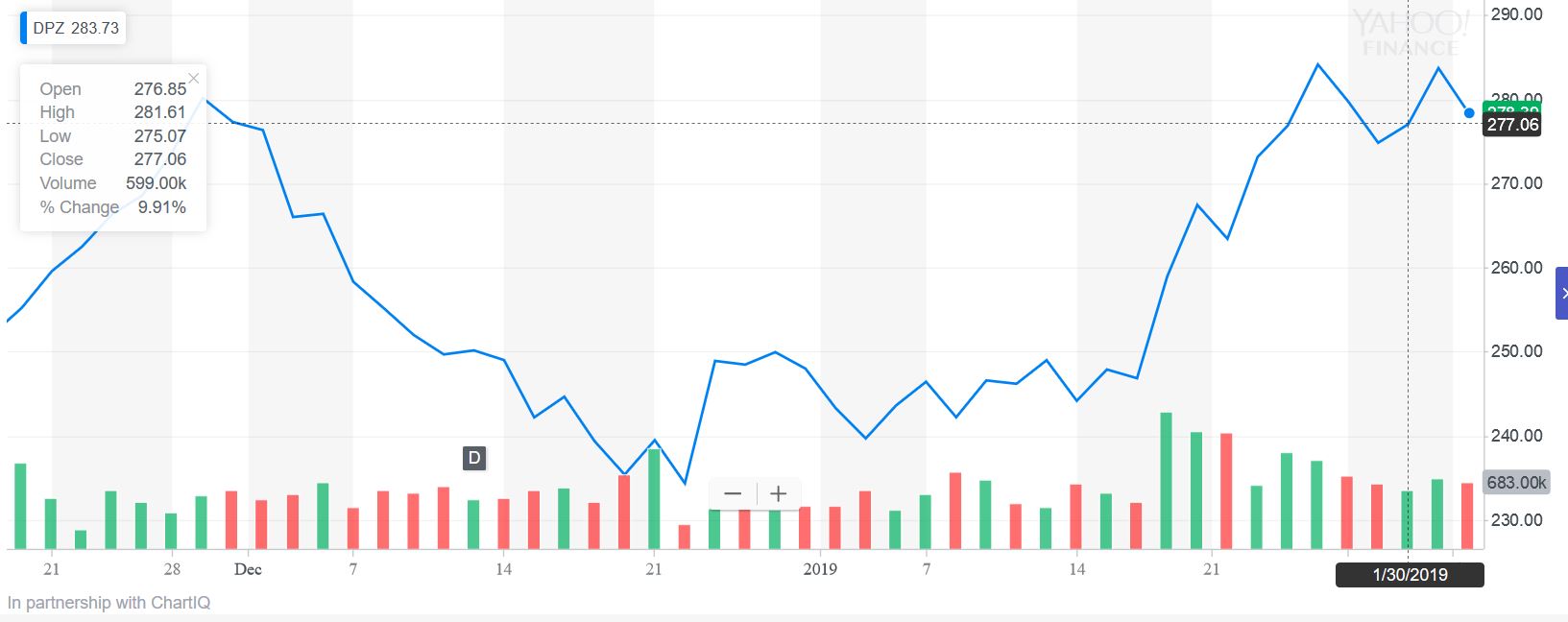
If only I had a nickel for every time I bought a stock, watched the stock go up into euphoria, and then watched it come all the way back down again. Better yet, I wish I learned the discipline to sell a stock into strength to secure the profits! Most recently I’ve gone through this with Domino’s Pizza stock (ticker symbol DPZ).

(Click to expand.)

My entry point into this stock was well timed, and throughout November I watched its price climb. Then it came crashing down below where I initially bought in! Luckily it has rebounded, but I’m left wondering if I should sell this time around?

Similar charts can be found on Magic cards though sometimes it occurs on a different time scale. Volcanic Island had a hot start to 2018 but gave up much of its gains the back half of the year.

There was an error retrieving a chart for Volcanic Island

The moral of this story: sometimes taking profits is perfectly fine. We all dream of finding that 10-bagger that Peter Lynch talked about in his book One Up On Wall Street. Buying a Magic card for $10 and selling for $100 is every speculator’s dream. But I have bad news for those who cling to this dream: it happens very rarely.

But that’s okay! We can’t always expect massive gains with every card we buy. Sometimes MTG finance is about hitting many singles and using some sacrifice plays rather than swinging for the fences (forgive the baseball analogy). Profit is profit; if you’re selling cards for more than you paid, you’re doing just fine. I like the quote by Jim Cramer to remind me that you don’t always have to sell at a peak: “Nobody ever went bankrupt selling for a profit.”

Strategy 2: Don’t Turn a Trade Into an Investment

When I invest in stocks, I tend to focus my money on larger companies with an established pedigree. If a company is in its infancy, losing money while it continues to grow, I won’t touch it. It’s a personal rule of mine.

Occasionally, I get the itch to make a more speculative trade. But trading should not be confused with investing. I’m perfectly willing to trade any stock, even if the company is bleeding money left and right. The intent is to make transactions on a much shorter time scale, so the company’s profits are virtually meaningless—all that matters is market sentiment and momentum.

But like every trader, I sometimes (too often?) make a bad trade. My timing is off and I end up buying at the top. That’s not the end of the world as long as I’m willing to cut my losses. Sometimes people recognize they’ve made a bad trade and then decide to keep the equity, justifying it as a new long-term investment. This mindset is just as precarious with Magic cards as it is with stocks.

This is why it’s important to remember why you acquired a certain card and stick to your strategy. If you’re purchasing cards for arbitrage, make sure you’re selling them as planned. If you think a particular card is going to break out in Standard as a new set is released, make sure you follow the metagame closely those first few weeks. If you believe prices on Reserved List cards will climb as tax refunds kick in, make sure you have an exit strategy when/if the euphoria returns.

There was an error retrieving a chart for Grave Robbers

It’s very important to stick to your thesis. If a Standard card doesn’t pan out as hoped, it can be painful to sell at a loss. But it could be far worse if you decide to keep the card in the hopes it breaks out in Modern, for instance. You could see that trade gradually go to zero.

Or if you purchase a card in the hopes of flipping to a buylist for arbitrage, and that buylist drops, you could hold the card in the hopes that buylist rebounds. But this is also risky—the card may have already peaked. You may end up holding that card, tying up resources, for months or years while you wait for it to rebound.

At that point you are incurring other risks. What if there’s a reprint? What if the card is outdone by something new? What if your card is no longer the flavor of the month? These are considerations you may not have taken while planning your arbitrage. An unfortunate shift could suddenly become a terrible investment.

Don’t get caught holding the bag, turning a small loss into a large, time-consuming one. Unless you have thoroughly thought through a shift in strategy, it’s best to stick to the plan.

Strategy 3: Timing Is Everything and Nothing

I make this paradoxical statement about timing because the importance of timing really does depend on your strategy. But there are two important points you need to consider when talking about market timing.

First, it’s impossible to time peaks and valleys, so don’t bother trying. The old mantra, “leave the last 10% for the next person,” comes to mind here. You could grind out a little more value if you try to time the market perfectly, but you could just as easily miss the chance to sell for profit at all as a card’s price drops back down to earth. As I mentioned before, profit is profit.

It’s equally important to remember this on the buying side. We all want to buy our cards at the very lowest price. This can be reckless, especially as momentum accelerates. You could be shopping around for the best price on a card while everyone else is sniping copies right out of your cart. In these situations, trying to time the market perfectly is a fool’s errand. We all know how rapidly a price moves during a buyout.

There was an error retrieving a chart for Marble Titan

The second point can contradict the first one: timing can be everything. If you ignore timing altogether and buy and sell cards when it’s convenient, you could potentially be putting capital at risk for a long period of time. Opportunity cost is important to remember here.

I once heard a phrase that resonated with me: “If you’re early, you’re wrong.” Buying a card and having to wait three years for it to appreciate may feel like a win—and it could be perfectly fine if you’re using that card to play with—but from the standpoint of cash flow management, it’s far from a perfect strategy.

Wrapping it Up: A Case Study

Let’s use the recent release of the Mythic Edition set as a case study. I bet you many people are violating my strategies with this set.

I wonder how many people purchased this set with the intent of selling it immediately for profit, only to find the price on the secondary market is somewhat soft. Right now, TCGplayer has a market price of $340 on the set. Subtract out 10% for fees and $10 for shipping, and your margin may be razor thin. Some are probably adopting the mindset that the product will likely appreciate over time so it’s fine to hold for a while.

This decision flies in the face of all three of my strategies. Firstly, there’s nothing wrong with a razor-thin profit. Deciding not to sell because profits were juicier the first time around is a terrible strategy. If you’re in the black, take your profits and be happy about it. The last thing you want to do is hold in the hopes of a better exit point only to have the product rot on your shelf for months.

Second, you are turning a trade into an investment. If your hypothesis was, “I’ll buy this product, receive it, and immediately flip it for profit,” then I suggest you do just that. If you intended to hold the product all along, then I’m not trying to talk you off that strategy. But don’t flip from one thesis to another without thinking long and hard about your rationale. If you are doing so simply because you’re averse to taking a small loss, then your motivations are misplaced.

Finally, you’re ignoring timing with this decision. You may have bought in too soon and now you’re stuck with the opportunity cost associated with this product. This may still be a fine long-term investment, but if you had additional capital to put to work would you purchase more of these sets? If the answer is no, then why are you holding them in the first place?

The bottom line is that we need a strategy when we deal in Magic finance and it’s crucial to stick to the plan unless you have a well-thought out reason to change it. Flip-flopping haphazardly can lead to some very suboptimal trades, and may discourage you from Magic speculation altogether. While I’m sure some folks in the community would embrace this, it’s rather counterproductive to the purpose of this website. Keep these strategies in mind, and you’ll be better equipped to handle both the ups and downs in this volatile market.

Sigbits

  • Let’s see what else has suddenly reappeared on Card Kingdom’s hotlist recently. For starters, Old School gem City in a Bottle is back, with a strong $200 buy price. It probably isn’t the peak, but it’s good to see this market is finding its footing again after some significant price retraction.
  • Card Kingdom has a $150 buy price on City of Traitors, which seems fairly strong. It’s a Legacy staple, and will continue to appreciate over time as long as Legacy receives support. That’s very likely given the popularity of team events. And it’s highly unlikely the land ever gets outclassed.
  • Another popular Old School card, Thunder Spirit, appears to be rebounding as well. Card Kingdom’s buy price is back to $100 on the Reserved List Legends card. This underscores the importance of a card’s utility in its respective format. A solid Old School card with real demand will rebound in price more quickly and deliberately than something with minimal demand.

Modern Top 5: Enablers

Are you a Quiet Speculation member?

If not, now is a perfect time to join up! Our powerful tools, breaking-news analysis, and exclusive Discord channel will make sure you stay up to date and ahead of the curve.

Successful Magic decks are like well-oiled machines: the pieces fit together well enough to ensure they enact their gameplans consistently and effectively. They owe their cohesion to enablers, cards that supercharge certain gameplay mechanics or themes (i.e. "artifacts matter"). Just like payoff cards, or the ones newer players crack in packs and immediately want to cast, enablers incentivize players to take their deckbuilding in a given direction. Modern is a format as defined by its removal as by its enablers. Today, we'll continue in the tradition of last year's Modern Top 5 series to assess its best ones.

Enablers Beware

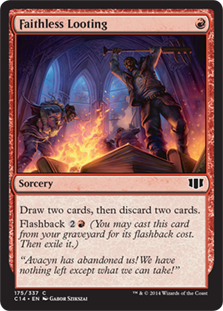
We've come a long way from Faithless Looting being a sleeper card. Enablers enjoyed quite a bit of limelight last year, with some players even calling for their bannings. But I think, barring certain scenarios, that banning enablers goes against the spirit of Modern.

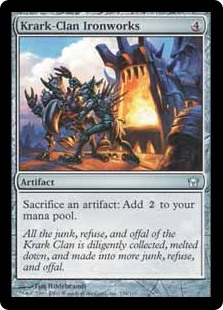
Since diversity is far and away the most important factor for Wizards when it comes to managing Modern, any enabler that successfully supports multiple strategies (even if one is oppressive) is probably safe. It seems to me that banning louder offenders like Krark-Clan Ironworks is more in line with the company's format goals.

That said, wizards has pointed to these cards being on their radar as recently as the latest Banned and Restricted Announcement, and made a point to reveal that the enablers "are not being given a free pass in perpetuity." Still, the same announcement reinforces the idea that consistency tools will only be banned if they result in a diversity decrease.

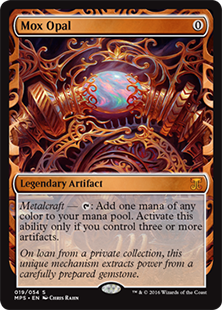
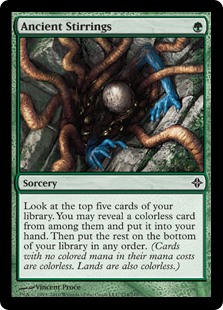
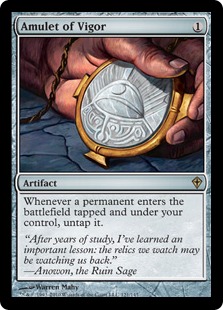
When we examine the effect of powerful cards, we consider whether they are increasing or decreasing the number of viable decks in the environment. In the current state of the metagame, the build-around nature of Ancient Stirrings supports decks that look very different from a simple collection of the strongest rate cards, and that otherwise may not exist. The recent resurgence of a new generation of Amulet Titan decks is a good example of this. Mox Opal is a similar case. In addition to showing up in high-profile decks like Hardened Scales, we also see Mox Opal enabling a variety of more fringe artifact synergy decks.

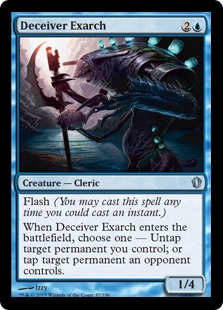
As Stirrings and Opal inhabit a wide range of decks, unlike, say, Wild Nacatl did, they are safe from the banlist. To be banned, Opal would have to make one deck so powerful that other Opal decks could no longer compete, or Wizards would have to reassess how they feel about Modern's existing fast-mana options. That other enablers were not even mentioned in the announcement bodes well for the stock stability of this sort of card in general—go ahead and spring for those foreign foils!

What's In a 'Nabler?

Unlike many best-of lists, Modern Top 5 seeks to establish parameters that explain its ranking. Grades are given out of 15, with three different metrics being counted out of 5; cards with more points are ranked higher. This system is not without its faults: some metrics are perhaps more important than others when it comes to a card's playability, but the metrics are not weighted; similarly, while doling out numbers removes a degree of subjectivity from the process, the numbers assigned and metrics chosen remain eminently debatable. The system's purpose, then, is less to create a definitive list than to pave the road for a structured debate surrounding the cards' playability in relation to one another.

There are two metrics I always use when evaluating cards for Modern Top 5.

  • Power: The degree of impact the card tends to have for its cost.
  • Splashability: The ease with which Modern decks can accommodate the card.

From Modern Top 5: Utility Cards:

Power and flexibility will be rated by considering both a card's floor (the least it will do) and its ceiling (its best-case scenario). For example, Lightning Bolt's power floor is higher than Fatal Push's, as Push is dead when opponents have no creatures while Bolt can go to the face.

Splashability will be rated by considering how many existing Modern decks can accommodate the card and whether they'll want it. For example, despite its lack of a color identity, Ghost Quarter doesn't fit into BGx midrange decks. These decks can easily run Fulminator Mage as mana disruption instead, and prefer not to miss a land drop if they don't have to.

As usual, we'll also add a third metric, or "guest judge," into the equation.

  • Resilience: The degree to which the card proves unfazed by targeted or splash disruption.

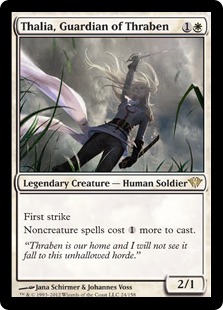
Resilience describes an enabler's ability to function under pressure. Cards like Thalia, Guardian of Thraben, Chalice of the Void, and Damping Sphere are Modern mainstays, and each of these mess with a subset of played enablers. Factors to consider when judging resilience include how common the top hate cards are in the format, whether they see mainboard play, and the amount they cramp the enabler in question.

With our method outlined, let's roll out the contestants!

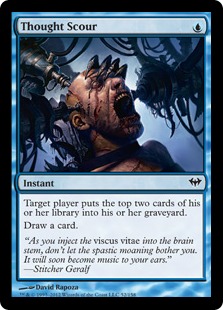
#5: Thought Scour

Power: 2

Thought Scour's effect is relatively minute, especially for the mana it charges. But it does enable otherwise impossible plays, like turn two Tasigur, the Golden Fang with Stubborn Denial up out of Grixis Shadow, and help Snapcaster Mage be more of a toolbox than ever. Lately, Scour is seeing play in UR Phoenix, where it has the upside of hitting a card with flashback or the deck's namesake creature. In these cases, the card ends up a +1 or better for just one mana.

Scour is at its worst when there are no payoffs in sight or in reach and pilots find themselves light on mana sources. Here, digging deeper into the deck for blind tries to find a land ends up too expensive, making players ripe for punishment from opponents. Similarly, in the mid- to late-game, the graveyard may be plenty stocked for whatever pilots have in store; Scour is then superfluous. Nonetheless, it does cycle into the next card, if for a mana and the small possibility of either milling a key card or, when targeting opponents, enabling their synergies.

Resilience: 3

A major historical failing of Scour's is that it incentivizes players to invest heavily into graveyard synergies. But doing so opens them to splash hate run in sideboards for decks like Dredge, such as Rest in Peace. As such, to run Scour is to walk a tightrope between extracting enough value from the cantrip to justify it over other options (most directly, Opt) and not designing a worse graveyard deck than Modern's lynchpin ones that loses to the same cards.

I faced this problem head-on while brewing UR Delver a couple weeks ago. Solutions include diluting the graveyard plan post-board, as is possible in Temur decks by removing creatures like Tarmogoyf for ones like Huntmaster of the Fells, and running cards that function okay under graveyard hate but still benefit from a mass of cards there, such as Snapcaster Mage and Grim Lavamancer. The best strategy in my eyes, though, is freshly available: to lean on a Crackling Drake Plan B, which extracts value from every Scour no matter the opponent's hate cards.

There's also the issue of spell-count hosers like Thalia, Guardian of Thraben and Damping Sphere. Scour has a leg up over its sorcery-speed sisters here, though, since it can be thrown on the opponent's end step or in response to the 2/1.

Splashability: 2

Any deck with both graveyard synergies (most of them) and blue (a minority) can accommodate Scour. Those decks should also be spell-based, as otherwise, there are simply better options for turbo-charging the graveyard. But as a one-mana cantrip, Scour has what seems like a permanent niche in the kind of strategy that also plays sorcery-speed blue cantrips, Lightning Bolt, and threats that benefit from one-mana spells.

Overall: 7/15

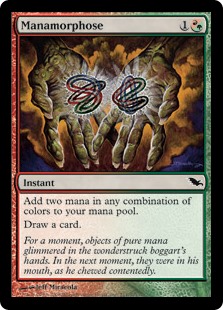
#4: Manamorphose

Power: 3

On its surface, Manamorphose does nothing. Players get their card back, and their mana back. So why run it? For the filtering? For the deck thinning? For the lulz? These questions are typical of new Magic players, but not of Modern veterans, who understand the card's power lies with the scope of what it allows. This format features cards that reward players for:

  • Casting instants/sorceries (Arclight Phoenix, Thing in the Ice, Monastery Swiftspear)
  • Having those cards in the graveyard (Snapcaster Mage, Bedlam Reveler)
  • Having those cards in exile (Crackling Drake)
  • Having those cards in the deck (Delver of Secrets)

In a shell featuring cards from multiple bullet points, Manamorphose is among the deck's best cards. Consider the Precognition Field decks I brewed back in March; all of them abused Manamorphose for multiple purposes. Or, more compellingly, look at UR Phoenix's results in Modern.

Resilience: 2

For all its enabling power, Manamorphose is very easy to hate out. Thalia, Guardian of Thraben has players lose at least one mana on the exchange, and often cripples hands clogged with cantrips like this one. Same deal with Eidolon of the Great Revel and Damping Sphere. Additionally, countermagic can blow out a Manamorphose turn; if players chain one into another, and that second copy is met with Spell Pierce, the turn player might have to just pass without recurring Arclight Phoenix. Permission can leverage an opponent's Manamorphose when playing against something like Storm, as well.

Splashability: 4

Manamorphose looks splashable enough on paper: it costs one of two colors to cast, and then produces any color mana. In truth, this assessment is apt. We've seen decks as diverse as Mardu Pyromancer, Traverse Shadow, Grishoalbrand, and Elves tech the card. Where it doesn't really fit is alongside countermagic. Holding up mana for permission doesn't gel with this card because casting Manamorphose on an opponent's turn could draw a card that would have been useful last turn, such as a land drop or a creature.

Overall: 9/15

#3: Faithless Looting

Power: 4

Faithless Looting is a relatively innocuous card that went largely unnoticed in Modern for much of the format's lifespan. Those days are long behind us now—the card is widely accepted as one of the format's premier cantrips. Not only does it take advantage of the fact that card advantage is far from one of the format's most important gameplay mechanics, Looting powers graveyard decks way up.

In a graveyard-based deck, Looting goes from a decent selection tool to a ridiculous spell. Players often have cards in hand they want in the graveyard anyway, and would happily expend cards binning otherwise. In this sense, Looting sometimes reads more like "draw 3" or "draw 4," an absurd rate for one mana. Combined with the dredge mechanic, things get even more out of hand.

Looting even has applications in decks with fringe graveyard requirements. Grixis Shadow, for instance, has taken to running Looting as a 2-of based on its card selection merits alone, as my GRx Moon decks have for years. In short, having the card in a deck fundamentally changes the way that deck navigates the mid- to late-game. Lands are generally best deployed each turn to ensure access on mana-hungry turns; Looting turns that philosophy on its head, rewarding pilots for sandbagging lands in hand. When Looting is drawn, it can chew through the chaff immediately, making it a "draw 4" in certain situations. Similarly, Looting is great at transforming spare copies of hosers like Blood Moon into something worthwhile.

Resilience: 3

Hosers like Rest in Peace interact effectively with graveyard decks in general, but they only counter half of Faithless Looting—its flashback. I see bringing in targeted graveyard hate for this one card to be overkill akin to boarding in Surgical Extraction against Snapcaster Mage.

How affected Looting is by other hate cards depends on the deck it's played in. For example, ones with a higher curve will care less about Damping Sphere, while Phoenix struggles under the artifact. Still, since Looting incentivizes players to hold lands in hand, they are likely to have less mana to work with, making these kinds of effects somewhat irksome.

Splashability: 3

Looting fits best into decks with graveyard synergies, but most strategies can accommodate it. The cantrip merely asks that pilots be on R, incidentally the color of Modern's best card: Lightning Bolt. Besides Shadow, we've seen Looting break into other midrange shells before, including Jund.

Highly streamlined decks not relying on graveyard synergies have little use for Faithless Looting, and the same can be said of creature-dense combo strategies like Kiki-Chord.

Overall: 10/15

#2: Mox Opal

Power: 5

If you thought leading with Noble Hierarch was good...! Mox Opal can't be Bolted and it lets players take other actions on their first turn. It's the most efficient accelerator in Modern, in the Moxen tradition of being the most efficient accelerators in Magic. While it doesn't do much in many later-game scenarios (try as I might have to offset this detriment), Modern is still a Turn Four Format, and getting ahead by a turn right away—not to mention for free—tends to be hugely impactful. And while this Mox is legendary, it's still not totally dead in multiples, with extra copies acting as Lotus Petals.

Resilience: 5

Thalia makes Opal cost one more. Ancient Grudge blows it up. Stony Silence turns it off. But all those cards cost two mana! There is no meaningful way to interact with the mana acceleration provided by Opal in the very early game, which is when it comes online.

Splashability: 1

Every rose has its thorn, and Opal's is its strict requirement. Without metalcraft, the Mox does nothing, so it only fits into shells basically built around the card. No worries; we've seen Opal make massive waves in strategies ranging from Affinity to Ironworks, and I don't doubt plenty of new Opal decks, however viable, will emerge in Modern over the next few years.

Overall: 11/15

#1: Ancient Stirrings

Power: 5

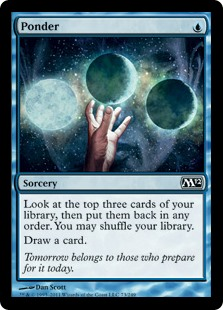
Let's review Modern-era card selection cantrips. Opt and Sleight of Hand give players two looks into their deck to find the card they want. Serum Visions? Three. The banned Preordain gives three as well, but in a better sequence. Ponder, also banned (and even restricted in Vintage), gives players a whopping four looks for one mana. At the top of the heap rests Ancient Stirrings, which provides five.

Granted, I think Ponder is better than Ancient Stirrings, both because it's more splashable and because of how nuts its stacking capabilities are with fetchlands in the picture. But when it comes to finding a specific card, Stirrings reigns supreme—on the condition players want to find something colorless.

That condition has proven to not be as restrictive as Wizards may think. For starters, lands are colorless, meaning it automatically has about a 1/3 chance to hit. Decks looking for specific lands like Tron, Eldrazi, and Amulet Titan benefit immensely from this feature. Next, pilots should tweak their decks and sideboard to include colorless disruption (Engineered Explosives, Relic of Progenitus, Oblivion Stone, etc.) and proaction (Thought-Knot Seer, Wurmcoil Engine, Karn Liberated, etc.).

Of course, if the upside of finding a specific colorless card (i.e. Amulet of Vigor) is high enough, the other "rules" for running the cantrip can mostly go out the window. Like most cantrips, Stirrings is also great throughout the game: early on, it finds lands, and later, it finds business.

Resilience: 5

Stirrings is very difficult to hate out. While Thalia or Sphere technically slows it down, Stirrings itself does not encourage the cantrip-chaining gameplay that Scour and Manamorphose do. Players are likely to resolve Stirrings and then one other spell in a turn anyway, so a small tax affects them very little. Players looking for an edge against Stirrings decks prefer to leave the cantrip alone and attack aspects they have more control over, such as with Stony Silence or Alpine Moon.

Splashability: 2

Here's where the deckbuilding restriction comes into play. While many Modern decks do play Ancient Stirrings (about a quarter of them), that number is still a clear minority for the reason that Stirrings can't be splashed willy-nilly. To accommodate the cantrip, players must either:

  • Have colorless cards they benefit greatly from finding at certain points in a game
  • Be composed primarily of colorless cards
  • Be able to utilize available colorless disruption from the sideboard (i.e. Relic of Progenitus, Engineered Explosives)

Decks combining multiple criteria make even better homes for Stirrings, but the fact remains that the card can't go just anywhere. In some decks, that restriction just isn't a restriction, but the same can be said of the drawbacks on most enablers. According to Wizards' statements thus far, this predicament is only problematic for Modern if it translates to a diversity loss; Stirrings being stronger than Ponder in some decks does not matter in regards to the banlist.

Overall: 12/15

Are You an Enabler?

In addition to attacking from unconventional angles and circumventing hate, Ironworks maxed out on both of Modern's best enablers. Similarly, the other best-performing deck in the format runs the other three. Coincidence? You decide!

Modern Specs After Ravnica Allegiance and the KCI Ban

Are you a Quiet Speculation member?

If not, now is a perfect time to join up! Our powerful tools, breaking-news analysis, and exclusive Discord channel will make sure you stay up to date and ahead of the curve.

It seems like these days new sets always make some impact on Modern, so it's no surprise a powerful set like Ravnica Allegiance has already made its presence felt in the format. Coinciding with the set’s release was the banning of Krark-Clan Ironworks, which opens up the metagame by removing its most oppressive strategy. These factors combined mean that Modern is in a relatively unstable and uncertain place at this moment.

Savvy speculators can capitalize on this if they can figure out where the metagame is headed next and what cards will come along for the ride. Today I’ll cover some changes that the banning and the new set have brought, and the cards I am targeting as a result.

A direct consequence of Krark-Clan Ironworks being banned is elevating the other combo decks in the format, which are now all scrambling to take the throne it vacated. The clear front-runner is the Amulet Titan deck, which had already been increasing in popularity over the past weeks, highlighted by winning SCG Worcester. Since the banning it has seen an increase in online play, including putting two copies in the Top 8 of the Modern Challenge last weekend.

Any of this deck's staples would be reasonable targets. Like the obscure Vesuva, which has increased 25% to $25 since the release of UMA and will likely keep trending higher.

There was an error retrieving a chart for Vesuva

My favorite target from the deck is Tolaria West, which has become my favorite spec in Modern of because multiple factors are playing in its favor.

There was an error retrieving a chart for Tolaria West

More than a staple of Amulet Titan, Tolaria West also plays a key role in the Whir Prison deck, sometimes called Lanternless Control. The strategy has always existed on the fringes of the format, but with a strong, successful underground following. The banning of KCI has players looking for alternate Mox Opal decks, and the Prison deck fits the bill.

It’s also now breaking through as a legitimate top strategy—two copies reached the Top 8 of the SCG Modern Classic weekend, including in the hands of Michael Coyle, who popularized the deck streaming as sussurrus_mtg. People are going to get on board with the deck, driving demand for Tolaria West, which is a four-of staple used to dig for any of its other lands or many zero-cost artifacts.

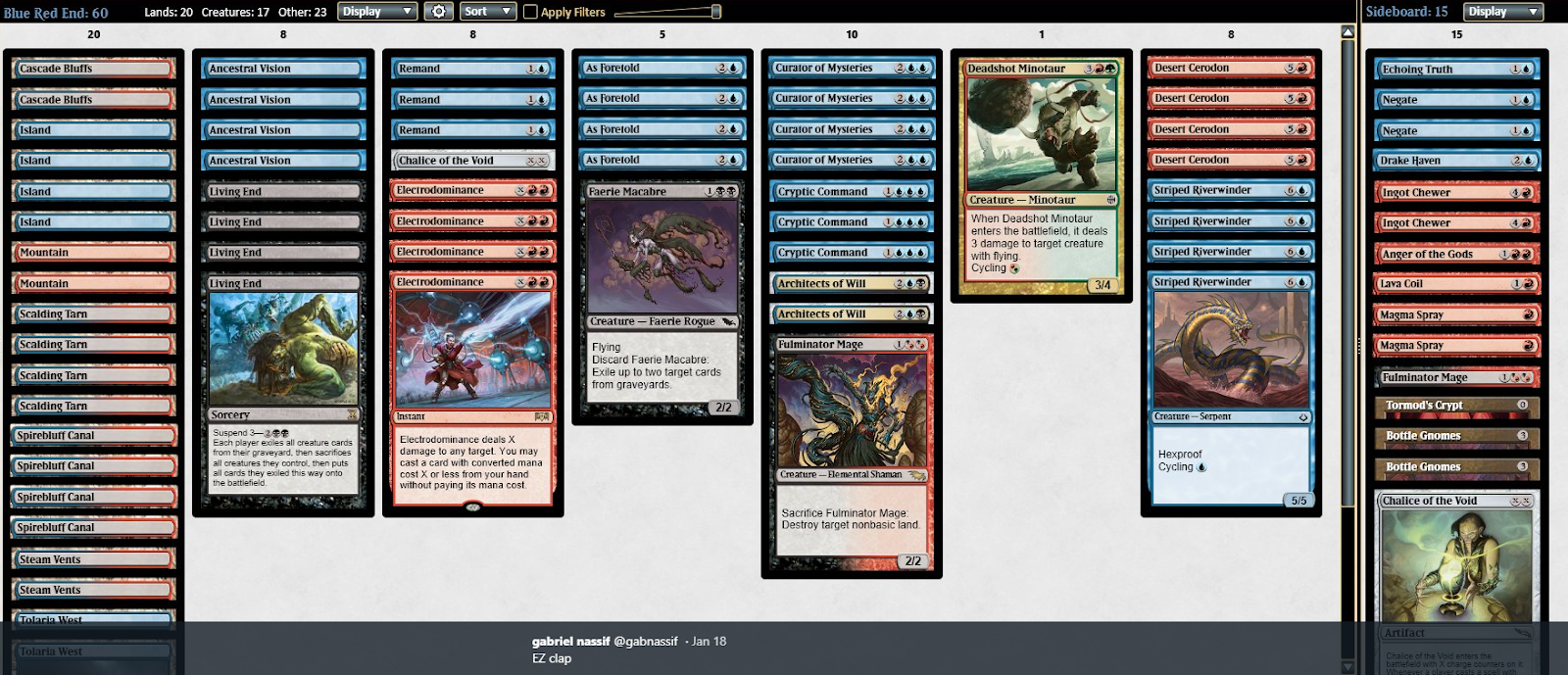
Adding even more pressure to Tolaria West is the printing of Electrodominance. It’s being used alongside As Foretold to play zero-cost spells like Living End and Ancestral Vision, and Tolaria West can tutor for them. Gabriel Nassif has been streaming with Electrodominance since it was released, and last weekend he broke through by top-eighting the Modern Challenge. When I was playing Modern this week I ran into the deck twice in the same League—so there are definitely people who took notice, and there will be more to come.

I’m very confident about the prospects of Tolaria West, but there are other possible specs in decks playing it. One example is Tezzeret, Agent of Bolas, which has become an accepted two-of sideboard staple of the Prison deck.

There was an error retrieving a chart for Tezzeret, Agent of Bolas

Tezzeret’s paper price has sunk to under $17 from $25 last spring. The price has averaged around $20 for the past two years, so the price seems quite low. It could be due for another spike, like when it rose from $15 to over $40 in spring 2016.

A look at the MTGO price shows it steadily growing from an all-time low of 0.8 tickets in mid-December to the nearly 2 tickets where it now sits. Demand is certainly increasing online, and I expect it will be felt in paper before long.

There was an error retrieving a chart for Spellskite

Another consideration is Spellskite, a four-of staple in the sideboard. Spellskite once demanded over $30, but it has fallen to under $9, a shadow of its former self in price and in the metagame. Once one of Modern’s best sideboard staples used in many different archetypes, it has become a minor player.

Demand from the Prison deck could be the factor that turns Spellskite around. A closer look at the price shows that it may already be on the rise. Both printings seem to have bottomed out at $8 sometime over the last month, and are now back to around $8.50.

There was an error retrieving a chart for Ensnaring Bridge

The single most important card in the Prison deck is Ensnaring Bridge, which is also the lynchpin of Lantern Control. The card first spiked when Lantern emerged a few years ago and hasn’t fluctuated much since, even through a reprint in Masters 25. There was sufficient demand for the card that the market absorbed them without the price taking a hit.

This leads me to believe that there aren’t a ton extra Ensnaring Bridges out there not being played with, and that those holding them in inventory aren’t especially eager to offload them. Ensnaring Bridge was a big winner from the banning of KCI because it’s used in other Mox Opal decks. An increase in demand and price during 2019 seems inevitable.

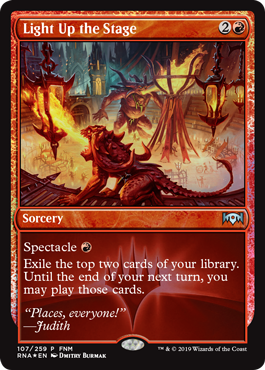
Beyond Electrodominance, the biggest impact from Ravnica Allegiance on Modern has been from Prime Speaker Vannifar and the spectacle cards. The first has spawned a new kind of Birthing Pod deck, while Skewer the Critics and Light Up the Stage have rapidly become staples in Burn.

There was an error retrieving a chart for Chord of Calling

I think the best spec for Prime Speaker Vannifar is Chord of Calling. This card was a staple alongside Birthing Pod as another way for accessing a toolbox and assembling combos. Early decklists show it performing the same role now.

There was an error retrieving a chart for Eidolon of the Great Revel

Eidolon of the Great Revel seems like a great way to spec on Burn, with Masters 25 copies up to $5 from a low of $4.70. This price has seemingly nowhere to go but up for what is such a strong staple.

-Adam

What’s Next #1

Are you a Quiet Speculation member?

If not, now is a perfect time to join up! Our powerful tools, breaking-news analysis, and exclusive Discord channel will make sure you stay up to date and ahead of the curve.

I decided to take a break from MTG Metagame Finance this week. We had our first week of the new Standard at SCG Indianapolis, so instead I’ll be diving into that tournament and the SCG Classics that ran alongside it. Magic Fest New Jersey was Ravnica Allegiance Limited, so not too much Constructed info coming out of there. But there was still a major takeaway—the fact that there wasn’t any coverage. I think this was a pretty large mistake on Wizards's and Channel Fireball’s part.

Magic Fest New Jersey 2019 Top 8 Draft

I can understand that paper Magic might not be very intuitive or fun to watch if you don’t know much about the game. But if part of Wizards’s goal is to eventually transition some people from MTG Arena to paper Magic, coverage of Magic Fests is probably a decent way to get people interested.

I also think a good amount of people watch coverage to get a heads-up on what cards to pick up or get rid of. But more than just being a tool to help finance-minded people, it’s really about providing more visibility to the game we all love.

Anyways, this week I’m revisiting the What’s Next idea I mentioned in article #23. If you didn’t read it or don’t recall the section, I talked about the decline of Humans in Modern, and how you could port over to Spirits as a way to maintain the value of your cards and stay up to speed with the metagame. That article came out almost two months ago. And if you take a look at the latest trends in Modern from MTG Top 8, you’ll see some correlation to what I wrote.

Originally, I was going to start this series off with KCI/Ironworks Combo. That got thrown out the window with the latest banned and restricted announcement. My initial thought was that KCI could port over pretty easily to something like Hardened Scales Affinity.

Modern: Ironworks Combo by Kanister

Creatures

1 Sai, Master Thopterist
1 Myr Retriever
4 Scrap Trawler

Non-Creature Spells

4 Ancient Stirrings
1 Spine of Ish Sah
1 Mishra's Bauble
1 Pyrite Spellbomb
2 Engineered Explosives
3 Conjurer's Bauble
4 Mox Opal
4 Darksteel Citadel
4 Terrarion
4 Mind Stone
4 Krark-Clan Ironworks
4 Ichor Wellspring
4 Chromatic Star

Lands

1 Forest
1 Island
1 Glimmervoid
2 Inventors' Fair
2 Buried Ruin
3 Yavimaya Coast
4 Grove of the Burnwillows

Sideboard

1 Wurmcoil Engine
1 Unmoored Ego
2 Swan Song
1 Rending Volley
3 Nature's Claim
1 Lightning Bolt
2 Galvanic Blast
1 Dispel
1 Back to Nature
2 Sai, Master Thopterist

Modern: Hardened Scales Affinity by Garth Dracoulis

Creatures

4 Hangarback Walker
4 Arcbound Ravager
4 Arcbound Worker
4 Metallic Mimic
4 Walking Ballista

Non-Creature Spells

4 Ancient Stirrings
4 Hardened Scales
2 Throne of Geth
2 Animation Module
4 Mox Opal
4 Darksteel Citadel
4 Welding Jar

Lands

1 Phyrexia's Core
1 Pendelhaven
2 Horizon Canopy
3 Llanowar Reborn
4 Inkmoth Nexus
5 Forest

Sideboard

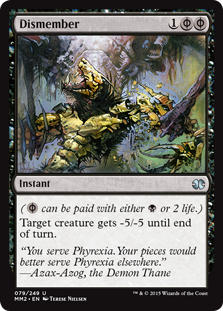
3 Dismember
4 Nature's Claim
1 Spellskite
2 Pithing Needle
3 Damping Sphere
2 Grafdigger's Cage

Since Krark-Clan Ironworks is banned now, I think it’s a good exercise to think about how the format could potentially change. A couple of questions come to mind when I think about this.

1. Which decks had a bad KCI matchup?

Here’s a starting list:

  • Affinity
  • Hardened Scales Affinity
  • Tron
  • Jund
  • Dredge

2. Which decks have a good Arclight Phoenix deck matchup?

Here’s a starting list:

  • Burn
  • Dredge
  • Grixis Death's Shadow
  • Jund
  • Humans

Of course, this is not totally comprehensive. But it gets the wheels spinning. A couple of decks that see overlap are Dredge and Jund. With that said, it seems like a good number of people are pretty hyped about Light Up the Stage and Skewer the Critics for Burn in Modern. If that hype turns out in fact to be valid, Jund might be a better choice over Dredge, since it generally has a better matchup against Burn.

One could argue that Dredge is the better choice since it just won the SCG Modern Classic in Indy. But I wouldn’t be so quick to rule out Jund as an option right now—the format is just starting to adjust to the banning.

If you take a look at the Top 16 decks, you’ll see that there are quite a few Burn and Phoenix decks.

Top 16 - SCG Modern Classic in Indy

  • Dredge (1st)
  • Azorius Control
  • Whir Prison
  • Izzet Phoenix
  • Izzet Phoenix
  • Burn
  • Amulet Titan
  • Whir Prison
  • Bant Spirits
  • Elves
  • Ad Nauseam
  • Burn
  • Burn
  • Burn
  • Grixis Death's Shadow
  • Grixis Death's Shadow (16th)

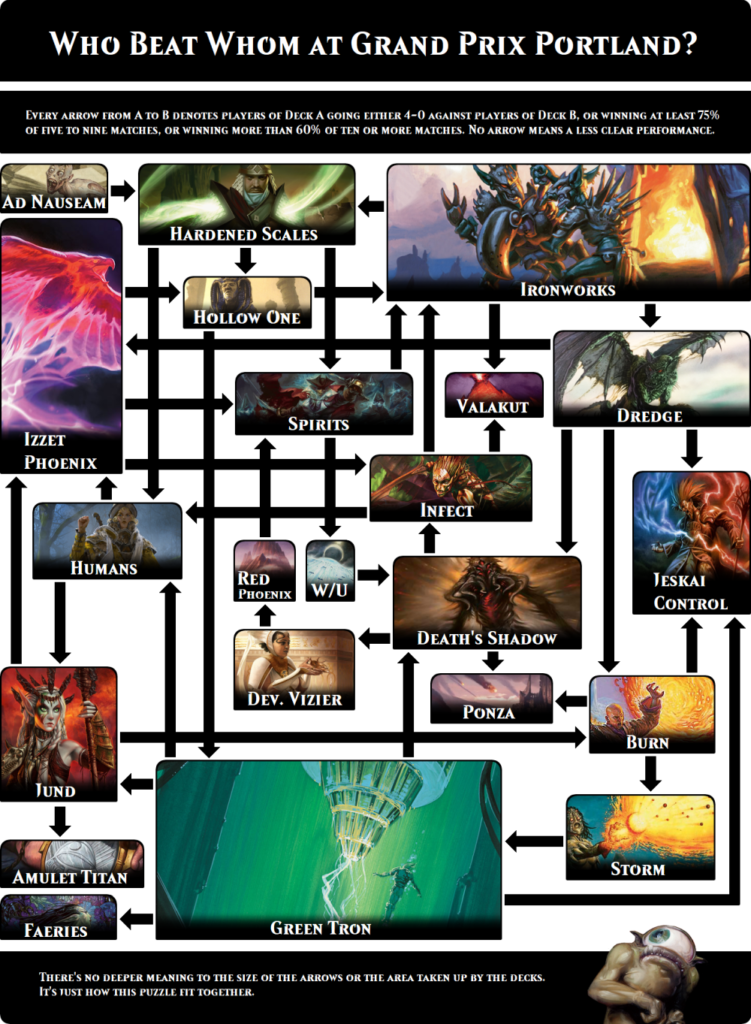
Now, although slightly outdated, take a look at this breakdown of Grand Prix Portland from Tobi Henke at Channel Fireball.

From this you can see that…

Bad for Jund

  • Humans
  • Tron

Good for Jund

  • Phoenix
  • Amulet Titan
  • Burn

Thus, I think it’s worth a shot looking further into Jund as an option going forward. For starters, let’s take a look at a couple of Jund decks from the Modern Magic Online Championship Series on January 21.

Modern: Jund by Qbturtle15

Creatures

4 Bloodbraid Elf
4 Dark Confidant
3 Scavenging Ooze
4 Tarmogoyf

Non-Creature Spells

1 Abrupt Decay
1 Dreadbore
1 Fatal Push
3 Inquisition of Kozilek
2 Kolaghan's Command
4 Lightning Bolt
1 Maelstrom Pulse
3 Thoughtseize
3 Liliana of the Veil
1 Liliana, the Last Hope

Lands

4 Blackcleave Cliffs
1 Blood Crypt
2 Bloodstained Mire
1 Blooming Marsh
1 Forest
1 Mountain
2 Overgrown Tomb
4 Raging Ravine
1 Stomping Ground
2 Swamp
1 Treetop Village
1 Twilight Mire
4 Verdant Catacombs

Sideboard

2 Alpine Moon
2 Ancient Grudge
2 Collective Brutality
3 Fulminator Mage
1 Huntmaster of the Fells
3 Leyline of the Void
1 Terminate
1 Tireless Tracker

Modern: Jund by Jaberwocki

Creatures

4 Bloodbraid Elf
4 Dark Confidant
3 Scavenging Ooze
4 Tarmogoyf

Non-Creature Spells

1 Abrupt Decay
1 Fatal Push
4 Inquisition of Kozilek
2 Kolaghan's Command
4 Lightning Bolt
2 Maelstrom Pulse
1 Terminate
2 Thoughtseize
4 Liliana of the Veil

Lands

3 Blackcleave Cliffs
1 Blood Crypt
4 Bloodstained Mire
2 Blooming Marsh
1 Forest
1 Mountain
2 Overgrown Tomb
3 Raging Ravine
1 Stomping Ground
2 Swamp
4 Verdant Catacombs

Sideboard

3 Ancient Grudge
2 Collective Brutality
2 Engineered Explosives
1 Fatal Push
3 Fulminator Mage
1 Liliana, the Last Hope
2 Nihil Spellbomb
1 Thoughtseize

There was an error retrieving a chart for Tarmogoyf

One card I like here is Tarmogoyf. It’s been reprinted many times now. But there aren’t any new Masters sets coming out in the foreseeable future. So if you don’t have these and need or want them, now is probably a good time to start picking them up. It was also recently featured in the cheap pickups section on MTG Stocks.

There was an error retrieving a chart for Dark Confidant

Another card to watch out for is Dark Confidant. This has been holding steady at about $50 for the past few months. But it could start to see a small uptick since it dodged an Ultimate Masters reprint.

There was an error retrieving a chart for Collective Brutality

This is another card that sticks out to me, especially with all the Burn decks floating around. I’d be a little more cautious with this one since it only has one printing. We’ve see this card hit $20 before and it could do it again without a reprint in the near future. It’s played in a lot of Modern decks.

There are a few other cards in the sideboards of these two lists that I’d also like to point out, since I highlighted them in recent articles.

There was an error retrieving a chart for Alpine Moon

I mentioned this in article #25.

There was an error retrieving a chart for Fulminator Mage

I mentioned this in article #24.

There was an error retrieving a chart for Engineered Explosives

I mentioned this in article #23.

Conclusion

It’ll only be a matter of time before we see what happens. But if you want to stay ahead of the curve, I would at least start testing Jund in Modern again. One tournament to keep an eye on would be Magic Fest Toronto from February 8-10. Let’s hope there will be coverage.

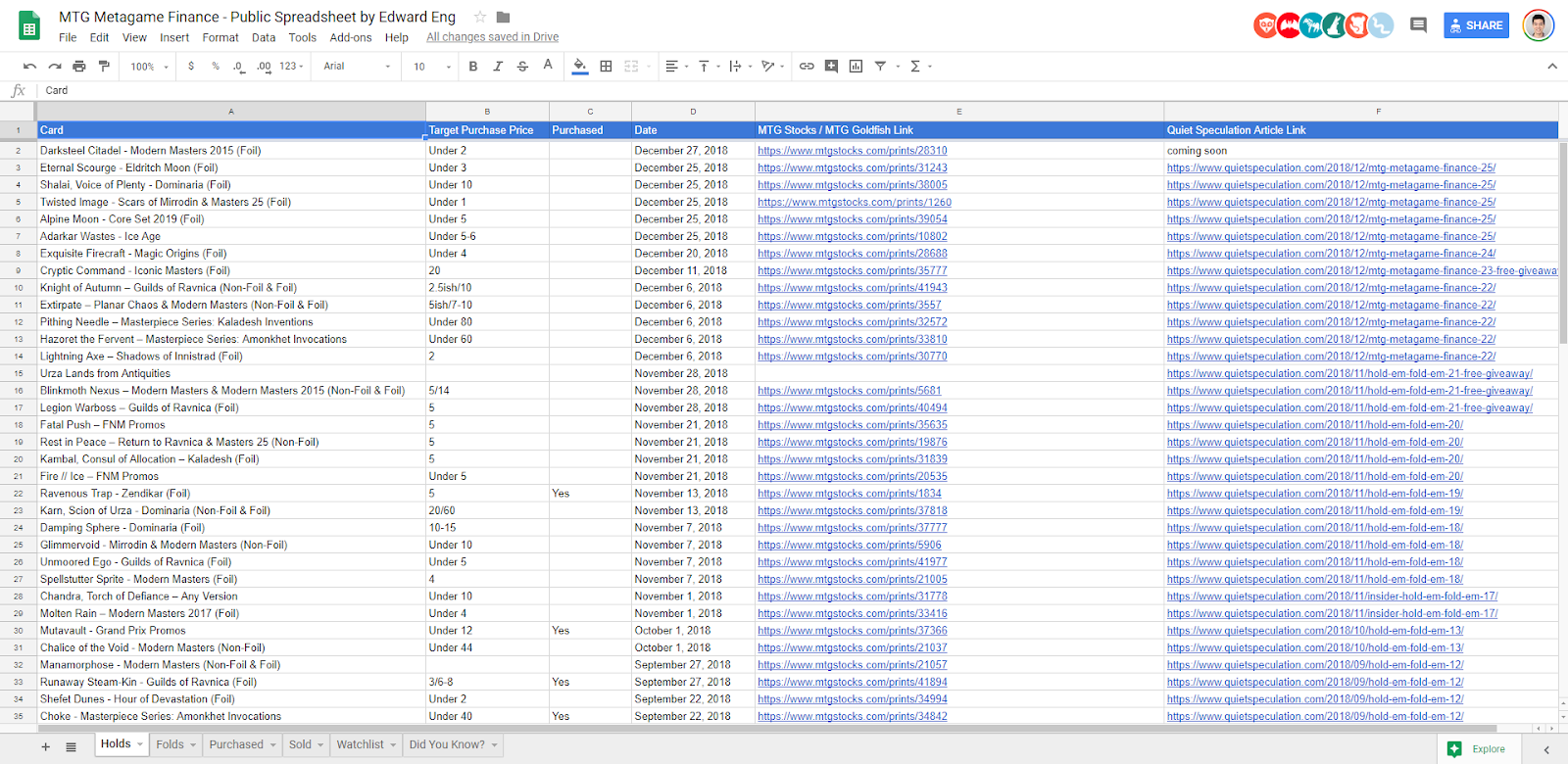
Public Spreadsheet

Stay up to the minute on what I’m looking at on a daily basis via the MTG Metagame Finance Spreadsheet. Don’t forget to bookmark it, because I update it on the fly. This way you can see what’s going on as the market moves and before articles about certain cards are published.

Let me know what you think in the comments below. Agree? Disagree? Why? You can also connect with me on Twitter at @edwardeng.

Important!!!

You can also catch me in the Discord channel (edward.eng#4978) if you have an Insider membership. I would go as far to say that this is one of the most valuable things you receive as a member. The Discord channel is very active and real-time discussions revolve around cards that move before anyone sees the actual movement—it’s usually already too late when you see this movement on sites like MTG Stocks, MTG Goldfish, and MTG Price. Hit me up on Twitter at @edwardeng, and I’ll answer any questions you have.

I’m also open to suggestions on how to make this series more valuable. Hit me up.

Have fun,
Eddie

Daily Stock Watch – Woodland Bellower

Are you a Quiet Speculation member?

If not, now is a perfect time to join up! Our powerful tools, breaking-news analysis, and exclusive Discord channel will make sure you stay up to date and ahead of the curve.

Hello, readers and welcome to a new edition of the Daily Stock Watch! I'm going to do a review today of a card that is spiking as we speak, thanks to its inclusion in a possible new version of Kiki Pod in Modern. It has suddenly leapfrogged to $7.50 from around $2, and it could get out of hand real quick if a complete buyout happens.

There was an error retrieving a chart for Woodland Bellower

Prime Speaker Vannifar has been an on and off card for the entire time it has existed, as it started off hot at around $24, and has now cooled off at around $13 even though people are still hyped about the idea of it being the centerpiece of a new Birthing Pod concept minus the actual pod itself. The list is still raw but it has gathered a following somehow and has helped in boosting the prices of the some of the less popular pieces such as Woodland Bellower (which is a singleton in this list, by the way).

Prime Speaker Kiki Chord

Creatures

1 Eternal Witness
1 Scryb Ranger
1 Magus of the Moon
1 Zealous Conscripts
1 Woodland Bellower
2 Scavenging Ooze
2 Breaching Hippocamp
2 Coiling Oracle
2 Kiki-Jiki, Mirror Breaker
2 Tireless Tracker
3 Noble Hierarch
3 Bounding Krasis
4 Prime Speaker Vannifar
4 Birds of Paradise

Other Spells

3 Chord of Calling
2 Eldritch Evolution
2 Postmortem Lunge
1 Jace, the Mind Sculptor

Lands

1 Steam Vents
1 Temple Garden
2 Island
2 Scalding Tarn
2 Breeding Pool
2 Grove of the Burnwillows
2 Stomping Ground
3 Forest
4 Wooded Foothills
4 Misty Rainforest

Sideboard

1 Thragtusk
1 Relic of Progenitus
1 Reclamation Sage
2 Kitchen Finks
1 Izzet Staticaster
1 Glen Elendra Archmage
2 Blood Moon
1 Avalanche Riders
1 Ancient Grudge
2 Abrade
2 Tireless Tracker

The plan is quite basic for this deck idea: keep Vannifar alive (or just time your Chord of Calling properly) so that it can finish the game in this single chain of "podding" in this order.

Going Infinite With Vannifar

This list omits the need for white and Restoration Angel but gives you the flexibility to stay on three colors for more power off the board and a lower risk to color screw. Getting your second copies of Bounding Krasis and [/card]Breaching Hippocamp[/card] allows you to finish the game with a finishing kick from Kiki-Jiki, Mirror Breaker on the same turn you start your combo, but do note that this deck will depend a lot on your key pieces staying alive to make sure it goes off. As problematic as that sounds, the same is true for other decks of its kin, anyway. Failure to go off on the first chance you get would almost always result in a loss.

Knowing that there is a deck concept like this out there, the prices of Scryb Ranger, Postmortem Lunge, and now Woodland Bellower are up and about until it is proven that the deck is just another hype train gone wrong. Although Woodland Bellower is a Commander staple, I don't see it sustaining this price tag if the deck doesn't succeed much. It should settle in the $5 range soon enough and I think that it's reasonable enough, considering that this deck list is out there and could possibly win a big event or two given the right timing.

At the moment, you could still find copies of Woodland Bellower from multiple vendors via TCGPlayer at anywhere between $5.48 up to $10.60. Foil copies are also available in various languages between $12.50 and $25. StarCityGames is out of stock for both normal and foiled ones, while Card Kingdom still has two play sets of normal copies available at $6.99 each. Seeing how the market is still running around with supplies, it's safe to say that the price tick wasn't caused by a buyout, but a rather vigilant move by sellers to try and gain profit from it while there is hype. Big stores don't usually panic on minor price spikes, so it should be safe to say that you could still get copies for $5 or less elsewhere. That would be the number I'm looking at if I were still to speculate at this point.

And that’s it for today’s edition of the Daily Stock Watch! See you again next time, as we check out a new card that should be on the go, or good enough for speculating. As always, feel free to share your opinion in the comments section below. And if you want to keep up with all the market movement, be sure to check in with the QS Discord Channel for real time market information, and stay ahead of the hottest specs!

Call the Police: Twin’s Role in Modern

Are you a Quiet Speculation member?

If not, now is a perfect time to join up! Our powerful tools, breaking-news analysis, and exclusive Discord channel will make sure you stay up to date and ahead of the curve.

Assumptions and collectively-held beliefs are fickle and powerful things. They can affect perception and, in a way, become reality if unchallenged. Therefore, it is critical for the skeptical mind to evaluate and investigate these ideas for validity, especially in the wake of recent bannings. After being challenged on long-held beliefs about Splinter Twin's effect on Modern, I've decided to investigate them. Did Twin in fact regulate Modern successfully? My research has only made me more skeptical.

Initial Assumption

Twin's reputation as of January 2016 was one of format policeman. When the unexpected banning happened, many players panicked. We'd never lived in a Twinless format before, and the fear was that Modern would explode with fast linear decks. We all knew that Twin forced decks to play interaction to not die to the consistent combo on turn 4, so absent that pressure, why bother interacting? And yet, Wizards killed the deck for winning too much. Fair enough: Twin did seem to win everything. Despite this, Modern players continue to pine for Twin's return to reign in more linear decks.

The Question

However, would Twin even do that? I was explaining the many calls for Twin's unbanning to some newer players a few months ago, and one of them commented that Twin just seemed busted. Another asked why one deck mandating interaction was seen as acceptable instead of format-warping, a common argument against unbanning Twin. All were dubious that forcing interaction slowed decks down, and wondered if decks wouldn't just try and race Twin. My answer was that racing wasn't really an option, as Infect was the only deck that could, and doing so still proved a a long shot (especially given Twin's available tools at the time).
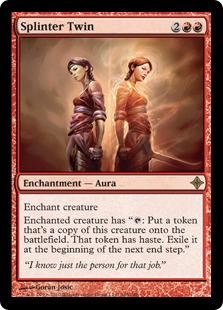
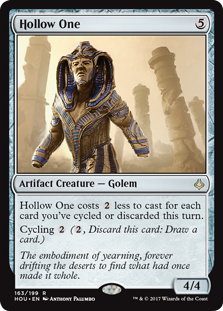
This conversation reminded me of how many cards in the linear/fast decks that get complained about didn't exist back in Twin's day. The power cards in Humans (Thalia's Lieutenant, Kitesail Freebooter, etc.), Cathartic Reunion, Arclight Phoenix, Spell Queller, Hollow One, Scrap Trawler, Search for Azcanta, and many others have all only existed in a Twinless world. Could Twin regulate them? For that matter, did Twin actually need to keep these kinds of decks out of Modern? Is there evidence of Twin regulating the format?

Year-by-Year Analysis

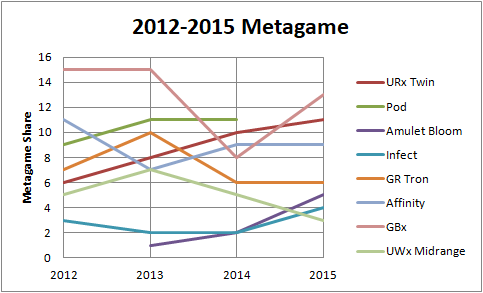
The logical place to start is by diving into the available data. Fortunately, MTGTop8 has been keeping stats for the Modern metagame forever, so I pulled their yearly data for the four full years that Twin was legal in Modern. I then collected data from top-performing unfair linear decks from the time of the Twin ban, some perfectly fair decks, and Birthing Pod. Note that Amulet Titan didn't have any reported metagame presence in 2012 and that Pod was banned in 2015.

Also, I'm aggregating all the Twin decks and all the GBx decks together in their respective mega-archetypes. This is mostly because my source grouped all Twin decks under the same banner, and frequently mixes Abzan and four-color lists in with straight Jund, but also to make the graph's I'm using less crowded.

Deck Name2012201320142015
URx Twin681011
Pod91111-
Amulet Bloom-125
Infect3224
GR Tron71066
Affinity11799
GBx1515813
UWx Midrange5753

Amulet and Infect enjoyed high points in their metagame shares while Twin was also at its peak. The other decks in the sample were below their peaks, but were relatively stable. Meanwhile, Twin had been rising prior to Pod's ban, and didn't affect Pod's share. In fact, only UWx declined between 2014 and 2015.
No Evidence Yet

The fact that Amulet Bloom and Infect increased their metagame share during Twin's 2014-2015 joyride pokes a hole in the Twin-as-regulator narrative. Twin had a pretty good matchup against both decks, so logically, they would fall off as Twin ascended. However, this is also a very zoomed-out view of things, and there are very few data points. Confounding variables and other metagame considerations could have affected the results, so I continued my investigation with a deeper dive.

Monthly Data Dive

Fortunately for me, 2015 was the year that Modern Nexus got started. Thus, I went back and gathered the Metagame Breakdowns for that year (oh, for Wizards to release that kind of data again) and pulled the decks that were available from my original investigation.

Deck Name2/16-3/163/1-4/14/1-5/15/1-6/16/1-7/17/1-8/18/1-8/319/1-9/3010/1-10/3111/1-11/3012/1-12/31
URx Twin12.311.811.811.312.512.59.57.510.211.112.5
Infect764.53.63.53.44.14.55.343.7
GR Tron2.933.13.85.34.23.55.15.56.26.9
Affinity7.877.15.88.58.46.9119.38.68.3
GBx13.417.413.114.512.412.410.312.912.511.611,8
Amulet Bloom2.72.72.93.24.13.41.73.74.15.24.2

Every deck shows volatility in the sample. Twin and Affinity finished the year meaninglessly higher than they started; Infect is very down; both Tron and Amulet Bloom are well above their starting positions. Again, this doesn't fit with the narrative about Twin. Also again, this isn't definitive.

I don't have enough individual data points for valid statistical analysis, so instead I have to rely on judging the observable trends in the data. However, this isn't arbitrary guesswork or Magic Eye interpretation. Specifically, if the belief that Twin regulated unfair or linear decks is true, then I should see a predator-prey relationship in the data. This would look like offset lines; in other words, the peak of the predator's line should match the midpoint of the decline of the prey's line, and vice-versa. This would clearly demonstrate that policing effect Twin was said to have.
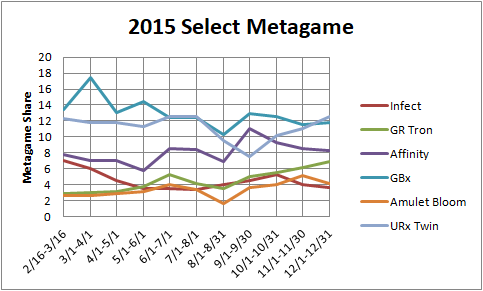
This graph certainly doesn't look like the classic graph. There doesn't appear to be any real pattern in the data except for the dip every non-Infect deck in August and September, from which they all rebound. This was the period when Grixis Control was suddenly, though only brieflya thing, but I can't be 100% certain this or any single deck or event were the cause. Again, this isn't helping Twin's case, but the graph is also busy enough that I separated the results to look for that predator-prey graph.

Deck by Deck

First up is Infect. Twin was favored, and as a result, Infect was considered a metagame call for when Twin was out of favor. Thus, I expected to see see Infect ascending where Twin was low.
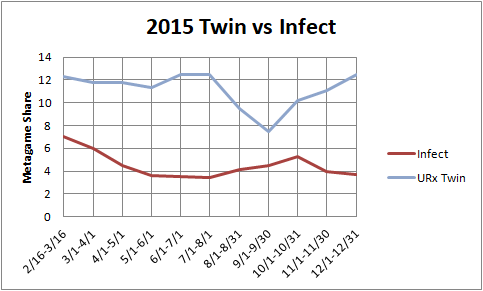
There may be evidence in Twin's favor here. Infect is overall on a downward trend while Twin was effectively a flat line for February-May. Between May and July they both flatlined, then for the rest of the summer, Twin was in the summer slump while Infect was up. Once that was over and Twin rose again, there was a delayed decline for Infect, which is consistent with predator-prey. However, this was only demonstrated for part of the year, so I'm calling the relationship present, but weak.
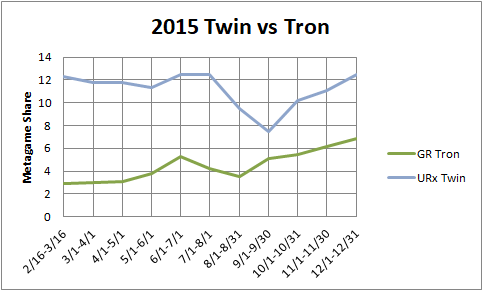
For Twin vs Tron, there really isn't predator-prey type correlation. They're almost symmetrical and parallel lines. Tron is on an overall upward trend for 2015, but has a local peak the same time as Twin does in June. Tron recovers from the slump first and then follows Twin in recovery, ending well above its previous metagame share. This is more a lockstep kind of correlation, so this data doesn't support Twin policing Tron.
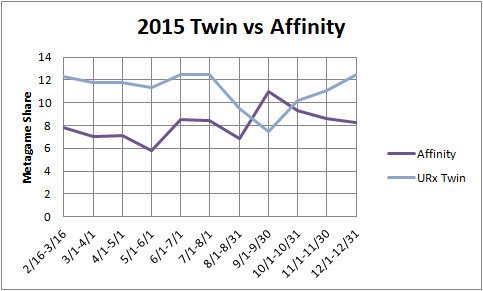
Affinity is very interesting. Up until August, Affinity and Twin are practically parallel, rising and falling at the same time (though not to the same degree). Afterwards, Affinity achieves its local peak at the same time as Twin's local trough. For the rest of the year, Affinity declines while Twin rises. This is consistent with both predator-prey and the metagaming cycle. Given that it's not true for about half the year, I'm saying on net it's weak evidence for Twin policing it.
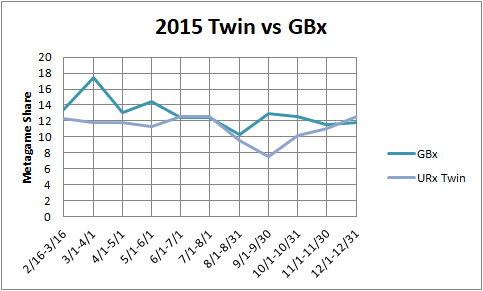
Twin vs GBx and Jund in particular was generally seen as an even matchup. Jund could beat the Twin combo with Abrupt Decay and there was little Twin could do, so it turned into an attrition game. Their metagame percentages seem to reflect this analysis; Jund shows a lot of early volatility, while Twin is almost perfectly stable. They both feel the late-summer droop, but GBx recovers first, and they end the year equal. I don't think this provides any evidence in Twin's favor. Even if it does, it's very weak.
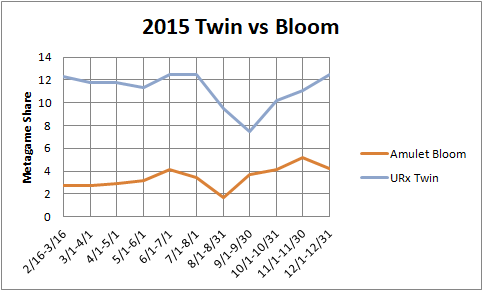
Twin was known to have a good Bloom matchup from Bloom's coming out party. The data does show signs of predator-prey, with Twin falling and recovering after Bloom. The early months see Bloom slowly rising, which is odd since Twin is fairly stable. Twin may have policed this deck.
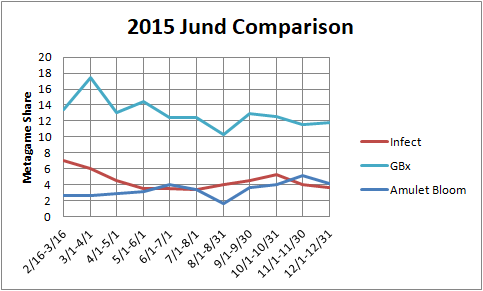
Out of curiosity and as a comparison, I compared GBx to Infect and Amulet Bloom. I was surprised to see similarly weak predator-prey correlation. It makes sense that GBx would prey on Infect thanks to the discard and spot removal. However, midrange decks generally struggle against big mana, and Bloom had plenty of ways to get around discard. I'm not sure what to make of this.

Coincidental at Best

My monthly-data dive showed several possible instances of Twin preying on decks, as the model predicts. One was quite a solid example, while the others are questionable. This is complicated by there being a general decline in non-Infect decks in late summer, which may simply be a coincidence. The drop is integral to the predator-prey relationship being observably real, but again, I can't confirm that this wasn't some outside distortion making it look correct.
The overall picture indicates that Twin was not keeping Infect, Affinity, Tron, or Amulet Bloom down, as each gained metagame share while Twin was at its peak. The more detailed look suggests that Twin preying on these decks is at least plausible. This is neither evidence for or against the hypothesis that Twin regulated Modern, complicating a firm conclusion.

Beyond Twin in 2016

The other option is to look at the consequences of the Twin banning. In the aftermath, it was assumed that linear decks would dominate. Then Oath of the Gatewatch happened, and Modern went down the tubes for several months. This makes evaluating 2016, the year most free from the printings that supercharged a lot of linear decks in 2017, difficult. Once again, I'm using our metagame breakdown data from 2016, which is a bit fragmented since the January and March data was ruined and mooted by bannings with October and November lost to logistical problems.

Deck Name2/5-3/64/8-5/15/1-5/316/1-6/307/1-7/318/1-8/319/1-9/3012/1-12/31
Eldrazi34.91.62.82.84.56.39.24.3
Infect3.85.66.38.55.75.97.610.2
GR Tron2.13.67.65.43.83.13.53.8
GBx412.810.911.61213.710.511.2
Affinity8.95.84.75.76.26.57.55.3

Remember how bad Eldrazi Winter was? I didn't, until I started pulling up the data. I know there are those that believe that Twin would have kept Eldrazi in check for the same reasons it allegedly kept other decks down. While it is theoretically possible, the fact that Colorless Eldrazi dominated the No Banned List Modern Open makes that claim suspect. Maybe Eldrazi Winter wouldn't have been as bad, but I seriously doubt that Twin could have stood up to the spaghetti monsters.
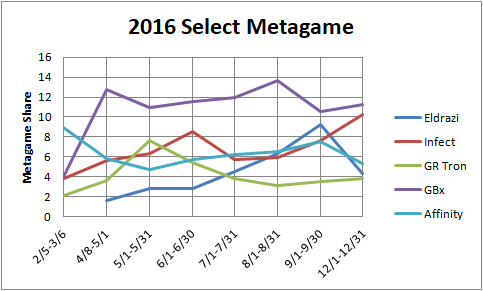
Infect clearly ends the year as the highest performing stand-alone deck. This would suggest that once free of Twin and Eldrazi, it was the best deck in Modern, which supports the Twin-as-moderator argument. However, Affinity started the year strong having lost a bad matchup, then failed to maintain its position and fell quite a bit, which is contrary to the expectations. Tron also ends higher than it started, but on the same level as it was post-Eldrazi Winter. Jund recovered from its beating and did quite well, while Eldrazi turned into Bant Eldrazi and had a good September before falling off.

There's no real pattern to the data indicating that losing Twin unleashed a swath of linear decks. It is also worth remembering that the spike in Infect late in the year coincided with Blossoming Defense's printing.

Claims Unproven

After considering all the data I gathered, I cannot definitively say that Twin did in fact keep any linear deck in check. Since my assumption was that Twin was a policing agent, the ambiguity of the data is the more important result. If Twin was having a direct effect on the existing unfair decks by forcing them to interact, slowing down their kills, and therefore making them worse, I can't see it in the data.
Whether Twin was keeping out otherwise viable non-interactive decks is similarly impossible to say. However, I doubt it. There wasn't a huge burst of diversity post-Eye of Ugin ban, and the metagame looked pretty similar to pre-Twin ban Modern. A lot of critical cards for the current linear decks were printed after January 2016. The only deck that could have existed then and didn't is Grixis Death's Shadow, but as that deck developed from Traverse Shadow, I doubt it would have. This leaves the pro-Twin claim on shakey ground.

Specific Examples
Since the overall data doesn't clearly answer the question, I've also looked at how specific decks reacted to the banning. This has only served to further weaken the case for Twin's police powers.

First, consider Amulet Bloom, arguably the poster child for broken linear decks. As demonstrated at the Pro Tour, the deck was insanely powerful and capable of winning on turn 2. However, it had an appallingly bad Twin matchup, to the point that Justin Cohen didn't consider it winnable by anything other than luck. Despite this and how well Twin did in 2015, Amulet still increased its metagame share over the year. That's impressive, especially considering how intimidating the deck was to pick up.
The second, and I think more damning, study was to compare Twin-era linears to their post-Twin counterparts. If they had removed interaction in favor of faster kills, there might be something to the notion of Twin forcing interaction.

However, I didn't find that proof. Infect decks from the end of Twin era are virtually identical to decks from the eve of Gitaxian Probe's banning: no more or less interaction between the maindeck and sideboard. Spellskite and Wild Defiance got bumped from the maindeck to the sideboard to make room for Blossoming Defense, while the overall number of counters and Dismembers remained the same.
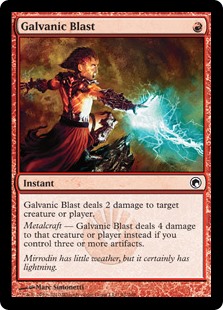
Perhaps the most devastating evidence against Twin's supposed policeman effect is Affinity. The latest traditional Affinity deck (as of writing) is virtually unchanged from the Affinity decks of 2015. Even Galvanic Blast is still a mainboard four-of, while a few counters or Thoughtseize remain in the sideboard. I'm not seeing proof that Twin forced interaction as much as proof that decks that want some interaction play some, regardless of the metagame.

Perception Becomes Reality

If Twin had no provable tangible effect on the viability of linear decks in Modern, why was that such a widespread belief? I suspect and will argue conventional wisdom. It makes perfect sense that Twin would have such an effect. It was a consistent turn four kill that had to be respected at all times. That was the speed limit, and there really weren't decks that consistently beat Twin in a footrace. It made logical sense for it to be true, and with everyone repeating the line for years, it became accepted as truth.

In this scenario, Twin was a format regulator through perception. The belief that a deck that would just lose to turn four Twin being unviable served as the format's gatekeeper. In other words, the conventional wisdom of Twin's effect produced a psychological barrier that had the effect of making the effect true, regardless of what was factually true.

Unbanning Complications

If the truth of Twin's regulatory powers were primarily psychological in the first place, it seems unlikely that it could be so again. Decks now have the means and likely the willingness to challenge Twin when this arguably wasn't true previously. Given how Modern's changed since January 2016, I believe such a challenge would be successful. Many of the linear decks that Twin's champions claim will be regulated were not viable in 2015 because the cards that made them decks didn't exist.  Given the speed of decks like Hollow One, I have serious doubts that Twin would effectively regulate them.
The only certain impact of unbanning Splinter Twin would be the unleashing of a combo-control deck. This deck is capable of winning on turn four in a way that requires players to leave mana open or simply die. How healthy or desirable is this effect?

Finally, there's the diversity question. Back in Twin's day, the card pool was smaller, so fewer decks were viable. However, this was also a time when the best decks held 10% or more of the metagame year after year. In 2017 and 2018, only Death's Shadow was that high, a statistic that did not persist. Twin, Pod, and Affinity were at the top of the metagame every year from Modern's inception until relevant bannings took place. 2017 and 2018 saw huge shakeups in the top tiers. Whether the actual strategic diversity has changed is unclear, but it is clear that there is no longer a presumptive best deck year after year, and that increases competitive diversity.

My Bottom Line

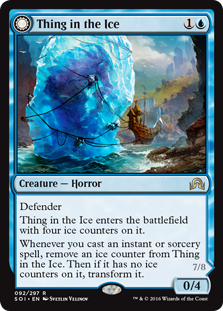
I suspect that if Twin is unbanned and is still good (which is unknowable), it would draw in significant metagame share. After all, why play any other deck? Why play Arclight Phoenix or Storm when Twin is a more reliable combo than storm and can incorporate most of Phoenix's tools? Would Twin just coopt Thing in the Ice to easily outclass anything in its colors?
Twin also resists hate. There was no sideboard card or deck that knocked Twin off its perch prior to the ban, and if Twin is still good I have no reason to think one would today. Torpor Orb, Suppression Field, and Ghostly Prison were all effective against the combo, but weren't enough then, and there's nothing better now. Fatal Push requires a revolt trigger to kill Exarch or Pestermite. Twin can also play into this, because it's extremely hard to be prepared for both the combo and control plans; if there's going to be hate, just sideboard around it and still win.

Right now, there are good reasons to pick any deck and to switch off decks as the metagame shifts. Is that something worth risking?

Murky Waters

I cannot say definitively if Twin actually policed Modern because I cannot prove it with data. Thus, I cannot extrapolate whether it would do so now. Absence of evidence is not evidence of absence, but the fact that data did not support the policing claim strongly suggests the claim is untrue. The only effect that I can say unbanning Twin would have is to return that turn-four combo deck to Modern. Given that there are serious concerns about the gameplay the deck encourages, I don't think it's something Modern needs. Krark-Clan Ironworks being banned for similar gameplay demands makes a Twin unban look even more remote.

If Twin doesn't actually police Modern, but is just another busted combo deck that sucks up everyone else's metagame share, is it worth having? If it does police Modern, is the way it does so good for format health and player enjoyment? The thought I can't shake after this data dive: quis custodiet ipsos custodes?


Why I Cancelled My Mythic Edition Purchase

Are you a Quiet Speculation member?

If not, now is a perfect time to join up! Our powerful tools, breaking-news analysis, and exclusive Discord channel will make sure you stay up to date and ahead of the curve.

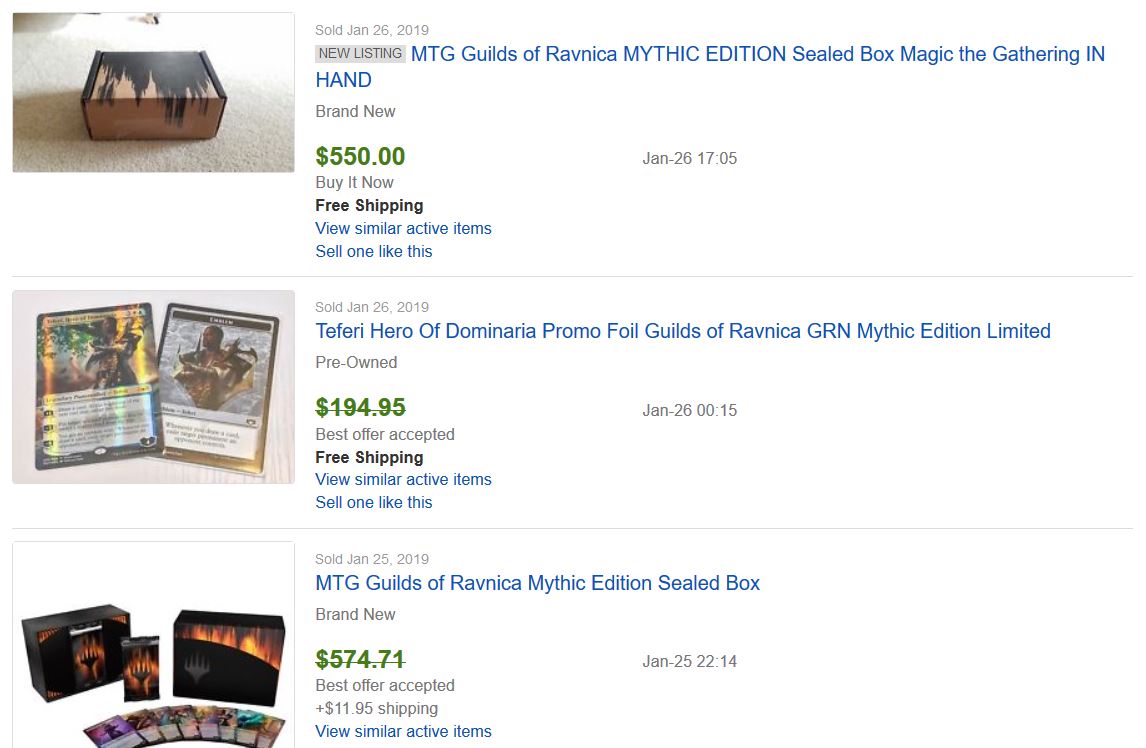
The current market price on the original Mythic Edition set, Guilds of Ravnica, is noted as about $500 on TCGPlayer. However sets on eBay are selling well into the $500’s. Teferi alone is selling well over $100.

(Click to expand.)

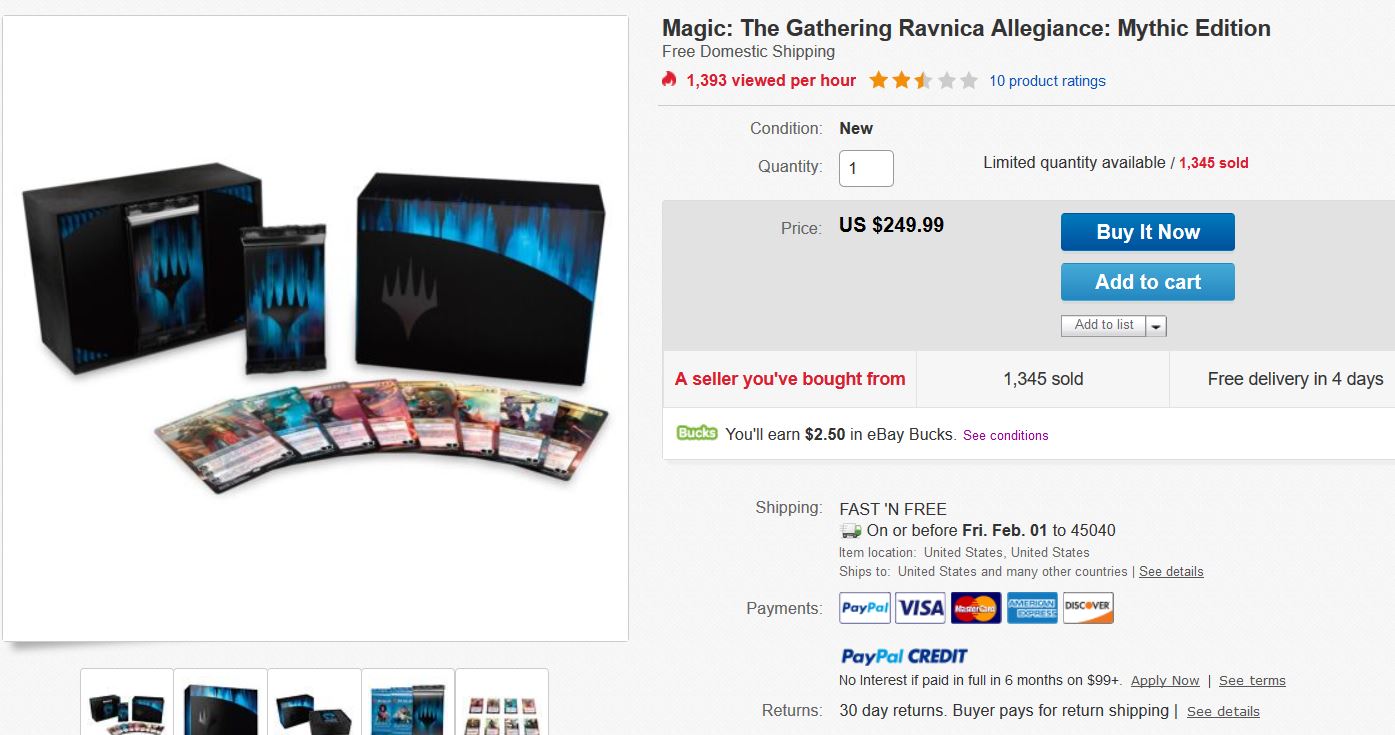
Based on the success of this product, it was natural for folks to assume the second version of Mythic Edition, Ravnica Allegiance, would be at least nearly as valuable. This is precisely why I purchased a box within seconds of their becoming available for sale on Hasbro’s eBay site. I was celebrating my guaranteed $100+ profit when I realized something: sales were slowing.

Not only was the deceleration of sales significant, we also got wind of a “rumor” that there were nearly 20,000 sets available for purchase. In my typical risk-averse fashion, I promptly cancelled my order.

Why I Cancelled: The Gut Reaction

A number of emotional factors contributed to my decision to sell, and it wasn’t all out of fear. First and foremost, I have absolutely zero interest in new cards. Spending $250 on a set of new cards is a tough pill to swallow while I’m actively saving resources for an Unlimited Mox Sapphire.

There was an error retrieving a chart for Mox Sapphire

In fact, my progress towards that Sapphire has been abysmal—I keep finding arbitrage opportunities that end up soaking up my cash. So when I purchased this Mythic Edition set, it actually took my MTG cash balance to zero. That wasn’t where I wanted to be. It meant that I would have no available funds to take advantage of upcoming opportunities (@MissouriMTG on Twitter has been offering a ton of deals lately).

Essentially, my hands would be tied until I could flip this product.

That’s when the second part of my emotions kicked in: why wasn’t this product selling out!? Everyone swore it was a slam dunk and represented free money. But if that was the case, people must hate free money because an hour after I cancelled I still saw only a fraction of available sets sold. That is a far cry from what happened the first time around.

I woke up the following morning to find out the sets had “sold out.” The speculator community had done it! People claimed victory, assuring folks that sets would rebound in price now that these were no longer on the market at MSRP. But when I saw that only 9,339 sets had sold in that listing, I knew something was not right. Why would Wizards pull half the available supply so suddenly?

The answer came later that day, when thousands more sets were re-listed at the same price: $249.99. As of this article’s writing Sunday morning, only 1,345 more sets had sold, bringing the grand total to 10,684. Just over half the initial supply.

(Click to expand.)

Why I’m Not Rebuying

Here I am sitting on my computer, eBay site open, wondering if I should purchase this set again. There is plenty of supply, still, and I could reap the “guaranteed” profits still sitting on the table waiting for thousands of speculators to enjoy.

The thing is, I still don’t want to buy this set. I’ll give you three reasons for this.

  • I have no desire to keep this product. The planeswalkers look cool, but they don’t cost zero mana and tap for a blue. Therefore, I can’t play them in my Old School deck.
  • I can’t readily flip the sealed product for profit. I know, I know. You’re going to tell me how you sold your set right away for $400 and made a decent profit. Maybe you’re one of the lucky people who cashed out before people saw that it had been restocked. I missed that window. At this point, there’s little room to profit from selling the sealed product. I also don’t want to sell above MSRP considering these are still $249.99 on Hasbro’s storefront. It is not my intent to charge people more than they have to pay for their cards—that’s not how I choose to operate.
  • I don’t feel like doing the work it takes to crack all the singles and sell them all individually. If I were to try and cash out—and Hasbro still had stock on eBay—this would be my most likely avenue. You only need to average $35 per planeswalker and you could grind out a profit. In all honesty, this is the one thing that tempts me to still make a purchase. But because of the aforementioned reasons, I’m likely not to bother. Besides, there’s still a race to the bottom going on as speculators attempt to cash out of their product, and I don’t know what real demand is from the player base yet.

With these factors in mind, I continue to drag my feet on purchasing this product despite the profits to be had. In reality, there’s really little reason for me to rush at this point. With thousands of products still available at MSRP on Hasbro’s site, I can take my time.

There may be an advantage to being the first to list the singles for sale, but at this point the advantage is fading. If I were to place the order today and sell the singles in a few days when they arrived, I’d likely be looking at lower prices and a smaller profit margin. As long as there are still thousands available for sale, I don't feel in any rush.

Additional Thoughts

Something else bothers me about this product beyond my previous points. Have you noticed that Hasbro takes a certain mentality with these supplemental products: “If some is good, more is better.”

Think about it. The print run of the initial Modern Masters was insufficient to meet demand and prices went ballistic. Any who got in near MSRP made significant profit. Then Modern Masters 2015 came along and margins were far less due to a larger print run. By the time Eternal Masters came along, there was little benefit to buying sealed product to flip. The supply was simply too much for the demand.

How about the SDCC Planeswalker sets? Those first sets were so unique, generating demand from speculators and collectors alike. Their scarcity made the product even more desirable. A sealed SDCC 2013 set will now cost you nearly $500. But then they made a set in 2014. And 2015. And 2016, 2017, and 2018. Now the sets don’t hold the same allure they once had. SDCC 2017 sets are listed on TCGplayer for $215, less than half the 2013 sets. Whether due to greater demand or decaying interest, these sets just don’t hold the luster they once had.

(Click to expand.)

Next consider the Masterpiece series. Expeditions were the first of their kind and a huge success. So Wizards created a new version of the product again and again. Next thing you know, they ran out of cool ideas of which cards to reprint and the allure of a new, premium product started to fade. Granted the Kaladesh Inventions had a nice recovery. But the bottom line remains the same: Wizards likes to give us too much of a good thing.

Could these Mythic Edition sets follow a similar course? Will they be released time and again, set after set, going forward? I believe it’s likely. Judging by previous trends, this means each time these are released the luster will dwindle and prices will drop. Perhaps the second set of these will still be desirable and hold value, but there’s no way they'll be worth as much as the first.

Wrapping It Up

After writing this article, I still admit I am on the fence on these Mythic Edition sets. What tempts me most is the thought of cracking the packs and selling the eight planeswalkers individually. This seems to be the best way to flip the product for profit.

But I still hold back because I’d rather accumulate cash to make other, more urgent purchases. The Old School market has calmed down and prices are once again attractive—I’d rather be putting my money there. If I had more liquidity, perhaps I’d be willing to sink $250 plus tax into one of these sets to try my luck with flipping the singles. But given my limited funds, I’m not sure I want to tie up that much money in this product.

If you’re still on the fence, or if you just recently made a purchase, I’d highly encourage you to exit by selling the singles individually. However even as I say that, I may be causing the profit margins to shrink. The more people who decide to pursue this option, the lower prices will be on each planeswalker. This is the ultimate concern that keeps me on the sideline—if too many speculators are buying this product to flip, margins have to drop.

In general, I try to avoid parking money into cards I think will drop in price. That’s not an ideal way of speculating, and the race to the bottom can leave a sour taste in one’s mouth. That’s not for me, honestly. I’ll stick to what I know and buy accordingly.

Sigbits

  • Revised Bayou is back on Card Kingdom’s hotlist with a buy price of $175. I think dual lands may finally be bottoming after their recent pullback, and I still like holding these through 2019. If you are underexposed to the dual land market and are looking to park some cash for a while, I’d recommend taking a closer look.
  • There’s been a good deal of chatter in the QS Discord chat about Massacre Wurm. Supply on this creature is quite thin and prices are steadily climbing. Card Kingdom has a buy price of $16.50, which is just a couple bucks below TCG pricing. Keep a close eye on this one.
  • Card Kingdom used to hide their buy prices on the most expensive cards, instead using a comment about emailing the buyer. But they’ve changed back to posting prices again, and now we can see some pretty impressive buy numbers on Alpha Besides the obvious (Power, duals). It’s interesting to see the other cards they pay aggressively on. For examples, they pay $4200 on Chaos Orb, $2700 on Wheel of Fortune, $2520 on Birds of Paradise, and $1440 on Mind Twist. These are some mind-boggling numbers!

Old Dogs, New Tricks: January Tech Report, Pt. 1

Are you a Quiet Speculation member?

If not, now is a perfect time to join up! Our powerful tools, breaking-news analysis, and exclusive Discord channel will make sure you stay up to date and ahead of the curve.

Krark-Clan Ironworks is now banned in Modern. Despite its dominance on the tournament scene, though, the deck failed to stamp out the format's trademark diversity and innovation. Plenty of decks and deckbuilders brought exciting new tech to the tables this month, and we'll ring in the new year right by unearthing some of it today.

Tempo: Back in Blue

Modern's spell-based tempo decks now tend to trend largely red thanks to the versatility and power of looting effects and the on-color payoffs available. Nonetheless, January continued an inspiring trend we observed late last year of traditional (read: blue) tempo pieces being repurposed effectively.

4-Color Delver, by SCREENWRITERNY (5-0)

Creatures

3 Delver of Secrets
3 Snapcaster Mage
2 Geist of Saint Traft
3 Tasigur, the Golden Fang
1 Gurmag Angler

Planeswalkers

3 Liliana of the Veil
1 Liliana, the Last Hope

Instants

3 Thought Scour
4 Lightning Bolt
2 Fatal Push
2 Kolaghan's Command
2 Mana Leak

Sorceries

3 Serum Visions
3 Inquisition of Kozilek
3 Thoughtseize
2 Collective Brutality

Lands

4 Polluted Delta
2 Bloodstained Mire
1 Blackcleave Cliffs
1 Scalding Tarn
1 Hallowed Fountain
1 Watery Grave
1 Blood Crypt
3 Darkslick Shores
1 Drowned Catacomb
1 Creeping Tar Pit
1 Island
1 Mountain
2 Swamp

Sideboard

1 Fatal Push
2 By Force
3 Damping Sphere
2 Kozilek's Return
4 Leyline of the Void
2 Spell Pierce
1 Terminate

I'm no stranger to greedy manabases and Human Insects, but SCREENWRITERNY's 4-Color Delver strikes me more as a midrange deck than a tempo one. It's got targeted discard, delving recovery threats, and even planeswalkers. But it's also got Mana Leak, a card hard to spot outside of blue tempo strategies unless it's rounding out a control deck's permission suite.
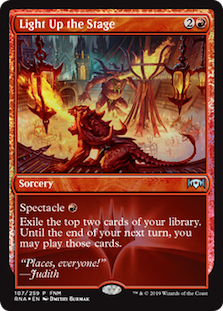
The key creature here, and reason for splashing white at all, is Geist of Saint Traft. Modern significantly diversified its removal last year, but Geist blanks almost all of the available options. Add to that the fact that cheaper raw-stats creatures like Tarmogoyf and especially Wild Nacatl are much less common than they used to be and Geist starts looking like a plausible damage out-putter. In the olden days, the Spirit had trouble breaking through boards of larger creatures as well as surviving red board wipes like Pyroclasm, putting it in a precarious tightrope position.

UW Tallowisp, by SYUSEKI (5-0)

Creatures

4 Tallowisp
4 Rattlechains
4 Geist of Saint Traft
4 Spell Queller

Enchantments

2 Curious Obsession
1 Steel of the Godhead
1 Angelic Destiny

Instants

4 Path to Exile
1 Fatal Push
3 Shining Shoal
3 Disrupting Shoal
3 Remand
3 Cryptic Command

Sorceries

1 Lingering Souls

Lands

4 Flooded Strand
2 Polluted Delta
1 Marsh Flats
1 Misty Rainforest
4 Hallowed Fountain
2 Watery Grave
2 Seachrome Coast
1 Celestial Colonnade
1 Ghost Quarter
3 Island
1 Plains

Sideboard

2 Fatal Push
3 Lingering Souls
3 Damping Sphere
2 Dispel
1 Grafdigger's Cage
2 Rest in Peace
2 Stony Silence

Further adding to Geist's street cred is this build of UW Tallowisp, another brew I've dipped into before. What's changed since then? Critically, the deck's received a powerful new aura in the form of Curious Obsession. Obsession buffs Tallowisp to 2/4, making it immune to most red removal and larger than a lot of what opponents put on the ground. Between the Spirit's bigger body, the deck's ample stack interaction (including Rattlechains), and the flow of cards promised by Obsession, it shouldn't be so hard for pilots to protect Tallowisp long enough for it to dig more value out of the deck. Of course, Steel of the Godhead is less val-ue and more kill-u, combining with Geist of Saint Traft to quickly bury the aggro mirror—including, of course, the more successful UW Spirits deck we got to know so well last year. It can also be pitched to either Shoal.

Aggro-Combo Standbys: Novel Takes

Burn and Infect have been around in Modern since the format's aughts, where they once imposed strict parameters on other strategies to succeed. Nowadays, there are more explosive and resilient options available within the hybrid archetype. But these decks continue to perform in some capacity, and January saw them each present with a twist.

Boros Burn, by SANDYDOGMTG (12th, Modern Challenge #11774980)

Creatures

4 Goblin Guide
4 Monastery Swiftspear
4 Eidolon of the Great Revel
1 Grim Lavamancer

Instants

4 Lightning Bolt
4 Searing Blaze
4 Boros Charm
2 Skullcrack
2 Lightning Helix

Sorceries

4 Lava Spike
4 Rift Bolt
4 Skewer the Critics

Lands

4 Scalding Tarn
3 Wooded Foothills
3 Bloodstained Mire
2 Sacred Foundry
4 Inspiring Vantage
3 Mountain

Sideboard

1 Lightning Helix
2 Skullcrack
3 Path to Exile
3 Rest in Peace
3 Searing Blood
3 Smash to Smithereens

SANDYDOGMTG's take on Boros Burn seems to be the new norm, with a like-minded list also placing in the same event. These decks add Skewer the Critics to the deck's core, cutting 2 Skullcrack and 2 Lightning Helix—two of the deck's most situational and expensive cards—to make room. Crack has limited utility in game 1, when opponents are less likely to have lifegain effects in their decks; Helix, for its part, only matters against other aggro decks. On the other hand, spectacle is practically always active in this deck. Its floor is also acceptable: when players find themselves in topdeck mode, Skewer can simply be hardcast with the three lands sure to be in play by that point in the game.

The card proves more desirable in Burn than Light up the Stage, which I messed around with alongside Arclight Phoenix as many wondered about its inclusion in Burn. Hard-casting Stage in the mid-game blocks players from casting exiled spells right away, as they are unlikely to have more mana available. Additionally, Burn wants to get its opponents to 0, so odds are decent that Stage rips something like a Lava Spike and a land anyway (or worse, two lands!). With that outcome, Skewer is higher-impact anyway, as it still deals 3 but has the added benefit of always being able to hit creatures. I wouldn't be surprised if the card's reliability made it a mainstay in Burn.
Infect, by BLIND-TYRANT (7th, Modern Challenge #11774980)

Creatures

4 Blighted Agent
4 Glistener Elf
4 Noble Hierarch
1 Spellskite

Artifacts

4 Mishra's Bauble

Instants

4 Mutagenic Growth
4 Might of Old Krosa
4 Vines of Vastwood
3 Blossoming Defense
3 Groundswell
3 Become Immense

Sorceries

3 Distortion Strike

Lands

4 Windswept Heath
4 Wooded Foothills
3 Breeding Pool
4 Inkmoth Nexus
2 Pendelhaven
2 Forest

Sideboard

1 Spellskite
1 Carrion Call
1 Ceremonious Rejection
2 Dismember
2 Dissenter's Deliverance
1 Dryad Arbor
2 Grafdigger's Cage
2 Nature's Claim
2 Shapers' Sanctuary
1 Spell Pierce

BLIND-TYRANT's Infect list fills the slots long left absent by Gitaxian Probe with another 0-mana cantrip: Mishra's Bauble. Bauble only provides a fragment of the information Probe did, but it still chews through the deck for no mana and turbo-charges Become Immense. If the Probe banning taught us anything, it's the value of information, and some other Infect pilots have also adjusted accordingly: earlier this month, a list with 3 Telepathy 5-0'd a constructed league. Not all Infect players have sought to include information-granting cards, though, with more standard builds still generating results.

Slumbering Giants: #BallinWhileBanned

In keeping with this week's apparent theme of bannings and unbannings, 2019 is already seeing "banned" decks bounce back with some new tools.

Amulet Titan, by WATCHWOLF92 (25th, Modern Challenge #11774980)

Creatures

4 Azusa, Lost but Seeking
3 Wayward Swordtooth
4 Primeval Titan
2 Emrakul, the Aeons Torn

Artifacts

4 Amulet of Vigor
1 Coalition Relic
1 Engineered Explosives

Instants

4 Through the Breach
4 Summoner's Pact
1 Pact of Negation

Sorceries

4 Ancient Stirrings

Lands

4 Gemstone Mine
4 Gruul Turf
4 Simic Growth Chamber
1 Boros Garrison
2 Tolaria West
2 Crumbling Vestige
1 Bojuka Bog
1 Cavern of Souls
1 Ghost Quarter
1 Khalni Garden
1 Radiant Fountain
1 Slayers' Stronghold
1 Sunhome, Fortress of the Legion
1 Teetering Peaks
1 Vesuva
2 Forest

Sideboard

2 Abrade
1 Chameleon Colossus
1 Courser of Kruphix
2 Dismember
1 Hornet Queen
2 Negate
2 Relic of Progenitus
1 Ruric Thar, the Unbowed
1 Spell Pierce
1 Walking Ballista
1 Worldspine Wurm

Amulet Titan has already made a name for itself without Summer Bloom, often incorperating Sakura-Tribe Scout to dump extra lands into play. This build, also replicated in the same event, ditches the dorks for Wayward Swordtooth, a 5/5-in-training that's far more resilient but also clunkier. On the upside, Swordtooth has pseudo-haste, allowing pilots to drop lands into play right after it comes down. The city's blessing is also attainable in this deck thanks to its wealth of lands, making Swordtooth an alternate win condition in its own right.

Landing Swordtooth on turn three and dropping an extra land helps ensure five mana a turn early, meaning even if the Dinosaur eats a removal spell on-sight, Through the Breach can resolve and wrap things up with Primeval Titan (Amulet of Vigor required) or Emrakul, the Aeons Torn (Amulet optional). The set of Breaches make Summoner's Pact all the more deadly, as granting Titan haste really does act like Time Walk in a deck whose interactions snowball so much during the combat step.

In other news, the Tooth-less, Breach-less builds of Amulet Titan are still alive and well, though they seem to have agreed upon adopting Trinket Mage going forward. Mage searches the deck's namesake artifact as well as disruptive utility cards like Engineered Explosives.

Grixis Twin, by TSPJENDREK (6th, Modern Premier #11761203)

Creatures

4 Deceiver Exarch
4 Snapcaster Mage
2 Vendilion Clique
3 Kiki-Jiki, Mirror Breaker

Planeswalkers

2 Jace, the Mind Sculptor

Instants

2 Opt
3 Lightning Bolt
1 Fatal Push
1 Cast Down
1 Dismember
1 Kolaghan's Command
1 Murderous Cut
1 Spell Snare
4 Remand
3 Cryptic Command

Sorceries

4 Serum Visions

Lands

4 Scalding Tarn
3 Polluted Delta
2 Steam Vents
1 Blood Crypt
1 Watery Grave
3 Sulfur Falls
2 Field of Ruin
5 Island
1 Mountain
1 Swamp

Sideboard

1 Cast Down
1 Kolaghan's Command
2 Anger of the Gods
2 Ceremonious Rejection
2 Dispel
1 Engineered Explosives
2 Negate
2 Relic of Progenitus
2 Surgical Extraction

After recently writing explicitly (and in depth) about Splinter Twin's banlist status, I was tickled to see the card's old shell happily kicking around in decklists from this young year. Grixis Twin appears to be leading the charge, although UR also has legs. The black splash already has a few 5-0s to its name and netted NUCLEARRABBIT 28th in a Modern Challenge.

Strategically, the deck plays like Twin used to: it creates a game of attrition and value all while leveraging the tempo gained from opponents respecting its combo finish. What's changed are the manabase, which stretches itself quite thin to support Kiki-Jiki, Mirror Breaker, and the critical turn, now pushed back by one. These changes give opponents a little more information and time to work with before they need to start limiting their actions for fear of dying out of nowhere.

In the context of my stance on Splinter Twin's oppressiveness, that Kiki-Exarch has revitalized Grixis Control even to this degree (and in this midrange-hostile climate) reaffirms my belief that the card should stay out of Modern for the diversity reasons Wizards cited in their groundbreaking announcement.

A Fruitful Year

With so many Modern developments so early, I'm optimistic about the format in the coming year. Join me next week for a hearty serving of even more 2019 tech, and let me know in the comments of any developments you may have noticed!

MTG Metagame Finance #29

Are you a Quiet Speculation member?

If not, now is a perfect time to join up! Our powerful tools, breaking-news analysis, and exclusive Discord channel will make sure you stay up to date and ahead of the curve.

Ravnica Allegiance has barely hit the stores, but I would say it’s already a hit. I didn’t do well at my first Prerelease but still had a lot of fun even though I went 0-2 with Simic splashing white. I ran it back again the next day because I still thought Simic was powerful and went 4-0 splashing white again.

Mark Rosewater posted on Twitter asking for some cool stories. I replied, "Got a chance to chat with a friend I haven’t seen in a while about projects and software development.” That’s Magic. Aside from that, the cards just seemed really cool to see and play with. And we’ve already seen some development with some of the new cards.

Anyhow, you’re probably here to read about some new info on cards. So let’s get right into it since there are some pretty interesting picks this week.

Article Series Main Focus Points

Cards that you should hold on to or pick up for tournaments if you need them before they rise in price. These cards are either seeing increased play in one or more formats, the supply is drying up, or they’re pretty far from the next reprint.

Cards that you should consider selling or trading away. Their prices are pretty much at the ceiling owing to inflation from speculation, reprint inevitability in the near future, a lull in tournament play, or some combination of these.

Recent Buys

Scab-Clan Berserker - Magic Origins (Foil)

There was an error retrieving a chart for Scab-Clan Berserker

Purchased Price
$3.55

This card has been popping up a lot more in Modern’s Mono-Red Phoenix. But it also sees quite a bit of play outside of that deck, in Modern as well as Legacy.

Modern: Mono-Red Phoenix by Frank Skarren

Creatures

3 Soul-Scar Mage
4 Monastery Swiftspear
4 Bedlam Reveler
4 Arclight Phoenix

Non-Creature Spells

3 Gut Shot
3 Desperate Ritual
4 Fiery Temper
4 Manamorphose
4 Lightning Bolt
3 Maximize Velocity
3 Tormenting Voice
4 Faithless Looting

Lands

17 Mountain

Sideboard

3 Surgical Extraction
3 Rending Volley
2 Abrade
3 Blood Moon
4 Scab-Clan Berserker

I think this deck should run Snow-Covered Mountains to throw some people off by making them think you might be playing Skred Red in the first few turns. I’ve already talked about Snow-Covered lands in article #9.

Another card to look at here is Soul-Scar Mage. I know Christopher Martin has been pretty high on this the past few months, since it just rotated out of Standard not too long ago. Feel free to hit him (@Chris Martin#5133) or me (edward.eng#4978) up in the Discord channel for further details.

Rod of Ruin - 7th Edition (Foil)

There was an error retrieving a chart for Rod of Ruin

Purchased Price
$0.49

There aren’t any decks really using this and it doesn’t see that much play in EDH/Commander. But I picked this up just for fun because it was cheap, and 7th Edition foils are pretty hard to come by. All the other playables are very expensive. If Wizards ever reprints this as a common, it could skyrocket if it sees play in Pauper. For more on old foils, check out Sigmund Ausfresser’s article.

For the full list of 7th Edition foil prices click here.

Carnival // Carnage - Ravnica Allegiance (Foil)

Purchased Price
$1.63

This might be one of the more used split cards from Ravnica Allegiance. If you haven’t seen Paulo Vitor Damo da Rosa’s article that ranks all ten split cards, I suggest you check it out here. I’ve already talked about Depose // Deploy in article #28 and Incubation // Incongruity in article #26, which both came out before PVDDR’s article. However, he convinced me to pick up a playset of Carnival // Carnage after reading his article.

I don’t know if it’ll make the cut in non-Standard compared to Depose // Deploy or Incubation // Incongruity. But it’ll definitely see play in Standard since it does a good job of enabling spectacle for only one mana.

Wretched Gryff - Eldritch Moon (Foil)

There was an error retrieving a chart for Wretched Gryff

Purchased Price
$0.62

I was tipped off to this by James Chillcott. I’ve been thinking about getting these for a while since they already see a decent amount of play in Pauper.

Pauper: Tron by kanister

Creatures

2 Dinrova Horror
3 Mnemonic Wall
3 Sea Gate Oracle
4 Mulldrifter

Non-Creature Spells

1 Prohibit
1 Dispel
1 Moment's Peace
2 Pulse of Murasa
2 Mystical Teachings
2 Impulse
2 Ghostly Flicker
2 Forbidden Alchemy
4 Expedition Map
4 Prophetic Prism
4 Simic Signet

Lands

1 Mortuary Mire
1 Quicksand
2 Remote Isle
3 Unknown Shores
4 Urza's Power Plant
4 Urza's Mine
4 Island
4 Urza's Tower

Sideboard

4 Wretched Gryff
1 Serrated Arrows
2 Pyroblast
4 Hydroblast
1 Electrickery
1 Ancient Grudge
2 Moment's Peace

But now the card is showing up in an already established deck in Modern, which was the tipping point for me to pick up a couple of cheap playsets.

Modern: Dimir Eldrazi by Simon Kamerow

Creatures

2 Abundant Maw
4 Elder Deep-Fiend
4 Eldrazi Skyspawner
4 Eternal Scourge
4 Matter Reshaper
4 Reality Smasher
4 Thought-Knot Seer
2 Wretched Gryff

Non-Creature Spells

3 Dismember
2 Chalice of the Void
4 Serum Powder

Lands

4 Cavern of Souls
4 Eldrazi Temple
3 Gemstone Caverns
2 Sanctum of Ugin
1 Snow-Covered Island
4 Unclaimed Territory
4 Underground River
1 Wastes

Sideboard

1 Chalice of the Void
3 Distended Mindbender
1 Drowner of Hope
3 Leyline of the Void
1 Phyrexian Revoker
3 Ratchet Bomb
1 Sanctum of Ugin
1 Spatial Contortion
1 Spellskite

Abundant Maw - Eldritch Moon (Foil)

There was an error retrieving a chart for Abundant Maw

Purchased Price
$0.59

This is another card from the list above that was cheap, so I also picked up a playset. There are a lot of other cards to talk about from that list, namely Elder Deep-Fiend, Eldrazi Skyspawner, Underground River, and Distended Mindbender.

Elder Deep-Fiend is cheap foil rare that saw play in Standard, almost always as a four-of. They work well in multiples and, as you can see, the list above runs four too.

Eldrazi Skyspawner saw a lot of play in Modern when Bant Eldrazi was good. It still sees occasional play in Legacy now.

Underground River is similar to Adarkar Wastes that I mentioned in article #25.

And Distended Mindbender is another card that’s similar to Elder Deep-Fiend which also benefits from playing them in multiples. Plus, the emerge mechanic seems a bit more difficult to reprints.

Also, don’t forget about Serum Power which I mentioned in article #18.

Legacy: Eldrazi by Captaincanadian

Creatures

2 Drowner of Hope
2 Walking Ballista
3 Eldrazi Skyspawner
4 Eldrazi Mimic
4 Eldrazi Displacer
4 Reality Smasher
4 Thought-Knot Seer

Non-Creature Spells

1 All Is Dust
2 Umezawa's Jitte
3 Lotus Petal
3 Smuggler's Copter
4 Chalice of the Void

Lands

1 Corrupted Crossroads
2 City of Traitors
2 Urborg, Tomb of Yawgmoth
3 Eye of Ugin
4 Cavern of Souls
4 Ancient Tomb
4 Eldrazi Temple
4 Unclaimed Territory

Sideboard

2 World Breaker
3 Thorn of Amethyst
2 Sorcerous Spyglass
1 Ratchet Bomb
4 Leyline of the Void
2 Karn, Scion of Urza
1 All Is Dust

Whisper Agent - Guilds of Ravnica (Foil)

There was an error retrieving a chart for Whisper Agent

Purchased Price
$0.34

I don’t know if this will ever see play in Pauper or Modern, but I wouldn’t dismiss it. A 3/2 hybrid creature with two abilities is pretty nice. It’s also a Human. This also plays well with the devotion mechanic if that ever comes back. Anyways, like Rod of Ruin mentioned above, this was mostly just a "fun" purchase.

Light Up the Stage - FNM Promos

Purchased Price
$3.38

A friend of mine has already said this card is pretty powerful in Standard. And I’ve seen a lot of people on Twitter talking about testing it. Red seems to be pretty powerful in Standard again owing to cards like Judith, the Scourge Diva and Skewer the Critics.

People have been trying it in Modern too. I’m not so sure if it's good enough for Modern yet, but we’ll see. This definitely puts cards like Gut Shot into the spotlight more, which already sees a lot more play in Modern thanks to all the Arclight Phoenix builds.

Demigod of Revenge - Prerelease Cards

There was an error retrieving a chart for Demigod Of Revenge

Purchased Price
$3.19

This one is a bit interesting. Dylan Krause posted in the Magic for Good Facebook channel with his 5-0 take on another new Arclight Phoenix deck.

Modern: Rakdos Phoenix by Dylan Kruse

Creatures

4 Arclight Phoenix
4 Demigod of Revenge

Non-Creature Spells

4 Burning Inquiry
4 Faithless Looting
2 Inquisition of Kozilek
4 Lightning Bolt
2 Raven's Crime
4 Manamorphose
2 Collective Defiance
2 Dark Deal
2 Cut // Ribbons
2 Liliana's Caress
4 Waste Not

Lands

4 Blackcleave Cliffs
4 Blood Crypt
4 Bloodstained Mire
2 Geier Reach Sanitarium
2 Mountain
3 Swamp

Sideboard

2 Fatal Push
2 Surgical Extraction
2 Collective Brutality
3 Young Pyromancer
2 Anger of the Gods
3 Kolaghan's Command

These were pretty cheap, so I decided to pick them up in case this type of Phoenix deck takes off. This is also the only version with this artwork.

Bottle Gnomes - FNM Promos

There was an error retrieving a chart for Bottle Gnomes

Purchased Price
$4.43

This is another interesting one but might be a little more tangible since a lot of people are talking about Electrodominance, including Gabriel Nassif. He’s been trying to break Izzet Living End in Modern. He got a trophy on Magic Online with the deck. But then he went 0-3 in a Modern Challenge, so we’re not sure if the deck is really any good yet.

So this is just another ‘fun’ buy. But it’s the only foil version with the original artwork. And you can play it in Premodern.

Premodern: MUD by knubs52

Creatures

4 Metalworker
4 Masticore
4 Karn, Silver Golem

Non-Creature Spells

4 Urza's Bauble
4 Mind Stone
2 Powder Keg
4 Tangle Wire
4 Thran Dynamo
4 Mishra's Helix

Lands

4 Ancient Tomb
3 Blasted Landscape
4 City of Traitors
4 Mishra's Factory
4 Rishadan Port
3 Stalking Stones
4 Wasteland

Sideboard

2 Tormod's Crypt
2 Zuran Orb
2 Defense Grid
2 Powder Keg
3 Bottle Gnomes
2 Ensnaring Bridge
2 Smokestack

Curator of Mysteries - Media Promos

There was an error retrieving a chart for Curator of Mysteries

Purchased Price
$0.40

This is another card in Gabriel Nassif’s list. One-mana cyclers like Desert Cerodon, Striped Riverwinder, and Deadshot Minotaur are critical to making a Living End deck function properly. Most of the blue versions will play four Curators as it's one of the stronger ones available.

Here’s your list of cycling creatures in Modern.

Striped Riverwinder also sees play in Pauper.

Pauper: Dimir Control by Billster47

Creatures

4 Striped Riverwinder
4 Augur of Bolas
4 Gurmag Angler

Non-Creature Spells

1 Echoing Decay
1 Disfigure
2 Brainstorm
3 Gush
3 Foil
3 Snuff Out
4 Daze
4 Exhume
4 Preordain
4 Ponder
1 Relic of Progenitus
2 Nihil Spellbomb

Lands

1 Ash Barrens
2 Snow-Covered Swamp
4 Evolving Wilds
9 Snow-Covered Island

Sideboard

1 Stormbound Geist
3 Nausea
3 Hydroblast
1 Echoing Truth
2 Dispel
1 Curse of Chains
1 Counterspell
2 Annul
1 Relic of Progenitus

Holds

Ancestral Vision - Iconic Masters (Non-Foil)

There was an error retrieving a chart for Ancestral Vision

Target Purchase Price
Under $8

This is another four-of in Gabriel Nassif’s list. This one sees a lot more play in other Modern decks, compared to the other cards mentioned above.

I think we’ve pretty much hit the floor on this version, so now is probably a good time to pick them up if you need them.

Watchlist

Lingering Souls - FNM Promos

There was an error retrieving a chart for Lingering Souls

Observed Price
$4-5

We saw this spike to $10 at one point about three years ago. Although it’s about half that price now, it still shows up in a quite a few lists.

I don’t think this promo will ever dip back down to the low of around $2-3.

Flame Slash - Conspiracy: Take the Crown (Foil)

There was an error retrieving a chart for Flame Slash

Observed Price
$2ish

This is starting to see a lot more play in Phoenix decks in Modern as a one-mana answer to cards like Thing in the Ice. While Lightning Bolt might be the best all-around card in Modern, four-toughness creatures are where it’s at now in the format because Bolt is so ubiquitous.

Revisits

Pteramander - Ravnica Allegiance (Foil)

Purchased Price
$5.99

I mentioned this card in article #28. I’m still not sure if it's really good or bad. However, I did come across this list in a Competitive Legacy Constructed League posted on January 19.

Legacy: Izzet Delver/Phoenix by XFILE

Creatures

4 Arclight Phoenix
4 Delver of Secrets
4 Pteramander

Non-Creature Spells

4 Careful Study
4 Preordain
4 Brainstorm
2 Daze
4 Force of Will
4 Lightning Bolt
4 Manamorphose
4 Thought Scour

Lands

1 Island
1 Mountain
4 Polluted Delta
4 Scalding Tarn
4 Volcanic Island
4 Wasteland

Sideboard

1 Stormbound Geist
3 Nausea
3 Hydroblast
1 Echoing Truth
2 Dispel
1 Curse of Chains
1 Counterspell
2 Annul
1 Relic of Progenitus

Stony Strength - Ravnica Allegiance

Purchased Price
$0.59

I also mentioned this card in article #28. A friend of mine and SCG Open Champion, Collin Rountree, showed me this 5-0 list.

I still think Incubation Druid is pretty busted, but you have to find efficient ways to turn it into a Black Lotus every turn other than via the adapt mechanic. One of those ways is Stony Strength. You can use it on your other adapt creatures like Growth-Chamber Guardian, beef up your Marwyn, the Nurturer for extra mana, or protect your Steel Leaf Champion from a Lava Coil. It’s also just a decent combat trick.

Public Spreadsheet

Stay up to the minute on what I’m looking at on a daily basis via the MTG Metagame Finance Spreadsheet. Don’t forget to bookmark it, because I update it on the fly. This way you can see what’s going on as the market moves and before articles about certain cards are published.

Summary

Recent Buys

  • Scab-Clan Berserker - Magic Origins (Foil)
  • Rod Of Ruin - 7th Edition (Foil)
  • Carnival // Carnage - Ravnica Allegiance (Foil)
  • Wretched Gryff - Eldritch Moon (Foil)
  • Abundant Maw - Eldritch Moon (Foil)
  • Whisper Agent - Guilds of Ravnica (Foil)
  • Light Up the Stage - FNM Promos
  • Demigod Of Revenge - Prerelease Cards
  • Bottle Gnomes - FNM Promos
  • Curator of Mysteries - Media Promos

Holds

  • Ancestral Vision - Iconic Masters (Non-Foil)

Watchlist

  • Lingering Souls - FNM Promos
  • Flame Slash - Conspiracy: Take the Crown (Foil)

Revisits

  • Pteramander - Ravnica Allegiance (Foil)
  • Stony Strength - Ravnica Allegiance (Foil)

Public Spreadsheet

MTG Metagame Finance Spreadsheet

Let me know what you think in the comments below. Agree? Disagree? Why? You can also connect with me on Twitter at @edwardeng. I’m also open to suggestions on how to make this series more valuable. Hit me up.

Have fun,
Eddie

The Death of KCI: Banlist Reaction

Are you a Quiet Speculation member?

If not, now is a perfect time to join up! Our powerful tools, breaking-news analysis, and exclusive Discord channel will make sure you stay up to date and ahead of the curve.

Alright Monday, what you got this time? Wow. They actually banned something for once. And something very significant at that. Even better, there's an in-depth explanation attached. This certainly demands a deeper dive.

I'll start with the obvious part: nothing got unbanned. I'm sorry for those who have their hearts set on playing with Stoneforge Mystic this year, but it's just not happening. Wizards has an unban roughly once every two years. We're not due another one until next year. It was never in the proverbial cards this time. I wasn't expecting anything to happen at all, but it appears that since Matt Nass can't be banned, Wizards has decided to let other decks win this year and ban Krark-Clan Ironworks. I'll be looking over Wizards's reasoning and the ban's implications for Modern today.

The Announcement

Wizards always includes an explanation of their reasoning for every ban, though it's rare for a single card to get an entire article of justification. I'm not complaining, but it is unexpected. I also agree with their reasoning. The opening is fairly instructive:

...Krark-Clan Ironworks decks have risen to prominence at the Grand Prix level of play, posting more individual-play Modern Grand Prix Top 8 finishes than any other archetype, despite being only a modest portion of the field.

This is similar reasoning to why Splinter Twin was banned: a combo deck that keeps winning everything despite being well known is certainly worrisome. When I previously speculated on how Ironworks could end up banned, GP Oakland hadn't happened. I said that the only way that Ironworks could get banned was if more players picked up the deck. It would seem Wizards was aware of that possibility, but ultimately, it was consistent high performance that did Ironworks in.

...while Ironworks did perform well at the recent Grand Prix Oakland, we do not make B&R decisions based on a single tournament alone. It's the long-term performance of Ironworks over the last year that has given us cause for action. Grand Prix Oakland results reflect that this trend is not slowing down as the metagame adjusts.

Previously, the narrative surrounding Ironworks was Matt Nass's GP streak last year. There wasn't enough evidence to say that Ironworks was an actual problem as long as players were aware of the threat. Having GP appearances is fine, but consistent domination is too much. Apparently, that performance was the tipping point for Wizards.

R&D wholeheartedly embraces the strategic depth and robust rules system of Magic, and the player skill it takes to master them. In many cases, a deck's difficulty to play is a pressure against needing to ban a card, insofar as it suppresses the metagame population and win rate of the deck in the short term. This a major factor as to why R&D had not previously needed to take steps against Ironworks. As time goes on and more players master the deck, we ultimately have to make decisions based on how the deck is performing in the hands of those experts in practice

Interestingly, Wizards was perfectly aware of the rules oddities around Ironworks. This has been a major point of contention around the deck. It's not easy to understand the nuances of playing the deck and even harder to know how to respond. Because mana abilities don't use the stack, Ironworks could exploit some very odd interactions, play around answers in surprising ways (like beating Extirpate), and generally play a very obtuse and confusing game, especially for newer players.

On the one hand, it made it very hard to just pick up the deck and play it, which puts Ironworks in the same ban camp as Amulet Bloom. The metagame share may not have been that high, but that wasn't indicative of the decks power. On the other, it rewarded practice and rules knowledge. As Wizards articulated throughout the article, the deck may not have been popular in the wider metagame, but it was very powerful in the hands of experienced players. There's nothing inherently wrong with that. However, it's clear that the deck is powerful enough to let those highly enfranchised players win a disproportionate amount of the time.

Finally, it's significant that Wizards wanted to only hit Ironworks with this ban. They discussed hitting less important cards to reduce its power, but in the end decided to just end Ironworks for good. I agree with that decision. The power of Krark-Clan Ironworks is high enough that it will eventually be broken again, if the nerf actually has any effect. Best to nip this in the bud before it gets worse.

Impacts

As a result of the ban, Ironworks as a deck is dead. While there are plenty of cards out there which sacrifice artifacts for free, they don't make mana. Thus, any combo deck will need to include rituals or some other mana source to make the combo work. It could work since the Scrap Trawler/Myr Retriever loop is powerful enough. However, that would be a lot of effort to make a deck similar to Storm or Cheeri0s. I won't rule out a return to Eggs-style decks, but I also won't hold my breath.

With Ironworks gone, the metagame will adapt and move on. However, I expect the changes to be fairly subtle. As Wizards noted, Ironworks wasn't a particularly popular deck.

Storming Back

The first thing to note is that with Ironworks gone, Storm should regain its position as the premier multi-piece combo deck in Modern. Ironworks and Storm occupy similar space as unfair combo decks that burn through cards and mana to assemble a kill over the course of the combo.

Storm has been losing metagame share steadily since 2017. A not-insubstantial factor was the rise of Humans and Spirits. Aggro-control tends to be very good against combo, since it integrates the deadly combination of disruption and a clock. Ironworks was better positioned against those decks because of Engineered Explosives. This caused some combo players to switch from Storm to Ironworks and further decrease Storm's presence. With Ironworks banned, some will come back to Storm and its stock will rise again.
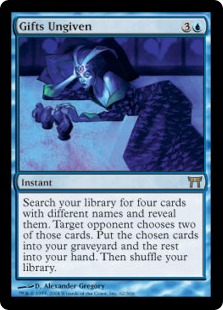
Storm is a far healthier combo deck for Modern than Ironworks, so this change will be beneficial. First and foremost, there are no weird interactions or rules issues around Storm, making it comprehensible. Everything works exactly like it should, so new players can follow a combo sequence. The kill is also faster, and arguably more deterministic. Ironworks has to draw through their deck to find a Pyrite Spellbomb to loop. If any of its numerous loops are active, this will happen... eventually. If not, then there's a constant chance to fizzle. Once Storm resolves a Gifts Ungiven, they are going to combo unless disrupted. It is still possible for Storm to fizzle, but since they can Gifts to find Grapeshot, it's improbable.
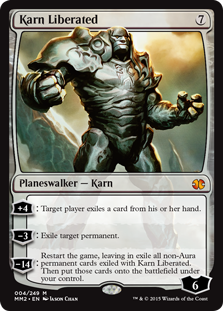
Finally, Storm can be disrupted in expected ways. While the typical combo hate did work against Ironworks, any permanent-based answer except Stony Silence would be answered by Explosives. Ironworks could also combo around just about anything because it was a mana ability. Besides the Extirpate example, Ironworks could also dodge removal on its creatures through clever sacrificing tricks. In fact, timing one-shot disruption was always difficult against Ironworks because they had so many ways to juke past it. Storm can't do that; being easier to disrupt and answer means the deck is better for the format as a whole. Unfair combo isn't necessarily bad for the format, but it has to be reasonable.

Tron Improves Slightly

Tron has a problem against combo. Karn Liberated is not effective hand disruption, and everything else it plays is slower than the typical combo deck. It can't really play anti-combo cards like Chalice of the Void because it relies heavily on cheap cantrips, too. The better combo decks are, the worse Tron is.
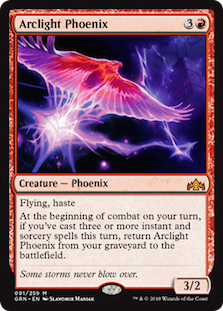
Against Ironworks, Tron's lines proved quite obscure; versus Storm, for instance, players have some easy rules to follow, such as killing the Goblin Electromancer immediately. Ironworks presents Tron with very small windows in which to use Oblivion Stone effectively, and missing them is fatal. Knowing what to hit with Karn is also much harder.

These combined factors lead me to expect an uptick in Tron in the coming months.

Metagame Overall Unaffected

I don't expect there to be any other widespread effect from this ban. Irnoworks never held much of a metagame presence, so there won't be much destabilization. Also, Ironworks wasn't exactly a metagame deck: it didn't specifically prey on or fall to any other deck. It was just a combo deck that demanded answers. The fact that it demands very specific answers and can force its way through most normal answers meant that it really chewed through enemy sideboard slots, as players were forced to pack the specific answers needed for Ironworks or bleakly hope for a fizzle.


The main effect that I expect will be a reduction in sideboard hate against artifacts and graveyards. Considering the recent success of Arclight Phoenix decks and the ever-present threat of Affinity, it remains to be seen whether that choice pays off, but players may adjust their sideboards this way regardless. This will likely cause a burst of unfair decks for the next month or so before the hate returns and things get back under control.

The Additional Clause

Normally, that would be the end of this Banned and Restricted Announcement, but not today. In an unprecedented move, Wizards has tipped their hand about the watchlist.

Ancient Stirrings and Mox Opal are not being given a free pass in perpetuity. While we have no current plans to take action against these two cards, we'll continue to monitor the health of the environment and the strength of decks that use them. If the metagame reaches a point where we determine these cards are doing more to suppress archetype diversity than enable it, we will certainly revisit this discussion.

Ancient Stirrings and Mox Opal were considered for this banning, and are considered potentially bannable in the future. First of all, I'm not a financial specialist, but I'd expect this revelation to have a chilling effect on the secondary market. Secondly, it is interesting that Wizards is at least thinking about these two cards that players have complained about before. They're even reiterating defenses that I hear all the time. It sounds like there's no actual risk of either getting axed any time soon, especially since Affinity and Hardened Scales aren't tearing up the tournament scene. Still, keep an eye on these cards; Wizards may know of something coming down the pipe that could be the final straw.

The Tronish Catch

I'm actually struggling with this clause. Openness and honesty are great things for a company, but I'm feeling conflicted about the possibility of Opal and Stirrings being watchlisted. Whether losing Opal is good or bad is hard to say, but at this point, losing Ancient Stirrings could be devastating.

I know that I frequently grouse about Stirrings, but I've come to see it as integral to Modern's balance. Tron is beneficial to Modern because it keeps out prison decks: many Lantern players agree that Tron is an unwinnable matchup. There are too many cards that need to be Pithing Needleed or milled away: Karn, Oblivion Stone, Ulamog, and World Breaker can all break the lock. And unless Breaker is hit by Pyxis of Pandemonium, it comes back from the grave. The same is true for the Grixis Whir decks; Tron doesn't care if the board is locked when Ulamog eats anything.

Without Stirrings, would Tron still be good enough? Damping Sphere and Field of Ruin already mean the midrange matchups aren't the slam-dunk they used to be. Losing their lynchpin cantrip may be the final blow for Tron. This may invite the potentially less fun outcome of a prison resurgence.

Carry On

I expect Modern to continue on its current course with little disruption from this ban. Wizards chose to deal with Ironworks while it was still a mostly theoretical problem. I welcome this change and hope that the year doesn't bring anything else as weird and busted as Ironworks.

Daily Stock Watch – Sen Triplets

Are you a Quiet Speculation member?

If not, now is a perfect time to join up! Our powerful tools, breaking-news analysis, and exclusive Discord channel will make sure you stay up to date and ahead of the curve.

Hello, everyone and welcome to a new edition of the Daily Stock Watch! Card prices from new cards in Ravnica Allegiance are slowly moving into various directions, and I'm still awaiting for new tech brews or discoveries before buying into any hype. It's also another banned and restricted announcement that passed by without a return of Stoneforge Mystic, which soared close to $50 again due to hype. Krark-Clan Ironworks wasn't too lucky and it got the axe in Modern, safely leaving eventual candidates Mox Opal and Ancient Stirrings safe until further notice.

Today, I'm going to talk about a card that has been climbing slowly yet surely since 2016, and is easily a beneficiary of more theme cards from the new set. It has now crept up to its all-time high of $30, and it doesn't look like it will stop there anytime soon until it gets a reprint.

There was an error retrieving a chart for Sen Triplets

I've always had a fascination for this card, but I never found the right mix to make it a powerful Commander. When you belong to a playgroup of competitive multiplayer EDH, it's hard keeping something this powerful alive for a whole turn without setting it up nicely and staying alive at the same time. There are no hidden gimmicks in what Sen Triplets wants to accomplish, and what it wants to do is something that's lethal in a format like Commander. Games could end in an instant with a creature this powerful, and I'm not quite sure if there is a list out there that takes full advantage of this card in cEDH. If you happen to know one, please don't be shy to share it in the comments section below.

It has been almost a decade since Alara Reborn (the set where this card came from) was released. There is no secret behind the fact that mythics from old sets such as this one have more value than they're supposed to have because of lack of supply and not necessarily because of high demand. A lot of buyouts could occur at this level, and we could easily identify some of the more popular Commander cards from this era that could be subject to this kind of gradual financial rise.

Old is Gold

The cards above are all from the same era and with the exception of Sorin Markov, none of them has seen a significant amount of reprint or competitive use throughout the years in the more popular tournament formats. Despite of this, all of them have maintained price tags that are equal to that of Modern or Standard staples throughout the years and will continue to do so until WotC decides that its time for them to be re-introduced to new players. None of them will probably see competitive use once it happens, and that would only lead to an absolute price dip in the event that a reprint occurs. Something like that can't happen to any of our spec targets, as the financial hit will be hard to take especially if you have multiple copies of a certain card. Just think of the pain that a lot of us went through when cards like Gaddock Teeg, Phyrexian Altar, Back to Basics, and Celestial Colonnade got reprinted in Ultimate Masters. We somehow knew it was coming, but we didn't know it would happen out of nowhere. It's about time we learn from experiences such as this one going forward.

With that in mind, I think that Sen Triplets could easily be slotted in any supplemental products that sport the "guild theme" concept of this Ravnica block. Sure, it is from the Alara block but something like a Duel Deck or From the Vaults could just negate that concept and hurt its stock altogether. I think this has already peaked and should be on the list of cards you'd like to move out whenever possible. There's just more to lose than gain with speculating on it at this point in time.

At the moment, StarCityGames is down to one near mint copy of this card at $29.99, and a few played ones at a little over $25. Card Kingdom is already set at $39.99, and they still have around two sets of it for sale. Majority of the stock left via TCGPlayer are foreign copies, but some of them are just under $20. Foil copies of the card are at a premium just above $50, and you can't expect it to go any lower anytime soon. Start moving your copies now or in the near future before it dips. You should be glad that this has tanked in value despite of its lack of demand.

And that’s it for today’s edition of the Daily Stock Watch! See you again next time, as we check out a new card that should be on the go, or good enough for speculating. As always, feel free to share your opinion in the comments section below. And if you want to keep up with all the market movement, be sure to check in with the QS Discord Channel for real time market information, and stay ahead of the hottest specs!

Ravnica Allegiance’s Modern and Commander Impact

Are you a Quiet Speculation member?

If not, now is a perfect time to join up! Our powerful tools, breaking-news analysis, and exclusive Discord channel will make sure you stay up to date and ahead of the curve.

Ravnica Allegiance has shaped up to be an exciting set full of powerful cards, and that means its impact goes far deeper than just Standard. Magic finance can quickly get crazy when formats like Modern and Commander are involved, and that’s definitely the case for this set already.

Modern

The biggest driver of Modern hype has been Electrodominance, which like As Foretold before it can be used to cast the zero-cost suspend spells from Time Spiral. It has driven a massive spike for Wheel of Fate from $4 to $13, and Restore Balance from $4 to around $10. Even Living End has seen a small increase.

Let me be clear that these spikes have been because of hype, not a new broken Modern deck about to appear. That said, the card could be the real deal, and it could help legitimize these cards. Either way, it’s not a good idea to buy in and spec on these cards at inflated prices. A better route might be to spec on cards that will go hand-in-hand with Electrodominance.

There was an error retrieving a chart for As Foretold

The safest option seems to be As Foretold, which I expect will be used alongside Electrodominance in the majority of places it is found. Electrodominance doesn’t play well with the cascade spells that are typically used to cast the zero-cost spells, but relying on just four Electrodominance to cast them will be inconsistent.

As Foretold serves as a great back-up option for casting them. It has grown six-fold online since the new year, up from 0.2 to 1.2 tix. The paper price had been slowly declining, but after bottoming out at $6 after the new year it is already nearly back at $7.

There was an error retrieving a chart for Ancestral Vision

Another target is Ancestral Vision. It goes hand-in-hand with As Foretold, and now with Electrodominance. Pro Tour Hall of Famer and popular streamer Gabriel Nassif wrote about an Electrodominance-As Foretold Restore Balance deck that also uses Ancestral Vision and Wheel of Fate, and he was streaming it to great results when the set went live on MTGO. It has multiple printings and already demands a solid price, but there would be significant growth it became a top-tier card.

There was an error retrieving a chart for Greater Gargadon

On the day Restore Balance spiked Greater Gargadon also saw an increase, and it’s now in the 0.6-0.8 tix range for its two printings. That’s quite an increase from its price point around 0.1 under two weeks ago. Both of its paper printings are shy of $5, and that leaves plenty of room for growth if Restore Balance catches on.

There was an error retrieving a chart for Nahiri, the Harbinger

Another card typically played in past Restore Balance decks is Nahiri, the Harbinger. It has more than doubled online over the past few weeks, up to over 3 tickets. It won’t necessarily be played in new versions of the deck without cascade spells, but there isn’t a ton of downside on this Modern-playable planeswalker that has sagged to an all-time low under $7.

There was an error retrieving a chart for Eldrazi Displacer

Eldrazi Displacer has seen massive growth since the new year, up to over 1.2 tickets from 0.2. Its demand is driven by Biomancer's Familiar, which opens up various infinite combos with creatures like Eyeless Watcher. There is clearly a lot of demand for the card online, and I have to imagine paper will follow.

Biomancer's Familiar is powerful in Modern—and of course in Commander and beyond—and Eldrazi Displacer is already a proven staple, so it might be much more than a new gimmick. Eldrazi Displacer is also seeing play in a White Eldrazi deck that has been slowly growing in popularity in Modern online. With its paper  price now at an all-time low of $2.25, it seems due to finally start appreciating.

Commander

Ravnica Allegiance has brought us a new Relentless Rat and Rat Colony-style card in Persistent Petitioners, and that means Commander players are eager to use it to break the format’s one-of rule. These creatures explain the high price of Thrumming Stone, which can be used to play through an entire deck of them for free.

Persistent Petitioners is the best of these creatures with Thrumming Stone yet, because playing a ton of them means milling the opponent out and not giving them another main phase to kill you or cast Wrath of God. Best of all, Persistent Petitioners is blue, which opens up an entire new color of cards to explore with the Thrumming Stone strategy.

This explains the 20% growth of Thrumming Stonesince the new year, up to almost $30. I see this eventually going much higher in the long-term.

There was an error retrieving a chart for Thrumming Stone

Thrumming Stone is an incredibly unique card with a mechanic I don’t see Wizards wanting to revisit, so a reprint beyond a special promo printing seems unlikely. At the same time, I can’t see its demand ever waning. Nearly 0% of its demand is driven by competitive prospects and nearly 100% of it because of how fun and flashy it is, making it immune to things like metagame pressure.

New legendary creatures that can be used as a Commander are a big deal for the format, especially cheap and powerful ones like Lavinia, Azorius Renegade. Its spoiling caused foils of Knowledge Pool to spike from $3 to $12. A look at decklists on EDHREC show a few more cards with potential.

There was an error retrieving a chart for Omen Machine

Omen Machine is a staple of Lavinia decks, so at just $3 foils might be a bargain. The other most popular cards in Lavinia decks are those that destroy lands, so Cataclysm would be a very attractive target if not for so many reprints.

There was an error retrieving a chart for Catastrophe

A better option might be Catastrophe, another staple but one that has just one minor reprint.

Judith, the Scourge Diva has been even more popular than Lavinia, Azorius Renegade so far. What sticks out to me as a great spec is Phyrexian Altar. 

There was an error retrieving a chart for Phyrexian Altar

Phyrexian Altar's price peaking at $60 shows just how in-demand the card is, but a reprint in Ultimate Masters has suddenly made it affordable. The original price has flattened out at $35, and the reprint is a mere $20. QS writers have recommended buying in on Ulimate Masters sooner than later because prices are already rebounding across the board. To me Phyrexian Altar looks like a slam-dunk that can still be had cheaply.

-Adam

Want Prices?

Browse thousands of prices with the first and most comprehensive MTG Finance tool around.


Trader Tools lists both buylist and retail prices for every MTG card, going back a decade.

Quiet Speculation