Are you a Quiet Speculation member?
If not, now is a perfect time to join up! Our powerful tools, breaking-news analysis, and exclusive Discord channel will make sure you stay up to date and ahead of the curve.
The sequel to Guilds of Ravnica and the 80th expansion set in Magic: The Gathering's history is due to release on January 25, 2019. Here's what we know about Ravnica Allegiance (RNA) so far, including any cards in the spoiler, the guilds represented, and cards to speculate on before the full spoiler is released.
The Guilds of Ravnica Allegiance





The first and most crucial thing to know: Ravnica Allegiance's Guilds! We know Azorius, Rakdos, Gruul, Simic, and Orzhov will be featured in the second expansion of Guilds of Ravnica block. As Ravnica Allegiance spoiler season progresses, we'll be releasing a Guild Spotlight for all 5 features factions, highlighting existing cards and mechanics that are poised to benefit from the new releases.
Ravnica Allegiance Spoilers
Last Update: Jan 12, 2019 by Edward Eng
Saturday - January 12, 2019
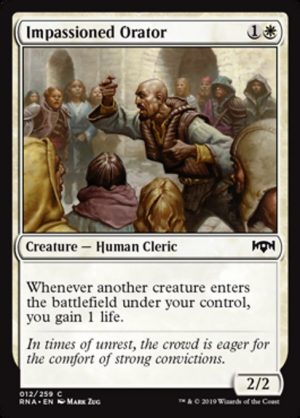
Impassioned Orator
I don't think this will make the cut for something like Soul Sisters in Modern. Do you?
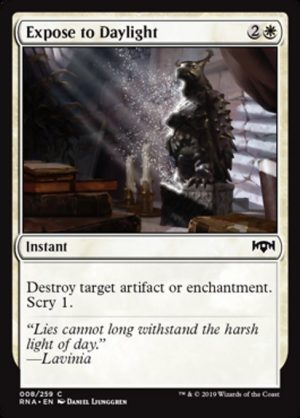
Expose to Daylight
One extra mana to Scry 1 on top of Disenchant? Hm, seems like three mana is too much.
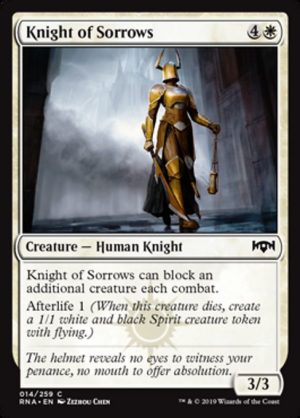
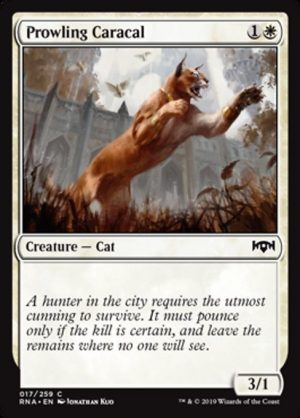
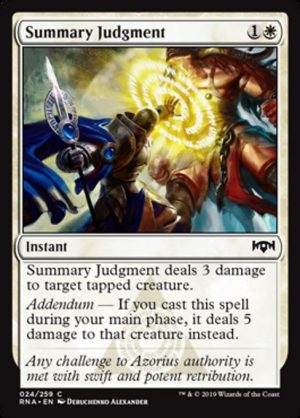
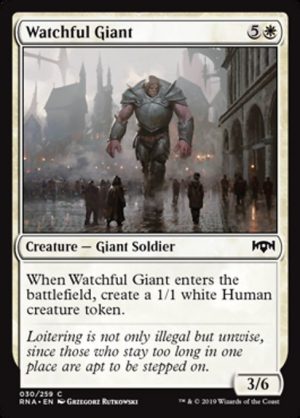
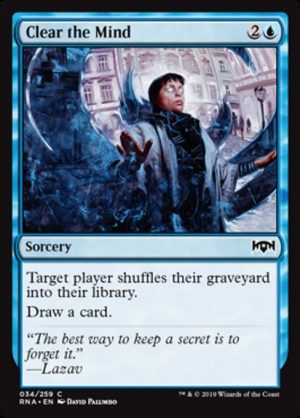
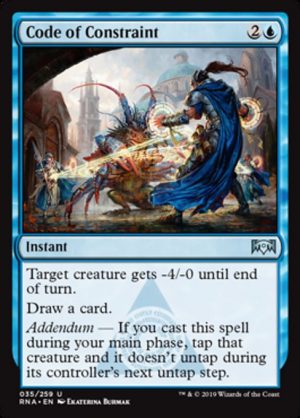
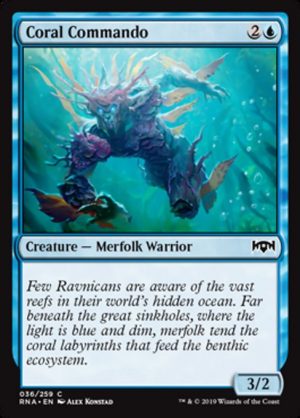
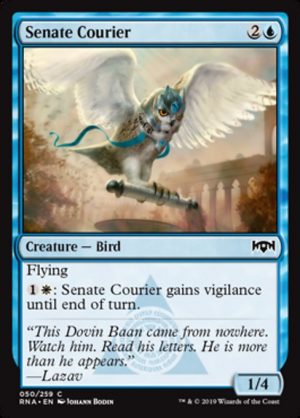
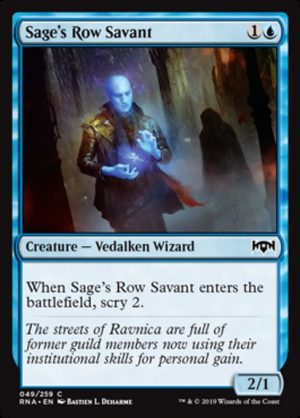
Sage's Row Savant
This seems decent for Limited at common.
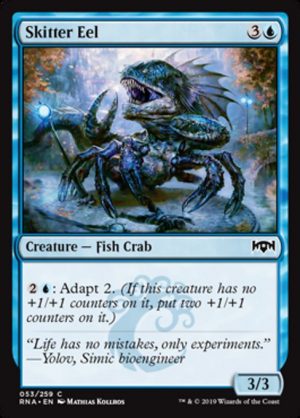
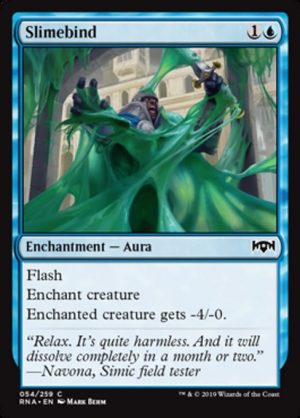
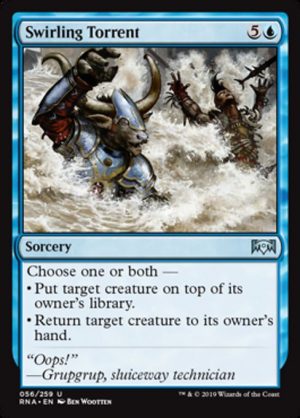
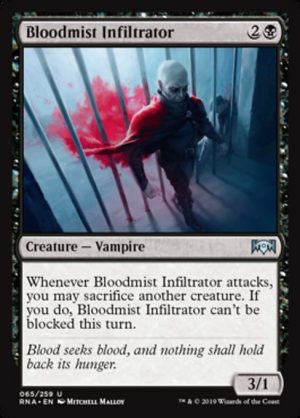
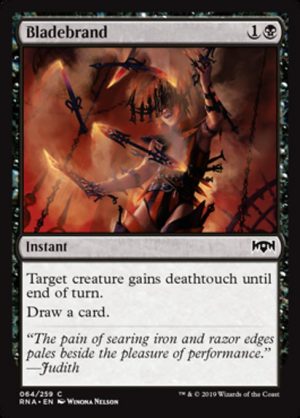
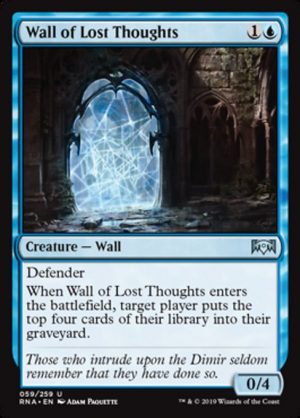
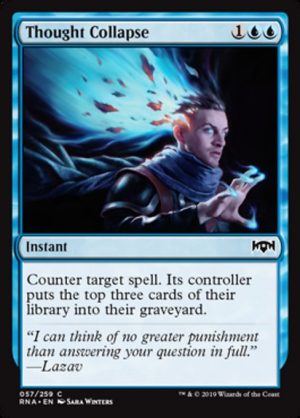
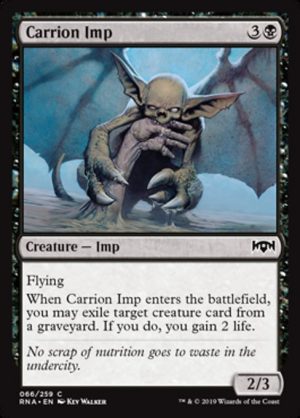
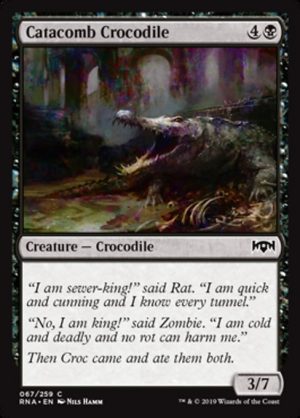
Catacomb Crocodile
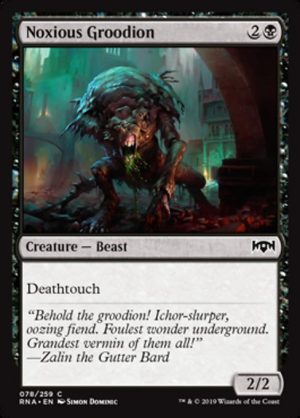
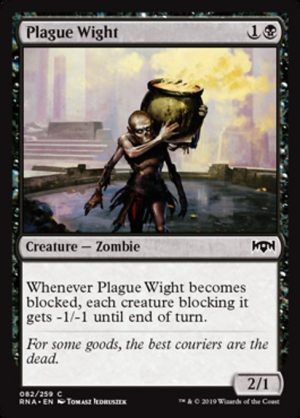
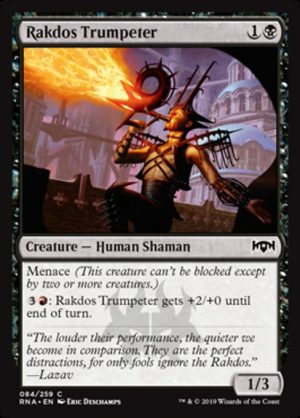
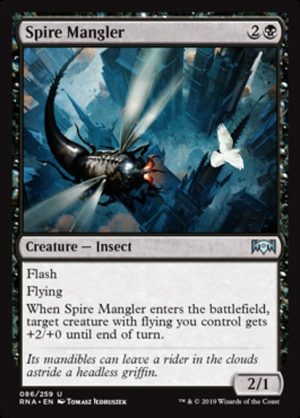
Some people really love the flavor text of this card. Maybe it'll be a collector's item because of it. Does it beat this though?
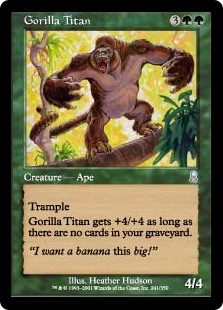
What's your favorite flavor text?
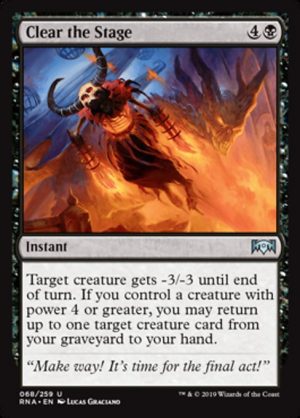
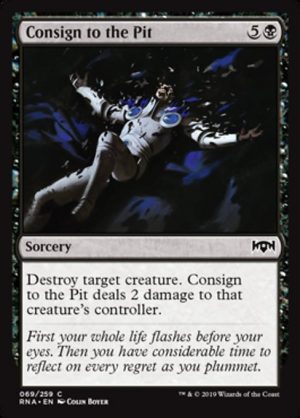
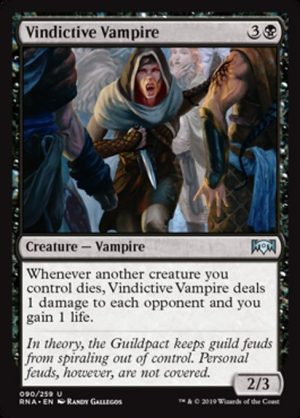
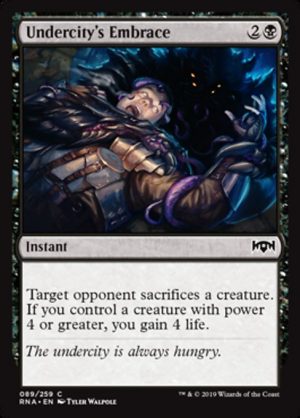
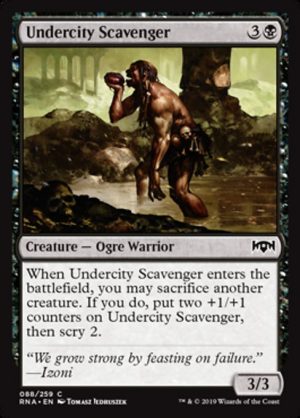
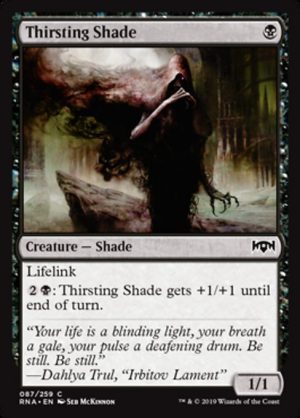
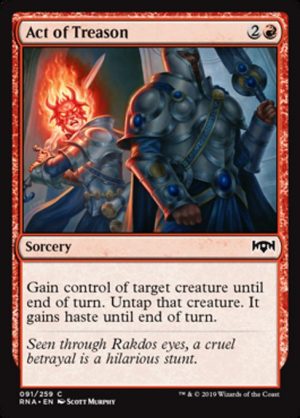
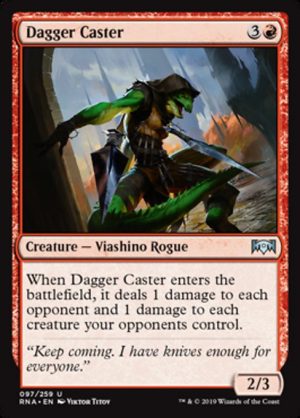
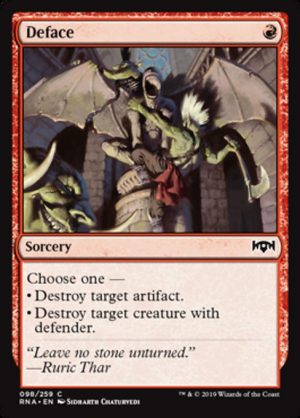
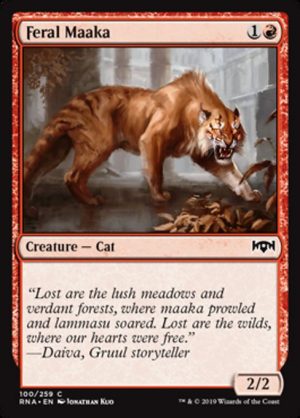
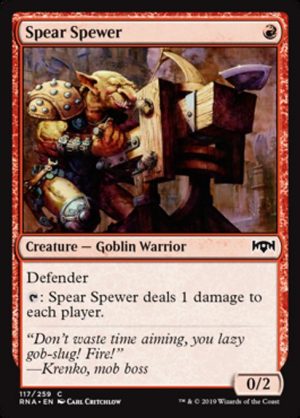
Spear Spewer
Will this card be good enough to consistently enable Spectacle? It also survives Goblin Chainwhirler's enter-the-battlefield effect.
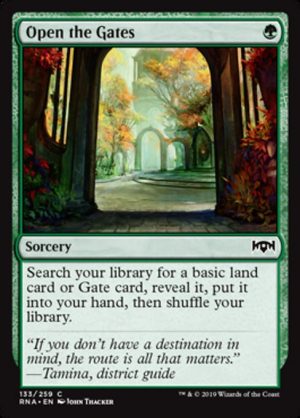
Open the Gates
This seems decent for Limited. Will it make the cut for some Gate deck with Maze's End in Constructed? Maybe Pauper? I doubt it; but you can try.
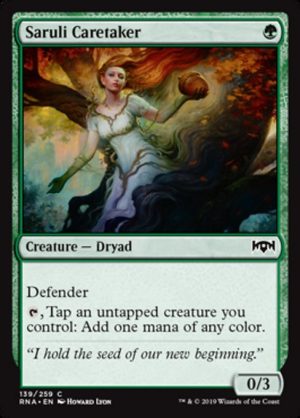
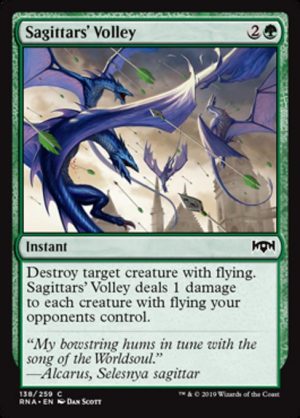
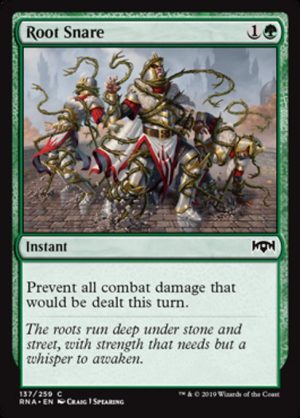
Root Snare
Make Turbo Fog Great Again
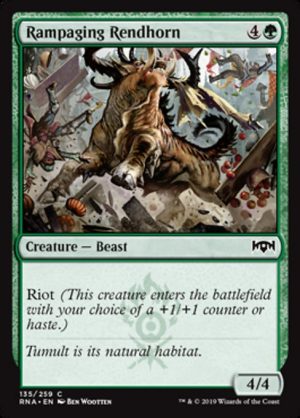
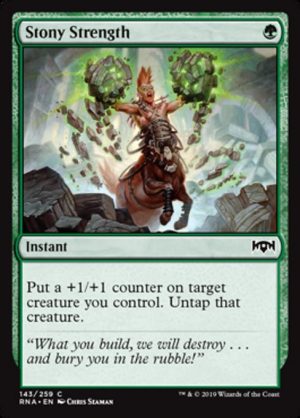
Stony Strength
This might go in some Simic Adapt deck in Standard. Will it make the cut outside of Standard? It's tough to say, but probably not.
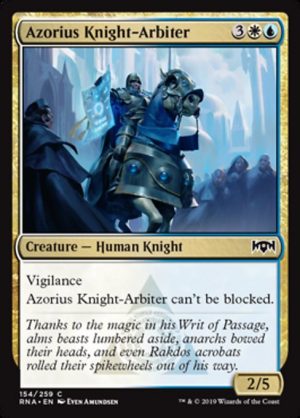
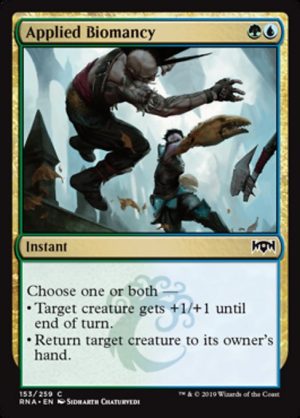
Applied Biomancy
I love all the claws in this set.
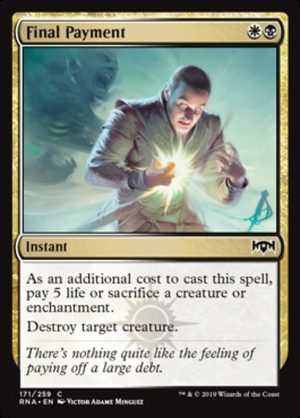
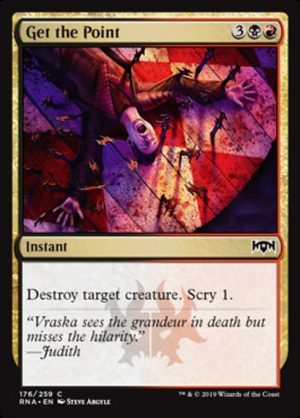
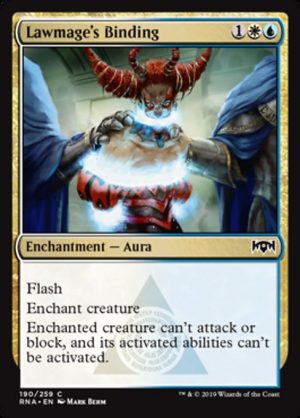
Lawmage's Binding
This seems pretty good in Limited, but three mana is probably too much for anything outside of Standard.
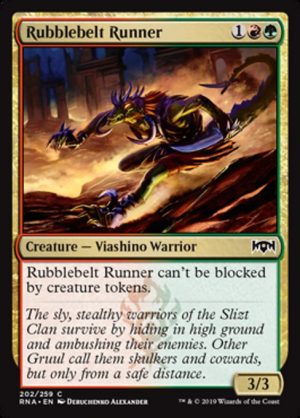
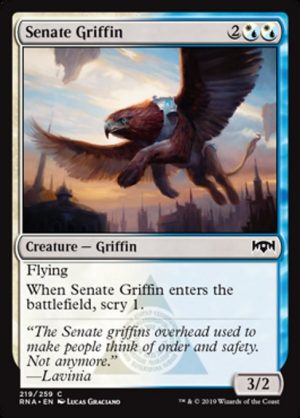
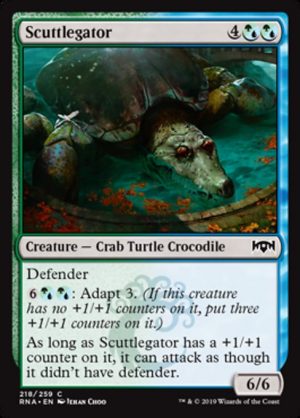
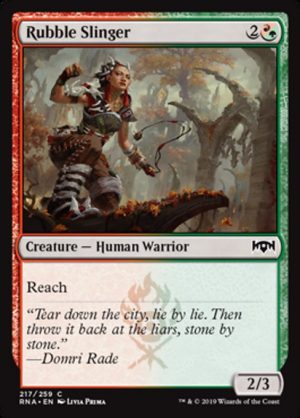
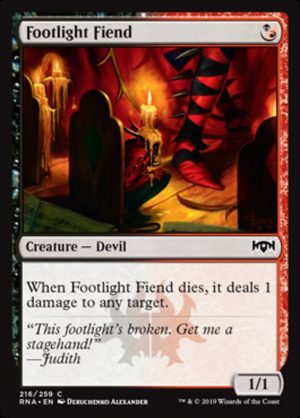
Footlight Fiend
Will this card be good enough to consistently enable Spectacle? It also survives Goblin Chainwhirler's enter-the-battlefield effect.
Thursday - January 10, 2019
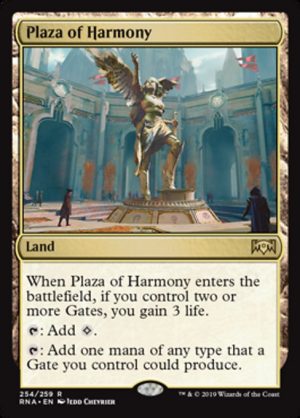
Plaza of Harmony
This might be okay in Limited; not sure. If you're a Limited expert, please comment below on how many Gates you would need to make this work to play certain cards. An example would be super helpful.
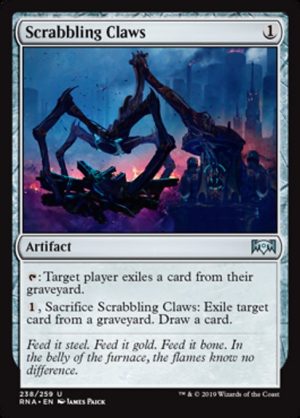
Scrabbling Claws
This in nowhere near as powerful as Relic of Progenitus, but might see play in Standard. I doubt it for non-Standard formats.
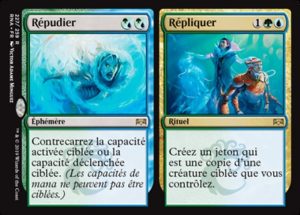
Repudiate
[G/U][G/U]
Instant
Counter target activated ability or triggered ability.
Replicate
1GU
Sorcery
Create a token that's a copy of a creature you control.
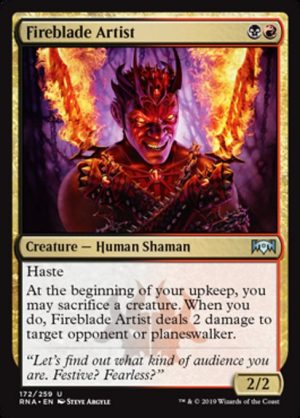
Scrabbling Claws
This might be okay for Standard as a way to get in the last points of damage if you're playing something like Rakdos Aggro and can't attack through because the board is clogged up or there's something else preventing you from attacking profitably.
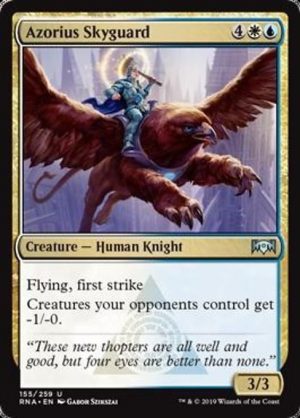
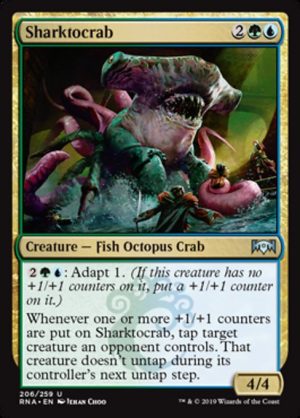
Scrabbling Claws
This is interesting because you can keep putting counters on this other than through the Adapt mechanic to keep locking down your opponent's creatures. This could be pretty powerful in Limited. But will it make the cut in Constructed? I don't think a four-mana 4/4 with Adapt 1 and no enter-the-battlefield effect isn't going to cut it.
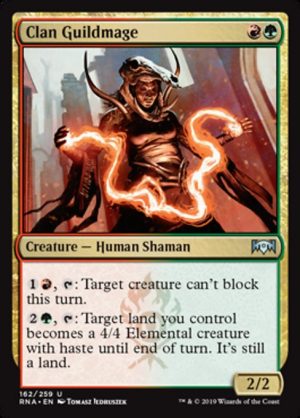
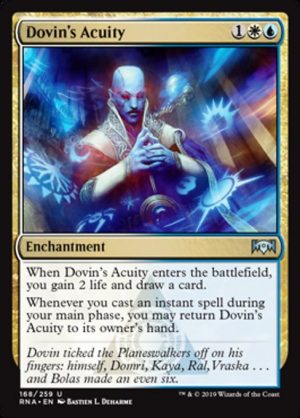
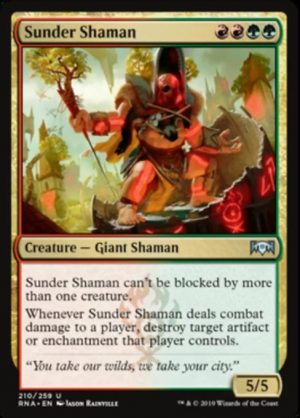
Sunder Shaman
This won't replace something like Destructive Revelry or Reclamation Sage in non-Standard formats. But it does give Gruul an option that's somewhat similar to Knight of Autumn but not nearly as good. However the 5/5 body for four mana is nice.
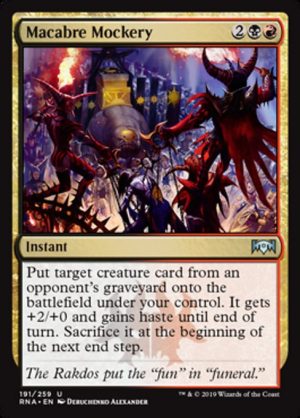
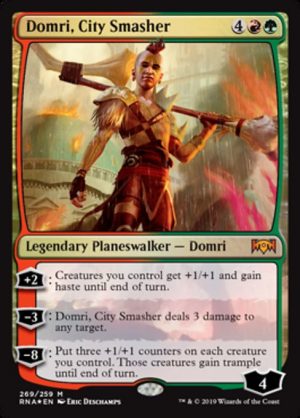
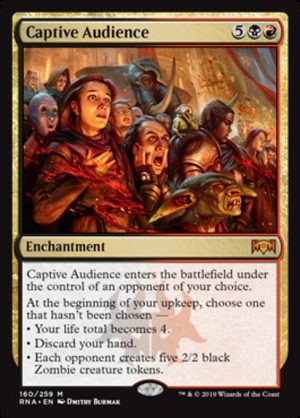
Captive Audience
This is Samuel Stoddard's favorite card of the set. And that makes sense because I can see how a lot of players will think this is a fun card. The name of the card and artwork is cool too.
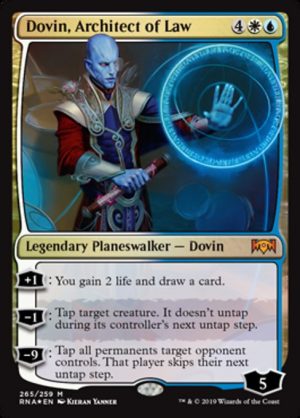
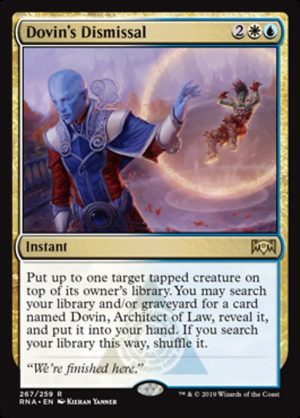
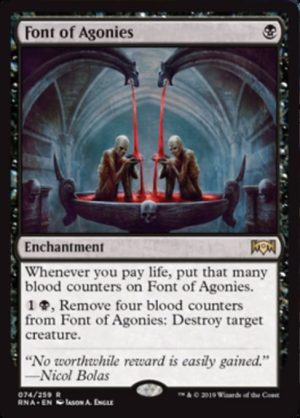
Font of Agonies
I don't know if this will make the cut for a maindeck slot; but I can see this as a sideboard card in Standard. Or maybe Modern, but I doubt it.
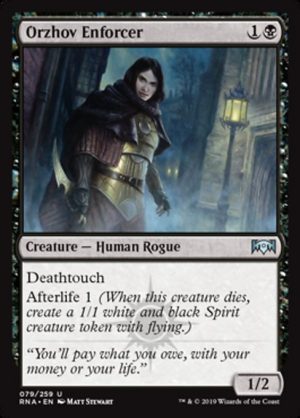
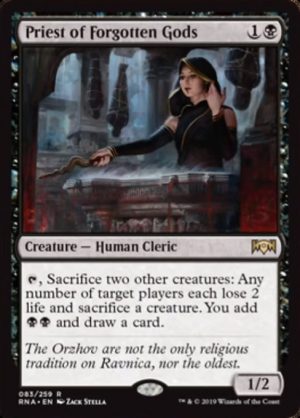
Priest of Forgotten Gods
Could this be playable in Modern Humans? Yes. Will it see play there? I don't think it's the most optimal deck for it.
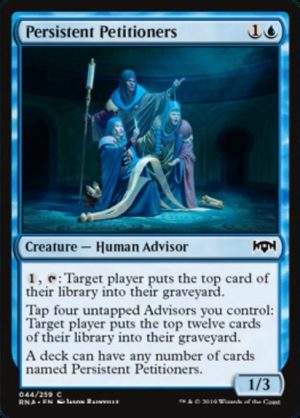
Persistent Petitioners
Here's another fun card. This might be even better than Rat Colony.
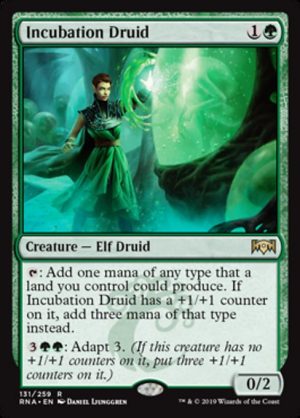
Incubation Druid
This seems very pushed. It's a mana producer that costs two mana on the very base level. And that's often quite playable in Standard. But constructing your deck in a way that'll often enable this to produce three mana aside from the Adapt mechanic seems very powerful. We've already seen people talking about this plus Hadana's Climb and Nexus of Fate for Standard. I can only imagine at this point what other possibilities there are. I'm pretty sure we're going to see some pretty busted things happen in Standard that involve this card.
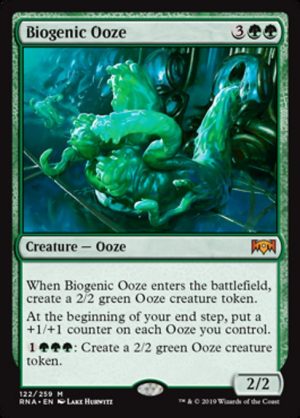
Biogenic Ooze
Does it have an enter-the-battlefield effect? Check. Does it make spot removal less efficient? Check. Do it provide a bonus for you every turn without requiring additional mana? Check. Does it have an ability that creates inevitability towards winning the game if left unchecked? Check. Seems good.
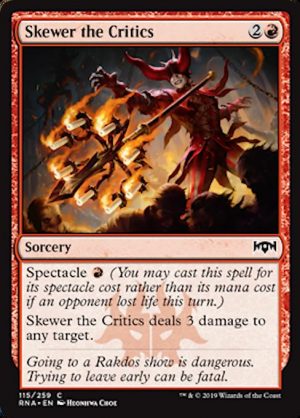
Skewer the Critics
At quick glance, this reads 'Screw the Critics'. At second glance, this card seems very powerful. Does this replace anything in Modern Burn? Maybe Rift Bolt? Does it fit better in another deck? Maybe something like Mono Red Phoenix?
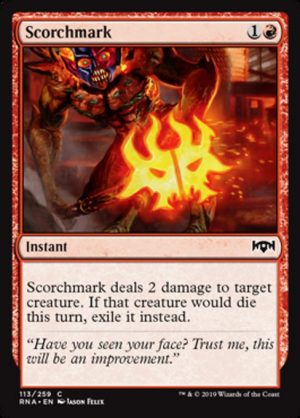
Scorchmark
Even though this is an instant, I have a tough time seeing this replacing something like Lava Coil in Standard. And this is just a worse Magma Spray in non-Standard formats.
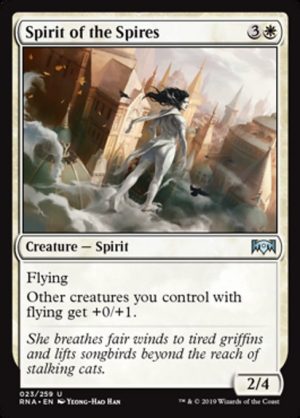
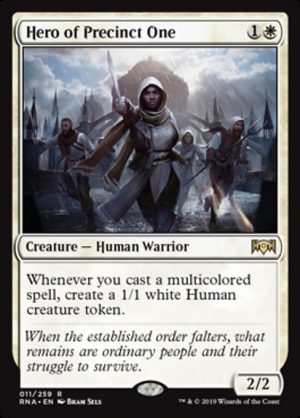
Hero of Precinct One
This might be a better fit in Modern Humans than Priest of Forgotten Gods. Keep in mind that it only triggers when you cast a multicolored spell though, so it might not be good enough because of Aether Vial. But let's at least look at what cards this works with...Meddling Mage, Reflector Mage, Mantis Rider, Tajic, Legion's Edge, Knight of Autumn, Sin Collector, Kambal, Consul of Allocation, Gaddock Teeg, and Izzet Staticaster. Half of those are sideboard cards, so I don't think this will make the cut. It does make a Human token though, so I think people will test it at the very least.
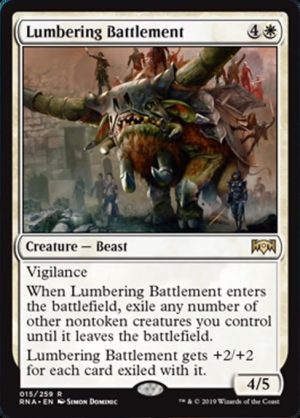
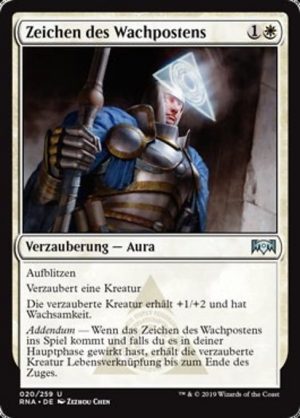
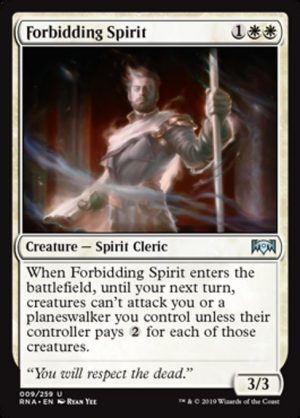
Sentinal's Mark
1W
Enchantment - Aura
Flash
Enchant Creature
Enchanted creature gets +1/+2 and Vigilance.
Addendum - If you cast this spell during your main phase, enchanted creature gains lifelink until end of turn.
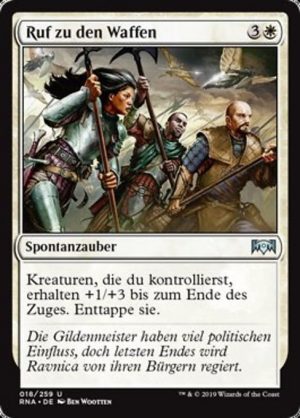
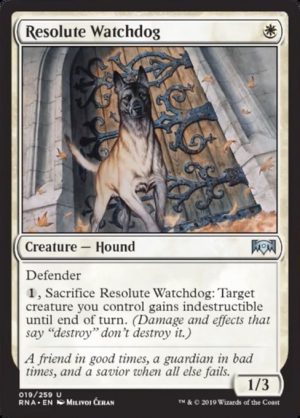
Rally to Battle
3W
Instant
Creatures you control gain +1/+3 until end of turn. Untap those creatures.
Tuesday - January 8, 2019
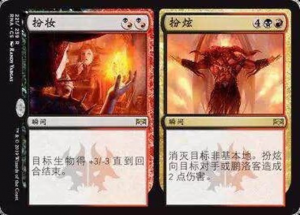
Audition
[R/B][R/B]
Instant
Target creature gets +3/-3 until end of turn.
Audacity
4BR
Instant
Destroy target nonbasic land. Audacity deal 2 damage to target opponent or planeswalker.
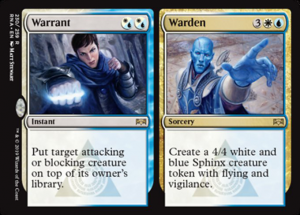
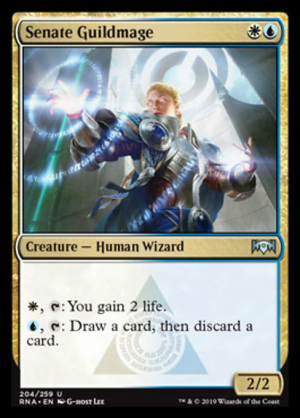
Senate Guildmage
Here's another Wizard that could potential spark a new Wizard deck in Modern alongside other cards like Deputy of Detention. It'll be interesting to see if it's viable, and I'm especially curious about the manabase. Can it still play lands like Cavern of Souls, Unclaimed Territory, an Ancient Ziggurat?
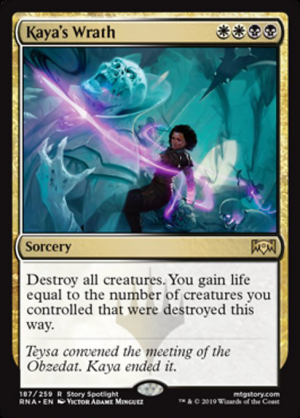
Kaya's Wrath
This could be interesting in Standard. Maybe it'll see play in something like Abzan Midrange, containing March of the Multitudes. Or maybe it'll go in Esper Control with Thopters.
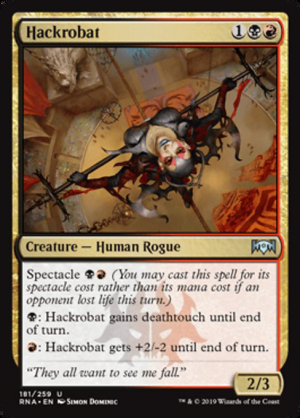
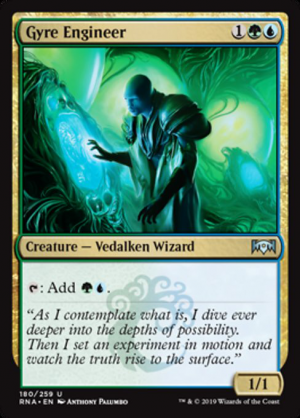
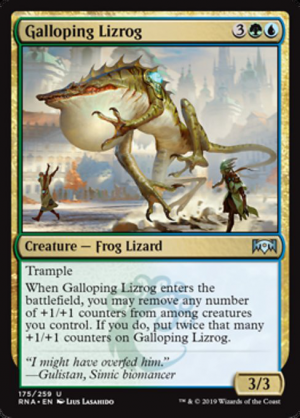
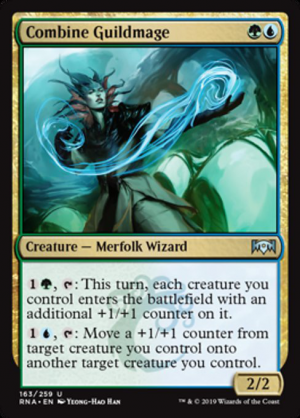
Combine Guildmage
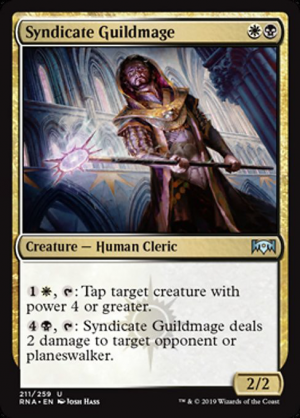
The second ability might make this card pretty good in Standard.
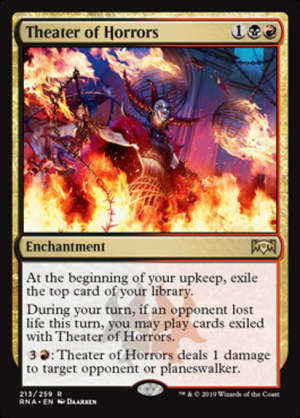
Theater of Horros
This is pretty cool, especially because you can cast any card that was exiled by this on any turn. And a ping effect on an enchantment can sometimes be pretty tough to deal with. Good thing there's Mortify.
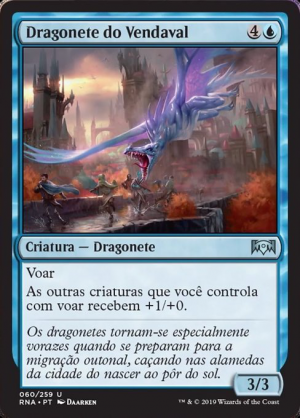
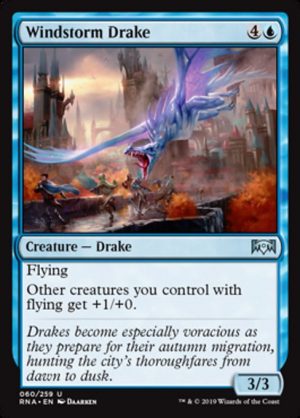
Gale Drake
4U
Creature - Drake
Flying
Other flying creatures you control get +1/+0.
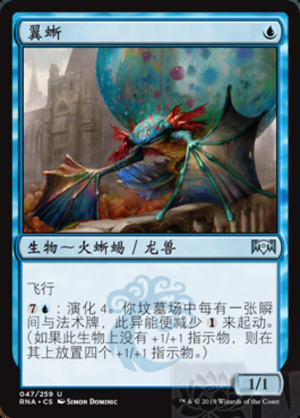
Winged Salamander
U
Creature - Salamander Drake
Flying
7U: Adapt 4. This ability costs 1 less for each instant and sorcery card in your graveyard.
This seems like it could be pretty powerful in non-Standard formats. People might try it in something like Izzet Phoenix in Modern. Or maybe it'll go in Temur or Grixis Delver decks in Legacy.
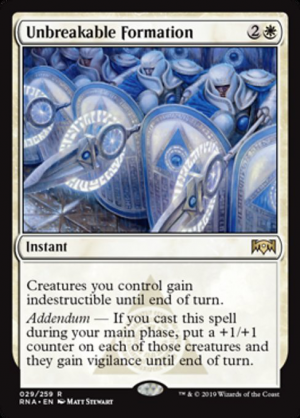
Unbreakable Formation
The Addendum effect on this is pretty nice because it adds permanent counters on your creatures and gives them vigilance so you can try to alpha strike your opponent for the kill. And if things don't go exactly as planned, you still have all your creatures that have become bigger on defense to block if needed.
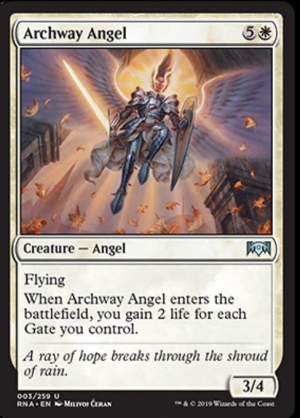
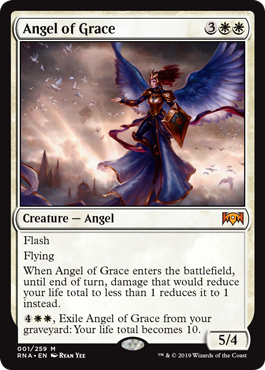
Angel of Grace
This could be one of the best cards in the set. It's pretty powerful and flexible. It can go in aggro decks as a top-end card. Or it can go in midrange or control decks as a finisher. Both of the abilities that deal with preserving your life kind of allow you to chain these. Imagine if your opponent tries to Banefire you for the win and you cast this to protect yourself. Then they go for another Banefire or an alpha strike with creatures and you cast a second one to protect your life again and kill one of their creatures by blocking. Now you might have one or two of these in your graveyard to pump you life total back up to 10 twice. I can see this card being played quite a bit in Standard. But will it make the cut in non-Standard formats? Keeping your life at 1 for a turn just might be good enough. We'll see. Keep in mind that you can tutor for this to protect yourself.
Saturday - January 5, 2019
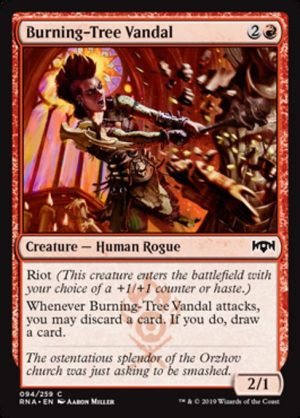
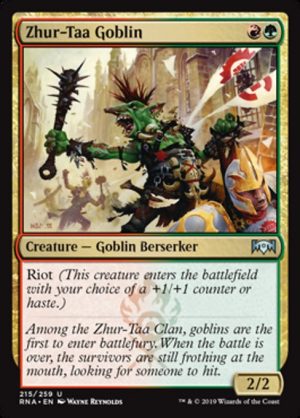
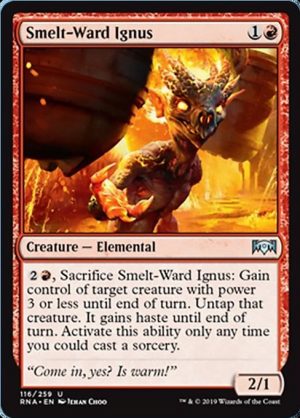
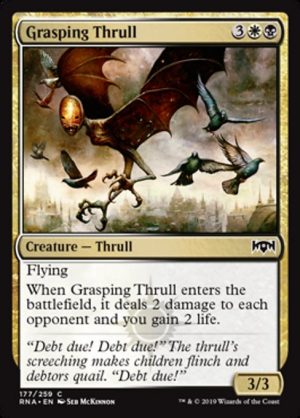
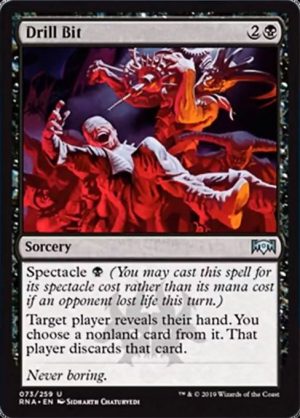
Drill Bit
I don't this is good enough for Modern. Feel free to discuss otherwise in the comments below.
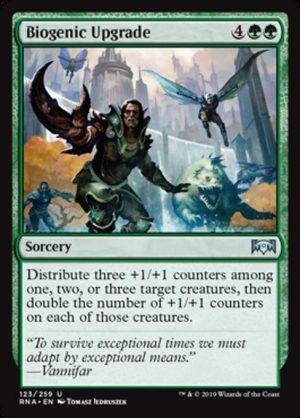
Electrodominace
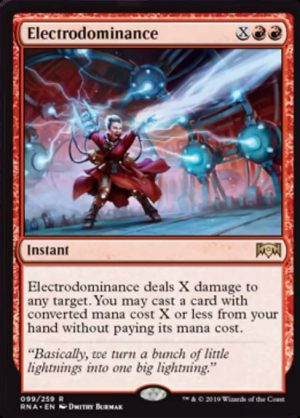
It seems like there's been a decent amount of hype around this card, and it's preordering for $10 on Star City Games. While I think $10 is probably too steep, I think the card is pretty good. It will most likely see a good amount of play in Standard. But will it make the cut in Modern? We'll see. For example, three mana for one damage from Electrodominace plus three damage from something like Lightning Bolt doesn't seem great. But the flexibility of being able to scale up and mitigate a bit of manaflooding if it occurs might be worth it to play one or two copies.
Savage's Rythym
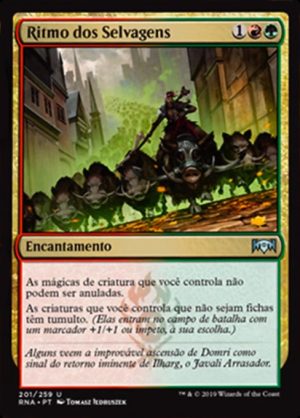
1RG
Enchantment
Creature spells you control can't be countered.
Nontoken creatures you control have riot.
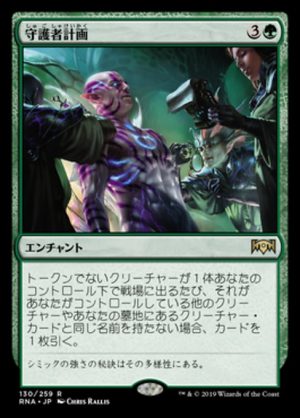
Guardian's Plan
3G
Enchantment
Whenever a non-token creature enters the battlefield under your control, if that create does not share a name with another creature you control or have in your graveyard, draw a card.
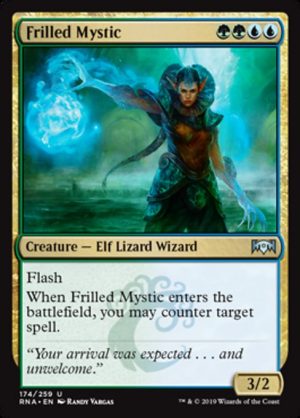
Frilled Mystic
We've got a new Mystic Snake. And this one might be better since it has three creature types, including Wizard. We might see some new Wizard decks in Modern. Here's a list of Wizards in Modern if you want to start brewing. Another card to keep an eye on is Wizard's Retort.
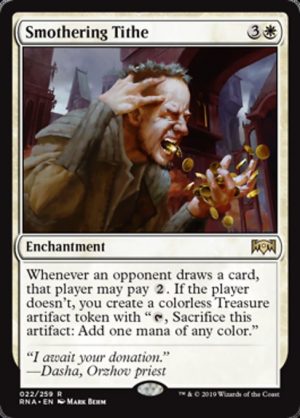
Smothering Tithe
This will probably be a decent card in EDH/Commander. Four mana is quite a lot for Legacy and Modern. But I guess it could see play in Legacy since it has access to lands like City of Traitors and Ancient Tomb or artifacts like Grim Monolith to help cast this earlier than turn four. I'm not so sure about Modern yet though. Let us know what you think in the comments below.
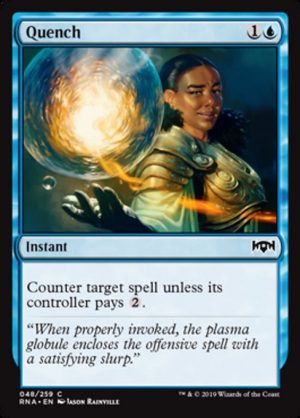
Quench
Welcome to another powered down Mana Leak. It might see some play in Standard.
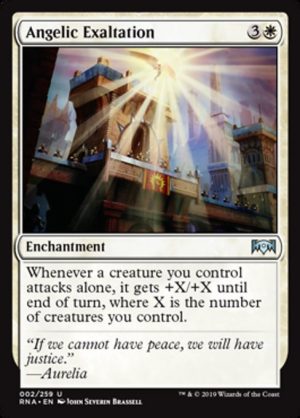
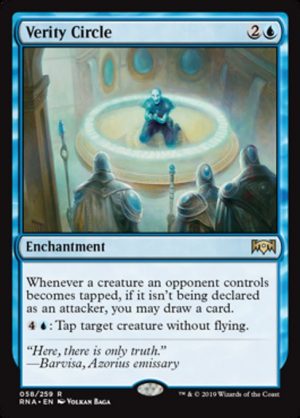
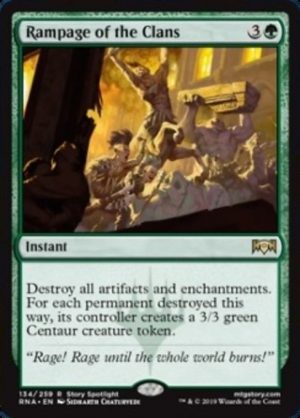
Rampage of the Clans
This seems like it could be powerful in a new type of deck with a bunch of cheap artifacts and mana producers. Does it fit in Puresteel Combo or something else?
Modern: Puresteel Combo by Rintou
Creatures
4 Sram, Senior Edificer
4 Puresteel Paladin
Non-Creature Spells
1 Swan Song
1 Hurkyl's Recall
2 Noxious Revival
4 Retract
1 Grapeshot
3 Serum Visions
1 Ghirapur Aether Grid
4 Mox Opal
4 Spidersilk Net
4 Sigil of Distinction
4 Paradise Mantle
4 Cathar's Shield
4 Accorder's Shield
Lands
1 Godless Shrine
1 Seachrome Coast
1 Sacred Foundry
2 Plains
2 Hallowed Fountain
4 Arid Mesa
4 Flooded Strand
Sideboard
3 Silence
3 Path to Exile
1 Paradoxical Outcome
2 Echoing Truth
3 Claim // Fame
2 Burrenton Forge-Tender
1 Ghirapur Aether Grid
Thursday - January 3, 2019
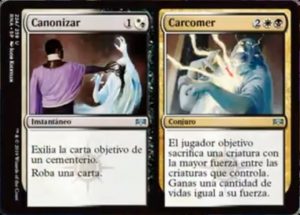
Canonize
1W/B
Instant
Exile target card from a graveyard.
Draw a card.
Consume
2WB
Sorcery
Target player sacrifices a creature with the greatest power among creatures they control, you gain life equal to that creature's power.
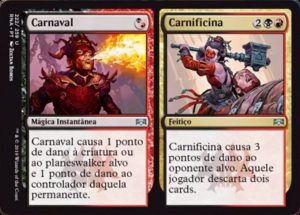
Carnival
B/R
Instant
Carnival deals 1 damage to target creature or planeswalker and 1 damage to it's controller.
Carnage
2RB
Sorcery
Carnage deals 3 damage to target opponent. That player discards 2 cards.
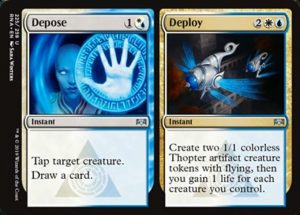
Depose // Deploy
This card seems pretty flexible. It might see play in Standard. Tapping a creature early to prevent some damage and drawing a card or having the option a little bit later to make two blockers and gain some life seems okay in control. This might work well with Karn, Scion of Urza. Will it see play in Legacy? It's probably not powerful enough and too slow. How about Modern? Maybe, but I doubt it I think.
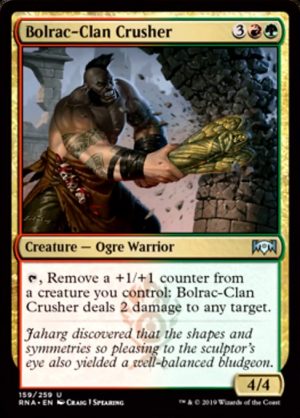
Bolrac-Clan Crusher
This might be pretty good in Limited.
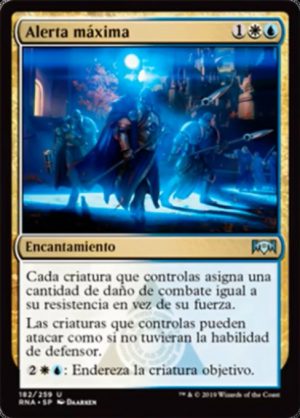
High Alert
1WU
Enchantment
Creatures you control deal damage with toughness rather than power.
Creatures you control can attack as though they didn't have defender.
2WU: Untap target creature.
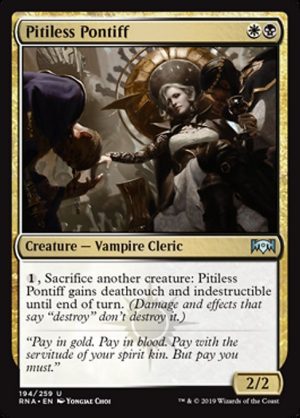
Pitiless Pontiff
Here's a sacrifice outlet for Standard.
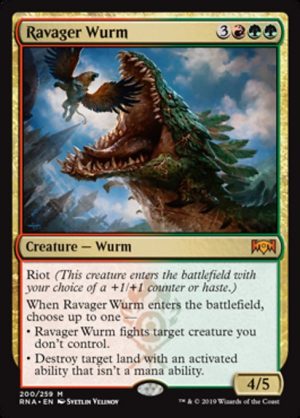
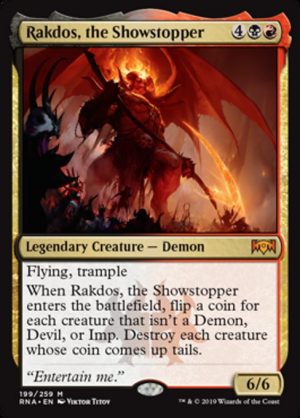
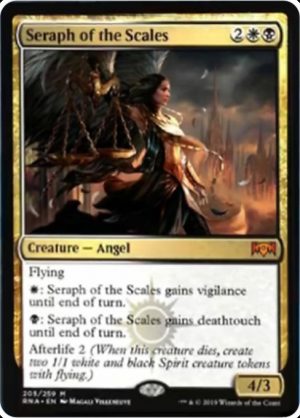
Seraph of the Scales
This card seems pretty powerful for Standard. It looks like Orzhov is getting a decent amount of good cards.
Cry of the Carnarium
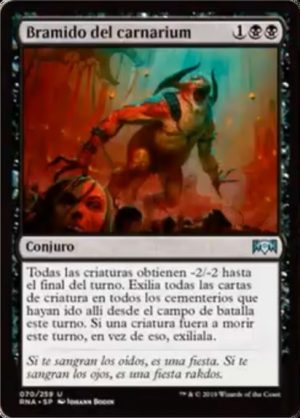
1BB
Sorcery
All creatures get -2/-2 until end of turn. Exile all creature cards from all graveyards that were put there this turn. If a creature would die this turn, exile it instead.
Pestilent Spirit
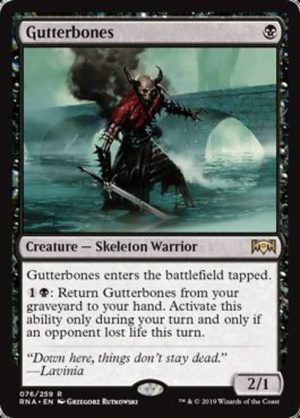
This plus something like Electrickery seems nice. Will these two ever see play in a deck together? I don't know, but we'll see.
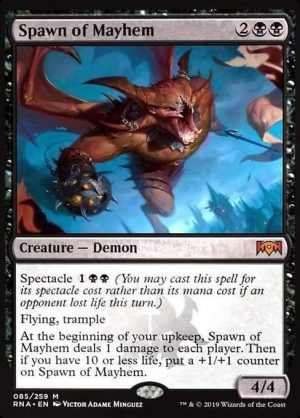
Spawn of Mayhem
This feels pretty powerful even without Spectacle. I can see a decent amount of decks in Standard losing to the ping effect coming up.
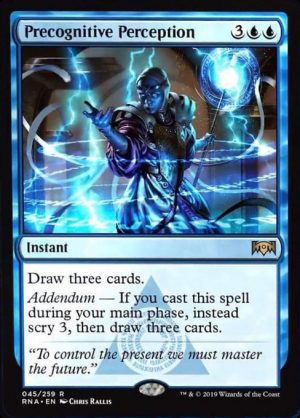
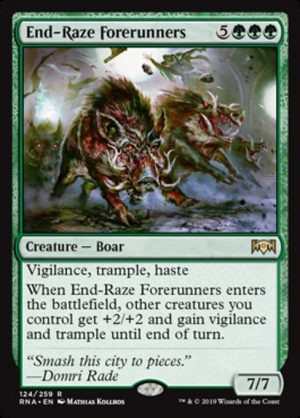
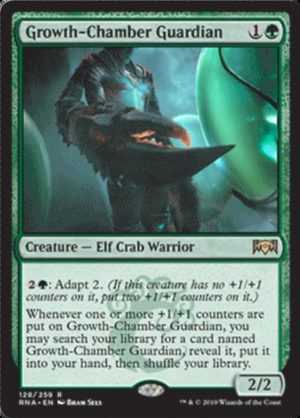
Growth-Chamber Guardian
This seems like a pretty powerful card for Standard. Being able to chain these seems like good value.
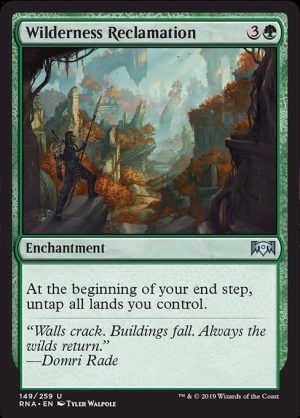
Wilderness Reclamation
It looks like this has caused Nexus of Fate to spike. I'm not sure how good this card will be yet. But you can definitely count of people brewing with this card.
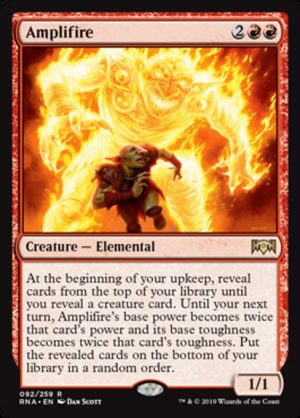
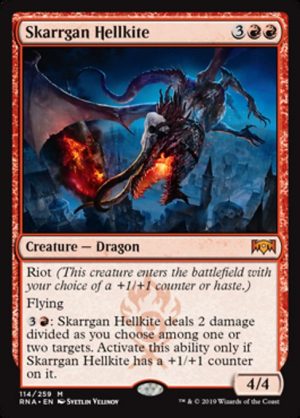
Skarrgan Hellkite
The flexibility will most likely mean that this will see a decent amount of play in Standard.
Wednesday - January 2, 2019
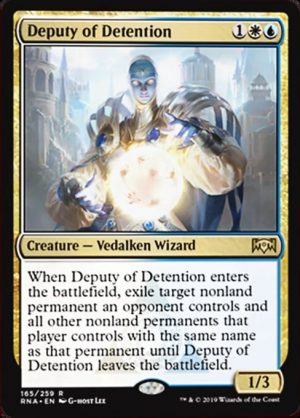
Deputy of Detention
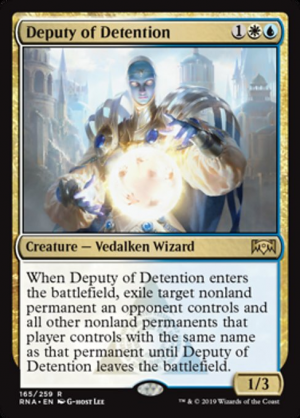
Detention Sphere attached to a creature is pretty interesting. People might try this with Lavinia, Azorius Renegade, Spell Queller, Meddling Mage, Aether Vial, and Adarkar Wastes in Modern. I heard this might give a boost to Bant Company decks as well.
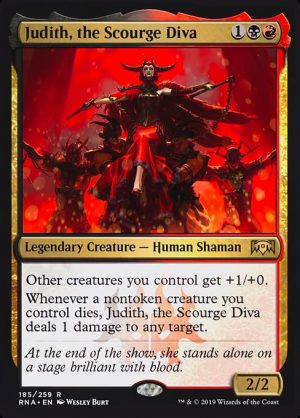
Judith, the Scourge Diva
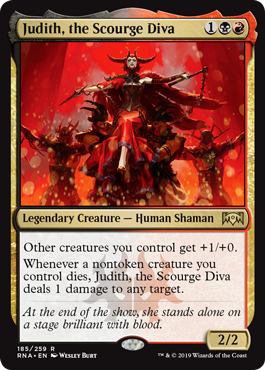
We're still not sure if Rix Maadi Reveler is good enough for Modern Humans. But how about this? It might be. It's an additional anthem effect on top of Thalia's Lieutenant and Mayor of Avabruck and another way to get extra damage in from your creatures when they die. But according to Frank Karsten's mana guide, I don't think you can reliably cast this with the current stock manabase; so this is probably out.
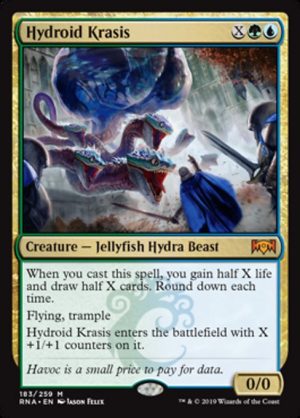
Hydroid Krasis
Move over jellyfish clan. We've got a new challenger in town. For 2GU, you gain 1 life, draw 1 card, and get a 2/2 flying, trample jellyfish hydra beast. Is that good? I'm not sure. Let us know what you think in the comments below.
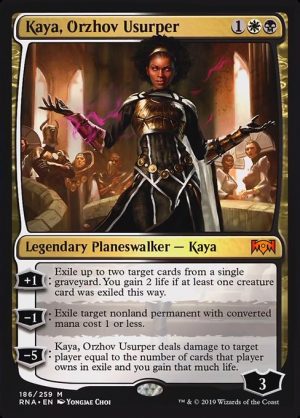
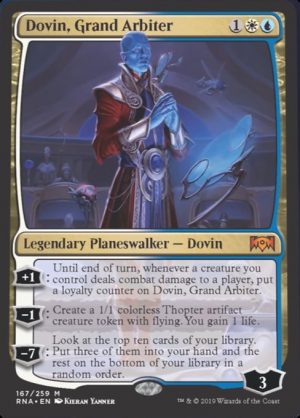
Two three-mana planeswalkers revealed in one day. Wow. Will they see play in Standard? People will definitely try. Will they be good enough outside of Standard? We'll see.
Kaya, Orzhov Usurper
I'm not really sure what to think of this card right now except for stuff that seems super gimmicky like Tormod's Crypt, Relic of Progenitus, and Sentinel Totem.
Dovin, Grand Arbiter
I also don't know what to think of this card. Will some deck with this, Karn, Scion of Urza, and Tezzeret, Artifice Master be viable? I have no idea. Please post ideas in the comments section.
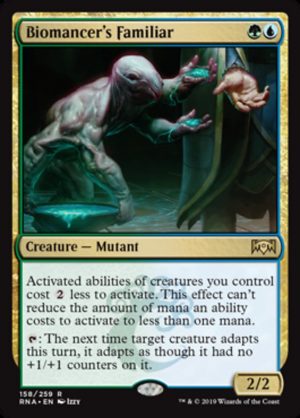
Biomancer's Familiar/Pet (card name not confirmed yet)
GU
Creature - Mutant
Activated abilities of creatures you control cost up to 2 less to activate. This effect can't reduce the amount of mana ab ability costs to activate to less than one mana.
T: The next time a creature you control activates Adapt this turn, it uses Adapt as if it has no +1/+1 counters.
Biomancer's Familiar/Pet
Training Grounds on legs. Interesting. Any deck ideas? Post in the comments below.
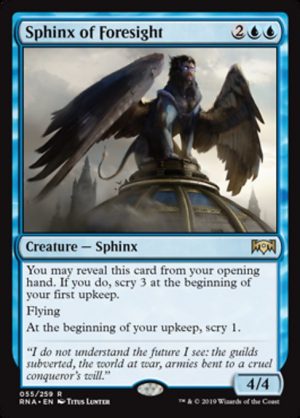
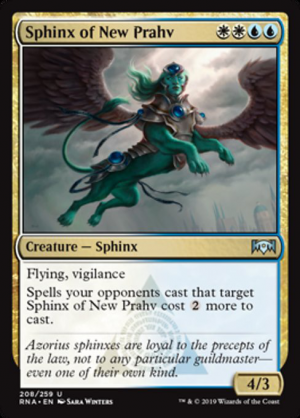
Sphinx of Foresight
It seems like there are a good amount of people that like this card. You can use this with Force of Will in Legacy, but a four-mana 4/4 flier that does nothing when it enters the battlefield is pretty bad in the format. Will it see play in Modern? Maybe in some decks that play a lot of cards that make you discard like Faithless Looting, Lightning Axe, and Tormenting Voice? Maybe it'll see a decent amount of play in Standard where the power level is lower and the speed at which decks win is usually slower than other formats.
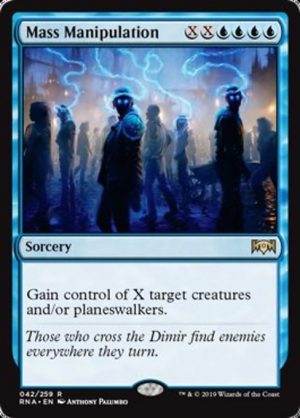
Mass Manipulation
This might be good in EDH/Commander.
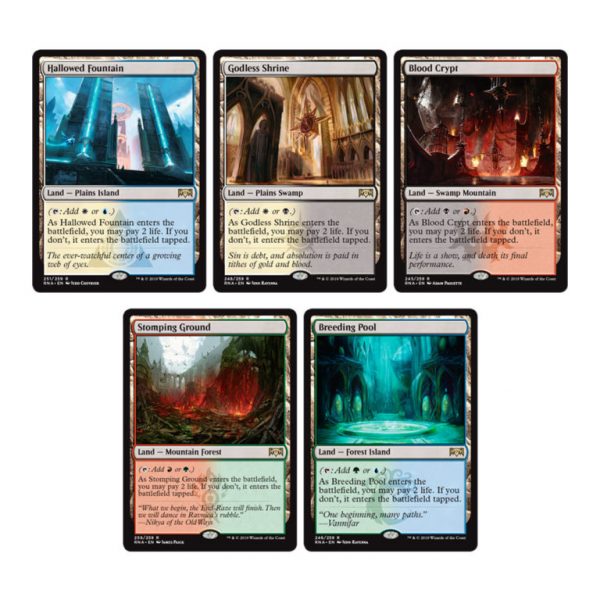
Shocklands
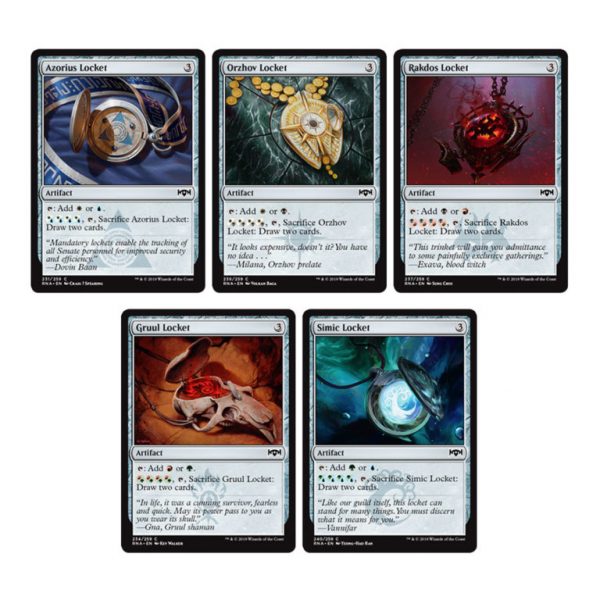
Lockets
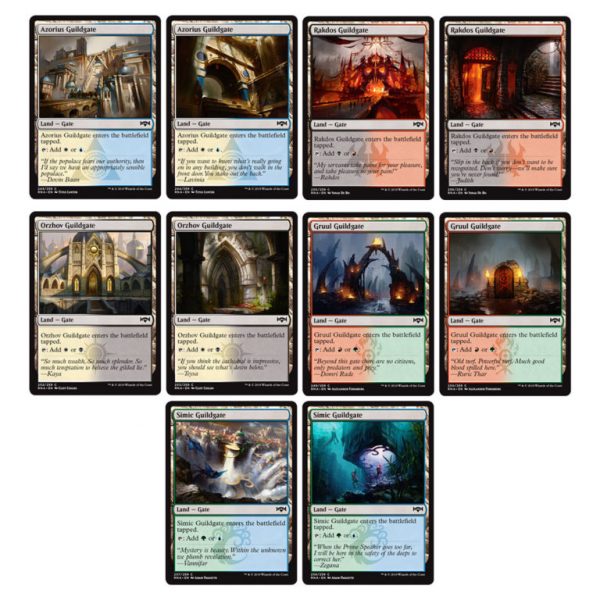
Guildgates
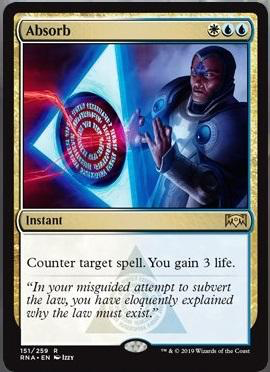
Well, happy holidays, Absorb is legal in Modern now. Will it make the cut? I doubt it; three mana just seems too expensive even though the life gain is really what UWx Control decks like. But we’ll see. This seems pretty good for Standard though. What do you think?
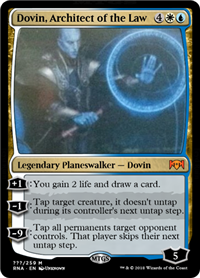
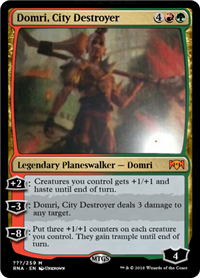
Looks like we have some cards from the planeswalker decks. Generally, these cards aren't good enough for top-tier Constructed tournament decks. But there's usually another version of these planeswalkers that show up in the main set that are often playable. So we'll probably see the reappearance of Dovin and Domri; keep your eyes peeled for these in spoiler updates.
There was an error retrieving a chart for Dovin Baan
The original Dovin didn't really make any waves. But as I mentioned about Emergency Powers below, stay on your toes because you can always consider playing a new blue card alongside Force of Will. And since the original Dovin wasn't that great, Wizards might be more inclined to push the boundaries with the new Dovin.
There was an error retrieving a chart for Domri Rade
Domri, on the other hand, was played quite a bit in Standard. And sometimes still sees play in Modern. Will Wizards push this three-mana planeswalker even more? We'll see.

Modern: Zoo by Boldjonunc24
Creatures
2 Qasali Pridemage
2 Brimaz, King of Oreskos
3 Scavenging Ooze
4 Noble Hierarch
4 Wild Nacatl
4 Tarmogoyf
4 Knight of the Reliquary
4 Loxodon Smiter
Non-Creature Spells
3 Path to Exile
3 Collected Company
4 Lightning Bolt
1 Domri Rade
Lands
1 Plains
1 Sacred Foundry
1 Ghost Quarter
1 Horizon Canopy
1 Kessig Wolf Run
1 Mountain
2 Stomping Ground
2 Forest
2 Temple Garden
3 Wooded Foothills
3 Arid Mesa
4 Windswept Heath
Sideboard
1 Valorous Stance
1 Stony Silence
2 Stillmoon Cavalier
2 Remorseful Cleric
4 Leyline of Sanctity
1 Fracturing Gust
2 Blood Moon
1 Ancient Grudge
1 Domri Rade
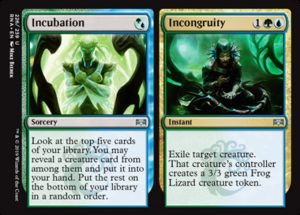
This is pretty much a strict upgrade to Commune with Nature since stapling on a removal spell as an option in the form of Incongruity gives the card a lot more flexibility. This will most likely replace Commune with Nature in the Selesnya Vizier decks in Modern. Take a look at Steven Riecken's Abzan Evolution deck he finished in 7th place with at Grand Prix Portland.
Modern: Abzan Evolution by Steven Riecken
Creatures
4 Birds of Paradise
4 Devoted Druid
3 Duskwatch Recruiter
1 Eternal Witness
4 Noble Hierarch
2 Shalai, Voice of Plenty
4 Vizier of Remedies
1 Walking Ballista
Non-Creature Spells
4 Commune with Nature
4 Eldritch Evolution
4 Postmortem Lunge
4 Chord of Calling
Lands
1 Dryad Arbor
3 Forest
3 Horizon Canopy
1 Misty Rainforest
1 Overgrown Tomb
1 Plains
3 Razorverge Thicket
2 Temple Garden
1 Verdant Catacombs
4 Windswept Heath
1 Wooded Foothills
Sideboard
2 Burrenton Forge-Tender
2 Eidolon of Rhetoric
3 Path to Exile
1 Sin Collector
1 Tireless Tracker
2 Worship
1 Linvala, Keeper of Silence
2 Knight of Autumn
1 Gideon, Ally of Zendikar
Guild Spotlight: Azorius
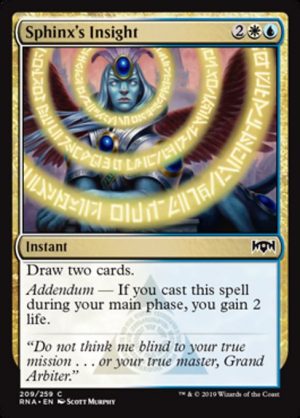
Sphinx's Insight with Addendum seems a bit underwhelming even for Limited. Let us know what you think in the comments below.
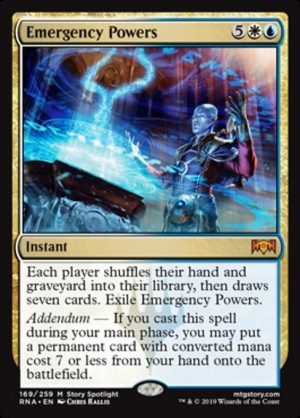
Emergency Powers, on the other hand, seems pretty powerful. Many people have been calling this the instant speed Wheel of Fortune. But why? It's an instant speed Timetwister. Seven mana is a lot. But drawing seven cards at instant speed at the end of your opponent's turn when they're tapped out is very dangerous. This is also blue. And as always, you have to take special consideration with blue cards because they can be used with Force of Will. I don't doubt that some people will try this in Legacy. But I also don't doubt that it won't be great. But time will tell. It could be awesome. Or it could be terrible.
I also won’t doubt that people will be trying this out with Growth Spiral.
Guild Spotlight: Gruul
Remember this?
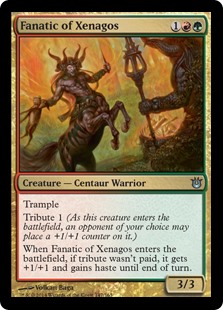
Well, it seems like the Tribute mechanic has been upgraded to Riot.
Gruul Spellbreaker
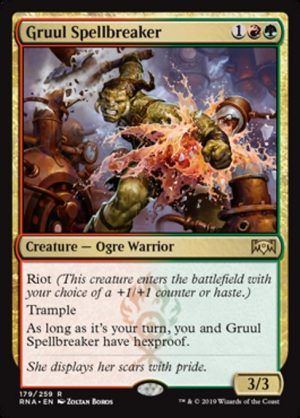
Three mana for a 3/3 with trample with upside seems pretty good. But the upside is very nice. You get to choose whether you need a 4/4 body or a attack right away with a 3/3. But more importantly, I think, your opponent can't use spot removal to get rid of this on your turn nor can they use something like Settle the Wreckage. And I think that's pretty strong.
Three mana for this in Modern is probably too much though.
Frenzied Arynx
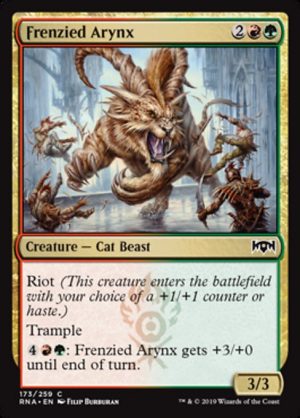
Four mana for a 4/4 with trample is decent in Limited. But the fact that you can pump this trample is pretty awesome. It's definitely a Limited playable. I don't think it'll make the cut for Constructed though.
Side Note
It might be possible to pair Riot with the Simic counters theme since the Standard manabase will be pretty flexible. What do you think?
Guild Spotlight: Simic
Bedevil
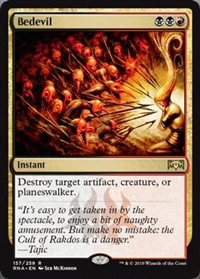
Is this good enough for Modern or Legacy? I'm not sure. It has a lot of competition. There are cards like Hero's Downfall, Dreadbore, Kolaghan's Command, and Terminate. They have different casting costs. And they all do something slightly different. So just like Assassin's Trophy joined the mix of Abrupt Decay, Maelstrom Pulse, Path to Exile, and Fatal Push, it might also do the same with the aforementioned cards. So I think rather than go nuts and say this will replace everything else, it's probably wiser to think of why and when you would want this card. And once you do that, you'll probably start to realize how many copies you might want and where they belong in your 75. And probably more importantly, think about certain decks that can run Rakdos colors and have a tougher time dealing with artifacts, creatures, or planeswalkers.
Standard might be a different story since the format is generally a bit slower than Modern and Legacy. I could see this card seeing a lot more play. It could go in some kind of Rakdos aggro deck. Or it could go in a Jund midgrange deck. Or it could maybe even slot into Dimir or Orzhov Control splashing red. It's really tough to say without seeing the rest of the set's cards and testing. But at least these might all be possibilities.
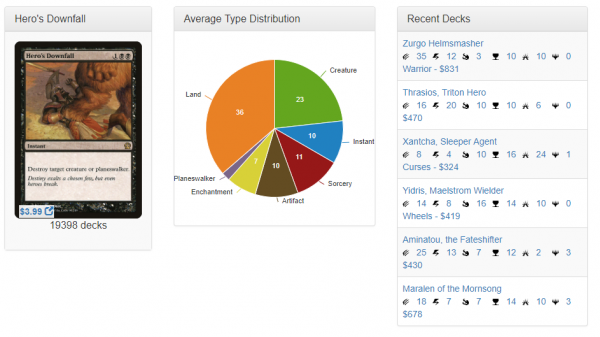
Also keep an eye on this after this is released to see if it starts to take over Hero's Downfall in EDH/Commander. I mentioned Hero's Downfall not too long ago in Hold 'Em & Fold 'Em #18, so this is just a heads up if you picked up any promo versions. You might want to consider moving them.
Aeromunculus
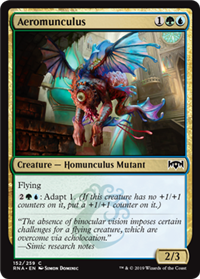
Adapt seems like a pretty cool mechanic. A lot of people are comparing it to Monstrosity from Theros. And it's nice that you can also activate this ability at instant speed. Also, it's slightly different than Monstrosity in that if the counter(s) are removed you can activate the ability again. However, I don't know if this will ever be that relevant. Sound off in the comments if you've heard or think of a situation that could come up often.
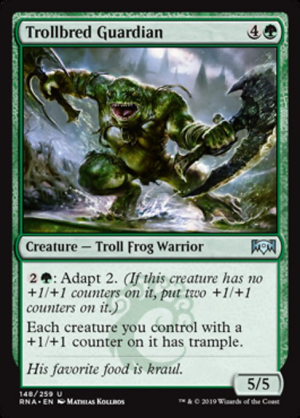
This seems like a decent Limited card. And it's common. Three mana for a 2/3 flier that can pump up its power and toughness at instant speed for four mana isn't terrible.
Zegana, Utopian Speaker
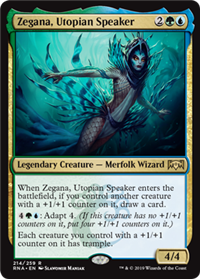
Here come the Merfolk. It's also a Wizard; though, I don't know if that's relevant in Standard. And I'm not sure a four-mana Wizard will cut it in Modern. However, I think it's important to note that this will often draw you a card when it enters the battlefield.
Here are a couple of lists to help get you brewing...
And don't forget that this could also fit into a Simic Counters deck which was briefly talked about in a previous update.
Guild Spotlight: Orzhov
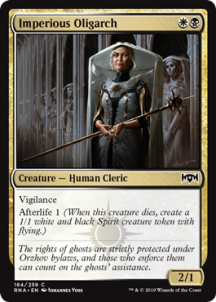
Playable in Limited? Yes. On a scale of 1 to 5 with 5 being awesome? Not sure. Post your rating in the comment section below and why.
Playable in Constructed? I don't think so.
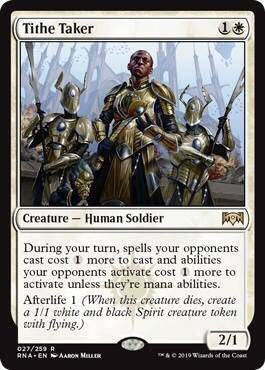
Not sure if this is confirmed yet. But it's another Human, and one that'll be put up against the same question...is it good enough to replace anything in Modern or Legacy Humans? I'm not quite sure about this one either. It doesn't really stop your opponents from comboing off their turn which is what they're going to do most of the time anyways. So what's does this actually help fight against? Counterspells? Decks that run countermagic usually also run sweepers like Supreme Verdict. But this card also has Afterlife! But is that good enough to warrant a spot in your 75? I dunno.
Guild Spotlight: Rakdos
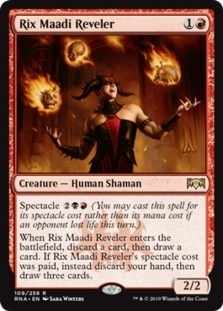
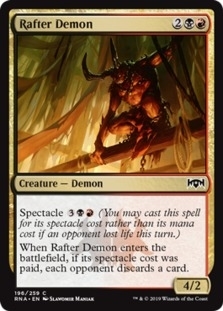
This is huge. Now we actually know what Spectacle is. With that said, Light Up the Stage seems borderline dangerous. It can go in an aggro deck as well as a burn deck. It can help you find lands or more gas in an aggro deck. But is it good enough to take a spot in something like Modern Burn? I'm not so sure. It's a pretty bad topdeck which is pretty much an integral part of how the deck functions, so I don't think it really belongs. But we could see a totally different deck pop up, so keep your eyes peeled. I don't know if the FNM promos will be under $5. But if they're anywhere near a couple of bucks, that seems like a really good price to pick them up at. Another note, Gut Shot has risen in price over the past few days to weeks and could rise more because of Light Up the Stage.
Let's take a look at the other new cards with Spectacle. First up we have...
Rix Maadi Reveler
Will this be decent in Standard? Maybe. Will it be good in Modern or Legacy? Probably not. This might be cast for its Spectacle cost quite a bit in Standard, but I don't think it'll happen too much or at all in Modern. Four mana is just a bit too much I think in the older formats. So the real question is...is the loot effect good enough to make it into Modern or Legacy Humans? Probably not. Is it better than Militia Bugler, Dark Confidant, or Thraben Inspector? It's tough to say, but I think not. It can help smooth out your draws a bit though which might make it playable since the Humans deck doesn't have too many ways to manipulate its draws or filter out unwanted cards. But the Spectacle cost is just too out of reach I think. It's not in the primary colors and it costs four mana. And if you are dealing damage to the opponent then casting this for its Spectacle cost, are you just winning more? Maybe. We'll see.
Rafter Demon
This is not constructed playable. How is it as a Limited card? Very medium. Feel free to post in the comments below on your rating of this and why on a scale from 1 to 5 with 5 being a first pick.
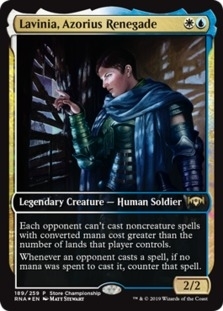
Lavinia, Azorius Renegade
This is pretty strong card I think. It hoses quite a few things, so it'll probably see play in the sideboard of Humans in Modern and probably Legacy. Will it make its way into the maindeck? Possibly. Another thing to keep in mind is that this could see play outside of Humans decks too since it's blue and can be discarded to Force of Will just like Meddling Mage. It's preorder price is $10 right now though, which I think is probably too high.
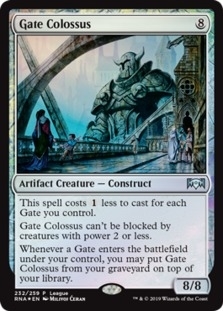
Gate Colossus
Not really sure what to say about this card. Feel free to sound off in the comments below if you have something constructive to say about this card though.
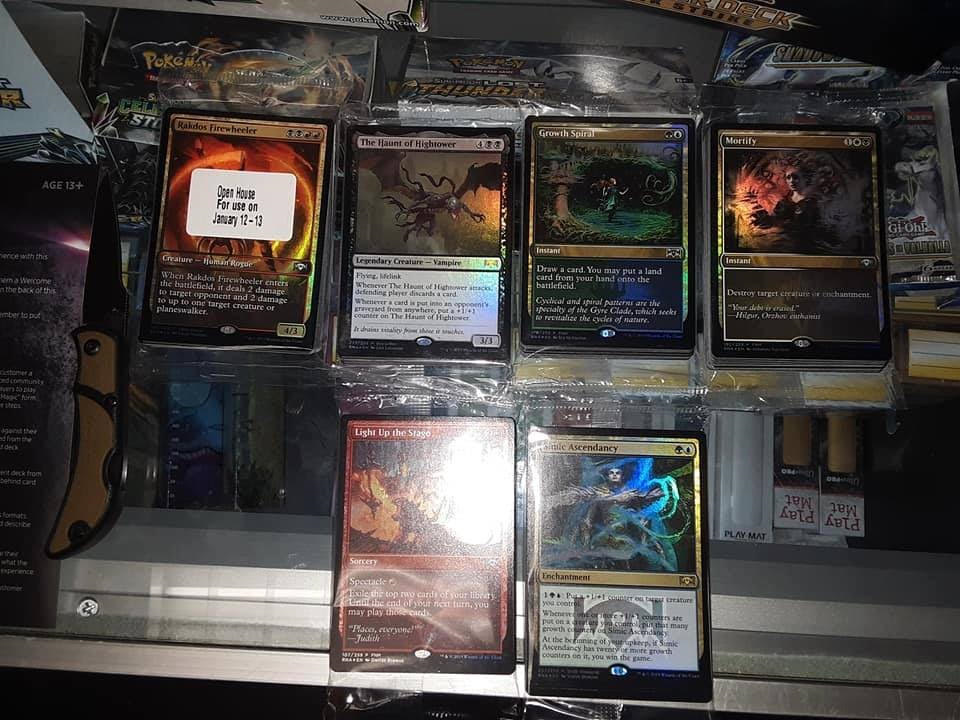
Rakdos Firewheeler
Although I mentioned that Humans could potentially be on the downturn in Modern in my MTG Metagame Finance #23 article, this is a good reminder that it’ll be a top-tier contender for a while as Wizards keeps printing new Humans.
But is this good enough to make the cut? I doubt it, but I could be wrong. First off, the casting cost is pretty tough even with Unclaimed Territory, Cavern of Souls, and Aether Vial. Secondly, Kessig Malcontents still seems like a more efficient card than this. And that doesn’t even really see play anymore.
The Haunt of Hightower
As I mentioned in the comments below a couple of days ago, Vampires will probably be a supported tribe over something like Spirits. While it’s still possible that Spirits could also be supported, this further solidifies that more Vampires are coming.
Growth Spiral
This is an interesting card. It’s a pseudo two-mana ramp spell that replaces itself. And it’s blue. Is it good enough for Legacy as a potential card to discard to Force of Will? I highly doubt it. But I could be wrong about this too.
Good thing you draw a card first though.
Mortify
This is a nice reprint for Standard and EDH/Commander. It’s also nice that Godless Shrine comes along with this. And as mentioned above, if Vampires becomes a top-tier strategy in Standard, this would probably see play in multiples in that deck.
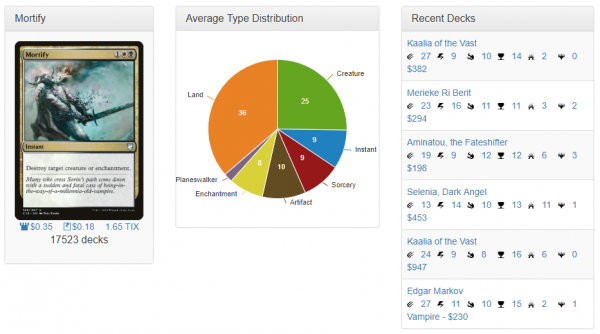
If you don’t like foils, look into the Magic Player Rewards version that’ll probably never get reprinted. I just picked up a playset from TCGplayer for a little over $3 each.
We covered this card a few days ago and now we finally know the correct English name of this card. However, we still don’t know exactly what Spectacle is. Stay tuned for updates by bookmarking this page, setting an alert, or adding it to your news feed.
Simic Ascendancy
This is funny, since this is exactly what the last post was talking about. Anyways, is this card good enough for Modular Affinity alongside Hardened Scales? I’m skeptical. But again, I could be wrong. LOL.
Guild Spotlight: Simic
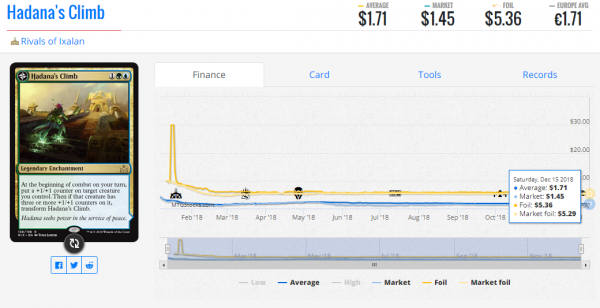
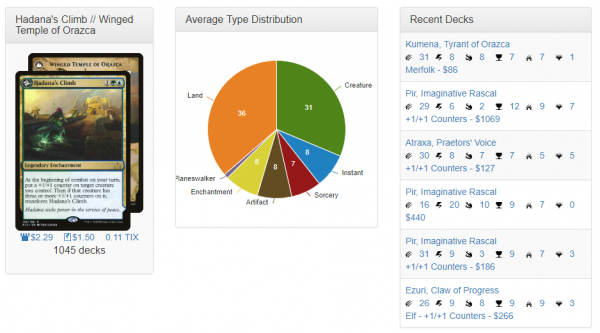
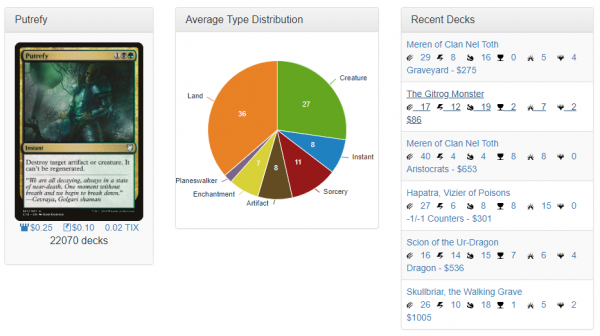
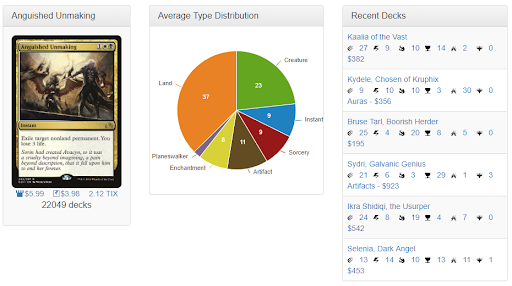
It was recently brought to my attention by my friend, Ty Thomason, that the Simic guild in the two previous Ravnica blocks both contained a +1/+1 counter mechanic. With that said, he suggested that Hadana's Climb might be a spec. I think this could be a possibility. However, it doesn't see play anywhere else right now except for pretty much EDH/Commander. And it only shows up in just over 1,000 decks, which isn't that many compared to other cards like Putrefy or Anguished Unmaking.
If anything, I think it could be a 'quick flip' if it ends up becoming popular. If that's the case, nonfoils might be the play since foils are usually harder to move.
Top Speculation Targets for Simic
Kelly here, chipping my two cents on the Simic guild. When I read Eddie's estimation of Hadana's Climb, I got excited because it's so easy to trigger this 3-drop on the same turn you play it. On the flip-size, it's a mana fixer and accelerator that turns every creature into a huge evasive threat. So I looked at some of the options to trigger this thing early and often, and here's what I found by searching for +1/+1 counters in Blue/Green Standard. A full list of targets is below, but 2 cards stood out among the rest:
The synergy between these 2 cards and Hadana's Climb are dangerous. Climb triggers Champion, and Winged Temple's activated ability means that whatever flies and dies will assuredly trigger Pelt Collector again.
I really like the idea of a turbo-land style deck using Enter the Unknown and other Explore cards to pump out +1/+1 counters and lands. There are enough synergies in this collection of cards to build a theme, and the question is...what do you do with all this mana? Waker of the Wilds? An early Vivien of the Arkbow? Unfortunately, we'll have to wait and see what Ravnica Allegiance brings, since there isn't one clear "finisher" that can really absorb all the extra mana this strategy can generate.
As much as I hate to say it, Simic Ascendancy might actually be a viable win condition here. If you can control the early game by ramping out growing Merfolk and putting on pressure with Pelt Collector and Deeproot Champion, the extra mana generated can turn this alternate win condition into a dangerous clock. My concern is that it's easy to kill an enchantment, but crucially, you don't lose your investment when you lose the card. All your +1/+1 counters are safely distributed. Althought the insta-win clock gets reset, you still have an army of big creatures and a bunch of mana! It remains to be seen whether this is a valid tactic, but there is absolutely a borderline case for a simic turboland deck.
Standard-Legal "Simic" Cards
Light Up The Stage
(by Edward Eng on December 12, 2018)
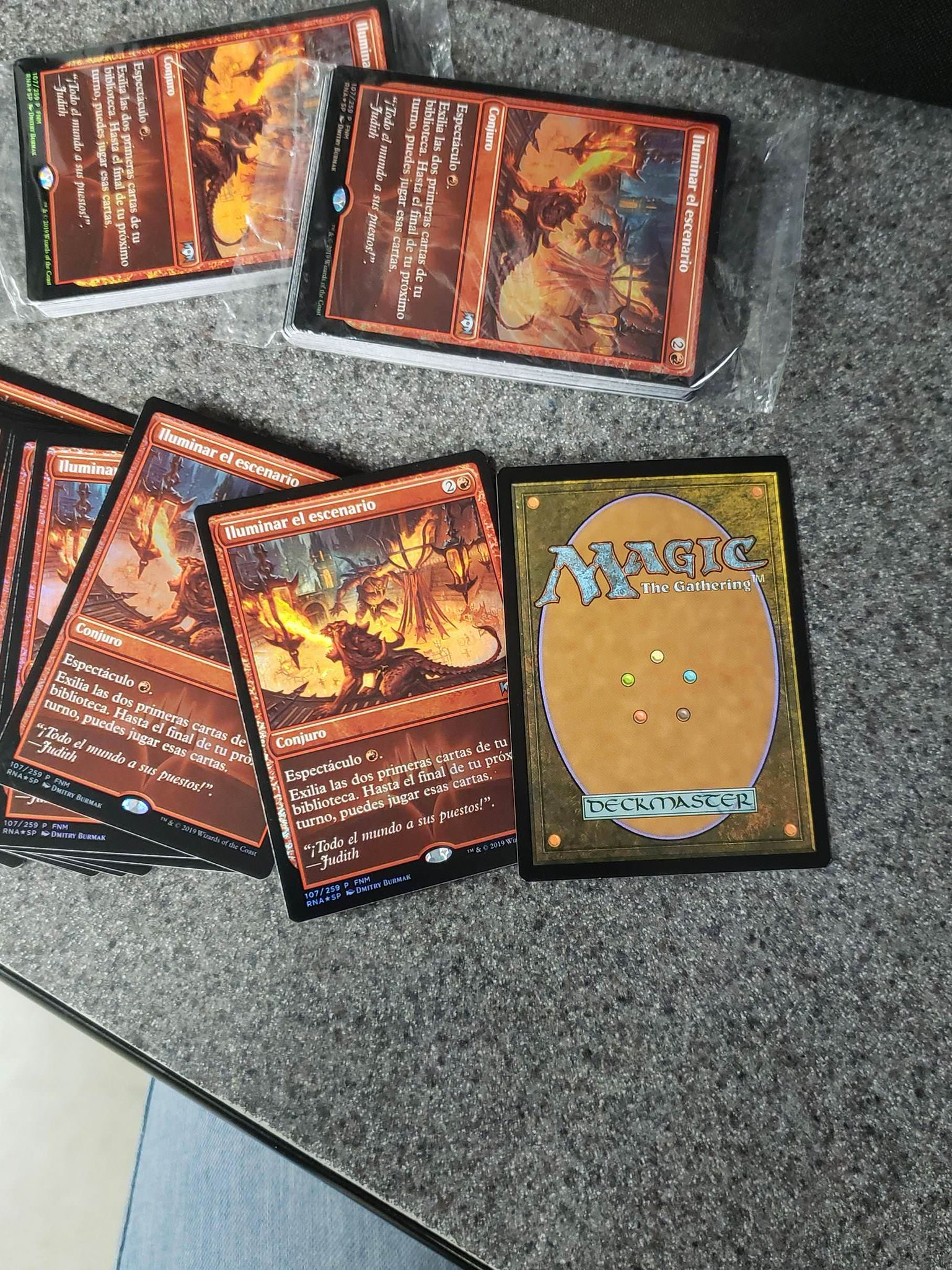
Today we're featuring the Ravnica Allegiance spoiler card, Iluminar el escenario, which translates roughly into something like Illuminate the Stage or Light the Stage. And it looks like we have a new mechanic called Espectaculo or Spectacle.
The card text reads...
- Exilia las dos primeras carta de tu biblioteca. Hasta el final de tu proximo turno, puedes jugar esas cartas.
which translates into...
- Exile the first two cards of your library. Until the end of your next turn, you can play those cards.
So one of the first questions that comes to mind is...
1. What's Spectacle?
At this point, the general public doesn't really know for sure. We can only speculate on what it is. Some people have said it could be an alternative casting cost.
Here are a couple of examples...
- If a creature died this turn, this spell costs one red mana.
- If you have no cards in your hand, this spell one red mana.
But all we can really do right now is wait since there isn't any reminder text on this promo for Spectacle.
However, we can definitely start to dissect the card text and its potential implications on different metagames. Initially, there are a few cards that come to mind when thinking about what could work well with this card.
This card provides extra fuel to help bring back the phoenix from the graveyard. And it's nice that you can play the cards until the end of your next turn since this spell costs three mana without Spectacle.
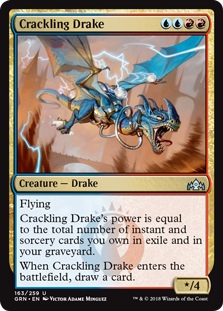
Here's another card that often sees play alongside Arclight Phoenix in Standard and Modern. Illuminate the Stage/Light the Stage might also work nicely with the drake since it's a sorcery that increases Crackling Drake's power by one at the very least or more if it exiles additional sorceries and/or instants.
Illuminate the Stage/Light the Stage could also play well with this card since it gives you more options to play spells, especially if you get stuck with a land on top of your deck that you can't play because you've already played a land for the turn.
All of these cards see play in older formats like Modern, Legacy, and even Vintage. But the key thing to point out is that Spectacle’s alternative casting cost is [[R]]. And traditionally zero and one-mana spells are heavily played in those formats, including cards that have mechanics that reduce a spell's casting cost down to one or zero like Treasure Cruise, Dismember, and Invigorate. So it's important to keep a sharp eye on these types of cards when they're spoiled because they can have a large effects that cause format metagames to adapt and shift.
Izzet Phoenix in Modern has been doing quite well in the past month. Ross Merriam recently won SCG Baltimore with it. And Carlos Moral made the top four of Grand Prix Liverpool with another innovative take on the deck which includes Jace, Vryn's Prodigy to improve the density of turn two plays. Could Illuminate the Stage/Light the Stage make this deck even more powerful than it’s already become? Maybe.
Questions
- What implications do you think this card will have?
- What cards does it go well with?
Post in the comments section below.
Thanks,
Eddie
@edwardeng on Twitter
Investing in Real Estate? (by Kelly Reid)
Knowing the guilds is important because it all but guarantees the reprinting of five cards – the associated shocklands, originally printed in Ravnica: City of Guilds, Guildpact, and Dissension (and more recently reprinted in Return to Ravnica, Gatecrash, and Dragon's Maze).
There are two key things to consider here: supply and demand. Obviously. The issue is that supply is about to increase substantially. Like, by a ton. But since they are being printed in a Standard-legal set, demand will also increase. By, like, a ton. On the balance, it's probably safe to assume no major change in price on these. Expect some increased premium on release day as people try to finish Standard decks. Expect that premium to disappear within two to three weeks, once supply fully hits the market.
Sometimes in this finance game, the right move is to get what you need to play some Magic and find other opportunities to make profits. I suspect this is one of those times.
That said, if you're a degenerate gambler who absolutely must act on any piece of news (you know who you are), then you could try to pick up Expedition copies of these lands and pawn them off on those fools who foil out their Standard decks (you also know who you are). Expeditions have seen a fairly notable price increase lately, so this tactic is probably not ideal. Still, these are some of the coolest and most scarce lands outside of the Vintage-era, so you could do worse than to pad your trade binder or collection with some of them.
Location, Location, Location
We also know that the color-paired lands from Dominaria and Ixalan work really nicely with shocklands; the Ravnica mana sources all have basic land types, which means they play well with other things like fetchlands too. I doubt we'll see fetchlands back in Standard again, but these "buddy lands" suddenly got a lot better.
The five that will see a direct benefit from the guilds represented are Hinterland Harbor, Isolated Chapel, Dragonskull Summit, Glacial Fortress, and Rootbound Crag. Note that these will all rotate out at the same time, despite being in two different blocks.
The Latest, Shameless, Cash Grab by WotC
...and I say that with nothing but love. They're trying a thing called Collector Boosters, which is a pack that costs three times the normal price, has three rares instead of one, and two foils instead of zero or one. It's really hard to figure out what this will do to prices, since we have no real clue about its distribution other than "limited."
This may increase foil supply dramatically, or it may not move the needle at all. I personally don't believe the extra rares in the pack will matter, since the pack is also priced accordingly. This pricing balance should maintain the equilibrium, but if there are some shenanigans with print runs, then things could be thrown off. My suggestion is to consider this an interesting, but non-actionable, fact.
The Collector's Boosters are priced at $12.99, and includes 3 rares and/or mythic rares, 10 uncommons, 2 foils of any rarity, and (interestingly) no commons! This could put pressure on chase uncommons, which have seen multi-dollar price tags in previous sets. I do not suspect this will have a large effect either, though I could see a world in which hardcore players draft these instead of normal packs. If this happens, we may see a glut of uncommons. Overall, this is healthy for Magic, but exercise caution when speculating on cards from this set. We don't know how this will play out, so there is some risk.
Existing Cards to Speculate On
We've got a great article covering that already, but we'll continue adding onto this list as time goes on. Most of these are direct plays based on the guild alignments; there are a lot of Orzhov cards that aren't quite getting enough love right now. In the right deck, some of the Ixalan vampire cards could be devastating (tribal synergies or not). For now, keep a close eye on the spoilers as they are released, and be sure to bookmark QS, since we'll be keeping an eye on it for you.
Ravnica Allegiance Key Facts
| Set Symbol: |
Not Revealed! |
| Expansion Code: |
RNA |
| Release Date: |
January 25, 2019 |
| Pre-Release: |
January 19, 2019 |
| Ravnica Weekend: |
February 16 & 17, 2019 |
| Plane: |
Ravnica |
| Set size: |
264 Cards |
|
WotC Design & Development Team
Sam Stoddard (Development Lead)
Jackie Lee
Jules Robins
Ari Levitch
Bryan Hawley




 There is some precedent for unbanning Stoneforge Mystic on the grounds that its power level is now appropriate for Modern. This justification was used for
 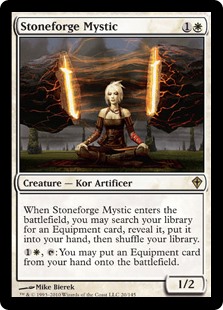 Stoneforge's power level seems lower than that of many legal Modern cards, but what of its future? At this point, its status on the list is about as laughable as Golgari Grave-Troll's was in the year before its own unbanning. Unlike the Troll, though, Mystic doesn't have any broken keywords attached, and is unlikely to become much better with later printings; not only has Wizards drastically scaled back the power level of Equipment cards, but those artifacts now compete with Vehicles when it comes to set design.
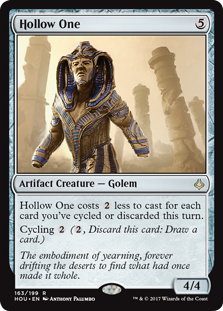 The least subjective "positive" effect a Stoneforge unban would have on Modern is one of diversity. Stoneforge Mystic doesn't easily slot into any existing top-tier decks; taking things a step further, none of those decks (or even lower-tier decks) even run Equipment, a card type mostly supplanted in function by planeswalkers. Besides, the type of deck that wants Mystic at all, a goodstuff-style
  artifact hate in Modern.
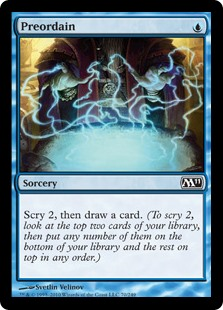 But the card I'd most like to have in Modern is Preordain. Faithless Looting and Ancient Stirrings are both top-performing enablers in Modern that escape the banlist, and I think Preordain would mostly contribute to decks that don't perform as well. Of course, the glaring exception to this argument currently is Izzet Phoenix, which would snatch up Preordain in a heartbeat and further extend its lead over other aggro-control strategies. So I can't in good conscience advocate for a Preordain unban.
 Disclaimer: I like a boogeyman. As a brewer, having a top deck in the format lets me explore design space that effectively attacks specific mechanics. Consider
 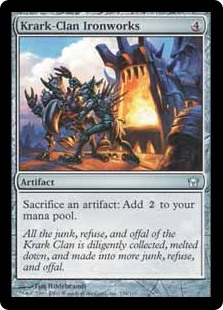 Despite that increase in heavy-duty hate, Ironworks continues to succeed, and with staggering consistency.
 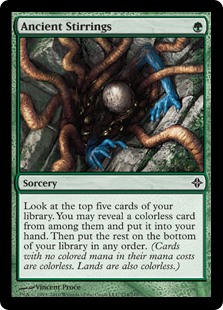 These cantrips contribute to more than just whichever top-tier deck is playing them, also supporting less-represented strategies. So having them in Modern represents, at least theoretically, an increase in diversity. Looting's performance, while impressive, has paled in comparison to Stirrings's, so we can take the former off the table. And Stirrings just isn't bringing its many other decks (i.e. Gx Tron; Hardened Scales; etc.) to the same level as Ironworks. This predicament suggests that something is wrong with the rest of the cards in Ironworks, and not with Stirrings, which also finds itself in plenty of less successful strategies.
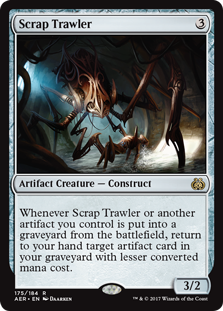 And that brings us to Trawler. If Ironworks is a busted deck, why not just ban Ironworks itself? Again, we can look for precedent—Wizards does not like to forcibly remove decks from Modern. They always seek to water them down so that they can continue to compete without dominating. Successful examples of this kind of ban can be found in Dredge, Amulet, and Infect; a notoriously unsuccessful example is Splinter Twin. But no matter the result, Wizards' aims have been made abundantly clear by their banlist announcements, with the company sometimes


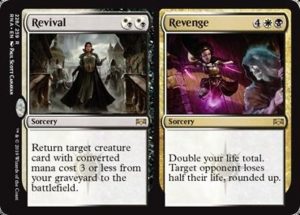
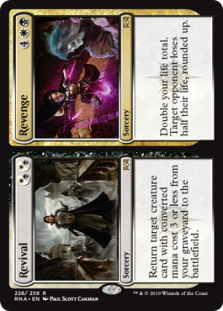
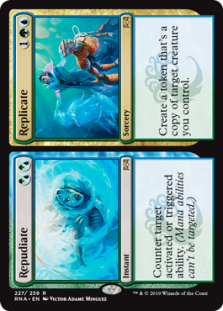 I will be focusing on Repudiate // Replicate for this section, but I have the same arguments for Modern prospects Incubation // Incongruity and Revival // Revenge. These are spells with decent effects and very attractive flexibility defeated by
 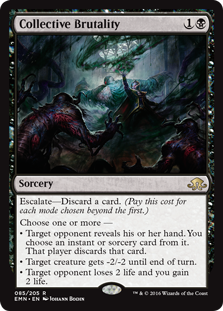 The same can't be said in Modern, where mana cost and effect impact are king. Decks are more powerful and streamlined than in Standard, so there's less need for flexibility. Some modal/split spells see niche play, like Orzhov Charm for Death's Shadow or Dusk /// Dawn in Death and Taxes. However, I can only think of two that see regular play: Cryptic Command and Collective Brutality. The former sees play in control for its power, while the latter is more widespread and applicable to this discussion.
 The only thing Repudiate has over Trickbind is that it could be played in mono-green decks. However, why would any deck want to? The effect is niche at best.
 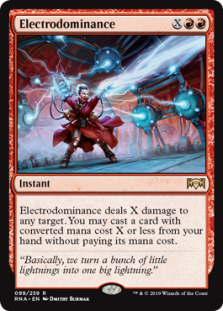 If this is where Wizards' heads are, then Lavinia, Azorius Renegade starts to make sense for Standard. That aside, Electrodominance has had an electric effect on spoiler season. Everywhere I've
 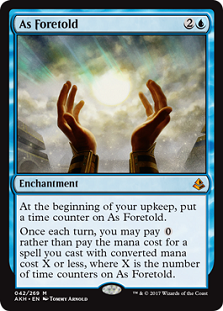 The obvious answer is to play Ancestral Visions or Living Ends from hand rather than leaving them stranded. This is fair, but Modern already had that in the Aether Revolt expertise cycle. In particular Kari Zev's Expertise was
 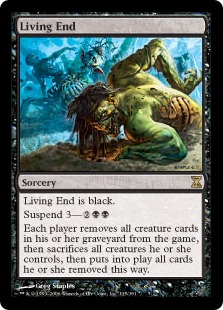 Since Electrodominance doesn't fix this fundamental strategic problem, it won't rescue
 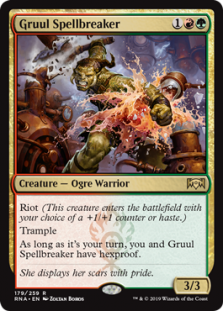 The next card is a creature with multiple problems. Gruul Spellbreaker looks so close to making it in Modern. Being a three mana 3/3 with haste or a 4/4 without is close to playable in the right deck or with the right abilities, as demonstrated by Mantis Rider and Loxodon Smiter. But therein lies the problem. Spellbreaker's other abilities aren't relevant enough in Modern, and even if they were, the right deck for it is the wrong deck for Modern.
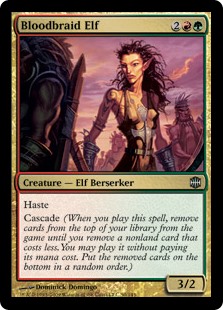 As it doesn't have built in card advantage or value like Dark Confidant or Scavenging Ooze, the ogre is just a beater, which is the same job Tarmogoyf holds. Given that Goyf is cheaper and frequently bigger than Spellbreaker, it wins the fight easily.
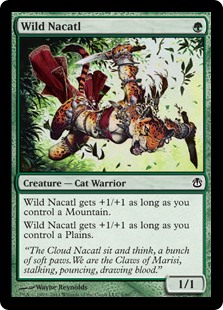 The problem with Zoo is that it's the definition of a straightforward aggro deck. It just plays the best cheap attackers, turns them sideways, and hopes that plus some burn is enough. Even in 2014, pure Burn did that too, but far more efficiently; Affinity did that more explosively, with flying, and featuring an infect backup plan. Today we have decks that randomly dump free 4/4's into play turn 1 and follow that up with 1 mana 5/5's. Zoo's strategy is from a time when Wizards didn't push the bar on creatures, and is now too archaic to survive. If Zoo in any form wants to come back, it will take a major overhaul, and a three-mana, 3/3-4/4 beater isn't going to cut it.
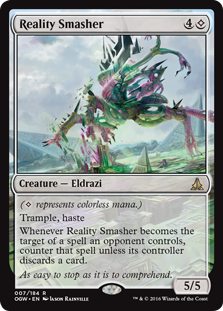 help or hinder its playability. Trample is mostly irrelevant on a lower-mid sized creature since it's only getting blocked if it can be killed anyway and that's not too hard today. Trample isn't why Reality Smasher is played.
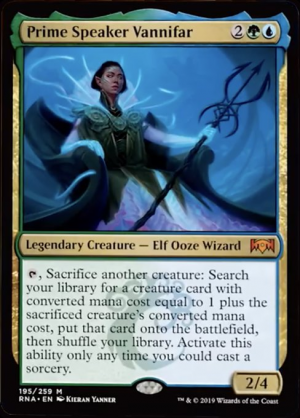
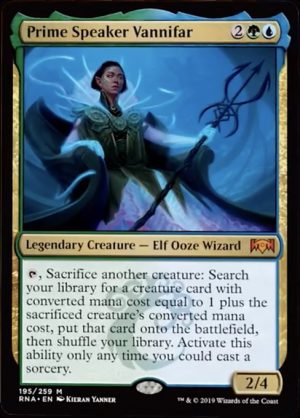
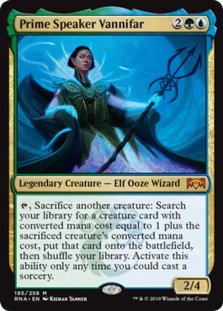
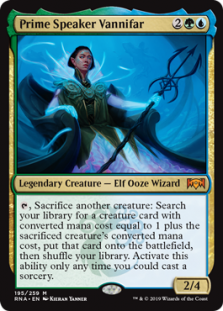 Finally, there's the newest broken-card-with-legs, Prime Speaker Vannifar. Time Spiral's Magus cycle of Vintage-cards-on-legs are Vannifar's direct ancestors. While Magus of the Moon and Magus of the Tabernacle have seen play, the Magi with activation costs (like Vannifar) have had no real impact in the format.
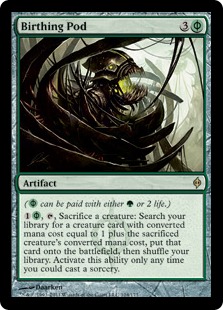 Being fetchable is no small thing, and neither is the manaless activation. However, the problem of being a creature still hangs on Vannifar; while I'm sure she'll see play in Modern, her true home
 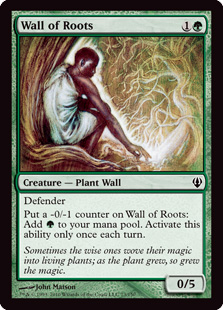 Chording for Vannifar with the intention of going off after untapping would be a sound plan if it could be defended. However, that Chord requires seven mana, and while it's possible with two Birds of Paradise and a Wall of Roots on turn three, it doesn't leave any mana open to protect the Chord or the Vannifar.
 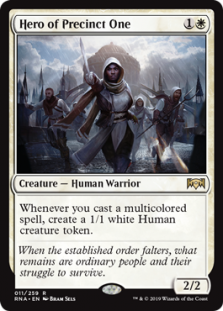 - The deck that wants this card does not exist because there aren't enough cheap multicolored spells to emulate Young Pyromancer. I'd like this not to be the case because the greater flexibility is very appealing.


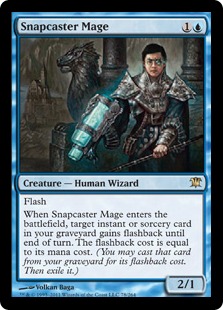 I got to work building the Delver deck of the future. For starters, I figured a full set of Snapcaster Mages could be added to the core over the
 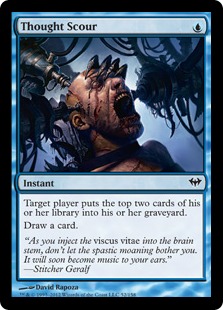 Scour, too, is an instant-speed cantrip, and has the potential to be the best of the bunch. Grixis Shadow's dip into Faithless Looting and Mishra's Bauble has claimed some copies of Serum Visions, but Scour always remains a 4-of in that deck due to its ability to power out delve threats. I wanted my Delver deck to also have the ability to abuse Thought Scour, ideally enough to make it better than Serum Visions—in doing so, I'd upgrade the power level of my cantrips generally.
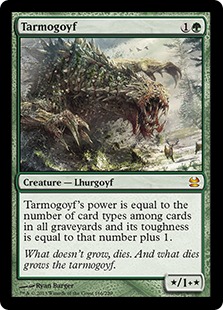 While I wanted a set of Scours, I also didn't want to build the deck in such a way that it would fold to heavy-duty graveyard hate, especially Rest in Peace. That's a problem with Temur (reliant on Tarmogoyf and Hooting Mandrills) that I think makes the deck utterly unplayable in this graveyard-wise metagame. The question when choosing threats was one of how to extract value from a full set of Scours without opening myself to blowouts from hate cards.
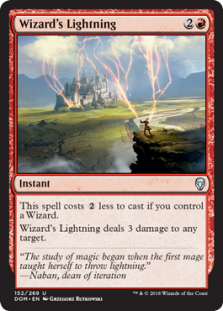 I ended up settling on Grim Lavamancer. The four Scours ensure a constant stream of cards entering the graveyard, allowing Lavamancer to totally dominate the small creature matchups Delver has long splashed sideboard sweepers to beat. Its floor is much higher than Goyf's, for instance, as a one-mana 1/1 considerably trumps an off-color, two-mana 0/1. Finally, Lavamancer makes up for his lack of offensive power by letting us run 4 Wizard's Lightning comfortably. The instant adds oomph to our Bolt-Snap-Bolt plan and gives us additional ways to power through board-invalidating tech like Ensnaring Bridge and Terminus.
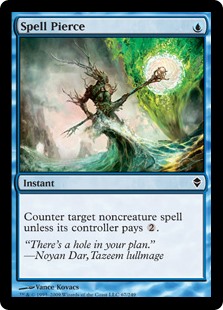
 Naturally, Pierce shines against spell-based decks with combo elements. Hitting these decks where it hurts means
  for whatever else might present itself. While it's not permission, I also threw in a pair of Abrades for good measure; I like to have at least six removal spells in my Delver mainboards, and was interested in discovering what mainboard artifact hate can do for the archetype.
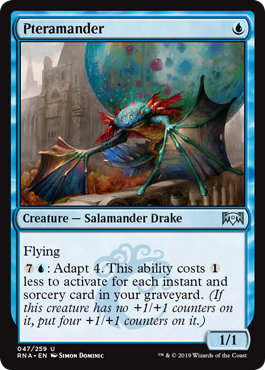
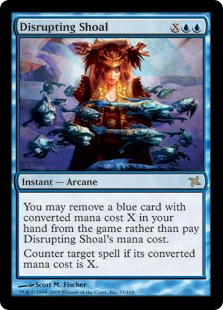 I rebuilt the deck from scratch in another five minutes, landing on a list almost identical to the UR Lavamancer one. In place of Wizard's Lightning, I added a smattering of random instants and sorceries that underperformed during initial tests. Then, I realized another of Pteramander's components: it's blue! That means the creature helps enable Disrupting Shoal, which I have again been pining after in this metagame of blazing-fast kills created by cheap spells. Shoal also does a fine job of protecting Pteramander from the likes of Fatal Push: at the stage of the game where Pteramander "flips," it's often trivial to hold up hard-Shoal mana, and Cancel is as strong as ever with a beater on the table.
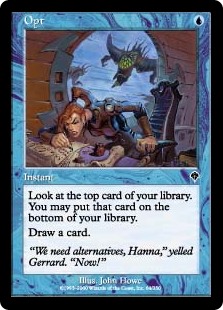 A number of little changes were made from the Lavamancer version:
 whatever permanent opponents stick, and I've liked it so far. It also sometimes exceeds its on-paper worth by dealing with a horde of tokens.
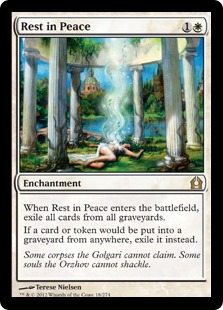 The creature's worse against combo-oriented decks like Phoenix, Ironworks, and even Tron and Burn. In these matchups, it takes too long to grow and is usually sided out for hate. Fortunately, Delver (not to mention this build) is already well-equipped to defeat these sorts of decks, so a potential game 1 loss isn't the end of the world. Salamander is also soft to Rest in Peace, and gets swapped for Drake against opponents likely to bring in multiple copies of the enchantment. Since Rest decks tend to be slower, casting multiple Drakes on just 18 lands is feasible in those matchups.
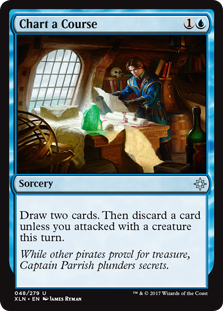 Leaping Forward