menu

Straying from Staples

Are you a Quiet Speculation member?

If not, now is a perfect time to join up! Our powerful tools, breaking-news analysis, and exclusive Discord channel will make sure you stay up to date and ahead of the curve.


Over the past couple of weeks I’ve written about how you can take advantage of Commander’s structure in a quest for victory and how the format can open you up to new opportunities in every way you play Magic. But this week is going to be a bit less positive as I discuss one of the more hotly debated issues that Commander brings up: staples.

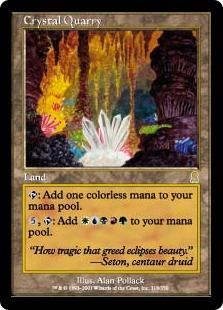
Commander is unique in a lot of ways, but like all of the competitive Magic formats, certain cards have risen to the top of the proverbial heap, and are common sights among nearly every deck. The most noticeable of these are the colorless ones; the majority of Commander decks contain a Sol Ring, a [card Senseis Divining Top]Top[/card], and [card Minds Eye]Mind’s Eye[/card]. But for basic functions which any deck can use, [card Solemn Simulacrum]ramp[/card], [card Scroll Rack]card selection[/card], [card Duplicant]removal[/card], or [card Artisan of Kozilek]recursion[/card], most people’s first instinct is to run the accepted strongest version.

Why should you run Diabolic Intent in your [card Kresh, the Bloodbraided]Kresh[/card] deck when Demonic Tutor will still be better? Or Distant Melody over Fact or Fiction in your [card Sygg River Guide]Merfolk[/card] deck? Or Prosperity over Stroke of Genius with Sen Triplets? Our staple mentality stops us from using weaker cards to provide basic effects, even when they’re more interesting in our decks.

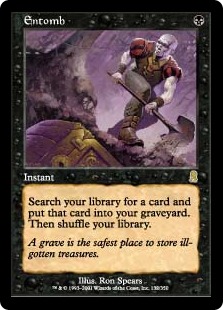
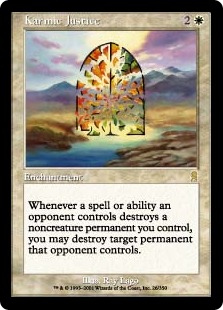
More problematic than this, once cards establish themselves as staples many deck builders choose to start their processes by including those of appropriate colors. So, if you build a Rubinia Soulsinger deck and start off with the staples, you’ll have:


I’m sure you disagree about some of these being staples just as I’m sure you would have more of your own to add in. This is ridiculous. Sure, not all lists will run all of these cards, but the fact that most of these will show up in the majority of lists running the appropriate colors should set off red flags.

What’s so bad about having a top tier of card? It undermines part of Commander’s purpose (and fun).

Commander is a singleton format with a larger than usual decksize and limits on what cards you can play. All three of these restrictions work at a fundamental level to differentiate each game that takes place. I always burn out on constructed formats quickly; even though people won’t often be running exactly the same list, playing the same eleven spells against four different decks each with eleven distinct spells, many of which overlap with one another, makes for a lot of very similar games.

On the other hand, playing games with sixty different spells against hundreds of different decks with the same number and having minimal overlap between them, makes each Commander game unique. This allows me to play Commander all night without getting bored. Every staple that somebody sticks into their deck detracts from the uniqueness of their games, making them less likely to be memorable and more like playing regular Magic.

This isn’t too much a problem right now. While decks of the same colors will have a lot of overlap, there aren’t that many colorless staples, and people often eschew staples that they don’t like or don’t have. Unfortunately, this condition isn’t going to last long: Wizards of the Coast has recently decided to design cards with Commander in mind, and we’re just starting to see [card Consecrated Sphinx]the[/card] [card Genesis Wave]results[/card]. Going forward, we’ll see a much larger number of new Commander staples being released in each set, and without a significant change, deck builders will quickly be overwhelmed by new staple cards to jam in to their decks. The distinctness of each game will dwindle, and the format won’t be interesting to play for as long at a stretch.

This isn’t a cry to Wizards to change their actions; first off, they need to sell booster packs to stay in business, and making cards that appeal to as large a demographic as Commander players is an excellent way to do so without driving people away from the game (like would happen with overpowered constructed cards). Moreover, we, the Commander community, can solve this problem without Wizards’ intervention.

How? Well, in order to accommodate all of these staples, we ought to look to a format that should have the same problems, but doesn’t: casual. If Commander has a problem with staples, one would assume that regular (four-of, sixty card) casual would have a much bigger problem. After all, the number of cards that can be ‘staples’ in casual play is comparable to the number that hold this designation in Commander. While Commander allows extremely [card Ulamog the Infinite Gyre]mana-intensive[/card] or [card Thawing Glaciers]slow[/card] cards to see the light of day, in order to do so, the format has had to sacrifice any semblance of [card AEther Vial]aggression[/card]. With all of these staples, we couldn’t reasonably expect something as innocuous as Psychic Possession to see the light of day, instead of each staple taking up one card out of ninety-nine, it gets four slots out of sixty. Only one sixth as many cards should make it through the gauntlet.

Casual play’s difference starts right as the deck building does. There are way too many ‘great’ cards in each color to begin deck building by jamming in a playset of each, so people don’t start decks that way. They’ll pick an individual card or a strategy to build around, and then they’ll look for cards that fit that mold. Why should Commander be any different? Sure, in some ways it’s more difficult to execute a single-card strategy, you have a much smaller chance of drawing your Sneak Attack, but you always have access to your Commander.

One of the best ways to make sure your decks stay unique and interesting is to really build around your Legends. This doesn’t just mean running Thornbite Staff in your [card Kiki-Jiki Mirror Breaker]Kiki-Jiki[/card] deck, it means building your entire deck with your Commander in mind. If you’re using Captain Sisay, you should run Dosan the Falling Leaf over City of Solitude, but moreover, you should run Yomiji Who Bars the Way; build your deck to make the best possible use of your Commander. Each and every card should support the strategies you’re trying to execute.

Not everyone wants to build around their Commander, and you don’t have to. Building a deck around a theme is equally effective. You may not always draw a specific [card Sprout Swarm] token producer[/card], or a specific [card Muraganda Petroglyphs]anthem effect[/card], but you can consistently draw both types of card because there are so many cards with similar functions. Once you’ve decided to build your deck this way, you can decide on cards the same way as in a Commander based deck (i.e. Collective Unconscious over Harmonize). Again, cards have to prove not only their power, but their relevance to your game-plan.

Both of these approaches are definite steps in the right direction: they’ll give you incentive to play cards which aren’t good in every deck, and thus will make your games more memorable for your opponents and keep them interested in playing with you. Nonetheless, you can still easily fall prey to running too many staples. The way to avoid this is the same way that one builds a competitive deck: don’t look for cards you want to play; figure out what roles you need to fill and how often you need that type of effect to come up. If you have a six mana Commander that you want to rush out, you want a good chance of finding a ramp spell by turn four, but you don’t want an infinite number of dead draws late game. Let’s say you decide that you want to have at least an 80% chance to get a ramp spell by your fourth turn: with a ninety-nine card deck, you’ll need twelve ramp spells. If you’re building your deck, and you immediately include these ramp staples:


you’re going to draw more ramp than you want. Card’s don’t deserve slots just because they’re good at what they do, they have to perform the functions your deck needs.

This issue is essential to address now. Come summer, the new preconstructed Commander decks will bring us new players in droves, and it will be a lot harder to convince them to change once they’re established in the format than to show them that playing with unique card choices is how the format works. If we can establish this sort of mindset in the community before then, I imagine that Commander will grow and flourish. But if everyone’s decks become too similar, Commander will inevitably lose some of its charm.

I hope you took something away from this article, and whether you agree or disagree, I think that this issue bears discussion. Is this threat as big as I think it is, or is it a non-issue? Let me know what you think below, over Twitter, or in an email.

Jules Robins
julesdrobins@gmail.com
@JulesRobins on twitter
toahaomin on mtgo

New Phyrexia Leak: the Real Problem

Are you a Quiet Speculation member?

If not, now is a perfect time to join up! Our powerful tools, breaking-news analysis, and exclusive Discord channel will make sure you stay up to date and ahead of the curve.

Wizards of the Coast has announced that they discovered the source of the New Phyrexia leak.

Guillaume Matignon received a 3-year ban, while Guillaume Wafo-Tapa, Martial Moreau, and David Gauthier all received a 1.5 year ban.

Matignon was the only one of the four who was supposed to have access to the full godbook, and the general understanding is that it went from him to Wafo-Tapa to the other two players.

This is troubling for a number of reasons.

The first is that Wizards of the Coast is continuing to use DCI bans as a bludgeon to punish people for doing things outside of the tournament world. This isn't without precedent- but it undermines the integrity of the DCI every time it happens. This really should stop. What's it say when someone who was suspended for Assault, Deck Manipulation, or Theft gets a 1-year ban, but spoiling cards gets a 3-year ban? Spoiling cards early may suck for Wizards, but it doesn't screw over the integrity of a tournament or the DCI ratings system.

There are plenty of ways for Wizards to punish people for spoiling cards early - breaking the NDA is a contract violation and can be handled in a court of law. They could bar the person from ever working for Hasbro or having access to early spoilers ever again. That's a bit obvious, but is at least a baseline. They could take it a bit further and bar any site or magazine they're affiliated with from receiving early spoilers at all, which would effectively blackball them as writers- nobody would hire them as writers or sponsor them.

DCI bans should be reserved for people who actually cheat, steal, commit fraud, or otherwise ruin tournament play.

The second, and more troubling to my mind, is that this was even possible in the first place.

Matignon is a pro player, and was tied for Player of the Year last year, playing in a tiebreaker with Brad Nelson. He has been receiving godbooks in advance because of his association with Lotus Noir magazine. How long has this been ongoing? What kind of advantage has he received by getting additional time to test for tournaments with new cards?

Here's an example.

Pro Tour: Nagoya is June 10-13, and is Block Constructed. The New Phyrexia prerelease is May 7th, and if the spoiler had followed the same timing as the Mirrodin Besieged one, it would have been released earlier that week.

In other words, we wouldn't have a full spoiler yet- but Guillaume Matignon (and whoever else Wizards of the Coast has given godbooks to) would have been able to test since April 19 that we know of (the day the Godbook was leaked to MTGSalvation), likely earlier.

The rest of us would have to wait until May 4th or so, depending on what day the full spoiler was publicized. That's a 2 week head start, and possibly longer - we don't know when Matignon and the other pros got the godbook to begin with.

This is a ridiculous advantage at the Pro level, and even on the lower competitive levels. Matignon shared the spoiler with Wafo-Tapa, and according to Caleb Durward's article, B-Boy (David Gauthier) had received the godbook from Wafo-Tapa. This group of players was already beginning to playtest the new format with the information they had that normal players didn't get. Who else got information like this?

SCG Orlando is literally the week the set becomes legal, and SCG Louisville is the following week. Anyone attending those events who had access to the full spoiler early has a tremendous advantage over the rest of us. This is simply unacceptable.

There's absolutely no reason why anyone outside of Wizards should be getting the complete set information ahead of anyone else- especially when the person in question is a Pro Player.

I understand that Wizards wants to do marketing. They obviously want to promote the new set. They've been sending out single cards to writers for years. That's fine - people can't make optimum decklists and play them against each other because they don't know about all the other cards in the upcoming set. They just have to wing it with how that one card fits in, possibly in conjunction with earlier single-card spoilers, and move on. It's not useful for testing purposes, and doesn't give people a meaningful advantage since they only know one more card than other people. Even if a half-dozen writers got together and shared their spoilers with each other a week in advance, they still wouldn't have a serious advantage over the rest of the playerbase. A complete set, however? That's ridiculous.

The irony of it is that the spoiler getting leaked neutralized that advantage. That's by far the best thing to come out of this - because of the New Phyrexia spoiler being leaked, PT Nagoya will be the first Pro Tour in what might actually be a very long time (but we don't know just how long) to be held on truly even footing.

Wizards of the Coast should not continue giving certain players an unfair advantage. I'm not one to criticize without offering a solution, so here's a rough sketch of a policy which would ensure that tournament play is fair going forward.

Starting with Magic 2012 and continuing thereafter, WotC needs to adopt a policy of not giving a single person outside of Hasbro and Carta Mundi access to the complete set. If this is unworkable for whatever reason, anyone who does get access to the complete set should be forbidden from playing in Competitive or Professional REL events until the next set is released. This is the only way to maintain tournament integrity while releasing spoilers of an entire set early.

Joshua Justice

Joshua Justice is a Magic player in Atlanta who's been to the Pro Tour twice. College put him on hiatus from the game until January 2010, and 5 months later he won his first Pro Tour invite with Super Friends. After a series of narrow misses in the second half of the year, Joshua won a GPT and used that to make top 16 of Grand Prix: Atlanta and secure his second Pro Tour invite in just over a year. While Nagoya was a bust, Joshua has been grinding points on the SCG Open Series, and is a virtual lock for the second Invitational. His focus is primarily on metagaming and deck tuning, and partially-open formats are his favorite playground.

View More By Joshua Justice

Posted in Free, Strategy22 Comments on New Phyrexia Leak: the Real Problem

Have you joined the Quiet Speculation Discord?

If you haven't, you're leaving value on the table! Join our community of experts, enthusiasts, entertainers, and educators and enjoy exclusive podcasts, questions asked and answered, trades, sales, and everything else Discord has to offer.

Want to create content with Quiet Speculation?

All you need to succeed is a passion for Magic: The Gathering, and the ability to write coherently. Share your knowledge of MTG and how you leverage it to win games, get value from your cards – or even turn a profit.

UW Control: Hawks Need Not Apply

Are you a Quiet Speculation member?

If not, now is a perfect time to join up! Our powerful tools, breaking-news analysis, and exclusive Discord channel will make sure you stay up to date and ahead of the curve.

I love Venser, the Sojourner.  I had been skeptical when I first saw the card and remained so even after some play, but I eventually tried it at The 2010s after seeing a UWr list that Patrick Chapin was advocating.  While I disagreed with him about the quality of the Red splash and dropped it for my build, I recognized the power of Venser in combination with Wall of Omens in the early game to gain an advantage or Frost Titan in the late game to solidify a lead.  The 2010s was the first time I played Venser in a tournament.

I won.

I continued playing UW for a while after that, but when UB Control started gaining more popularity it became a poor choice due to its unfavorable matchup.  This remained true for some time as UB of various configurations continued its dominance, including a mirror match final at Worlds.

When PT Paris unleashed CawBlade, however, UB and its seemingly never-ending stream of targeted discard effects fell from favor.  I should have recognized that a slower, more controlling build of UW was once again well positioned in the metagame if it could find an answer to CawBlade now that CawBlade was pushing out the unfavorable UB decks, but I failed to take the next step and just started playing CawBlade like everyone else.  I have been doing extremely well with CawBlade so far, including mirror matches, but I don't like playing the Best Deck when everyone else knows that it is the Best Deck.  Best Deck mirror matches frequently are decided by tight play and proper preparation more than luck of the draw, which in my opinion favors me more than my average opponent because I test more than most people, but I do not like relying on my playskill alone.  Eventually I am sure to play against someone that has tested more than I have or has more maindeck hate than I do, or someone that has built their deck to beat the Best Deck, and then I will likely lose.  I would prefer to play a deck can dodge the target of being the Best Deck while also allowing me to win even if my opponent is more prepared for the mirror match than I am.  As CawBlade continued to grow in popularity I began looking for a new deck.

Then I saw David Sharfman's UW Venser deck top eight a Star City Open and realized I had my answer.  It was a slow, controlling base-Blue deck that played the kind of games I like to play.  It had Venser, multiple Jaces, and seemed like it could beat CawBlade without conceding to the rest of the field.  I was in love.

This is the list he played to an eighth place finish at the SCG: Atlanta Open:

[deckbox did="a58" size="small" width="567"]

After a good bit of testing I came to the realization that I was almost always beating CawBlade.  The only games to them I was losing were when they had the perfect draw, AND I had a poor draw.  I could beat their perfect draw if I had a decent draw, and my perfect draw crushed their draw regardless of quality.  The deck was also performing well against all the other decks, so I was sold.

Last weekend I played a $500 cash tourney and 3-0-2ed my way into the top8, where I 3-0ed.  This list is extremely powerful and capable of being fine-tuned to beat nearly any expected opponent, and I will be playing it for the foreseeable future:

[deckbox did="a57" size="small" width="567"]

As you can see, I made very few changes from Sharfman's original list.  In the maindeck I cut the two Spreading Seas for a Frost Titan and a third Day of Judgment.  Most of my changes were in the sideboard, which is to be expected when moving decks from one metagame to another.  I added the Sunblast Angel because I saw a lot of Elves! at the FNM the night before and wanted a fifth sweeper after the four Day of Judgments, and the fact it could combo with Venser seemed hilarious.  The Admonition Angel was another last second change to deal with the various Eldrazi decks I expected.  There seemed to be more Mono Green Eldrazi decks running around than I had expected, and I saw Mike Flores had written about Mono White Eldrazi again which seemed likely to up the number of [card Ulamog, the Infinite Gyre]aliens[/card] running around.  Tumble Magnets and Contagion Clasps can lock down the aliens for a good while, but having one more answer seemed helpful.  The Admonition Angel also provided an answer to any resolved Eldrazi Monuments that resolved and could otherwise prove troublesome.

I moved from Kor Firewalker to Leyline of Sanctity because I was worried about Vampires.  It is not hard to stabilize against them with a combination of Tumble Magnets and Gideon Juras but it is hard to kill them before they are able to assemble a sacrifice outlet+Kalastria Highborn and a few dorks to sacrifice, and then you get Fireballed right out of the game.  The Celestial Purges were first added to help against the Tezzeret, Agent of Bolas brews that several local ringers were playing.  Inferno Titans had been making their way into the Tezzeret decks as an alternate win condition which could dodge the expected hate, and the Purges seemed a good way to combat either Tezzeret or the Inferno Titan, while also being excellent against Bloodghast, Dark Tutalage, or Koth of the Hammer.

The Flashfreezes were cut despite a plethora of Red and Green decks after the Leylines were added because they seemed superfluous.  Against Valakut I did not feel they were necessary as you have enough creature control to stabilize against the beatdown half of their deck and the Leyline can protect you from the combo half - you don't need to counterspell any of their threats if none of their threats can actually hurt you through your wall of [card Tumble Magnet]Magnets[/card] and [card Day of Judgment]DoJs[/card].

I cut one of the Divine Offerings for the forth Tumble Magnet because it seemed better against CawBlade and WW Quest.  The only other matchup that I could see wanting a Divine Offering against was Tezzeret, and I had already added the Celestial Purges to deal with that threat.

The Leonin Arbiters seemed like they were intended for CawBlade and Valakut but I had already shored up those matchups with other changes and thus felt they were unnecessary.  They became Ratchet Bombs to combo with Sun Titan to give the deck a fighting chance against KRed.

The local metagame is rather different from the national one and I would certainly change the sideboard if I were going to a larger tournament such as a SCG Open or a Grand Prix, so these changes should not be taken as gospel.

Playing the Deck

This plays out much more like a traditional UW Control deck than CawBlade.  It does not change whether it is the control or the beatdown based on its draw or its opponent, it could not reasonably be called a Fish deck, and it does not gain card advantage with Squadron Hawk and Sword of Feast and Famine.  This deck is always the control.  Your plan against anyone is to not lose for a while, and eventually winning will take care of itself.

Given the very few counterspells, only four Mana Leaks, in many ways this plays like a mono-White style of control deck--it does not play Draw-Go like the old mono-Blue control decks that had fifteen or twenty counterspells, it controls the game by neutralizing the opponent's game plan after it hits the board.  Your Tumble Magnet+Contagion Clasp combo can buy you near infinite time, and the Day of Judgments can buy you almost any more time you need.

Between your counterspells and never-ending card advantage you are well equipped to fight against other control decks, particularly because this is not a very popular build at the moment and thus no one is playing against it correctly.  If this brew picks up popularity and becomes more known people are going to start playing around Venser more and your percentages may fall, but for the moment make hay while the sun shines.

Valakut

Valakut is a favorable matchup.  You can hold off Titans indefinitely with your Tumble Magnets and force them to over-commit to the board, allowing you to clean up with a Day of Judgment.  You want to gain card advantage and try to run them out of cards, then begin fatesealing with a Jace, the Mind Sculptor.  As with any control deck facing Valakut, you do not want to let them attack with a Titan, whether [card Primeval Titan]Primeval[/card] or [card Inferno Titan]Inferno[/card], if at all possible.  Letting them resolve is much less worrisome if you have a Tumble Magnet available.  A single boost from a Primeval Titan is not usually enough to get their Valakut, the Molten Pinnacles online.  You also have Tectonic Edges that can buy you time, or even recur with Sun Titan in the late game.  If you manage to get Venser, the Sojourner to ultimate and can cast a spell it gets very difficult to lose.

Sideboard

In

3 Leyline of Sanctity, 1 Tumble Magnet, 1 Day of Judgment

Out

4 Wall of Omens, 1 Gideon Jura

After sideboarding you are trying to find and protect a Leyline.  After a Leyline makes an appearance you just need to hold their forces at bay with Magnets and DoJs.  Their plan will probably include either Acidic Slime or Terrastodon to deal with your many permanents, so save any counterspells to deal with those unless something else is going to kill you.  If they can remove the Leyline with one of their creatures they may be able to kill you off in a single turn without even attacking, so playing any extra Leylines is usually correct - even if it means playing a Jace, the Mind Sculptor or Venser, the Sojourner a turn later.

Vampires

Vampires is supposed to be good against CawBlade, even if it's weak to Valakut, so if many Valakut players abandon ship after the GP Dallas results it could see an uptick in popularity.  They have a smattering of targeted discard that can be painful game one, but their creatures are usually pretty easy to hold at bay.  All of your early blockers (Wall of Omens, Sea Gate Oracle) are relevant, and the Oracle can even kill half of their threats if they attack into him.  The Magnets are not particularly impressive because all they have are 1/1s and 2/2s, but they can still be helpful in dealing with Lavaclaw Reaches.

The general plan is to keep them at bay long enough to land a planeswalker and ride it to victory.  If you have a Jace you can get them with card advantage, if you see Venser you can begin blinking your Walls/Oracles for more cards while also forcing the opponent to attack Venser or risk him going ultimate, and a Gideon can force them into unfavorable attacks and buy you time to find more answers.

They have enough targeted removal that activating Gideon Jura as a creature is almost always a bad idea unless you are sure they don't have anything; I just +2 him all day to buy time.

Sideboard

In

3 Leyline of Sanctity, 3 Celestial Purge, 1 Day of Judgment, 3 Ratchet Bomb

Out

3 Tumble Magnet, 3 Contagion Clasp, 4 Mana Leak

The Leylines protect you from being Fireballed out by Kalastria Highborn and their most likely board-ins, Duress and Inquisition of Kozilek.  The Celestial Purges can get rid of a Highborn before a Day of Judgment, a recurring Bloodghast, or the most threatening card, Dark Tutelage.  The Bombs are extra sweepers, or extra ways to deal with Tutelage.

The Magnets come out because Vampires does not have any large threats to tap down, just an army of 2/2s and 1/1s.  Without the Magnets the Clasps lose a lot of utility.  Vampires does have some 1/1s that you could snipe, but not enough to reliably kill one off with the Clasp.  For the same reason, lots of 1/1s and 2/2s without any single large threats, the counterspells are bad.  You want to be tapping out for blockers and card advantage, not leaving up counter mana.  If they play a threat and you counter it you are paying two mana to counter their Grizzly Bear, hardly a great deal.  If you leave mana up instead of playing a blocker and they don't play a spell you are going to want to throw your deck across the room.

After seeing Tumble Magnets in game one it is unlikely that the Vampires player will bring in any Demon of Death's Gates that they are sideboarding, but it is possible.  If they do, you may want to bring back in a Magnet or two for insurance.

Your ideal game after sideboarding sees you with a Leyline in play and the Vampires player without a Tutelage.  When that happens it is almost impossible to lose.

MonoRed

MonoRed can be an extremely good or bad matchup, depending on how many creatures they have versus how many burn spells they are running.  The more creatures they have the better for you because your Wall of Omens, Sea Gate Oracles, Tumble Magnets and Gideon Juras move from useless to amazing.  Wall of Omens and Contagion Clasp do a good job of embarrassing Goblin Guide and Plated Geopede, Tumble Magnet handles Kargan Dragonlord, and Day of Judgment can deal with anything else.  Your worst nightmare is a resolved Koth of the Hammer, followed by a hand full of burn.  If Koth resolves you need an answer, quick, or you are going to be in a lot of trouble.  Sometimes you can kill him with a Celestial Colonnade or a Gideon Jura, but honestly you usually you just lose to a resolved turn four Koth.

Your usual plan of getting an ultimate from a Venser or Jace is usually too slow here, so you have to become aggressive as soon as you can.  Start attacking with a Colonnade, Gideon, or Titan as soon as possible to end the game before they can draw enough burn to kill you.

Sideboard

In

3 Leyline of Sanctity, 3 Celestial Purge, 1 Into the Roil, 1 Ratchet Bomb

Out

4 Mana Leak, 2 Venser, the Sojourner, 2 Jace Beleren

The Vensers and Jaces do not have a large enough effect on the game for the mana cost and the cost of a more powerful, relevant card in your hand.  You are usually on your back foot from the beginning and need to tap out every turn to put up defenses, if you take a hit from a Goblin Guide or Plated Geopede instead of throwing out a blocker you are going to be in trouble, which makes leaving up mana for the Mana Leaks awkward.

The Leylines allow you to ignore any direct-to-the-face burn and protect your Jace, the Mind Sculptors while they fateseal the MonoRed player out of the game.  The Purges should be used for nothing but Koth, barring an emergency.  The Into the Roil and Ratchet Bomb are brought in for extra answers to Koth.  Without to-the-face burn or Koth it is much harder to lose.  You have enough creature control that you should be able to stem the bleeding in the earliest part of the game and stabilize, then let a Titan finish off the game.

Many MonoRed players are sideboarding Ratchet Bombs of their own to deal with Kor Firewalker, which they will probably be expecting you to bring in.  Their Bombs can also kill your Leylines, so that is the most important thing to play around after you stick a Leyline.

Boros

Boros is a significantly easier  matchup than MonoRed because they have more creatures and less burn.  They also have twice as many x/1s, Steppe Lynx in addition to Plated Geopede, which makes your Contagion Clasps better as removal.  Their biggest threat is another red four drop, Hero of Oxid Ridge, because it can stop any of your defenders from blocking.  If you have a Tumble Magnet, however, that is not as much of a worry.  Boros also frequently has Koth to worry about, but usually two or three instead of MonoRed's four.

Sideboard

In

3 Leyline of Sanctity, 3 Celestial Purge, 1 Day of Judgment,

Out

4 Mana Leak, 2 Jace Beleren, 1 Frost Titan

This is almost the same as the MonoRed sideboarding, for similar reasons.  The only difference is I bring in the Day of Judgment against Boros but not against MonoRed because of the difference in their creature counts, and the Into the Roil and Ratchet Bomb are not necessary because the game does not revolve around Koth and only Koth like it does against MonoRed, so terrible, emergency-only answers are not required.

I like to keep in the Vensers against Boros despite taking them out against MonoRed because blinking a Contagion Clasp can kill of a creature more often, and blinking a Tumble Magnet can also be more necessary.  The Frost Titan comes out instead of a Sun Titan because the Suns can return a destroyed Wall of Omens or Sea Gate Oracle which matters more often than tapping something down because you have plenty of other creature control and tapping lands is almost never relevant.

CawBlade

Enemy number one.  If you can't beat CawBlade at the moment you may as well not show up to the tournament.  The good news is this deck is quite well positioned against CawBlade--I have lost less than ten percent of my games against CawBlade with this list.

The only games I have lost to CawBlade have been ones in which the CawBlade player had both an early Squadron Hawk and an early Stoneforge Mystic, and I do not draw/resolve a Tumble Magnet.  If they do not have the perfect opening of Mystic into Hawk and either a counter for your Magnet or you fail to draw one you can turn the game into an attrition war that you are much better prepared for than they are.  You have more Jaces than they do, for less mana, more (and more powerful) Planeswalkers, and more Titans.  If you are still in the game on turn five you will almost assuredly win.

If you know you are playing against CawBlade the two most important cards you can have are Wall of Omens and Tumble Magnet.  I had been sideboarding out Wall of Omens in UW Control mirrors before because the only creatures were Titans that couldn't be blocked effectively by a Wall and they only cycled, and was expecting to do so against CawBlade when I first started testing this deck.  I was surprised, however, by its current effectiveness.  A turn two Wall of Omens is a much larger thorn in the side of CawBlade than you would expect because it can block a Stoneforge Mystic carrying a Sword of Feast and Famine which forces the CawBlade player to have a Squadron Hawk to get through.  The Tumble Magnets are the next most important cards because they trump the CawBlade's player trump of your Wall in the form of their Hawk.  If you can stop a Sword from connecting in the early stage of the game then you will be significantly better prepared for the attrition war than they will be.

Sideboarding

In

1 Divine Offering, 1 Tumble Magnet, 1 Into the Roil

Out

3 Day of Judgment

The maindeck is very well suited to playing against CawBlade already, so not many changes need to be made.  The DoJs come out because trading removal vs CawBlade at sorcery speed is a losing proposition due to the loss of both card advantage and tempo, not to mention that they often have a Celestial Colonnade, Inkmoth Nexus, or Gideon Jura ready to carry a Sword which makes removal like Day of Judgment just embarrassing.

The Divine Offering is to deal with opposing Tumble Magnets more than [card Sword of Feast and Famine]Swords[/card], as they can tap down your Magnets to force an attack through.  If your Magnets remain untouched you are not very worried about CawBlade's Swords.

The Into the Roil comes in to deal with any number of problems.  You can bounce a creature carrying a Sword to buy yourself another turn, the Sword itself to make a more favorable block, a Jace to allow you to play one of your own, or a Gideon.  It can also be helpful to rebuy your own Tumble Magnet if you haven't seen a Contagion Clasp or Venser, the Sojourner.

CawBlade's most likely board-ins are Divine Offering and counterspells, either Spell Pierce or Negate.  If they have them, a Sun Titan or two are also possible.  None of these are gamebreakers on their own, but you should be thinking about them when playing.  Allowing the CawBlade player to steal a game by destroying your Tumble Magnet with an end-of-turn Divine Offering and connecting with a Sword is not a good feeling.

This deck is off the radar, has no one actively gunning for it, and it quite powerful.  It has no unwinnable matchups, can sideboard effectively against any opponent, and is easily customizable to attack any expected metagame.  I would highly recommend it to anyone looking to play something off the beaten path without giving up any edge to win.

Thanks for reading,

Brook Gardner-Durbin

@BGardnerDurbin on Twitter

(Part 2) The Cost of Legacy – How we got here, where we’re going, and why it matters

Are you a Quiet Speculation member?

If not, now is a perfect time to join up! Our powerful tools, breaking-news analysis, and exclusive Discord channel will make sure you stay up to date and ahead of the curve.

If you haven’t read last week’s column, I suggest looking at it now. This week we’re going to build on what we learned last week from the past year and apply it to the present.

So what lessons did we learn last week while analyzing how Legacy came to its current state?

1. The market is NOT a bubble.

This was already the prevailing theory, but last week we were able to conclusively prove this case. Tracking Ebay prices back to December 2009 we are able to clearly see the increase in demand for Legacy staples. While the later price jumps set by Star City Games may or may not have correctly guessed the “true” price, it is clear that there is real demand driving the prices.

2. The market is still growing

As easily seen on BlackLotusProject.com, prices on major cards like Force of Will are still growing. The price growth has slowed or stalled somewhat, but the majority of format staples are still rising, though they appear to be near a short-term peak. Barring reprints or a change to the amount of Legacy events hosted, cards like Force will continue to slowly appreciate much as they did before 2010.

3. The single biggest factor in Legacy prices is the StarCityGames Open Series.

Using Force of Will as our guide (since it is the premier Legacy card), we see that the creation of the Legacy series had much more of an impact on its price than did its high-profile victory in Saito’s GP-winning deck. People often ask what will “kill” Legacy. It’s not proxies, it’s not scarcity, it’s the number of Legacy Opens that are hosted each year. As such, any changes that SCG announces should be considered the most important factor in regards to Legacy prices.

Where we’re going

With demand growing at a much slower pace now than a month ago, I think it’s safe to say short-term demand for cards like Force will peak right after Grand Prix Providence, the only Legacy GP of the year, which will end on May 29. I think it’s likely we see staple cards like Force and Wasteland peak within the first two weeks of June. They will then level off before beginning to slowly appreciate. This will continue until outside factor impacts the market, such as more/less Opens or bannings.

What this means to you

A few things. First, don’t let someone trade you Legacy staples at inflated prices because “it’s only going up.” The huge price correction is done with; so don’t get taken in by $100 Forces. After being out of stock and selling Force for $90, SCG now has 61 in stock at $79.99., and you can pick up Moderately Played copies for $60 apiece. Wasteland has already leveled off. Keep this in mind when valuing Legacy cards.

Secondly, it means the time to “buy into” Legacy cards is pretty much past. I’m sure you’ve all picked up a lot of the staples already, but if you did so merely to resell them, you should be looking to unload them before the end of May.

How to profit from Legacy going forward

There are a few different things affecting the current Legacy market. The first is obviously the recent price run-up. The second is the printing of New Phyrexia, and in particular, Mental Misstep. I’ll save the Misstep for another week, since there’s still time before the card actually impacts the metagame, so today we’re going to focus on finding some cards still actively gaining value.

For reference, we’re going to look at prices from about a year ago, May 1, to determine how much some of the heavily-publicized cards have risen since then, and then we’ll use that information to identify some potential gainers.

Force of Will

May 1, 2010 - $37

April 26, 2011 - $63

Change – 70%

Wasteland

May 1, 2010 - $22

April 26, 2011 - $53

Change – 141%

Stifle

May 1, 2010 - $9

April 26, 2011 - $13

Change – 44%

Rishadan Port

May 1, 2010 - $18

April 26, 2011 - $31

Change – 72%

Aether Vial

May 1, 2010 - $9

April 26, 2011 - $13

Change – 44%

Sensei's Divining Top

May 1, 2010 - $6

April 26, 2011 - $12

Change – 100%

Mutavault

May 1, 2010 - $11

April 26, 2011 – $17

Change – 55%

I chose these cards because I felt like they are all heavily played cards that see pretty constant play despite metagame shifts, and I omitted Tarmogoyf because the recent rotation from Extended has jacked with his price (though his recent gains are in line with Force). I also excluded cards that are currently in Standard or Extended, as they are too volatile to use this method to evaluate.

The goal is to find a range of increase that we can predict for cards across the board that see about the same amount of play. If we convert those numbers into a percentage, we come out to an average increase of 75%.

While these numbers aren’t perfect at predicting exact price shifts, especially with the huge run on Wastelands, we can still gleam a few things from this set of cards. Every card on this list registered at least a 40% increase in price over the last year, and only two cards registered below 50%.

Another factor to note is that each of these cards are played as 4-ofs. This means every time a new player picks up Merfolk they need 4 copies of each of these cards, which causes their price to rise faster than something like Umezawas Jitte that is played as a one-of.

Taking all of this into consideration, I feel comfortable saying that we can reasonably expect the format staples to be up at least 40-50% in the last year, and probably a minimum of 20% for cards that aren’t played as 4-ofs.

Armed with that information, I’ve found some cards that are currently undervalued and are good pick-ups moving forward in the format.

Engineered Explosives

May 1, 2010 - $14

April 26, 2011 - $10

Change - -28%

While its price last year was also reflected by its play in Extended, Explosives is a catch-all answer cropping up in more and more Legacy decks. The card dropped off after its rotation from Extended but is at the highest its been this year, and has recently started to rise more quickly. It also represents a Commander-playable card, a format that is on the upswing that figures to continue through the summer.

Lions Eye Diamond

May 1, 2010 - $28

April 26, 2011 - $36

Change – 28%

I’m jumping the gun a bit here because this pick also represents the coming of Mental Misstep. Some high-profile Legacy names have suggested that Dredge and other combo decks will shift toward LED-fueled routs to dodge the Phyrexian free Counterspell. But even outside of that, LED is still climbing much faster than staples like Force and Wasteland, so it represents a good pickup. Just be aware of the banhammer, as LED is constantly being mentioned as being on the chopping block.

Dark Confidant

May 1, 2010 - $14

April 26, 2011 - $14

Change – 0%

Another victim of rotation, making year-ago comparisons unhelpful. Bob is up 25% since the beginning of the year. Since we can reasonably expect him to rise about 40-50%, this means there is still some growth potential here. In addition to the “regular” price correction expected, drawing extra cards for free hasn’t gotten any worse recently, and isn’t going to. Pick these up.

Mox Diamond

May 1, 2010 - $37

April 26, 2011 - $33

Change - -10%

While Diamond has been on the rise for the last month, it’s not unlikely that it continues to do so for a while to come. With so many two-mana spells worth ramping into on Turn 1, we can expect the Diamond to hold its value moving forward.

Umezawas Jitte

May 1, 2010 - $18

April 26, 2011 - $15

Change – 16%

Another card distorted from Extended, but Jitte is up 25% on the year, just as we would expect from a card run usually as just a single copy. But there are still other reasons to pick up Jitte. Stoneforge Mystic continues to show up in more and more Legacy decks, and I think it will continue to see play as the metagame moves forward.

Another reason to pick up Jitte: Wizards has for years now been pushing creatures, and Legacy (and all formats) have become more creature-dominated than ever before. Jitte is a pretty good answer in a creature-centric format.

That’s all the suggestions I have for you today, and this is clearly by no means an exhaustive list. The purpose of this series was to show you how to evaluate the market and find these opportunities for yourself, rather than simply give you a list of cards to buy. I would say it’s about “teaching you to fish,” but we all know how well that turned out for the last writer to try that.

Let me know what you thought of this two-week series, I appreciate any feedback.

Thanks,

Corbin Hosler

Precon Buyer’s Guide: Modern Era

Are you a Quiet Speculation member?

If not, now is a perfect time to join up! Our powerful tools, breaking-news analysis, and exclusive Discord channel will make sure you stay up to date and ahead of the curve.

In many ways, beginning in the Modern Era tackles those decks which pose some of the greater challenges to building a collection of preconstructed decks. While it's fair to say that supply is on your side (there are simply more of these floating about the market) there are some other factors ain play here not present in the earlier sets. This was also the era that introduced significant changes to the preconstructed format, and understanding these is critical to keeping your costs low.

Theme Decks had been part of every expansion since 1997's Tempest, and ran without interruption until they were discontinued in 2008. Billed as a complete deck in a box, each theme deck was crafted around a certain mechanic or element within a set and were marketed in some ways for the convenience of the established player. They contained no rulebooks on how to play the game, instead only coming with a small insert explaining the deck and the set's new mechanics and, for some sets, a storybook.

For 2008's Shards of Alara, Wizards decided to reposition them as Intro Packs and angled them more toward the beginning player as way of introducing them to the game. A "How to Play" insert was developed and added, and the decks were pared down to 41 cards. To make up for the deficit in card quantity, a booster pack was also included to expose newer players to the joys of cracking them, and to give them a few more cards they could throw into their deck. For aesthetic flourish (and marketing), one of the deck's two rare cards would be designated its 'premium rare' and included as a foil version that showed through the front of the box.

In looking to acquire preconstructed decks, you'll generally be leaning quite heavily on two things: eBay and online retailers. For some, there may be some on offer at their local gaming store, but in all ways the approach is the same: find it for the cheapest price you can.

The Players

This being the age of the internet, there are no shortage of online retailers ready to earn your business. But also with this being the age of the internet, most shoppers tend to evaluate retailers based on two criteria: price and inventory. It's a sad state when things like service tend to take something of a back-seat to bottom-dollar, but as Wal-Mart has shown consumers usually don't mind getting shorted on service if it means paying less money at the cash register (or more accurately, they mind, but just not enough to shop somewhere else).

We'll be looking at some of the major players in today's marketplace, how much they charge and whether or not they carry a given theme deck. In alphabetical order, here are today's players:

Abu Games (ABU): Boise, Idaho's "Alpha Beta Unlimited"

Channel Fireball (CFB): Well-established game store and top-tier article site in San Jose, California

Card Kingdom (CK): Game store in Seattle, Washinton looking to expand its brand. Recently became sponsor of Limited Resources podcast.

MTG Fanatic (Fanatic): A game store and article site/forum community in Houston, Texas

Star City Games (SCG): One of the leading presences in the game right now, from store to articles to the SCG Open Series of cash tournaments. Located in Roanoke, Virginia

Troll and Toad (TT): Located in Corbin, Kentucky, they claim to be the largest retailer of Magic cards in the world (in both stock and sales)

Amazon (Amazon): Amazon acts essentially as a brokerage, putting the consumer in touch with the inventory of a large number of smaller, independent retailers for precon decks. Rather than identify any specific retailer (since they vary from deck to deck), I'll be using the best price available for that item, but as you'll see these often act as something of an outlier and don't reflect a serious cost.

One more thing before we begin (DISCLAIMER): The following data tables reflect a good-faith effort to collect retailer pricing from the retailers' websites directly. These figures are a snapshot taken no earlier than April 5th, 2011 and may not reflect current pricing and stock with completeness or accuracy. Many sites list their price for an item even if they do not carry it in stock. I will not be reporting these, not least because they can often be inaccurate; the retailer will update a price if there is demand, but often wait until they update their inventory.

Will there be the odd error, either by typo or omission? Sure, as I've had what appears to be pneumonia for three weeks at the time of this writing. This should give you a very good idea of the market conditions you'll be facing in your quest for Modern Era precons.

With that out of the way, let's get right into the sets!

Mirrodin Besieged

If it looks strange that outlets like Channel Fireball aren't carrying these intro decks, you needn't worry- some outlets on occasion will only have a bundled package of all five together rather than selling them individually. Retailers like Star City Games, which often tend to look at deck quality when establishing a price, clearly have identified the frontrunners here- Battle Cries and Path of Blight, leaving behind the more gimmicky Mirromancy and Doom Inevitable. Overall you can find these for a fraction lower than retail, a concession most online vendors are willing to make to entice your business knowing they have to charge you for shipping as well. Nothing shocking one way or the other here, and a good place to start.

Scars of Mirrodin

The first thing that jumps out at you is the inflated price of Phyrexian Poison, the infect-in-a-box deck. Because these decks are often pitched to the newer players and casuals, they'll frequently reflect what's in casual demand. Infect might not be tearing up any Top 8 finishes in competitive play (yet), but it's plenty popular with the kitchen table set. Note the relatively higher price of Myr of Mirrodin; tribal decks too tend to have casual appeal and follow suit.

Rise of the Eldrazi

It's impossible to say here whether the inflated price for Invading Spawn is due to the fact that it is occasionally misinterpreted as Rise of the Eldrazi's "Vampire" deck (it's not), or because of the appeal of the foil rare Drana, Kalastria Bloodchief. Wizards of the Coast has started learning how to market to the burgeoning EDH/Commander demand, and foil legends are certainly one of the better. Leveler's Glory was the first of these decks to see some bump in pricing due to the value of its own foil rare, Student of Warfare. The Student hasn't really found a home that lives up to her early hype (few levelers outside of perhaps the Kargan Dragonlord have), but as is often the case precon prices tend to be quicker to rise and much slower to fall.

Worldwake

That's no typo: the Amazon price for Fangs of the Bloodchief really is that absurd. Again, this reflects the confluence of two factors popular with the casual set: tribes in general, and Vampires in particular. The MTGFanatic.com price is much more down-to-earth for this hard-to-find deck, but you can save some scratch just by assembling it yourself out of singles- there's nothing in it that is particularly valuable (rares: Anowon, the Ruin Sage,Butcher of Malakir). Like the Zendikar decks before them, these tended to be a pretty suboptimal lot, I wouldn't recommend paying any higher than what Fanatic's got them for, if only because the blow is softened by the inclusion of a booster pack of Worldwake (currently sold out at $5.99 apiece on Star City Games).

Zendikar

We see the same thing here: silly-high pricing for Rise of the Vampires, which has gone out-of-stock most everywhere else. The only other deck in my estimation that's a solid purchase (in terms of fun) is The Adventurers, an Ally-based construction that's almost strong enough to be considered more of a theme deck than an intro pack. Collectors with patience will want to wait until after the Standard rotation this October when Zendikar exits and Innistrad takes its place. Although the price drop isn't quite as fast as you'd think (it can take some months for them to depress to the near $5 realm), most will eventually get there. Because of the casual appeal of the Vampires-based decks, don't hold your breath for any drop in prices from them as the casual market moves at a much slower pace and doesn't much care about something being "Type II".

Alara Reborn

Note what I said above about prices being slow to depress? You'll see that reflected in the prices from online retailers here for Alara block decks. If you're looking for more market-reactive drops in prices once a block leaves the Standard environment, you'll usually want to check out eBay first. That said, a few retailers will get caught with overstock and price them to move. Troll and Toad is one such retailer, and I've filled out my Alara block collection mostly through them. Part of Eternal Siege's price-spike can be blamed on the inclusion of a Path to Exile amongst its removal suite, which at one point was a $5 uncommon.

Conflux

Generally speaking, when it came to the shards there were some winners and some losers. Bant was very popular due to its exalted mechanic and the fact that its decks tended to be filled with Soldier creature types. Grixis spoke to the inner necromancer in many of us, but fewer players seemed as attracted to the cannibalistic Jund decks with their devour mechanic (somewhat ironic, given the situation in Standard for some time, when Jund decks were the top dog). Naya was also given a somewhat lukewarm reception with their "big critters matter" focus that was more of a theme than an actual mechanic. All of these prices are too high. The Alara block is one I'd recommend playing a waiting game for to save a few bucks per deck on eBay if you're in no particular hurry.

Shards of Alara

Esper Artifice had a very strong and popular foil rare, the Master of Etherium, which on the market today still holds value at around $5.00 for foil. Its other rare (Sharding Sphinx) was a playable beater in these intro packs, though itself is worth only a fraction of the Master. Amazon, like always, should be entertained for comedic purposes only. Again, inflated in their day to levels that they're remained at, as if the retailers' price gun only operates in one direction. They'll collect dust for a long time at these prices, and rightfully so.

Eventide

Unlike the preceding Shadowmoor, Eventide's decks always seem to be floating around and they're always relatively cheap- a number of these are on eBay right now for $7.00 a pop. There are no real standouts here, and as you can see the pricing is fairly stable with the usual odd outliers.

Shadowmoor

Much harder to find at a reasonable cost are the Shadowmoor decks. With a sealed box of decks going on eBay for around $85, this is a good candidate for the trick I mentioned in an earlier article: buy a box, pull out your decks, and sell off the rest to recoup the bulk of your outlay. As I was not playing at the time, more experienced minds than mine might be able to shed some light on the curious case where both Morningtide and Eventide's decks are relatively cheap and abundant, while Lorwyn's and Shadowmoor's are themselves the very opposite.

Morningtide

Again, these are cheap and relatively abundant. You can often save even more on these decks by snapping them up as a package deal on eBay. Note that there were only four decks released with this set.

Lorwyn

Somehow, somewhere in some dank cellar Wizards of the Coast has a cadre of slaves still cranking out copies of Boggart Feast for reasons perhaps better left unknown, for it approaches levels of ubiquitousness and cost seldom seen outside of the later Kamigawa sets. In part because of the heavy tribal themes in these decks, they have been coveted by players and are now hard to find. Expect few bargains on eBay as they tend to be rather contested affairs. Some may find better success reconstituting the decks out of singles cards.

Future Sight

Future Sight was the last set where the four-per-set theme deck release was the standard. Beginning with Lorwyn, most sets with rare exception would come equipped with five different decks. As you can see, there was no especial demand for these decks in particular, and the block itself was something of a mixed bag in terms of reception. Those keeping score at home may have noticed that Channel Fireball would appear to have very little in stock, but we're now entering the time period where they appear to have invested in their theme deck stock a bit more heavily than today. We'll start seeing them put up some impressive numbers before long.

Planar Chaos

Again, more of the same here. One deck seems to have a mild advantage in value over the others (Rituals of Rebirth), in part because it employs a popular strategy (graveyard recursion) and perhaps because one of its rares is Teneb, the Harvester, a wedge-coloured dragon familiar to Commander players.

Time Spiral

We'll be ending on a high note today: Time Spiral and its Sliver Evolution. Remember the Vampires decks from Zendikar? The exact same principles apply here. Casual players have had a longstanding love affair with Slivers, and making a theme deck around them is little different than printing money from Wizards' perspective. You'll be hard-pressed to get these decks at a bargain, but considering that you can get both the deck's rares for somewhere around $1.25 (Fungus Sliver,Pulmonic Sliver), you're probably better off just building it out of singles. Each of the three "Eras" I've delineated has its own Sliver deck- The Slivers from the 'Vintage Era,' Sliver Shivers from the 'Classic Era,' and of course, the Modern Era represented here. The other deck of note, Fun with Fungus, is a tribal deck of the Saproling/Thallid variety, and clawed ahead mainly through novelty.

And there you have it, the Modern Era. Join us next week when we pry into the Classic Era, from Onslaught to Coldsnap! Due to space considerations, we'll be giving the Core Sets their own treatment later as well. See you then!

________________

Jay Kirkman

@ErtaisLament

www.ErtaisLament.com

Multiplayer Politics, Or How to Get Out of Hot Water

Are you a Quiet Speculation member?

If not, now is a perfect time to join up! Our powerful tools, breaking-news analysis, and exclusive Discord channel will make sure you stay up to date and ahead of the curve.

This week, I'd like to talk a bit about multiplayer politics.

    Oh no, politics! Why on earth would you choose to talk about a subject like that? It'll get you in so much trouble at work


I'm not at work.

    But it isn't a good topic for parties either! People get so upset and angry; it's just not something you should talk about in polite company!

I have nothing to say about political parties or otherwise. This is about how you interact with the other players in a multiplayer game.

    Oh. In that case, carry on, I guess


Thanks.

Now, for those who only know politics as that evil word that refers to the goings-on in one's capital, behind closed doors with a bunch of guys in suits arguing about how to spend large sums of money, today is about how to interact with your gamer buddies that you sit down to play EDH/Commander with on a regular basis. Whether you choose to wear suits when you do it or not is up to you.

The Theory Behind Multiplayer Politics

First, let's talk a little basic game theory. For those who aren't interested in the theory beyond this, just skip down to the next section. If you like Mark Rosewater's articles on design theory, you'll probably like this too. As I may have mentioned before, I have a psychology degree that focused strongly on motivation and cognition, and understanding why we do the things we do in a game is right up that alley. I wrote my undergraduate thesis on this particular topic, though looking back at it, I spent a lot of time not talking about the right stuff, so today you get the abridged and improved version!

The basic idea we need to look at today is the Prisoner's Dilemma. In short, the Prisoner's Dilemma explains why we don't cooperate with our fellow gamers, even when it's in our best interest to do so.

From Wikipedia:

    Two suspects are arrested by the police. The police have insufficient evidence for a conviction, and, having separated the prisoners, visit each of them to offer the same deal. If one testifies for the prosecution against the other (defects) and the other remains silent (cooperates), the defector goes free and the silent accomplice receives the full 10-year sentence. If both remain silent, both prisoners are sentenced to only six months in jail for a minor charge. If each betrays the other, each receives a five-year sentence. Each prisoner must choose to betray the other or to remain silent. Each one is assured that the other would not know about the betrayal before the end of the investigation. How should the prisoners act?

And because everything is easier with a table:

P1 Cooperate P1 Defects
P2 Cooperate P1 and P2 = 6 months each P1 = 0 years, P2 = 10 years
P2 Defect P1 = 10 years, P2 = 0 years P1 and P2 = 5 years each

The problem here becomes clear with a little review. If you choose to cooperate with your fellow suspect, you both end up doing time, but much less than if you both choose to defect and sell out to the police. However, if you choose to defect and your opponent chooses to cooperate, you do zero time. Consequently, the theoretical best payoff for you to do is defect and rat out your fellow prisoner. This is referred to as the Nash equilibrium of the system (so named because of the man who discovered it, John Nash) because it's the expected outcome assuming both participants are acting rationally.

However, if both of you do this, you both get screwed and end up doing 5 years instead of zero time. The actual best payoff for the group is for both of you to cooperate, do your 6 months, and get back to your normal lives, hopefully with spending less time in jail in the future. This is known as a Pareto optimum. As you increase the number of players, you actually push the Nash equilibrium farther and farther toward defection for all players because you have to rely on more and more players to take your best interests into mind when participating.

To make it more accurately model our actual multiplayer Magic gaming scenarios we'll treat each game action as a Prisoner's Dilemma scenario, and allow all players to know what the previous person picked in all of the previous scenarios. This is known as the iterated Prisoner's Dilemma. You know what each player has chosen to do previously, and can adjust your choice of cooperate or defect accordingly. Unfortunately, this doesn't actually push people toward cooperating more. The Nash equilibrium still pushes people towards defecting, but the Pareto optimum stays the same – all players should elect to cooperate to ensure maximum benefit for the group.

All this theory makes things look pretty grim, doesn't it? It turns out that the best way to do well in the long run is actually to follow a strategy known as tit-for-tat, which is, in short, doing whatever your opponent did last. In some cases, a tit-for-tat strategy with forgiveness is best, where you don't always immediately retaliate and get stuck in an endless cycle of retaliating. Regardless, it's actually in your best interest in the long run with an undetermined number of iterations to cooperate first and only retaliate if your fellow players prove they can't be trusted.

So, knowing this


    Hey Rob


Yes?

    That's all great, but this doesn't really mean anything to me. What does this have to do with Magic, let alone multiplayer?

Fine, we'll just skip to the good part now, then.

    Oh good. I love the good part.

Sigh.

How to Apply Game Theory to Multiplayer

After reviewing all that we know now cooperating has the best payout over time, assuming everyone is willing to follow the same strategy. What does that mean in terms of what I should do when playing multiplayer Magic?

Specifically for Commander, you should familiarize yourself with the "social contract concept". The social contract is a gentlemen's agreement to be a good sport and try and make the game fun for everyone. Sounds a lot like all that game theory stuff I described doesn't it? While you may have fun playing your awesome-turn-4-combo-kill deck, it's highly likely no one else at the table enjoyed the game. I could, of course, be wrong.

There are definitely very competitive players out there who enjoy the Commander format, and if you're in a playgroup full of those players then by all means go for it. However, remember that the majority of people who have chosen to play Commander are not there for that. There are many formats in Magic, and every officially sanctioned format other than Commander is aimed at Spike, because Spike is trying to prove something and the best way to for him to do that is to win. In Commander, the format is not about who finished first, but having the most fun getting there.

My Experiences with the Social Contract

Learning Commander

When I first started playing Elder Dragon Highlander, now known as Commander, it hadn't yet caught on as a hugely popular format, at least in the northeast. I played around with a few deck lists, and around the time Shadowmoor came out I decided I really wanted to give the format a try. I started with Wort the Raidmother and basically extended my red-green mana ramp Standard deck, that I'd been playing in local FNMs for over a year, into a 100 card singleton monstrosity of token generation, big silly spells, and copying them.

I had a good time playing the deck against my competitive friends because they'd built decks of similar caliber to play with, and we were admittedly fairly cutthroat. I built a Jhoira of the Ghitu deck, because I loved the suspend mechanic, and eventually turned it into Sharuum the Hegemon when even my Spike-laden group got sick of playing against it (Even Spikes get tired of turn 3 Darksteel Colossus every other game).

This went on for a bit until my local store closed and I went into a bit of a rut in my Magic career. It's happened often over my 17ish years of playing, so I wasn't particularly concerned because I figured I'd find someone to play more EDH with soon. As it turns out, I made a few friends at work that played casually and absolutely loved the EDH format. I couldn't have gotten luckier, nor could I have come closer to blowing it.

Learning how to have fun playing EDH

My new group was, as some people would put it, "Timmy-tastic". Gone were the decks with 10+ counterspells and board sweepers and combo finishes. I was suddenly faced with decks of extremely variable power level that in some cases weren't even close to the tuned, tournament-tested monstrosities I was used to facing off against.

In short, I felt like I'd brought a bazooka to a knife fight.

I quickly learned that if I kept playing decks like the ones I'd played with my other group, two things would happen:

  1. I would make every single game into an Archenemy match without the benefit of extra life or schemes to make up for fighting 3-4 opponents at once. While that's fun sometimes for me because I do like challenges, doing it every game appeals to me about as much as the idea of running into a brick wall repeatedly in hopes of bouncing into orbit.
  2. I would stop getting invited to play with this group of guys, because it wasn't very fun for them either.

While I hate the idea of playing bad decks, I came up with a solution: choose restrictions for the deck construction, then be sure to stick with it. For example, my Sharuum deck quickly gained a "must be over half artifacts and no ways to kill the table in a single turn". I made helpful suggestions in as a non-insulting and non-combative way as possible for deck ideas and improvements to the members of the group who showed some interest.

To their credit, with a little practice the guys improved quite quickly in both deck building skills and play skill. But I was still almost always universally considered The Threat, and all too often ended up playing against everyone from turn 1 until I died, or managed to fight through everything. It was getting there, but it still wasn't really fun.

Previously, I'd built a Rafiq of the Many deck that won way, way, too fast, even without counting commander damage. It wasn't really fun for anyone to play against, and no matter what I did for restricting the deck building process it was still over the top if I even made the slightest attempt at building around Rafiq. It was at that point I had an epiphany. It was time to build Group Hug.

Group Hugging for Fun and Profit

For those of you who may not be familiar with the archetype, a Group Hug deck is a deck that has basically no win conditions, or if it does it doesn't play them to win. It gives everyone extra mana, cards, life, and creatures in an attempt to make sure everyone's having a blast playing, generally speaking. I've piloted my Group Hug deck several times, and I think it might actually be more fun for me to try to come in second by giving everyone the most ridiculous board position and resources I can manage than it is for me to actually try to win.

Everyone has a good time and the games are always memorable. I even found a way to win one game (for which I will probably never be forgiven by the one player I actually decked), and the guys in general seem to think the best way to end a good game with Group Hug is to scoop to me for grins. I just laugh and shuffle up for another game.

The moral of the story is by building and playing Group Hug, I've shifted the focus away from myself for a few games, while still getting to participate. Everyone understands what the other players are capable of with different decks, not just that "Rob must die ASAP". It's made things much more fun for everyone, and all it took was me taking a step back and focusing on the fun, rather than the win.

If you find yourself in a similar situation, stop and think about what you're trying to accomplish.  Commander is a format aimed at being a great way for a bunch of social gamers to sit down and have a good time playing a game they love.

If not everyone's having a good time, I can honestly say you're probably doing it wrong.

Discovering Something New

Are you a Quiet Speculation member?

If not, now is a perfect time to join up! Our powerful tools, breaking-news analysis, and exclusive Discord channel will make sure you stay up to date and ahead of the curve.

"Discovery consists of seeing what everybody has seen and thinking what nobody has thought."
— Albert von Szent-Gyorgy

The fog surrounded me like a blanket on a harsh winter’s eve. I pulled it ever closer to me as if it could somehow protect me from the unknown. It seemed I was wandering aimlessly, just going through the motions. My friends had gone off in different directions; some reverted back to their old comfortable ways, while others strayed far from the path and all the way to edge of sanity. The feeling of being lost was almost overwhelming. I kept moving forward, testing the footing to make sure I always had somewhere to stand. Some places were a bit shakier than others, but I knew where I was headed, if not how to get there.

As I continued on, I heard a voice in the distance ahead. It was a familiar sounding voice and it told me to hold on, that help was coming. I was so relieved. As the figure approached it was one of my best friends, Thomas Albin. He led me through the fog to the other side. As I stepped out of the fog, the light blinded me. When I recovered, I was stunned at what I found.

Shaking a little to rid myself of the final bit of grogginess, I said, “You want to do what now?” My good friend and deck builder, Thomas, said, “What if we combine CawBlade and RUG?” This type of thing had just never occurred to me. Sure I had thought about adding Green mana to CawBlade, but that was a logical step after trying the other two splashes of Red and Black. My thought was always along the lines of hybridizing Naya and CawBlade, similar to what some west coast guys ended up doing. He told me about how he had been thinking about adding Lotus Cobra and Explore to CawBlade and we had a long conversation about the implications of that. Both of those cards do let you play Jace the Mind Sculptor turn 3 after all, and well, that is pretty good against a lot of decks.

There was one Green card though, that put the idea over the top.

Now, you may be thinking that the titan’s only home is Valakut or Eldrazi Green. Don’t be too quick to judge this decision though, because it is not one I make lightly. Think about what it does first. Sure in those two decks, it is broken, but in CawBlade it comes close actually. Remember you can be hitting Titan as early as turn three just like both of those decks. With your titan, you can fetch two Tectonic Edges or a Tectonic Edge and a Celestial Colonnade. In the CawBlade mirror, mana advantage is everything. These sweet Green cards do just that.

In case you have not heard yet, this is the breakout deck of the National Qualifiers. My team only had myself and my friend Dylan playing this deck. Thomas, the creator of the deck, ended up not being able to attend, Dylan qualified for Nationals out of Columbus, and I missed out due to a couple of unlucky games without lands.

This deck is amazing. It has broken draws that your opponents won’t be able to handle like RUG and it brings consistency like CawBlade. Take a second and look at the deck list.

Untitled Deck

Creatures

4 Primeval Titan
3 Stoneforge Mystic
2 Oracle of Mul Daya
4 Lotus Cobra
4 Squadron Hawk

Spells

1 Sword of Feast and Famine
1 Mortarpod
4 Preordain
4 Jace, the Mind Sculptor
3 Gideon Jura
4 Explore

Lands

4 Misty Rainforest
4 Razorverge Thicket
4 Forest
3 Tectonic Edge
3 Island
4 Celestial Colonnade
4 Seachrome Coast

Sideboard

2 Condemn
1 Sylvok Lifestaff
4 Flashfreeze
2 Mana Leak
2 Obstinate Baloth
3 Baneslayer Angel
1 Wurmcoil Engine

Did you notice? That’s right, sixteen two drops! The consistency of having sixteen two drops is unmatched. Add to that Preordain and Jace the Mind Sculptor, and you have one consistently broken deck. This deck is capable of a third turn Gideon as well as following the normal CawBlade game plan of play Stoneforge Mystic, get Sword of Feast and Famine, put it in play then equip and attack.

Okay, let me get back to this Primeval Titan business. There is actually one key word on the Titan that convinced me it was the way to go and it is nothing I have mentioned so far. The word is trample. That’s right, Primeval Titan has trample. It rarely comes up so players often forget about it. In this deck though, it is extremely important. The trample ability allows you to get damage through when they have some Squadron Hawks in play. No other finisher in Standard will let you do that.

So what would make you play this deck? Well do you want to beat CawBlade and still have good matchups against the rest of the field? Then play this deck. The CawBlade match is extremely in your favor. Basically the only way you can lose is if you get mana screwed. We were so confident with the deck, guess how many cards were in our sideboard for the match? That’s right, ZERO! We did not even have any cards in our sideboard against them. Sometimes it is correct to sideboard the two Mana Leak for two Explore when you are one the draw, but you usually just want the Explore for more lands.

What about the other popular decks though? Well, RUG feels more like a mirror for how it plays out. Usually you have more threats than they do and they cannot handle a Primeval Titan very well either. Be careful not to get blown out by an Inferno Titan in game one though. This match is about 50-50, but you can improve your numbers the more you test the match. Post board the match gets much better because you bring in your six counters from the board. The purpose of the sideboard plan is to counter one of two cards: Inferno Titan or Avenger of Zendikar. They can basically do anything else they want to during the match but you must make sure to counter those finishers. If you can manage to do this, you will win the match, and if not, you likely won’t. Those six counters come in and I usually bring in the one Wurmcoil as well. What do you take out? Usually I take out the four Squadron Hawks because if they resolve a Titan their advantage will be too great for you to overcome. Two of the three Gideons come out but I usually leave one, and the last card depends on the opponent but it usually ends up being one Explore.

The other two ramp decks, Valakut and Eldrazi Green can be your hardest matches but you still have the Sword to swing back with. The gameplay and sideboard strategy are basically the same as with against RUG.

What about aggro though? It appears that there is no main deck removal, so how do we defeat them? Well, there is some pretty sweet main deck removal actually. Mortarpod is really good against the aggro decks, as is Gideon. Game one can be a little rough though, so that’s why we have our awesome sideboard. Against basically any aggro deck like Boros, Mono Red, or Vampires, bring in the Wurmcoil Engine, three Baneslayer Angels, Sylvok Lifestaff, and then four other cards. Our team was split on what those four cards should be. I played four Kor Firewalkers but Dylan, as you saw, played two Obstinate Baloth and two Condemn. Honestly I can see merit to both but I think I would still choose the Firewalkers. Side out the four Titans, two Jace, two Oracle, and one Explore.

Some other players came up with similar lists but they are missing a few components. First of all, no one else has added Primeval Titan yet. They also all played their Baneslayer Angels main deck. This is fine, and it is okay against CawBlade, but it is more beatable than the Titan. The second thing that most lists don’t have yet is Oracle of Mul Daya. I have not mentioned this card yet, but in this deck, it is almost as good as Jace. The Oracle and Jace interaction was what originally made RUG such a force and it is no different here. Some other decks played Garruk Wildspeaker in the Oracle spot but he’s just not as good.

This deck is very good right now and you should be aware of it for the PTQs that are happening before the release of New Phyrexia. Maybe you should even be playing it. Make sure that if you are going to play it that you test it a lot to get familiar with the matchups. It is a very skill intensive deck that requires knowledge of the format and experience testing in order to succeed with it.

If you have questions about the deck feel free to send me a message here in the forums, in my email, or on Twitter.

Until next week, unleash your force on those PTQs!

Mike Lanigan

Email: Jedicouncilman23@gmail.com
Twitter: mtgjedi

Format Unsolved?

Are you a Quiet Speculation member?

If not, now is a perfect time to join up! Our powerful tools, breaking-news analysis, and exclusive Discord channel will make sure you stay up to date and ahead of the curve.

[Note: Due to a lapse in editing (Sorry, Gregory!), you'll get to enjoy an extra article this week from Gregory Marques! -Dylan]

Whoops! I took a bit of an unintended break from writing. I have been very busy with work and some other things.

Last time, I promised something about Knight decks... and I partially wrote that article, but the decks just weren't very strong. I may still finish that article in the near future, or I may save it for after New Phyrexia.

In making those decks I found a pretty good W/B build, and that in turn led me to test more and more Black. Eventually this led to the Red / Black deck I played at Regionals on the 16th. I'm really happy with this deck. It was fun to play and it's a totally new deck I can be proud of. Wanna see?

Here's the list I played:

Untitled Deck

Maindeck

4 Lightning Bolt
4 Inquisition of Kozilek
3 Duress
3 Vampire Hexmage
2 Kargan Dragonlord
1 Manic Vandal
4 Goblin Ruinblaster
3 Inferno Titan
4 Koth of the Hammer
3 Doom Blade
2 Go for the Throat
2 Sarkhan the Mad
9 Mountain
4 Lavaclaw Reaches
4 Dragonskull Summit
4 Blackcleave Cliffs
4 Tectonic Edge

Sideboard

4 Arc Trail
3 Cunning Sparkmage
1 Manic Vandal
1 Vampire Hexmage
1 Ratchet Bomb
3 Nihil Spellbomb
2 Mark of Mutiny

(The sideboard is not recommended, see below for the better SB)

The strategy of this deck is to hose Jace six ways from Sunday, then win via Inferno Titan or a Planeswalker. It's pretty good at hosing Jace. More or less all the cards help you get rid of him. Hexmage, Duress, and Koth being the most effective, with everything but the Doom Blades and Sarkhans being capable of handling it.

Maindeck Cards Explained

Lightning Bolt - Playing Red? Then you are playing this, obviously. In this deck it kills early creatures and midgame Planeswalkers. It's rarely used for finishing off the opponent, but of course that can still happen.

Inquisition of Kozilek & Duress - I split 4/3 instead of 3/4 because I left most of my anti-aggro-Red stuff in the board, but it could go either way. Both are the nuts against Caw-Blade, robbing them of planeswalkers (almost always take a Gideon over a Jace), Swords (after their turn 2 Stoneforge), and removal. Inquisition mostly nabs SFM, Squadron Hawk, and the Sword they fetched up or drew in their opener. I tended not to take Mana Leak since I could play around it easily enough, unless they had no other good targets.

Vampire Hexmage - This card was intended to be a pretty forceful Planeswalker answer. I have found it pretty much is. While you have it out the opponent is taking 2 a turn, and has to burn removal on it before they can cast a Planeswalker. Caw Blade is really in a tough spot, because when they spend turn 4 on Day of Judgement it gives you time to followup with Koth of the Hammer or Goblin Ruinblaster, plus that's removal they won't have for Inferno Titan later on. I was very happy with it, as it took out a couple of Gideons and Jaces for me, a Koth, and even took down a Jace simply by attacking in one game. It has first strike, so it's not embarrassing main deck (and quite good against aggro decks). The only problem in this deck is that you don't always have BB on turn 2. It's not too troublesome when used as a pure Planeswalker killer, because you can cast it turn 4 or 5, by which time I always seemed to have 2-3 black sources in play.

Kargan Dragonlord - One of the must underplayed Red creatures, considering how powerful it is. Yeah, it's not exactly wearing a scarf, but if it survives you will win the game. Very few other creatures can stand up to it (Pretty much only Eldrazi), and Trample + Firebreathing? I did 22 with it in just 2 turns to win one game. Amazing vs Hawks, sword-carrying or otherwise, and a faster clock than Inferno Titan.

Manic Vandal - When Jay Schneider tested the deck out he recommended cutting down to 3 Hexmages from 4, and asked for some other small creature. I chose Manic Vandal because there are very few decks without critical artifacts. I was rewarded with a critical Vandalization of a Sword in my first match of the tournament. This card should see more and more play in the future, and I could see moving more of them into the main deck.

Goblin Ruinblaster - This card is so very good against many decks in the format, especially Caw Blade (noticed a theme yet?). It also gives you some much-needed game against Valakut, though I haven't tested that match up sufficiently to be certain of who's favored. Always board them out when facing Boros, RDW, Elves, and similar, of course. In game 1 against those decks just run it out as a 3-mana guy and trade with anything you can. Depending on your local metagame I could easily see 2 or all 4 of these in the sideboard and more aggro-defense main. If you move them out I suggest you swap in the Vandals to the main, or perhaps two of the Arc Trails.

Inferno Titan - I shouldn't have to explain this. I sometimes wanted a 4th and sometimes didn't. More testing is necessary. (Also, perhaps the 4th one should be a Grave Titan or a Wurmcoil Engine.)

Koth of the Hammer - I found 9 Mountains to be exactly enough. I have always had one in play before I cast Koth. Do be sure to plan your land drops so that a Mountain is on the board by the end of turn 3, or else you won't be able to attack with it on turn 4. Koth is a wrecking ball that usually clears the way for you to win with other cards, and often deals 8 or 12 damage to the opponent. I never got the ultimate off, but my opponents had to spend multiple cards or turns to get rid of him, and that gave me the advantage I needed to win the war.

Doom Blade & Go for the Throat - any mix is probably fine. I'm confident in the total of 5, as I always seemed to be holding one when I really needed to kill an opposing Titan (and boy did I ever doom a lot of them).

Sarkhan the Mad - Jay Schneider suggested this card because he felt the deck needed a little more card-power and card-drawing. Usually I just drew 3 cards with it and won with those cards. I recommend attacking with a Lavaclaw Reaches, pumping it, and then turning it into a Dragon. I did that one game, and went on to finish my opponent using Sarkhan's ultimate. Yeah, that's right, Sarkhan the Mad told all my dragons to bite my opponent, IN THE FACE! He was a great sport about it too.

Lands - this mix worked fine for me. If you feel queasy about it you can swap a Tectonic Edge out in favor of another colored source.

Sideboard Cards Explained

Arc Trail - I always put them in against Boros and RDW, but rarely drew them. I hear it's a really good card.

Cunning Sparkmage - this guy was terrible for me. Red has too many ways to kill it, and it doesn't help enough against Caw Blade. I would not run them again. UW's guys aren't the problem, it's the equipment. Manic Vandal exists for a reason!

Manic Vandal - I wanted one more here. I lost a game because I couldn't find one to rid the board of a Bonehoard.

Vampire Hexmage - at the last minute, Zaiem Beg stopped me from playing Memoricide, so I threw this into the sideboard. It shouldn't be here, but it was better than nothing.

"Friends don't let friends run Memoricide." -Zaiem.

Ratchet Bomb - to fill the other vacant Memoricide slot I flipped open the trade binder I had with me and saw a foil Ratchet Bomb on the first page. Sold! It was most impressive. More please! This deck is controlling enough on its own that a Ratchet Bomb can sometimes sit around for a long time accumulating counters. In one game I used Ratchet Bomb to clear an opposing Koth to make room for my own.

Nihil Spellbomb - I didn't need these, but they are here to fight all Vengevine decks, and anything else that might care about its graveyard. I wonder if they're good or useless against Pyromancer's Ascension. Probably irrelevant since the deck includes Vampire Hexmage.

Mark of Mutiny - I put these in for use against RUG decks, but I didn't face any. More testing may prove it to be great or that a different card is better.

I ended up a disappointing 4-3. Still, I'm recommending this deck. "What's the deal," you ask? News flash: I'm not a highly skilled Magic player. I'm a Magic player of moderate skill. I have much more potential as a deck designer. I certainly felt that were my play tighter I could have won games that I threw away or somehow couldn't squeeze out. I faced three Caw Blade decks, two Boros, the Red midrange deck Johnathan Job played at GP Dallas, and RDW. I beat two of those Caw Blade decks with ease. Against the third I made a foolish play by Tectonic Edgeing them far too aggressively in game 1. Several small mistakes added up game 2 (though I'm not sure I could have won anyway). I know I would have had a chance in the third game, had I made it that far. I lost a critical game to RDW because I mistakenly held a doom blade and used my Ratchet Bomb when I should have done it the other way around. Naturally, there were likely some mistakes I'm not even good enough to recognize.

So what would I play now? The same maindeck (possibly moving 2 Ruinblasters to the side in exchange for 1 Ratchet Bomb and a second Manic Vandal in the main), but with this Sideboard:

Untitled Deck

4 Arc Trail
2 Manic Vandal
1 Grave Titan or Wurmcoil Engine
3 Ratchet Bomb
3 Nihil Spellbomb
2 Mark of Mutiny

And in most cases I would sideboard like this:

Caw Blade:
-2 Doom Blade
+2 Manic Vandal

(The point of the main deck is to beat UW control decks.)

RDW:
-4 Goblin Ruinblaster
-2 Sarkhan the Mad
-1 Doom Blade
-1 Duress
+4 Arc Trail
+3 Ratchet Bomb
+1 Wurmcoil Engine (or Grave Titan)

Boros
-4 Goblin Ruinblaster
-2 Sarkhan the Mad
-3 Duress
+4 Arc Trail
+2 Manic Vandal
+1 Ratchet Bomb
+1 Wurmcoil Engine (or Grave Titan)

RUG (not tested enough)
-1 Manic Vandal
-1 Duress
+2 Mark of Mutiny

Vampires (not that anyone plays it anymore, also not tested)
-4 Goblin Ruinblaster
-1 Duress
-3 Doom Blade
+4 Arc Trail
+1 Wurmcoil Engine (or Grave Titan)
+3 Ratchet Bomb

That Kuldoltha Pheonix deck I mentioned earlier
-4 Goblin Ruinblaster
+1 Wurmcoil Engine (or Grave Titan)
+1 Ratchet Bomb
+2 Manic Vandal

Kibler's Poison (a total guess)
-3 Doom Blade
+2 Manic Vandal
+1 Grave Titan or Arc Trail

Eldrazi Green (a well-educated guess)
-3 Duress
-3 Vampire Hexmage
+2 Arc Trail (+2 Manic Vandal if they use Everflowing Chalice and board in Wall of Tanglecord)
+2 Ratchet Bomb
+2 Mark of Mutiny

Valakut (a guess)
-3 Vampire Hexmage
+2 Mark of Mutiny
+1 Wurmcoil Engine or Grave Titan

Vengevine Decks
-3 Duress
-4 Goblin Ruinblaster
+4 Arc Trail
+3 Nihil Spellbomb

Conley's Dredge deck
-3 Duress
-3 Vampire Hexmage
-2 Goblin Ruinblaster
+2 Manic Vandal
+3 Arc Trail
+3 Nihil Spellbomb

So what's all this I hear about the format being so stale and solved? I can barely keep up with all the decks to sideboard against. Plus at Regionals I saw a cool Elves deck that went at least 7-0, and a cool Black / White Mimic Vat deck (also running Hexmages). I didn't have time to test it yet, but I also think there's a pure Black deck that could be quite strong (yes, even in the face of Sword of Feast and Famine). I just watched Mike Flores's videos of his mono-white Eldrazi deck... the decks just don't stop coming!

So I have two big takeaways from this experience: First, there are always more decks to find, at least as long as R&D has as strong of a development team as it has now. Second, you can sculpt a deck that beats Jace without Jace pretty easily if you put your mind to it. Later, peeps!

Gregory Marques

Filling in Step Two

Are you a Quiet Speculation member?

If not, now is a perfect time to join up! Our powerful tools, breaking-news analysis, and exclusive Discord channel will make sure you stay up to date and ahead of the curve.

We've talked at length about color theory and gone over the practical aspects of painting. By now you should have at least four or five cards that are completed. So now what?

Step 1: Paint Cards
Step 2: ???
Step 3: Profit

There are a number of ways to fill in step two. The more avenues you take, the more profitable you will be. However, keep in mind that you must also keep up with the demand for your product, or risk losing your good reputation, and sales.

Trade! Trade! Advertise?

The first and most obvious would be to trade your altered cards to other players. The method here is easy. All you have to do is put your cards in your binder, and trade as usual. There are a couple of points I'd like to make about this though. First of all, treat your cards like you would treat rare misprints. Some people may look at your Brainstorm and think it is worth $3 because it's a Brainstorm. They may be surprised or even offended that you are asking $10 or $15 for it. Remember that there is only a small (growing) segment of the market that will be prepared to trade for these at the prices you ask. Be patient, and stick to your price.

Many times, the best that you can do is not trade the cards. More often than not, I'll go to an event with 5 altered cards and leave with all of them and a smile on my face. Why would I smile about this? Everybody who opened my binder saw them, and though I didn’t trade any of them, I may have upwards of ten email addresses, phone numbers or other contact information from people who want their own cards painted.

The Internet is for What?

If you live in a small market and the trading community isn't the greatest, you still have options. Thanks to the internet, you have access to the rest of the world through Ebay. This is one of the most common ways to cash in on your product, but it comes with a cost. The prices are unreliable here, and a card that auctions for $20 one week may auction for $5 the next. On top of this, Ebay and Paypal will always take their cut of the profit too. To help keep people bidding make sure you always use a scan of your work instead of a digital photo. When people can see the details of what they are buying, they are more confident in their bidding.

The internet also brings us another gem in marketing our business, forums! The forums at MTGsalvation and MOTL allow you to post an add for your alters at no cost to you. Both of these sites see a lot of traffic, and all of this traffic is there specifically for what you are selling. When you create your add, be sure to include a link to your portfolio so the buyer can see your style. An easy portfolio can be set up on Photobucket.

The sign says no soliciting...

The last thing we can do, and probably the most effective, is to try and get some display space in your local card shop. This is a difficult thing to do as most shop owners know that space is at a premium. Your best bet is to offer to sell your cards on consignment and have a small sign with your contact information. The profit margins may not be great, but you are advertising your work to everybody who looks into the singles case. This can be a huge boon to your commissions work.

The last thing I'd like to discuss with you is pricing. You've driven all of these people to your business, and now they all want to know how much this service will cost. The best thing to do is work out an hourly rate. This way no matter what they want done, you get a fair wage. To give you an example, my rates are as follows: $15 for the first hour, $10 for each additional hour. When setting your price points you want to make sure that every alter, no matter how small or large is worth your time to do. Also, prorating for every 15 minutes will help keep your prices attractive to buyers.

That's all for now, I have to go back to studying for finals. Keep working on those contest entries, the deadline is less than a week away!

-The Painters Servant
Twitter: PaintersServant
Email: Mbajorek02@gmail.com

The Top 6 Competitive Archetypes in Commander

Are you a Quiet Speculation member?

If not, now is a perfect time to join up! Our powerful tools, breaking-news analysis, and exclusive Discord channel will make sure you stay up to date and ahead of the curve.

Part of playing any format is to know about and understanding the most powerful decks. While there's a case for "mono-blue-stealstuff" and "ooze-combo" to be declared the most powerful, my belief is it's the most broken commanders that enable the most broken decks.

I held a brief, unscientific twitter poll the other day to get a quick consensus on what the most broken commanders are. Here are the results.

(Click to see it full sized!)

They roughly align with my understanding of the metagame. There's a case to be made that Glissa, The Traitor belongs on the list, but the current build is really a finely tuned Necrotic Ooze/Hermit Druid-combo deck that could easily be seen in Teneb, The Harvester or any other G/B/u/r/w build. The same for Vendilion Clique, who provides an unprecedented level of hand disruption, but otherwise are basically a mono-blue-control deck.

Here are the current six most broken archetypes in Commander. Note that they all include one particular color (#BanIslands).

Zur, The Enchanter

Zur is widely acknowledged as the most-broken of commanders. He provides constant, consistent tutoring on a unprecedented level compared to other commanders. This allows him to be a true "build around me" toolbox commander, able to grab such enchantment greatest hits as Necropotence, Stasis, Standstill, Land Tax, and Oblivion Ring, all with the ability to recur these through Replenish and Retether. The deck back ups this up with a strong counter-magic package and a light land-destruction package; with Zur on the table and protected you simply don't need mana any more. The deck also runs Winds of Rath, a context-sensitive Wrath of God that only Zur (or Uril, The Miststalker) could love.

The deck aims to protect Zur through several key cards, of which Diplomatic Immunity is the most important. Unfortunately (or fortunately?) the card isn't available on Magic Online yet, so the back up plan of either Vanishing or Flickerform is required. The order of tutor targets usually is as follows:

Stage 1: Diplomatic Immunity & Vanishing/Flickerform to avoid spot removal and mass removal.

Stage 2: Necropotence & Solitary Confinement to get the card-advantage machine going and prevent opponents from killing you.

Stage 3: Daybreak Coronet & Empyrial Armour/Steel of the Godhead to kill your opponents, fast.

The deck also has a couple of 'standard' packages built in.

  • An Isochron Scepter package that may include Orim's Chant, removal, tutors, counterspells, etc.
  • A Trinket Mage package including mana fixing, graveyard removal, library manipulation and creature removal.

There are only two real weakness of the Zur:

  • The 3-colour casting cost of Zur makes landing a T1/2 Zur nigh impossible. As such the early game is really a game of protect and counter while the mana ramping and fixing occurs.
  • Making it to that first attack step. Zur won't trigger if he doesn't get to attack, which is why he's often played with either Greaves on the table or counter-magic in hand. But once he's down and active, his opponents do not have a lot of chance to win.

Here's a decklist. The Luminarch Ascension is a nod to multiplayer play, not that the deck really needs it.

Zur the Enchanter

Commander

1 Zur the Enchanter

Creatures

1 Auramancer
1 Trinket Mage

Artifacts

1 Mana Crypt
1 Sol Ring
1 Seal of Doom
1 Mox Diamond
1 Fellwar Stone
1 Brittle Effigy
1 Senseis Divining Top
1 Scroll Rack
1 Chrome Mox
1 Mana Vault
1 Crucible of Worlds
1 Isochron Scepter
1 Voltaic Key
1 Mox Opal
1 Pithing Needle
1 Lightning Greaves
1 Lotus Petal

Enchantments

1 Solitary Confinement
1 Daybreak Coronet
1 Stasis
1 Empyrial Armor
1 Angelic Renewal
1 Vanishing
1 Ghostly Prison
1 Phyrexian Arena
1 Journey to Nowhere
1 Luminarch Ascension
1 Seal of Cleansing
1 Standstill
1 Aura of Silence
1 Greater Auramancy
1 Steel of the Godhead
1 Land Tax
1 Prison Term
1 Flickerform
1 Copy Artifact
1 Necropotence
1 Mystic Remora
1 Oblivion Ring
1 Spreading Seas
1 Steal Enchantment

Instants

1 Disenchant
1 Cryptic Command
1 Vampiric Tutor
1 Exclude
1 Mortify
1 Swords to Plowshares
1 Hinder
1 Dismiss
1 Muddle the Mixture
1 Mystical Tutor
1 Force of Will
1 Counterspell
1 Brainstorm
1 Mana Drain
1 Enlightened Tutor
1 Go for the Throat

Sorceries

1 Winds of Rath
1 Ravages of War
1 Replenish
1 Retether
1 Armageddon

Lands

1 Terramorphic Expanse
1 The Tabernacle at Pendrell Vale
1 Hall of the Bandit Lord
1 Evolving Wilds
1 Lonely Sandbar
1 Secluded Steppe
1 Sunken Ruins
1 Vault of Whispers
1 Seat of the Synod
1 Ancient Den
1 Boseiju, Who Shelters All
1 Reflecting Pool
1 Strip Mine
1 Celestial Colonnade
1 Temple of the False God
1 Riptide Laboratory
1 Scalding Tarn
1 Marsh Flats
1 Nimbus Maze
1 Drowned Catacomb
1 Arcane Sanctum
1 Ghost Quarter
1 Tectonic Edge
1 Glacial Fortress
1 Mystic Gate
1 Arcane Laboratory
1 Minamo, School at Waters Edge
1 Remote Isle
1 Maze of Ith
2 Plains
2 Island
2 Swamp

Azami, Lady of Scrolls

Azami, Lady of Scrolls aims to bury opponents in overwhelming card advantage with a side dish of infinite mana. Essentially a Wizard tribal deck, the deck achieves its ends through a number of blue-based combos, including Azami + Mind Over Matter to cycle (for free) through the entire deck to find the exact card needed at the right time. The deck isn't necessarily the fastest in the world, but it certainly has the best long game plan, making it brilliant for multiplayer games. It's just fine 1 on 1 as well, if it has a hand of early disruption and countermagic. The deck plays as follows:

Stage 1: Counter everything while trying to maintain hand size, if possible.
Stage 2: Play out Azami and a couple of other mages under counterspell protection to maintain card advantage and find an infinite mana combo.
Stage 3: Play out the combo, [card Stroke of Genius]Stroke[/card] out opponents or take infinite turns (whatever the build).

The deck includes the following packages:

  • An infinite mana package including High Tide/Crystal Shard & Palinchron and Power Artifact & Grim Monolith, usually used to 'Stroke' opponents out of the game.
  • A tribal Wizard package usually including Sigil Tracer, Patron Wizard, Willbender, Apprentice Wizard, Voidmage Prodigy, Venser, Shaper Savant and Trinket Mage, all of which get protection from Riptide Laboratory.

Azami doesn't have a lot of weakness, largely due to the resilience of the card advantage. However you can push through by:

  • Using fast aggro to bash your way through the early countermagic and put your opponent on an undeniable clock. Infect decks are extremely useful in this fashion.
  • Using prison style decks to keep Azami off mana - infinite or otherwise - and deny other resources to prevent the deck from achieving mass card advantage.

Here's a deck list.

Azami, Lady of Scrolls

Commander

1 Azami, Lady of Scrolls

Creatures

1 Etherium Sculptor
1 Cursecatcher
1 Riptide Director
1 Sower of Temptation
1 Descendant of Soramaro
1 Magus of the Future
1 Inspired Sprite
1 Willbender
1 Patron Wizard
1 Teferi, Mage of Zhalfir
1 Venser, Shaper Savant
1 Tidespout Tyrant
1 Myojin of Seeing Winds
1 Sigil Tracer
1 Palinchron
1 Glen Elendra Archmage
1 Arcanis the Omnipotent
1 Fatestitcher
1 Memnarch

Artifacts

1 Lotus Petal
1 Crystal Shard
1 Gilded Lotus
1 Extraplanar Lens
1 Sol Ring
1 Memory Jar
1 Planar Portal
1 Mox Diamond
1 Knowledge Pool
1 Candelabra of Tawnos
1 Voltaic Key
1 Grim Monolith
1 Mana Crypt
1 Sapphire Medallion
1 Mirari
1 Senseis Divining Top
1 Coalition Relic
1 Mana Vault
1 Cloud Key
1 Scroll Rack

Enchantments

1 Power Artifact
1 Mind Over Matter
1 Future Sight

Planeswalkers

1 Jace, the Mind Sculptor

Instants

1 Mystical Tutor
1 Snap
1 Brain Freeze
1 Counterspell
1 High Tide
1 Cryptic Command
1 Pact of Negation
1 Blue Suns Zenith
1 Rewind
1 Last Word
1 Capsize
1 Turnabout
1 Hinder
1 Brainstorm
1 Forbid
1 Fact or Fiction

Sorceries

1 Merchant Scroll
1 Relearn
1 Ponder
1 Beacon of Tomorrows
1 Personal Tutor

Lands

1 Lonely Sandbar
1 Riptide Laboratory
1 Reliquary Tower
1 Tolaria West
1 Seat of the Synod
1 Minamo, School at Waters Edge
1 Maze of Ith
1 Strip Mine
27 Snow-Covered Island

Arcum Dagsson

The most powerful Arcum Dagsson decks are prison decks with a strong denial theme. The key to these types of deck is Winter Orb backed by fast mana effects. Arcum Dagsson makes this possible through his constant tutoring effect, much like Zur, making him a consistent, reliable way of putting together the necessary prison pieces. The deck also likes to abuse Crucible of Worlds to keep opponents off lands while accelerating. The ability to run a Stax shell by abusing Master Transmuter is also a reliable win condition. The decklist plays out as follows:

Stage 1: Drop an artifact creature and Arcum as quickly as possible then tutor up Winter Orb + Icy Manipulator.

Stage 2: Hold the fort with countermagic while destroying opponents' resources with Smokestack/Strip Mine.

Stage 3: Tutor up win condition such as Memnarch or Tezzeret the Seeker and win game.

The deck has the following packages:

  • A Master Transmuter package: For heavy abuse with Smokestack, Tangle Wire, Sundering Titan, and Blightsteel Colossus. By flashing Smokestack and Tanglewire in and hour with Transmuter the effects become one sided and pretty horrible for any opponent to compete against. The deck gets extra utility by abusing Copper Gnomes as well.
  • A healthy recursion engine through Scarecrone + Academy Ruins for a constant stream of tutor targets and card advantage.

The deck has the following weaknesses:

  • Humility: This deck relies on it's creatures (Dagsson, Master Transmuter, Copper Gnomes) to get going and has a hard time dealing with enchantments once they hit the field. Combine with Night of Souls Betrayal for extra punishment.
  • Dedicated graveyard hate: The deck loves to abuse the graveyard so anything you can do to disrupt that slows the endgame down. Especially useful with dedicated artifact hate as well, such as Shattering Spree, Ancient Grudge and Krosan Grip - cards with flashback, storm, or replicate are a must against this deck as it can't counter them all.

Here's a decklist.

Arcum Dagsson

Commander

1 Arcum Dagsson

Creatures

1 Master Transmuter
1 Epochrasite
1 Memnite
1 Etherium Sculptor
1 Karn, Silver Golem
1 Copper Gnomes
1 Ornithopter
1 Sundering Titan
1 Myr Sire
1 Scarecrone
1 Trinket Mage
1 Silver Myr
1 Duplicant
1 Filigree Sages
1 Memnarch
1 Solemn Simulacrum
1 Myr Retriever

Artifacts

1 Spine of Ish Sah
1 Planar Portal
1 Vedalken Shackles
1 Possessed Portal
1 Darksteel Forge
1 Grim Monolith
1 Contagion Engine
1 Voltaic Key
1 Contagion Clasp
1 Crucible of Worlds
1 Meekstone
1 Claws of Gix
1 Mana Vault
1 Expedition Map
1 Gilded Lotus
1 Tangle Wire
1 Nevinyrrals Disk
1 Smokestack
1 Mana Crypt
1 Sol Ring
1 Pithing Needle
1 Winter Orb
1 Senseis Divining Top
1 Candelabra of Tawnos
1 Mindslaver
1 Nuisance Engine
1 Lightning Greaves
1 Icy Manipulator
1 Memory Jar

Enchantments

1 Mind Over Matter
1 Power Artifact
1 Future Sight
1 Minds Desire

Planeswalkers

1 Tezzeret the Seeker

Instants

1 Mystical Tutor
1 Mana Drain
1 Intuition
1 Thirst for Knowledge
1 Capsize
1 Fact or Fiction
1 Hinder
1 Force of Will

Sorceries

1 Time Spiral
1 Time Stretch
1 Fabricate
1 Timetwister
1 Transmute Artifact

Lands

1 Dust Bowl
1 Mishras Factory
1 Seat of the Synod
1 Tolaria West
1 Hall of the Bandit Lord
1 Crystal Vein
1 Ancient Tomb
1 Blinkmoth Nexus
1 Inkmoth Nexus
1 Wasteland
1 Minamo, School at Waters Edge
1 Academy Ruins
1 Mishras Workshop
1 Scalding Tarn
1 Flooded Strand
1 Polluted Delta
1 Boseiju, Who Shelters All
1 Strip Mine
18 Island

Jhoira of the Ghitu

Jhoira of the Ghitu is a bit of a glass cannon. Her power comes in casting massive spells for the low, low price of 2 mana. Jhoira wants to go off very quickly and protect herself from there, but often has no long-term game if Plan A fails. I find that if she hasn't put herself in an unbeatable position by Turn 4 or 5 she's often going to lose. Essentially, the deck tries to suspend the biggest, meanest thing it can quickly - an Eldrazi or a Colossus, for example - and then protect it's position through countermagic (surprise surprise). As a result she's far better in 1v1 play than multiplayer. The deck plays out as follows:

Stage 1: Drop Jhoira, then suspend (generally) two threats (preferrably an Obliterate effect and an Eldrazi).

Stage 2: Protect the threats until they land with countermagic and mass permanent destruction, letting Jhoira die in the process if need be.

Stage 3: Smash with threats once they come out of suspension.

The deck runs the following packages:

  • Due to the desire to run through multiple upkeeps the deck runs a large amount of extra-turn effects, including Time Warp, Capture of Jingzhou, Temporal Manipulation and Walk the Aeons. Time Walk effects always break the game and Jhoira uses these to maximum potential.
  • A land destruction package including Obliterate, Omen of Fire and Sunder to make sure when the end-game threats land there's no way for opponents to fight back against them.

The deck has the following weaknesses:

  • Hinder: If you can Hinder Jhoira the deck is essentially dead, filled with over-costed cards and few ways to power them out. Naturally the Jhoira player will attempt to play around Hinder as much as possible and protect against it with countermagic of their own, so it's not a perfect plan.
  • Riftsweeper & Pull From Eternity: There's nothing more hilarious than binning an opponent's threat before it ever has a chance to land and these two do the job nicely. Riftsweeper should make anyone's competitive Green deck for the utility against Swords to Plowshares alone, but does the job of hosing Jhoira nicely.

Here's a decklist (probably not the best Jhoira list that exists, but you get the idea).

Jhoira of the Ghitu

Commander

1 Jhoira of the Ghitu

Creatures

1 Pestermite
1 Kozilek, Butcher of Truth
1 Ulamog, the Infinite Gyre
1 Kiki-Jiki, Mirror Breaker
1 Akroma, Angel of Fury
1 Magus of the Moon
1 Sundering Titan
1 Greater Gargadon
1 Artisan of Kozilek
1 Ulamogs Crusher
1 Mindwrack Liege
1 Niv-Mizzet, the Firemind
1 Inkwell Leviathan
1 Teferi, Mage of Zhalfir
1 Pathrazer of Ulamog
1 Blightsteel Colossus
1 Deep-Sea Kraken

Artifacts

1 Mana Vault
1 Mana Crypt
1 Senseis Divining Top
1 Sol Ring
1 Mindlock Orb
1 Everflowing Chalice
1 Lightning Greaves
1 Fellwar Stone
1 Winter Orb
1 Izzet Signet
1 Thran Turbine
1 Memory Jar

Enchantments

1 Blood Moon
1 Back to Basics
1 Curiosity
1 Mystic Remora
1 Future Sight
1 Stasis

Planeswalkers

1 Jace, The Mindsculptor

Instants

1 Mystical Tutor
1 Evacuation
1 Sunder
1 Rewind
1 Mana Drain
1 Hinder
1 Brand
1 Counterspell
1 Cryptic Command
1 Capsize
1 Reiterate

Sorceries

1 Savor the Moment
1 Time Warp
1 Temporal Manipulation
1 Capture of Jingzhou
1 Walk the Aeons
1 Beacon of Tomorrows
1 Smoldering Crater
1 Devastation
1 Ancestral Vision
1 Smoke
1 Decree of Annihilation
1 Blatant Thievery
1 Recurring Insight
1 Time Stretch
1 Insurrection
1 Deep Analysis
1 Exclude
1 Obliterate

Lands

1 Scalding Tarn
1 Forgotten Cave
1 Lonely Sandbar
1 Evolving Wilds
1 Remote Isle
13 Mountain
16 Island

Sharuum the Hegemon

Sharuum the Hegemon is both an excellent graveyard recursion engine and part of its own, personal, combo. Esssentially, if you have Sharuum in play and cast Sculpting Steel, or have Sculpting Steel in the 'yard and cast Sharuum, you can set up an infinite recursion loop. The only question is what you want to do with this: with Disciple of the Vault you can drain your opponents, with Intruder Alarm you can infinitely untap your creatures, and with Soul Warden you can gain infinite life.

Like Zur, Sharuum gains a lot from having access most of the best tutors in the format, including Enlightened Tutor, Vampiric Tutor, and Mystical Teachings. This allows the deck to maintain a level of consistency from both the library and the graveyard that other decks find hard to keep up with. However, unlike most of the other decks in the list, it can play a long game with varied approaches: a control game with counterspells and Memnarch, a Prison game with Winter Orb and Icy Manipulator, or a beatdown game with Magister Sphinx and Lightning Greaves ("35 to to you, go!").

The deck plays out as follows:

Stage 1: Mana ramp, play mass/spot removal and draw cards to control the board.

Stage 2: Tutor for key pieces of whatever machine is being assembled, be it prison (Winter Orb), beatdown, disruption (Sundering Titan), etc.

Stage 3: Use said machine to crush while, you guessed it, backing it up with countermagic.

The deck has the following packages, many of which are also in previously described decks:

  • A Trinket Mage/Treasure Mage package along with the other tutors, allowing it to find what it needs whenever it needs to, whether it be land, removal, or bombs
  • A graveyard abuse package, somtimes including Scarecrone, Sharuum, Argothian Restoration, Academy Ruins, Volrath's Stronghold, and more to get the maximum bang-for-buck from it's various enter-the-battlefield abilities
  • A Master Transmuter package, often including Sundering Titan, Magister Sphinx, Sphinx Summoner, living weapons, Contagion Engine, etc.
  • A Winter Orb package (Winter Orb, Voltaic Key, Icy Manipulator) in order to help slow down opponents.
  • Occasionally a Stoneforge Mystic package to match the Trinket/Treasure Mage package that includes Umezama's Jitte, various Swords of Such and Such, and Lightning Greaves, generally because its action is in the red zone and this helps push the damage through, plus if an equipment is destroyed it can easily be recovered.

As a result of these the deck is highly resilient but doesn't 'combo out' in the same way as the other broken decks. Rather its power lies in its ability to adapt to the varying circumstances of any game - especially multiplayer games - and find the necessary pieces to find the win.

The deck has the following weaknesses:

  • Dedicated graveyard hate: A great recursion engine is quickly undone by some dedicated graveyard hate, but the deck has so much you really have to put it to work. Land destruction for both Academy Ruins and Volrath's Stronghold, removal for the Crucible of Worlds to bring them back, and Hinder for Sharuum, plus removal for Scarecrone... you get the picture. Dedicated and knowledgably targeted.
  • Color denial: It's not much but it's something. As the deck really requires all three colours to get going, taking down one of them can put the deck way back.

Here's a decklist.

Sharuum The Hegemon

Commander

1 Sharuum the Hegemon

Creatures

1 Thada Adel, Acquisitor
1 Sphinx of the Steel Wind
1 Inkwell Leviathan
1 Scarecrone
1 Wurmcoil Engine
1 Magister Sphinx
1 Sphinx Summoner
1 Memnarch
1 Trinket Mage
1 Sundering Titan
1 Treasure Mage
1 Blightsteel Colossus
1 Stoneforge Mystic
1 Duplicant
1 Master Transmuter
1 Solemn Simulacrum
1 Shadowmage Infiltrator

Artifacts

1 Everflowing Chalice
1 Dimir Signet
1 Chimeric Mass
1 Relic of Progenitus
1 Grim Monolith
1 Orzhov Signet
1 Voltaic Key
1 Sword of Fire and Ice
1 Sword of Light and Shadow
1 Sword of Feast and Famine
1 Sword of the Meek
1 Mindslaver
1 Lightning Greaves
1 Sculpting Steel
1 Darksteel Forge
1 Mimic Vat
1 Azorius Signet
1 Minds Eye
1 Mana Crypt
1 Sol Ring
1 Mana Vault
1 Pithing Needle
1 Senseis Divining Top
1 Brittle Effigy
1 Expedition Map
1 Thopter Foundry
1 Crucible of Worlds

Enchantments

1 Rhystic Study
1 Seal of Cleansing
1 Power Artifact

Planeswalkers

1 Jace, The Mindsculptor
1 Tezzeret the Seeker
1 Venser, the Sojourner

Instants

1 Path to Exile
1 Swords to Plowshares
1 Enlightened Tutor
1 Pongify
1 Esper Charm
1 Diabolic Edict
1 Vampiric Tutor
1 Mystical Teachings
1 Thirst for Knowledge

Sorceries

1 Demonic Tutor
1 Wrath of God
1 Braingeyser
1 Recurring Insight
1 Revoke Existence

Lands

1 Celestial Colonnade
1 Terramorphic Expanse
1 Temple of the False God
1 Vault of Whispers
1 Seat of the Synod
1 Ancient Den
1 Reliquary Tower
1 Tolaria West
1 Arcane Sanctum
1 Evolving Wilds
1 Volraths Stronghold
1 Maze of Ith
1 Academy Ruins
1 Marsh Flats
1 Drowned Catacomb
1 Glacial Fortress
1 Cabal Coffers
1 Boseiju, Who Shelters All
1 Reflecting Pool
1 Mishras Workshop
1 Wasteland
1 Eye of Ugin
1 Urborg, Tomb of Yawgmoth
1 Strip Mine
4 Island
4 Plains
3 Swamp

Erayo, Soratami Ascendant

A well built Erayo, Soratami Ascendant deck is a sight to behold, capable of going off on T2 consistently. The deck is designed to flip Erayo as quickly as possible, then defend that position until a suitable win condition is found. The deck achieves this by running an large amount of 0 and 1 mana casting cost cards, backed up by a number of casting-cost reducers and mana rampers. This allows the deck to cast and flip Erayo very early on, making a catch-up by opponents nigh on impossible. The deck runs as follows:

Stage 1: Play out hand and flip Erayo to make board progression extremely difficult for opponents

Stage 2: Soft lock with Arcane Laboratory and restock hand to protect position with counterspells and lock opponents out of the game if possible.

Stage 3: Hard-lock with Teferi, Mage of Zhalfir/Knowledge Pool, Planar Portal/Beacon of Tomorrows and kill opponents using infinite mana/Blue Sun's Zenith.

The decklist below has a the following 'standard' package:

  • A fast mana package of including legal moxes, Etherium Sculptor, Sapphire Medallion, and other fast mana artifacts in order to help speed up the flip.
  • A Trinket Mage package essentially to find a zero-cost artifact to help flip Erayo.
  • A Winter Orb package (Winter Orb, Voltaic Key, Icy Manipulator) in order to help slow down opponents.

The weaknesses of Erayo are:

  • Disrupting the Erayo flip: Erayo flips only on the fourth spell cast on a turn, therefore the timing of playing Erayo becomes critical. Ideally you play Erayo on the turn you want to flip it. However if you play it too early you open yourself up to removal. Too late and your opponent can put two spells on the stack and Erayo won't flip at all. Therefore the best way to combat Erayo is to either sandbag instant removal or other instant spells to either get her off the table or prevent the flip from happening by upping the storm count past four when she's on the stack.
  • 'Cannot be countered' Spells & Effects: Vexing Shusher and Boseiju, Who Shelter's All are the best way to push through Erayo as she effectively does nothing with these two on the board. Aether Vial can also work, but it's a little slow.
  • Spending an extra spell to push through an enchantment removal spell (and hoping for no counter magic). If you're willing to let the first spell fail (and possibly be hoovered up by Guile), it's an option.

Here's a decklist. The Grand Architect is something I've been trying. This deck has the Teferi/Knowledge Pool win-condition, though Planar Portal/Beacon of Tomorrows or any other end-game lock will do.

Erayo, Soratami Ascendant

Commander

1 Erayo, Soratami Ascendant

Creatures

1 Etherium Sculptor
1 Kira, Great Glass-Spinner
1 Grand Architect
1 Teferi, Mage of Zhalfir
1 Cloud of Faeries
1 Gilded Drake
1 Willbender
1 Guile
1 Trinket Mage

Artifacts

1 Knowledge Pool
1 Mana Crypt
1 Everflowing Chalice
1 Winter Orb
1 Vedalken Shackles
1 Lotus Petal
1 Relic of Progenitus
1 Grim Monolith
1 Voltaic Key
1 Crystal Shard
1 Meekstone
1 Mox Opal
1 Sapphire Medallion
1 Mishras Bauble
1 Isochron Scepter
1 Chromatic Star
1 Scroll Rack
1 Sol Ring
1 Mana Vault
1 Extraplanar Lens
1 Mox Diamond
1 Claws of Gix
1 Expedition Map
1 Tormods Crypt
1 Pithing Needle
1 Blightsteel Colossus
1 Senseis Divining Top
1 Urzas Bauble
1 Icy Manipulator

Enchantments

1 Land Equilibrium
1 Rhystic Study
1 Dream Halls
1 Propaganda
1 Arcane Laboratory
1 Mystic Remora

Instants

1 Muddle the Mixture
1 Mystical Tutor
1 Sunder
1 Hinder
1 Snap
1 Mana Drain
1 Brainstorm
1 Rewind
1 Capsize
1 Blue Suns Zenith

Sorceries

1 Personal Tutor
1 Fabricate
1 Bribery
1 Preordain
1 Merchant Scroll
1 Ponder

Planeswalkers

1 Tezzeret the Seeker
1 Jace Beleren

Lands

1 Svyelunite Temple
1 Seat of the Synod
1 Maze of Ith
1 Remote Isle
1 Tolaria West
1 Mishras Workshop
1 Ancient Tomb
1 Wasteland
1 Crystal Vein
1 Academy Ruins
1 Reliquary Tower
1 Minamo, School at Waters Edge
1 Lonely Sandbar
1 Halimar Depths
1 Strip Mine
22 Snow-Covered Island

So there you go, the six top archetypes in Commander, a competitive metagame defined. With any commander decklist there's infinite improvements, tweaks and changes to be made, so take them as a starting point (especially the mana bases, as they are based on what I own on Magic Online and not what's most competitive). I don't recommend you should play any of these outside of competitive play, but you should at least be aware of them if you see them on the casual tables.

Such Great Heights

Are you a Quiet Speculation member?

If not, now is a perfect time to join up! Our powerful tools, breaking-news analysis, and exclusive Discord channel will make sure you stay up to date and ahead of the curve.


Last week I covered the different ways to turn your cards into cash at a premium, everything from E-bay to major events. This week we will be looking at the flip side of that coin, how to get the largest stock for your dollar without breaking the bank. Similar to selling there are a multitude of options when looking to put cash forward for cards and I will be covering the major ones in this article as well as how to net the highest margins possible.

Similar to selling, a great way to obtain cards and collections can be E-bay. Last week I mentioned that I usually don’t sell much on E-bay due to the fees that you must endure from both Paypal and E-bay itself. When buying, I find E-bay and other auction sites to be a great boon. I have found some of the best deals on E-bay and being on this side of the transaction means you incur none of the costs that come from selling cards. You do still need to be wary of the shipping costs as some buyers will sell cards at virtually nothing just to get them to show up as the cheapest option but when investigated further you may find heavily overpriced shipping making up the difference.

With that small warning in mind, once you have a handle for E-bay it can be a very useful tool in your arsenal of money making ventures. I have picked up collections before for virtually nothing just to find hundreds of dollars worth of cards inside. Though some may be a risk, anytime you can find cards at a reasonable bulk rate (mine is 4 USD per 1k) it is virtually guaranteed you will at least break even so anything you find is pure profit. In addition to bulk collections from people looking to get out of the game, singles are also cheaper than what would be listed at a retail site, in some cases lower than the cash value you can get for them. A great example of this was a purchase I made about a year ago when the new Extended format was announced. At the time the filter lands from LWR block were going for a few bucks each and I had found a retailer on E-bay that was selling Foil Chinese playsets at 5-10 dollars. With the announcement of the coming rotation in mind I bought up almost all of them they had and sat on them for a month or so. After the new format had been played a little more and the filters were seeing play I took them to the vendors at my next major even and unloaded them at 12-16 each, netting me a healthy profit and nearly covering my weekend's cost in one fell swoop.

Deals like this can often be found on E-bay by looking for incorrect listings as well. Not everyone has the best spelling and sometimes a typo can mean the difference between that playset of Tarmogoyf going for 30 dollars when it should have been 150+ easily. The major thing to remember when dealing with auction sites is seller’s rating and the accuracy of the listing. Always read the entire auction before bidding as some sellers may have some fairly shady tactics. One listing you should never bid on are lots, though they seem enticing listing the possibility of power realistically you will pay 10-20 dollars for a pile of trash unsure if the power listed is ever actually sold. Once you deal on e-bay enough these things will become second nature and you will find yourself able to spot the hot buys and easily skip over the chaff.

Another great online tool when it comes to acquiring collections is craigslist.com and other similar “garage-sale” sites as I like to call them. Unlike E-bay, Craigslist is typically used to scour your surrounding area for collections that may be profitable. This usually means there will be no shipping involved but instead a drive to scour through and pick up said collections. Watching for collections to come online that appear to be worth investigating can be well worth your time once you figure out what key features to look for. Typically signs such as mention of the years that the person played or the deck they had together can let you know up front what cards they may have in thier collection. I encourage people to message the seller with questions to ensure you are not driving an hour just to come home empty handed. Unlike E-bay, craigslist usually involves a single buyer and seller which can allow you to negotiate a little bit easier without worrying about being outbid if you act fast. The key is to lock in a deal or at least a tentative date to inspect the goods as quickly as possible to keep other potential buyers at bay. As with E-bay watch out for mis-listings when scouring craigslist, typing in words such as magik or particular sets may net you a gem collection if you are willing to put the time in. Purchasing collections is the fastest way to both build your personal collection and at the same time profit off of the cards you do not need or want.

Another way to net some solid collections is to let the players at your local store know you are buying cards. They may not take you up on the offer themselves but many of the players may have friends who have played in the past and at some point may look to unload their cards. If the player does not have the money to buy out their friends they may refer them to you, this is especially true if you give them some incentive such as a 10% kickback or similar perks. The more people that know you are buying the better in this game as you can always turn a collection into quick cash if need be to then obtain the next one. Keeping this cycle going is the most important step in becoming a truly successful backpack dealer. You will watch your collection and profits rise the more you make and in turn reinvest over time. Starting with a few hundred dollars and the correct mindset you can find yourself netting enough money to pay for your trips and fund your hobby altogether after a while.

Local players are yet another way to locate inexpensive cards. If a player needs money for any reason whether it be in or out of the game it is good to let them know you are always interested in buying. Offering prices slightly lower than an online retailer’s buylist can be ideal for both parties providing them with cash up front, no hassle and allowing you to make profit the next time you travel to a major event. You have to be wary of your local shop’s policy regarding the buying and selling of cards as I mentioned in last week’s article, stepping on toes is less than ideal. However if you have been following my articles and have spoken to your local store owner offering a compromise to help them profit as well then they may also allow you to do small cash transactions for the local regulars as well. In addition they may even send business your way if someone is looking to sell a stock of cards to them that they are either overstocked on or just not interested in, giving them your contact information can be another added resource in your money making arsenal. This can also work the other way in many cases where someone may approach you looking to sell cards and perhaps you just don’t have enough at the moment to give them the price they are seeking. Sending them to the store can further your relationship with the store and in some cases net you a possible kickback for the reference. If there is one thing I have learned in the trade business it is that things work much smoother if everyone who is looking to profit works together. I have yet to witness a successful business model that cuts everyone else out, it just doesn’t happen. You need people to help you and the easiest way to gain that help and relationship is to help them profit as well.

Though there are certainly more ways to pick up collections these are the most commonly utilized. Other things to watch out for are auctions and garage sales, though far less certain, sometimes you may strike a goldmine if you have the time to put into searching. The key is perseverance and I have found over the many years I have been doing this that a constant watchful eye is necessary to ensure you don’t miss out on some great deals. Scouring the websites and local areas for collections and good deals should become routine if you become serious about profiting. As with any routine it may take a while to get used to but after you get the hang of searching it becomes second nature and you will find yourself using less and less spare time as it becomes a habit. I don’t know exactly what I will be writing about next week, I may go back to the individual trade articles or I may cover the new set in detail for both callshots and busts. If anyone has any suggestions or even just a comment on this week or any weeks articles leave them in the comment section or contact me on Twitter.

Until next time remember everything looks perfect from far away.
Ryan Bushard
@CryppleCommand on Twitter

Observing Odyssey

Are you a Quiet Speculation member?

If not, now is a perfect time to join up! Our powerful tools, breaking-news analysis, and exclusive Discord channel will make sure you stay up to date and ahead of the curve.

Odyssey came off the heels of the fan-favorite Invasion Block. While Invasion's theme was gold cards, Odyssey's theme regarded the graveyard as a resource. Wizards R&D designed cards to exploit two previously-neglected ideas – benefits when one discards a card (the Madness mechanic) and the number of cards in the graveyard (Threshold). Although both mechanics were dynamite tournament successes (along with Flashback), I don't think players understood them well. If you saw Wild Mongrel without support cards like Roar of the Wurm, you might wonder when you would ever sacrifice a valuable card in hand for a +1/+1 bump. Similarly, if you saw Threshold cards without attendants like Mental Note, it may seem like you'd never get that magical seven cards until too late. It's a cerebral set, since so many of the cards interlace. You can use a Psychatog to discard a Deep Analysis and then flash it back on the cheap. That's a subtle interaction that rewards veteran players, but breezes past newer players. Thus, to many, Odyssey seemed underpowered unless they understood these interactions.

On the upside, Odyssey has a great selection of casual and Legacy favorites. It's shot-through with dollar cards and fun foils that command a good price on the secondary market. Let's look at them!

Aegis of Honor

The Aegis is a perfect foil to those annoying burn players you run into. It's even better in multiplayer because it doesn't just shut down burn against you, it points that heat at someone else. In some ways, it acts like a punishing Circle of Protection. They're moderately in-demand by people who are probably looking for the best way to shut down burn players in their circle.

$1.25

Braids, Cabal Minion

Braids has the notoriety of being one of two creatures banned as an EDH general. On the first or second turn, a Braids can blow away an opponent's development. She's in Dark Ritual colors, too. Braids is somewhat-common as a casual card, but since it's so old, many players are simply unaware that it exists.

$1.25

This art gives me the willies...

Buried Alive

Buried Alive first showed up in Weatherlight, where it formed the engine of a particular deck. It was a Black Weenie deck oriented around Ashen Ghoul and Nether Shadow and pumped up by Bad Moon. Buried Alive would bin three Ghouls or Nether Shadows. They would start coming out and never stop. Two Buried Alives would put an opponent under a wall of monsters that would basically never die.

Buried Alive has shifted to be a Reanimator card, instead. It can set up a lethal array of monsters that come out with Reya Dawnbringer. It grabs three Squee, Goblin Nabobs so a player can make the most of their Bazaar of Baghdad. It's impressive that a seemingly worthless card gets so much casual play. It's a great card to pluck from uncommons boxes when you can find them.

$2.25

Call of the Herd

I remember Call coming out and people positively flipping out over the card. It's a solid tournament card, but it's dreadfully boring. All you get is two dumb Elephants for a pretty good price. It sat a the core of Tomi Walamies' “Dumbo Drop” control deck in old Extended. It used Intuition and Tithe to thin down the deck, then recycle the good cards with Gaea's Blessing. Walamies could put an immediate clock out by tossing Intuition into three Calls. Call also saw a lot of play in Standard in a Red/Green aggro deck, which would utilize it with cards like Elephant Guide and Grim Lavamancer.

Call was reprinted in Time Spiral, but it largely failed to make an impact on Standard. My guess is that the cards and spells in the environment were just too punishing for slow 3/3s. You'd have to fight Tendrils of Corruption, Mystical Teachings, Damnation and more. Though Call went for $18 or more when it was originally in Standard, the reprinting and lack of tournament play have driven the value of Call into the ground.

$1.50

Careful Study

Careful Study fuels Dredge and nostalgic Madness decks. On its own, it's worth about a quarter; as a foil, substantially more.

$6.00 in foil

Cephalid Coliseum

This is another must-grab if you find it in uncommons boxes! The Coliseum saw a lot of play in Standard because it was great for pumping up Psychatog. You could use it to filter through excess lands or useless spells. Its big role these days is satisfying three more Dredge activations in Legacy. Lots of people like to play Dredge and Coliseum is a solid trade card. Get them when you can and poke through your collection for spares!

$3.00 ($11.00 in foil)

Chance Encounter

There are some people who really dig flipping coins. Krark's Thumb makes it a little easier. At one point, Frenetic Efreet received power-level errata because you could put its ability on the stack a billion times and win the game with Chance Encounter out. The errata is gone now, but Chance Encounter is still sought-after. People must love the idea of living the dream with Mana Clash...

$1.50

Enough of these babies and you don't even have to think about your manabase!

Crystal Quarry

Here's an interesting one. Crystal Quarry is simply a mana filter. It turns your mana into a spectrum of the rainbow. With no mana burn anymore, the Quarry can more effectively generate the right mana that you need. I've never seen someone play one of these, but people must use them, because they are surprisingly valuable.

$3.50

Darkwater Catacombs and the other filters

The filter-lands from Odyssey were pretty good for their time and showed up in a lot of high-caliber decks. However, they are terrible from a modern deckbuilding standpoint. Compare the new filter lands like Graven Cairns and you'll quickly see why – the Odyssey lands couldn't tap for mana on their own! You would sometimes open this killer hand and see that your only two lands were filters and needed support. How frustrating. The lands are still a little bit desirable, since they can make up a critical mass of dual-color lands in an EDH deck. On their own, they will never be played if one has access to the real filter lands of Eventide.

$1.25-$1.50

Decimate

The main flaw of Decimate in constructed play was that it required there to be all those targets on the battlefield when you announced the spell. In multiplayer EDH and the like, you're bound to be able to target everything; you can blow up a Maze of Ith, Coalition Relic, Lotus Cobra and Sylvan Library with it, for example. That's an incredible advantage for those two colors. You can even ruin someone's day by giving them a 4-for-1 instead of spreading out the aggression. I'm surprised that Decimate is worth more than bulk; it's a sign that a lot of players are grabbing this for multiplayer.

$2.75

Deserted Temple

Know that there are really no fair things that the Temple is good for. In my 5-Color Academy deck from ages ago (the 5-color format has a 250 card minimum deck size), I ran a Temple because I would eventually be able to Crop Rotation or Reap and Sow for it to make more mana with Academy. They can be used to untap Maze of Ith, a Cloudpost, part of the Urzatron or more. People use them to get an extra punch out of already-powerful lands. They're nice to have in your trade binder because someone will always want them for their EDH deck.

$1.75

Devoted Caretaker

The Caretaker is kind of a Mother of Runes that protects your guy from removal of most kinds. I think Mother of Runes is a bit better, but sometimes you want to double-up on protections. Casual players love the idea of protecting their guys (look at how popular Diplomatic Immunity is...) and this does a good, and affordable, job of it.

$1.75

Divert

I feel like Divert has been outclassed by Spell Pierce, but for awhile, it was a critical blowout. Hymn to Tourach coming at you on the first turn? Send it back! Take that Ancestral Recall when you can, too. Though it's terrible later in the game, Divert could protect you from tap-out all-stars like Haunting Echoes and the like. It's still popular enough among players and devious sideboarders to command a premium.

$1.50

Could you imagine how terrible this card would appear to a new player?

Entomb

Entomb is back in Legacy and is obviously a Reanimator card. It's never been cheaper to bin a creature to bring back. While on the subject, Entomb was briefly in Extended along with Worldgorger Dragon and Animate Dead. Oh, Dark Ritual was there, too. If you are unfamiliar with the Dragon combo, the basics are this: you Animate the Dragon. It removes all your permanents, including the Animate. Dragon dies, everything comes back untapped (including lands). Animate looks for a target and then gets Worldgorger back. This happens forever unless you can find another target for the Animate.

This loop would generate infinite mana, and it would often draw games. Dragon was a favorite deck of mine in Vintage, where you could sometimes draw the game and go into the shadow world of Game Four. That's not the worst, though. In Extended, you could Dark Ritual, Entomb, bin Dragon, then cast Dance of the Dead on it and draw the game if you didn't have a way to kill. This led to some games with hilarious numbers of draws. The best I saw was a matchslip with the record of 2-0-27 on it.

Entomb went from being $4 to $30 on its unbanning in Legacy, and though it's dropped a little, it's still very pricey. The deck is good and Entomb is a central part of it.

$24.50

Extract

Extract is like the Great Big Hope. You want to play it on the first turn and grab that one combo kill piece the opponent packs and make them scoop up the game. Problem is, it never turns out that way. I can think of few Vintage combo decks in my day that didn't have alternate win conditions. Best one? Grim Long, which used Grim Tutors to find Yawgmoth's Will for a Tendrils of Agony kill, also ran Elvish Spirit Guides for mana. I have actually seen tournament games where a player loses their Tendrils to Jester's Cap or Extract and then casts ESG. They then cast Time Walk, then Regrowth the Time Walk to take another turn. After that, one Timetwisters to shuffle them back in and hopefully, can find that Time Walk again. Regrowth gets back the Timetwister and the loop starts all over again. This is greatly aided by a giant Mind's Desire that exiles most of a player's library.

Extract keeps people hoping, apparently enough to drive up its price.

$1.50

Innocent Blood

iBlood has been a player classic because it's great for untargeted removal. Again, worth little regularly, but valuable as a foil.

$8.00 in foil

Iridescent Angel

This Angel is expensive to cast, for sure. It reminded a lot of people of Morphling, since she was nearly unkillable with most of the usual ways. It is important mainly for Angel collectors, and fetches a substantial sum in foil.

$13.00 in foil

From the Fay Jones School of Terrible, Unrelated Art.

Karmic Justice

Karmic Justice sees most of its play in Enchantress decks in Legacy. Two Justices on the board will make an opponent hesitant to use any of their spot removal. It's also pretty sharp for shutting down Wasteland recursion with Crucible of Worlds. Karmic Justice is superb in multiplayer because it makes all those frustrating spells go elsewhere; it never will destroy a permanent, but it will protect everything else you have.

$2.50

Krosan Beast

This card is really only valuable because of its creature type – Squirrel. It's not great with token generation but hey, it Might of Oaks itself. Kind of silly, really.

$1.75

Join me again next week as we take a look at the second half of Odyssey. We didn't even get to Jon Finkel, Dr. Teeth or the new Ancestral Recall! You'll have to come back next week for those!

Until then,

Doug Linn

twitter.com/legacysallure

New Phyrexia Set Review

Are you a Quiet Speculation member?

If not, now is a perfect time to join up! Our powerful tools, breaking-news analysis, and exclusive Discord channel will make sure you stay up to date and ahead of the curve.

Pull up a spoiler (like this one) and let's take a look at the upcoming set.

Mythics

Karn Liberated - Overhyped by far. Yes, it's colorless so anyone can play it, but it costs 7 mana so only ramp and control decks would. Ramp decks have better things to ramp into. Control decks are awkwardly torn between the Vindicate effect and trying to bump up its loyalty to go Ultimate. Either way, it's not going to see very much play outside of Block Constructed, and possibly not even there. The card is unique enough that it has an outside chance of being playable in Vintage, but I doubt that. It's at its best in control mirrors, where there are relatively few threats for him to worry about Vindicating, and just a couple of turns before he can restart the game with a massive advantage for his owner.

Elesh Norn, Grand Cenobite - Crovax, Ascendant Hero writ large. Crovax only really saw play due to his ability to shut down both [card Thopter Foundry]Thopter[/card]-[card Sword of the Meek]Sword[/card] and [card Vampire Hexmage]Hexmage[/card]-[card Dark Depths]Depths[/card] simultaneously while not being totally dead against the aggro decks. This card would only see play if something similar came up.

Jin-Gitaxis, Core Augur - Ten mana is a hell of a lot, and you can't Eldrazi Temple this fatty out. As a reanimation target, Iona, Shield of Emeria does a much better job of shutting down your opponent while kililng them.

Phyrexian Obliterator - If monoblack is playable at all, this card will be a large part of the reason why. It's also got an outside chance of showing up in Legacy. At this point, I view the monoblack crowd as the boy who cried wolf - they've been screaming that it'll be the bestest deck in the history of ever since Nantuko Shade got reprinted and look what happened. Nothing. Now, however, the broken clock might actually be telling the right time.

Sheoldred, Whispering One - If Legacy reanimator ever becomes so popular that the mirror match is something of concern, you...still wouldn't play this, because you could just shut people out with Iona instead.

Urabrask the Hidden - Possibly playable. Red has a pretty savage glut at the 4-5 mana area right now, which hurts. For 1 mana more, you get Inferno Titan, and at 5 you still have Kuldotha Phoenix available. Giving your other creatures haste is largely irrelevant when this should be sitting at the top of your manacurve. The Kismet ability comes a touch late for my liking- it'd be much better as a 3 mana 2/2.

Vorinclex, Voice of Hunger - Because when you have 8 mana, you need your lands to tap for even more.

Batterskull - You can fetch it out and play it with Stoneforge Mystic, bounce it in response to a Divine Offering, whatever. A 4/4 vigilant lifelinker for 5 is too slow for today's format, but a 4/4 vigilant lifelinker off a Stoneforge is just fine. Fits well in Caw-Blade since your Squadron Hawks can now turn into pseudo-Baneslayer Angels. Pick up 1 of these, since it'll see play for the next few months. After that? Hard to say. There's a lot of generally good equipment, and this is competing with Bonehoard on the high end, and probably loses that comparison straight up.

Etched Montrosity - I'm going to go out on a limb and say this is actually playable. I haven't heard a lot about this card, but at minimum it's a 5/5 artifact creature for 5, which is better than Juggernaut. If you can figure out how to get the counters off it (Sphere of the Suns, dual lands, etc.) then it's just absolutely ridiculous. Turn 4 this guy, turn 5 draw 3 cards and swing for 10? Doable. Look for him to pop up in Block Constructed and possibly Eternal formats. Standard's a bit iffier, but if M12 and Innistrad bring the right kind of manafixing, this is a card to watch for. Hell, he could see play now: the guy's best friends with Lotus Cobra and could compare favorably to Precursor Golem in RUG...

Sword of War and Peace - Obvious money card is obvious. Actually better in aggressive Mystic decks than Caw-Blade, and may push Boros back over the top. Somewhat amusing, considering that it provides protection from Boros colors. It'd be key in the mirror, except the mirror match is partly defined by the phrase "in response, Lightning Bolt". Still, an incredibly frustrating card and will end games unfairly for the next few months. Once Stoneforge Mystic goes away, this or Sword of Feast and Famine is the best sword due to the protection colors.

Summary: There are 2 "chase" Mythics that you only need one or two of (the equipment), one overhyped chase Mythic that you don't need at all (Karn), a potential sleeper (Montrosity), and a wildcard (Obliterator). Those who have been complaining about Mythics ruining magic because of Jace, the Mind Sculptor should take note.

GET:

1 Sword of War and Peace

1 Batterskull

4 Etched Montrosity

WATCH:

Phyrexian Obliterator

Urabrask, the Hidden

AVOID:

Karn the Released

White Rares

Blade Splicer - Effectively a 4/4 for 3. Giving a squad of Precursor Golems first strike doesn't seem that relevant since the 3 toughness doesn't die to much. In addition, you don't want to pair Precursor Golem with more Golems, as that makes you more vulnerable. First strike isn't worth playing the mediocre Golem generators, so you have to really want a 1/1 and 3/3 for 3 mana to play this card. Sure, it's more powerful than Master's Call, but it's not a combat trick. Pass on this for Constructed, but note that this could let you set up a ridiculous Limited deck.

Chancellor of the Annex - The ability is an interesting slowdown effect, but the advantage gained by them having to wait until turn 2 to cast a spell is more than negated by the fact that you're playing a terrible 7 mana do-nothing.

Norn's Annex - This has potential for aggro mirrors, but there are likely better options. It seems like a powerful Propaganda effect on the surface, but in practice it probably doesn't have a home. This is probably a good thing for the health of the format.

Phyrexian Unlife - This effectively gains you 6-7 life for 3 mana. Against decks that attack, this is a pass. However, it has its uses. If there are any "loss of life" cards, this is a reasonable sideboard option against them. Tendrils of Agony, for instance - though Rule of Law is a better choice for the mana cost in Legacy.

Puresteel Paladin - This guy plays really well with Kemba, Kha Regent; and that's possibly a deck in Block Constructed. In Standard, Kemba probably isn't worth it, but this could slot into a Mirrodin-style White Weenie/equipment deck. You even have Leonin Skyhunter back! It won't happen so long as Caw-Blade is around, but is worth considering for the future.

GET:

4 Puresteel Paladin

WATCH:

Phyrexian Unlife

Blue Rares

Chancellor of the Spires - No. Just no. If you could mill yourself with it, it'd be nuts. As is, the card is just terrible.

Phyrexian Ingester - Couldn't they have just reprinted Duplicant? That would actually have been playable. This isn't.

Phyrexian Metamorph - Marginally better than Clone, and that's seen play from time to time. Still, not nearly as good as the hype that's out there.

Psychic Surgery - Bulk garbage.

Xenograft - Bulk garbage, unless there's somehow an infinite combo you can set up with this in a format that Mirror Entity doesn't exist in.

GET:

None

WATCH:

Phyrexian Metamorph

Black Rares

Chancellor of the Dross - No. Absolutely not.

Glistening Oil - Kudzu effects don't see play in Constructed because they can't be made good enough. If they were good enough, they'd be overpowering.

Life's Finale - This is unlikely to see play even in block, because both Massacre Wurm and Black Sun's Zenith exist. The graveyard dump may end up being relevant, however. If you play this as your sweeper over Black Sun's Zenith thanks to Melira (see Green), then it has upsides in Block Constructed since you could very well end up knocking out every single creature win condition in control mirrors.

Praetor's Grasp - This card could be quite good in Eternal formats. In Vintage, it can get your opponent's Yawgmoth's Will or Time Vault and end games outright. In Legacy it's quite powerful in Storm combo mirrors, as taking your opponent's lone copy of Tendrils of Agony can end a game immediately. The problem is that storm isn't all that heavily played, and some versions of the deck play Burning Wish, which just makes this a strange Grim Tutor variant that's terrible against everything else. The effect is unusual and doesn't have a home unless the metagame is just right. I don't see that being the case now, but things could change. If you can pick this card up on the cheap, do so.

Surgical Extraction - The people going nuts over turn 1 Duress turn 2 Extraction are just plain terrible. Disregard that craziness, realize that this is a fine sideboard card against Vengevine or other graveyard-oriented strategies if needed, and move on with your day.

GET:

4 Praetor's Grasp

4 Surgical Extraction

WATCH:

Life's Finale

Red Rares

Bludgeon Brawl - It wouldn't be Magic if they didn't print some wacky terrible rare enchantment.

Chancellor of the Forge - Playing this would be a violation of the Raging Goblin Rule, courtesy of Dan Paskins, godfather of monored.

The Raging Goblin Rule states that there is always a better one-mana Goblin that you could put in your deck instead of Raging Goblin, and that if there isn't, you need to find another deck.

Invading Parasite - Just terrible. Pass.

Moltensteel Dragon - 4 mana and 4 life gets you a 4/4 flier with Phyrexian Firebreathing. Solid! Even monored is likely not paying 6 mana for this, but the possibility exists. This card will pop up from time to time in the next couple of years, and may even show up in the Legacy Ancient Tomb/City of Traitors decks. It's certainly much better than Lord of Shatterskull Pass!

Slag Fiend - This ranges from "absolutely awful" to "best creature in the history of ever". Kuldotha Red would do well to play this guy as a lategame card, where lategame means turn 3. Still, it's probably not enough to make Kuldotha Red into an actual deck. As for Legacy Affinity, this probably makes it right to go back to treating that as a red deck rather than a Tezzeret, Agent of Bolas deck.

GET:

4 Moltensteel Dragon

4 Slag Fiend

Green Rares

Birthing Pod - The effect is sort of halfway in between Fauna Shaman and Lin Sivvi, Defiant Hero. The catch is finding a home for the card. Anything you can get on the battlefield for less than its converted manacost plays well with this, but the Evoke creatures rotate out of Extended before that format matters again (if it even does). I think this costs too much to be worth considering for Legacy, and I probably wouldn't play it while Fauna Shaman can still set up Vengevines with Squadron Hawk, but it's something that will always be on the verge of becoming a real deck.

Chancellor of the Tangle - This is probably the most playable of all the Chancellors. The mana boost could find a home in Legacy Belcher (though that's probably bad), Elves in any format (less bad), and possibly even general-purpose Ramp decks. Turn one Explore, anybody? The difference is this guy's ability naturally leads into a deck which can actually cast him. Sure, he's just a subpar fatty when cast, but sometimes that's all you really need.

Fresh Meat - A solid sideboard option for green beatdown decks to answer sweepers, it's probably outclassed by Eldrazi Monument in Standard. However, this can also be used in conjunction with lots of sacrifice effects. Of particular note is Nest Invader and Kozilek's Predator - for the low cost of {G}, you can turn 3 Eldrazi Spawn tokens into 9 power of beastly facesmashery at the end of your opponent's turn.

Melira, Sylvok Outcast - Well, that settles it, monogreen infect won't be a real deck ever. Monoblack infect doesn't much care, since Melira will just get her [card Go for the Throat]throat ripped out[/card]. Her existence does mean Skinrender loses a lot of its value as a 2-for-1, and Contagion Clasp is nowhere near as awesome as it used to be. Black Sun's Zenith is also neutered. This means Melira, an infect hoser on the surface, is going to have more of an impact in any given deck as a monogreen anti-control card!

Phyrexian Swarmlord - See before, monogreen infect isn't a deck. Paired with the lack of black/green dual lands, this is a bombtastic card without a home, continuing the theme of ridiculous game-ending limited bombs that seems to be the hallmark of this set.

GET:

3-4 Melira, Sylvok Outcast

4 Fresh Meat

WATCH:

Birthing Pod

Chancellor of the Tangle

Gold Rares

Jor Kadeen, the Prevailer - My impression is that this is an overpriced casual card. However, someone daring might try RW metalcraft in Block with this at the top end. I don't think that's worth it due to the awkward mana, but with Mox Opal and Sphere of the Suns, it may work out.

WATCH:

Jor Kadeen, the Prevailer

Artifact Rares

Caged Sun - This is probably too expensive for what it does. But then again, Mirari's Wake was only 1 mana less... the effect's potent, but it may not have a home.

Hex Parasite - There have been thousands of words written about this card, especially in discussion about whether or not Jace, the Mind Sculptor should be banned. It's colorless, goes in any deck, and readily goes in a Trinket Mage-based blue deck for winning the Jace war. The aggro decks will gladly pick this up, since paying 3 mana and 2 life is often going to be enough to let Parasite and another dude kill Gideon, or with some care, Gideon and Jace can be killed on the same turn. He's also got all sorts of other roles, such as making Etched Champion massive (without the card draw).

Lashwrithe - Realistically a black card. Is stuck competing with Bonehoard, Batterskull, and Phyrexian Obliterator. It might compare favorably to Bonehoard and Batterskull, but has to be worse than Obliterator. The deck, if it exists, only has room for so many 4-drops, and Lashwrithe doesn't play well with non-Swamp lands. Obliterator is at least fine with dual lands, and the others are perfectly happy to play alongside Tectonic Edge and friends.

Myr Superion - A 5/6 for 2 that can be played alongside Lotus Cobra, Grand Architect, Palladium Myr, or [card Nest Invader]Eldrazi Spawn[/card] is nothing to sneeze at. Note that it also works with an animated Inkmoth Nexus or a land carrying a [card Wind Zendikon]Zendikon[/card]. Realistically the earliest you're casting this is turn 3, but with a 1-cost manadork and Lotus Cobra, it can come down turn 2. Note that this does not work with Springleaf Drum, which probably renders it unplayable in Legacy Affinity. Metalworker decks could try it out, but it's probably not good enough there. If you have that kind of mana, why not just play Wurmcoil Engine or Steel Hellkite instead?

Omen Machine - Just play Summoning Trap instead.

Soul Conduit - There's an very small outside chance of this being playable in Infect decks as a tool to beat other aggro decks, but more than likely it's too expensive to even do 4that.

Spellskite - This is probably not playable, unless you are playing a creature-based combo deck. If one exists, this is an excellent bit of colorless combo protection.

Torpor Orb - Too expensive to work against Squadron Hawk and Stoneforge Mystic on the draw, but possibly good enough anyway. This one is going to require some playtesting to figure out.
It may also be relevant against Goblin Ringleader and friends in Legacy, but I suspect it's not nearly good enough for that matchup, and the format's too wide for such a narrow card. Stick to Engineered Plague.
The big alarm bell here is that Torpor Orb sets up Phyrexian Dreadnought, acting as Stifle 5 through 8 in that deck.

Unwinding Clock - Casual multiplayer trash rare. Sell Japanese foils to EDH players to make bank.

GET:

4 Hex Parasite

4 Myr Superion

4 Torpor Orb

4 Spellskite

Potentially Relevant Uncommons

Cathedral Membrane - Might be a worthwhile card. It's "colorless" and either blocks weenies or trades for fat.

Dispatch - If you have Metalcraft, this is the best white removal spell ever printed. The question is, is there a white deck that can reliably get Metalcraft? Legacy Affinity doesn't want to have white mana- it's either a red deck or a blue/black deck. Both of those color setups have removal available to them so there's no incentive to switch. The Tempered Steel deck is the Standard/Block deck, but it's not actually a Metalcraft deck. Yet. This card will probably see some play, but the question of how much is still up in the air.

Due Respect - I don't think we've seen a card that does anything like this before. It's probably not good enough, but might make the cut in a world where Gideon Jura exists.

Marrow Shards - Probably not good enough for constructed unless there's a swarm deck out there (Elves, Kuldotha Red).

Corrupted Resolve - If there's a black/blue infect deck, this will likely see play in it, at least in the sideboard.

Mental Misstep - This card has probably had more words written about it than any other card in the set, and it hasn't even seen a drop of tournament play yet. Make no mistake: Misstep is the real deal.

Tezzeret's Gambit - All together now: this is not a blue card. Yes, you can spend blue mana on it, it can be countered by Red Elemental Blast, etc. But Blue decks don't have much of a reason to play this card. It's far more tempting to something like monoblack infect, which might need to refill its hand after a sweeper late.

Wing Splicer - Of all the 1/1s that make a 3/3 golem, this is probably the most likely to see play because it's the only one that really is worth the risk that comes with pairing this with Precursor Golem. 12 power of Flying Golems is a pretty damn good reward for the risk that you're taking. Being in the same color as Grand Architect doesn't hurt, either.

Despise - Instant constructed staple. Might even see Legacy play.

Dismember - 1 mana and 4 life is a lot to pay, but anyone can pay it. This card could pop up in all sorts of wacky places over the years.

Postmortem Lunge - This lacks the clause where the creature gets exiled if it leaves the battlefield, so if you Lunge something with a sac effect or bounce effect, you can still pull that off. The best targets here are those with good triggers or high power relative to their converted mana cost.

Geosurge - Could possibly see play in any format. Turns 4 into 7 quite nicely for Goblin Charbelcher, which is probably the best use for it. Costing quadruple red is awkward for more general Storm purposes, but eventually red rituals might end up being better than black ones.

Gut Shot - Kills lots of things, and could readily see Legacy play in random decks that have a hard time dealing with turn one Goblin Lackey. Also bumps up storm count for free while dealing damage, which could be a tool used to push Grapeshot over the top.

Priest of Urabrask - This is Priest of Gix shifted into the modern color pie. Probably not playable, but stranger things have happened.

Vulshok Refugee - A very strange card that will see play in red deck sideboards for the mirror.

Whipflare - It's "worse" than Pyroclasm, except for the fact that it's possible to build your deck to take advantage of the asymmetry.

Beast Within - This Terastodon-like ability is fairly costed and can serve as a Vindicate or a "bad" Trained Armodon. Of course, if you're blowing up your own card with a reasonable trigger (such as Perilous Myr) then it's actually an Elephant with an upside. This will see play.

Corrosive Gale - Did we really need this card to exist? At all?

Noxious Reveal - "Colorless" with two modes. The first is obvious - use it as a Reclaim. The second is a bit less so- the card as spoiled says "a graveyard", so you can use it on your opponent to put their Reanimation target on top of their library, nerf their Vengevine, mess up a Counterbalance, for them to draw a land, etc. This will see play at some point in time.

Triumph of the Hordes - It doesn't matter how good you are, at some point you're going to get blown out by some little kid playing this card.

Darksteel Relic - I really hope this card is never playable in anything.

Shrine of Boundless Growth - This might help power out Emrakul, the Aeons Torn. If you play this on turn 3, you can probably have 5 counters on turn 6, which could pair with your existing manaramp to set up Emrakul. It's likely not good enough, but it's worth considering.

Shrine of Burning Rage - Note that this says "creature or player". It's a far better answer to Kor Firewalker than Ratchet Bomb, and is very likely to see play.

Shrine of Loyal Legions - might be playable in Block. It's like having a backup army ready in case of sweepers, and the tokens are artifact Myrs, which plays very well with Tempered Steel. The problem is, if you cast this early enough to get a decent-sized army, you're not casting your early beaters.

The other 2 Shrines aren't good enough.

Surge Node - People are going to try to get this to work with something. They might even succeed. It's fetchable by Trinket Mage, too.

Phyrexia's Core - Only playable if you're really in need of a sac outlet. Ichor Wellspring and Perilous Myr play well here, naturally.

GET:

Just pick up a 4x Common/Uncommon set off eBay or whatever so you won't find yourself having to pay a ton of money for Mental Misstep two years from now. It'll cost you like $30 and you won't find yourself scrambling to get what you need.

Potentially Relevant Commons

Apostle's Blessing - cheap protection spells see play all the time, and this now makes them available to all colors.

Gitaxian Probe - Will see play in Eternal combo decks. Might even make it in Standard. Pyromancer's Ascension has to like this card.

Psychic Barrier - Playable

Vapor Snag - Only worth mentioning because it's strictly better than Unsummon as a tempo play. A touch worse when saving your own guy, of course.

Geth's Verdict - If you're monoblack or heavy black, this is better than Diabolic Edict. Of course, Edicts are not particularly amazing in a world with Squadron Hawk...

Scrapyard Salvo - This could be the "reach" Kuldotha Red has needed for some time.

Glissa's Scorn - Quite likely to see play.

Mutagenic Growth - Pump effects don't typically see Constructed play, but this one might.

Mycosynth Wellspring - Probably not likely to see play, but does help color fix in a Block format that is desperately lacking good colorfixing options. I have to think that Sphere of the Suns and Ichor Wellspring do both halves of this card's job better.

Conclusion

A set full of powerful and unique cards, New Phyrexia looks to reshape the face of Standard and Legacy alike. It'll take some time to figure out how best to use many of these cards, as they do things which haven't really been done before. In the short term, expect minor tweaks to existing decks, people to try monoblack, and for people to amp up Kuldotha Red with the new tools available to it.

**Final Summary**

GET:

1 Sword of War and Peace

1 Batterskull

4 Etched Montrosity

4 Puresteel Paladin

4 Praetor’s Grasp

4 Surgical Extraction

4 Moltensteel Dragon

4 Slag Fiend

3-4 Melira, Sylvok Outcast

4 Fresh Meat

4 Hex Parasite

4 Myr Superion

4 Torpor Orb

4 Spellskite

A complete playset of Commons and Uncommons.

WATCH

Phyrexian Obliterator

Urabrask, the Hidden

Phyrexian Unlife

Phyrexian Metamorph

Life’s Finale

Birthing Pod

Chancellor of the Tangle

Jor Kadeen, the Prevailer

Josh Justice

JoshJMTG on Twitter

Want Prices?

Browse thousands of prices with the first and most comprehensive MTG Finance tool around.


Trader Tools lists both buylist and retail prices for every MTG card, going back a decade.

Quiet Speculation