menu

Five Months In…

Are you a Quiet Speculation member?

If not, now is a perfect time to join up! Our powerful tools, breaking-news analysis, and exclusive Discord channel will make sure you stay up to date and ahead of the curve.
Kelly and I were reflecting the other day on what we've learned in the 5+ months that QS has been up and running with Insider. We had some snags (terrible page load times) and some victories (lots of great authors) and it seems like the site has been up forever!

We have some great projects in the work that anyone can benefit from. Our writers have been assembling the Prediction Tracker, a powerful spreadsheet that our Insiders are going to love checking daily. Kelly has been learning and practicing more database coding and though I don't understand a tenth of what he's up to, I know it'll be a big benefit to our subscribers. On my front, I'm finalizing a free, periodical newsletter for all of our readers; expect a dedicated post about it in the future.

You might have noticed that our EDH section has a daily article; to my knowledge, we are the only site online that has new EDH content every day, and I'd welcome suggestions for how to let folks know about it. We are also gearing up our Legacy coverage with our new and very sharp editor, Tyler Tyssedal. I'm working with Tyler this weekend to get you some live coverage of the GP, which helps the competitive player who reads, as well as the trader who wants the tips. If we see any breakout cards, you'll be sure that Insiders will get an email, too!

After a lot of hardship with our publisher, the Understanding Gush paperbacks shipped recently. I had them printed up once before, but half the pictures were missing and the other half were too dark to read. This was even after I had a proof copy made. The unfortunately-long timeline of publishing makes it unlikely that QS will be offering physical books for sale again, but we still have several copies of Understanding Gush that Steve maniacally signed. If you'd like one, head on over to the ebooks page!

Kelly is also learning more about trading on MTGO and we'll be launching some content on that. I have no idea about MTGO trading or playing, so I don't want to risk someone's money for nothing!

We have also printed up more stickers and Kelly has a great line on t-shirts that we'll be giving away (as in, you don't have to pay to wear our logo, bro!). I have no idea what size the average Magic player is (I am x-small sizing for a hipstar wardrobe) so we'll be asking our fans what size they'd wear. I really like having shirts and stickers to give out because it gives us more contact with our fans.

Douglas Linn

Doug Linn has been playing Magic since 1996 and has had a keen interest in Legacy and Modern. By keeping up closely with emerging trends in the field, Doug is able to predict what cards to buy and when to sell them for a substantial profit. Since the Eternal market follows a routine boom-bust cycle, the time to buy and sell short-term speculative investments is often a narrow window. Because Eternal cards often spike in value once people know why they are good, it is essential for a trader to be connected to the format to get great buys before anyone else. Outside of Magic, Doug is an attorney in the state of Ohio.  Doug is a founding member of Quiet Speculation, and brings with him a tremendous amount of business savvy.

View More By Douglas Linn

Posted in Biz Blog1 Comment on Five Months In…

Have you joined the Quiet Speculation Discord?

If you haven't, you're leaving value on the table! Join our community of experts, enthusiasts, entertainers, and educators and enjoy exclusive podcasts, questions asked and answered, trades, sales, and everything else Discord has to offer.

Want to create content with Quiet Speculation?

All you need to succeed is a passion for Magic: The Gathering, and the ability to write coherently. Share your knowledge of MTG and how you leverage it to win games, get value from your cards – or even turn a profit.

A Knight on the Town: New Horizons in Legacy

Are you a Quiet Speculation member?

If not, now is a perfect time to join up! Our powerful tools, breaking-news analysis, and exclusive Discord channel will make sure you stay up to date and ahead of the curve.

Mike Hawthorne runs us through the strength and synergy of Legacy's New Horizons, giving us a map of the deck's abilities and interactions.

The Bant shard nearly overflows with complementary synergy. Here’s why:

  • Blue’s counter magic and card manipulation are a powerful force.
  • Green’s creatures and board presence never fails to produce competitively playable fatties.
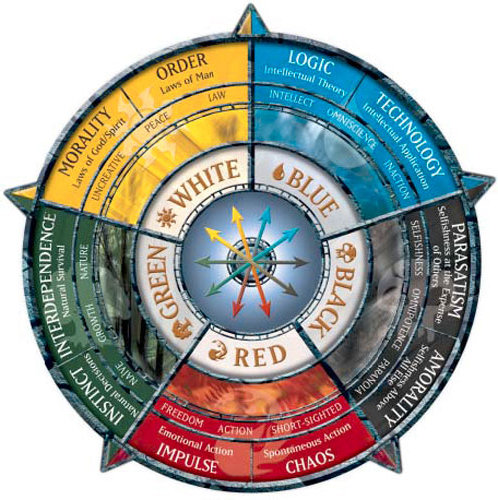
  • White has always been known to play well with Blue and Green, being allies on the Color Wheel, and it produces low cost removal and splashes creatures to create valuable abilities.

With these colors in mind, this article is about my favorite deck in Legacy.

New Horizons

New Horizons makes use of counter magic and big creatures in order to overwhelm an opponent with card advantage and resource denial, all while allowing a giant creature to finish off the game.

The key cards in the deck are:

These cards play together nicely in New Horizons, better than in any deck I have ever played.

New Horizons

Creatures

1 Vendilion Clique
2 Terravore
4 Knight of the Reliquary
4 Tarmogoyf

Artifacts

2 Engineered Explosives

Planeswalkers

2 Elspeth, Knight-Errant

Instants

3 Daze
4 Stifle
3 Mental Misstep
4 Brainstorm
4 Force of Will
4 Swords to Plowshares

Sorceries

2 Ponder

Land

4 Wasteland
1 Karakas
3 Misty Rainforest
4 Windswept Heath
3 Tundra
3 Tropical Island
3 Horizon Canopy
1 Forest

Altogether, it appears to be your standard, everyday tempo deck, but it's more like a tempo deck on steroids.

Let’s go through some of the interactions that may go by overlooked.

Spells Spells: Spells

Brainstorm, in my opinion, is the best card in Legacy. Played correctly it can do some absurd things. A good friend of mine by the name of Josh Rayden truly opened my eyes to this card. I watch people constantly play it wrong and I often find myself thinking about whether or not I could have played it better in a game.

If you honestly don’t believe that Brainstorm is absurd, then there's a good chance you’ve been playing it wrong this whole time. Used wisely, with a shuffle effect and two useless cards in hand, it turns into an Ancestral Recall. Regardless, a local grinder and the insulin to my sugar, Martin Lohman, once said, "I'd rather play the best card in this format wrong than not play it at all." Think about that.

For more on how to play Brainstorm properly, please read AJ Sacher’s article Pondering Brainstorm. It will make you a better person.

Brainstorm is extremely powerful in this deck because of all the shuffle effects we have access to. Seven Fetch lands and 4 Knight of the Reliquarys allow you to always fix your hand when it needs fixing.

Ponder is a lot weaker for many reasons, but it’s the closest thing we have—aside from Jace, the Mind Sculptor—to Brainstorms 5-6. In a tempo deck seeking a silver bullet, it’s a brilliant way to help find what you need. It’s also a helpful shuffle effect in of itself.

The obvious tempo choices are Force of Will and Daze. Force of Will helps you keep the combo decks in check and allows you to protect your own spells or stop your opponent from resolving theirs.

Daze is great in this deck because you never—aside from Elspeth, Knight-Errant—need to have more than four lands and it helps keep an opponent's curve in check.

Mental Misstep has been written about once or twice. I first played this card the day after it came out. Troy Thompson has been playing New Horizons for a while and was the person to turn me on to the deck. He helped me snap shove Mental Misstep into the 75 without much testing so we could compete in a Grand Prix Trial.

After the event I turned to him and said:
"I'm not sure I like Mental Misstep in here."

To which he responded with:
"What did you counter with it today?"

"A Sensei's Divining Top, a Ponder, a Brainstorm, a Grindstone, a Swords to Plowshares…"

Before he could respond I realized what I had just said.

This card is format defining and has warped permissions. I regret trying to convince Tyler Tyssedal otherwise. [editor’s note: Forgiven.]

Now for the creatures.

Creatures

Vendilion Clique is a creature with a unique ability like none I've ever seen. Flashing him in after an opponent's draw step or during combat, this little flying 3/1 paves the way for a bigger guy, can force your opponent to tap out on their turn, and prevents them from casting their silver bullets. In the worst case scenario, it pitches to Force of Will.

Terravore. This guy is a giant. In tempo mirrors he is absolutely enormous. I've seen him as big as an 18/18. For three. The best part about this guy is that he tramples, eating chump blocks for breakfast with a tasty side of pain. As Tarmogoyf's big brother, he usually kills with one or two swings.

Knight of the Reliquary is the All Star of the deck. You are rarely attacking with this gal unless you are looking to end the game. She (yes, she’s a girl) makes both Terravore and herself bigger all while fixing your mana. Her ability to search up any land is absurd.

Say, for example, you have a Vendilion Clique in play and four untapped lands with an active Knight of the Reliquary. Want to kick it into control mode? Attack with your Vendilion Clique and then, during your opponents draw step, turn that Knight of the Reliquary sideways, float and sacrifice a land and search up Karakas. Send that Vendilion Clique back to your hand and recast it. Simply decide which spell you don't want your opponent to have, rinse and repeat.

Sometimes you become flooded with lands. Just float a mana with an untapped land and sacrifice it to Knight of the Reliquary and search up a Horizon Canopy. Enjoy your new card and bigger Knight of the Reliquary.

She's also is really effective at paying for Daze. People often play Daze into an untapped Knight of the Reliquary—a mistake I see in nearly every tournament I play.

Tarmogoyf rounds out the deck nicely as the least powerful creature.

Yes. I said it.

Tarmogoyf is the LEAST powerful creature in the deck. When someone casts Swords to Plowshares targeting my Tarmogoyf, my heart warms with happiness. Tarmogoyf is a great threat but he serves his purpose well when becoming the target of a removal spell. Tarmogoyf often clears the path for Knight of the Reliquary or Terravore to stick around.

Other Spells

New Horizons plays a solid set of removal with four Swords to Plowshares and two Engineered Explosives.

Engineered Explosives is great against Counterbalance and helps you two-for-one your opponent on a regular basis.

Elspeth, Knight-Errant fits very nicely into this deck due to the pressure she applies. I have been playing one in this deck for awhile, and I believe that as the format shifts into more control/Jace, the Mind Sculptor decks, this card gets even better.

In some situations it allows you to continually produce a little guy and just swarm an opponent out of the game, while in others it makes a giant Knight of the Reliquary soar in for lethal.
Elspeth, Knight-Errant has helped end a lot of games coming out of tight situations.

Now onto the most controversial card in the list: Stifle.

In Minnesota we have a great Legacy scene with a lot of really good players. After traveling with my group of Magicians and talking of Magic, Stifle continues to be a card of great controversy.

Let’s take a look at some of the important cards that can be Stifled.

and pretty much every good card with the creature type Goblin.

I love this card. It’s insanely versatile. Sometimes you want to lock your opponent out of the game by way of land destruction, so Stifle becomes a one mana Stone Rain. Other times you want to prevent Dredge from producing another creature to sacrifice to Dread Return or make Cephalid Coliseum a really bad Island.

It allows you to prevent a key unsummon from Jace, the Mind Sculptor wrecking you. It even prevents them from digging for answers. This card fits like a glove in this deck. It is also easily sideboarded out in its bad matchups.

Onto the lands

Lands

They are all fairly self explanatory.

Wasteland punishes greedy decks not running basics. Couple that with Stifle and a fetch or two and you become a one sided Armageddon the rest of the game.

Horizon Canopy is great because it produces two of your colors, fixing your mana while allowing you to draw extra cards in the late game.

Seven fetchlands give you some shuffle effects and allow you to get the proper colors.

Karakas is great for more than just bouncing your own Vendilion Clique. It bounces Emrakul, the Aeons Torn and does good work against Kira, Great Glass-Spinner. Targeting a Kira with Karakas and then casting a Swords to Plowshares allows you to get rid of it without having to put an unnecessary card in the graveyard.

Wrap Up

Every card, including the tutorable lands, in New Horizons comes together in a way that allows you to gain a progressive advantage until you've opened a window large enough to shove a fatty through.

Legacy is a format that is ever changing. I believe that playing what you’re comfortable with is of the most importance when choosing the proper deck. It’s a format where you should not feel bad about reading your opponent's cards and asking questions on the myriad interactions, so I would encourage you to try out New Horizons and all it has to offer if the cards seem appealing to you.

Also, don't be afraid to go against the norm and play something creative.

Just make sure you get some testing in.

In couple days I will be traveling to Providence, Rhode Island with Tyler Tyssedal and most of the Minnesota crew to play in the Grand Prix. I will likely be playing this deck and plan on having a great time doing so. If you see any of us, please don't be shy. This game brings together some of the funnest people around. That fact is best enjoyed with other people.

Until next time,

- Mike Hawthorne
Twitter: Gamble4Value
Email: MTG_Mike@live.com

Investing in a Modernly Overextended format

Are you a Quiet Speculation member?

If not, now is a perfect time to join up! Our powerful tools, breaking-news analysis, and exclusive Discord channel will make sure you stay up to date and ahead of the curve.

If you haven’t heard the news about the two new formats brought into the Magic community, you’re already behind the times. For reference, you can read the full descriptions here (for Overextended) and here (for Modern). With these formats coming down the pipes, I would be remiss if I didn’t look at how to profit on this.

Some background and a brief description of each. Overextended has been a rumored format for more than a year now, and after the changes to Extended and the subsequent failure of the format (Apparently no one but me likes to play it), changes appear needed. Patrick Chapin has attributed the failure of new Extended to the fact that it has no identity, whereas Standard is “the newest cards” and Legacy is “all the cards.” In contrast, current Extended is like a Recurring Nightmare, where all the decks you hated come back to torment you again.

Seeing the writing on the wall, Gavin Verhey decided to get the ball rolling on a solution. He created MTGoverextended.com, and is hosting Tuesday Night Overextended tournaments on MTGO, and is aiming for Worldwide Overextended Day on July 2.

Overextended starts with Invasion block and runs through the current set. There is a small banlist (notably Aether Vial, along with cards in the more broken combo decks) and sets never rotate out. This cuts out many Legacy staples such as Force of Will and Wasteland, not to mention dual lands, making the format both more accessible and vastly different than Legacy.

The Modern format takes it one step farther. Wizards created this (original) Mirrodin-onward format for the Community Cup, possibly looking to address the same issues Gavin did in regards to solving the current Extended’s format. While the format is a one-time event for now, it’s entirely possible it could become a paper constructed format.

What does this mean for us?

Let’s look at some of the cards from Invasion forward that would define the format. I’m going to try to hit on the cards that aren’t already completely saturated throughout Legacy, such as Tarmogoyf.

Shocklands

Watery Grave and friends, all of which command at least a $5 pricetag already, would go through the roof if this become a PTQ format. These are a great investment right now anyway due to the coming explosion of EDH (Commander) with the pre-cons launching this summer.

Hallowed Fountain is not Tundra, but it will do a close enough approximation if the format were to become real. One thing to keep in mind is if Wizards went this route and made Modern a format there would likely be a reprinting of the Shockland cycle somewhere not long down the line.

Dark Confidant

Bob would be pretty close to the nuts in this format, although in a world where your lands do 2 damage to you upon entering I can see him having matchups where he’s terrible.

Dark Depths

Sword of the Meek may be banned in both possible formats, but Dark Depths could still exist if it was allowed. It’s currently on the Modern banlist but not the Overextended banlist (which can be found here and here, respectively). It’s very likely Marit Lage could come out once again.

Thoughtseize

This is already a good card to pick up in trades as it rotates out of Extended, and it would be the premier discard spell and very important against the combo decks since Hymn to Tourach won’t be available.

Psychatog

I wouldn’t be surprised if the Tog came back in an Overextended format, and since there’s no Swords to Plowshares there aren’t as many easy ways to exile him.

Gifts Ungiven

Gifts also seems like it would be pretty powerful in a slower format than Legacy.

Enduring Ideal

I wasn’t around when this was a deck, but like many combo decks that didn’t quite make the transition to Legacy, it could still be a player in an Overextended format.

Scapeshift

The Scapeshift list from last year’s Extended season, both the blue and aggro variants, would be viable again, but I promise there won’t be any Primeval Titans in sight.

Ghost Quarter

With people playing decks that are likely full of fetchlands, shocklands and possibly Dark Depths you can really punish players with Ghost Quarter, an uncommon that climbed to $3-4 last Extended season.

Living End

With Dredge banned out of existence in both possible formats, Living End or Life from the Loam decks could become the premier graveyard decks in the format. Since you can pick up Living End for next to nothing it would represent a pretty drastic increase in its price.

Maelstrom Pulse

The timing of the format’s release would mean a lot here, as Pulse will rebound with next year’s (current) Extended format when Jund is played again, but Pulse shows up from time to time in Legacy and would definitely have a home in a smaller format.

Murmuring Bosk & Doran, the Siege Tower

The price on this is tumbling after the end of Extended season, and it would receive a boost in the new format. The same goes for Doran.

Engineered Explosives

Control decks would heavily lean on Explosives since the Zoo-type decks would be so good in the format.

Zoo cards

Take your pick, but the most likely bets are Noble Hierarch, Goyf, Knight of the Reliquary, Bloodbraid Elf, and so forth.

Grove of the Burnwillows

I’m not positive the Grove/Punishing Fire combo would be good enough, but it would be close.

Cryptic Command

A card that would work a lot better in Modern, rather than in Overextended, but it’s powerful enough that it even showed up in the winning Legacy list from the last SCG Open, so I imagine it would find a home.

Jace, the Mind Sculptor

Obviously.

Elspeth, Knight Errant

Kibler seemed to do all right rocking Elspeth in Austin, though that was before the onset of Dark Depths/Sword. Elspeth would fit into a number of decks, making her a powerful option and easy target for profit.

Blood Moon

This was a solid option last Extended season, and I imagine it would be again, probably in the sideboard or maindeck of the one or two color aggro decks.

Kitchen Finks

This would make a sick pickup at the announcement of the format, since it’s been such a big role player in many decks, including last Extended season.

Path to Exile

We’ve seen Path hit $5, and this format could see it hitting $10 without much of a problem.

Stoneforge Mystic

With Jitte likely banned, Mystic loses some of its power, but I can’t see it not finding a home in a Mirrodin-onward format.

I’m going to stop there for now. I realize there are a number of things that would have to happen before any of us are heading to a PTQ with a Modern or Overextended deck in hand, but it’s not impossible to imagine either. If the Community Cup or Overextended prove that it’s a popular format I think we can expect Wizards to do something about current Extended.

If/When that happens, I wanted to give you a list to look to that says something more than “ZOMG BUY RAVNICA LANDS.” Let’s be honest, they’re all going to be bought up two minutes after the format’s announcement, long before anyone can write an article about what cards to buy.

You don’t stand to lose much (if any) money off these cards by buying in now, and if the format becomes a reality you’re going to look like a genius and rake in the benefits of being one. Here’s hoping.

Thanks,

Corbin Hosler

@Chosler88 on Twitter

Commander Deck Tech: Sharuum the Hegemon

Are you a Quiet Speculation member?

If not, now is a perfect time to join up! Our powerful tools, breaking-news analysis, and exclusive Discord channel will make sure you stay up to date and ahead of the curve.

Welcome to the Warlord’s Way. Last week I talked about identifying when you’ve been marked as The Threat in your playgroup. This week I’m going to review one of my decks that has consistently gotten me marked as The Threat in my playgroups even though I’ve gone to extensive lengths to tone it down and make it beatable: my Sharuum the Hegemon build.

My Sharuum build isn’t like some you’ll see. I’ve purposefully removed any infinite combo that can kill more than one player (per turn), and I play almost strictly artifacts in my build with a few exceptions. The goal is basically to be a solid beats deck with a lot of strong board control options and a wide variety of cogs for solving problems. (For those unfamiliar with the term, a cog is a converted mana cost 1 or less artifact. The term originated with Fifth Dawn, which had a cog subtheme.) While I do play Trinket Mage, the card that really makes the deck hum is Artificer's Intuition.

When I feel like playing against the table, I get this deck out. I realize what I’m getting into when I decide to play it, and I built the deck around that fact. I don’t run many non-artifact cards because I expect to have to recur everything worth playing in the deck at some point, and the best way to do that is by using Sharuum’s enters the battlefield (ETB) trigger. To that end I added a few things to reuse her without having to pay full price again, which has helped the deck immensely.

Notable Moments Playing Sharuum

Timmy Moment: Casting Treasure Mage, finding Darksteel Forge, and casting it on turn 6 with two fatties to back it up the following turn
Johnny Moment: Casting Sculpting Steel copying Sharuum, recurring the pair through each other one billion times to create an infinitely large Arcbound Crusher and killing my opponents one by one
Spike Moment: Locking the board with Darksteel Forge and Nevinyraal's Disk, using the Disk every turn to keep the board locked until I recurred Magister Sphinx enough times to kill everyone with it and Sharuum beats.

Why Sharuum?

Out of the potential Commanders for an artifact deck, Sharuum is arguably the most powerful. Several other options could be used, including Hanna, Ship's Navigator or Karn, Silver Golem. The reason Sharuum makes such a powerful general is because of a few very powerful black effects that you have available, along with a way to cheat mana costs through her reanimation trigger. Getting a 5/5 flyer along with some other expensive artifact that often costs more than Sharuum did is an amazing tempo shift in a Commander game, and one that should never be overlooked.

Focus #1: Artifacts

If we’re going to call it an artifact deck, we need to have artifacts. If a job can be done by an artifact as opposed to some other type of spell or permanent, it’s doing it here. All of my beaters are artifacts. From the cheap-but-busted Arcbound Ravager all the way up to the annoyingly-difficult-to-kill Inkwell Leviathan, I stick to artifact creatures to get the beats on which is how I opted to win with the deck after several iterations through a more combo-rific build.

By sticking with artifacts to perform all the major functions of the deck, Sharuum becomes an almost sure way to solve the majority of my problems. Once I’ve found a solution card, I have access to it almost continuously for the rest of the game simply by either hard casting or blinking my Commander. The engine inherent in the deck makes for an incredibly powerful attrition engine and lets me fight two opponents at once in ways that I wouldn’t be able to without it.

Pretty much any expensive artifact effect is a potential card for this deck. The deck is focused around accelerating out of the gate as fast as possible, then making up for it with raw power backed up by the Sharuum trigger. When you plop down a Wurmcoil Engine on turn 4, you may be The Threat, but you’re in one fantastic board position to deal with that.

Focus #2: Recursion

Building around Sharuum and an attrition game as I mentioned above necessitates having ways to reuse our effects. As many people have experienced, Commander games often come down to who can reuse their most powerful effects the most often. My build of Sharuum focuses on doing exactly that.

Rather than spending a large number of slots on additional effects to return artifacts to the battlefield or hand, I elected to abuse Sharuum’s trigger more often and more effectively. This provides the bonus effect of giving her some solid protection as well. While the selection of cards to actually blink her is small, it’s a very powerful subset that is repeatable and quickly turns into a mountain of card advantage that is very difficult to stop.

Cards that I’ve played with but I’m not currently running include Voyager Staff and Momentary Blink. Both have a lot of potential in their own right. Momentary Blink is a great flexible card that sticks around to be proactive or reactive in the future, and forces your opponents to play around it. I’d like to find a spot for it again, but I’m having a hard time deciding what to cut. Voyager Staff is a very solid way to protect Sharuum from removal. You can use the Staff to flicker her in response to removal, then when she comes back, return the Staff to the battlefield. It seems cute, but it’s another strong attrition engine the deck can abuse if needed. Right now my meta is more focused on several large evasive attackers rather than big dumb guys running into each other, so I’m not running it, but it might be perfect for you.

Focus #3: Cog Package

One of the most powerful effects in my deck is my cog package, almost singularly powered by Artificer's Intuition. Finding Artificer’s Intuition gives me a huge selection of answer cards to solve multiple problems: Mana Crypt, Sol Ring, and Everflowing Chalice to accelerate, Mox Opal and Mox Diamond to color fix, Capsules and Brittle Effigy to deal with problematic permanents, and so much more. Using Trinket Mage gives me some additional redundancy along with the various flicker effects.

The other great thing about cogs is they are cheap and they make good rattlesnake cards. (See this article if you’re unfamiliar with rattlesnake cards.) If you have a nonblack guy you want to attack with, and I have an Executioner's Capsule on the field, would you really attack into me when someone else is open? Maybe, but most people wouldn’t intentionally lose their creature unless they were sure they had a backup plan or you’d just made yourself that much of a problem for them. The non-acceleration cogs serve as great deterrents to starting a fight with you, especially when they realize you can start destroying their board with impunity by reusing them with Sharuum.

Focus #4: Powerful Non-Artifacts

I admit it. I fell for the “good cards are good” strategy some with this deck. I tried to keep it down to the ones that were actually excellent for what this deck is trying to do both to stay on theme and make the deck a little bit less threatening. I run four planeswalkers in here, all of which synergize extremely well with the deck. Both Tezzerets love artifacts and would never want to be paired with anything else. Venser, the Sojourner is a fantastic way to reuse Sharuum every turn and then keep grinding out incremental advantage with his ultimate. Your cogs even sync up with him well since they all become “exile target permanent” for 0-1 mana. Jace, the Mind Sculptor is probably one of the most broken cards to come out of R&D in years and is great with the number of shuffle effects in here.

I already mentioned Artificer's Intuition, which is one of the lynchpins of the deck. It can most definitely function without it, but the dual purpose of a toolbox and discard outlet for Sharuum to reanimate expensive artifacts and let you cheat on mana can’t really be emphasized enough. I play Enlightened Tutor as another one of my concessions to powerful non-artifact cards that should be in here for the synergy, and I get Artificer's Intuition with it far more often than any other card.

The last few cards are just powerful effects that fill some holes. Artifacts don’t typically have a good way to draw multiple cards at a time, so I’m testing out Blue Sun's Zenith and Stroke of Genius. Sometimes after you dump your hand you really need a way to refill, and these two do a good job of filling that hole faster than Mind's Eye typically will. Not running Demonic Tutor just seems like a mistake in a deck that can run it. Last but not least, Yawgmoth's Will normally isn’t nearly as powerful in Commander as it is in other formats, but with the number of cogs you’ll find in your graveyard, it can quite often be a game winner.

Cards for Consideration

I haven’t gotten a chance to really play the deck much since New Phyrexia was released, but here’s a list of cards I’m considering and why (in no particular order):

Spellskite

I really like the idea of being able to move point removal to where I want it. I also love the idea of being able to hose powerful enchantments that I really don’t want to see on Uril, the Miststalker or similar situations. The possibilities for the card are endless; I just have to figure out what I want to cut.

Unwinding Clock

I love me some Seedborn Muse, and this feels a lot like her in this deck. The one problem is that unlike my decks that play the Muse, I don’t have a good way to utilize the extra untaps. Most of my effects are sorcery speed with a few exceptions, and I purposefully chose effects that didn’t necessarily require a lot of mana to reuse them. Maybe this will find a home, and maybe it’ll be a dud. Only playtesting will tell.

Phyrexian Metamorph

Oh Sculpting Steel, how amazing you are for me even when you aren’t part of an infinite recursion loop with Sharuum. Wait, they made another one of you? And it can be a Clone too? SIGN ME UP.

Norn's Annex

When I saw this card, I automatically assumed it was an enchantment because of Propaganda and Ghostly Prison. Then someone pointed out it was an artifact, and the pondering began. I’m still not sure if it belongs in here or not. I’m not a fan of it on its own necessarily, but I might give it a shot.

Batterskull

This guy is pretty solid and saves himself. I like the idea of attaching a Batterskull to some of my beaters, but realistically it’d be a 4/4 vigilance lifelink for 5 in most cases for me since I really don’t play many smaller dudes to beef up with it. It might make the cut, but I don’t really like equipment in here.

Hex Parasite

A cog! And he beats! He eats planeswalkers! Potentially good, but right now Pithing Needle gets the job done, so he’s a maybe at best.

The Deck

Last but not least, the decklist, amusingly titled “I, Robot”:

Sharuum the Hegemon - "I, Robot"

Commander

1 Sharuum the Hegemon

Beaters

1 Arcbound Ravager
1 Master of Etherium
1 Arcbound Crusher
1 Masticore
1 Duplicant
1 Sharding Sphinx
1 Steel Hellkite
1 Triskelion
1 Wurmcoil Engine
1 Magister Sphinx
1 Memnarch
1 Myr Battlesphere
1 Sphinx of the Steel Wind
1 Sundering Titan
1 Inkwell Leviathan

Board Control

1 Nevinyrrals Disk
1 Scourglass
1 Contagion Engine
1 All is Dust
1 Spine of Ish Sah

Cogs

1 Claws of Gix
1 Mana Crypt
1 Mox Diamond
1 Mox Opal
1 Brittle Effigy
1 Dispellers Capsule
1 Executioners Capsule
1 Expedition Map
1 Nihil Spellbomb
1 Pithing Needle
1 Senseis Divining Top
1 Sol Ring
1 Voltaic Key
1 Everflowing Chalice

Non-Cog Acceleration

1 Etherium Sculptor
1 Darksteel Ingot
1 Solemn Simulacrum
1 Gilded Lotus

Drawing & Tutoring

1 Enlightened Tutor
1 Artificer's Intuition
1 Demonic Tutor
1 Treasure Mage
1 Trinket Mage
1 Jace, the Mind Sculptor
1 Tezzeret, Agent of Bolas
1 Kuldotha Forgemaster
1 Memory Jar
1 Minds Eye
1 Tezzeret the Seeker
1 Blue Suns Zenith
1 Stroke of Genius

Blink Effects

1 Master Transmuter
1 Tawnoss Coffin
1 Venser the Sojourner

Utility

1 Lightning Greaves
1 Thopter Foundry
1 Crucible of Worlds
1 Phyrexian Metamorph
1 Sculpting Steel
1 Yawgmoths Will
1 Prototype Portal
1 Mirrorworks
1 Darksteel Forge

Lands

1 Academy Ruins
1 Ancient Den
1 Arcane Sanctum
1 City of Brass
1 Darksteel Citadel
1 Drowned Catacomb
1 Fetid Heath
1 Flooded Strand
1 Glacial Fortress
1 Godless Shrine
1 Hallowed Fountain
4 Island
1 Kor Haven
1 Marsh Flats
1 Minamo, School at Waters Edge
1 Mystic Gate
3 Plains
1 Polluted Delta
1 Reflecting Pool
1 Scrubland
1 Seat of the Synod
1 Strip Mine
1 Sunken Ruins
3 Swamp
1 Tolaria West
1 Tundra
1 Underground Sea
1 Vault of Whispers
1 Watery Grave

Until next time, enjoy being The Threat when it's warranted.

Rob Davis
@ArtosKincaid on Twitter
artoskincaid AT gmail

The Five Best Intro Decks of Scars Block

Are you a Quiet Speculation member?

If not, now is a perfect time to join up! Our powerful tools, breaking-news analysis, and exclusive Discord channel will make sure you stay up to date and ahead of the curve.


The end of a block is one of my favorite times of year with regards to Magic. Having given full reviews to each of the block's intro decks, and assigned each a rating, we can now look back over the past half a year and understand the narrative of the sets' decks. While last year's Zendikar block was a little different because of how Rise of the Eldrazi was conceptualised (a larger-size stand-alone set with new mechanics), Scars block had the opportunity to mature over the course of three releases, and we get to see how ideas, mechanics, themes, and concepts evolved over the course of the year.

I also find it quite interesting to pull up the reviews for all of the Intro Deck releases, and compare how they scored against one another. We recently compiled the Five Best and Five Worst decks of Zendikar Block, and today we'll be giving the Scars offerings their fair share of attention- beginning with the best of the bunch.

This was a good year for the Intro Deck. After the rather disappointing offerings following the reduction of the Theme Deck into the Intro Pack model, the 41-card compilations from Shards of Alara through Rise of the Eldrazi were no stranger to disappointment. Seemingly assembled with the non-Magic player in mind, Scars block seems to have marked the beginnings of a shift in the deck's target focus. Although the more tightly-constructed theme decks are likely a thing of the past (particularly with the advent of the Event Decks), the decks of Scars Block have moved in that direction, looking to strike a fairer balance between the new player and the veteran.

The result? Some great precon decks, and here are the five best of them based on their graded scores at Ertai's Lament.

5. Phyrexian Poison (Scars of Mirrodin)

Mark Rosewater's epic battle to bring back poison counters is by now an oft-told tale, but it's certainly the case that Phyrexian Poison was to be our first taste of the mechanic. Of the ways you see decks develop over the course of the block is through the cards they have available to draw from. In the first set of the three, you are typically restricted to a mechanic in its simplest form- making it more intricate is the job of subsequent releases- and to be sure, Phyrexian Poison had more than its fair share of clunkers: the Blackcleave Goblin and Contagious Nim won few admirers, but the deck whispered corrupted promises and tantalising hints of power through entities like the Hand of the Praetors, Plague Stinger, and Cystbearer.

The noncreature complement was somewhat stunted, more prone to enable 'cute' plays like Carrion Call, Relic Putrescence, and Heavy Arbalest, and the deck overall was a bit sluggish, easily outpaced on the curve by decks that had a solid midgame presence. But it was a ton of fun all the same.

4. Path of Blight (Mirrodin Besieged)

By the time we were treated to Mirrodin Besieged, the Halcyon days of faint, unsuspecting cluelessness with which many Mirrans regarded the coming Phyrexian menace (see: Steady Progress) were well and truly shattered. This was war, and the Mirran's inability to see the threat for what it was gave the Phyrexians plenty of time to plant the seeds of corruption. The set was home to more than a few surprises in the colour wheel (with the hint of more to come), and what better way to represent them than with an Intro Deck? At the start infect was limited to black and green, as we saw in Phyrexian Poison, but to the surprise of many (including myself) Path of Blight dropped the black and added white.

Corrupted versions of old favourites (like Viridian Corrupter and Phyrexian Juggernaut), new and efficient creatures like Blightwidow and Rot Wolf, and above all else sights such as Priests of Norn and Choking Fumes really sealed home the flavor of Mirrodin Besieged. The Mirran-Phyrexian split would be distinctive, but it wouldn't be along color lines.

It wouldn't be an intro deck without obvious dogs like Hunters' Feast and Phyrexian Digester, but Path of Blight had plenty of upside to compensate, and was a very flavourful improvement upon the original model.

3. Ravaging Swarm (New Phyrexia)

If I had decided to ignore six months of ratings on these decks and instead give an off-the-cuff "Top Five" list, it would likely (and unwittingly) trade a smidgen of objectivity for balance. Fortunately I have the scores to keep me honest, and they tell me that Ravaging Swarm has earned its place here as well. It may seem unbalanced in favor of infect, but if you traveled forward in time five years from now and asked players then what they remember about Scars Block, you're not likely to hear a lot about metalcraft, you'll get a few mentions of proliferate, Phyrexian mana (limited to a third set), and imprint will probably evoke nostalgia for the original Mirrodin moreseo than here. Let's face it: infect is the defining characteristic of the set, much like even now I can't think of Tempest without waxing nostalgic for buyback.

From the start of the block, the implications for cooperation between infect and proliferate were abundantly clear, though the tools for both (particularly the latter) were quite limited. With the full maturation of the block in New Phyrexia, we were at last treated to a deck which fulfilled that early promise, one which broke with convention by including not one but two new mechanics. Once again retaining green, it picks up blue as its secondary color, a pairing perfectly represented in the combo-in-a-box Viral Drake. Despite picks like Wall of Tanglecord and the tragic Defensive Stance, the deck has a well-planned strategy including the finally-printed infected one-drop (Glistener Elf) and Spinebiter to get those critical first few poison counters on no matter the stage in the game, so that proliferate can complete its grim task.

2. Life for Death (New Phyrexia)

Like cascade, Phyrexian mana will be remembered for its very pronounced elbow to the ribs of the game's central mechanics. Yet it is for the most part safely contained in scope due to the limitation of its release: a single set. Cascade tweaked the notion of card advantage: pay a little bit more for a creature or spell now and, if luck holds, you can end up getting a lot back in the bargain. Phyrexian mana, on the other hand, goes straight to the heart of the color wheel and brazenly tweaks it. By substituting life for colored mana most any deck now has access to [card Gut Shot]burn[/card], [card Mutagenic Growth]growth[/card], [card Mental Misstep]countermagic[/card], [card Apostle's Blessing]protection[/card], and [card Dismember]kill[/card], all things generally limited to one slice of the pie.

From this roiling brew steps the Boros-colored Life for Death, which not only packs in a generous serving of Phyrexian mana cards, but does so with flair. For one, it makes lifegain actually feel relevant with cards like Whitesun's Passage and Pristine Talisman. It gives you some very solid beats with a trio of [card Porcelain Legionnaire]Porcelain Legionnaires[/card] and Moltensteel Dragon. And on top of it all, it lets you live the combo dream with a pair of Rage Extractors. There's a high novelty factor to playing with your life as a resource, and unlike Suicide Black strategies, the optional nature of Pyrexian mana makes the perfect introduction to newer players to the concept of regarding your life total as just another resource. An all-around fantastic deck.

But of course, only one deck can come in first, and that leaves us with...

1. Mirromancy (Mirrodin Besieged)

Based on the chatter that surrounded this deck, it's likely to lay claim to the distinction of 'most controversial' with little difficulty, but suspend judgment for a moment and permit me to lay the case for this deck not only earning the number one position in this article, but being one of the most radical Intro Decks in the brief history of the format.

With Shards of Alara, the Theme Deck as we knew it was dead. Since Tempest we'd been treated to a handful of theme decks every release, 60 cards somewhat tightly wrapped around a concept or theme associated with the set. In a sense, there was a certain kinship with Constructed play here, as consistency was a feature that the designers of these decks took into consideration. Another was novelty; these decks took risks if it meant highlighting their purpose. The most famous example is The Sparkler from Stronghold, whose deck included only three creatures: Mogg Fanatic, Wall of Tears, and Wall of Razors. The deck paired up countermagic and burn with a buyback twist, letting you burn out your opponent over and over until dead.

Mercadian Masques's Disruptor went after your manabase and your hand, leaving you crippled as its creatures finished you off. Planeshift's Comeback was creature-heavy, sure, but its gating mechanic and colour-based gameplay gave it a very distinctive (and even combo-ish) feel. Tribal decks like Elvish Rage from Legions baked a thick layer of flavour on its beaters, while Mirrodin's Sacrificial Bam made an art form out of casting artifacts, and then grinding them up yourself. Guildpact's Izzet Gizmometry made its hay through repeatable noncreature spells and the replicate mechanic, having very few real beaters of its own. Beyond the Grave from Coldsnap did for creature recursion what Bam did for artifacts. Future Sight's Suspended Sentence has all the intricate feel of crawling into a grandfather clock, watching precise gears unite for common purpose. These were decks that had a solid sense of identity to go along with both the fun of playing them, and their place as a showcase for the set's mechanics and themes. To be certain there were more conventional options even then, but their consistent development was a great sign of the health of the format.

With the advent of the 41-card Intro Deck, however, this sort of biodiversity took a back seat to a rather bland formula which emphasised the simplest aspects of the game and aimed squarely at newer players at the expense of those already established within in.

Step One: Take a bunch of creatures

Step Two: Mix in a smattering of noncreature support and removal, emphasizing variety over consistency, along with some deliberate lemons (to encourage nascent deckbuilders to tinker)

Step Three: Package for sale

When the Intro Decks for Scars of Mirrodin were released, I sensed even then a return to the more classic form of the theme deck. When Mirrodin Besieged followed suit, I felt that we were on the verge of a renaissance. If there was one deck that convinced me of this moreso than any other, it was Mirromancy. Boasting nineteen instants and sorceries (versus only seventeen creatures), the deck seemed built to optimise its foil premium rare, Galvanoth. Further, it was a very radical break with the modern formula, and while being a bit streaky is a sheer joy to play.

I don't regard Alara or Zendikar Blocks' decks as failures, nor do I believe that they represent a failed model. Rather, I acknowledge that the repositioning of the theme deck into the intro deck isn't such a bad idea, and that Wizards has been tinkering with the model ever since. That we can get to a point where a deck like Mirromancy has been published tells us that Spring has arrived to the precon format after a two-year Winter.

As always, your results may vary! I'd be delighted to hear other opinions on what decks should have made the list, or which one you felt should have topped number one!

_____________________________

Jay Kirkman

@ErtaisLament

www.ertaislament.com


Selling Season is Upon Us!

Are you a Quiet Speculation member?

If not, now is a perfect time to join up! Our powerful tools, breaking-news analysis, and exclusive Discord channel will make sure you stay up to date and ahead of the curve.

Earlier this week I posted a short piece about cards to look for from this weekends Open event in Louisville, you can find that here if you haven't read it yet. I'm going to do a quick update like that every weekend that there is something worth updating about, and if its a pressing matter I'll do my best to have it up Sunday night.

I do want to take just a moment and thank the readers who leave comments here; it makes it much easier to write articles tailored to what you are looking for when I know....well, what you're looking for.

This was a tweet from awesome online card dealer, @TheSundry

@QuietSpec This is exactly the sort of thing I was looking for when I signed up for Insider. Keep it up!

Thanks Don, we'll do our best!

My article from last week also got a great comment from QS member RyeAbc,

Write ups like this make the membership fee worth it. Straightforward summary, prices and sites listed etc... Great stuff.

He also goes on to mention updates done after Opens, hence the Monday write-up. We do listen to your comments, so please leave them if you have an idea or suggestion!

Onto this weeks news;

Energy Field is gone, from everywhere. It was gone as of earlier today. I scoured every site I could find, hoping to find a random copy that someone, somewhere had missed. No such luck. If you have them, hold them. If you don't have them, go to local shops and even Craigslist and see if there are any collections you can go through or buy if they are worth it.

Sorin Markov is a confirmed reprint for M12, as is Gideon Jura. I would expect the already low price on Sorin to fall even more. While Sorin has recently been found on some buy lists as high as $7, I would expect this to drop to $2-$3, so if you have extras and can find a dealer willing to pay more, take them up on the offer. Gideon is currently above $20 on most sites, and can be sold for $15+ as well. I expect him to fall down to $5-$6 after M12 comes out, and his price is already dropping, so sell while you're able!

Shops currently buying the above two cards:

*Note that some dealers have a limited demand, and some may no longer need the cards, a benefit of reading early.

SCG: Sorin Markov @ $5.00, Gideon Jura @ $15.00

CFB: No current Buylist

White Lion Games: Sorin Markov @ $7.33, Gideon Jura @ $21.33

3rd Coast Cards: Sorin Markov @ $7.07, Gideon Jura @ $20.87

Dragonslayer Online Sorin Markov @ $7.25, Gideon Jura @ $21.00

Ebay prices are overall lower than the above mentioned sites, and I wouldn't recommend using Ebay for those cards at this time, though you are certainly welcome to.

There are some great prices there, but what do you do if you have a card you stocked up on while it was cheap, say Death's Shadow, and it's price never went up? How do you get rid of them before they rotate and you're stuck with 30 useless rares?

First off, the important thing is to never put yourself into a situation where the rares are useless. At worst, you bulk them off for $0.15 each, and either cut even or take a very small loss since you shouldn't be paying much more than $0.25 for them anyways. Next, you start using extras as throw-ins to even out trades. I've often been able to throw in a card at 3-4 times its actual price in order to "shore up" most trades that are on the fence. This works more often than you would think, and even in situations you wouldn't think it would. Friend and QS member @MTGVeteran saw me sell an M11 Rootbound Crag for a dollar to the SCG dealer in San Jose to even up my sale to a flat number.

Alright, so you've traded away what you could, you've sold at what profit you were able to, and you've still got 12 copies left. Now your options are to bulk them out, or sit on them and hope they eventually make a mark in legacy. I would do both, sitting on 8 copies isn't going to hurt you, even if they do drop down to $0.01 as long as you sold/traded the others at profit, and you can bulk the remaining. Death's shadow is an interesting card for its cost, and there is always potential to abuse a card that gets better the lower health you are. I wouldn't say sit/sell on every card you bulk up on, since some cards just have no legacy appeal to them either through a prohibitive cost, or something that does the same effect, but better, already existing from a previous set.

A card that I talked about recently, and will mention again now is Praetor's Counsel, and I bring it up again because of the newly announced Modern format being played at the Community Cup. If this format takes hold, and I see no reason why it shouldn't, Praetor's Counsel is that formats Yawgmoth's Will, and with Ravnica duals, Zendikar Fetch lands, and many sets of mana ramping, extra turn taking, and degenerate combo pieces laying around, its in an excellent position to be broken, and have its price pushed up hard in a very short period of time.

Its currently listed on SCG @ $1.49, CFB @ $0.79, MOTL/BLP @ $0.85, and Ebaying for around $3.00 for 4.

That's about it for this week, thanks for reading, and don't forget to drop me a comment about ways we can better suit your needs!

Stephen Moss

@MTGStephenmoss on twitter

MTGStephenmoss@gmail.com

Hater’s Gotta Hate

Are you a Quiet Speculation member?

If not, now is a perfect time to join up! Our powerful tools, breaking-news analysis, and exclusive Discord channel will make sure you stay up to date and ahead of the curve.

In every format I play I like to build a deck I call "Forget You Blue," or FYB for short. FYB is the purest essence of blue mage hate, regardless of the format. The kind of deck that punishes countermagic, theft effects, bounce spells, and artifacts. Which makes it strange that I've never gone out of my way to build a deck dedicated to making blue mages suffer in Commander.

Time to fix that, right now.

As I'm not intending on building a truly "competitive" deck today, this is going to work on a bottom-up, rather than a top-down approach.

What's the difference?

  • A "top-down" approach focuses on the Commander and uses cards to support the game plan that it entails. Cards usually have to "fight" to be deemed worthy enough to get onto the list.
  • A "bottom-up" approach starts with a vague sense of what is supposed to be accomplished and with the entire card pool available. Cards are winnowed out along the way and eventually a Commander is selected.

With a bottom-up approach I'm less inclined to use the competitive deckbuilding rules I've advocated recently. No doubt the deck will be far less tuned as a result.

Before I begin I know I'll be messing with a pool of red, green, white, and black spells. At some point I'll likely want to drop one of these colors in order to make the deck more streamlined, but at this early stage I'm keeping my options open. As almost all the "can't be countered" spells are in green and red, either black or white will be dropped.

"Uncounterability" is the first item I'll look at. There currently 26 green and red spells that can't be countered that are Commander legal, but not all of these are cards we necessarily want to play.

From the cheapest to the most expensive, here are some thoughts them:

  • Autumn's Veil: Helps protect against blue magic, and has some nice collateral damage against necromancers as well, but unlikely to make the list.
  • Insist and Overmaster: They both cycle, which is hardly the end of the world, and can push through the spell I need, but only on my own turn. They fail the Erayo, Sorotami Ascendant test, however (as they can be countered themselves).
  • Blurred Mongoose: An interesting card. A 2/1 for two mana ain't great, but never underestimate the power of shroud in Commander. A few pump effects, plus a Stonehewer Giant (who gets around shroud effects), and I'll get some bang for my buck. To be considered.
  • Gaea's Herald: If this was an enchantment I'd be in love wih it. As a 1/1 Elf I'm far less so. Small creatures in Commander die quick, so the chance the Herald will help out much is a little unlikely. She also makes all creatures uncounterable, which might hurt me as much as help me. She, too, fails the Erayo test.
  • Vexing Shusher: So much better than Gaea's Herald as she's primed to push through a flipped Erayo. Sure, her ability costs a mana, but I can use it selectively to help or hinder my opponent's board development. While the 2/2 body is only slightly better than a 1/1, it does help prevent it dying to the various pingers that sometimes float around. The Shusher will certainly make the build.
  • Isao, Enlightened Bushi: Unless I'm going to be running a bunch of Samurai in the deck , which I'm not, a three mana  2/1 with regeneration is probably not going to make the grade. I can get better value.
  • Urza's Rage: 10 damage is a lot. So is 12 mana. However it is both uncounterable and unpreventable at instant speed and 12 mana is hardly an impossible amount of mana to achieve, especially when I'm running green. To be considered.
  • Great Sable Stag: Passes the Erayo test and dodges a heck of a lot of removal. Can be equipped with a Sword or Jitte to put a fair amount of pressure on any blue mage. Will likely make it in.
  • Volcanic Fallout: As a sweeper it's perfectly passable, and considering that I'm usually dealing six or more damage for the low cost of two to myself the cost works out fine. We'll be eternally grateful Wizards tried in vain to print all that Faerie hate to stick it in the deck.
  • Root Sliver: Another tribal effect, it would make it in if we were playing Slivers, but we're not. A good card though, one that should be in every Sliver Commander deck.
  • Leyline of Lifeforce: One of the weaker Leylines, it's not that crash-hot if all my creatures can't be countered anyway. We'll start with it in the deck and consider it as we're cutting cards.
  • Thrun, the Last Troll: Here's every blue mage's worst nightmare. Can't be countered, targeted, and can be regenerated. Clearly specifically printed to give the finger to blue mages everywhere, Thrun is absolutely going in my deck.
  • Wreak Havoc: It's a shame it's a sorcery, but it does blow up the one thing blue mages love to run, artifacts. Targeted land removal never goes astray as I can kill that frustrating Maze of Ith, or blow up the Academy Ruins the blue meanie is using to recur his beloved artifacts. It will certainly make it in the deck.
  • Spellbreaker Behemoth: A four mana 5/5 that passes the Erayo test and then helps his buddies hit the board is exactly what I want. In.
  • Scragnoth: A great FYB card as he essentially becomes unblockable against the blue mage (except for Duplicant and Darksteel Colossus and yeah yeah). The stats aren't great against Spellbreaker Behemoth but he'll almost certainly make the cut.
  • Vexing Beetle: Sure, the bug can't be countered, but when in multiplayer Commander does no opponent control a creature? Never. He's not going to make the list.
  • Kavu Chameleon: He's the five mana 4/4 beater I don't need. With an ability I don't need.
  • Terra Stomper: Despite the lack of protection, a six mana 8/8 with Trample is nothing to sneeze at. He's on the shortlist. Also, I think he looks like a giant wombat. Why couldn't he have been printed with the creature type wombat?
  • Gaea's Revenge: Passes the Erayo test? Yup! Passes the Control Magic test? Yup! Has haste? Yup! And and all on an 8/5 body. If I were LSV, this is where I declare I'll have my revenge on Blue. But I'm not, so I won't make that terrible blunder.
  • Petrified Wood-Kin: I've not been a huge fan of the Wood-Kin, but if I can give him flash he's pretty fantastic in mulitplayer. Considering the pseudo-protection from removal, he makes the shortlist.
  • Akroma, Angel of Fury: Flying, trampling, uncounterable, protection from blue and firebreathing on a 6/6 body. Perfect. We'll be playing the Angrrrl for sure.
  • Obliterate: A card I want to use, but only if I can use it to win the game, rather than drag. it. out. for. ten. more. turns. because. that's. pretty. darn. boring.
  • Banefire and Demonfire: You'll be amazed how often a carefully placed X-spell can end the game for an unsuspecting Commander player. I should note that Demonfire exiles creatures, something I learned when 'firing an Abyssal Gatekeeper for 1 in order to kill all my opponents' creatures. Or not, as it turned out.
  • Boseiju, Who Shelters All: A great land that helps our entire deck push through Erayo. Harder to remove than most permanents, the 2 life is relatively inconsequential in Commander. It's in.

The next pseudo 'can't be countered' cards are those that have Split Second.

  • Angel's Grace: More a combo-enabler (or opponent-win spoiler) than anything else, it won't do enough in my deck to make it worth playing.
  • Celestial Crusader: Great in a mono-white deck and usless just about everywhere else, I'll be skipping the big 'ol sky knight.
  • Extirpate: The pinpoint graveyard removal is fine, but not great, in Commander. I'll likely pass on this one.
  • Krosan Grip: A card found in every green Commander since the dawn of time, it's perfect for dreamcrushing blue mages. Did I mention that it kills Sensei's Divining Top? Because it kills Sensei's Divining Top. [Editor's Note: It kills Sensei's Divining Top.]
  • Molten Disaster: Another X spell to go with Banefire and Demonfire, it's also the perfect spell to play before sticking a Petrified Wood-Kin (if I have the mana).
  • Quagnoth: With three abilities that help me punish both Black and Blue mages and a reasonably sized 4/5 body, Quagnoth might be as ugly as Jersey Shore, but he's going in the deck.
  • Stonewood Invocation: Pump spells don't get a lot of love in Commander. No, they don't.
  • Sudden Death: Uncounterable removal is exactly what we're looking for. I should note that this can kill a Necrotic Ooze before it goes off, which means it's an immediate 1-of in any black deck that can run it.
  • Sudden Shock: It's a fine card, but there's a lot better things to be doing with two mana in Commander. It's not going to make it in.
  • Sudden Spoiling: It's an interesting card that can make very strange board state. If I'm running it I'm also running Massacre Wurm. I'm getting shivers of delight just thinking about that. Also works with Volcanic Fallout.
  • Sulfur Elemental: I've never run Sulfur Elemental but he kind of gets me wondering. The combination of flash, split second, and a color-hoser on a fairly efficient body means it at least makes the shortlist.
  • Word of Seizing: A great spell with more utility than it seems, I'll be running it.

The upshot of all this is that split second has pushed me towards running Black cards over White.

The next step is to look at cards with protection from blue. Beyond those already mentioned above, we have the following:

  • Bloated Toad: Frog trial. Not where I'm headed.
  • Blue Ward: An boring white card I don't even want to try to play.
  • Crypt Angel: A nice 3/3 flyer, but not what I want. I must remind myself to grab a copy for my Nicol Bolas deck sometime. [As noted in the comments, Crypt Angel has protection from White, not Blue]
  • Dominaria's Judgment: This card deserves a home in a Commander deck somewhere, but not this one.
  • Goblin Piledriver: A perfect example of something being great in Legacy but terrible in Commander. I'll just move along.
  • Guma, Karoo Meerkat, Nacatl Outlander, Voice of Reason, Windreaper Falcon, and Yavimaya Barbarian: Not good enough, not even as filler.
  • Karplusan Strider: He's a four mana 3/4 which isn't terrible, and he can get around most removal the Blue and Black mages run. However he can still be Shackled, Duplicant'd, or Shard'd, so he's not that great.
  • Oversoul of Dusk: A very good card, but will likely be dropped due to the white mana requirement.
  • Sabertooth Nishoba: Nishoba is a Cat Beast Warrior, which is kinda awesome, and I do like the mix of abilities. However I'm still leaning away from white.
  • Scryb Ranger: Again, more a combo enabler than anything else, at least she can eternally block from the air. Shortlisted.
  • Shield of Duty and Reason: Um, no.
  • Sword of Body and Mind and Sword of Fire and Ice: Both make our deck with ease. Playing white would mean we could use Stoneforge Mystic and Stonehewer Giant to tutor these up, but I'm sure we'll have enough tutoring as is in black.

So that was kind of a bust. I found two equipment to add and not much else. No doubt I'll be playing Lightning Greaves, which means a few cards with troll shroud wouldn't hurt. That would give us the following:

  • Asceticism: A fine Commander card, and one that lets me push through Wraths and eliminate the threat of Control Magic. Blue has a hard time dealing with enchantments, so that's also good.
  • Canopy Cover: A bit corner case, and I don't think I'll run it.
  • Drove of Elves: Fine for an elf deck, but not for this one.
  • Imperial Mask: More a Two-Headfed Giant card than a Commander card, I have better things to do. Plus it's white.
  • Leonin Abunas: Cats aren't getting much love from me today. Our low artifact count and high artifact hate will mean this card doesn't make the list.
  • Leyline of Sanctity: I haven't run this in Commander, but I really should try it sometime.
  • Plated Slagwurm: If he had Trample he'd be perfect, but I'm fine running him regardless as he avoids Control Magic and bounce effects like a pro.
  • Privileged Position: A surprisingly strong card, one that almost makes me regret dropping white; but with Asceticism around, the redundancy is redundant.
  • Sacred Wolf: I have a soft-spot for critters like this, especially in a deck running powerful equipment. On the short-list. Woof.
  • Silhana Ledgewalker: Another great card to add equipment to. Little utility cards like this sometime just get a deck firing on all cylinders. Here's hoping it performs to expectations.
  • Spirit of the Hearth: It's ok, but not great. Well, not good enough.
  • Taoist Hermit: I like the old wording better, "Whenever your opponent chooses a creature in play, he or she can't choose Taoist Hermit." Very Taoist.
  • Troll Ascetic: As the reason why we have "troll shroud", Troll Ascetic will absolutely make it into the deck. [Editor's Note: And it's now called 'hexproof' as of Magic 2012!]
  • Uril, the Miststalker: Another card that makes me wonder whether cutting white is premature, I don't actually see running enough Auras to make Uril worthwhile. If you build around him, he makes an excellent casual Commander, an underpowered Zur, if you will. But probably not right for this deck.
  • Veilstone Amulet: I like this janky card and I think we'll include it.
  • Vines of Vastwood: Another Green 'Counterspell', this one probably doesn't do enough to warrant inclusion in the deck.
  • Zuo Ci, the Mocking Sage: Forget you, too.

Having found a few more cards for the deck, it's time to focus on punishing blue mages directly. First I want things that can straight-up kill blue permanents.

  • Active Volcano, Pyroblast, and Red Elemental Blast: All of these will make the deck. Remember, I'm not here to wail on foolish black, red, green, or white mages, but just on blue mages.
  • Filigree Fracture: A bit corner case, but there are certainly worse cards about. At least this will occasionally replace itself.
  • Gloomwidow's Feast: The 1/2 is fine but more limited fodder than anything else. I'll pass, for the moment.
  • Jaya Ballard, Task Mage: Oh, Jaya, where has that finger been? I mean, look at it. Not that I care - you're in the deck. But seriously, invest in tissues or something.
  • Reign of Chaos: Yes, of course you make it in. The fact we can accidentally hose a white player as well is fine by me.
  • Spinal Villain: Thank-you, color hoser.
  • Wallop: A little too specific on the casting requirements, so I'll pass.
  • Burnout: Probably too narrow, but it does replace itself. To be considered.
  • Gutteral Response: Similar to Burnout but doesn't draw a card. Again, to be considered, but probably unnecessary considering all the Pyroblasts I'm running.
  • Chaotic Backlash: I might actually run this one as it can deal out a brutal amount of damage in a short time, at instant speed. On the shortlist.
  • Ignite Disorder: Probably not good enough, even though it does deal well with pesky Wizards. But I'll have Pyroclasm effects for that.
  • Lightning Dart and Parch: Worse than Combust but slightly more flexible. Eh.
  • Slingshot Goblin: Ok, but not good enough.

Next up I want things that punish Island players.

  • Cryoclasm: A context-sensitive Stone Rain I'm willing to live with, as the extra damage can be diverted to a Planeswalker in a pinch. Blue mages, just like any other mages I guess, love their mana, and taking it away is all part of the brutalisation process.
  • Marshdrinker Giant: A 5five mana 4/3 is not great, but one that blows up Islands is just fine by me. Shortlisted,  but can be cut.
  • Mogg Salvage: I might run this for the surprise factor, but I have better artifact removal options available to us.
  • Choke: I'm absolutely playing this. In fact, I'm windmill slamming this while laughing.
  • Curse of Marit Lage: Another Island hoser, this card is happily heading into the deck. I'll teach that annoying Arcum Daggsom player that Winter Orb effects aren't fun when you're on the receiving end (if I ever find the mana to do so)
  • Boil: Even better than land entrapment is land destruction and Boil is the Island destruction poster child.
  • Boiling Seas: Hey, it's a second Boil. So clearly I'm playing both.
  • Monsoon: Although you can't catch people with 'mana burn' anymore, at least this prevents the degenerate Blue mage from countering your spells with land-based mana.
  • Omen of Fire: A key reason why I'm going black, not white. This card can do serious damage to a Sharuum the Hegemon player and has nice fallout for monowhite players. I'd play it for certain, except for the fact it's not available on Magic Online.
  • Tsunami: Boil in Green. Of course it makes the list.
  • Tropical Storm: A one-sided Earthquake for Blue creatures is great for us. The fact it can take out emergency fliers is icing.

And then there's a mix-bag of cards that punish Blue mages in general:

  • Radiant Kavu: Fine if I were in Naya colors, as it stops all combat damage from blue and black creatures, not just a single blue or black creature.
  • Mold Adder: Miracle Grow effects aren't great in Commander as the creatures don't often stick around long enough to get out of hand. Unlikely to make the cut.
  • Eyes of the Wisent: It's simple but it punishes countermagic. It's hard for a Blue player to deal with, but it is very easy to play around. I'll see.
  • Snake Pit: Triggers during anyone's turn, so it's not that terrible. Triggers on black spells as well, so I think it may well make it in. Blue mages tend to have a hard time with tokens, their only real out being Echoing Truth, so more tokens is fine for our deck. Anything I can strap a Sword onto and send in to battle.
  • Magistrate's Veto: This one is interesting and I'd certainly include it to stop our opponents from chump blocking our monsters, if only it were available on Magic Online. The fact it hoses white mages as well is great.
  • Magnetic Mountain: It's Choke for Blue creatures, and the mana investment to untap is very, very high. We'll run this for sure.
  • Ricochet Trap: It's cute, but not great.
  • Seedtime: How to punish blue players in one easy step. No-one expects it, no-one plays it, but it's the kind of janky card that has no other home that is perfect for Commander. I'd even trial it in a competitive Commander deck as you'll be fighting Blue decks all day, every day, and a two mana instant isn't hard to pull off.
  • Sirocco: I can see this as being brutal in that moment when the blue player has decided to draw his entire deck, especially if protected by a Vexing Shusher. Oh, you drew like 99 cards? Here, take like 396 damage.
  • Spellbane Centaur: Absolutely makes the deck, hosing all sorts of Control Magic and bounce effects.
  • Thelon's Curse: Not quite as brutal as Magnetic Mountain, it does come down a whole lot earlier. High on the list for consideration.

Ok, that's a whole lot of cards to choose from. Time to build a skeleton in Magic Online and see what we have. Considering the scope of cards on Magic Online is not as complete as the results from the Gatherer some won't be available, but we can live with that.

Based on experience I'm going to add the following cards to the deck:

  • Aether Vial: An important way to avoid counter magic, it will help me push our creatures through the control mages.
  • Sensei's Divining Top: One of the best library manipulators in the format, helps me dig for what I need.
  • Demonic Tutor and Vampiric Tutor: The great thing about adding black is gain access to some of the best tutors.
  • Sol Ring: The format's best accelerator, it will help push a blue mage's slow start.
  • Expedition Map: Primarily to search up Boseiju.
  • Three Vists, Nature's Lore, Kodama's Reach, and Yavimaya Elder: Helps put lands into play to accelerate faster than my opponents, and fix my mana.
  • Survival of the Fittest: Uncounterable creature tutoring.
  • Ancient Grudge and Chainer's Edict: Perfect, because if they're countered they can be flashed back, an excellent way to gain value over a blue mage.
  • City of Solitude: To break the back of counterspell-reliant blue mages.
  • Brooding Saurian: The best Control Magic hoser in the format, far better than the one-shot Brand.
  • Green Sun's Zenith: A brilliant card for finding the exact critter I need at the right time.
  • Lightning Greaves: One of the best Equipment - if not the best - in the game, it helps me get around Control Magic until my opponents removes it.
  • Genesis: Helps my countered/killed creatures get back into my hand, providing long term answers and card advantage.

That leaves me with the task of finding a Commander. I picked... Darigaaz, the Igniter. Blue mages tend to have a lot of cards in their hand. This both forces the wizard in question to reveal their hand (so you can play around it), and deals damage to them for hoarding cards. What more could you want?

Here's a final blue mage griefer decklist. Remember, the chances of winning a game against anyone other than a solid blue mage is pretty slim, but that's not why you're going to play this deck anyway.

Forget You Blue

Commander

1 Darigaaz, the Igniter

Creatures

1 Silhana Ledgewalker
1 Spinal Villain
1 Thrun, the Last Troll
1 Gaeas Revenge
1 Jaya Ballard, Task Mage
1 Troll Ascetic
1 Vexing Shusher
1 Plated Slagwurm
1 Spellbane Centaur
1 Spellbreaker Behemoth
1 Yavimaya Elder
1 Scragnoth
1 Terra Stomper
1 Quagnoth
1 Genesis
1 Brooding Saurian
1 Petrified Wood-Kin
1 Great Sable Stag
1 Akroma, Angel of Fury

Instants

1 Krosan Grip
1 Sirocco
1 Sudden Death
1 Vampiric Tutor
1 Volcanic Fallout
1 Demonfire
1 Ancient Grudge
1 Seedtime
1 Word of Seizing
1 Sudden Spoiling
1 Pryoblast
1 Red Elemental Blast

Sorceries

1 Tsunami
1 Green Suns Zenith
1 Molten Disaster
1 Wreak Havoc
1 Boil
1 Three Visits
1 Banefire
1 Boiling Seas
1 Kodamas Reach
1 Chainers Edict
1 Active Volcano
1 Cryoclasm
1 Demonic Tutor
1 Tropical Storm

Artifacts

1 Sword of Fire and Ice
1 Aether Vial
1 Sol Ring
1 Veilstone Amulet
1 Lightning Greaves
1 Expedition Map
1 Senseis Divining Top
1 Sword of Body and Mind
1 Isochron Scepter

Enchantments

1 Natures Lore
1 Leyline of Lifeforce
1 Asceticism
1 Choke
1 Survival of the Fittest
1 Reign of Chaos

Lands

1 City of Solitude
1 Fire-Lit Thicket
1 Volraths Stronghold
1 Wooded Foothills
1 Verdant Catacombs
1 Diamond Valley
1 Savage Lands
1 Taiga
1 Raging Ravine
1 Dragonskull Summit
3 Mountain
1 Copperline Gorge
2 Swamp
1 Overgrown Tomb
1 Treetop Village
1 Blackcleave Cliffs
1 Lavaclaw Reaches
1 Reflecting Pool
1 Strip Mine
1 Boseiju, Who Shelters All
3 Forest
1 Temple of the False God
1 Blood Crypt
1 Arena
1 Bayou
1 Stomping Ground
1 Bloodstained Mire
1 Twilight Mire
1 Rootbound Crag
1 Hunting Wilds
1 Badlands
1 Wasteland
1 Maze of Ith
1 Graven Cairns

Alright, maybe it's not the most competitive of decks. However, the cards within might give you some thing to think about when building your next competitive deck and how to combat the metagame in which you find yourself.

Speaking of which, last week's article had a lot of positive feedback and a request that more deck-tuned articles get run. If you're interested in having your deck tuned for competitive play by myself and the QS readership, drop me an email or hit me up on Twitter and we'll see what we can do!

Mother Myr

Are you a Quiet Speculation member?

If not, now is a perfect time to join up! Our powerful tools, breaking-news analysis, and exclusive Discord channel will make sure you stay up to date and ahead of the curve.

As promised, today we delve into the world of text-less alters. I want to begin by pointing out that there are some major differences in the process of full art extensions rather than border-less. First, and most obviously, the amount of art is almost doubled this way, and therefore needs a bit of planning. Second, this will take considerably more time. I must stress this point, as the further you go, the more opportunity there is for your patience to wear thin. Remember to take breaks, or, face burning out on this hobby. Conversely, the more time you can spend on a project like this, the more it will show in the artwork itself. Keep in mind though, that you want to consider your time (or your clients' time) against how much money can be reasonably made on your project. Six hours of work may produce an immaculate alter, but if you can only charge $15 or $20 than you have short-changed yourself.

Choosing a card...

Choosing the right card can make or break your entire project. The proper card should have three properties:

1.                  A picture with room for extension.

2.                  A color palette that you feel comfortable with.

3.                  A picture that inspires you.

The first point is the most crucial. Some artwork is complete, and expresses what it needs to express so thoroughly that adding to it would be redundant and actually detract from the art. In addition, some art is done from a perspective that trying to extend it would look awkward. The key is to try and visualize how you would change or add to the card, and be honest with yourself as to whether it will work.

The second point is pretty straightforward. When choosing your first full art card, you want to be able to focus on the composition rather than trying to match the colors. As you become more experienced in color matching, this point will be less and less relevant, but always needs to be considered.

The final point may seem trivial, but what’s the point of sitting down to paint something if you can’t figure out what to paint? I have wasted so many hours trying to think of how to extend something because that particular card is popular. I could have (and should have) been using that time to alter less popular cards that inspired my imagination. At the very least I would have something to show for my time.

Introducing...

For today's project I will introduce two more colors to our battery of paints, Brilliant Orange and Unbleached Titanium. Both of these colors will save you some time mixing and in the case of Unbleached Titanium (Which is more of a cream color) will see a lot of work. Brilliant Orange happens to be a great starting point for fire and explosions. Both of these colors are instrumental in the extension of an Alloy Myr, which I have chosen for the project.

Pre-planning

As I stated above, you'll want to have a basic idea of what you want to do before you begin. Whether this means sketching possibilities or simply mapping it out in your head is up to you. Sketching helps to make sure your composition is balanced, which is very important. Just because we are painting on a Magic card doesn't mean we can ignore the basic principles of design. For this particular project, I imagine that this myr is high above the landscape, which will provide us with a low horizon. The horizon is marked with high rising plateaus in the distance. The ground, being made of rusted metal will be a dark gray color. The suns seem to be setting which will cast long shadows toward the viewer. The myr appears to be steadfastly (if not adorably) guarding something on the lower branches, maybe a nest? Okay, I am aware that myr propagate so don’t fry me in the comments, but this particular myr looks to me like a bird so I'm going with it.

The rusted sky

The sky is probably the trickiest thing you'll have to do on this project. It is a mixture of our two new colors and the color of whatever sun is closest. To begin with though, you can lay down a base coat of Brilliant Orange and Unbleached Titanium. This first base coat is only to provide a foundation on which to apply color, so don’t worry if some of the words show through, they will be covered in time.

Now is the time where we decide how high or low our horizon is. This will give the viewer an idea of how high or low our myr is. I used a ruler to make sure I had a straight horizon to work with, and Unbleached Titanium to fill in the ground. Now then, take your mixture and add to it a touch of green for the sky nearest the green sun. Painting with a damp brush should help you blend the sky as you go, also remember that you can paint slightly over the art to help give the colors more continuity. Be mindful of your horizon, but not afraid of it, some overlap is okay, as we are going to add some landscape to it anyway.

Are those still considered branches?

Now that we have our sky sorted out, it's time to fill in those branches. Using black paint, you can continue the branches all the way to the border. Remember that these “branches” are actually made of metal and resemble armor more than anything else, and this must be taken into account when “sketching” the rest. I once again used a wet brush, so the black paint did not cover well, in this case it worked to my advantage giving the impression of rust right from the bat.

Continuing with your black paint, draw in the landscape features on the horizon. Once that has dried, use Titanium White to create a dark grey with your black and fill in the rest of the ground. We can now bring the tone of the grey up a little and add some features to the plateaus. Try to imagine how the light is hitting these elements and that will tell you how and where to apply highlights. The ground was simply dry-brushed lightly with this color to give it some texture. I also added a couple of “trees” to fill in some of the negative space. Now using your black, you can dry-brush in shadows, once again considering how the light will strike the objects and cause it to cast its' shadows. We don’t want to add too much detail to the background; just enough to be credible if the viewer’s eye strays from our subject. This is a useful way to save time. Speaking of time, this is a good time to wash out our brushes, let the painting set, and give ourselves a break.

To be continued...

Did I not mention that this is a two part article? Well now you know! Go outside and enjoy the fact that spring and summer are upon us! Next week we will discuss how to finish our myr and all the fun points that go along with that. If you want to finish yours early for bonus points then I would love to see them.

-The Painters' Servant

Twitter: PaintersServant

Email: Mbajorek02@gmail.com

Posted in Finance, Free InsiderTagged 2 Comments on Mother Myr

Have you joined the Quiet Speculation Discord?

If you haven't, you're leaving value on the table! Join our community of experts, enthusiasts, entertainers, and educators and enjoy exclusive podcasts, questions asked and answered, trades, sales, and everything else Discord has to offer.

Want to create content with Quiet Speculation?

All you need to succeed is a passion for Magic: The Gathering, and the ability to write coherently. Share your knowledge of MTG and how you leverage it to win games, get value from your cards – or even turn a profit.

Shots Fired: Small Game

Are you a Quiet Speculation member?

If not, now is a perfect time to join up! Our powerful tools, breaking-news analysis, and exclusive Discord channel will make sure you stay up to date and ahead of the curve.

I had a few topics in mind for this week’s article (all of which I will get to eventually) and then it dawned on me what pressing matter needed to be covered.  With the recent news of the new tracker document that Quiet Speculation will be releasing shortly it only makes sense to discuss the art of a call shot.  Many people have over the years collected a card they felt was undervalued only to flip it for a profit later. Although this is a great financial boon when you stumble across such a card, how do you know you are not collecting a dud?  This week I will be covering how to correctly identify cards that not only have potential to see play but how to make the most for your dollar when investing.

First and foremost, it is important to know that when you are taking a chance on a card that is not a sure bet you want to make sure you can afford the loss.  The best way to ensure success is to take small investments to begin with until you get the hang of the game and feel comfortable in your ability to recognize the big money makers.  Beginning with a bulk rare that has potential is always a safe way to start out and insure that if you are wrong your losses are kept to a minimum.  Picking up a couple hundred copies of a card worth a quarter and having to sell it off later for fifteen cents bulk leaves much less of a sting then dropping ten bucks on a new mythic just to watch it plummet to the depths.

I am in the process of such a call shot myself at the moment as many of you have seen.  Currently I have almost a thousand copies of Death's Shadow cued up waiting for the right price to sell.  I picked up every copy between fifteen and twenty five cents minimizing a loss if one is to be taken.  I first saw the potential of this card when phyrexian mana was announced weeks before the official release or full spoiler had even been thought of.  Jumping on a card early can allow you to maximize profits and lead the curve creating hype along the way to ensure a gain.  Between my posts on Twitter and Facebook and describing the potential of this card to everyone and anyone who would listen I have watched the price quickly double and now quadruple.  Now it may not seem like much when a card rises to a dollar but if you look at the model used in such a manner you will see where the profit truly lies.

Lets compare my investment to say Tarmogoyf back when he doubled in value thanks to Channel-Fireball.  Before the rise he could regularly see him at forty to fifty dollars meaning if you owned say twenty of them you had an initial investment of between eight hundred and a thousand dollars.  Once the value had doubled he could be found on most buylists for around sixty to seventy dollars leaving you with a healthy margin.  The total return on your twenty copies is around two hundred to six hundred dollars, a great deal of money for such little effort to be sure.  Say however the card was reprinted or somehow degraded in value to twenty dollars each.  This would cause a net loss of between four hundred and six hundred dollars.  That is a painful pill to swallow for any financial investor and can quickly drive your profits for a weekend down taking an event or two to recover from.

Now if we look at the numbers for a bulk rare we see a totally different story.  I will continue to use Death's Shadow as an example but you can realistically say any card you feel will go up.  Now if we take that same eight hundred to one thousand dollar investment and bought all of them we could find at between bulk (.15) and a quarter we would be looking at between 3200 and 6700 of them.  This is obviously overkill as you will realistically not have access to this many but for the examples sake we will use these numbers.  Now if say this card were to see any fringe play or even just be hyped enough to reach the one dollar mark, let’s look at what the profit potential of such an increase would be.  If the card sells for a dollar and is in demand we can realistically get between forty and fifty cents for our stock so we will run with those numbers.  We find that from our initial investment we now have a net profit of between four hundred eighty and a whopping twenty three hundred fourty five dollars.  The variance is due solely on the sheer number of the card we are dealing with which is also another huge boon.  If a rare normally at forty dollars would rise a dollar or five over a weekend very little profit can be made solely on the fact that we do not have the financial capabilities to own hundreds or thousands of such a card.  However if a bulk rare’s buy price rises even ten cents this can equal hundreds of dollars to a person well invested in such a rare.  Now if we look at the potential net loss we see another positive for investing in the correct bulk.  As many of you know you can almost always given a few weeks find a vendor buying bulk at fifteen cents on the right day.  Given this price let’s see what would happen if our initial investment tanked and became worthless (more than it already is).  From our initial investment our net loss is between zero and one hundred dollars.  Though it is still certainly never good to take a one hundred dollar loss is certainly easier to stomach than six.

One last thing to note before I move on is something called a ceiling. As I am sure you can deduce, this is the top of the financial curve on a particular card.  We have seen this ceiling raised in recent years with cards like Tarmogoyf and Jace, the Mind Sculptor driving to new heights but each card has a top mark of its own.  With a card like Goyf we can see a ceiling of potentially a hundred dollars short term with a larger long term investment down the road but for now let’s stick to the quick profits.  Now in my model I described Death's Shadow at a dollar, this is under the assumption of its current price without mention of such a ceiling.  When looking for a ceiling you must take many factors into account including legality and playability in a variety of formats including not only standard and legacy but EDH and casual as well.   Beyond that you have to look at rotation of not only the card in question but cards that would be used in conjunction as well and if lost may significantly drop the value of such cards.  A great example of this is Batterskull, though great now due to its interaction with Stoneforge Mystic its playability may be hindered when Mystic rotates later this year.  Keeping such things in mind is key to make sure you don’t miss out on the time to sell.  As for Death's Shadow we see that it will be rotating out this year harming its ability to rise to much. In addition, it is not a Mythic meaning it will more than likely never break ten dollars (there are some exceptions) and fits in a niche archetype that cannot be utilized in every deck.  Given these reasons I would put a ceiling of between three and five dollars on such a card, where five means it fits into a tier one deck and three means it finds a consistent home that sees median play.  I won’t pound your brain with any more numbers but think if this card does see play, what if the buy price were to rise to a dollar…two…three?  These are questions you have to keep in mind when looking at such a card as you have to know when the correct time to sell is and when you should hold out just a week longer.  The important thing however is to make sure you find your margins, on a call shot my personal margin on bulk is usually one hundred to two hundred but each person can and should set your own numbers depending on how risky you feel, sometimes holding out longer can put your margins in the thousands of percents and other times if you get too greedy you will find yourself back where you started wishing you had sold out a week earlier.  In this sense, call shots are very much like the stock market and getting too greedy can cost you in the end.

Well it appears I have a lot more to say on this subject than I first anticipated so I think I will be wrapping this up next week where I cover larger investments and how to profit not only in the short term but in the long term as well.  I hope you enjoyed the information and perhaps have some insight into possibly pushing yourself beyond just value trading.  Call shots are the bread and butter of many of the great financial minds in Magic and remain to this day to be my highest gross margins overall.  Keeping an eye on the metagame and watching for casual appeal can net you great returns quickly if you know how to trade your cards right.

Watch for the new spreadsheet to come online soon keeping all of you up to date with our knowledge and understanding of the current financial meta.  Until next week where I will be fresh off a weekend of trading and profiting enjoy your week and keep your margins up.

This is your bankroll on called shots. Any questions?

Ryan Bushard

@CryppleCommand on Twitter

CMDR 101: Deckbuilding

Are you a Quiet Speculation member?

If not, now is a perfect time to join up! Our powerful tools, breaking-news analysis, and exclusive Discord channel will make sure you stay up to date and ahead of the curve.

[Editor's Note: I'd like to welcome Carlos Gutierrez to the Quiet Speculation team! He'll be discussing Commander, and Commander deck building. If you've been hungry for decklists and want to see even more Commander ideas, Carlos is the guy for you!]

My name is Carlos, and I have a problem. I’ve got piles of cards scattered all over my desk, and a folder full of half-finished decklists on my desktop. I’m a Johnny to the bone, and I’m always brewing up something, regardless of whether it ends up being something powerful and synergistic or hilariously awful is another issue altogether. The other important thing that you should know is that I've been playing Commander for about two years now, and that I play Commander almost exclusively at this point, almost to the point of exclusion of most other non-Limited formats.

Since this is my first article for Quiet Speculation there’s clearly only one way to start this off – with a controversial blanket statement. Here goes:

Commander is the healthiest constructed format in Magic. It is the format with the broadest range of viable decks and strategies, contains a huge number of powerful threats and answers, and a myriad of angles from which the format can be attacked profitably.

Now, what does that actually mean? There are more broken cards legal in this format than there are in Legacy, meaning that you can do an awful lot of powerful, potentially degenerate things. Additionally, because of the higher life total you have time to play some of the more expensive powerful cards as opposed to being restricted to the efficiently costed ones. This means that the format lends itself to a broad base of viable strategies backed by some of the most powerful cards in the game.

However, because of the social and multiplayer aspects of the game it’s pretty difficult for any particular strategy to be completely dominant, or even overpowering. You have to fight through multiple other players, who are all going to have some mechanism of interacting with your deck. The singleton nature of the format is also a factor which allows decks to be very powerful without being degenerate and overbearing.

Under these conditions, the format is, in a sense, self regulating: allowing any deck to succeed, so long as it has a powerful, cohesive approach to the game and a diverse set of answers.

Deckbuilding is Hard!

Building a deck for this format can be a daunting task for people who aren’t used to the idea. In my experience, there are two reasons for this.

First, the format is so wide open that newcomers don’t know where to start. What cards are good? What kinds of answers are necessary? What kinds of engines are too fast/slow? This kind of issue is complicated further by the social nature of the format, since one has to worry not only about the context of a metagame, but also what is socially acceptable within a given group of players.

Secondly, the 99 card singleton nature of the format is a complication that is difficult for a lot of people to deal with. It’s not like a most formats, where you can pick 20 or so good cards with synergy, run varying numbers of them, add lands, and call it a day. Sure you can deal with the singleton issue with tutors and redundant effects, but the card pool is staggeringly diverse. It can be hard to find the cards that do exactly what you want.

Now that you understand some of my thoughts on the format in general, I think we can get down to business. Future articles are going to follow one of two formats: I’ll either be building a deck, my own idea or a reader-submitted one, or I’ll be tweaking a reader’s submission based on whatever criteria they specify.

However, for this first article, I want to try to break down the process by which I build my decks in the hopes that it will be helpful to people who are trying to build or tweak decks of their own. In the process, I’ll be putting together some skeleton lists which I’m sure will be fleshed out in future articles!

What are you Building?

Oddly enough, building a deck starts by deciding what you're building. What are the central themes or elements that you want to incorporate? You don’t necessarily have to start by picking a general, or colors, or by picking a bunch of staples. Whether your theme is colors you like, cards you like, a mechanic, tribe, or particular card/interaction, that’s always the starting point.

Once you’ve picked a theme, you’ve got to expand on it. Pick the cards that fit into your theme that give you some space to build around, and see if there are ways to piece them together. Here’s a few examples:

[deckbox did="a59" size="small" width="567"]

If you're building Soldier Tribal, then Catapult Master and Knight-Captain of Eos seem like two very powerful effects to build around. Similarly, Field Marshal and Veteran Swordsmithare powerful anthem effects that synergize with any tribal themed cards that make the cut.

Darien, King of Kjeldor is the only general that gives you a number of soldiers to work with, so he seems like a good place to start. Lands like City of Brass and Tarnished Citadel suddenly start giving you free creatures. If you run Soul Warden, Soul's Attendant, and Ranger of Eos to find them, then you'll gain the life back or even turn a profit!

[deckbox did="a60" size="small" width="567"]

Nath is fun to build around, because you get to run some of the most powerful discard effects in the game, and then use other cards to turn a profit off of them. Syphon Mind and Myojin of Night's Reach are obviously absurd, and Sadistic Hypnotist combos with your general as a super Mind Twist that makes guys too!

Geth's Grimoire seems like an obvious inclusion when you're building around discard. It also puts Words of Waste, which is good just with your general, over the top, since it turns it into a repeatable mechanism to make people discard their hands.

If you're making Elves, Regal Force is another crazy-good draw engine, and Heritage Druid lets you turn discard spells into mana. These cards give you a solid framework that abuse both of Nath of the Gilt-Leaf abilities.

[deckbox did="a61" size="small" width="567"]

Mirror-Sigil Sergeant seems like a sweet card to build around. The problem is that it's not legendary, so the first thing you have to do is find ways to consistently and efficiently assemble the cards you need.

The first things I thought of were things along the lines of Defense of the Heart and Oath of Druids, using Phelddagrif as your general to make sure an opponent has more creatures than you do. You could also go with something like Tooth and Nail or Survival of the Fittest, or any number of other creature tutors.

The real question is this: what do you do once you dump him into play? Glamerdye and Alter Reality help you turn on your Sigil-Sergeant, and Paradox Haze, Doubling Season and Clone help you double up.

What would be interesting is to add Time Warp effects so that your opponents don't each get a full turn to deal with the Sergeant before you reap the benefits of your awesomeness.

I've Picked my Theme, What Next?

Now that you’ve got a baseline game-plan or theme to build around, and you’ve picked out the cards you want to build around, you need to get them into a functioning shell. That is, you need to make sure you can consistently FIND the pieces that make the deck work by making the shell as redundant and resilient as possible. This means searching for effects that are similar, for tutors, for recursion; anything that makes it easier for you to assemble the pieces you need, and execute the plan you want. It means adding disruption and recursion, so that it’s harder for other people to break up your synergies and combos.

Soldier Tribal
This list probably wants Darksteel Plate or Shield of Kaldra to protect Darien, King of Kjeldor. More ways to deal yourself damage would be nice, since your general is really the engine.

Diversionary Tactics is probably very good, and Sun Titan recurs a number of your powerful pieces. Something like Stoneforge Mystic or Taj-Nar Swordsmith tutors up key equipments, and might even let you play Basilisk Collar plus Mortarpod to turn miscellaneous soldiers into removal.

Nath of the Gilt-Leaf Discard
The way this goes depends on what you want to do with it. If you want to build a Rock-ish deck, you’re going to add more attrition spells like Deathcloud, and some recursion engines like Genesis or Strands of Night.

Alternatively, You could also go all elf combo with Summoner's Pact, Green Sun's Zenith, Glimpse of Nature and the like. Heritage Druid seems absurd in that style of build and Earthcraft is reasonable backup. Primordial Sage and Gilt-Leaf Archdruid give you some more card drawing. I suppose Ezuri, Renegade Leader or Joraga Warcaller would be reasonable win conditions once you've gone off.

Bant Mirror-Sigil Sergeant, the Deck
Here, you’ve got to decide if you want to play control with this as a win condition, or a “combo” deck. I’d start with Emeria, the Sky Ruin, Genesis as recursion engines. Eternal Witness and Fierce Empath both seem very good, as does Auramancer to recur the Defense of the Heart.

Basically, the base-plan is to make a bunch of Rhinos. You can back that up with lots of utility guys, recursion, tutors, Reveillarks and whatnot. You could back it up with Enchantress effects and all kinds of prison-based enchantments, or just countermagic and wraths. Personally, I’d go with utility guys, Reveillark, and Wild Pair, since it provides the most synergy considering that your “combo” is creature-based and already wants a ton of clones!

What Else do I Need?
So, once you’ve built your engine, made it sleek and redundant and resilient, what’s left? Well, you still have to be able to interact with other players meaningfully, make your key plays in a reasonable amount of time, and play the attrition game with an entire table.

This is where you have to start asking about what your deck is missing. Maybe you have enough slots left to consider another theme. Maybe you need some acceleration, spot removal, card drawing, or Wraths.  Usually you can go digging into your box of staples and generically powerful cards.

Most decks are going to want some number of mana ramp spells, either rocks/signets or Rampant Growths In my experience, the majority of decks want 6-8 spells that either ramp or help consistently hit land drops, as well as about 39 lands that tap for mana. Some decks can certainly make use of further mana ramp spells, but I find that people tend to overload on ramp spells and run too few lands. If an “average” 60-4 constructed deck runs 24ish lands, which is the same as about 39 lands in a 99 card deck.

Similarly, most decks are going to want about five ways to consistently draw multiple cards so that you don’t run out of gas in a long game, seven to ten ways to destroy specific permanents of various types, and at least one or two ways to reset the board in case things get out of hand. Obviously, these numbers are very fluid.

Different decks are going to have different constraints on their ability to deal with certain kinds of permanents, or may not really want to run terribly many answers. However, if you start with a solid theme of powerful interaction, back it up with some tutors and recursion for redundancy, and fill the rest in with powerful removal, card drawing, and utility answers, odds are you’ll have a really powerful starting list.

Wrapping Up
I hope this was a helpful overview of the approach that I take when I’m building new commander decks. Next week, I’ll follow through by taking a look at the deck that I play most often and have talked about extensively on a number of other sites: the five-color lands archetype!

What are the key roleplayers? Can it be built on a budget? Which cards look good but aren’t? Find this out, and more, next week!

Carlos Gutierrez
cag5383@gmail.com
@cag5383 on Twitter

Quick Updates Monday!

Are you a Quiet Speculation member?

If not, now is a perfect time to join up! Our powerful tools, breaking-news analysis, and exclusive Discord channel will make sure you stay up to date and ahead of the curve.

Alright, a few people from last weeks article asked that I do a weekend/Monday post. I was out of town until late Sunday night, so this is the earliest I could post this, and I hope it helps those of you that go to a shop early in the week.

Quick rundown of cards to be looking for.

Spikeshot elder SCG: $1.99, CFB: $0.79, MOTL/BLP: $0.65, Ebay: $2.00 / 4-of

Why: Goblins hit the top 16 in Louisville, pick em up from the hardcore spike players on the cheap, and flip em to the more casual crowd for some profit. Same goes for other goblins cards, but the elder has a chance to get better after Zendikar block rotates. I would keep at least 2 sets in reserve as a long term investment as it would be hard for them to go lower.

Dark Tutelage SCG: $0.99, CFB: $0.49, MOTL/BLP: $0.45, Ebay: $1.30 / 4-of

Why: Another cheap card that has the possibility to go up. I would only get these as throw-ins, don't expend energy trying to trade for them. I would also only be looking to pick them up for the next 2-3 weeks, while watching to see if B/R vamps or other black deck capable of using them gets moving in those few weeks. After that I would hold them until M12 is about 6 weeks out and then begin aggressively dropping them if they haven't gained in price. At worst they were throw in's and you make a quarter each on them.

Phyrexian Revoker SCG: $2.99 (out of stock) CFB: $1.99, MOTL/BLP: $1.80, Ebay: $8.00 / 4-of

Why: It's beginning to see play in standard and has continued play in legacy decks. This is the card to jump on while its easy to get at low prices from people not actively watching the market. I'm also still surprised the SCG manages to sell out of them at $3, while CFB still has 20 at $2. Trade for them at $1.00-$1.50 as long as you can. The longer they see play in legacy, the more value they stand to gain over the long term.

Deaths Shadow SCG: $0.99 (sold out) CFB: $0.99 (sold out), MOTL/BLP: $0.47, Ebay: $2.00

Why: The cards popularity exploded with Anthony Easons Phy Sligh deck. Neat deck, capable of awesome things. Though he didn't end well, its still something worth watching. Pick em up for $0.75, trade em for $1.50+. I wouldn't hold onto them for more than 7 weeks though, as they will be rotating out when Innistrad comes out, but until then make some bank on their demand.

Energy Field SCG: $3.99 (Sold out) CFB: $3.49 (Out of stock) MOTL//BLP: $3.95, Ebay: $18.00 / 4-of

Why: When mono blue control top 8's legacy, people tend to take notice. People misplayed against this card all day from what I understand, and it's another Urza's card that is poised to move through the ranks, even if temporarily. I would be trading for them at $3.00 or below, though you will be hard pressed to find many players that have them, there may be a few sitting in your store gathering dust in a binder somewhere. Get them and hold onto them is my call for the time being, though depending on its popularity it may turn into a sell call if the price is right.

Also, a tweet from our own Kelly Reid about this card.

i think i bought the last four copies of Energy Field on the internet, and the last 20 on mtgo. is that card even real?

Get them if you can find them, and be ready to capitalize on demand.

Those are the five cards I would be shooting for right now. Come Wednesday I'll go over a few more and some tactics for how to get rid of excess cards such as Dark Tutelage and Deaths Shadow before their cash time runs out.

Till later this week,

Stephen Moss

@MTGStephenMoss

MTGstephenmoss@gmail.com

Stephen Moss

Stephen Moss currently lives in Lancaster, CA, is a usual PTQ grinder in the southwest region and working on his Masters in Business Administration. He has an obsession with playing League of Legends when not working on articles or school work. His articles often take on a business minded tone, and usually contain information applicable to magic trading as well as real world business.

View More By Stephen Moss

Posted in Finance, Free Insider, SpecialTagged , , , , 1 Comment on Quick Updates Monday!

Have you joined the Quiet Speculation Discord?

If you haven't, you're leaving value on the table! Join our community of experts, enthusiasts, entertainers, and educators and enjoy exclusive podcasts, questions asked and answered, trades, sales, and everything else Discord has to offer.

Want to create content with Quiet Speculation?

All you need to succeed is a passion for Magic: The Gathering, and the ability to write coherently. Share your knowledge of MTG and how you leverage it to win games, get value from your cards – or even turn a profit.

Gruul Again

Are you a Quiet Speculation member?

If not, now is a perfect time to join up! Our powerful tools, breaking-news analysis, and exclusive Discord channel will make sure you stay up to date and ahead of the curve.

Hello everyone and welcome back to On The Hunt! I hope you all enjoyed my last article on the dangers of poison and how Phyrexia will most undoubtedly win the war (well I guess I was right, hahaha). This week an interesting development turned up, as I am officially part of a local Magic team, so that means more minds on deck builds, and I actually might post some of our builds. This week the team built a GR aggro deck, and I love aggro GR builds. It's pretty interesting since I went 3-3 with it at our FNM at the beginning of March.

However having no pad of paper made it impossible to remember actual match play by plays, but I can say this: the deck beat mono-white Quest, Boros, and a mono-White artifact infect deck with Tempered Steel and infect [card Necropede]artifacts[/card]. The first match I played against I have no recollection, and after that I went 3-2 losing to the two of the best decks in the format (UW claw-blade, such an annoying deck, and a UB/r Tezzerat build). Not bad for trying the deck out for the first time for FNM since we built the deck two hours prior! So what did we have to offer for this deck? Well, the basic theme was an old school Gruul aggro deck so quickly dealing damage is key.

Let's take a look at the deck list so far:

GR Phoenix Aggro V.1

Untitled Deck

Creatures

4 Goblin Guide
4 Fauna Shaman
3 Kuldotha Phoenix
3 Birds of Paradise
3 Hero of Oxid Ridge
3 Scute Mob

Spells

4 Lightning Bolt
4 Burst Lightning
2 Sword of Feast and Famine
2 Sword of Body and Mind
4 Slagstorm
3 Arc Trail

Land

3 Raging Ravine
4 Rootbound Crag
8 Mountain
6 Forest

Sideboard

3 Pyroclasm
3 Shatter
3 Goblin Ruinblaster
3 Natures Claim
3 Creeping Corrosion

First thing's first, I know you guys are looking at this list and going, what the...? Yes those are Kuldotha Phoenixes, Scute Mobs, and the sideboard is a mess. I gave them my take on what we need to take out and replace before the next FNM or tournament we attend and the fact that more testing needed to be involved. I will say though that Creeping Corrosion is beast against the Tezzeret build if they overextend with artifacts, also if they activate Tezz's -1 ablitiy on a active Inkmoth Nexus it stays a 5/5 artifact creature.

The cards I want to take out are the Scute Mobs, as they didn't do anything for me except to be Shaman fodder to get the Phoenix. The Phoenix did surprisingly well. Not many people had answers to it and it blocks Squadron Hawks all day. It's no Hell's Thunder but it gets the job done and I don't mind not getting to metalcraft since I have better things to cast instead of spending 4 mana during my upkeep. Hero is ridiculously good since it gets in there against Kuldotha Red decks since most of their guys are 1 or less power. I would want to replace more heavy hitters besides the Mob and Vengevine would be a great replacement if we had some at the time. The sideboard needed lots of work since it was a last minute thing to place stuff in. I would keep the Nature's Claims and Creeping Corrosions and replace everything else.

The next thing I wanted to do is fix the manabase. It wasn't too bad, but there were certain times I think that I could have played my spells faster.

So with that what did I decide to do? I took everything I wrote down after FNM and presented it to my team, so what did we change? We made it this:

GR PhoenixVine v.2

Untitled Deck

Creatures

4 Goblin Guide
4 Fauna Shaman
3 Kuldotha Phoenix
4 Birds of Paradise
3 Hero of Oxid Ridge
2 Vengevine

Spells

4 Lightning Bolt
2 Sword of Feast and Famine
2 Sword of Body and Mind
4 Burst Lightning
4 Slagstorm
3 Arc Trail

Land

3 Raging Ravine
4 Rootbound Crag
8 Mountain
6 Forest

So far the list is consistent and has some pretty decent draws, to give you guys an example of how well the list did here is a match log of a quick game between this deck, dubbed PhoenixVine, and UB Tezzeret:

Game 1:

I win the die roll and I keep my 7 of Raging Ravine, 2 Forest, Hero of Oxid Ridge, Inferno Titan, Burst Lightning and Mountain and my opponent mulls to 6 and keeps. I play a Ravine and pass while my opponent plays a Creeping Tar Pit, I know right now I'm putting him on playing UB control/Tezz because not many decks other than that and Darkblade play Tar Pit unless they're playing Smi77y's Mind Hammer brew which I haven't seen in the rooms. During my turn I draw a Kuldotha Phoenix and play a Forest and pass my turn. My opponent plays an Island and passes it back to me, I draw a Mountain and play it and pass. Knowing right now I'm in a bind, the next turn is important because if my opponent doesn't tap out then I have to play around his counters and removal suite, and as a aggro deck we don't like to do this; we like to be aggressive and hit hard.

During his turn he plays a Darkslick Shores and taps out for Treasure Mage getting a Wurmcoil Engine.... making sense since I thought he was playing the Tezz list, but I kinda threw my guess into the hat he was playing a combined brew of the Grand Architect deck along with the other artifacts. I draw into another Phoenix and I play my forest and tap out here for a Hero and attack. I actually wanted to see here just in case he didn't have a land to play a Grand Architect, but to my surprise he blocked. Following turn he plays another Darkslick Shores and taps out for Grand Architect. GO FIGURE! It was a punt on my part but with no Bolt in hand I'm hoping to draw it here so he won't be able to play the Wurmcoil next turn. I draw into a mountain... and play my Phoenix hoping to race him here with a second one in hand and bring him to 16 while I'm at 20.

He plays the Wurmcoil off the Architect and passes tapped out. I'm pretty happy right now because if I can hold him at 8 while he goes to 14 off I can try and get a Goblin Guide to try and block his Wurmcoil for a turn. Surprisingly I haven't seen Tezz at this point, and I'm hoping he doesn't activate the Tar Pit for some major damage. I draw a Hero of Oxid Ridge again, noticing that I can attack with him the following turn along with the Phoenixes. However I notice he still has five cards in hand and I know three things: A) He has counters, B) He has removal, or C) Both. The worst thing a beginning aggro player does is overextend his board or overplay into a removal/counterspell. I decided to play around these even though I really wanted to play the Hero as a blocker later just in case and go for it. I tap out for Phoenix and he lets it go with the comment, "Aggressive much?" getting a slight smirk from me from the computer screen and I respond with a, "love old Gruul aggro".

My little victory only put him to 8, while during his following turn he attacks with both Architect and Wurmcoil, putting me to 13 and him at 14 off the life gain of Wurmcoil. I'll be honest, I drew Arc Trail here and I punted this whole turn, I'm not much to lie about mistakes and this was a bad one: I play the last Forest in my hand for the turn and play the Arc Trail hitting the Architect for 1 and him for two putting him at 12. Now, in my head I feel like I won, and then my mistake hit me. I tap out for Hero and Mana Leak, I attack into a Doom Blade on my Phoenix. After that Tezzeret comes out and I draw into a Bolt. I lose during the following two turns.

Game Two:

It was almost similar to game 1 but he kills me with Inkmoth and tezzeret with counters and removal. I never saw a Sword or Goblin Guide both games nor a single Vengevine.

ARGH!!!!! So where does that lead us to now? I thought about it and talked it over with my teammates and we decided we needed to be a little bit midrange but without losing that aggressive feel of an aggro deck. We took out a number of cards people probably won't agree with but we changed this up to this:

OUT:

Reasons:

Goblin Guide:First off Goblin Guide is a great card to have. However, it's been at times an advantage for my opponent to get land off him more often then he would deal damage, since they would either have a Disfigure, Bolt, or a manland to block. Control players hate him but I've see more removal in my meta then I would like to see. Hopefully done the road we can bring him back, but for now he's out.

Vengevine:As an honest player, none of my teammates own him for me to borrow and I think he would be a great addition however he would be more like Kuldotha Phoenix in this certain case. While we looked into him as a good four drop to gain advantage of the 4 Shamans in the deck, we never see him being drawn and in testing we fetched him with shaman, but we weren't able to cast two creatures, especially with this curve, to get his graveyard effect in the proper use.

Sword of Feast and Famine & Body and Mind:I loved these two in the beginning, as they helped me win games, but it was never enough to finish matches. I would normally tap out to put it on a creature, attack, and not have anything to help try to stabilize my board position, and they would then either kill my creature next turn or block with a Squadron Hawk (this was the week the Squadron Hawks were all over the store), and I'd rather have more removal to deal with their creatures so I can kill them with my haste creatures.

Arc Tails: We took these out first and replaced them with land in the beginning since we weren't seeming to draw the right mana to curve into Phoenix and such, and I would rather put them in after we modified the list with the heightened increase in Squadron Hawk decks, but with the new set on the horizon and a Sword of War and Peace would null the idea. Also the renewed additions of Firewalkers to the White mages' sideboards also didn't help the card at all.

Slagstorm: In my opinion having 4 was overkill and we needed something else to fit into the deck.

IN:


Inferno Titan: The bigger badder Arc Trail that will beat the heck out of Squadron Hawk when it needs to. All joking aside we wanted an alternative finisher with a great ability to clear the board to attack or kill an annoying creature post combat. He has been a huge success in the deck so far.

Explore: A very iffy card that my teammate Gabriel said we needed to have some ramp to get the Titan out, and the cantrip is a good advantage to have too. It has both been good and it's been a dead card, and if it didn't let me try to get an out by drawing a card it would be the first thing off this list, but it's been doing alright.

Red Sun's Zenith: Ya, ya, ya I know, what the hell is this thing doing in here? Basically it's a Fireball that I use to kill my opponent. It's won me at least three games while the board was tied up and my opponents were tapped out and it always dealt lethal by six to seven damage. Having one-of is alright since I play it only when need be.

Thrun, the Last Troll: This guy is basically Vengevines replacement. He can't be countered and he avoids all removal and Tumble Magnets which is a plus. He's won me matches by himself and the UB control players have trouble while dealing with the Tezz builds were working on a solution must notably we hopefully solved in the new sideboard. Also his regeneration ability helped me win a game where my opponent forgot I had mana open and played Day of Judgment (we all miss Wrath of God, we really do).

Mul Daya Channelers: An addition five minutes before Regionals. I'll tell you one thing: it's either a Grey Orge, an Inferno Titan-producer or a monster beater. I pulled off a lot of turn four-10 damage from just her and Hero of Oxid Ridge. She's a keeper until further notice, but she's a underdog smash hit for me right now. Further testing will be determined if stays or goes.

Copperline Gorge: I was the first one to tell them to put it in and we forgot about it later, I was face palming most of the discussion to why it wasn't in. Auto 4 included.

So whats the new deck look like, Caveman? Well, I'm glad you asked. Along with my teammates Gabriel and Zack, we made this list so far in the development process and its top 8ed (almost) 3 times while getting 2nd place (it got 5th since we were going to split but someone thought they can win the whole thing and he lost later on), and it helped me place 10th at my one ticket national qualifiery out of 25 people (we wondered why it was so small!). Its main concerns are UB control/Tezz builds and Valakut. We're still working on these match ups. Here is the current version so far:

GR Gruul Beats v.4

Untitled Deck

Creatures

4 Fauna Shaman
3 Hero of Oxid Ridge
4 Birds of Paradise
2 Thrun, the Last Troll
3 Kuldotha Phoenix
2 Inferno Titan
3 Mul Daya Channelers

Spells

4 Lightning Bolt
4 Burst Lightning
4 Explore
1 Red Suns Zenith
3 Slagstorm

Land

4 Rootbound Crag
4 Copperline Gorge
3 Raging Ravine
5 Forest
7 Mountain

Sideboard

3 Natures Claim
2 Gaeas Revenge
3 Acidic Slime
3 Act of Treason
4 Creeping Corrosion

The sideboard needs a certain explanation. Basically, we decied that most of my matchups are good expect for Caw, UB variants and Valakut, so most notably we used Creeping Corrosions for the mass of Caw decks that like to overextend the board with Swords, and also the Tezzeret builds that play multiple Everflowing Chalices, Spheres, and Tumble Magnets as well as 5/5 Inkmoth Nexus. The Nature's Claim can also be noted for the same reason. The Acidic Slimes and the Act of Treasons are for the Valakut matchup and I was asked why we didn't put in Mark of Mutiny instead and I gave this response, "If I have Mark of Mutiny in my hands and he's not dead on board, then whats the point of putting a +1/+1 counter on my opponents Primeval Titan only to kill me next turn?" Act usually provides me a way to deal lethal without really killing me. Acidic Slime is probably my underdog card in the sideboard since it helps my Valakut matchup tremendously. Gaea's Revenge is for the mutliple Big Red/RDW decks that popped up, as well as a couple of mono Blue Architect decks. I look forward to the criticism and suggestions to what my fellow Magic players think.

Kellen Huber

@cavemankellen on Twitter

The Color Wheel and Legacy: Intro & Green

Are you a Quiet Speculation member?

If not, now is a perfect time to join up! Our powerful tools, breaking-news analysis, and exclusive Discord channel will make sure you stay up to date and ahead of the curve.


Today we’ll begin a thorough dissection of Magic’s five colors, perfect for newcomers and a refreshing review for veterans. After exploring the Color Wheel, we’ll move onto the series’ first installment. You’ll find all the Green cards you can expect to see in Legacy alongside decklists galore.

SERIES INDEX

  1. The Color Wheel and Legacy: Intro
  2. The Color Wheel and Legacy: Green
  3. The Color Wheel and Legacy: White

INTRODUCTION

Legacy’s a rich format.

What does that mean? Let’s take a quick step back. If you have a full understanding of what Legacy is, you may go right ahead and skip the next little section.

If you would also prefer to skip past the Color Wheel primer, scroll down or click here.

What is Legacy?

Legacy is one of the two Eternal Constructed formats, the other being Vintage. We’re not going to get into Vintage right now.

To put it simply, what separates Legacy from Standard is the fact that Legacy’s card pool never rotates. If you play Standard, you know that blocks get dropped after they’ve been in the format for a while. Standard limits the card pool in a revolving door sort of way.

Legacy never drops a block.

Sure, there is a list of banned cards that gets updated in order to keep the format balanced, but you won’t find whole sets of cards being eliminated. The banned list gets tweaked in minor ways. Sometimes nothing happens, sometimes Vengevine gets printed and makes Survival of the Fittest absurd. And sometimes [card Time Spiral]cards are unbanned[/card].

With over 11,000 cards to play with, the innovation and exploration continues with each new set.

If the existing card pool were a familiar cave full of stalactites, the new interactions and combos that come from new cards would be the sudden stalagmites that appear from nowhere on the ground. Sure, the stalactites were always there, but we had no way of knowing they would one day produce something worthwhile.

This keeps the format fresh.

The Color Wheel: A Primer

The consistency of beauty and balance of Magic as an ever-expanding game can be attributed to the Color Wheel.

If you’ve ever looked on the back of a Magic card, you’ll be familiar with this:

You may also have a very strong understanding of what the colors in the middle of this card represent, how they interact with one another, and which you prefer to wield. You can find a very thorough wiki article over at MTG Salvation. Since I’m not one to make a new wheel just to call it mine, and since I appreciate all of the hard work that has gone into constructing such a great resource, I will be using their wiki as a source.

The "Color Pie" (a.k.a. "Color Wheel") is a representation of Magic colors and their mechanics, and how Wizards categorizes mechanics in the game of Magic: The Gathering. It is also how one differentiates the philosophies behind the colors. The Color Pie is a simple tool for players less familiar with each color's workings to become acquainted with the surface of their philosophies, their strengths, and their weaknesses.

-MTG Salvation Wiki

-MTG Salvation Wiki
© Wizards of the Coast

I would also highly recommend reading Mark Rosewater’s article from 2003 over at Wizards.com.

Following the circle of gems on the back of every Magic card we find that the colors rotate in a clockwise fashion from White to Blue to Black to Red to Green, and then back White.

The adjacent colors are commonly known as allied colors. Allied colors interact most naturally with other allies, while the remaining colors are considered enemy colors. For example, White’s allies are Blue and Green and its enemies are Black and Red. The reasoning behind this begins to make more sense when we consider each color’s trait, as classified on the wiki:

  • White: Organization
  • Blue: Intelligence
  • Black: Self Concern
  • Red: Emotion
  • Green: Instinct

We see this alignment in Onslaught’s printing of allied fetch lands. Notice how the colors blend together?:

And Zendikar’s enemy fetches, following the same order or rotation around the wheel:

An awareness of how the colors interact and complement one another can be helpful when understanding how to play—or play against—a deck of more than one color. Color combinations, however, are by no means prescriptively restrictive, as two Blue/White decks may play completely differently depending upon the cards used.

While the flavor of Magic lore can be fascinating and of interest, the main focus of this article is how the Color Wheel relates to Legacy as a format. If you would like to learn more, there’s quite a bit of information out there. The MTG Salvation wiki has coalesced it quite conveniently.

THE COLOR WHEEL AND LEGACY: GREEN

Green is the color most in tune with nature. Whereas the other colors seek to modify the world around them, green believes that the best course of action is to simply allow nature to take its course. Thus, green is often seen as the least confrontational of the colors: it does not seek to impose its values on others; it just wants to coexist as peacefully as possible. This does not mean that green will not defend itself when it feels threatened, but it generally will not seek to impose its opinion on others.

-MTG Salvation Wiki

Green’s Role in Legacy

Although not as intimidating as it once was, there’s something about Craw Wurm that just makes you want to cast it. The problem, of course, has always been that it costs 6 mana. It’s a big creature that needs big mana. That is what Green is most well known for.

As creatures have been creeping up on power, with an [card Tarmogoyf]often 5/6[/card] for 2 and [card Wild Nacatl]3/3[/card] for 1, Craw Wurm has become outclassed.

Still, Green’s primary purpose in Legacy is to provide its caster with a big body. Although the color provides other services, such as the acceleration of a Birds of Paradise or Noble Hierarch, you will mostly find that Green is splashed to support Tarmogoyf and sideboarded [card Krosan Grip]Krosan Grips[/card].

If another color is already present, it’s not hard to work in a few Knight of the Reliquary or Maelstrom Pulse.

The only mono-Green deck that is currently viable is Elves. There are a few routes and directions one can go with the archetype, but we’ll get to that later.

Green Cards You’ll See

In the meantime, I’ve compiled a list of the most common green cards you may run across in any particular meta. Keep in mind that there are always players digging up uncommonly played cards, so this list is by no means absolute.

Creatures

Non-creature Spells

Multicolored

Notable, However Uncommon

Green Decks

You will (likely) find Green cards in three types of decks:

  1. Elves

    Elves is, without a doubt, the Greenest, most traditionally flavorful Magic archetype around. There is, however, no single list adopted as the best list, so there’s a lot of room available for tweaking.

    Of the builds, the three most abundant fall into one of three categories, each also capable of delivering a beatdown with access to [card Elvish Archdruid]lords[/card] and [card Ezuri, Renegade Leader]overrun on a stick[/card]: Hardcasting [card Emrakul, the Aeons Torn]Emrakul[/card], sometimes supported by Food Chain or Glimpse of Nature; [card Natural Order]Ordering[/card] Progenitus; and a nifty trick of [card Buried Alive]burying[/card] or [card Intuition]Intuitioning[/card] Vengevine, although it requires a little splash.

    In many ways it’s right to consider Elves a combo deck. It’s also susceptible to hate, having a fair amount of trouble working around a resolved Engineered Plague, Perish, or Engineered Explosives at 1.

    Elves is packed full of Green creatures that don’t see play in many other decks. It is one of the three competitive tribal strategies, the other two being Goblins and Merfolk. It is also one of the few Green creature decks with no Tarmogoyf.

  2. "Combo"

    You’ll find Xantid Swarm in the sideboard of most combo decks—such as TES and Belcher—as counter protection. [card Goblin Charbelcher]Belcher[/card] also relies on Elvish Spirit Guide, Tinder Wall, and Manamorphose, and some of Dredge's most efficient cards are green. Enchantress takes advantage the color’s enchantments, and Lands, although not really a combo deck, plays quite a few land advantage cards like Exploration and Life from the Loam. Eldrazi Post, another faux-combo deck, takes advantage of the land opportunities green presents.

    It's true that not all of the decks I'm classifying as "combo" decks are actually combo decks, and a few of the true combo decks don't deserved to be mocked as "combo" in quotations. I suppose this title doesn't really fit anywhere, does it? But we'll keep it for now anyway. If you have a better lumpy-group name, please let me know.

  3. Tarmogoyf

    If a deck is running both Green and creatures, it’s rare that Tarmogoyf isn’t somewhere in the 75. The [card Tarmogoyf]Goyf[/card] opens the door to other cards being invited, whether he’s the lone creature or not. Still, even though I am classifying this section as [card Tarmogoyf]Goyf[/card]'s doing, there are some decks out there that do without the two drop, but Green is still primarily splashed for its creatures.

    Of the decks that splash green for [card Tarmogoyf]Goyf[/card] and friends are: Zoo, Eva Green, The Rock, Junk, G/W Aggro, Canadian Thresh, Team America, BUG Disruption, New Horizons, Bant Aggro, NO Bant, NO RUG, Stiflenought, Countertop, and Green & Taxes.

    Only three creatures routinely seeing play that get bigger than Tarmogoyf are Knight of the Reliquary, Terravore, and Tombstalker. For a colorless and a Green, you can’t find anything more efficient than Tarmogoyf in terms of vanilla power. Decks splash Green solely for him, but he does lack evasion and anything "interesting".

Note: I will be using Star City Games’ results and deck lists because they host the largest scale Legacy tournaments on a relatively consistent basis. While there is no way to “check the temperature“ of every meta, SCG’s events are worth paying attention to.

Show All Decklists
Collapse All Decklists

Elves

Elves by David Vo
4th at a StarCityGames.com Legacy Open tournament
Atlanta, Georgia, United States on 2011-04-03

[expand title="Click to Show Decklist"]

Untitled Deck

Creatures

4 Elvish Archdruid
3 Elvish Spirit Guide
4 Elvish Visionary
4 Heritage Druid
4 Llanowar Elves
4 Nettle Sentinel
4 Priest of Titania
4 Quirion Ranger
1 Regal Force
1 Viridian Zealot
3 Wirewood Symbiote

Instants

4 Summoners Pact

Legendary Creatures

1 Emrakul, the Aeons Torn

Sorceries

4 Glimpse of Nature
2 Green Suns Zenith

World Enchantments

1 Concordant Crossroads

Lands

11 Forest
1 Gaeas Cradle

Sideboard

1 Nihil Spellbomb
4 Thorn of Amethyst
3 Leyline of Lifeforce
2 Leyline of the Void
2 Krosan Grip
2 Mindbreak Trap
1 Creeping Corrosion

[/expand]

Elves by Matt Sperling
13th at a StarCityGames.com Legacy Open tournament
Los Angeles, California, United States on 2011-03-27

[expand title="Click to Show Decklist"]

Untitled Deck

Creatures

2 Birchlore Rangers
1 Elvish Spirit Guide
4 Elvish Visionary
3 Fyndhorn Elves
4 Heritage Druid
2 Llanowar Elves
4 Nettle Sentinel
1 Priest of Titania
1 Qasali Pridemage
1 Regal Force
4 Wirewood Symbiote

Instants

4 Summoners Pact

Legendary Creatures

1 Emrakul, the Aeons Torn

Sorceries

4 Glimpse of Nature
4 Green Suns Zenith

Lands

5 Forest
4 Misty Rainforest
1 Savannah
2 Windswept Heath
2 Wooded Foothills
1 Dryad Arbor
4 Gaeas Cradle
1 Pendelhaven

Sideboard

1 Mortarpod
2 Viridian Shaman
4 Xantid Swarm
3 Krosan Grip
1 Progenitus
4 Natural Order

[/expand]

Elves by Wil Strickland
6th at a StarCityGames.com Legacy Open tournament
Los Angeles, California, United States on 2011-03-27

[expand title="Click to Show Decklist"]

Untitled Deck

Creatures

4 Elvish Archdruid
4 Elvish Champion
2 Elvish Visionary
4 Fyndhorn Elves
4 Imperious Perfect
4 Llanowar Elves
4 Priest of Titania
4 Sylvan Messenger
1 Terastodon
1 Viridian Zealot

Legendary Creatures

1 Ezuri, Renegade Leader
1 Progenitus

Sorceries

4 Green Suns Zenith
4 Natural Order

Lands

17 Forest
1 Dryad Arbor

Sideboard

2 Relic of Progenitus
4 Thorn of Amethyst
2 Winter Orb
1 Dauntless Escort
1 Wheel of Sun and Moon
2 Krosan Grip
2 Natures Claim
1 Gaddock Teeg

[/expand]

Elves by Nicholas Malatesta
3rd at a StarCityGames.com Legacy Open tournament
Boston, Massachusetts, United States on 2011-04-24

[expand title="Click to Show Decklist"]

Untitled Deck

Creatures

4 Elvish Visionary
4 Fauna Shaman
3 Fyndhorn Elves
4 Heritage Druid
1 Joraga Warcaller
3 Llanowar Elves
4 Nettle Sentinel
3 Quirion Ranger
1 Regal Force
4 Vengevine
4 Wirewood Symbiote

Instants

3 Intuition

Sorceries

4 Glimpse of Nature

Lands

4 Forest
1 Misty Rainforest
4 Tropical Island
1 Verdant Catacombs
2 Windswept Heath
2 Wooded Foothills
4 Gaeas Cradle

Sideboard

2 Null Rod
2 Thorn of Amethyst
2 Phyrexian Revoker
3 Seal of Removal
3 Krosan Grip
3 Submerge

[/expand]

"Combo"

TES by Liam Kane
3rd at a StarCityGames.com Legacy Open tournament
Los Angeles, California, United States on 2011-03-27

[expand title="Click to Show Decklist"]

Untitled Deck

Artifacts

4 Chrome Mox
4 Lions Eye Diamond
4 Lotus Petal

Instants

1 Ad Nauseam
4 Brainstorm
4 Dark Ritual
3 Orims Chant
1 Silence

Sorceries

4 Burning Wish
4 Duress
1 Empty the Warrens
4 Infernal Tutor
4 Ponder
4 Rite of Flame
1 Tendrils of Agony

Lands

1 Bloodstained Mire
2 City of Brass
4 Gemstone Mine
1 Misty Rainforest
1 Polluted Delta
1 Scalding Tarn
2 Underground Sea
1 Volcanic Island

Sideboard

4 Xantid Swarm
2 Echoing Truth
1 Krosan Grip
1 Wipe Away
1 Diminishing Returns
1 Empty the Warrens
1 Grapeshot
1 Ill-Gotten Gains
1 Shattering Spree
1 Tendrils of Agony
1 Thoughtseize

[/expand]

Belcher by Christian Valenti
4th at a StarCityGames.com Legacy Open tournament
Atlanta, Georgia, United States on 2010-05-02

[expand title="Click to Show Decklist"]

Untitled Deck

Artifacts

4 Chrome Mox
4 Goblin Charbelcher
4 Lions Eye Diamond
4 Lotus Petal

Creatures

4 Elvish Spirit Guide
4 Simian Spirit Guide
4 Street Wraith
4 Tinder Wall

Instants

4 Desperate Ritual
3 Manamorphose
4 Seething Song

Sorceries

4 Burning Wish
3 Empty the Warrens
4 Land Grant
4 Rite of Flame

Lands

1 Bayou
1 Taiga

Sideboard

4 Xantid Swarm
1 Deathmark
3 Duress
1 Empty the Warrens
1 Hull Breach
1 Infernal Tutor
1 Pyroclasm
1 Reverent Silence
1 Shattering Spree
1 Tendrils of Agony

[/expand]

Dredge by Frankie Mach
4th at a StarCityGames.com Legacy Open tournament
Los Angeles, California, United States on 2011-03-27

[expand title="Click to Show Decklist"]

Untitled Deck

Creatures

1 Flame-Kin Zealot
4 Golgari Grave-Troll
3 Golgari Thug
4 Ichorid
4 Narcomoeba
4 Putrid Imp
4 Stinkweed Imp
4 Tireless Tribe

Enchantments

4 Bridge from Below

Legendary Creatures

1 Iona, Shield of Emeria

Sorceries

4 Breakthrough
3 Cabal Therapy
4 Careful Study
3 Dread Return

Lands

4 Cephalid Coliseum
4 City of Brass
4 Gemstone Mine
1 Undiscovered Paradise

Sideboard

3 Pithing Needle
1 Terastodon
3 Firestorm
3 Mindbreak Trap
4 Natures Claim
1 Cabal Therapy

[/expand]

Enchantress by Kevin Stratton
11th at a StarCityGames.com Legacy Open tournament
Charlotte, North Carolina, United States on 2011-05-01

[expand title="Click to Show Decklist"]

Untitled Deck

Artifacts

3 Chrome Mox

Creatures

4 Argothian Enchantress

Enchantments

1 Blood Moon
1 City of Solitude
3 Elephant Grass
4 Enchantresss Presence
1 Moat
1 Oblivion Ring
2 Runed Halo
1 Sigil of the Empty Throne
3 Solitary Confinement
4 Sterling Grove
4 Utopia Sprawl
4 Wild Growth
1 Words of War

Instants

1 Enlightened Tutor

Legendary Creatures

1 Emrakul, the Aeons Torn

Sorceries

2 Replenish

Lands

4 Forest
2 Plains
2 Horizon Canopy
2 Misty Rainforest
2 Savannah
1 Taiga
4 Windswept Heath
1 Karakas
2 Serras Sanctum

Sideboard

1 Pithing Needle
1 Aura of Silence
1 Choke
1 City of Solitude
1 Elephant Grass
1 Humility
4 Leyline of Sanctity
1 Runed Halo
2 Wheel of Sun and Moon
1 Enlightened Tutor
1 Replenish

[/expand]

Lands by Adam Cai
8th at a StarCityGames.com Legacy Open tournament
Fort Worth, Texas, United States on 2011-03-20

[expand title="Click to Show Decklist"]

Untitled Deck

Artifacts

1 Crucible Of Worlds
2 Engineered Explosives
4 Mox Diamond

Creatures

1 Eternal Witness
3 Knight of the Reliquary

Enchantments

4 Exploration

Instants

3 Crop Rotation
3 Intuition

Sorceries

4 Life from the Loam
1 Worm Harvest

Lands

1 Forest
1 Bayou
1 Cabal Pit
1 Glacial Chasm
4 Maze of Ith
4 Mishras Factory
2 Misty Rainforest
1 Riftstone Portal
2 Rishadan Port
3 Savannah
3 Tranquil Thicket
3 Tropical Island
4 Wasteland
1 Windswept Heath
1 Academy Ruins
1 Karakas
1 The Tabernacle at Pendrell Vale
1 Volraths Stronghold

Sideboard

4 Chalice of the Void
1 Oblivion Stone
1 Zuran Orb
4 Leyline of Sanctity
3 Krosan Grip
1 Ray of Revelation
1 Bojuka Bog

[/expand]

Eldrazi Post by Andrew Stekley
13th at a StarCityGames.com Legacy Open tournament
Memphis, Tennessee, United States on 2011-03-13

[expand title="Click to Show Decklist"]

Untitled Deck

Artifacts

3 Candelabra of Tawnos
4 Expedition Map
3 Senseis Divining Top

Creatures

3 Primeval Titan

Instants

3 Crop Rotation
3 Moments Peace
1 Repeal
4 Thirst For Knowledge

Legendary Creatures

2 Emrakul, the Aeons Torn
1 Kozilek, Butcher of Truth

Sorceries

4 Show and Tell

Tribal Sorceries

4 All Is Dust

Lands

1 Island
4 Cloudpost
2 Flooded Strand
4 Glimmerpost
4 Misty Rainforest
4 Tropical Island
4 Vesuva
1 Eye of Ugin
1 The Tabernacle at Pendrell Vale

Sideboard

4 Chalice of the Void
3 Energy Flux
2 Krosan Grip
4 Mindbreak Trap
1 Bojuka Bog
1 Wasteland

[/expand]

Tarmogoyf

Zoo by John DeAngelos
16th at a StarCityGames.com Legacy Open tournament
Atlanta, Georgia, United States on 2011-04-03

[expand title="Click to Show Decklist"]

Untitled Deck

Creatures

4 Grim Lavamancer
4 Knight of the Reliquary
4 Qasali Pridemage
4 Tarmogoyf
4 Wild Nacatl

Enchantments

2 Sylvan Library

Instants

4 Lightning Bolt
4 Lightning Helix
4 Path to Exile

Sorceries

4 Chain Lightning
1 Green Suns Zenith

Lands

1 Forest
1 Plains
3 Arid Mesa
1 Horizon Canopy
3 Plateau
1 Savannah
4 Taiga
4 Windswept Heath
2 Wooded Foothills
1 Karakas

Sideboard

4 Leyline of Sanctity
3 Krosan Grip
1 Pyroblast
3 Red Elemental Blast
1 Umezawas Jitte
2 Gaddock Teeg
1 Bojuka Bog

[/expand]

Eva Green by Andy Ellis
14th at a StarCityGames.com Legacy Open tournament
Kansas City on 2011-01-09

[expand title="Click to Show Decklist"]

Untitled Deck

Creatures

4 Nantuko Shade
4 Tarmogoyf
3 Tombstalker
4 Vampire Nighthawk

Enchantments

2 Pernicious Deed

Instants

3 Dark Ritual
2 Smother
3 Snuff Out

Sorceries

4 Hymn to Tourach
4 Inquisition of Kozilek
4 Sinkhole
3 Thoughtseize

Lands

1 Forest
7 Swamp
3 Bayou
2 Marsh Flats
4 Verdant Catacombs
3 Wasteland

Sideboard

3 Choke
3 Engineered Plague
4 Leyline of the Void
1 Pernicious Deed
2 Krosan Grip
2 Umezawas Jitte

[/expand]

The Rock by Alex Hon
12th at a StarCityGames.com Legacy Open tournament
Fort Worth, Texas, United States on 2011-03-20

[expand title="Click to Show Decklist"]

Untitled Deck

Artifacts

3 Mox Diamond
3 Senseis Divining Top

Creatures

4 Dark Confidant
4 Knight of the Reliquary
4 Tarmogoyf

Enchantments

2 Pernicious Deed

Instants

4 Swords to Plowshares

Sorceries

4 Hymn to Tourach
2 Inquisition of Kozilek
4 Thoughtseize
3 Vindicate

Lands

1 Forest
1 Plains
1 Swamp
2 Bayou
1 Horizon Canopy
4 Marsh Flats
1 Maze of Ith
3 Scrubland
4 Verdant Catacombs
4 Wasteland
1 Karakas

Sideboard

2 Engineered Explosives
4 Engineered Plague
1 Diabolic Edict
2 Extirpate
2 Go for the Throat
4 Duress

[/expand]

Team America by Edgar Flores
7th at a StarCityGames.com Legacy Open tournament
Orlando, Florida, United States on 2011-05-15

[expand title="Click to Show Decklist"]

Untitled Deck

Creatures

4 Tarmogoyf
4 Tombstalker

Instants

4 Brainstorm
1 Darkblast
2 Daze
4 Force of Will
2 Go for the Throat
4 Mental Misstep
2 Snuff Out
2 Spell Pierce

Planeswalkers

2 Jace, the Mind Sculptor

Sorceries

4 Hymn to Tourach
3 Ponder

Lands

1 Bayou
4 Misty Rainforest
4 Polluted Delta
2 Tropical Island
4 Underground Sea
3 Verdant Catacombs
4 Wasteland

Sideboard

2 Relic of Progenitus
3 Phyrexian Revoker
3 Pernicious Deed
1 Ghastly Demise
2 Krosan Grip
2 Smother
2 Submerge

[/expand]

Team America (BUG Disruption) by Josh Jacobson
5th at a StarCityGames.com Legacy Open tournament
Orlando, Florida, United States on 2011-05-15

[expand title="Click to Show Decklist"]

Untitled Deck

Creatures

4 Dark Confidant
4 Tarmogoyf
2 Vendilion Clique

Enchantments

2 Pernicious Deed

Instants

4 Brainstorm
1 Doom Blade
4 Force of Will
2 Go for the Throat
4 Mental Misstep

Planeswalkers

2 Jace, the Mind Sculptor

Sorceries

4 Hymn to Tourach
1 Inquisition of Kozilek
2 Ponder
2 Thoughtseize

Lands

3 Bayou
3 Misty Rainforest
3 Polluted Delta
2 Tropical Island
4 Underground Sea
3 Verdant Catacombs
4 Wasteland

Sideboard

1 Engineered Explosives
1 Pithing Needle
1 Relic of Progenitus
1 Tormods Crypt
2 Trinket Mage
2 Krosan Grip
1 Ravenous Trap
2 Smother
2 Submerge
2 Llawan, Cephalid Empress

[/expand]

G/W Aggro by Marsh Usary
9th at a StarCityGames.com Legacy Open tournament
Atlanta, Georgia, United States on 2011-04-03

[expand title="Click to Show Decklist"]

Untitled Deck

Creatures

4 Knight of the Reliquary
4 Mirran Crusader
3 Mother of Runes
4 Noble Hierarch
4 Qasali Pridemage
3 Sylvan Safekeeper
4 Tarmogoyf
2 Terravore
4 Weathered Wayfarer
3 Gaddock Teeg

Legendary Artifacts

1 Umezawas Jitte

Lands

2 Forest
2 Plains
1 Bojuka Bog
3 Horizon Canopy
1 Maze of Ith
4 Savannah
4 Wasteland
4 Windswept Heath
2 Flagstones of Trokair
1 Karakas

Sideboard

4 Ethersworn Canonist
4 Burrenton Forge-Tender
2 Krosan Grip
3 Path to Exile
1 Umezawas Jitte
1 Bojuka Bog

[/expand]

G/W Aggro (Green & Taxes ) by Shawn French
12th at a StarCityGames.com Legacy Open tournament
Atlanta, Georgia, United States on 2011-04-03

[expand title="Click to Show Decklist"]

Untitled Deck

Creatures

4 Knight of the Reliquary
4 Mother of Runes
3 Qasali Pridemage
1 Scryb Ranger
4 Serra Avenger
3 Stoneforge Mystic
1 Tarmogoyf
3 Mangara of Corondor

Instants

4 Swords to Plowshares

Artifacts

1 Umezawas Jitte
4 Aether Vial
1 Sword of Fire and Ice
1 Sword of Light and Shadow

Sorceries

4 Thoughtseize

Lands

3 Plains
1 Bayou
3 Marsh Flats
3 Savannah
3 Scrubland
4 Wasteland
3 Windswept Heath
2 Karakas

Sideboard

3 Ethersworn Canonist
1 Qasali Pridemage
4 Leyline of the Void
2 Path to Exile
2 Gaddock Teeg
2 Tariff
1 Bojuka Bog

[/expand]

Canadian Threshold by Josh Cico
1st at a StarCityGames.com Invitational Qualifier tournament
Vestal, New York, United States on 2011-03-20

[expand title="Click to Show Decklist"]

Untitled Deck

Artifacts

1 Basilisk Collar
1 Engineered Explosives

Creatures

3 Grim Lavamancer
4 Tarmogoyf
2 Trinket Mage
3 Vendilion Clique

Instants

4 Brainstorm
2 Fire Ice
4 Force of Will
4 Lightning Bolt
3 Spell Snare
4 Stifle

Planeswalkers

2 Jace, the Mind Sculptor

Sorceries

2 Ponder

Lands

2 Island
1 Mountain
1 Flooded Strand
1 Misty Rainforest
2 Polluted Delta
4 Scalding Tarn
3 Tropical Island
3 Volcanic Island
4 Wasteland

Sideboard

1 Null Rod
1 Relic of Progenitus
1 Tormods Crypt
1 Gilded Drake
1 Mind Harness
1 Krosan Grip
1 Pyroblast
2 Red Elemental Blast
3 Spell Pierce
2 Firespout
1 Life from the Loam

[/expand]

New Horizons by Shane Remelt
16th at a StarCityGames.com Legacy Open tournament
Fort Worth, Texas, United States on 2011-03-20

[expand title="Click to Show Decklist"]

Untitled Deck

Artifacts

2 Engineered Explosives

Creatures

4 Knight of the Reliquary
4 Tarmogoyf
2 Terravore
1 Vendilion Clique

Instants

4 Brainstorm
4 Daze
4 Force of Will
4 Stifle
4 Swords to Plowshares

Sorceries

4 Ponder

Lands

1 Forest
1 Flooded Strand
3 Horizon Canopy
4 Misty Rainforest
3 Tropical Island
3 Tundra
4 Wasteland
3 Windswept Heath
1 Karakas

Sideboard

2 Tormods Crypt
2 Serenity
3 Blue Elemental Blast
2 Krosan Grip
2 Spell Pierce
1 Submerge
2 Llawan, Cephalid Empress
1 Bojuka Bog

[/expand]

Bant Aggro by Caleb Durward
5th at a StarCityGames.com Legacy Open tournament
Atlanta, Georgia, United States on 2011-04-03

[expand title="Click to Show Decklist"]

Untitled Deck

Artifacts

1 Sword of Fire and Ice
1 Umezawas Jitte

Creatures

3 Knight of the Reliquary
4 Noble Hierarch
2 Qasali Pridemage
1 Rhox War Monk
2 Sower of Temptation
2 Stoneforge Mystic
2 Tarmogoyf
3 Vendilion Clique

Instants

4 Brainstorm
4 Force of Will
4 Swords to Plowshares

Planeswalkers

1 Jace, the Mind Sculptor

Sorceries

3 Green Suns Zenith
1 Ponder

Lands

1 Snow-Covered Forest
1 Snow-Covered Island
1 Snow-Covered Plains
4 Misty Rainforest
1 Savannah
3 Tropical Island
2 Tundra
3 Wasteland
4 Windswept Heath
1 Dryad Arbor
1 Karakas

Sideboard

3 Pithing Needle
1 Sword of Feast and Famine
3 Mirran Crusader
1 Sower of Temptation
1 Trygon Predator
2 Spell Pierce
3 Submerge
1 Gaddock Teeg

[/expand]

NO Bant by Todd Anderson
8th at a StarCityGames.com Legacy Open tournament
Atlanta, Georgia, United States on 2011-04-03

[expand title="Click to Show Decklist"]

Untitled Deck

Creatures

1 Fauna Shaman
4 Noble Hierarch
1 Qasali Pridemage
1 Rhox War Monk
2 Tarmogoyf
1 Terravore
1 Trygon Predator
1 Progenitus

Instants

4 Brainstorm
4 Force of Will
3 Spell Pierce
4 Swords to Plowshares

Sorceries

4 Green Suns Zenith
4 Natural Order
4 Ponder

Lands

1 Forest
1 Island
1 Flooded Strand
4 Misty Rainforest
1 Savannah
4 Tropical Island
1 Tundra
2 Verdant Catacombs
4 Windswept Heath
2 Dryad Arbor

Sideboard

2 Engineered Explosives
1 Avenger of Zendikar
1 Quirion Ranger
1 Trygon Predator
2 Krosan Grip
4 Submerge
2 Llawan, Cephalid Empress
2 Vendilion Clique

[/expand]

NO RUG by David Nolan
4th at a StarCityGames.com Legacy Open tournament
Charlotte, North Carolina, United States on 2011-05-01

[expand title="Click to Show Decklist"]

Untitled Deck

Creatures

4 Noble Hierarch
4 Tarmogoyf
4 Vendilion Clique
1 Progenitus

Instants

4 Brainstorm
3 Daze
2 Fire Ice
4 Force of Will
4 Lightning Bolt

Sorceries

4 Green Suns Zenith
4 Natural Order
3 Ponder

Lands

1 Forest
1 Island
4 Misty Rainforest
1 Scalding Tarn
1 Taiga
3 Tropical Island
3 Volcanic Island
4 Wooded Foothills
1 Dryad Arbor

Sideboard

1 Tormods Crypt
1 Kitchen Finks
1 Terastodon
1 Ancient Grudge
1 Blue Elemental Blast
2 Krosan Grip
1 Pyroblast
2 Red Elemental Blast
2 Spell Pierce
2 Umezawas Jitte
1 Flame Slash

[/expand]

Stiflenought by Andrew Cavenaugh
14th at a StarCityGames.com Legacy Open tournament
Charlotte, North Carolina, United States on 2011-05-01

[expand title="Click to Show Decklist"]

Untitled Deck

Creatures

3 Phyrexian Dreadnought
4 Dark Confidant
4 Tarmogoyf
2 Vendilion Clique

Instants

4 Brainstorm
1 Darkblast
4 Force of Will
3 Ghastly Demise
2 Smother
3 Spell Pierce
2 Spell Snare
4 Stifle
1 Trickbind

Sorceries

3 Ponder

Lands

1 Island
1 Bayou
4 Misty Rainforest
4 Polluted Delta
3 Tropical Island
3 Underground Sea
4 Wasteland

Sideboard

1 Trygon Predator
1 Mind Harness
2 Pernicious Deed
2 Blue Elemental Blast
1 Diabolic Edict
2 Extirpate
2 Go for the Throat
2 Llawan, Cephalid Empress
1 Life from the Loam
1 Natures Ruin

[/expand]

Counter-Top by Gerry Thompson
2nd at a StarCityGames.com Legacy Open tournament
San Jose, California, United States on 2011-01-16

[expand title="Click to Show Decklist"]

Untitled Deck

Artifacts

4 Senseis Divining Top

Creatures

4 Tarmogoyf
2 Vendilion Clique

Enchantments

4 Counterbalance

Instants

4 Brainstorm
2 Counterspell
4 Force of Will
2 Repeal
2 Spell Snare
4 Swords to Plowshares

Planeswalkers

3 Jace, the Mind Sculptor

Sorceries

3 Firespout

Lands

2 Island
1 Mountain
2 Flooded Strand
4 Misty Rainforest
4 Scalding Tarn
3 Tropical Island
3 Tundra
3 Volcanic Island

Sideboard

2 Pithing Needle
2 Sower of Temptation
2 Blue Elemental Blast
2 Krosan Grip
3 Red Elemental Blast
2 Spell Pierce
1 Submerge
1 Firespout

[/expand]

Show All Decklists
Collapse All Decklists

Until Next Time…

I will be at Grand Prix Providence this upcoming weekend (May 28th-29th). If you're there, be sure to track me down and say hey.

Given that, the next installment of this series may or not be ready by next week.

It is my hope that this and the following installations of The Color Wheel and Legacy will be a great starting point for those who are wishing to migrate into Legacy but a little apprehensive due to the sheer variety and unfamiliar meta.

If there is anything else you'd like to see in this and the following articles, please leave some feedback.

It's also worth noting that some Legacy players have an intimidating demeanor when it comes to welcoming a new player to the format. Sadly, for some, this observation may then be inaccurately projected onto the Legacy community as a whole.

It takes a little effort to overturn this assumption, but I encourage you that it would be worth working toward. A thriving local scene only makes the game (and trades!) better. Lots of people play Magic for the social aspect, so it's important to not forget that.

Please be good to each other and remember that you can catch more flies with honey than vinegar.

Because no one likes a vinegary Magic player.

Until next time,
Tyler Tyssedal

Bonus! Green Cards Banned in Legacy

Want Prices?

Browse thousands of prices with the first and most comprehensive MTG Finance tool around.


Trader Tools lists both buylist and retail prices for every MTG card, going back a decade.

Quiet Speculation