
menu

What to Watch: 2019 Banlist Candidates

Are you a Quiet Speculation member?

If not, now is a perfect time to join up! Our powerful tools, breaking-news analysis, and exclusive Discord channel will make sure you stay up to date and ahead of the curve.

Every few weeks, speculation begins to rise about the next Banned and Restricted Announcement. Whenever something actually does happen, I frequently see laments over being blindsided and calls for Wizards to implement a banning watchlist. While an official list will never happen as it would unduly influence the secondary market, I do think it useful to consider what might happen. Today, I'm going to make my own banning watchlist.
Truth be told, I don't expect anything to be banned or unbanned in the foreseeable future of Modern. Modern averages one unban every two years. Since 2018 saw two cards released, I'd be floored if anything else came off before 2020. The format is in a reasonably good place given the ebb and flow of deck speed, and nothing is dominating or consistently degenerate enough to justify action. Therefore, I have no reason to believe that whatever supposedly dangerous deck cannot be answered just by format adaptation.

However, there are cards that could be dangerous if the stars align next year. It will take a combination of the right printing, the right deck, widespread player adoption, or the right metagame shift to happen, but I think some cards are very close to getting the axe. By the same token, some cards are frequently discussed, but I cannot imagine them actually getting banned.
The Watchlist

When considering what could or should be banned in Modern, it's important to remember Wizards' goals. They want a fun and diverse format to provide long-term value for Standard collections. As far as metagame speculation and competitive players are concerned, the important goals are diversity and speed. Wizards wants as many decks to be competitive as possible, and doesn't like non-interactive, consistent kills before turn four.

It is also important to note that Wizards tends to focus bans on enablers and engine cards rather than on payoffs. I don't think this has ever been explicitly stated, but a look through the history of bannings certainly lends credence. They also appear to prefer targeted bans against specific problem decks whenever possible, though that frequently isn't possible, as many problem cards happen to be splashed into multiple decks.

Faithless Looting
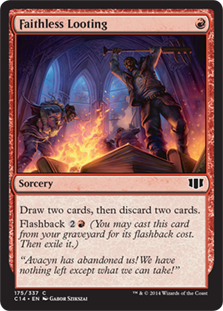
2018 has arguably been the year of Faithless Looting. Every time a new deck emerged it seemed to include the red draw spell. Mardu Pyromancer, Hollow One, Dredge, Bridgevine, Arclight Red, and numerous fringe strategies have all wielded Looting. In all these decks, the often reads "draw four cards." Tempo and velocity are far more important in Modern than something like card advantage, and there's nothing that facilitates either like Looting. Many Looting decks have been borderline degenerate and certainly unfair, so it makes sense to target the best enabler to make Modern more fair.

Why It Won't Be Banned

All those Looting decks have risen, had some time in the sun, and then faded away. For various reasons, none so far have been able to maintain strong metagame shares for more than a few months. The metagame has proven resilient, adapting and answering each deck in turn. Dredge is already on a downswing as Phoenix decks rise. We don't know if this will be true for Phoenix too, but the bottom line is that no Looting deck has been too much to handle so far.

The only feasible reason to ban Looting would be for its metagame share at this point. However, this argument fails, because the metagame appears to only permit one Looting deck to stand tall at a time. Yes, it appears in many decks that have been Tier 1, but they don't remain there, and mostly fall back into Tier 2-3. Despite appearances, Looting isn't saturating Modern.

How It Could Be Banned

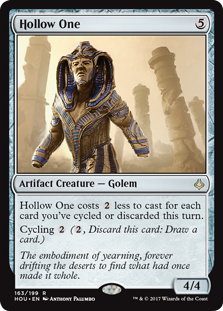
If a brewer finally cracks the code and really unleashes the power of Looting then it might be banned. The Looting decks share a number of similarities that suggest they're not distinct archetypes, but pieces of a greater whole. Players are trying to hybridize Hollow One with UR Phoenix, and on paper that deck is terrifying. However, something is missing that keeps the deck in check. Whether that missing piece is an existing though obscure card or simply doesn't exist yet is impossible to say. If it is found and the potential of Hollow Phoenix is realized, then there could be a problem. A deck that can go huge quickly, attack from multiple angles, and win uninteractively is potentially devastating.
Krark-Clan Ironworks

Ever since Matt Nass's legendary run last spring, the revived Ironworks deck has been looming in player's minds. The deck is usually considered unfun to play against; it's uninteractive and takes forever, which ultimately caused a previous banning. The new version is somewhat faster, more consistent, and integrates a powerful answer in Engineered Explosives. It can beat almost any hate and power through most disruption, and consistently thanks to all the cantrips. Incredibly powerful, fast, resilient, and frustrating combos tend to get banned in Modern.
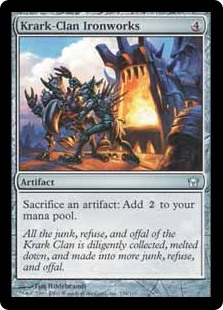
If Ironworks is to be targeted specifically, then the namesake card is the thing to hit. Krark-Clan Ironworks is an incredibly powerful engine, and the deck doesn't work without it. It also gets dinged because of its weird rules interactions thanks to being a mana ability. Without Ironworks itself, this style of slower, not-quite-deterministic combo isn't viable anymore.

Why It Won't Be Banned

There's absolutely no evidence to say that Ironworks needs a ban. Simply put, Ironworks does not have the metagame presence to justify Wizards taking action. In addition, tournaments haven't had the same problems because of Ironworks as Eggs caused.

Whether it should go because of the rules complication is irrelevant. Wizards only bans weird cards when they don't actually work within normal Magic, like Chaos Orb. Modern itself is chock-full of quirky interactions. Players who participate in competitive Magic should have enough of a grasp on the rules to understand how Ironworks actually works so that's not a reason to ban a card.

How It Could Be Banned

The main reason that players haven't adopted Ironworks, even real combo players, is the stigma surrounding it. Much like Amulet Bloom before it, Ironworks is notoriously hard to play. There is a lot that goes into the combo and its numerous loops, which translates into mental strain. Over the course of a tournament, that all adds up. This is all well known, and very intimidating for those who might pick Ironworks up. A lot of players don't want to put in the time and effort necessary to learn the deck, so it has never had the metagame share its supposed power level suggests it should.
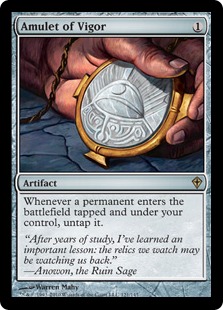
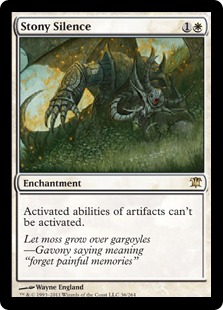
If this stigma is overcome, as many think it should be, then Ironworks might finally gain the metagame share to be a threat. The deck is certainly strong and resilient enough to really take over, as previously mentioned. The only hate that Explosives can't answer is Stony Silence, for which Ironworks plays four Nature's Claim. If players are finally prompted to pick up the deck in high numbers, then Wizards may need to take action.

Bridge from Below

On the basis that it has a negligible metagame presence, Bridge from Below certainly doesn't warrant any action. However, it is closer than the statistics indicate. As we saw over the summer, decks abusing Bridge and Vengevine are capable of blistering starts and of winning on turns 2-3. Bridge is the key to those wins, and intrinsic to the viability of those decks.
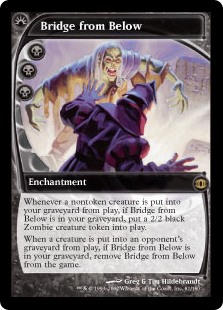
The normal gameplay for Bridge decks is to use some enabler to get Vengevine into the graveyard and then into play turn 1-2. This is done by paying 0 for cards like Endless One and Walking Ballista to trigger the plant. With a Bridge also in the 'yard, those enablers turn into 2/2 Zombies, allowing Bridge decks to present ridiculous amounts of power, ridiculously early. Throw in a Goblin Bushwacker and you've got a ridiculous kill turn.

Why It Won't Be Banned

The key is consistency, which is why the deck has virtually disappeared despite all the attention it received. Those ridiculously explosive turns are very hard to pull off in practice. The enablers are good, but not good enough to really break the deck. Looting and Stitcher's Supplier aren't enough to fix a mediocre hand on their own, because the deck needs a lot of pieces to get going. It usually takes multiple enablers and some luck to really set the deck on fire. If anything goes slightly wrong, or a promising start fails to pan out, the deck is mediocre at best. It's glass cannon with a faulty ignition and just doesn't have much success as a result. Therefore, no action is necessary.

How It Could Be Banned

If the right enabler or another payoff card for Bridgevine gets printed, then Bridge from Below could get banned. It could be some improvement to Supplier, or a new and better way to trigger Vengevine; anything to reduce the gulf between Bridgevine's best and worst starts. The key to making the deck dangerous is improving its consistency, and considering that Wizards was willing to make Supplier this year following the Golgari Grave-Troll ban, it's quite possible.
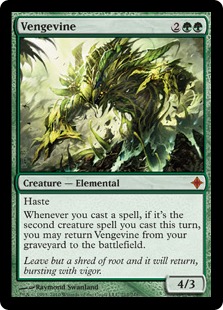
If Bridgevine becomes a problem, Bridge will get banned for two reasons. First and most important is that it is the key to those crushing starts. A couple 4/3's on turn two is threatening, but can be efficiently answered with Reflector Mage or Path to Exile. Add in a Zombie swarm and the only real answer is a sweeper, which very few decks have these days. Bridge is the card that really makes the mediocre creatures dangerous, and so is the best enabler.

The second reason is that doing so would also be a targeted ban. Bridge has never been a fair card, instead being a combo piece; just compare Modern Dredge to Legacy.

What Won't be Banned

I was surprised by how short my list was, especially considering how many cards I've railed against over the years. However, the metagame is in a pretty good place, and shifts over the past year have largely eliminated many cards from contention. It's not impossible for the cards to become dangerous, as anything can be printed. However, the circumstances that need to align to make it happen are so unlikely as to be implausible in the near future. Therefore, I'll argue that these cards will not be banned, nor should they be, and players should stop considering them.

Ancient Stirrings

 I despise this card. I'm clearly not alone. It is such a powerful cantrip; the most powerful ever in the right shell. Considering that Preordain and Ponder are already banned, it's incredibly unfair that the arguably unfair colorless decks get a one mana Impulse. To keep Tron and artifact combo down, many believe Stirrings should be banned.

The Reality
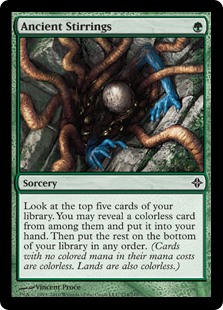
It pains me to say this, but the chances of Ancient Stirrings getting banned are remote at best. The only deck that really needs Stirrings and can play it is Tron, and Tron just isn't the threat it used to be. Stirrings sees a lot of play, but in most decks is replaceable. Ironworks and Lantern could easily play another bauble effect and barely feel anything. Hardened Affinity doesn't always play Stirrings. The only reason to hit Stirrings anymore is to kill Tron, which really needs the consistency to remain viable in an increasingly hostile world.

What Needs to Change?

Tron needs to really take over, which is beyond unlikely, or some new degenerate deck must emerge that really abuses and relies on Stirrings. As colorless-matters was largely a mistake and won't return in numbers for a while, this seems very unlikely.

Mox Opal

It has been argued since Modern became a thing that it is unfair for Affinity to get a Mox and nobody else. Affinity's most explosive starts are all thanks to Mox Opal, and now other hated decks like Lantern and Ironworks use it too. Fast mana is a problem, so should there be any Moxen in Modern?

The Reality

There isn't anything in the current cardpool that uniquely supercharges Opal to the point that a ban is justified. Right now, the artifact decks aren't taking over the metagame, and old-school Affinity is barely a deck anymore. If the Hardened Scales version proves too good (unlikely), it makes far more sense to ban Scales itself, since it's what actually facilitates its overwhelming starts.
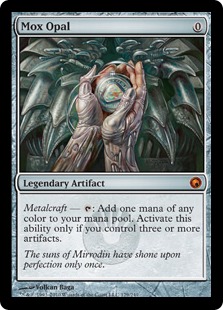
I would argue that the only thing keeping artifact aggro remotely viable at the moment is the acceleration from Opal. No other deck has access to a Mox, despite some noble attempts with Mox Amber, and there isn't really another reason to play artifacts over normal aggro. Affinity is so vulnerable to hate and clunking out that it needs the speed boost. In this way, Opal contributes to format diversity.

As for combo applications, namely Ironworks, Opal is a merely nice addition. I've discussed Opal's impact on the deck before, and it's a fine bonus, but not the real power card. The acceleration is often marginal. As I said above, if Ironworks requires a ban, it makes the most sense to just axe its namesake.

What Needs to Change?

In short, another artifact block. There needs to be some kind of new artifact payoff or deck that really abuses Opal's acceleration, but only needs to have its explosiveness specifically reduced. At this point, a currently existing deck justifying a ban is unlikely. Considering how often artifact-themed sets get Wizards into trouble, and how aware they are of this fact, it's pretty unlikely that they'll make such a set for some time nor include pushed artifacts in a regular set.

Expect Nothing

As mentioned, these are the cards that could potentially get banned. I don't think there's much of a reason to think they will, nor that anything will happen with the Modern Banned and Restricted List in 2019 period. It is always fun to speculate, but if history has taught us anything, the banlist is in for another uneventful year.

Have Ultimate Masters Reprints Already Bottomed?

Are you a Quiet Speculation member?

If not, now is a perfect time to join up! Our powerful tools, breaking-news analysis, and exclusive Discord channel will make sure you stay up to date and ahead of the curve.

Shortly after the spoiling of the Ultimate Masters box toppers, I panicked and buylisted my personal playset of Ancient Tombs to ABUGames. I netted around $42-$45 in store credit per copy, varying by condition, which I value at roughly $25 a copy in real money.

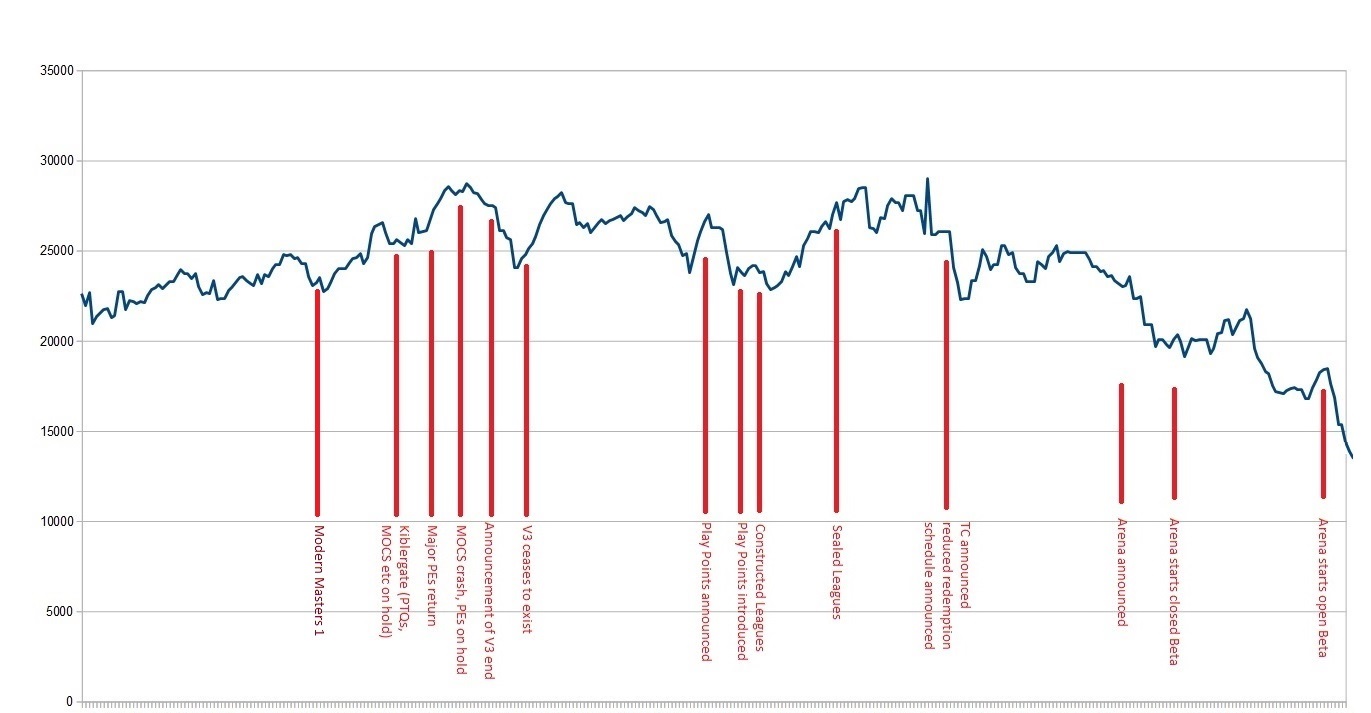
There was an error retrieving a chart for Ancient Tomb

The next day, Ultimate Masters was announced and I celebrated my sage decision. Surely, I would be able to reacquire these at a serious discount to their previous market price, right? Don’t prices drop precipitously when cards are reprinted in a Masters set (especially the rares)?

Like everyone else, I began watching prices closely to try and time the bottom. I even received multiple inquiries on Twitter asking for my prediction for when the bottom in prices would occur. Not being a fortune teller, however, I could only provide a less-than-useful answer involving watching the market closely and knowing the time has come when I see it.

Ancient Tomb dropped to around $16.50 on TCGplayer. I considered buying back copies then but wanted to get them a little cheaper. Then it happened.

Price Rebound

Now the cheapest copy on Ancient Tomb from Ultimate Masters is $21 shipped. That’s a nearly $5 rebound in less than ten days. What happened?!

It appears the most in-demand cards have already rebounded in price. When I look at the top movers over the past week on MTG Stocks, I see nearly 30 Ultimate Masters cards have gained at least 5%. We’re not just talking about the most in-demand mythic rares here, either. There are plenty of regular rares that have rebounded healthily since their initial declines. Back to Basics, which fell the furthest upon reprinting, has rebounded a whopping 49.5% off its lows.

Now I’m left scratching my head—weren’t prices supposed to drop steadily for at least a few weeks? Have we even found peak supply and passed it yet? These are questions I’m struggling to answer. When they released Iconic Masters in November 2017, a card like Horizon Canopy dropped in price for five consecutive months before rebounding. How could Ultimate Masters cards rebound after just a week and a half?

There was an error retrieving a chart for Horizon Canopy

Even more extreme is a card like Rishadan Port. The Masters 25 reprint came out in March of this year and still hasn’t rebounded a penny after nine months on the market. In fact they’re just about at their all-time low (actually, now could be a great time to get your personal copies).

There was an error retrieving a chart for Rishadan Port

What in the world makes Ultimate Masters so special?!

Possible Answers

As I rack my brain trying to understand how Ultimate Masters cards could rebound so quickly, I can come up with a couple (admittedly simple) hypotheses.

Hypothesis 1: This set is the original Modern Masters all over again.

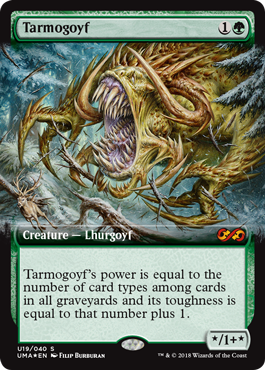
When the initial Modern Masters set was released in 2013, demand far outstripped supply. There was also so much pent-up demand for reprinted cards like Tarmogoyf that reprints were immediately absorbed into the market. Thus prices on the most desirable cards did not have sufficient opportunity to retract.

Is Ultimate Masters such a hit that the same thing is happening yet again? I don’t think this explains 100% of what is going on because plenty of reprints in Modern Masters did see a notable drop. Cryptic Command stayed low for half a year before soaring back up in price, for example.

There was an error retrieving a chart for Cryptic Command

Hypothesis 2: This rebound is only temporary.

Could it be that players are rushing to get their copies now while cards are hot, forgetting that this kind of price rebound on Masters sets normally takes six months? In many cases, reprinted cards have been flat for about half a year before seeing a bounce in price again. Karn Liberated is a great example from Modern Masters 2015.

There was an error retrieving a chart for Karn Liberated

Karn’s reprint in Ultimate Masters appears to have bottomed at $55 and is now selling for $65 already. But maybe what we’re observing here is only noise? Maybe when this chart stretches out another six months, the Ultimate Masters copies will continue their downfall or, at worst, remain flat until February like we’ve seen in previous years.

Hypothesis 3: The Ultimate Box Toppers are skewing things.

This is the first Masters set that also contained Ultimate Box Toppers. That means when you buy a box, you get a bonus, valuable card along with the booster packs. I would have expected these box toppers to absorb some of the EV, causing prices on the regular copies to tank further. But this hasn’t happened. Instead, booster box prices have climbed.

Are these box toppers muddling things? Are players using their box toppers to trade for regular copies, keeping prices higher? I don’t fully understand what’s happening, but perhaps there are some confounding effects here.

My Plan Going Forward

I don’t know what to think at this point, honestly. I still want to reacquire a set of Ancient Tombs but at this point the price isn’t low enough to tempt me. Since I’m in no rush whatsoever, I think I’ll continue to wait it out.

While it seems Ultimate Masters prices are deviating somewhat from history, I still rely on past data to help me strategize going forward. In most cases of the past, when a Masters set is released it takes about six months for prices to rebound. Out of my hypotheses presented above, I’m inclined to believe in hypothesis 2 the most. That is, I think the “rebounds” we’re seeing now are mostly noise and will soon cease.

Perhaps over the holidays there will be more opportunity to buy at better prices. But what most likely will happen is that prices will stop moving and flatline for a few months before returning higher. This may mean I missed the absolute bottom, but should have plenty of time to buy at somewhat lower prices. It pains me to think my timing was bad, but I’ll take solace in the fact that I don’t necessarily have to rush going forward.

Now if it’s the box toppers you’re after, I have different advice. These are getting all kinds of attention from MTG financiers on social media. Remember when everyone in MTG finance told you to buy Masterpieces and buyouts ensued daily? Something like that could easily happen again with the box toppers. For this reason, you need to remain extremely vigilant, perhaps prioritizing their acquisition over other cards if you desire them.

Personally, I detest foils and have little interest in these box toppers. I’ll probably use this quiet season to acquire more Beta cards for my collection. But if you want these box toppers, you may want to look at buying them very soon. There are only a couple dozen of each in stock on TCGplayer (some have even less)—sound familiar?

These are very desirable and it’ll only take one MTG finance personality on a podcast to tell people to buy these to cause a buyout. Card Kingdom has a bunch of these on their hotlist, and they are probably struggling to keep them in stock. These may be great targets with trade credit for a long-term hold. Just make sure you stick to the most in-demand ones and avoid the chaff.

Wrapping It Up

Because I focus on Old School and Reserved List cards in my portfolio, I detest nothing more than getting hosed by a reprint. This is why I cashed out of my personal playset of Ancient Tombs once their reprint was announced. I thought I was being clever for this move.

It turns out my move was barely portfolio-accretive because these cards have not dropped nearly as much as I had hoped. My goal was to reacquire a playset for around $50—about half what I got for trading them in (with adjustment factor for ABUGames’s inflated credit numbers). Now it looks like I may barely make $20 in this endeavor.

But at this point, there is little reason to panic-buy. We may have missed the absolute bottom, but I don’t think prices will rebound much more from this point. Looking at historical data, it looks like it takes about six months for real rebounds in price to occur. It could certainly happen faster given how hot Ultimate Masters is, but I think it’s perfectly reasonable for me to wait for the next eBay coupon at this point.

The exception would be if you want box toppers or sealed product. These are still quite sparse, and if the right MTG finance personality starts hyping them up you could see sporadic buyouts. Since I don’t care for them, I’m going to ignore them. But if you want cards for cubes or Commander, I’d suggest making these a priority right away.

Lastly, I leave you with a word of caution: we don’t know what the print run on these are and we don’t know if WotC will suddenly announce a second wave like they had with some previous Masters sets. Should that occur, it could punish those making purchases now rather than waiting. Given how popular this set is and how eager Hasbro is for profits, it wouldn’t surprise me if there was a new wave announced. Either way, I’m going to sit on the sidelines a little longer.

Even if these cards rebound another couple bucks, the majority of the profits won’t be made until the reprints are completely absorbed a few months from now. In the meantime, I see no reason to rush. Given how many Reserved List and Old School cards have retracted in price these past few months, I’d much rather put my money to work there anyway.


Sigbits

  • There are a dozen Ultimate Box Toppers on the first page of Card Kingdom’s hotlist. I imagine there are more further back. As I said, these are very hot right now—that could mean buyouts to come and many profits to be made, or it could be prices are inflated right now and they will retract once the hype subsides. I believe MTG finance personalities will ensure it’s the former and not the latter.
  • For the first time in a while, I see dual lands on Card Kingdom’s hotlist. But it’s not the Revised versions. Instead, Card Kingdom seems to be aggressively after copies from Collectors’ Edition. They’re paying $105, $95, and $95 for Savannah, Plateau, and Taiga, respectively.
  • Erhnam Djinn from Arabian Nights has been on Card Kingdom’s hotlist for a couple weeks now, and their buy number is up to $170. It was lower than this for the longest time, though I think we are far from its peak numbers back when the Old School buyouts were rampant. Still, this is a legitimately desirable card from Arabian Nights, and I expect it to rise in price further come this spring.

The Banlist in 2019: My Christmas Wishlist

Are you a Quiet Speculation member?

If not, now is a perfect time to join up! Our powerful tools, breaking-news analysis, and exclusive Discord channel will make sure you stay up to date and ahead of the curve.

When it comes to Modern, I'm always up for a surprise. I penned an article last week declaring the death of midrange as a Tier 1 strategy in an aggro-combo metagame. But it seems the meta has already corrected itself: last weekend's GP Portland Top 8 featured a finals between Grixis Death's Shadow and BG Rock, with each deck representing one of Modern's definitive midrange pillars. The two Izzet Phoenix strategies to crack the Top 8 each ran 3 Crackling Drake, making them as midrange-leaning as possible. And UB Faeries also secured a spot, yielding a Top 8 over 50% midrange, parameters depending.

That my article premise was proven faulty so quickly has a couple of significant upsides. More personally, it signals that Colorless Eldrazi Stompy will be exceptionally well-positioned in the coming weeks, as midrange continues to ascend before being usurped by Tron and other predators of the archetype. Second, it speaks volumes to Modern's ability to self-regulate, and to the format's current health.

With great health comes great potential for unbans, and I think Wizards may consider finally freeing some of the more controversial cards on the list this coming year. Today, I'll reveal my unban wishlist for 2019, and also consider some of the more divisive cards I think may have a chance in Modern.

Unban Wishlist

These are the three cards I'd like to see released in 2019.

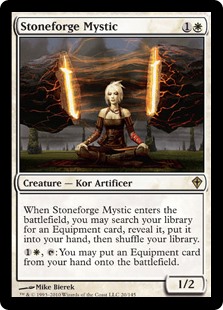
1. Stoneforge Mystic

First up is a card I don't want to play with so much as play against. Most Modern players seem to agree that Stoneforge Mystic is of an appropriate power level for Modern, and I count myself among them. I didn't play Standard when Caw-Blade was legal, but I think it's safe to say Modern now is much stronger than Standard was then. Since I'm comfortable facing down turn-one Hollow Ones and turn-two Thought-Knot Seers, I'm just not that scared of a turn-three Batterskull.

Stoneforge best slots into goodstuff-oriented fish decks, of which we have very few in Modern; our fish decks lean more heavily toward tempo than midrange, with Spirits and Humans the primary exemplars. Neither of those decks can easily accommodate Stoneforge, whose uncommon creature types complicate integration with a tribal strategy. That leaves lower-tier fish decks like Death & Taxes and Hatebears.

While both of those strategies do play white, I've heard diehards of each express mixed feelings about the Kor Artificer. On the one hand, it injects some raw grinding power into the strategy. But these decks tend to focus on disrupting opponents with tax effects or generating value via more dedicated and synergistic means; Stoneforge does neither of these things.

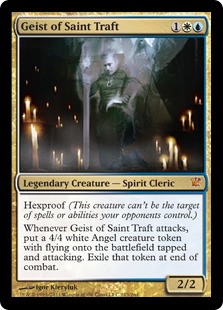
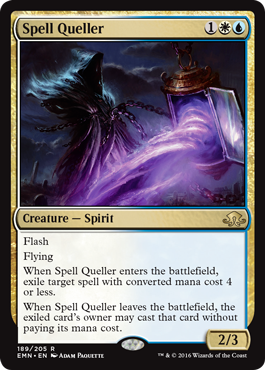
All that's left is control, which in its current forms either prefers the multi-purpose applications of reach (Jeskai) or is prevented from running such creatures thanks to tension with Terminus (UW). Jeskai is the likelier home for Stoneforge of the two, as the deck has already looked to Spell Queller and Geist of Saint Traft this year as alternate win conditions. As Stoneforge attacks from a different angle than those creatures, I imagine it would merely diversify the wedge's possible threat suite.
My prediction is that Stoneforge would mostly create or revitalize nonexistent decks like Zoo, Abzan Rock, and Stoneblade, which translates as a net win for Modern diversity. I doubt any of these strategies would break into the top tier, but they would at least have their matchups improved with the introduction of such a decent card.

2. Preordain

I have argued for a Preordain unban before—as a solution to a broken metagame. With Golgari Grave-Troll and Gitaxian Probe legal, the format was much faster and linear than usual. Wizards ended up banning the offenders instead.

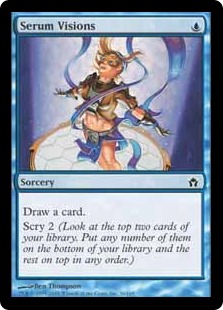
Modern has again sped up, and I again don't think Wizards will ban the enablers (arguably, Faithless Looting and Ancient Stirrings); the cards are not violating format rules or causing diversity issues, nor are they instigating a "battle of sideboards," the rationale for banning Grave-Troll. Both of those cards, however, are cantrips, and ones which grant their respective decks unparalleled one-mana selection. Opt is also a cantrip, and has supplanted Serum Visions in a variety of archetypes ranging from control to Delver variants.
I think adding Preordain to the card pool would further cut into Serum's shares, but that card is still the most played cantrip in Modern, and would probably continue to see play on its own merits; Preordain is a better Sleight of Hand, not Serum Visions (although it is indeed stronger than the Fifth Dawn scryer).

Our testing indicates that Preordain does not significantly power up combo decks, which is what it was banned for in the first place. Of course, Storm and other combo decks might still play it. But I think the largest effect Preordain would have in Modern is granting additional consistency to blue aggro-control decks. The riskiest thing about this unban is its potential effect on Arclight Phoenix strategies, which I'll concede could prove problematic with a critical mass of high-impact blue cantrips; we'll have to see how the metagame shakes out after those decks begin to lose favor.

3. Green Sun's Zenith

Speaking of Modern Nexus banlist testing, David recently completed a series on Green Sun's Zenith, too. His is not optimistic about the card's chances. But I am!
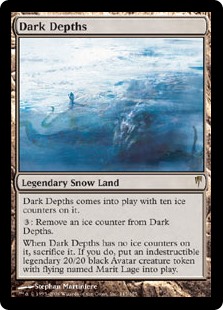
While David's data reveals that Elves, the test deck, significantly improved with Zenith in the picture, it cannot predict whether that deck would be strong enough to secure a top-tier position in Modern, or how other decks would adapt to its presence. As things stand, Elves is not a consistently performing deck (although one copy did make it into the Portland Top 8). I don't think even giving it a significant buff would usher in Tier-0 format. Modern can self-regulate!

Wizards originally banned Zenith because it homogenized green decks, but I don't think it would do that anymore. Collected Company, Chord of Calling, and Eldritch Evolution are all played in some capacity in Modern, frequently alongside some removal spells and a heavy set of creatures. The three cards are never played together. Zenith would add a fourth option in this style of deck, giving them the ability to toolbox. But it's not necessarily better in any of them than Company, Chord, or Evolution. I believe Zenith would further diversify green creature-combo decks.

While Chord and Evolution mostly just fit into these kinds of decks, Zenith could also work in a midrange or aggressive shell, as does Collected Company. Personally, I would be stoked to try it in GRx Moon.

Those Who Must Not Be Named

There's some stigma surrounding the more overtly powerful cards on the banlist. Some cards are well at home there, and those fall into four categories:

  • Cards that violate the Turn 4 Rule (Blazing Shoal, Chrome Mox, Rite of Flame, Seething Song, Dark Depths, Hypergenesis, Glimpse of Nature)
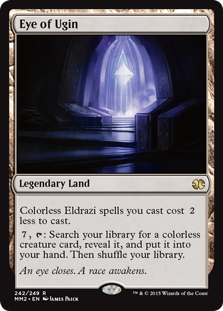
  • Cards that break existing strategies (Cloudpost, Dread Return, Golgari Grave-Troll, Summer Bloom, Eye of Ugin)
  • Cards that lead to time issues (Sensei's Divining Top, Second Sunrise)
  • Cards that are plain busted (Umezawa's Jitte, Deathrite Shaman, Treasure Cruise, Gitaxian Probe, Mental Misstep, Ponder, Skullclamp)

Is your pet banned card missing from the above lists? Read on to see why I think their time in Modern may be approaching.

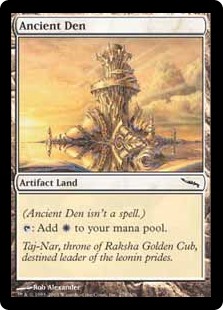
1. Artifact Lands

With Affinity largely supplanted by the color-intensive Hardened Scales, Ironworks standing to gain zero turns of speed, and Stony Silence already a hugely popular sideboard card, I'm not sure the artifact lands are that dangerous anymore. I would like to see them come off to test the waters. Who knows? They might even enable some durdly Trinket Mage packages, or at the very least more cool Mox Opal decks! Modern is full of artifact support that's too color-intensive to work alongside the largely colorless manabases imposed by Darksteel Citadel (*ahem* Tezzeret, Agent of Bolas), and I'd like to see those cards be given fair trial.

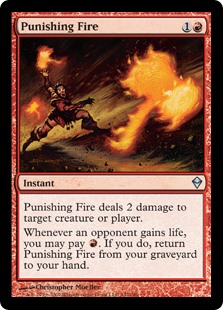
2. Punishing Fire

Punishing Fire was banned for keeping creature decks out of the format. So was Wild Nacatl, which not coincidentally resisted Fire while still costing one mana. Nacatl has been freed, and I'm not so sure Fire still has a place on the list.

While the card lines up well against cards like Noble Hierarch (Modern's most-played creature), it doesn't line up so well against most creature decks. Attacking strategies have gotten around Bolt and Push with cost-reduced fatties like Gurmag Angler, Bedlam Reveler, and Hollow One; creature-combo decks fade disruption with Chord of Calling and Postmortem Lunge. And of course, Fire does very little against decks without creatures.

Fire's biggest weakness is how slow it is. Two mana to conditionally remove a creature is extremely steep in Modern. It also hurts that the card has no proper home; Tron has abandoned red, and the only remaining Grove of the Burnwillows decks are RG Eldrazi (itself a lower-tier strategy) and Ironworks. I doubt either of these decks would be very interested in Punishing-Grove, as they are both quite proactive.
Jund has proven itself a solid contender in this metagame, and could potentially wield the combo. But I think doing so exacerbates the deck's worst quality: it's difficult to find the right answers at the right time. Opening Fire against a creature-light opponent means one less card with which to actually fight what that opponent is doing. There's also the question of speed; many existing creature decks will swiftly punish Jund for opening interaction this medium.

3. Dig Through Time

Dig Through Time was never really given its spotlight in Modern, being vastly outshone by Treasure Cruise while legal. The card saw more use in Legacy Miracles decks. I think that format, which both has stronger delve enablers and is more card-advantage driven than Modern, can make better use of Dig. It's possible that the card doesn't do much in this format. I know I would hate to be on a reactive deck with Digs in hand against a blazing-fast start from one of Modern's many aggro-combo strategies. And what decks would play it? UW Control, which is now falling out of favor?
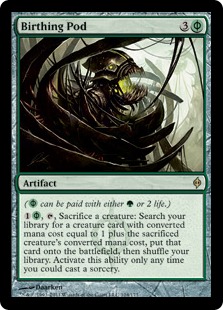
The main danger with Dig is not the combo decks that might play it (the only ones are Tier-4-and-below strategies we needn't worry about), but the aggro-combo decks, as with Treasure Cruise and Gitaxian Probe. But Dig's color-intensive mana cost makes it better-suited to aggro-control shells like Delver, which could also use a hand in the format. These decks all use the graveyard in some way (often with delve creatures like Gurmag Angler), and would then need to make some sacrifices to run Dig. I'm interested in seeing those developments occur.

4. Birthing Pod

This inclusion represents a shift in how I look at the banlist. I once argued against the odds of Jace, the Mind Sculptor coming off the banlist for the reason that it messes with future design: the bar for Modern-playable blue walkers is significantly raised with Jace in the format. Wizards has shown that this predicament is not so important to them, meaning they are happy to unban cards for the reason that they are at an appropriate power level for Modern.

One argument against Birthing Pod was that it limited future card design: Wizards will always print pushed creatures, and each of those creatures makes the Pod deck better. But plenty of cards "limit future design" in one way or another. I now think it's best to ban problem cards when they become problems, as they did with Pod. So what about when Pod isn't a problem anymore?
I can envision a time when Modern's powerful spells (Fatal Push, Lightning Bolt, etc.) and synergies (the new crop of velocity-fueled aggro-combo decks, etc.) trump whatever Birthing Pod has to offer. After all, the card sees virtually no play in Legacy, where the power level has outgrown this type of effect. That format has even more powerful creatures than Modern, something that will never change!

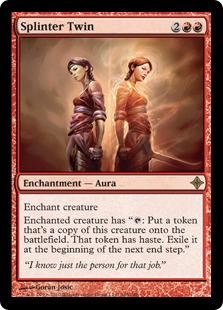
5. Splinter Twin

Of these options, I think Twin is the least safe for Modern. There's a solid precedent for the deck being oppressive, especially over long stretches of time, and Modern is unarguably more diverse now than it ever was with Twin in the picture. But like Pod, Twin does nothing in Legacy, and as Modern's power level rises, I can see it being considered for an unban; after all, it doesn't break any format rules on its own.

That said, I wouldn't count on Twin being freed in the new year, as the threat of Twin re-homogenizing blue-based midrange, combo, and control still looms.

Checking It Twice

Do you agree with my assessment? Which cards would you like to see released from the Modern banlist? Let me know your thoughts in the comments.

Insider: Office Hours #3

Are you a Quiet Speculation member?

If not, now is a perfect time to join up! Our powerful tools, breaking-news analysis, and exclusive Discord channel will make sure you stay up to date and ahead of the curve.

Join Edward Eng and Sig Ausfresser for the third installment of QS Office Hours.  For those unfamiliar, this is a live Q&A podcast where Insiders can ask questions of our content creators in the Discord livechat. The content creators provide their answers live through audio, and the whole dialogue is recorded! Enjoy!

Avatar photo

Sigmund Ausfresser

Sigmund first started playing Magic when Visions was the newest set, back in 1997. Things were simpler back then. After playing casual Magic for about ten years, he tried his hand at competitive play. It took about two years before Sigmund starting taking down drafts. Since then, he moved his focus towards Legacy and MTG finance. Now that he's married and works full-time, Sigmund enjoys the game by reading up on trends and using this knowledge in buying/selling cards.

View More By Sigmund Ausfresser

Posted in Finance, Office Hours1 Comment on Insider: Office Hours #3

Have you joined the Quiet Speculation Discord?

If you haven't, you're leaving value on the table! Join our community of experts, enthusiasts, entertainers, and educators and enjoy exclusive podcasts, questions asked and answered, trades, sales, and everything else Discord has to offer.

Want to create content with Quiet Speculation?

All you need to succeed is a passion for Magic: The Gathering, and the ability to write coherently. Share your knowledge of MTG and how you leverage it to win games, get value from your cards – or even turn a profit.

Hindsight 20/18: Metagame Review

Are you a Quiet Speculation member?

If not, now is a perfect time to join up! Our powerful tools, breaking-news analysis, and exclusive Discord channel will make sure you stay up to date and ahead of the curve.

The Modern metagame cycles, though the process is slow and hard to see. This complicates determining which trends are just flashes in the pan and which must be accounted for and adapted to. Metagame-specific decks, like Death and Taxes at GP Las Vegas 2017, can look like real decks, at times frustrating players trying to predict a field.

Mistakes along those lines are compounded by how players approach their analysis. How and what data is collected has a huge impact on the final analysis and interpretation of those data. Therefore, the metagame will look different to every analyst. To get a more holistic picture, the scope of the data must be accounted for.

Today, I'll discuss this problem in detail and offer a solution. I think the key is not to look at any piece of datum in isolation, but to look for the persistent short-run trends which represent fundamental changes.

Metagame of the Moment

In keeping with the allure of novelty, much metagame discussion focuses on the most recent results and events. That discussion omits critical information about the overall metagame, yielding a warped picture. In that scenario, an analyst would have data from the most recent Modern events, SCG Baltimore and GP Portland (team events don't really count because they don't measure individual deck strength), and produce these data set from their Top 16 results:

Deck NameQuantity
Ux Phoenix6
Grixis Death's Shadow3
Bant Spirits3
Mono-G Tron3
Jeskai Control2
Ironworks2
Infect2
Storm2
UW Control1
Jund1
Mono-W Martyr1
Eldrazi Stompy1
Grixis Prison1
Rock1
Faeries1
Abzan Evolution1
BG Elves1

These data indicates that Arclight Phoenix decks are far and away the best decks in Modern. With twice the representation of the second place deck, this is an obvious conclusion. However, it misses the wider context and fails to account for fluctuations or local warps in population.

The Wider Picture

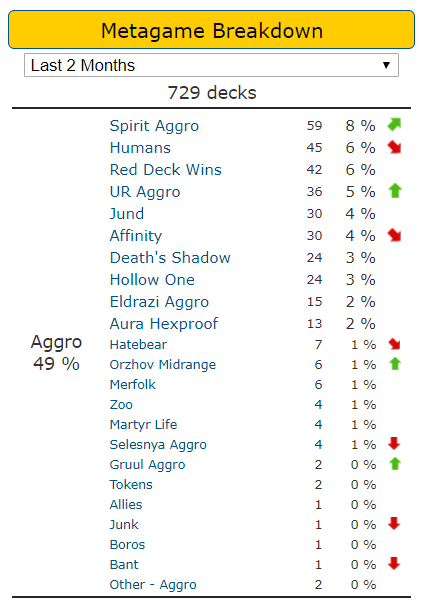
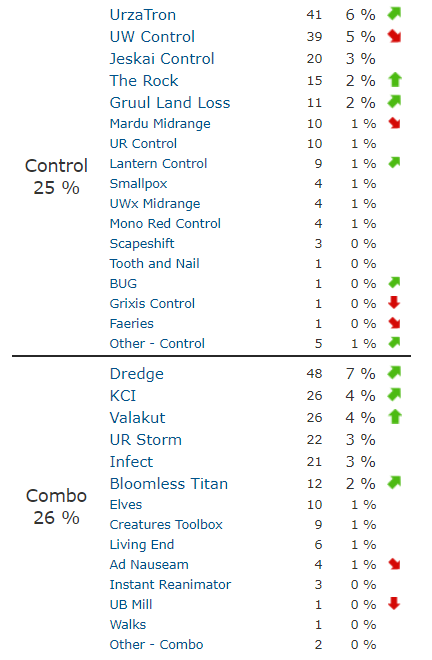
The real effect that thousands of players grinding matches both in paper and MTGO is hard to see, especially since Wizards began curating its released decklists. This change has certainly accomplished Wizards's goal of obscuring an accurate metagame picture to prevent players from "solving" a given metagame too quickly, all while giving brews more visibility. MTGTop8 has tried to account for the data limitation by casting an international net for paper results. Looking at their results and form a data set of top decks over the past two months (top performing being 3% representation or better) provides the following metagame:

Deck NamePercentage
Spirits8
Dredge7
Humans6
Burn6
Tron6
UW Control5
Affinity4
Jund4
UR Phoenix4
Valakut4
Death's Shadow3
Hollow One3
Jeskai Control3
Ironworks3
Infect3
Storm3

In this metagame, Phoenix is one of many also-rans, and I should worry about Spirits and Dredge first and foremost. Their data is far more robust than previously, which should improve the analysis. However, this is still only tracking very recent changes. Sudden bursts of interest have large effects, increasing the odds of warps.

Taking the Long View

Logically speaking, the most accurate data is the broadest and longest. Therefore, these data for all of 2018 might best represent the metagame.

Deck NamePercentage
Humans8
UW Control7
Burn6
Tron6
Affinity5
Hollow One4
Jund4
Death's Shadow4
Eldrazi Aggro4
Spirits3
Mardu Pyromancer3
Dredge3
Storm3
Valakut3

The problem with such a long-term view is that old and dead trends can strongly influence data. Humans and UW dominated in spring and summer, but have slowed down recently. Nevertheless, they remain at the top of the standings thanks to the older data. Phoenix decks aren't present while Mardu Pyromancer, which has almost completely disappeared by now, maintains a significant metagame presence. Too broad an analysis is just as inaccurate as too narrow.

Looking Beyond the Numbers

There's no one way to view the Modern metagame. The format shifts all the time and nothing stays the same forever. Compare 2017's Grixis-and-Eldrazi-dominated metagame to 2018's reign of control and Humans. Stating data isn't sufficient for an accurate picture; we need to identify the scope and scale of the data clearly to find what is happening within that data and how accurately it describes wider trends.

Perspective

What the metagame looks like depends on how it's looked at. The scope and timeframe of a dataset determines the conclusions that can be derived from that data. In a vacuum, data is just numbers, useless without meaning and context. This analysis can then describe the more persistent and meaningful changes that have happened, which can then be used to predict where the current trends will go.
Where Are We?

Using that strategy to analyze the metagame helps identify how and when shifts happen. One such shift: I would argue that the data show the older, more interactive metagame making way for newer, more linear decks. What this analysis strategy fails to account for is whether recent shifts and trends will last or how they will actually change the metagame long term.

Looking Ahead

The question all this begs is whether its possible, given limitations, to actually anticipate where the metagame is heading and adapt. Only Wizards of the Coast knows if the next few set releases will drop Khans of Tarkir-level bombshells, release Oath of the Gatewatch-level horrors, or do nothing. However, I think it is possible to make educated guesses. Within reasonable limits.
In economics we teach that the long-run is normally aggregated from short-run trends, but those short-run trends that prove persistent actually create the long-run. Anything can happen tomorrow, but it may not matter months from now. It takes something that alters the landscape of possibility to actually change the overall field and the long-run equilibrium, like a new technology replacing the old.

This is equivalent to Humans rising in 2017 to take down Storm, and then proving strong enough to define the 2018 metagame. Therefore, focusing on those more impactful threads should indicate where 2019 is headed.

Spirits vs Humans

Starting at the top, the premier aggro deck of 2018 was Humans by a long shot. Just look back at all the coverage we gave the deck. However, just like Grixis Death's Shadow the previous year, it eventually fell out of favor toward the end of the year as players adapted and learned how to fight back. Unlike Death's Shadow, Humans is also facing competition from a similar deck in Spirits.

On the surface, it appears that Spirits could simply replace Humans. Many have caught on that Spirits is favored head-to-head, and its greater sideboard flexibility is a huge advantage.

However, that isn't the whole story. Spirits is better in a fairer metagame because hexproof and Collected Company are relevant. The more unfair and combo-based things become, the better the cheaper, persistent disruption of Humans gets. Plus, there's a greater likelihood of playable Humans being printed than Spirits.

My prediction is that Spirits will seize and withhold the top aggro deck position from Humans until Storm-style combo starts to rise again. Storm was the reason Humans gained traction in the first place, and there's no reason to think it won't happen again if linear combo resurfaces. Therefore, I predict Spirits will be the default disruptive aggro deck going forward, and Humans the metagame choice when more disruption is necessary.

Graveyard Decks

After a stunning revival, players' enthusiasm for Dredge appears to have cooled. A month ago, Dredge was being praised and getting all the Top 8s. This month, it didn't even Top 16.  This is understandable, as previously players weren't ready and didn't have their graveyard hate. This has been corrected and Dredge is being hated out.
However, you can never fully hate away Dredge, and it will remain a factor in Modern. It simply won't be consistent. What I saw over 2018 was a proliferation of graveyard decks, then a reaction which has slowly pushed them back. While players are more conscientious of the need for hate, as they should be, the immediacy will fade and the Dredge Cycle will begin anew. I don't expect Dredge to maintain any presence at the top of the metagame in 2019, but it will always lurk in the background and strike when nobody's looking, just as Affinity did for years. My advice: don't fear Dredge, but don't forget it, either.

Control Remains

I have every confidence that UWx Control will remain a major player in Modern next year. What form it will take is impossible to say. Straight UW has certain advantages over the other variants, as they do over UW, and the overall metagame will decide which is best. In any case, UWx simply has too many tools at this point to disappear into Tier 3. Whatever happens to the metagame, control has the means to counter it and pull ahead on cards, be it with planeswalkers, and Ancestral Vision, or Terminus. I believe that Jeskai will be the version of choice as the value of Anger of the Gods is rediscovered and Terminus loses favor as too uncontrollable.

Workhorses

Burn and Jund were solid decks all year long, with their short- and long-term numbers being equal. They're not flashy or particularly press-worthy, but they clearly get the job done. Therefore, I expect them to remain players in roughly the same proportion though the next year. Burn will always be around, ready to pounce on greedy painful mana and slower, uninteractive decks.

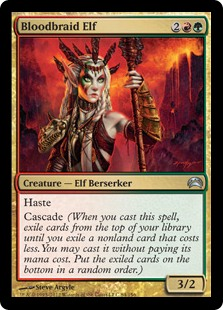
Jund's been boosted by Bloodbraid Elf and it's closer to actually being ~50% against everything, even Tron, as a result. Don't forget these decks in the glow of the popular decks and Hottest New Thing. Mastery and practice are the cornerstones of Modern success, and Jund and Burn pilots have plenty of both.
Affinity is also holding fairly strong, though not in the same form as it started. Only traditional Arcbound Ravager Affinity roamed at the beginning of the year, but Hardened Scales now dominates the robot world. While somewhat less explosive than the older version, Scales makes up for it by being far more overwhelming. The problem, I'm told, is that without the namesake card, Scales Affinity can be quite clunky. Despite this, the fact that it's less vulnerable to Stony Silence remains a huge plus.

I believe that Scales will be the default Affinity deck for this reason. However, I think that its overall stock will fall over time unless the problem of of missing Hardened Scales can be fixed. Without that explosive boost, it appears to be too inconsistent for long-term success.

The Unknown

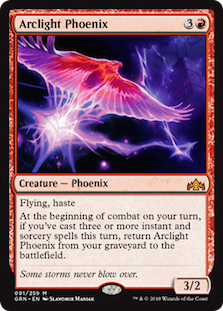
Up next is Arclight Phoenix. Phoenix's similarities to Hollow One are striking, and while data show that deck doing well overall, its been declining recently. Phoenix appears to have improved the strategy by removing the random discards, and recent wins and coverage give it the visibility to draw in players. However, the deck is very new and feels unfinished. This may not be a problem, as the high-velocity, low-threat style deck is popular in Legacy and players have wanted it to work in Modern for some time. They'll find the right list, and Phoenix will see play for the foreseeable future. The question is whether it will remain a relevant part of the metagame, and I'm skeptical.

I think Phoenix decks must answer two questions. The first is whether the card can survive increased attention. Phoenix decks get most of their value by burning through their deck and then smashing with several hasty birds early. When that doesn't happen, the deck just durdles until it makes a big but very vulnerable threat in Awakened Horror or Crackling Drake.


Players will soon learn that taxes are effective at beating the engine. Jund will discover that Surgical Extraction on Arclight Phoenix, and Fatal Push on everything else, is crippling. Any deck can dance on stage, but only a few can withstand the spotlight. If Phoenix can't withstand actual scrutiny, it will fall into niche status.

The other question is survival. Faithless Looting has been enabling some pretty ridiculous stuff, from Hollow One to Dredge to Phoenix this year. It's definitely on Wizards's radar as potentially bannable (even if only because of players screaming about it). In the possible-though-unlikely event that Looting gets axed, can Phoenix decks survive? In their current form, probably not; there's nothing else as efficient for digging and dumping Phoenixes.

Change is Constant

Nothing remains fixed forever. Things will happen in the Modern metagame that nobody can predict, because there are always surprises in a Magic year. However, analyzing current trends provides some guidance, and watching for trends that persist over time provides a more accurate metagame picture. My advice for reading and watching the metagame is to have some perspective and not get swept up in the hype.

The Rise of the Alpha Rare (Continued)

Are you a Quiet Speculation member?

If not, now is a perfect time to join up! Our powerful tools, breaking-news analysis, and exclusive Discord channel will make sure you stay up to date and ahead of the curve.

Last week I tried something different with my weekly column. I dug up a relevant article from the past—one that probably goes back before most readers were visiting this site—and provided some new perspective. Oftentimes the articles I write are evergreen, and with just some minor touch-ups can be just as useful today as they were years ago.

Because I received positive feedback on this new approach, I wanted to resurrect another piece I wrote. This one is even older: it goes all the way back to May of 2012. That's over six and a half years old! The article is about Alpha rares, and how they are an asset on their own due to their collectibility and rarity as opposed to player demand. The near mint versions are especially rare, and should be compared to artwork more so than gaming pieces.

The strategies mentioned in this article have paid off fantastically and I think they're just as valid today. I'll update some prices where relevant in the column below; new text will be in bold italics.

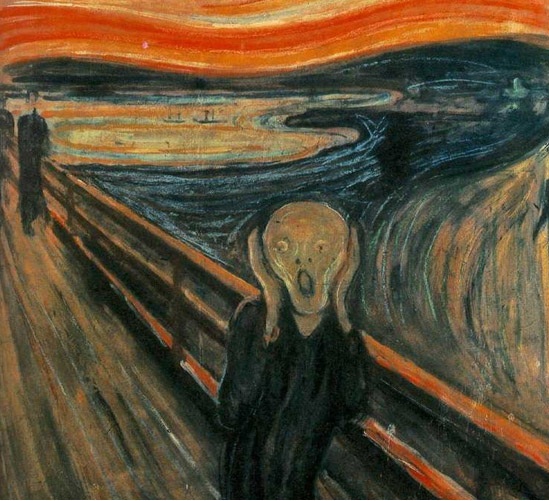
A couple weeks ago, the iconic painting “The Scream” by Edvard Munch sold at auction for a whopping $119,922,500. This placed Munch over Picasso in history as the artist with the most expensive piece of artwork ever sold. My reaction can best be encompassed by the central figure in the painting itself:

That is an incredibly large sum of money for a piece of artwork. No matter how much of a classic this painting is, it’s highly unlikely Munch could have ever imagined his work would fetch such a large sum a hundred years later.

What’s This Got To Do With Magic?

The iconic Alpha Black Lotus has appreciated significantly since its initial printing (albeit not to $119 Million). When I first began playing Magic, this card fetched around $300. As a newcomer to the game with no income on days other than my birthday and Christmas, this price seemed way too steep for a piece of cardboard.

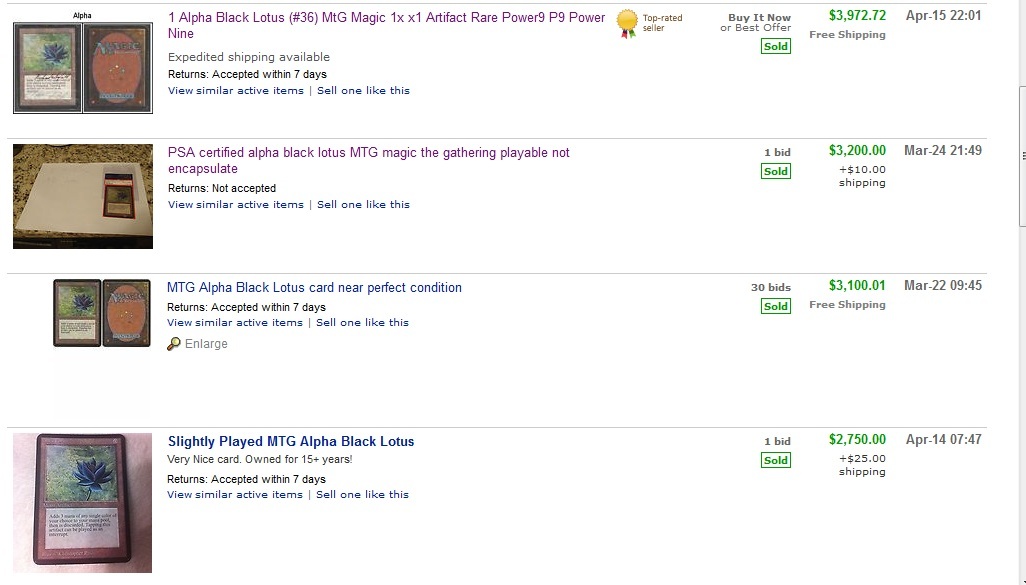
Now, nearly twenty years later, circulated copies of this iconic Magic: the Gathering card have sold at auction for amounts in excess of $3,000—an increase of 1,000%! The only completed eBay listing for an Alpha Black Lotus is a rough one that sold back in November for around $15,000. From 1997 to today, that's an increase of  4,900%. The returns keep getting better and better!

(Click to expand.)

But these versions are circulated—they have seen play and they likely continue to see play in Vintage decks. There are far rarer versions of the Alpha Black Lotus—ones which are virtually unplayed in condition.

In fact the PSA-10 Mint Alpha Black Lotus has sold for upwards of $20,000 in previous sales. The [supposed] only one in existence is now for sale on eBay with an asking price of $100,000. Crazy? Yes! Crazier than paying $119 Million for a painting? Perhaps not. Card Kingdom has a near mint price of $40,000 for an Alpha Lotus, and that's not likely to be PSA 10. So I think a PSA 10 Alpha Lotus has got to be worth $100,000 or even more at this point.

NM Alpha vs. SP Alpha

Based on the most widely accepted numbers, each Alpha rare was printed about 1100 times by Wizards of the Coast. This count places any rare from Alpha high up on the list of rarest Magic: the Gathering cards.

But given these cards are nearly twenty years old, and most were played to oblivion, the subset of NM rare Alpha cards is even more elite. While it is impossible to garner exact numbers, even a generous fraction such as 10% NM would imply there are only about 100 copies of any NM Alpha rare card in existence.

Retailers have caught on to this fact—back in April, Star City Games significantly increased their buy and sell prices on NM Alpha/Beta cards only. They purposefully emphasize in their buylist that one should inquire about buylist prices for SP and MP copies. When we observe SCG is selling NM versions of Alpha rares at 2x the price of SP versions, we can certainly see why they’ve created this discrepancy.

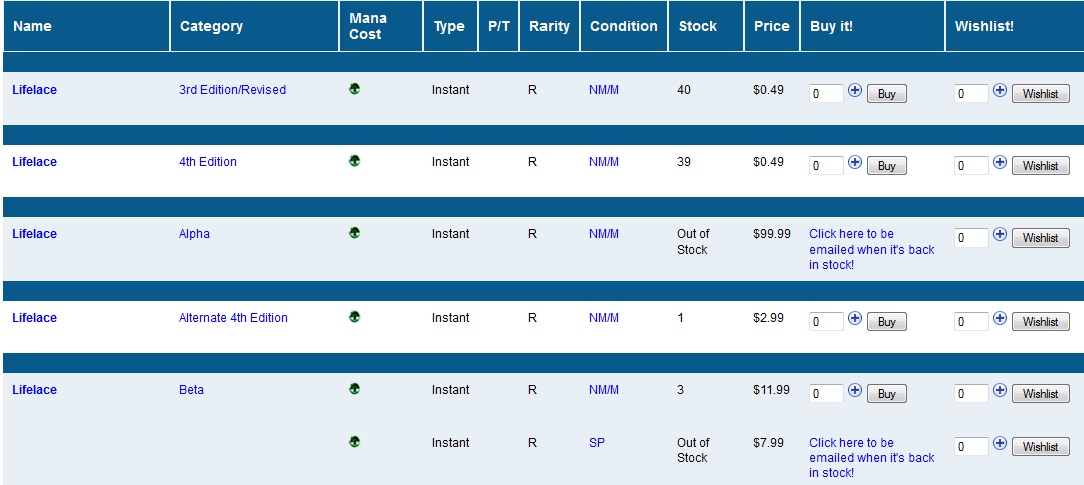
But we don’t even have to lay out $20,000 to own a unique piece. Many NM Alpha rares are relatively much more affordable, yet they are still very rare and demand a healthy premium. NM copies of the five Laces from Alpha, for example, sell for $100 on Star City Games and they are even sold out of some! Consider Lifelace, which is about as playable as Song of Blood, yet far rarer and more expensive. Star City Games is (not surprisingly) sold out of Alpha Lifelace, but their near mint price is now $249.99. It's incredible that such an unplayable card can still more than double in price over six years' time.

(Click to expand.)

Even though the card is not useful in tournament or casual settings, the simple rarity of the NM Alpha Lifelace has driven its price up to surprising proportions. The card sells at 200x its 4th Edition price (now 500x), and it even far out-shadows the Beta version, which sells for only about one eighth the Alpha price. This is one difference between today and six years ago: Beta rares have caught up to their Alpha counterparts. Now a Beta Lifelace retails for only about one-third an Alpha copy. After all, near mint Beta rares are extremely rare as well. 

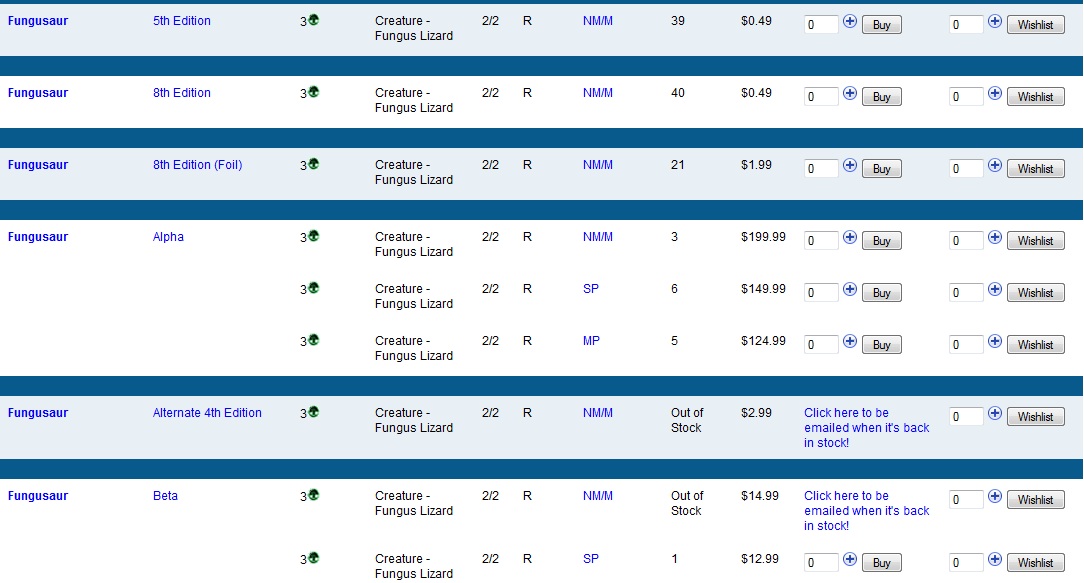
An even more bizarre example lies in that pesky creature Fungusaur. That’s right, I said Fungusaur. Check out Star City Games’s sell price on that unplayable Alpha rare in NM form:

(Click to expand.)

Anyone who has been playing this game long enough has opened one of these rares, and I’d even go out on a limb to say that virtually none of us were ecstatic to open this “crap rare.” Yet grab a NM Alpha copy of this beloved Fungus Lizard and you’ve got yourself a card that retails for $200! I’d wager a graded version with PSA score 8 or above may be even more expensive! These now retail for $349.99...I wonder if the same person is still collecting these or if they've return to circulation?

How could the Alpha version of this card be so expensive when it is so unplayable? My theory may surprise you


Cornering the Market

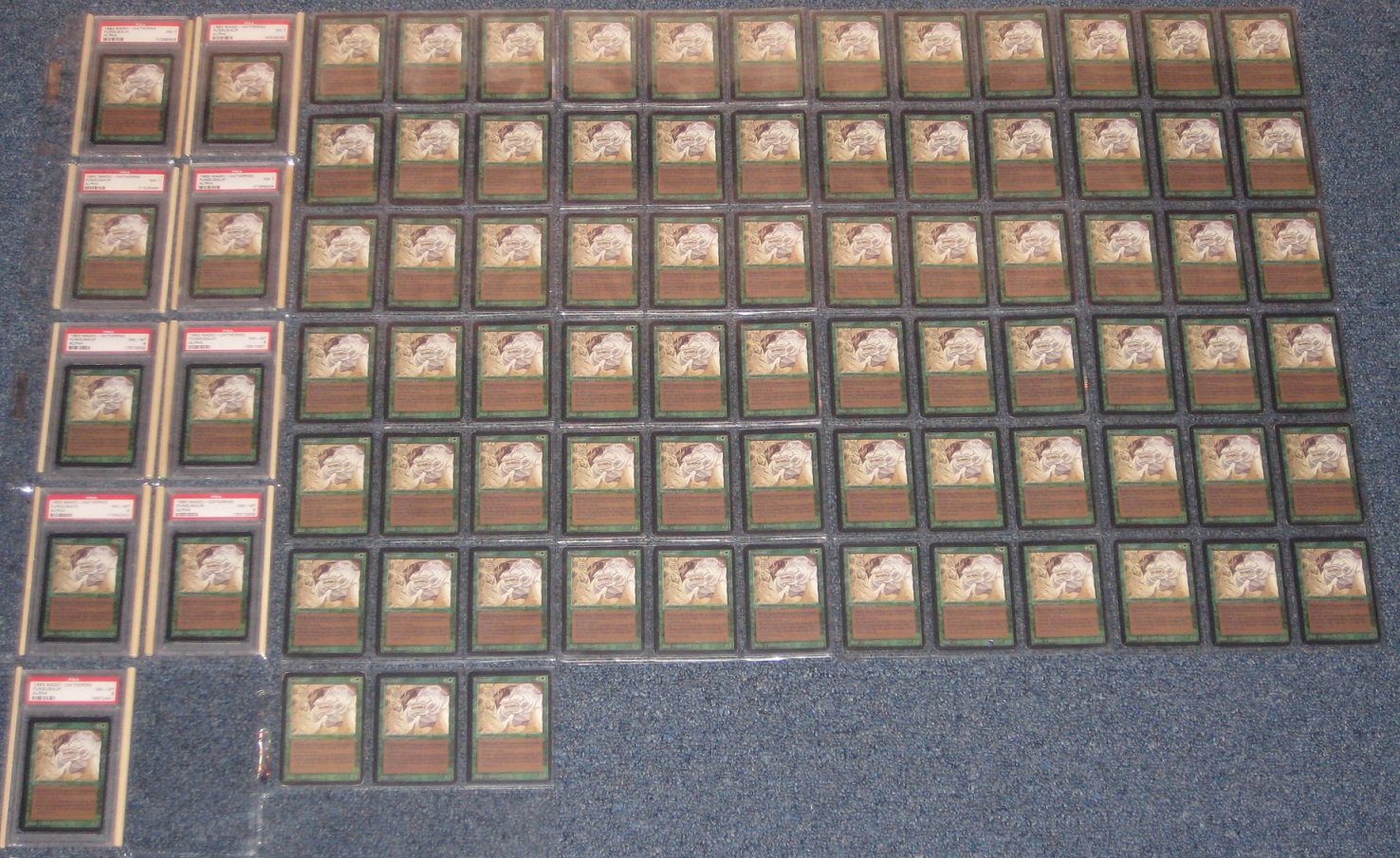
Apparently there is a collector out there who owns at least 85 copies of Alpha Fungusaur. This picture is worth 1,000 words and well over $1,000:

(Click to expand.)

Own 85 copies of almost any card in the game of Magic—even something like foil Jace, the Mind Sculptor—and you still haven’t even scratched the surface of the total quantity in circulation. Own 85 copies of any Alpha rare, however, and you can officially manipulate the market.

These 85 Alpha Fungusaurs represent nearly 10% of the total quantity ever printed. This single collector likely owns more Alpha copies than the largest 10 MTG retailers combined. The largest retailer in the world, Star City Games, boasts 14 copies for sale at the moment—about one sixth of what is pictured above.

When print runs are so few, price manipulation is a possibility. One could even “corner the market” in a particular Alpha rare. In other words, acquiring only 85 copies of an Alpha rare, no matter the card, is sufficient to manipulate the card’s price. As a result, a major retailer like Star City Games sells this unplayable card at twice the price as its unplayable counterparts in Alpha. And again, NM copies take the cake, selling at $50 higher than SP versions. Fungusaur isn't the only Alpha card being collected. A while ago, a number of people were attempting to collect 5% of a given Alpha card's print run. I'm not sure how many of these collections are still intact, but I'd wager it's nonzero. This is probably still a thing.

What Should We Do With This Information?

I strongly discourage you from attempting to corner the market in any of these rare cards. To do so is very risky, and profiting from the endeavor is not easy. Attempt to sell a significant quantity of stock and you’ll likely kill the price, rendering the remainder of your collection worth far less.

Still, there is something to be learned here. NM Alpha rares are incredibly difficult to acquire. Some retailers, like ABU Games, have known this for a while now. Others, like Star City Games, are finally catching on and altering their prices to reflect this. Still other retailers such as Troll and Toad, as well as smaller eBay sellers, have not fully embraced this information. By now every retailer that cares about older cards has caught on that Alpha rares in near mint condition are extremely scarce.

As a result I've managed to snag not one, but two NM Alpha Two-Headed Giant of Foriys from a well-known retailer at the reasonable price of $55.99. This seems like a steep price to pay for another unplayable card, but a quick visit to Star City Games’s buylist and you’ll see that they are buying NM copies of this oldie for $60. Hence, I made an immediate $8 profit between the two copies I purchased. I wish I had kept this card! I flipped it for arbitrage, but now buylist is $420. I could have made far more than $8!

These opportunities are out there. One other recent acquisition I made was a sweet PSA-8 graded Alpha Earthquake for $59.00. Although not pristine enough to command a major premium, Star City Games will still buy the card at $60 and sell at $100. This one is even more painful! Earthquake is played in Old School and now buylists for $550. I had a few Alpha cards like this. And while I wish I had exercised more patience, keeping them for the long term, I must acknowledge the fact that gains from my near mint Alpha investments helped me in acquiring my Unlimited Black Lotus. It's all about prioritization I suppose.

But the overall goal isn’t to make $1 here and there selling cards to retailers’ buylists. Instead, I want you to consider the long haul. An unplayable NM Alpha rare may never reach the same prices as a Black Lotus, but collectors looking to complete their sets will need one Fungusaur for every Black Lotus. With Magic growing in popularity, combined with the fact that Alpha cards are perpetually aging, we have a recipe for significant gains.

Cards that once fetched pennies are now selling for $100. Could the growth rate continue? Will there be a point in time when NM Alpha Fungusaurs are so difficult to find that they will break four-digit prices? Graded ones may
 This is the crux of my article: I believe this approach is just as valid today as it was back in 2012. Alpha rares are only getting harder to find as collectors absorb more and more copies. Barring a total collapse of Magic, these remain solid investments for the long-term.

These rarities don’t follow the normal ebb and flow of pricing like normal Magic cards do. Instead of moving trajectories comparable to the stock market, they instead follow paths resembled by classic artwork. Incredibly sparse, NM Alpha rares (especially graded highly) can grow in price at astronomical rates as long as there is a market for them.

Perhaps five years down the line I will have my NM Alpha Two-Headed Giants graded in hopes of a boost in value (facepalm...wish I kept it 5 years!). They may never be worth as much as a NM Black Lotus,  but one thing is for certain—if Star City Games feels they are worth acquiring at $60 each, I am certainly going to acquire them below that price any chance I can get.

You may want to consider the same.

-Sigmund Ausfresser
@sigfig8

I had no Sigbits segment six-and-a-half years ago. So let's take a look at some surprising Alpha numbers from this week in 2018.

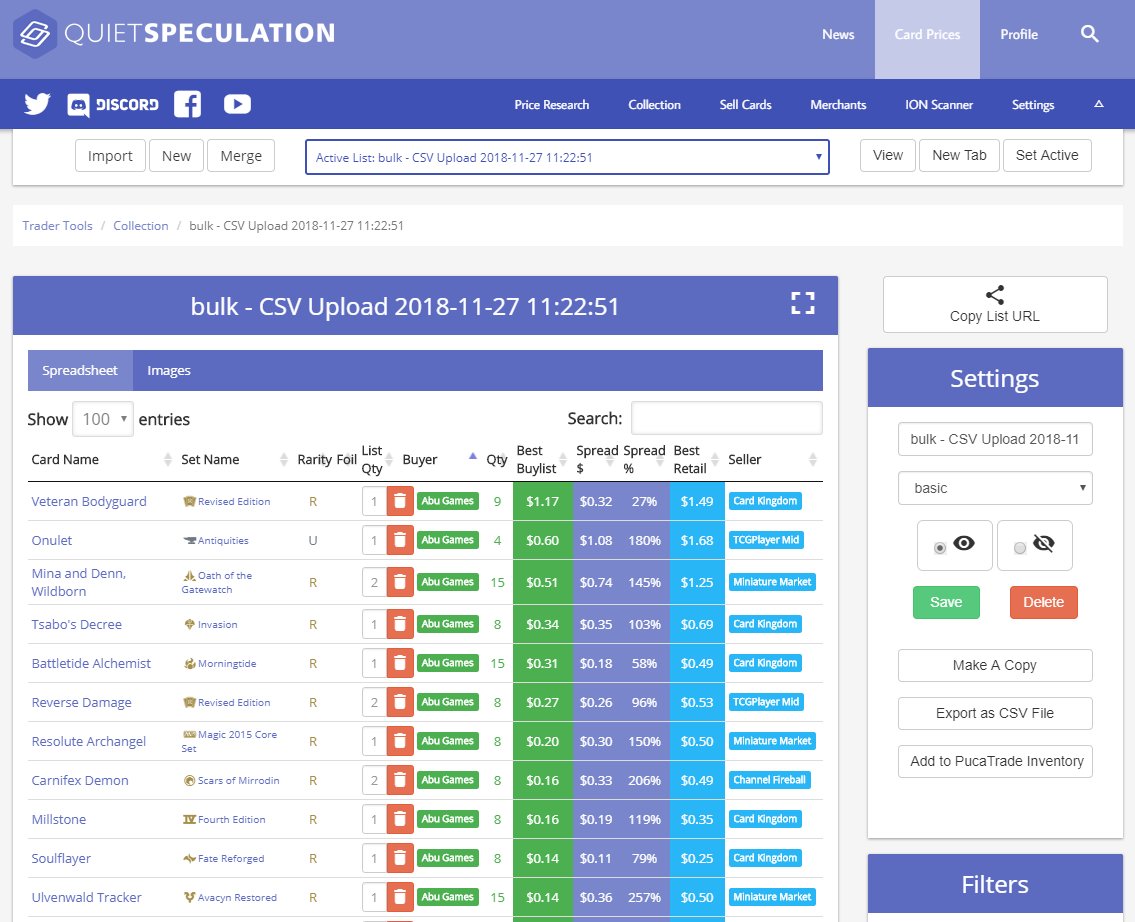
  • Funny enough, the Alpha rare with the lowest buylist on Trader Tools is none other than Lifelace: $125. Considering these were buylisting for $60 6.5 years ago, it's still impressive to see the price more than double since. I don't think it's a remotely bold prediction to say these will buylist for over $250 in 2015. The trajectory is practically a given unless paper Magic dies.
  • Thanks to the rise of Old School, popular cards from the format have really skyrocketed the most since 2012. Consider Chaos Orb, for example, which now buylists for $4200. According to Trader Tools, the best buylist back in mid-2012 was $171. Now THAT'S a good return on investment!
There was an error retrieving a chart for Chaos Orb
  • The Alpha card with the best spread on Trader Tools is Demonic Hordes. It currently has a buylist price of $720 but TCG Mid is listed at $300. Obviously you can't find a nice copy for $300 anymore—this is likely the last copy that sold on TCGplayer. I believe this is a reflection of the rate of price change on these cards. The price jumped so quickly that copies were never even listed between $300 and $720. If they were, they would have sold and TCG's pricing would have reflected as much. These cards really went through an exponential growth period, though now prices have settled a bit. This is likely a temporary respite, however, and I expect prices to soar yet again at some point.

Bonus aside: Here's another Alpha article written by Chas Andres from 2012, with some amusing prices cited. I wish I had bought so much more Alpha back then.

In Guild Faith: Building a Better Midrange

Are you a Quiet Speculation member?

If not, now is a perfect time to join up! Our powerful tools, breaking-news analysis, and exclusive Discord channel will make sure you stay up to date and ahead of the curve.

It's easy to identify with Ravnica's guilds. The plane owes much of its popularity to that simple fact. In Modern, where color fixing is better than any other constructed format, players have more often aligned themselves with shards or wedges, such as Jund and Jeskai. But these days, decks tend to be defined less by their colors than by their engines or synergies.

Today, as we nostalgically await the first spoilers for Guilds of Ravnica's follow-up expansion, we'll harken back to a simpler time. A time when Modern players readily associated with a shard or a guild. A time when midrange decks sharing names with such factions were actually good.

The Problems with Midrange

Stumbling upon a recent forum post inspired me to reconsider my previous stance on midrange in Modern (that it's not dead). Especially since the rise of Arclight Phoenix, midrange decks—here defined as aggro-control hybrids that disrupt opponents, then commit threats to the board—seem to have tapered off, despite occasional (innovative) showings in 5-0 dumps. In this section, we'll enumerate the three chief failings of midrange.

1. Creatures Outclassed

Tarmogoyf once stood tall as the strongest creature in Modern by a mile, as well as the most-played. Not coincidentally, midrange decks contracting the monster dominated Modern for years, challenged primarily by now-banned decks.

Eldrazi creatures were the first to rival Goyf's red-zone efficiency, and Fatal Push further jostled the Lhurgoyf's standing among combat creatures. Since then, a plethora of creatures have been printed or enabled that do more than just brawl (Spell Queller, Thing in the Ice), or that trump Goyf on mana efficiency (Hollow One, Arclight Phoenix).

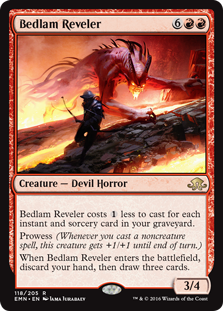
Midrange decks have largely failed to take advantage of such creatures as aggro decks have. The two exceptions are Death's Shadow, which is both cheaper and frequently huger than big brother Goyf, and Bedlam Reveler, whose cannibalistic graveyard reliance further ostracizes the fallen king. As their employable threats became weaker relative to Modern's, midrange decks plummeted in stock.

2. Consistency in Chaos

Between Fatal Push, Thoughtseize, Collective Brutality, Assassin's Trophy, and others, midrange decks enjoy an embarrassment of riches when it comes to disruption. What they don't enjoy is finding each answer at the right time, a task exceedingly daunting in a format notorious for banning in-game consistency tools.

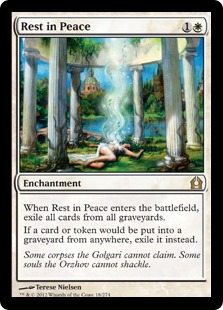
Available options are limited: Grim Flayer (a squishier, less-splashable Tarmogoyf); Traverse the Ulvenwald (I, too, lose to Rest in Peace); Serum Visions (enjoy your durdle); Ancient Stirrings (kiss most of your core goodbye); and Faithless Looting (welcome to red, and to minus-ones). The latter three see plenty of play, but only Looting helms a midrange deck: Mardu Pyromancer. And even still, results indicate the card is more at home in aggro-combo.
At the end of the day, existing consistency tools are far better at finding (and accelerating into) threats than they are answers. It stands to reason that midrange decks have much to gain from ditching their slower elements and embracing aggression. The consistency issue is exacerbated by midrange's innately high land count, which makes it prone to flooding in the mid-game; upping aggression helps on this front, as well.

3. Suffering Splash Hate

Tarmogoyf; Grim Flayer. Heck, Bedlam Reveler. Lingering Souls! What do all these staple midrange threats have in common? They rely on the graveyard. In a format where the top-performing decks are aggro-combo strategies that also rely on the graveyard, this predicament opens midrange up to splash hate from just about everyone. Buff threats that resist graveyard hate form yet another missing piece of midrange's Modern puzzle.

What Do?

Can midrange reclaim Tier 1 status in Modern? I decided to uncover the true limitations of aggro-control's slower breeds with a unique deckbuilding exercise. The top-down approach I utilized involves addressing midrange's issues out of the gate, and filling out the list next.

Aligning with a Guild

Best generic card selection spell in Modern? Faithless Looting.
Best generic disruption spell in Modern? Lightning Bolt.

These two points informed my first decision, which was to go red. But my eight-card core still had to fill 52 more spots. This deck would need two things:

  1. A way to close out the game. I wanted my threats impervious enough to Modern's current hosers that they could tangle with the velocity decks on a resilience metric, but still proactive enough to close out games against the combo decks.
  2. A way to monetize Faithless Looting. An inherent minus-one, Looting is mostly worth it when it breaks even (or goes up) on card economy.

To decide which guild (or even shard/wedge) I'd align with, I scrutinized what each color brought to the table in terms of threats, utility, and disruption.

On-Color (R)

Many options already exist in red, and we are seeing some contemporary Looting/Bolt decks neglect to splash altogether.
Threats: Monastery Swiftspear, Runaway Steam-Kin, Young Pyromancer, Arclight Phoenix, Bedlam Reveler

Swiftspear is best supported alongside a cast of burn spells, and with his buddy Soul-Scar Mage. That direction already pulls us deeper into aggro-combo than aggro-control, and the same goes for Runaway Steam-Kin; these are not creatures meant to take over a game after opponents have been destabilized.

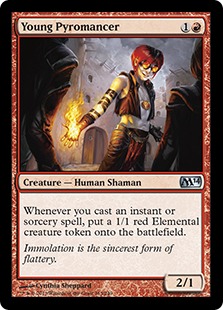
Young Pyromancer shines with targeted discard to ensure his fragile body sticks around and provide some quick bursts of value after resolving, so it's more of a black threat in this shell.

That leaves Arclight and Bedlam, the red threats seeing the most play beside Looting/Bolt. These threats compliment each other frighteningly well, occupying suitably distinct spots on the strategic curve and attacking opponents from myriad angles (Arclight flies, hastes, and recurs; Reveler walls, swells, and refills). Aggro-control decks wielding both already exist, dipping into blue for extra cantrips and Thing in the Ice. But those decks trend more tempo than midrange, and also toe the aggro-combo line, making them unrecognizable as rock decks. They're closer in spirit to thresh, and even more to grow, especially the Grow-a-Tog decks of Vintage past.

Color takeaways: As the available options push us into tempo and aggro-combo, we'll have to look outside of red to build our midrange deck.

Izzet (U/R)

The uninhibited guild of creative freedom, Izzet indeed offers our eight-card core multiple considerations.

Threats: Delver of Secrets, Thing in the Ice, Crackling Drake
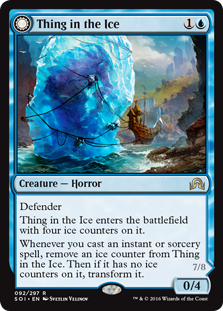
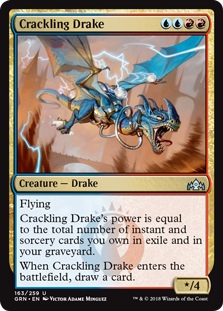
Delver, again, is too low on the curve to serve a midrange deck. Conversely, Crackling Drake is quite high, but I think one of the more appealing options as a closer; it's a one-to-three-turn clock, difficult to remove, and critically self-replacing in sloggy pseudo-mirrors.

The threat that synergizes best with Bolt and Looting, though, is Thing in the Ice. Thing performs multiple functions at once: pilots don't need to dedicate too many slots to removal, as it handles entire boards of creatures by itself; they also don't need to load up on aggression, since Thing hits like a truck.

As such, Thing proves exquisitely compact, letting players fill out their decks with cards that bring it from viable to insane. A shell full of cantrips and Manamorphose is not only poised to make exceptional use of Arclight/Reveler, but threatens to flip Thing in the Ice on turn three with pinpoint accuracy, significantly improving Izzet's proactive capabilities. If all that wasn't enough, Thing supports Arclight/Reveler by evading graveyard hate itself.
Sound great? It is. But midrange it ain't.

Utility: Serum Visions, Opt, Chart a Course, permission

Beyond threats, blue offers our deck additional cantrips and countermagic, not that we need to indulge it if we're fast enough.

Guild takeaways: As with mono-red, we won't have much success building midrange in these colors.

Rakdos (B/R)

The reckless guild of ruin, Rakdos has little regard for anything but its own goals. Ironically, this splash offers us blue-chip interaction.

Threats: Death's Shadow, Tasigur, the Golden Fang/Gurmag Angler, Young Pyromancer

Death's Shadow heavily taxes our life count and shoves us towards aggro-combo with Temur Battle Rage, although the card already enjoys minor success in the rock shell of Traverse Shadow. Tasigur and Angler are relatively unimpressive in Modern right now, being outpaced by the faster aggro decks and suffering from splash damage aimed at those same decks. As mentioned above, Young Pyromancer is an intriguing option given this splash, but we'd have to take care not to build a worse Mardu Pyromancer.
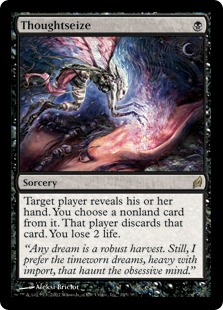
Utility: Liliana of the Veil, Liliana, the Last Hope

While these walkers have their uses in certain matchups, I've come to believe that both of them are too specific for successful mainboard use outside of currently-underperforming strategies (i.e. Jund), and only Last Hope is impactful enough for the side. Their steep color requirements also hurt.

Disruption: Inquisition of Kozilek/Thoughtseize, Fatal Push, Collective Brutality
These cards all represent the most universal ways to disrupt opponents before committing pressure to the board, making them perfect for midrange decks.

Guild takeaways: Black's superb disruption could assist us, but we'd still be lacking pressure. Going the Mardu route with Reveler/Souls just opens us to splash graveyard hate.

Boros (W/R)

Fusing colors of transparency, honor, and impulse, Boros is perhaps Ravinca's most patriotic guild (oh, Canada!). White's never been known for its aggressive elements, but it offers us the most devastating sideboard cards... assuming we're not soft to them ourselves.

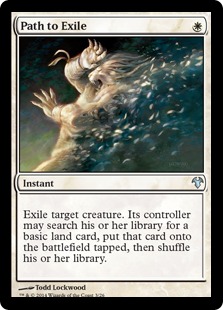
Disruption: Path to Exile, Rest in Peace, Stony Silence, Suppression Field
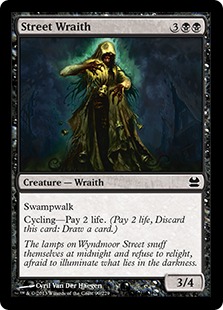
Path gives us a Push-esque way to remove troublesome creatures, and is doubly effective at sniping recursive threats like Phoenix. The real draw to this disruption suite, though, is Rest in Peace, which pundits are (correctly) claiming is now useful enough to merit mainboard play. Hosing artifact-based aggro-combo and pure combo alike, Stony Silence is also receiving the red carpet treatment from content producers.

Guild takeaways: We'd go Boros for the hosers, forcing our strategy to at once mitigate the damage from Rest in Peace and extract value from Looting. A tall order!

Gruul (G/R)

Gruul is the instinctual guild of bodybuilding—muscle and dorks. But Goyf ain't the Mr. Universe he used to be.

Threats: Tarmoyof

I stood by the Big Man after Fatal Push, but the new wave of aggro-combo decks and their demand for graveyard hate have all but antiquated this beater.

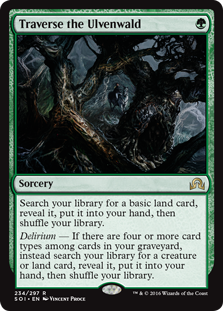
Utility: Traverse the Ulvenwald, Scavenging Ooze, Tireless Tracker, Huntmaster of the Fells
In other words, exactly the kind of clunk that bogs down today's attempts at midrange, and a tutor to find them with.

Guild takeaways: In my eyes, green is no longer a discard spell's best friend. Goyf's is the color of sweeper-soft creature-combo.

Colorless (😏)

As I defeatedly stared at my completed list of red guilds and their respective benefits, I realized one faction was missing, just as it is from Ravnica. Before aggro-combo's resurgence, the Eldrazi provided the first true alternative to Goyf's bulk in a disrupt-then-commit aggro strategy.

Threats: Eldrazi Mimic, Eternal Scourge, Thought-Knot Seer, Reality Smasher, Hollow One

Look at that—an entire curve! So much for treading water until we find our single acceptable threat in a given color. The bigger creatures make a unit of Mimic when we need pressure, and out-Goyf the Lhurgoyf when we don't. Scourge also allows for some neat tricks, as we know.

The above catalog includes one non-Eldrazi colorless creature: Hollow One. Hollow works with Faithless Looting, but requests a little more discard to be reliable; the proven loot effects, Burning Inquiry and Goblin Lore, tend to be too random in their discards to excel in a midrange deck. Not so with Street Wraith, which rewards a fetchless manabase and perhaps enables One when combined with Looting alone. The Golem also has tickling explosiveness applications with Eldrazi Mimic.

Color(less) takeaways: Running Eldrazi necessitates Eldrazi Temple, and subsequently does a number on our mana. Conveniently, the tribe avoids many common hate cards, and can even run them itself.

Stick 2 My Gunz

What can I say? I'm a meathead. Here's where I landed.

Boros Eldrazi Stompy, by Jordan Boisvert

Creatures

4 Eldrazi Mimic
4 Eternal Scourge
4 Thought-Knot Seer
4 Reality Smasher
4 Hollow One
4 Simian Spirit Guide
4 Street Wraith

Arttifacts

2 Smuggler's Copter

Enchantments

2 Rest in Peace

Instants

4 Lightning Bolt

Sorceries

4 Faithless Looting

Lands

4 Eldrazi Temple
4 Battlefield Forge
4 Ramunap Ruins
3 Sacred Foundry
3 Mutavault
1 Plains
1 Mountain

Sideboard

2 Rest in Peace
3 Stony Silence
2 Damping Sphere
2 Engineered Explosives
2 Abrade
2 Dismember
2 Anger of the Gods

There are a few interesting things going on in this list, so I'll address each of those in their own section.

Hollow One Package

  • 4 Faithless Looting
  • 4 Street Wraith
  • 4 Hollow One

We were already in Looting, so Hollow wasn't so hard to accommodate. I started without this package, but found myself too slow to adequately pressure aggro-combo without Chalice of the Void to disrupt them. Of course, Looting and Bolt prevent us from using Chalice, so our other option was to seize some speed ourselves. Smuggler's Copter too helps cast Hollow One.

Four Guides

No Chalice here. Not even a Blood Moon. But just as Street Wraith supports Looting as a necessary evil for Hollow One, so does Guide support Temple for casting Eldrazi. Our creatures are solid, but they are slow, or at least slower than most of what Modern's doing right now. We need them to resolve early enough to win us the game.

We can also just tap three lands for Guide and get our Grey Ogre on.

Mainboard Rest in Peace

The first draft got value out of Eternal Scourge with 4 Serum Powder. It was better at finding Temple, too, but disjointed overall; it stretched hands featuring both Eldrazi and Hollow elements precariously thin. As a midrange deck, I found myself wanting to keep many slower hands that included Powder, and eventually cut the artifact.
Now, I've taken Riley Knight's would-be advice and moved 2 Rest in Peace from side to main. Not only do they fulfill their literal purpose as hosers and free-win generators, they allow us to extract value out of both Scourge and Faithless Looting without fearing graveyard hate. Achievement unlocked! We simply discard Scourge to Looting or Copter, and a resolved Rest in Peace functionally draws them again. Rest's continuous effect on the battlefield also offsets the loss of Looting's back end, since when Scourge dies, it automatically rejoins our pool of castables. And when Rest is really bad, we can just Loot it away.

The Manabase

We're mostly a red Eldrazi deck, so our white sources are limited. I'd add more if we had better options available (Battlefield Forge 5-8), and may trim a Mutavault for the fourth Sacred Foundry. Vault is the best utility land (besides Zhalfirin Void) in Colorless Eldrazi Stompy right now, but between Looting flashback, pricey Hollows, and Sourge/Rest, we have lots to do with our mana already.
Ramunap Ruins is incredible. I had to see it in action to believe it, but the card has already won me multiple games.

Omissions

  • Serum Powder: See above.
  • Blood Moon: Tampers too much with our mana, especially without Powder. Also a bit slow. Rest in Peace is the superior lock piece here.
  • Thalia, Guaridan of Thraben: A possible sideboard include, but we've got no space in the main.
  • Eldrazi Displacer: Incredibly slow. We already win the value game with Scourge.
  • Eldrazi Obligator: Also slow, and useless against a large portion of decks. Gone are the days of Goyfs and Gurmags. No way can we fit this guy.
  • Dismember: I think Bolt is enough removal for the main, and enjoy having so much reach in an aggro deck.
  • Zhalfirin Void: Not impactful enough at 2 copies, which is all the space we have. There's also less chaff to sort through without Powder in the deck.

The Sideboard

  • Rest in Peace: We want multiple copies against the decks we bring it in against, since they aggressively mulligan into answers for it.
  • Stony Silence: Same deal.
  • Damping Sphere: Improves in multiples, and is one of the most effective ways to attack velocity-based decks. Also helps vs. Tron.
  • Abrade: An all-star in the Hollow One mirror, and fine against most creature decks.
  • Dismember: Mostly a concession to Thing in the Ice, which can be forever-blocked by Scourge/Rest but is very annoying combined with reach.
  • Anger of the Gods: The sweeper effect Colorless has always wanted. RR is accessible with this manabase and 4 Guide, and we don't play Matter Reshaper.

Clunking through the City

Is Boros Eldrazi Stompy better than Colorless Eldrazi Stompy? Probably not. It's certainly not as finely tuned. But I think the principles applied in its creation might help some more dedicated souls elevate midrange to its former heights. Until then, may you race with valor—and, no matter which free creatures you elect to dump into play, never forget who you are.

MTG Metagame Finance #22

Are you a Quiet Speculation member?

If not, now is a perfect time to join up! Our powerful tools, breaking-news analysis, and exclusive Discord channel will make sure you stay up to date and ahead of the curve.

Let’s start off with a quick update. As you’ve probably noticed already, the article series title has changed from Hold ‘Em & Fold ‘Em to MTG Metagame Finance. I feel this is a more accurate description of what this article series is really about.

There are many amazing people out there who write about MTG finance. The content revolves around a lot of different aspects of the market. For example, some people focus on pure speculation based on the latest news, or data-driven assumptions. Others like Sigmund Ausfresser like to focus on older formats. And there are people who are experts on things like EDH/Commander.

However, as many of you might know by now, I’m really a tournament guy. I like to look at daily results from Magic Online. I check Star City Games, Channel Fireball, and TCGplayer several times a day. I’m constantly on sites like MTG Stocks and MTG Top 8 to look at tournament results. I’m also in some chat groups with quite a few Magic grinders. And I used to play quite a few tourneys before I had a baby.

So all in all, that’s truly where my Magic heart is. Thus, I think the article series name change makes more sense. But feel free to hit me up on social media or the comments below if you have suggestions that might help people find this article series even faster via a web search.

Article Series Main Focus Points

  • Cards that you should hold on to or pick up for tournaments if you need them before they rise in price. These cards are either seeing increased play in one or more formats, the supply is drying up, or they’re pretty far from the next reprint.
  • Cards that you should consider selling or trading away. Their prices are pretty much at the ceiling owing to inflation from speculation, reprint inevitability in the near future, a lull in tournament play, or some combination of these.

Folds

Drogskol Captain - Dark Ascension (Non-Foil)

There was an error retrieving a chart for Drogskol Captain

Target Sell Prices
Non-Foil: $2+
Foil: $25+

Bant Spirits is one of the best decks in Modern right now. It was the most represented deck in day two at SCG Baltimore, although it didn’t make the top eight this time.

Does that mean the deck is on a downturn? I don’t think so. I doubt it will be down for long, since it plays two of the most impactful one-mana spells in Modern: Aether Vial and Noble Hierarch. For more on the archetype, read Dylan Hand’s article on Star City Games.

So why am I mentioning Drogskol Captain as a Fold? Well, this is the only printing of the card, and Wizards seems to love printing new tribal product. So I could easily see this getting reprinted.

However, foils are a bit trickier. Since this is the foil version of the original printing, it’ll hold a premium. Plus, it probably won’t see a foil reprint in a tribal product if Wizards comes out with one. So I could also see holding onto the foil copies if you want.

Holds

Knight of Autumn - Guilds of Ravnica (Non-Foil & Foil)

There was an error retrieving a chart for Knight of Autumn

Target Purchase Price
Non-Foil: $2.50ish
Foil: $10

This card is so versatile, and it’s finally starting to drop in price as more Guilds of Ravnica is opened. This is going to be a tournament staple for a long time. It hasn’t even been out for half a year, and look how many non-Standard decks play this card already.

One thing I would be careful of is that I could see Wizards making this a promo down the road. So keep an eye out for that. But for now, this is a solid card to pick up and add to your collection.

Extirpate - Planar Chaos & Modern Masters (Non-Foil & Foil)

There was an error retrieving a chart for Extirpate

Target Purchase Price
Non-Foil: $5ish
Foil: $7-10

If you haven’t seen the latest Modern Mill deck, take a look at Jason Chung’s (aka sqlut) latest list.

This doesn’t see a whole lot of play yet, but the foils are fairly affordable and could spike if this type of deck catches on. Time will tell since Mission Briefing is only a few months old (and a card I mentioned in article #19).

Pithing Needle - Masterpiece Series: Kaladesh Inventions

There was an error retrieving a chart for Pithing Needle

Target Purchase Price
Under $80

One of the readers that reached out to me regarding the free giveaway feature in article #21 suggested fetchlands like Arid Mesa and Misty Rainforest, as well as Scars of Mirrodin fastlands like Seachrome Coast. At the same time, he asked me what I thought about different versions of Engineered Explosives.

I responded by saying that I’ve had my eye on a few Inventions, namely Defense Grid, Trinisphere, Scroll Rack, and Crucible of Worlds. I’ve also had my eye on Engineered Explosives for a while now too. But as I highlighted in article #18, I hope you got rid of the non-Invention versions before Ultimate Masters was spoiled.

And then a few days later, I came across Pithing Needle and realized I had forgotten to point it out as a target. So I reached out again and told him about this one, as it sees play in quite a few decks.

Hazoret the Fervent - Masterpiece Series: Amonkhet Invocations

There was an error retrieving a chart for Hazoret the Fervent

Target Purchase Price
Under $60

This has been dropping in price since it rotated out of Standard. Yet, it still sees play in a decent number of Modern decks, as well as Legacy’s Dragon Stompy.

Most notably, it’s starting to appear alongside Arclight Phoenix, which is popping up everywhere now. Take a look at Jeffrey Carr’s second place list from SCG Baltimore.

Modern: Mono-Red Phoenix by Jeffrey Carr

Creatures

4 Arclight Phoenix
4 Bedlam Reveler
4 Monastery Swiftspear

Non-Creature Spells

4 Fiery Temper
2 Gut Shot
4 Lightning Bolt
4 Manamorphose
2 Risk Factor
4 Faithless Looting
1 Flame Jab
4 Lava Spike
1 Maximize Velocity
4 Tormenting Voice

Lands

17 Mountain
1 Ramunap Ruins

Sideboard

4 Tormod's Crypt
3 Eidolon of the Great Revel
2 Abrade
2 Dismember
2 Hazoret the Fervent
2 Shattering Spree

Although Ross Merriam won the event with his Izzet Phoenix deck, people are still tinkering with many different Phoenix builds, all of which can play Hazoret.

Lightning Axe - Shadows of Innistrad (Foil)

There was an error retrieving a chart for Lightning Axe

Target Purchase Price
$2

While we’re on the subject of Arclight Phoenix decks, here’s another pretty cheap pickup. It sees play not only in Ross Merriam’s winning Izzet Phoenix deck from SCG Baltimore, but also started out as a popular card in Dredge which is still a strong Modern deck. Not to mention Hollow One decks and Grishoalbrand, which also run the card.

Finally, it’s always worth noting that the expected value of Shadows of Innistrad boxes is quite low, which probably resulted in a lot of unopened boxes.

Modern: Izzet Phoenix by Ross Merriam

Creatures

4 Arclight Phoenix
3 Crackling Drake
2 Monastery Swiftspear
4 Thing in the Ice

Non-Creature Spells

3 Gut Shot
1 Izzet Charm
2 Lightning Axe
4 Lightning Bolt
4 Manamorphose
4 Opt
2 Thought Scour
1 Chart a Course
4 Faithless Looting
4 Serum Visions

Lands

3 Island
2 Mountain
1 Flooded Strand
1 Polluted Delta
4 Scalding Tarn
4 Spirebluff Canal
3 Steam Vents

Sideboard

2 Alpine Moon
3 Abrade
2 Ceremonious Rejection
2 Dispel
1 Spell Pierce
2 Surgical Extraction
1 Ral, Izzet Viceroy
2 Anger of the Gods

Recent Sells

I’ve started another article series called "Magic: The Gathering Questions," featuring this buylist, plus documentation and the tools I used. Check that out when you get a chance. My goal is to help speed up the way you sell bulk, and light the fire to organize your collection and make some extra money on cards that you’re not using.

Office Hours

Office Hours #3 is coming up, which I’ll be co-hosting again with Sigmund Ausfresser. If you have a Quiet Speculation membership subscription, you can catch the audio of Office Hours #1 with Sigmund Ausfresser and me here in case you missed it. Or you can listen to Office Hours #2 with Christopher Martin and me here for free.

Office Hours #3 is set for Thursday, December 6 at 8:00 p.m. Central, so mark your calendars and join us in the Discord channel if you have a Quiet Speculation membership subscription.

Details

Public Spreadsheet

Stay up to the minute on what I’m looking at on a daily basis via the Hold ‘Em & Fold ‘Em - Public MTG Finance Spreadsheet. Don’t forget to bookmark it, because I update it on the fly. This way you can see what’s going on as the market moves and before articles about certain cards are published.

Summary

Folds

  • Drogskol Captain - Dark Ascension (Non-Foil & Foil)

Holds

  • Knight of Autumn - Guilds of Ravnica (Non-Foil & Foil)
  • Extirpate - Planar Chaos & Modern Masters (Non-Foil & Foil)
  • Pithing Needle - Masterpiece Series: Kaladesh Inventions
  • Hazoret the Fervent - Masterpiece Series: Amonkhet Invocations
  • Lightning Axe - Shadows of Innistrad (Foil)

Recent Sells

Here’s my buylist to Card Kingdom on November 30, 2018.

Office Hours

Public Spreadsheet

Hold ‘Em & Fold ‘Em Spreadsheet

Let me know what you think in the comments below. Agree? Disagree? Why? You can also connect with me on Twitter at @edwardeng. I’m also open to suggestions on how to make this series more valuable. Hit me up.

Have fun,
Eddie

Masters Set Price Trends & When to Buy In

Are you a Quiet Speculation member?

If not, now is a perfect time to join up! Our powerful tools, breaking-news analysis, and exclusive Discord channel will make sure you stay up to date and ahead of the curve.

Welcome back, readers!

Ultimate Masters releases on December 7, 2018 and it looks like an impressive set overall. We are getting a significant number of high-value reprints at the mythic, rare, and uncommon rarities.

I'll be the first to admit that when it comes to sealed product I don't typically speculate unless the product has a limited print run or I get it at a very aggressive price. I have found that moving sealed product is considerably more difficult than singles as the potential customer base is smaller and the shipping charges are much higher.

That being said, Ultimate Masters is a limited-print-run product, and I happily bought four boxes for $254 each. I may crack a box or two if the singles prices remain high. But this feels like a product that could easily sell for $350-$400 in a year or so, especially since WotC has stated that they are not printing any additional Masters sets "for the foreseeable future."

As long as WotC remains true to their word, we should expect Modern singles prices to begin to rise again, as the threat of reprints diminishes greatly. This especially when you consider that many of the most expensive Modern staples would warp Standard should they reenter the Standard environment.

With the last few Masters sets I have avoided buying any sealed product and instead utilized the money I would have spent on boxes buying up the format staples. This strategy has proven successful so far, in that most of the cards I purchased have gone up a fair amount. However, as prices change over time, the obvious goal is to buy when they are at their lowest. The best way to determine that is to look at the past pricing history from Masters sets.

To do this, I gathered a combination of Modern staples that were reprinted at mythic and reprinted at rare in various Masters sets and then looked for trends. The cards I used for my calculations were.

Mythics

  • Dark Confidant
  • Karn Liberated
  • Mox Opal
  • Tarmogoyf (taken twice)
  • Vendilion Clique (taken twice)
  • Cavern of Souls
  • Liliana of the Veil
  • Snapcaster Mage
  • Ensnaring Bridge
  • Jace, the Mind Sculptor (taken twice)
  • Chalice of the Void

Rares

  • All is Dust
  • Cryptic Command (taken twice)
  • Daybreak Coronet
  • Fulminator Mage
  • Leyline of Sanctity
  • Noble Hierarch
  • Surgical Extraction
  • Arid Mesa
  • Blood Moon (taken twice)
  • Damnation
  • Death's Shadow
  • Goblin Guide
  • Grafdigger's Cage
  • Marsh Flats
  • Misty Rainforest
  • Scalding Tarn
  • Stony Silence
  • Verdant Catacombs
  • Aether Vial
  • Bloodghast
  • Horizon Canopy
  • Thoughtseize
  • Pact of Negation
  • Rest in Peace
  • Thalia, Guardian of Thraben

Astute observers might notice that some of the cards on these lists have been reprinted more than the number of times listed. For this analysis I ignored the original Modern Masters (MMA), predominantly because the Modern playerbase grew at an incredible rate after this set's release, and I was concerned that demand might skew the results heavily. I gathered pricing at the following times:

  • Last major printing (LMP) price on date of the reprint announcement.
  • LMP Price on the date of the actual reprint set release.
  • LMP Price three months after reprint set release.
  • LMP Price six months after reprint set release.
  • Reprint price on date of set release.
  • Reprint price three months after reprint set release.
  • Reprint price six months after reprint set release.

I wanted a large sample size for my analysis, so each card on the list has seven price points. While I would like to have factored in metagame shifts, as we all know those can greatly affect a card's value, I fear that could have taken me a significant amount of additional time. So I'm hoping that my large sample size will smooth over any noise that metagame pricing would have played a role in.

Now for the actual results. Average LMP Price Drop between date of announcement and actual reprint set release:

  • Mythic Rares- 5.25%
  • Rares- 11.12%

Average LMP Price Drop three months after reprint set release:

  • Mythic Rares- 3.4%
  • Rares- 18.72%

Average LMP Price Drop six months after reprint set release:

  • Mythic Rares- 8.92%
  • Rares- 25.09%

Average Reprint Value three months after reprint set release:

  • Mythic Rares- +4.18%
  • Rares- 2.96%

Average Reprint Value six months after reprint set release:

  • Mythic Rares- +2.4%
  • Rares- +0.49%

Looking at these numbers we see—as expected—previous versions of a staple taking a huge hit when reprinted at rare, with an average loss of around 25% in value. However, the drop when reprinted at mythic is nowhere near as bad, with a loss of a little under 9%.

We also notice that the LMP prices continue to decline well after the reprint set's release. The six-month drop averages greater than the three-month drop, which means that if you want to buy copies of the LMP you're better off waiting at least six months (if not more) after a reprint set is released.

However, what I found most interesting was that the reprinted mythics tended to rebound quickly after the reprint set release. They already show positive growth just three months after said release, having grown on average a little over 4% from the initial release price. Rares were slower to rebound—they were down almost 3% at the three-month mark, but did eventually rebound to slightly above their initial price as well.

The takeaway here is that if you are looking to speculate on reprint-set Modern staples, your best buying time varies based on the rarity. For reprints at mythic, your best time to buy is actually right around the set's release dates, which for UMA means December. For reprints at rare you can hold off for three months or so. But you may want to start buying them before June 2019, as on average they are likely to start trending upward.

Finally, it is important to note that this data is averaged out, so any speculation on reprinted staples that is heavily influenced by metagame will likely buck this trend.

Want Prices?

Browse thousands of prices with the first and most comprehensive MTG Finance tool around.


Trader Tools lists both buylist and retail prices for every MTG card, going back a decade.

Quiet Speculation